An Atacama Desert travel guide to high-altitude lakes, dramatic landscapes and the best ways to visit.
Published | November 2026
Atacama Desert Tours: Into the High Andes
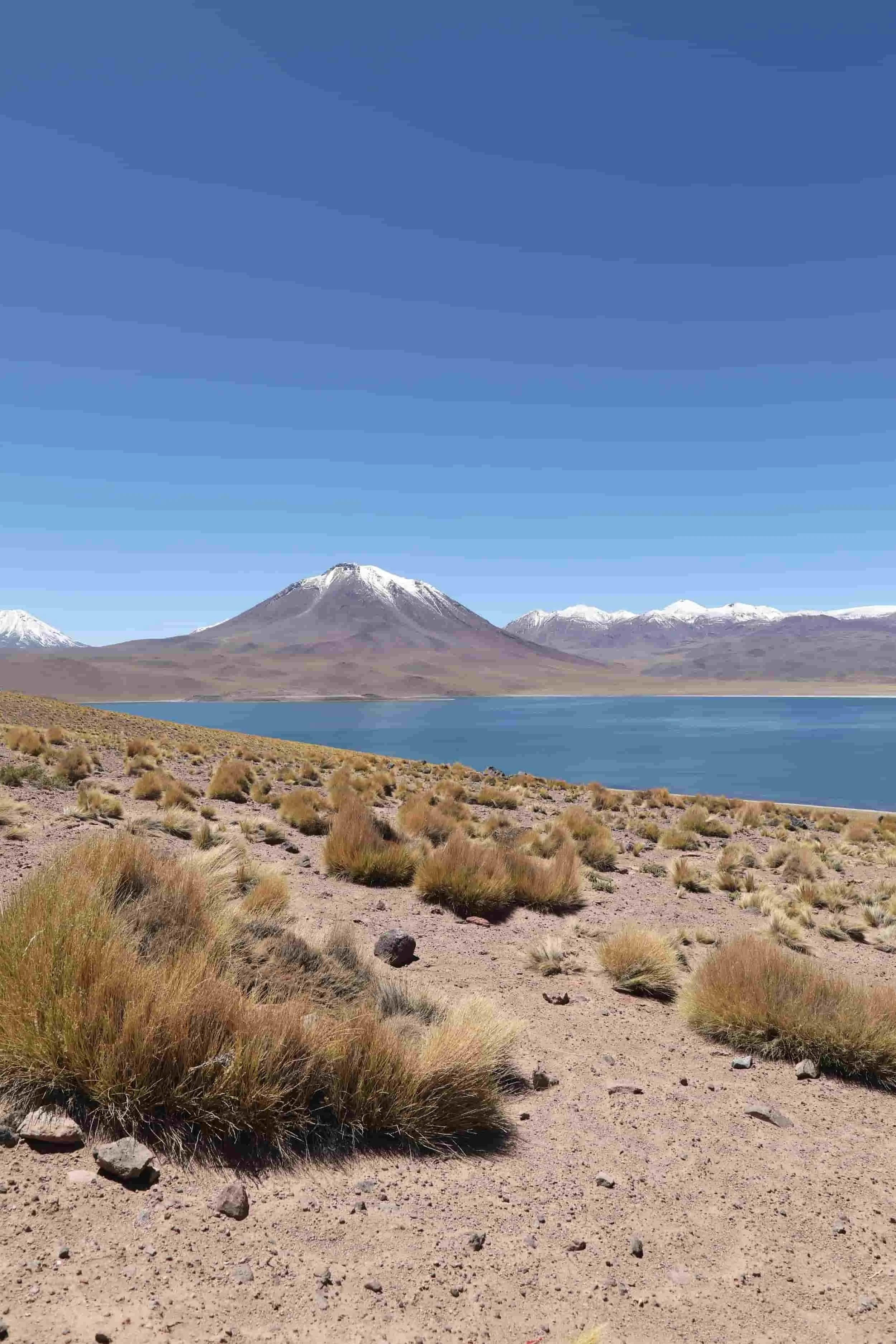
High in the Chilean Andes, the Altiplanic Lagoons of Miscanti and Miñiques reveal a very different side of the Atacama Desert. Far above the salt flats and arid valleys surrounding San Pedro de Atacama, these brilliant blue lakes sit beneath towering volcanoes, framed by golden grasses, rugged mountains and vast open skies.
Located more than 13,000 feet (4,000 meters) above sea level, Lagunas Altiplánicas are some of the most memorable landscapes in northern Chile. The contrast is what makes them so interesting: intensely blue water against an otherwise dry, windswept plateau, with volcanic peaks rising dramatically in the distance. It's a landscape that feels both immense and surprisingly quiet.
Whether you're joining one of the popular Atacama Desert tours or planning a visit independently, Miscanti and Miñiques offer a chance to experience the extraordinary geography of the Andean highlands. The journey from San Pedro de Atacama is part of the experience but it's the scale, color and stillness of the lagoons themselves that make the trip worth taking.
Altiplanic Lagoons at a Glance
📍 Destination: Miscanti & Miñiques Lagoons, Atacama Desert, Chile
🕒 Time Needed: 4–6 hours; longer with additional stops
💰 Tour Cost: Approximately 45,000–95,000 CLP ($50–$100 USD) per person, plus entrance fees
👟 Walking Level: Easy to moderate
🌤️ Best Season: March–May and September–November
🏔️ Known For: High-altitude lagoons, volcanic peaks and Andean landscapes
💙 Don't Miss: The deep blue waters of Miscanti Lagoon beneath the surrounding volcanoes
🖤 Perfect For: Landscape lovers, photographers and nature enthusiasts
My Bibimbap Moment
This experience added: Tranquility.
There was something wonderfully simple about the Altiplanic Lagoons of Miscanti and Miñiques. Deep blue water, clear skies and sunshine stretching across the high Andean landscape. Vicuñas bounded through the golden grasses while birds soared overhead, seemingly unbothered by the altitude or the vastness around them.
Unlike some of the more dramatic stops in the Atacama Desert, this place didn't need much to make an impression. Everything felt calm, open and beautifully uncomplicated. Just the landscape, the wildlife and a rare sense of tranquility.
My Two-Week Chile Travel Itinerary
Two weeks in Chile took us from the energy of Santiago to the surreal landscapes of the Atacama Desert and the wild beauty of Patagonia. With eight flights, countless road transfers and a few ferry rides, it was an ambitious itinerary but the incredible diversity of landscapes made every journey worthwhile.
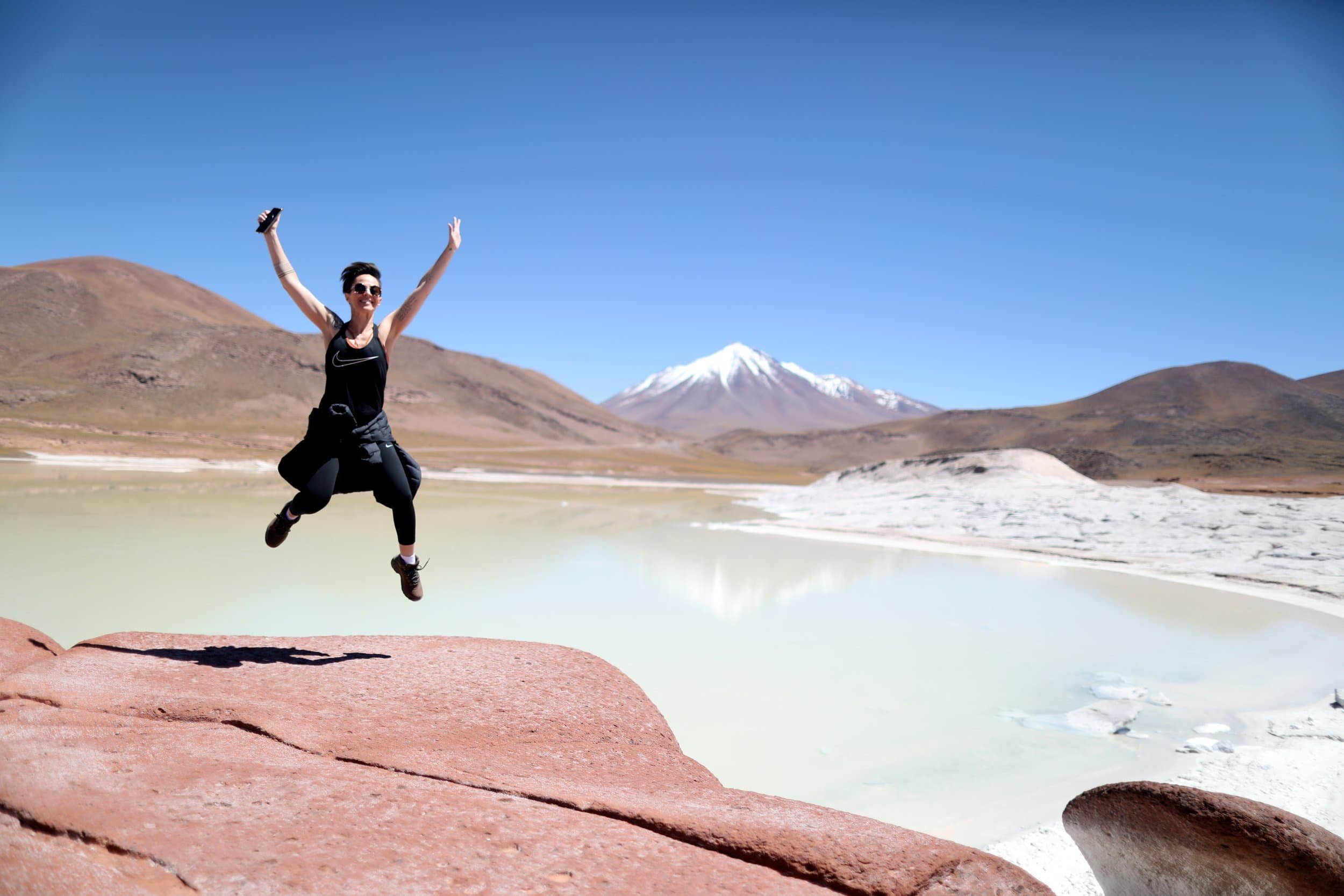
We began in Santiago, exploring its restaurants, art and wine culture before flying north to San Pedro de Atacama. Among our most memorable excursions was a full-day journey into the Andean highlands, visiting Chaxa Lagoon and the red rock formations of Piedras Rojas before reaching the Altiplanic Lagoons of Miscanti and Miñiques. Surrounded by volcanic peaks, the lagoons were beautifully peaceful, their deep blue waters contrasting with golden grasses as vicuñas moved across the landscape and birds soared overhead. It was one of those places where the simplicity of the scenery made the strongest impression.
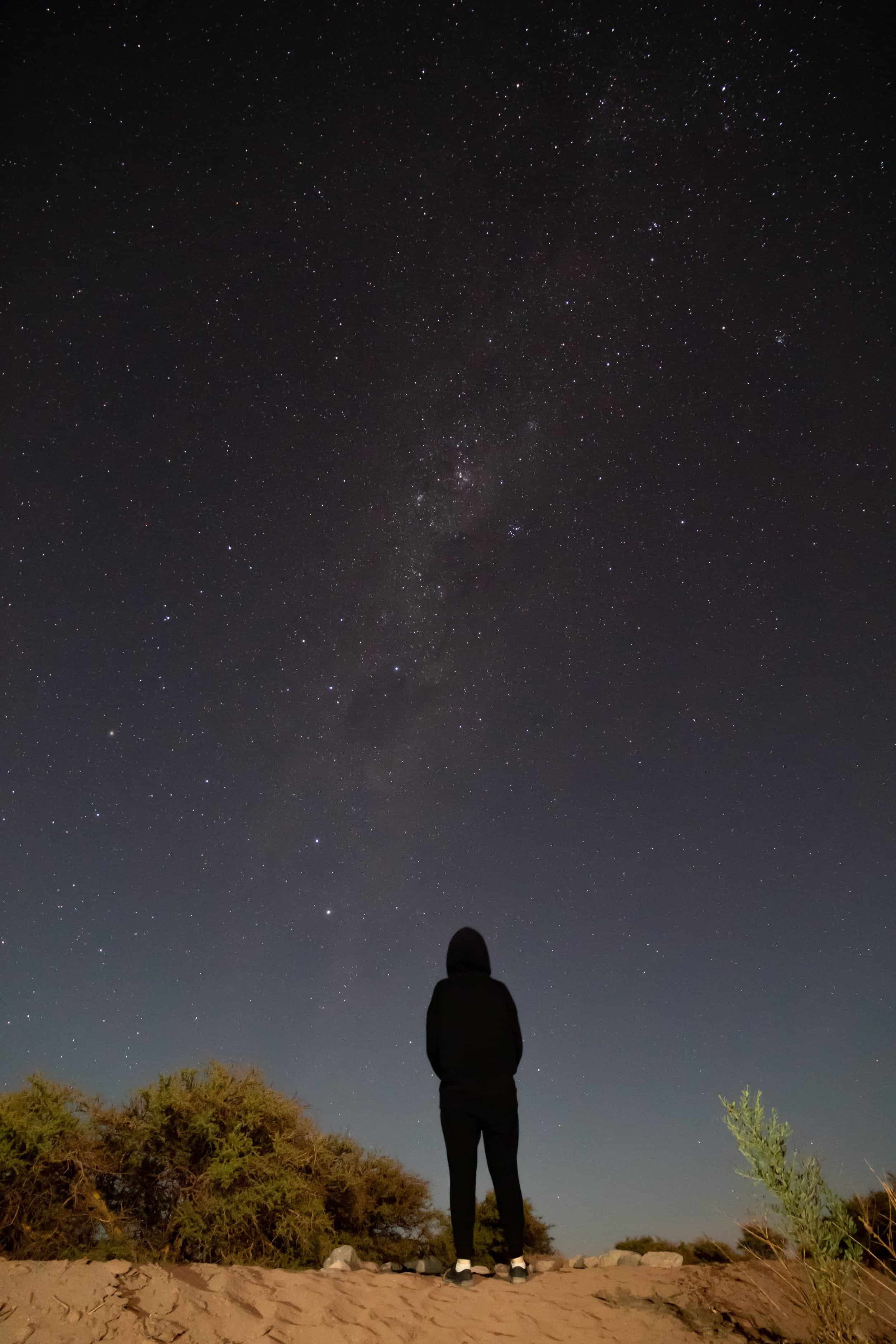
Our time in the Atacama also included sunrise at El Tatio Geysers, exploring Valle de la Luna and an evening of stargazing beneath the desert sky. From there, we traveled south to Punta Arenas and Torres del Paine National Park, where we stayed among towering peaks, waterfalls and glaciers. Our journey ended on Chiloé Island, exploring Castro's colorful waterfront, wooden churches and distinctive island culture.
Our route: Santiago → San Pedro de Atacama → Punta Arenas → Torres del Paine → Chiloé Island
Explore
Here's where the journey will take us.
THE EXPERIENCE
The Altiplanic Lagoons of Miscanti and Miñiques
Miscanti Lagoon · Miñiques Lagoon
THE ESSENTIALS
When to Go
How to Get There
Where to Stay
How to Get Around
How Long to Stay
Tours & Day Trips
What to Bring
Good to Know
KEEP EXPLORING
Things to Do | San Pedro de Atacama Travel Guide
More Adventures | El Tatio Geysers · Valle de la Luna · Stargazing in the Atacama Desert · Chaxa Lagoon, Piedras Rojas & Altiplanic Lagoons
Travel More | Chile Travel Guides
Visiting the Altiplanic Lagoons: Miscanti and Miñiques
A visit to Lagunas Altiplánicas takes you into the high-altitude landscapes southeast of San Pedro de Atacama, where two neighboring lagoons offer distinct perspectives on the Chilean Andes. Miscanti Lagoon is the larger of the two, while Miñiques Lagoon sits nearby beneath its namesake volcano.
I visited both as part of a full-day Atacama Desert tour, with time to walk along designated paths, watch vicuñas moving through the surrounding grasslands and take in the incredible setting. Although they're often visited together, each lagoon deserves a closer look.
Laguna Miscanti
The journey to Laguna Miscanti takes you southeast of San Pedro de Atacama, climbing into the Andean highlands of northern Chile. As the road gains elevation, the desert gradually gives way to open grasslands, volcanic mountains and the expansive landscapes of the Altiplano.
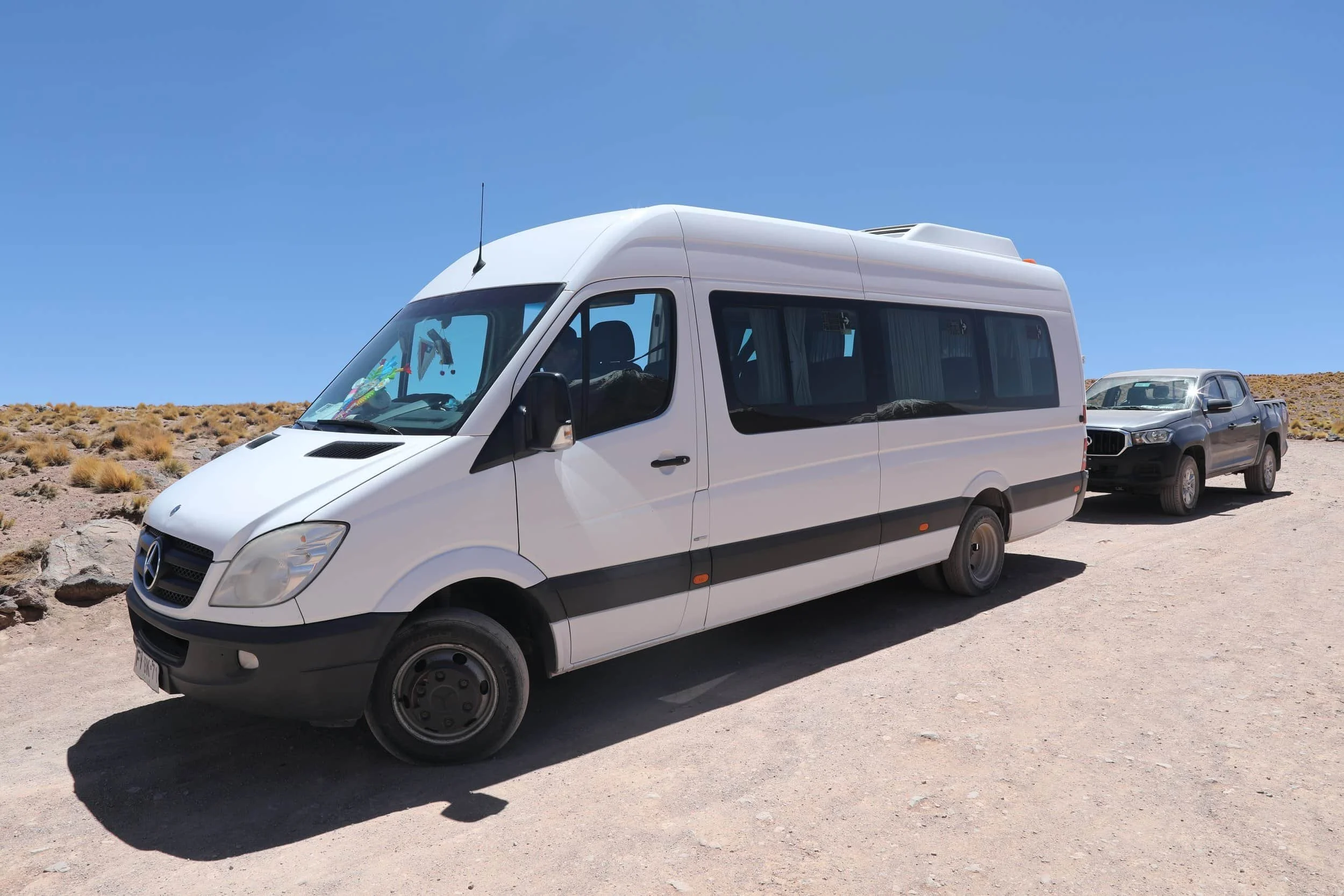
We arrived as part of a guided Atacama Desert tour, stepping out of our van into the clear mountain air. At more than 13,000 feet (4,000 meters) above sea level, even a short walk feels different here. The altitude encourages a slower pace, which suits a place best experienced without rushing.
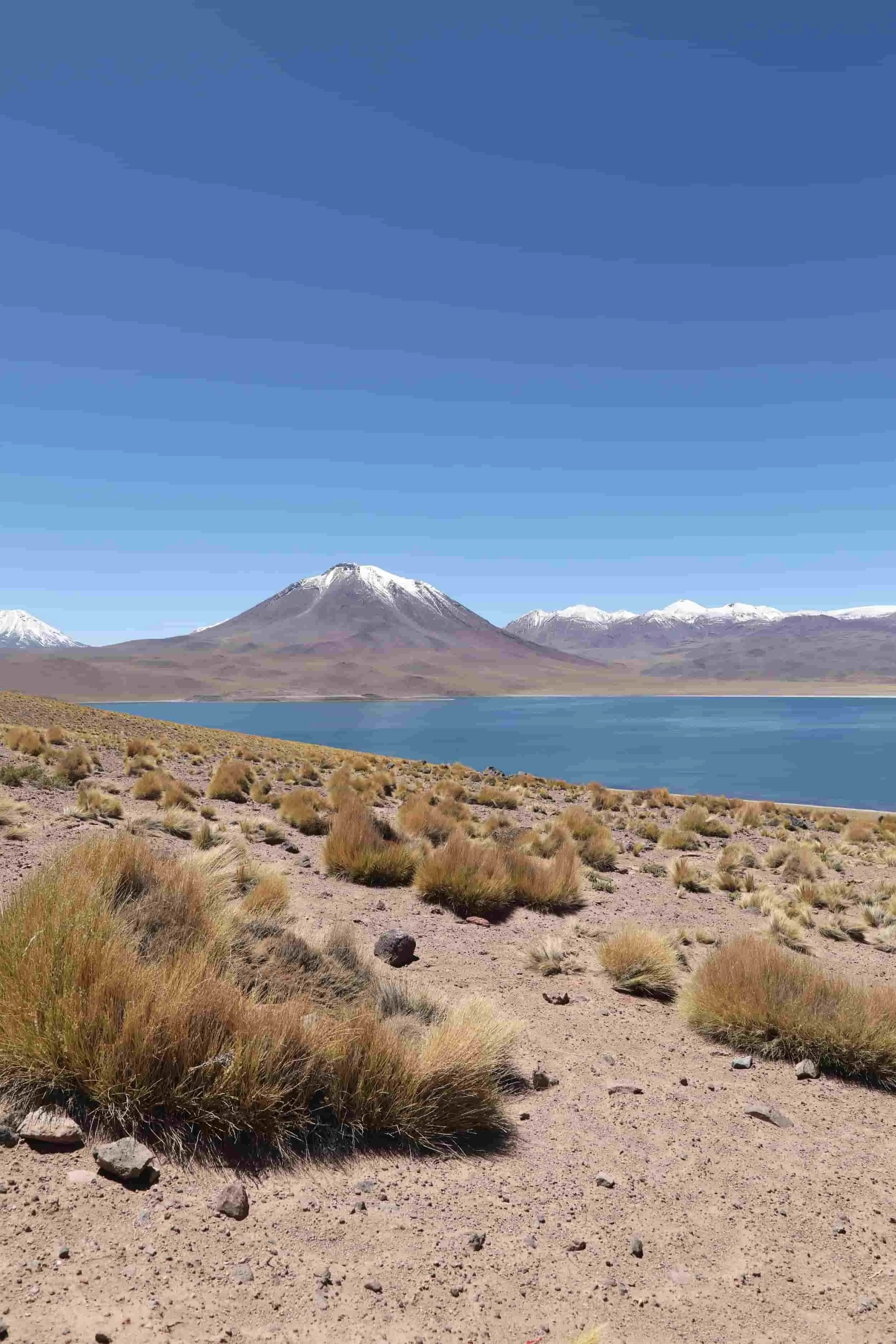
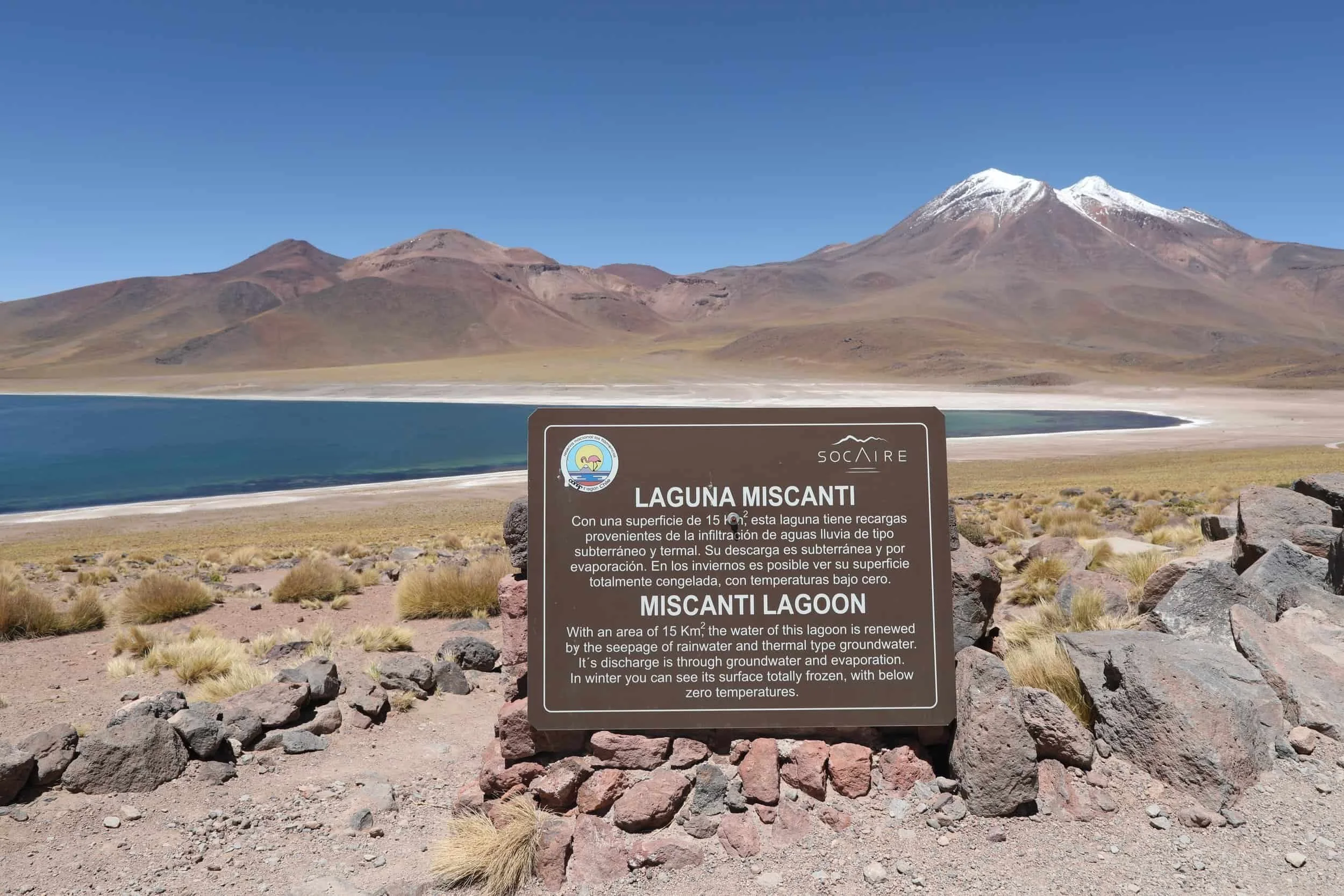
Part of Los Flamencos National Reserve in Chile's Antofagasta Region, Laguna Miscanti occupies a natural basin beneath Cerro Miscanti and Cerro Miñiques. The surrounding volcanic peaks define the horizon, creating an extraordinary sense of scale.
Unlike the salt flats and lower desert valleys, this landscape feels distinctly Andean. The vegetation is sparse, the air is crisp and the open terrain makes it possible to appreciate just how isolated these high-altitude lakes really are.
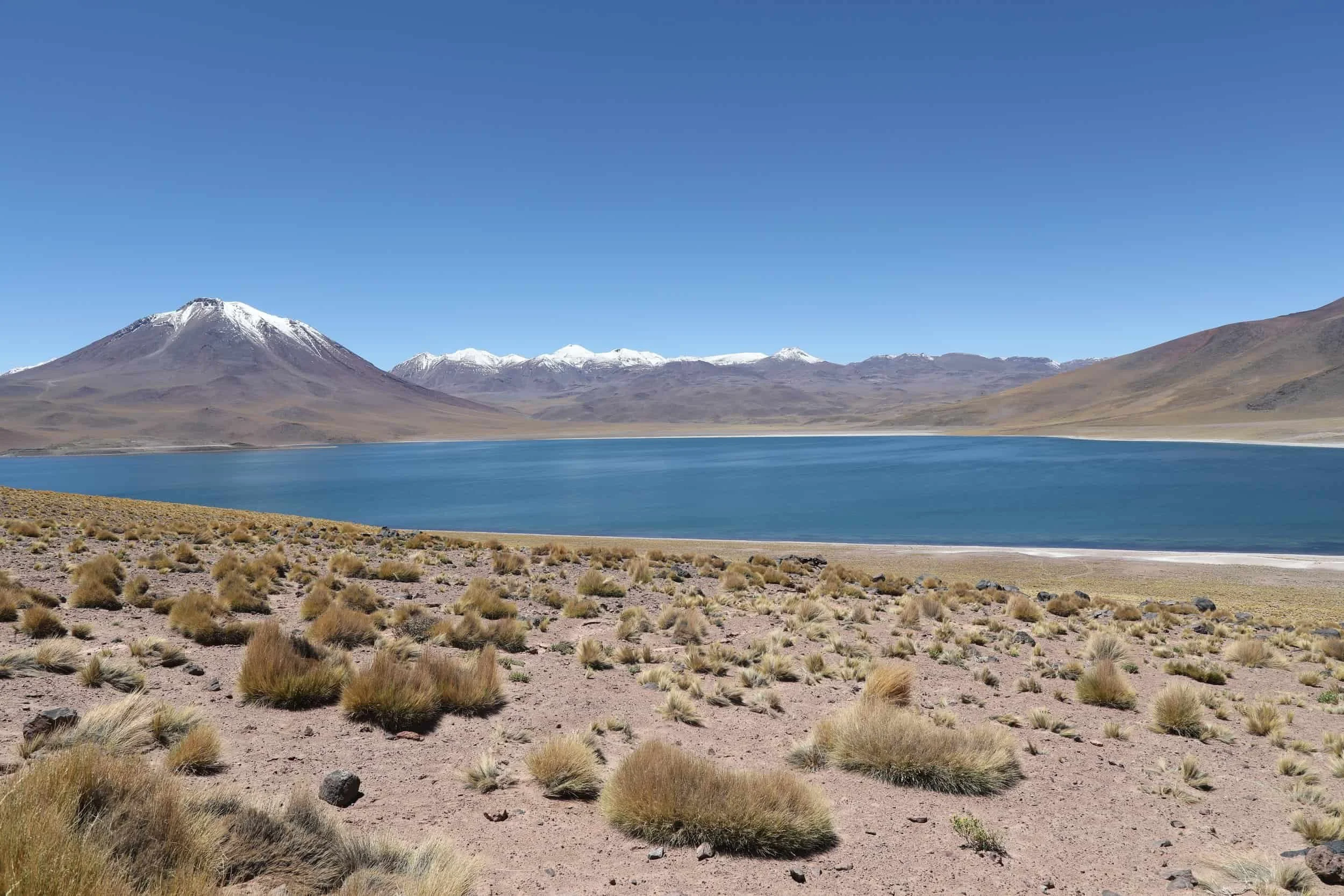
Covering approximately 5 square miles (13 square kilometers), Laguna Miscanti is the larger of the two neighboring Altiplanic Lagoons. Its broad, roughly heart-shaped basin holds deep blue water, surrounded by gently sloping terrain and the volcanic formations that shaped this part of the Andes.
From the viewpoints around the shore, the lagoon's unusual shape becomes more apparent. There's little to no development to interrupt the landscape, allowing the lake and surrounding mountains to remain the focus.
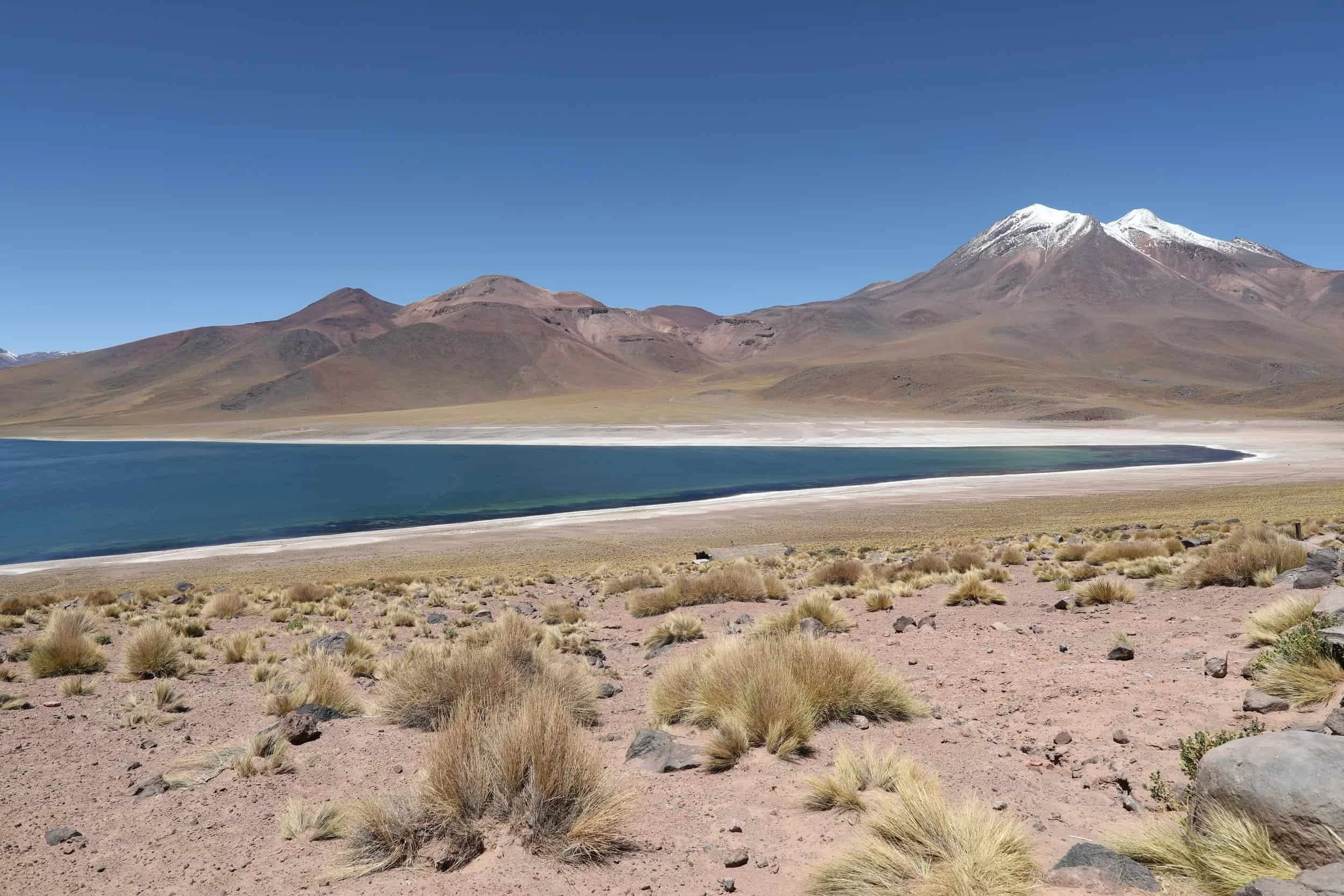
The geography of Miscanti and Miñiques tells a much older story. The two lagoons were once connected but ancient volcanic activity altered the landscape, leaving them separated by a natural barrier of lava.
The nearby volcanoes are equally impressive. Cerro Miscanti rises to approximately 18,445 feet (5,622 meters), while Cerro Miñiques reaches around 19,390 feet (5,910 meters). Their presence is a reminder that the quiet landscape visitors see today was shaped by powerful geological forces.
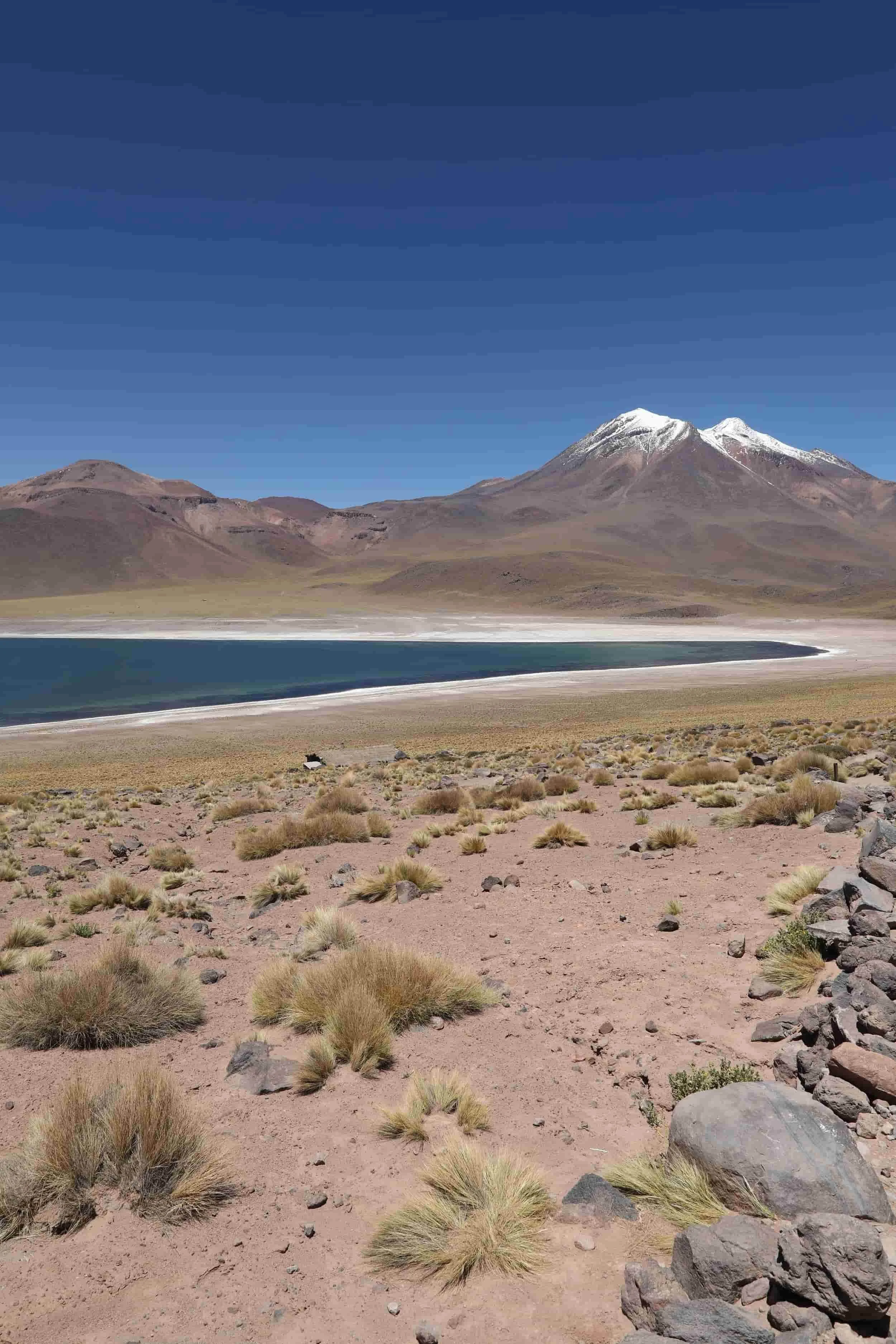
Finding such a substantial body of water in one of the driest regions on Earth is part of what makes Laguna Miscanti so interesting. Rainfall, seasonal snowmelt and underground water sources contribute to the lagoon, while evaporation and seepage influence its water levels.
Conditions change dramatically with the seasons. During the colder months, temperatures can fall well below freezing and ice may form across the water's surface. Even on a sunny day, the high elevation and exposed terrain can make the weather feel surprisingly cool.
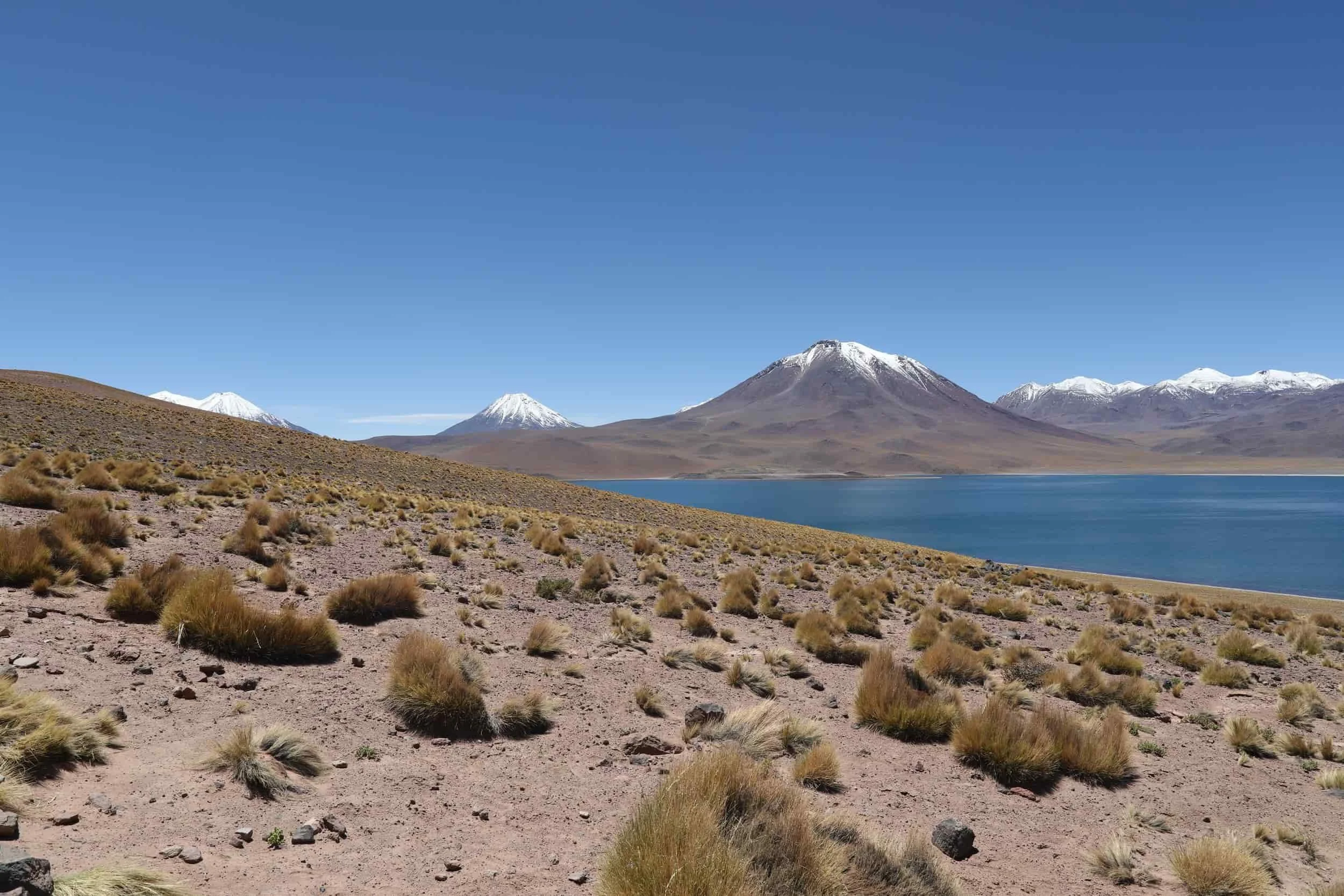
One of my favorite parts of visiting the Altiplanic Lagoons was watching the vicuñas moving through the surrounding grasslands. These wild relatives of the llama are perfectly adapted to life at high elevation, with slender bodies, long necks and soft tan coats that blend almost seamlessly into the landscape.
They were surprisingly lively, darting and leaping across the hills in small groups. Photographing them was another matter. They're quick, easily startled and often little more than tiny figures against the enormous mountains.
Can you spot the vicuñas in the image below?
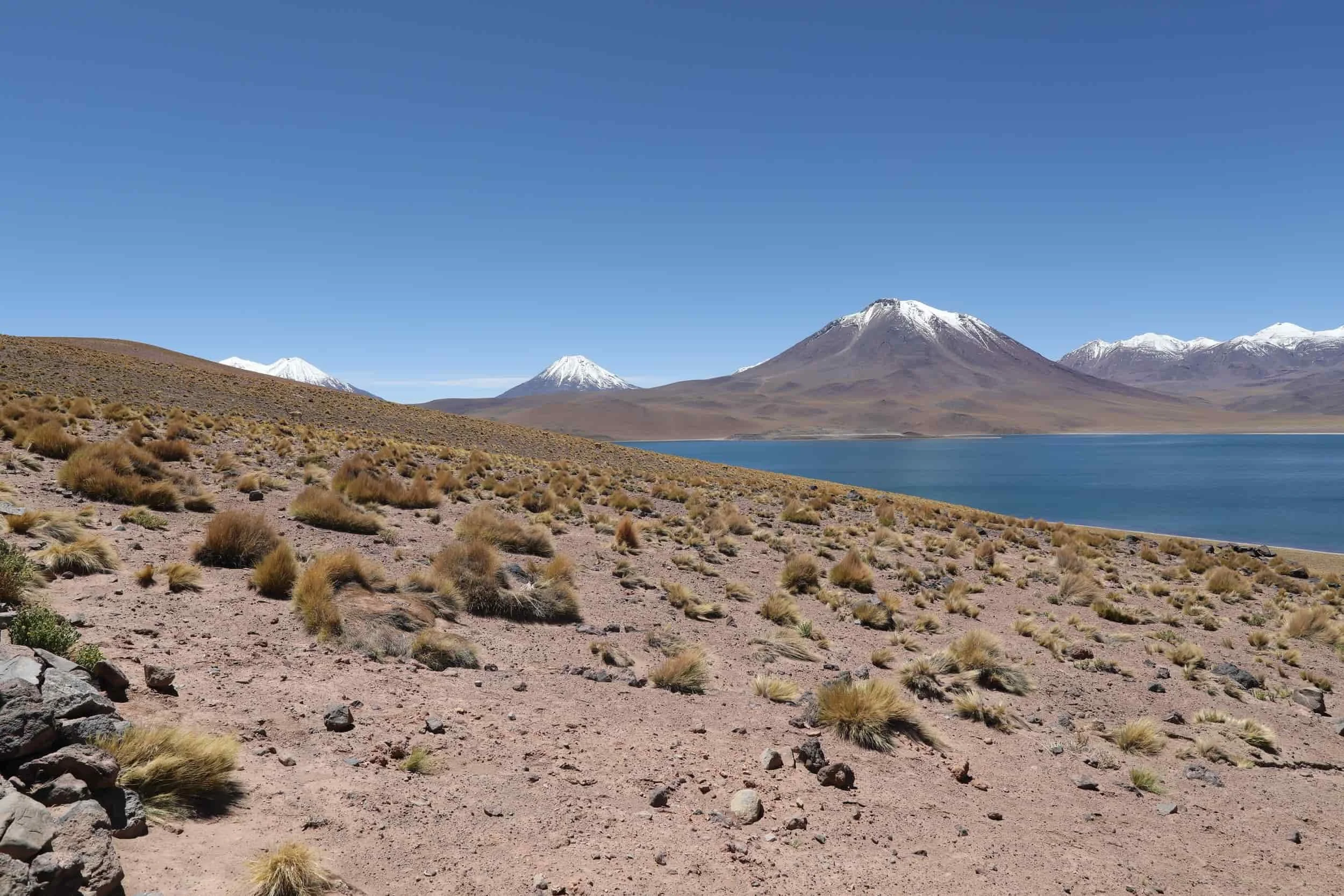
The wildlife wasn't limited to the ground. Large white Andean birds with black markings soared overhead, their wings spread against the clear blue Andean sky. Watching them glide through the mountain air was one of those simple moments that made the lagoons feel so peaceful.
Our guide shared something I found especially interesting: one of the region's vulnerable bird species can spend up to a year building its nest. That kind of patience is difficult to imagine, especially in an environment where conditions can be so harsh. It gave me a greater appreciation for the wildlife that manages to thrive in this remote corner of the Atacama Desert.


What I remember most about Laguna Miscanti is how uncomplicated the experience felt. The sky was clear, the sun was warm and there was very little to distract from the landscape. Between the vicuñas moving across the hills and the birds soaring overhead, there was always something to watch without feeling the need to do very much at all.
Of all the places we visited in the Atacama Desert, Miscanti offered a different kind of experience. Less about dramatic activity and more about appreciating the landscape at its own pace. It was peaceful, beautiful and refreshingly simple.
Miñiques Lagoon
From Laguna Miscanti, we climbed back into the van and drove over the hill to its smaller neighbor, Laguna Miñiques. The journey took only a few minutes but the change in perspective was noticeable. Where Miscanti felt expansive, Miñiques appeared more contained, its green-blue water tucked into a rocky basin beneath the surrounding mountains.
There was something wonderfully understated about arriving here. No long hike or dramatic approach, just another beautiful stretch of the Atacama Altiplano waiting on the other side of the hill.
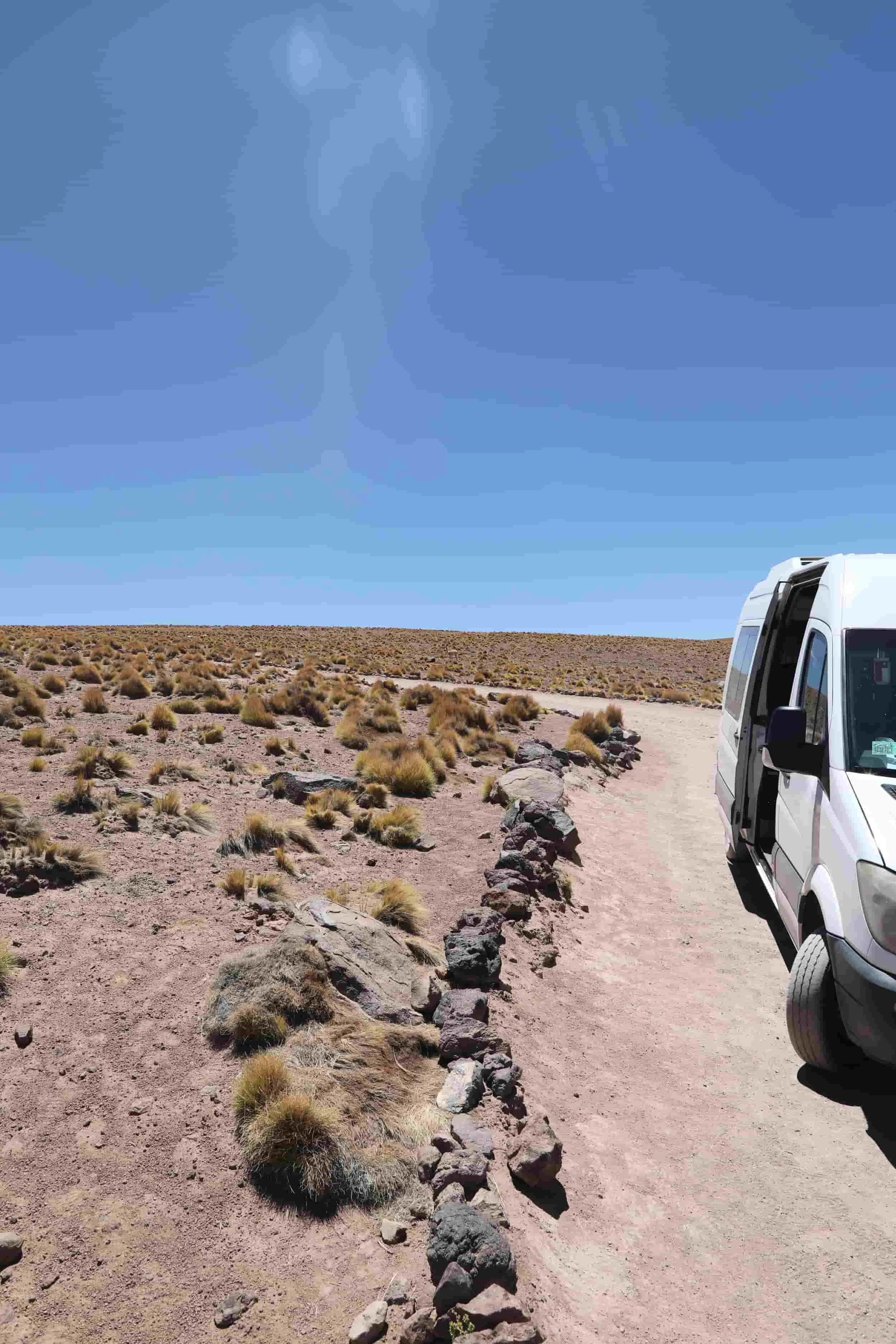
At Miñiques Lagoon, we stayed farther from the shoreline, taking in the landscape from a distance rather than walking toward the water. The terrain was rocky and sparsely covered with vegetation, with small patches of grass and low shrubs scattered across the slopes.
A few vicuñas moved through the landscape, so well camouflaged against the earth-toned hills that they were easy to miss. Without much activity around us, watching for wildlife became part of the experience.
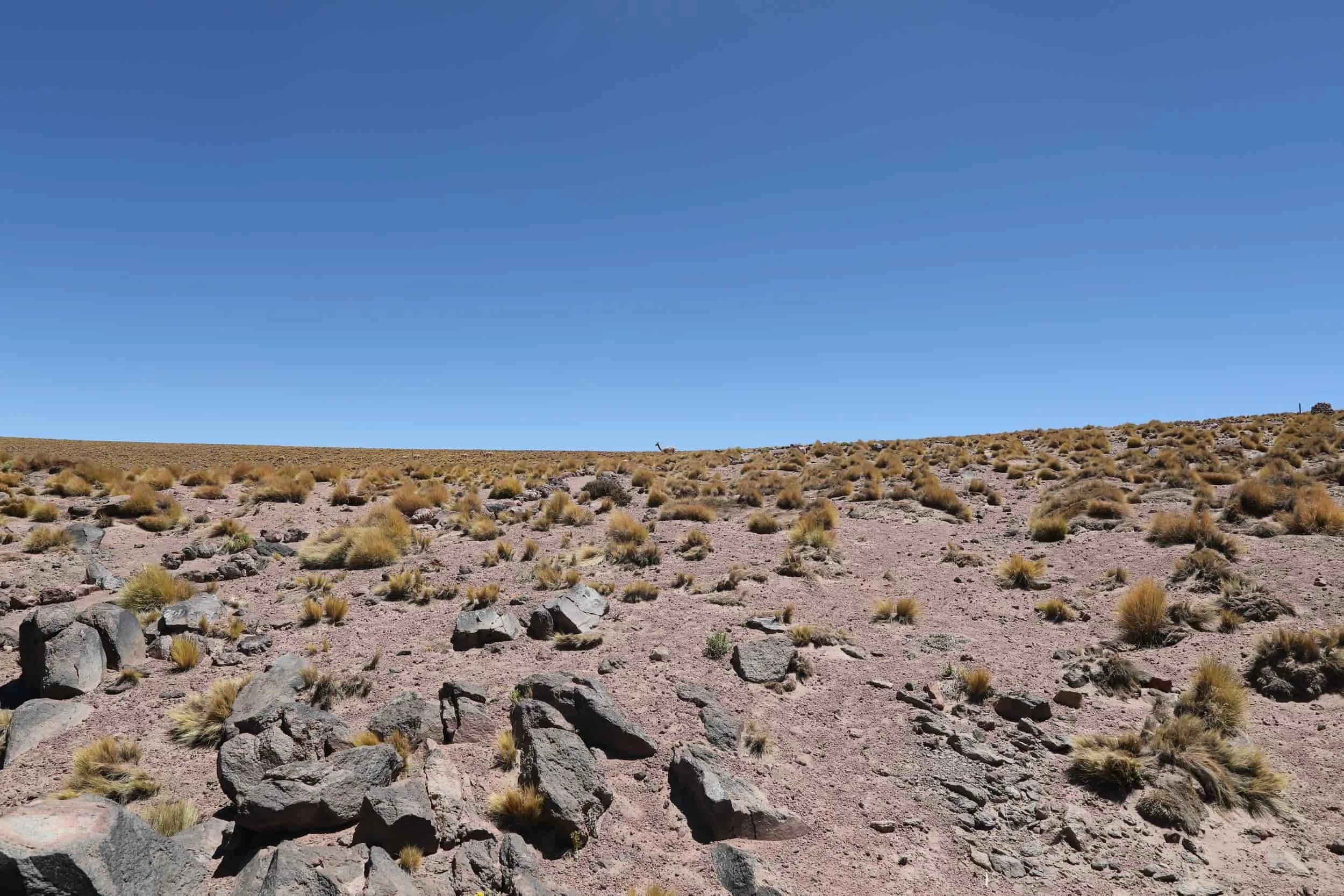
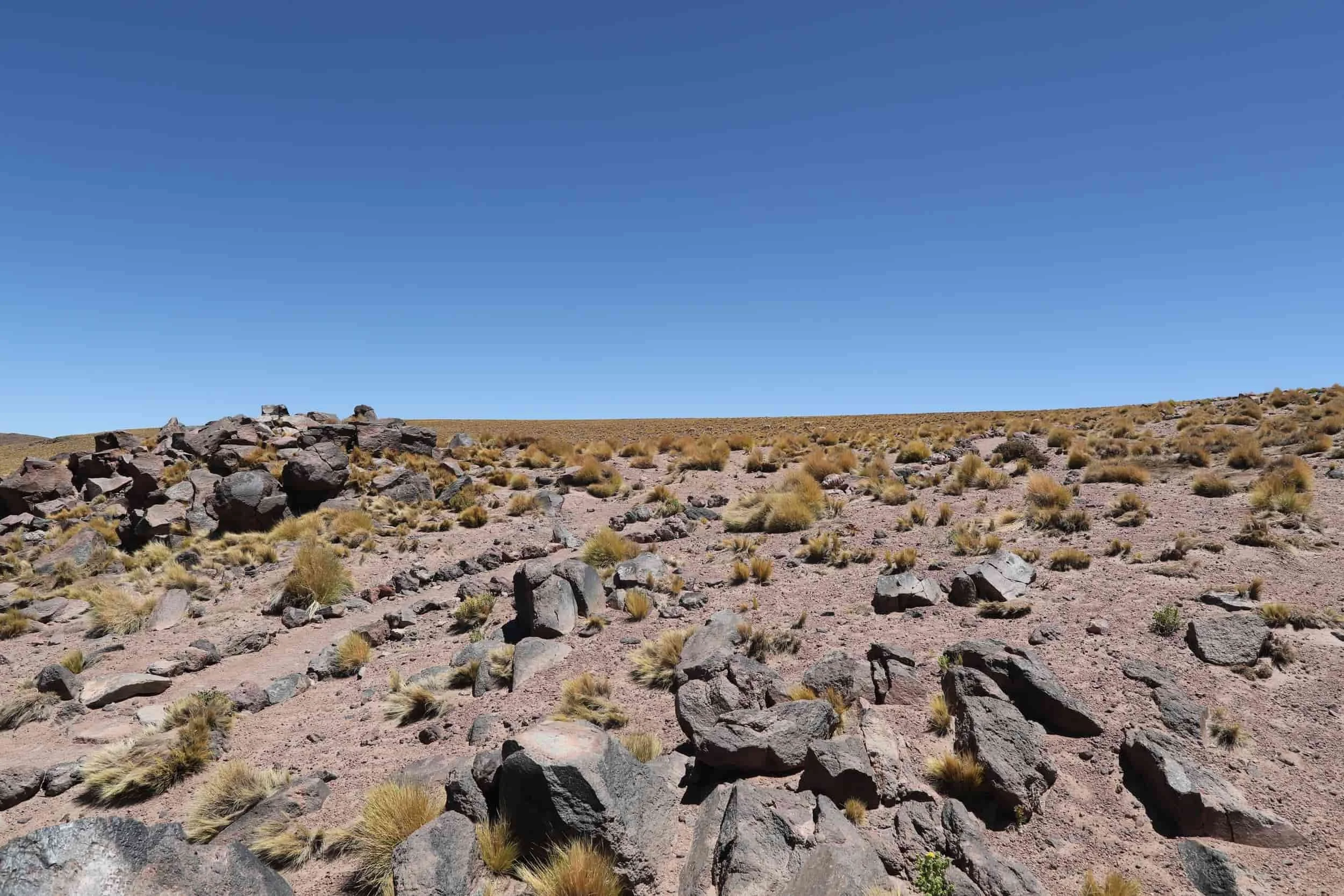
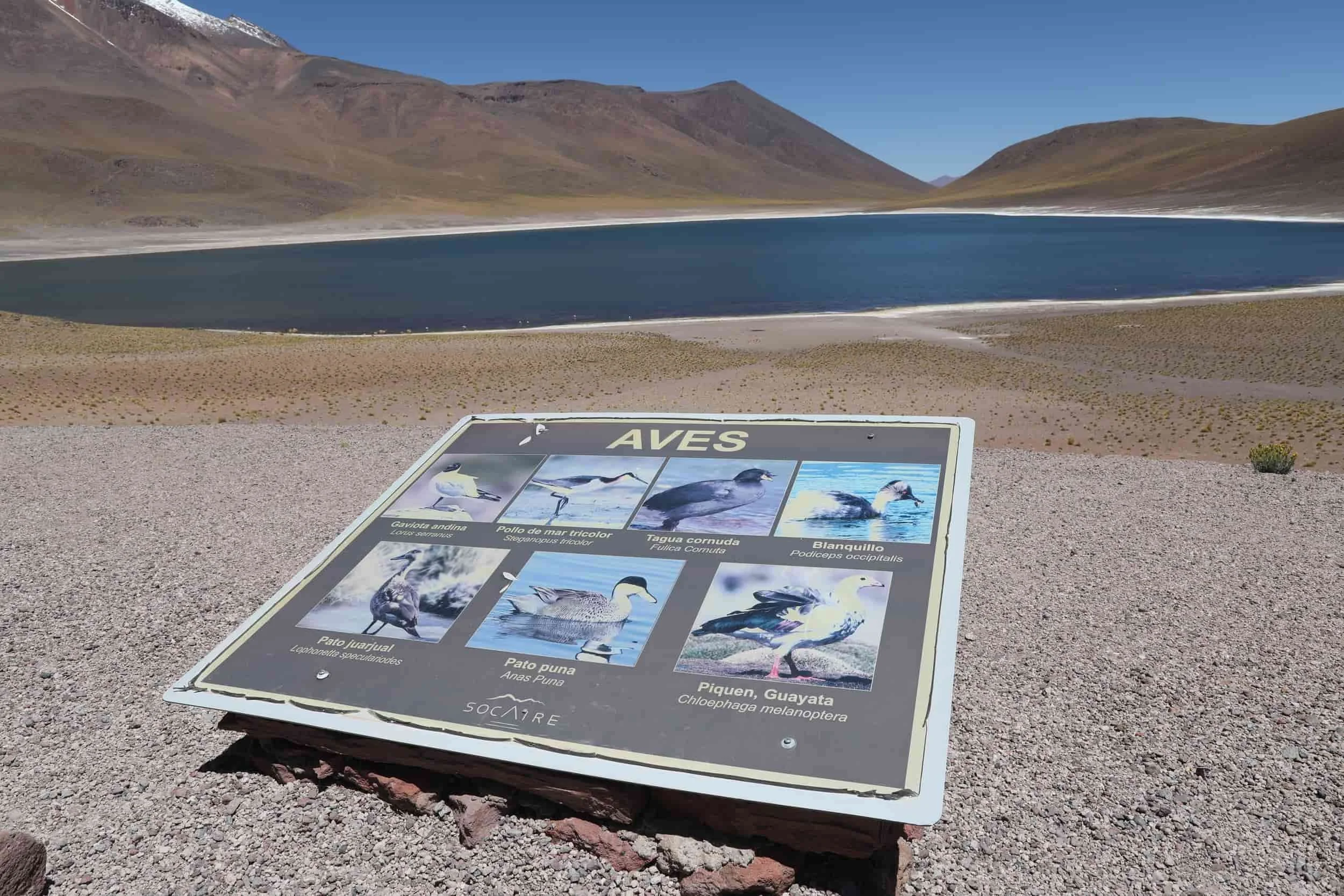
Although the landscape looks sparse, the Altiplanic Lagoons of Miscanti and Miñiques support a surprising variety of wildlife. An interpretive sign near the viewpoint introduced some of the birds found in the region, including the puna teal (pato puna), crested duck (pato juarjual), silvery grebe (blanquillo) and Andean goose (piquén or guayata).
These high-altitude wetlands provide important habitat for birds adapted to the cold, dry conditions of the Andes. Some species feed along the shoreline, while others use the surrounding vegetation for shelter and nesting.
We didn't see every bird pictured on the sign but it was interesting to learn just how much life these remote lagoons support.
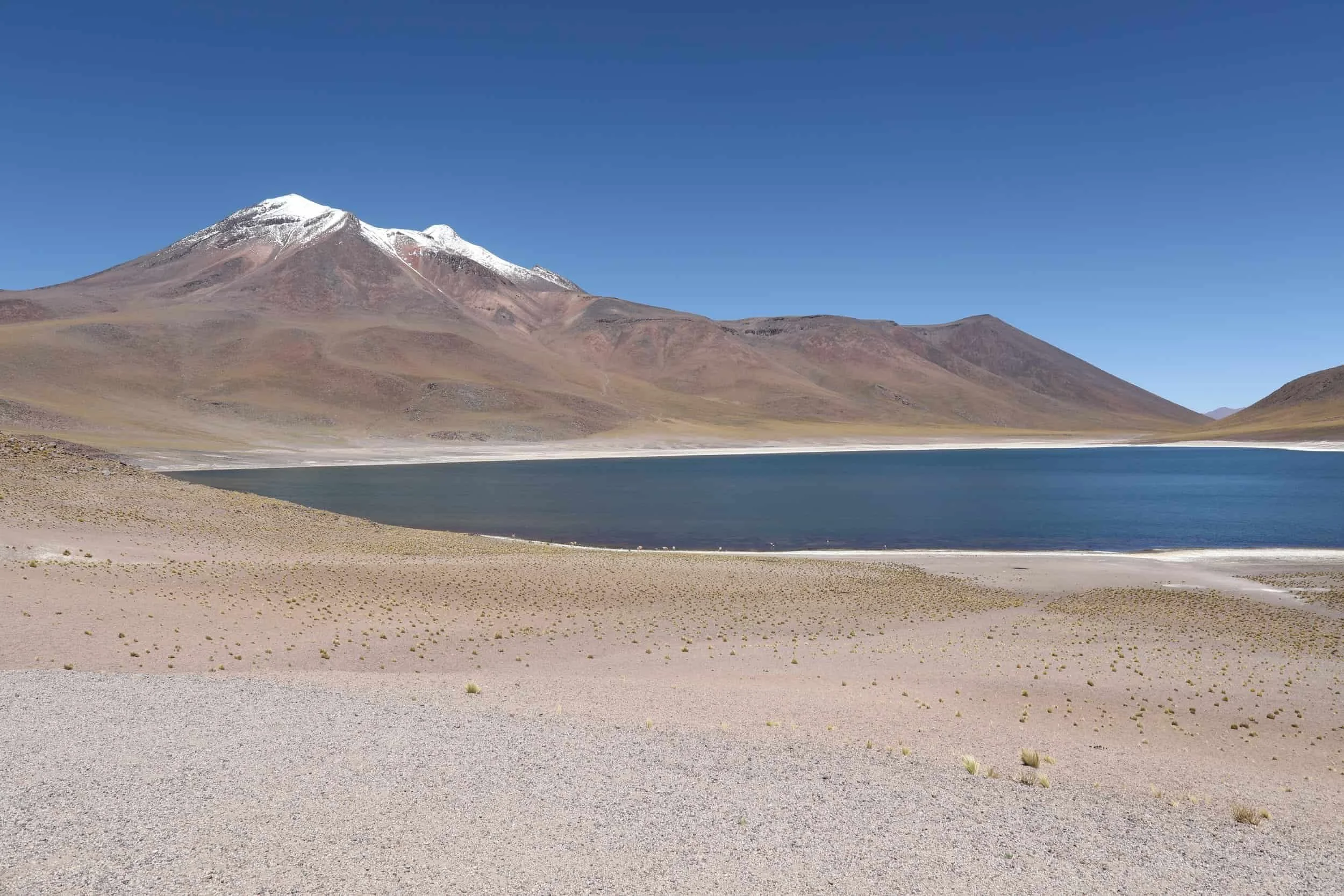
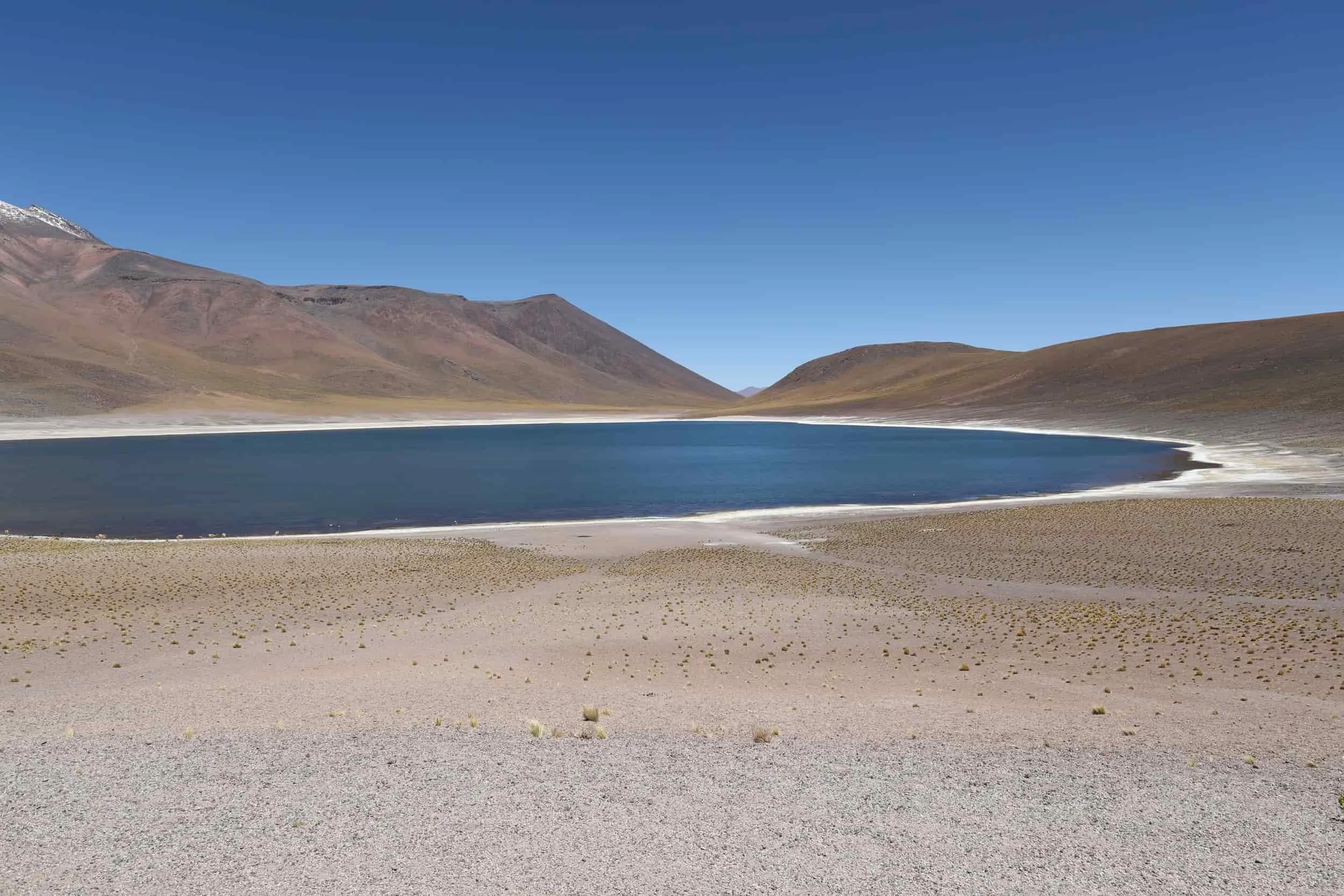
From our viewpoint, Laguna Miñiques seemed almost small enough to take in at once. The water was calm, the surrounding hills were quiet and the occasional vicuña appeared as a tiny moving speck near the shoreline.
We spotted a few animals making their way toward the water, although they were much too far away for close photographs. Seeing them move freely through the landscape, without people approaching or interrupting them, felt like the right way to experience this place.
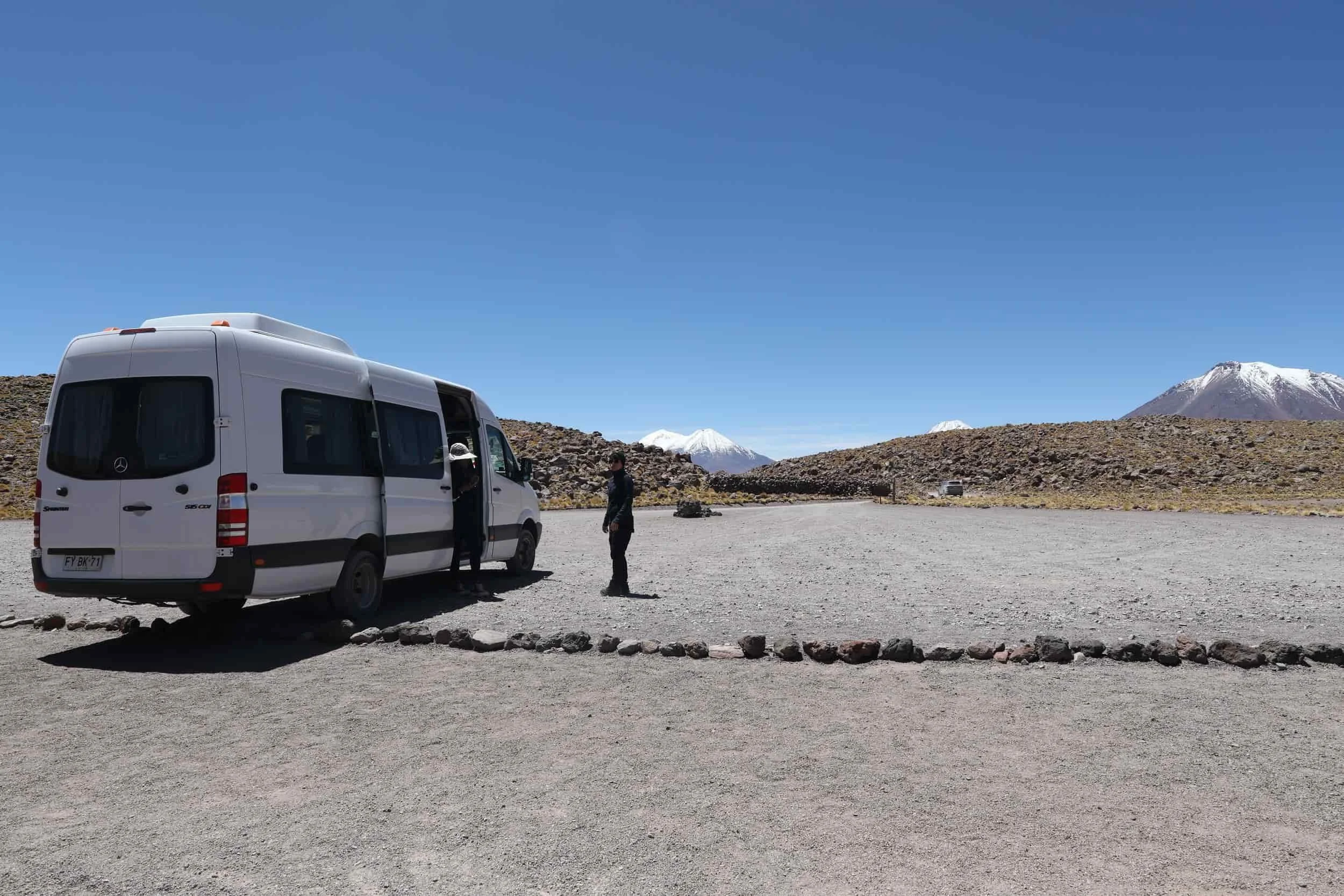
Eventually, it was time to return to the van. With the volcanic peaks rising behind us, we left Miñiques Lagoon and began making our way back through the highlands.
Visiting the two lagoons together had been one of the quieter parts of our Atacama Desert tour. There wasn't much to do beyond looking, walking a little and watching the wildlife, but that simplicity was exactly what made the experience memorable.
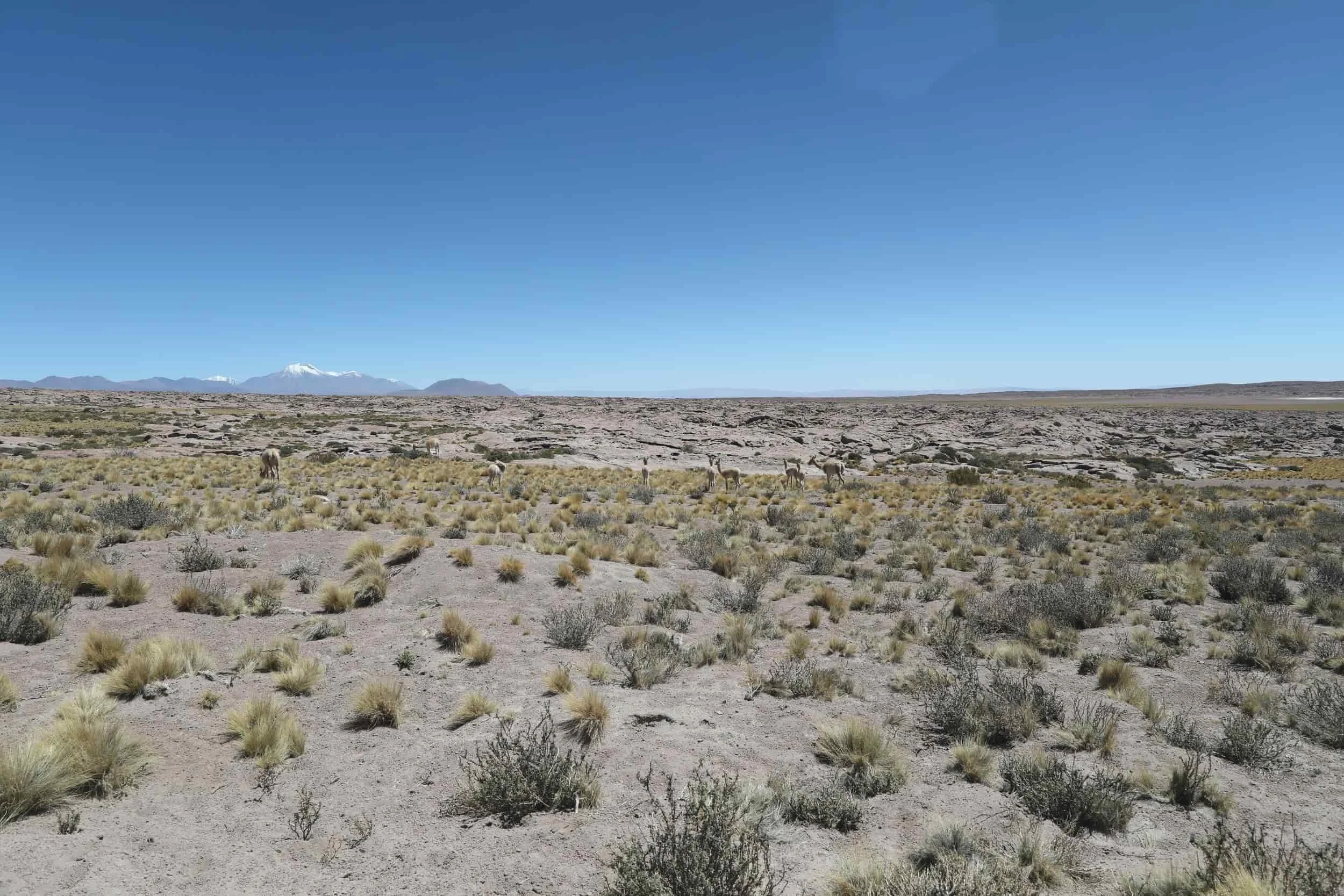
Even as we were leaving, the vicuñas continued to catch my attention. A few lingered among the rocks and low vegetation, their brownish coats blending so naturally into the terrain that I nearly missed them.
The Andean highlands have a way of making you look more carefully. What initially seems like an empty landscape gradually reveals small movements, subtle colors and signs of life everywhere. After visiting Miscanti and Miñiques, that was one of the things I appreciated most.
My Bibimbap Moment
Every destination adds another ingredient to our life's recipe, sometimes through the simplest experiences. At the Altiplanic Lagoons of Miscanti and Miñiques, it wasn't an adrenaline-filled adventure or a packed itinerary that stayed with me. It was the quiet beauty of the Andean highlands, the clear blue skies and the wildlife moving freely through the landscape. Here's the ingredient this peaceful corner of the Atacama Desert added to My Bibimbap Life.
Today's Bibimbap Recipe
🥢 Flavor: Luminous
🌿 Ingredient: Tranquility
❤️ Best Memory: Watching vicuñas leap through the golden hills while birds soared above the bright blue lagoons
🎒 Take With You: Not every beautiful experience needs to be filled with activity. Sometimes the most memorable moments come from slowing down, looking around and appreciating what's already there.
When I think back on Miscanti and Miñiques, I remember how peaceful everything felt. The sun was shining, the skies were clear and the deep blue lagoons sat quietly beneath the mountains. Vicuñas wandered through the rocky hills, occasionally leaping across the terrain, while birds glided effortlessly overhead. There was nothing complicated about the experience, and that was what I loved most. Tranquility was the ingredient I took home, a reminder that sometimes a place makes its strongest impression simply by allowing you to be there.
Altiplanic Lagoons Travel Essentials
Visiting the Altiplanic Lagoons of Miscanti and Miñiques is one of the most memorable Atacama Desert trips but the remote location, high elevation and changing mountain weather make a little preparation worthwhile. Located approximately 70 miles (110 km) southeast of San Pedro de Atacama, the lagoons sit more than 13,000 feet (4,000 meters) above sea level, where even sunny days can bring cold winds and rapidly shifting conditions.
Most travelers visit as part of a guided Atacama Desert tour, often combining the lagoons with other attractions in the Andean highlands. Independent visits may also be possible with advance planning, depending on current access requirements. Allow approximately 4–6 hours for a dedicated trip from San Pedro de Atacama, longer if you're including additional stops, and give yourself time to acclimatize before heading into the mountains.
When to Go
The Altiplanic Lagoons of Miscanti and Miñiques can be visited year-round, although weather conditions in the high Andes vary considerably by season.
April through October generally brings drier conditions, clear skies and excellent visibility across the volcanic landscapes. However, temperatures can drop well below freezing, particularly during the winter months of June through August, when snow and ice may affect access.
November through March brings warmer daytime temperatures and the possibility of summer rainfall in the Andes, especially during January and February. Known as the Altiplanic winter, this seasonal weather pattern can give way to afternoon thunderstorms, temporary road closures and greener highland vegetation.
For photography and sightseeing, clear mornings offer some of the best conditions, when sunlight illuminates the deep blue waters and surrounding volcanic peaks. Guided Atacama Desert tours typically depart San Pedro de Atacama early, allowing time to reach the lagoons before the afternoon and visit additional attractions along the way.
How to Get There
The Altiplanic Lagoons are located approximately 70 miles (110 km) southeast of San Pedro de Atacama, the main base for exploring northern Chile's desert landscapes. Most visitors travel from San Pedro, either on a guided Atacama Desert tour or by rental car.
Air: Fly into El Loa Airport (CJC) in Calama, about 60 miles (100 km) from San Pedro de Atacama. Direct flights from Santiago take around two hours, followed by a 1–1.5-hour shuttle or private transfer to town.
Bus: Regular buses connect Calama with San Pedro de Atacama in about 1.5 hours. Long-distance services also operate from other northern Chilean cities, although there is no convenient public bus service directly to the lagoons.
Guided Tour: This is the easiest option and how I visited. Most Atacama Desert tours combine Miscanti and Miñiques with other highland attractions, often including Piedras Rojas, Chaxa Lagoon and the village of Socaire. Full-day excursions generally last 10–12 hours, with transportation, a guide and sometimes meals included. It's a good choice if you'd rather enjoy the scenery without navigating remote mountain roads.
Rental Car: Visiting independently gives you more flexibility to travel at your own pace and spend time at each lagoon. The route generally follows Route 23-CH southeast from San Pedro de Atacama, passing through Toconao and Socaire before turning toward the lagoons. Expect a combination of paved roads and potentially rougher access roads, so confirm current conditions and vehicle suitability with your rental company. Download offline maps, carry water and fuel up before leaving town.
Independent visitors should also confirm current entrance requirements, opening hours and any advance reservations with the protected area's administrator. Access to the lagoons may be regulated, and arriving without the necessary arrangements could mean being turned away.
Where to Stay
San Pedro de Atacama is the best base for exploring the Altiplanic Lagoons of Miscanti and Miñiques, with accommodation ranging from simple guesthouses to boutique hotels and peaceful desert retreats. Staying near the town center makes it easy to walk to restaurants, shops and tour operators, while properties a little farther out offer more space, quieter surroundings and a welcome escape from the heat. Whether you're joining a guided excursion or driving into the Andes independently, a comfortable place to unwind after a day at high altitude is especially worthwhile.
Where I Stayed in San Pedro de Atacama
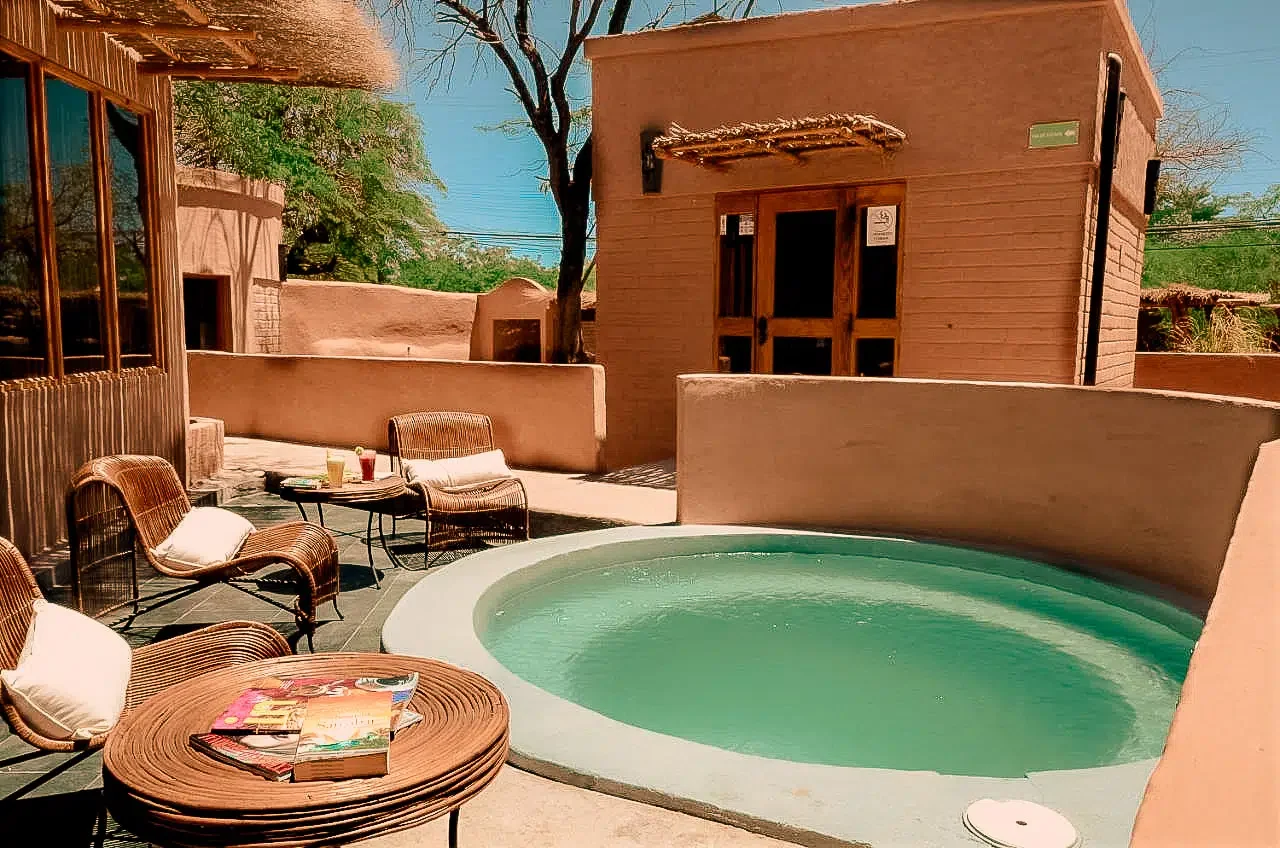
For a Peaceful Desert Retreat — Casa Solcor Boutique Bed & Breakfast
We stayed at Casa Solcor Boutique Bed & Breakfast, just outside the center of San Pedro de Atacama, and it was nearly perfect. The peaceful atmosphere, lovely pool, comfortable lounging areas and delicious breakfast made it a wonderful place to unwind between excursions. Town was only about a 10–15-minute walk away, although the desert heat made that short distance feel a bit longer during the day. For us, the tranquility and space were well worth it, especially after a full day exploring the salt flats and high-altitude lagoons.
Where I'd Stay in San Pedro de Atacama
If I were planning another visit, these are a few places I'd consider for their thoughtful design, inviting atmosphere and convenient locations. Each offers something slightly different, from intimate boutique accommodations to a peaceful retreat after a day exploring the Atacama Desert.
For a Quiet Boutique Stay — Hotel Pascual Andino
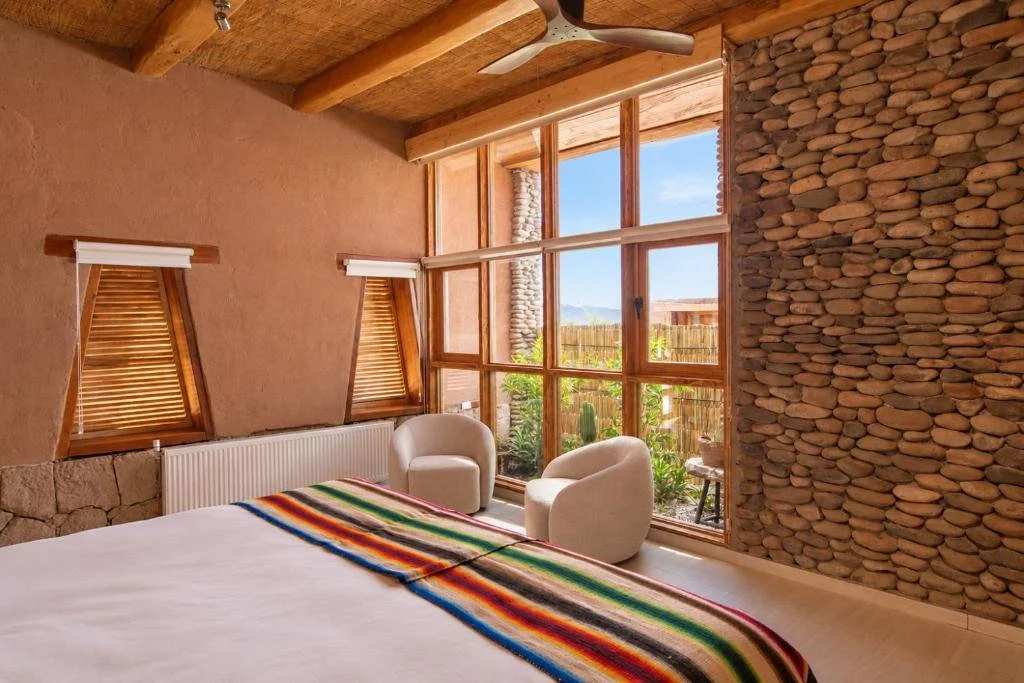
A welcoming boutique hotel with just 10 rooms, located one block from San Pedro's main street. Adobe-style walls, warm wood finishes and private patios reflect the region's architectural character, while a seasonal pool and included breakfast make it a comfortable place to recharge. It's the perfect option if you prefer smaller accommodations while keeping restaurants and tour meeting points within easy walking distance.
For Design & Desert Atmosphere — Hotel Desértica
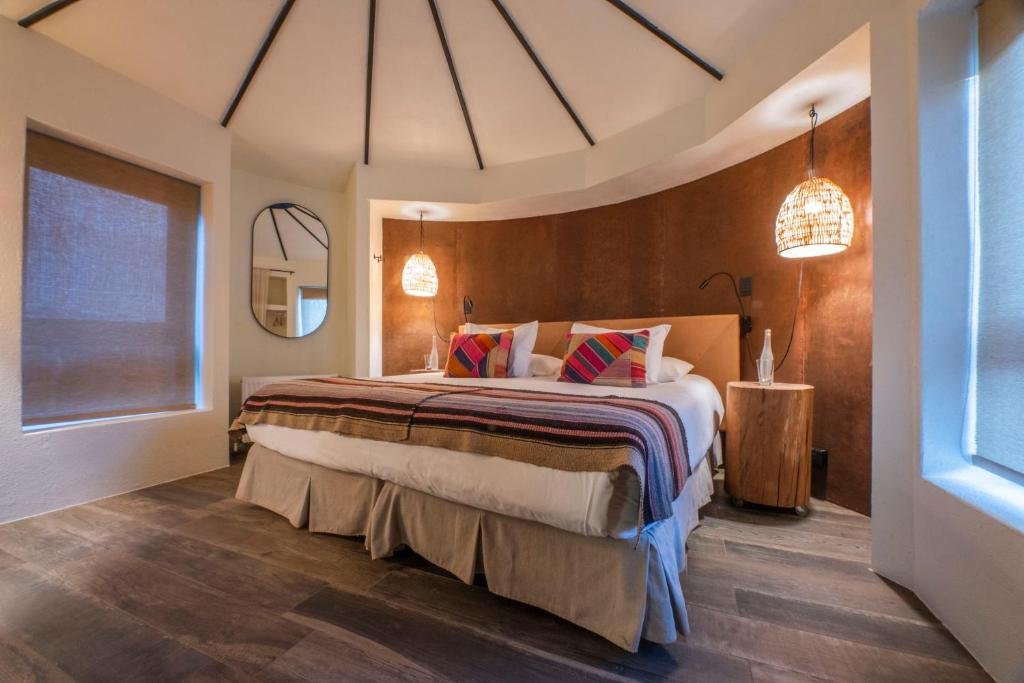
One of San Pedro de Atacama's more interesting design-focused stays, Hotel Desértica sits on a former Atacameño orchard just a short walk from the town center. Its circular guest rooms take inspiration from traditional local construction, creating a beautiful relationship between architecture and landscape. With a pool, outdoor lounges and an on-site restaurant, it's an ideal retreat after a long day exploring the Altiplanic Lagoons and surrounding Andean highlands.
Additional Options
For a Historic Boutique Splurge — Hotel Terrantai
Located in the historic center of San Pedro de Atacama, Hotel Terrantai takes over a restored 19th-century property that celebrates the region's traditional architecture. Adobe, stone, wood and local craftsmanship give the interiors a strong sense of place, while modern comforts make it a calming retreat after a day in the Andes. Its central location is especially convenient for walking to restaurants, exploring town and meeting tour operators.
Prefer a Place of Your Own in San Pedro?
A private apartment, casita or vacation rental can be a great alternative, especially if you're staying several days or prefer a little more independence. Having your own kitchen and outdoor space can make it easier to settle into the slower rhythm of desert life between excursions. Look for somewhere within walking distance of the town center if you won't have a rental car, and confirm early tour pickup arrangements or parking availability depending on how you plan to visit the Altiplanic Lagoons.
How Long to Stay
Allow approximately 4–6 hours for a dedicated visit to the Altiplanic Lagoons of Miscanti and Miñiques from San Pedro de Atacama, including travel time and stops at both lagoons. If you're joining a full-day Atacama Desert tour that also includes Chaxa Lagoon, Piedras Rojas and other highland attractions, expect a longer excursion of approximately 10–12 hours.
While the two lagoons can easily be visited in a single outing, plan to spend at least 3–4 days in San Pedro de Atacama to explore other highlights like El Tatio Geysers, Valle de la Luna and stargazing beneath the desert sky. This also gives you time to adjust to the altitude before heading into the high Andes.
Tours & Day Trips
The Altiplanic Lagoons of Miscanti and Miñiques are one of the most popular stops on Atacama Desert tours from San Pedro de Atacama. Most guided excursions combine the lagoons with Piedras Rojas, Chaxa Lagoon and sometimes the Andean village of Socaire, creating a full-day journey through several of northern Chile's most unique landscapes.
A guided tour is especially convenient for reaching the remote highlands without worrying about mountain roads, navigation or the effects of driving at altitude. Many excursions include transportation, a local guide and meals, although entrance fees and reservation arrangements vary by operator. Look for smaller groups and itineraries that allow enough time to appreciate both lagoons.
I visited as part of a full-day excursion that included Chaxa Lagoon and Piedras Rojas. It was one of my favorite days in Chile, and having someone else handle the logistics made it easy to enjoy the changing scenery. That said, visiting independently may be a good alternative for travelers who prefer a flexible schedule, provided current access requirements and road conditions allow.
Want to Visit the Altiplanic Lagoons on a Guided Tour?
Look for Atacama Desert tours that specifically include Lagunas Altiplánicas, Miscanti and Miñiques, rather than assuming every highland excursion visits both. Compare group sizes, time at each lagoon, included meals and whether the operator handles protected-area entrance reservations.
Explore Altiplanic Lagoons tours →
Want to Discover More of the Atacama Desert?
Beyond the lagoons, San Pedro de Atacama is a base for exploring the geothermal fields of El Tatio Geysers, the sculptural landscapes of Valle de la Luna and the desert's extraordinary night skies. These experiences offer a different perspective on the region's geology, wildlife and natural beauty, and are easy to incorporate into a longer stay.
What to Bring
The Altiplanic Lagoons sit high in the Andes, where intense sunshine, dry air and cold winds can all be part of the same visit. A few essentials will help you stay comfortable, whether you're joining a guided tour or driving independently.
Bring warm layers, including a fleece or insulated jacket and a windproof outer layer for exposed viewpoints and chilly mornings.
Wear comfortable walking shoes with good traction for rocky paths and uneven terrain.
Pack high-SPF sunscreen, sunglasses and a hat to protect yourself from the strong high-altitude sun.
Carry plenty of water and a few snacks, especially if you're visiting independently or your tour doesn't include meals.
Keep lip balm and moisturizer close, as the extremely dry air can be harsh on your skin.
Bring a camera or binoculars for photographing the lagoons and spotting vicuñas and Andean birds in the distance.
Use a small daypack to keep your essentials organized and your hands free while exploring.
Good to Know
The Altiplanic Lagoons of Miscanti and Miñiques are part of Los Flamencos National Reserve, a protected landscape where high altitude, limited facilities and sensitive ecosystems require a little extra preparation.
Altitude is one of the biggest considerations, with the lagoons sitting more than 13,000 feet (4,000 meters) above sea level. Spend time acclimatizing in San Pedro de Atacama before visiting, stay hydrated and take things slowly. If you develop symptoms of altitude sickness, don't push through them. Descending to a lower elevation may be needed.
Entrance fees and access requirements may differ for guided tours and independent visitors. Check current admission arrangements, opening hours and whether advance reservations are required before leaving San Pedro. If you're booking a tour, confirm whether entrance fees are included.
Facilities and mobile reception are limited in the highlands, so bring enough water, snacks and any essentials you'll need for the journey. Carry some Chilean pesos (CLP) for incidental expenses, although payment methods and entrance arrangements should be confirmed in advance.
Weather conditions can change quickly at this elevation, even when San Pedro de Atacama is warm and sunny. Strong winds, freezing temperatures and seasonal storms can affect road conditions and access to the lagoons. Check the forecast before traveling, especially if you're driving independently.
🌍 One Last Thing | The lagoons lie within the ancestral territory of the Atacameño (Lickanantay) people, whose communities have longstanding connections to the Andean highlands. Respect designated paths, keep a generous distance from vicuñas and nesting birds and follow local conservation guidelines. These wetlands are important both for the wildlife they support and for the communities connected to the landscape.

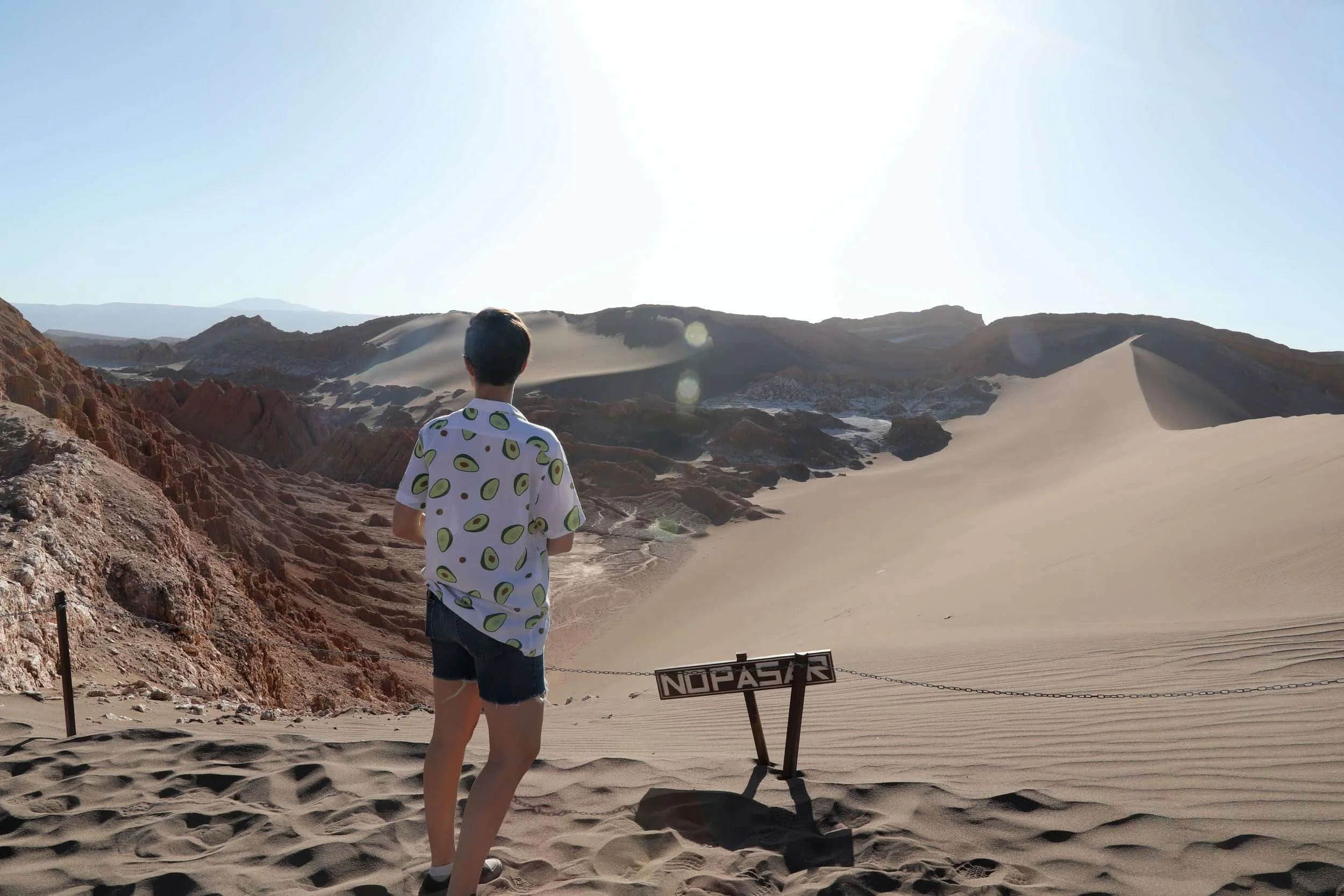

Casa Solcor Boutique Bed & Breakfast feels like a welcoming desert hideaway, with warm adobe-style rooms, leafy courtyards and plenty of space to relax.