Unforgettable Things to Do in Patagonia — A Traveler’s Guide to Torres del Paine
Witness a vast, otherworldly expanse of jagged glaciers & wind‑sculpted ice that reveal both the raw power of nature & the urgent story of a changing climate with this travel guide — a Torres del Paine day trip.
Updated | June 2026
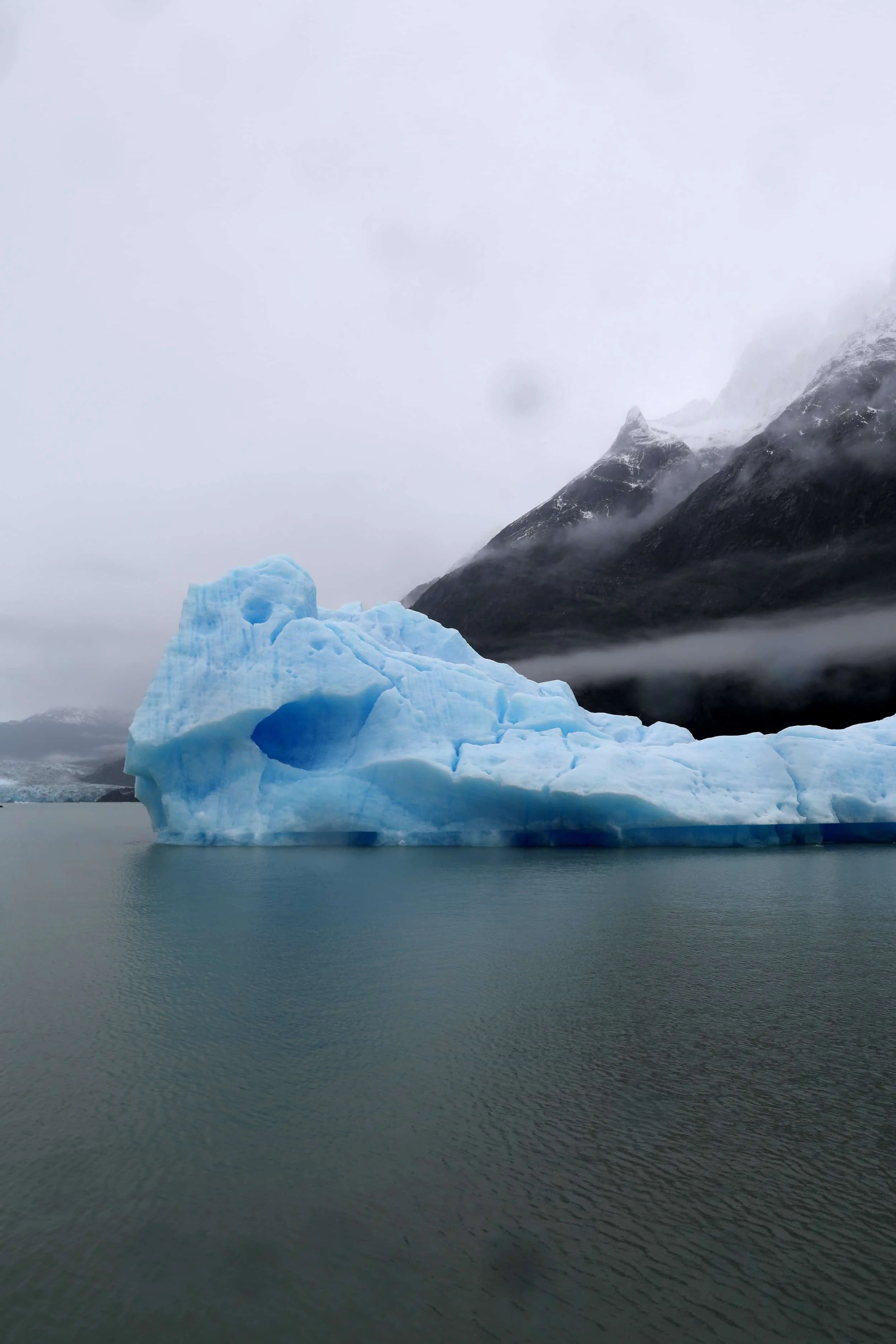
What Not to Miss in Torres del Paine — Extraordinary Things To Do in Patagonia
One of the final chapters of our whirlwind tour through Chile unfolded amid the icy, otherworldly expanses of Chilean Patagonia.
Chile’s Patagonia is a land of stark contrasts: jagged granite peaks, broad lenga and ñirre forests, vast steppe, cobalt lakes and enormous ice fields. The region’s weather is famously changeable — clear, windless mornings can give way to fierce squalls and drifting cloud in hours — yet this volatility is part of its raw, elemental appeal. Trails thread through landscapes shaped by repeated glaciation; wildlife is sparse but compelling (guanacos, Andean condors, foxes) and the scale encourages quiet, attentive travel rather than crowded sightseeing.
Visiting the Torres del Paine region is less about conquering a specific viewpoint and more about inhabiting a scale of nature that feels ancient and uncompromising. The sound of ice cracking, the sight of blue ice against dark rock and the vast open skies make it a place that rewards slow observation and respect for its shifting, powerful elements.
We were lucky enough to stay inside Torres del Paine and wander across the icy blue of Grey Lake but Chilean Patagonia had other plans for us — sleet, sudden mountain snowstorms and brisk, unforgiving winds. Because we hadn’t expected such extremes and many trails closed for safety, we ended up missing some of the headline adventures.
My advice: respect the weather, build in a few extra days for the unpredictable and don’t treat Patagonia like a quick stopover — it’s a place best savored slowly.
At a Glance
📍 Destination: Patagonia, Chile
🕒 Time Needed: Full day tour; 4-7 days
💰 Budget: CLP$270.000 ($295 USD)
👟 Walking Level: Mild
🌤️ Best Season: Summer (November-early March)
☕️ Don’t Miss: Icy cocktails
🖤 Perfect For: Nature lovers and adventure seekers
My Bibimbap Moment
This trip added: Amazement.
Torres del Paine added the ingredient of amazement to my Bibimbap Life. Even beneath grey skies and steady rain, the landscape felt almost unreal. Watching Salto Grande thunder into turquoise water, standing before Grey Glacier and seeing my very first iceberg floating across the lake were moments that made the world feel bigger than I had imagined. Even sipping a cocktail chilled with ancient glacier ice felt surreal. Some experiences don't just become memories — they quietly expand your sense of what this incredible planet has to offer.
My Two-Week Chile Itinerary
Two weeks in Chile took us from Santiago to the Atacama Desert, all the way south to Patagonia and finally across to Chiloé Island. It was an ambitious trip — eight flights, countless buses and taxis and a ferry — but experiencing such different parts of the country was exactly what made it memorable.
We started in Santiago, with time for good food, Chilean wine and exploring the city before flying north to San Pedro de Atacama. The desert became one of the most active stretches of the trip: flamingos at Chaxa Lagoon, Piedras Rojas and the Altiplanic Lagoons, an early morning at El Tatio, sunset around Valle de la Luna and one of my favorite experiences of the entire trip — stargazing beneath the Atacama sky.
From the desert, we flew almost the length of the country to Punta Arenas before continuing into Torres del Paine National Park, where we stayed at Las Torres. The landscape changed yet again, this time to mountains, open grasslands and glacier-fed lakes. Seeing Grey Lake and Grey Glacier, with pieces of blue ice drifting across the water, was one of those moments that made the enormous journey south feel completely worthwhile.
After so much movement, we ended the trip on Chiloé Island, staying near Castro and eventually slowing things down at Estancia Rilán. The countryside, water and quiet of Chiloé felt particularly good after two weeks of flights, road trips, desert excursions and long days exploring Patagonia.
This was definitely not a slow itinerary and I wouldn't pretend otherwise. But for a first trip to Chile, I loved seeing just how dramatically the country changed from north to south — from city streets and high-altitude desert to glaciers, windswept Patagonia and the green landscapes of Chiloé.
My route: Santiago → San Pedro de Atacama → Punta Arenas & Torres del Paine → Chiloé Island
Explore
Here’s where the journey will take us.
01 | Full Paine Grey Glacier Tour
Salto Grande Waterfall
Grey Lake
Grey Glacier
02 | When to Go
03 | How to Get There
04 | Where to Stay
05 | How to Get Around
06 | How Long to Stay
07 | Tours & Day Trips
08 | Good to Know
Read On | Beyond the Penguins: Hidden Gems in Punta Arenas, Chile
Travel More | Chile Travel Guides
Guide to Torres del Paine: Patagonia’s Thundering Waterfalls, Towering Icebergs & Ancient Glaciers
Chile’s Southern Patagonian Ice Field feels like a vast, handcrafted wilderness — a living sculpture of blue-white glaciers that carve deep fjords, icefalls that tumble into mirror-smooth lakes and wind-polished ridges that shimmer as if holding frozen storms. Here, slow rivers of ice meet stern mountain faces; silence reigns until a thunderous calving breaks the air and a lone condor cries from above. Wild and ancient, impossibly beautiful, this is Patagonia’s dramatic spine — an ice-and-rock epic that changes how you perceive scale and solitude.
Looking for things to do in Patagonia? Well, if you’re based in Torres del Paine and itching for adventure, bundle up and step into the crisp Patagonian air to seek out the day’s highlights with this incredible day trip: the windswept spires of Santo Grande, the glassy sweep of Lago Grey and the brooding mass of Grey Glacier. We’d hoped to add Lago Sarmiento and Lago Pehoé to the itinerary but the roads turned to rough tracks — which meant Grey and Santo Grande, in all their raw power, became the unforgettable stars of our day.
Salto Grande Waterfall
Las Torres Patagonia Hotel’s lobby bustled with early-morning energy as our tour group gathered at 8:45 a.m. Our guide, Sebastián, laid out the day’s plan with calm practicality — and a warning: rain would blur some of the landscape’s finer details. Undeterred, we climbed into the van with two other pairs of travelers — one couple from Ukraine and another from Australia — and set off into the Patagonian morning.
Sebastián’s easygoing commentary kept spirits high as the van rolled along. Heavy rains had rendered a few stretches of road tricky, so a couple of detours were necessary for safety. Those alternate routes only added to the sense of adventure; the terrain shifted from open steppe to sheltering stands of lenga beech and every pause offered a fresh frame of wind-swept grasses and low, cloud-laden peaks. Even when visibility dropped, the atmospheric light and the rawness of the weather made the landscapes feel more cinematic than diminished.
The day unfolded at a measured pace — part nature drive, part storytelling — allowing the mood of Patagonia to reveal itself through mist and rain as much as through clear views. What the weather obscured in panoramas, it compensated for in texture: dripping moss, silvered streams and the hush that only a rainy wilderness can bring.
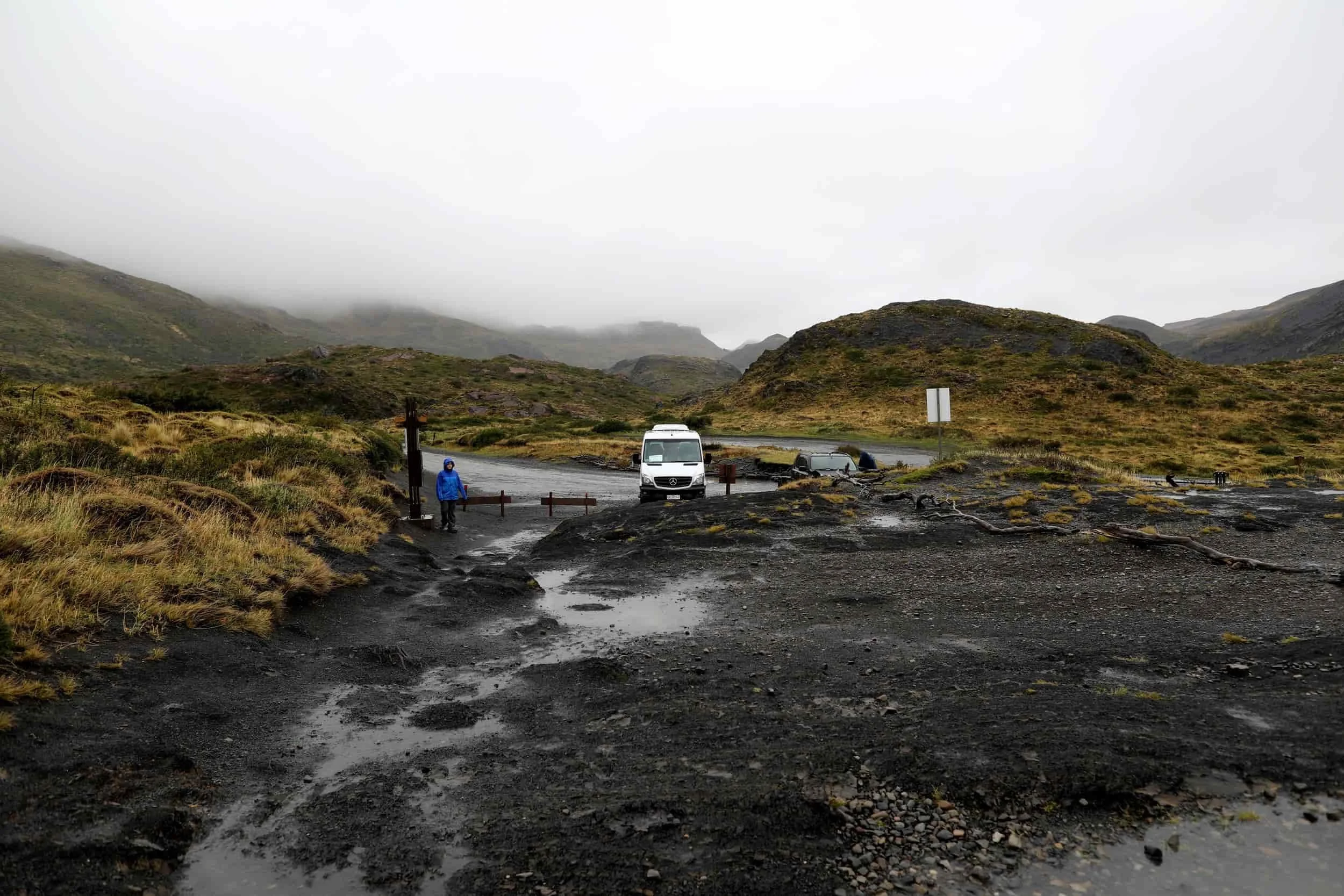
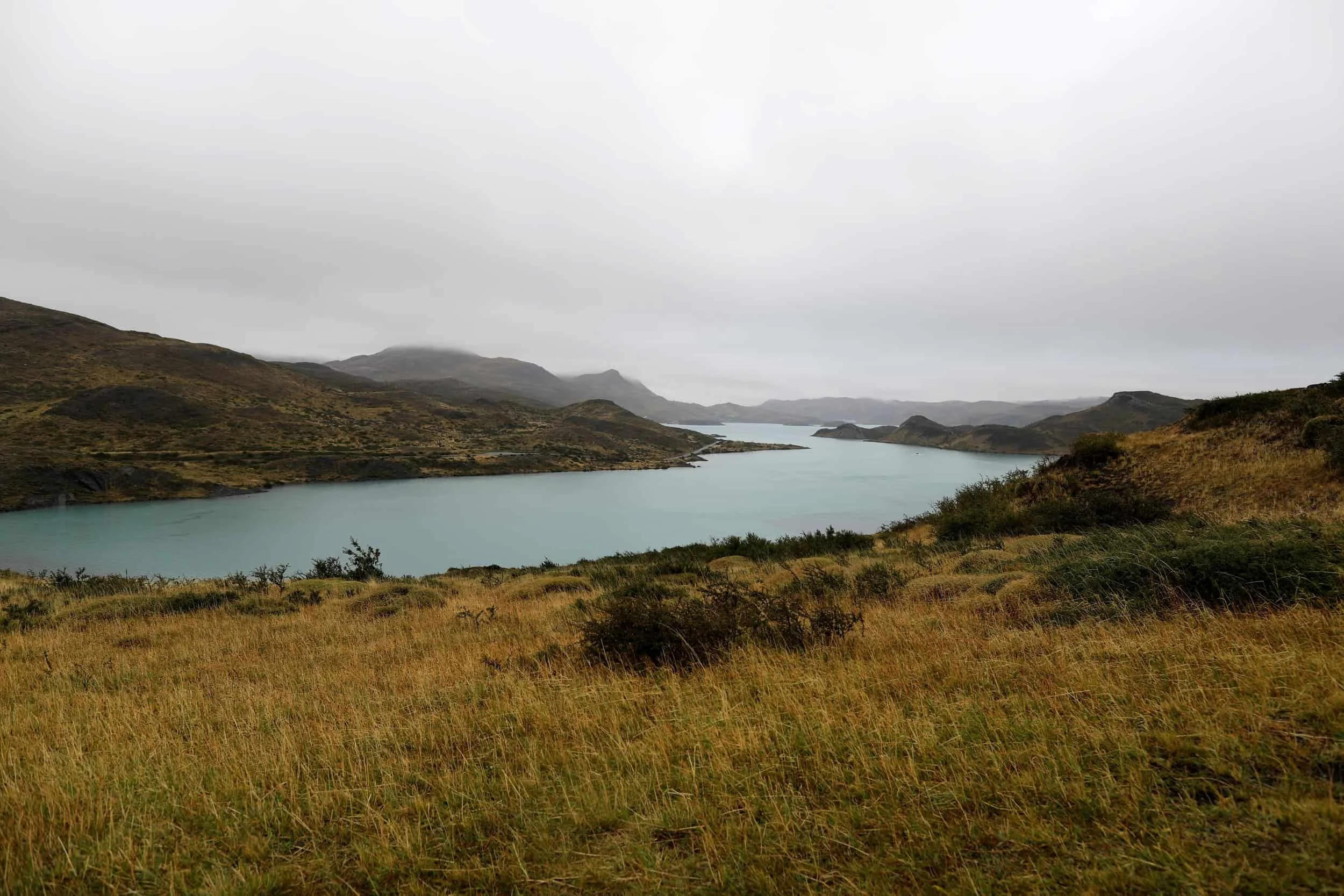
Paine River threads the landscape like a liquid storyteller, carrying glacier melt from north to south and pausing in a series of lakes and slow-moving arms along its path. Each body of water tells a different chapter: some stain the surface a chocolate brown, heavy with fine glacial sediment; others glow a minty green from suspended minerals. Where the sediment thins, the lakes reveal a clear, crystalline blue — a vivid spectrum carved by ice and time.
Dominating the skyline is Alminante, one of the massif’s most imposing peaks. Its flanks rise in jagged terraces, a stark counterpoint to the broad sweep of the valley; on the opposite side, the Cowboy Glacier hangs like a pale cloak, an icy reservoir that feeds the river system below. Between these giants lies the Patagonian step — a wide, windswept expanse that feels almost transitional, a place where the mountains loosen their grip and the plains begin to breathe. Crossing it gives a real sense of Patagonia’s scale: open, raw and relentless.
Wildlife here moves to a different clock. Pumas favor the long shadows of dawn and dusk for hunting, timing their strikes when scent and silhouette are most telling. Their success rate hovers around 30 percent, which underscores how precarious life is in this terrain. Around some lodgings, sightings — or at least signs — are common: paw prints, fresh kills, the low rumble of nocturnal presence. There have even been reports of livestock taken during the night, a sobering reminder that these mountains remain actively wild.
For travelers, this region offers a layered experience: the dazzling color palette of Paine River’s lakes, the monumental presence of Alminante and its glacial neighbor and the sweeping patagonian step that connects them — all punctuated by the ever-present possibility of encountering Patagonia’s secretive predators. Bring a sense of scale, a patient eye and respect for the untamed rhythms that shape this landscape.
Pudeto’s gateway opens onto one of Torres del Paine’s most dramatic scenes: Salto Grande, a waterfall that seems to channel the park’s raw energy. In the Magallanes Region of southern Chilean Patagonia, it lies between Lago Nordenskjöld and Lago Pehoé, where the Paine River funnels through a narrow gorge.
Situated about a 45-minute drive from the main access points, Salto Grande roars along the Paine River with a force that’s almost unimaginable — the flow is often cited in lay terms as the equivalent of some 100,000 one‑liter bottles pouring past every second. Standing at the lookouts, you feel that volume more than you see it: a thunderous, mist‑laden presence that reshapes the air.
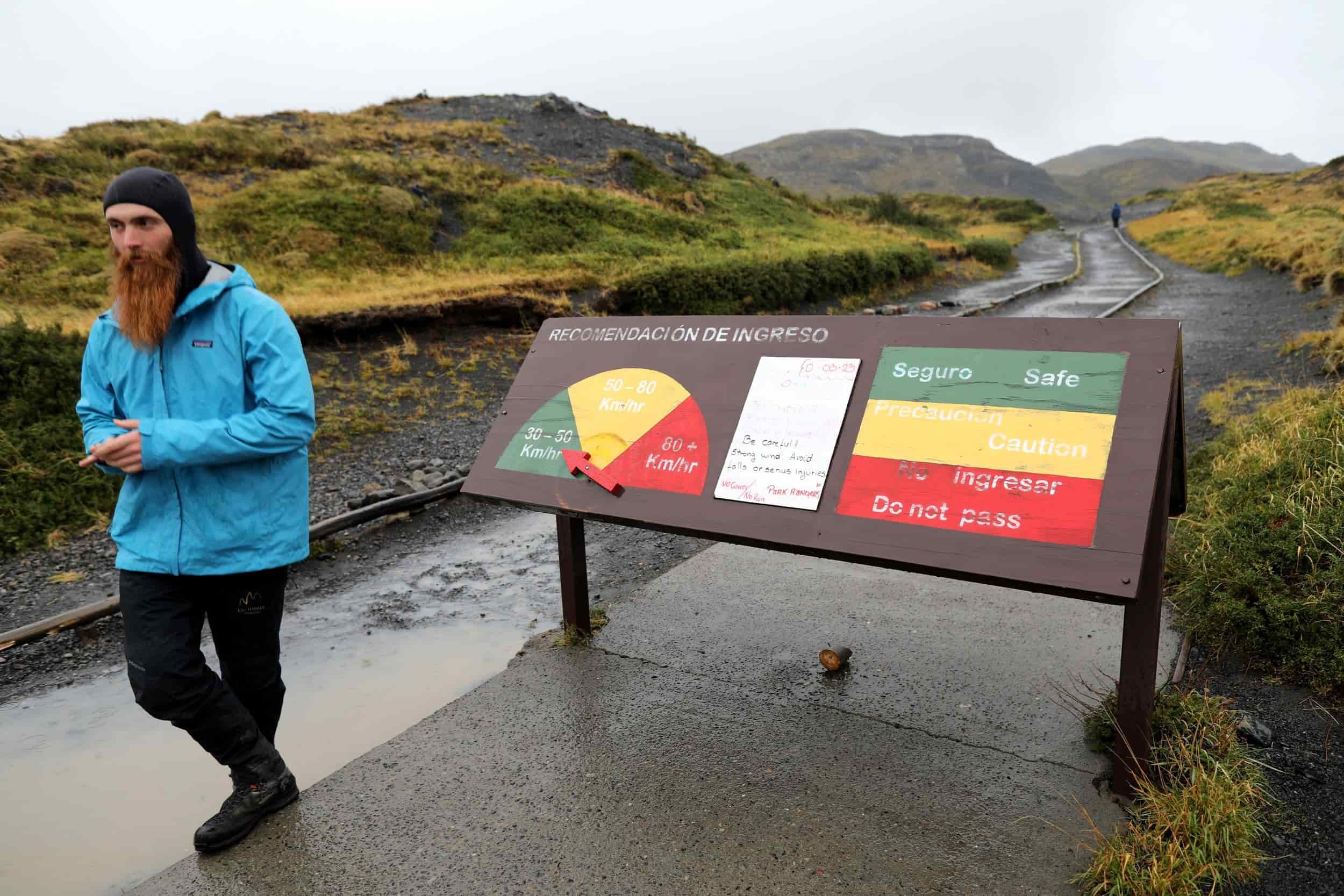
The approaches around Pudeto are rugged and windswept, a landscape where weather writes the rules. This sector of the park is notorious for extreme gusts but on damp, rainy days the wind often bows out and the rain brings its own kind of hush. Paths through the scrub and tundra lead to viewing platforms and short boardwalks; the descent to the falls is an easy 10–20 minute walk along well‑maintained trails that let you trade park benches and information panels for close, jaw‑dropping views.
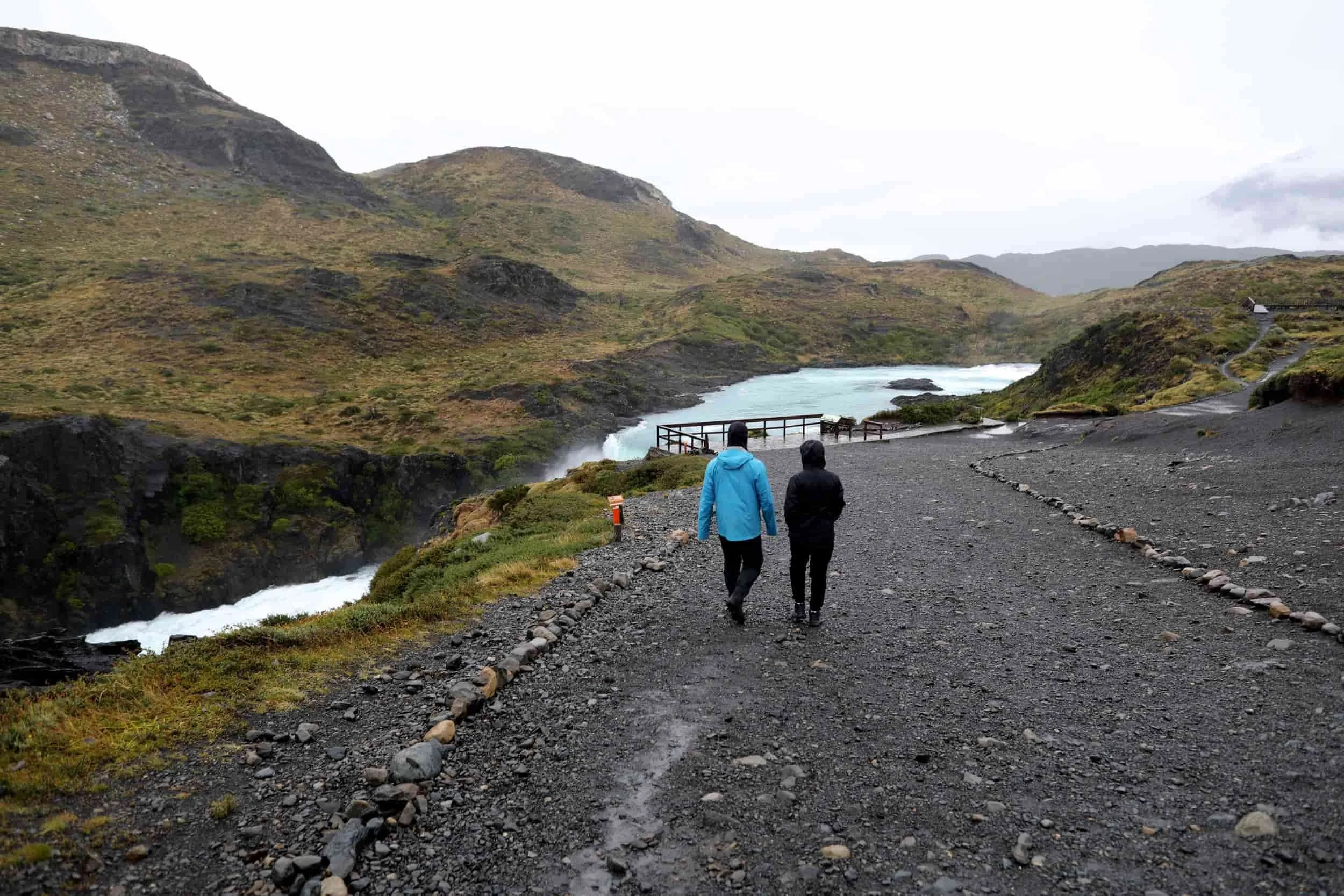
Fed by glacial melt from the Paine massif, the falls surge through a narrow granite gorge, creating a thunderous curtain of water that contrasts sharply with the park’s stark, wind-swept landscape. The drop is not especially tall (around 50–65 feet in vertical drop) but the volume and force of the water, especially during the southern hemisphere spring and early summer melt, make the site visually and audibly striking. Turquoise glacial water and suspended rock flour give the river below a milky, blue-green hue that photographs well from any viewpoint.
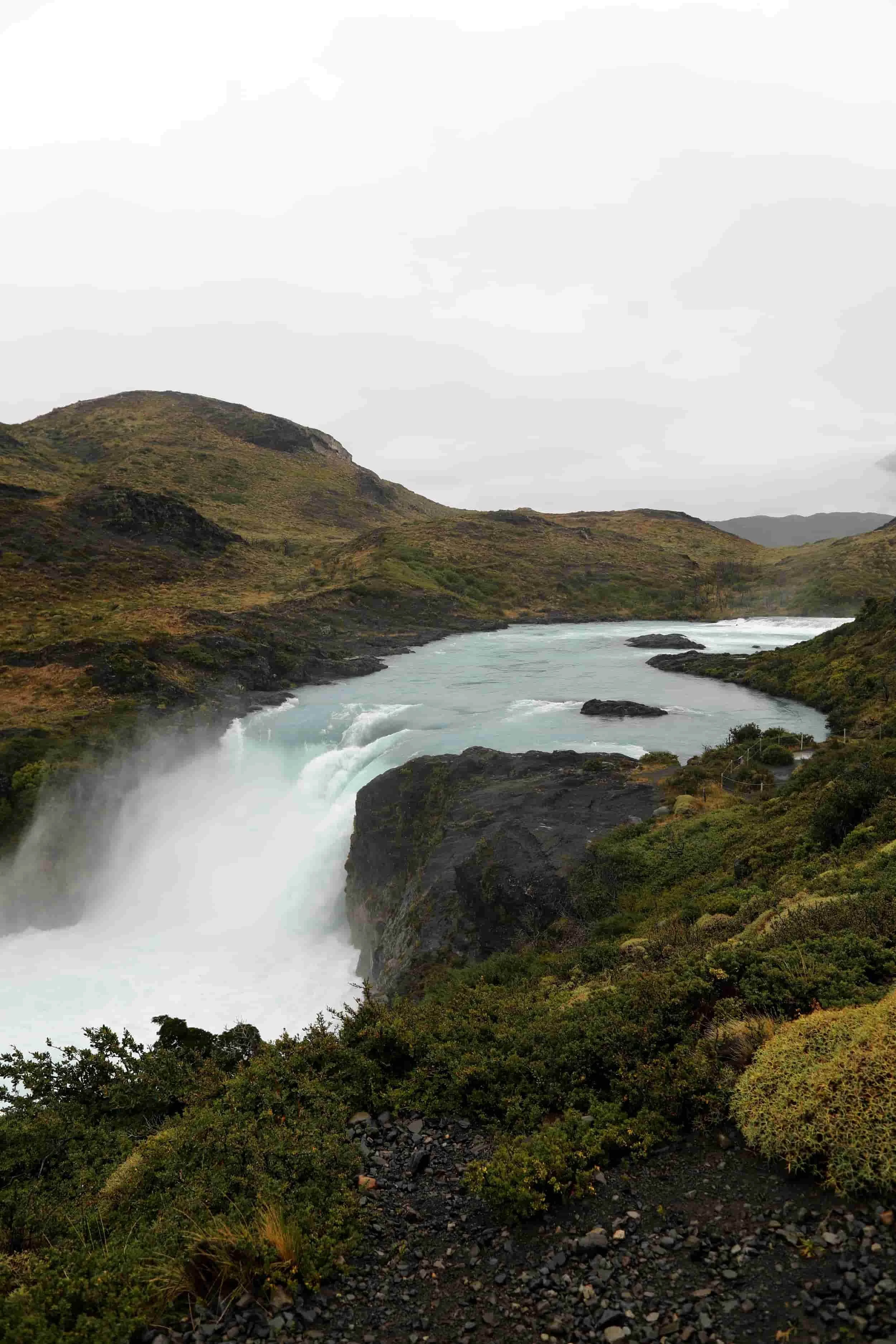
Access is relatively straightforward for visitors exploring Torres del Paine: Salto Grande lies along key routes between the park’s eastern access points and the popular lakes and trekking circuits. Short walks from parking or bus stops make it an appealing stop for day visitors and multi-day trekkers alike. Weather can change rapidly, so layered clothing and wind protection are essential; when conditions are clear, the falls can be framed against views of the Cuernos del Paine and other peaks, adding dramatic alpine context.
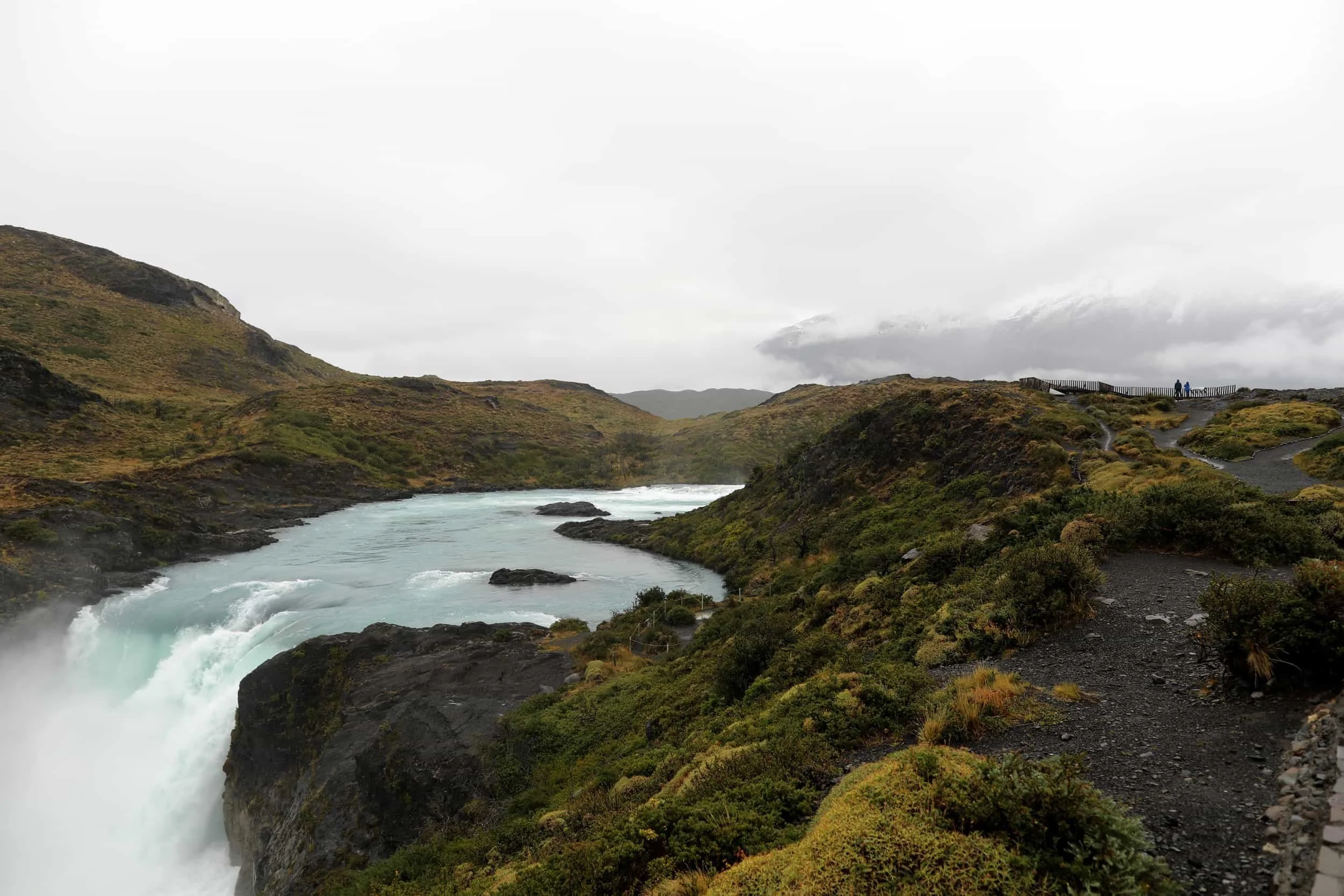
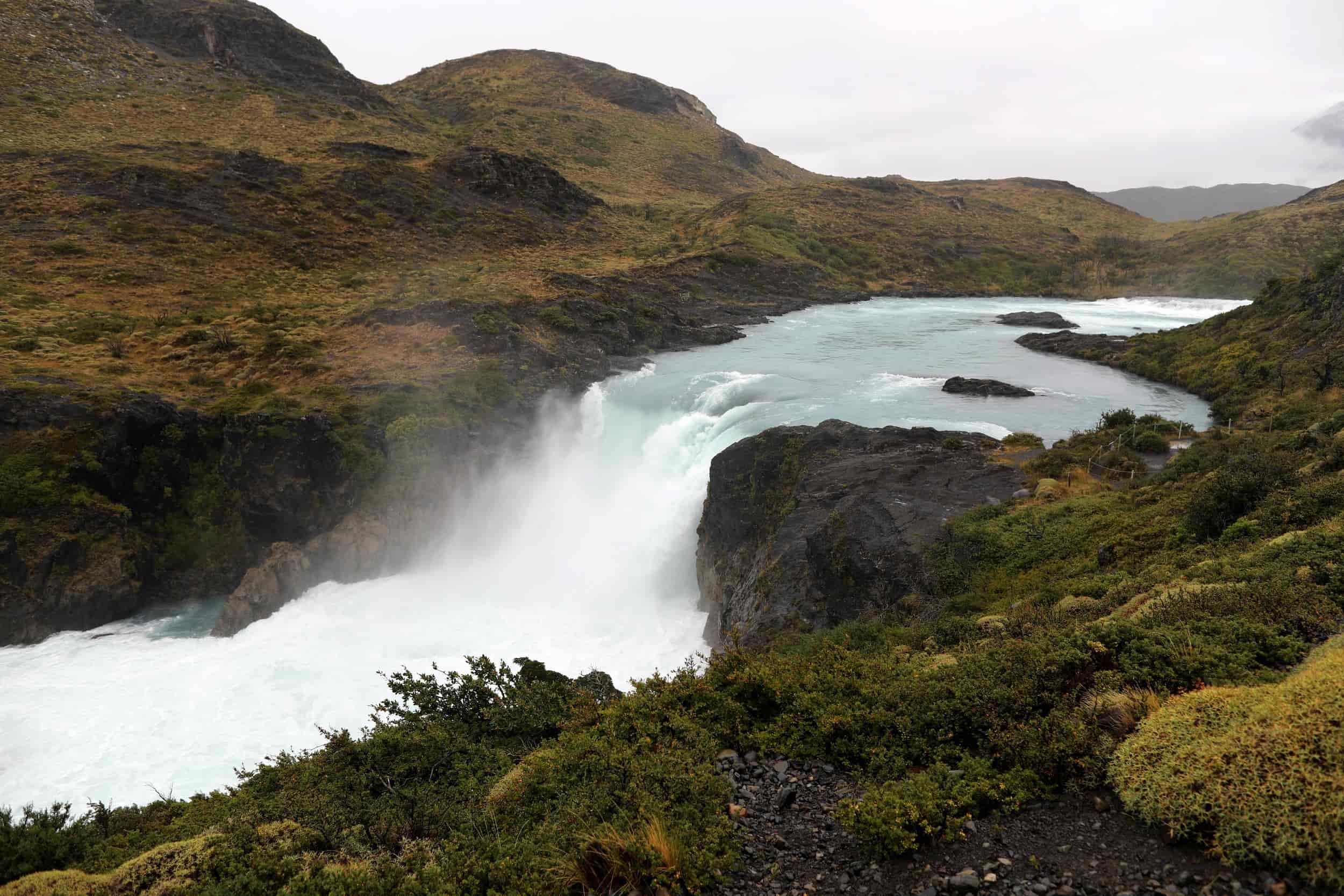
Beyond the falls themselves, the surrounding area offers a mix of easy nature walks, birdwatching and photography opportunities. Nearby lakes — such as Lago Nordenskjöld — reflect the park’s mountains and often display that intense Patagonian light that shifts from soft pastels to vivid contrast within minutes. For travelers seeking both iconic scenery and a palpable sense of Patagonia’s raw power, Salto Grande is a compact but memorable highlight within a landscape defined by glaciers, granite towers and wind-carved horizons.
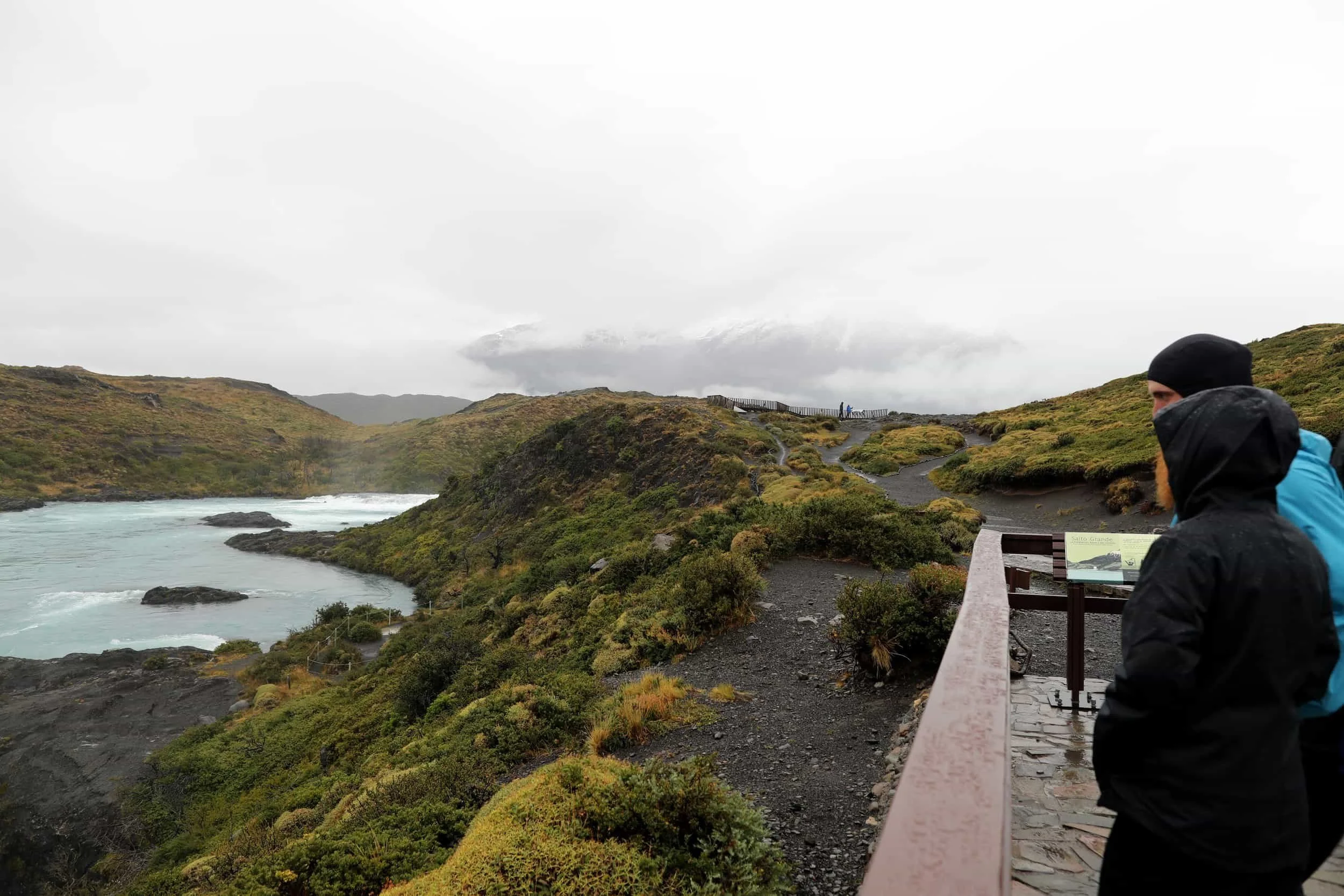
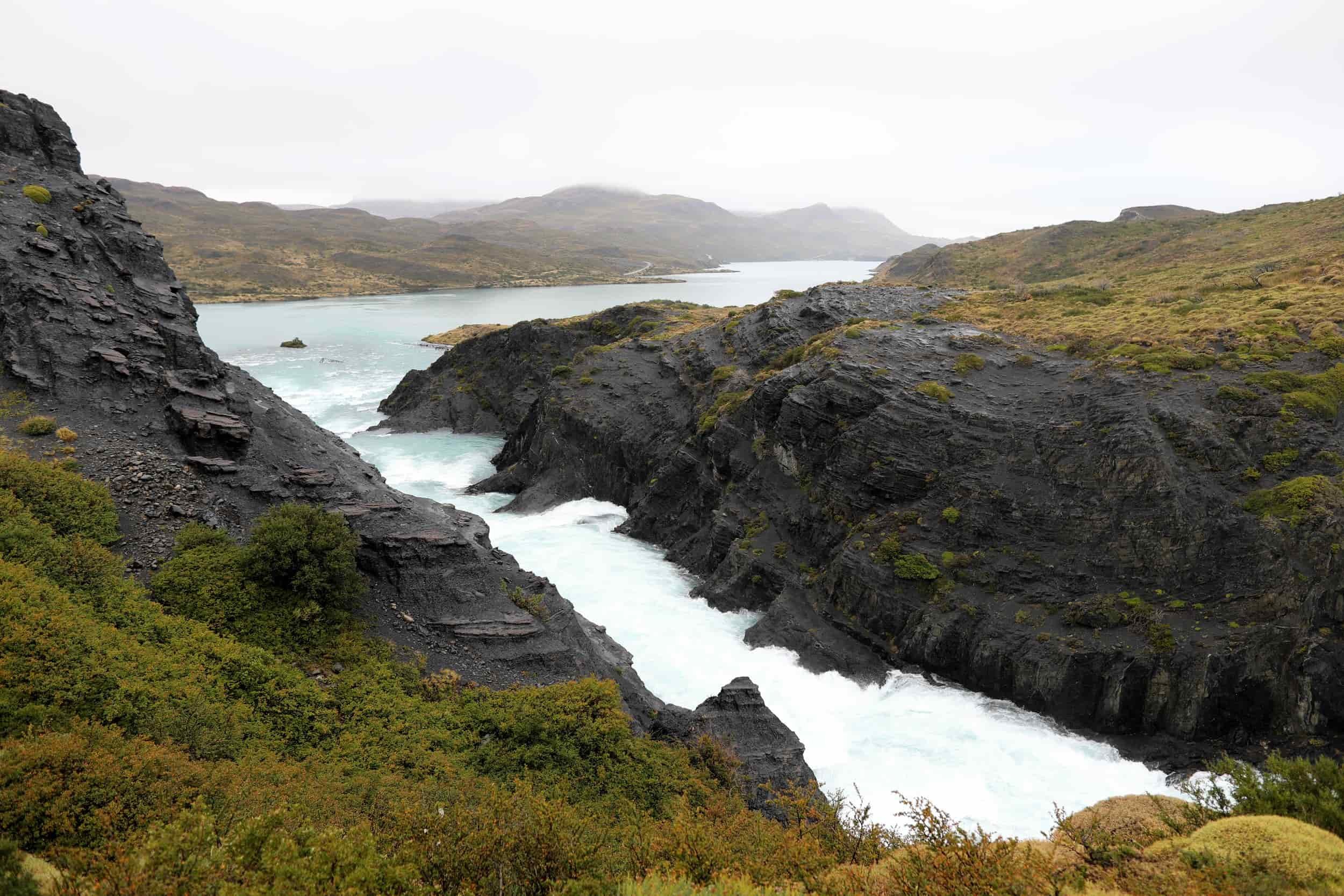
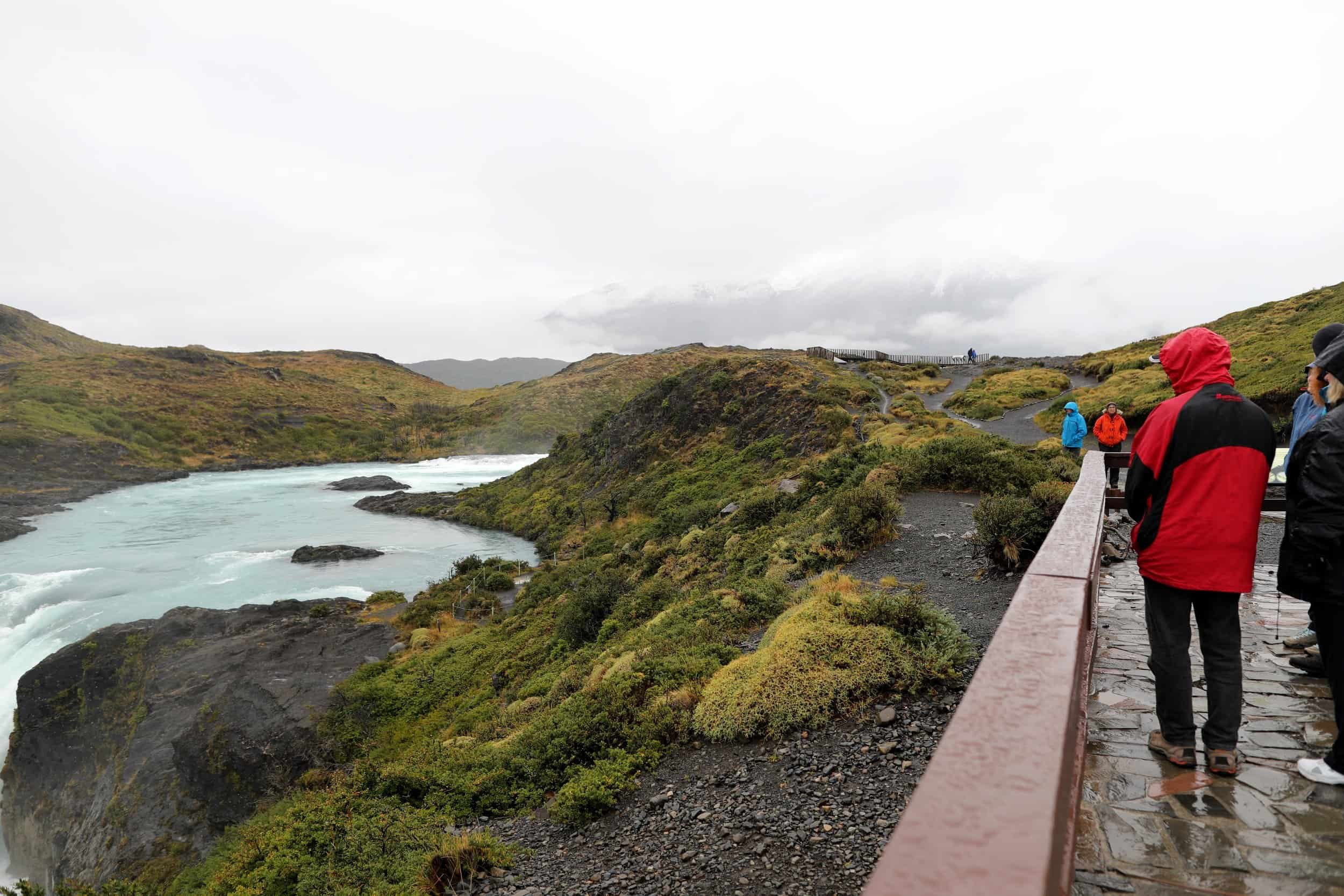
Our visit to the waterfall was overwhelming. The main drop was imposing not just because of its size: it was a force hurling itself downward with brutal power, tearing the air into a curtain of white water. The constant roar vibrated in the chest and the bones, as if the landscape had its own heartbeat; at times the rumble rose and wrapped around us completely, at others it softened into a hiss of droplets sparkling against the rocks.
The damp spray carried that clean, mineral scent that refreshes the skin and each plunge of water produced a sonic burst that echoed through the throat of the valley. Being there wasn’t merely watching a spectacle: it was feeling it, a natural pulse that shook the senses and left a blend of wonder and calm.
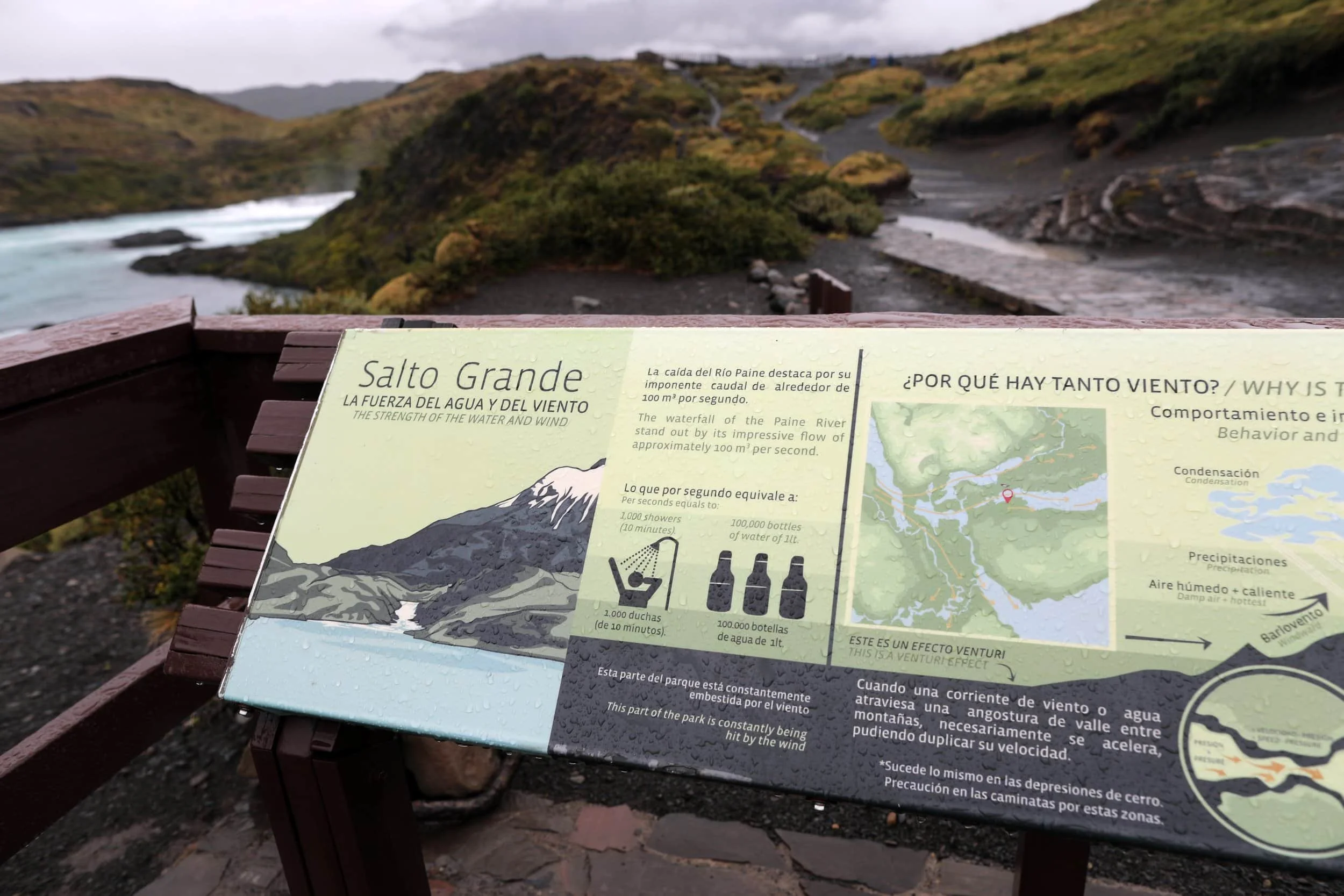
The Salto Grande viewpoint delivers classic, powerful panoramic compositions: the falls, vivid white and blue, dominate the foreground with their foam and curtains of water crashing over the rocks; further back, on clear days, the jagged silhouette of the Cuernos del Paine or the peaks of the Paine massif forms a dramatic, monumental backdrop.
From that vantage, the horizon arranges itself in layers: first the nearby turbulence of the falls, then the calmer band of lake and plains and finally the vertical mountains that contrast in color and texture. Light plays an important role: in the early morning and at sunset the rocky faces of the Cuernos take on ochre and golden tones, while the mist and suspended droplets in front of the peaks create halos and prisms that heighten the three-dimensional effect.
On windy days, the landscape becomes dynamic, with curtains of spray crossing the frame and fast-moving clouds that change the visibility of the summits; on calm days the view is crisp, allowing geological strata, glaciers and the horn-like structure of the mountains to be distinguished. The viewpoint also offers side angles where the falls are seen diagonally, incorporating trails and rustic posts into the composition, giving a human scale against the immensity of the Paine.
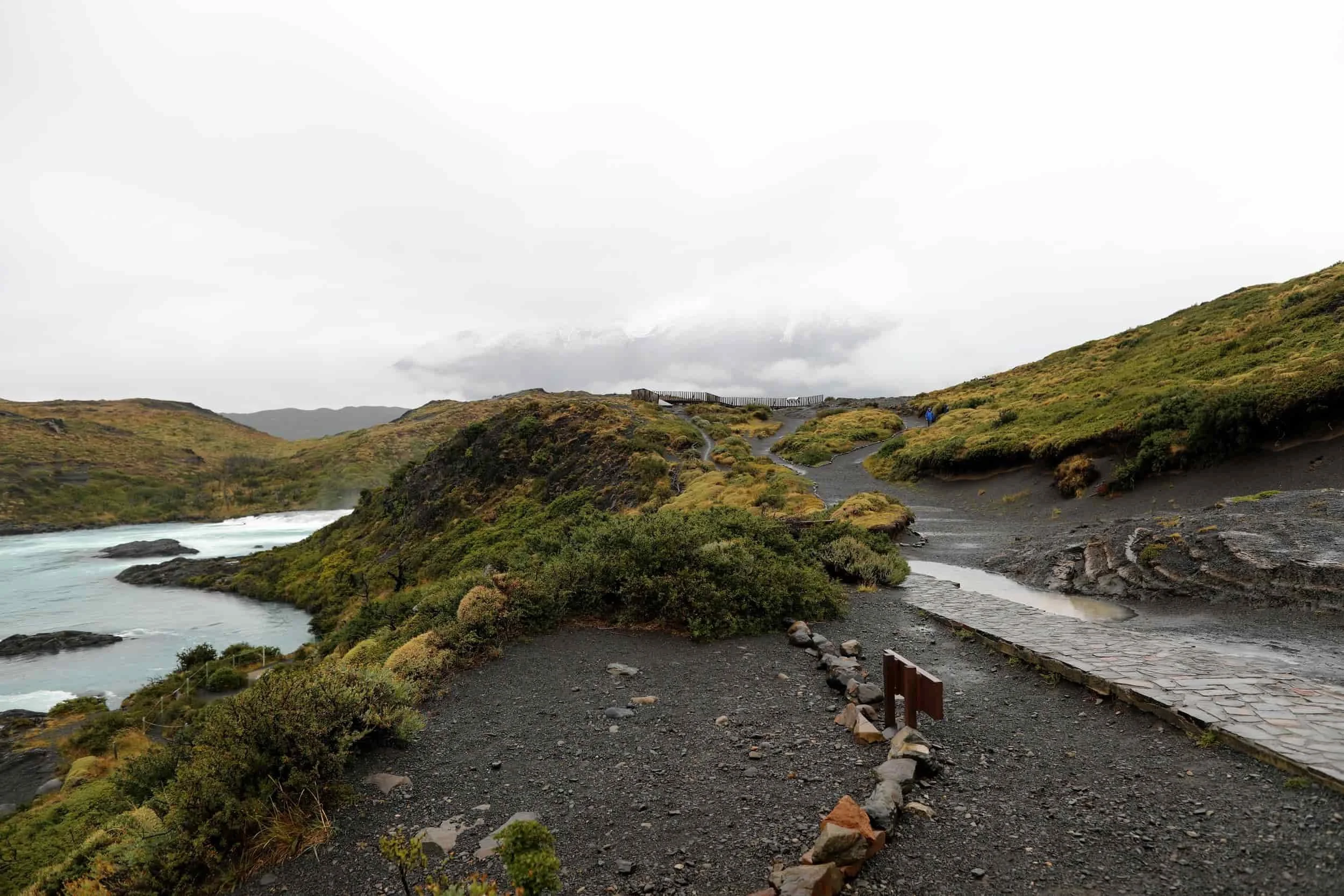
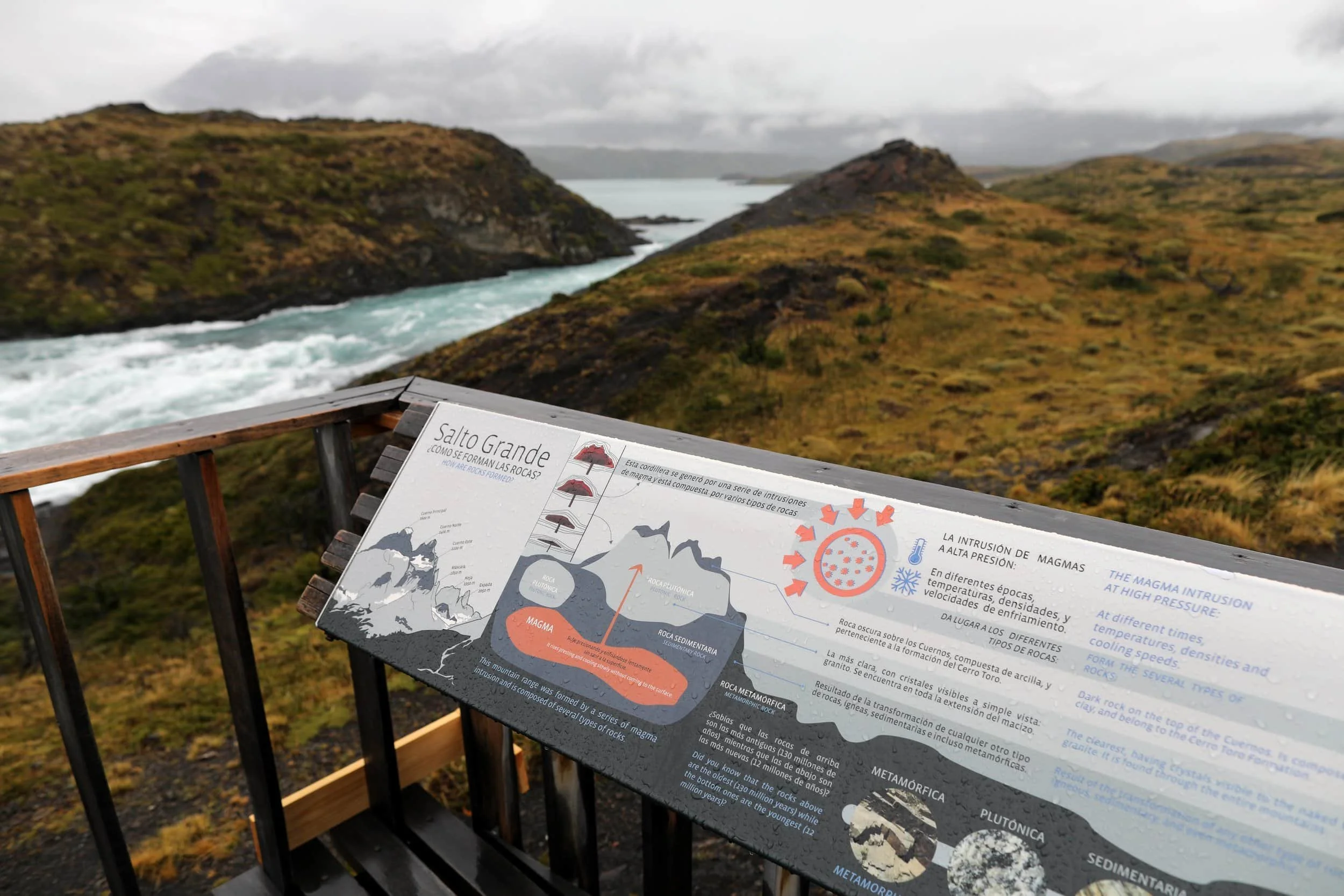
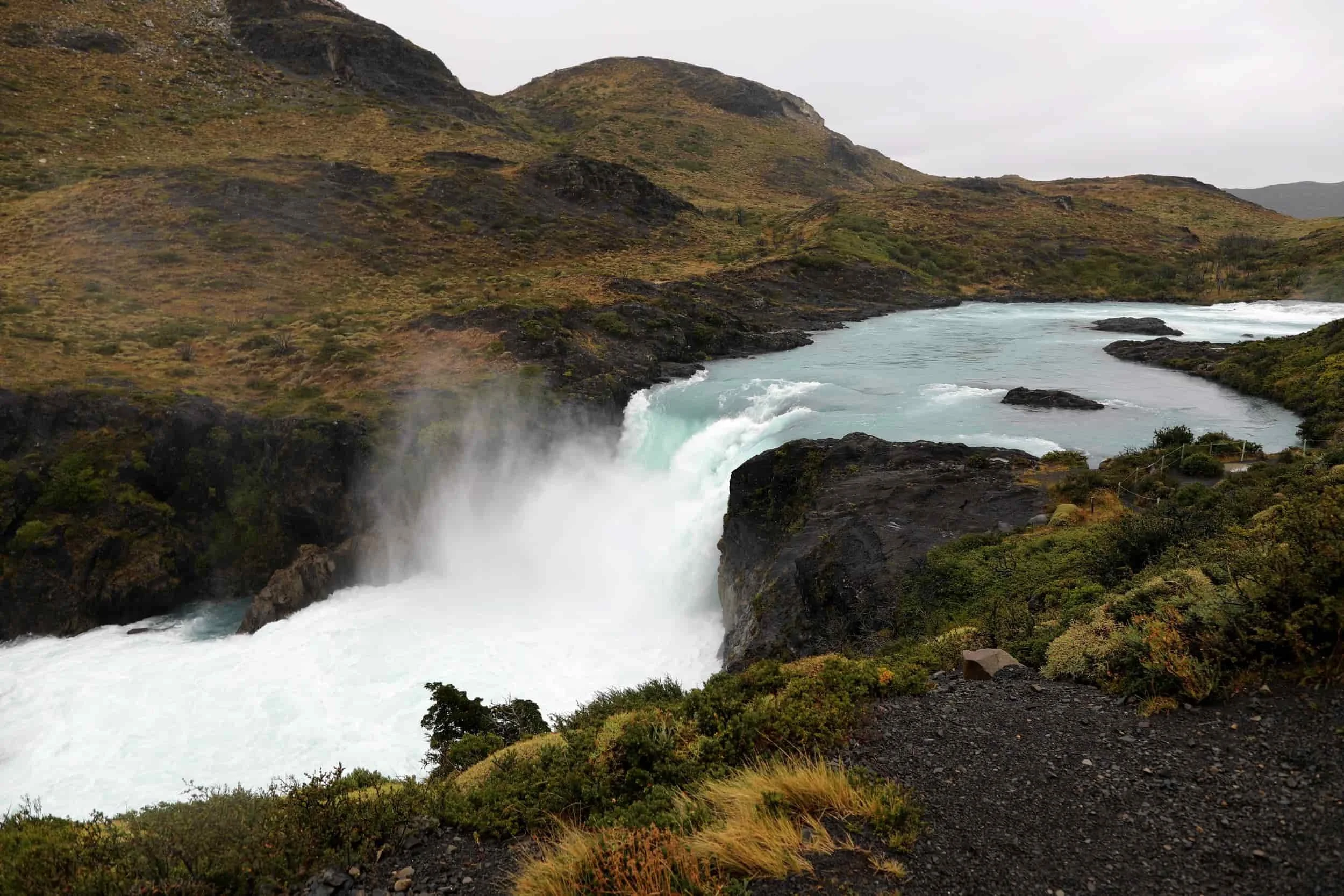
The immediate surroundings are a mix of lenga and ñirre beech forest, scrub and exposed rock, all shaped by persistent Patagonian winds. Boardwalks and viewing platforms provide safe, close-up perspectives of the falls while protecting fragile soils and vegetation. Wildlife in the area includes guanacos grazing on nearby slopes, birds such as the chucao tapaculo and Magellanic woodpecker in the trees and the occasional fox. The landscape’s openness and the waterfall’s roar make it a sensory counterpoint to the quieter, glacier-fed lakes scattered through the park.
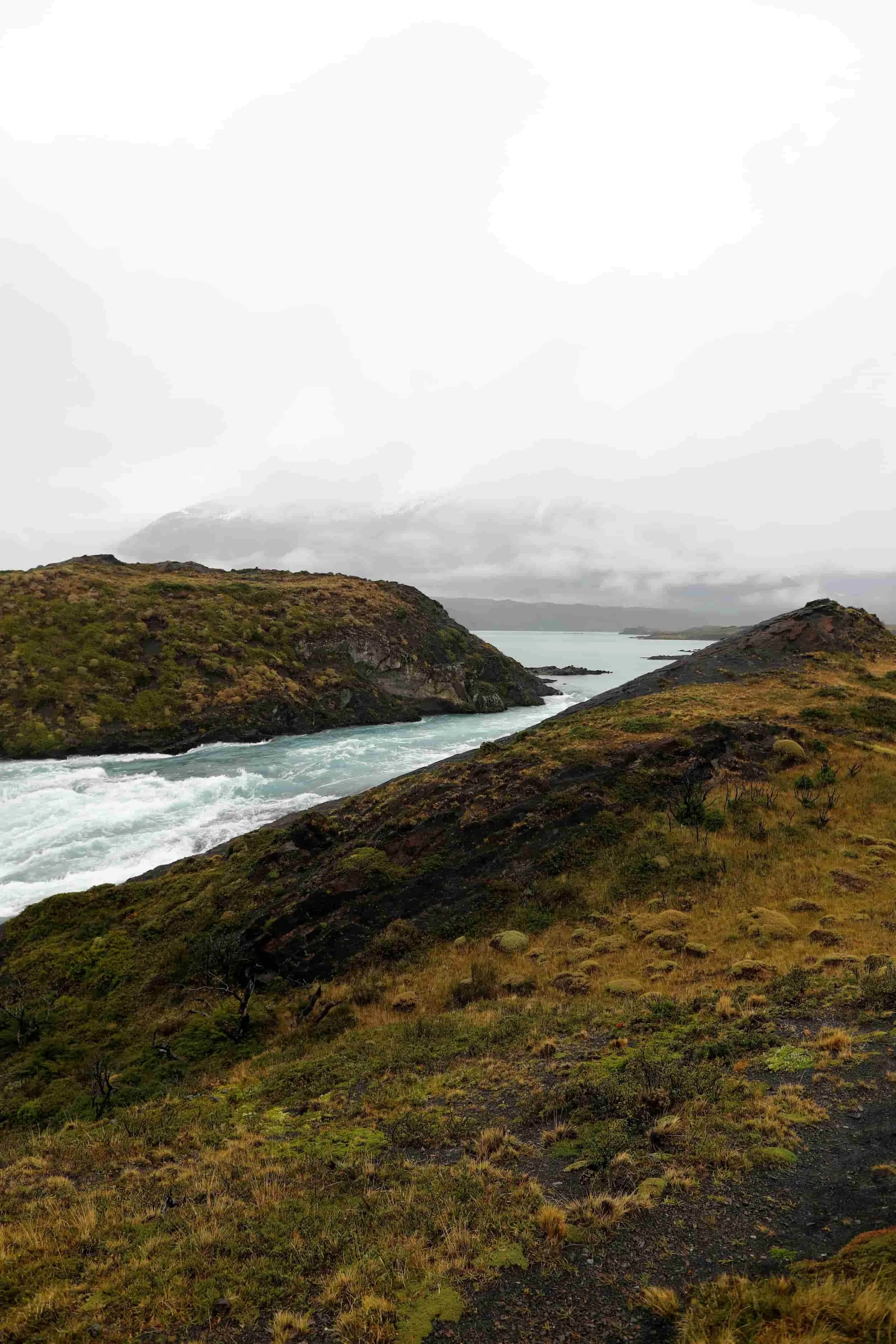
Vegetation here is tough and low‑growing, adapted to the relentless Patagonian climate. Rather than the black, jagged textures you'd expect from volcanic fields, the rock around Salto Grande has a different character — smoothed and weathered, laced with lichens and mosses that cling in resilient patches. Shrubs, cushion plants and wind‑sculpted grasses dominate and the close‑up plant life is surprisingly intimate: delicate wildflowers in season, hardy coihue and lenga saplings where soil gathers and a carpet of hardy groundcovers that softens the stony palette.
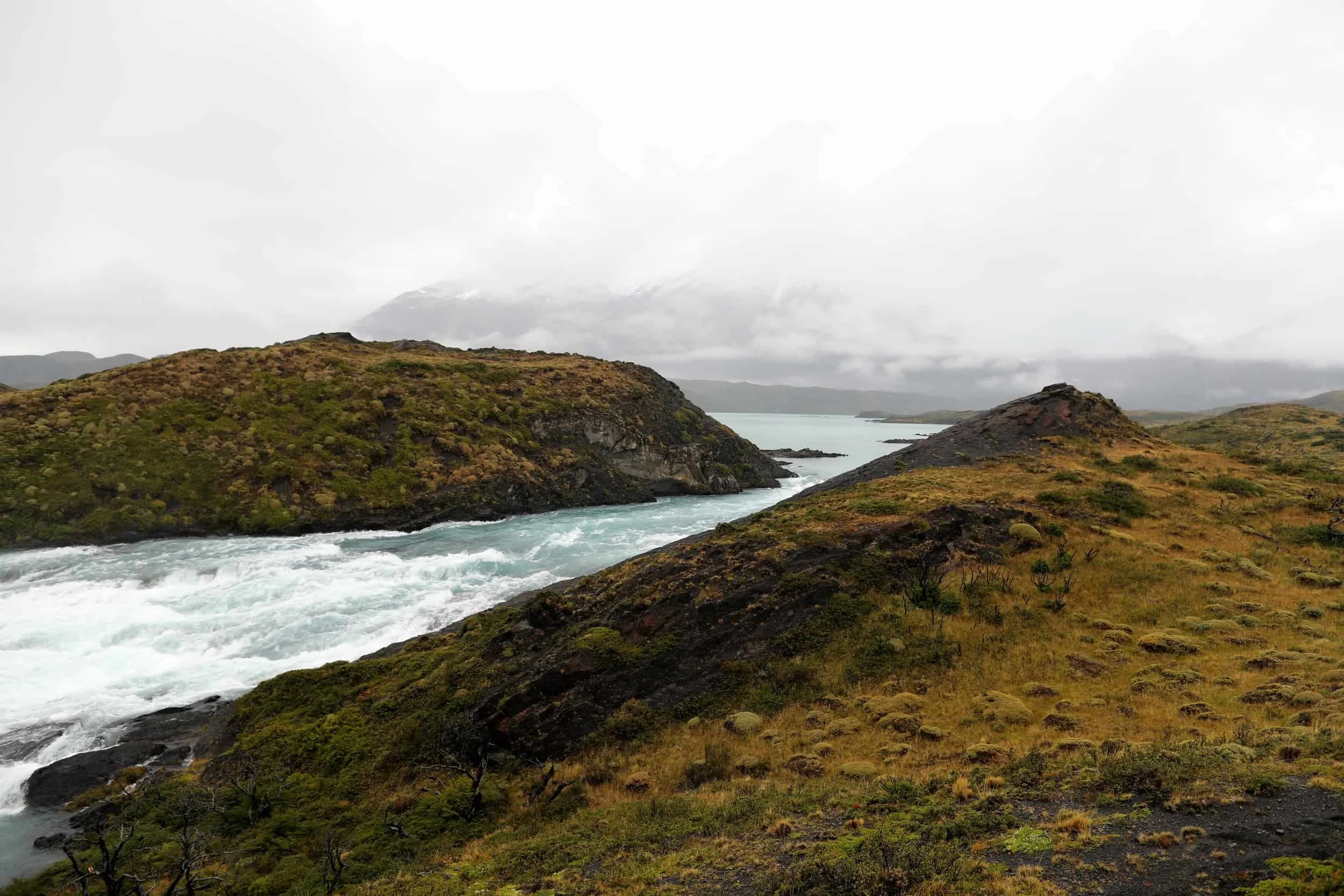
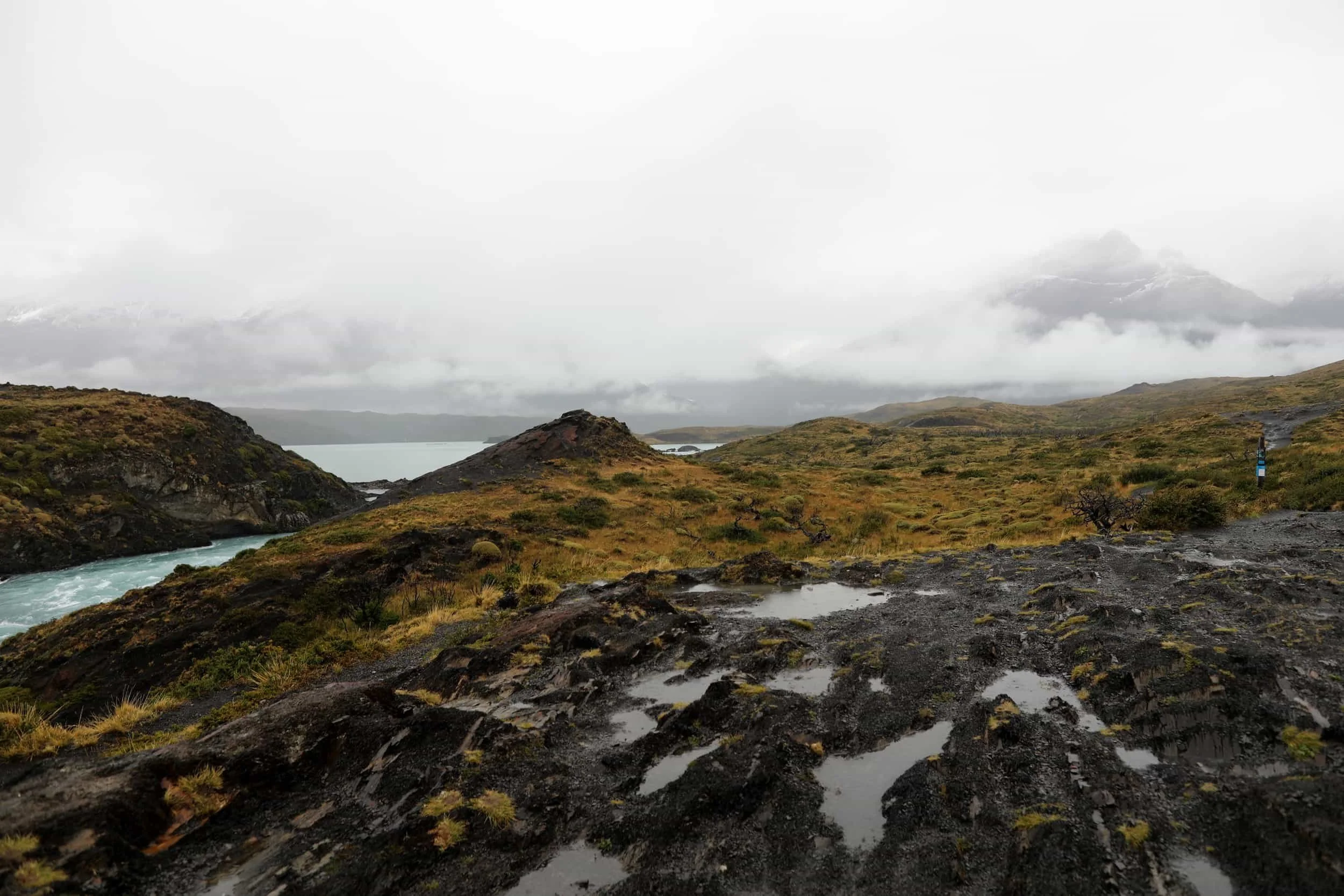
Strong currents, hidden rocks and perpetually slick, mossy surfaces make the waters around Salto Grande treacherous. For your safety, swimming and entering the river are strictly forbidden — heed all warning signs and respect barriers.
To help protect the delicate riverside habitat, stay on marked trails, viewing platforms and boardwalks. Wandering off the path compacts soil, harms native plants and disturbs wildlife that nest or forage nearby. Don’t pick plants, remove stones or feed the animals. Pack out all trash — even organic scraps can upset the local ecosystem — and avoid introducing contaminants.
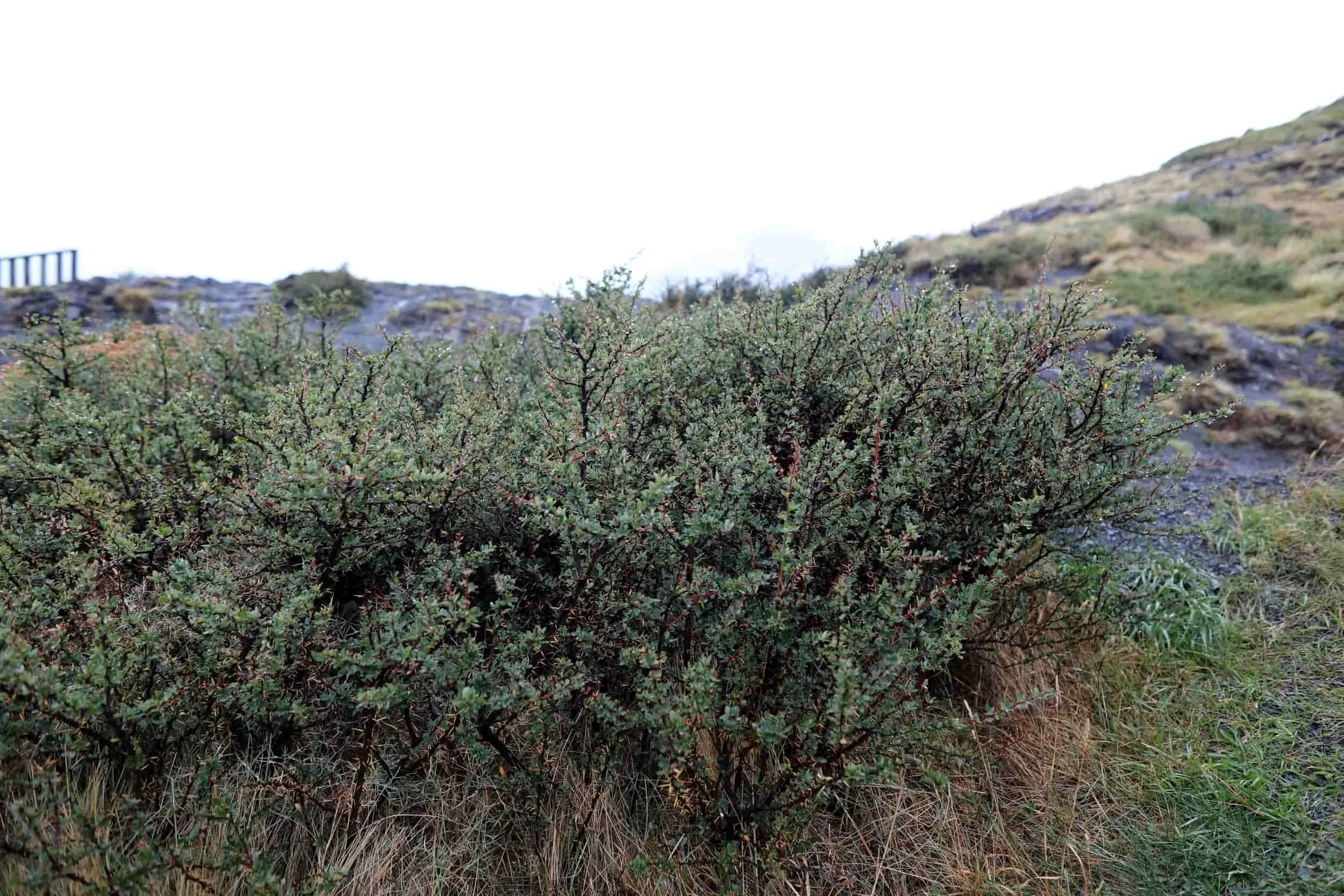
Beyond the waterfall itself, Salto Grande serves as a vivid reminder of how water shapes this terrain — carving channels, feeding the valley’s ecosystems and forging vistas that feel elemental. Whether the sky is clear or the clouds are driving rain, the scene is cinematic: the river’s froth, the spray catching light and the open Patagonian plain beyond, hinting at the vastness that defines the region around Pudeto.
Salto Grande is a must-see in the area — a spectacular reward for very little effort and one of the best things to do in Patagonia.
Grey Lake of Torres del Paine
Grey Lake (Lago Grey) nestles in the heart of Torres del Paine National Park, a glacial mirror fed by the mighty Grey Glacier and scalloped with drifting icebergs. Jagged peaks and windswept lenga forests cradle its shores, while the water — streaked from deep sapphire to ghostly turquoise — shifts color with the light and the glacier’s fine rock flour. Resting at the southern edge of the Cordillera del Paine, the lake is a quietly dramatic piece of a larger watershed that pours down toward the Última Esperanza Sound.
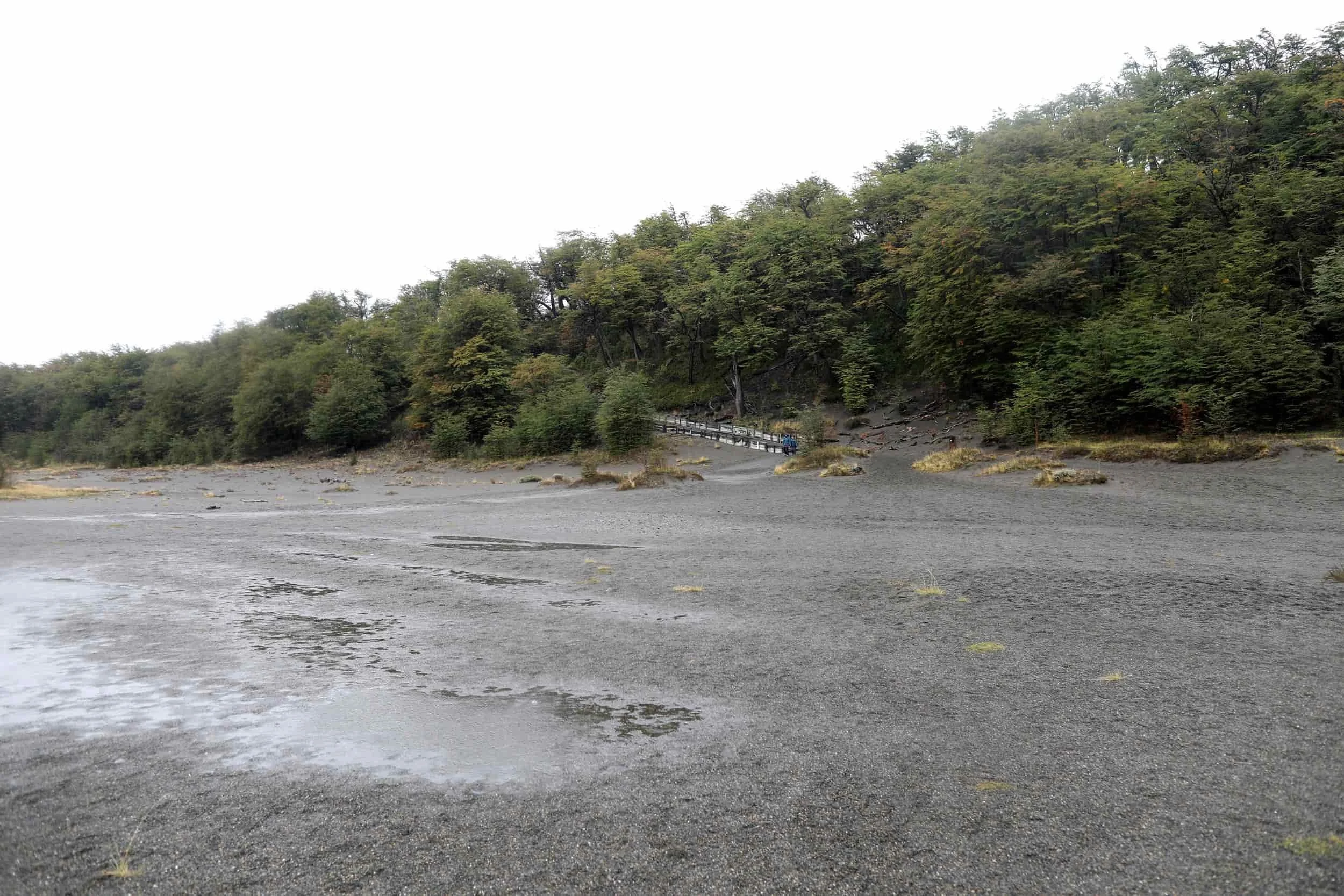
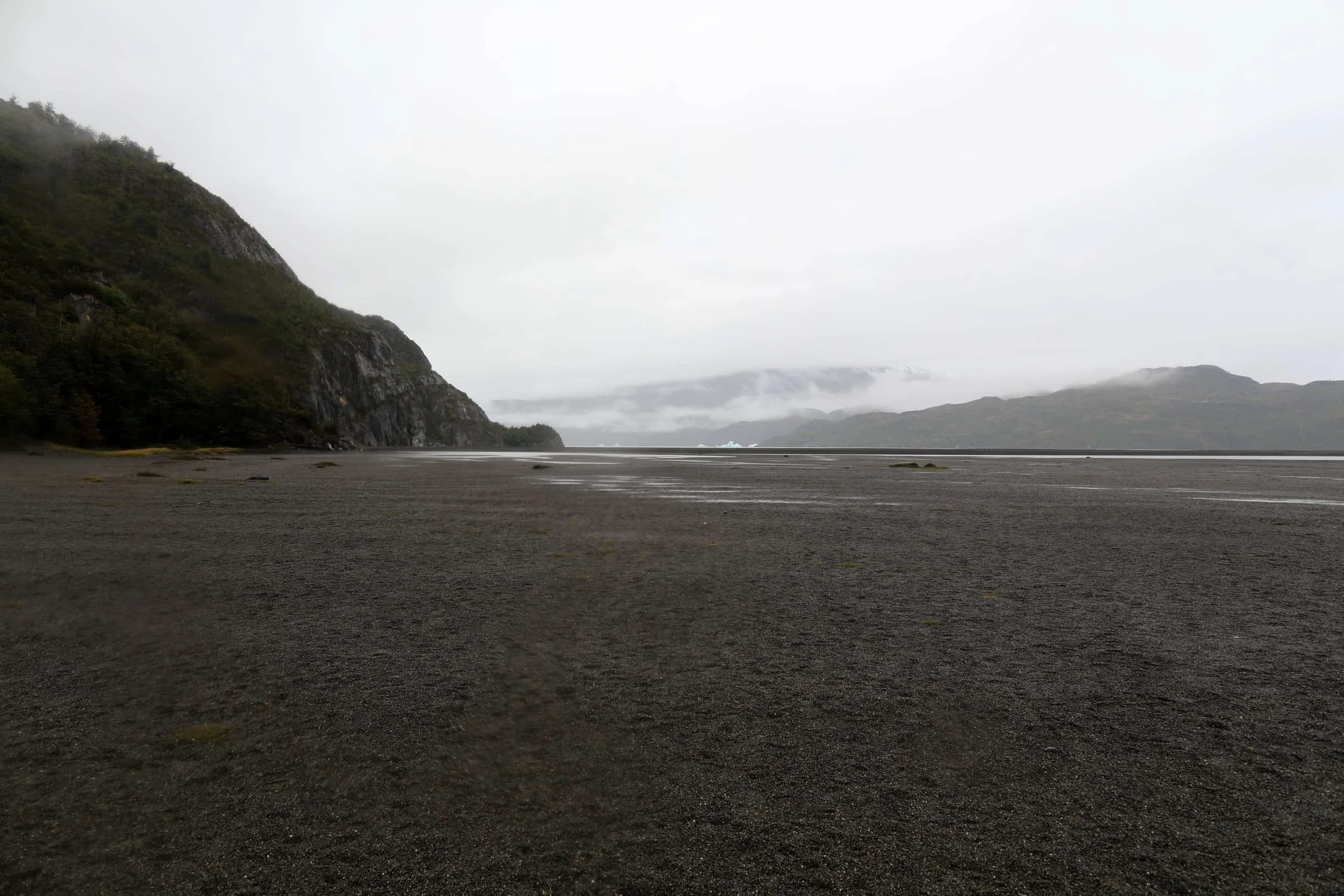
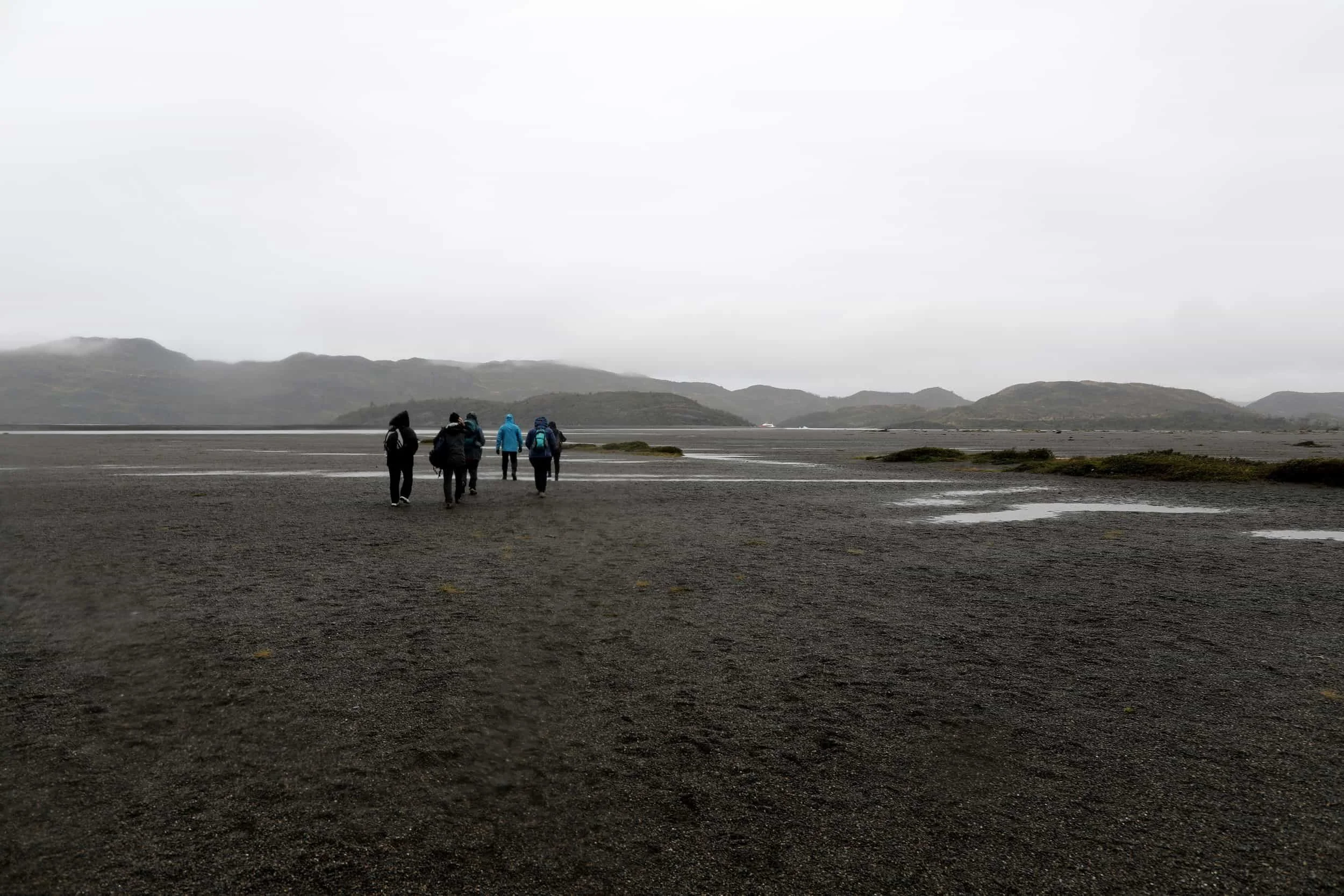
The lake’s story is written in ice and footsteps. Across millennia, advancing and retreating glaciers sculpted the valley; during the Little Ice Age the Grey Glacier surged, leaving behind moraines — a patchwork of dirt, rocks and soil — that cupped the lake into being. In the 19th and early 20th centuries, European explorers and scientists charted the region and chronicled its glacial drama.
Long before those maps existed, the Tehuelche and Kawésqar peoples moved through and made use of these wild Patagonian lands, their presence a quieter but vital thread in the lake’s history, while the fragile highland ecology kept permanent settlement sparse.
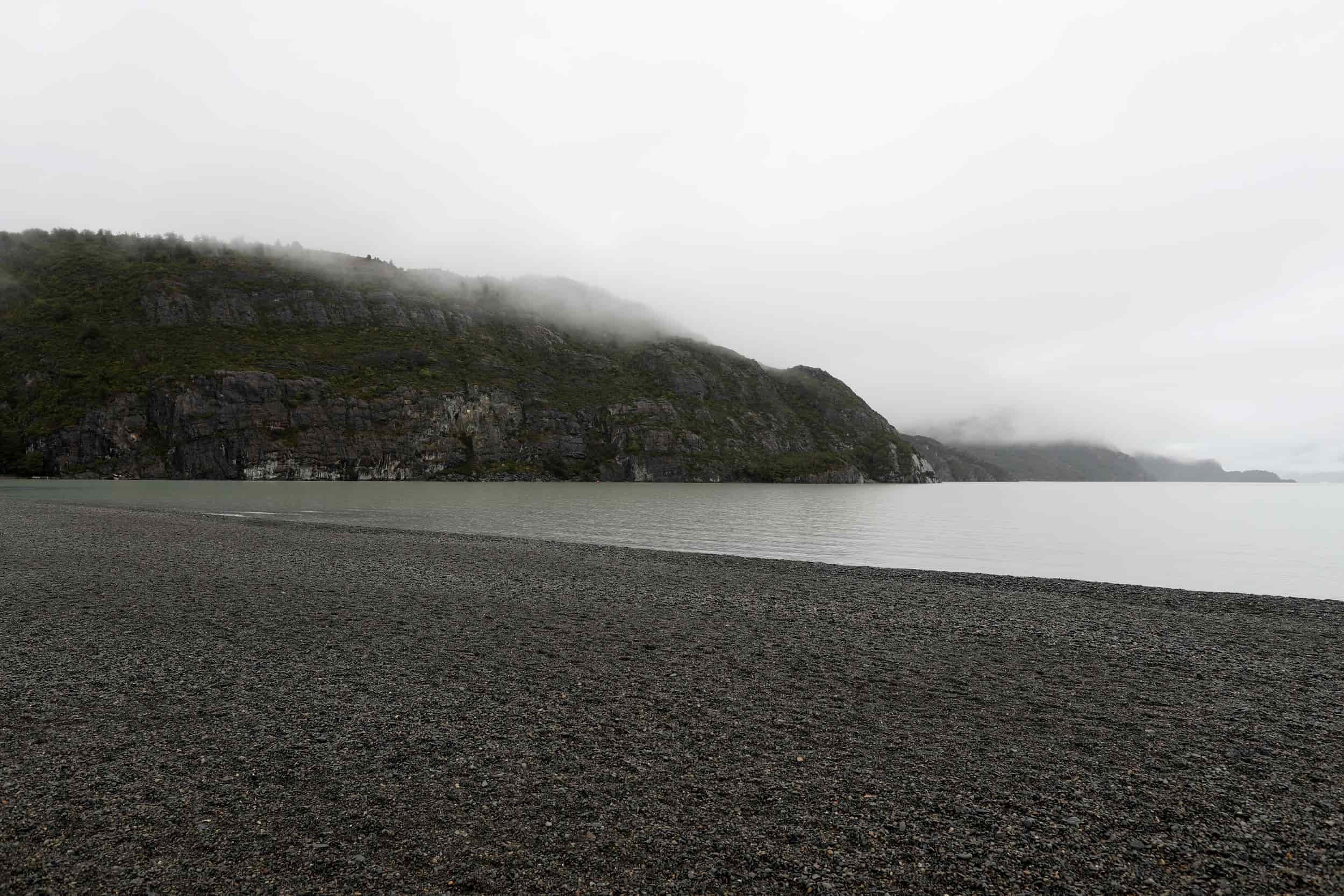
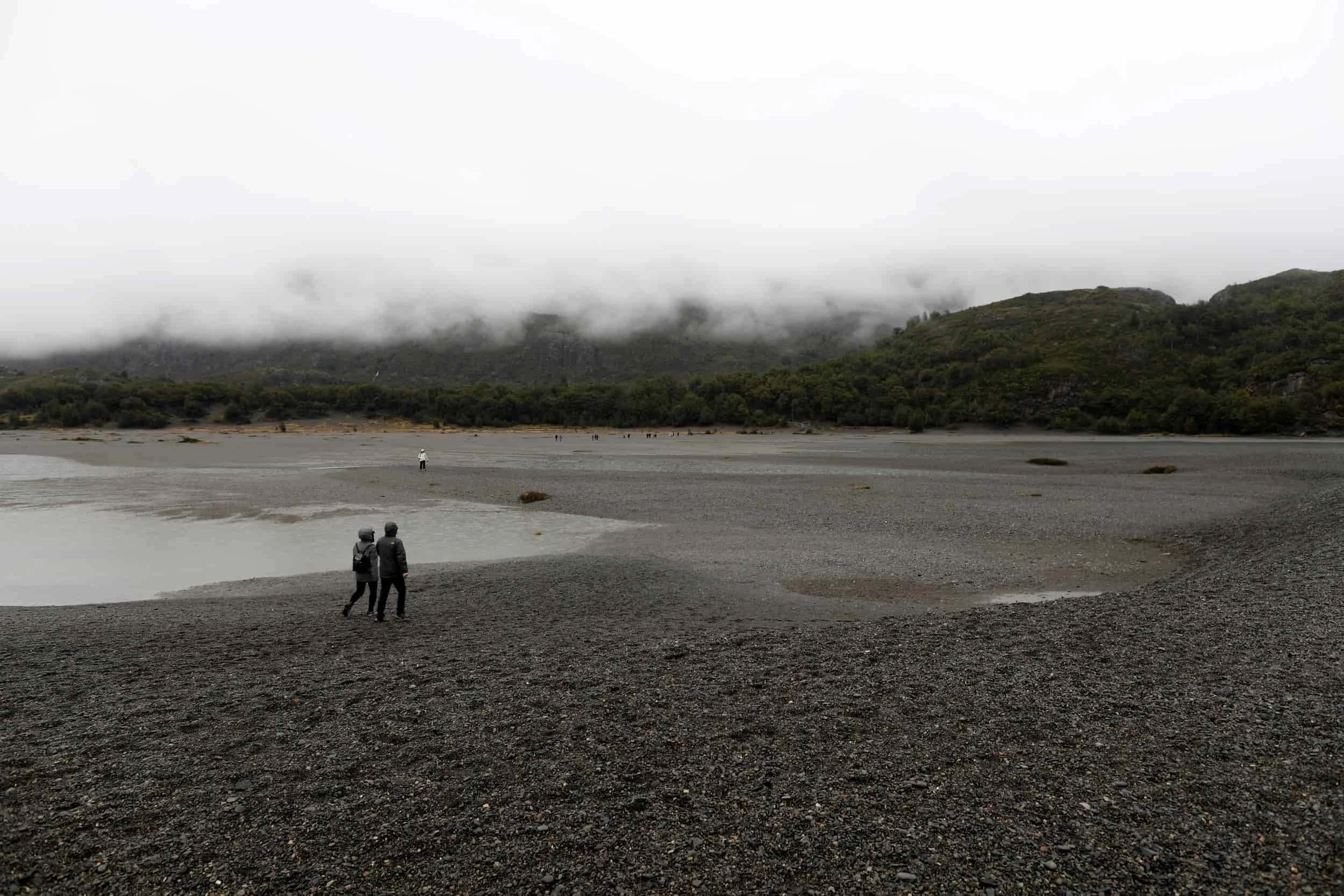
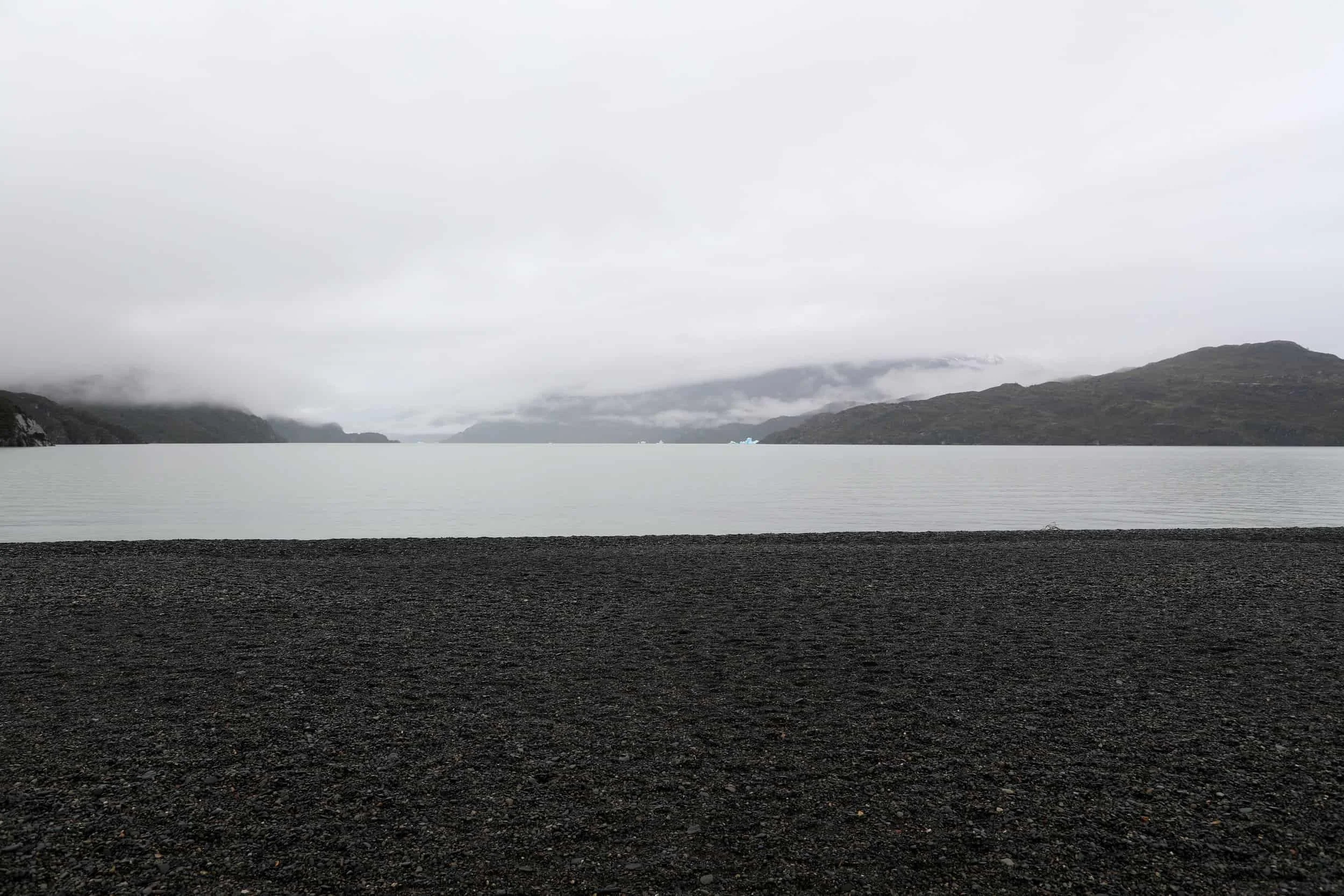
Visitors usually discover Grey Lake on foot or by boat and both routes feel a little like stepping into a scene from a movie. The Grey Glacier boat trips are a favorite: skimming close to drifting icebergs and the glacier’s sheer face, they hand you impossible photo moments and a real, humbling sense of scale.
Hikes from refugios and campsites thread up to viewpoints — like the Grey lookout — or down to Lago Grey’s pebbled shore, where the Paine Massif and the glacier’s icy tongues seem startlingly near. The weather here is part of the show too: sudden gusts and quick-shifting clouds can turn the scene from coy to cinematic in minutes.
That drama comes with a more serious note. Grey Glacier, like many in Patagonia, has been retreating and thinning in recent decades as the region warms and precipitation patterns change. That loss reshapes how often ice calves, alters the lake’s volume and sediment and quietly shifts local water cycles and the way visitors experience the place.
Park scientists and rangers keep watch and measures such as regulated boat trips and marked trails help steer visitors toward low-impact ways to enjoy Grey while protecting it for the next travelers.
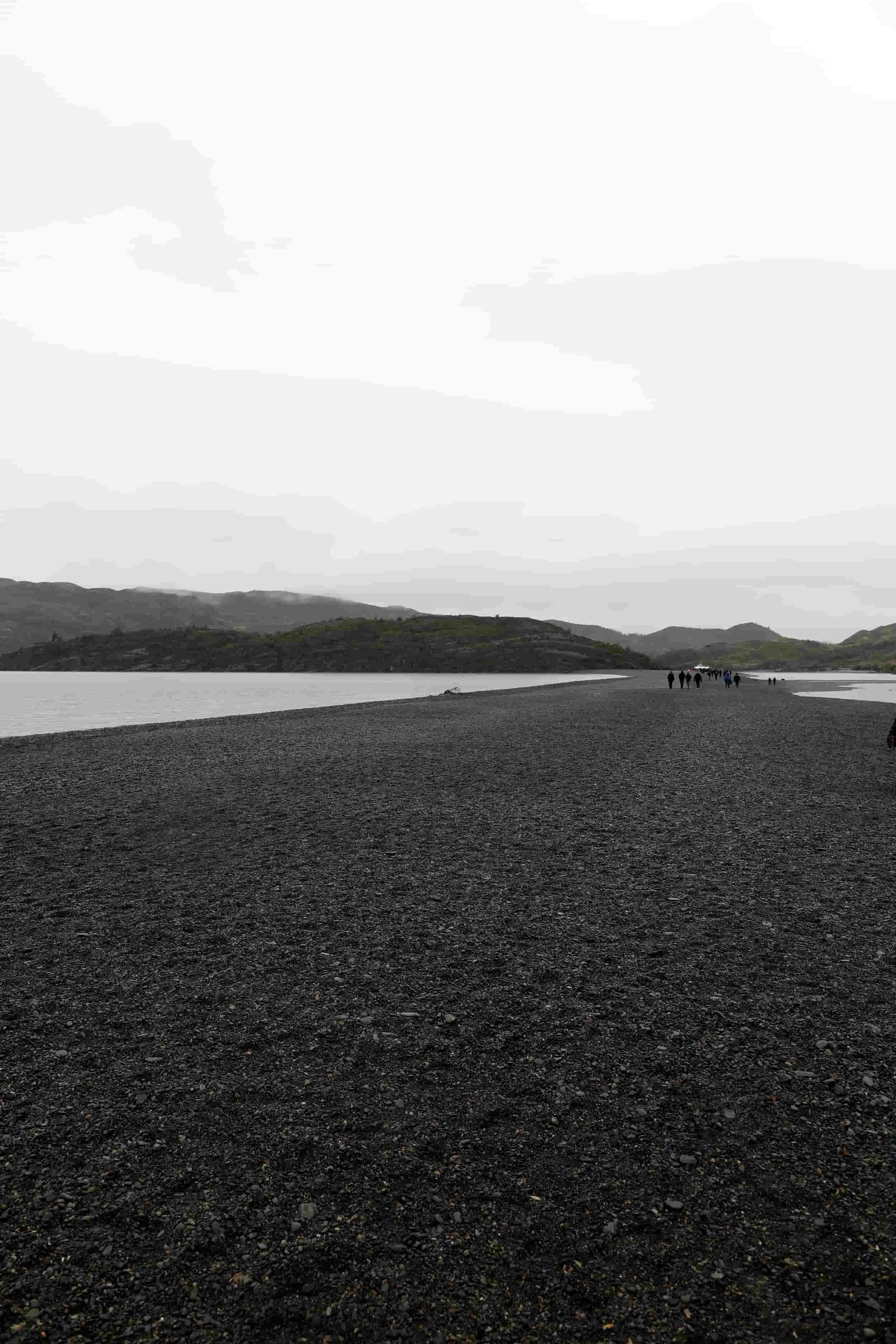
Perched about 715 feet above sea level, the lake stretches nearly half a mile, its exact outline breathing with the seasons as glacier melt and runoff reshape the shore. Chunks of ice — some the size of small islands, others no bigger than driftwood — float here, fragments calved from the looming face of Grey Glacier.
Overhead, Andean condors wheel; on the slopes, guanacos and foxes make occasional appearances, while the water teems with ducks and other waterfowl. Lenga and ñire woodlands fringe the shoreline, sheltering a quieter cast of birds and small mammals that have learned to thrive in Patagonia’s austere beauty. Visit between the Southern Hemisphere’s late spring and early autumn for the friendliest trails and the most reliable boat services — when the lake feels most alive and easy to explore.
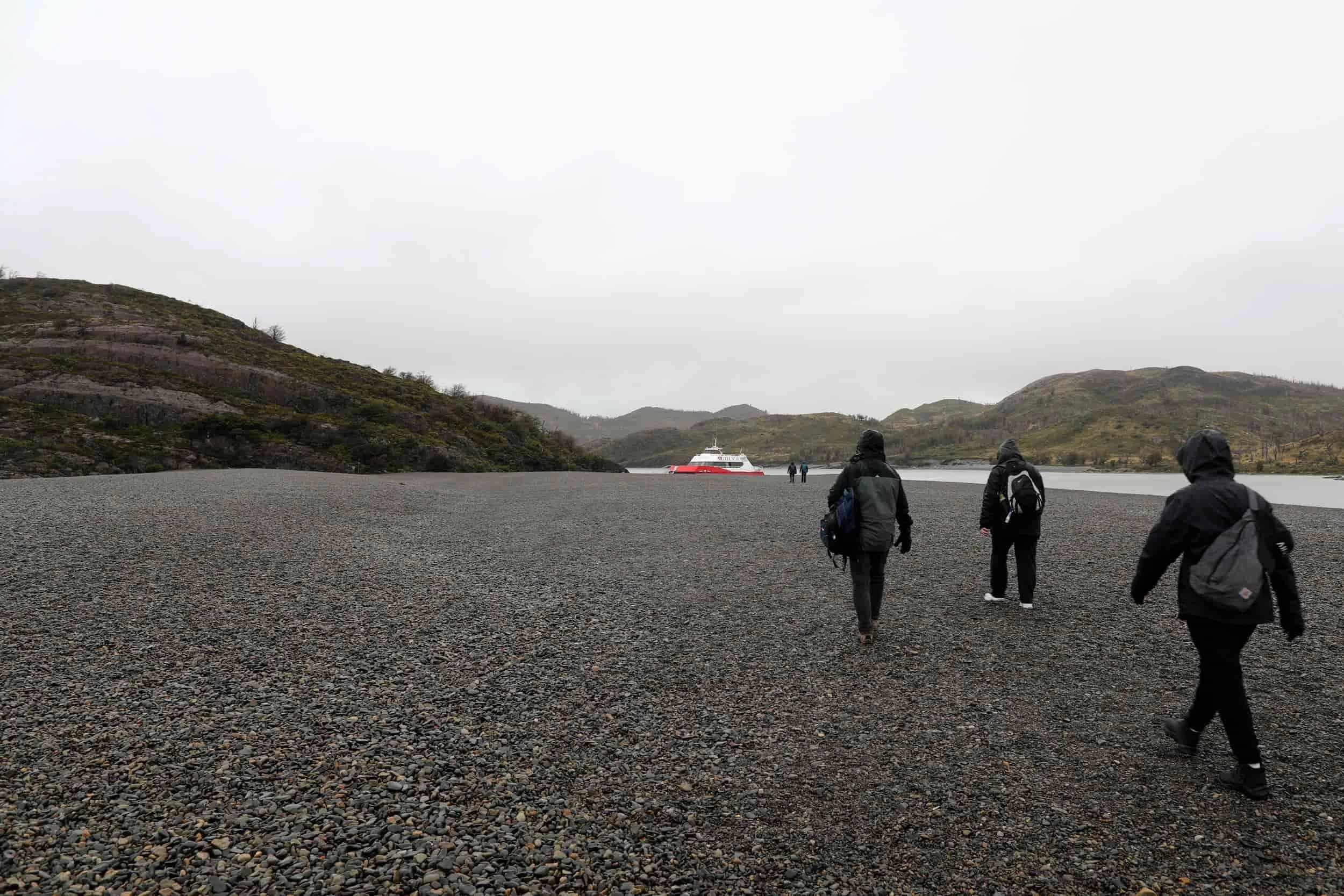
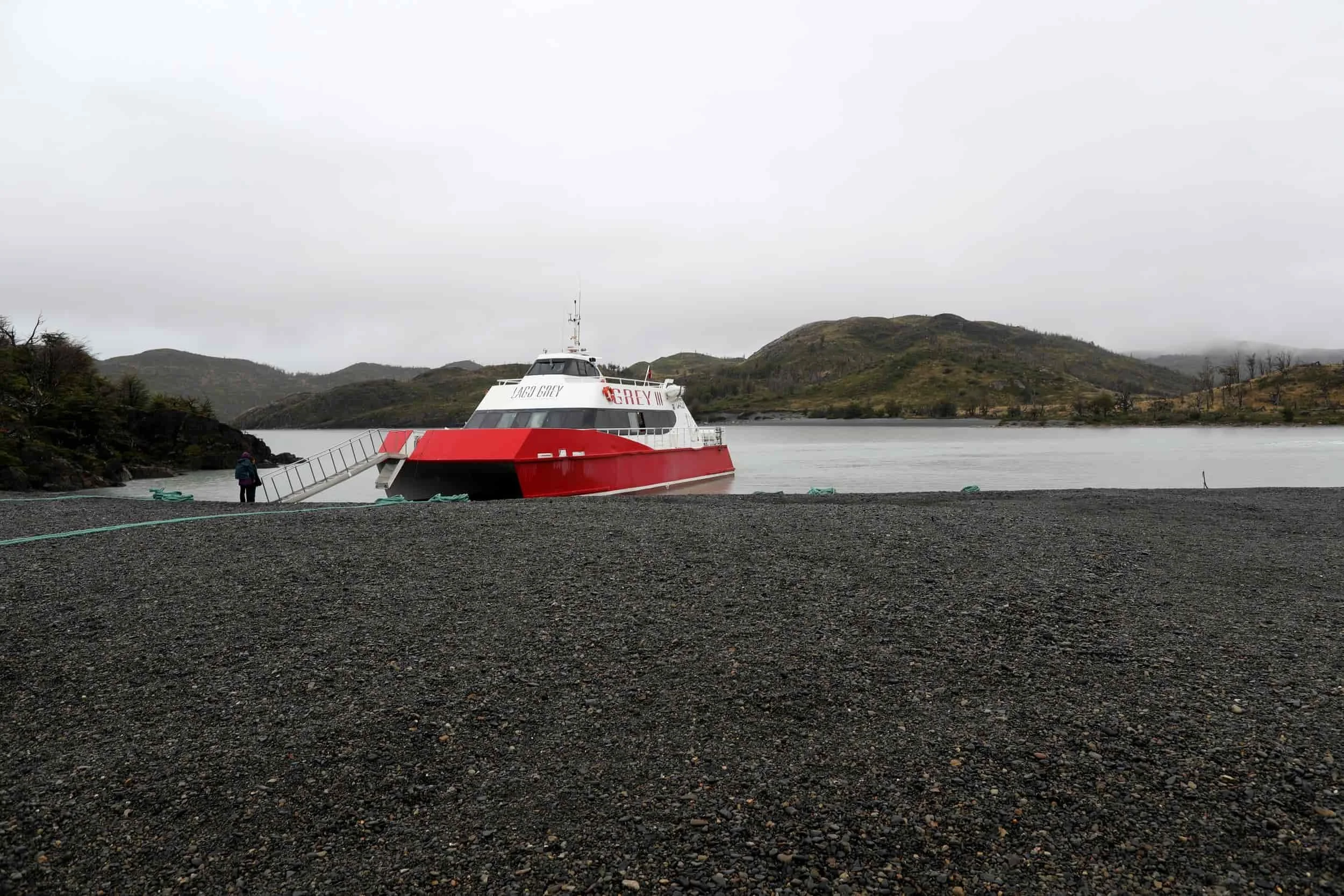
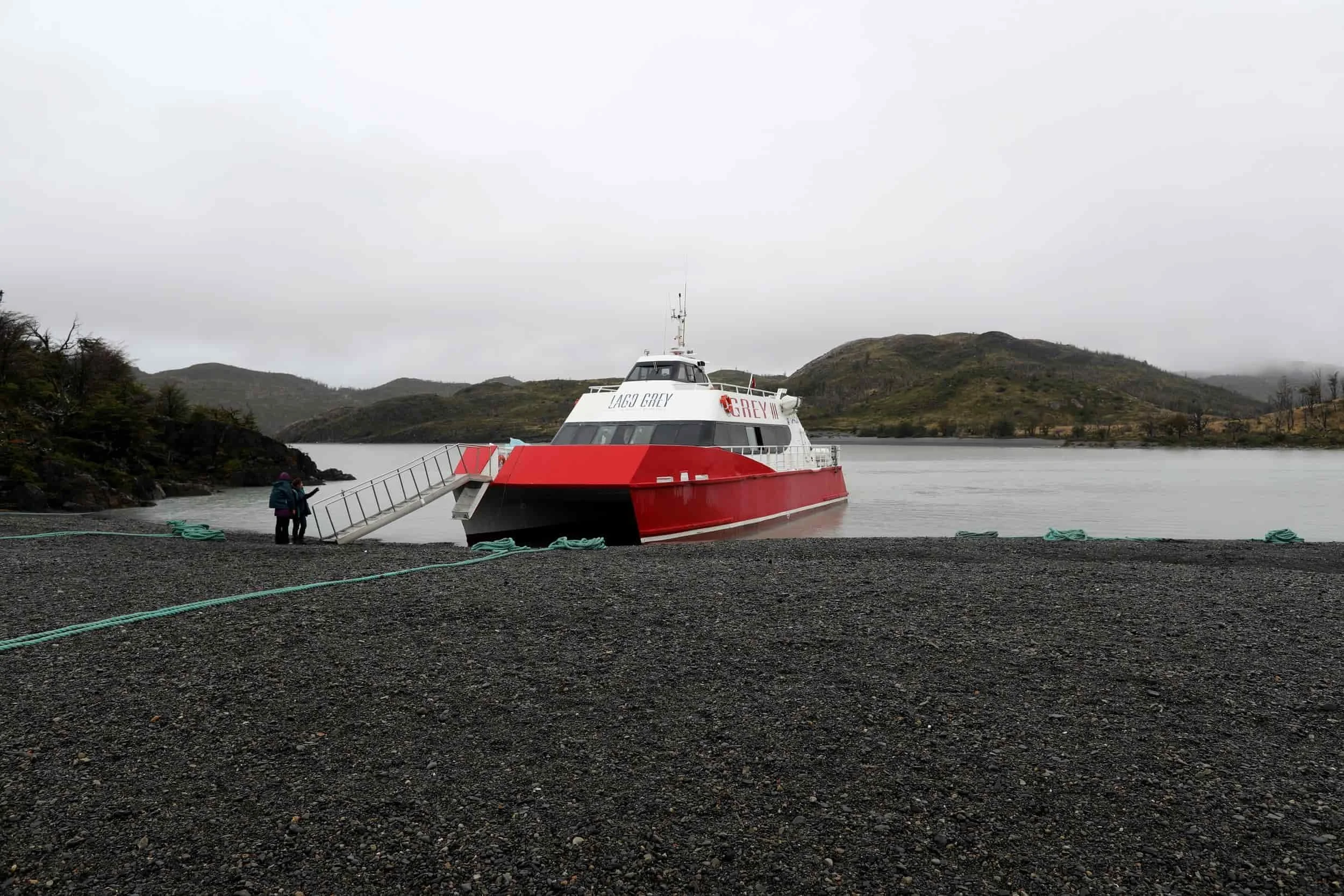
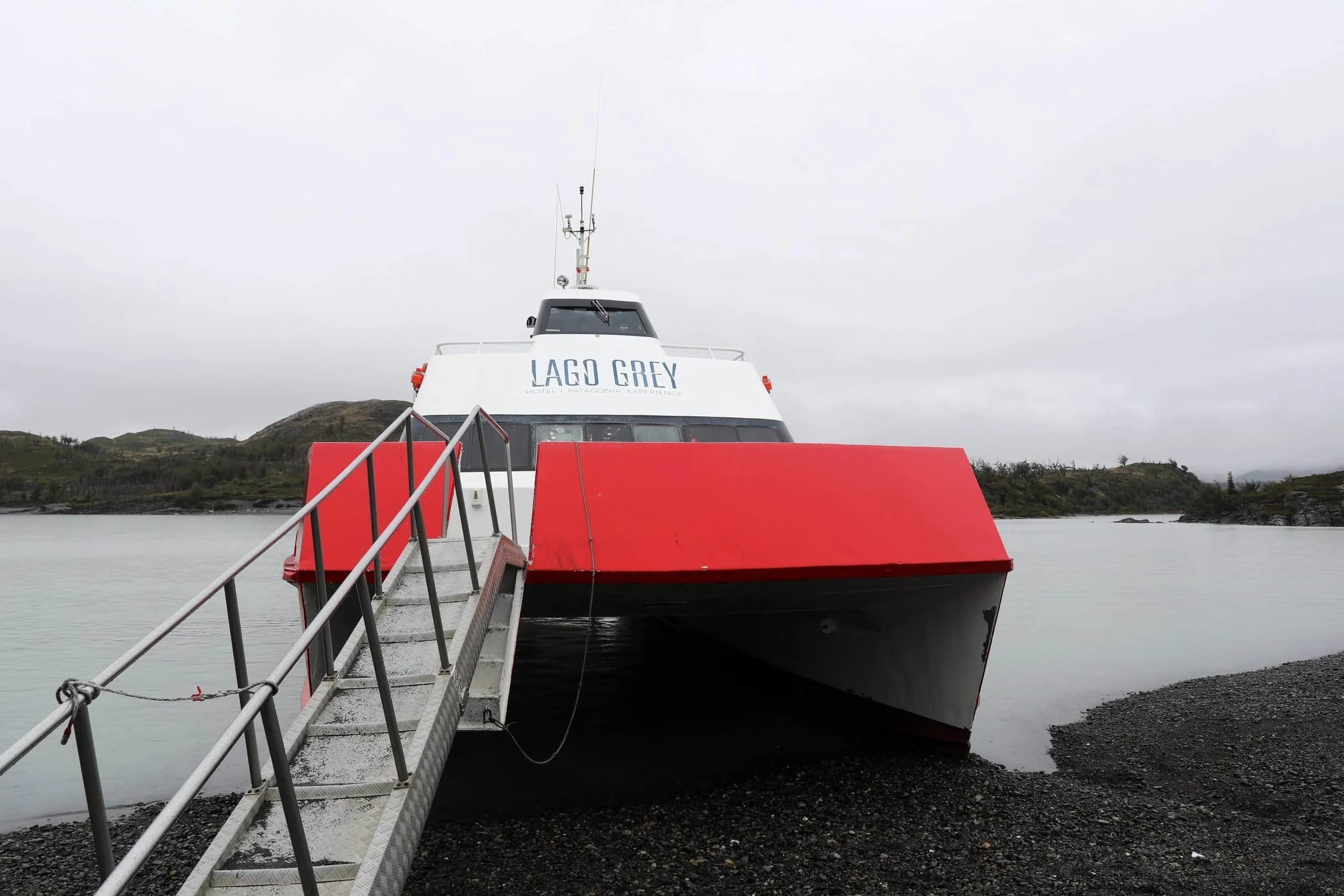
A brisk 30-minute trek leads you across a wet, sodden strip of rocky shore, the air smelling faintly of mineral and cold. As the path opens up, delicate, pale-blue tips of glaciers appear on the horizon, their cool hues vivid against the muted browns of the surrounding land.
From the shore, a small boat slips onto an icy, mirror-smooth expanse, slicing toward a landscape of towering icebergs and the glacier’s jagged front. The scene feels otherworldly: a procession of vivid blue ice, groaning and cracking as massive chunks calve away, each fracture punctuating the silence with a thunderous reminder of nature’s slow, dramatic motion.
Grey Glacier
Grey Glacier is one of the most striking outlet glaciers in Chile’s Patagonia, flowing from the Southern Patagonian Ice Field into the eastern arm of Lake Grey within Torres del Paine National Park. Its expansive tongue of deep blue and silvery ice carves a dramatic contrast against the park’s rugged granite peaks and the dark waters of the lake. The glacier’s surface is heavily crevassed and dotted with ice seracs; frequent calving events send towering icebergs into Lago Grey, contributing to the lake’s mosaic of floating ice and the distinctive grayish sediment-laden color that gives the glacier its name.
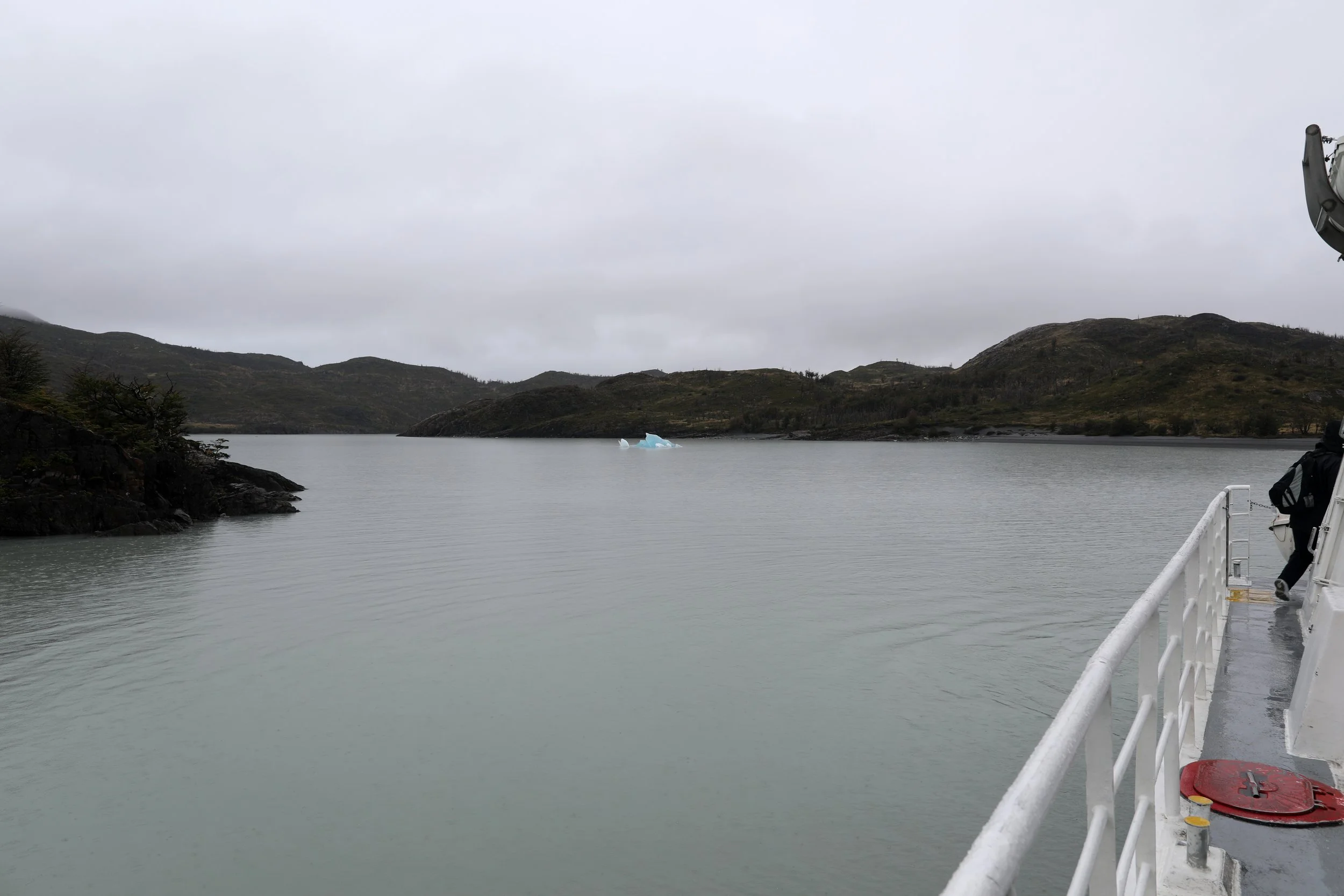
Explore the three dramatic faces of Grey Glacier, the colossal river of ice that sculpts the landscape between two stark mountain ranges: the Andes rising to the west and the Cuernos del Paine to the east. This glacier — roughly 17 miles (27 km) long, 3.7 miles (6 km) across and towering near 100 feet (30 meters) at its terminus — relentlessly grinds through the rock, feeding into Lago Grey.
As it advances southward, the ice sheet splits into two tongues before meeting the water, where the spectacle of calving unfolds: huge blocks of ice shear off the glacier’s edge and plummet into the lake, sending up thunderous splashes and sending newly born icebergs adrift. Observing the three faces reveals how the glacier carves valleys, interacts with mountain topography and creates the floating sculptures that define Lago Grey’s shoreline.
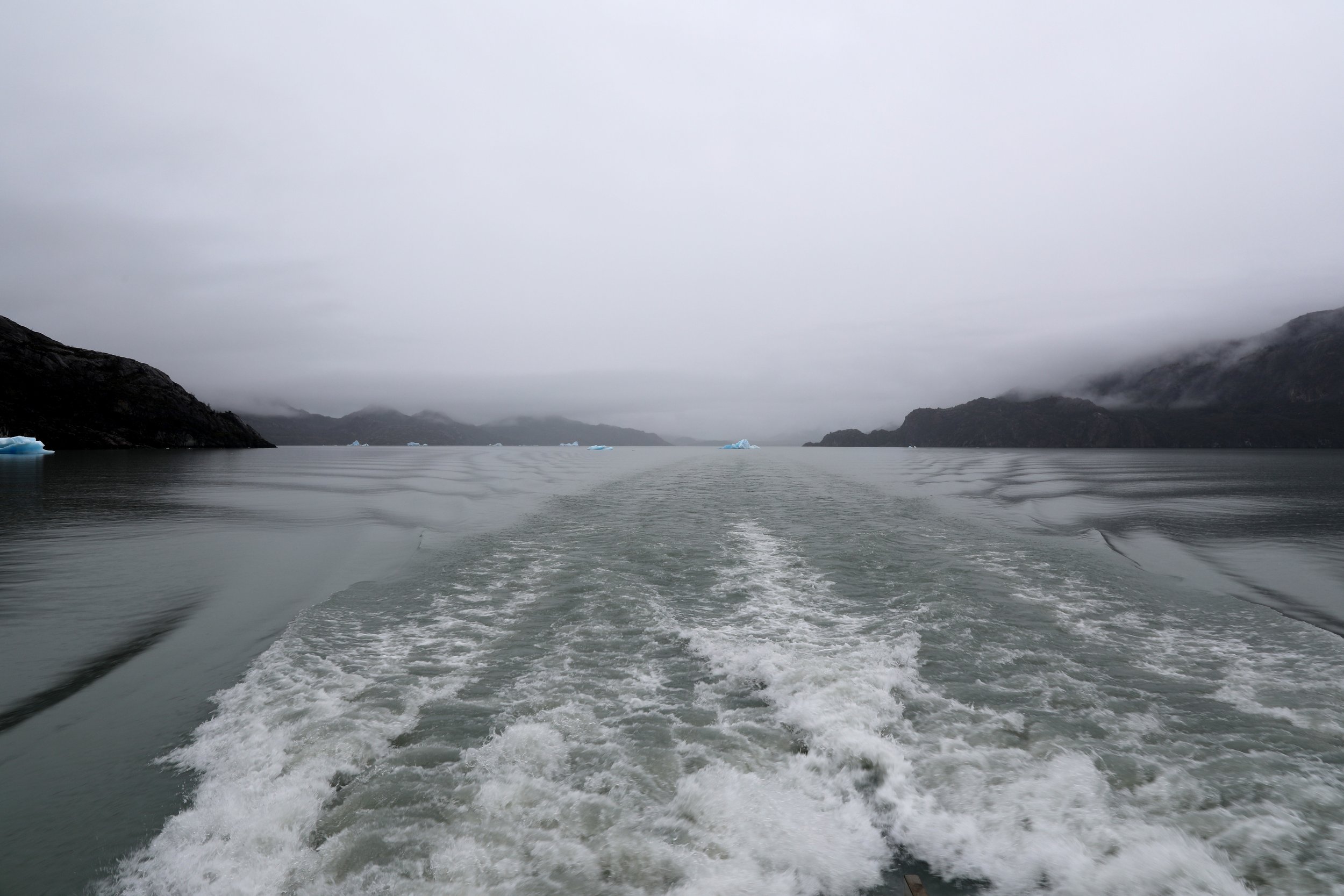
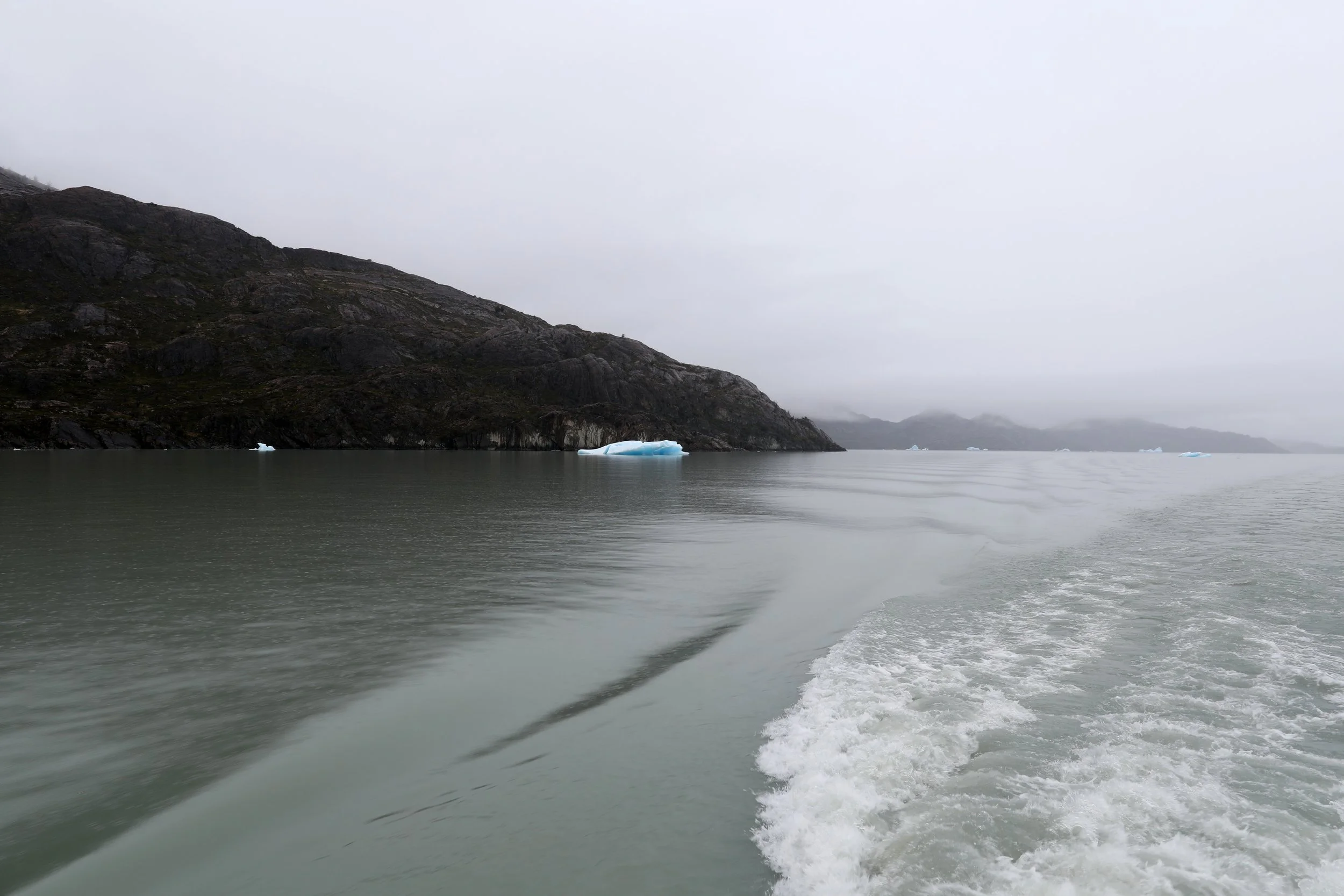
But wait — aren’t icebergs and glaciers the same thing? Not quite. Here’s how they differ.
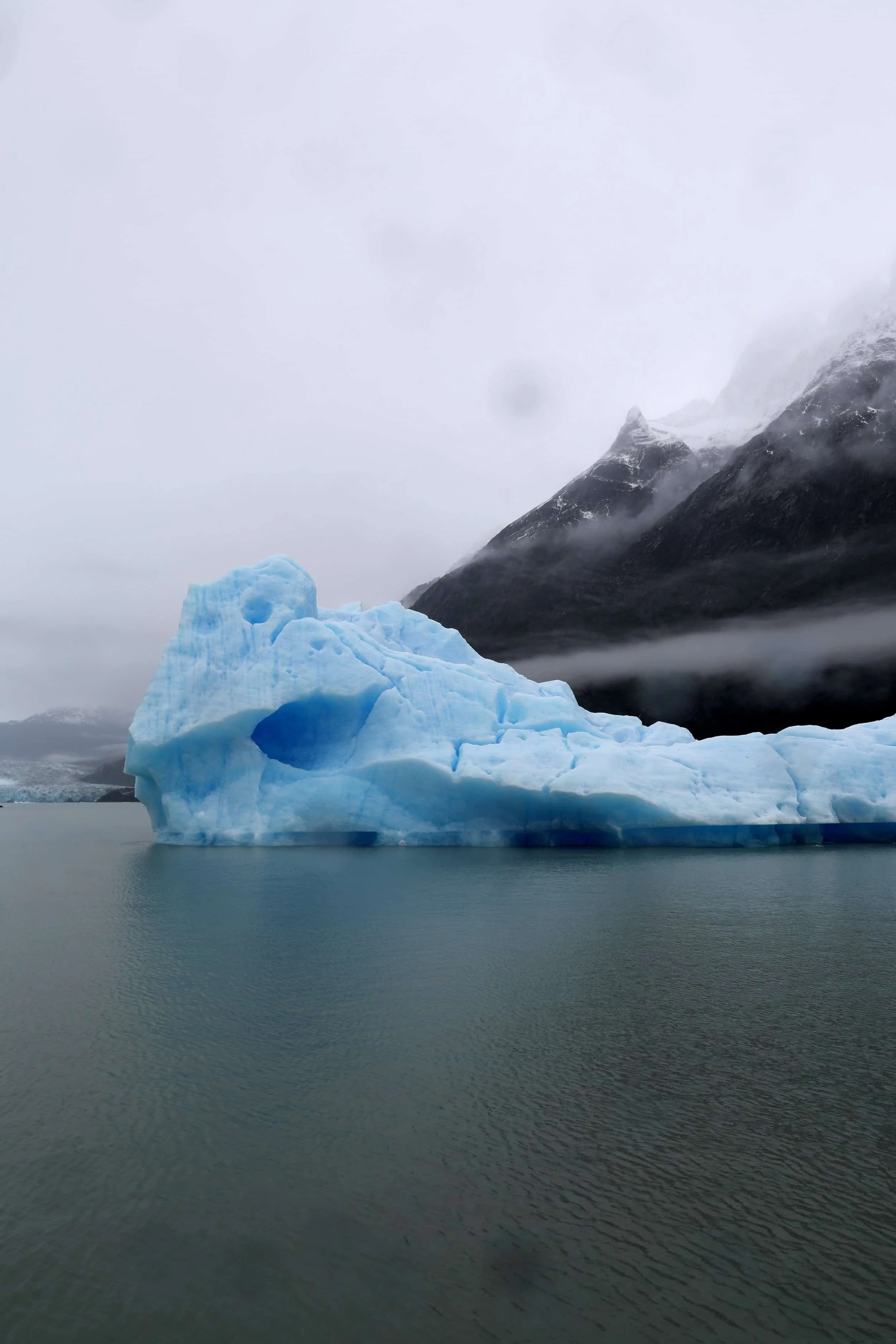
Glaciers and icebergs in Patagonia are cousins of ice with very different personalities. Glaciers are the patient, land bound giants — immense rivers of compacted snow and ice that inch along, carving valleys, feeding rivers and reshaping the landscape over centuries as they advance and retreat. Icebergs, by contrast, are the adventurous offspring that break away from the glacier’s edge: freed, buoyant chunks that drift through fjords and open ocean, their dazzling blue or flat-topped forms hinting at a far larger mass hidden beneath the surface.
Where glaciers tell the long story of climate through steady gains and losses and govern local water systems and ecosystems year‑round, icebergs are fleeting actors — cooling seas as they melt, altering salinity and currents and occasionally posing a dramatic hazard to ships. Together, they make Patagonia’s icy world both monumental and ever-changing.
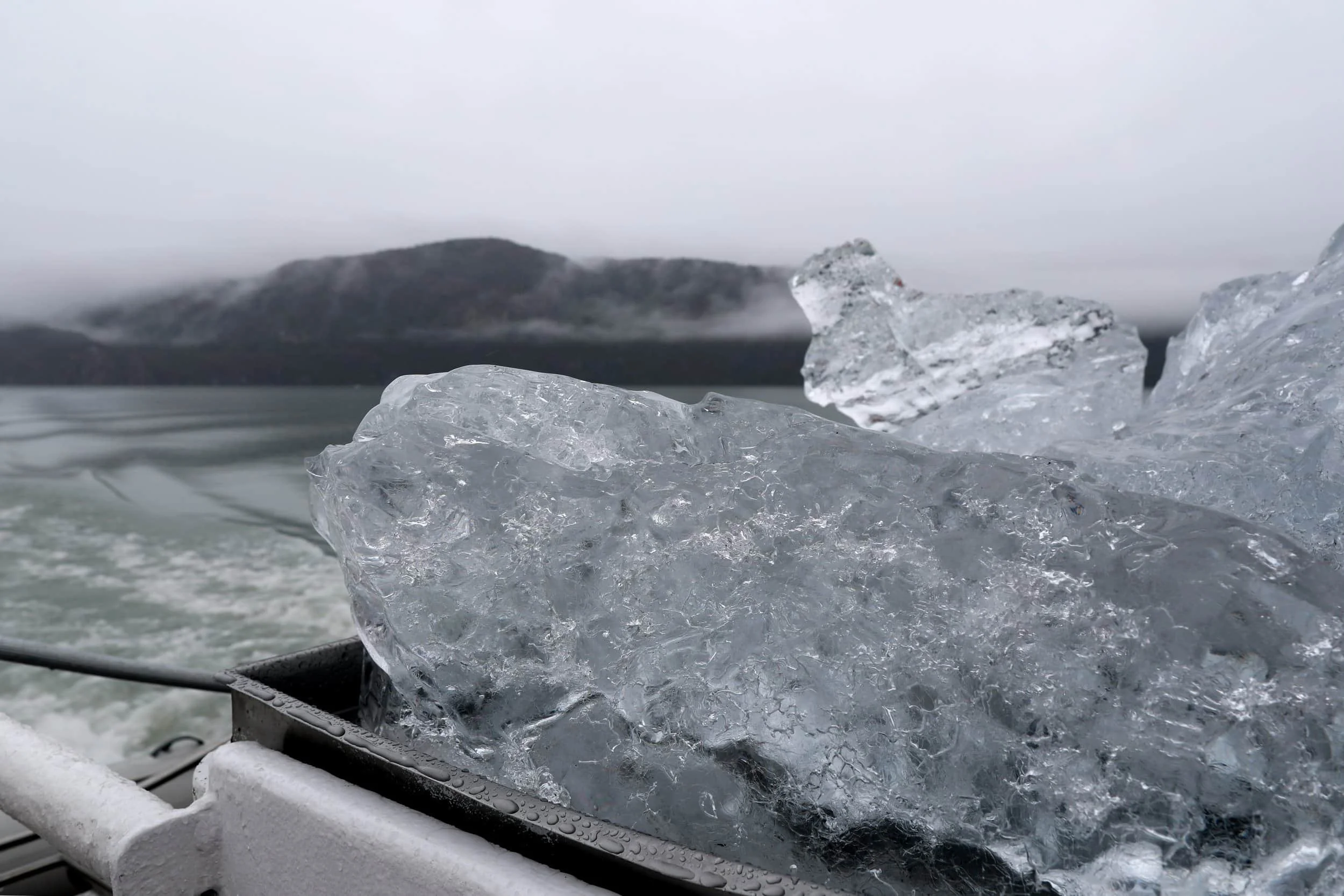
Grey Glacier presents itself in three distinct faces — each a different lesson in glaciology, landscape and emotion. Standing on its shores, you witness a single ice body revealing varied personalities shaped by light, water and time.
The Blue Ice Face | Power and structure from the lake: The glacier’s frontal wall is a monumental display of compacted ice. Here, the ice reads as blue: not the pale sky-blue of fresh snow but deep, liquid azure where air bubbles have been squeezed out and ice crystals align.
This face tells the glacier’s structural story. Crevasses and seracs fracture the surface; calving events — sudden collapses of ice avalanches into Lago Grey — dramatize the glacier’s kinetic energy. The soundscape is bass-heavy: the groan of slow movement, the boom of ice striking water and the splash of bergs. Up close, you can see stratified layers that record seasons and years, an archive of past climates written in compressed snow and melt cycles.
Seracs are dramatic, towering sculptures of glacial ice — sometimes as big as houses — carved where crevasses cross in steep icefalls. Found on fast-moving glaciers like Everest’s Khumbu Icefall or the wild icefields of Patagonia, these jagged spires have a breathtaking, otherworldly beauty — and an unpredictable habit of collapsing without warning.
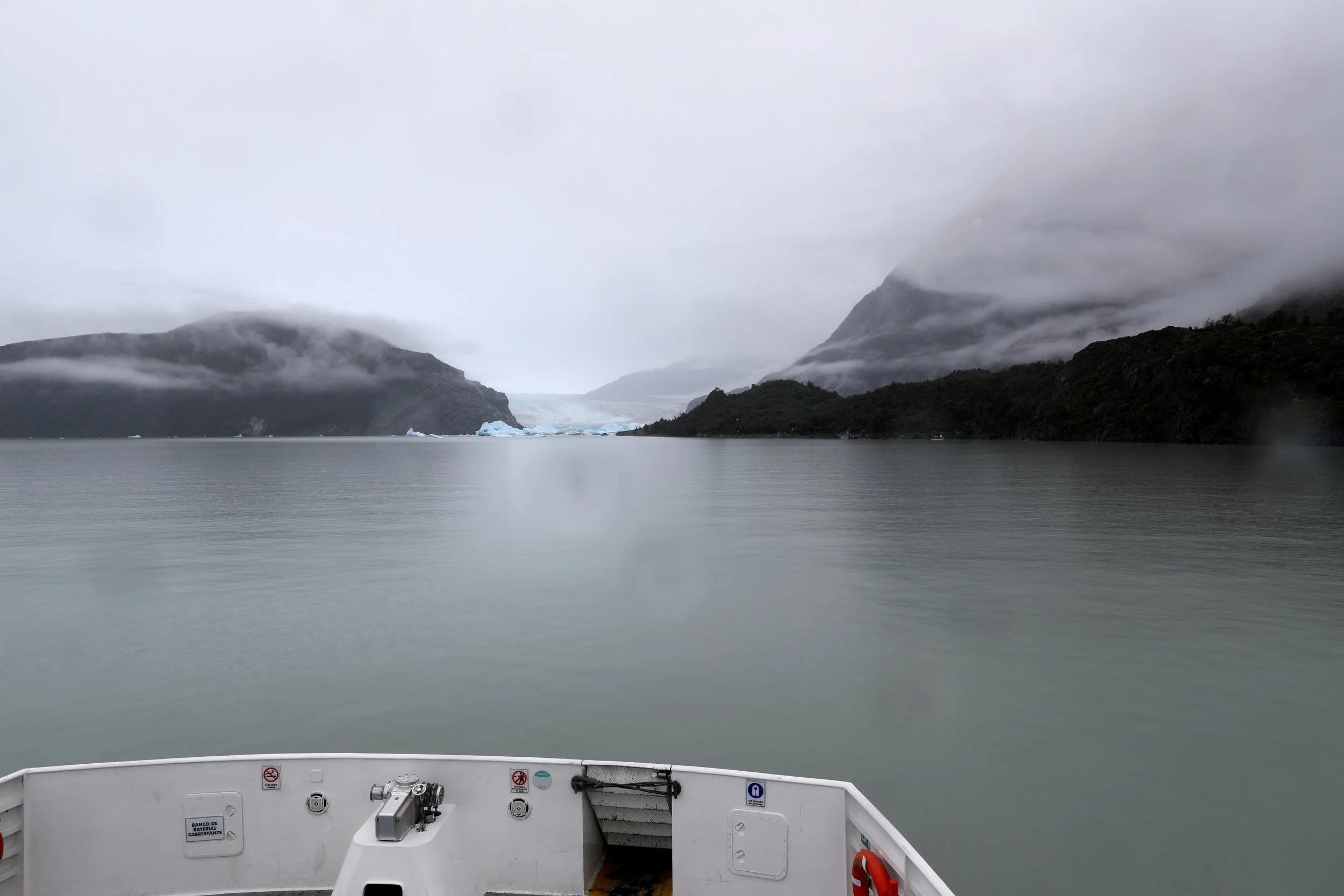
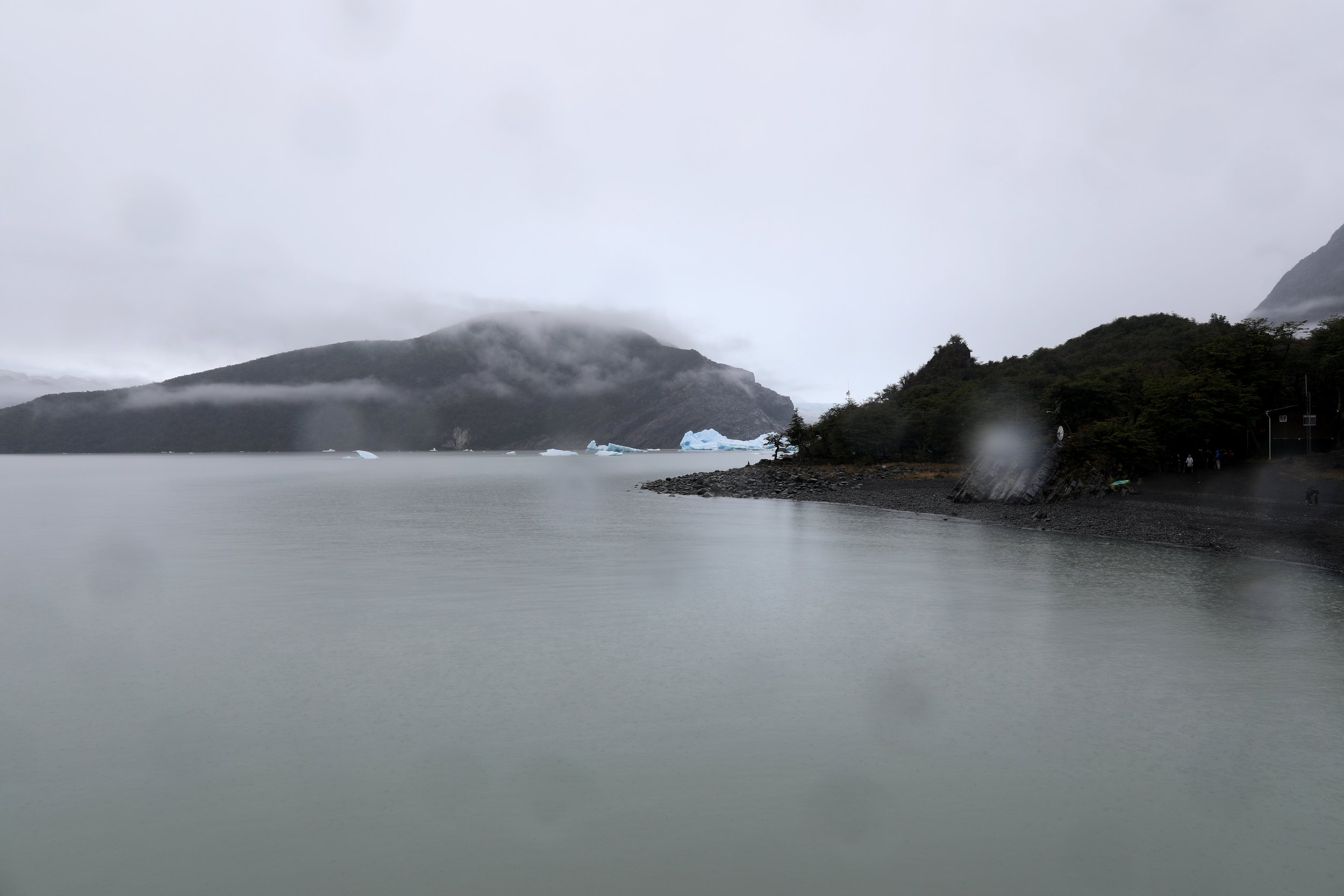
The Morainal Face | Transition and sediment viewed from the lakeshore or the moraine ridges: The glacier’s edge is edged with rock and sediment. Terminal and lateral moraines form the intermediate face: a boundary where ice meets the earth. Here, grey is literal — a mélange of silts, stones and clay ground out of bedrock by the glacier’s grinding motion. Meltwater channels snake through these deposits, carrying rock flour that gives Lago Grey its steely, slate color.
This face is dynamic in texture more than in motion: hummocks, dirty ice and exposed bedrock reveal the glacier’s erosive past and ongoing retreat. For hikers and photographers, it’s the human-scaled view, a place to trace the glacier’s recent footprint in the landscape.

The Distant, Weathered Face | Time and atmosphere seen from afar: across the lake, from viewpoints along the park’s trails or from a boat beneath shifting clouds — Grey Glacier turns into a more contemplative, atmospheric presence. Light and weather paint it in gradients of grey: mist-softened ridgelines, shadowed valleys and luminous pinnacles. This face is about perception and scale.
From here, the glacier is a long ridge of living ice punctuated by distant crevasses and abrupt cliffs, dwarfed by the Patagonian sky and framed by Andean peaks. Its tonal greys shift with the day: flat and melancholic under overcast skies, crisp and sculpted when sunlight slices through clouds, almost metallic when wind-whipped water mirrors its facets.
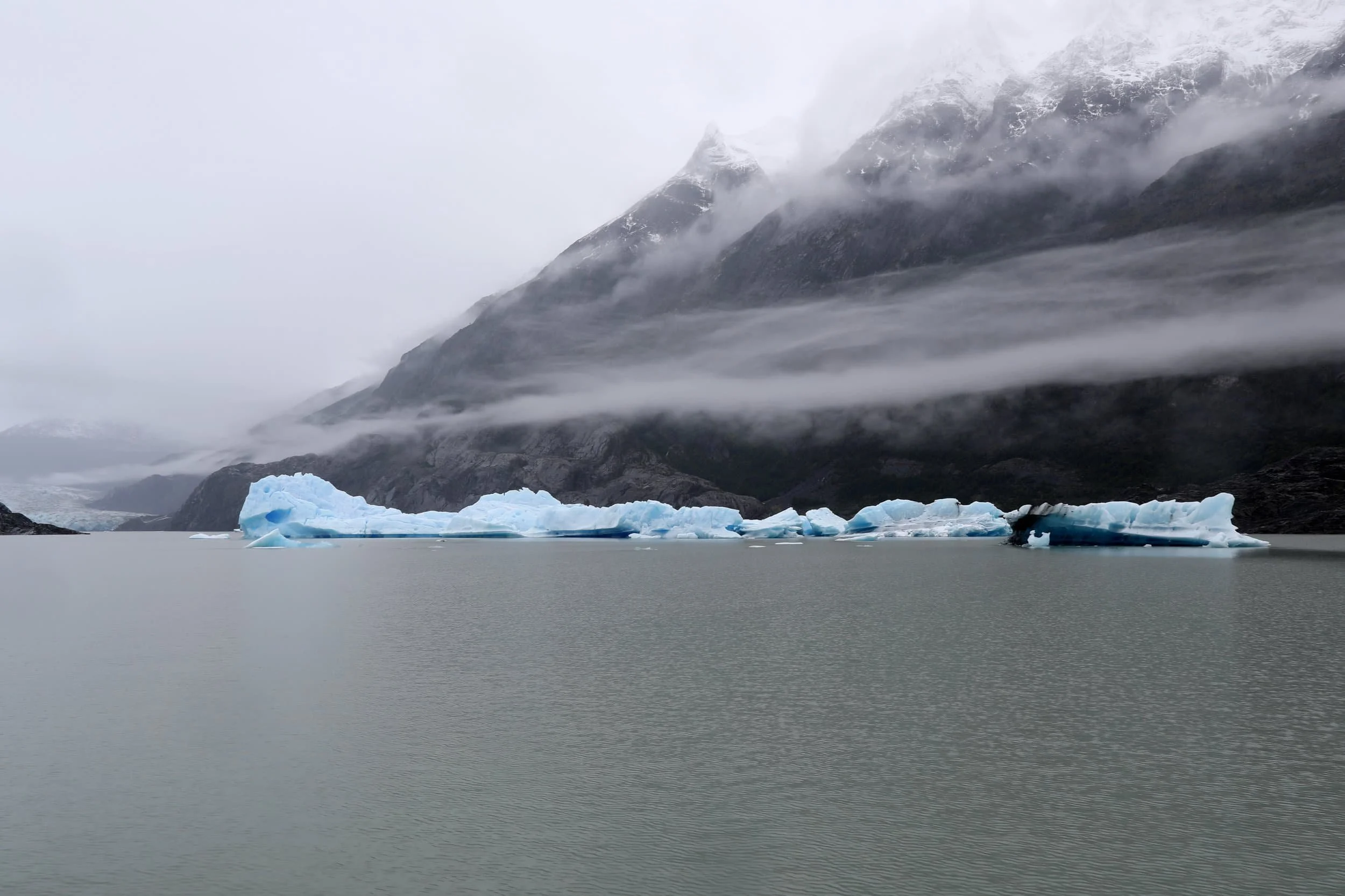
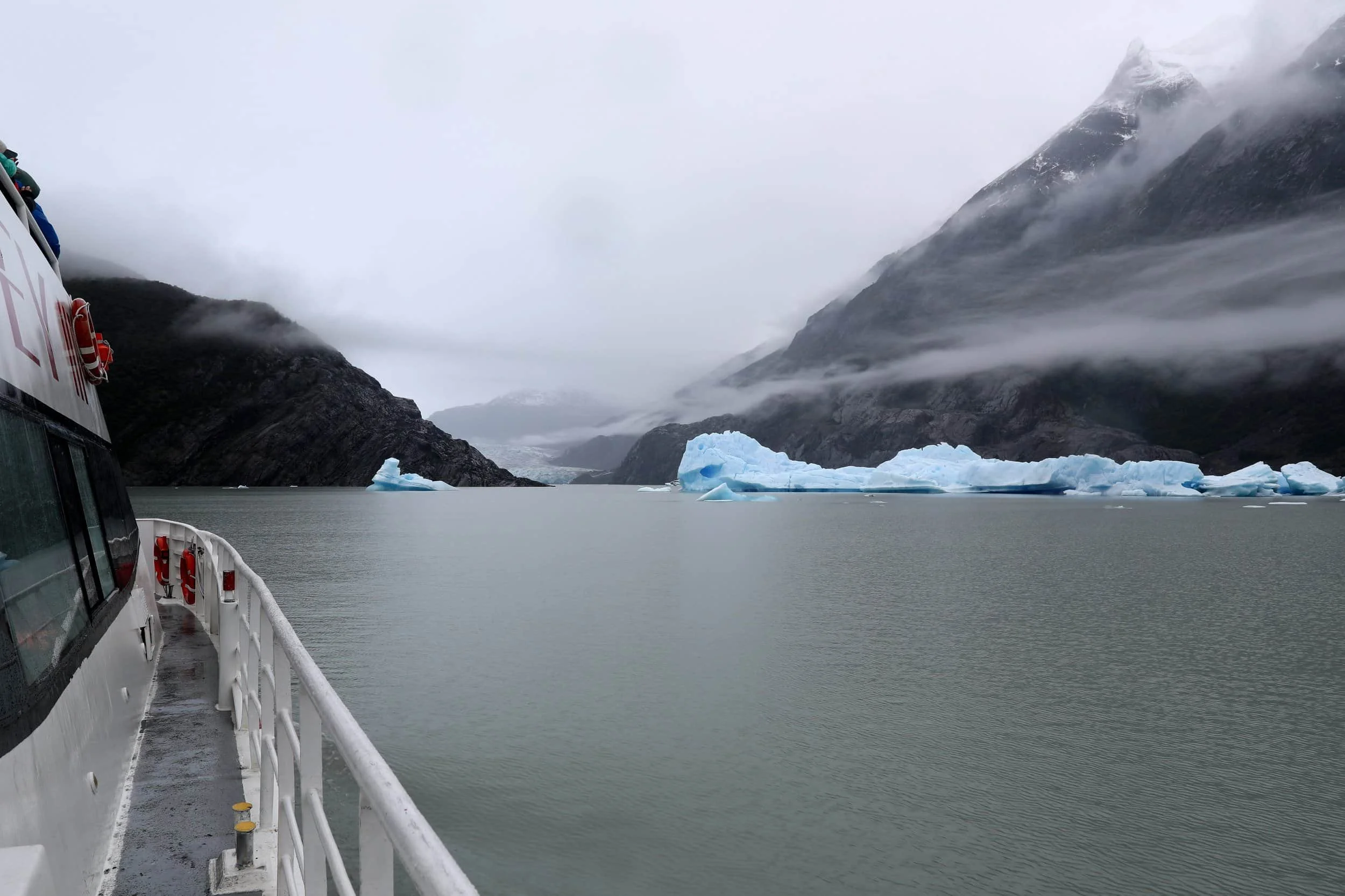
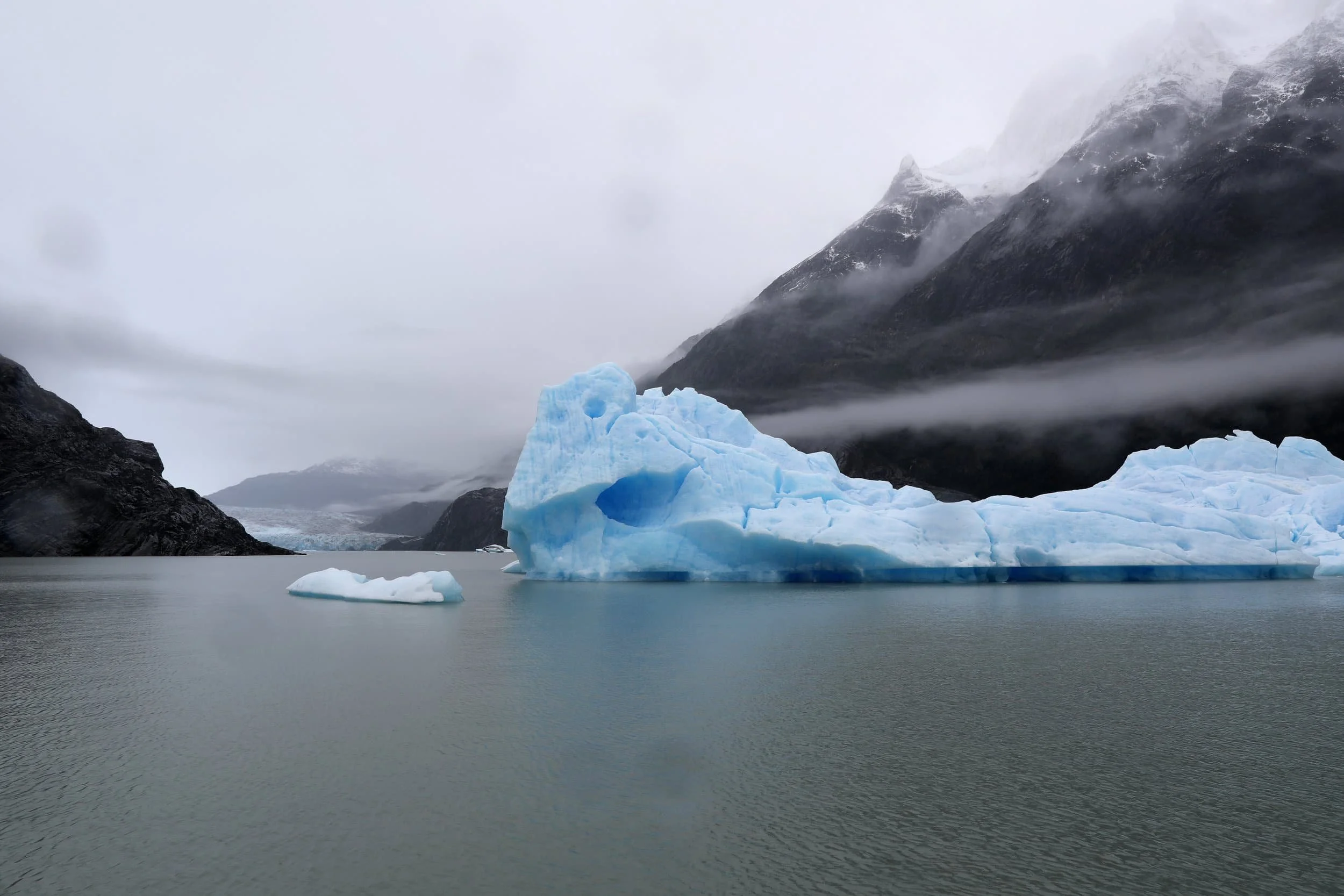
Together, these faces reveal the glacier’s many moods: the blue-ice aspect, a powerful sculptor carving the land; the moraine-streaked side, where ice and earth meet and negotiate; and the distant, atmospheric profile, a quiet emblem of climate, time and weather. They’re a gentle reminder that a glacier is never one fixed thing — it shifts with season and viewpoint and each face invites a different kind of understanding: the scientific, the sensory and the contemplative.
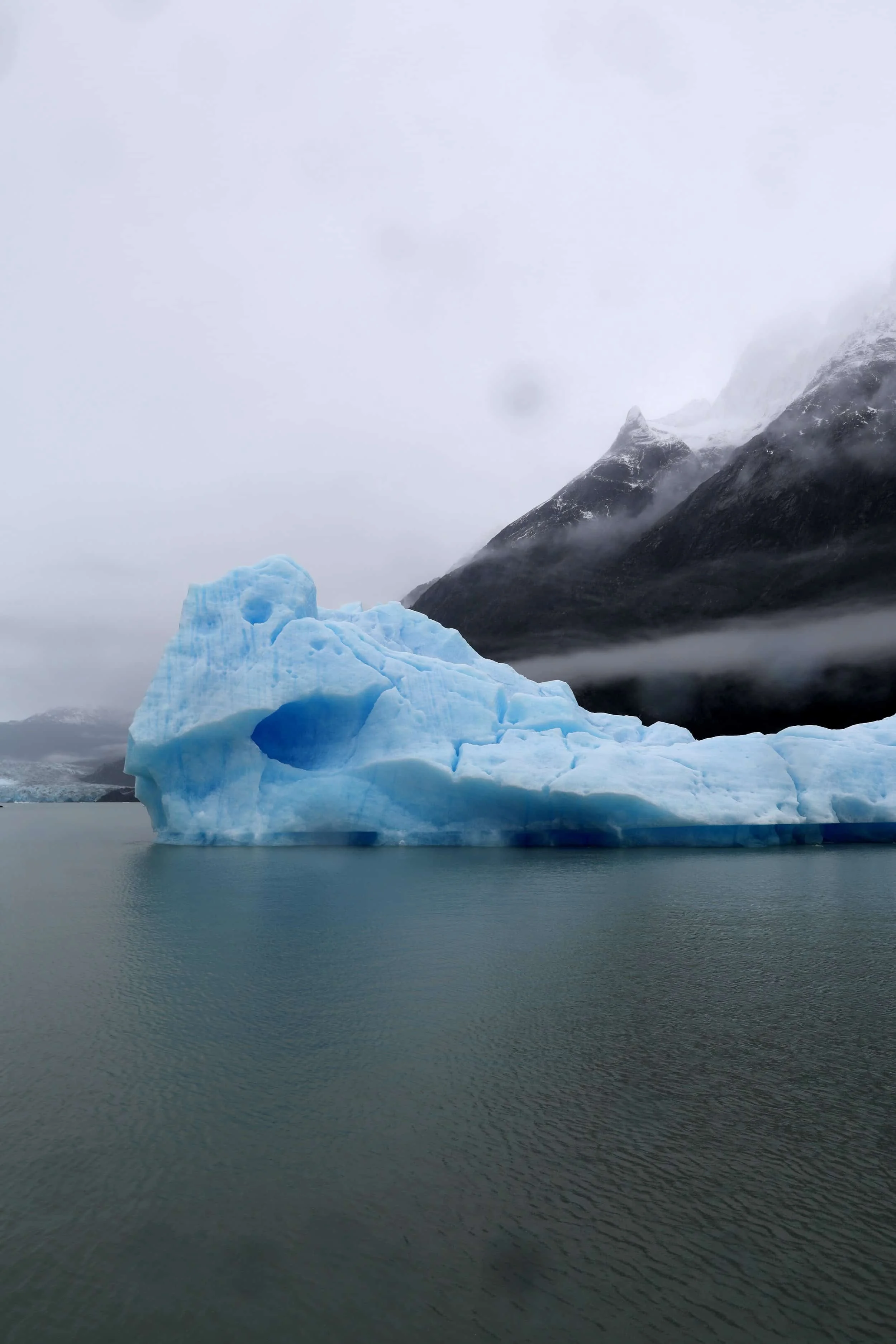
Approaching Grey Glacier by boat transforms the glacier from a distant photograph into a living, breathing spectacle. As you draw near, you see the striking blue of the ice wall and feel the hull tremble when chunks calve off — with the roar of the ice and the spray in the air, ear protection and a reliable, sturdy camera become essential companions.
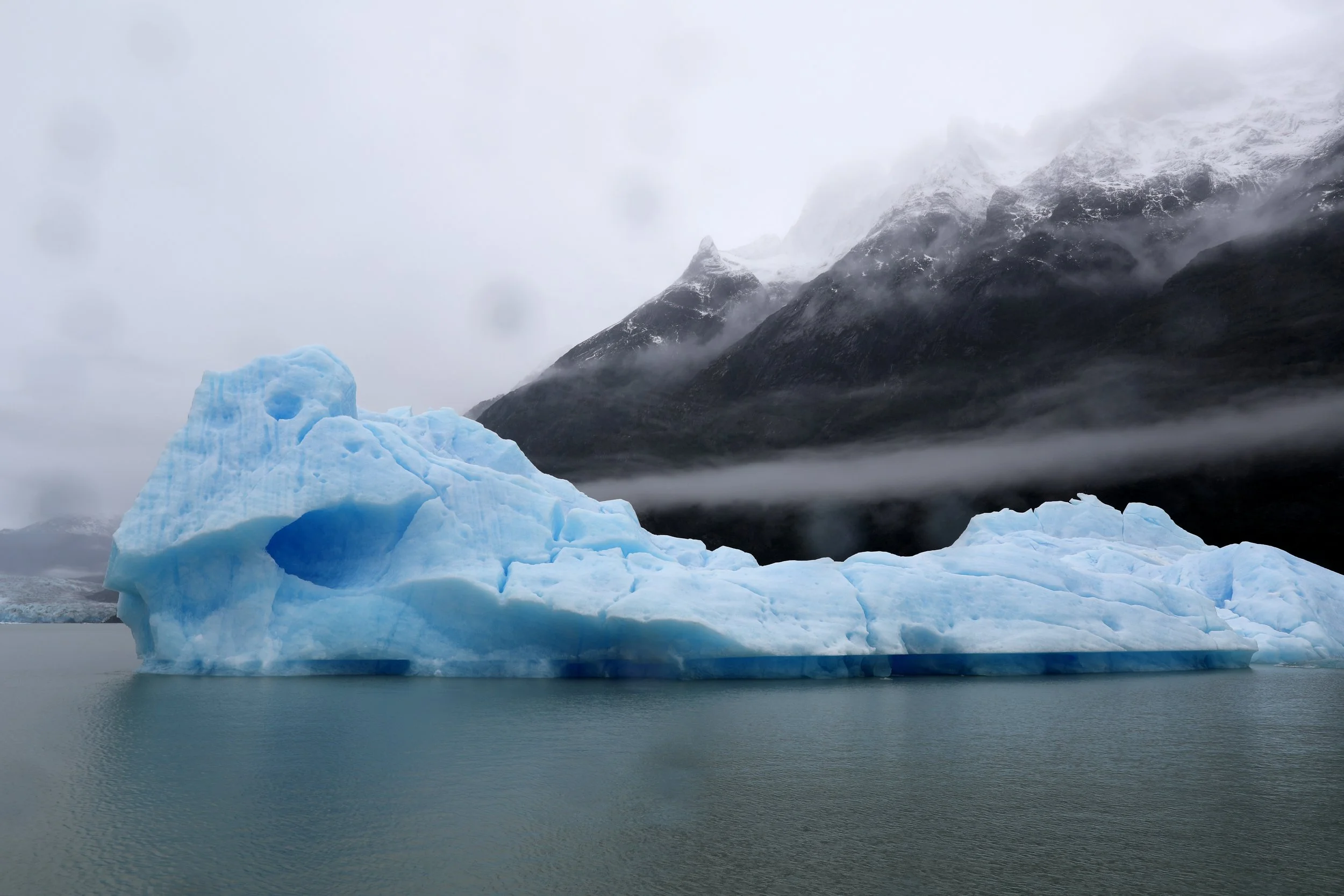
Visitors to Torres del Paine can view Grey Glacier from multiple vantage points — hiking trails along the lake’s shore provide panoramic views, while boat excursions and kayak trips offer closer perspectives on the cliff-like ice front and the surrounding icebergs.
For those interested in geology and glaciology, Grey Glacier offers a clear example of an outlet glacier connected to a large ice field, showing both the slow, powerful processes that sculpt mountain landscapes and the more rapid, climate-driven changes currently affecting cryospheric (the portion of Earth’s surface where water is in solid form) systems worldwide.
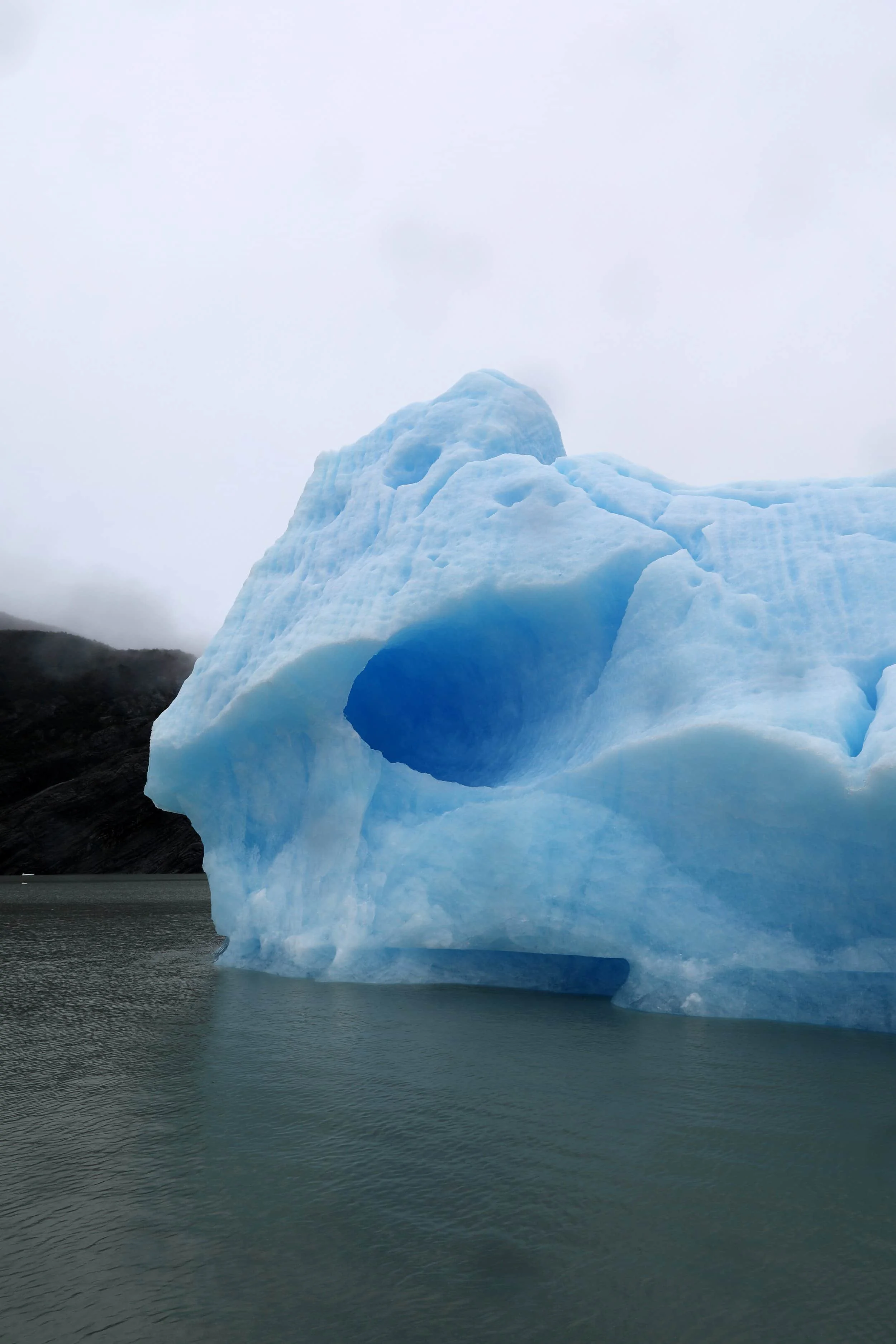
If you prefer to explore on foot, pick your way across the moraine slopes to appreciate the rugged textures and true scale of the landscape. The ground can be unpredictable, so waterproof boots and careful footing are non-negotiable; the close-up views reward the cautious hiker with details you won’t notice from the water.
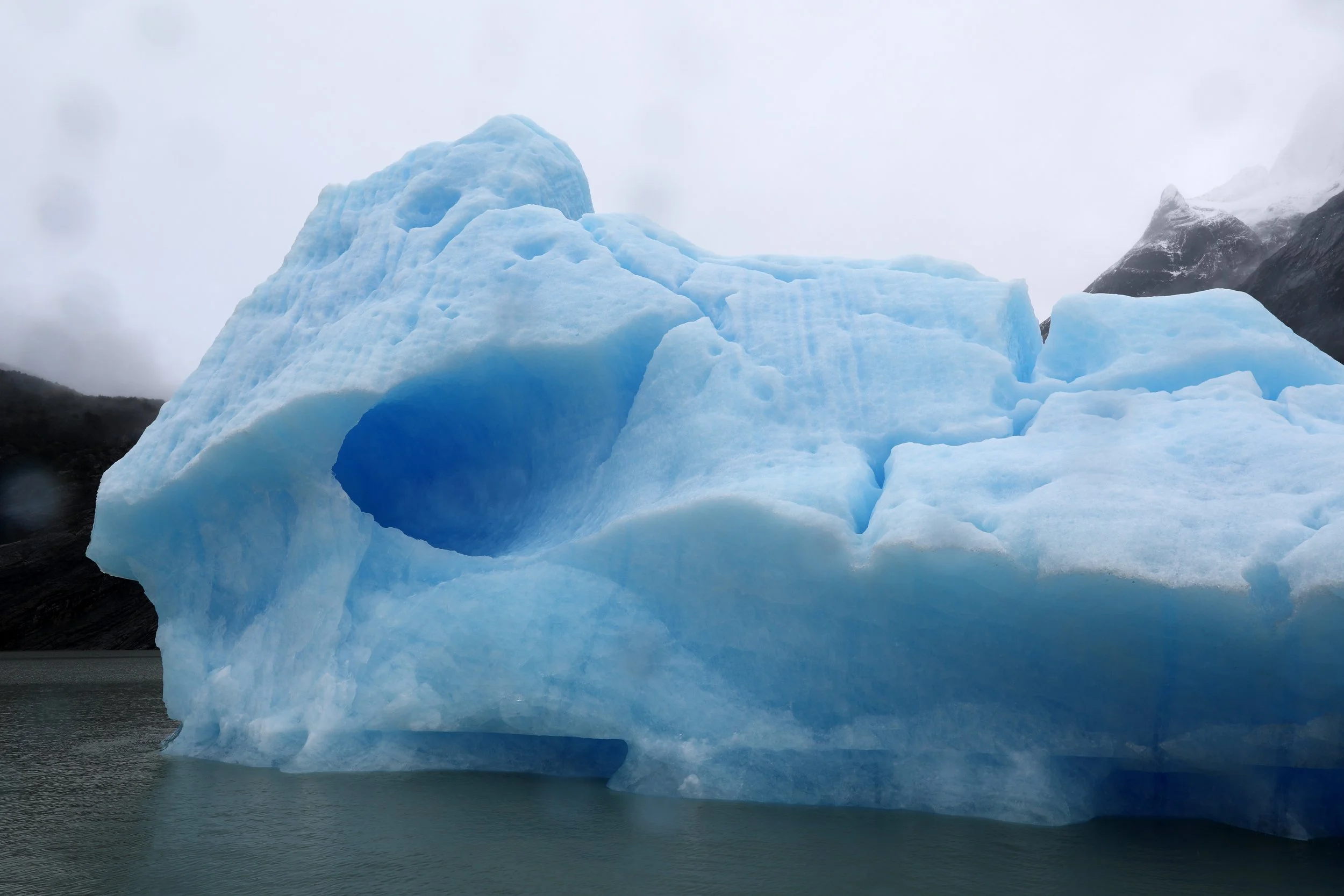
The glacier’s origins trace back to accumulation zones high on the Southern Patagonian Ice Field, where persistent snowfall compacts into firn (compressed, dense snow) and eventually forms glacier ice. Over centuries, gravity drives this mass of ice down through valleys and around bedrock obstacles, shaping both the glacier and the surrounding landscape.
The ice field that feeds Grey Glacier is one of the largest temperate ice masses in the Southern Hemisphere outside Antarctica and its dynamics are influenced by regional climate, precipitation patterns from the Pacific and topographic constraints that govern ice flow paths.
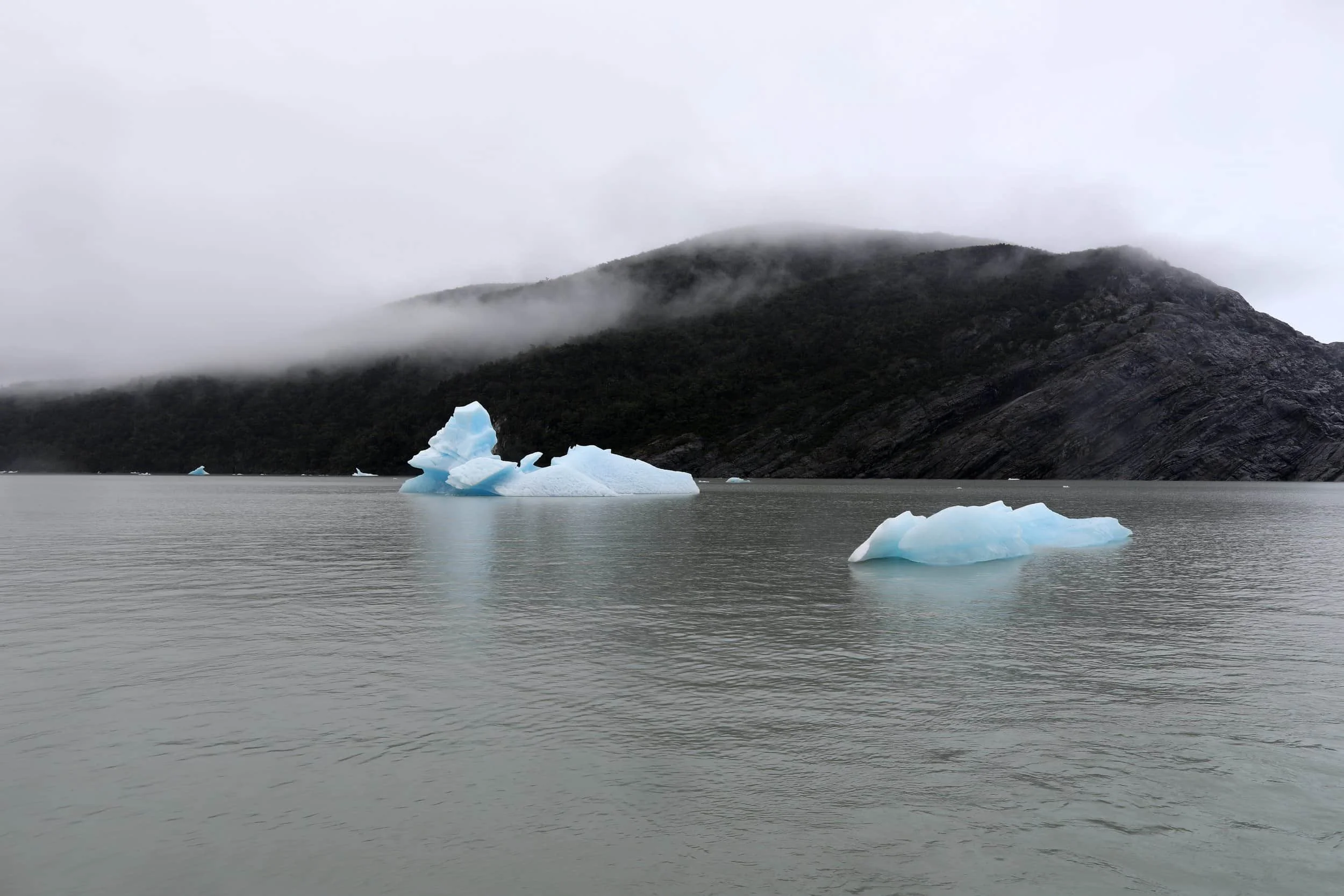
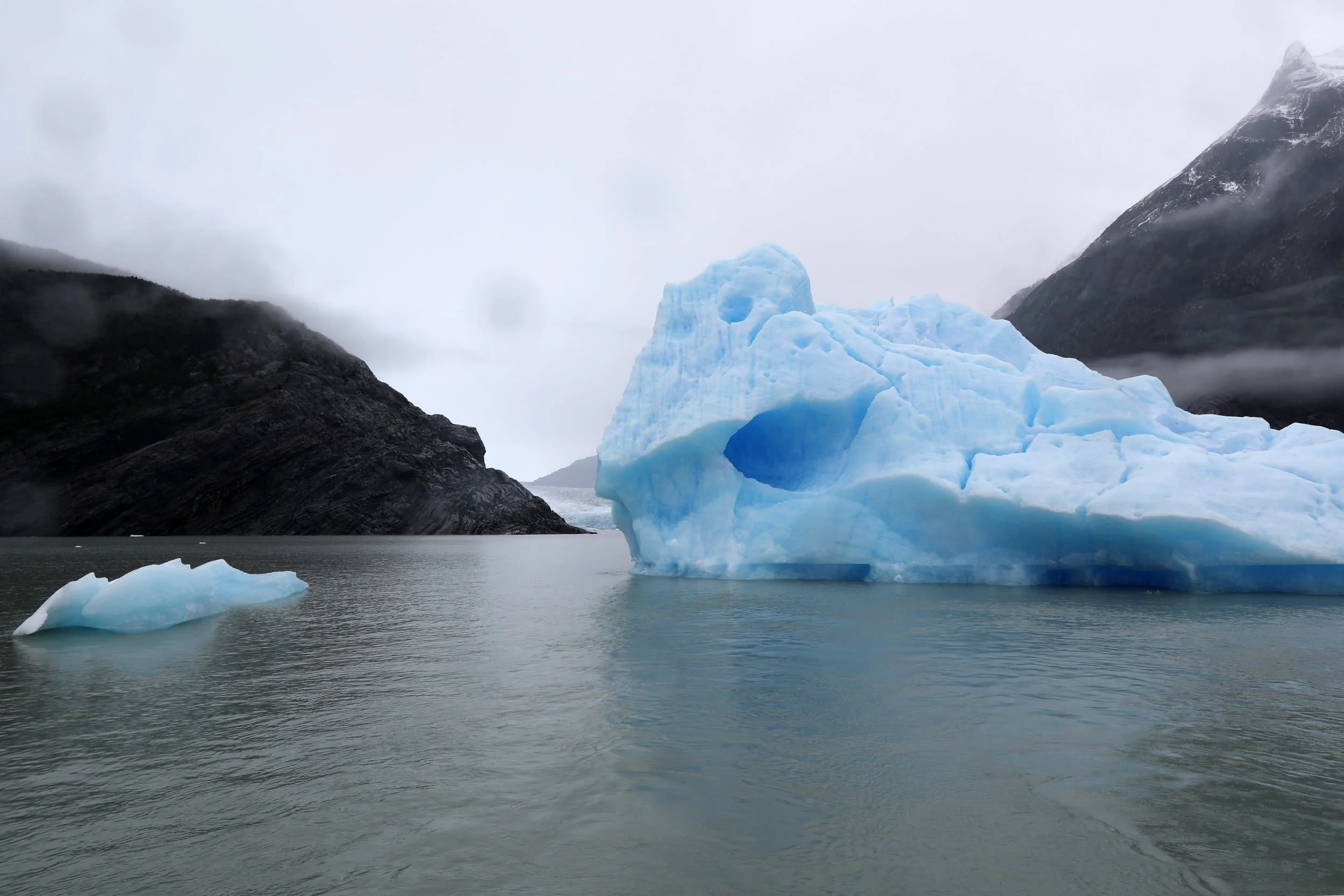
Like many glaciers around the globe, Grey Glacier has noticeably pulled back over recent decades. Its snout has retreated and the ice has thinned, largely under the influence of warmer temperatures and shifting snowfall. That pullback reveals freshly scoured rock, carves out new glacial lakes and opens proglacial zones where the first hardy plants take hold.
As the ice retreats, the park’s landscapes and waterways are reshaped: hydrology shifts, sediment patterns change and the distribution of plants and animals responds — creating a living, unfolding scene of ecological transformation.
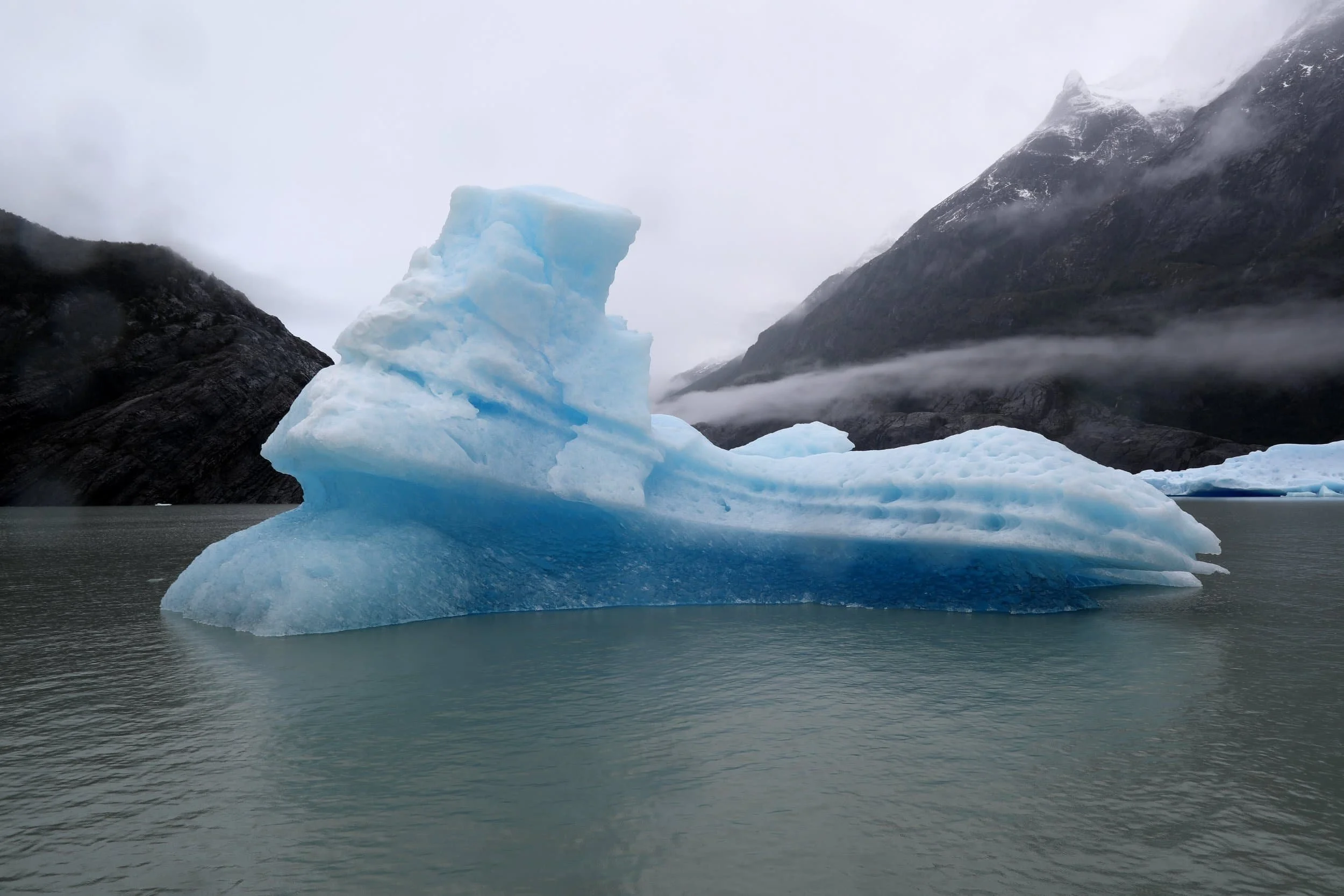
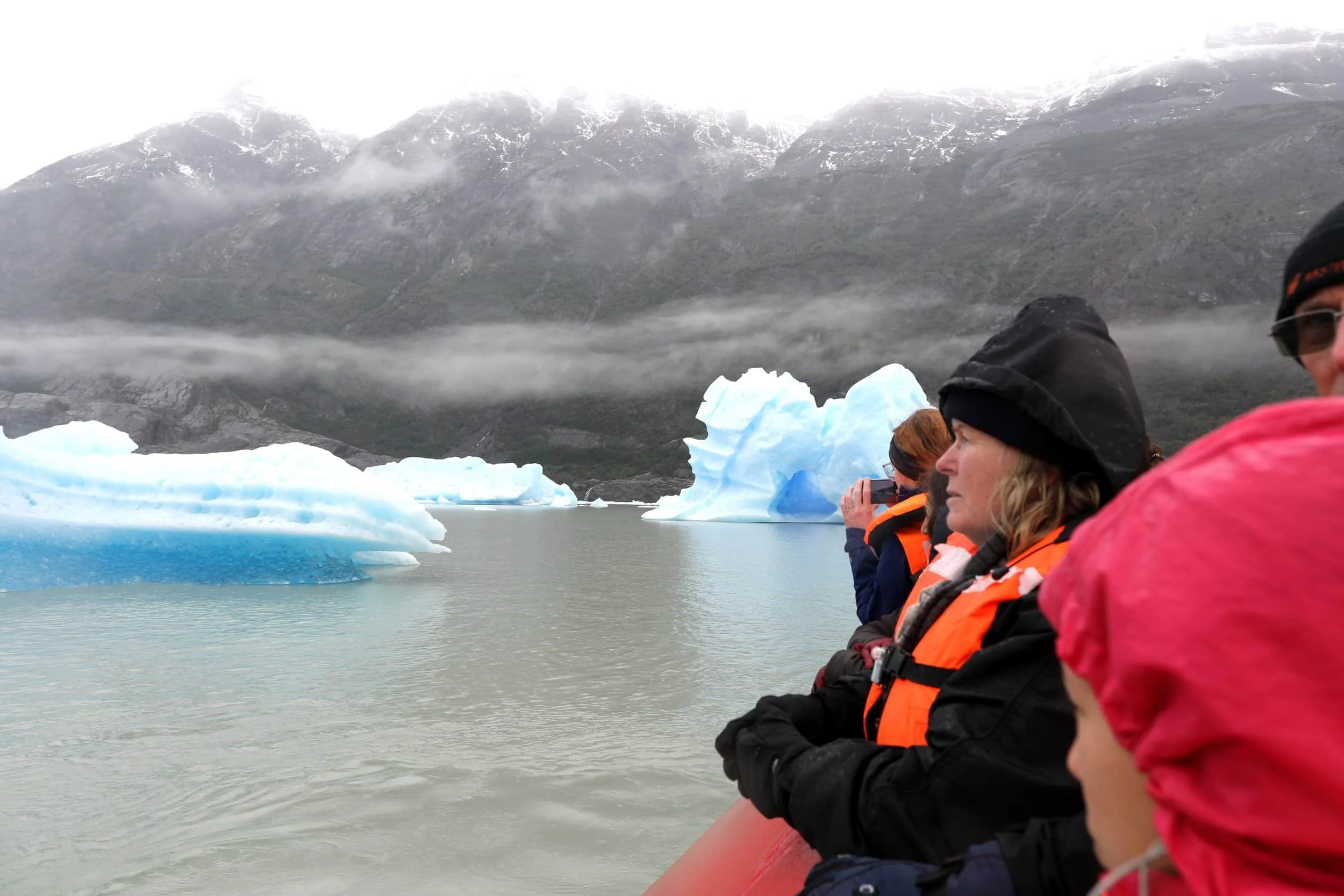
Up close, the glacier felt impossibly alive. Icebergs — some jagged like broken cathedrals, others smooth and glassy — loomed all around us, their faces layered in blues so deep they seemed to glow from within. When the boat drifted near, the enormity settled into your chest; you could feel the weight of millennia.
The silence around them was thick, broken only by distant groans and the tiny, startling pops as fragments calved and sloughed off into the water. Leaning over the rail, I heard the glacier’s slow creak, an ancient, measured sound that made the scene feel all too real.
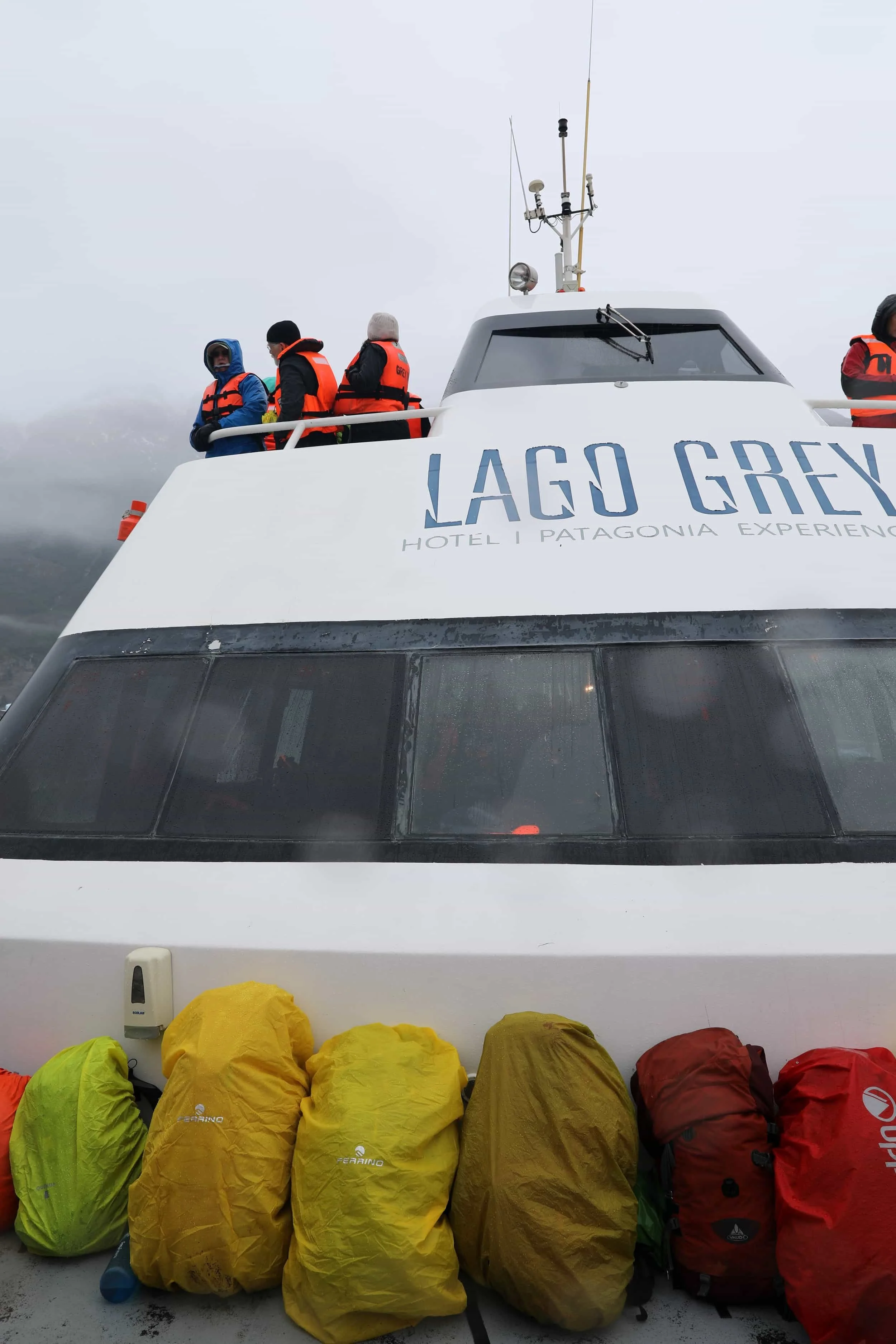
Rain spat sideways as our boat eased through the lake, the engine’s low hum swallowed by wind. Each forward inch felt like a small victory against the grey world around us: a palette of pewter sky, slate water and hulking ice. The spray stung my face, my jacket soaked within minutes but every shiver worth it.
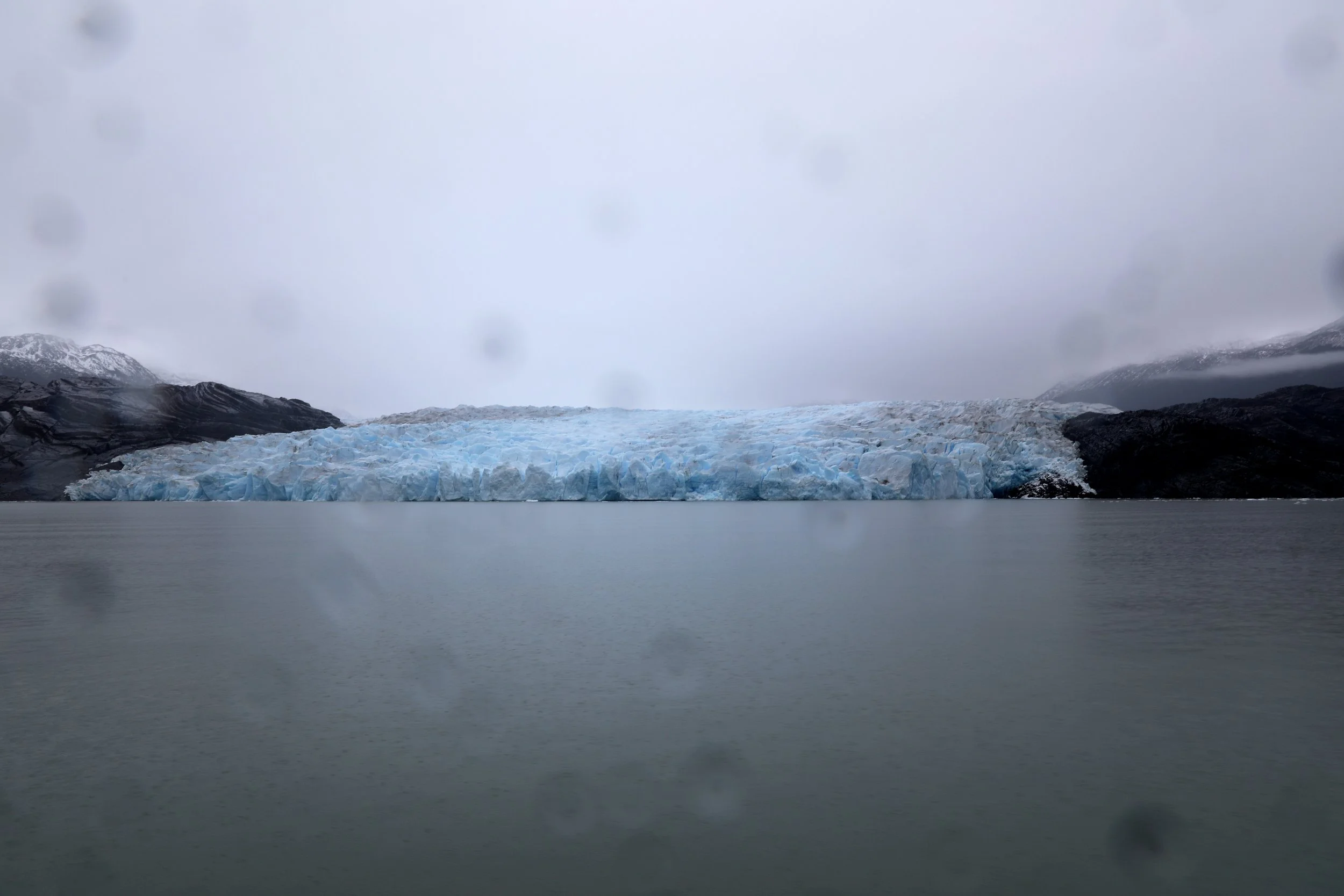
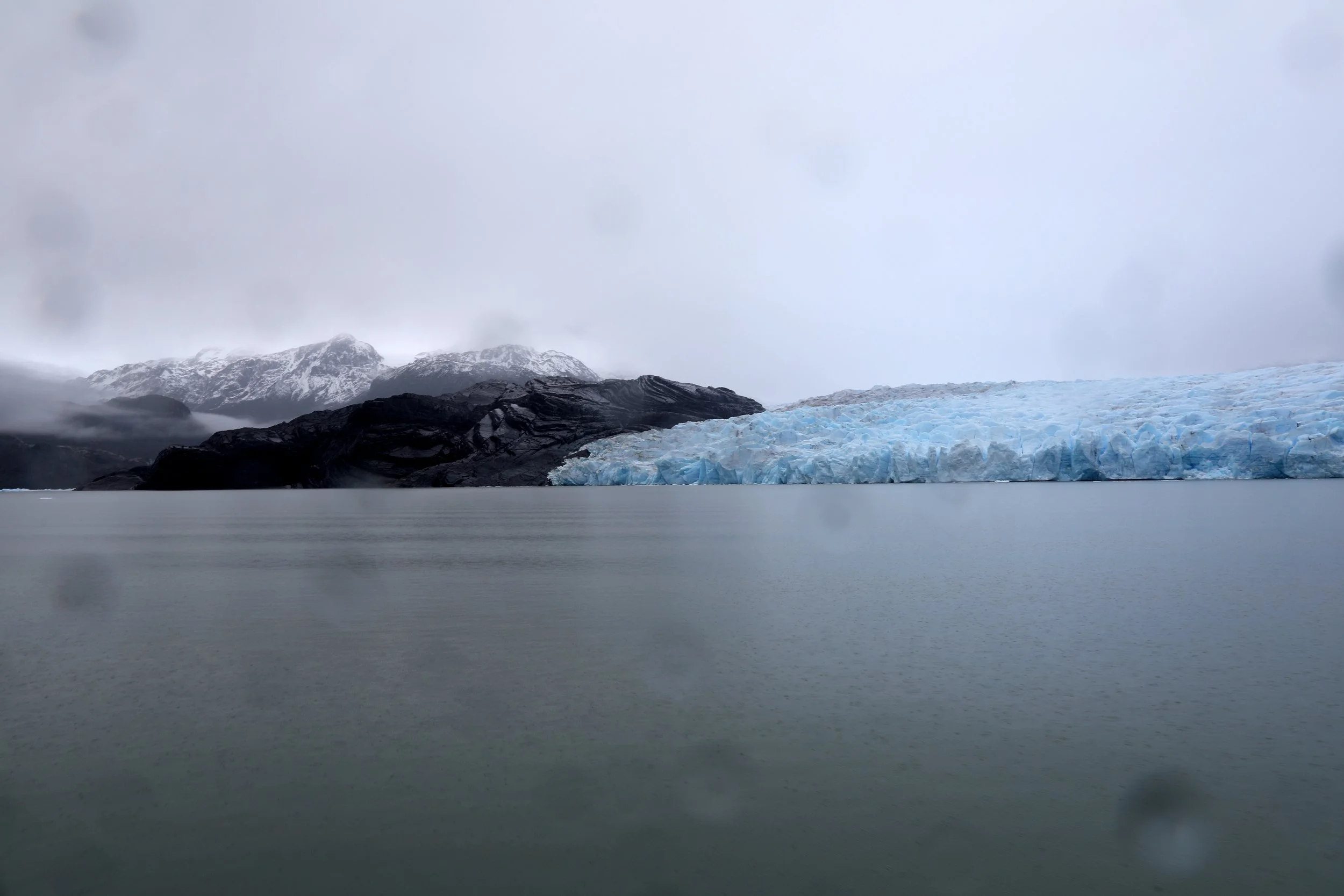
Weather at Lago Grey is famously changeable, so plan your visit with flexibility and an open mind. Layer for warmth, carry a windproof outer layer and allow extra time in your schedule — when (and, if) the clouds part, sweeping light and shifting skies can turn an ordinary scene into something cinematic.
⚠️ Good to Know | Prepare for anything on the water — Patagonian weather can change at the drop of a hat. Dress in waterproof outerwear, tuck in warm layers beneath and bring a windproof hat and gloves. Think thermal base, insulating mid-layer and a shell that laughs at spray and sleet. The drier and more layered you are, the more time you’ll spend staring at the towering blue ice instead of shivering through it.
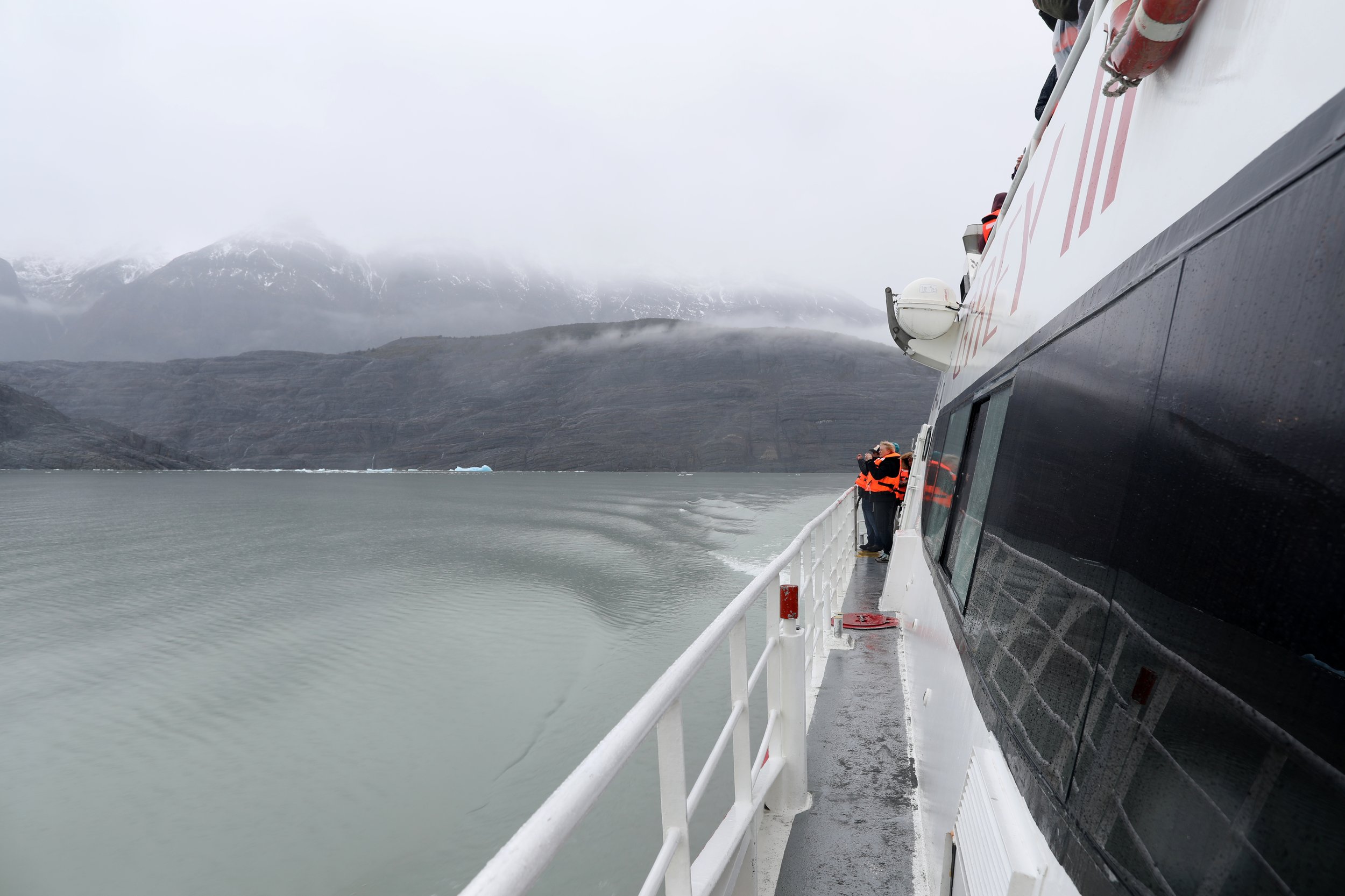
⚠️ Good to Know | A film of water on your camera lens becomes both challenge and collaborator. Do yourself a favor and bring a soft cloth within easy reach. You’ll be wiping your lens dozens of times as drops endlessly settle, then are flung away by gusts, then settle again.
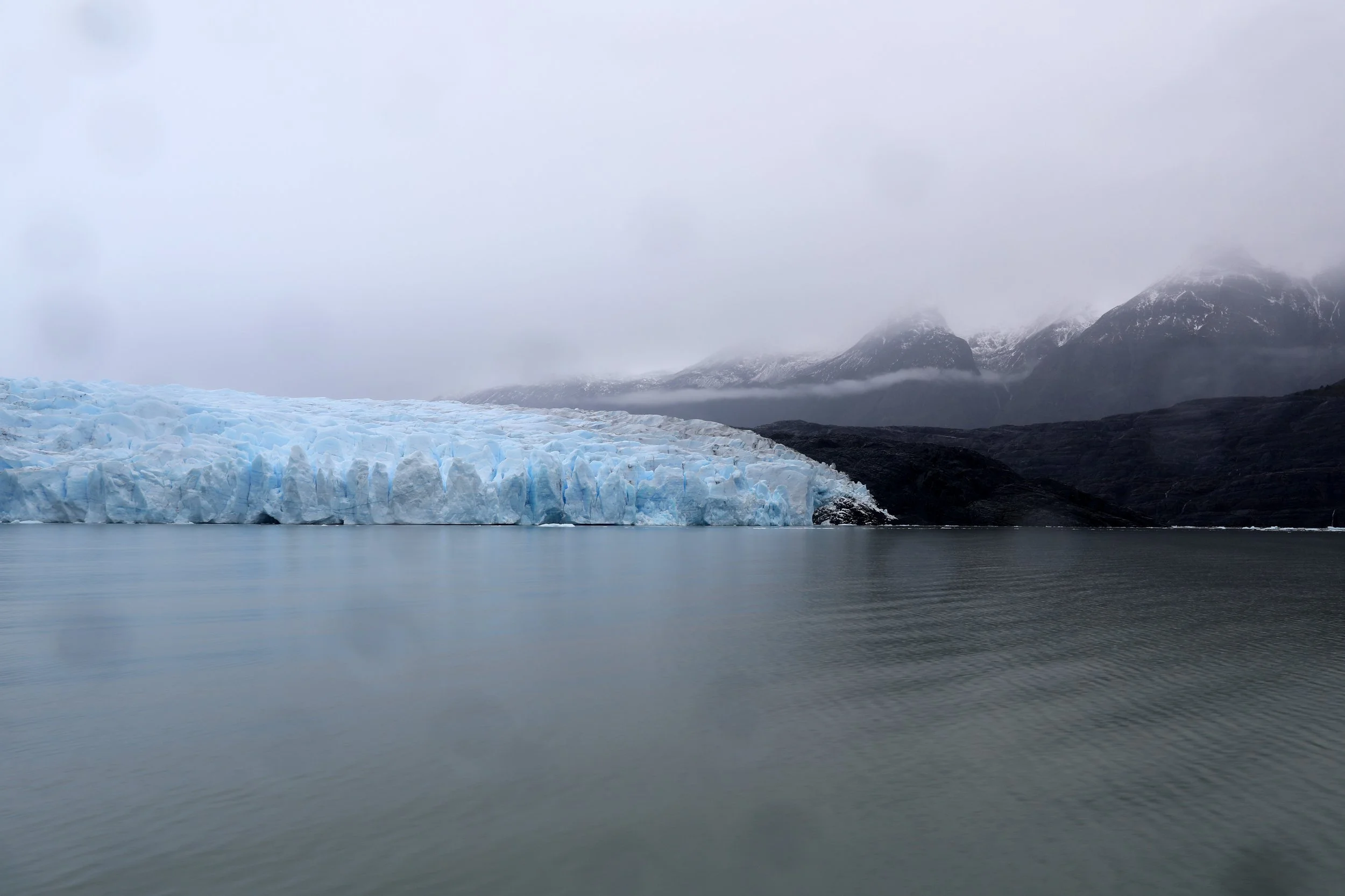
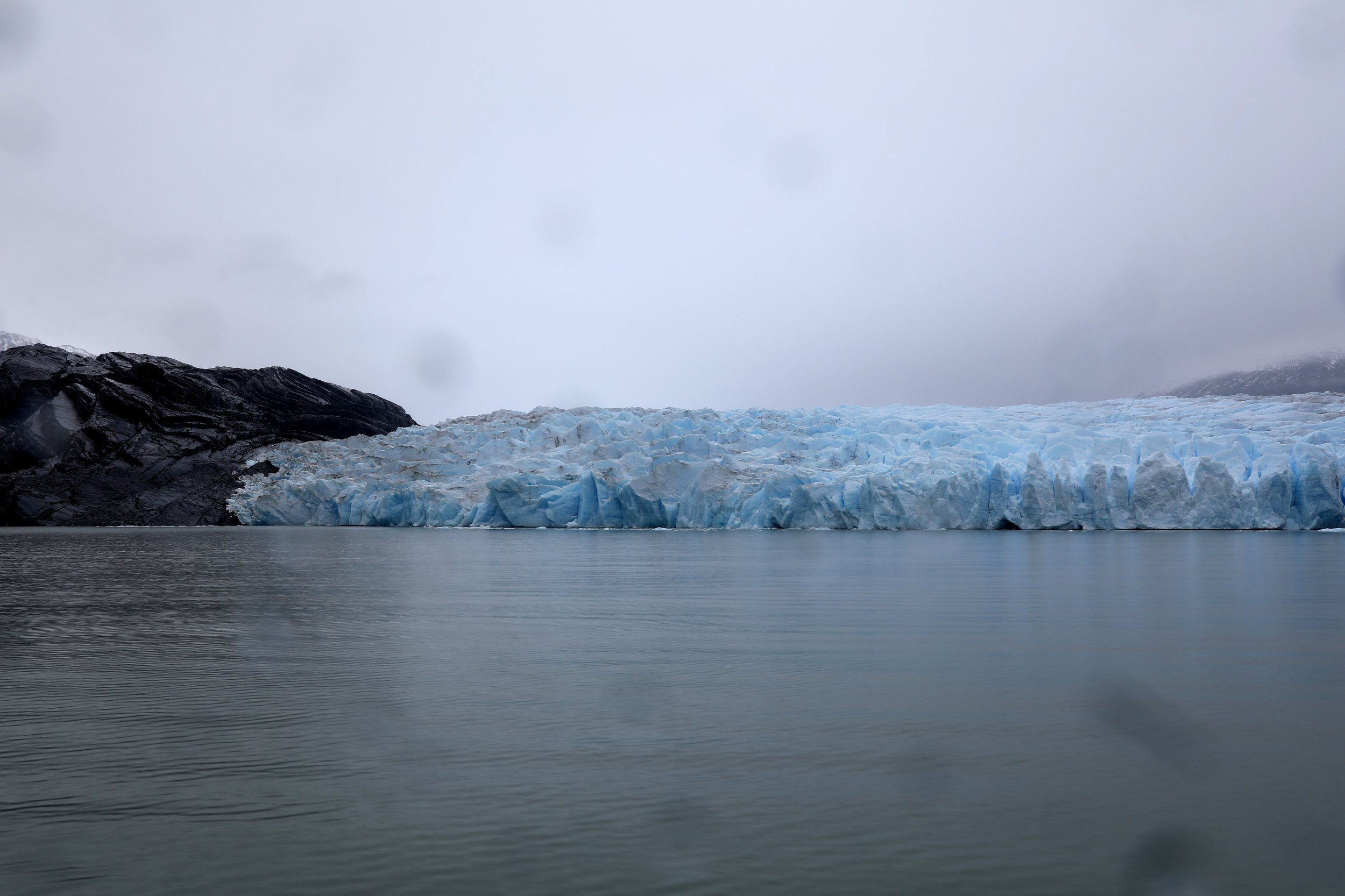
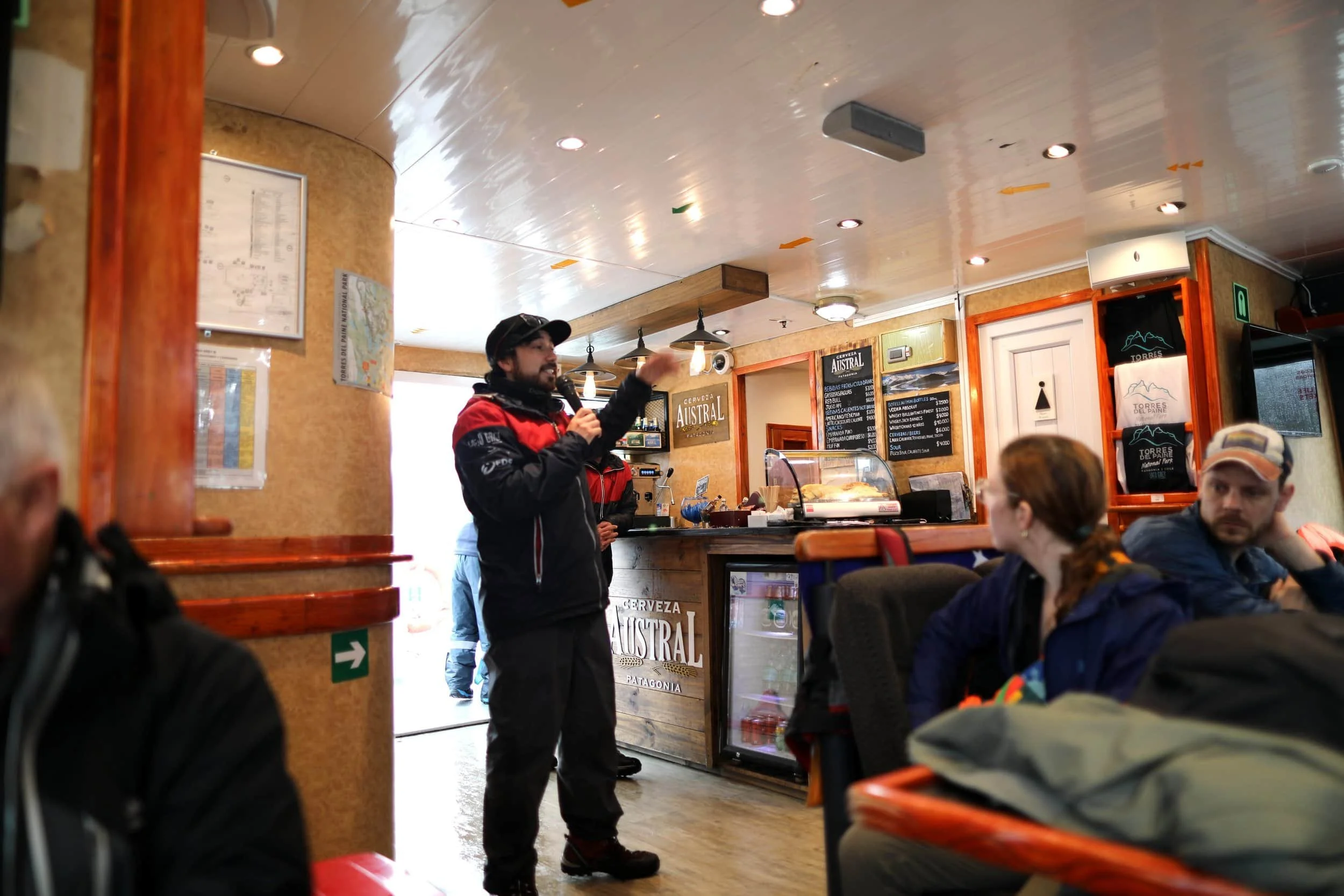
We floated the edge of comfort and wonder, alternating between braving the elements and ducking inside to thaw. Inside the cabin, the crew brought us cocktails — each glass crowned with a crystal chunk of actual glacial ice that clicked like a relic against the glass. The contrast of cold, pure ice and warming spirits felt almost ceremonial. Hot drinks circulated too: steaming mugs that chased the chill through your bones and allowed you to step back out, determined not to miss the next unfolding scene.

Between gusts, the lake was deceptively calm. Mist curled off the water and clung to the glacier’s base, softening its monstrous profile into something almost delicate. Every snap of a camera, every whispered inhale, felt like a small offering to a place that had been shaping itself long before we arrived.
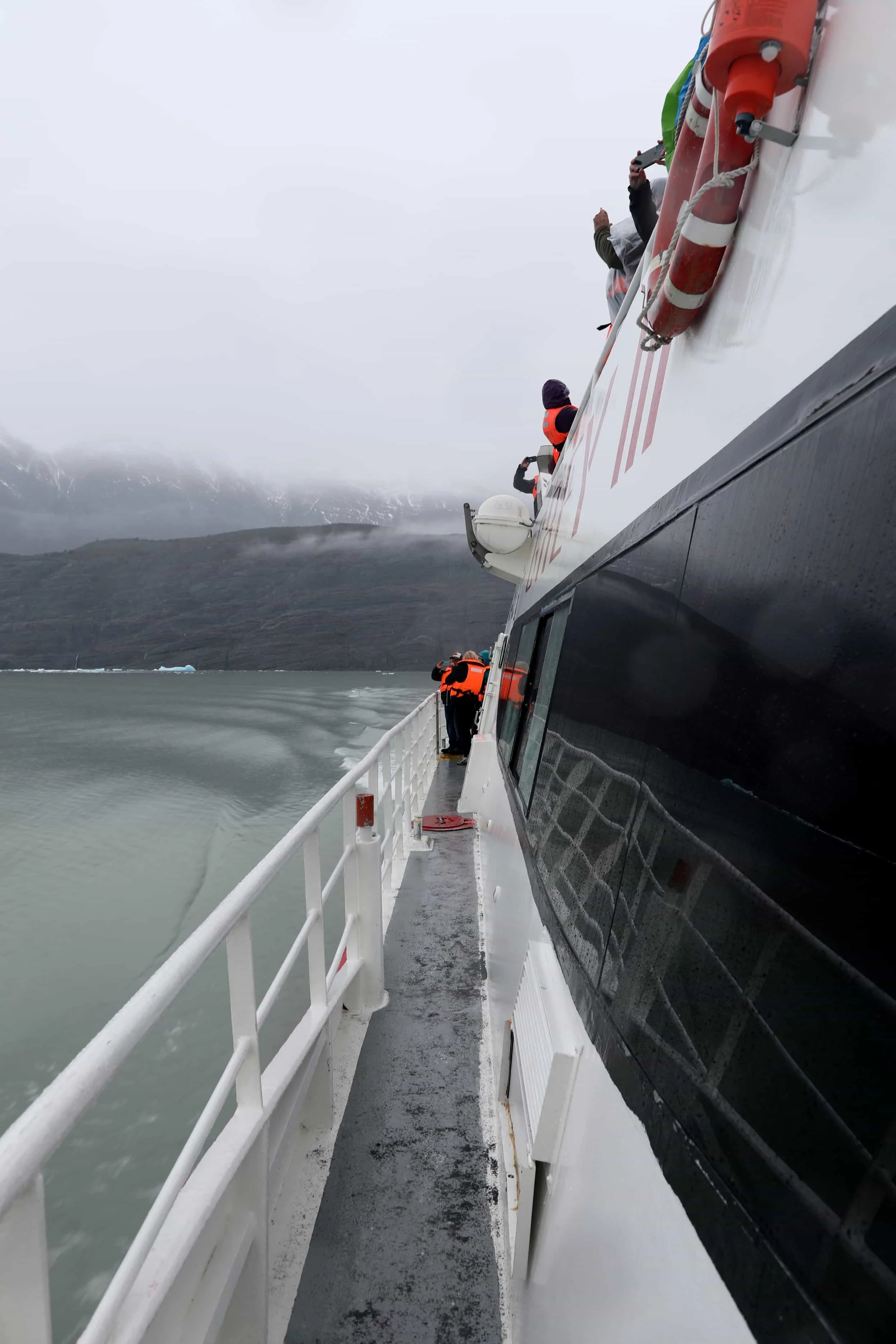
Grey Glacier wears three different faces — powerful yet delicate, crystalline and rough, urgent and distant. To take them in on one visit is to watch a landscape breathe and to feel anew how the glacier shapes Patagonia’s ecosystems and carries the continent’s stories of climate and change. Seeing the scale and raw, pristine beauty up close — with only wind, water and the glacier’s slow, relentless movement — is a powerful reminder of nature’s grandeur and fragility.
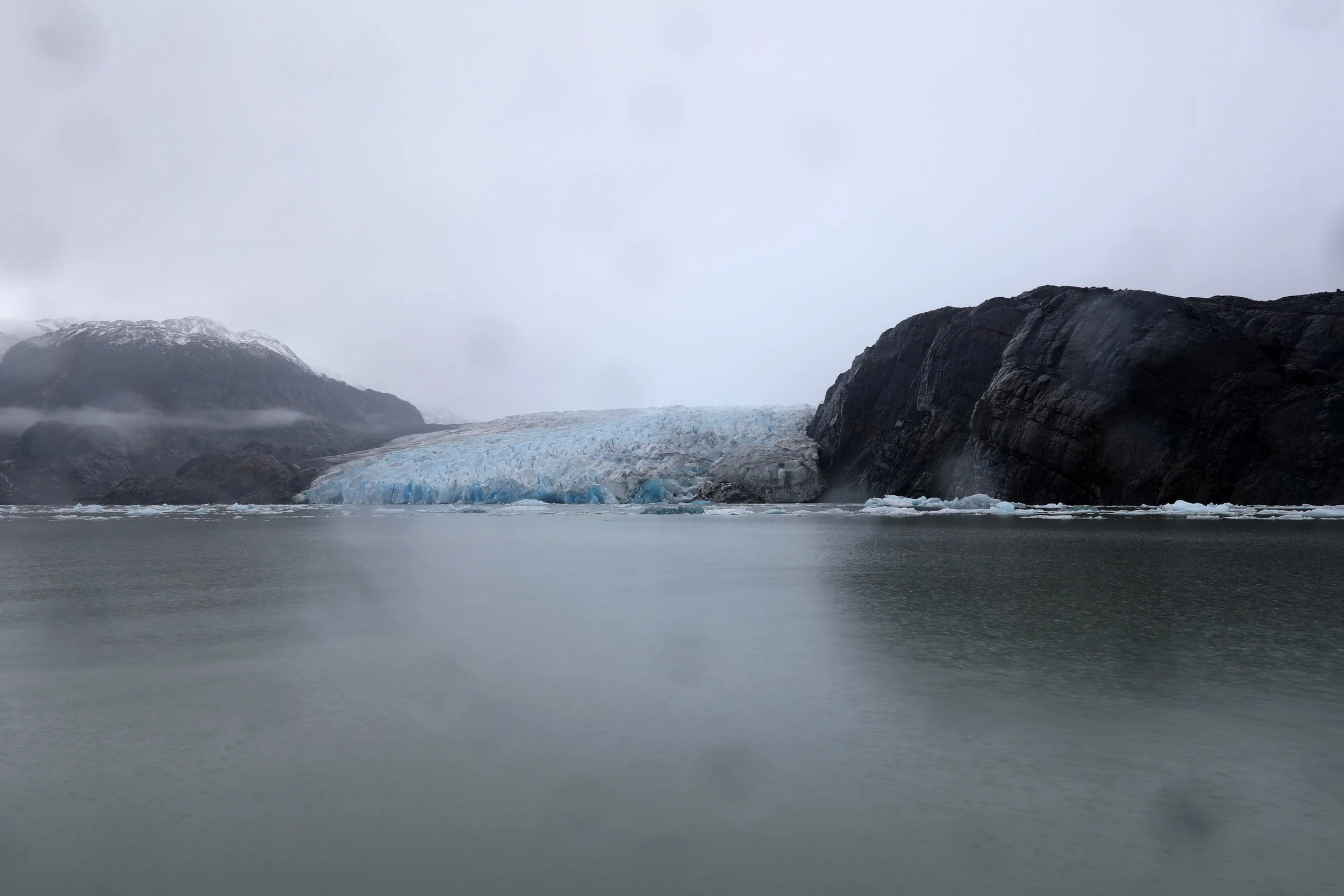
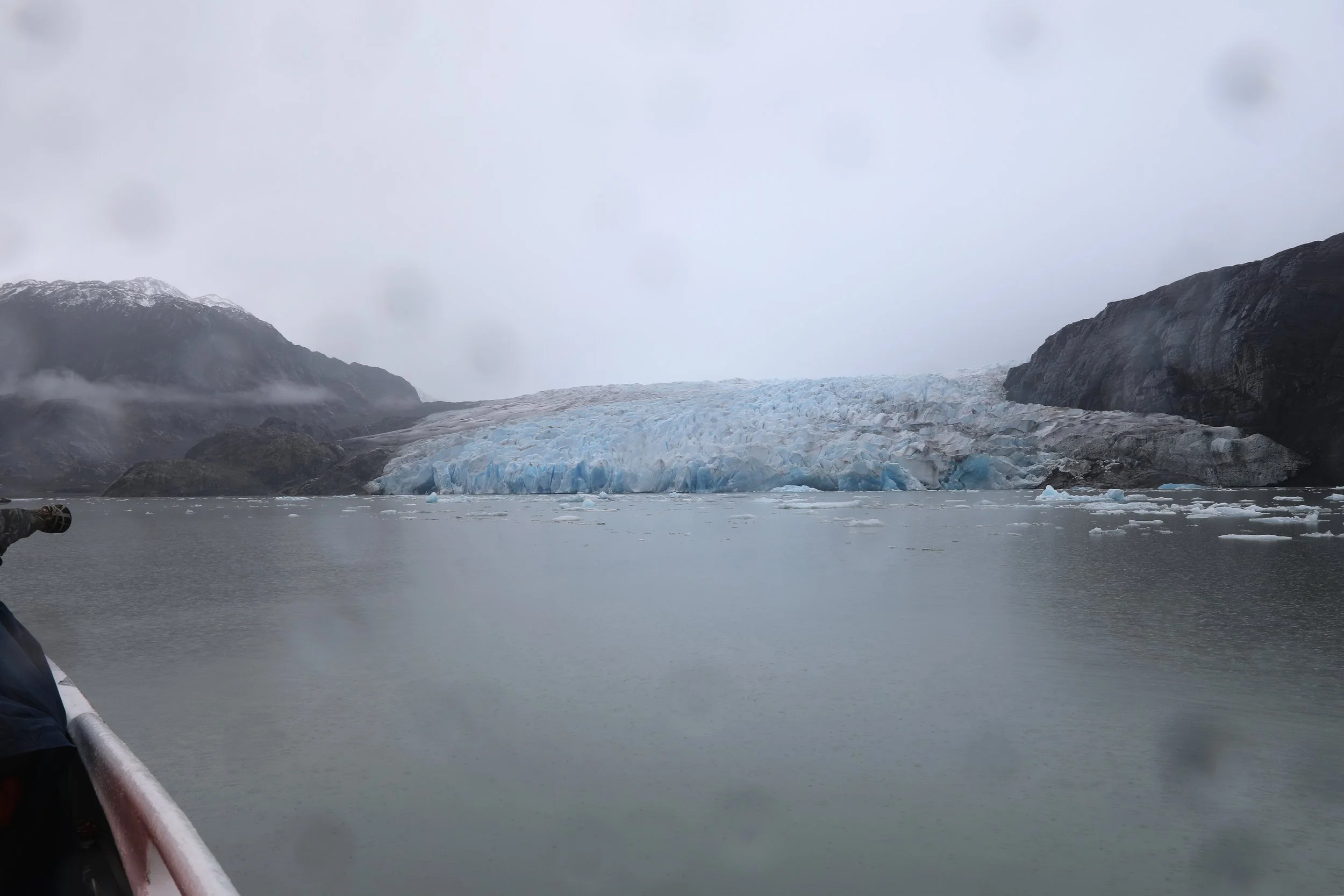
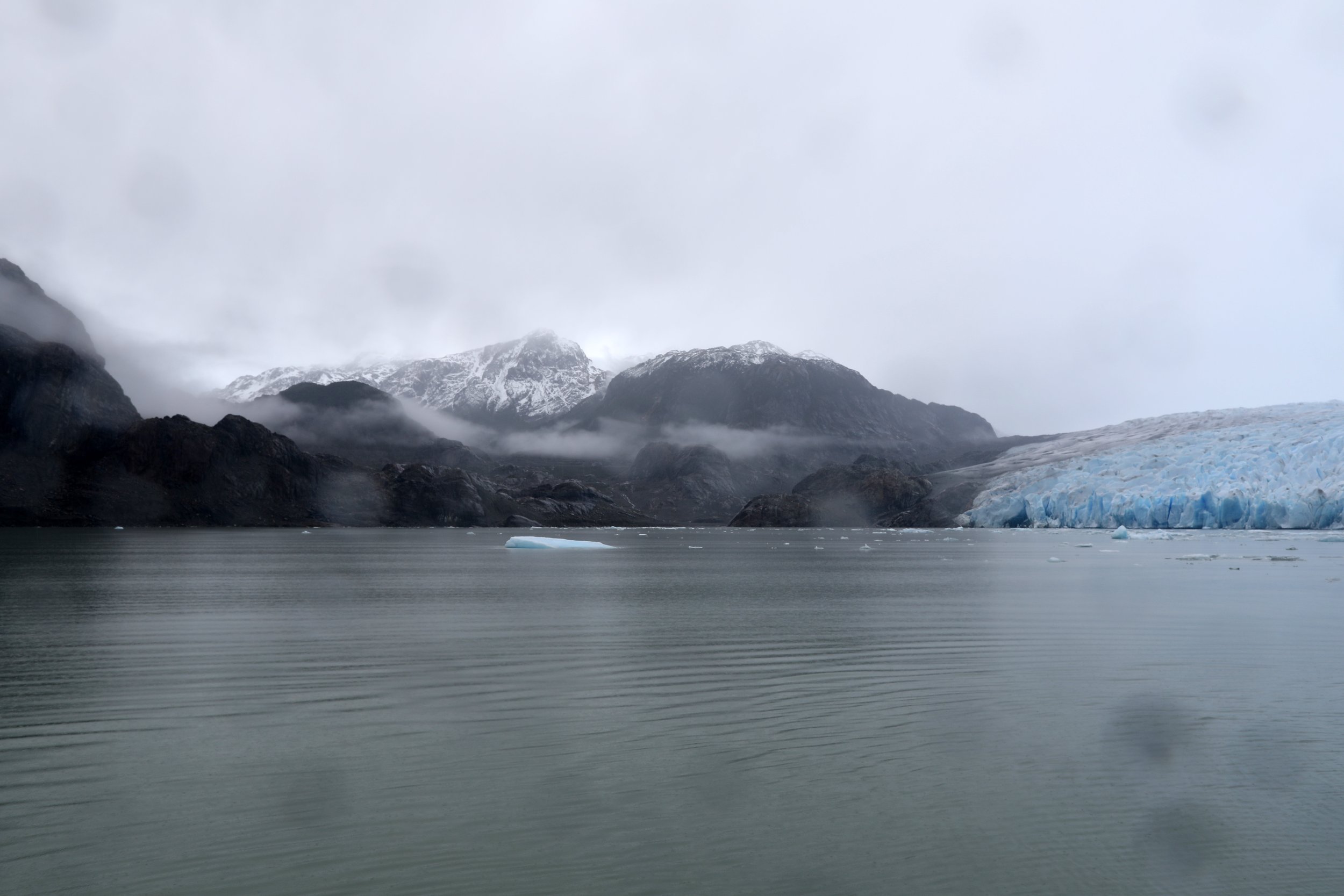
By the time we returned to shore, the rain had soaked us through and worn us pleasantly out — but buzzing with a kind of exhilaration. Up close, a grey glacier is full of delicious contradictions: fierce yet fragile, humbling and wildly bewitching. You step away with numb fingertips, a hot drink thawing your hands and a quietly widened sense of how ancient — and how vividly alive — the world can be.
Standing face-to-face with the ancient Grey Glacier was pure magic — one of the most unforgettable moments of my travels. Up close, its blue-tinged ice and thunderous calvings feel alive, making it a must-do when exploring Torres del Paine and the wild beauty of Patagonia.
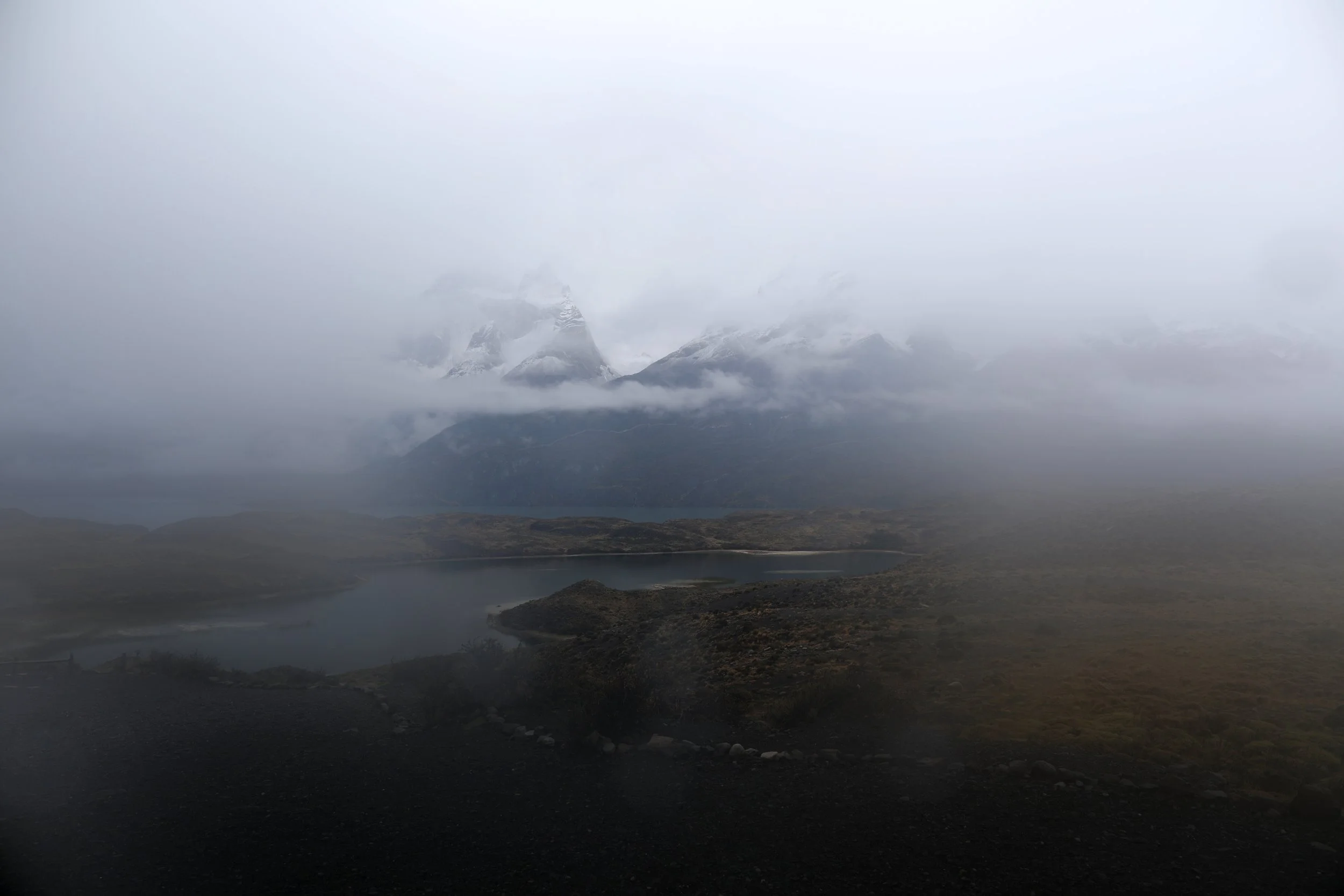
A final stop among these unforgettable things to do in Patagonia offered a dramatic north-facing panorama of Paine Horns (Cuernos del Paine) jagged horns — those iconic, razor-edged peaks sculpted when glaciers once wrapped the summit on three sides. Over millennia, immense ice carved away the rock through freeze-thaw and plucking, sharpening ridges into steep faces and leaving behind the classic pyramidal form geologists call a horn.
In Patagonia, these horns read like stone crowns: stark, wind-scoured spires that bear the imprint of ancient ice flows and now dominate the skyline, their sheer flanks a testament to the power of glaciers and a focal point for climbers, photographers and anyone drawn to landscapes shaped by ice.
My Bibimbap Moment
Every destination adds another ingredient to our life's recipe and sometimes it arrives in the form of a first. My day exploring Torres del Paine National Park was filled with windswept trails, towering waterfalls, brilliant blue ice and one unforgettable encounter with my very first iceberg. Here's the ingredient it added to my Bibimbap Life.
Today’s Bibimbap Recipe
🥢 Flavor: Glacial
🌿 Ingredient: Amazement
❤️ Best Memory: Witnessing my first iceberg and glacier
🎒 Take With You: Never let imperfect weather convince you a day can't be extraordinary. Some of the most unforgettable memories begin with wet boots and an open mind.
Looking back, I remember how little the weather mattered. My jacket was soaked, my boots were muddy and none of it could compete with the excitement of watching an iceberg drift silently across Grey Lake for the first time. Torres del Paine reminded me that nature doesn't wait for perfect conditions to leave an impression. Sometimes the most unforgettable days are the ones that ask us to embrace the rain, keep looking up and let ourselves be amazed by something we've never seen before.
Torres del Paine Travel Essentials
Torres del Paine is one place where a little advance planning really matters. Accommodations inside and around the park can book well ahead, weather is famously unpredictable and distances are greater than they appear on a map. If you’re visiting independently, arrange your lodging and transportation early and purchase your park entrance ticket before you arrive. Even on a guided day trip, it helps to understand just how large and remote the park is before setting out.
For the 2026–2027 season, park tickets can be purchased in advance through Chile’s official national parks reservation system. From what to bring and where to stay to getting there and deciding how much time you need, here’s what to know before visiting Torres del Paine and Grey Lake.
Before You Go
Torres del Paine rewards a little advance planning. Conditions, trail access and seasonal regulations can change, so check the latest park information before setting out — especially if you’re planning a multi-day trek.
Book multi-day treks early. If you’re hiking the W or O Circuit, confirmed reservations at authorized refugios or campsites are required before entering the mountain circuit. Popular accommodation can fill well in advance.
Expect changing weather. Patagonia can move through wind, rain, cold and sunshine surprisingly quickly. Come prepared for changing conditions even if the forecast looks promising.
Check seasonal trail rules. Winter conditions can bring mandatory guides, equipment requirements and temporary trail closures. These rules can change according to conditions, so check with CONAF shortly before your visit rather than relying on fixed seasonal dates.
Stock up before entering the park. Puerto Natales is the practical place to organize supplies before heading into Torres del Paine, particularly if you’ll be exploring independently or staying for several days.
When to Go
The best time to visit Torres del Paine is during the long, luminous days of Patagonia's summer (December to February), when wildflowers carpet the valleys, trails are most accessible and the mountains glow in endless dusk.
Peak Season (December–February): Best weather, longest days (18+ hours) but max crowds and highest prices.
Shoulder Season (October–November & March–April): Stunning autumn colors (March/April), fewer people, moderate temperatures.
Low Season (May–September): Winter conditions, snow, some facilities close, requires a guide.
What to Bring
Patagonian weather can change quickly, so layers are the priority. Even if the day starts clear, wind, rain and colder temperatures can move in surprisingly fast. Pack for changing conditions rather than the forecast alone.
Daypack: A 20–30 liter pack works well for day hikes, with enough room for layers, water, snacks and anything you may need if the weather changes.
Hiking Boots: Choose sturdy, comfortable hiking shoes or boots with good traction. Waterproof footwear is especially useful when trails are wet or muddy.
Layers: Bring a moisture-wicking base layer, warm mid-layer or fleece and a windproof, waterproof outer shell. Patagonia's wind is no joke.
Trekking Poles: Worth considering for longer hikes, steep sections and uneven terrain — especially when trails are wet.
Water Bottle: Carry enough water for your planned hike and confirm reliable refill points before setting out.
Sun Protection: Sunglasses, sunscreen and a hat are useful even on cool or cloudy days.
Headlamp: Particularly important for longer hikes or any day when there's a chance you'll be on the trail near dawn or dusk.
Cash: Keep some Chilean pesos on hand for smaller purchases and places where cards may not be practical.
How to Get There
Most travelers reach Torres del Paine through Puerto Natales or Punta Arenas. Puerto Natales is the closest major gateway to the park, while Punta Arenas is a common arrival point when flying into southern Patagonia.
On my trip, we passed through Punta Arenas before continuing into Torres del Paine, where we stayed inside the park at Las Torres. Staying in the park meant we could spend several days surrounded by the landscape rather than treating Torres del Paine as a day trip.
Bus or Transfer: Regular buses connect Puerto Natales with Torres del Paine and private or shared transfers are another straightforward option. If you're staying inside the park, check with your accommodation about the best drop-off point and any onward transportation you'll need.
Rental Car: Driving gives you the most flexibility, particularly if you're staying inside or near the park and want to explore different areas independently. From Puerto Natales, allow roughly two hours, depending on your destination, route and road conditions. The journey from Punta Arenas is considerably longer.
Staying Inside the Park: If you're spending several nights in Torres del Paine, plan your transportation around your accommodation rather than simply the park entrance. The park is enormous and reaching your hotel or refugio can involve additional driving or transfers once you're inside.
Where to Stay
Where you stay in Torres del Paine makes a huge difference. Staying inside the park puts the landscape and major trailheads right outside your door and cuts down on the time spent traveling in and out each day — but that convenience can come at a serious premium. Staying outside the park, particularly around Río Serrano or Puerto Natales, generally gives you more choice and can be easier on the budget but you'll need to factor additional travel time into your days.
For a short visit focused on hiking and being immersed in the park, I’d still choose to stay inside if the budget allows. If you want more restaurants, shops and flexibility — or you're spending longer in the region — staying outside can make more sense.
Where I Stayed | Inside the Park
For Unbeatable Trail Access — Hotel Las Torres Patagonia
We stayed at Hotel Las Torres and the location was easily its greatest strength. Set in the park’s Central Sector, it put us just steps from the trail toward Base Torres — an incredible advantage if hiking is the focus of your stay. Unfortunately, bad weather meant we weren't able to tackle the major hikes we'd planned but waking up surrounded by Torres del Paine still made the location feel extraordinary.
The hotel itself was comfortable but felt a little dated when we visited, and while breakfast was good, I found the other dining more geared toward international visitors than the Chilean flavors I would have preferred. We booked with points, which made a big difference because cash rates can be extremely high. For me, this is a stay I'd choose primarily for the location and trail access rather than the hotel experience alone.
More Places to Stay Inside the Park
If I were planning another trip, I’d compare Las Torres with a few other options inside the park — especially since location matters depending on which part of Torres del Paine you want to explore.
For a More Immersive Stay — EcoCamp Patagonia
A distinctive alternative to a traditional hotel, EcoCamp combines geodesic dome accommodations with guided hiking and nature experiences. I’d look here if I wanted the convenience of staying within Torres del Paine but preferred something more connected to the landscape than a conventional hotel room.
For Glamping Near Lake Pehoé — Yellow Plum Camp Pehoé
For something simpler and more outdoors-focused, Yellow Plum offers equipped glamping inside the park near Lake Pehoé. The setup prioritizes the landscape and easy access to hiking, with breakfast included and shared bathroom facilities nearby.
Just Outside the Park | Río Serrano
The Río Serrano area is a useful middle ground: you're outside the national park itself but still close enough to make Torres del Paine the focus of your stay. It can be a good compromise if you want more lodging choices without commuting all the way from Puerto Natales each day.
For a Full-Service Stay — Río Serrano Hotel + Spa
Set along the Serrano River near the park's southern boundary, Río Serrano offers a more polished hotel experience with the mountains still dominating the setting. I’d consider this if I wanted comfortable amenities and easy park access without necessarily staying within the national park itself.
For Something Smaller — Konkashken Lodge
Also in the Río Serrano area, Konkashken is a smaller lodge with cabins, private rooms and hostel-style accommodations. Its wood-burning stoves and more intimate setup make it an interesting alternative to the larger hotels and the lodge also offers meals including traditional Patagonian lamb.
Farther Out | Puerto Natales & Cerro Guido
Puerto Natales gives you the widest choice of accommodations, restaurants, shops and services, and it's a practical base if you're watching your budget or combining Torres del Paine with other experiences in the region. The tradeoff is distance: you'll spend considerably more time getting to and from the park.
Browse all stays in Puerto Natales →
For a Destination Stay — Estancia Cerro Guido
Estancia Cerro Guido is a different proposition altogether: rather than simply functioning as a base for hiking, the estancia is an experience in its own right outside the park. I’d consider it if I wanted to combine Torres del Paine with a more immersive Patagonian estancia stay rather than prioritize being directly beside a trailhead.
How to Get Around
Torres del Paine is enormous and the distances between trailheads, viewpoints, hotels and different areas of the park can be significant. If you have a rental car, you’ll have the most freedom to explore on your own schedule, although driving times can be longer than they appear on a map. Without a car, you can combine park buses and seasonal shuttles with hotel transfers and organized excursions, depending on where you’re staying and what you plan to see.
Because we stayed inside the park at Las Torres, we were able to arrange our days from there rather than traveling back and forth from Puerto Natales. If you’re also staying inside Torres del Paine, I’d check what transportation and excursions your accommodation offers before arranging anything separately — it can make getting around considerably easier.
How Long to Stay
I’d give Torres del Paine at least three days and longer if hiking is a major part of your trip. Staying several nights gives you time to experience different parts of the park without turning every day into a race between viewpoints and trailheads.
If your schedule allows, build in an extra day for weather. Patagonia is famously unpredictable and strong wind, rain or low cloud can completely change hiking conditions and visibility. Having a buffer gives you some flexibility if a planned hike or excursion doesn’t make sense on a particular day. For a first visit, I’d aim for three to five days, with four or five giving you a much better chance to slow down, adjust to the weather and actually enjoy being in the park.
Planning the W or O Circuit?
These multi-day treks require a different timeline. The W Circuit typically takes around 4–5 days, while the longer O Circuit usually takes 8–9 days. Both require more advance planning than a general visit to Torres del Paine, including reserved accommodations or campsites along the route. I’d also leave some flexibility around your trek if your schedule allows — Patagonian weather doesn’t always cooperate with the itinerary you planned.
Tours & Day Trips
Because we stayed at Hotel Las Torres, we booked the Full Paine – Grey Glacier excursion directly through the hotel — and this was one of the best ways we experienced the park, especially after bad weather disrupted some of our hiking plans.
The full-day tour crosses a large portion of Torres del Paine, stopping at viewpoints and landmarks including Salto Grande before continuing toward Grey Lake. We chose the version that includes the boat trip across Grey Lake toward Grey Glacier, getting us much closer to the glacier and the blue icebergs scattered across the water.
If you’re staying at Las Torres and want to see a lot of the park without committing to a major hike, I’d absolutely consider this one. Just remember that Patagonia’s weather can affect visibility, routes and boat schedules, so keeping some flexibility in your plans is always a good idea.
Full Paine – Grey Glacier tour at Las Torres →
Staying Elsewhere?
You don't need to stay at Las Torres to experience Torres del Paine with a guide. If you're based elsewhere in or around the park — or in Puerto Natales — you can find similar full-day sightseeing, hiking and glacier-focused experiences.
Good to Know
Torres del Paine is one of those places where even a carefully planned itinerary can change once you arrive. A little flexibility goes a long way.
Weather can change your plans. This was very real for us. We stayed steps from the trail to Base Torres but poor weather meant we still missed some of the major hikes we'd planned. Build in flexibility and don't assume staying close to a trail guarantees you'll be able to hike it.
The park is much bigger than it looks. Lakes, trailheads, viewpoints and accommodations can be surprisingly far apart, and roads inside the park aren't always fast. Avoid packing too many stops into a single day.
You don't have to do a major trek to experience the park. The W and O Circuits may get much of the attention but scenic drives, shorter walks, viewpoints and experiences like the Grey Lake boat trip can still give you an incredible sense of the landscape.
Conditions can affect more than hiking. Strong winds and poor visibility can also disrupt boat trips, transfers and other excursions. Keep an eye on current conditions and be prepared for schedules to shift.
Services are limited inside the park. Once you're in Torres del Paine, you won't have the same choice of shops, restaurants and everyday services you'll find in Puerto Natales. If there's something specific you need, bring it with you rather than assuming you'll find it inside.
Staying inside the park is a tradeoff. You'll pay a premium for some accommodations but being surrounded by the landscape and close to trailheads can be a completely different experience from commuting into the park each day. For us, the location at Las Torres was extraordinary — even though the weather ultimately had other ideas about our hiking plans.



Fall in love with Hotel & Cava Estancia Rilán, a must-visit retreat where the setting becomes part of the stay and every detail quietly celebrates Chiloe Island.