Best Things to Do in Dominica: Indian River Boat Tour
Float through Dominica’s Indian River’s protected mangrove ecosystem & its lush, tranquil rainforest — with this travel guide.
Updated | June 2026
Why Visit Indian River: Dominica — One of the Best Things to Do in Dominica
Dominica — officially the Commonwealth of Dominica and known as the “Nature Island of the Caribbean” — is a rugged, mountainous gem in the Lesser Antilles. Largely untouched, the island is rich in biodiversity and protected lands: dense rainforests, rare plants and animals, 365 rivers and a dozen waterfalls. Geothermal forces still shape Dominica; it’s the youngest of the Lesser Antilles and home to dramatic volcanic features, including the world’s second-largest hot spring, Boiling Lake.
Dominica’s culture is a vibrant blend of European and African traditions, and it’s also home to the Caribbean’s last surviving community of pre-Columbian Carib people — the Kalinago. About 3,700 acres of the island’s eastern coast are set aside as the Kalinago Territory, where indigenous customs and crafts continue to thrive.
Roseau, the capital, is loud, lively and full of character: bustling street markets, friendly locals, tempting food stalls and music that spills into the sidewalks. Up north, the Indian River — Dominica’s widest — winds through dense tropical vegetation and served as the filming location for Calypso’s house in Pirates of the Caribbean, adding a cinematic feel to its natural charm. Plus, it’s easily one of the best things to do in Dominica.
At a Glance
📍 Destination: Indian River, Dominica
🕒 Time Needed: Half day
💰 Budget: EC$54-$68 ($20-$25 USD) tour, plus $5 USD nature reserve site fee
👟 Walking Level: Mild
🌤️ Best Season: Dry season (December-April)
☕️ Don’t Miss: Cocktail at River Bush Bar
🖤 Perfect For: Nature lovers
My Bibimbap Moment
This trip added: Stillness.
The Indian River added the ingredient of stillness to my Bibimbap Life. As our boat drifted quietly beneath towering mangroves, the only sounds were the birds calling in the distance and the gentle splash of the guide’s oars. There was no need to rush or search for the next highlight — the beauty was in simply being there. The peaceful rhythm of the river, combined with the stories of its history and wildlife, reminded me that some places ask us to slow down rather than speed up. In that stillness, I found a deeper appreciation for nature and a quiet reminder that not every meaningful travel experience has to be filled with excitement.
My Two-Week Caribbean Island-Hopping Itinerary
This two-week Caribbean trip took me across three very different islands: Sint Maarten/Saint Martin, Dominica and Antigua. Rather than trying to cover a huge stretch of the Caribbean, I spent several days in each place — enough time to explore while still leaving room for slow mornings, unexpected stops and days without much of a plan.
I started on Sint Maarten/Saint Martin, experiencing both the Dutch and French sides of the island before flying to Dominica, where the trip changed completely. Beaches gave way to steep mountain roads, dense rainforest, hot springs, rivers and what felt like an endless supply of waterfalls.
Dominica was the wildest part of the trip and exploring it meant venturing into very different corners of the island. One of those days took me north to the Indian River, where a local guide rowed me slowly upstream beneath a canopy of tangled vegetation. It was a quieter experience than many of my days in Dominica — and a completely different way to experience the island’s landscape.
I finished in Antigua, where the pace shifted again. I visited the island’s donkey sanctuary and giant tortoises, swam with stingrays and left plenty of time for the beach before heading home.
What I loved about this route was how little the three destinations felt alike. Sint Maarten/Saint Martin brought two cultures together, Dominica pulled me deep into the landscape and Antigua gave me somewhere to slow down at the end.
My route: Sint Maarten/Saint Martin → Dominica → Antigua
Explore
Here’s where the journey will take us.
01 | The Pallet in Roseau
02 | Indian River Boat Tour
03 | When to Go
04 | What to Bring
05 | How to Get There
06 | Where to Stay
07 | How to Get Around
08 | How Long to Stay
09 | Tours & Day Trips
10 | Good to Know
Where to Stay | Where to Stay on Dominica Island: A Rainforest Retreat
Travel More | Dominica Travel Guides
A Tranquil Drift Down Dominica’s Indian River — Guide to the Island’s Mangrove Labyrinth
Drifting along the Indian River, mangroves whisper secrets as herons silhouette against a sunny sky and each gentle ripple carries the soft rhythm of a place that feels both timeless and alive. An intimate boat tour here is a quiet invitation to slow down, watch wildlife float by and let the water do the remembering. One of the best things to do in Dominica, you’ll feel the island’s wild heart unfold around you — moss-draped trees, calls of unseen birds and the gentle rush of water making this tour one of the island’s most unforgettable experiences.
The Pallet in Roseau
Roseau’s The Pallet makes for a charming breakfast stop. Perched at the edge of town beside a dusty parking lot, this small cafe blends local flavors with familiar American-style options. The menu features regional dishes alongside breakfast sandwiches and freshly prepared fruit juices that are not to be missed.
A small, sunlit spot that makes morning bites feel unhurried and perfectly local, The Pallet is located near the waterfront and is the kind of place where breakfast is simple, fresh and reflective of Dominica’s laid-back pace. Casual seating spills across the small cafe, a friendly mix of indoor tables and shaded benches outside where morning breezes carry the soft soundtrack of island life. It invites a slow start — perfect for solo travelers with a book or friends who prefer low-key catch-ups over coffee and conversation.
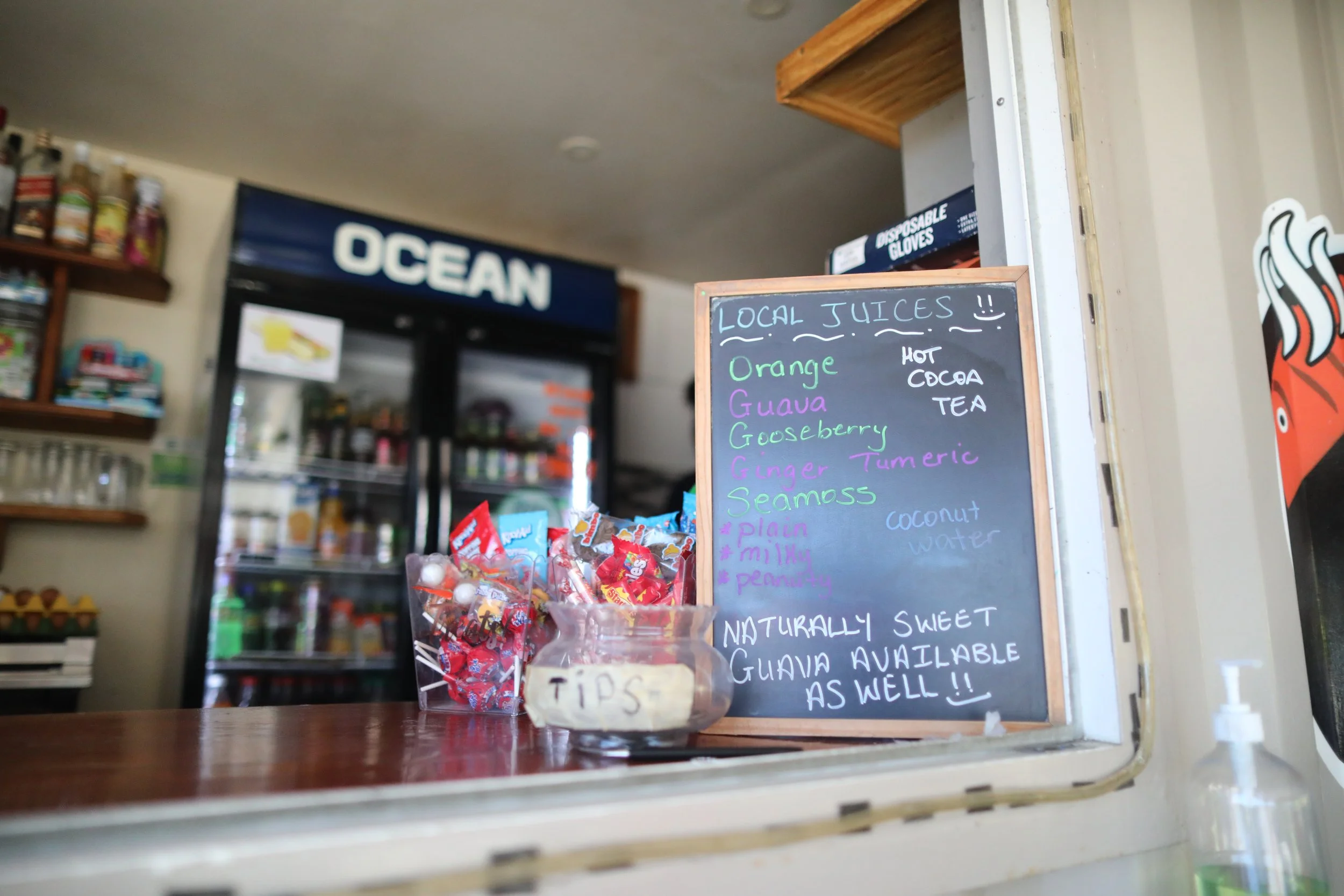
The staff match the easy atmosphere: friendly, efficient and happy to walk you through the menu. Ask about local specialties and they’ll recommend favorites, which makes trying something new feel easy. The crowd is mostly locals with the occasional traveler stopping by between adventures. That unhurried, everyday feel is the best part — you get an authentic slice of daily life in Dominica.
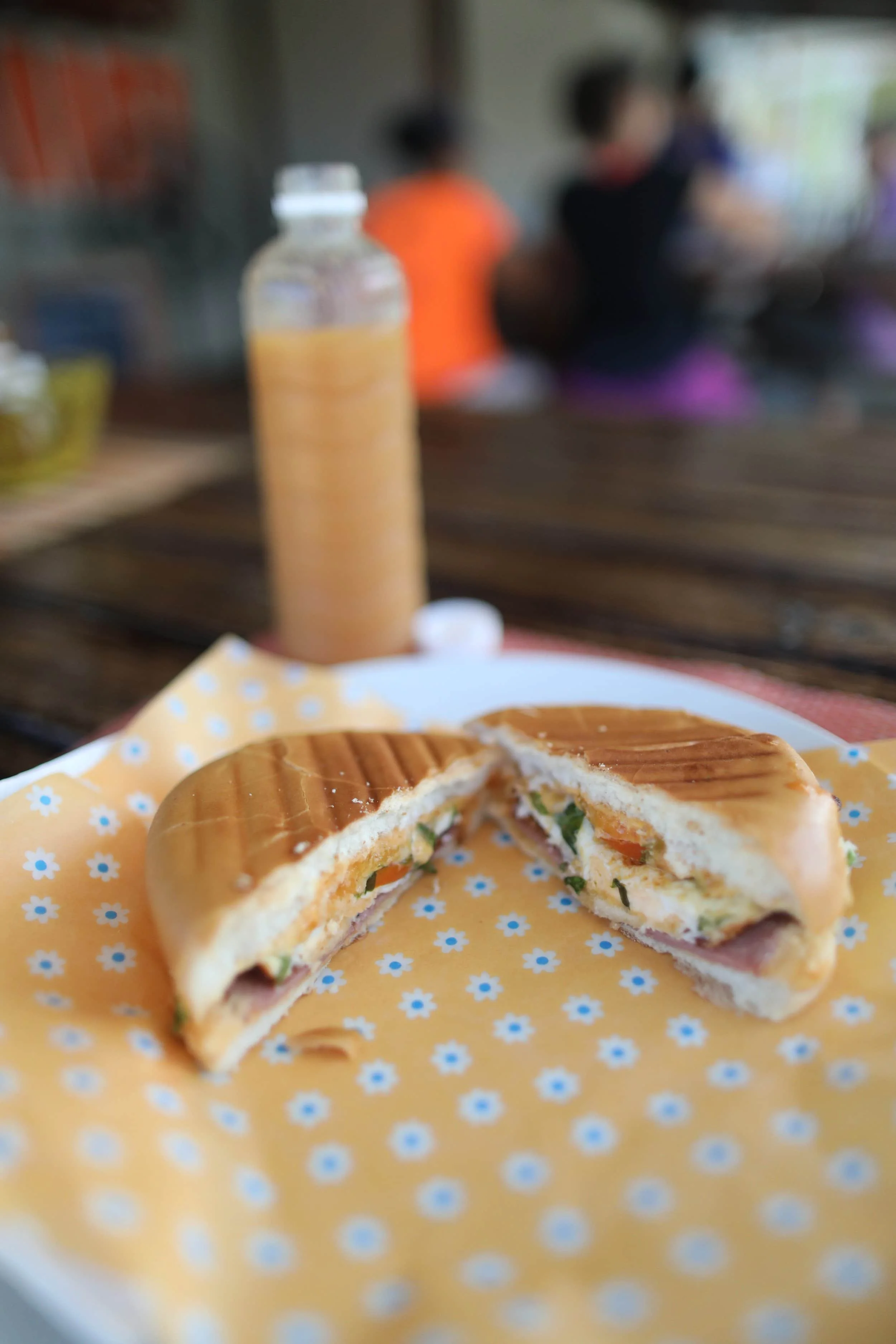
With what looks like an ever changing menu, local breakfast plates feel straightforward and homey. You’ll find saltfish prepared in modest, flavorful ways, dumplings steamed or fried and provisions like yams, dasheen and plantain alongside eggs or a handful of sautéed vegetables. Portions are honest, designed to fill you for a morning of exploration.
Coffee and juices complete the spread. Island coffee is strong, balanced and rich — more about wake-up punch than latte art — and it’s often accompanied by freshly squeezed juices: orange, grapefruit or guava depending on what’s in season. The juices are bright and vibrant, a good counterpoint to the rich saltfish or the buttery pastry. Together, all this makes for a breakfast that’s practical, satisfying and rooted in local flavor — ideal fuel for whatever the day’s adventures bring.
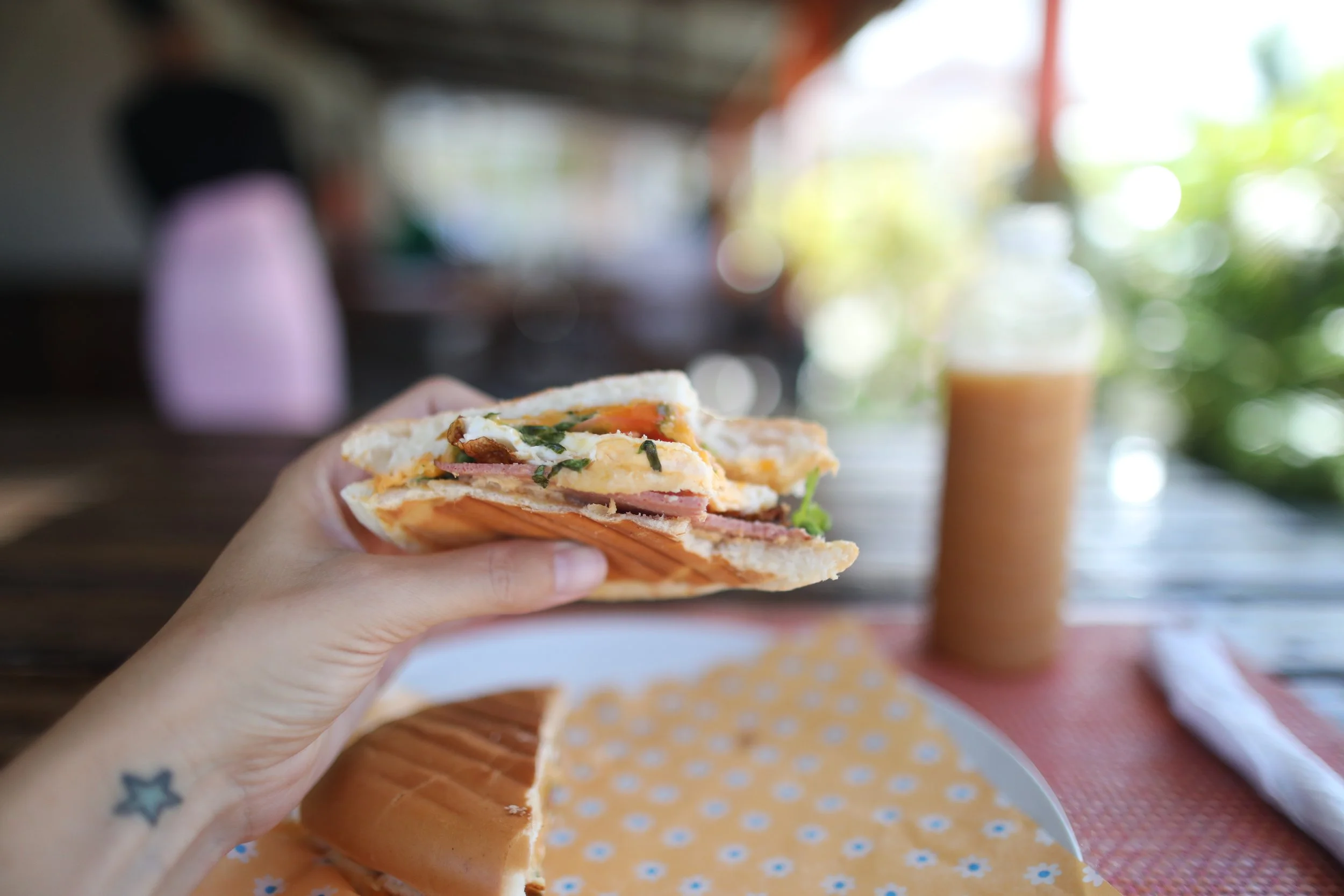
Arrive earlier if you prefer a quieter table; weekends can be busier with locals. Cash is useful — some small eateries in the area still don’t accept cards and The Pallet may lean that way at peak times. Always ask about daily specials: The Pallet sometimes features market-fresh items not printed on the menu and those off-menu plates are often the best way to taste what’s in season.
Indian River Eco-Boat Tour
The coastal road north to Indian River unfolds into an easy, sunlit hour of ocean panoramas and swaying palms — a calm drive that sets a holiday pace. To arrange a trip down Indian River, stop by the visitor center in Portsmouth. Following signage, pull into the small tour office on the left, walk north to meet the guides and you’ll find a friendly, low-key hub that feels like the perfect launch point.
Typically, all tours flow through a single organizer, who passes you off to the next available skipper. Mine was called Dinosaur.
💡 Local Tip | Rent a car on Dominica — it’s essential. Roads wind through emerald mountains, past waterfalls and hot springs, and public transport won’t get you to the island’s best sights on your schedule. With a rental, you’ll have the freedom to chase sunrise hikes, swim in hidden pools and discover villages at your own pace. Make sure to grab a phone charger for the vehicle; you’ll definitely need one.
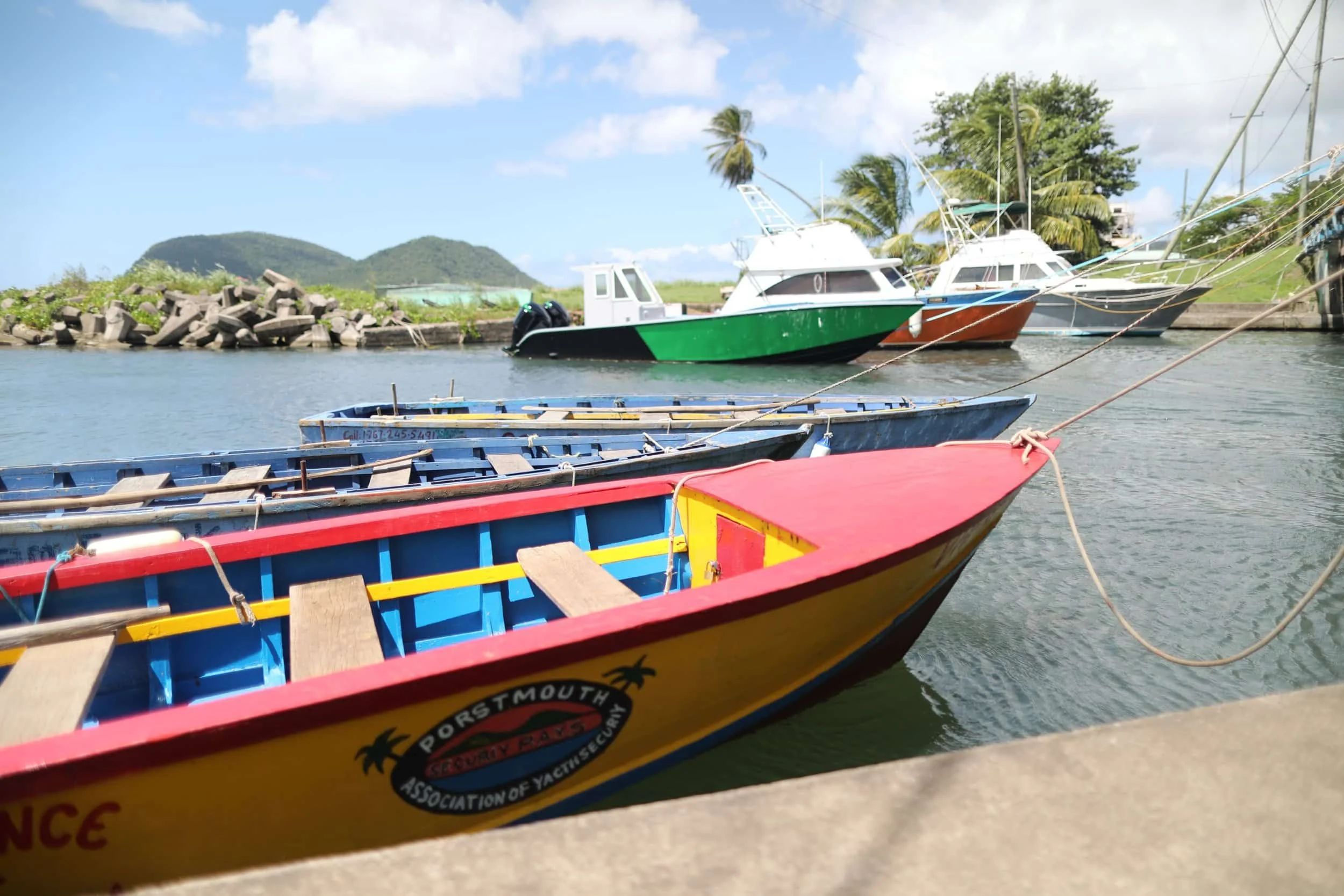
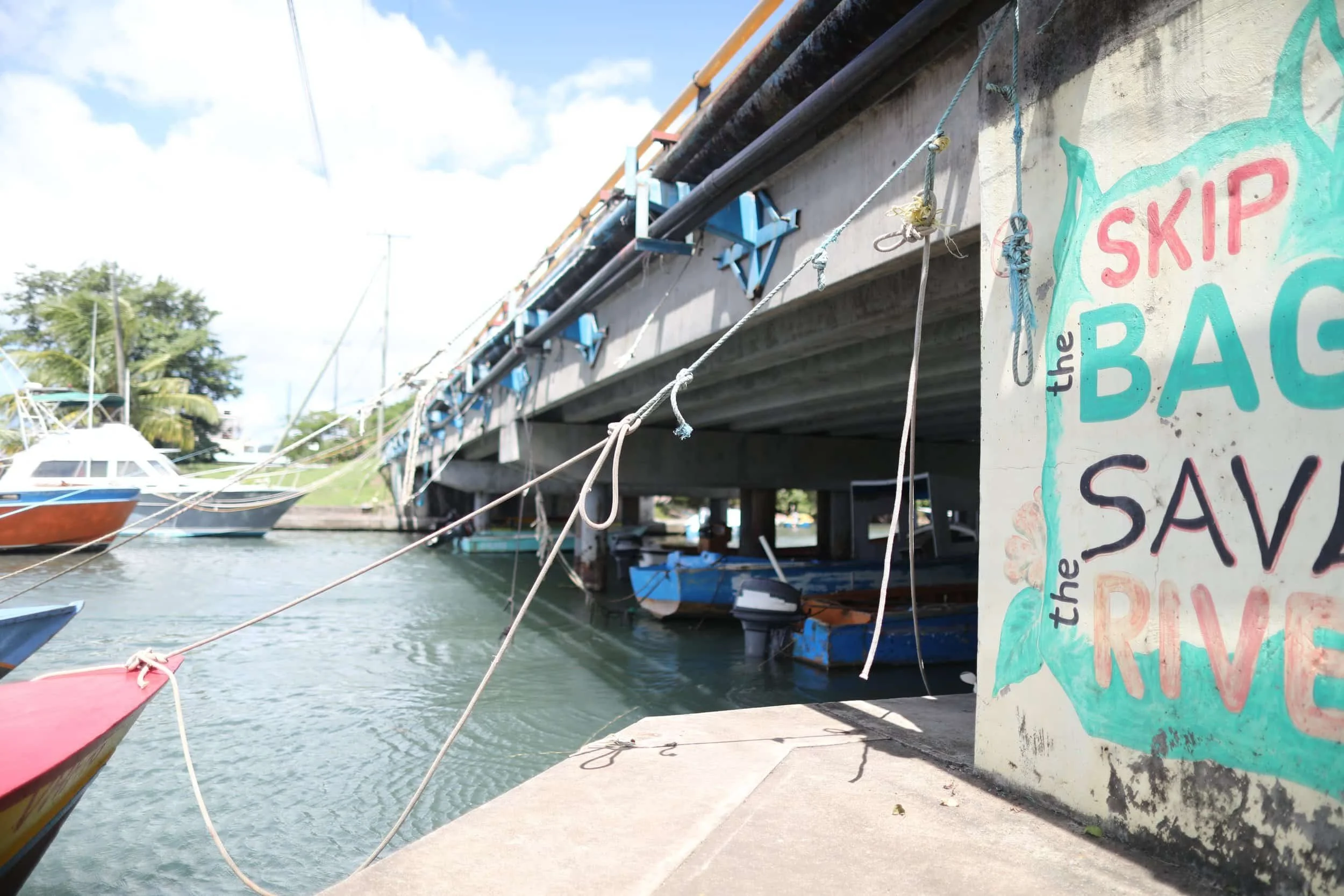
Tours are sold by boat. A private hire typically goes for about EC$120 (around $35 USD after some polite bargaining), while shared trips are far more wallet-friendly — expect roughly EC$50–$60 per person when you hop on with others. Bring cash and a bit of patience for negotiating; prices are often flexible, especially when you’re booking multiple seats or crowds are slow.
⚠️ Good to Know | Wear cool clothing, bring reef-safe sunscreen and secure valuables in a dry bag. During high temps, bring something to cover up from the sun and bottled water.
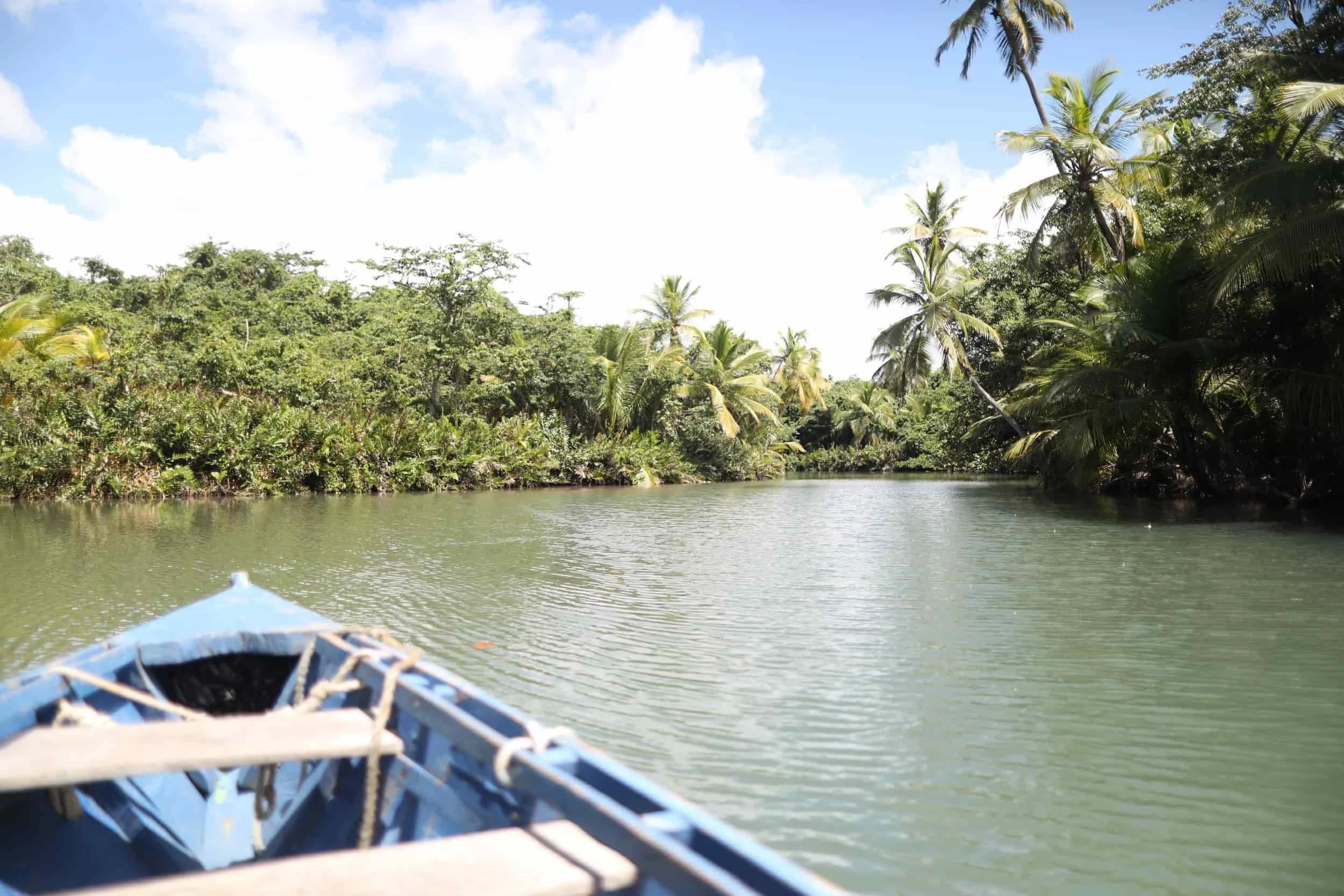
What awaits: Dominica’s Indian River - a quiet, green corridor where history, ecology and film lore meet.
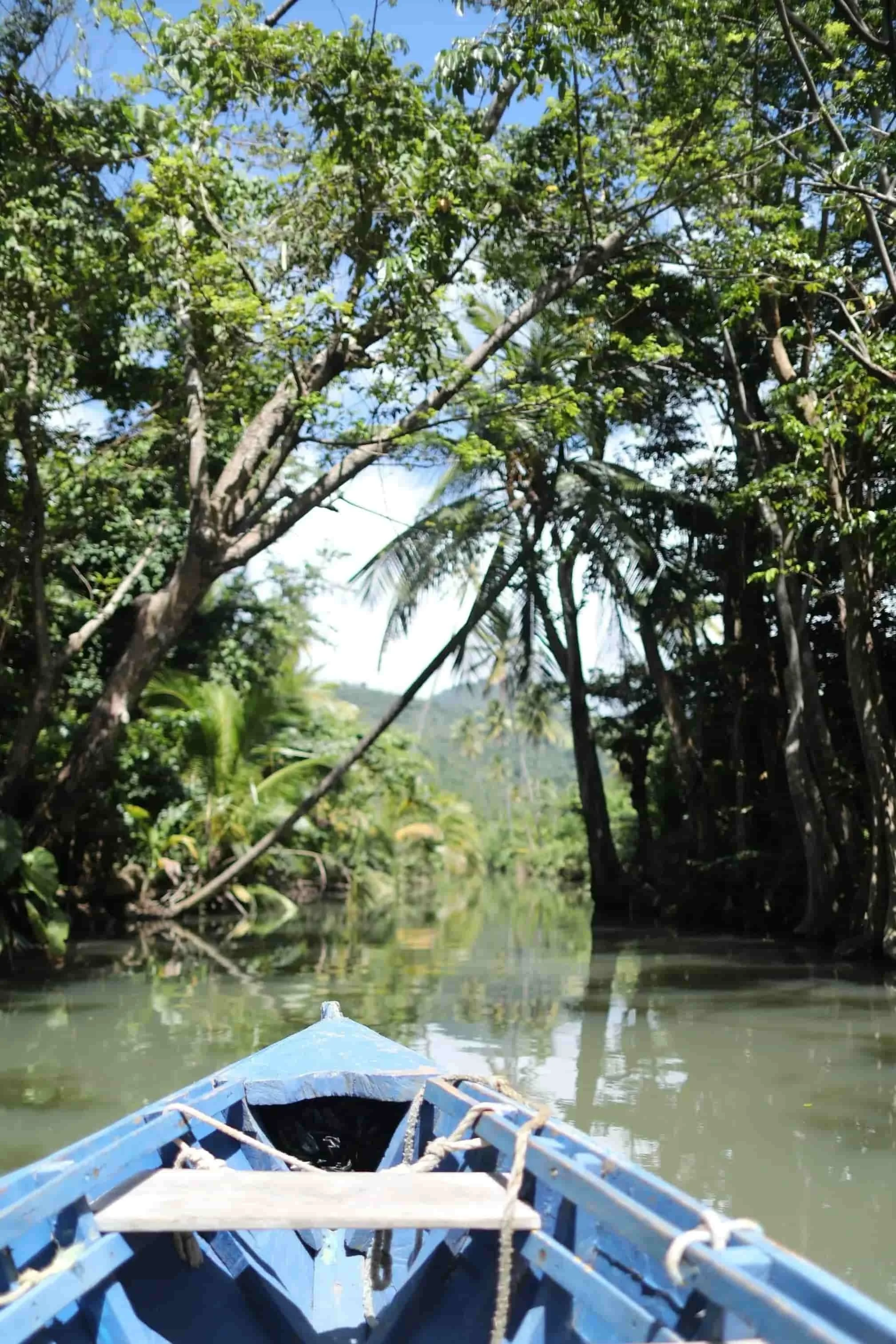
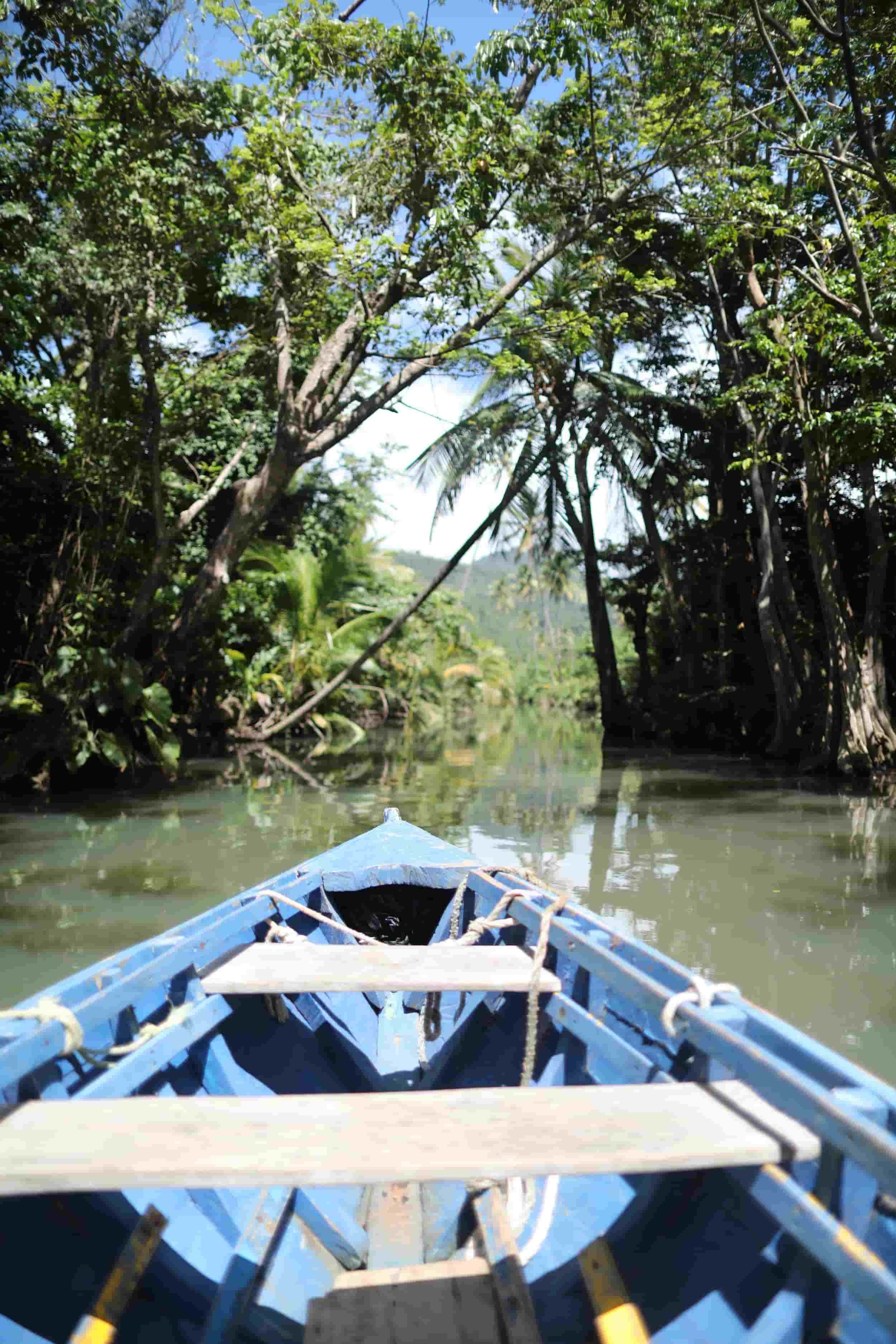
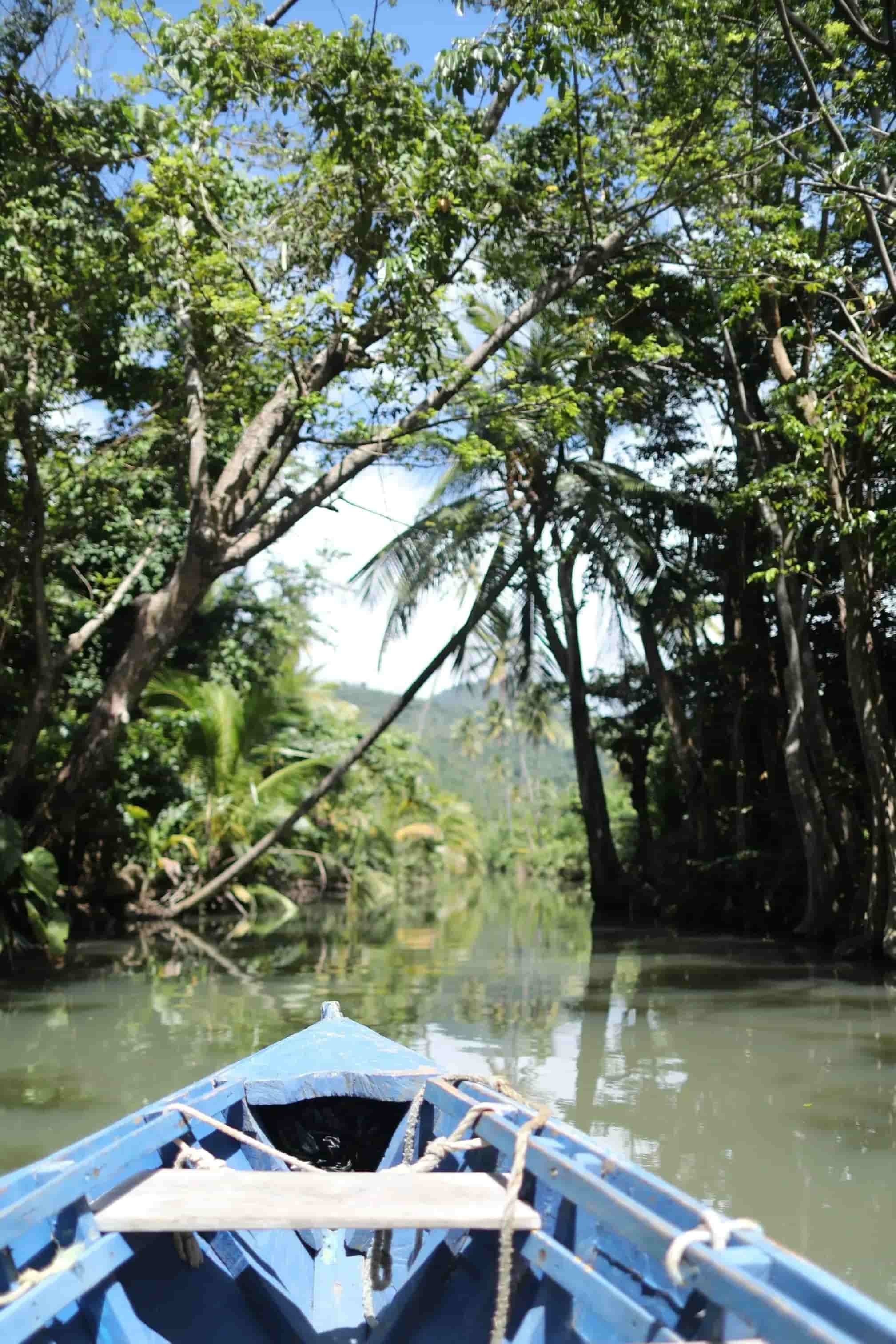
Indian River winds through a narrow mangrove corridor on Dominica’s northwest coast, a slow-moving ribbon of brackish water that opens into the Caribbean Sea. Boats without engines are the norm here — oars only — to keep disturbances to a minimum and preserve the fragile ecosystem.
The experience of drifting into the river is hushed and intimate: heat from the island balanced by intermittent breezes, the boat’s soft scrape against roots and mud, and the constant, layered soundtrack of birds and insects.
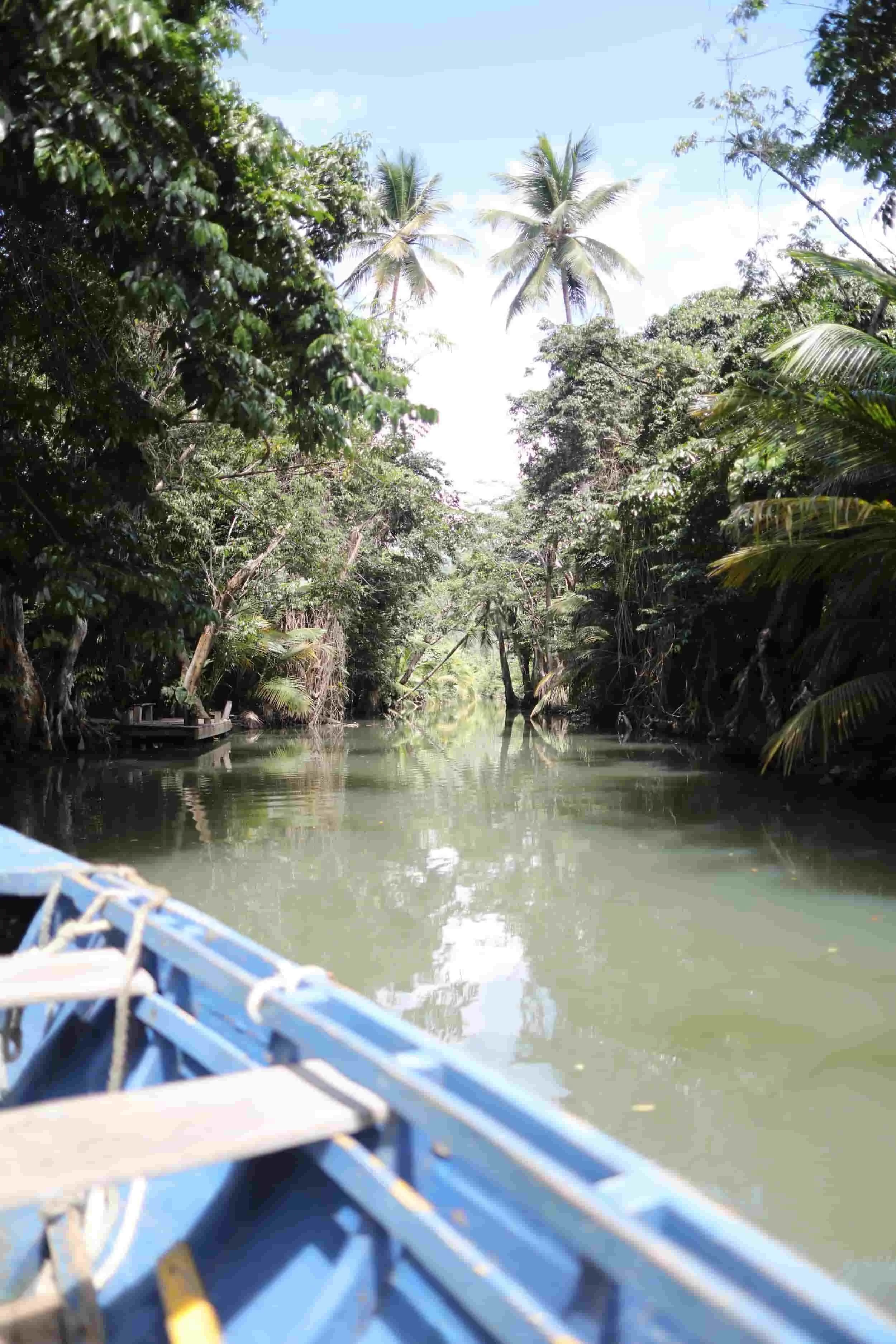
The river is one of the island’s most historically and ecologically significant waterways and often claimed the most beautiful of the island’s 365 rivers. Its name reflects the early presence of Indigenous peoples — primarily the Kalinago (Carib) and earlier pre-Carib groups — who used the river and surrounding coastal areas for fishing, transport and settlement long before Europeans arrived.
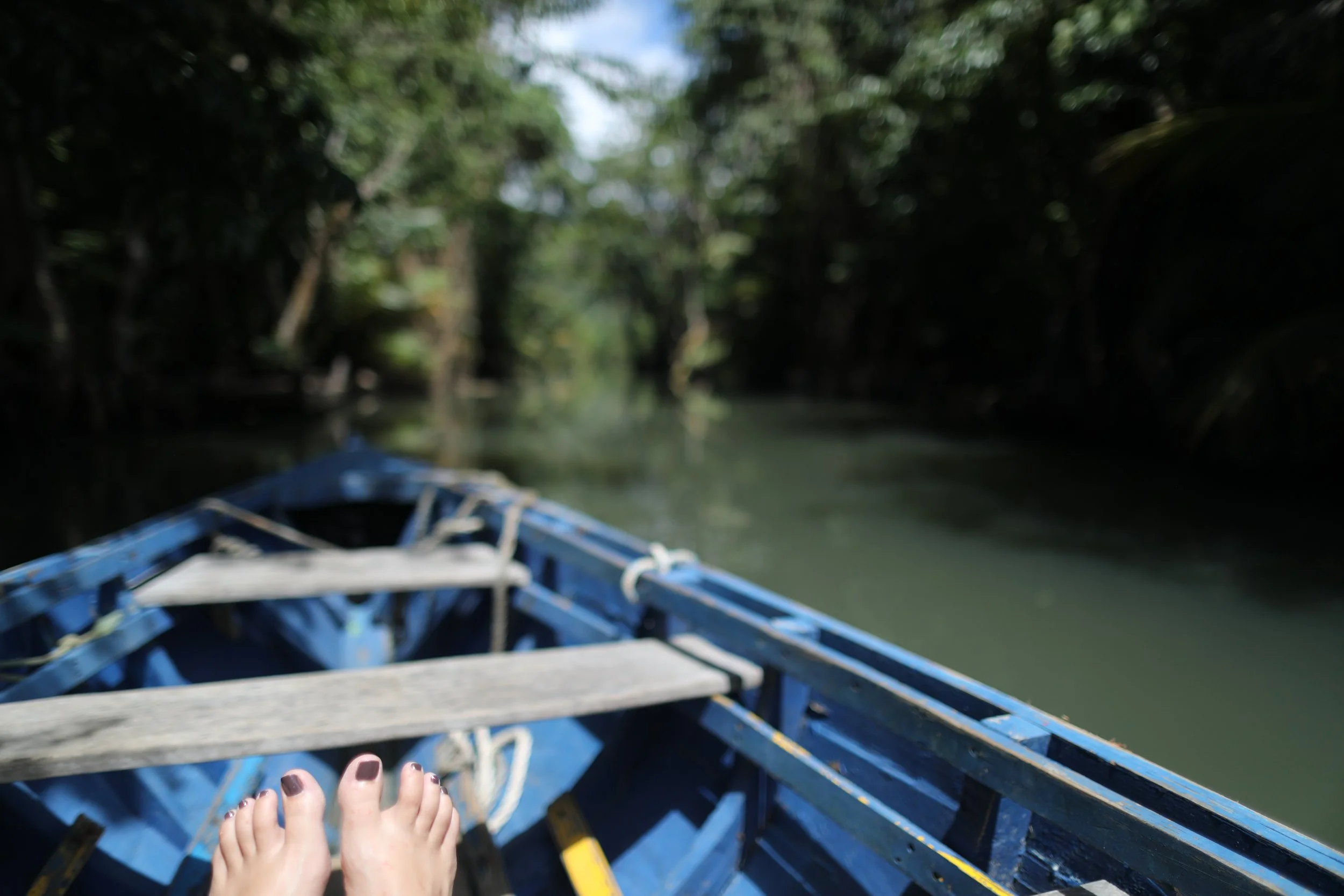
As Dinosaur and I floated through a narrow path hugging the river on our boat tour, the landscape seemed to breathe stories into the air. The Carib people once lived along its banks and navigated its waters to reach the sea. Imagining canoes slipping through the mangroves, laden with goods for trade, I could see how this waterway served as a lifeline — a corridor connecting inland communities with sailors and coastal merchants.
The present-day quiet contradicts a past where this river was a vital route of movement, exchange and culture.
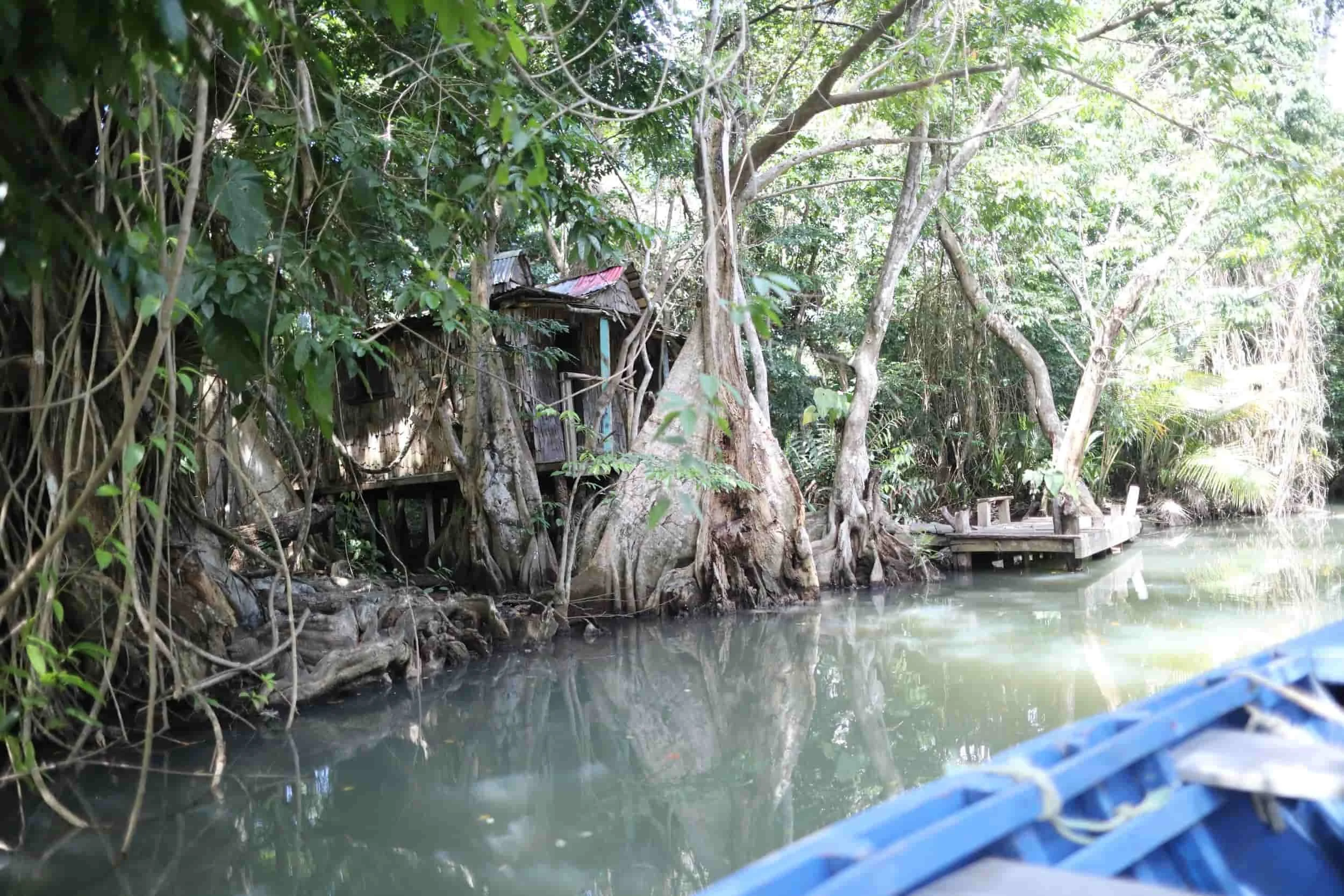
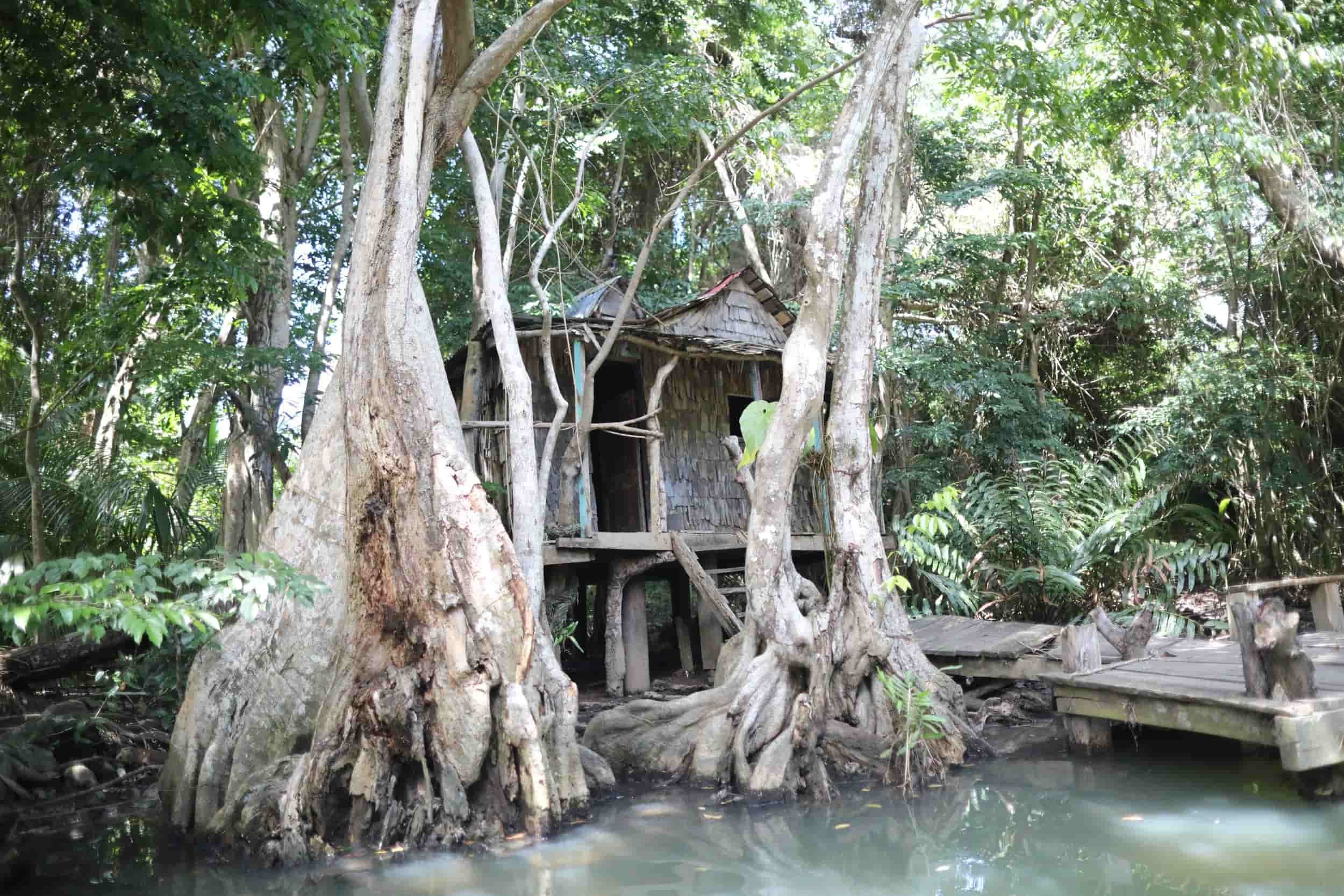
Soon, a small canal opens up like a secret. My local guide points out the scarred remains of a set house erected in 2006 for Pirates of the Caribbean: Dead Man's Chest. The set once buzzed with activity and movie magic; a later hurricane reduced most of it to rubble, leaving behind only weathered timbers and stories that locals tell with a blend of pride and wistfulness. Floating past the fragments, I felt both the thrill of having witnessed a piece of cinematic history and the humbling reminder of how quickly our efforts can be reclaimed by nature.
In the 20th and 21st centuries, the Indian River transitioned from a utilitarian local waterway to a focus of conservation and tourism. Its narrow, mangrove-fringed channel, abundant birdlife and calm waters have made it a popular site for guided boat tours. As mentioned, filmmakers have also used the river as a scenic location, honoring Dominica’s lush, tropical scenery.
Today, the river is valued for both its biodiversity — including mangroves, fish and bird species — and as a cultural landmark connecting modern Dominicans to the island’s indigenous and colonial past. Conservation efforts and sustainable tourism aim to protect the Indian River’s ecological health while supporting local communities that depend on it for livelihoods and cultural identity.
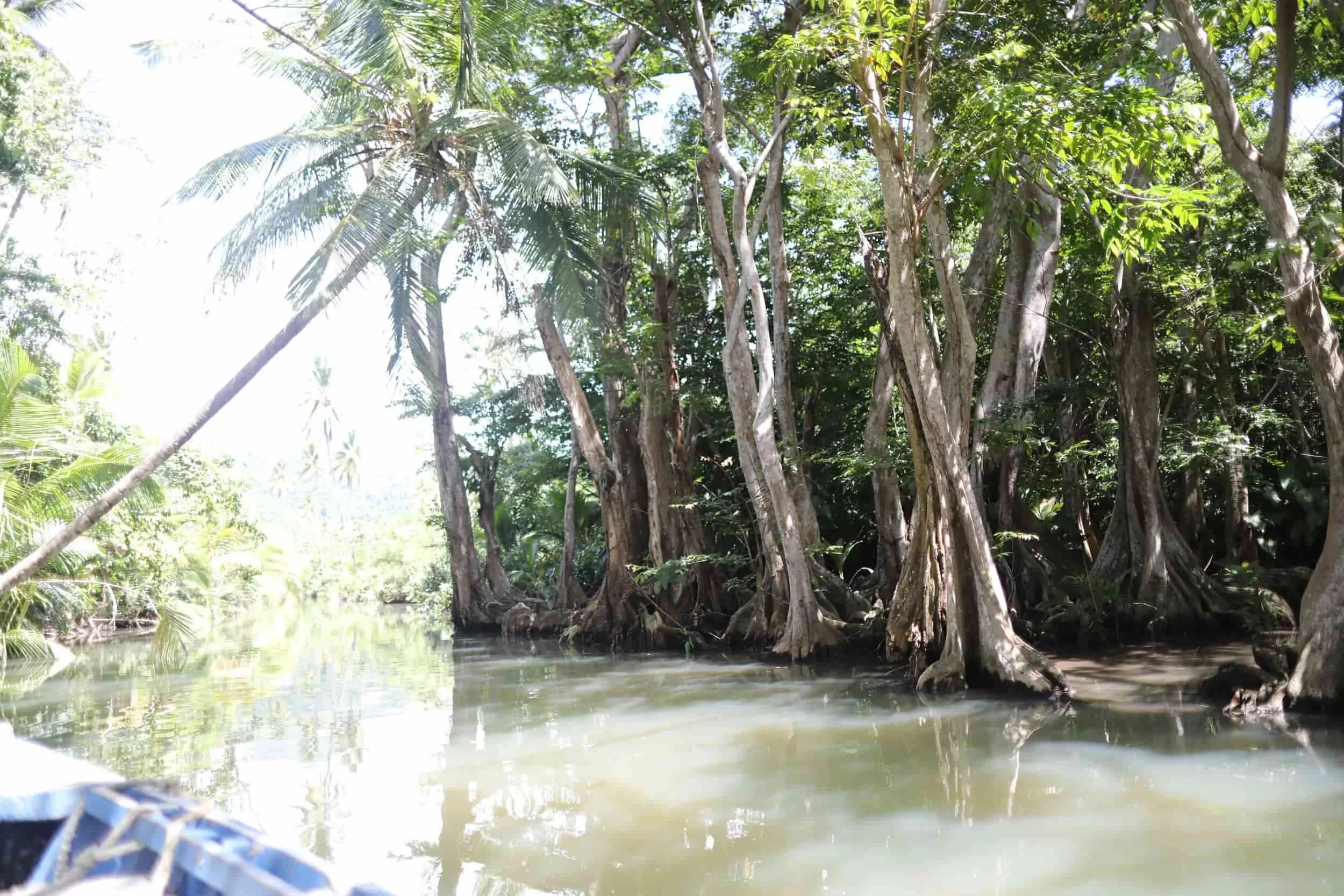
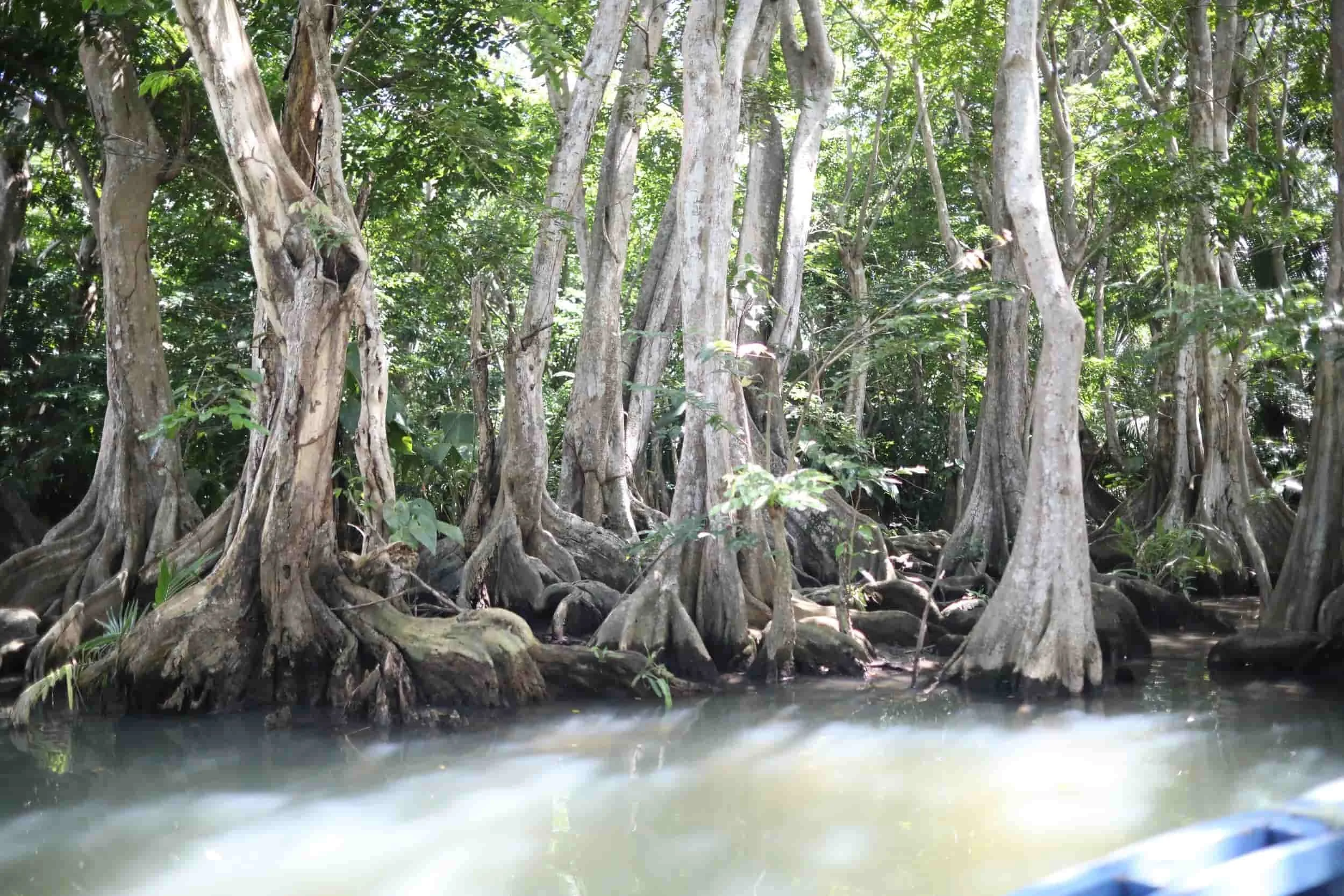
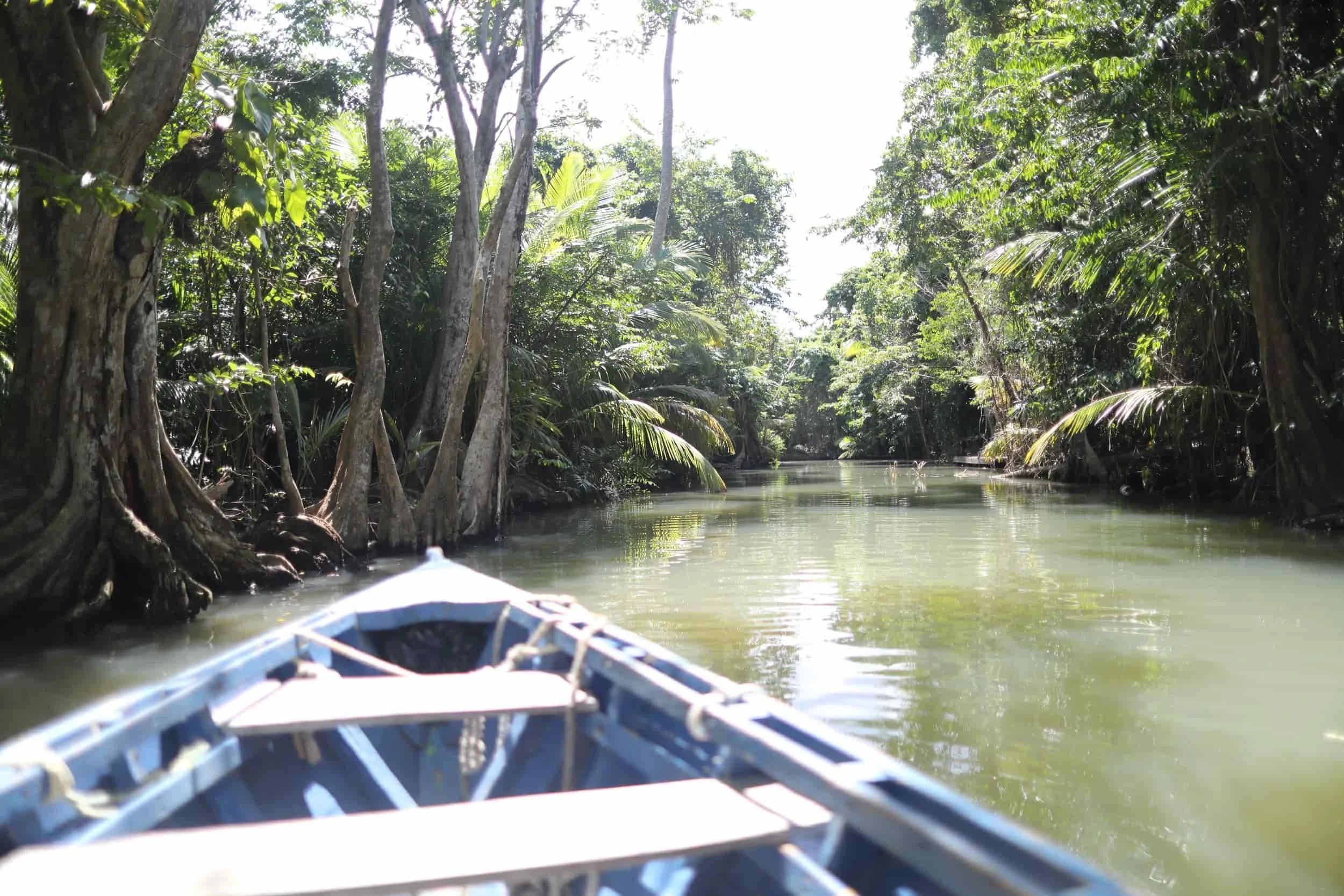
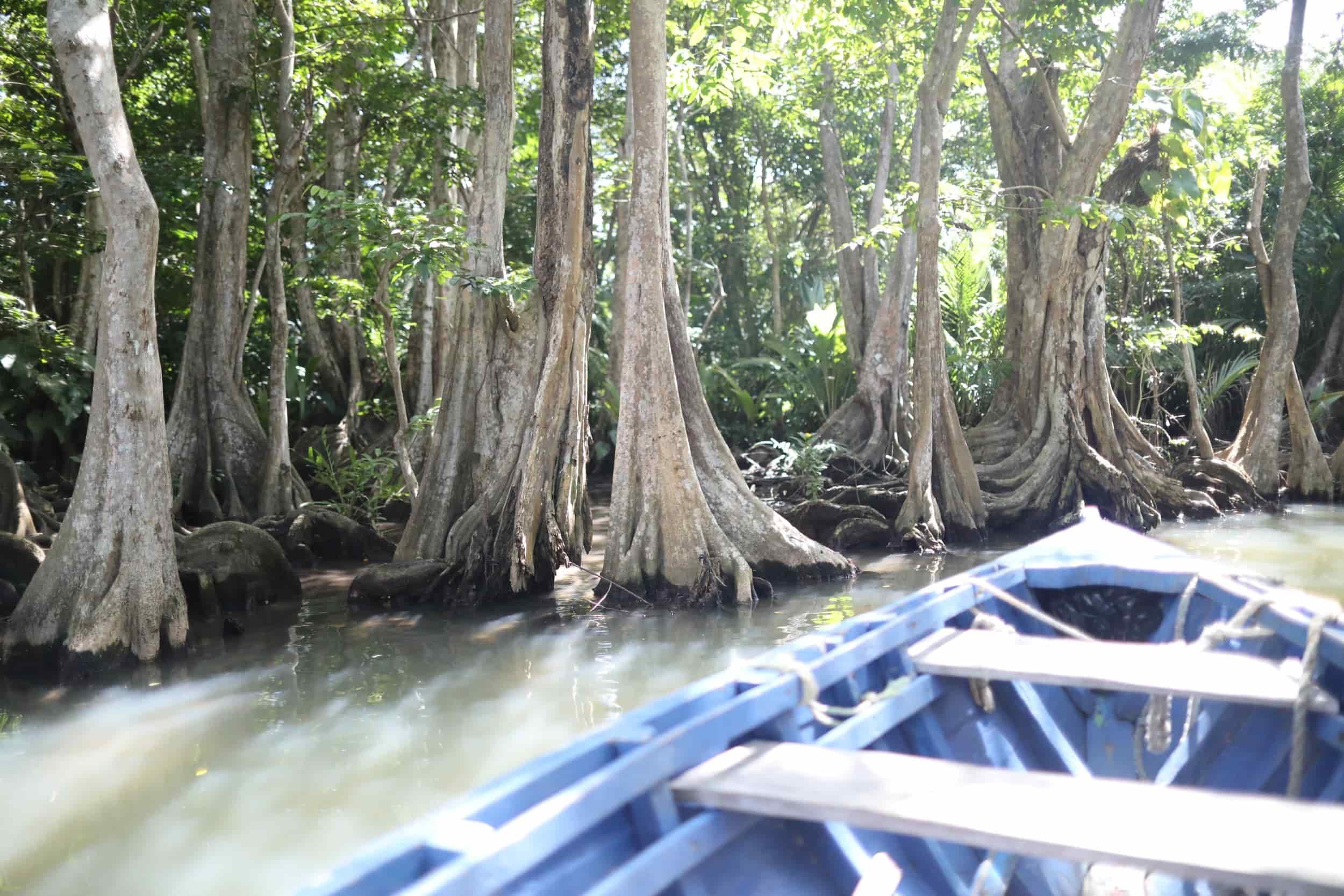
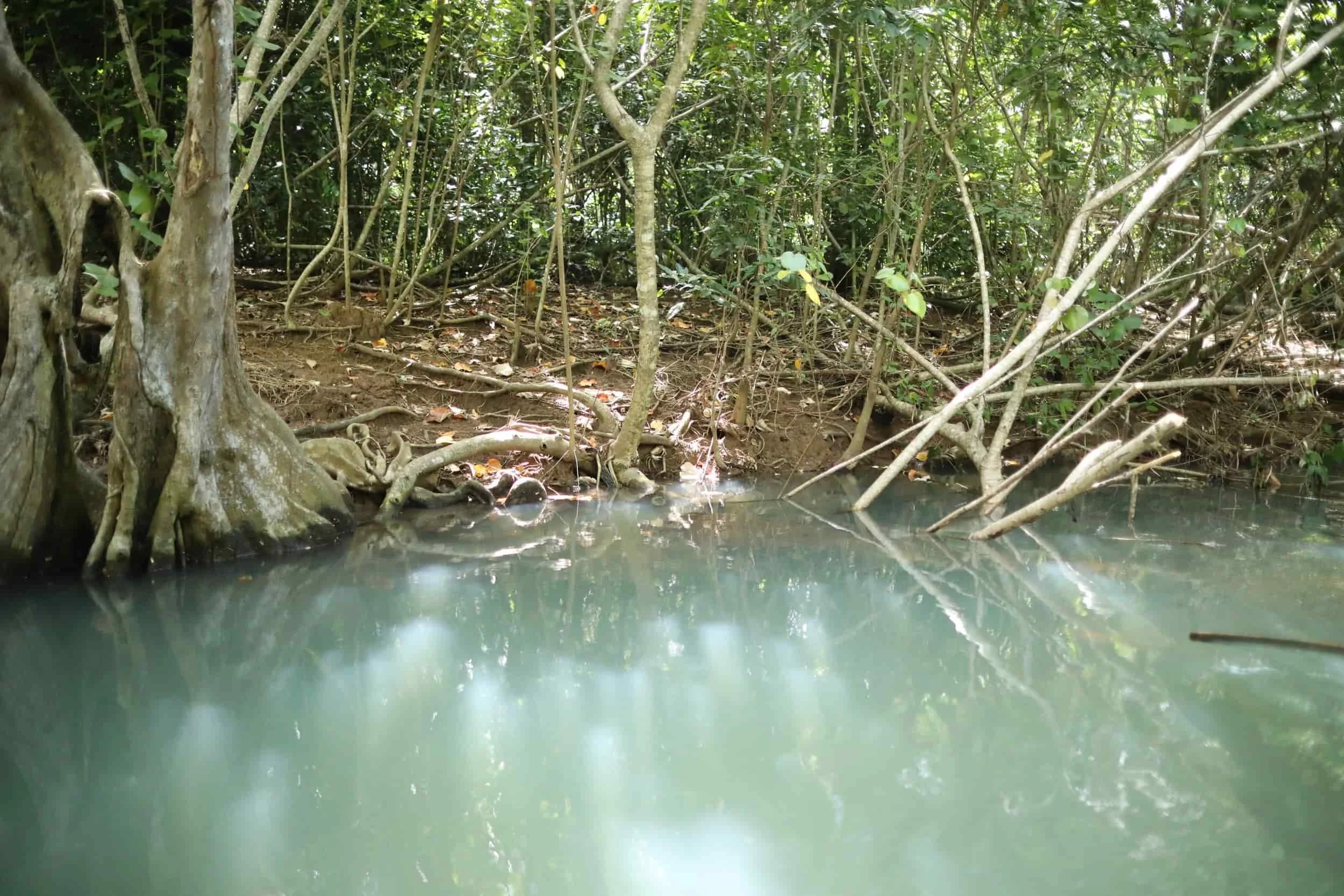
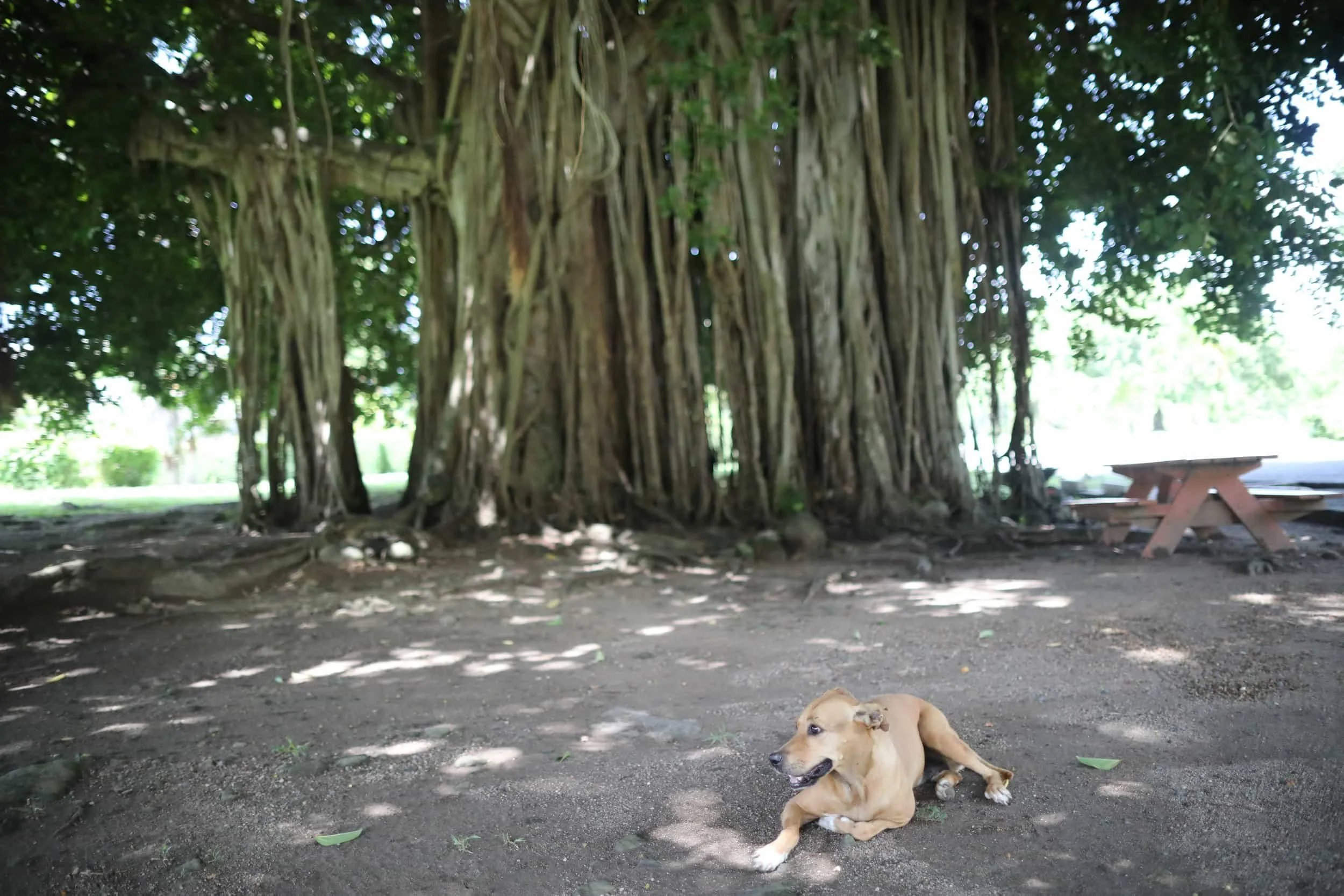
A delicate, ever-changing mix of freshwater and seawater — this meeting of tides creates a mix of habitats that hum quietly with life. Towering Bwa Mang trees line the banks, their roots weaving into the mud like ancient fingers. Some of these trees are said to be thousands of years old; gliding beneath their canopies, it’s easy to feel the slow, patient pulse of an ecosystem that has weathered time and tide. The tangled roots help anchor the shoreline, trapping sediments as the current moves, and among those roots tiny fish and crustaceans find shelter and raise the next generation.
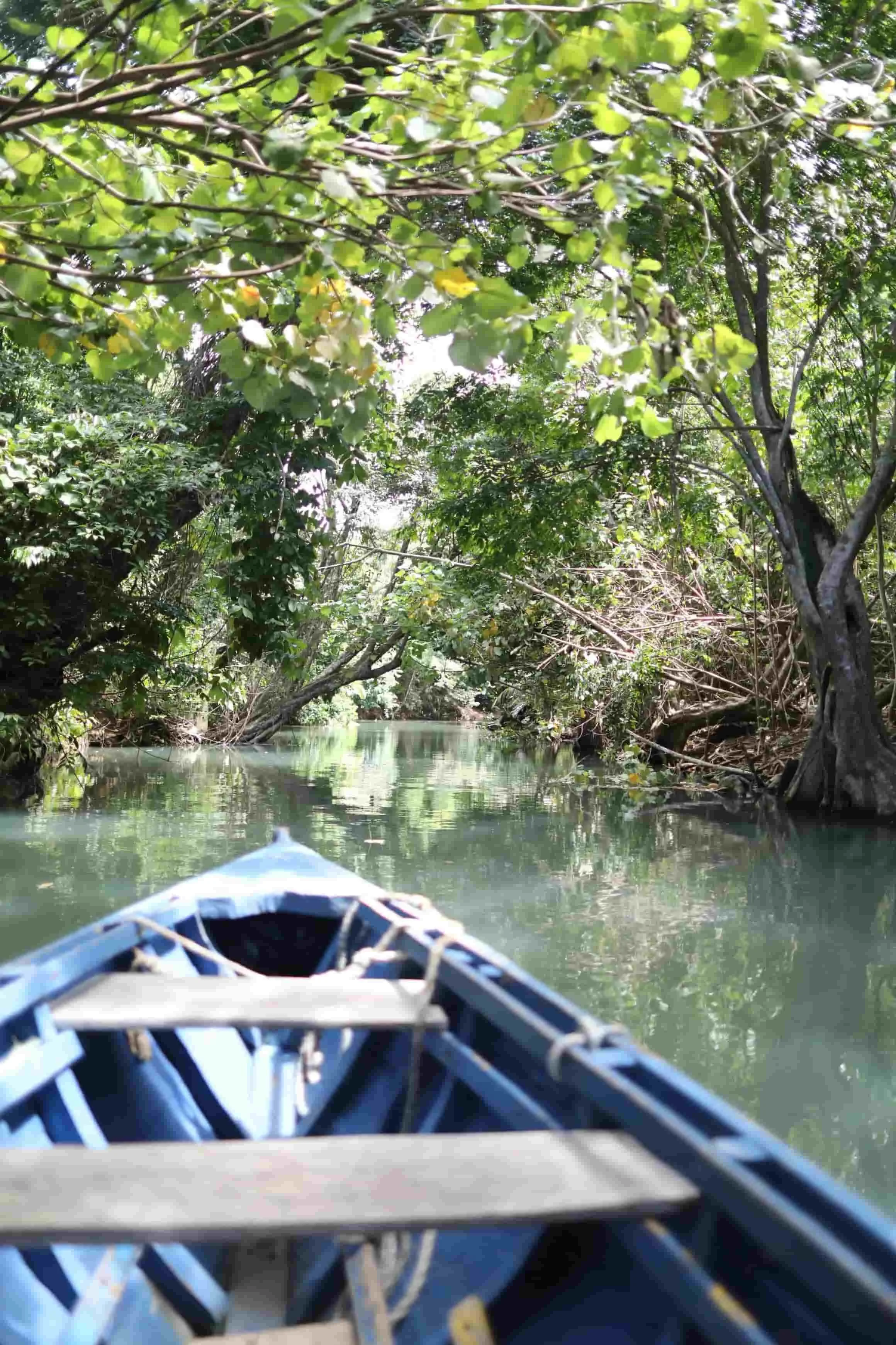
The mudflats glow in the dappled light as tides pull back, revealing a hidden world of wet sand and tangled roots. Herons stalk the shallows with unwavering patience, their necks pulsing as they strike with sudden precision. Kingfishers flash like jewels — electric blue and cinnamon — darting from exposed roots to snag a silver fish before vanishing into the air.
Shorebirds nibble at the exposed mud, their tiny feet leaving tracks the next rising tide will erase. Keep an eye out for a more secretive presence: the yellow-crowned night heron. Less flashy than its daytime cousins, it moves with a deliberate, almost nocturnal calm, its pale crown a subtle punctuation against the mangroves.
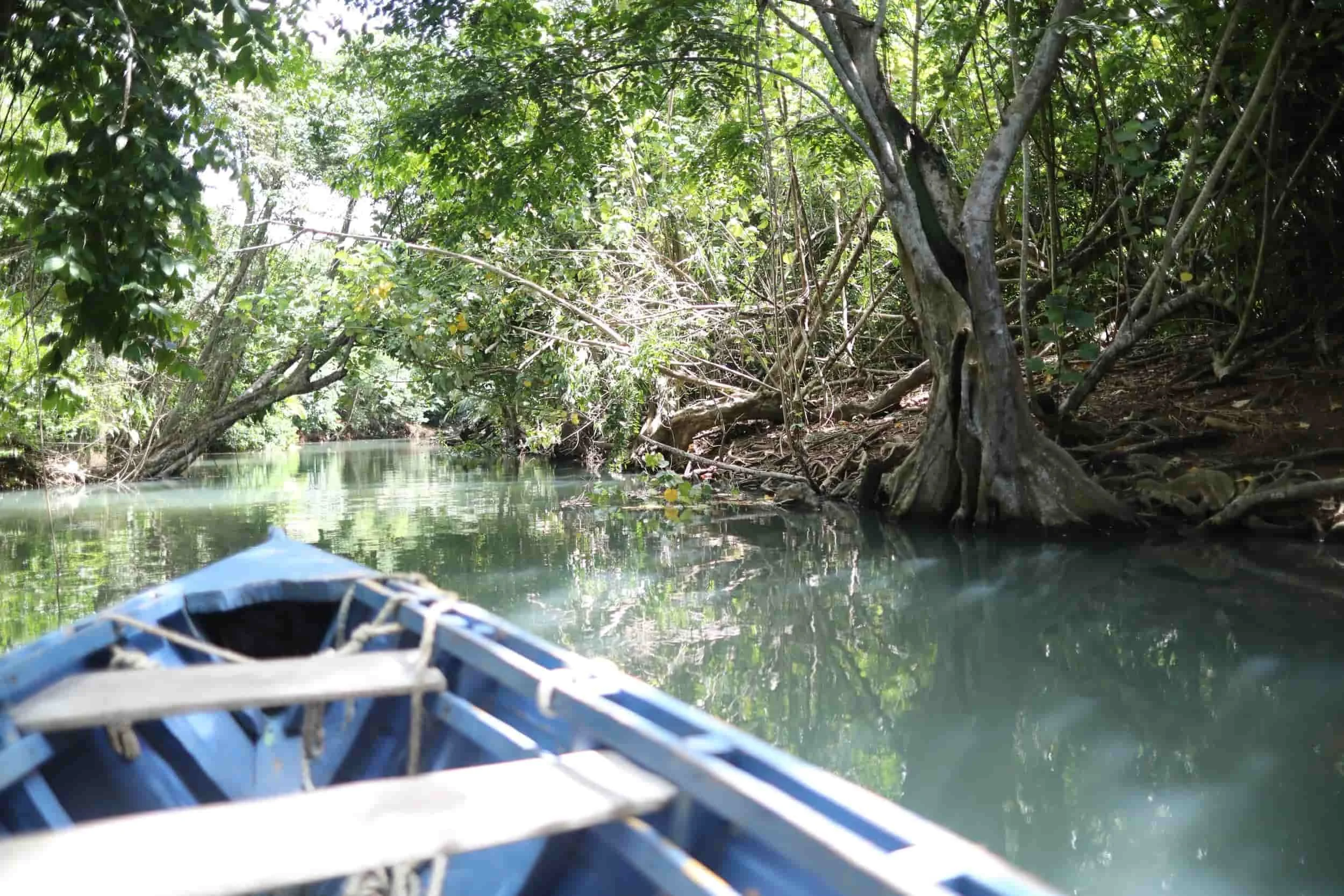
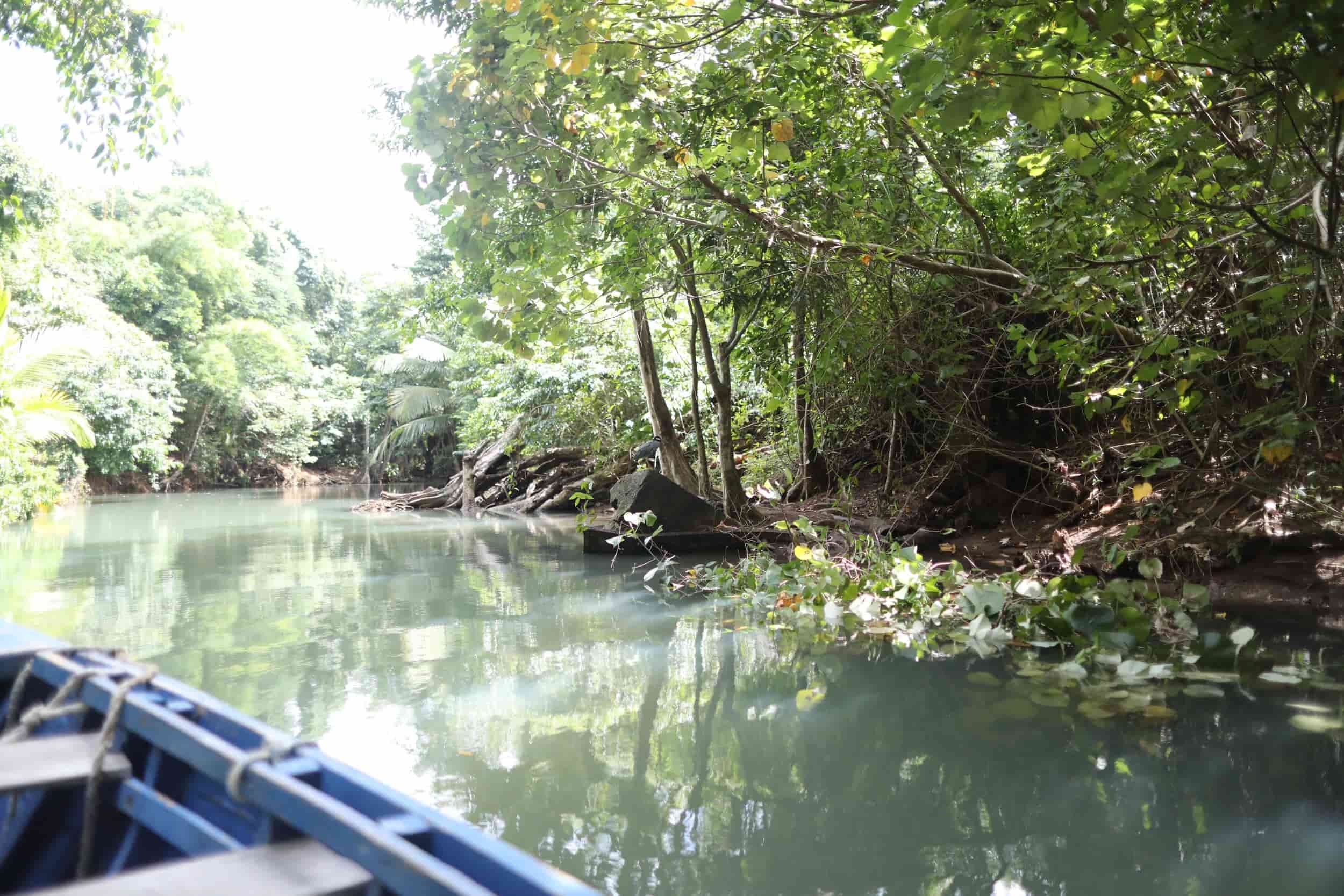
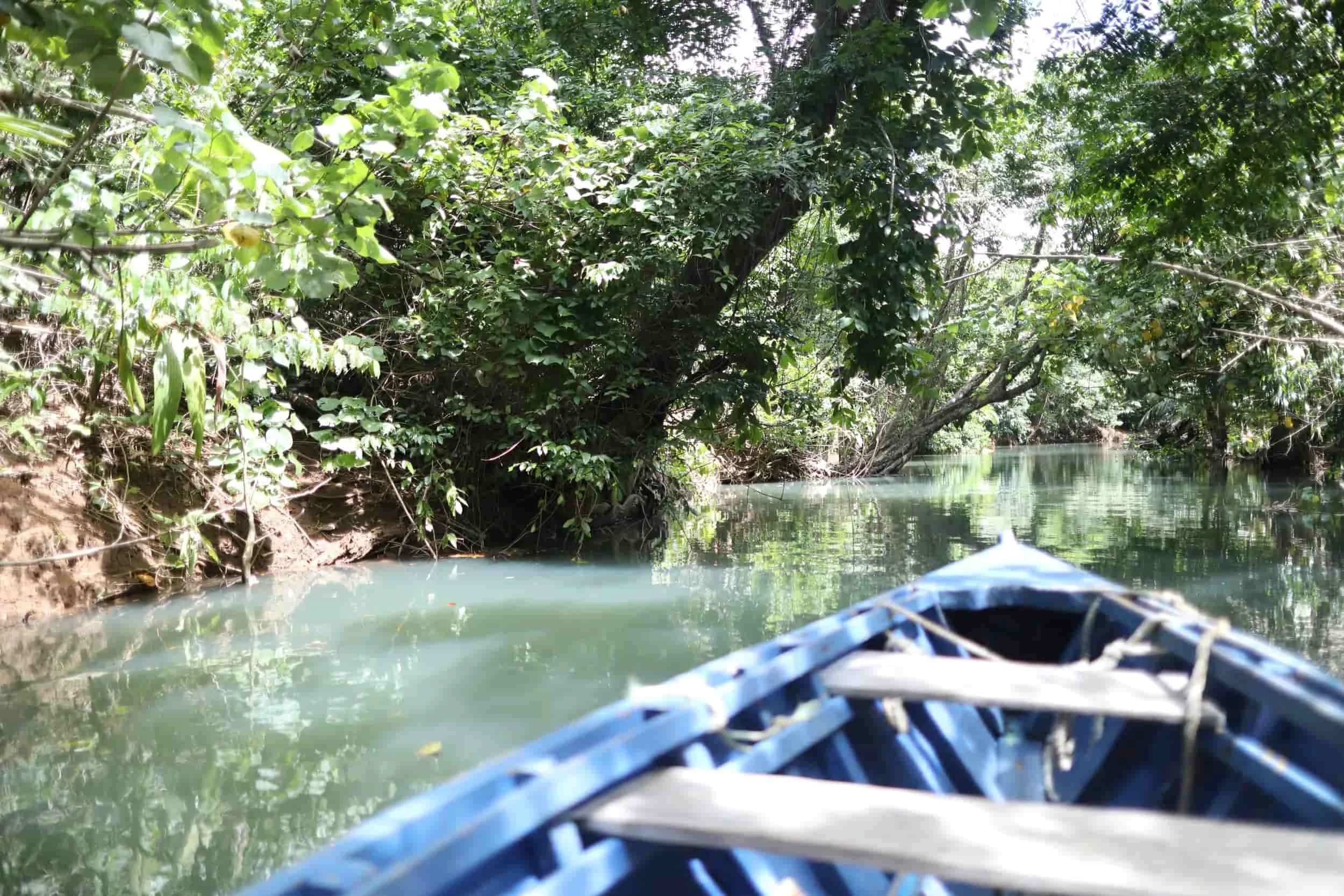
Further along, where the river widens into a shallow bay, concrete columns rise mysteriously from the water. A skeleton of a bridge, they once carried logs and sugarcane across these channels.
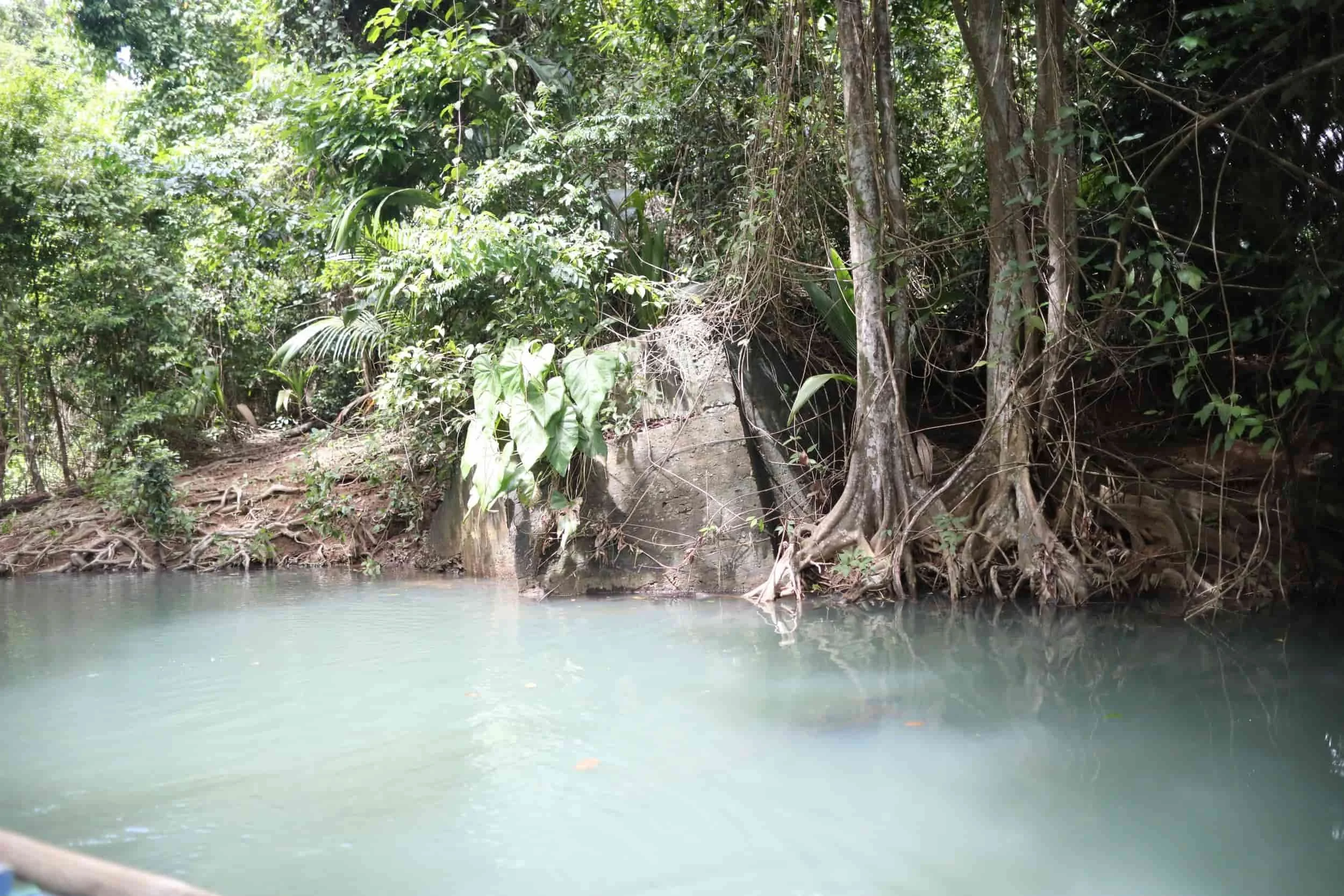
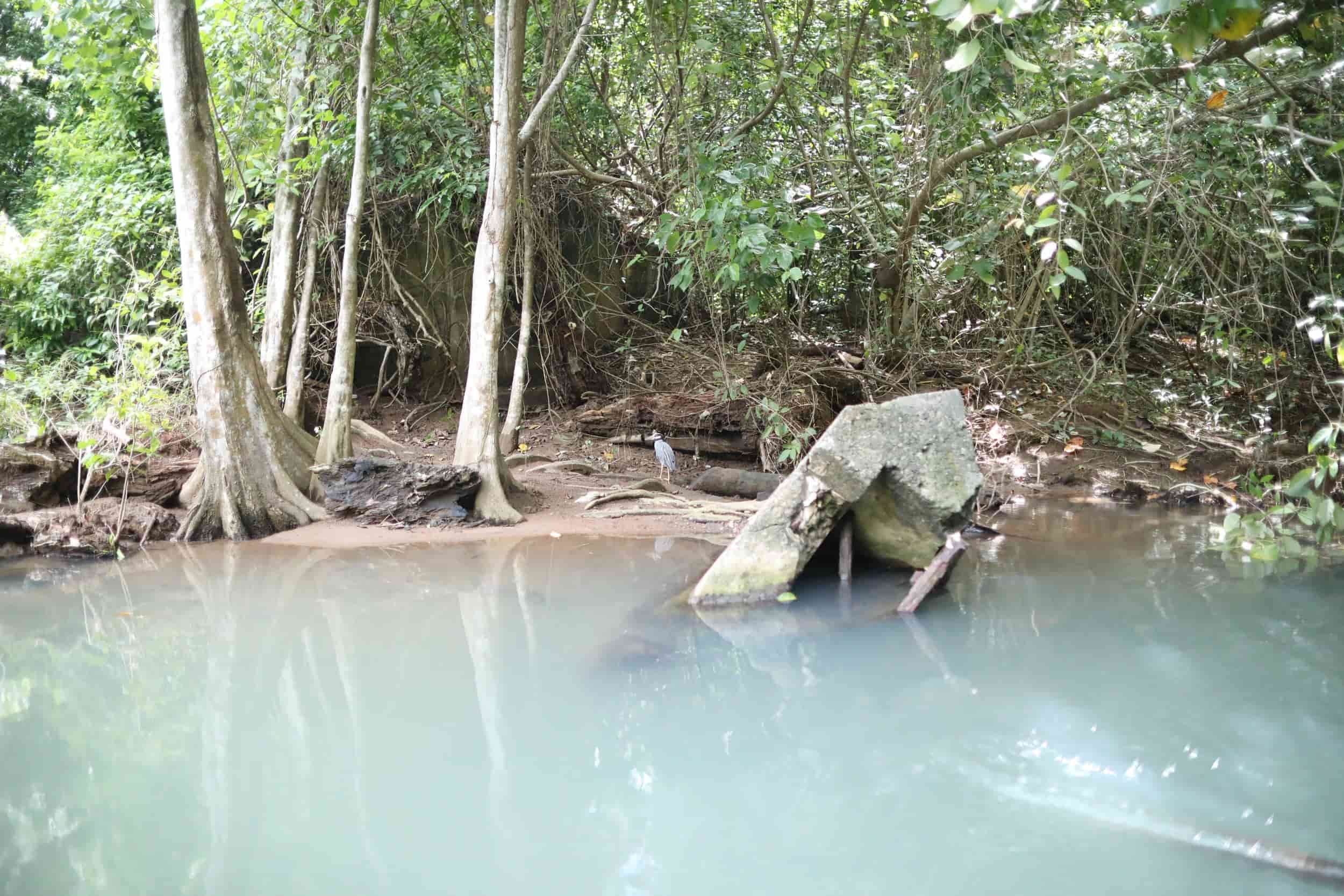
Now, they stand silent and salt-stained, their weathered faces marked with overgrown foliage and gull droppings. The rhythm of industry that once threaded this landscape ended when the hurricane of 1979 tore through, collapsing spans and leaving these stubbled pillars as the only memory.
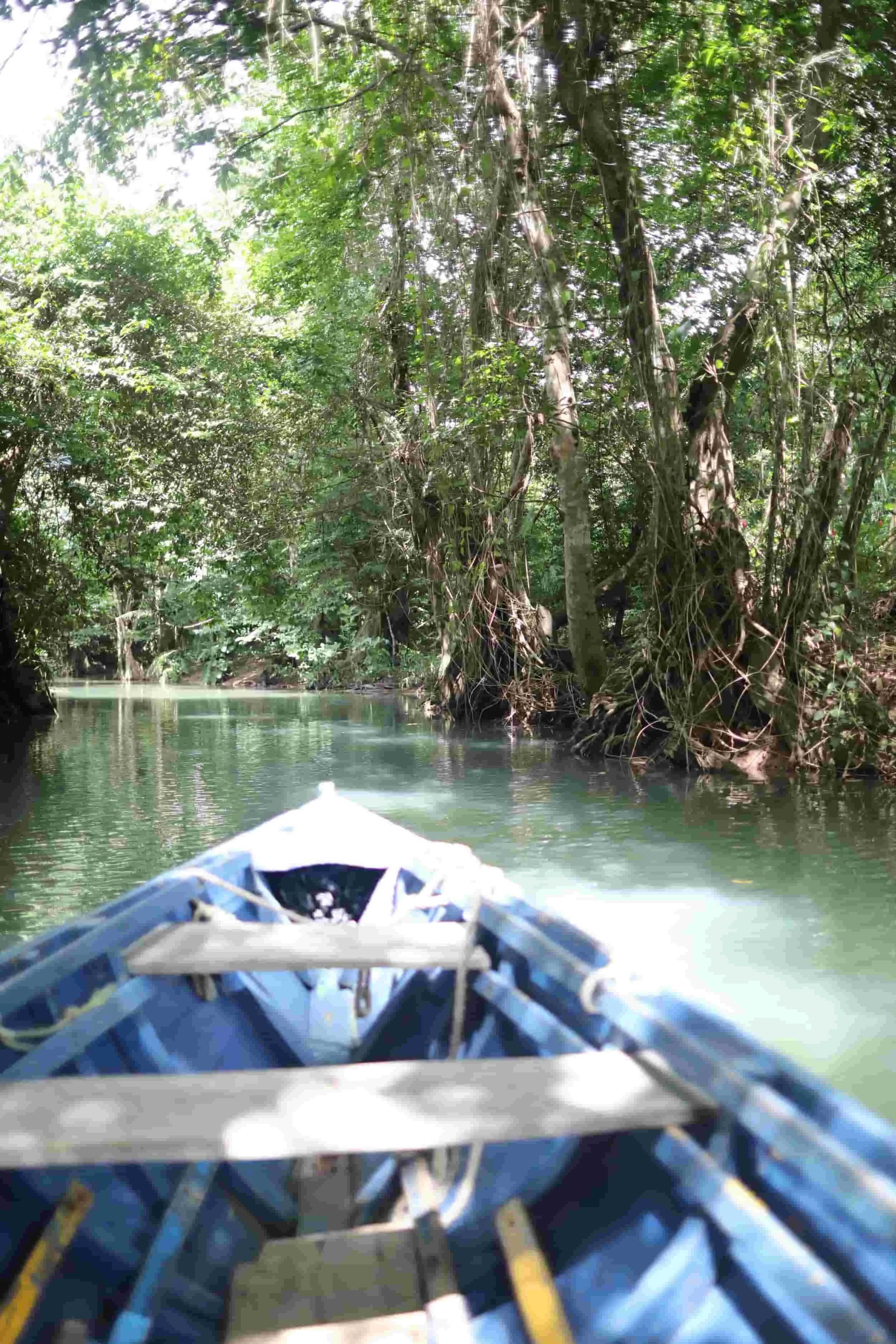
Indian River is more than a scenic paddle; it’s a living corridor that links Dominica’s natural history, indigenous heritage and modern stories. Gliding beneath the mangrove canopy, passing ruined columns and watching crabs scuttle along muddy banks, you’re moving through layers of landscape shaped by centuries of human and natural activity. For travelers interested in ecology, history or cinematic trivia, the river offers quiet, revealing moments — best experienced slowly, by oar.
Indian River Bush Bar
Indian River Bush Bar is a secluded, rustic riverside spot popular with locals and travelers seeking an authentic, off-the-beaten-path experience. Accessible by a short boat ride or a walk through mangrove-lined banks, the bar sits amid lush tropical vegetation and offers relaxed seating right on the water’s edge.
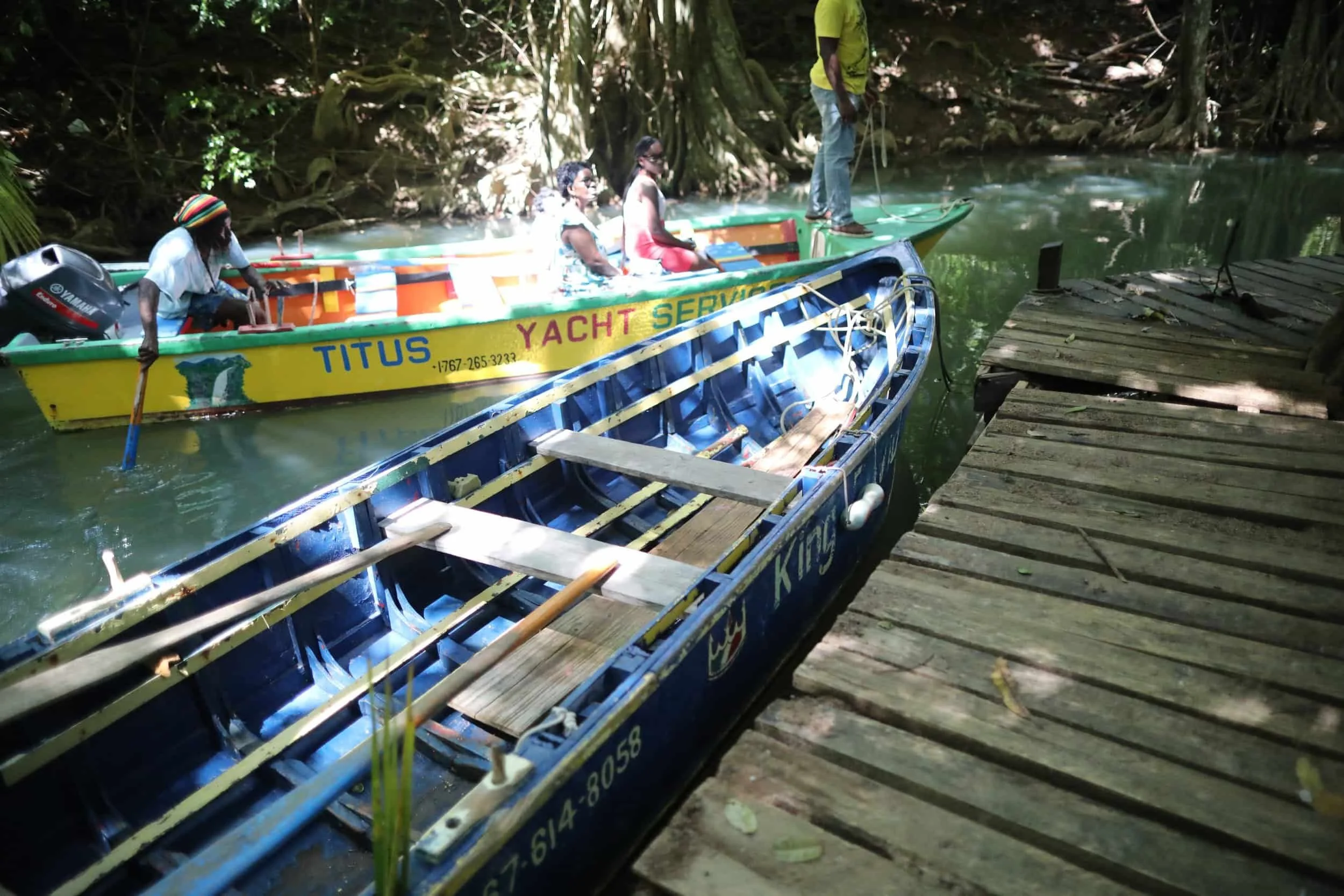
To reach the bar, whether by tour or on your own, continue floating downstream with the current, hugging the eastern shoreline where the waterway narrows and mangroves form a shaded tunnel; watch for subtle channel markers and avoid submerged roots and sand bars by keeping to the deeper center when the river widens.
Expect a leisurely 30–60 minute float depending on wind and tide; pass scenic birdlife and historic hammocks and look for the low, rustic signage that marks Indian River Bush Bar near a shallow, sandy approach where kayaks and small paddle boats can be secured. Dock your craft and keep it within sight while you enjoy the bar’s outdoor seating and local drinks.
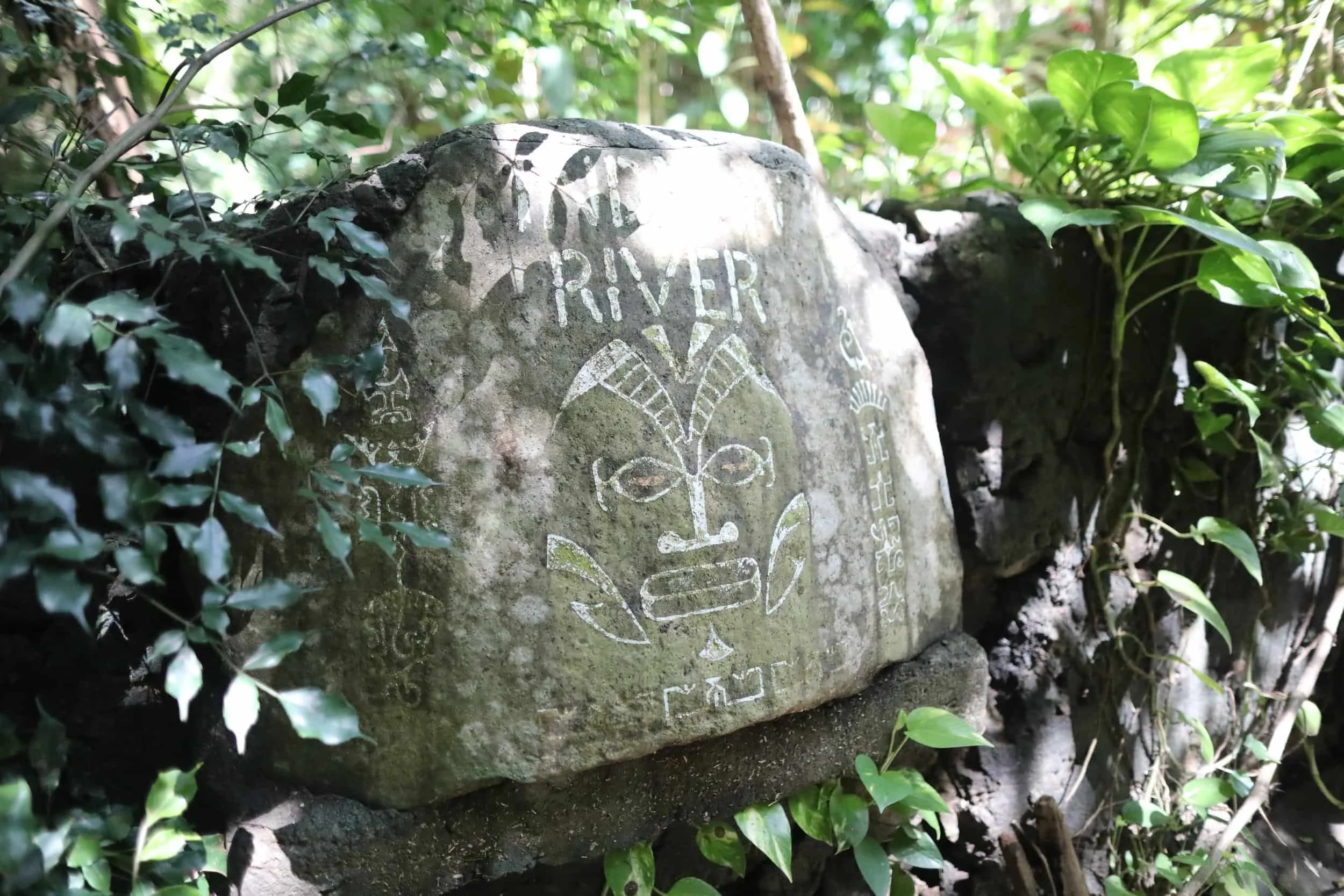
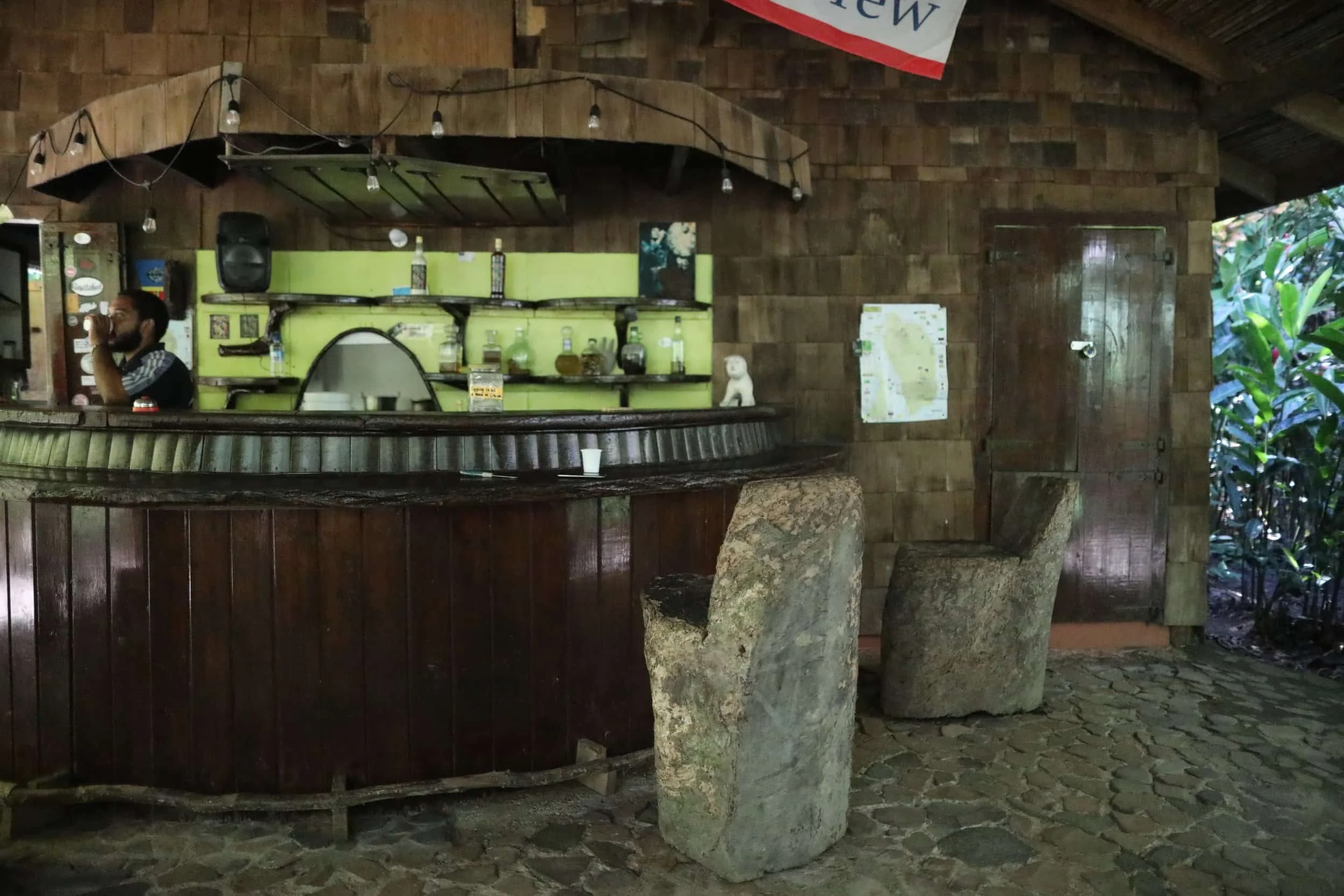
Expect a simple menu of cold drinks, local beers and occasional homemade snacks; food here tends to be uncomplicated and geared toward casual riverfront dining. The vibe is tranquil and unpretentious, with gentle river sounds, bird calls and the occasional passing boat. It’s an ideal place to unwind after an Indian River boat tour or nearby hike and highlights the area’s rich mangrove ecosystem and wildlife.
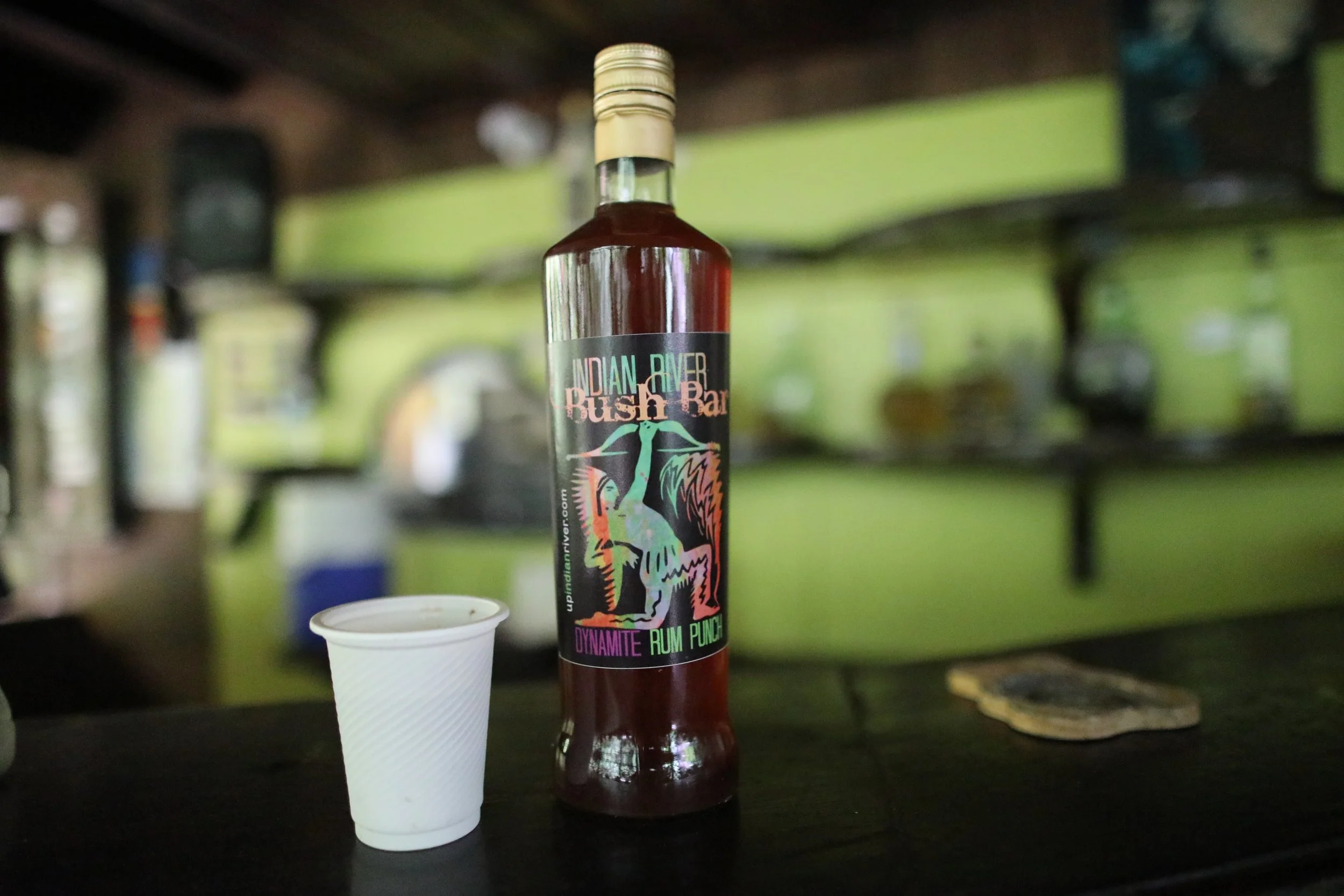
After settling in, the lively local bartender pressed a plastic cup into my hand and called it jungle juice — a potent, tropical mix of rum and fruit punch that hit like a warm island breeze.
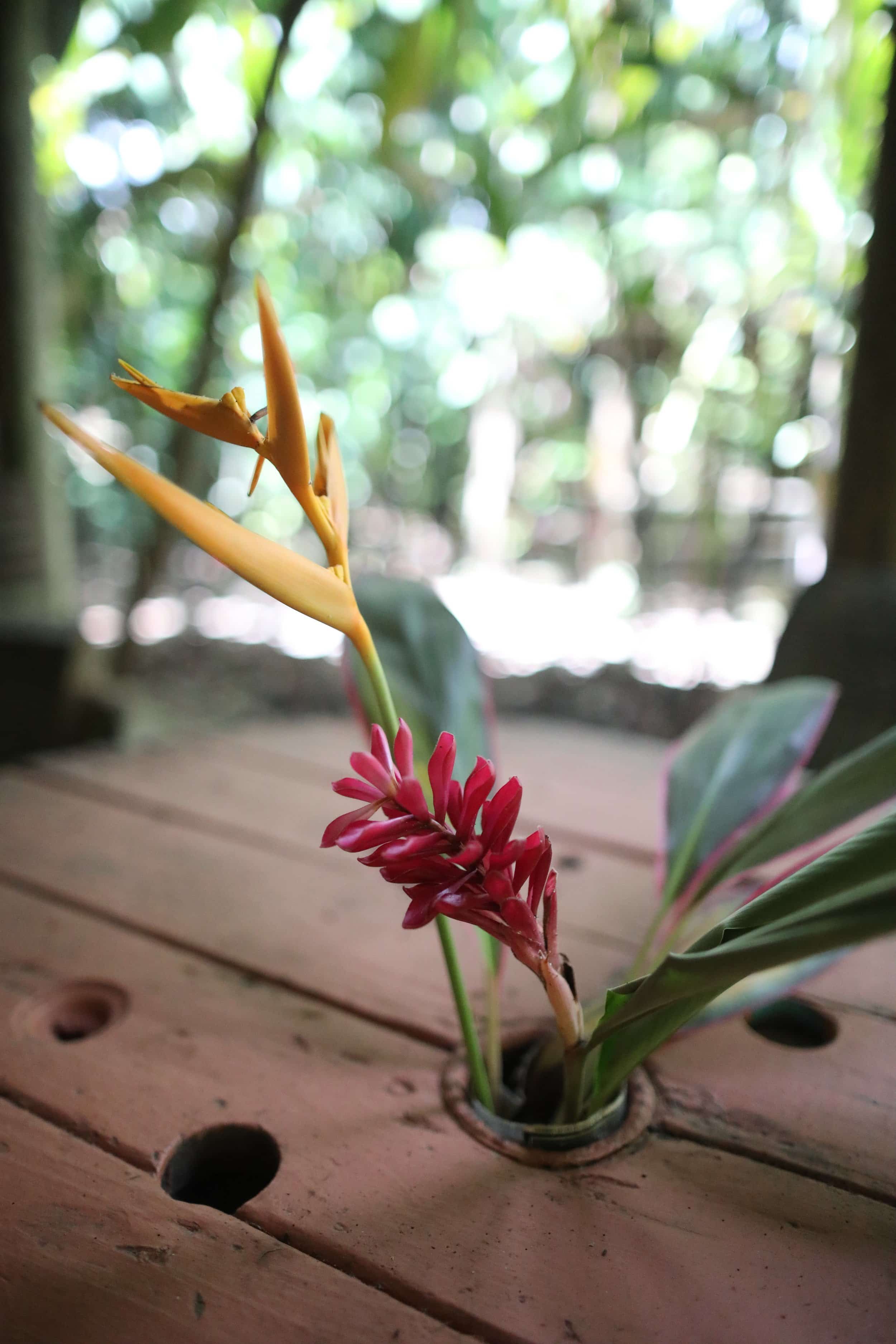
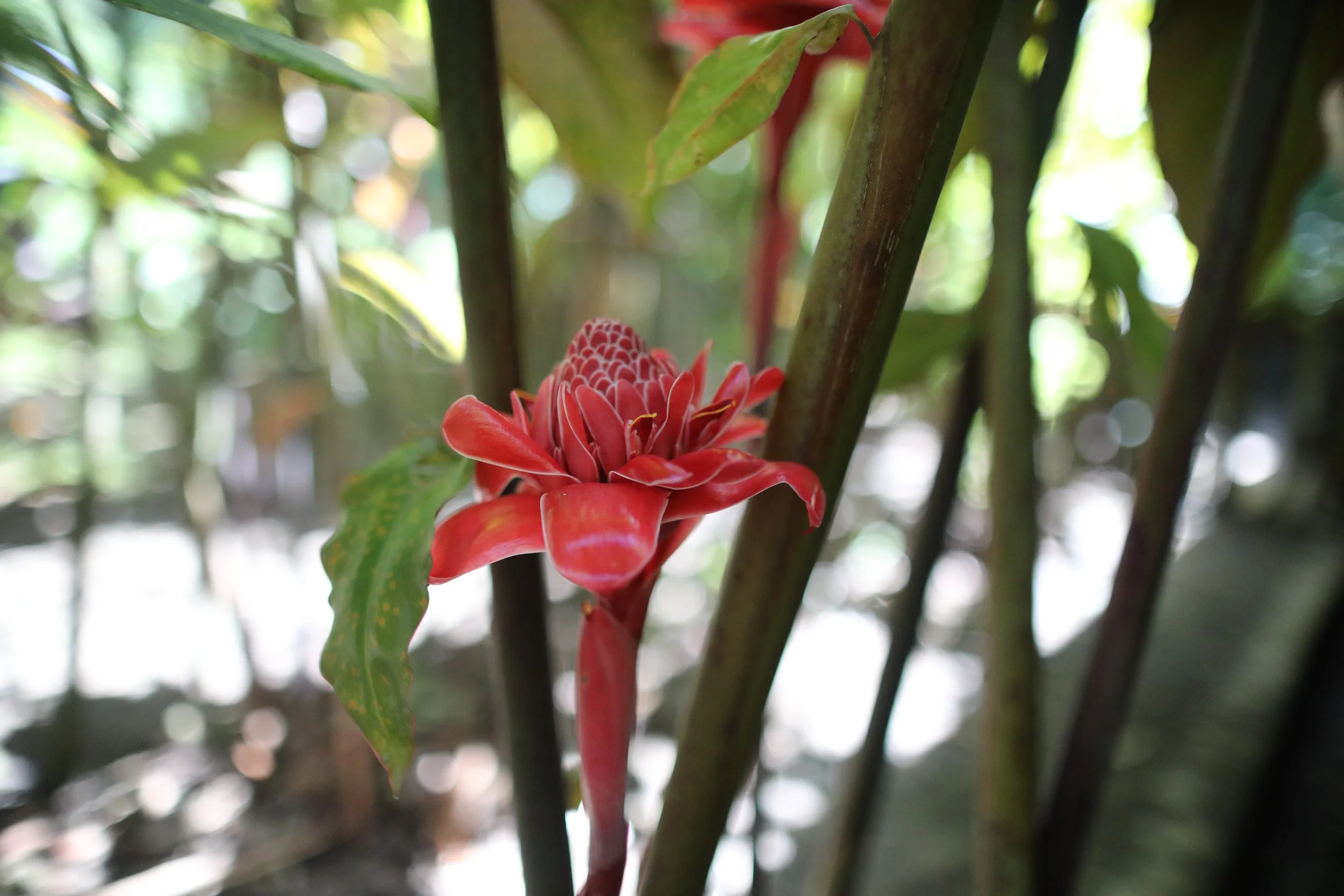
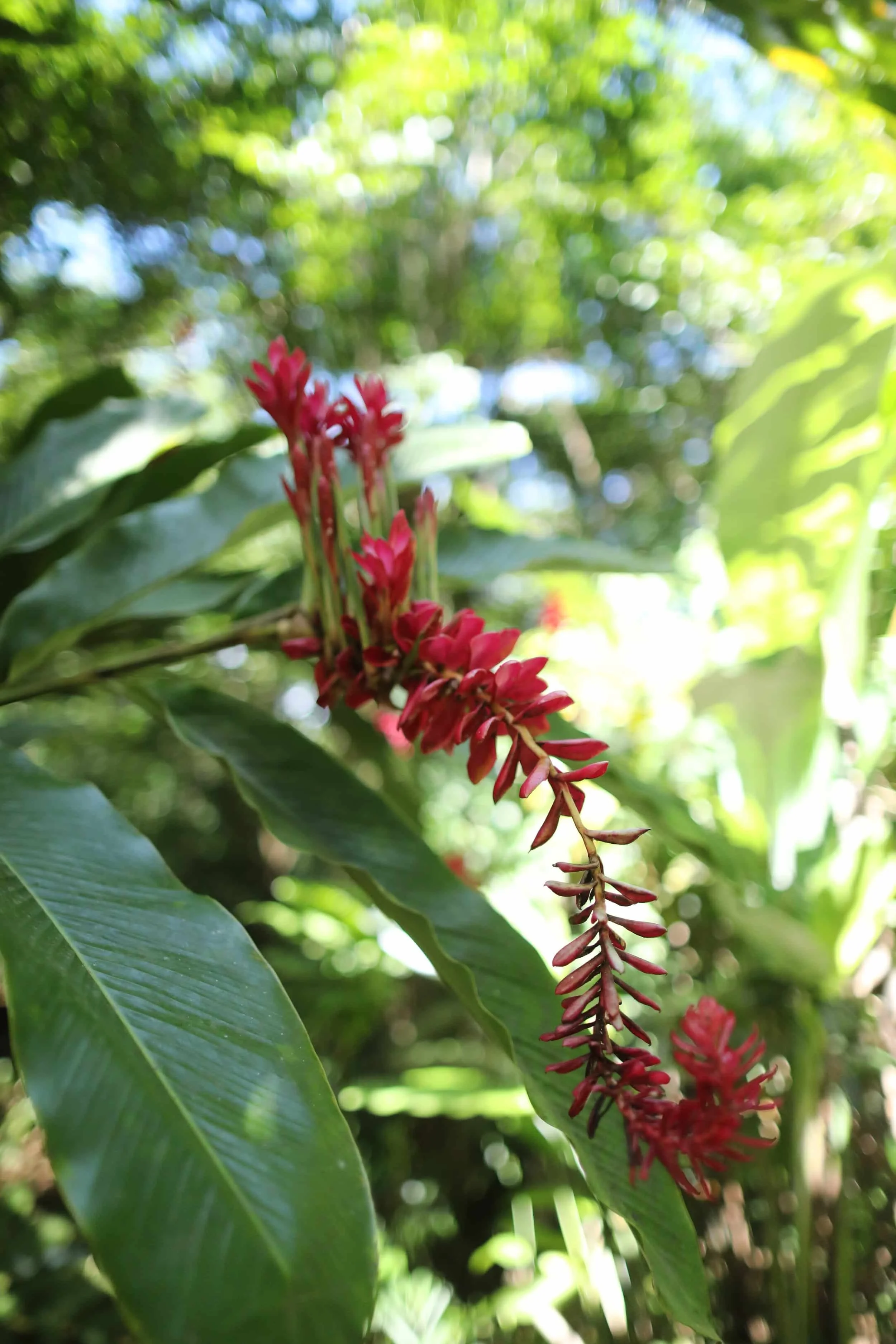
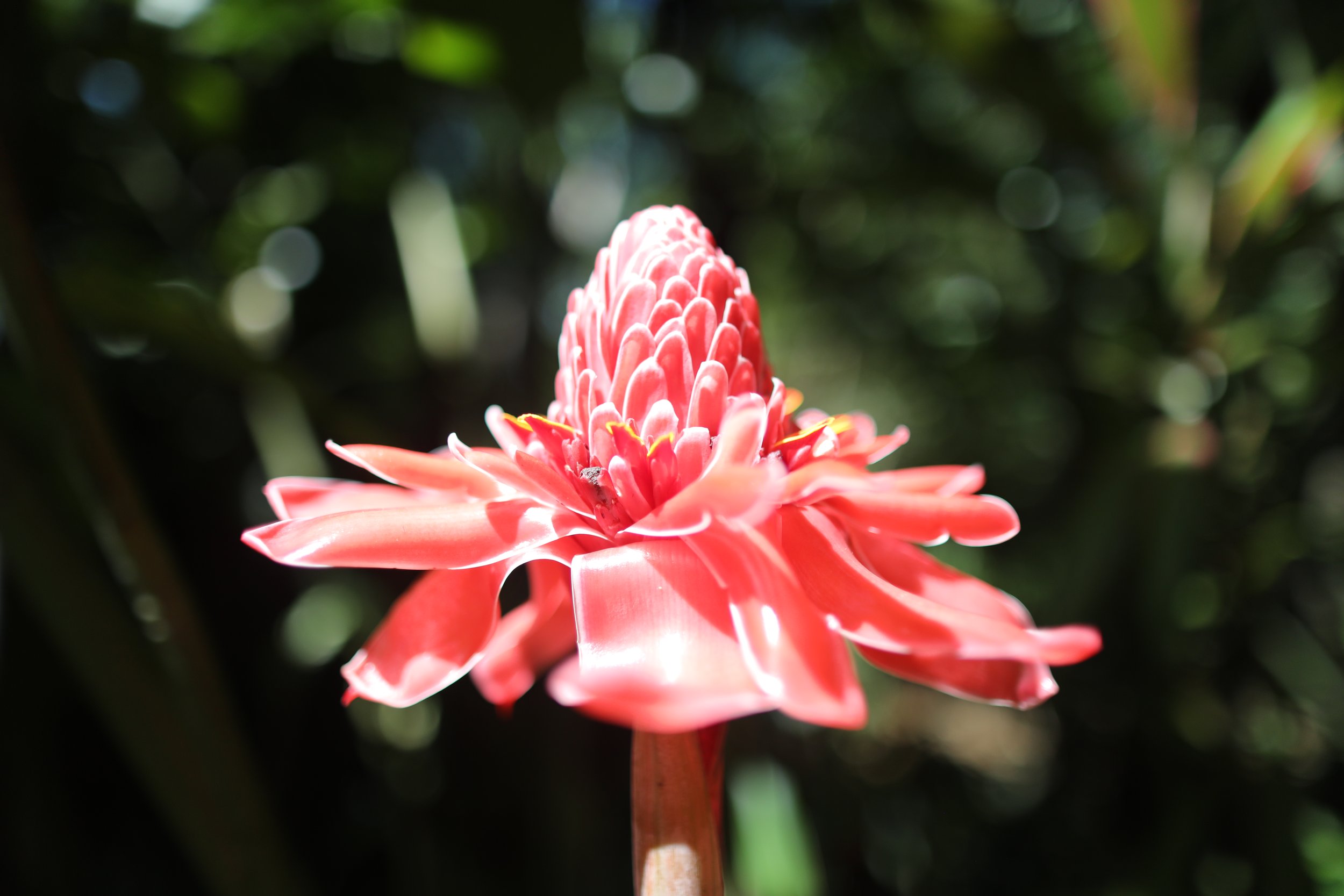
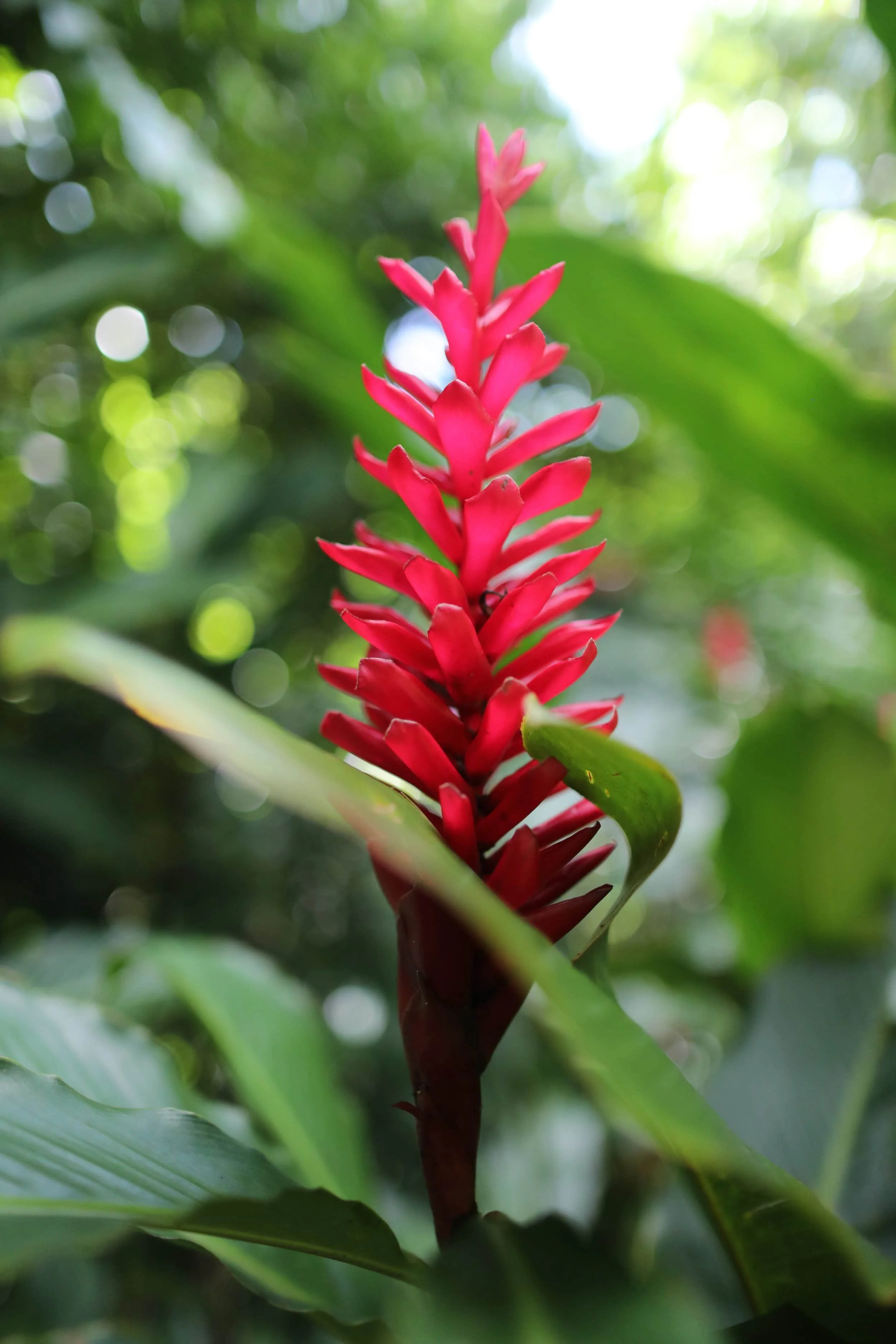
Lush tropical vegetation surrounds the bar, with mangroves dominating the riverbanks — red, black and white mangrove species forming dense thickets. Interspersed among the mangroves are towering Caribbean coconut palms, heliconias (better known as lobster-claws) with their brightly colored leaves and Hibiscus shrubs with seasonal blooms.
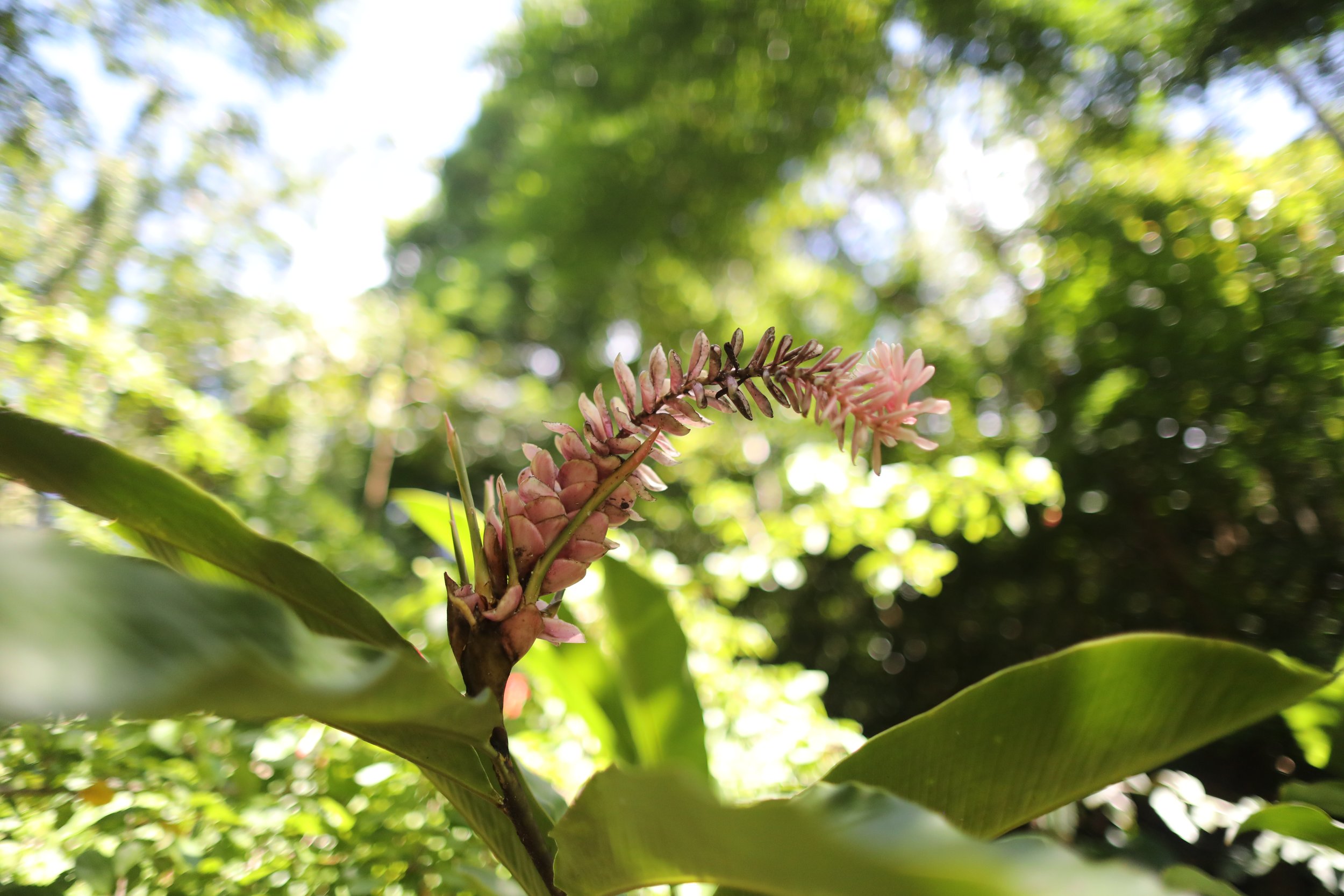
Ferns, orchids, and bromeliads cling to tree trunks in the shadier, humid areas, while native hardwoods like gommier and mahogany rise above the canopy, giving the area a layered, biodiverse coastal rainforest feel.
In Dominica, small bars and lodges along the river like Indian River Bush Bar, are excellent places to spot hummingbirds. You’re most likely to see the Purple-throated Carib, Green-throated Carib or Antillean Crested Hummingbird. They’re best spotted in the early morning or late afternoon and are often territorial, chasing away competition to favored blooms.
⚠️ Good to Know | Bring insect repellent, cash (small bills) for purchases and a lightweight cover-up for late afternoon breezes. Bar hours can vary by season and weather, so check locally or ask your boat driver for the best times to visit.
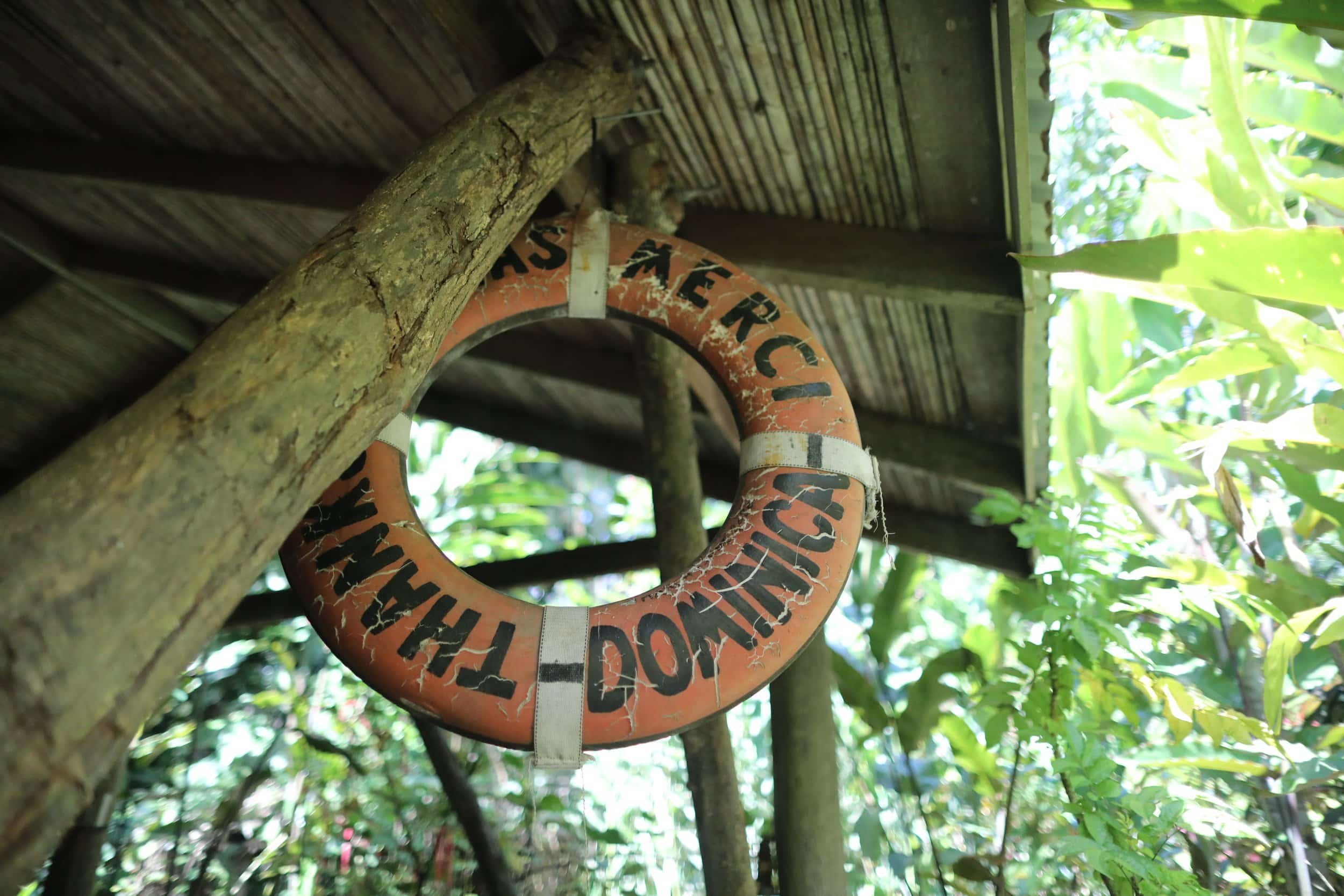
⚠️ Good to Know | When visiting the Indian River area or looking for a serene boat tour, keep a few details in mind:
Local guides are very familiar with the channels, wildlife behavior and history. Tours use wooden boats and oars to minimize impact; motorized craft are restricted in parts of the river to protect sensitive areas.
Respecting the environment is a must. Keep noise and movement low, avoid touching roots or wildlife and never feed animals. If photography is your jam, slow, quiet approaches yield the best wildlife sightings.
Early mornings or late afternoons tend to be cooler and offer better wildlife activity; mid-day is hot but still pleasant with passing breezes.
Dominica is hurricane-prone; some structures along the river show storm damage. Follow guides’ safety instructions and be aware that access can change after storms.
Combining a trip to Indian River with nearby attractions might be worthwhile. The Indian River is close to the town of Portsmouth and makes a great addition to a day that includes botanical gardens, beach hops or hikes in the region.
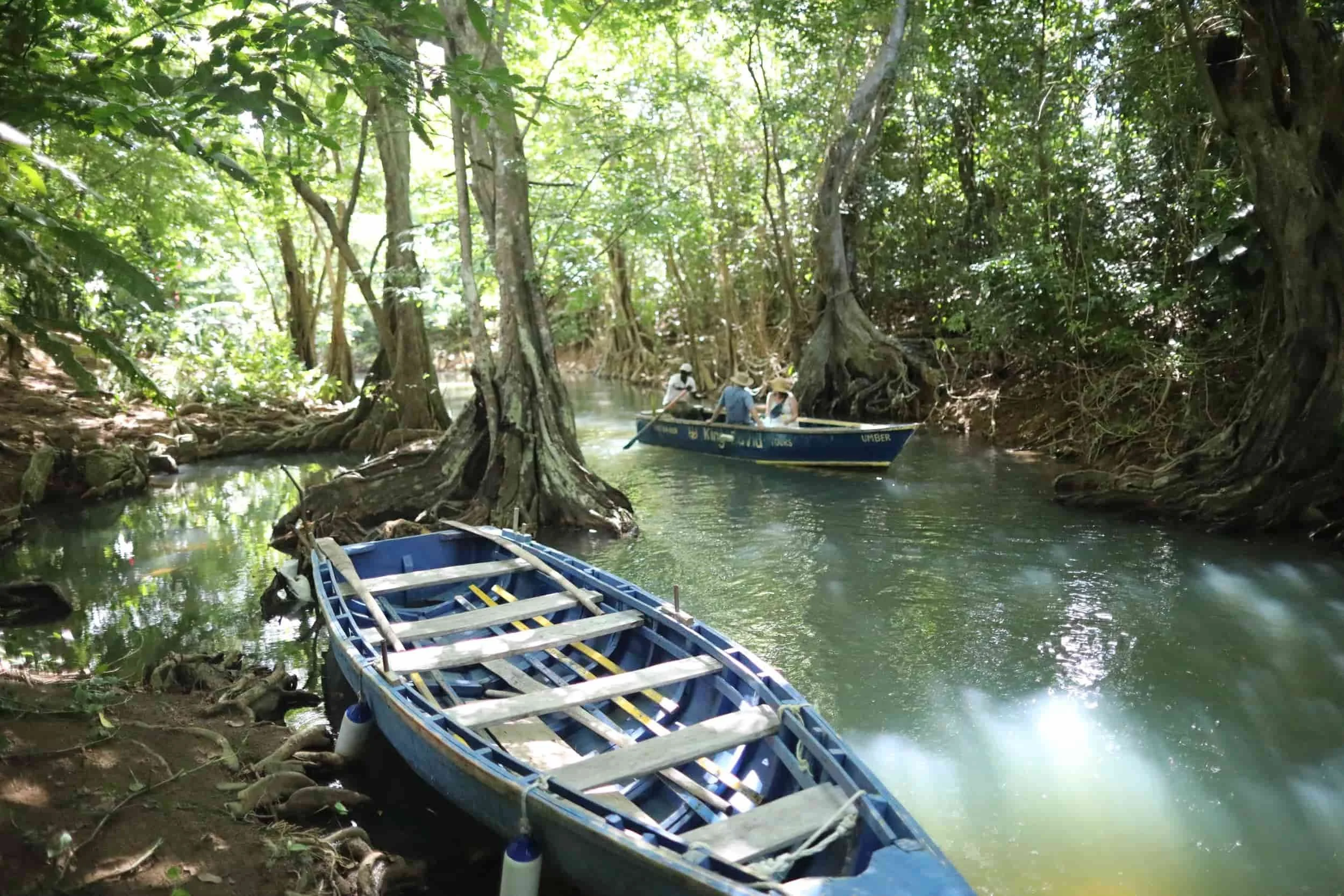
Floating along Dominica’s Indian River, the world softens — oars whisper, mangroves breathe and time loosens its grip. Slow your pace and let your senses map the small wonders: the ripple of water, a bird’s call, the scent of wet earth — a quiet conversation between you and the island.
On my way back to Roseau, I tried my luck at Syndicate Nature Trail but after driving endlessly down a narrow, uneven one-way road, I found the tour area completely deserted. Worried I’d get lost or be without light after some time, I didn’t want to risk hiking by myself, especially without service. The signs also marked a hike that was longer than what I’d expected, so I didn’t feel confident enough. Disappointed, I headed back to the capital city.
Still to this day, research suggests Syndicate Nature Trail begins in the town of Laudat, closer to Roseau. Perhaps, there are two locations worth exploring but beware, as I learned, many hikes in Dominica are extremely remote and not for the faint of heart.
My Bibimbap Moment
Every destination adds another ingredient to our life's recipe, sometimes in the quietest of ways. Drifting through Dominica's Indian River, surrounded by dense greenery, warm air and the gentle movement of the water, I found a rare kind of stillness. Here's the ingredient this peaceful corner of Dominica added to my Bibimbap Life.
Today’s Bibimbap Recipe
🥢 Flavor: Earthy
🌿 Ingredient: Stillness
❤️ Best Memory: Gliding through the mangroves
🎒 Take With You: In a world that constantly encourages us to move faster, don’t forget to make time for stillness. Sometimes the most meaningful moments are found when we slow down enough to truly notice what’s around us.
When I think back on the Indian River, I remember the heat, the deep greens of the rainforest and the slow rhythm of the boat moving through the water. There was something wonderfully untouched about the experience — the tangled roots along the riverbanks, the sounds of nature and the stories woven into the landscape. Nothing about the day felt hurried. It was simply a quiet few hours immersed in Dominica's wild, earthy beauty and somehow that was enough.
Indian River Travel Essentials
Exploring the Indian River is one of Dominica’s quieter experiences — a slow journey beneath tangled mangroves and towering swamp bloodwood trees where the still, dark water reflects the forest around you. The river is protected, so motorized boats aren’t allowed beyond the entrance; local guides row you inland instead, which makes the experience feel wonderfully removed from everything else. Tours are easy to arrange from nearby Portsmouth and don’t require much preparation but a little planning around timing, weather and what to bring will make the trip even better.
When to Go
For the most magical Indian River boat ride, go at sunset during the calm dry months of December to April when the golden light turns the mangroves into a shimmering, magical world. Early mornings are also perfect.
Dry Season (December-May): Weather is drier and sunnier, making it ideal for outdoor exploration.
Time of Day: Go in the early morning or late afternoon for cooler air and active wildlife.
What to Bring
You don’t need much for an Indian River boat tour but Dominica’s tropical weather is worth preparing for. Wear lightweight, comfortable clothing and bring insect repellent, reef-safe sunscreen, a reusable water bottle and a light rain jacket for the inevitable passing shower. A hat and sunglasses are useful for the more exposed stretches of the river and I’d keep your phone or camera in a small waterproof bag just in case. Comfortable sandals or walking shoes are perfectly fine — you’ll spend most of the experience sitting in the boat, so there’s no need for serious hiking gear.
How to Get There
The Indian River is located just outside Portsmouth on Dominica’s northwest coast. I’d recommend renting a car if you’re exploring the island independently — it gives you much more freedom to combine the river with beaches, viewpoints and other stops around northern Dominica.
By Car: From Roseau, follow the main coastal road north toward Portsmouth. Allow roughly 1–1½ hours depending on traffic, road conditions and how often you inevitably stop for the views. The Indian River boat landing is located near the southern edge of Portsmouth.
Taxi or Local Bus: Taxis are the easiest option if you don’t want to drive. Local minibuses also travel between Roseau and Portsmouth and are inexpensive, although schedules are informal and journey times can vary.
Guided Tour: If you’d rather not worry about transportation, several Dominica tours include Indian River along with other sights in the north. This can be an especially easy option if you’re staying farther south or visiting the island by cruise ship.
Once you arrive, head to the Indian River boat landing, where the guided rowboat trips begin.
Where to Stay
For an Indian River boat tour, I’d look toward Portsmouth and northern Dominica. Portsmouth puts you just minutes from the river while also making a convenient base for exploring Cabrits National Park, Prince Rupert Bay, nearby beaches and some of the island’s northern coast.
If you prefer something quieter, look around Picard, Toucari or the surrounding hills, where small guesthouses and nature-focused stays give you more of the lush, tucked-away feeling that makes Dominica so special. You’ll still be within easy reach of Portsmouth but can trade the town for rainforest, gardens or Caribbean views.
For this part of the island, I’d choose somewhere that lets you settle into the landscape rather than simply using it as a place to sleep.
Where I Stayed
For a budget-friendly nature escape — Papaya Creek (Coconut Garden)
This is where I stayed in Dominica and one of those places that felt like part of the trip itself — a quiet, tucked-away escape surrounded by lush greenery, with a stream running through the property and an easygoing, intimate feel that suited the island perfectly.
Where I’d Stay
For an Indian River trip, I’d stay somewhere around Portsmouth or the northwestern coast, keeping the river close while giving myself easy access to more of northern Dominica.
For rainforest views & a slower pace — Manicou River Resort
Set in the hills above Prince Rupert Bay near Portsmouth, Manicou River Resort feels like a particularly good fit for an Indian River trip. The small, open-air cottages are surrounded by tropical forest with sweeping views toward the Caribbean, giving you the feeling of being tucked into nature while keeping Portsmouth, Indian River and Cabrits National Park within easy reach. I especially like that it feels intimate and unfussy — the kind of place where the landscape is really the point.
For secluded luxury — Secret Bay
If I were splurging in northern Dominica, Secret Bay would be high on my list. Its secluded villas are tucked into the rainforest above the Caribbean, pairing beautiful contemporary design with private outdoor spaces and a setting that feels completely immersed in the landscape. It’s considerably more polished than where I stayed but still feels distinctly connected to the wild, lush character that makes Dominica so special.
Additional Options
Want more options?
Look around Portsmouth and northern Dominica if Indian River, Cabrits National Park and the island’s northwest coast are high on your list. Staying in this part of the island also gives you a quieter alternative to basing yourself around Roseau.
How to Get Around
Once you’re in Portsmouth, getting to the Indian River is easy but having your own transportation makes exploring northern Dominica much more flexible.
Rental Car: This would be my choice. Dominica’s sights are spread out and having a car makes it much easier to combine Indian River with Cabrits National Park, beaches, viewpoints and other stops around the north. Just be prepared for narrow, winding roads and take your time.
Taxi: Taxis are readily available for shorter trips around Portsmouth and can also be arranged for longer excursions if you’d rather leave the driving to someone else.
Local Bus: Minibuses connect Portsmouth with other towns around the island and are an inexpensive option, although schedules are informal and less convenient if you’re trying to fit several stops into one day.
For the Indian River tour itself, you won’t need transportation once you arrive at the boat landing. From there, your local guide takes over and rows you into the river.
How Long to Stay
Plan on roughly 1½ to 2 hours for the Indian River experience itself, including the guided rowboat journey and time to take in the surroundings along the way. It’s easy to fit into a half day but I wouldn’t rush off afterward — pair it with Portsmouth, Cabrits National Park or another stop along Dominica’s northern coast.
For Dominica as a whole, I’d give yourself at least five to seven days. The island may look small on a map but winding roads, mountainous terrain and the sheer number of waterfalls, hikes, beaches and natural sights mean getting around takes time. A week gives you room to explore different parts of the island without turning every day into a race from one attraction to the next.
Tours & Day Trips
You don’t need an organized tour to experience the Indian River. I made my way there independently and arranged a local guide once I arrived, which worked perfectly for me during slow season. But if you’d rather have transportation handled — or want to combine the river with more of Dominica in the same day — there are a few ways to make it part of a larger experience.
Want to Book Indian River in Advance?
If Indian River is the main reason for your day, look for a tour that includes the guided rowboat experience along with transportation or other stops around northern Dominica. Options can be limited compared with some of the island’s better-known excursions, so it’s worth checking what’s available for your dates.
Make a Day of Northern Dominica
Indian River pairs naturally with Portsmouth, Cabrits National Park and the northern coast, so a full-day tour can make sense if you want to see more without coordinating the driving yourself. Depending on the itinerary, you may be able to combine the river with historic sites, beaches, viewpoints or other stops around the north.
Explore tours in Northern Dominica →
Want to See More of Dominica?
Indian River is only one small piece of an island built for exploring. Elsewhere in Dominica, tours range from waterfall and rainforest hikes to snorkeling, canyoning, hot springs and geothermal landscapes. If you’re staying for several days, I’d choose experiences in different parts of the island rather than trying to pack everything into one long day.
Good to Know
The Boats: Motorized boats aren’t used for the journey upriver. Local guides row traditional wooden boats through the protected waterway, which is a big part of what makes the experience so peaceful.
Local Guides: Indian River visits are led by local guides who know the river incredibly well, pointing out wildlife, native plants and stories connected to the area along the way. If you arrive independently, you can arrange your boat and guide at the landing.
Wildlife: Keep an eye out for herons, crabs and other wildlife tucked among the roots and vegetation. Your guide will inevitably spot things you would have floated right past on your own.
Pirates of the Caribbean: Parts of Pirates of the Caribbean: Dead Man’s Chest were filmed along the Indian River and your guide may point out locations connected to the production as you make your way upstream.
The Bush Bar: Many trips include a stop at the small riverside Bush Bar before heading back downstream. It’s a chance to get out of the boat, stretch your legs and grab a juice or rum punch surrounded by the forest.
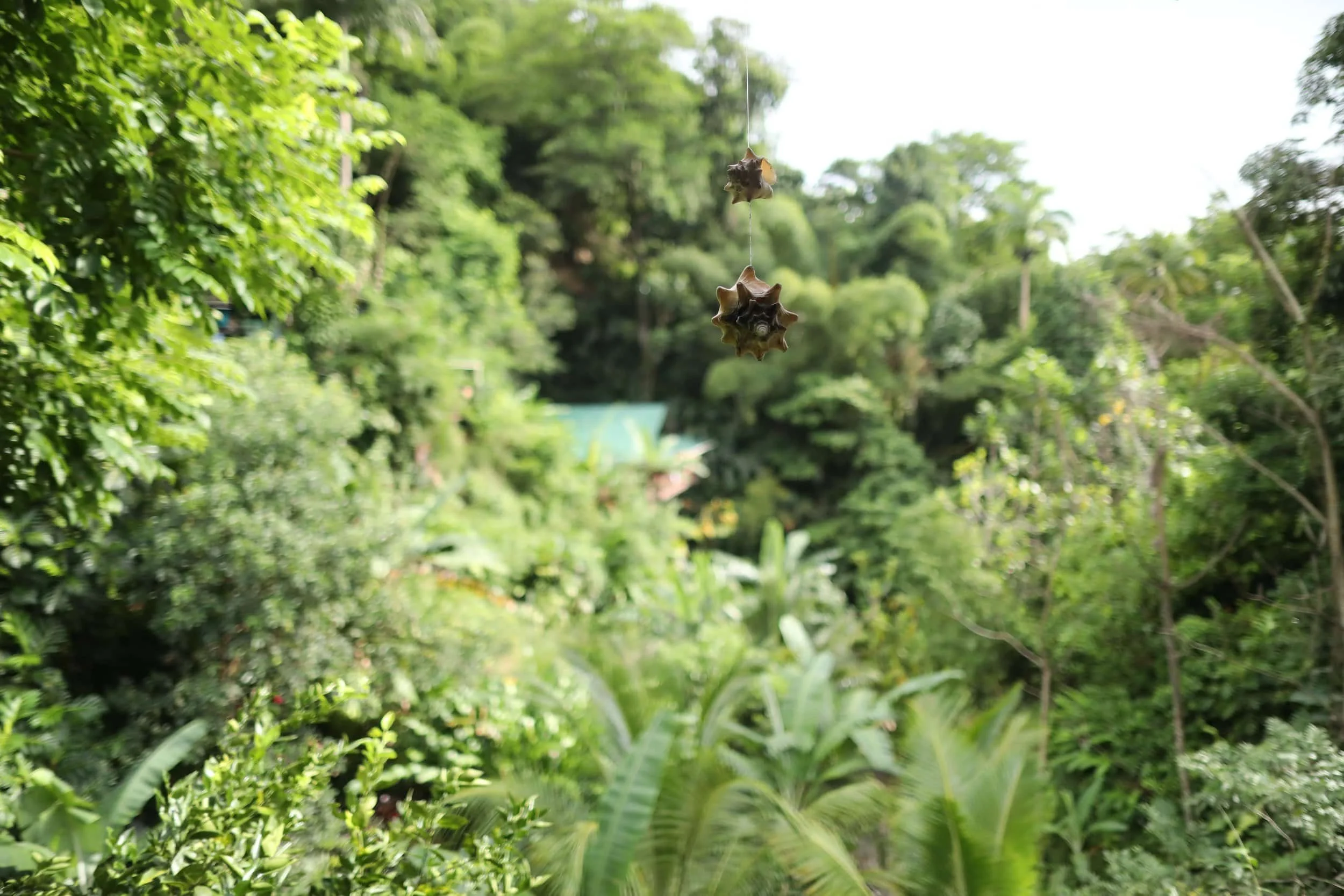
Discover Ti Kwen Glo Cho, where Dominica Island’s volcanic landscape meets lush tropical gardens, naturally heated pools and an unexpectedly memorable escape.