What to Do in Antigua: Off the Beaten Path Animal Adventures
Swap the usual sun-and-sand routine for a unique visit to Antigua’s adorable tortoise & donkey sanctuaries — roll up your sleeves & make some new friends at these charming Antigua attractions.
Updated | June 2026

Shells & Hooves: Why Visit Antigua & Its Gentle Animal Sanctuaries
Antigua — affectionately known as Waladli or Wadadli to locals — is one of the twin gems of the Caribbean nation Antigua and Barbuda. Tucked into the Lesser Antilles among the Leeward Islands, this small island spans just over 100 square miles yet brims with character: an astonishing 365 powder-fine white-sand beaches ring its coast, each bordered by vibrant coral reefs. Charming colonial towns with pastel-colored buildings, fragrant bougainvillea and friendly market stalls add to the island’s appeal, while secluded coves, gentle trade winds and panoramic hilltop views make Antigua feel both idyllic and endlessly inviting.
The island’s animal sanctuaries feel like gentle, sun-warmed stories come to life: slow-moving tortoises amble through shaded gardens, unfazed by visitors, while rescued donkeys with soft eyes and patient manners greet you like old friends, happy for a scratch and a quiet moment. If you’re an animal lover, these stops are a must — and one of the best things to do on Antigua.
Beyond these sanctuaries, the island offers more intimate animal encounters — guided boat trips to spot sea turtles gliding through clear shallows, community-led mangrove tours where birdlife and juvenile iguanas peek from the branches and small-scale farms where you can meet friendly goats and learn about local care practices. Each experience is low-key and respectful, leaving you with a sense of connection to Antigua’s natural rhythms and the calm, resilient creatures that call it home.
At a Glance
📍 Destination: Antigua’s Animal Sanctuaries
🕒 Time Needed: Half day
💰 Budget: Laviscount Island: Approximately EC$190 ($70 USD) — tour or solo; Donkey Sanctuary: free
👟 Walking Level: Mild
🌤️ Best Season: Dry season (mid-December-mid-April)
☕️ Don’t Miss: Feeding carrots to the turtles and brushing the donkeys
🖤 Perfect For: Animal lovers and ecotourists
My Bibimbap Moment
This trip added: Gentleness.
Antigua added the ingredient of gentleness to my Bibimbap Life. Hand-feeding giant tortoises carrots and brushing rescued donkeys wasn't about checking another attraction off my list — it was about slowing down enough to meet these animals where they were. There was something quietly grounding about those simple interactions. They reminded me that connection doesn't always require words or grand gestures. Sometimes it's found in patience, kindness and the willingness to be fully present with another living being.
My Two-Week Caribbean Island-Hopping Itinerary
This two-week Caribbean trip was also a birthday getaway, taking me across three very different islands: Sint Maarten/Saint Martin, Dominica and Antigua. Rather than trying to cover a huge stretch of the Caribbean, I spent several days in each place — enough time to explore while still leaving room for slow mornings, unexpected stops and days without much of a plan.
I started on Sint Maarten/Saint Martin, experiencing both the Dutch and French sides of the island before flying to Dominica, where the trip changed completely. Beaches gave way to steep mountain roads, dense rainforest, hot springs, rivers and what felt like an endless supply of waterfalls.
Dominica was the wildest part of the trip. I stayed at Papaya Creek, explored the island by car, hiked through the rainforest and spent a quiet afternoon being rowed along the Indian River. It was a completely different Caribbean experience from the island I'd just left behind.
I finished in Antigua, where the pace slowed again and wildlife became an unexpected part of the trip. I visited the Antigua Donkey Sanctuary, took the short boat ride to Laviscount Island to meet its giant tortoises and swam with stingrays before leaving plenty of time for the beach. Ending here felt like a fitting way to wrap up both the trip and my birthday.
What I loved most about this route was how little the three destinations felt alike. Sint Maarten/Saint Martin brought two cultures together, Dominica pulled me deep into the landscape and Antigua gave me somewhere to slow down at the end.
My route: Sint Maarten/Saint Martin → Dominica → Antigua
Explore
Here’s where the journey will take us.
01 | Laviscount Island Tortoise Sanctuary
02 | Antigua Donkey Sanctuary
03 | When to Go
04 | What to Bring
05 | How to Get There
06 | Where to Stay
07 | How to Get Around
08 | How Long to Stay
09 | Tours & Day Trips
10 | Good to Know
Day Trip | Antigua Island: Things to Do — Circumnavigate the Island
Travel More | Antigua Travel Guides
What to Do in Antigua: Enchanting Encounters at the Island’s Animal Sanctuaries
Looking for unique things to do in Antigua? I’ve got you covered.
Nestled between sun-drenched beaches and turquoise seas, Antigua’s animal sanctuaries offer hands-on rescue care and peaceful rehabilitation for injured and orphaned wildlife, from rescued sea turtles to tropical birds. Visit to support conservation, meet charismatic residents and learn how local stewards protect the island’s unique ecosystems.
Laviscount Island’s Tortoise Sanctuary
One of the most charming things to do in Antigua, Laviscount Island feels like a hushed secret off Antigua’s glittering coast — a private islet shaped by the vision of Andrew Moody-Stuart, the cherished Antiguan-Jamaican entrepreneur and tourism trailblazer. His influence on the island is just one part of a wider legacy that includes Stingray City, GROW Antigua (a licensed medical cannabis company) and the beloved boat tours that let visitors fall headlong for Antigua’s shoreline.
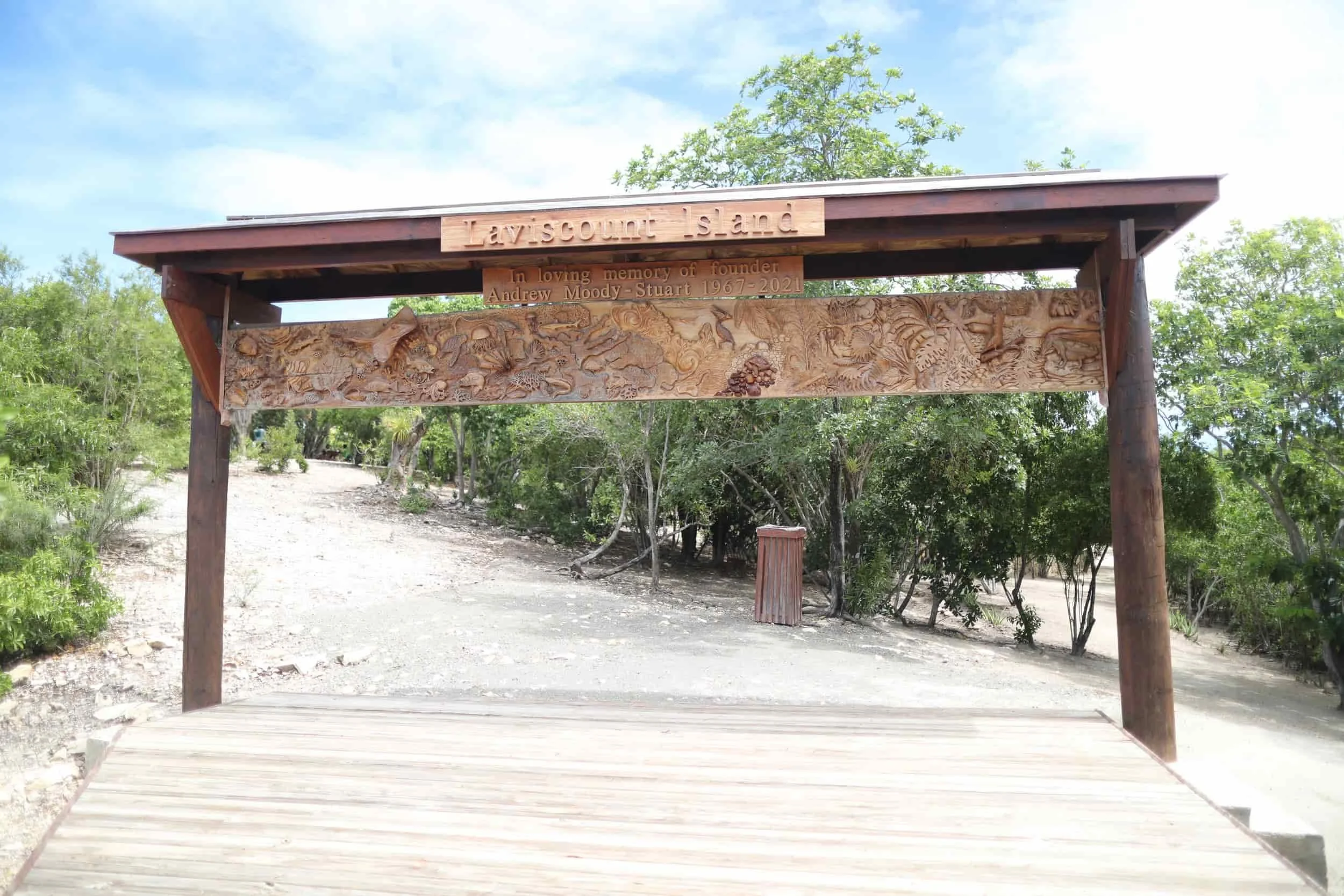
Set foot and the dry, dusty ground greets you, its edges softened by curtains of red mangrove and tough local plants like agave, Antigua’s unofficial emblem. A weathered wooden dock guides you in and beneath a carved arch — a quiet memorial to Andrew, who died in 2021 — you enter a place that feels both lived-in and lovingly maintained.
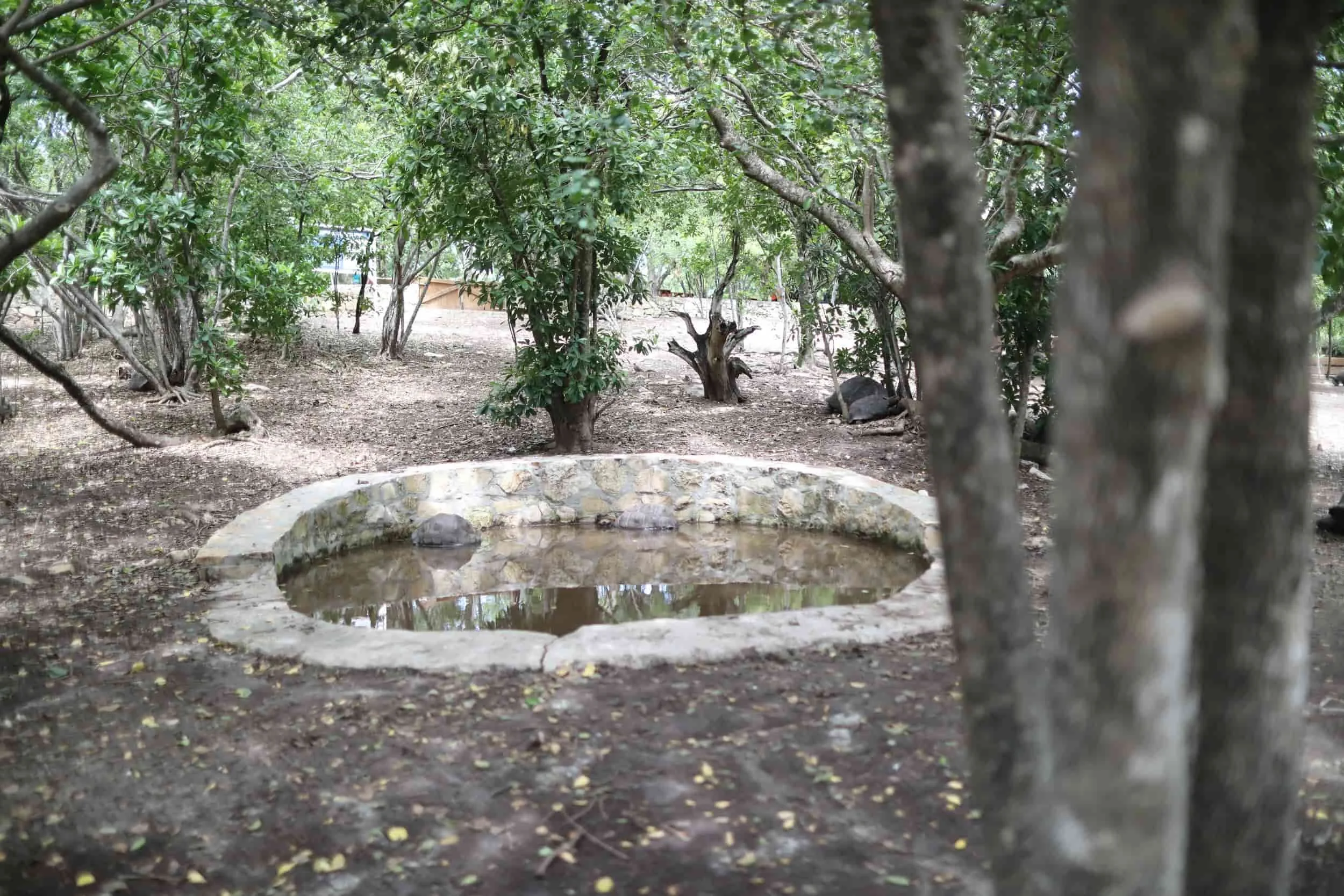
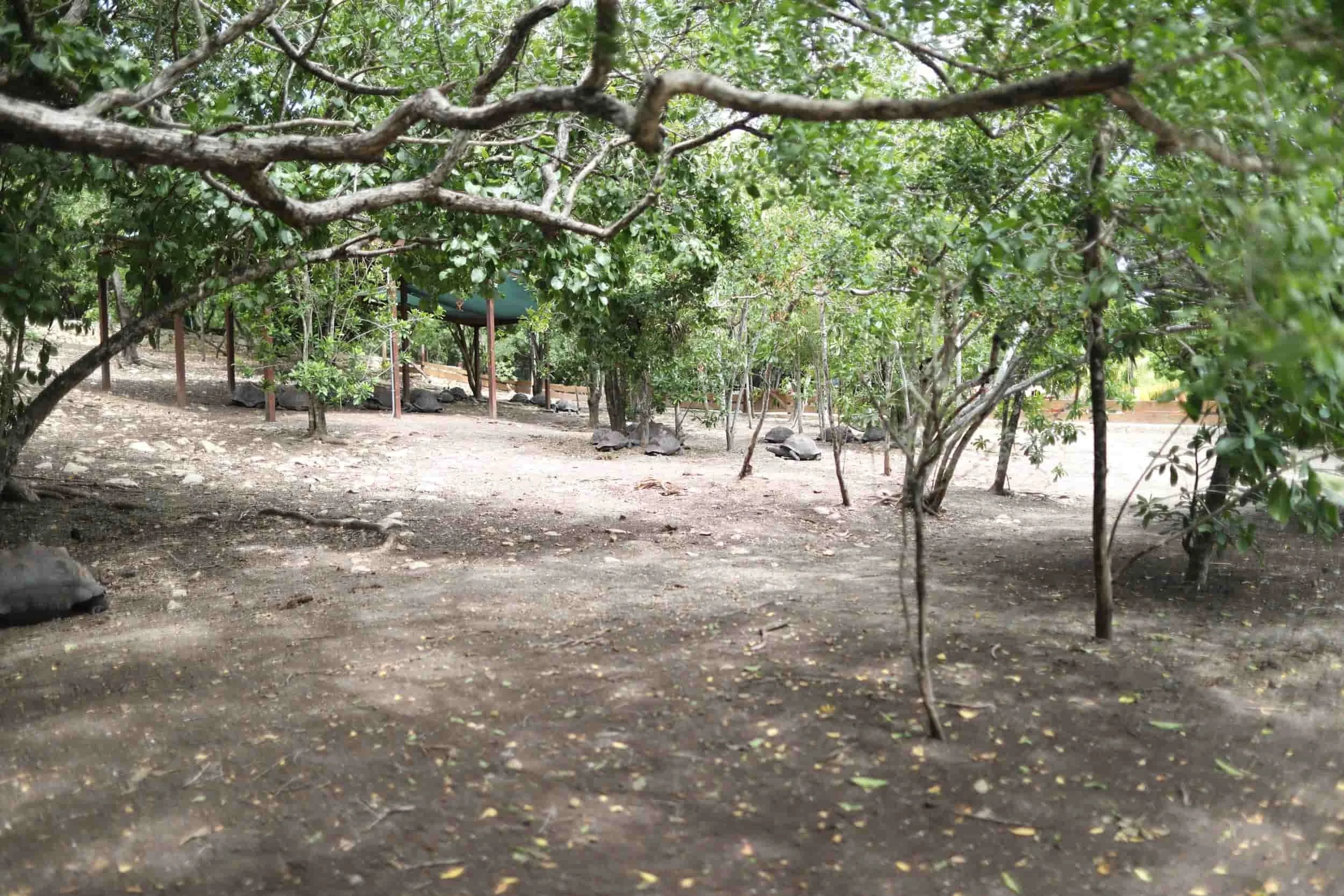
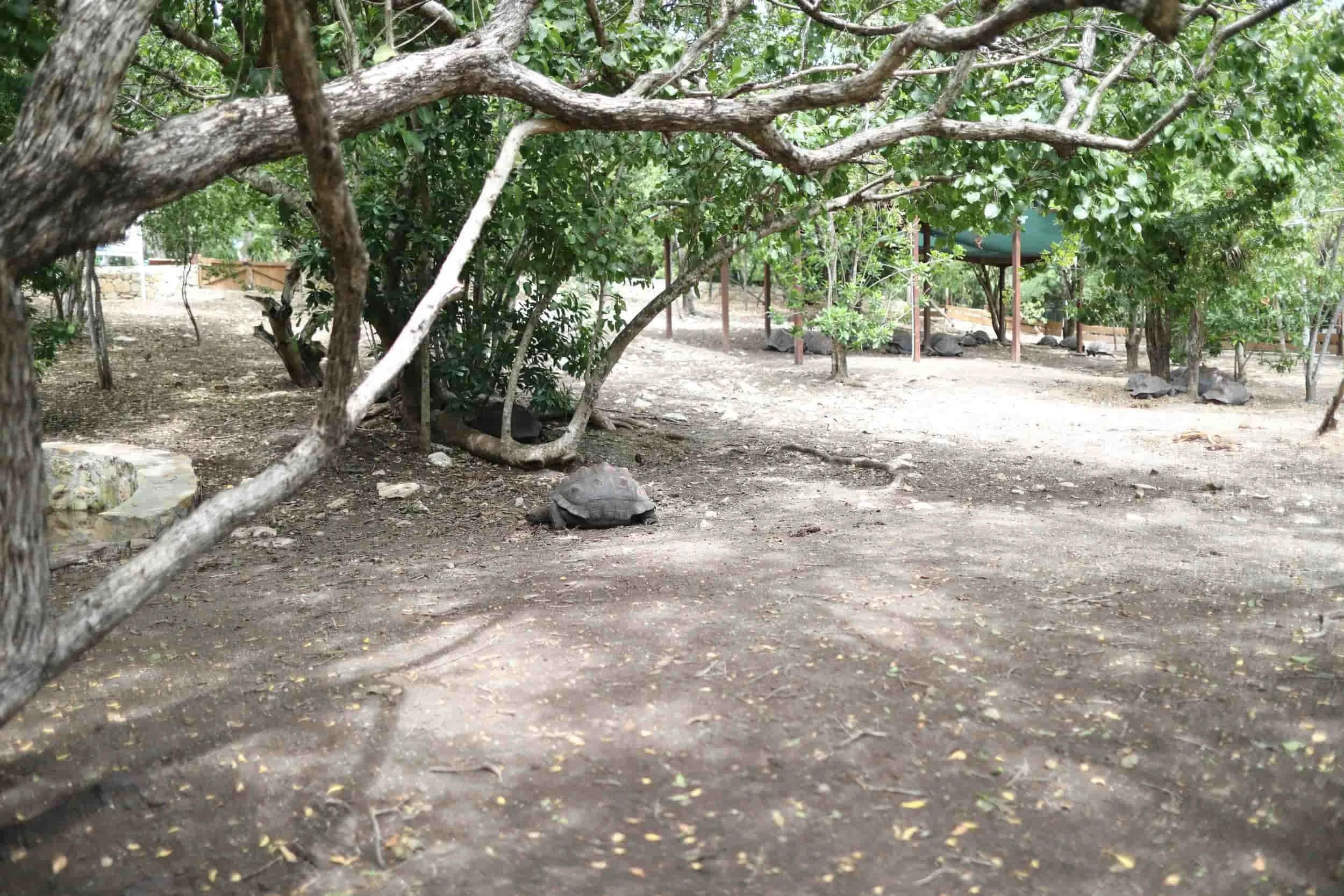
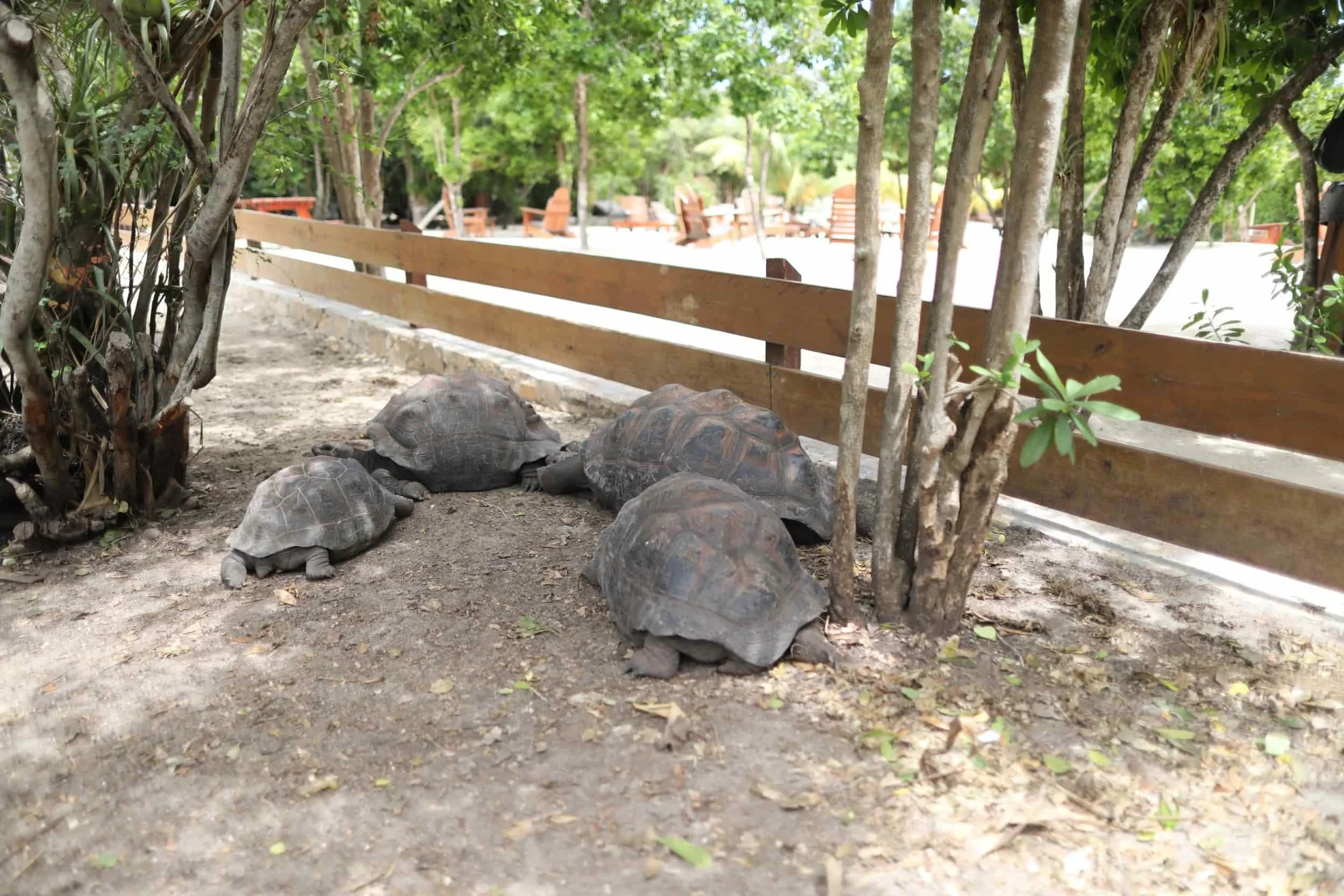
Laviscount is equal parts sanctuary and storybook. It hosts a small, devoted animal refuge where native sea turtles are gently rehabilitated and Aldabra giant tortoises meander along shaded trails. Archaeologists have uncovered traces of an ancient Amerindian settlement here too, adding another intriguing chapter to the island’s layered history.

Stepping off the boat, the sand warm beneath your feet, you’re soon swept up by a friendly guide and folded into a small, eager group. Moments later, you’re peering over the low fence of the sanctuary enclosure, necks craned for the first reveal: the slow, deliberate choreography of turtles and the stately gait of tortoises, each move measured and calm. A cool cup of fruit punch is pressed into your hand — bright citrus and island air in every sip — before the guide begins to speak.
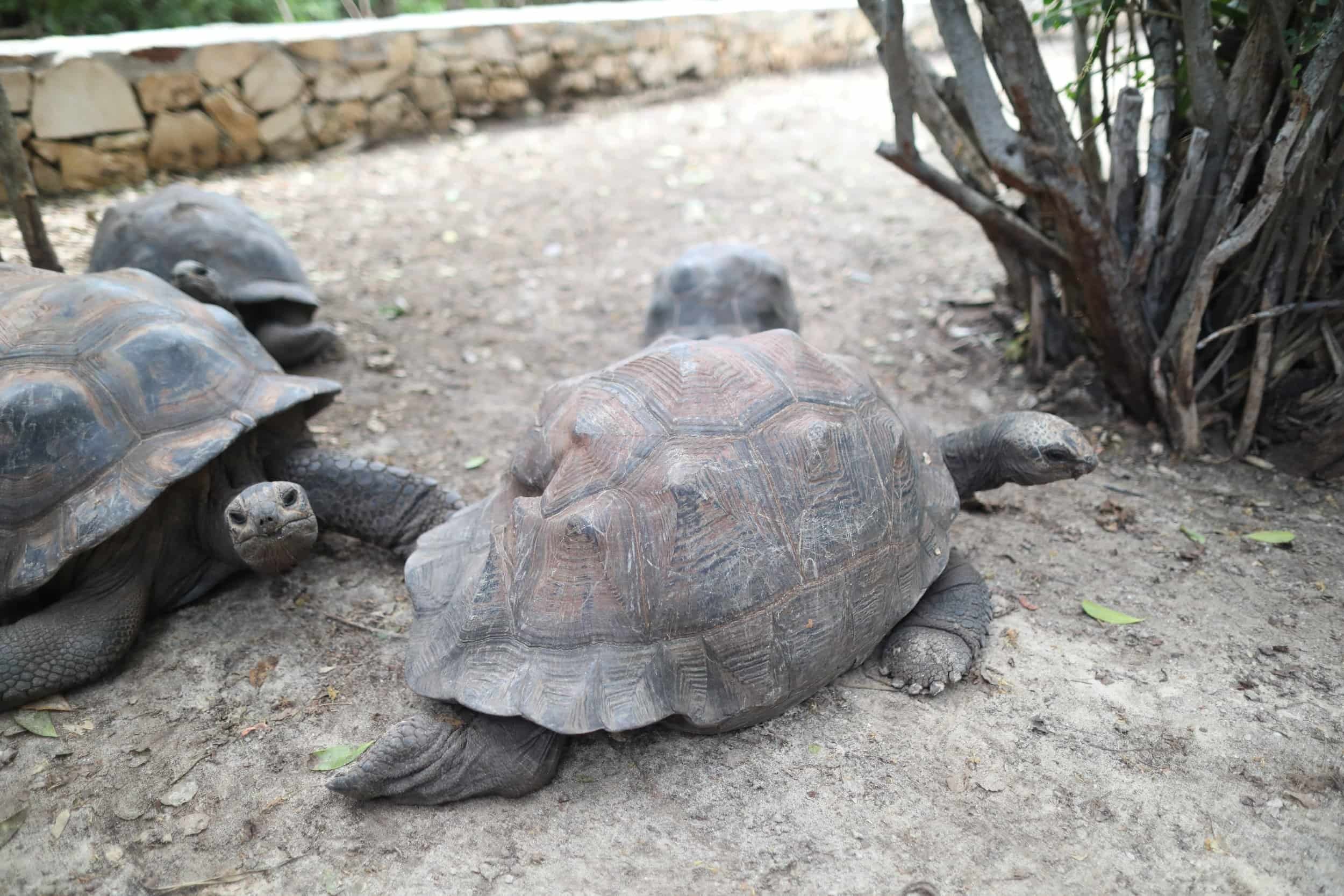
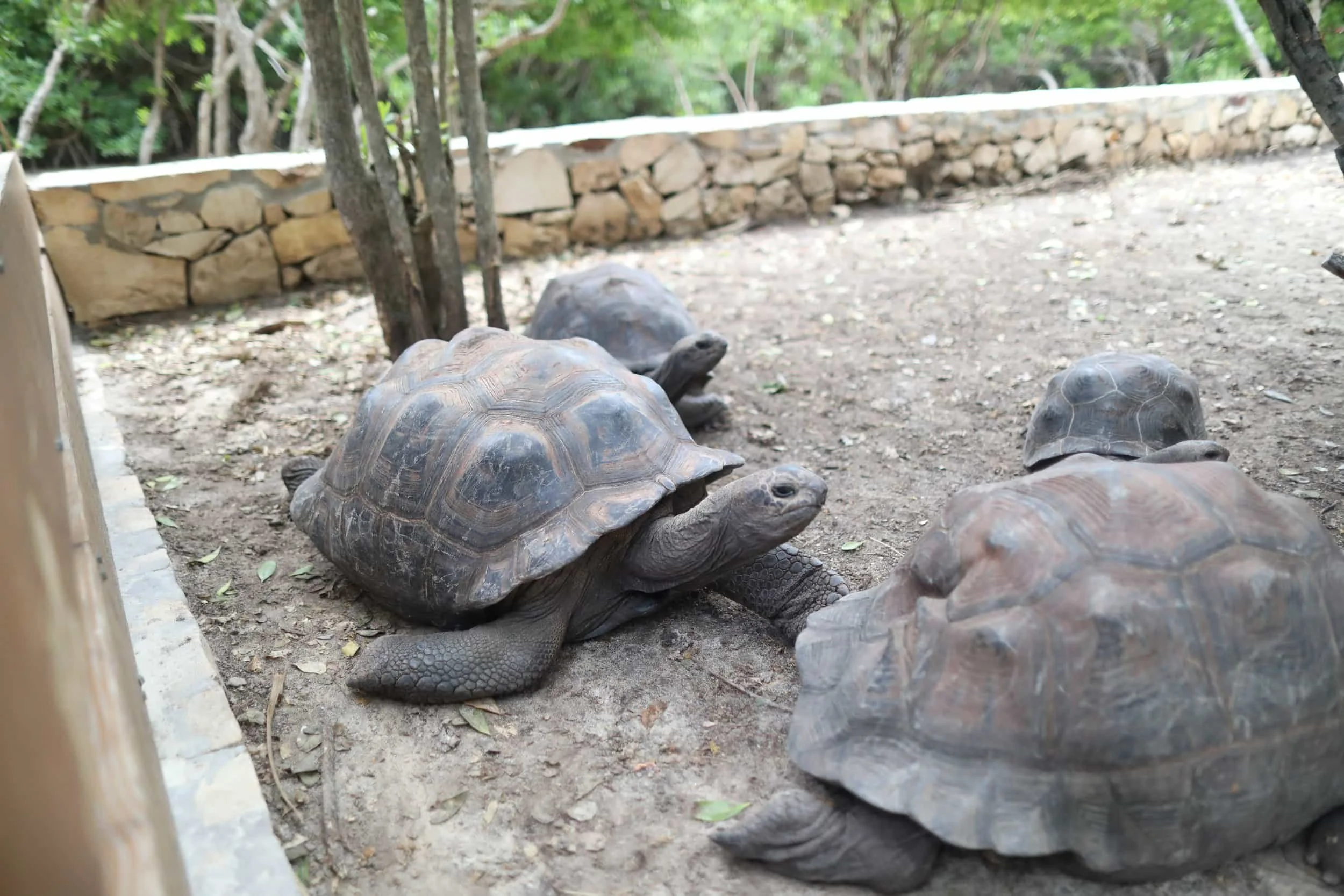
He tells their stories with a soft, humane patience. Some turtles are local, he explains; the heavier, more deliberate tortoises came from as far away as the Seychelles. Most didn’t arrive through choice: abandoned pets that outgrew their homes, fragile eggs damaged by clumsiness, animals on the mend after injuries.
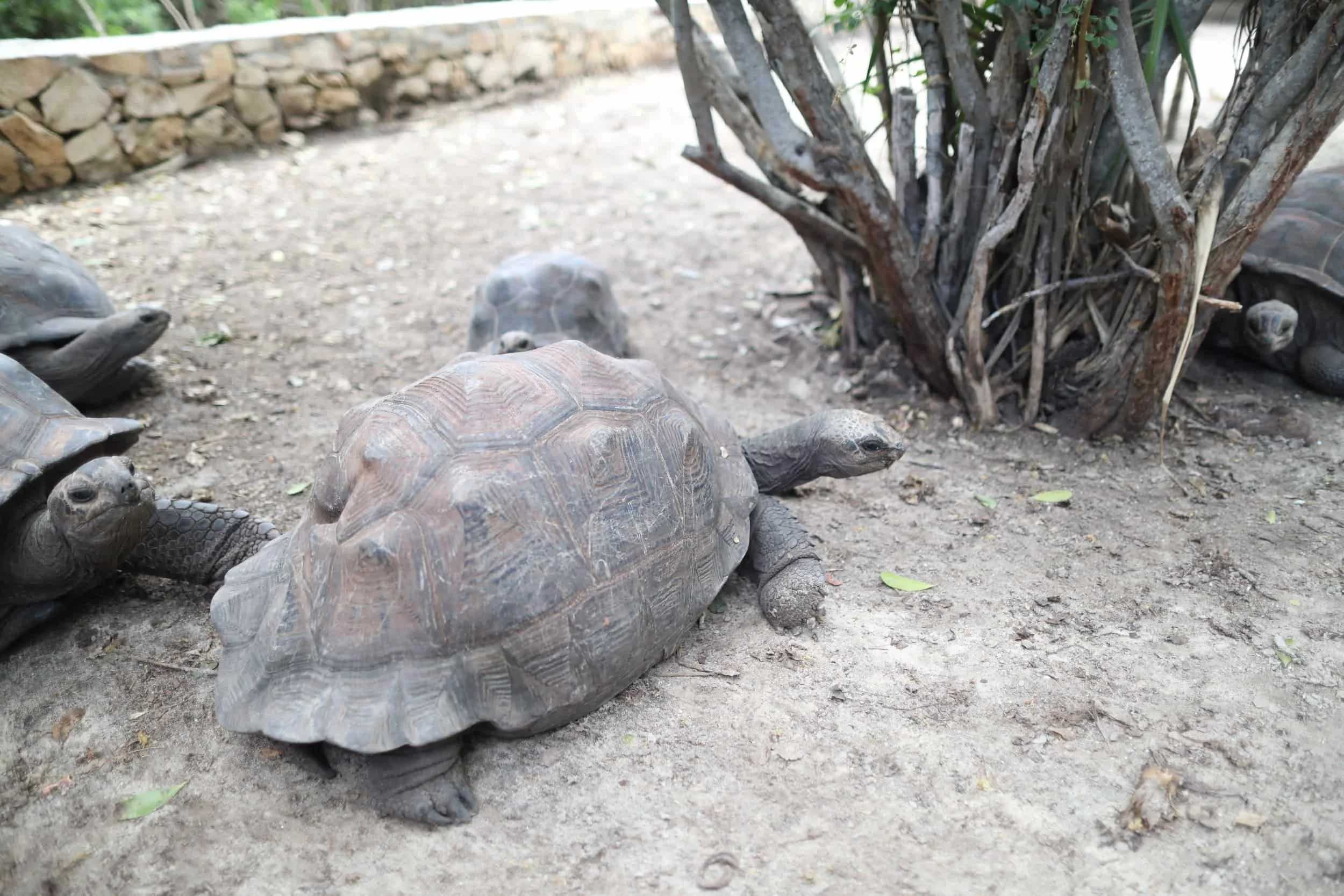
In truth, about one in five eggs in a nest don’t make it through unscathed — some hatch with misshapen shells, others with more serious challenges like missing or damaged limbs. That’s what makes this little sanctuary so heartwarming: they open their doors to these fragile, imperfect beginnings and nurse each creature with patient, tender care.
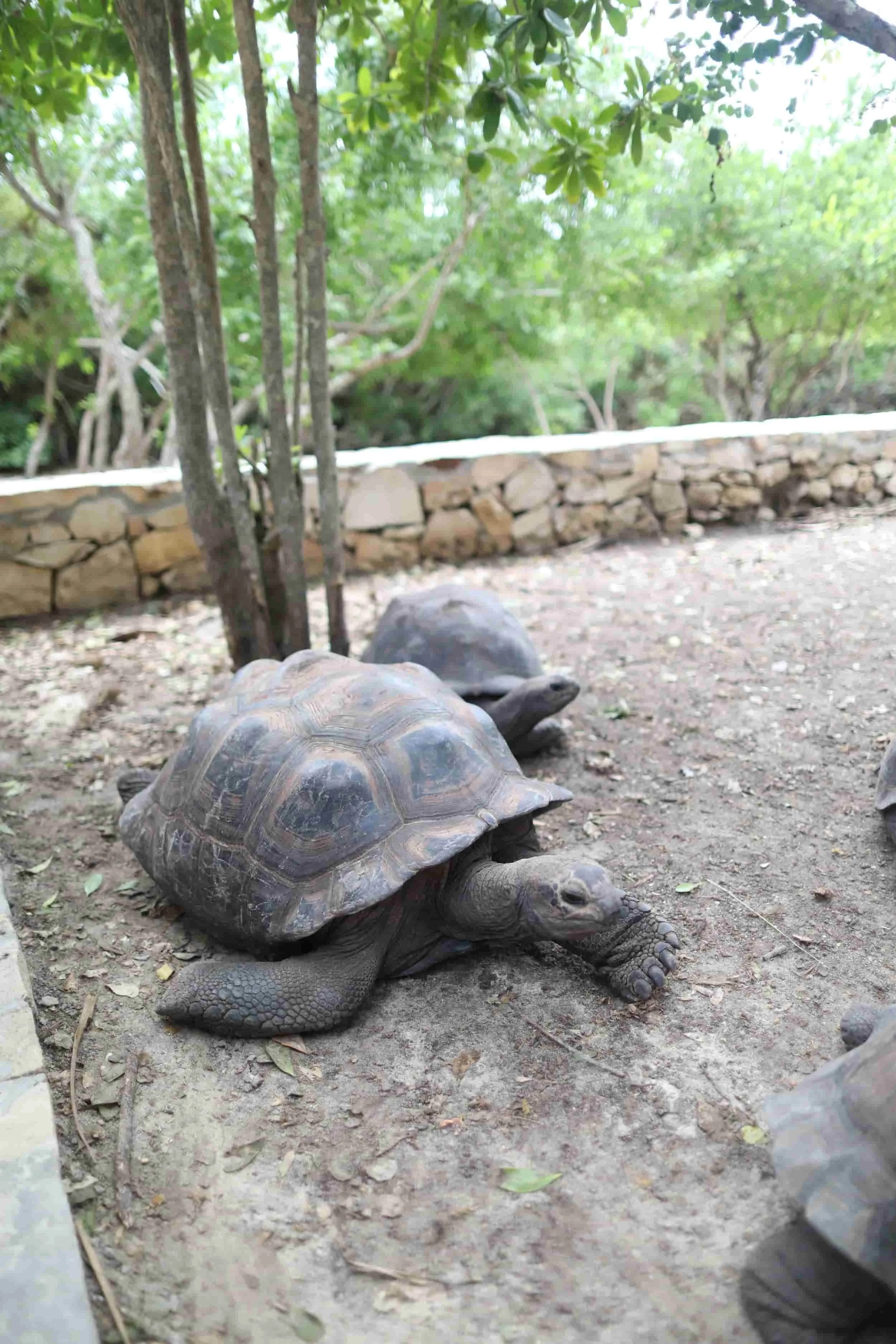
The Giant Aldabra tortoise is like a walking relic from another age. Measured and unhurried, each one moves with a patience that almost hushes the air around it. At the sanctuary, you can stroll among more than fifty of these ancient beings, their steady rhythms unfolding against a rugged scrubland scented faintly with salt.
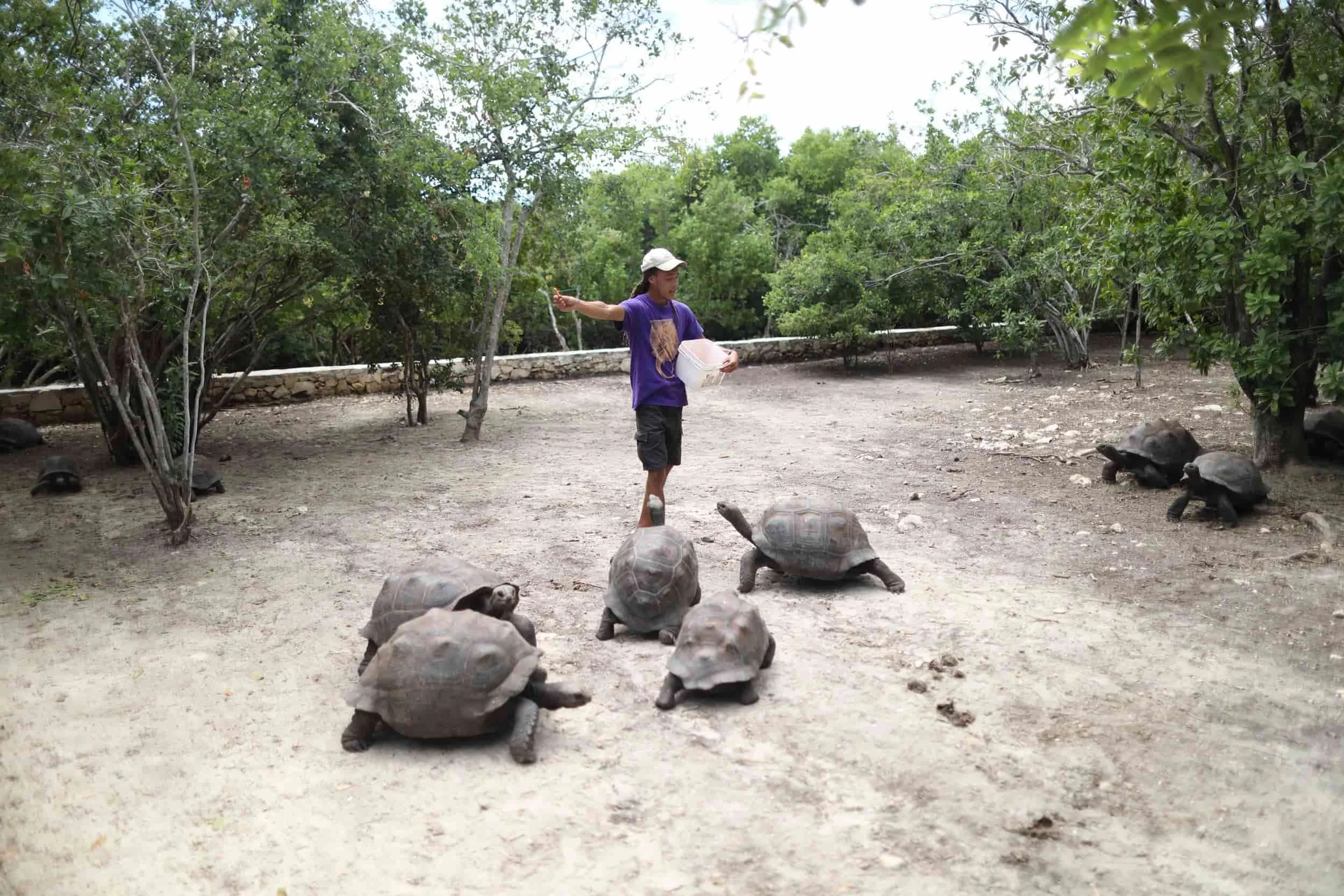
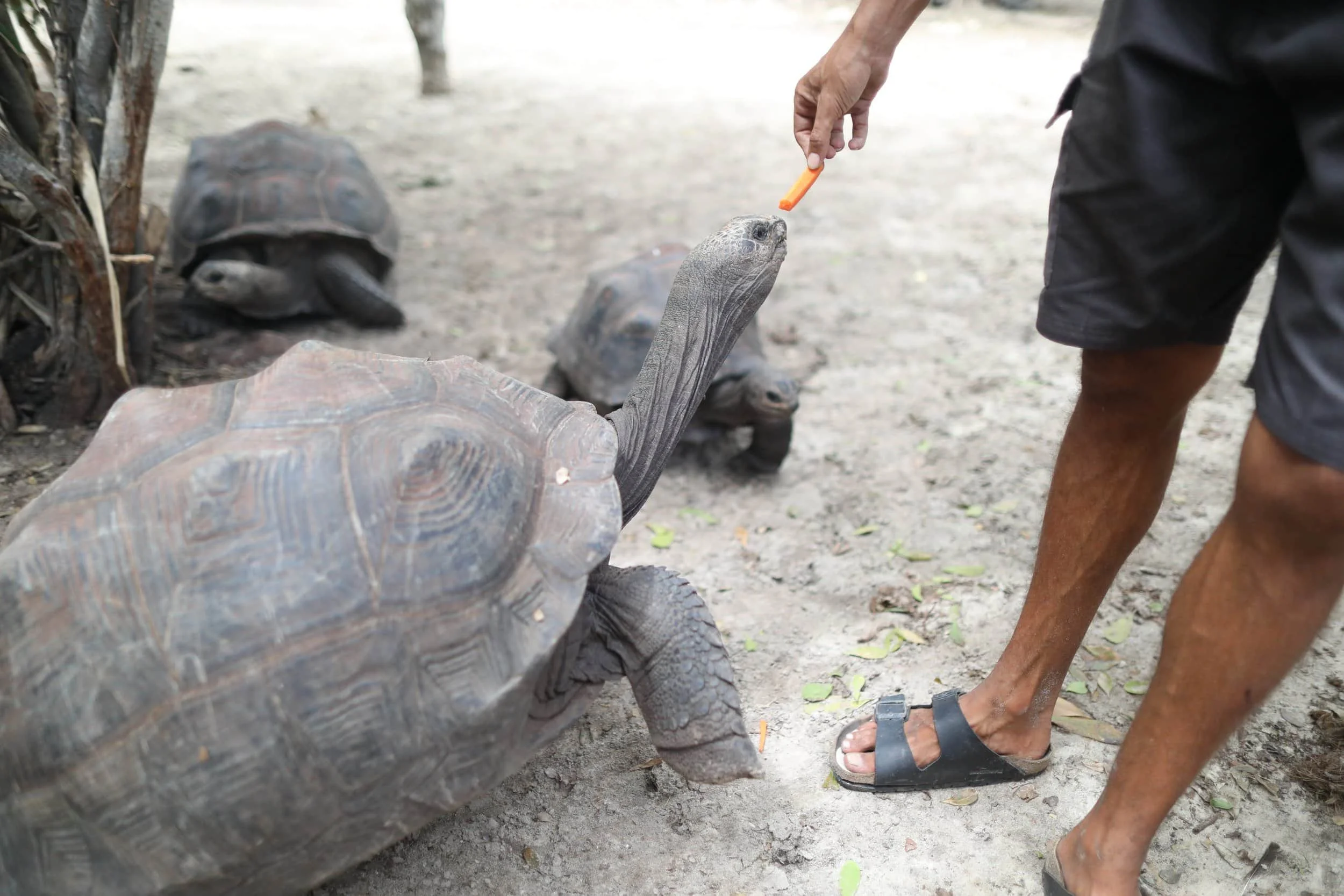
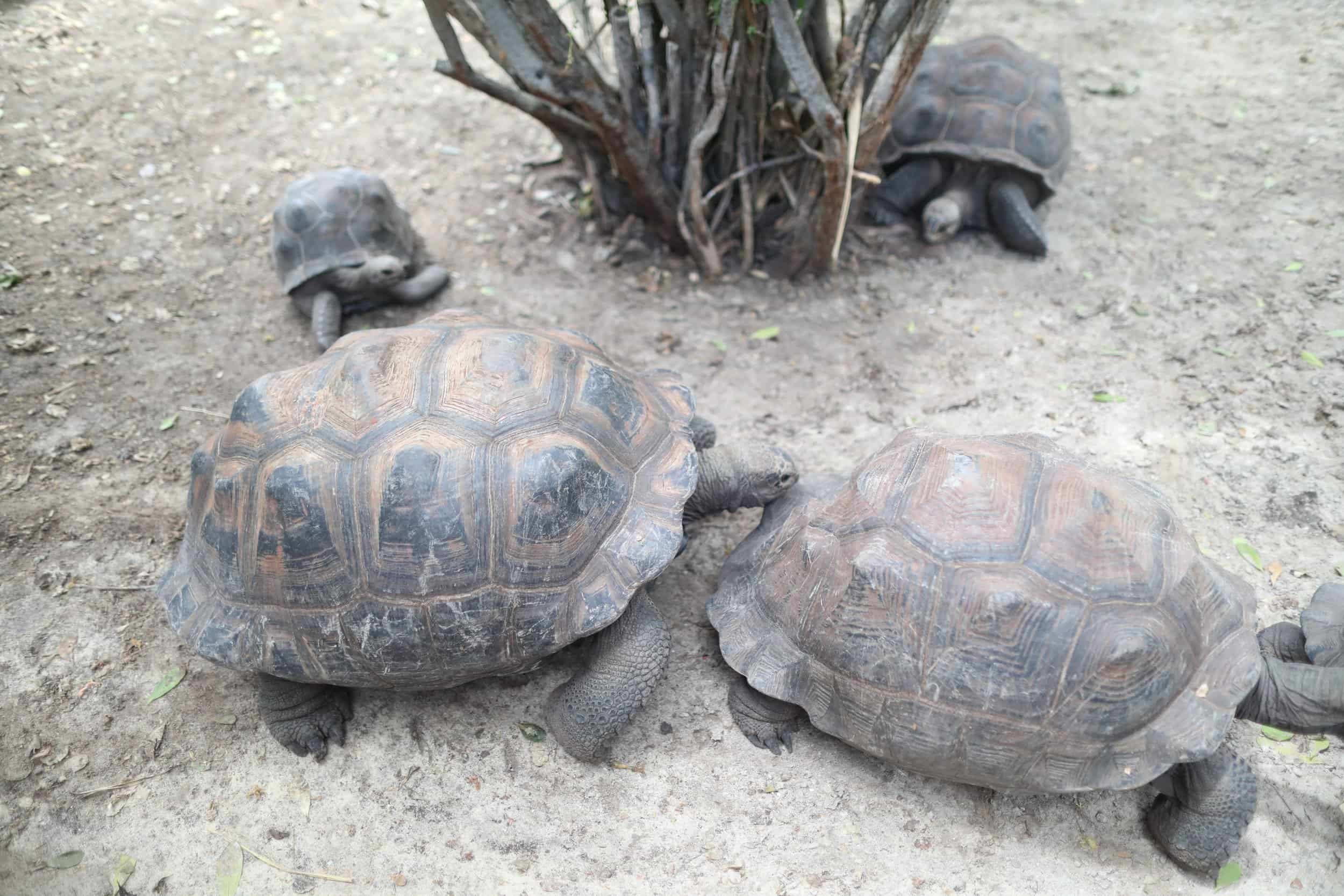
They feel like survivors of a very old story — a line that has persisted for millions of years with little hurry to adapt. Their rounded shells, extended necks and thick, columnar legs have a primeval elegance that’s both familiar and strange. When one cranes up to pluck a leaf, the moment feels almost ceremonial: you’re sharing a fragment of time with an animal that has quietly witnessed the planet’s long changes.
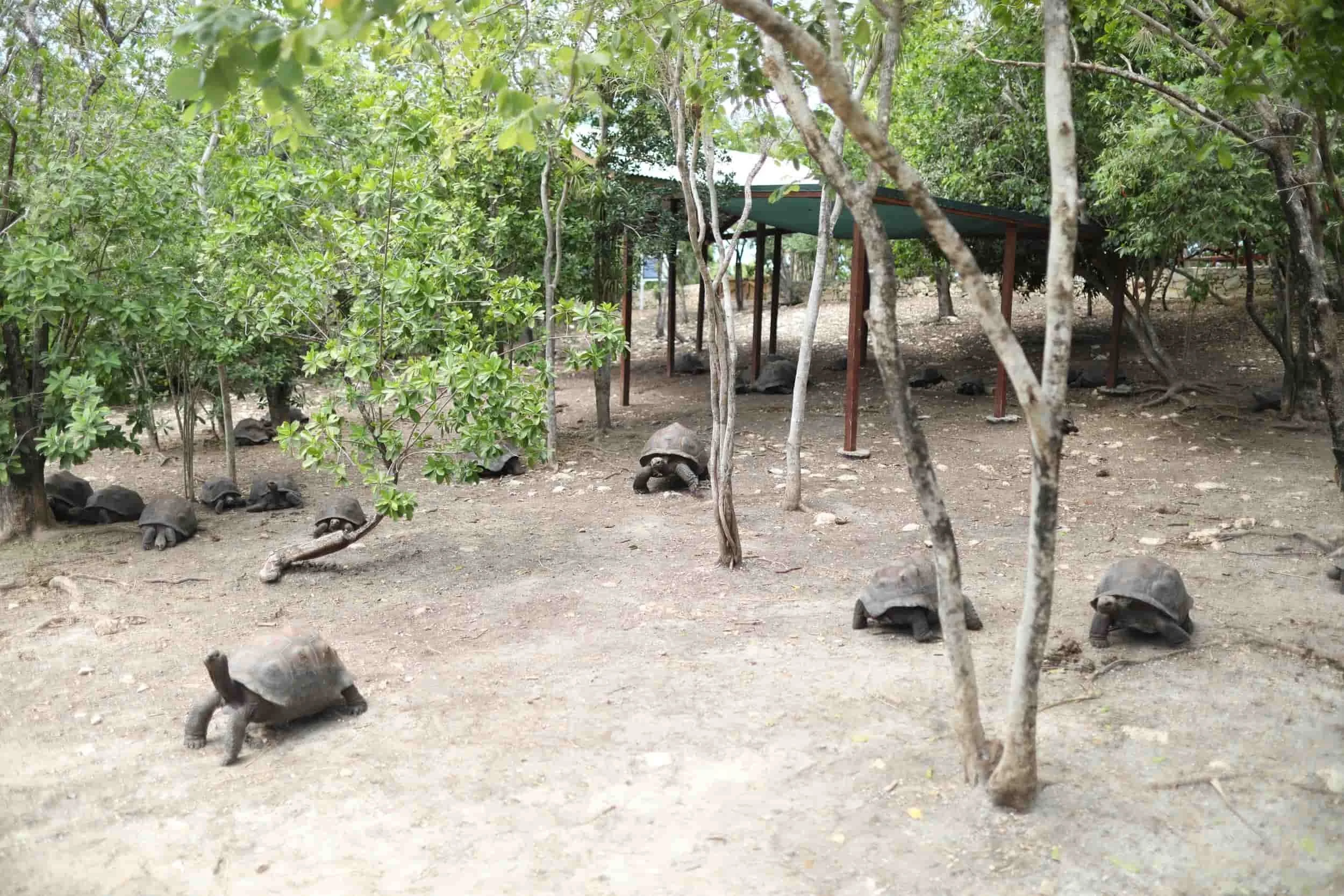
Aldabra giants embody deliberate grace, their shells can reach nearly four feet across and their bodies can weigh in at over 600 pounds. Encountering one is like meeting an old neighbor — a living fossil among the largest tortoises on Earth, some veering toward 200 years of age. These gentle behemoths hail from Indian Ocean isles, roaming sunlit, humid landscapes where they contentedly nibble grasses, leaves and a mix of island greens.
This sanctuary is a slow-moving paradise, home to tortoises from both Seychelles and Mauritius, their ages spanning from sprightly five-year-olds to dignified sixty-year-olds. Tiny hatchlings shuffled alongside hefty elders but all seemed content in their sunlit enclosure.
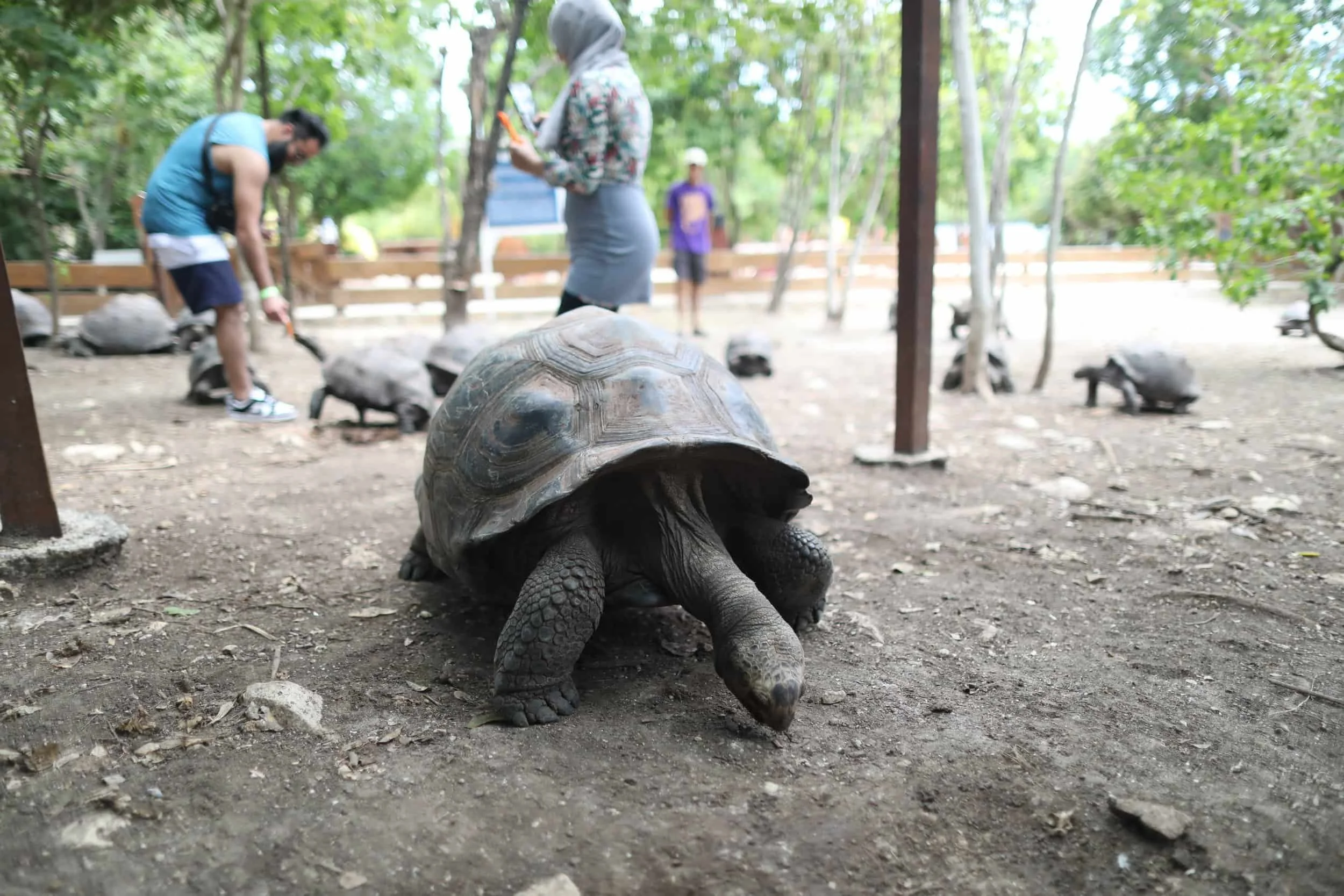
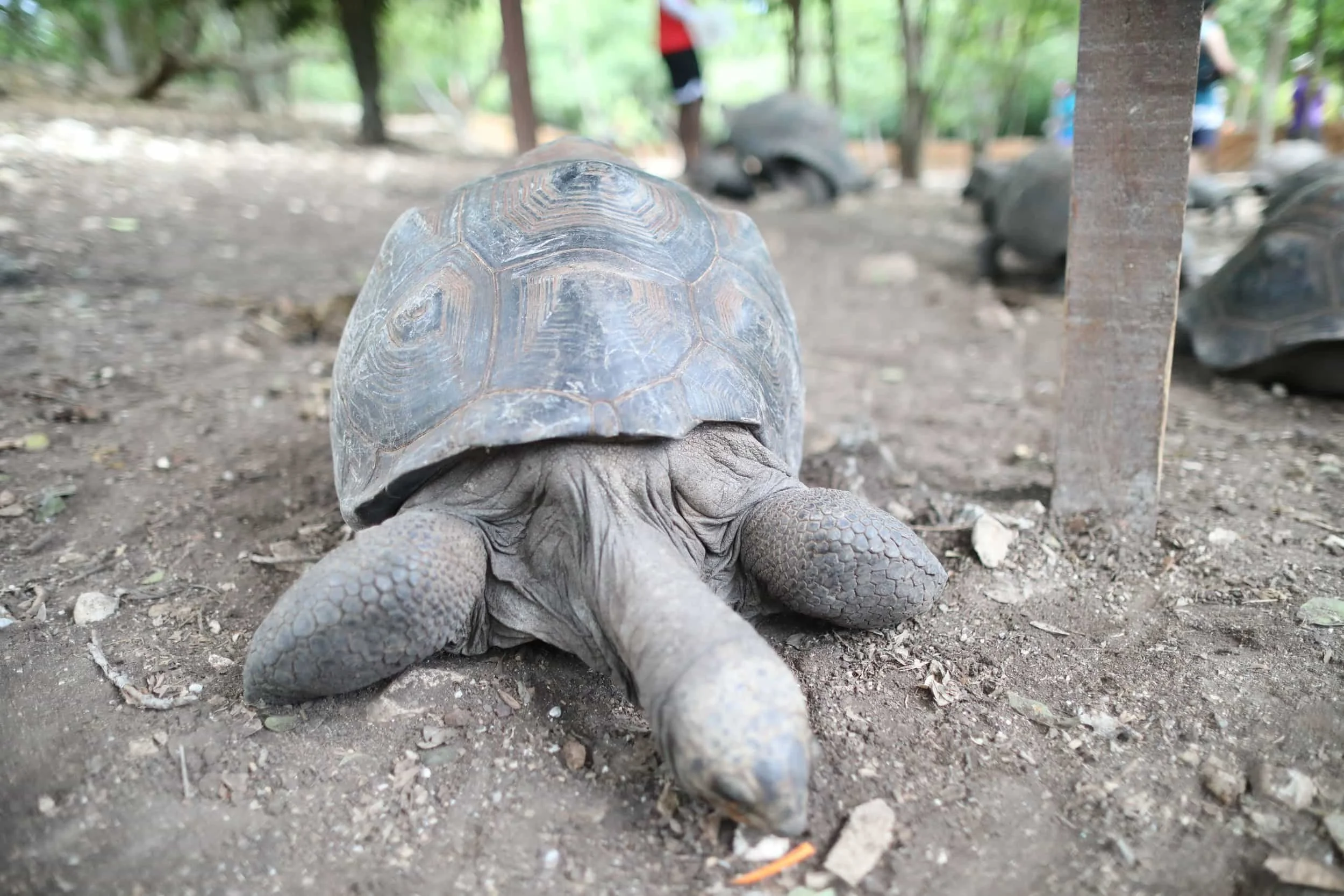
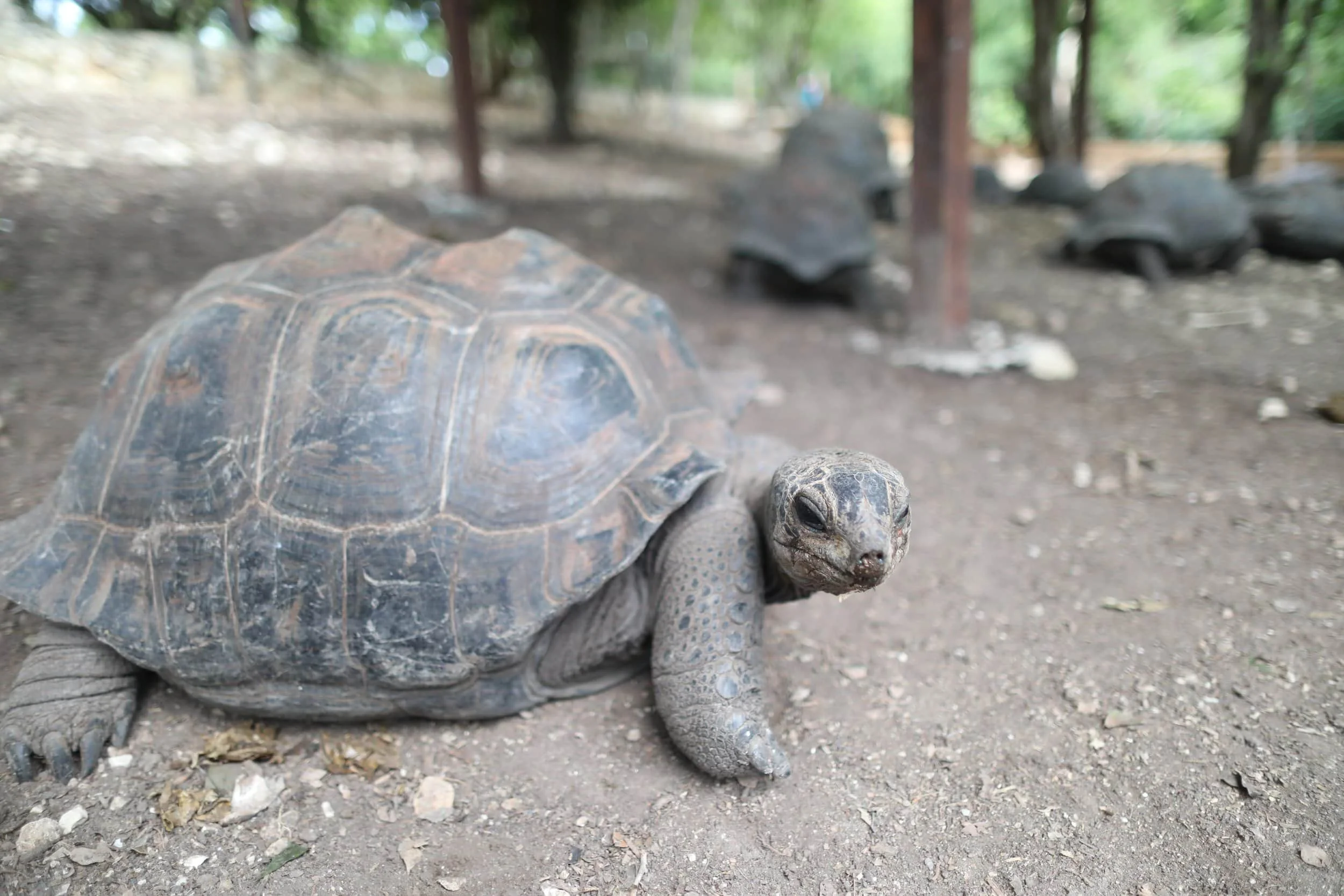
They also revealed a surprising weakness: carrots. Our guide showed us how to present a carrot just so, then pressed a few into our palms with a mischievous smile. “Watch closely,” he said. “They may look slow but they have a suddenness when food’s involved.” He wasn’t kidding — in a blink, a long neck would unfurl, a beak-like bite would claim the treat; the moment felt equal parts primeval and impossibly sweet.
⚠️ Good to Know | Mind your fingers when offering food and don’t stand rooted in one place. These placid giants can move with startling speed when a snack is on the line.
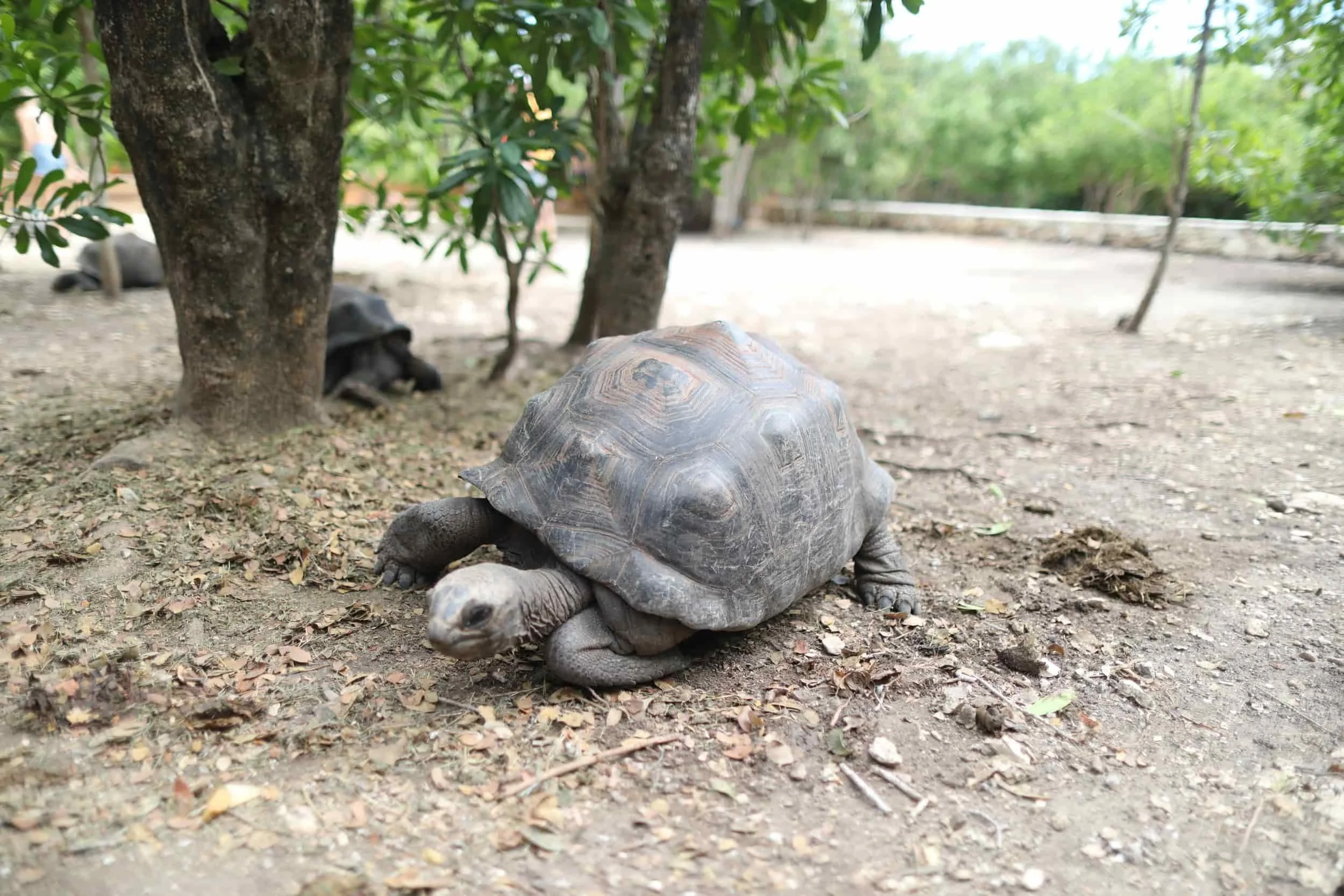
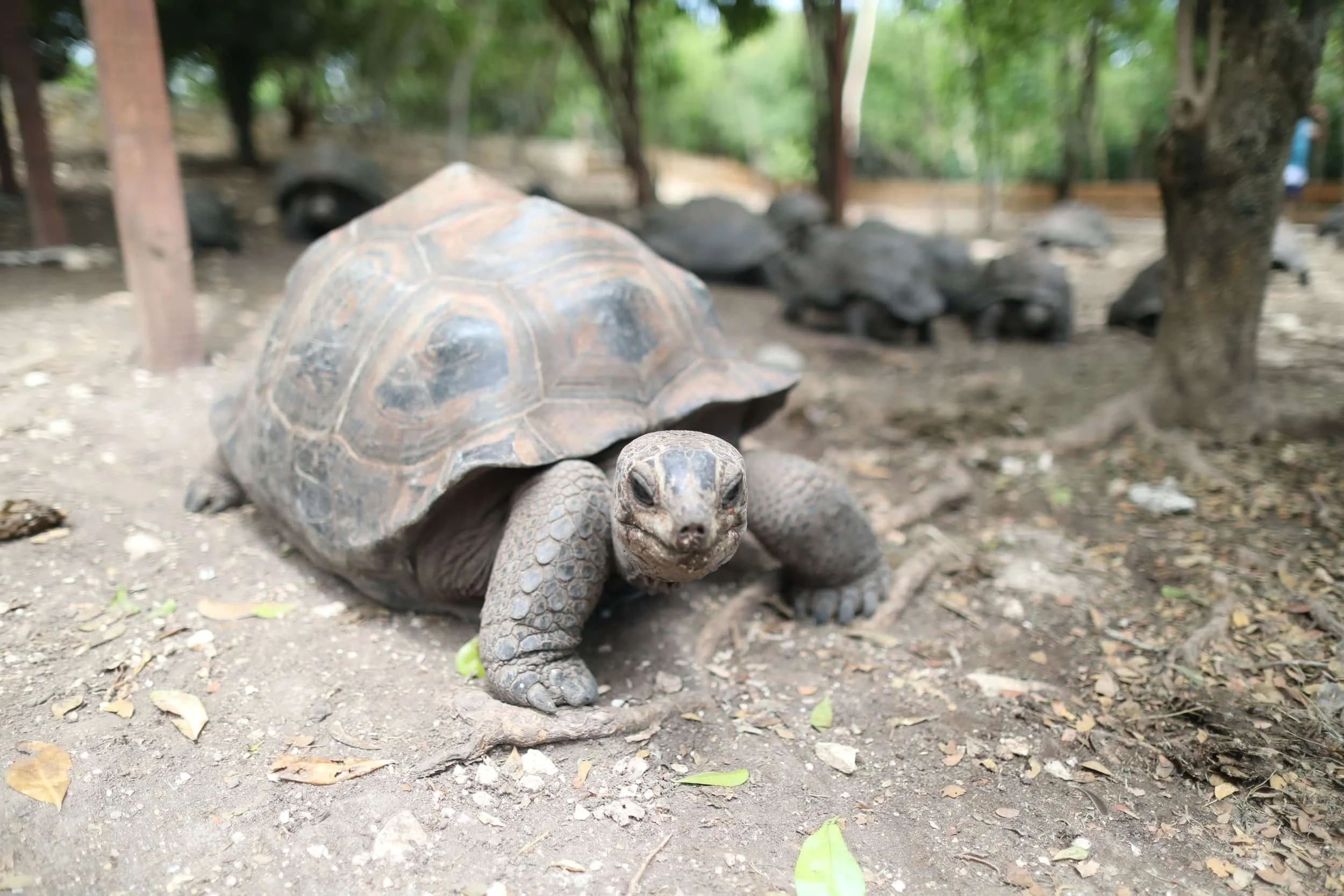
Many were surprisingly lively, ambling eagerly toward visitors brandishing carrots, while a few preferred to bask in quiet, appearing as if in a peaceful nap. A particularly theatrical pair drew a small crowd with their raucous courtship — the male all bravado, the female decidedly less impressed.
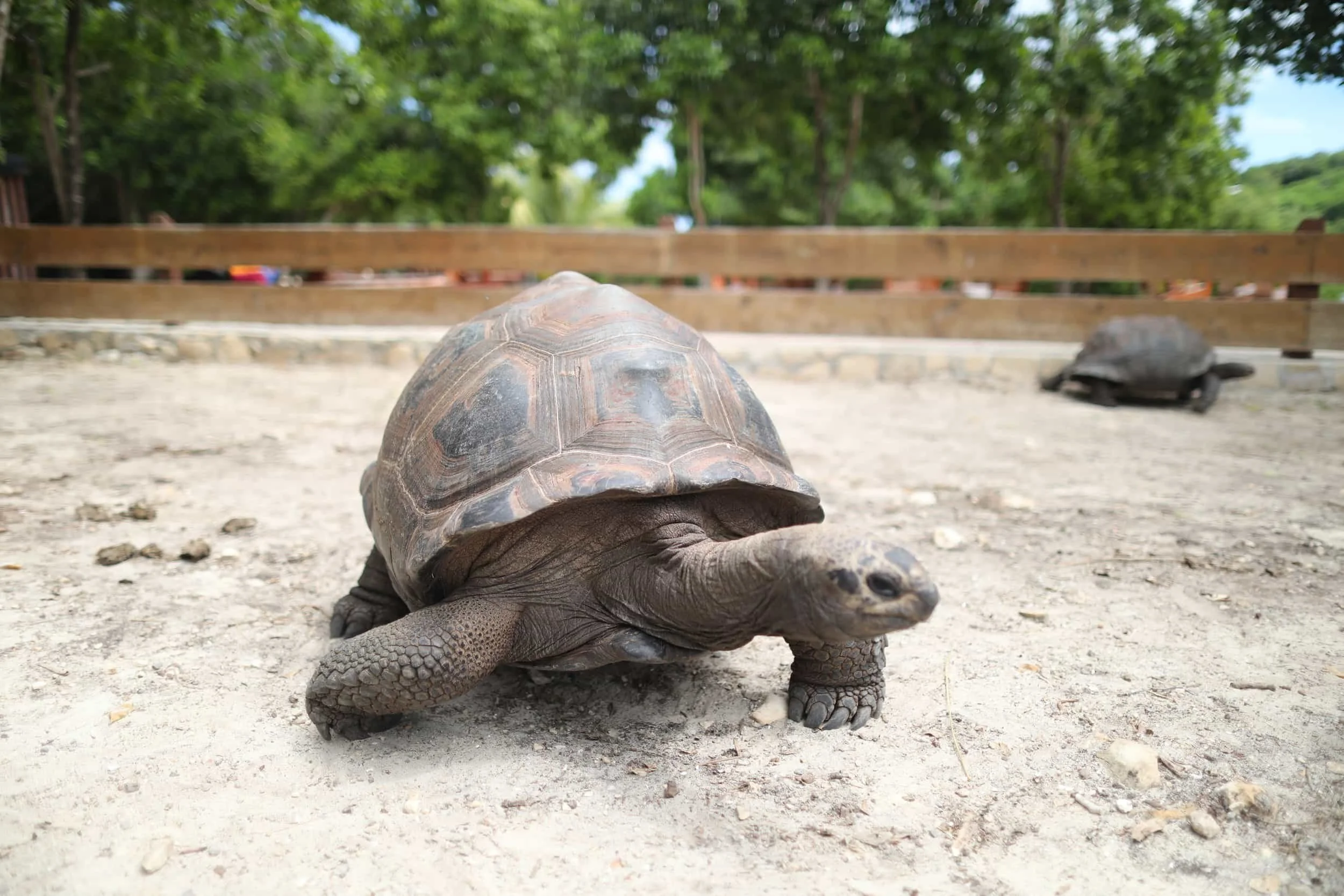
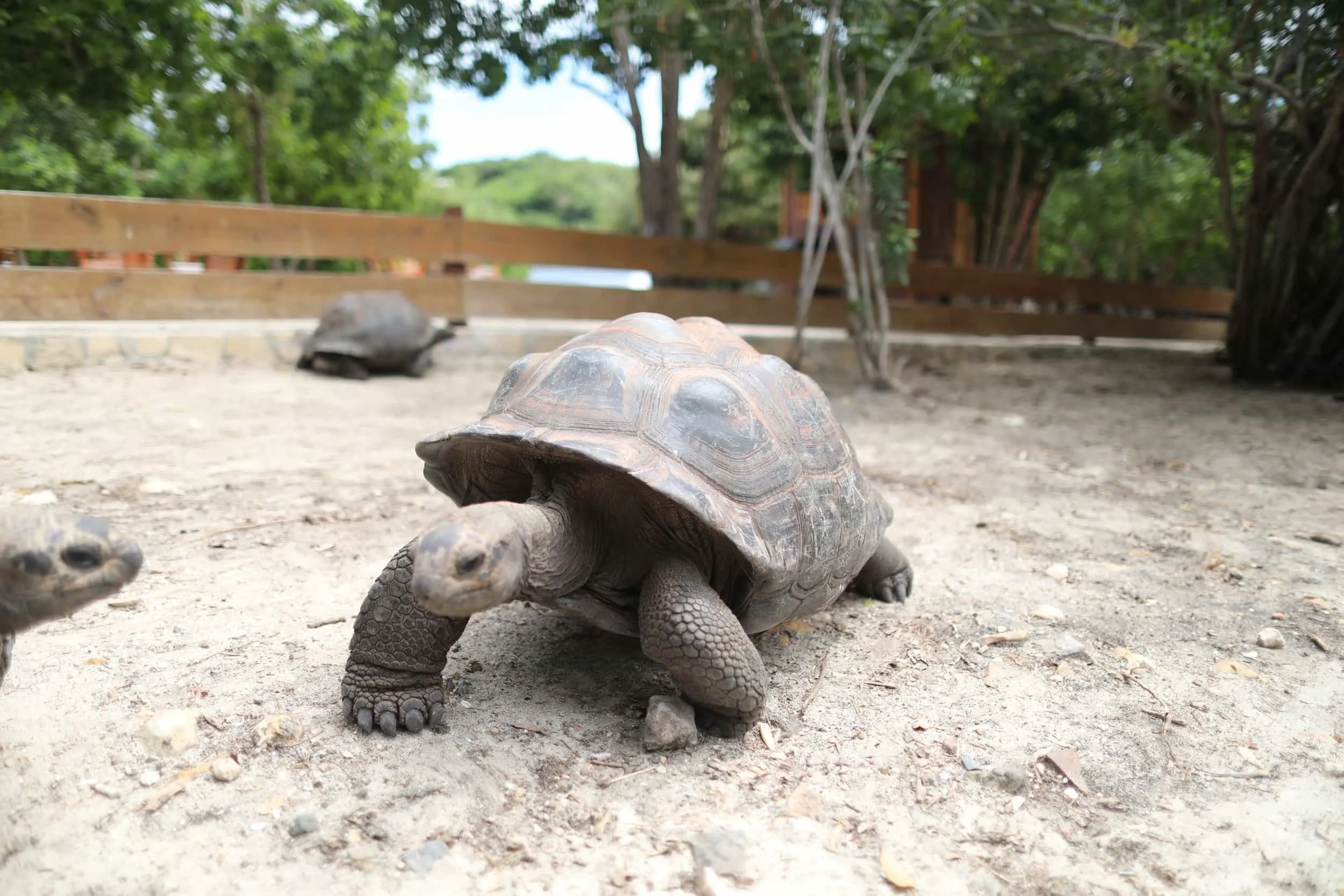
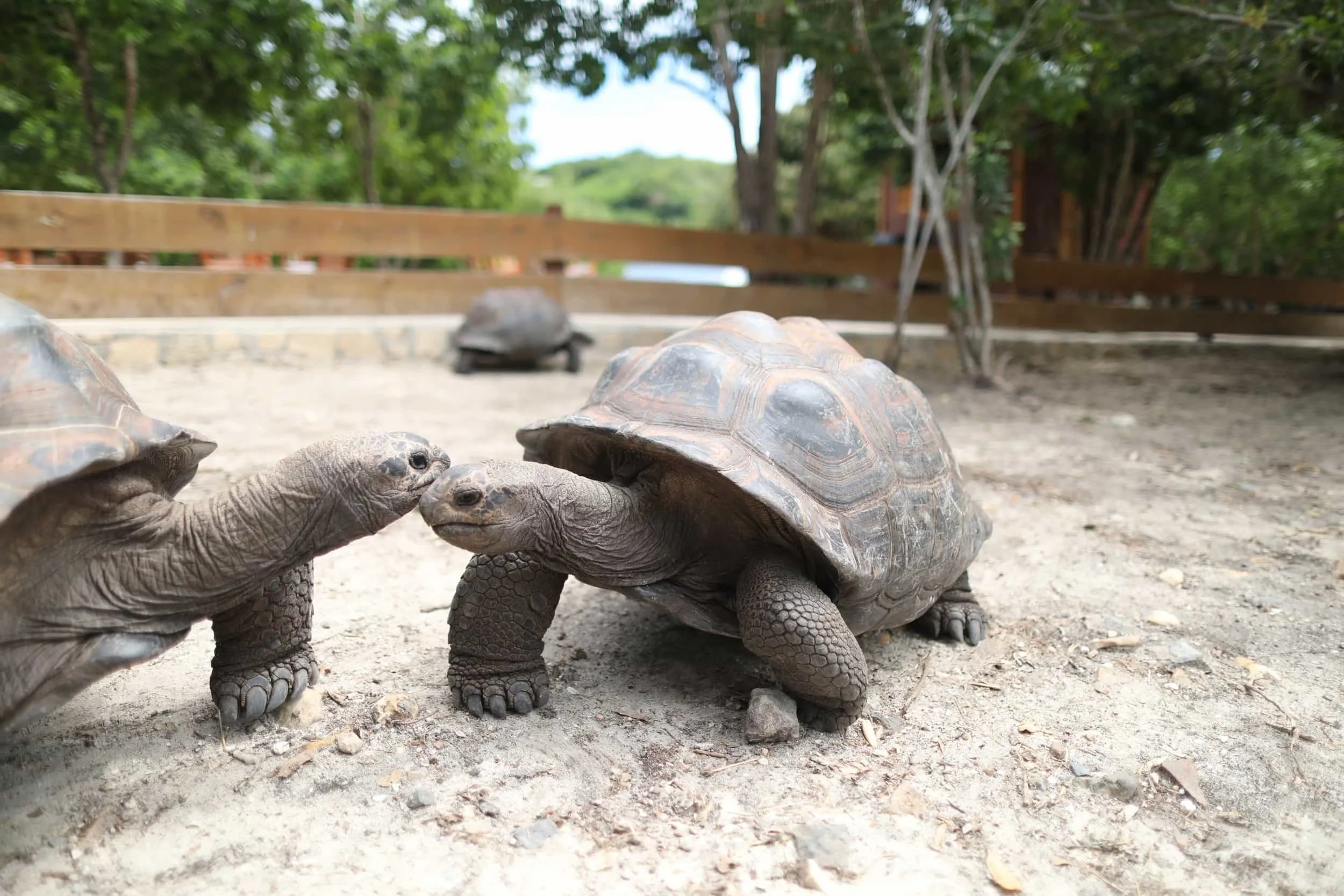
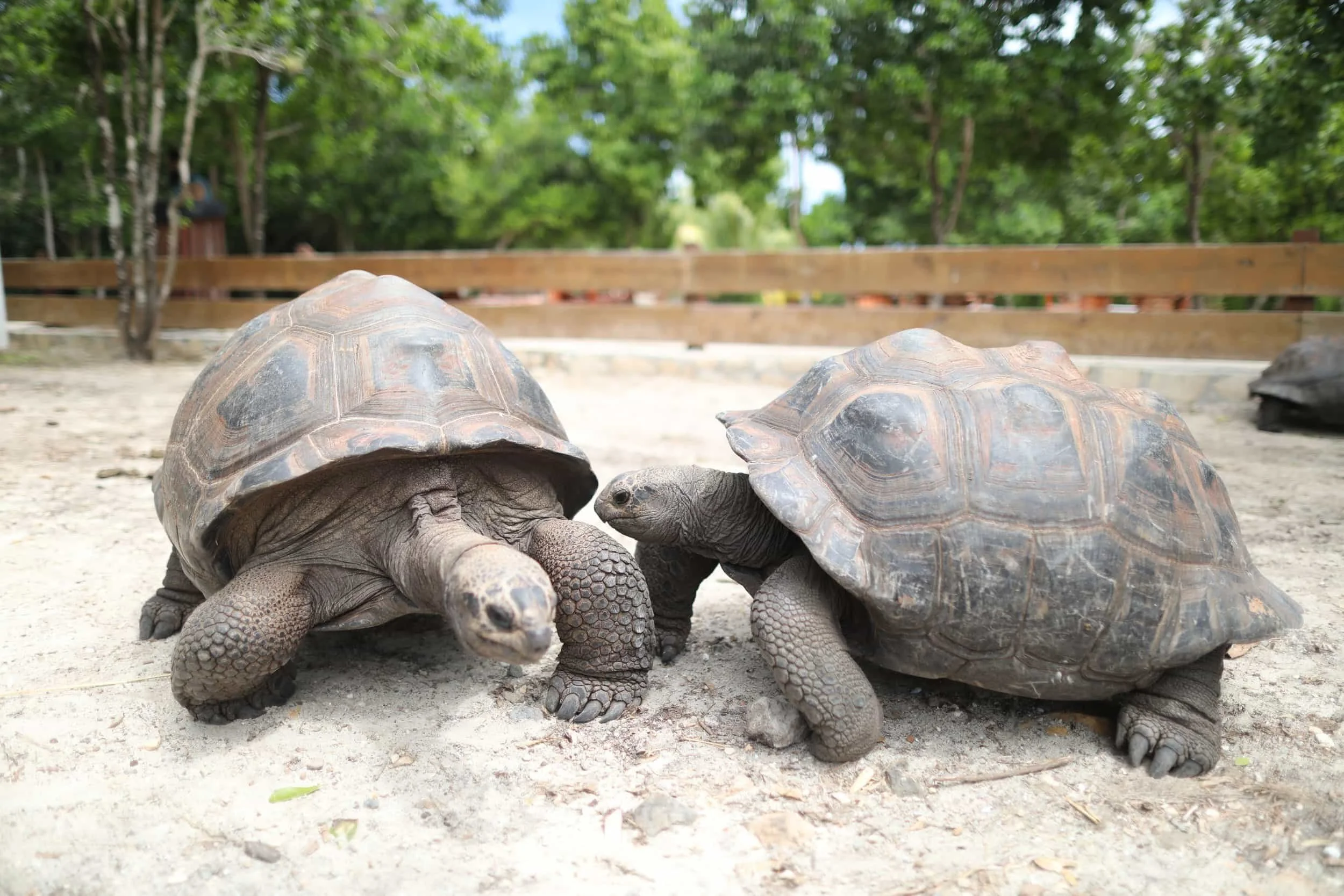
Those tortoises were absurdly adorable — earnest, joy-bubbled blobs of slime and shell, crunching carrots with determined gusto and shimmying forward like tiny, happy tanks. One pint-sized charmer claimed me as his person, parading around with a comical smear of slick carrot across his beak and nostrils like a proud, orange war paint.


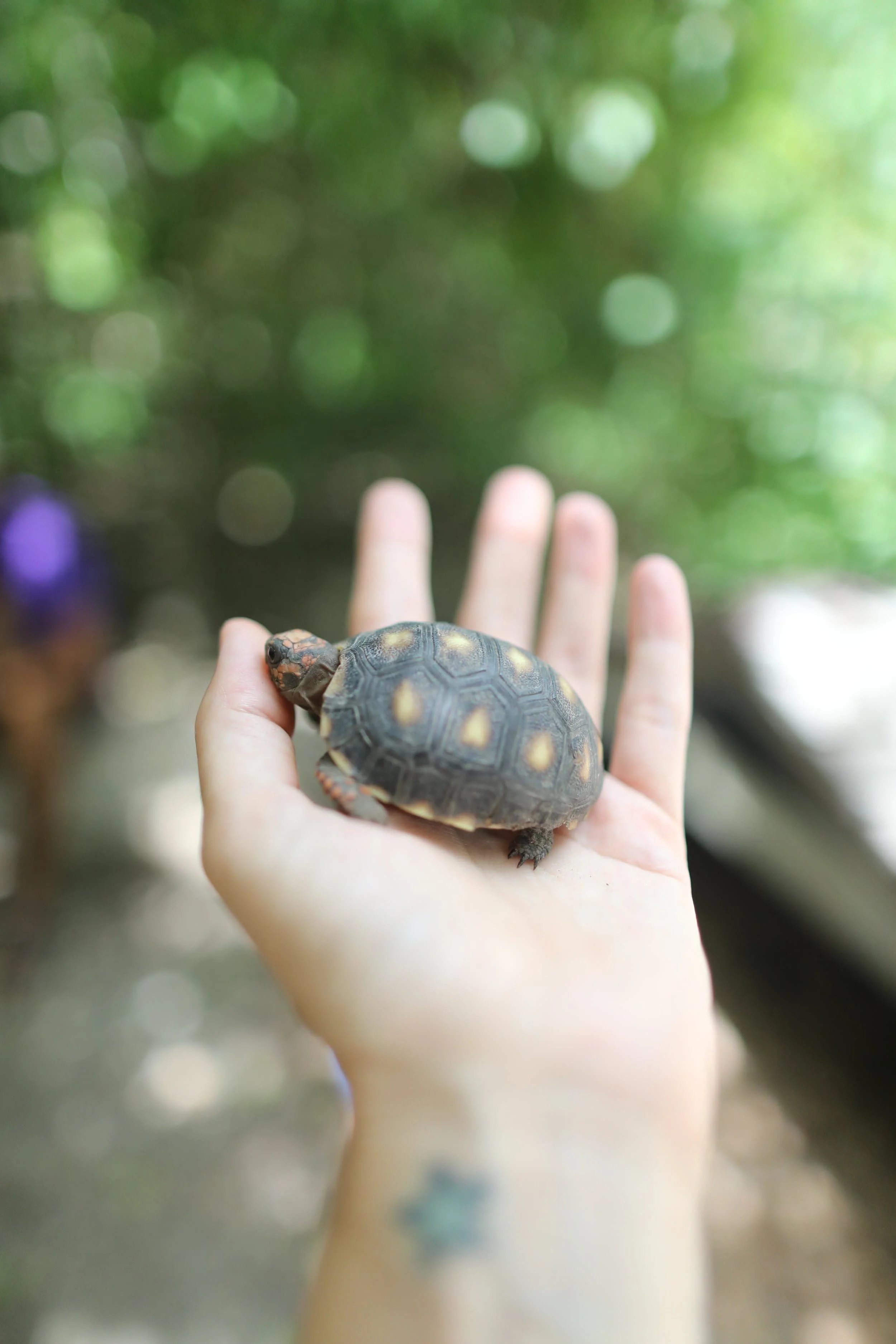
Antigua is also home to the adorable red-footed tortoise — tiny locals that stole my heart. The ones I met looked to be about two years old and their calm, resilient nature makes them surprisingly good companions for pet owners. They stay a manageable medium size, generally growing to about 12–16 inches, and honestly, they're impossibly cute.
Not only does the island shelter ancient Aldabra and red-footed tortoises, it’s a riot of color and sound — home to macaws, parrots and the sunbaked Lesser Antillean iguanas. Our first feathered meeting was with Lucky, a harligold macaw — sometimes called a harlequin macaw — a striking hybrid born of a blue-and-gold and a green-wing macaw.
With its impossible palette and mischievous curiosity, Lucky felt like a wild encounter. These hybrids are a rare sight in the wild and usually the product of careful breeding in captivity, which made our encounter feel all the more unexpected and special.
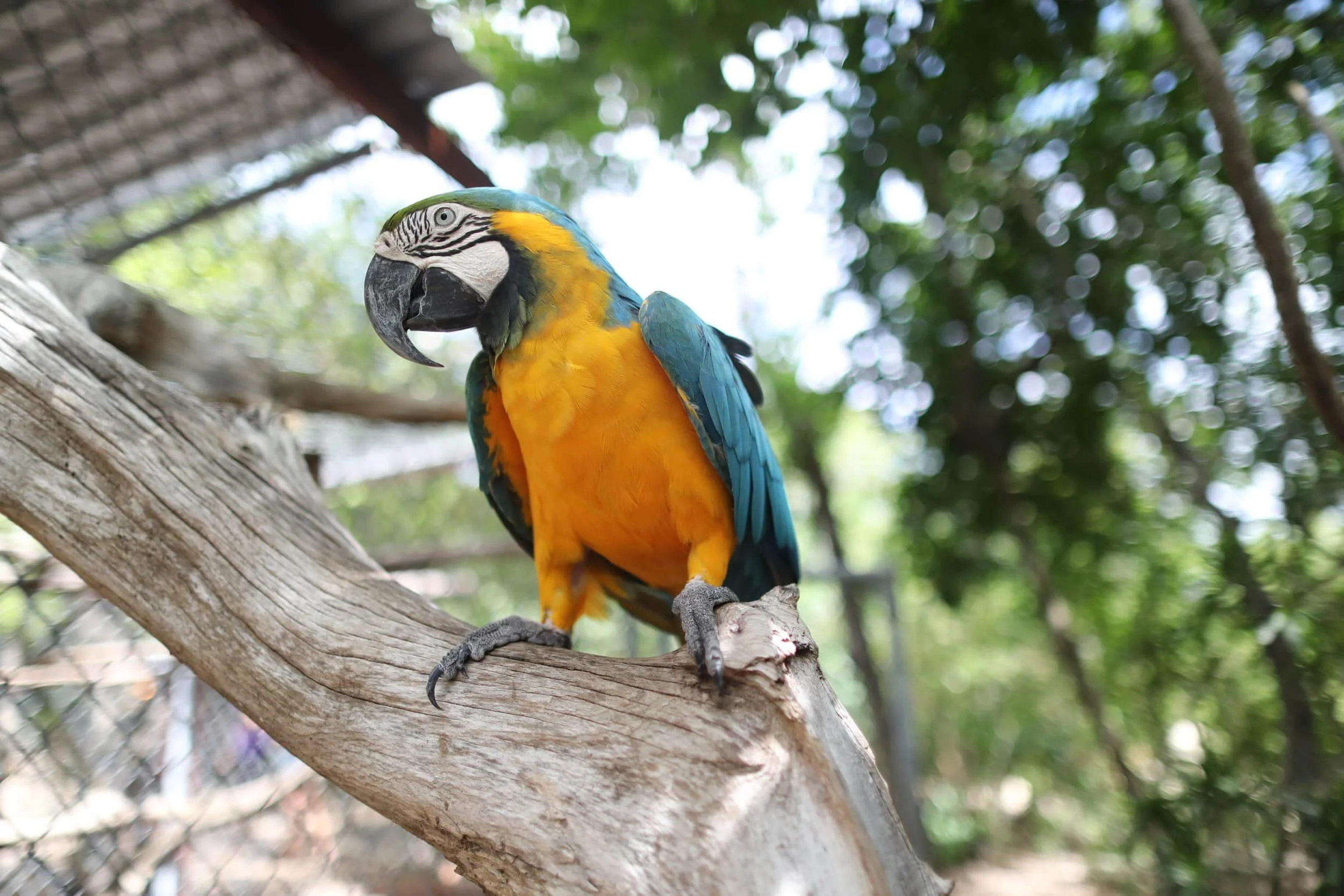
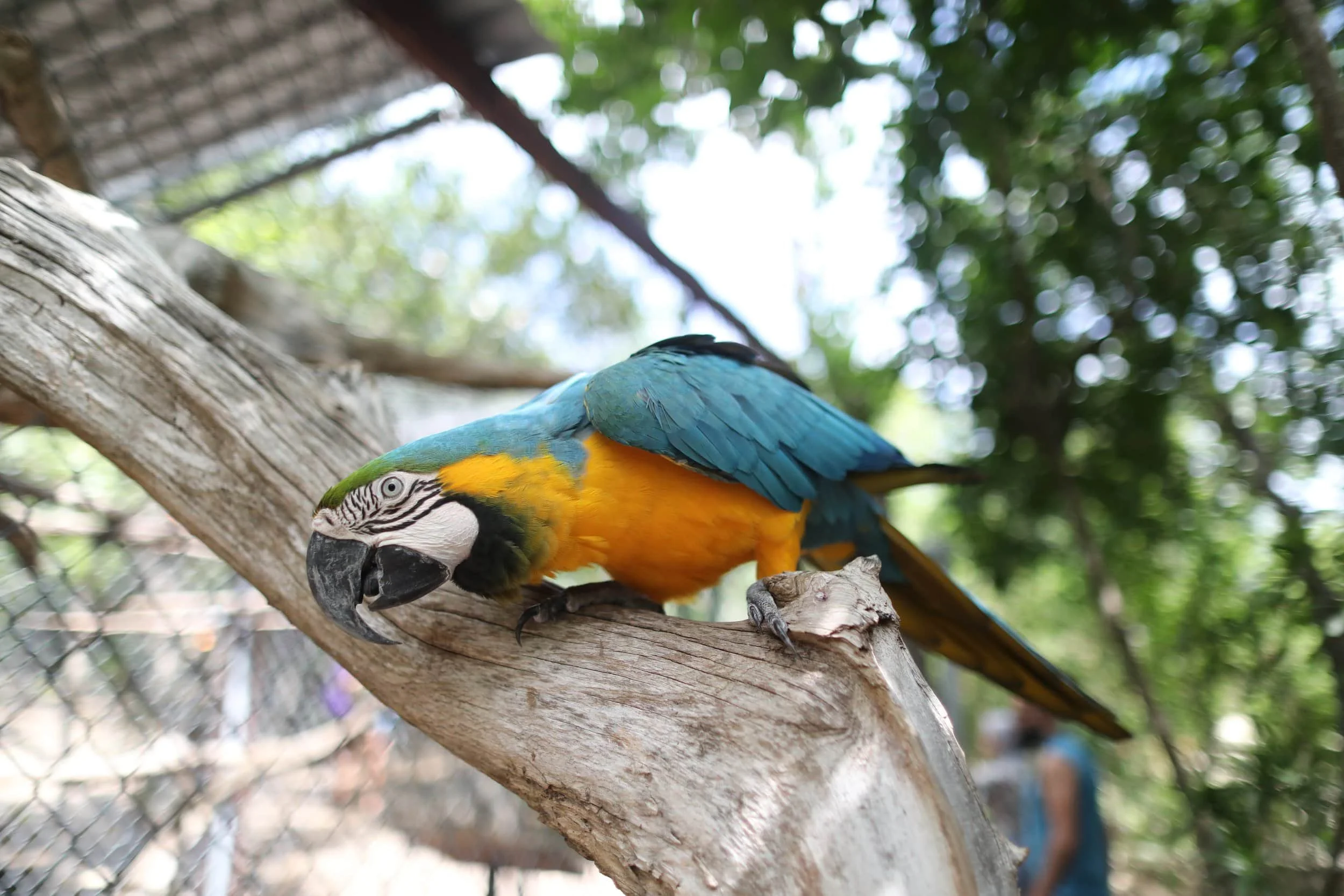
Lucky, one of the grandest macaws I’ve met, was a whirlwind of color and curiosity. This harlequin macaw brimmed with personality — always on the move, always eager for attention. These birds are brilliantly smart and utterly social; they thrive on daily interaction with people and Lucky made sure everyone nearby felt included in his lively world.
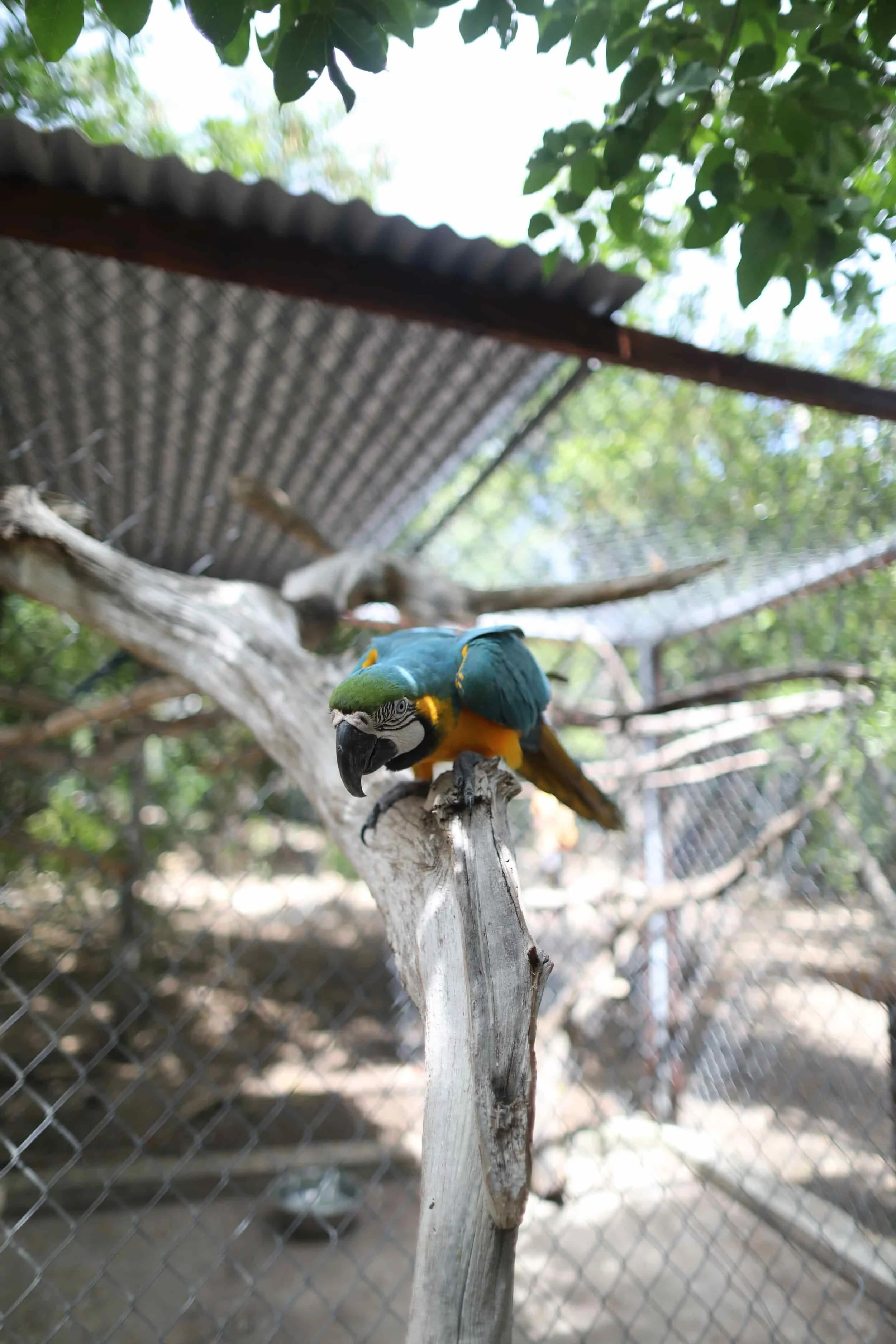
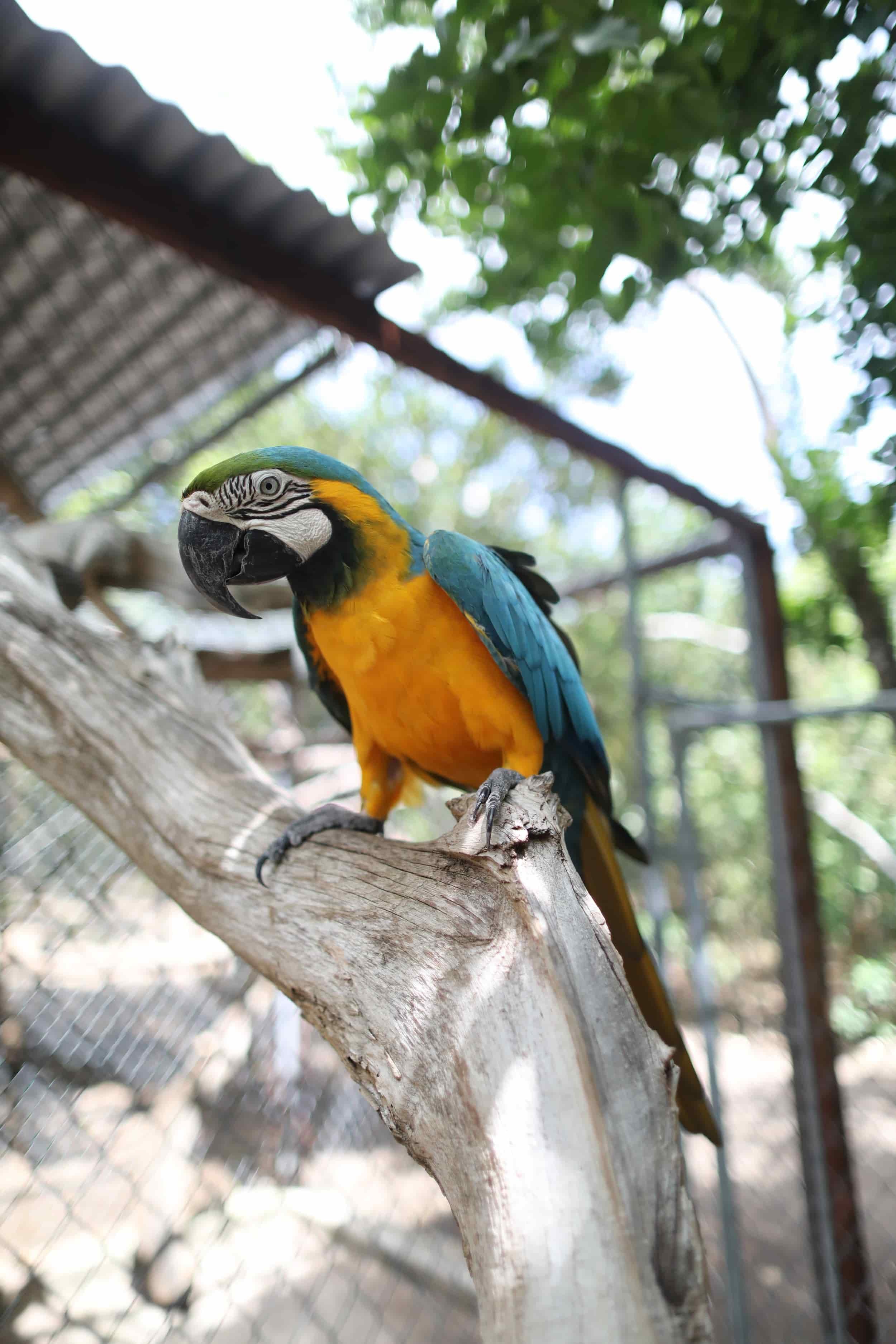
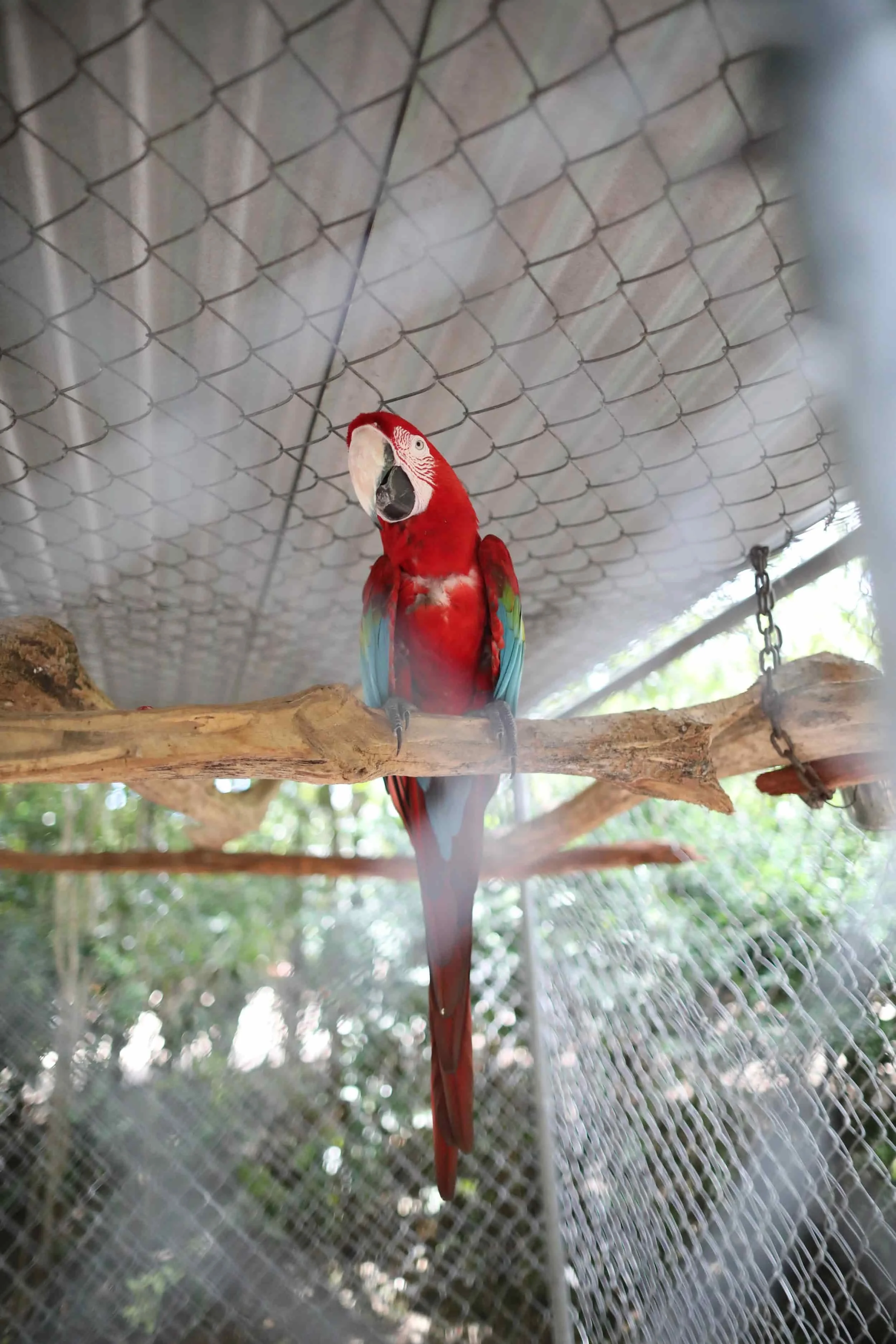
Rainbow is a green‑winged macaw who hails from the lush forests and woodlands of northern and central South America. Quieter and more contemplative than Lucky, Rainbow watched the world with slow, curious blinks, as if savoring each sunbeam that slipped through the canopy. His plumage — turquoise and emerald wings, flashes of crimson — seemed to glow against the island’s deep green and his calm presence felt like a patient guide through its hidden rhythms.
Next, we wandered into a lively corner of the sanctuary where playful parrots and snowy white lovebirds greeted us with curious chirps. The lovebirds — those tiny, affectionate members of the Agapornis family — seemed to have stepped straight out of a storybook. Some of these feathered residents had been rescued and nursed back to health, while others were local characters who'd made the sanctuary their permanent home, content to flutter about without a care for the wider world.
💡 Local Tip | Resist the urge to feed the birds — they’re happiest and healthiest when we let them stick to their natural diets.
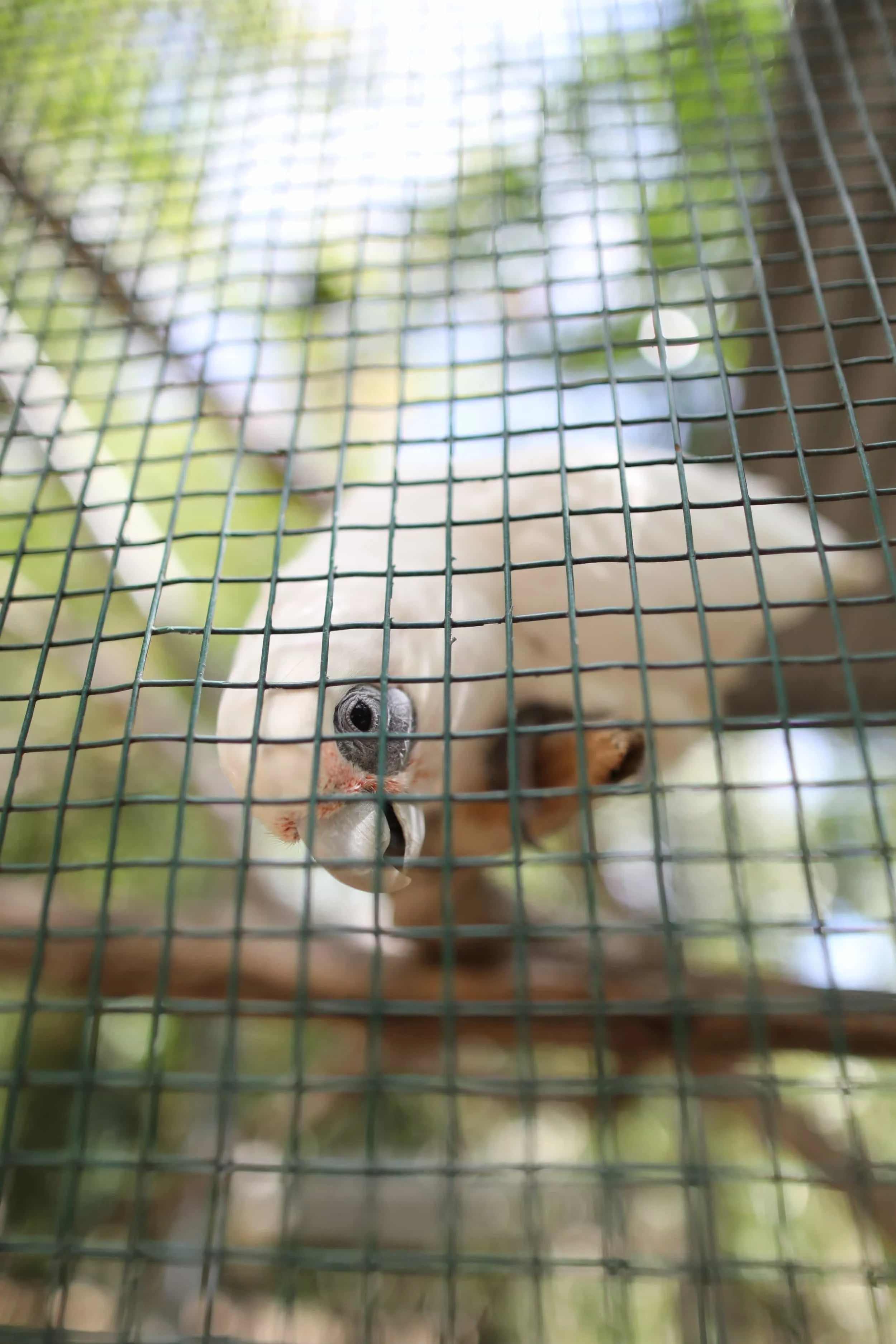
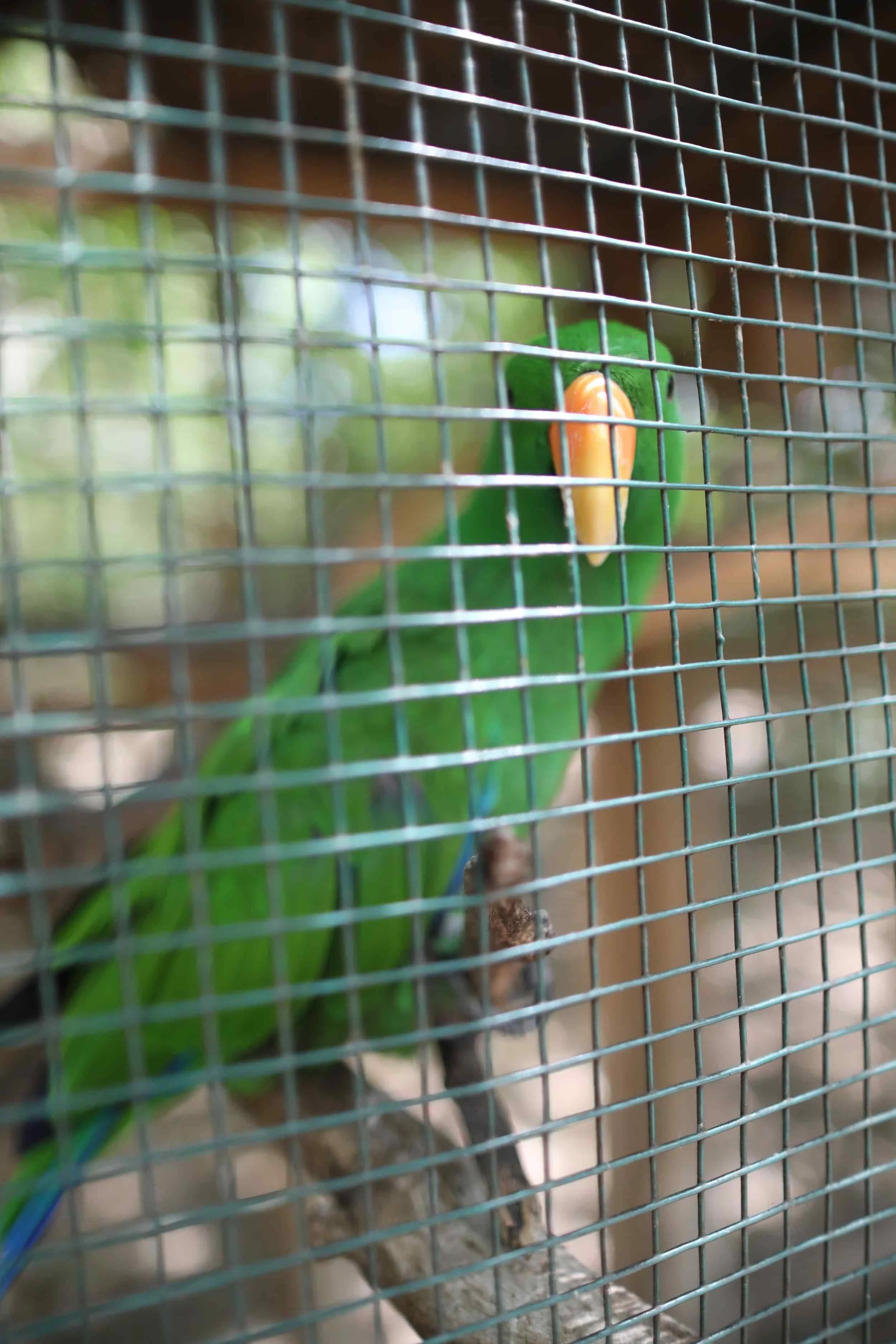
Finally, meet the Lesser Antillean iguana — a rare, sun-loving resident of Antigua and the nearby islands, wiped out on the mainland but clinging to life here. Small yet fierce in personality, these critically endangered reptiles face shrinking habitat and new predators. At the sanctuary, they’re more than an exhibit: they’re the heart of a humble, hopeful repopulation effort, slowly bringing the species back from the brink.
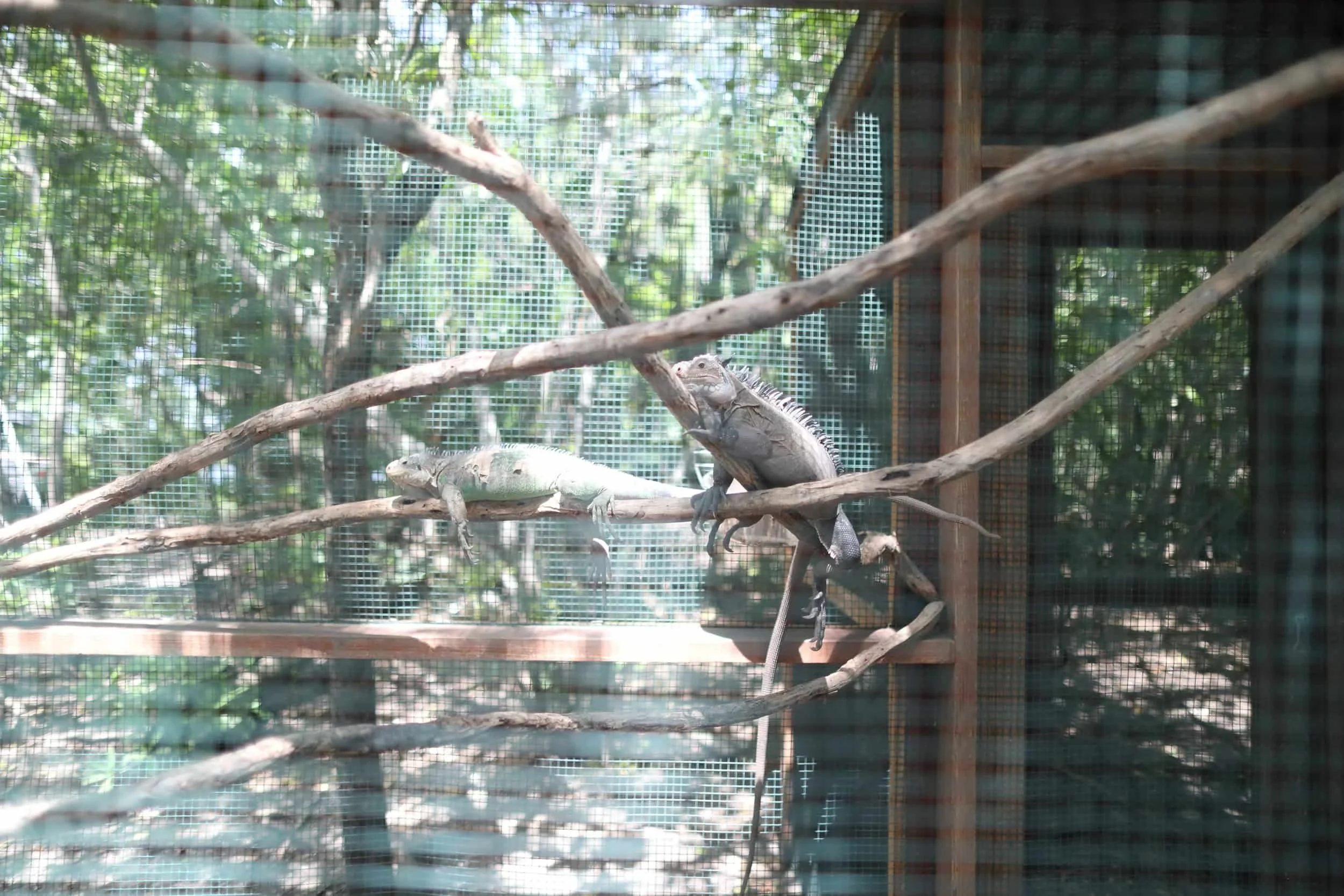
The Lesser Antillean iguana is a little hero of the Caribbean dry forest. Beyond its sunbaked, slow-moving charm, it quietly keeps the island’s plant life flourishing by carrying and dropping seeds across the landscape. Its burrows and nesting sites do more than shelter the iguana — they create cosy refuges for other creatures and help enrich the soil, giving new life a better chance to take root.
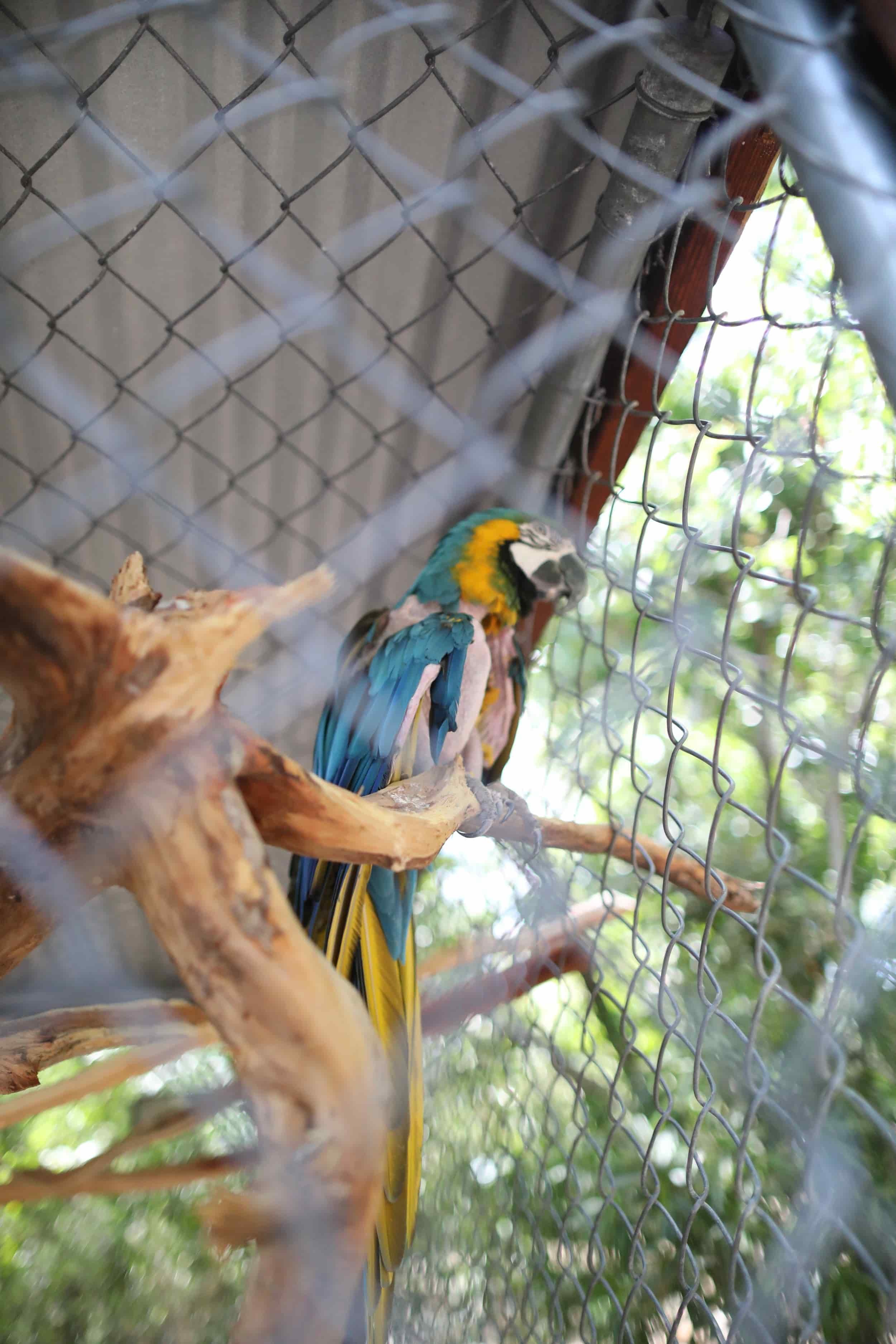
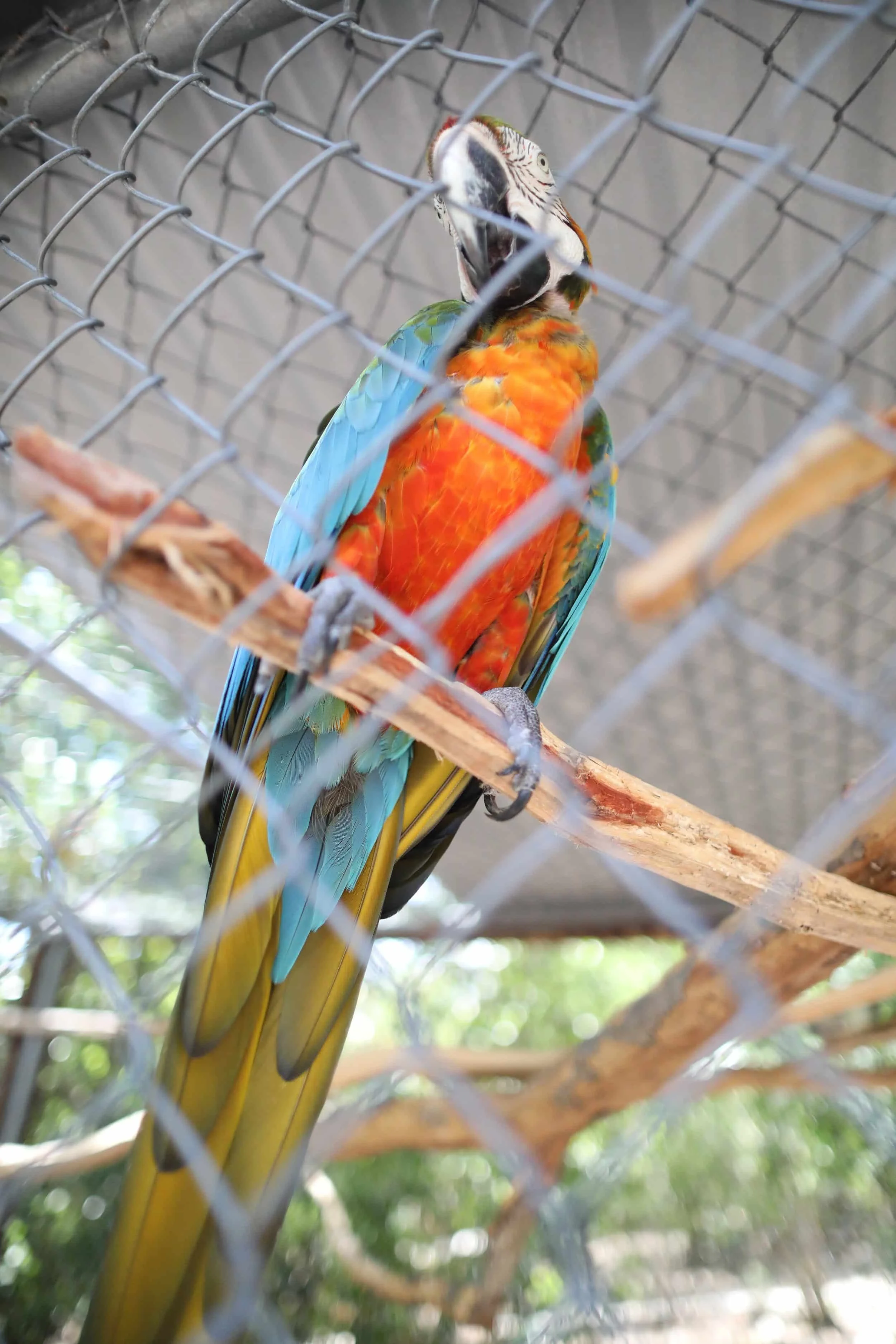
We paused to admire a few more flamboyant macaws before wandering the estate, where the dry hills of the island are punctuated by the sculptural silhouettes of agave. With their dagger‑sharp leaves fanning like nature’s armor, these stoic plants live slow, patient lives — blooming only once after a decade or two, putting on a final, spectacular show before quietly slipping away. Standing among them, it’s easy to feel both humbled by their resilience and charmed by the drama of island life.
From there, hop back on your boat and glide to the mainland, carrying with you the sweet afterglow of the sanctuary — truly one of the best things to do in Antigua and one of the most charming Antigua attractions. Don’t miss it.
Antigua’s Donkey Sanctuary
Discover Antigua’s donkey sanctuary — an off the beaten path haven where gentle donkeys, island views and heartfelt conservation come together for an unforgettable, low-key adventure — plus, it’s arguably one of the cutest things to do in Antigua.
Once back on the mainland, wander over to Antigua’s Donkey Sanctuary tucked in the peaceful Bethesda Village. Home to roughly 150 rescued donkeys, the sanctuary feels like a little living history lesson — these steadfast animals have quietly shaped island life for generations. Strolling among them, feeding a curious nose or watching a sleepy ear flick, I couldn't help but feel a warm connection to their gentle personalities and the important role they've played in Antigua’s story.
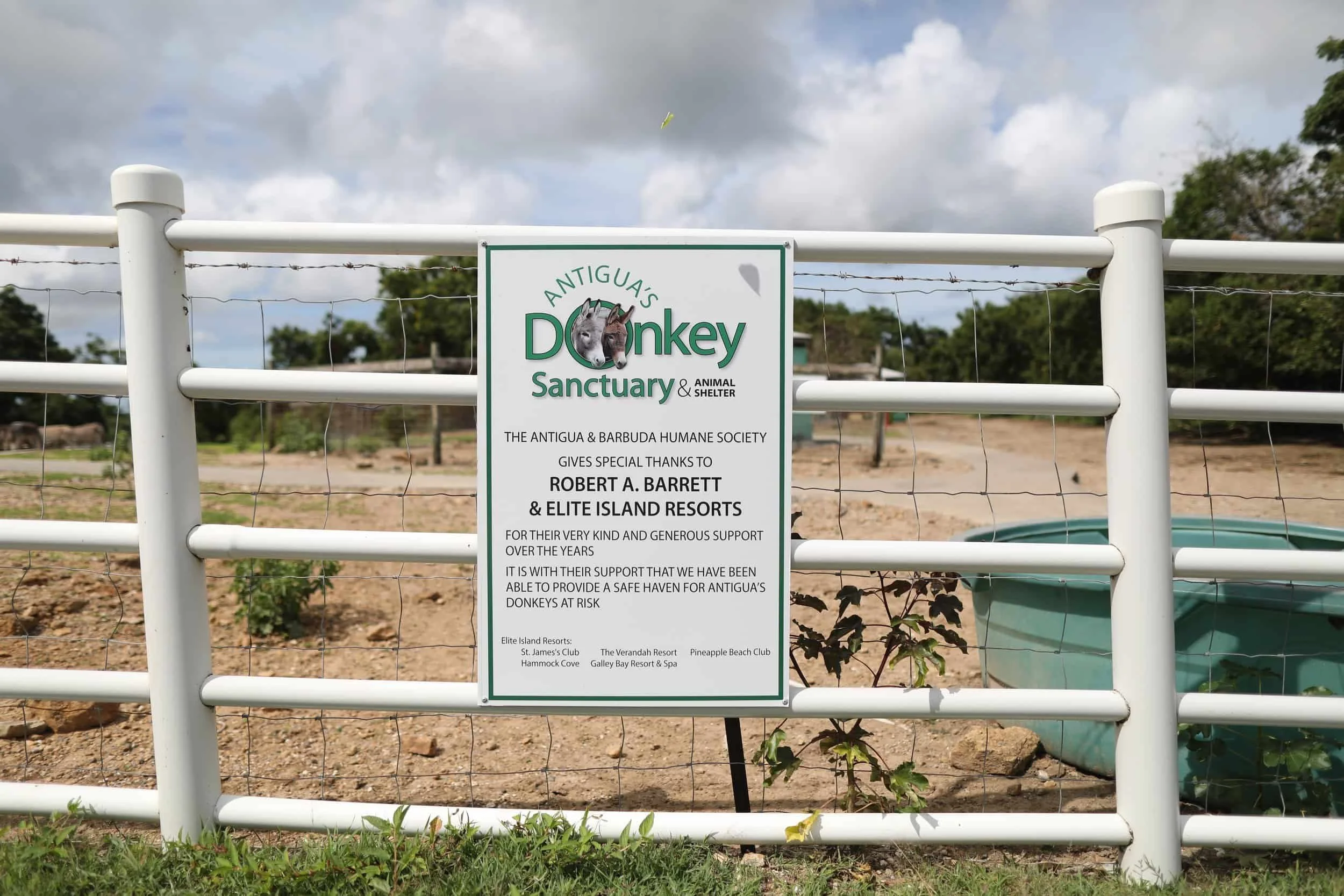
Donkeys have been part of Antigua’s story since the 1630s, when English settlers first brought them to the island. Once indispensable for hauling sugarcane across plantations — and perhaps even turning the wheels of cane-crushing mills — these steady little workers helped shape the island’s history.
Today, their duties have softened but they remain a familiar and endearing presence: grazing calmly in sunlit fields, pausing in village lanes or ambling along country roads, as if keeping time with Antigua’s unhurried pace. Spotting one feels like a small, gentle reminder of the island’s past.

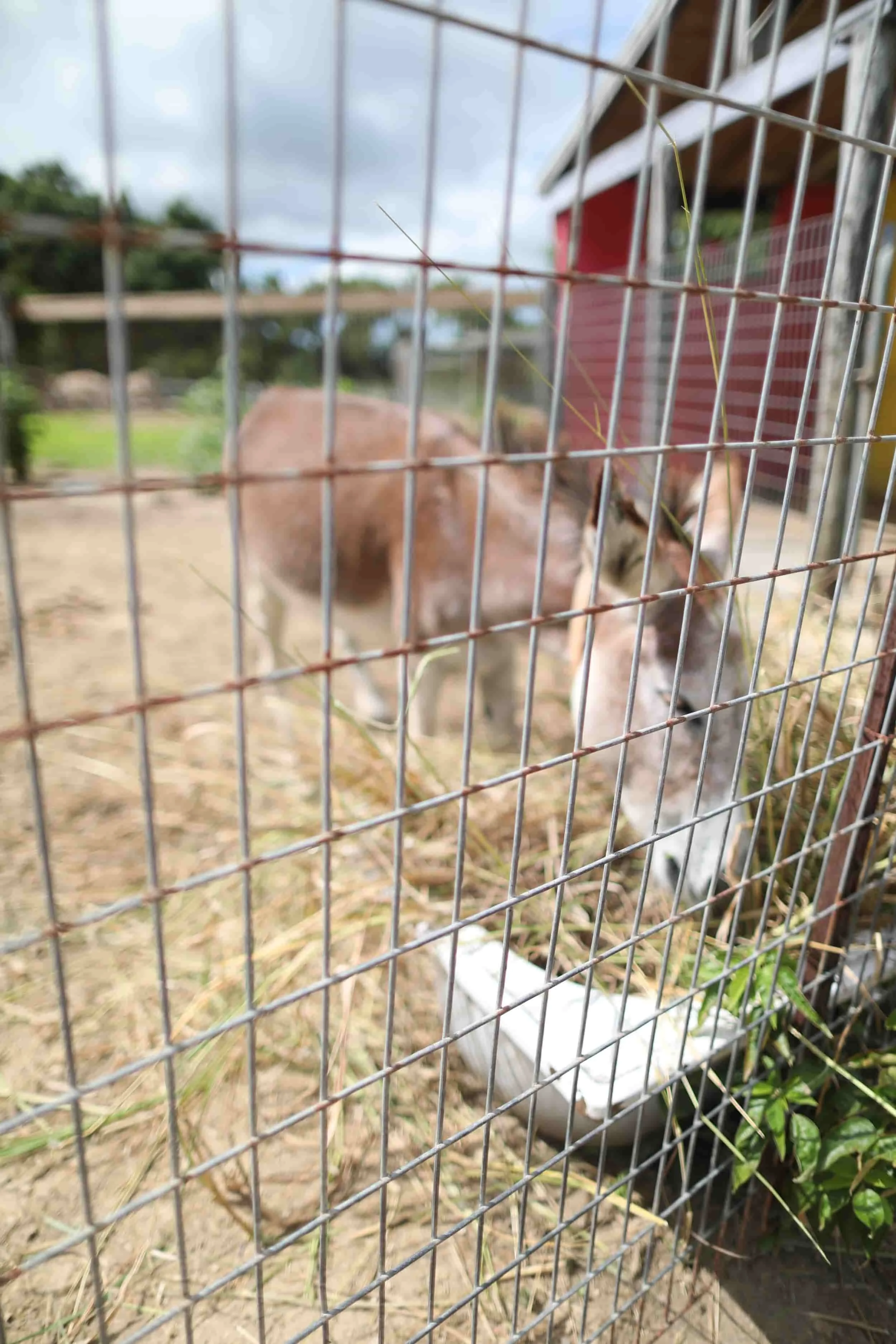
Antigua’s Donkey Sanctuary, run by the Antigua & Barbuda Humane Society, feels like a quiet, sun-drenched pause in the island’s lively rhythm. The team provides grazed pasture and fresh water on-site, with daily feedings of guinea grass and corn to keep the donkeys content.
The Sanctuary welcomes help — adopting a donkey for a small fee of $30 USD covers food and veterinary care and is a lovely way to make a lasting difference. Right now, you can choose to sponsor Big Mama, Daisy, Dee, Eeyore, Pumpkin, Raven, Surprise or Wavie — each one with their own personality, ready to win your heart.
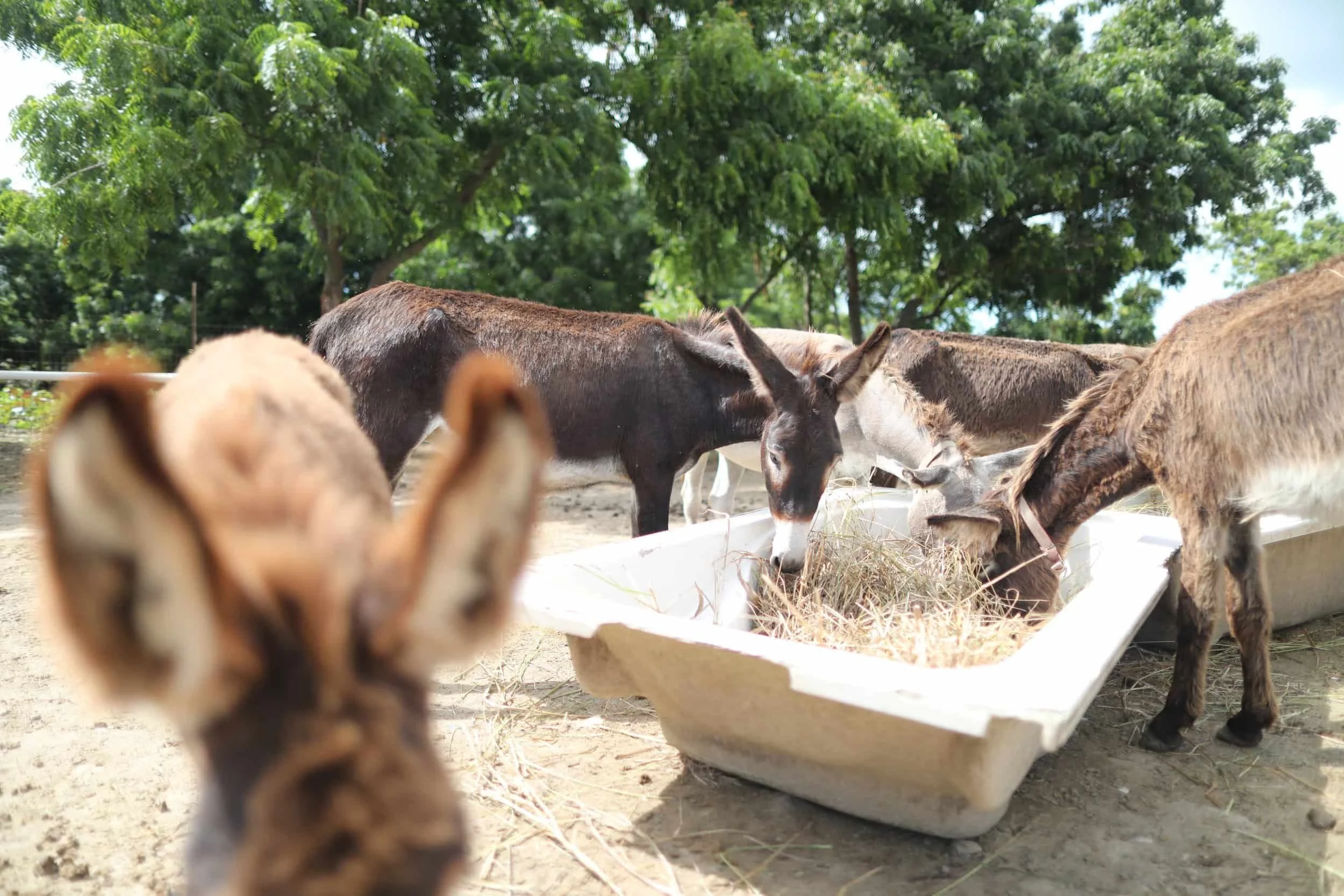
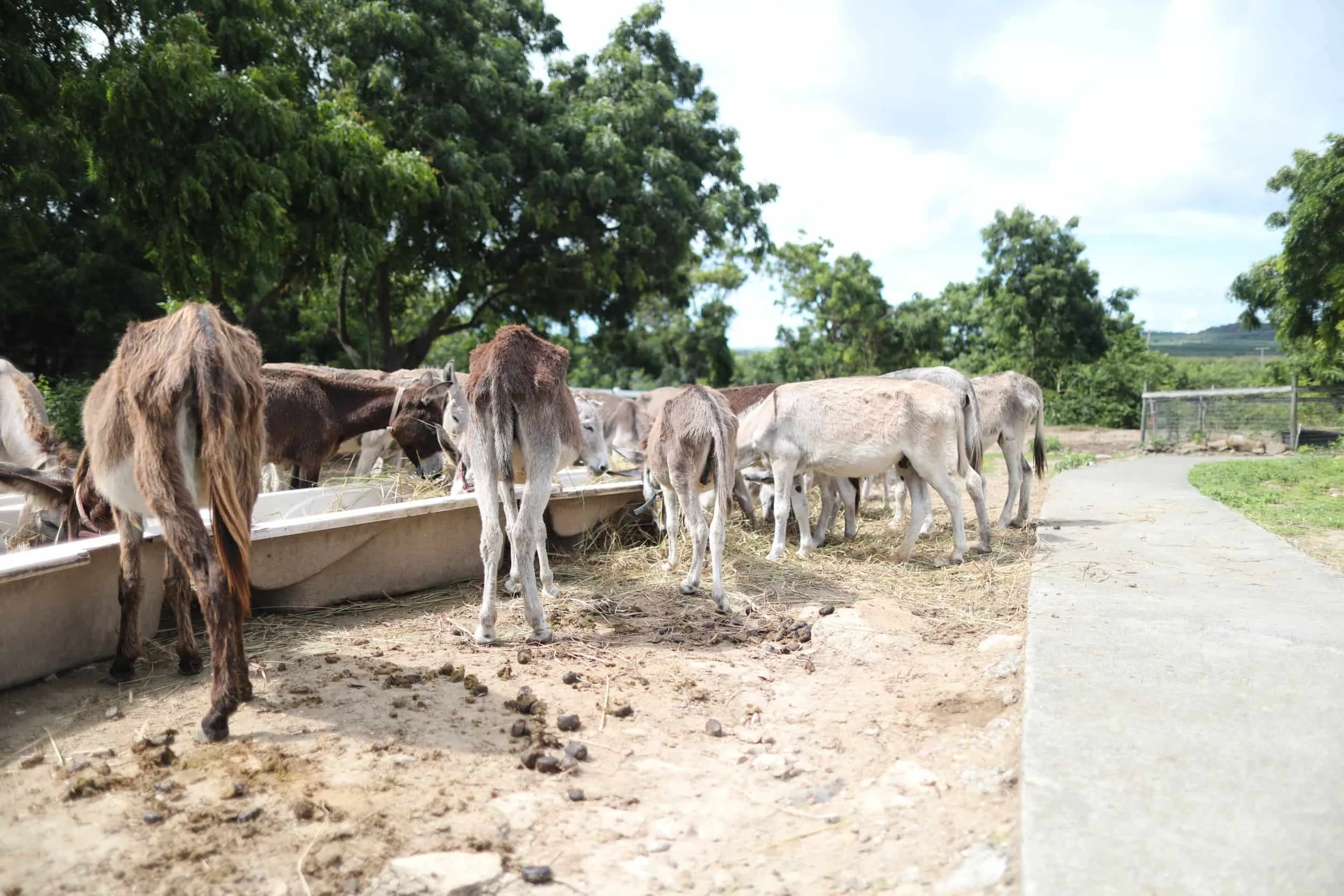
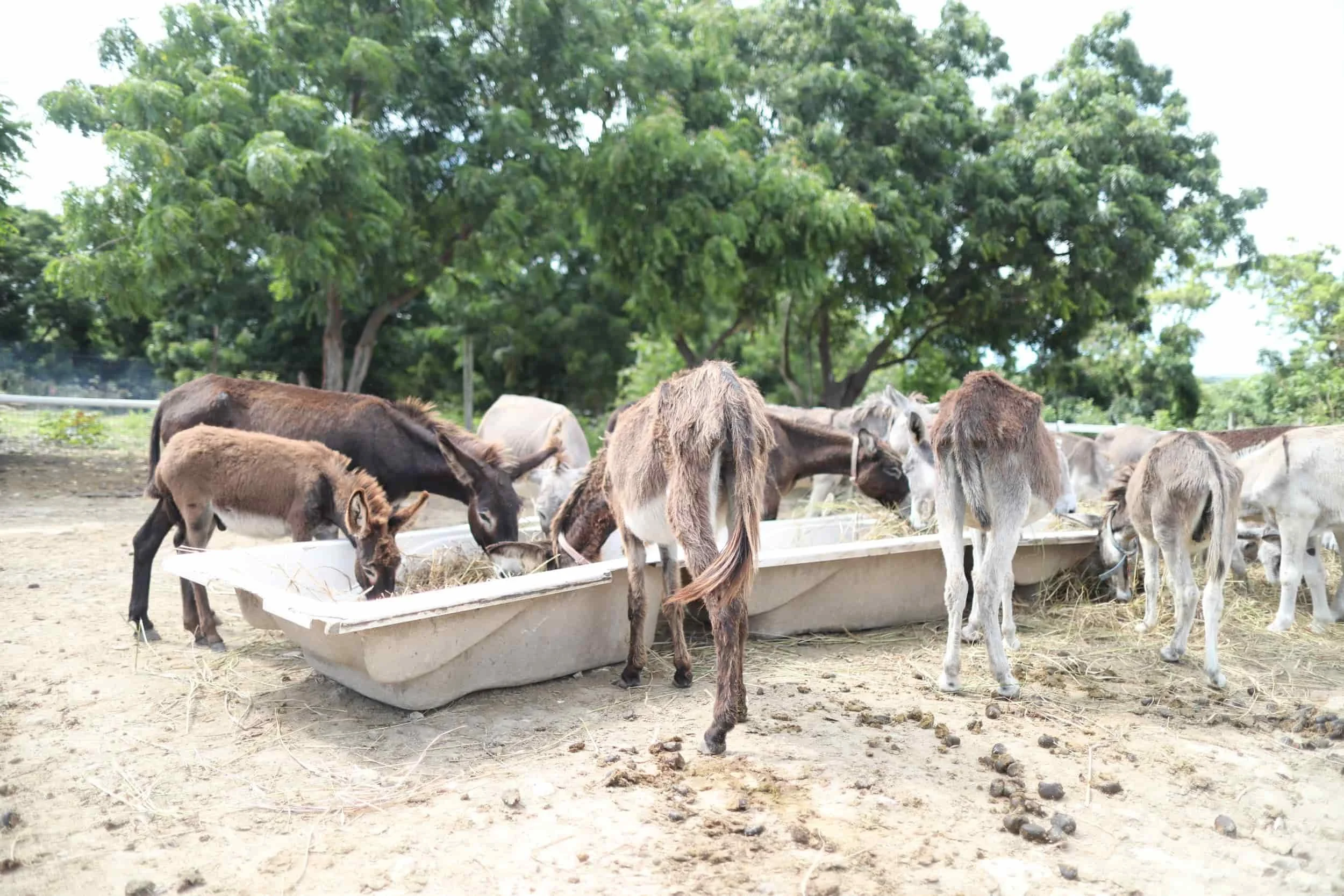

Free to visit Tuesday through Saturday from 10 a.m. to 3 p.m., this little sanctuary is a peaceful haven for donkeys in need. Rescuing animals that have been neglected, abused, injured — or simply deemed a nuisance for nibbling crops or wandering onto roads — the team here offers compassionate, hands-on care.
Visitors can see the full range of treatment: veterinary check‑ups, dental work, farrier services and carefully planned nutrition. It’s a quiet, heartfelt place where these gentle creatures are given a second chance and a slower, sweeter pace of life.

When the animals arrive, the stallions are usually castrated, while the mares often come already with little surprises on the way. With a nearly year‑long gestation, the local team gets treated to unexpected arrivals — like the tiny foal who quickly stole my heart during my visit.
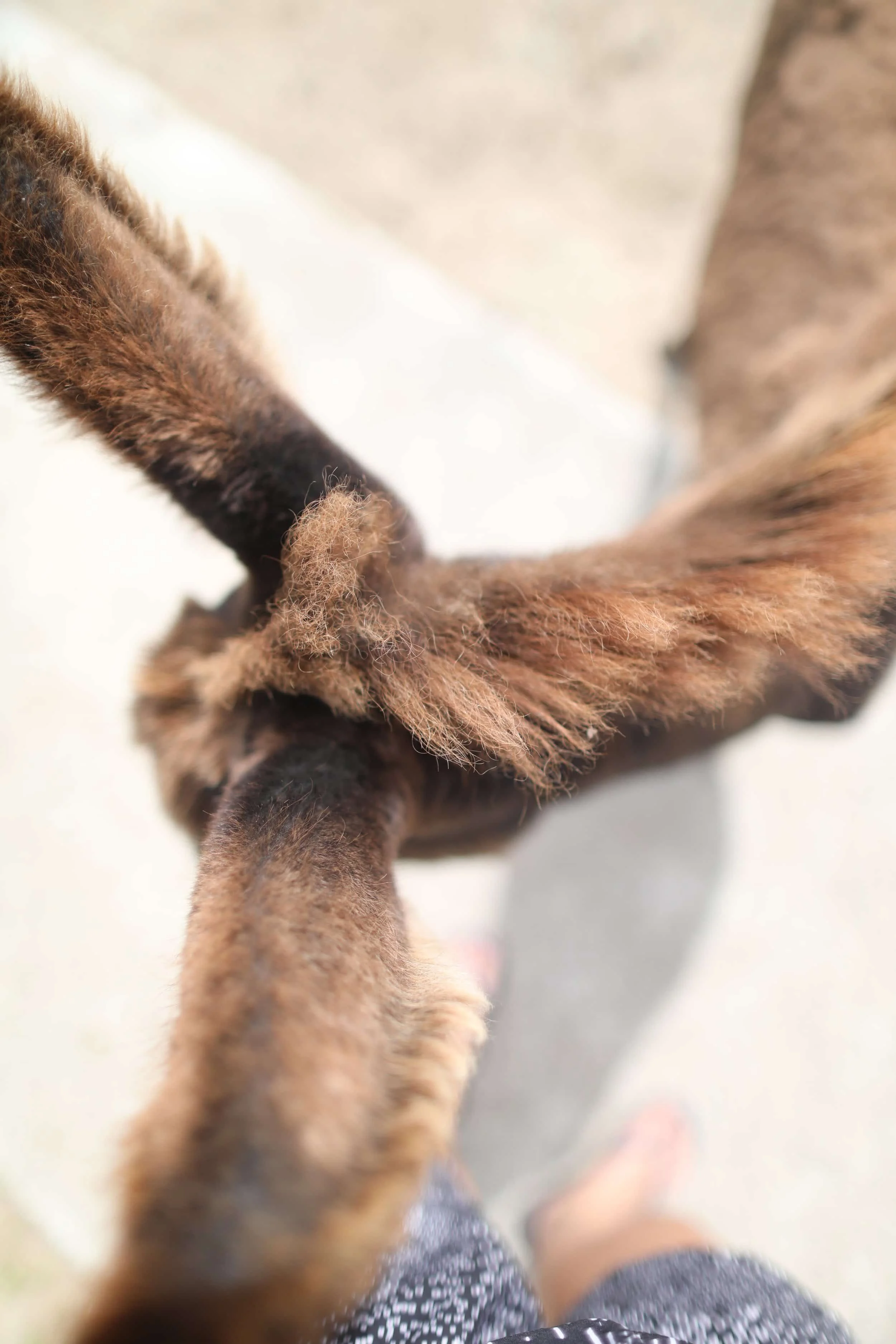
They handed me a brush for the donkeys as soon as I arrived, though warned me to hang back — feeding time was underway. Most of them kept to their troughs but the littlest one, a curious bundle of ears and whiskers, shuffled over. Playful and affectionate, it nudged the brush from my hand and promptly decided I was its friend.
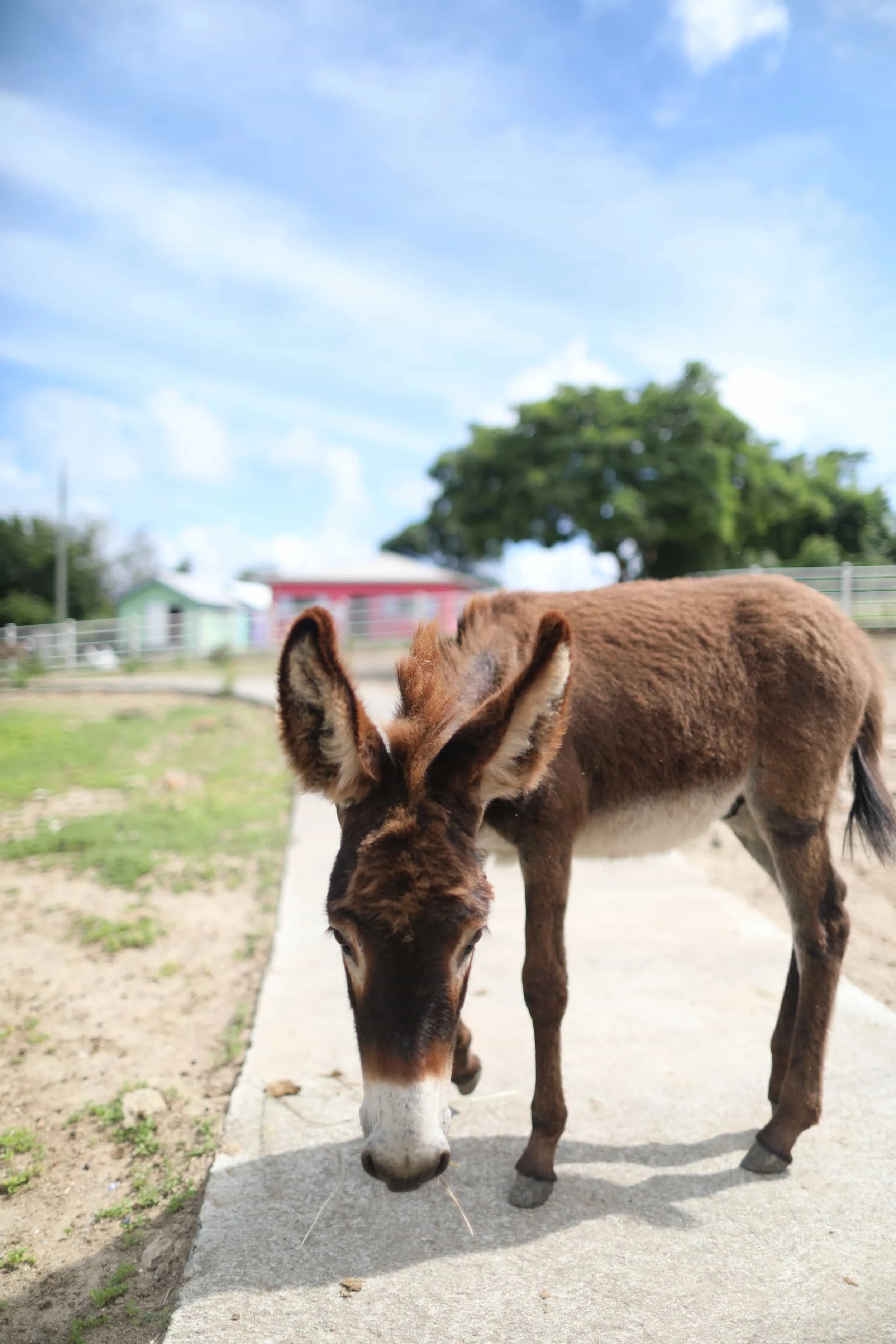
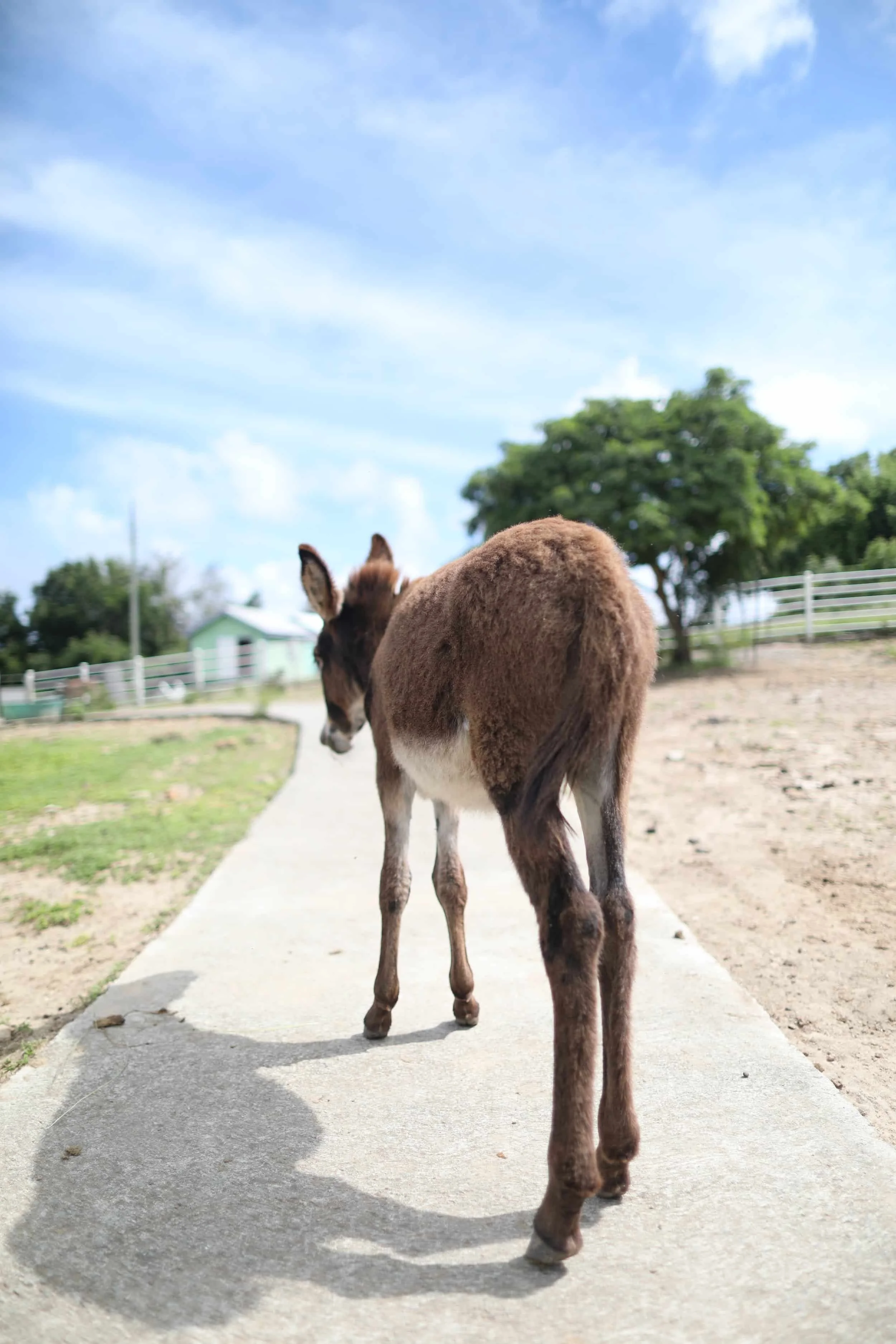
Often, we stood so close that a perfect photo was out of reach — but proximity had its perks. I could run my hand along the foal’s back, feeling the coarse, upright mane tickle my palm. Its fuzzy brown coat was wiry and pleasantly rough, and those oversized ears — alert and comical — made me think of my little Frenchie waiting at home. The moment felt small and intimate, like a special souvenir I could carry without a picture.
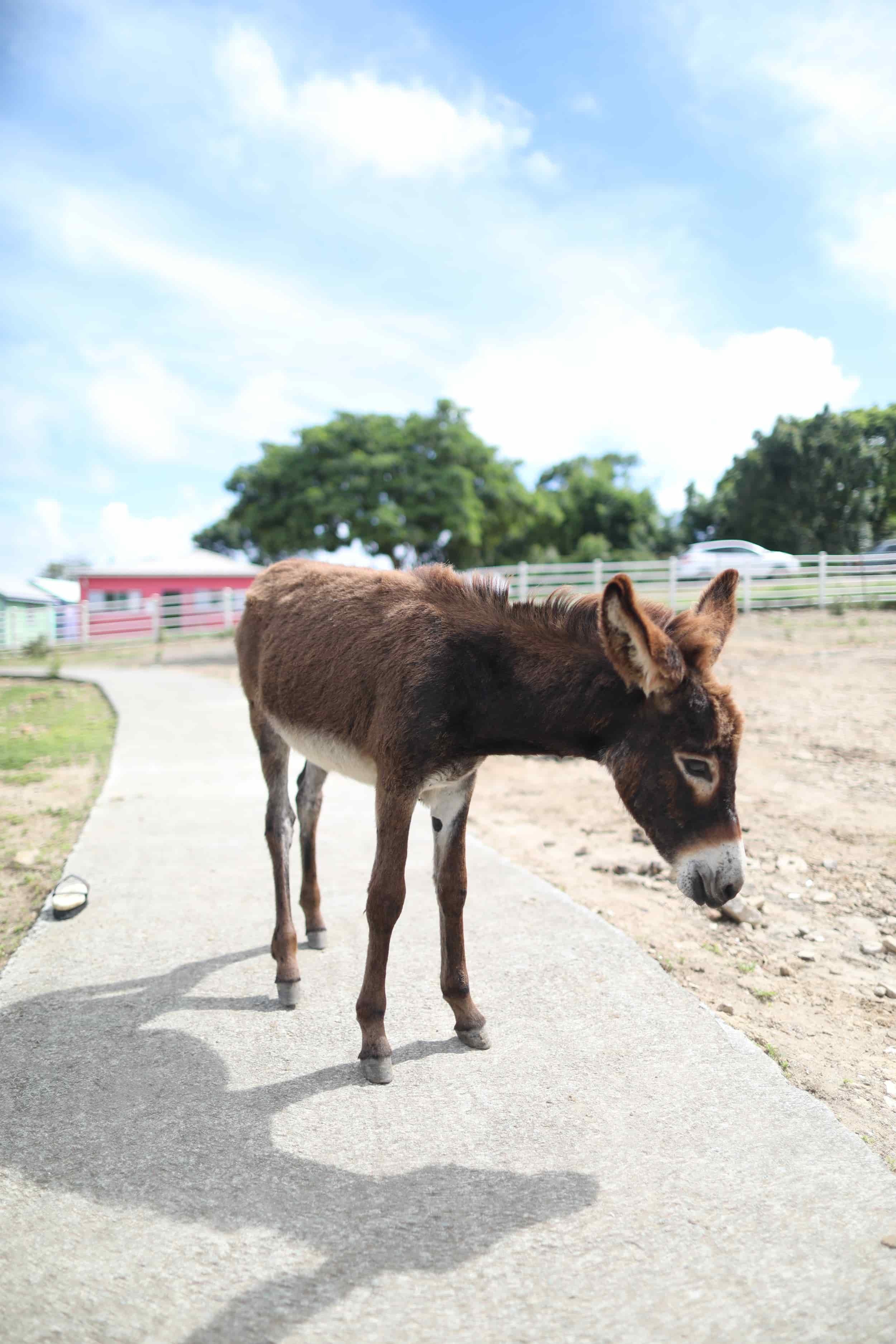
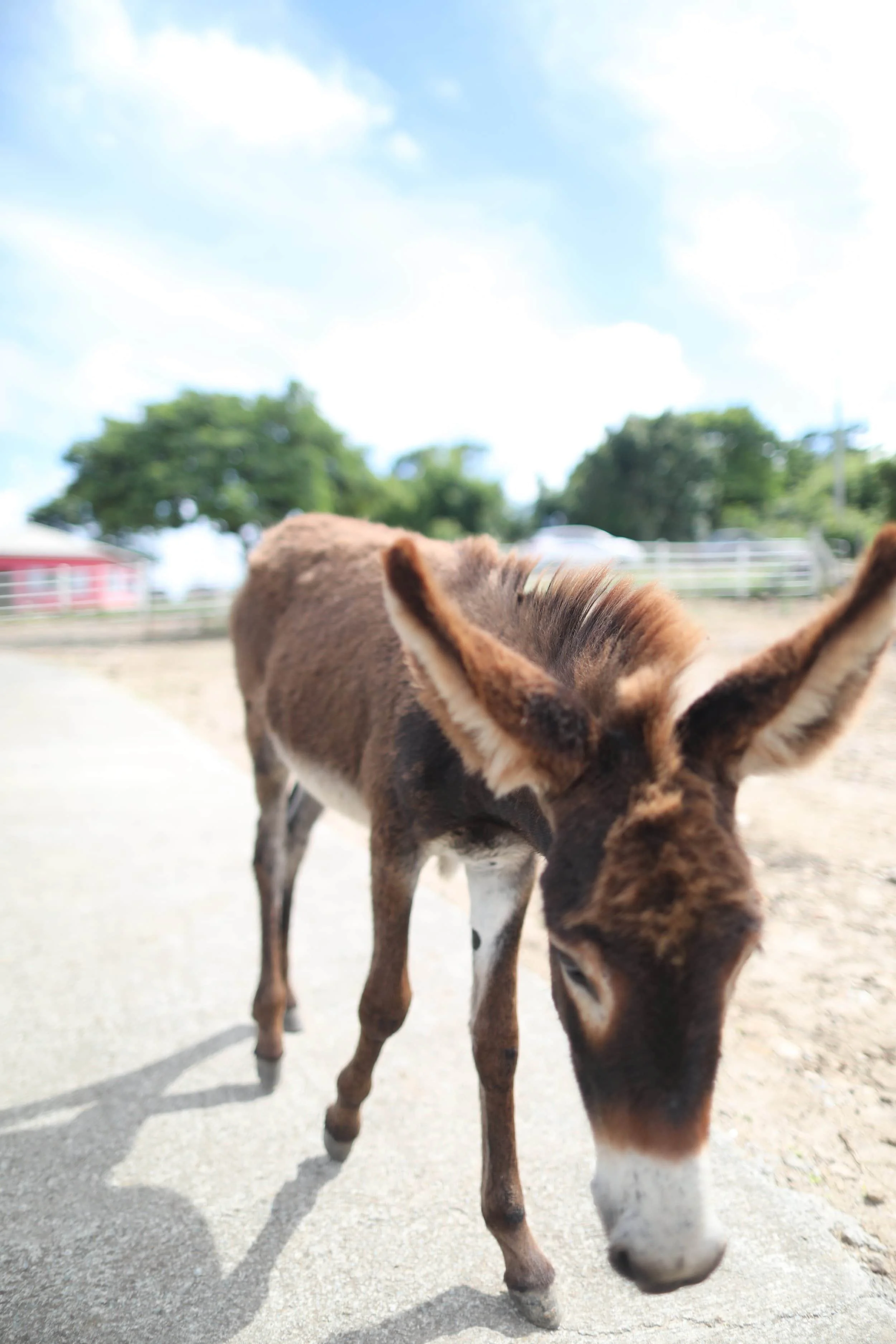
Eventually, the donkey lost interest, gave a languid flick of its ears and ambled back toward its herd, who were contentedly munching their afternoon meal in the warm sun.
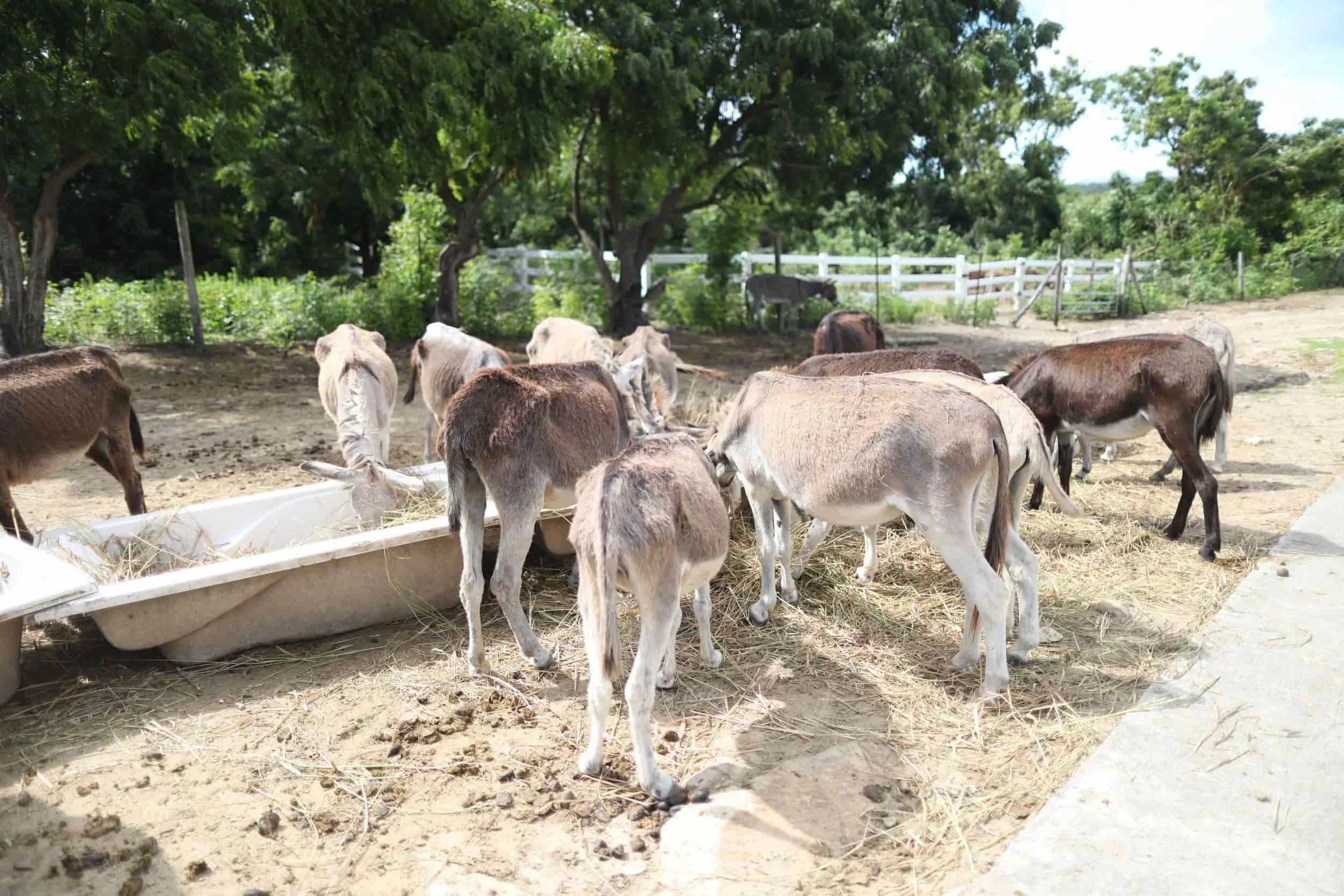
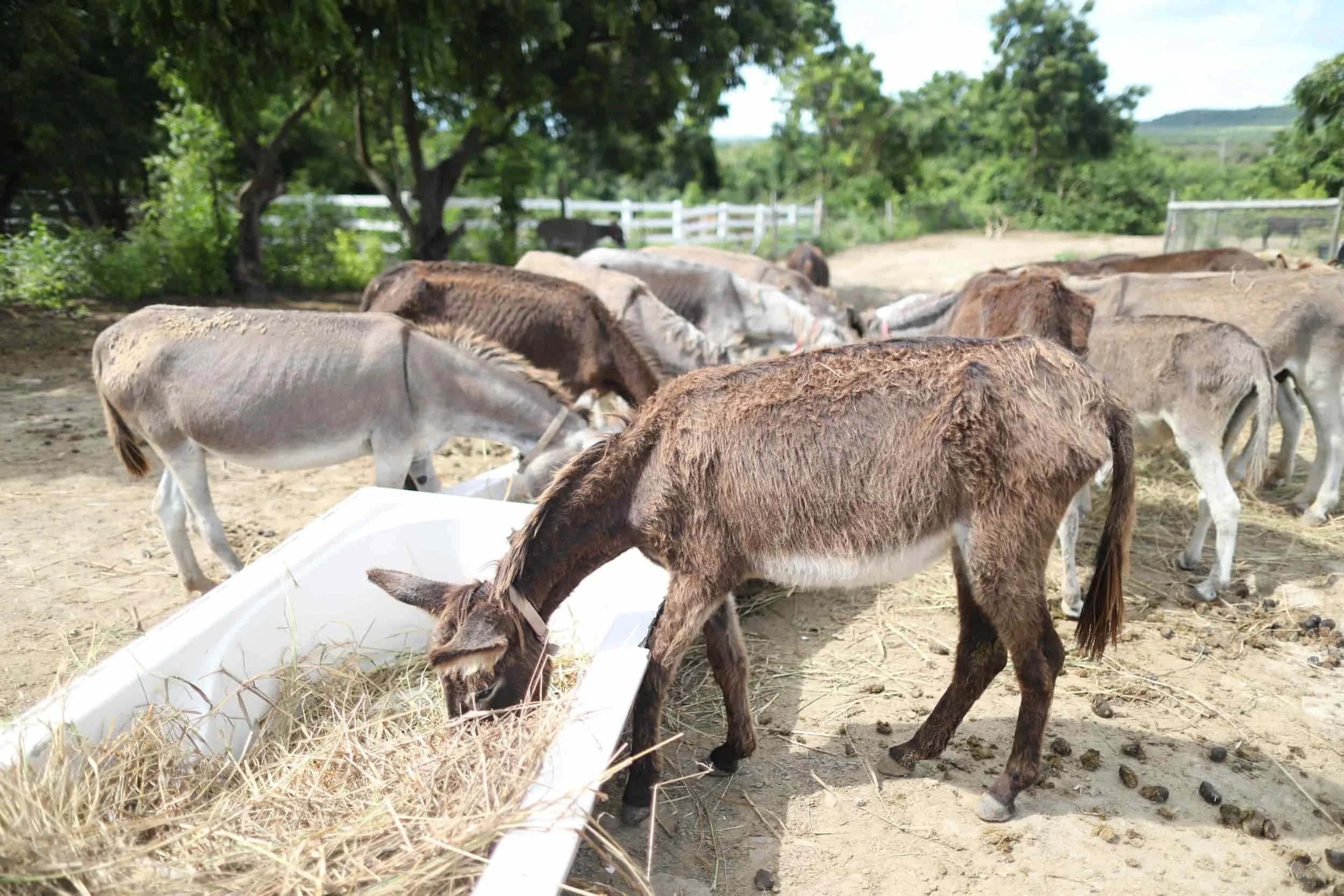
Stevie and July are the sanctuary’s resident celebrities — even if you can’t always tell them apart. Stevie, once injured in a roadside accident that left him blind, has turned his misfortune into an invitation for affection. With patient hands and a steady routine, the caretakers have helped him find confidence again and he soaks up every gentle touch and whispered greeting. July pads alongside him like a loyal companion and together they draw visitors in with soft neighs and unmistakable charm.
For me, it’s the soft, unhurried moments and unexpected connections that fill my travels with joy. Visiting Antigua’s animal sanctuaries is a delightful highlight of the island — gentle, soulful experiences that stay with you long after you’ve left. Be sure to tuck them into your list of "what to do in Antigua" — little detours that linger in the heart long after the trip ends.
My Bibimbap Moment
Every destination adds another ingredient to our life's recipe, often through the experiences we least expect. My visit to Antigua's animal sanctuaries wasn't defined by sightseeing or adventure but by quiet moments shared with some very special residents. Here's the ingredient they added to my Bibimbap Life.
Today’s Bibimbap Recipe
🥢 Flavor: Heartwarming
🌿 Ingredient: Gentleness
❤️ Best Memory: Feeding carrots to the tortoises and getting friendly with the foal
🎒 Take With You: Some of the most meaningful travel memories aren't the loudest or the grandest. Sometimes they're the quiet moments that remind us how deeply we can connect — with nature, with animals and with ourselves.
When I think back on Antigua, I don't immediately picture the beaches or turquoise water. I remember the quiet moments instead — a curious tortoise stretching out for another carrot, the gentle rhythm of brushing a donkey's coat and the calm that settled in when nothing else seemed to matter. Those small interactions stayed with me because they asked for nothing more than kindness and presence. Looking back, I think that's what made the experience feel so meaningful.
Planning Your Visit to Laviscount Island
Visiting the giant tortoises on Laviscount Island takes a little more planning than simply showing up at an attraction. The experience involves getting out to the small offshore island, where you can spend time among the tortoises and explore a quieter side of Antigua away from the main beaches and resorts.
How you arrange transportation will shape much of the visit, so confirm your boat or tour ahead of time and give yourself enough time to enjoy the island without rushing back to shore. Come prepared for sun, water and an outdoor experience — and, most importantly, let the tortoises set the pace once you arrive.
When to Go
Antigua is warm year-round, so Laviscount Island can be visited in any season. The drier months, generally December through April, tend to bring sunnier weather and calmer conditions for the boat ride but this is also Antigua’s busiest travel season.
If you have flexibility, aim for earlier in the day, when temperatures are a little cooler and you’ll have more time to enjoy the island before the afternoon heat. Because reaching Laviscount involves traveling by boat, keep an eye on the weather and be prepared for plans to shift if sea conditions aren’t cooperating.
What to Expect & Bring
Expect gentle, up-close wildlife moments with friendly Aldabra tortoises — wear breathable, sun-safe clothing and sturdy closed-toe shoes, bring sunscreen and a hat and verify what’s provided while you feed the resident giants carrots.
Wildlife Interactions: You can see and hand-feed over 50 giant Aldabra tortoises, plus spot Lesser Antillean iguanas and colorful parrots under guide supervision.
What to Wear: Pack light clothing for the warm tropical climate, comfortable walking shoes for easy nature trails and sun protection.
Inclusions: Standard tours typically provide drinking water or fruit punch and the carrots to feed the tortoises.
How to Get There
Laviscount Island sits just off Antigua’s northeast coast and is accessible only by boat. The simplest way to visit is through the Stingray City land base near Seaton’s Village, where boats make the short crossing to the island. The ride is roughly 5–10 minutes, so most of the journey is actually getting across Antigua to the departure point rather than getting out to the island itself.
Drive or Taxi: If you have a rental car, you can drive to the Stingray City land base and check in there for your scheduled departure. Otherwise, arrange a taxi from your hotel or accommodation. Transportation can also be arranged with some tour operators for an additional charge.
Guided Tour: You can visit Laviscount Island on its own or combine it with the nearby Stingray City experience. The combination makes sense if you want to turn the trip across the island into a longer wildlife-focused excursion rather than visiting solely for the tortoises.
I drove myself to Stingray City and took the boat from there, which was straightforward once I found the entrance. Online directions were a little confusing, so give yourself extra time rather than cutting it close for your scheduled departure.
💡 Local Tip | If you’re driving yourself, confirm the current meeting point and departure time directly with your tour operator before setting out. Boat schedules and tour times can change, and Laviscount Island isn’t somewhere you can simply arrive independently and catch a random water taxi.
How Long to Stay
The Laviscount Island tortoise experience itself doesn’t require an entire day. Allow a couple of hours for the boat crossing, time with the giant tortoises and a little room to explore the island without rushing.
If you’re combining Laviscount with Stingray City, plan on spending closer to a half day on the overall experience. I’d avoid stacking too much else into the schedule — the boat transfers and timing can add a little unpredictability, and this is much more enjoyable when you can slow down and spend some time with the tortoises rather than treating them as a quick stop.
Tours & Day Trips
You don’t necessarily need a full organized tour to visit Laviscount Island but booking one can make sense if you’d rather have transportation and the boat crossing handled for you — particularly if you’re visiting Antigua without a rental car.
Visit Laviscount Island: If the giant tortoises are your main reason for making the trip, you can arrange your visit through the operators at the Stingray City departure point. This keeps the experience focused on Laviscount without turning it into a full-day island excursion.
Combine It with Stingray City: Since both experiences use the same departure area, pairing Laviscount with Stingray City is one of the easiest ways to make more of the journey to Antigua’s northeast coast. If both interest you, I’d consider doing them together rather than making two separate trips.
Join an Organized Tour: If you don't want to coordinate transportation and boat transfers yourself, look for an excursion that includes Laviscount Island. Some options include hotel or cruise-port transportation or combine the tortoises with other stops around Antigua.
Explore tour to Laviscount Island →
You can also book directly with local operators such as Stingray City Antigua, particularly if you want to combine Laviscount with their stingray experience, or through Adventure Antigua.
💡 Local Tip | When I visited, it was possible to arrive at Stingray City and arrange the short boat trip to Laviscount without booking far in advance. I wouldn't rely on that during busier periods, though. If seeing the tortoises is a priority, confirm your visit before you go.
Good to Know
It’s a Small Island: Laviscount is a relatively intimate experience rather than a large wildlife park. You don’t need hours of sightseeing once you arrive — the tortoises are very much the reason to come.
The Tortoises Roam Freely: Part of what makes the visit memorable is being able to see the giant tortoises moving around the island rather than viewing them from behind traditional zoo-style enclosures. Give them space and follow the guidance of the staff when interacting with them.
Follow the Sanctuary’s Lead: Feeding or touching the tortoises may be part of your visit but follow the current instructions from the staff rather than assuming every animal wants — or should have — the same interaction.
Expect an Outdoor Experience: There’s limited escape from Antigua’s heat and sun once you're on the island and conditions can feel considerably hotter around the middle of the day. This is one experience where an earlier visit can be particularly nice.
Boat Plans Can Shift: Access depends on the water, so weather and sea conditions can occasionally affect departure times or crossings. Leave a little flexibility in your schedule rather than planning something time-sensitive immediately afterward.
Planning Your Visit to Antigua Donkey Sanctuary
A visit to the Antigua Donkey Sanctuary is one of the sweetest — and easiest — animal experiences to add to your time on the island. The sanctuary provides a home for rescued and roaming donkeys and visiting gives you a chance to meet some of its residents while learning more about the work being done to care for them.
You don’t need to build an entire day around the experience but it’s worth arriving with enough time to slow down, wander and let the donkeys come to you. Check the current opening hours before setting out, follow the sanctuary’s guidance when interacting with the animals and consider supporting their work while you’re there.
Hours & Location
The Donkey Sanctuary welcomes visitors on most days, tucked into the island’s serene countryside where rescued donkeys roam peacefully beneath swaying palm trees.
Days and Times: Open Tuesday through Saturday from 10:00 AM to 3:00 PM (closed Sunday and Monday).
Location: Found in southeastern Bethesda Village, roughly a 30-minute drive from St. John’s or close to English Harbour.
Road Conditions: The final stretch of the road leading to the sanctuary is a gravel and dirt path.
Rules & Activities
Please refrain from riding the donkeys — gentle pats, soft brushing and quiet admiration are welcome, and your donations help sustain the Antigua Island Donkey Sanctuary’s care and rescue efforts.
No Riding: This is a rescue and welfare refuge operated by the Antigua & Barbuda Humane Society, not an entertainment park; riding the donkeys is not allowed.
Interaction: Visitors are handed a brush upon arrival to gently groom, stroke and take photos with the friendly, rehabilitated donkeys.
Support: While entry is free, donations (cash, card or adoption sponsorships for about EC$80 or $30 USD) are heavily relied upon to cover food and vet care for over 150 resident animals. There is also a small gift shop and second-hand bookshop on-site.
Good to Know
It’s a Working Sanctuary: The Antigua Donkey Sanctuary is first and foremost a place dedicated to caring for rescued and roaming donkeys, rather than a traditional tourist attraction. Your visit helps support that work.
Let the Donkeys Come to You: Some residents may be more interested in visitors than others. Give them space, move calmly and let the animals decide how much interaction they’re comfortable with.
Follow Feeding Guidelines: Don’t bring your own food for the donkeys unless the sanctuary specifically allows it. Follow the staff’s guidance about what — and whether — you can feed them during your visit.
Donations Make a Difference: If admission is free when you visit, consider leaving a donation or supporting the sanctuary in another way. Caring for such a large number of animals is an ongoing commitment.
Expect a Simple, Outdoor Experience: This isn’t a polished animal park and that’s part of its charm. You’re visiting the donkeys where they’re cared for, so come expecting something relaxed, informal and centered on the animals rather than amenities.
Antigua Travel Essentials
Antigua is easy to settle into but a little planning gives you much more freedom to explore beyond the beach. The island is small enough to experience from a single home base, although winding roads and scattered sights mean getting around can take longer than you might expect.
Choose where you stay based on the kind of Antigua experience you want, give yourself a few days to explore without rushing and leave some room between planned excursions for beaches, roadside stops and whatever catches your attention along the way. This is an island where having a loose plan works better than trying to schedule every hour.
Where to Stay in Antigua
Where you stay in Antigua depends largely on the kind of island experience you want. St. John’s and the northwest coast put you close to restaurants, shops and some of the island’s larger resorts, while English Harbour and Falmouth Harbour have more historic character, restaurants and a lively marina atmosphere. For something quieter, Antigua’s east coast feels more removed from the busier resort areas and puts you closer to places like Laviscount Island and Devil’s Bridge.
If it’s your first visit, I’d look at English Harbour for a mix of character, history and places to eat or the northwest coast if beach access and convenience are higher priorities. Antigua is small enough to explore by car, so I wouldn’t choose your base solely around the animal sanctuaries — pick the part of the island where you’ll actually want to come home at the end of the day.
Where I Stayed
For a barefoot beach escape — Conch Beach Cabins
I stayed at Conch Beach Cabins, a small collection of rustic wooden cabins sitting directly on Turners Beach on Antigua’s southwest coast. This is the kind of Caribbean stay I love — simple, intimate and connected to where you are, with the beach just steps from your door rather than buried somewhere inside a sprawling resort. The cabins have outdoor rain showers, private loungers and breakfast included next door but no TVs — which feels pretty appropriate when this is your view.
Where I’d Stay
If Conch Beach Cabins isn’t quite what you’re looking for, these are a couple of the smaller Antigua properties that caught my eye. I’d choose based less on traditional hotel amenities and more on which part of the island you want to come home to.
For a quiet beach cottage — Galleon Beach Resort
Near English Harbour, Galleon Beach Resort has renovated individual cottages tucked right along Galleon Beach. I like that it gives you the privacy and relaxed feeling of a vacation rental while keeping you close to the restaurants, history and activity around English Harbour. There’s also snorkeling right off the beach, making this one especially appealing if you want more time in the water.
For an easy beachfront base — Buccaneer Beach Club
If you’d rather stay closer to St. John’s, Buccaneer Beach Club is a small 18-unit property tucked into tropical gardens on Dickenson Bay. The suites and cottages have kitchenettes and you get direct beach access along with a pool and a little more independence than you’d have at a traditional resort. I like this one for travelers who want the convenience of the northwest coast without staying at one of Antigua’s enormous resort properties.
Additional Options
Prefer a place of your own?
Honestly, a vacation rental may be one of my favorite ways to stay in Antigua. There are apartments, cottages and small homes scattered around the island and having your own space makes it easier to choose your location based on the beach, village or part of the island you actually want to experience. It’s also worth comparing rentals if the smaller boutique hotels are limited or more expensive for your dates.
Browse all vacation rentals in Antigua →
For history & character — Admiral’s Inn and Gunpowder Suites
If I were going to splurge a little more, Admiral’s Inn and Gunpowder Suites would be high on my list. Set within UNESCO-listed Nelson’s Dockyard, the hotel occupies restored 18th-century buildings on both sides of the harbour, with original architectural character alongside gardens, waterfront views, restaurants and an infinity pool. This is the one I’d choose if the place you stay is part of the Antigua experience, rather than simply somewhere to sleep
How to Get Around Antigua
Antigua is a relatively small island but getting around can take longer than the distances suggest. Roads are often narrow and winding and many of the beaches, villages and smaller attractions are spread well beyond St. John’s. If you want to explore independently, having your own transportation makes a big difference.
Rental Car: This gives you the most freedom and is what I’d choose if you plan to explore beyond your hotel or resort. Remember that driving is on the left and some smaller roads can be rough or poorly marked. Take your time and don’t rely too heavily on estimated driving times.
Taxi: Taxis are widely used and a good alternative if you’re not comfortable driving. They work particularly well for airport transfers, dinners and individual excursions, although costs can add up if you’re exploring extensively.
Public Bus: Local buses connect St. John’s with towns and villages around the island and can be an inexpensive way to get around. They’re better suited to flexible days than tightly scheduled sightseeing, particularly when you need to reach a specific attraction at a specific time.
How Long to Stay in Antigua
For a first trip to Antigua, I’d give yourself at least four to five days, with a week being even better if you want the trip to feel relaxed. The island may be small but between beaches, historic sites, wildlife experiences and exploring different parts of the coast, it’s easy to fill your days without trying very hard.
A longer stay also gives you room to balance sightseeing with the reason most people come to Antigua in the first place: slowing down and enjoying the Caribbean. Rather than scheduling an excursion every day, leave some space for an unplanned beach afternoon, a long lunch or simply staying put somewhere you love.
If you’re hoping to visit both the Antigua Donkey Sanctuary and Laviscount Island, I’d work them into separate days rather than building the itinerary around them. They’re easy additions to a broader day of exploring their respective parts of the island.
Tours & Day Trips on Antigua
You can explore plenty of Antigua independently but a few experiences make more sense with someone else handling the logistics — particularly anything that gets you out on the water. I wouldn’t fill every day with organized activities but choosing one or two is an easy way to experience a side of the island you might otherwise miss.
Sailing & Catamaran Cruises: With coastline in nearly every direction, getting out on the water feels like an essential Antigua experience. Look for smaller sailing trips, catamaran cruises or sunset sails depending on whether you want a full day of swimming and snorkeling or simply a few hours on the water.
Snorkeling & Marine Experiences: Guided snorkeling trips can take you beyond the beaches to reefs and offshore spots that are harder to reach independently. Some combine snorkeling with sailing, lunch or stops at quieter beaches.
Island Tours: If you don’t want to rent a car, a guided island tour is an easy way to connect several of Antigua’s highlights in one day. Routes often include places such as Nelson’s Dockyard, Shirley Heights and Devil’s Bridge, along with viewpoints and smaller stops along the way.
Food & Rum Experiences: For something away from the beach, look for experiences centered around Antiguan food, rum and local producers. These can be a nice way to add more of the island’s culture to a trip that might otherwise become very beach-heavy.
✨ My Take | I’d use tours selectively here. Rent a car or arrange a taxi for the places that are easy to explore independently, then spend your tour budget on an experience that gives you something you can’t easily recreate on your own — especially a day on the water.
Want to explore more of Antigua?
Browse sailing trips, snorkeling excursions, island tours and other experiences to find something that fits the way you want to see the island.
Good to Know
English Is the Official Language: English is widely spoken throughout Antigua, so communicating with hotels, restaurants, drivers and tour operators is generally straightforward.
Currency Is Flexible: The official currency is the Eastern Caribbean dollar (EC$) but US dollars are widely accepted. Keep some local cash on hand for smaller businesses, roadside stops and places where cards may not be practical.
Island Time Is Real: Things don’t always operate on a rigid schedule, particularly away from the larger resorts and tourist areas. Leave a little flexibility in your day rather than planning everything back-to-back.
Distances Can Be Deceptive: Antigua looks tiny on a map but narrow roads, traffic and slower driving conditions mean crossing the island can take longer than expected. Give yourself extra time when you have a scheduled tour or boat departure.
Check Before You Go: Hours, tour schedules and access to smaller attractions can change. If you're heading somewhere specifically for an experience, confirm the current details before driving across the island.
Don’t Spend the Whole Trip Chasing Sights: Some of the best parts of Antigua are the beaches, little roadside stops and stretches of coastline you find between the places on your itinerary. Leave enough room in your plans to stop when something catches your attention.
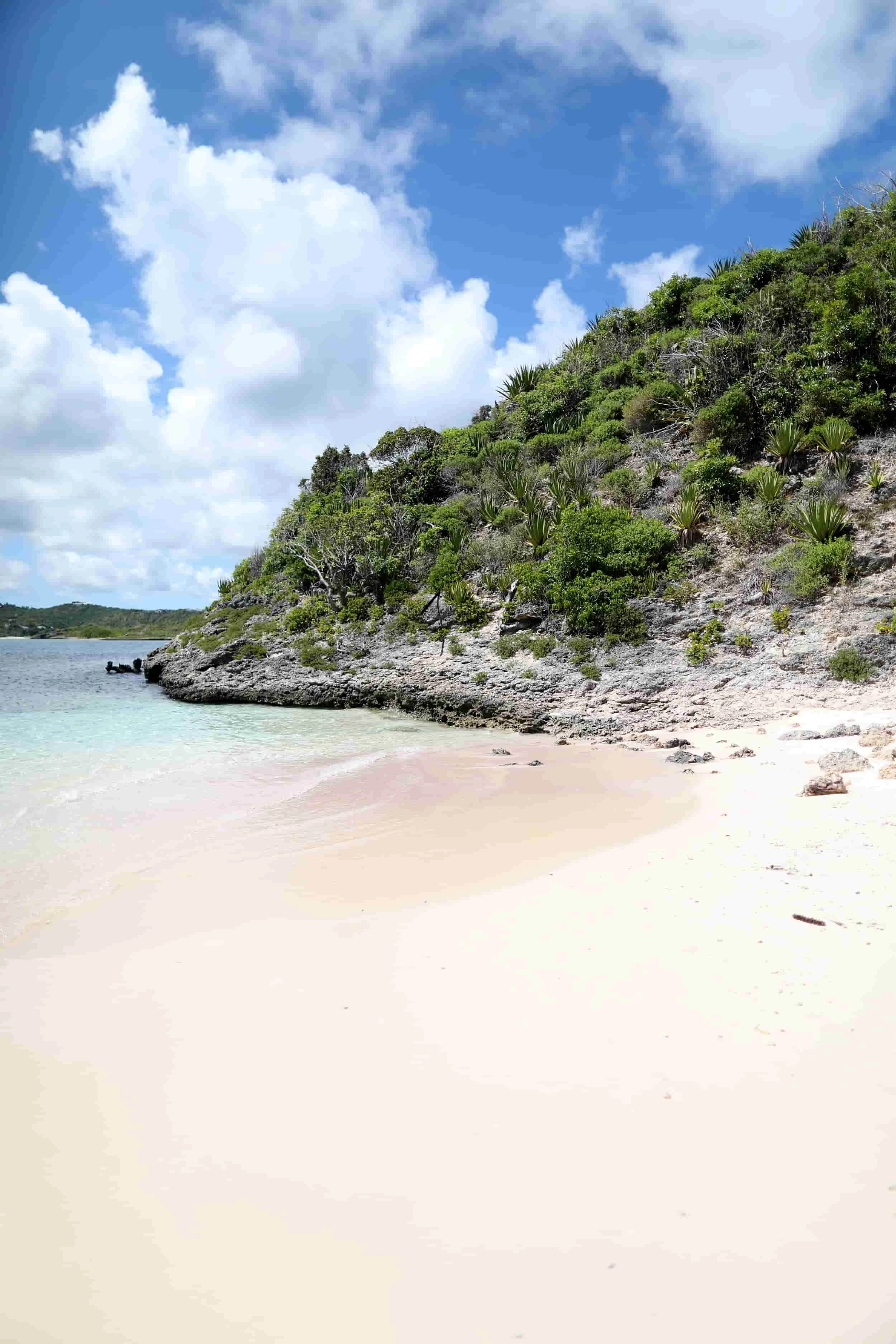
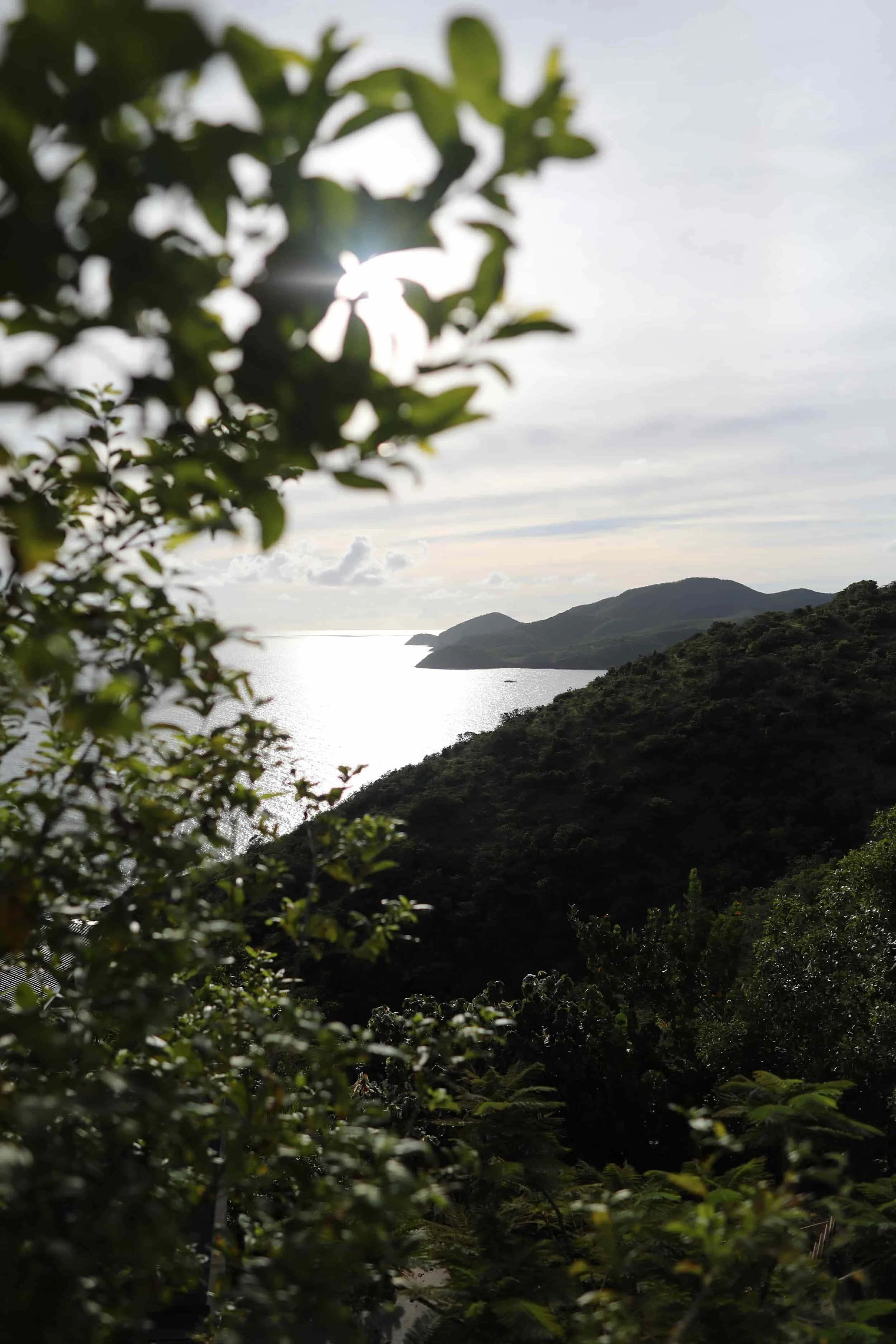
Wondering what to do in Antigua? Wander Antigua’s sanctuaries where wise tortoises and calm donkeys graze beneath palms. Meet, learn and support the animals.