Things to Do in Montenegro: Day Trip to Northern Charms
Discover Northern Montenegro’s wild-heart wonders on an unforgettable day trip from Kotor — winding up to Durmitor’s glacier lakes, delving into Tara Canyon’s dizzying views & climbing the heights of Ostrog Monastery to reveal a soulful, off-the-beaten-path Adriatic — some of the best things to do in Montenegro.
Updated | June 2026
Why Visit Northern Montenegro — Discover a Wild, Soulful Corner of Europe
Montenegro — literally “Black Mountain” — feels like stepping into a storybook. Tucked into Southeast Europe, this tiny country packs dramatic, craggy peaks, mirror‑bright glacial lakes, honeycombed medieval villages and a slender ribbon of Adriatic coastline that shimmers in the sun.
Its roots reach back to the 10th century, when the South Slavic state of Duklja first took shape and the layers of history are visible everywhere: Roman villas buried beside grand palaces, fortified castles perched on hilltops and monasteries painted in colors that still glow. Wander the streets and you can read centuries of influence at every turn — Venetian arches, Ottoman traces and local customs preserved like heirlooms.
Kotor is the jewel everyone raves about — its stone walls, ornate palaces and churches crowd the winding lanes, while the cathedral there is a marvel of age and craft. Spend days drifting between towns and trails, each corner revealing another breathtaking view or quiet slice of life. Montenegro surprises again and again: a coastline one moment, a mountain pass the next and always those small, irresistible pleasures — rustic cheese, fragrant honey, the salty sweetness of fresh seafood and slices of pršut that melt on the tongue.
Northern Montenegro stretches wide and wild — the country’s largest region and the one closest to Kotor — where jagged peaks meet a crisp continental climate. Winters bite here, snow lingers and the growing season is brief but that drama only sharpens the landscape’s beauty. This is a place of soaring mountains and deep, silent valleys, anchored by three national parks — Durmitor, Biogradska Gora and Prokletije — and guarded by two nature parks, Piva and Komovi.
The north of Montenegro is a must-see, filled with wild beauty and charming villages — perfect for an unforgettable day trip from Kotor.
At a Glance
📍 Destination: Northern Montenegro
🕒 Time Needed: Full day
💰 Budget: Approximately €100 day tour
👟 Walking Level: Mild
🌤️ Best Season: Summer (June-August)
☕️ Don’t Miss: Ziplining over Tara River Canyon
🖤 Perfect For: Nature lovers, adventure seekers and history buffs
My Bibimbap Moment
This trip added: Balance.
Northern Montenegro added the ingredient of balance to my Bibimbap Life. In a single day, I found myself wandering the quiet shores of Black Lake, soaring above Tara River Canyon, standing in awe at Ostrog Monastery and enjoying it all over traditional Montenegrin food and drink. Each experience stirred something different, yet together they created a day that felt unexpectedly complete. It reminded me that travel doesn't have to choose between adventure and stillness, or excitement and reflection. Sometimes the most unforgettable journeys are the ones that make room for all of it.
My Two-Week Croatia, Bosnia & Montenegro Itinerary
With a full-time job, most of my bigger international trips happen in two-week windows, usually with a weekend tacked onto either end. This trip took me through Croatia, into Bosnia and Herzegovina and finally to Montenegro — and it remains one of my favorite ways I’ve combined several countries without feeling like I was simply racing between them.
I started in Dubrovnik, using the city as my first introduction to Croatia and taking a day trip across the border to Mostar and Kravica Waterfall in Bosnia and Herzegovina. From there, I traveled north to Split, where I spent time exploring the city and took a speedboat trip out to the Blue Cave, Stiniva Cove, Budikovac and Hvar.
Next came Plitviče Lakes National Park, followed by a quick stop through Zagreb before flying to Podgorica and continuing into Montenegro.
I based myself in Kotor for the final part of the trip, which made it easy to explore the Bay of Kotor while taking longer day trips into the rest of the country. One of those days took me north to Ostrog Monastery, Tara Canyon and Durmitor National Park — the experience covered in this guide. I also explored Lovćen, Montenegro’s historic royal capitals and Lake Skadar on another day.
It was a lot to fit into two weeks but the route gave me a little of everything I’d hoped for: historic cities, islands and coastline in Croatia, a glimpse of Bosnia and Herzegovina and enough time in Montenegro to realize I wanted much more of it.
My route: Dubrovnik → Mostar & Kravica → Split → Croatian Islands → Plitviče Lakes → Zagreb → Kotor → Northern Montenegro
Explore
Here’s where the journey will take us.
01 | Northern Montenegro Tour
St. George Island & Our Lady of the Rocks — Perast
Slano Lake
Floyd Coffee Shop
Dumitor’s Black Lake
Tara River Canyon
Đurđevića Tara Bridge
Or’o in Žabljak — Lunch
Ostrog Monastery
02 | When to Go
03 | What to Bring
04 | How to Get There
05 | Where to Stay
06 | How Long to Stay
07 | Tours & Day Trips
08 | Good to Know
Travel More | Montenegro Travel Guides
Things to Do in Montenegro — Discover Northern Montenegro on a Day Trip from Kotor
Northern Montenegro is an adrenaline-and-spirit destination where rugged alpine beauty meets deep cultural roots. Hike the jagged peaks and glacial lakes of Durmitor National Park for thrilling trails, winter sports and star-filled nights. Zipline across (or float or raft through) the dramatic, Europe-deep Tara Canyon — the perfect blend of jaw-dropping scenery and outdoor adventure. Finish with a visit to Ostrog Monastery, a cliffside pilgrimage site offering serene views and a powerful sense of history and devotion.
Together, Durmitor National Park, the dramatic Tara Canyon and the serene Ostrog Monastery join to form an incredible day trip from Kotor — this travel guide bundles the region’s best sights into one unforgettable adventure. Along the way, a handful of detours — savory bites to savor, fruit-filled booze to sip and vistas that take your breath away.
St. George Island & Our Lady of the Rocks in Perast
Morning light is still soft when you meet the group at 360 Monte, a friendly little tour agency tucked in Old Town Kotor. No more than 20 gather there, plus Marko, your steady driver, and Luka, your guide — a warm, encyclopedic local who tells stories with a charming smile. A short drive later, the group stands at the water’s edge, ready to peer across at two tiny islets near Perast.
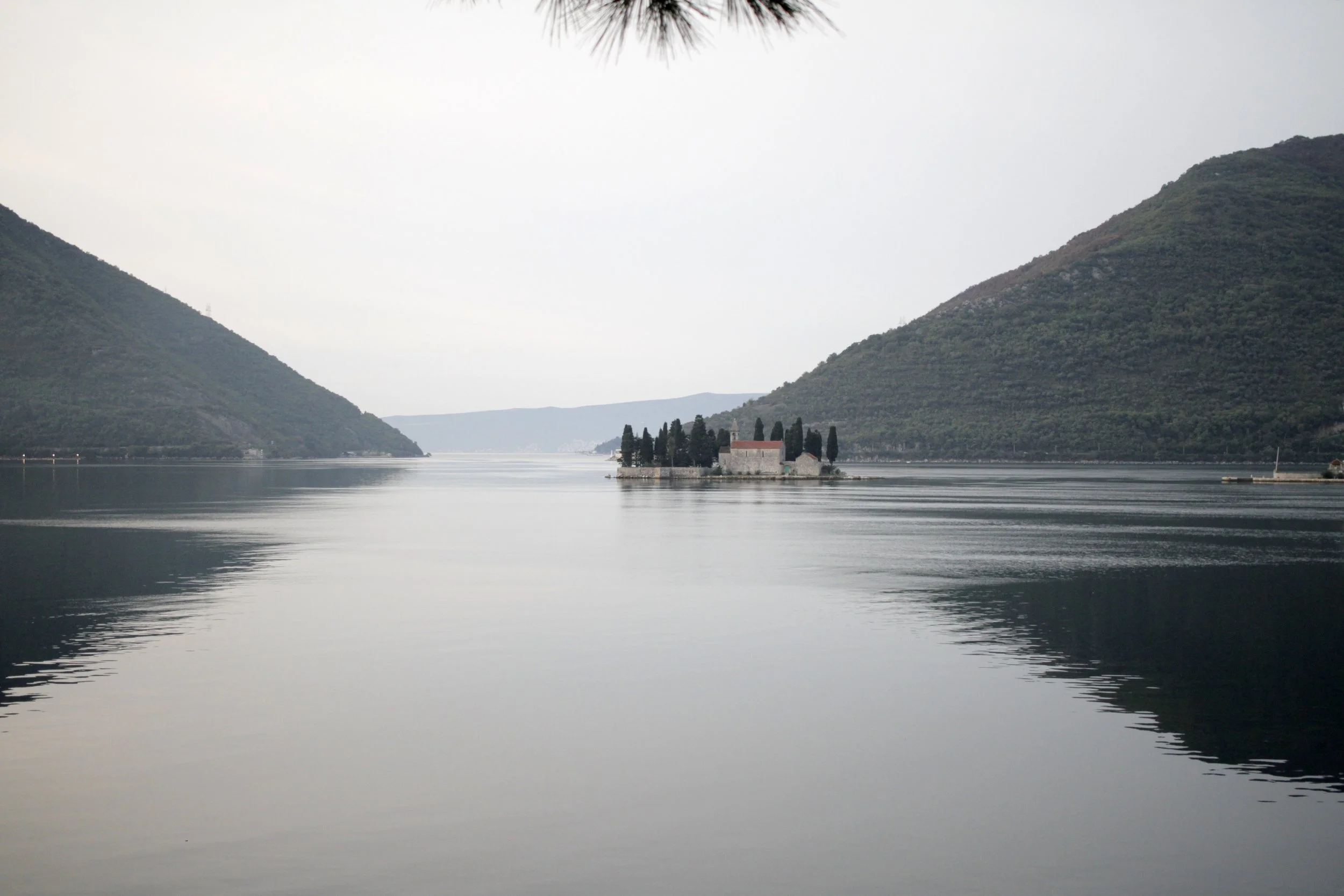
Luka paces you along the shore as he paints their histories in vivid strokes. First to catch the eye is Saint George — Sveti Đorđe — a small, brooding isle that seems to carry its own weather. It’s one of Montenegro’s most enigmatic spots: quietly beautiful but shadowed by a somber past.
Formed naturally in the Bay of Kotor opposite the Verige Strait, the island shelters a 12th-century Benedictine monastery and an ancient cemetery where Perast’s nobility were laid to rest. Listening to Luka, you can almost imagine the centuries pressing gently around you — a place where history, architecture and melancholy meet the sea.
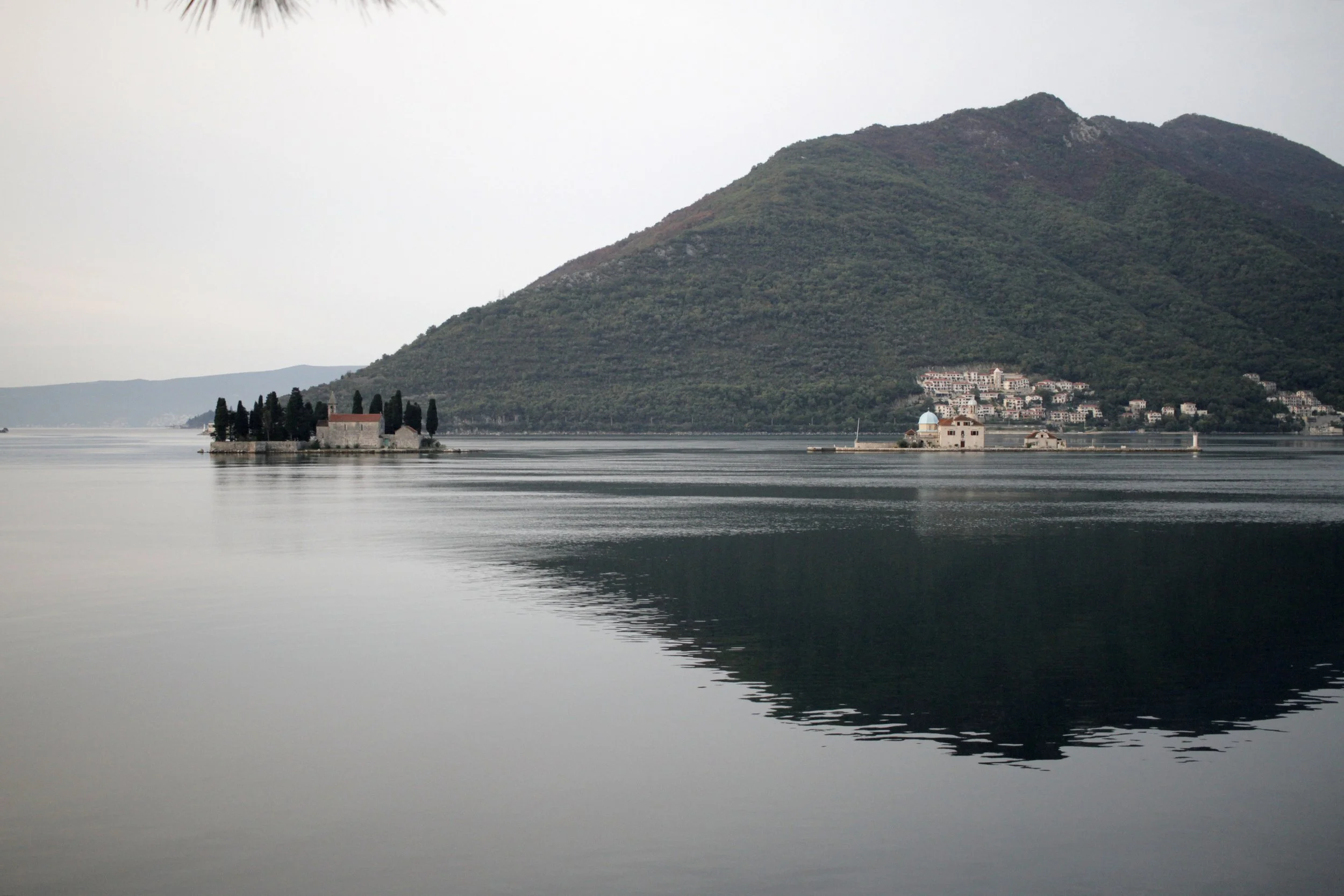
The second island — our Lady of the Rocks, isn’t a natural isle at all but a human-made marvel — a mix of stacked stones and the hulls of old vessels filled with rock. The story behind it reads like folklore: in 1452, two local brothers — seamen bound by an ancient vow — discovered an image of the Madonna and Child on a rock in the sea. After every safe return from their voyages they dropped another stone into the bay. Year by year, that small act of gratitude grew into an island that rose from the water.
The tradition continues and visiting feels like joining a long, gentle ceremony. Every July 22 at sunset, the village gathers for fašinada: locals wade out and hurl rocks into the sea, steadily broadening the island’s shore. Standing there as the sun slips below the horizon, you can feel the weight of generations — a community literally building its sanctuary, one grateful stone at a time.
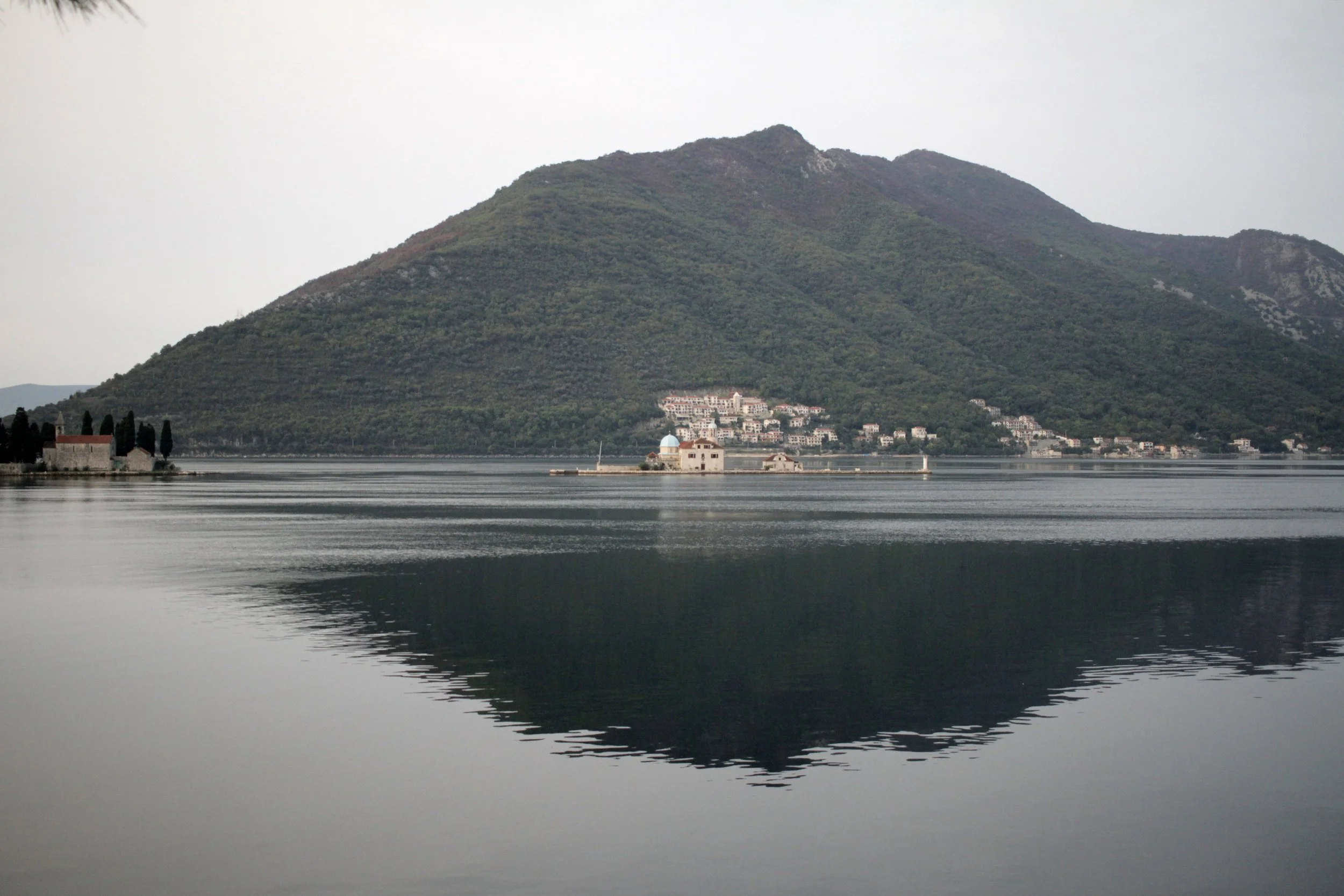
This tiny island’s skyline is dominated by the graceful Catholic Church of Our Lady of the Rocks, a stone landmark rebuilt in 1722 that feels like a tale set against glittering water. Tucked beside the church is a small museum and within easy stroll are a cozy gift shop and the navigation lights that mark the islet’s northern tip — practical little guardians for a place so steeped in sentiment.
Inside the museum, the walls are a quiet gallery of Perast’s past. Sixty-eight paintings by Tripo Kokolja, the 17th‑century Baroque master from nearby Perast, line the rooms — his most monumental work, The Death of the Virgin, stretches over thirty feet and demands you slow your step and take it in. Other Italian masters share space on the walls and an icon of Our Lady of the Rocks by Lovro Dobričević of Kotor, dated 1452, anchors the collection with a sense of deep history.
But it’s the votive offerings that give the museum its true heart. Hundreds of ex‑voto paintings — humble, grateful tokens from seafarers and their families — tell private stories of peril, prayer and safe returns. Shelves also hold votive tablets, collections of old weapons, traditional dress and artifacts tracing life from the Illyrian era to the modern day, each object a small chapter in the region’s seafaring narrative.
The most moving piece is a tapestry by Jacinta Kunić‑Mijović of Perast. Woven with gold, silver and silk, it was the work of a single, patient life: twenty‑five years of stitching while she waited for her beloved to return. She lost her sight before it was finished, yet the tapestry reveals an almost impossible delicacy — one centimeter can hold some 700 stitches — and the startling, intimate detail that she embroidered her own hair into the fabric, as it turned from black to grey over the many years.
Next, climb high into the mountains, pausing often to drink in breathtaking panoramas that unfurl above the Bay. Below you, the Bay of Kotor — the Boka — threaded like a silver ribbon through the Adriatic, a sheltered jewel in southwestern Montenegro. Steep cliffs and sleepy villages hug its shoreline: this southernmost fringe of Dalmatia has been lived in, loved and navigated since antiquity.
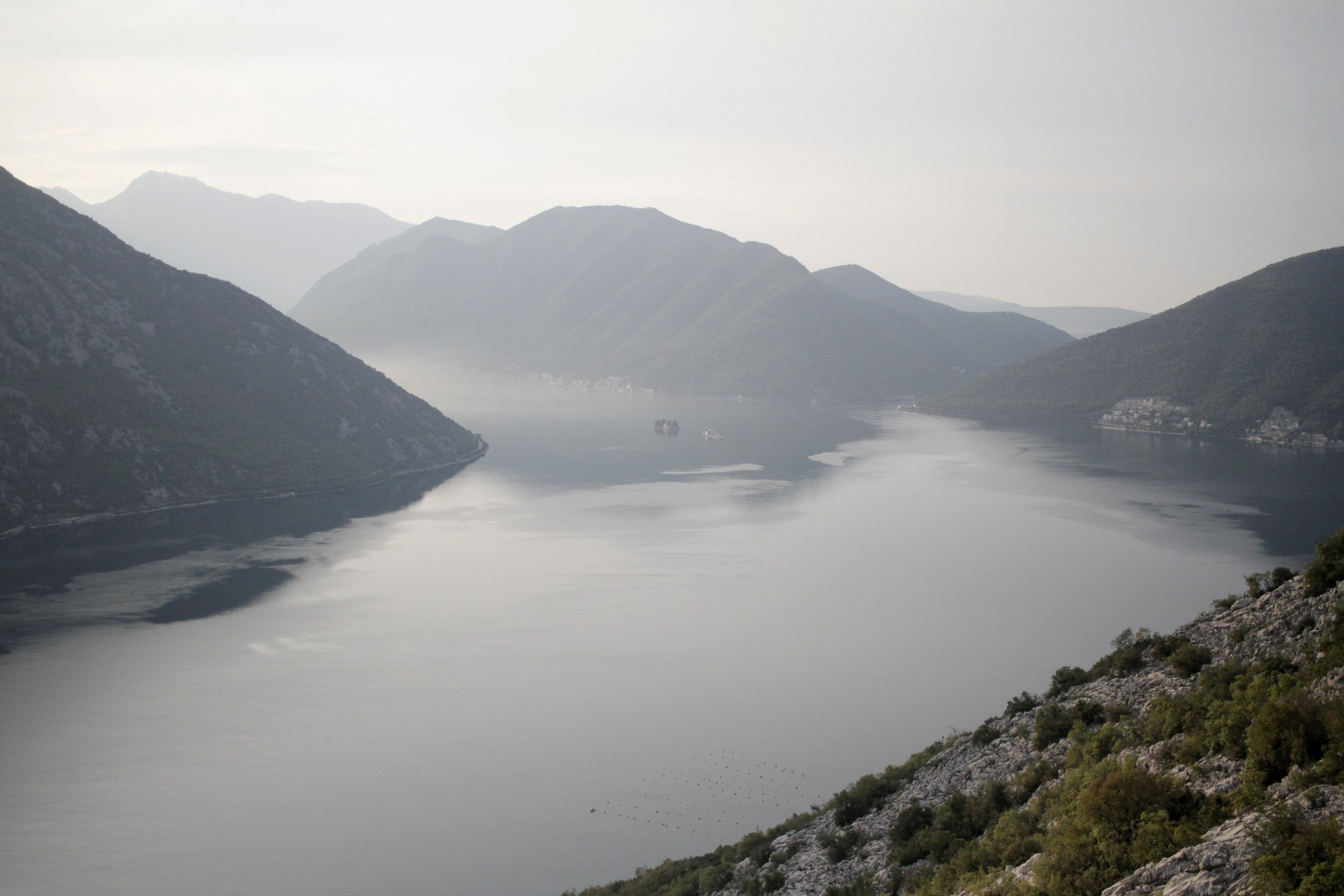
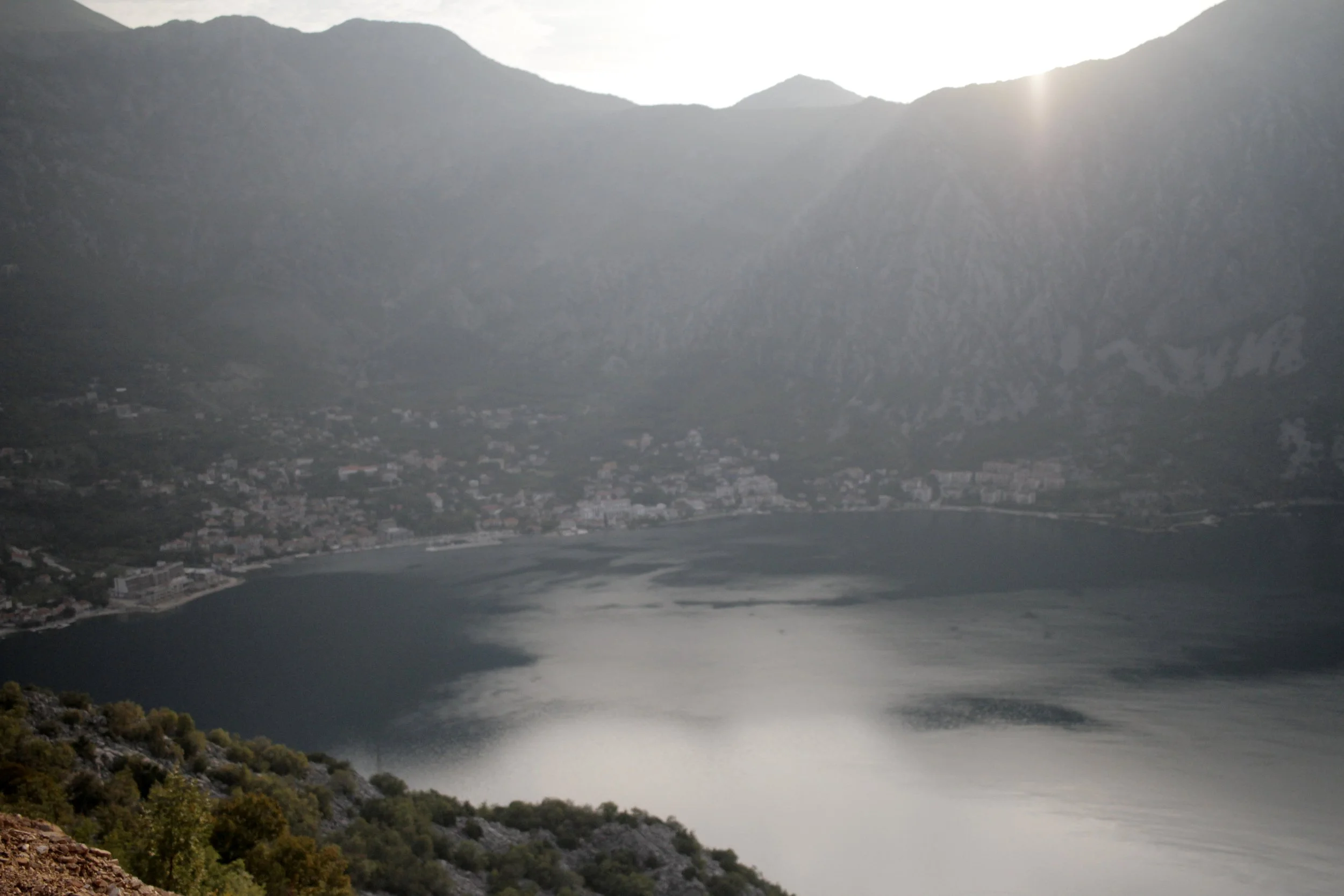
The Bay seduces at first sight — a sweep of cobalt water cradled by craggy mountains that tumble straight into the sea, as if someone folded the coastline up and pressed it into a picture-perfect scene. The shore is dotted with storybook towns: Kotor with its maze of cobbled lanes and ancient walls, Perast’s elegant baroque facades and silent churches and Tivat’s quieter marina-side charm. Each settlement feels carefully preserved, as though time paused to admire the view.
Locals and guidebooks often call it the “fjord of Kotor,” and the nickname fits the dramatic, narrow inlet. Geologists, however, have a more precise term: this is a ria, a drowned river canyon rather than a glacial fjord. Either way, whether you come for history, hiking or simply to watch the light shift across the water, the Bay’s mix of nature and heritage makes it one of those rare places that keeps revealing new magic the longer you stay.
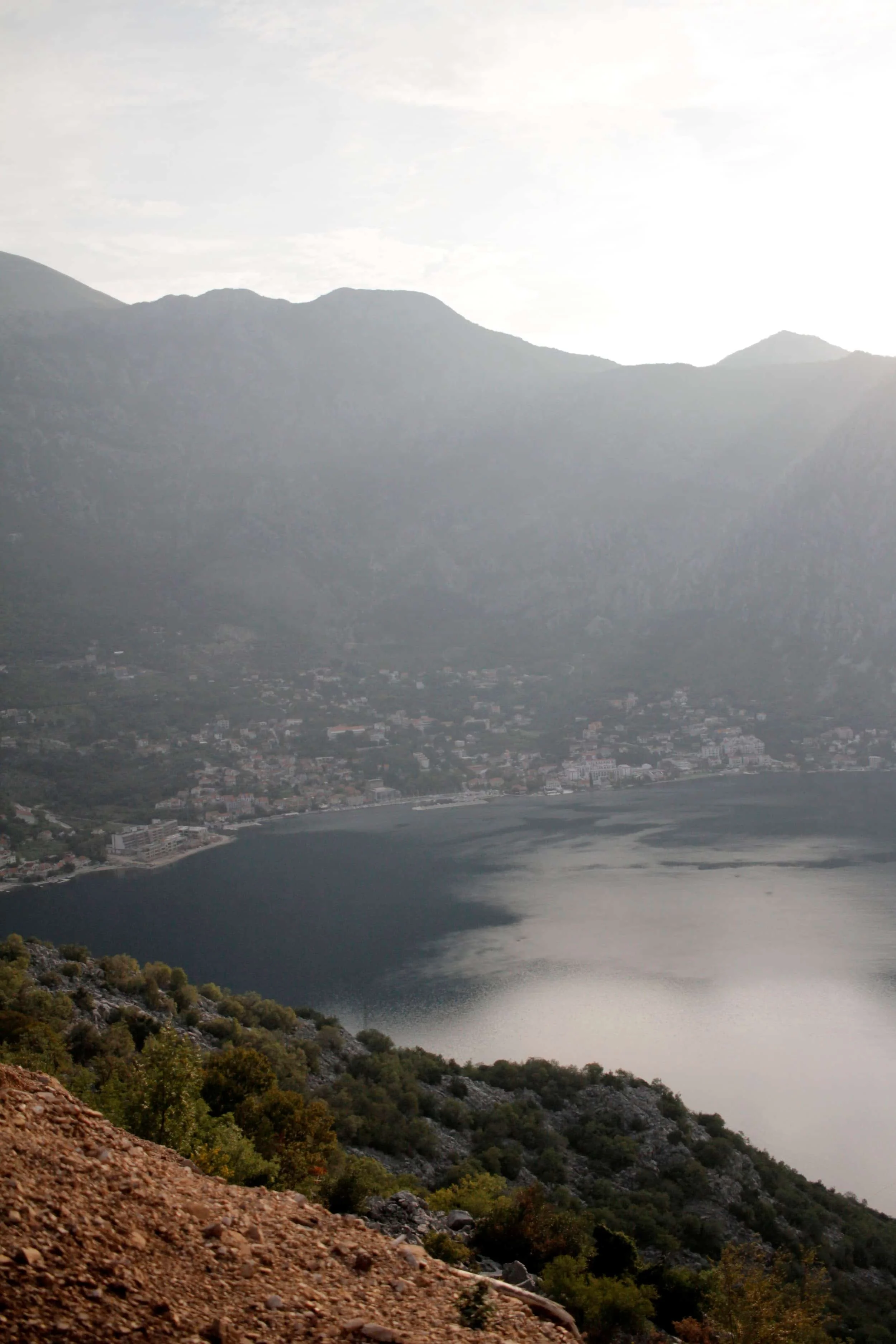
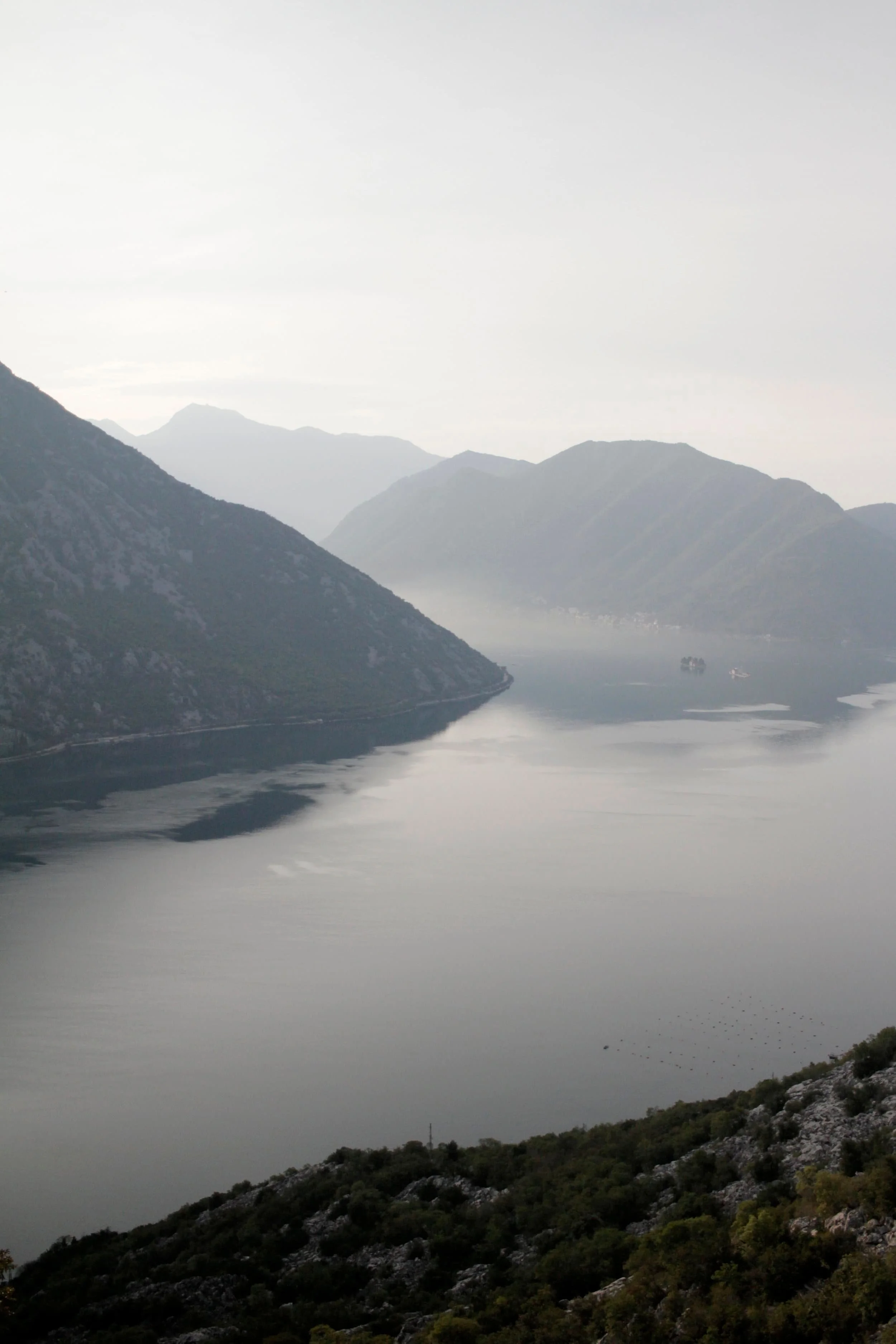
Views charm with pebble beaches and the occasional dolphin that darts along the shore for those who keep their eyes peeled. Each day, the bay welcomes cruise ships whose passengers spill into the tiny towns, a bustling, fleeting tide of visitors that animate the narrow streets and harbor like moths drawn to a lantern.
⚠️ Good to Know | Cruise ship crowds can sweep through the city like a sudden tide, so if you’re staying in town, keep an eye on their schedule. My favorite little ice cream shop would sell out every time a ship docked. Still, I didn’t find it a big enough reason to skip Kotor.
The tour continues — drive an hour northeast into the gentle hills of the Nikšić region, skirting the glassy stretch of Slano Lake before arriving at a cozy spot where a long-awaited, delicious local breakfast waits for you — it’s one of the most charming things to do in Montenegro.
Slano Lake
Surrounded by the gentle folds of the Nikšić plain, three man-made lakes shimmer like tucked-away treasures — and Slano Lake is the most beguiling of them all. Created in 1950 to feed the Perućica hydroelectric plant, it still carries the quiet authority of that era, its low dam a reminder of human hands shaping the landscape. Yet the lake’s real magic lies beneath the surface: the western stretch of the Nikšić Field hides a labyrinth of sinkholes, caves and springs, where water moves in secret, complicated paths.
On a calm afternoon, the surface can look serenely simple; linger a little longer and you begin to sense the lake’s mysterious, ever-changing currents — a place both lovely and intriguingly unpredictable.
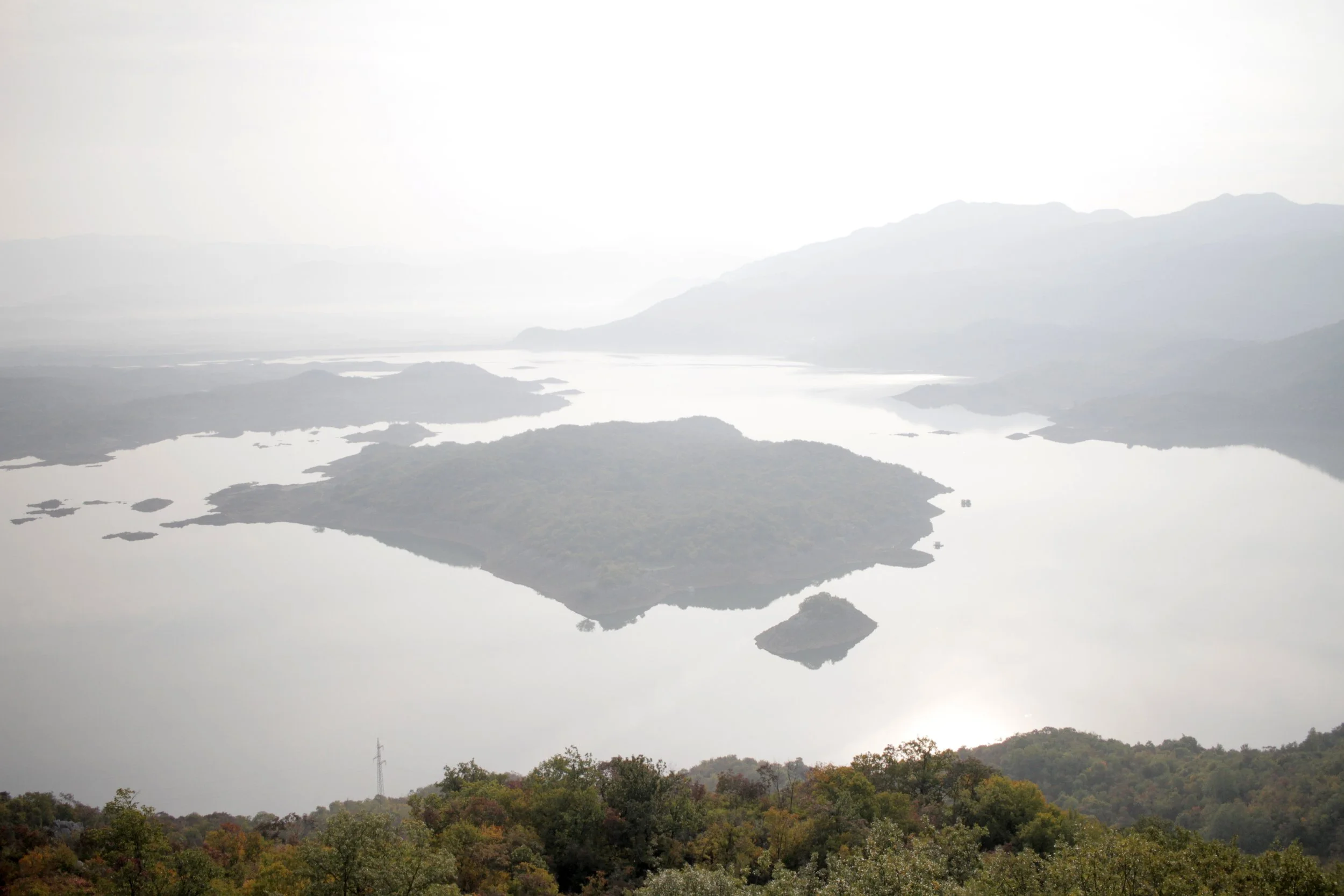
The coastline here is beautifully rugged. Its waters are impossibly clear and the landscape’s untamed charm is irresistible. Slano’s shimmering bays, scattered low islands and verdant shores paint a picture-perfect scene, even in the soft, first light of morning. Beneath the surface, fish gather and call fishermen to their nets, while above, the skies and reed beds teem with birds — after Skadar Lake, this is Montenegro’s richest haven for winged life.
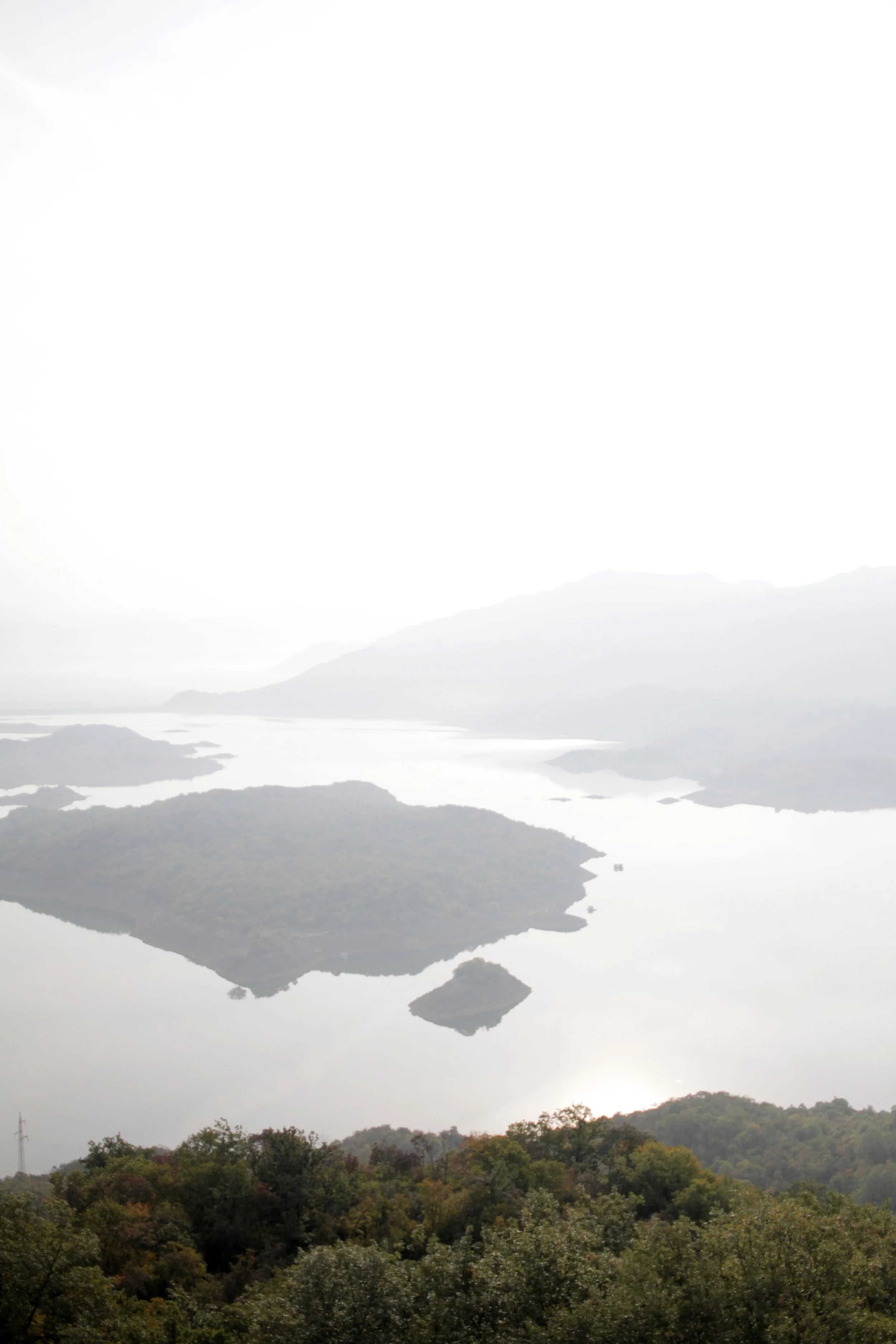
Dotted with tiny islands and slender peninsulas, and cradled by untouched woodlands, the Slano Lake area feels like a secret the world has been kind enough to keep. Wildflowers sway along the shore, songbirds call from the trees and deer and waterfowl move quietly through the reeds as if rehearsing for no audience at all.
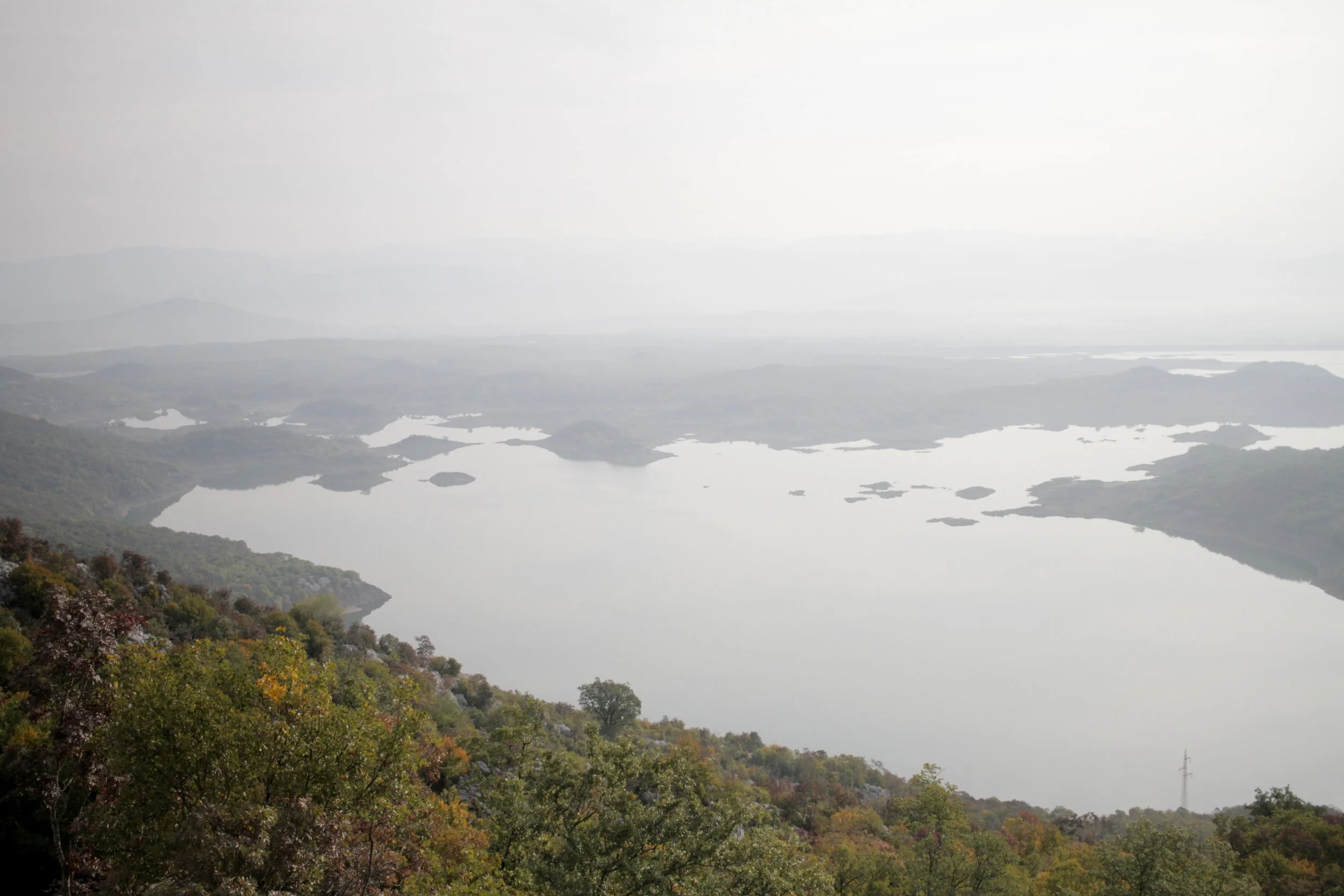
Despite being easy to reach, the lake has stayed delightfully unspoiled — no tourist traps, no crowded promenades, just a handful of sleepy villages peeking from the shoreline. Come for an afternoon of fishing or a lazy stretch of sunbathing and you’ll likely have a peaceful slice of shoreline to yourself, the water a glassy mirror for the sky.
Floyd Coffee Shop
By about 9 a.m., your little band drifts into Floyd Coffee Shop, drawn by the smell of fresh pastries and the promise of a slow, delicious morning.
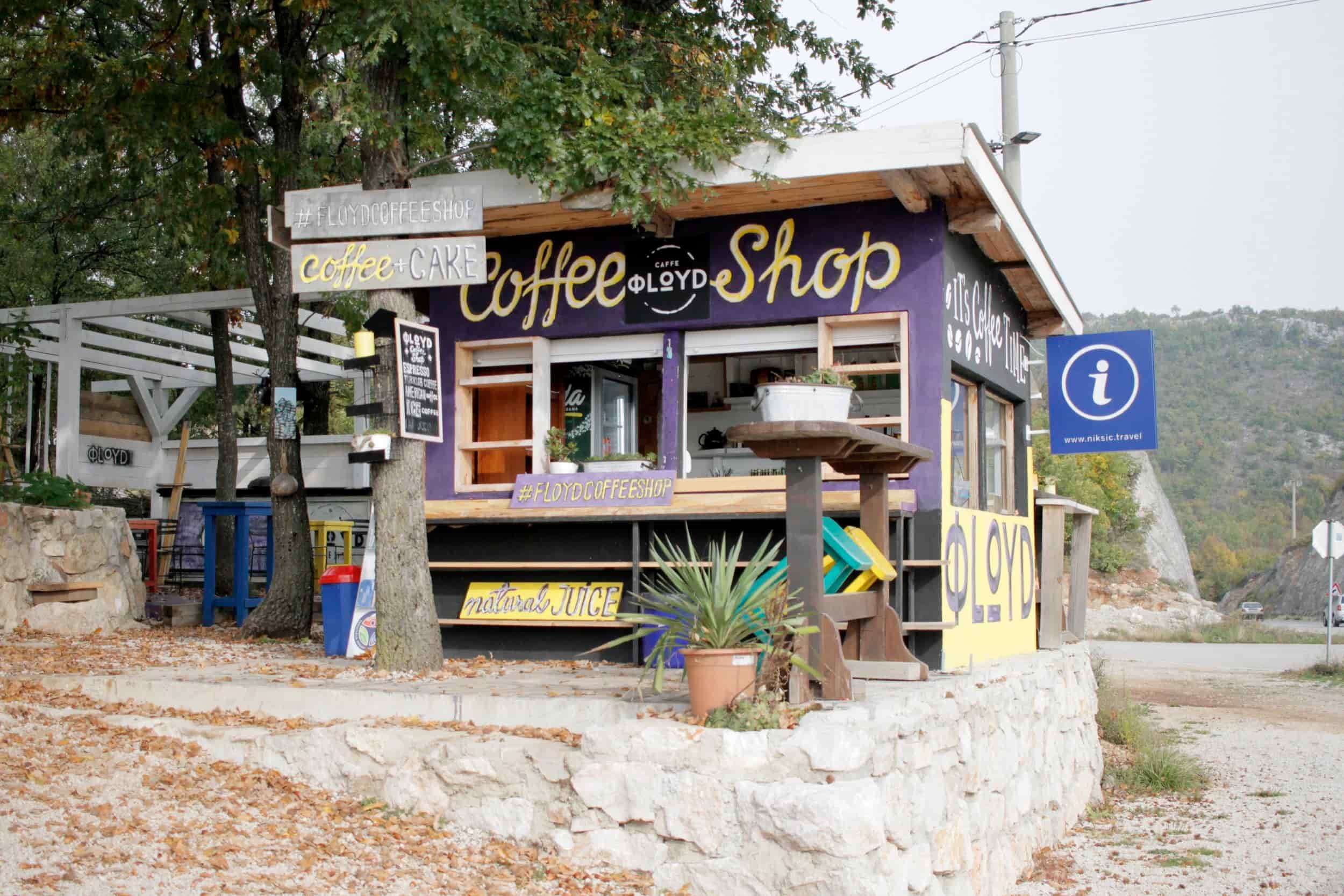
With a focus on cultural and ecological renewal, the coffee shop feels less like a business and more like stepping into a small, welcoming neighborhood — or being invited into someone’s cozy living room.
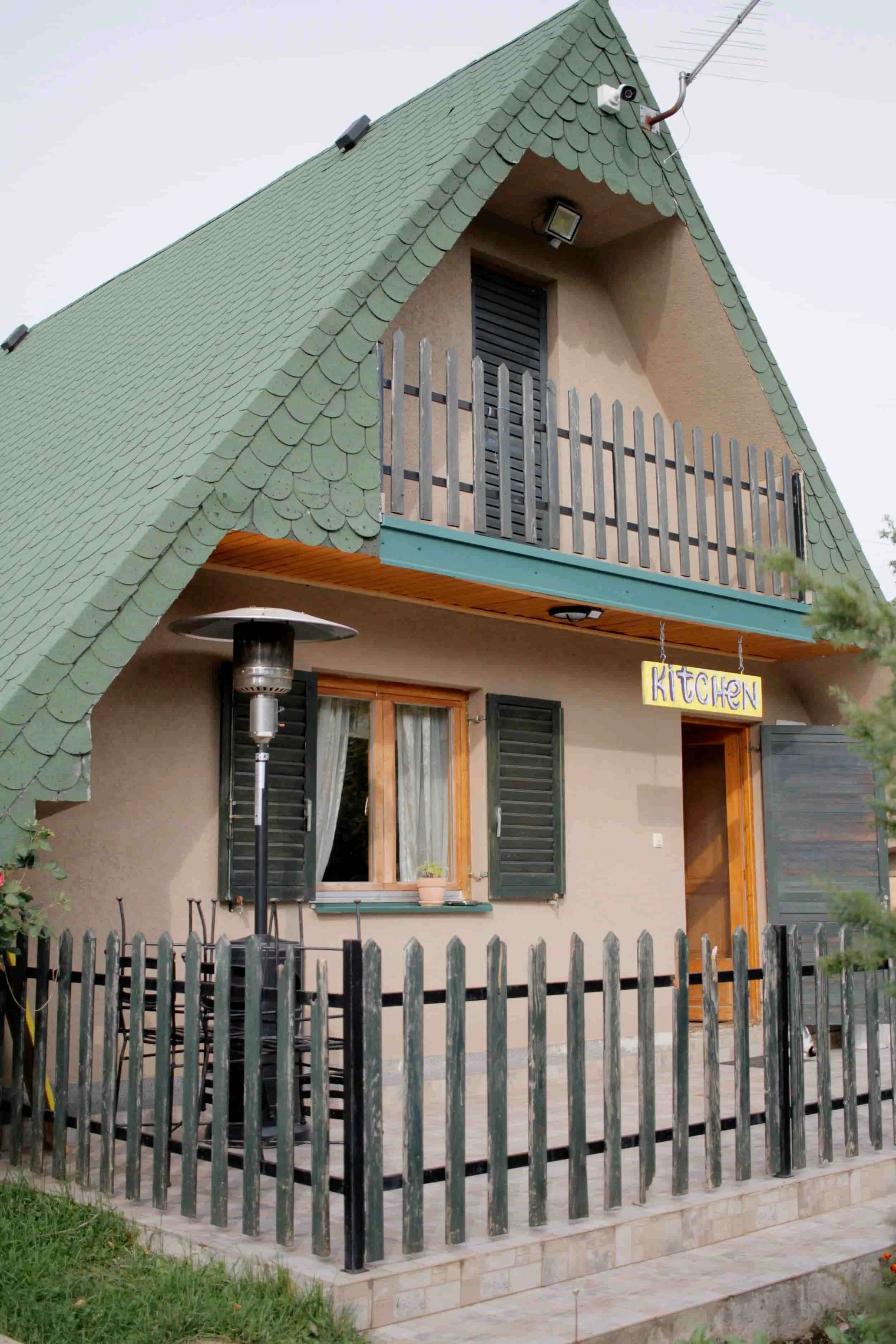
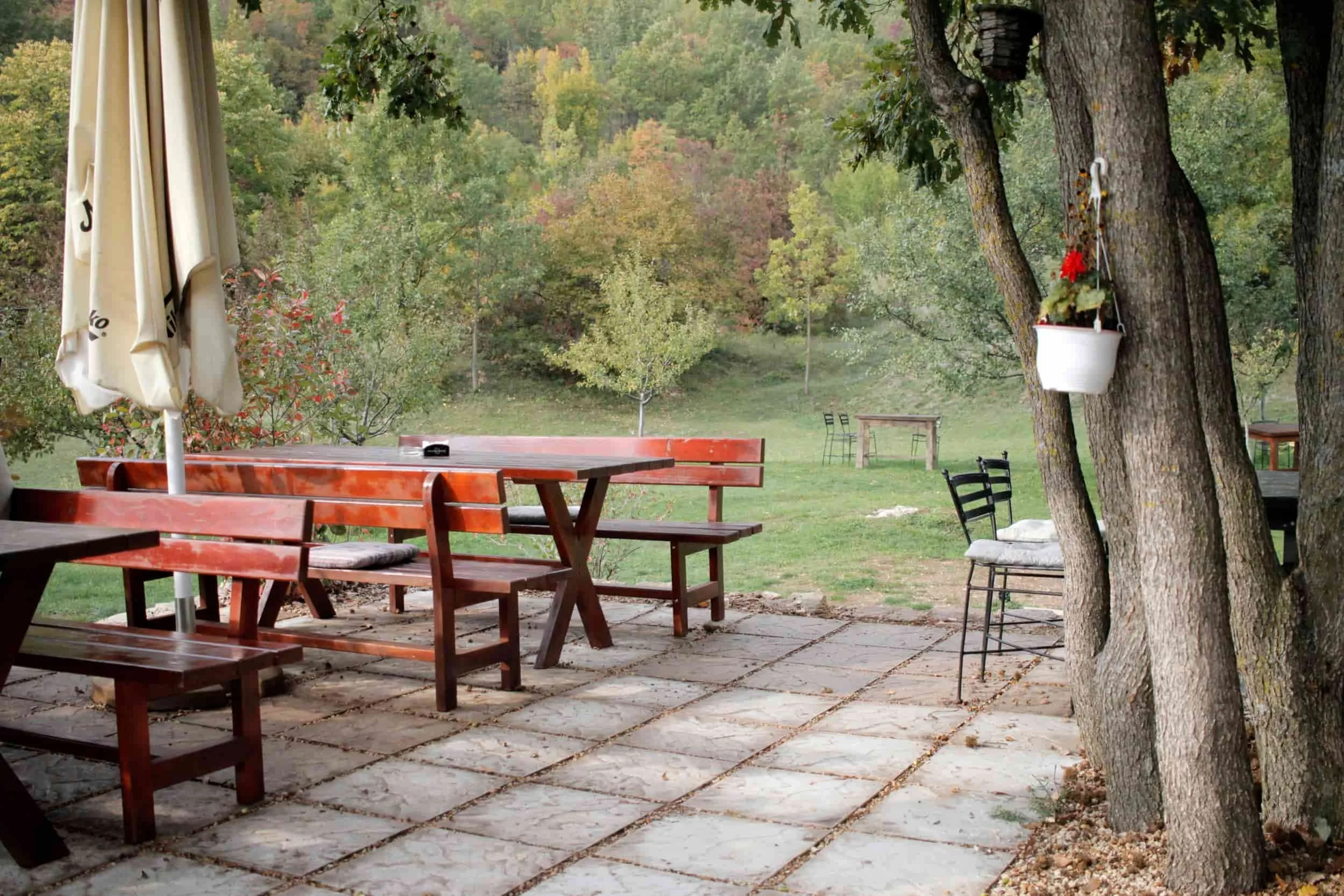
Near the roadside, a little coffee stand hums softly but step past the sign that reads “Kitchen” and you’ll find a lovely garden patio — wooden tables scattered beneath dappled light, potted plants leaning in as if to listen. Settle into a sun-warmed bench, order from the small menu and wait. On my visit, I chose a creamy latte and the priganice, the promise of something warm and comforting to come.
Representing warmth and hospitality, priganice are pillowy fried dough balls, golden and irresistible, often served with honey, cheese or jam. Their name traces back to the cooking method — “pržiti,” to fry — capturing the sizzle and comfort of the kitchen. A Montenegrin breakfast staple, those doughy rounds feel like home to me; as a child, my father would shape fried dough into big, floppy “elephant ears” every Sunday after church, filling the house with the sweet, cozy scent of family.

As you’ll discover, Montenegro’s food heritage rests on fresh, locally produced ingredients — each one lending a little extra charm to every plate. Even the restaurants celebrate this: authentic flavors and local character shine through and “old” family recipes are treated with reverence. It’s not tough to stumble upon the kind of classic dishes an elder Montenegrin might prepare at home when eating out.

Hot and steaming, the puffy golden dough balls arrive moments later, accompanied by a side of honey and a creamy latte. Each tiny donut is crisp on the outside, pillowy inside — some of the best I’ve ever tasted. Dug in, savor the sweet, sticky warmth; this little ritual feels like a discovery you’d happily make again and again.
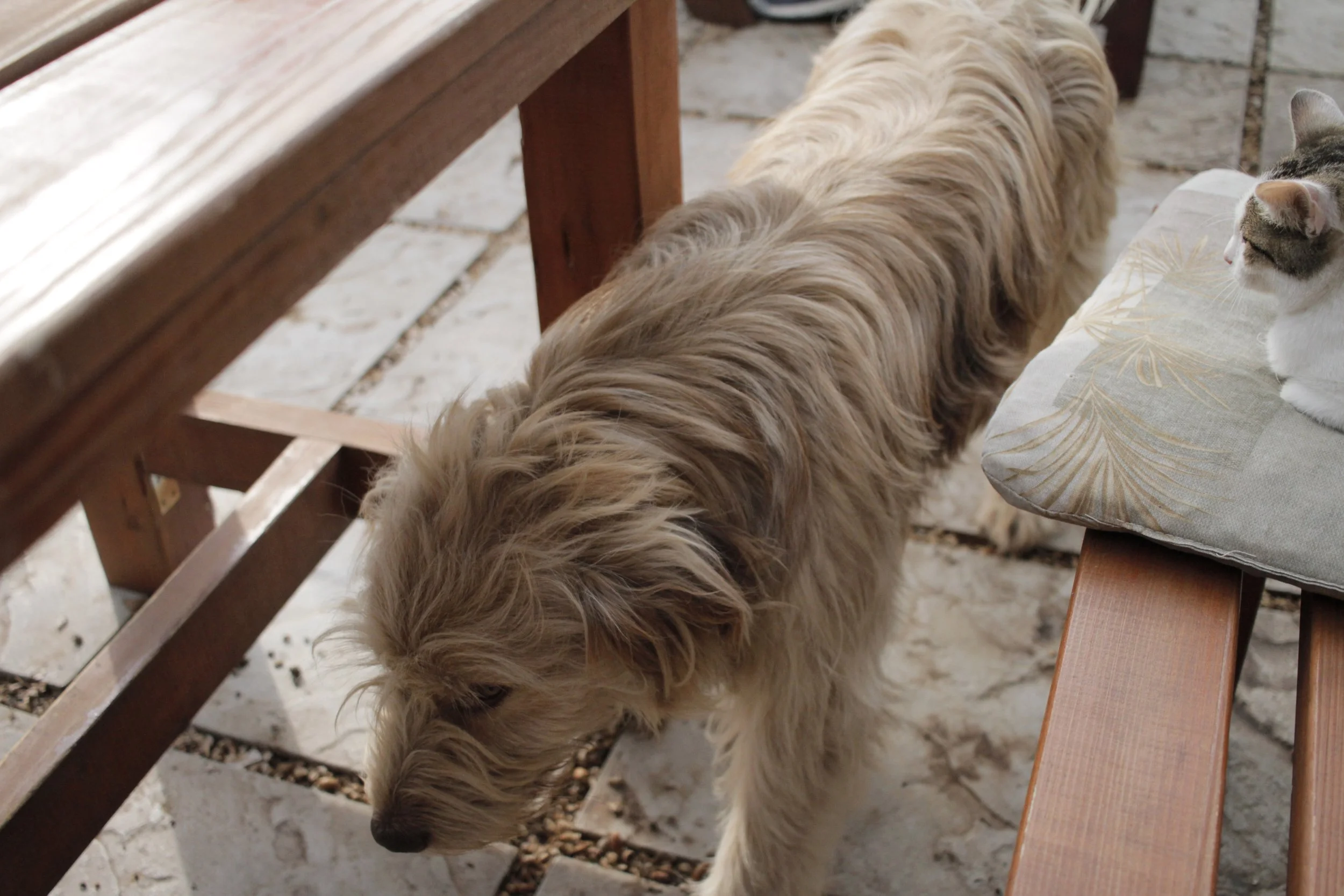
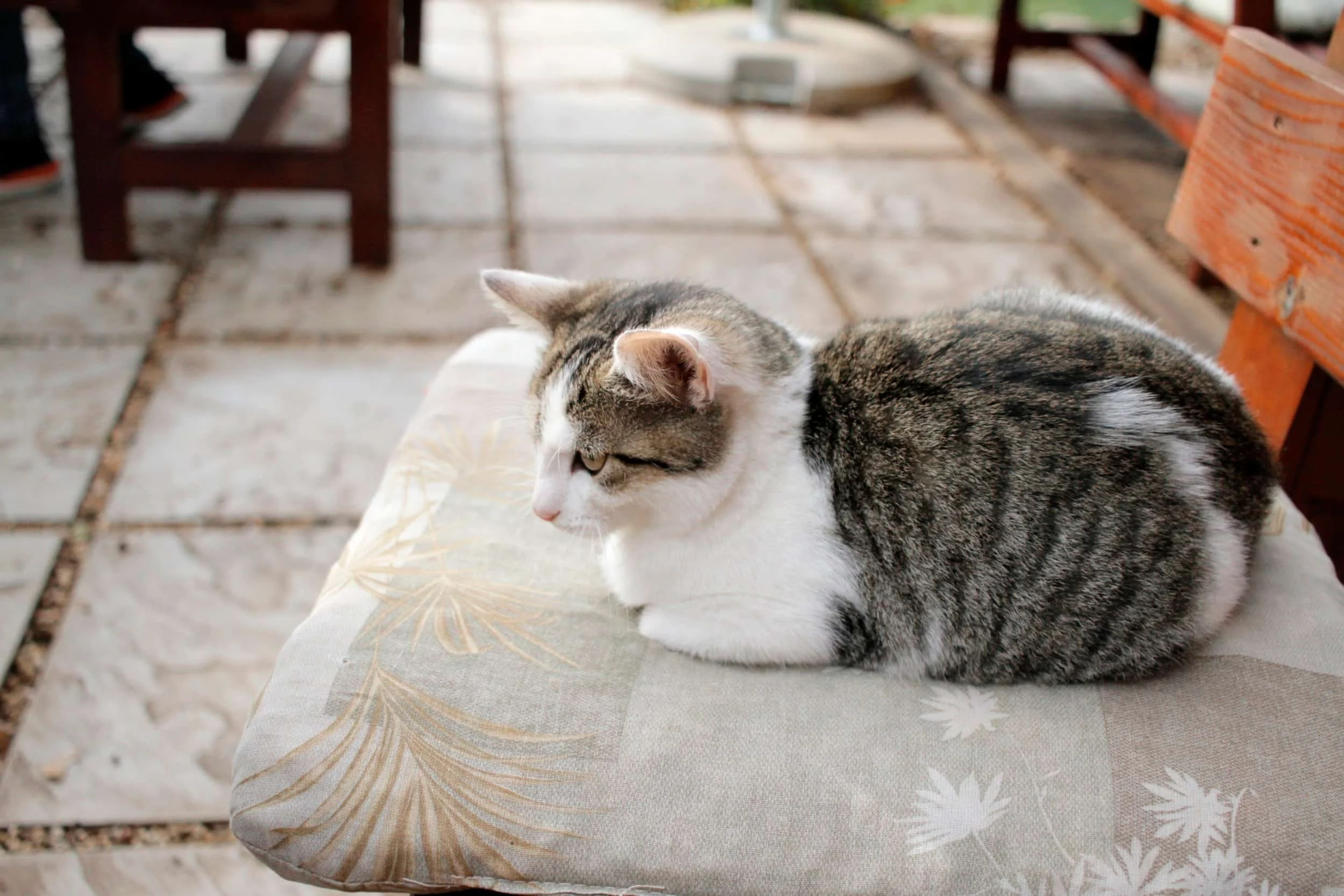
While you eat in the warm sunlight, a few delightful visitors might pad into our circle. A cheerful dog and a tiny, sweet cat wander between your legs and claim a spot among the group, flopping down for scratches and belly rubs. They spring from lap to lap, tails wagging and purrs rumbling, turning your meal into an impromptu cuddle fest.

The friendliest little pup, all shaggy golden fur, will likely make a valiant attempt to clamber up into the seat beside you. His earnest wiggle and hopeful eyes are impossible to resist — utterly charming and the whole moment feels like a warm, perfect little scene.
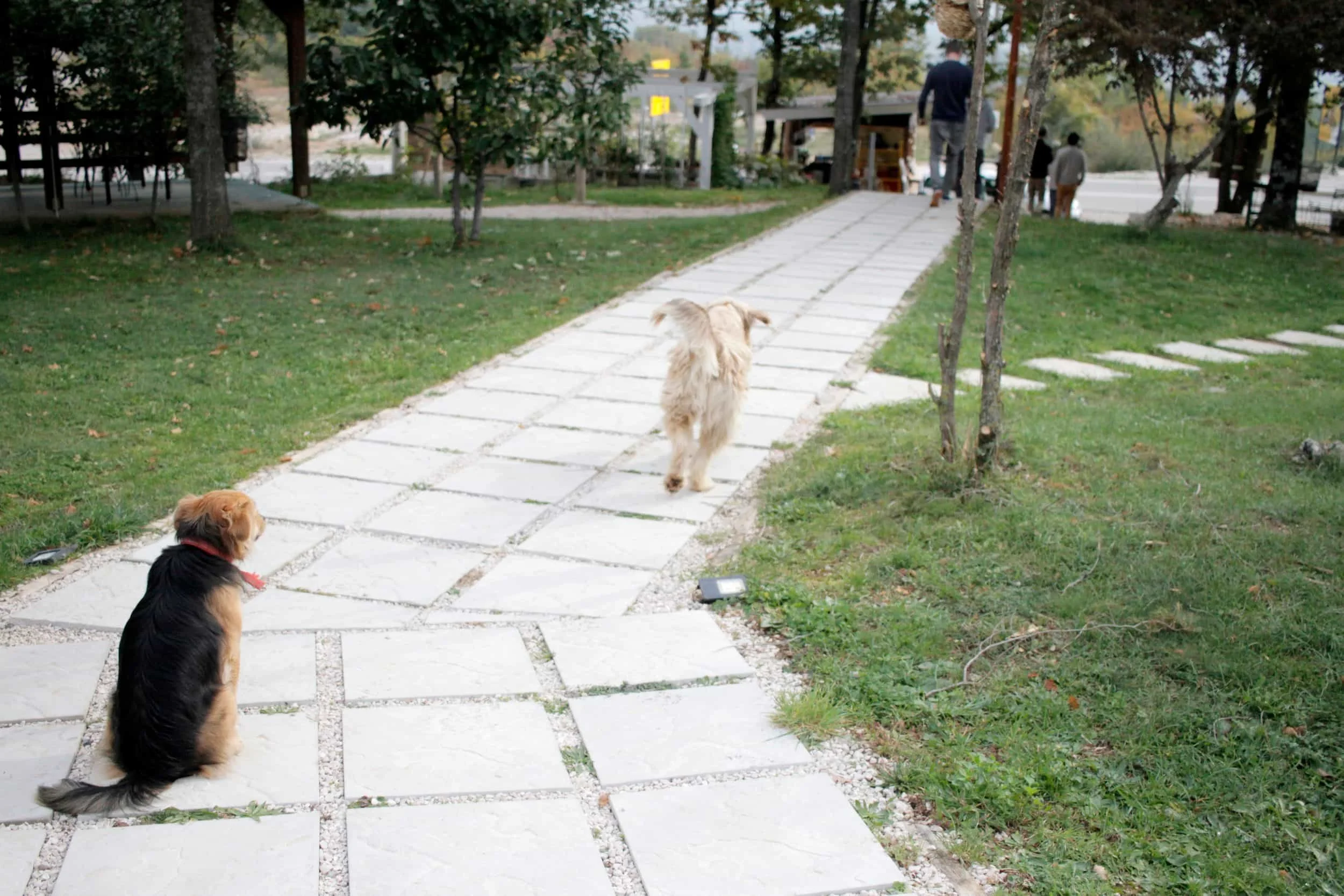

On the way out, stumble upon another little pup who clearly wants extra cuddles. The moment you reach for him, he flops onto his side with a sigh — leaving him and his snaggletooth behind feels impossibly hard.
Black Lake at Durmitor National Park
Continuing northeast, the group slips further into Montenegro’s wild heart. The road cuts through rolling hills and forests, the trees blazing with autumn color. Each bend brings a new scene — russet meadows, cold grey rivers and the occasional shepherd with his woolly flock.
Pass through Šavnik, a small town that seems paused in time. Once busier, it emptied after WWII as many people left for city jobs. Now, quiet streets and shuttered houses hint at that past. Still, there’s a quiet hope: locals are trying to revive the town by gifting livestock and easing debts, slowly rewriting Šavnik’s story.
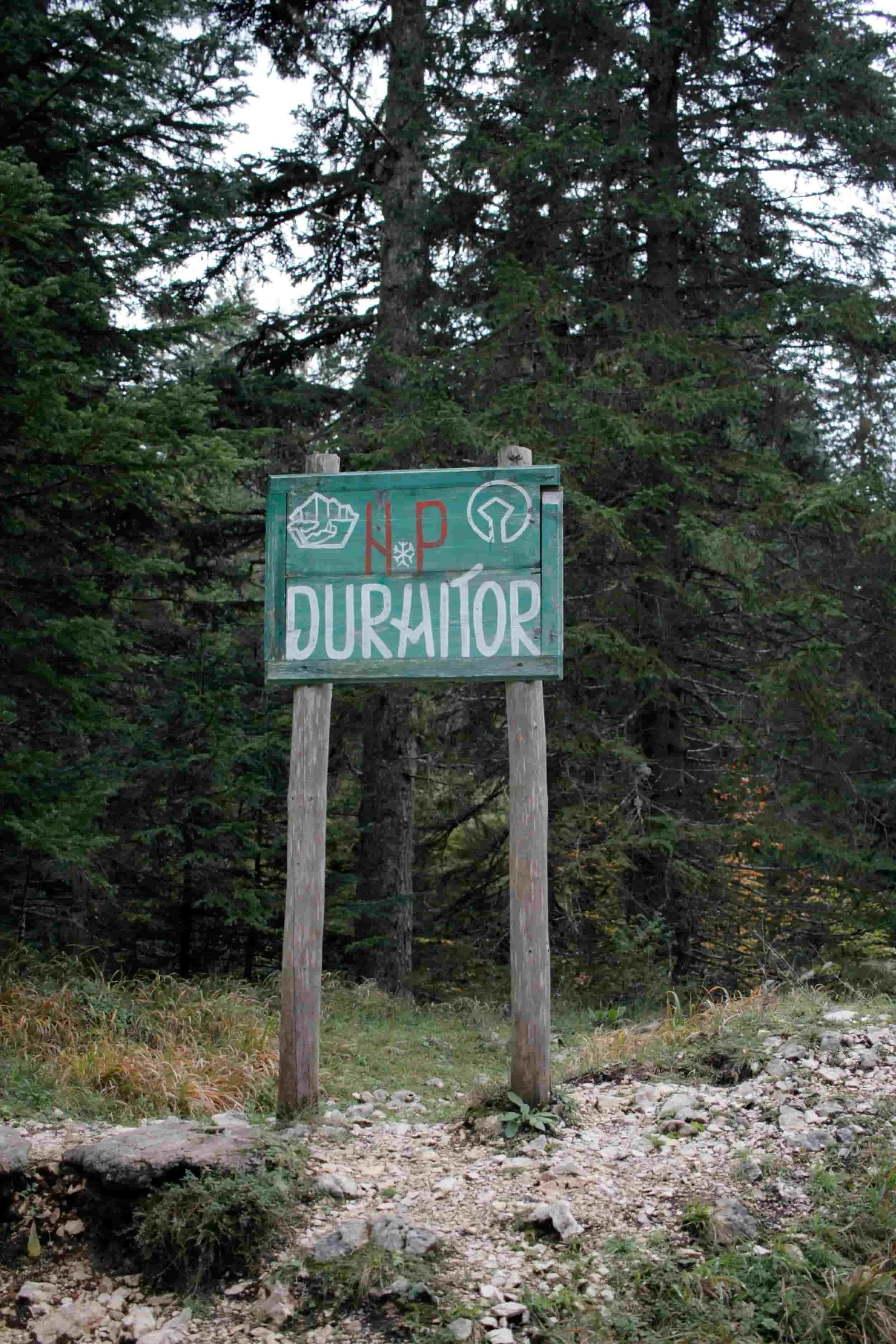
Slip through the Ivica Tunnel — Montenegro’s second-longest — and emerge about a mile and a half later, as if passing through the mountain’s spine. The road connects the quiet town of Šavnik to the highland charm of Žabljak, opening into the rugged heart of Durmitor. Durmitor isn’t just a mountain range; it’s Montenegro’s largest national park, a sweep of the Dinaric Alps where jagged peaks, deep canyons and hidden lakes make you want to stop at every turn — and it’s easily one of the best things to do in Montenegro, particularly for nature lovers.
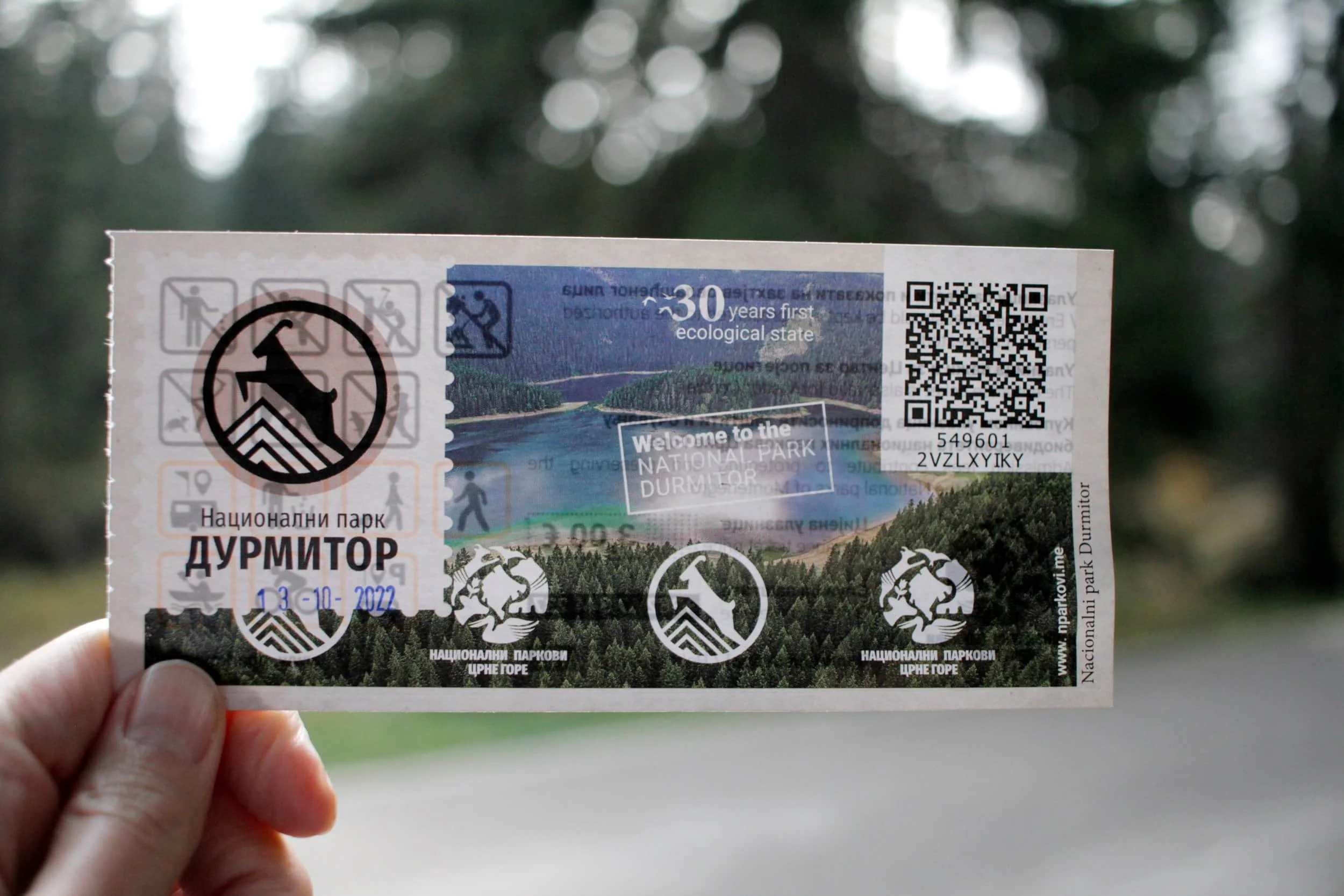
Durmitor rises like a storybook realm of rock and forest, its skyline dotted with nearly 50 peaks. Bobotov Peak, at 8,274 feet (2,522 meters), commands attention above a rugged massif that holds 18 glacial lakes — each a glassy mirror tucked into quiet, whispering woods.
To the north, the Tara River carves a dramatic canyon; to the west, the Piva cuts its course; and to the south, the Komarnica shapes the land with wild grace. This limestone massif and Durmitor National Park feel timeless — sculpted by ice, threaded with rivers and fed by hidden underground streams — part of the larger Tara River Basin Biosphere Reserve. Every ridge offers a new view and every lake invites a peaceful pause.
Durmitor National Park covers 150 square miles (390 square km) — Montenegro’s largest protected wilderness and a UNESCO World Heritage site since 1980. Nicknamed the “Mountain Eyes,” it’s sprinkled with crystal glacial lakes that peek from meadows and rocky hollows. The real drama comes from deep canyons carved by the Draga, Sušica, Komarnica and Tara rivers — especially the Tara, which plunges into Europe’s deepest gorge and makes you feel deliciously small.
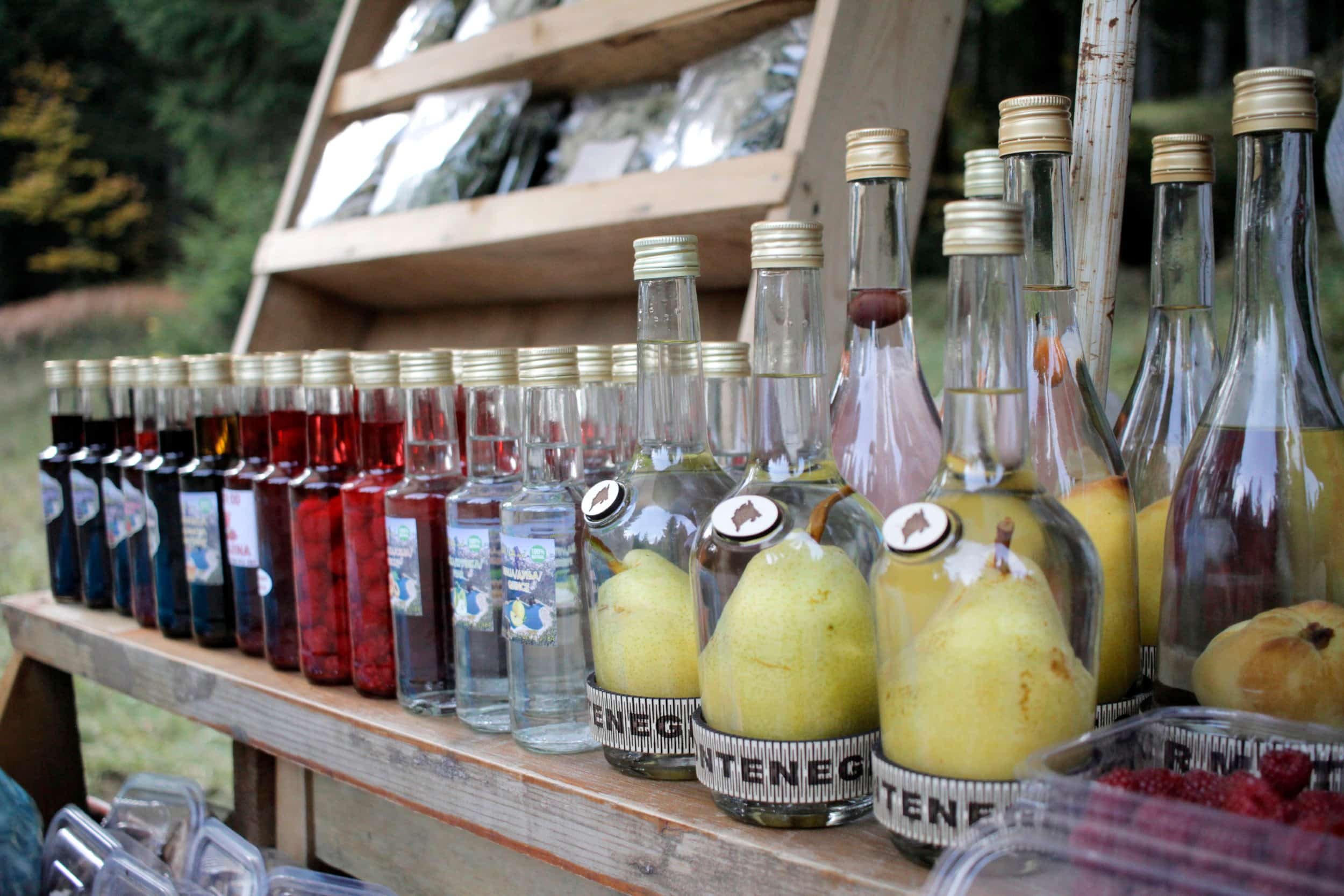
Arrive as your guide lays out the plan: a quick stop at Black Lake, one of the park’s 18 glacial gems, sitting at about 4,645 feet (1,416 meters). Time is fairly tight; if you hurried, the full loop can be done in roughly 30 minutes. With a 12:35 p.m. return set, you set off, hoping the lake’s mirror surface and the mountain air will cooperate.
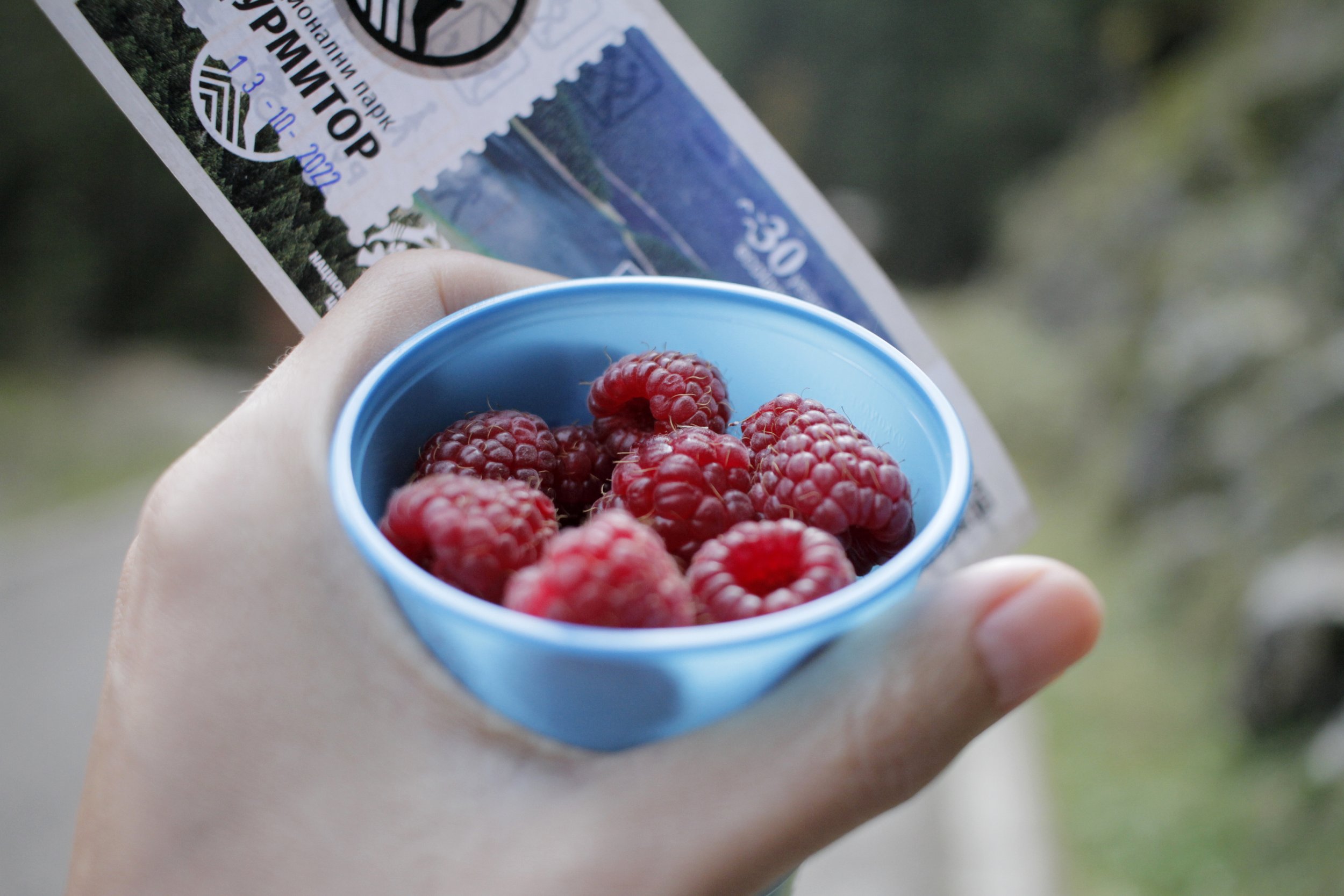
Your driver drops you just before the main gate and you’ll take a relaxed ten-minute walk to the lake. Entry is only about €5 (not included in the tour package) and the path into the park feels like a tiny market parade. Stalls line the way with jars of honey and jam, bottles of local liquor, plump fruit and a quirky mix of warm-weather gear — slippers, hats and even gloves for a chill that may never come. I couldn’t resist a small cup of sun‑ripened raspberries: sweet, tart and the perfect companion for the walk.
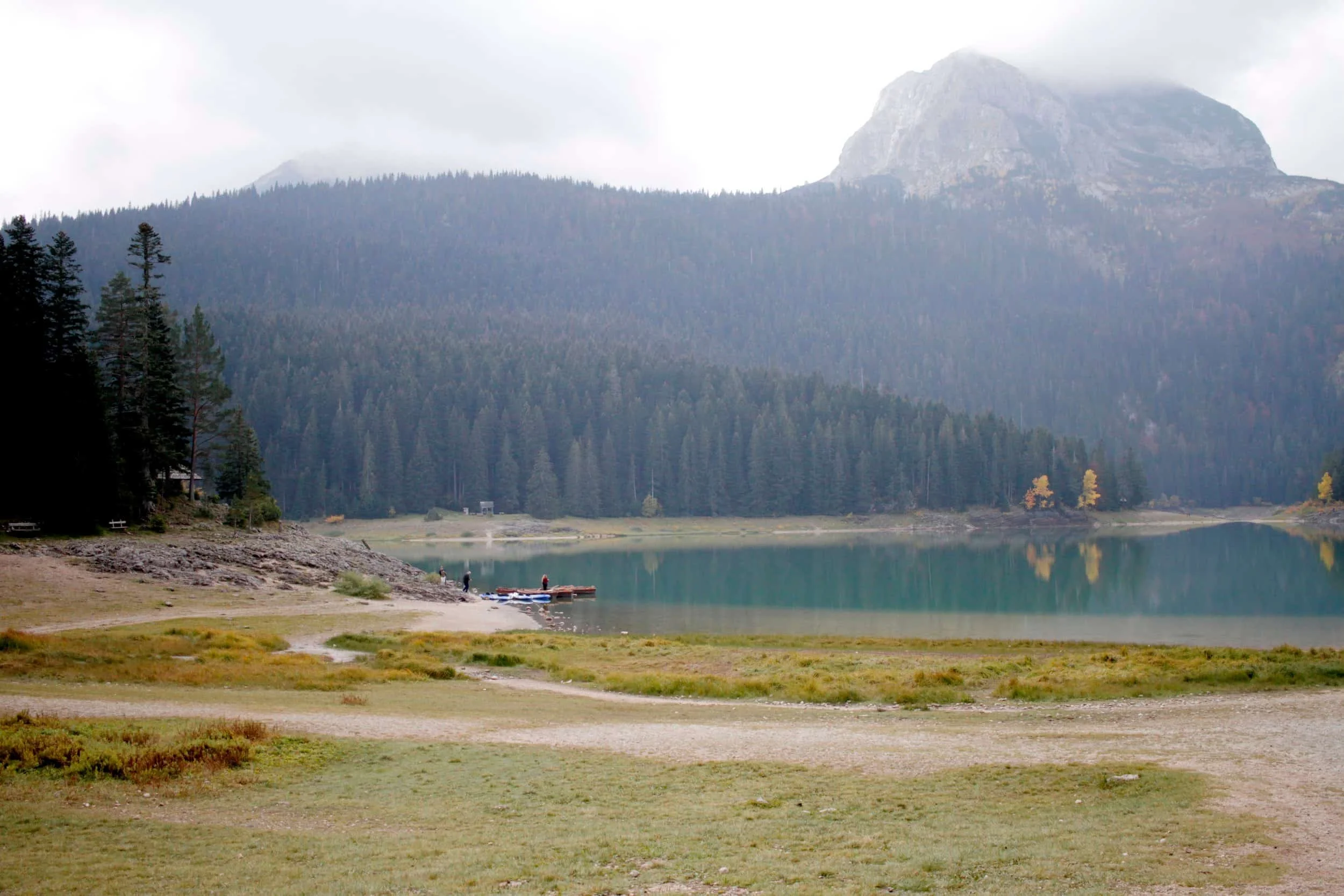
Crno Jezero — Black Lake — lies like a polished jewel beneath Međed Peak, whose shadow can darken the water and give the lake its brooding name. What seems one body of water is actually two: Veliko Jezero (Big Lake) and Malo Jezero (Little Lake), linked by a narrow stone strait. In high summer, the connection can dry, turning them into two separate mirrors reflecting the rocky slopes. Though small in surface, Veliko and Malo are surprisingly deep, about 80 and 160 feet (25 and 50 meters) respectively.
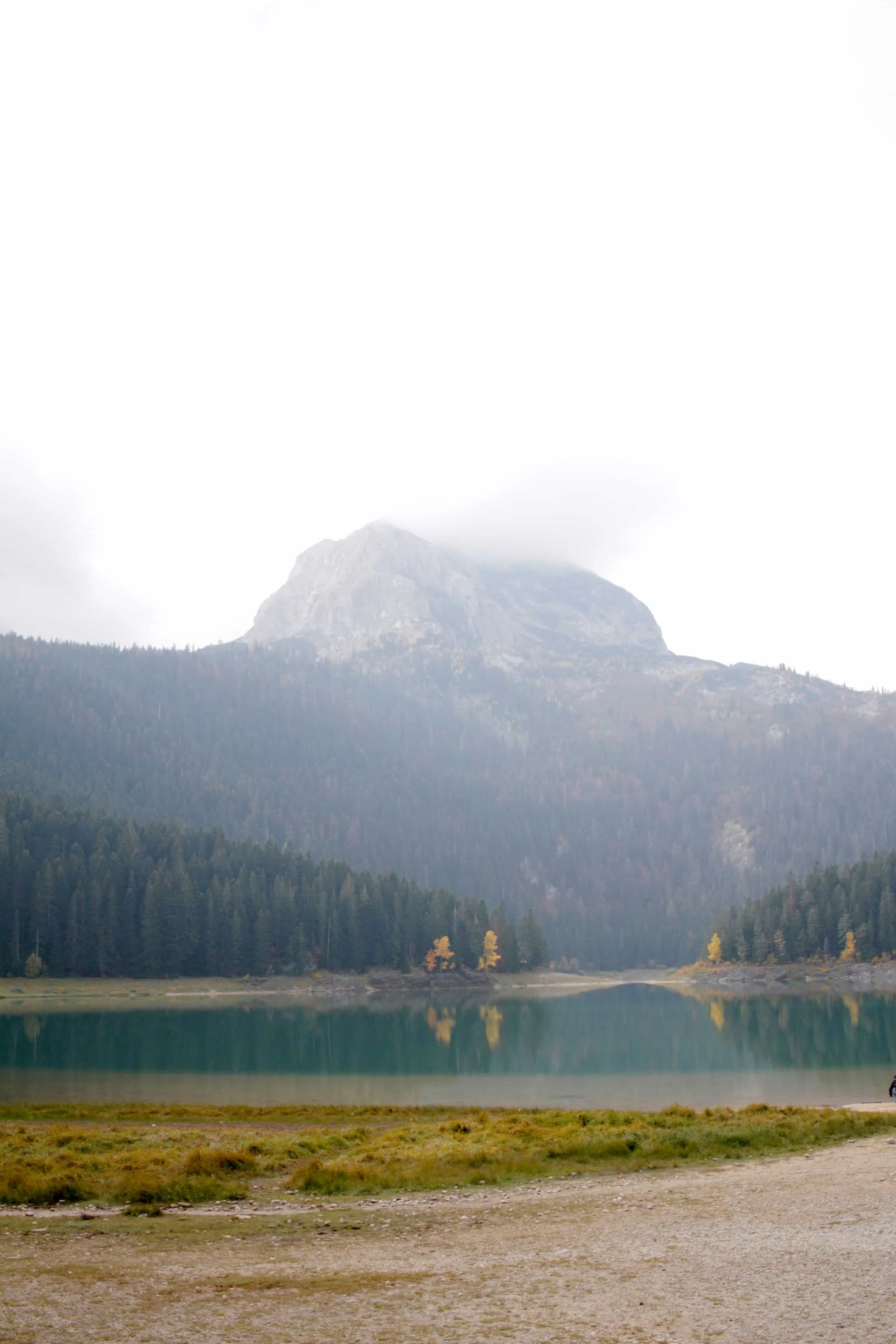
Black Lake is fed by mountain streams, the best-known being Mlin Creek. In spring and early summer, tiny rivulets from Mount Durmitor’s melting snow wake and weave into the lake. All summer, Big Lake slowly pours into Little Lake, clear and cool. In winter, the flow reverses — Little Lake nudges back into Big Lake — an ever-changing, gentle exchange that links the two.
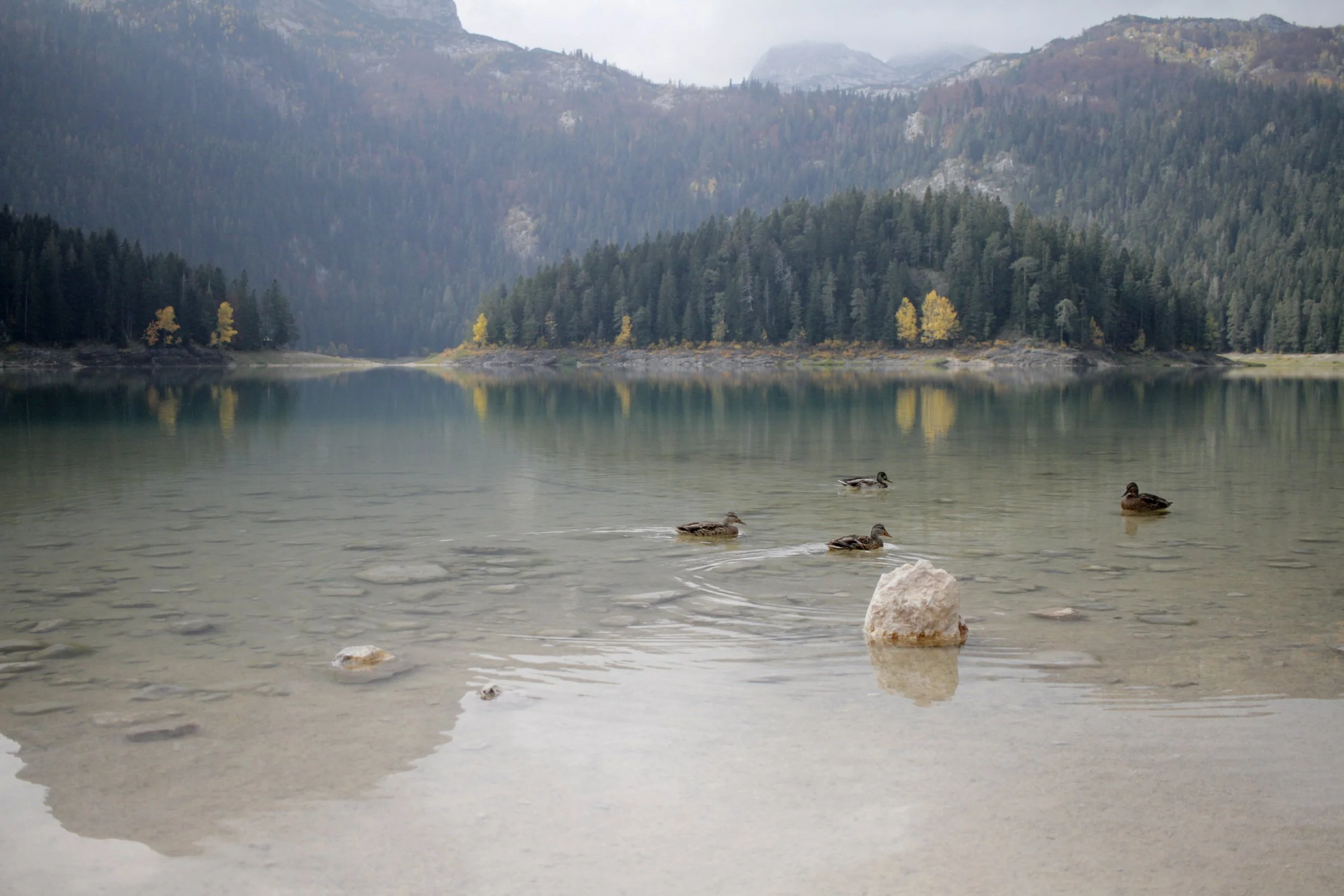
The lake seems to have two personalities, each half shimmering differently. The split is subtle and a bit mysterious. The guide tells you to stay on one side — sensible, if ambitious with only an hour. The trail follows the water but beware: much of the shore is soft and spongey. What looks like a firm path can quickly become a muddy marsh.
💡 Local Tip | Bring sturdy shoes (or ones you don’t mind covering in mud) and allow extra time. The official loop is about 2.5 miles (4 km) but soggy trails and endless views make a slow pace irresistible.
From each new vantage point, the lake reveals itself differently but my favorite scene remains the stand of trees across the way, a few glowing a molten gold that seem to set the emerald water below on fire.
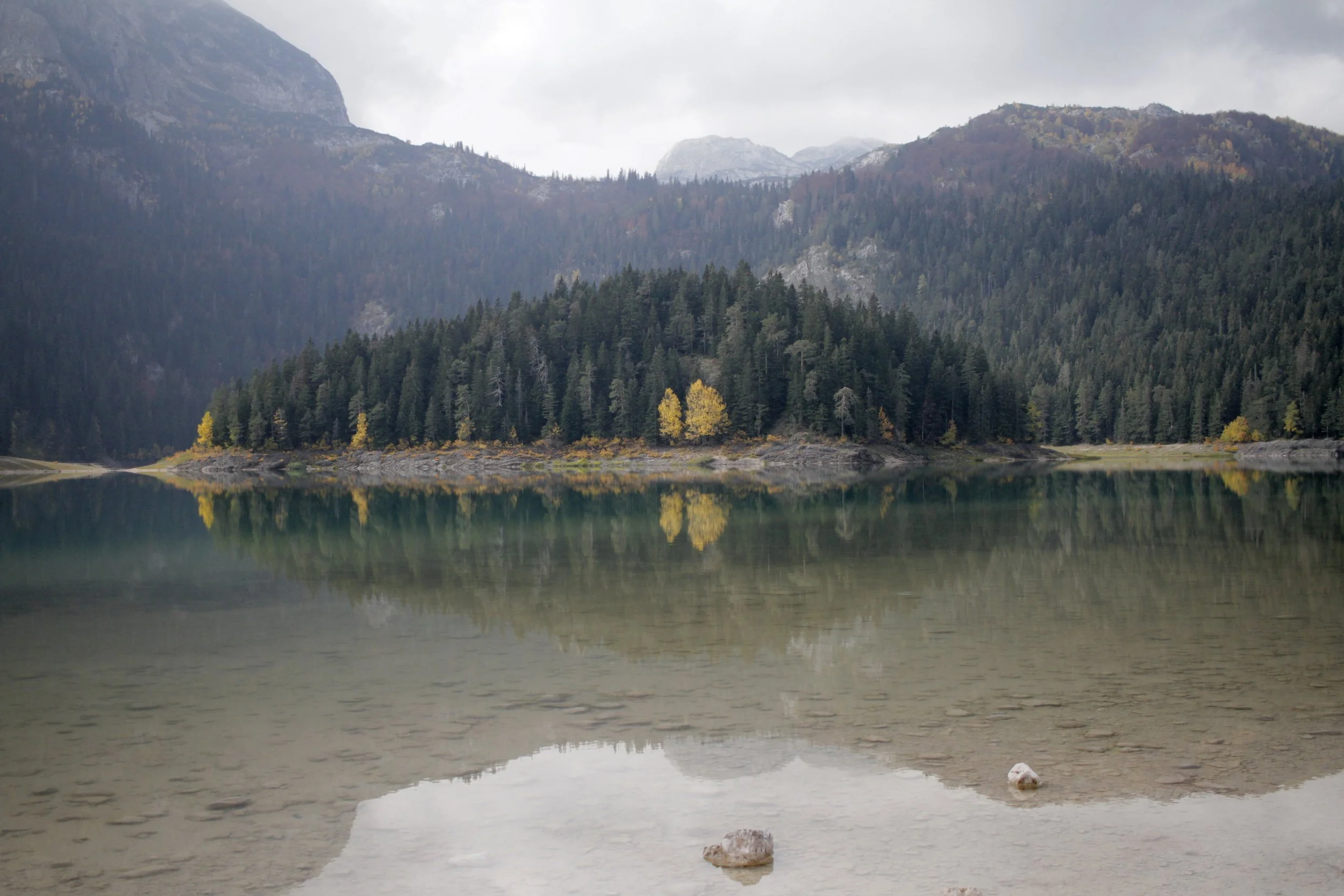
Here, the dramatic landscapes and geological history are matched by rich biodiversity. Visitors wander beneath ancient European black pines — some over 500 years old and reaching 165 feet (50 meters) — whose weathered trunks and lofty crowns lend the forest a timeless, cathedral-like silence, each trail a step back through centuries of slow-growing life.
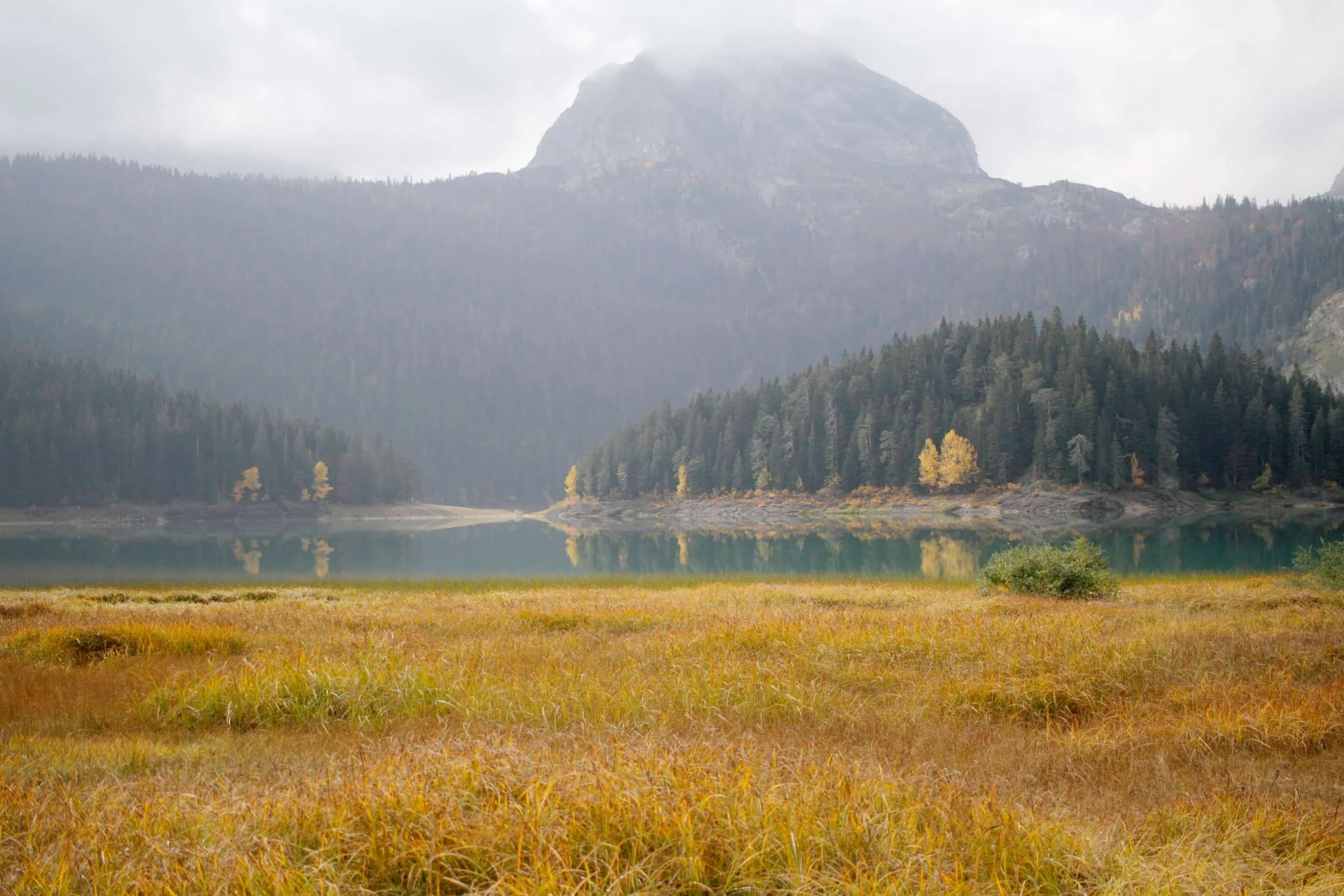
Pure outdoor poetry, Durmitor National Park is a playground of glassy glacial lakes, towering pines and jagged peaks. Many spend days beneath starry skies, fishing quiet streams or rafting roaring rivers. Meanwhile, climbers, canyon-scramblers and hikers will find trails that open onto unforgettable panoramas.
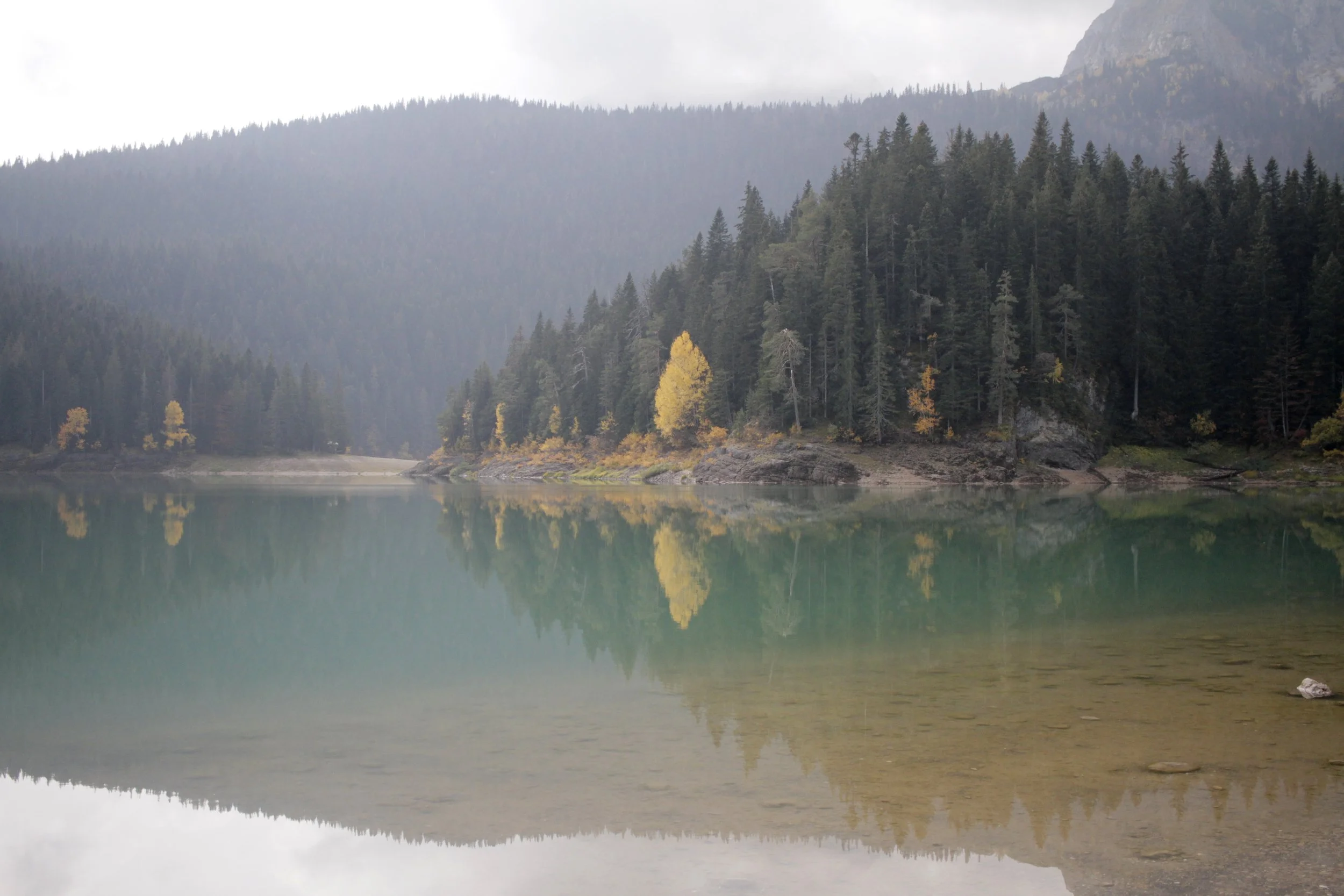
In winter, nearby Žabljak buzzes as Montenegro’s ski hub. In summer, clear lakes invite swims and ridgelines call climbers. For gentle walks or adrenaline days, Durmitor offers a simple, unforgettable slice of the wild.
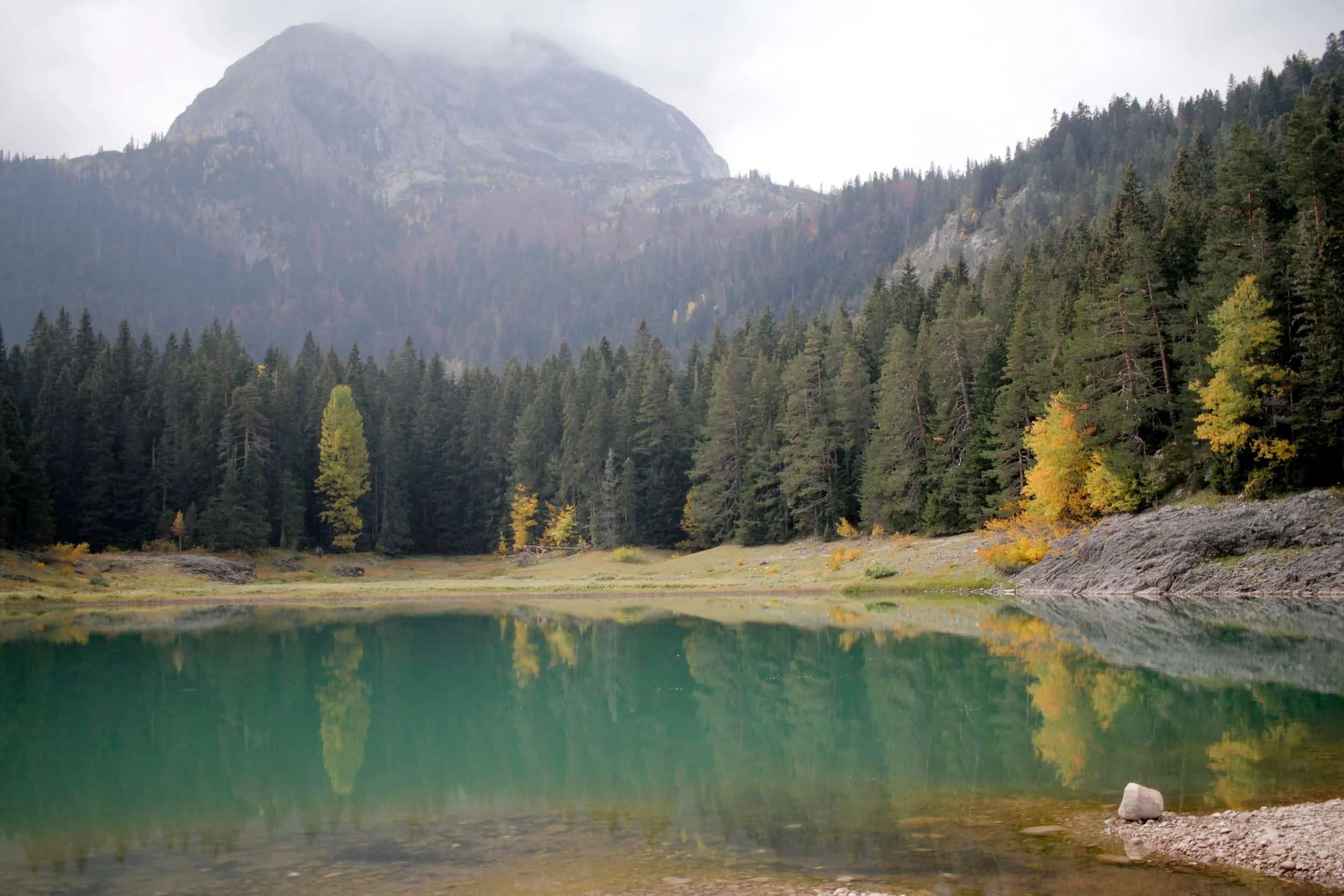
Rising behind the water, Medjed Peak steals the scene — rugged and bear-like, it’s the emblem of Durmitor National Park and the reason so many cameras are set on Black Lake. Trails circling the Medjed massif wind through rough slopes and fragrant scrub, rewarding each step with new views. Hikers come for the thrill of discovery: narrow paths climbing wind-scoured ridges, secret hollows dotted with wildflowers and sweeping panoramas that make you pause and breathe.
After about an hour, the group drifts back toward the park entrance, each person lingering to soak in the last slant of sun and the hush of pine-scented air. Walk in easy conversation, boots crunching, reluctant to let Durmitor’s mountain magic go.
💡 Local Tip | The loop around Black Lake usually unfolds at a leisurely hour and a half — enough time to savor misty reflections, pause for a bite on a sun-warmed rock and let the forest’s calm slow your steps. But if you have your heart set on circling the lake, do so at a rapid pace to make it back to the tour in time — a few from my group were able to conquer the trail.
Tara River Canyon
About an hour north lies Tara River Canyon — a UNESCO World Heritage site and Europe’s deepest gorge. Sheer cliffs cloaked in emerald forest drop to the Tara’s impossibly clear, turquoise ribbon. It’s a place that makes you slow down and simply take it in. By day, thrill-seekers come for whitewater rafting; on quieter afternoons, trails and ziplines invite hiking, lingering and soaking up the wildness.
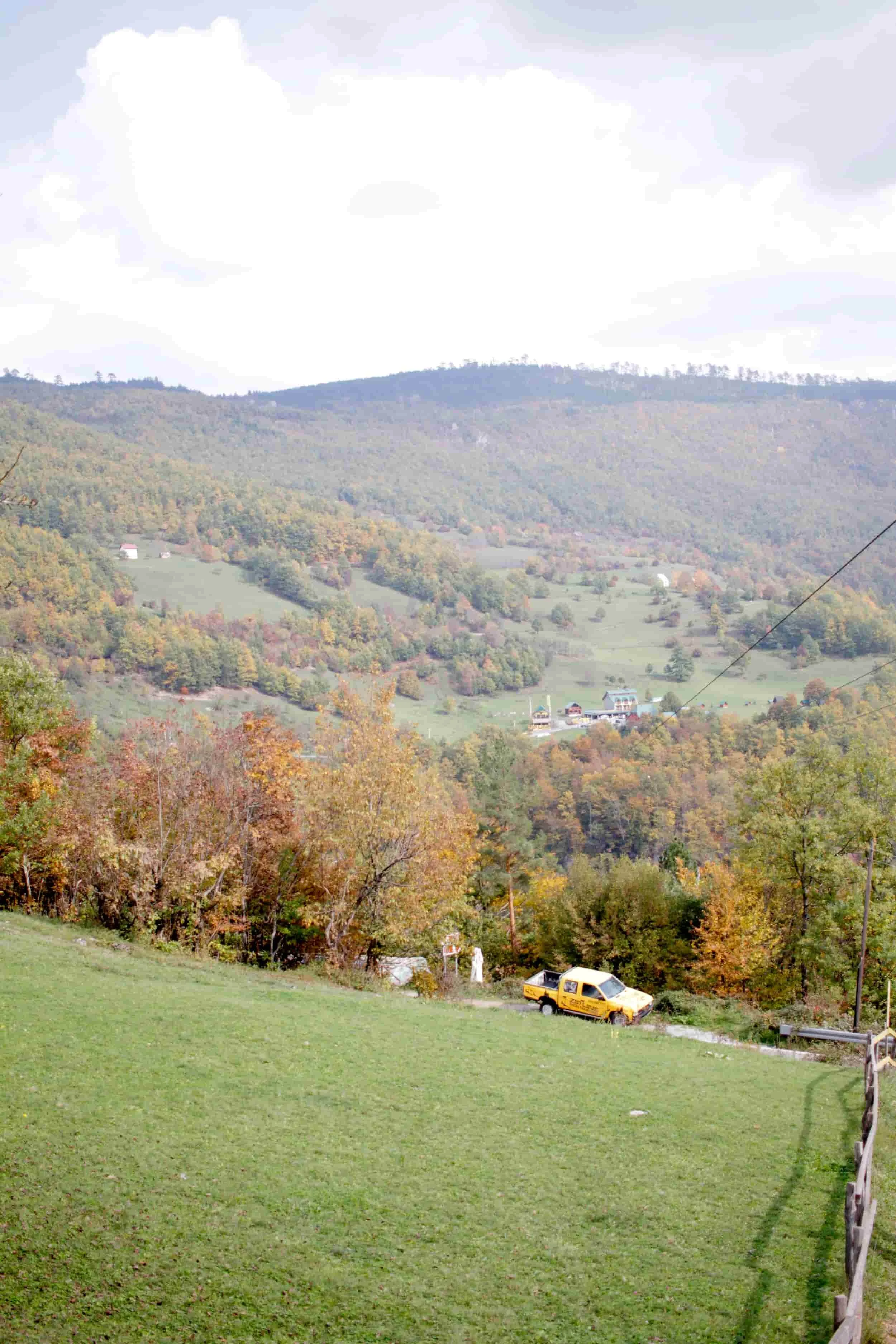
After arrival, your guide, eyes bright with mischief, points out the choices: cross the arched bridge or launch yourself across the gorge on a zipline, hundreds of feet above a ribbon of river. As in my group, I’m sure a few of you need no convincing — myself included — dart to the zipline platform, hearts synced with the valley’s hum. The guide grins and nudges you toward the yellow cable, calling it “the best bang for your buck” — the one that delivers the purest rush and a view you’ll brag about for weeks.
💰 Budget Tip | The zipline costs approximately €20 ($23 USD); souvenir photos are an extra €5 ($6 USD).
Buckle into a snug canvas seat with your feet braced against a leather strap and gear zipped into packs behind you, then lift off. The flight feels like pure magic — long enough to savor, slow enough to notice everything. At first you might be frozen, too nervous to look down; but curiosity wins as you peer over your shoulder at a turquoise ribbon slicing through emerald patchwork below.
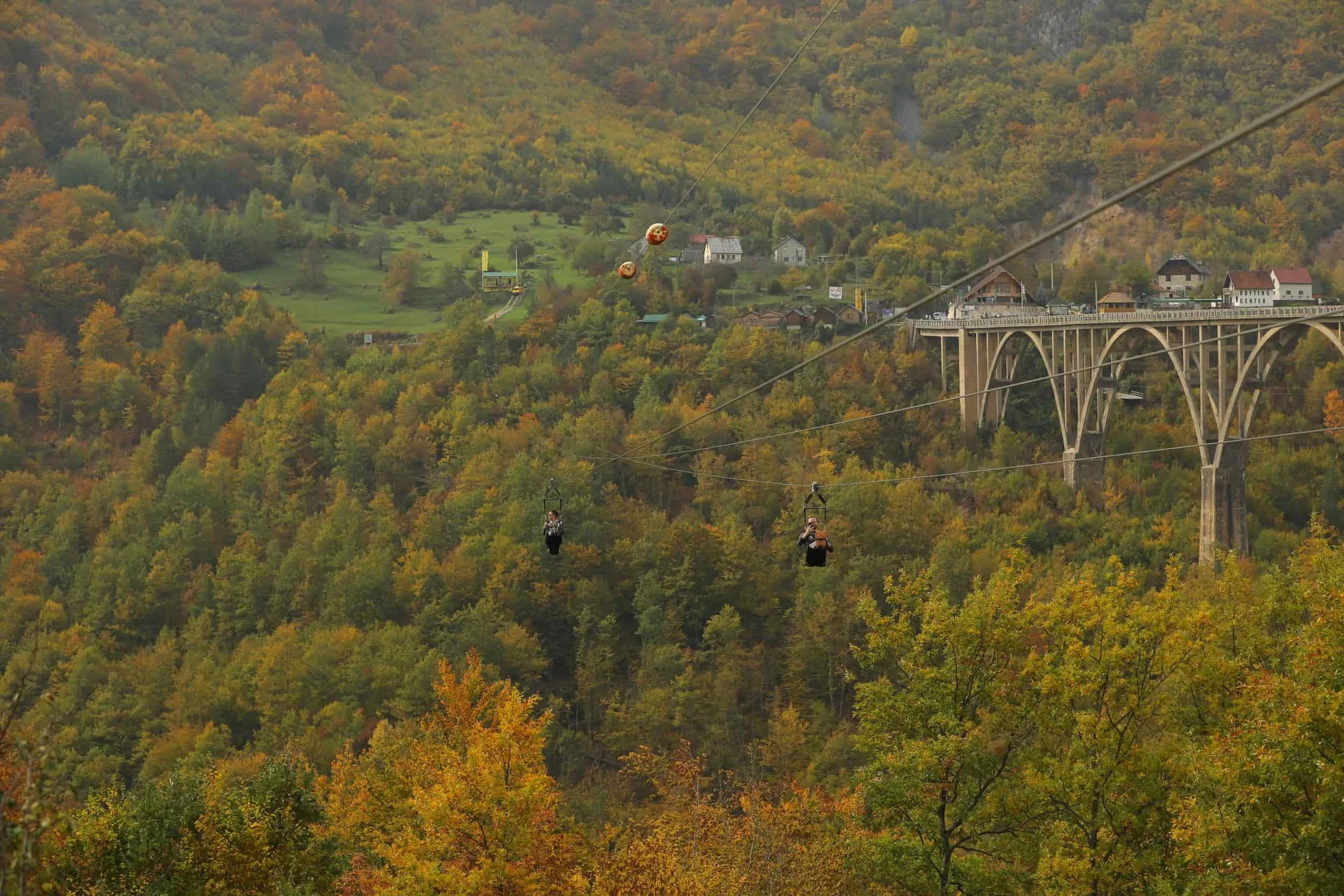
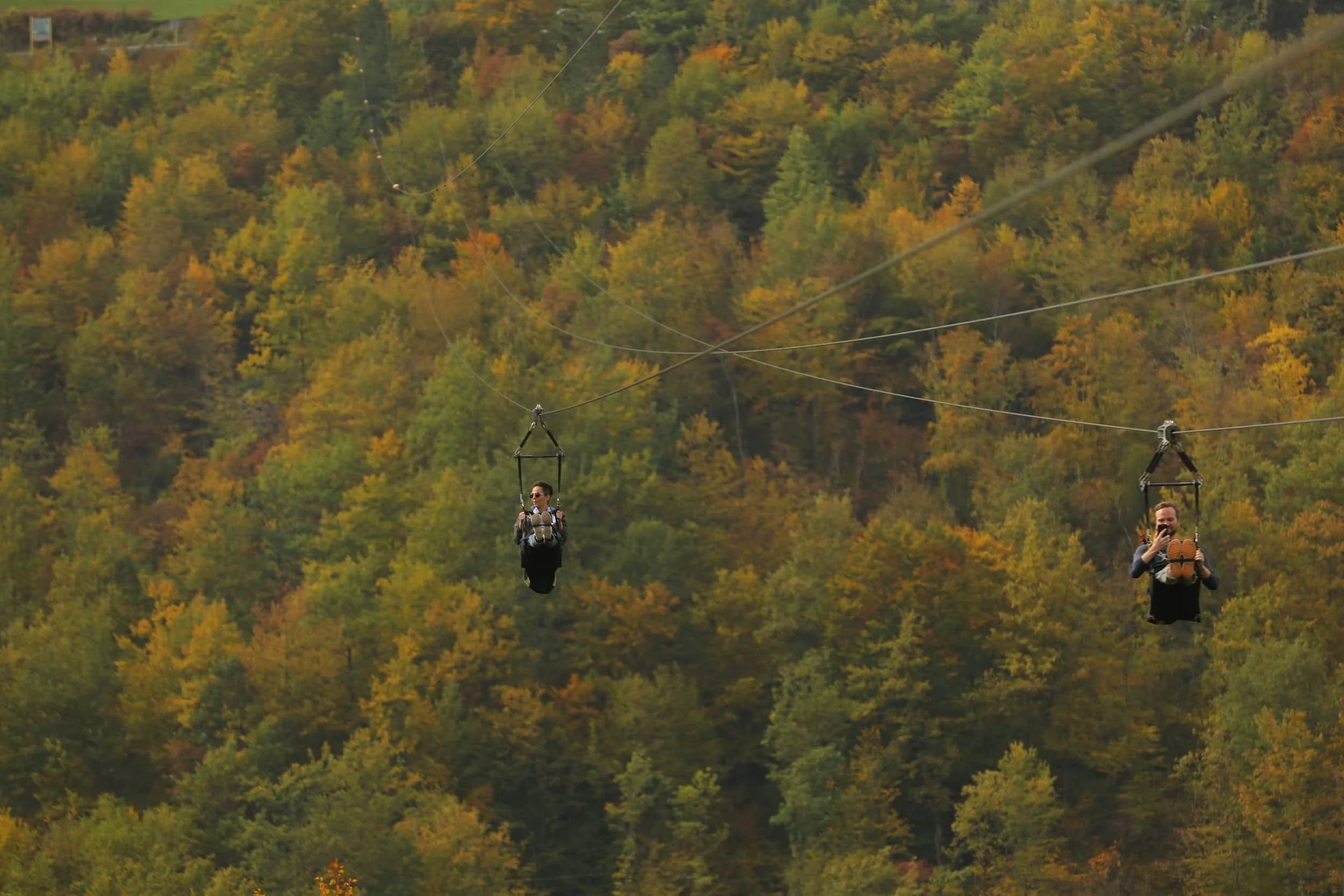
My ride was thrilling — side by side with another guy from my tour, we flew across the canyon — 180 breathless seconds spanning close to 2,700 feet (823 meters). I went first but he, a bit heavier and impossibly thrilled, zipped past me, waving and filming the whole wild ride. Unbeknownst to us, a staffer on the far side snapped photos of our wind-tousled grins as a counterpart waited to ease us into a safe landing.
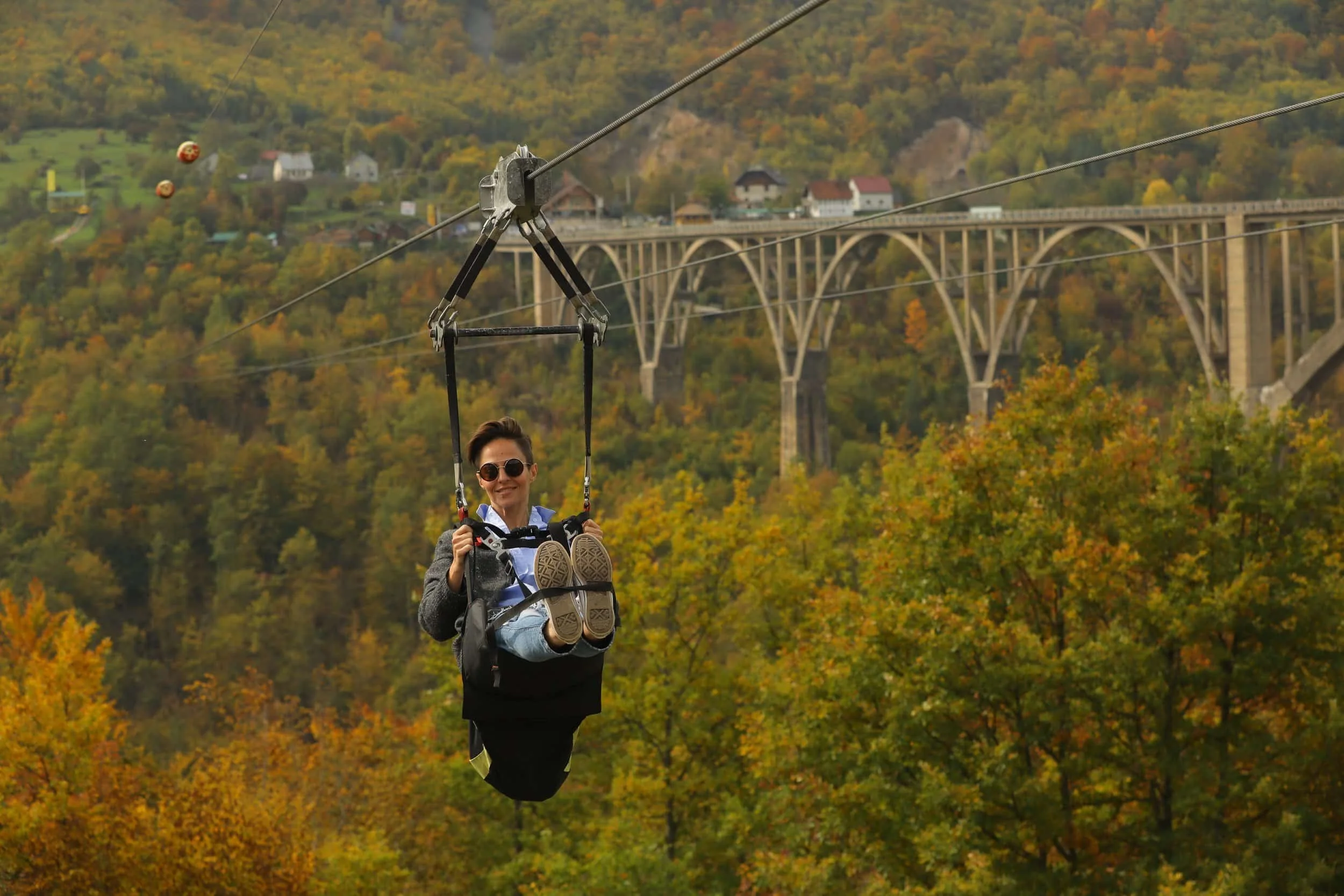
Your feet tucked into the strap feels reassuring — no dangling, no awkward landing to worry about. You can relax and enjoy it. When it ends, you’re lifted out, unbuckled and pleasantly surprised at how smoothly it went.
💡 Local Tip | Not all ziplines are created equal — this one stole my heart and ranks right up there with my other all-time favorite: the jungle zips of Costa Rica. Don’t miss it.
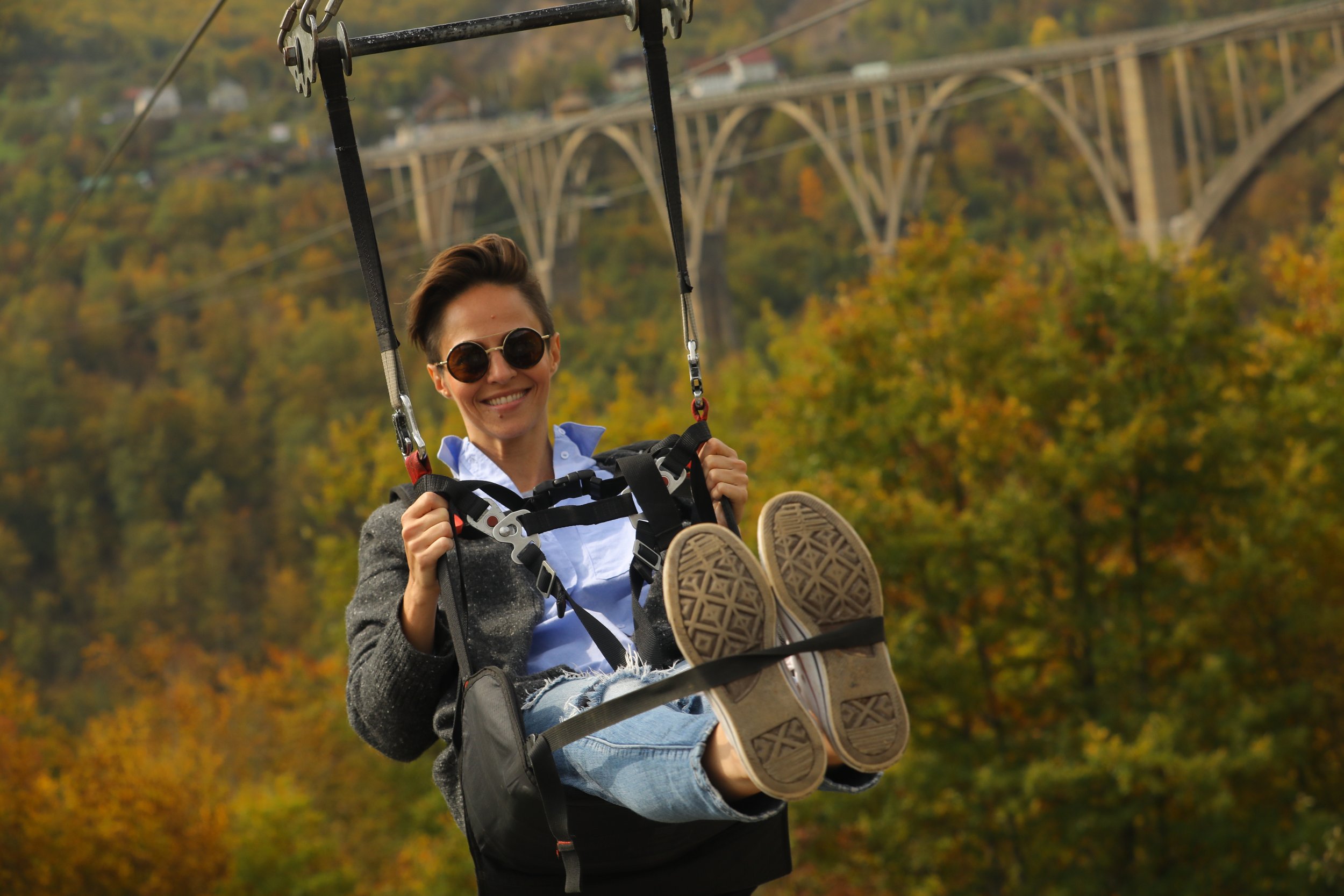
Zipping across the gorge from nearly 600 feet (183 meters) up is unforgettable — terrifying, exhilarating and oddly liberating, surely one of the coolest things to do in Montenegro. After the ride, climb into the back of a truck for a slow drive across the bridge. In that rattling, sun-warmed truck bed, with the wind still buzzing in your ears, the adrenaline finally fades; you’ll feel wildly brave and a little giddy.
Đurđevića Tara Bridge
Perched above the turquoise gorge, the Đurđevića Tara Bridge feels like a page from a storybook. Finished in 1940, this graceful concrete arch links the villages of Budečevica and Trešnjica, marrying engineering boldness with scenic charm.
From afar, you see five sweeping arches — the central one spanning about 380 feet (116 meters) — and up close the bridge’s scale becomes clear: roughly 1,200 feet (366 meters) long, once Europe’s largest concrete arch. Its clean lines stand out against the wild, forested ravine and on a clear day the river below flashes jewel tones.
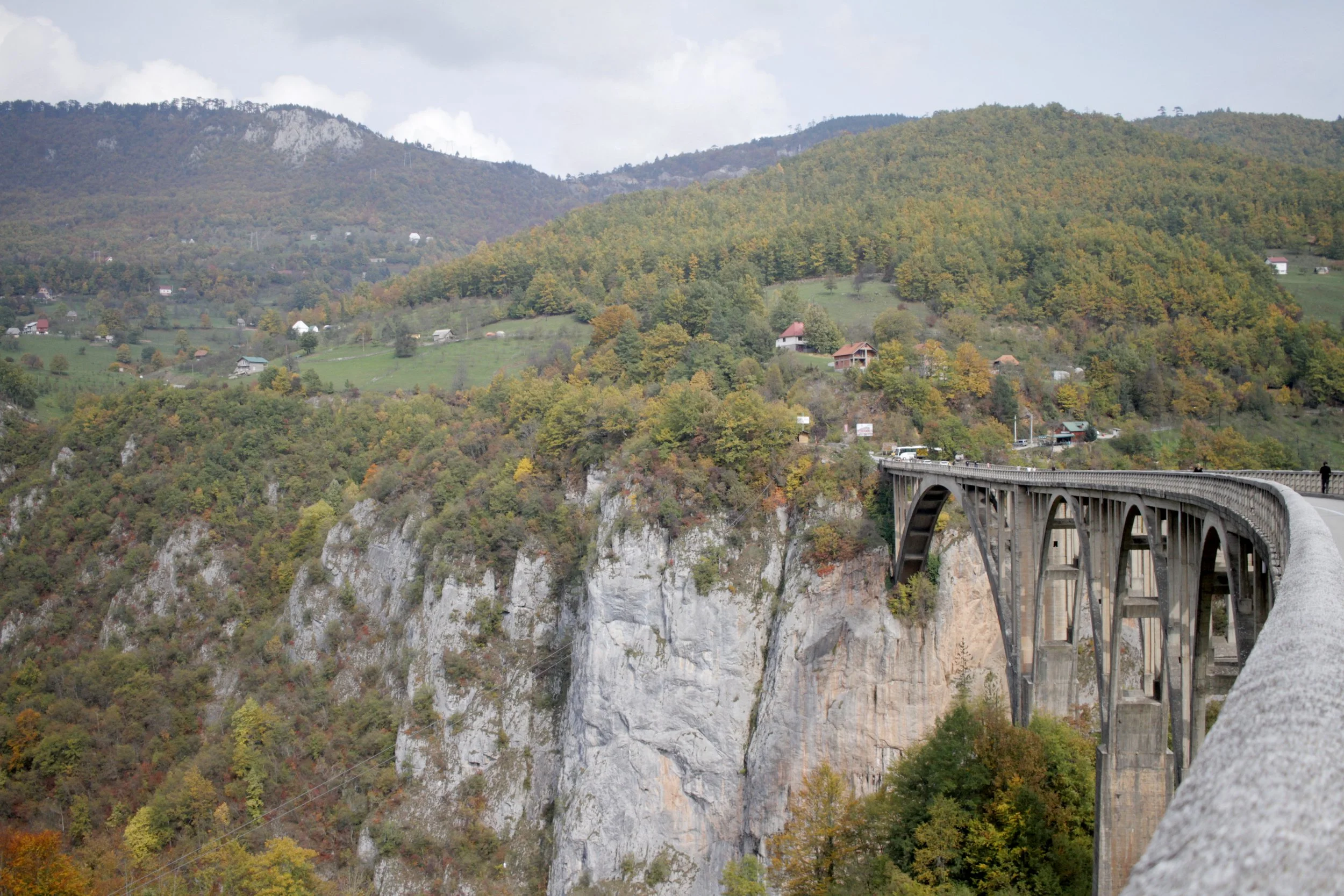
The bridge holds a rich history: it played a key role in World War II, lending the place a quiet solemnity. Today, visitors linger on the parapet, watching paragliders drift, spotting kayakers as tiny dots or simply soaking in the calm of nature framed by graceful concrete.
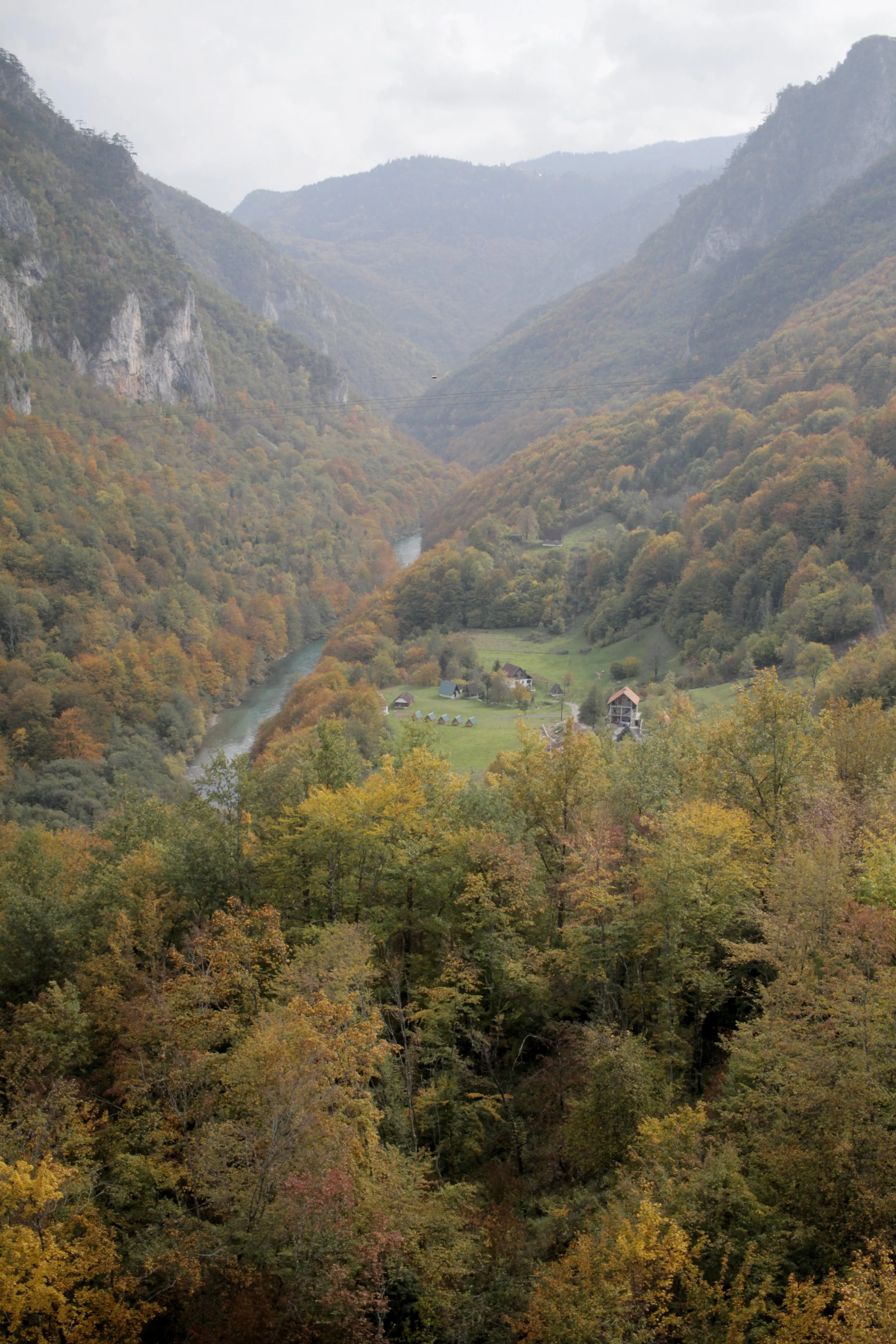
Tara Canyon plunges like a gorge carved by time — Europe’s deepest, dropping up to 4,265 feet (1,300 meters). Limestone walls cradle the crystal-blue Tara River as it winds through 50 miles (80 km) of wild, pristine landscape. The 15-mile rafting route steals the show: foamy rapids, tight squeezes and sudden calm stretches where the canyon echoes. Hidden caves dot the cliffs, inviting daydreams of secret hideouts and ancient shelters.
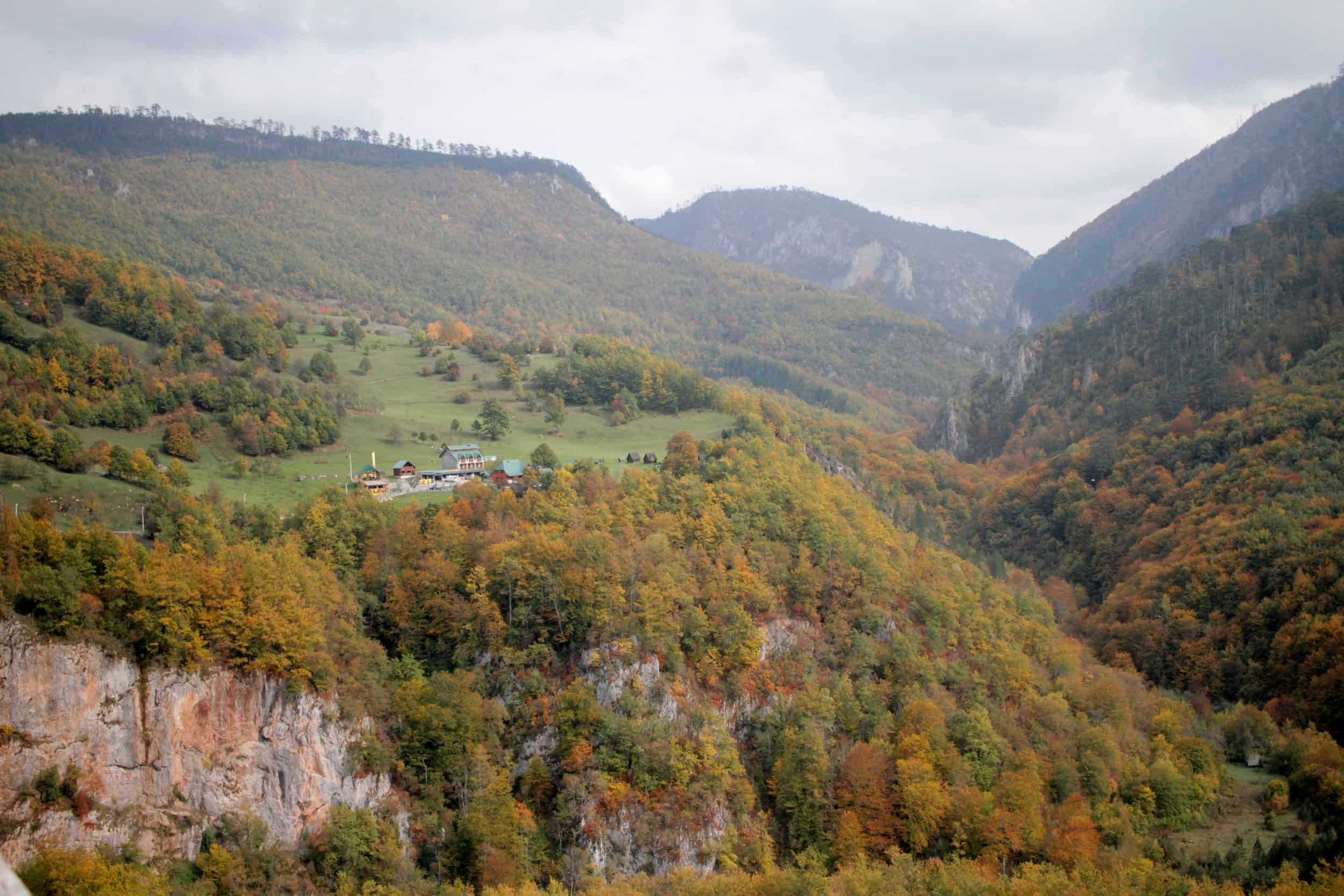
This slice of Montenegro sits inside Durmitor National Park and is protected by UNESCO’s Man and the Biosphere program — and for good reason. Crystal waters and rugged cliffs shelter a rich web of life: soaring eagles, elusive bears and twisted ancient pines that belong in a fairytale. When you’re not riding the rapids, you can hike ridgelines for sweeping views, zip across the gorge for an adrenaline rush with epic scenery or wander quiet trails and watch the light play on the stone.
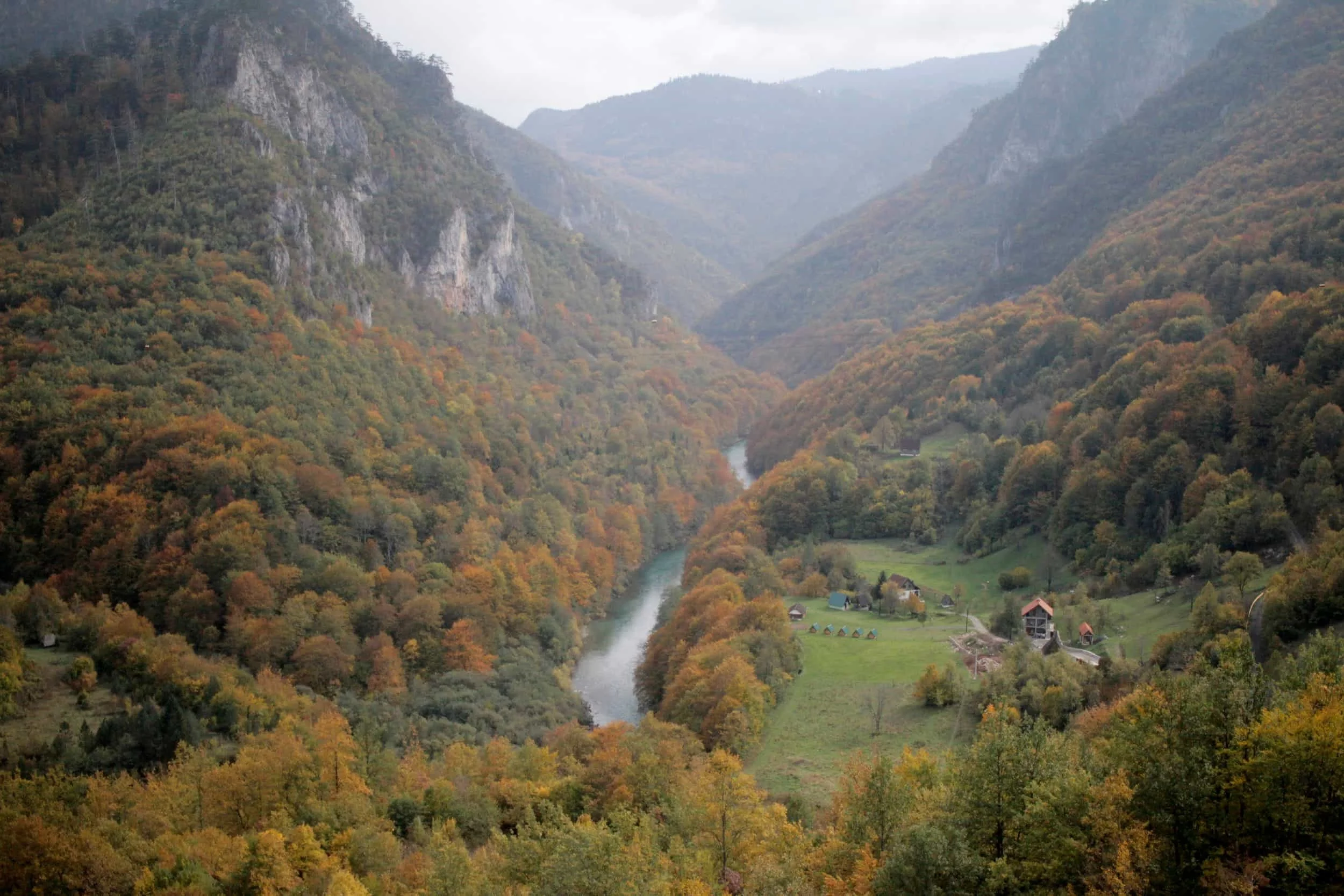
Tara River winds through Montenegro and Bosnia and Herzegovina like a ribbon of glass. Born in the Komovi Mountains where the Opasnica and Veruša meet, it flows down from the Dinaric Alps with quiet confidence. Locals call it the "Tear of Europe" — its impossible turquoise water is so clear you could cup and drink it.
The river spent millennia carving a canyon from the park’s ancient limestone. Durmitor’s terrain is pure karst — rock that dissolves and reshapes into sinkholes, hidden streams, echoing caves and a gorge that steals your breath. As the water wears the limestone, it carries pale, powdery sediment into the riverbed; that fine white rock gives the water its uncanny, almost painted turquoise glow.
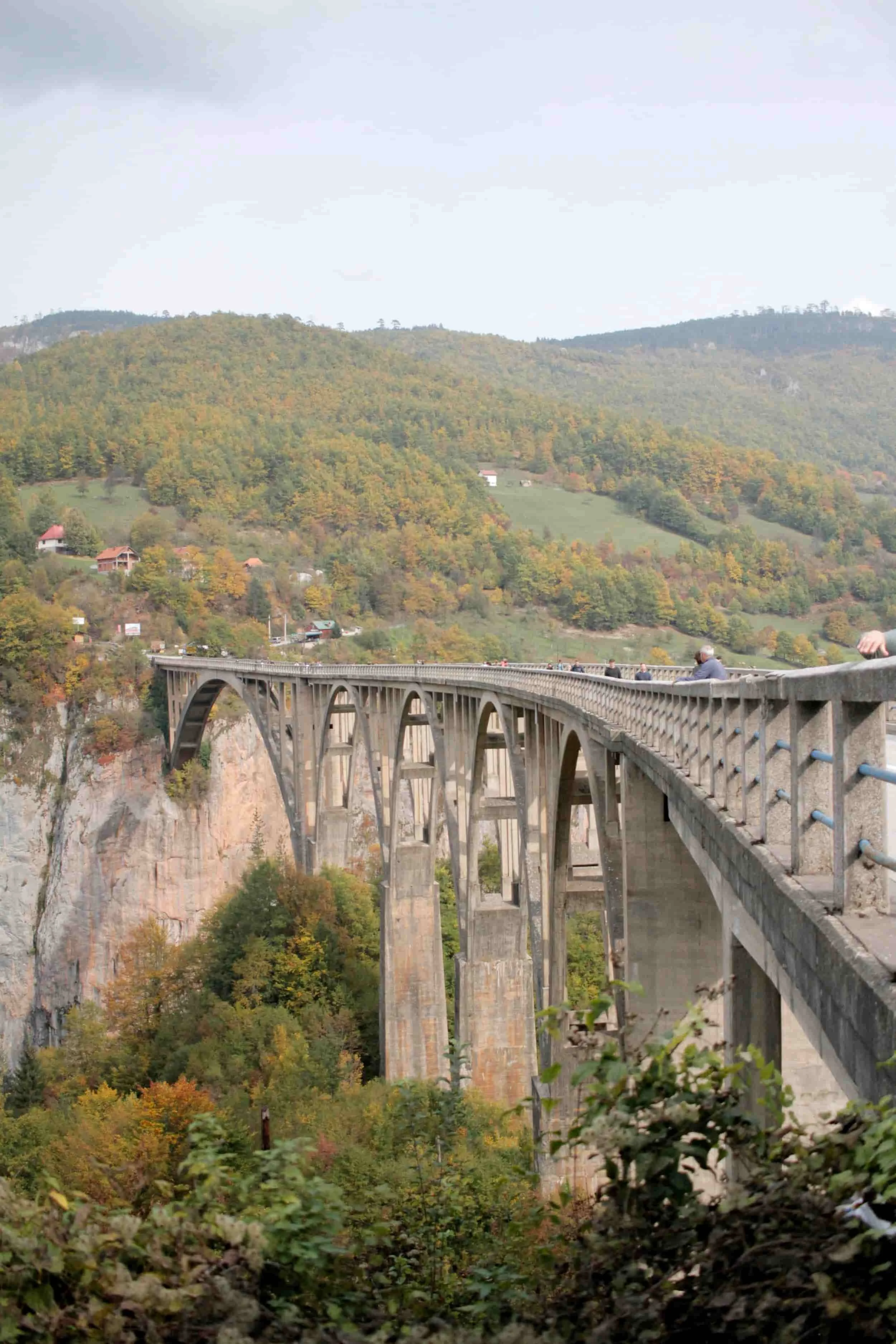
Ancient black pines cling to the steep slopes above the Tara River, their dark silhouettes standing like guards across Durmitor and Tara National Parks. Walk under their needle-carpeted canopies and feel the hush of a landscape shaped for centuries, where rugged oaks and graceful beeches weave with pines and wildlife moves through the understory with easy confidence.
Montenegro’s Hospitality in a Bottle, Rakija
After exploring, don’t forget to sample local treats. Your guide will urge you to taste the black honey, insisting it’s treated like medicine around here. A specialty of the Eastern Mediterranean, “black pine honey” isn’t made from flower nectar but from honeydew — the sap secretions left by aphids feeding on pine trees. Bees gather that dark, resinous sap and transform it into a rich, almost smoky honey that locals swear by.
Savor that final treat: thick, sweet black honey, spooned slowly so every drop lingers. Then, pull your focus to rakija.
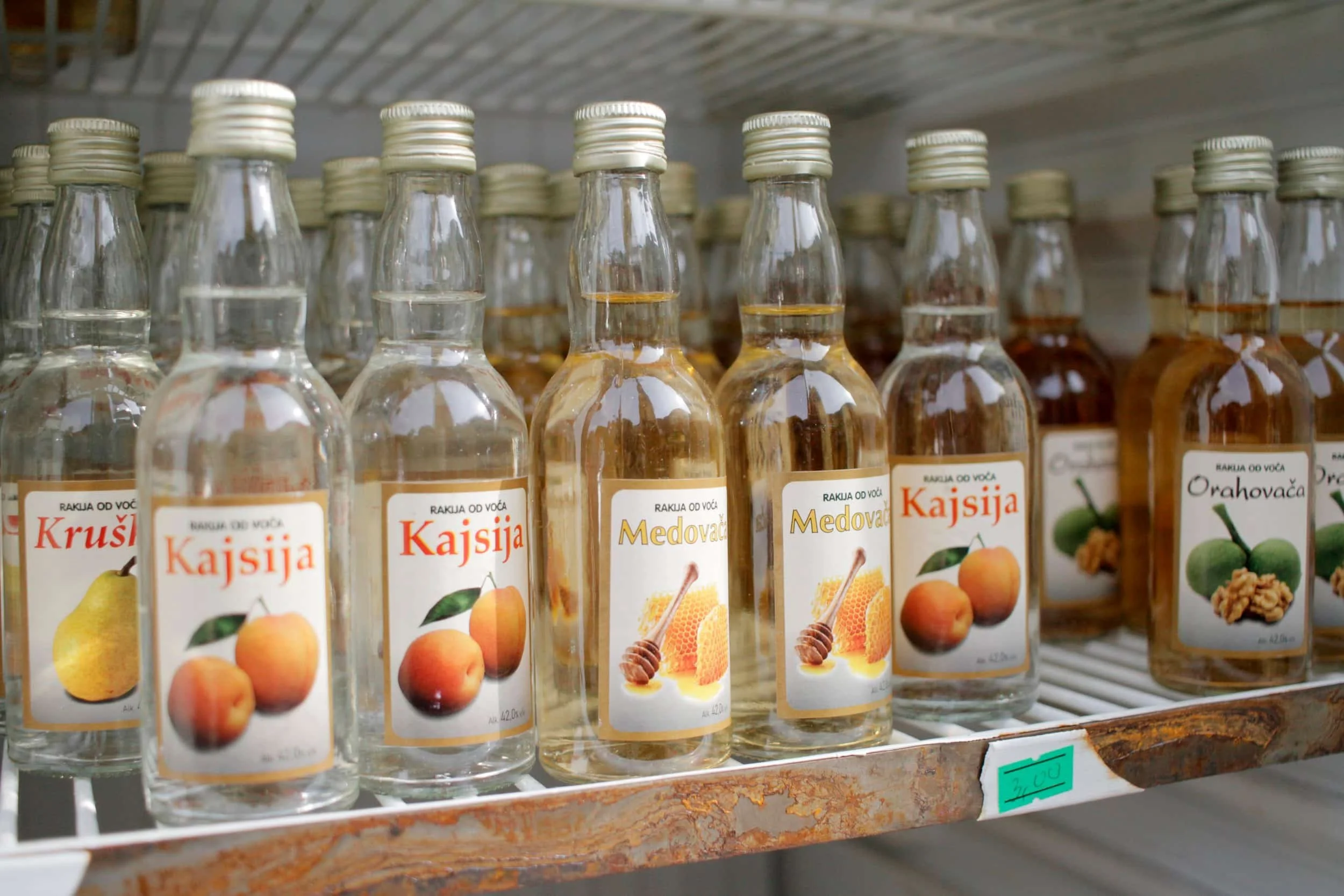
Nearby, bottles of rakija catch the light — clear and amber spirits humming with local history. Montenegrin rakija, distilled here for generations, is practically a postcard in a glass: a strong fruit brandy served as a welcome drink or aperitif, a small ritual of hospitality you won’t forget.
The classics are lozovača (grape) and šljivovica (plum) but locals also make pear, apricot, apple and herbal versions. Each bottle holds the season and the hand that made it. Sip slowly — rakija often hits around 40% alcohol or higher, best enjoyed as a convivial taste, not a gulp.
💡 Local Tip | Taste Montenegro’s midnight nectar: the local black honey, thick and molasses-dark, its flavor a slow, sweet map of the country’s wildflowers and mountain air. Pair it with rakija — try plum, quince or honey-infused varieties — and let the warm, fragrant spirit roll across your palate like the Adriatic breeze.
Or’o in Žabljak
After sharing an unforgettable morning at Durmitor and Tara Canyon, you’ll drive about 30 minutes west to Žabljak and land at Or’O for lunch. On my visit — hungry for something truly local, I ordered Durmitor lamb with potatoes — tender, rustic and impossibly comforting — and washed it down with a bottle of regional water — Diva. Simple, soulful flavors that felt like a warm hello from the mountains.
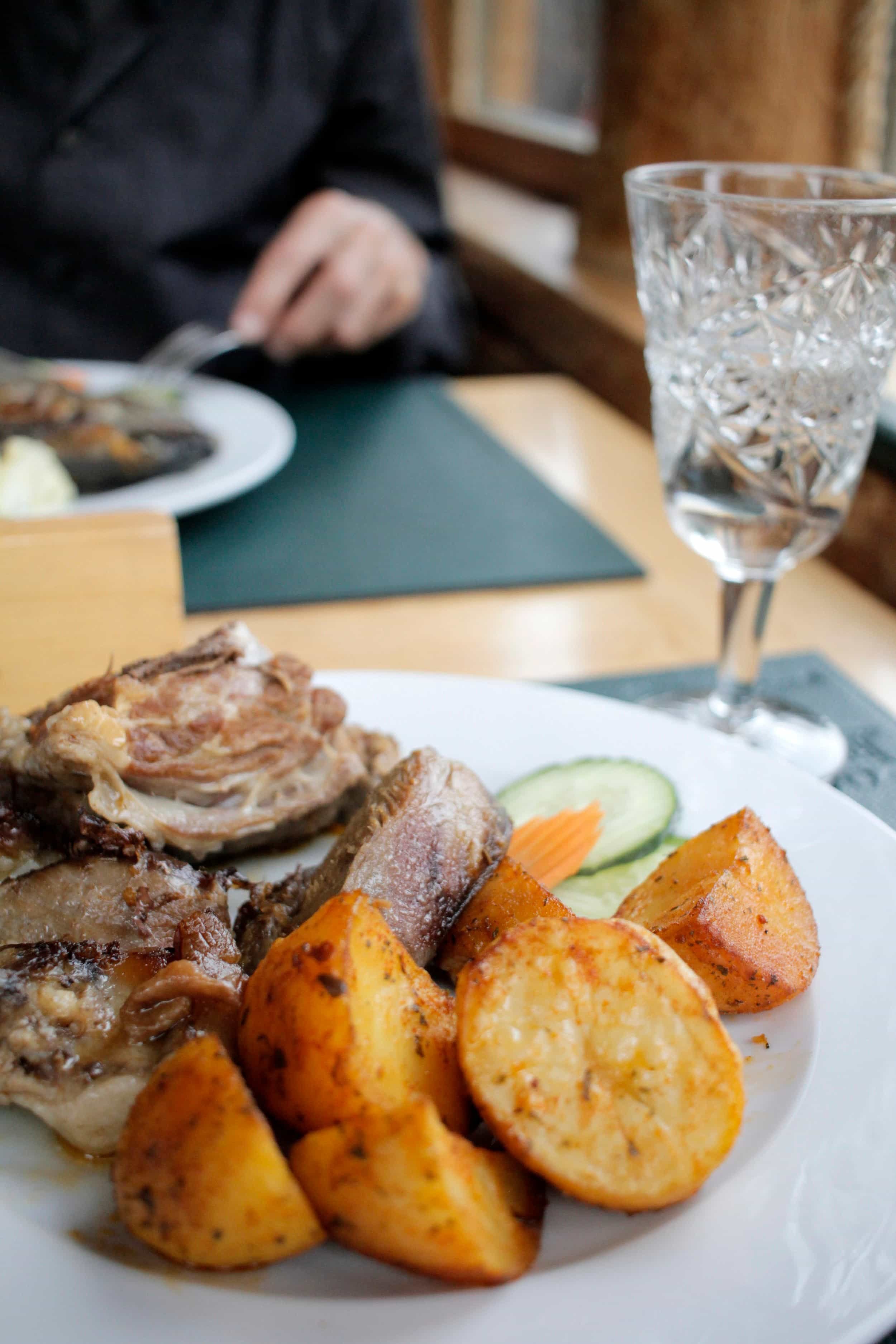
You’ll be surprised in the best way — the lamb is so tender the knife barely makes a sound, its browned edges giving way to meat that falls from the bone in silky strands. Each bite marries deep, savory flavor with a comforting, homey weight; the meal feels indulgent and authentic. It’s the kind of meal that sticks with you: simple, hearty and completely satisfying.
Ostrog Monastery
Perched on the steep face of Ostroška Greda above the Zeta Valley, Ostrog Monastery feels more like a secret sculpted into the mountain than a simple building. The view hits you first, then the stories linger. Tucked into the cliff, its whitewashed walls shine against the rock while pilgrims climb the winding paths, drawn by something older than belief — a need to be near history.
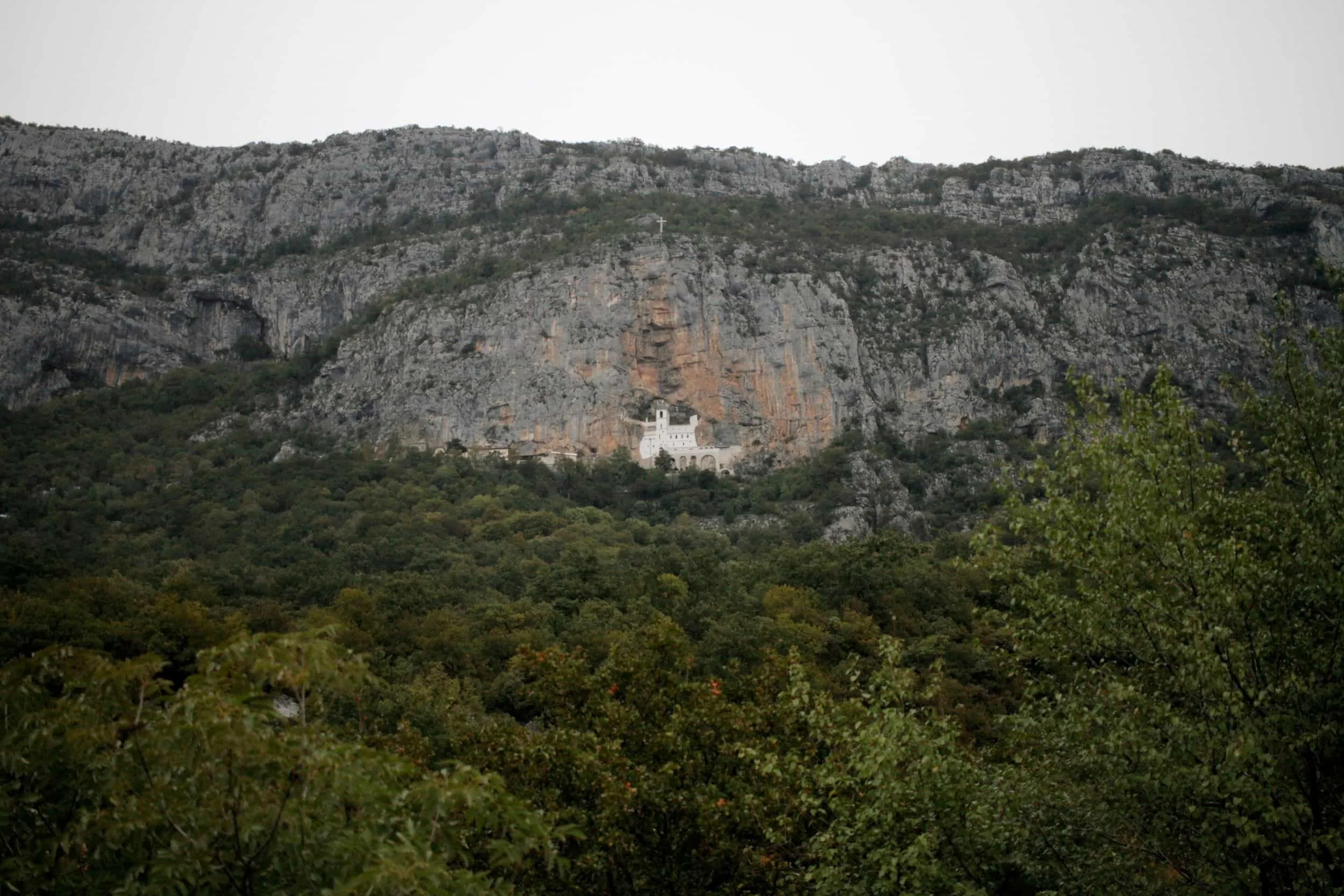
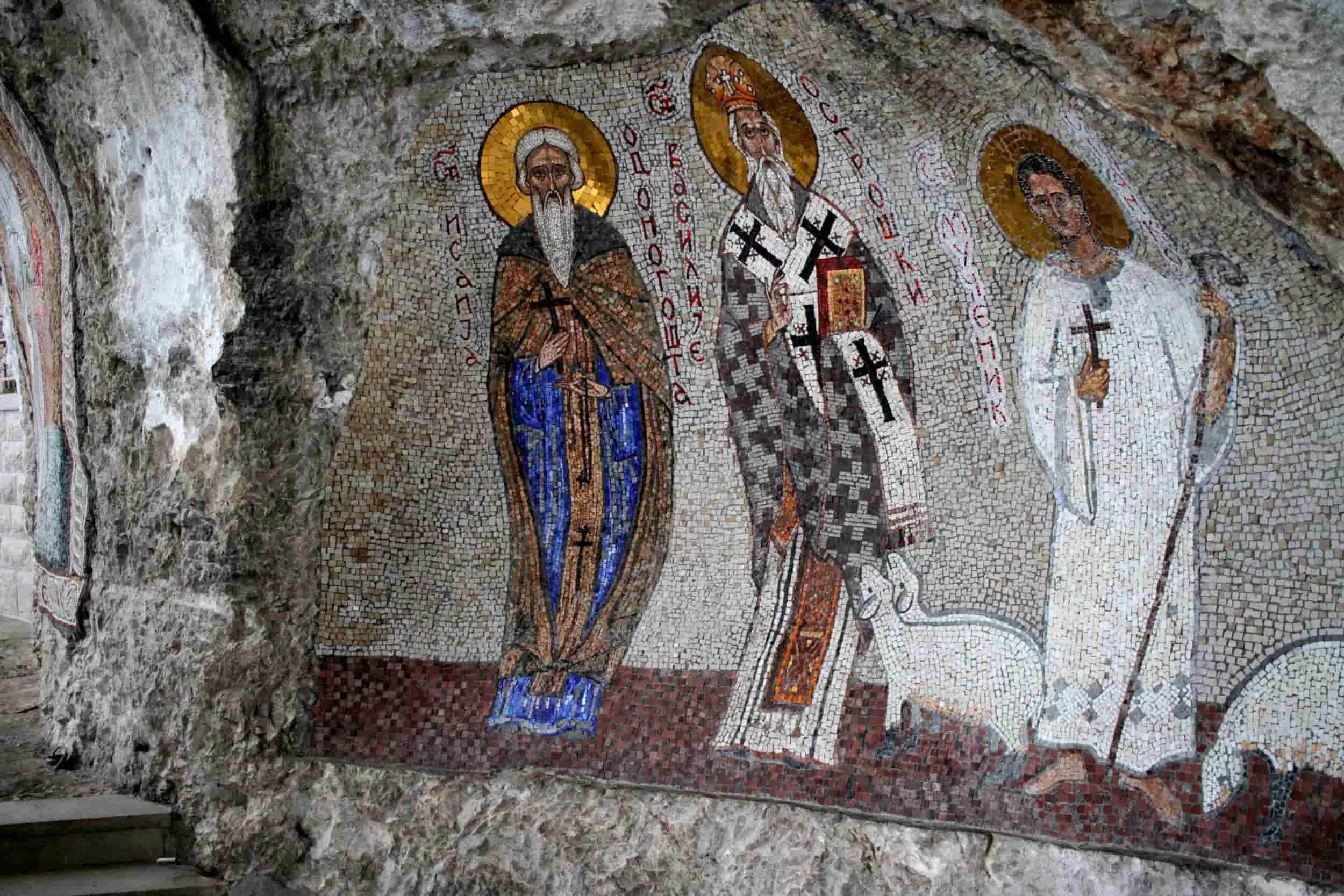
Inside the monastery rest the relics of Saint Basil of Ostrog, a 17th‑century shepherd who became a saint and protector in troubled times. Locals speak of him with the same quiet reverence reserved for family lore. Believed to have healing power, his relics have turned Ostrog into a powerful, cross‑confessional pilgrimage site. Christians of many denominations — and visitors of other faiths — come seeking comfort, cures or simply a moment of connection, drawing between 100,000 and 1 million people each year.
Every corner of Ostrog seems to tell a story: a place that has survived through centuries, an unexploded World War II shell displayed as proof of endurance and sweeping valley views that frame every prayer. For Montenegrins, Ostrog is not just a landmark but part of daily life — a symbol of unity and solemnity. People make vows, seal promises and even swear by the monastery itself, small human rituals that make the site feel at once grand and intimately familiar.
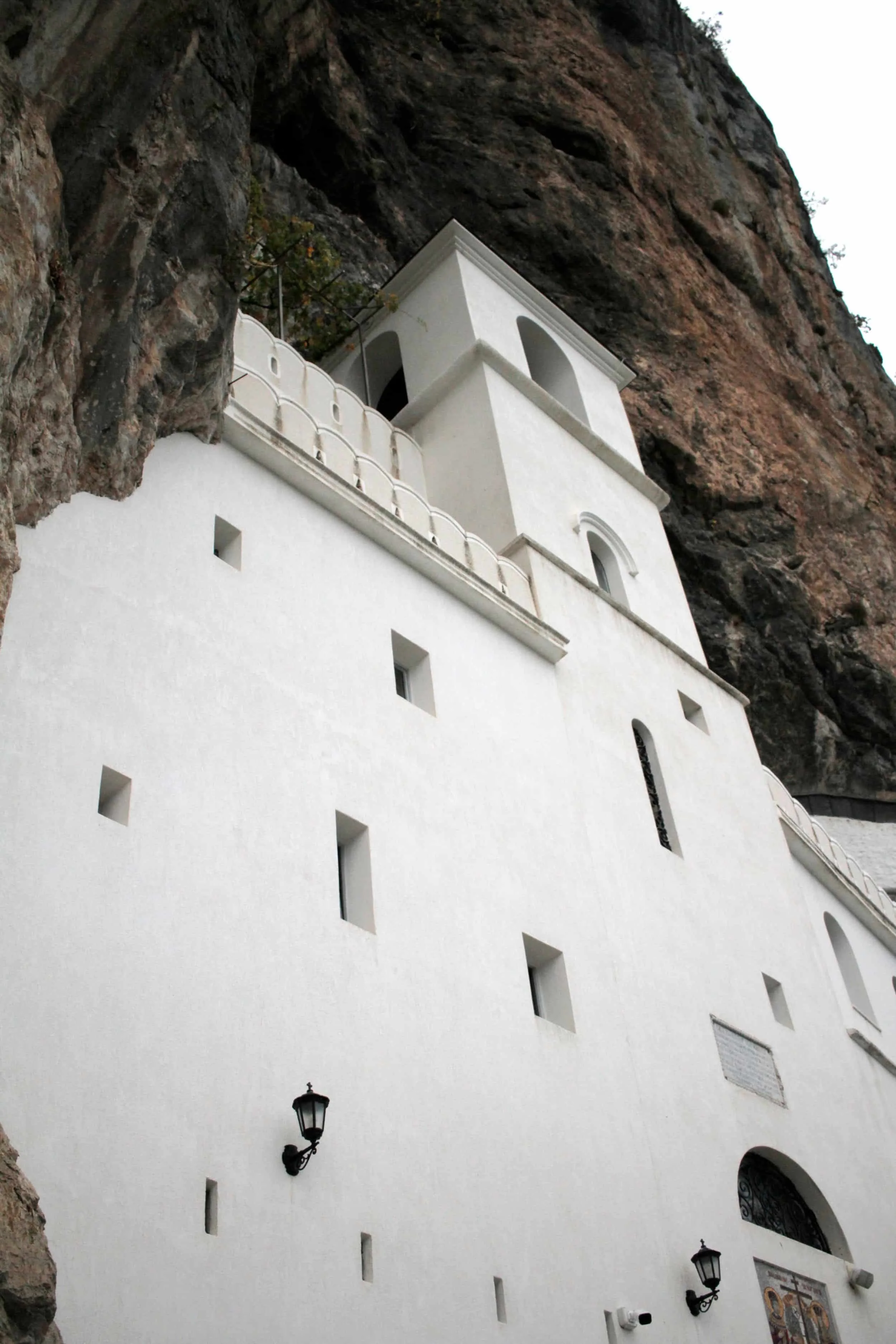
Saint Basil of Ostrog chose this dramatic location centuries ago, not for drama’s sake but for shelter — a place safe from the raids and church burnings of the Ottoman era. The result is two linked sanctuaries, the Lower and Upper Monasteries, that climb the rock like a prayer made visible.
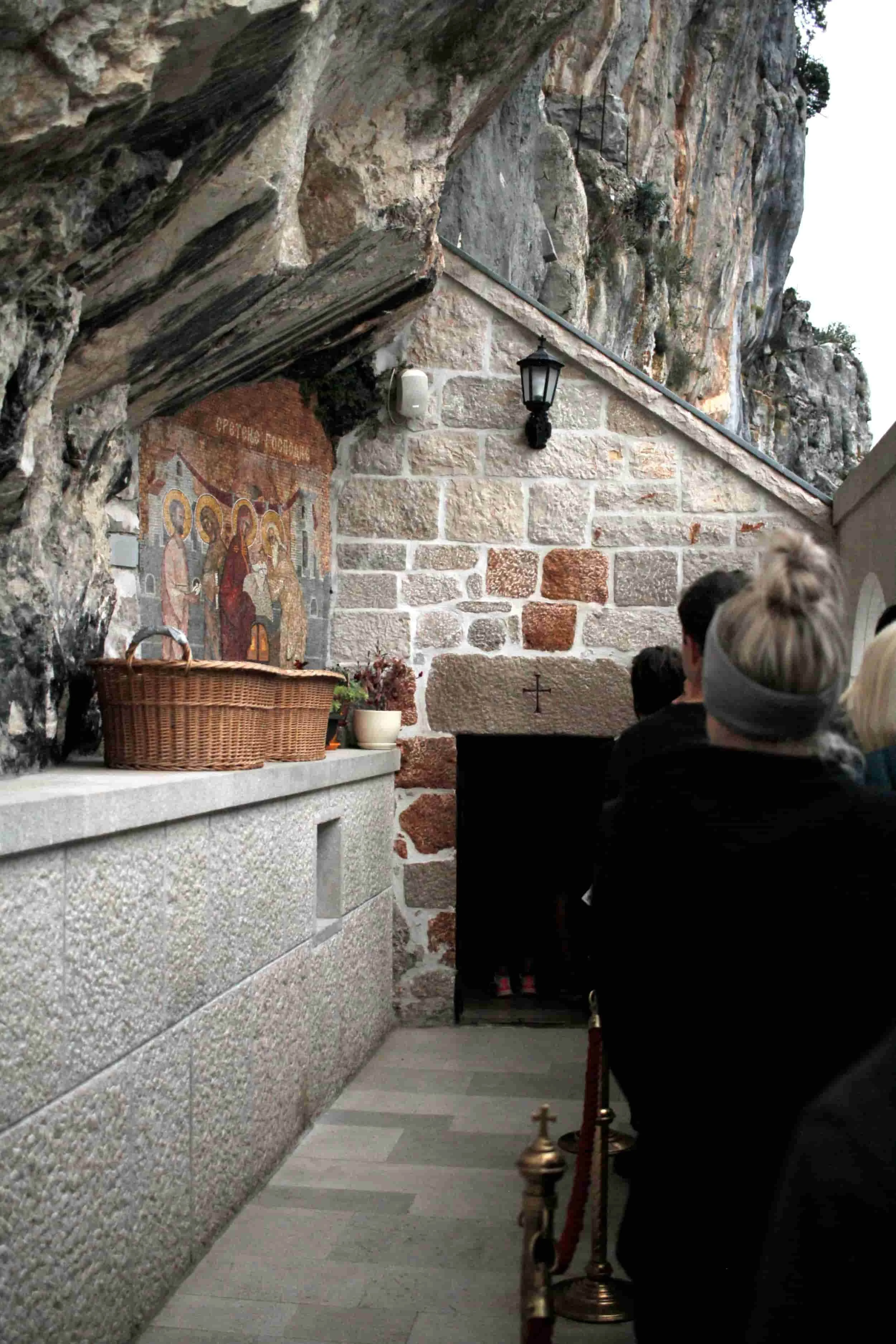
The lower cave-church, the older of the two, dates to 1655 and carries the quiet of long devotion; its late-17th-century frescoes still tell their stories in muted color. Saint Basil was buried in a cave-chapel here in 1671 and pilgrims continue to arrive with bowed heads and candles.
The monastery has endured fire, war and rebuilding. A major fire in 1923 prompted careful reconstruction over the next three years, yet the 17th-century cave-churches remained miraculously preserved. Ostrog also served as a refuge and rallying point in turbulent times, including a significant clash with the Ottoman army in 1877, anchoring its role in both spiritual and national memory.
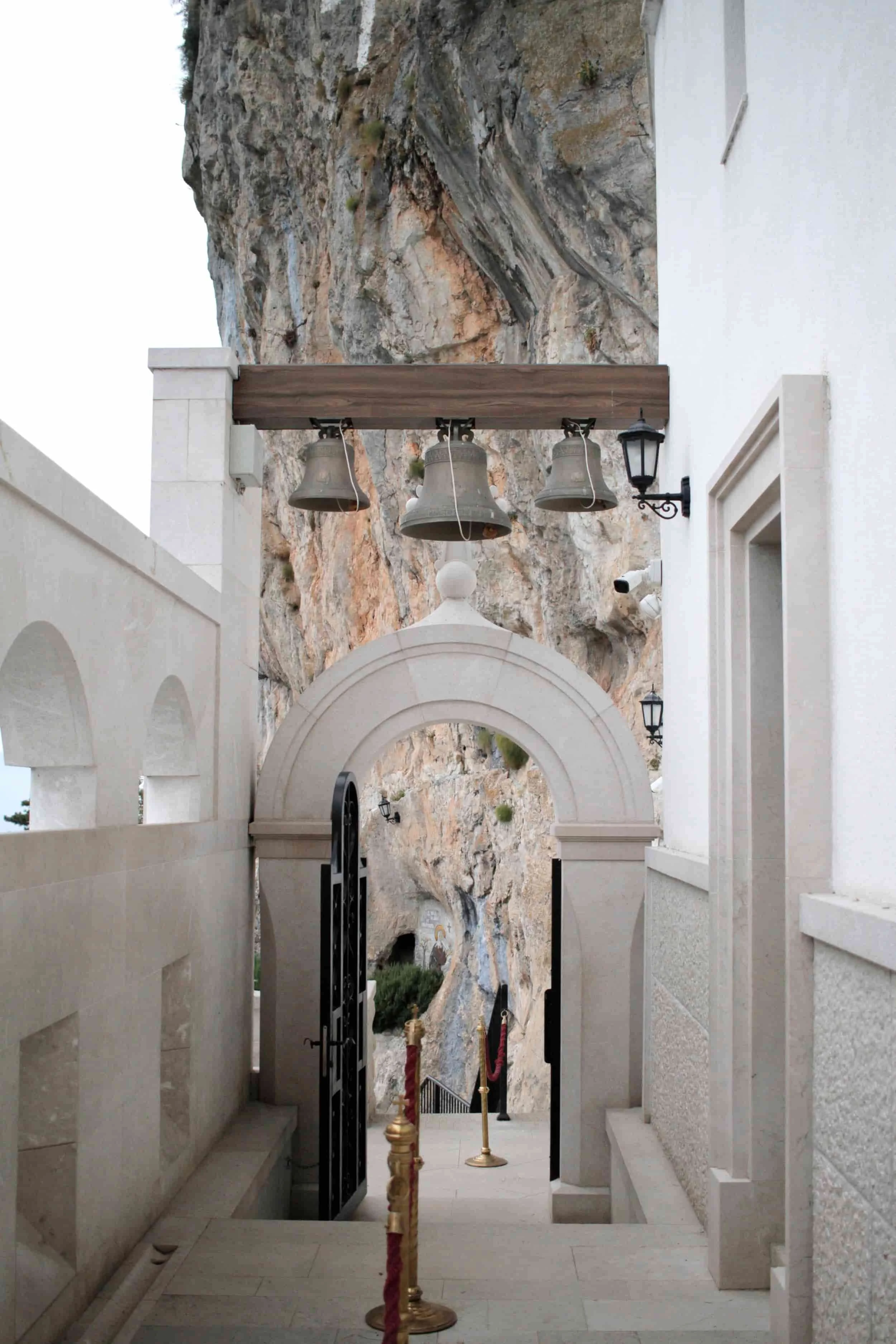
Perched almost 3,000 feet (914 meters) above the valley, the Upper Monastery seems to cling to the rock with its white façade — impossibly placed, yet perfectly at home. From inside, the views are unforgettable: mountains and valleys that shift with the light, dramatic at dawn and quiet in the evening shadows. In the 18th century, the monastery added a second church and later grew into a center of learning, where a small school brought new life to its sacred halls.
The site’s history is as striking as its view. In 1877, a fierce battle in the valley below the monastery saw Montenegrin troops defeat a much larger Ottoman force — a victory that still lives in local memory. During World War II, the monastery hid the treasure of the Yugoslav kingdom. One wartime story still gives people chills: a German artillery shell struck the Upper Monastery but did not explode. The unexploded round became a symbol of survival, deepening the monastery’s reputation for miracles and protection.
The miracle stories go back even earlier. Seven years after St. Basil of Ostrog died, Abbot Rafailo of nearby St. Luke’s began having visions of the saint. After three dreams — the last one terrifying, with St. Basil dressed as a bishop — Rafailo and his monks made the pilgrimage to Ostrog.
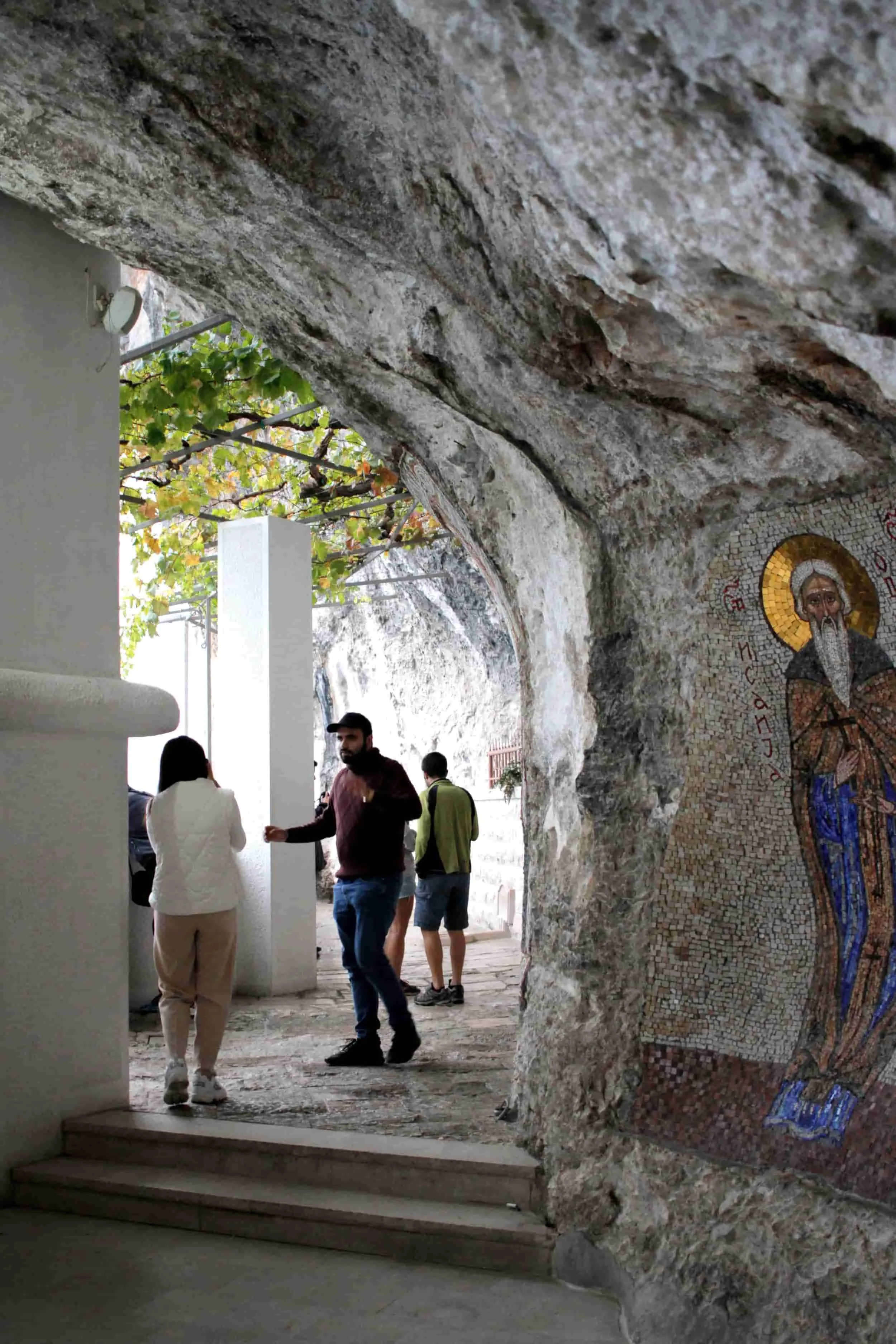
They fasted and prayed for seven days before opening the tomb and found St. Basil’s body unusually well preserved, giving off the scent of basil — a sign of holiness in the Orthodox tradition. The relics were moved to the upper cliffside church, the Church of the Presentation of the Mother of God to the Temple, where they still rest, quietly drawing pilgrims and curious visitors.
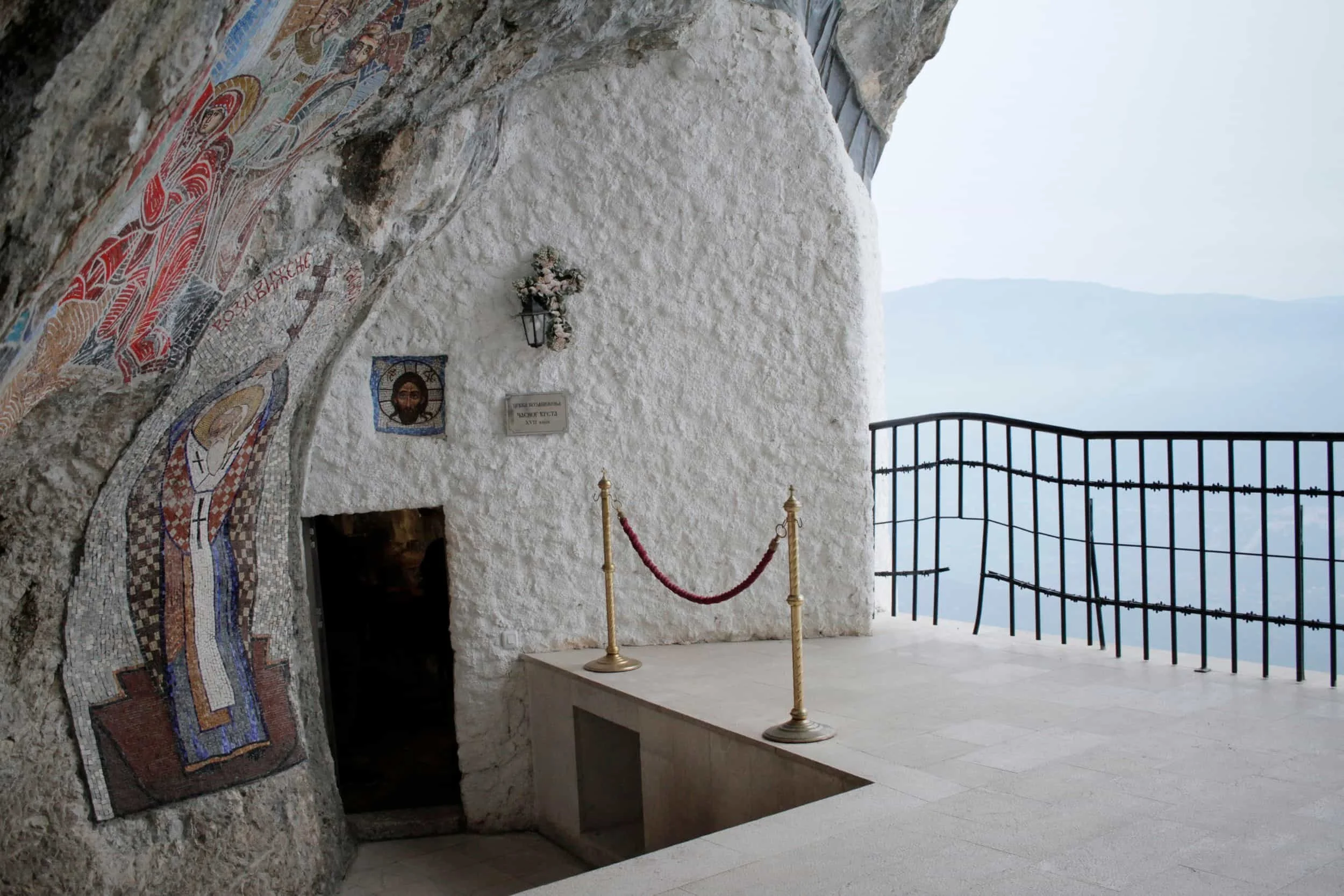
In the Lower Monastery, slip into the tiny, dim cave where the relic rests, wrapped in cloth and lit by candlelight. A priest moves softly through the small crowd, touching a cross to each person’s forehead. Many kiss whatever surface they can reach — a humble, intimate gesture of devotion and blessing.
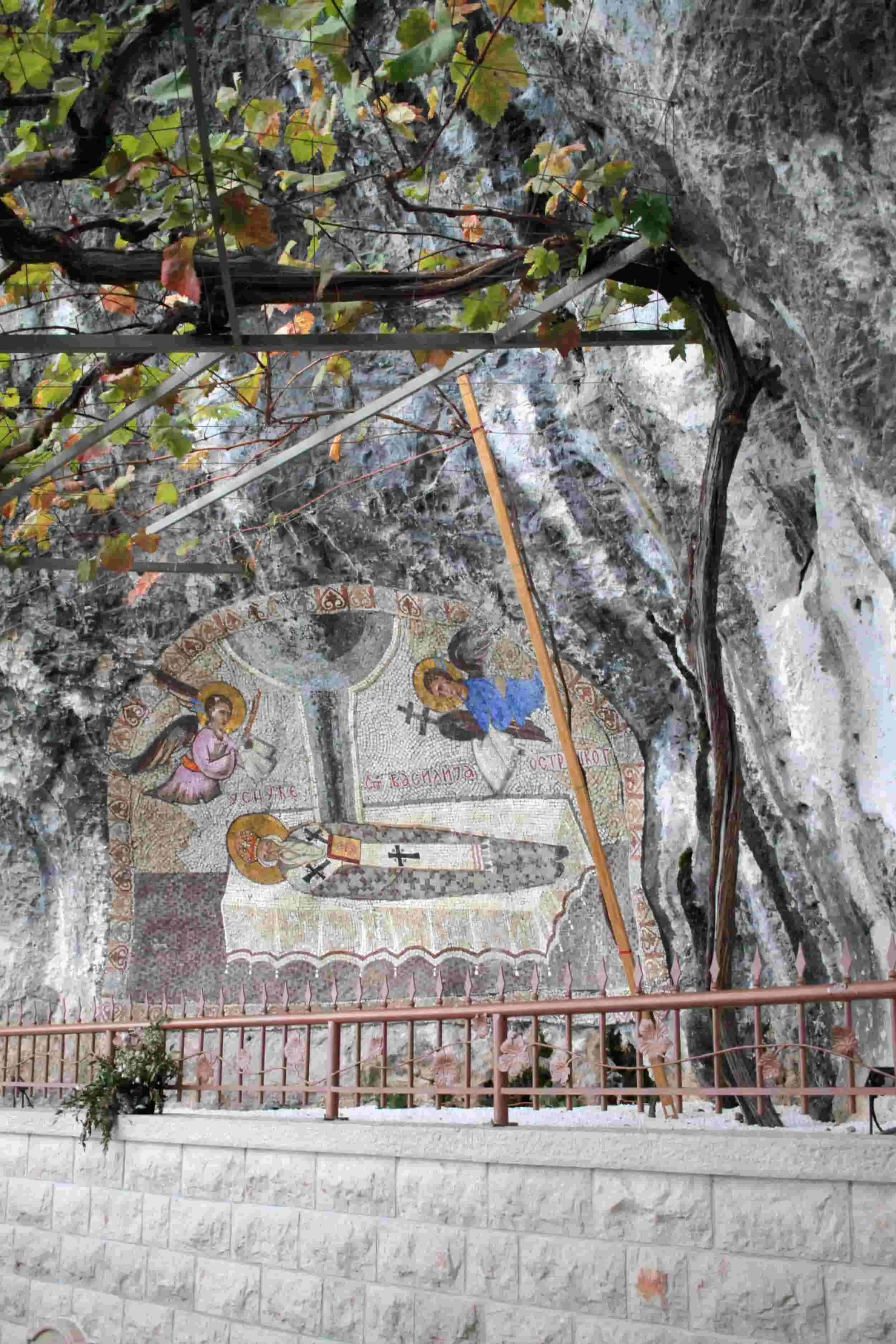
Then, climb the winding stairs to the upper level, where the monastery opens onto a stunning view of the valley. Light and shadow pool on the open-air patio, bringing a glow to the tile mosaics set into the cave walls — small flashes of color against rough stone.
A vine clings to the rock in a way locals call miraculous — life insisting on finding a way. Soft chanting drifts across the terraces as you watch; the devotional sounds feel timeless, even if you can’t place the tradition. Whatever the rite, the mood is the same: people gather to honor, to seek blessing and to witness something larger than themselves.
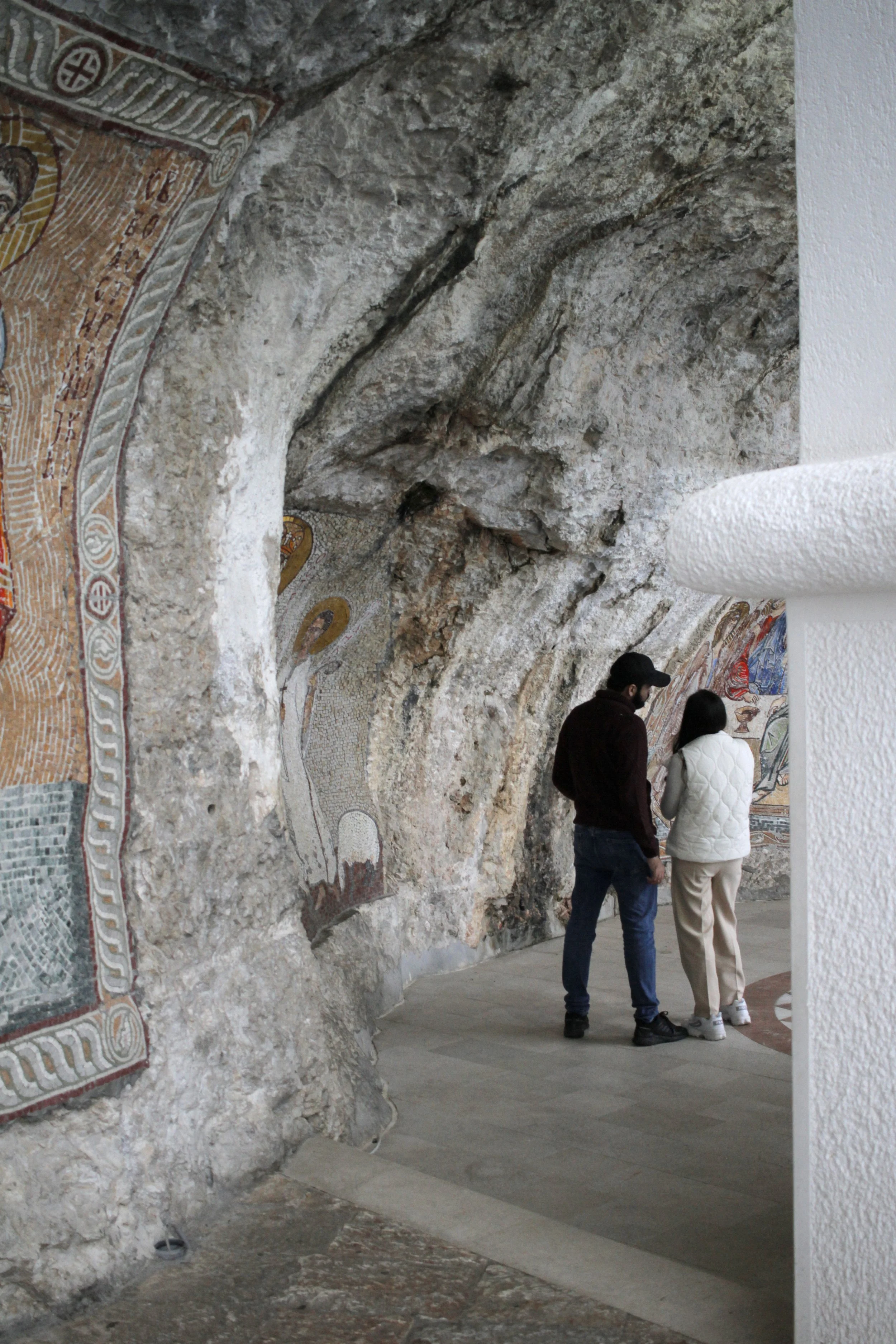
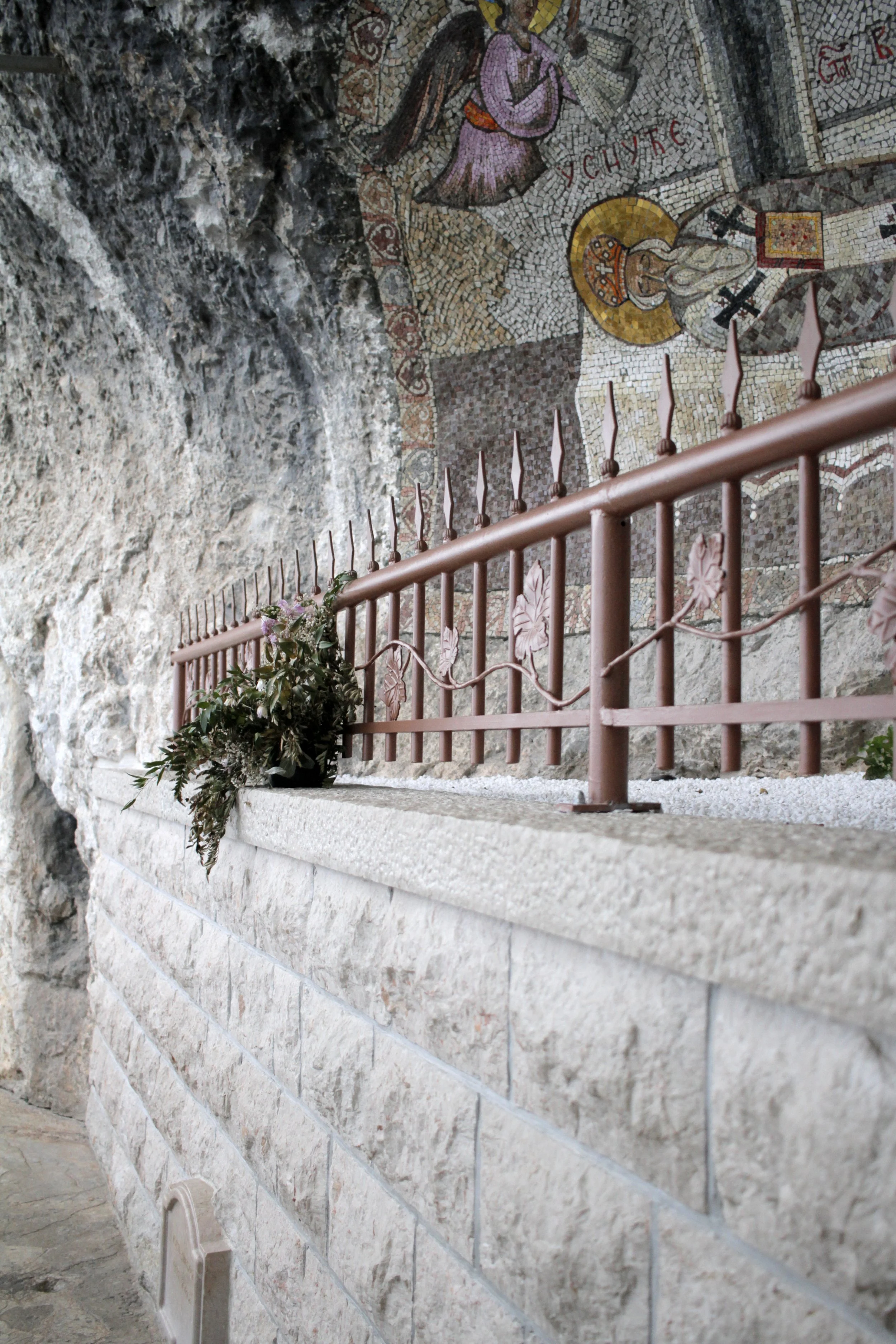
Ostrog’s mix of bare rock, quiet ritual and sudden bursts of color lingers long after you leave. Visiting feels like stepping into a layered story: dramatic scenery, wartime endurance and devotional mystery woven together. Whether you come for the views, the history or the hush of something greater, the monastery leaves a lasting impression as you descend the cliff path.
After a day of wonder and some of the best things to do in Montenegro — Durmitor’s alpine calm, the Tara River Canyon’s turquoise ribbon and the gentle grace of Ostrog — slide back into the van and let the road unwind. The 90-minute drive to Kotor is a soft exhale, hills pass in blues and greens while late light turns everything honeyed. When the bay reappears, the town’s stone roofs and church spires feel like an old friend, promising a warm meal and stories to tuck away until morning.
This day trip from Kotor is truly a delight, hitting all the must-see spots in Northern Montenegro — and the knowledge and guidance your guide provides is priceless, making all the difference.
My Bibimbap Moment
Every destination adds another ingredient to our life's recipe, though sometimes it's not a single moment that stays with us — it's the way many different moments come together. Northern Montenegro surprised me with a day that felt both exhilarating and peaceful, adventurous and deeply reflective. Here's the ingredient it added to my Bibimbap Life.
Today’s Bibimbap Recipe
🥢 Flavor: Dynamic
🌿 Ingredient: Balance
❤️ Best Memory: Ziplining over Tara River Canyon
🎒 Take With You: Some of the richest days aren't defined by one extraordinary moment but by the way many different experiences come together to tell a fuller story.
When I think back on northern Montenegro, I don't remember one experience overshadowing the others. Instead, I remember how naturally they flowed together — the stillness of Black Lake, the rush of ziplining above the canyon, the quiet reverence of Ostrog Monastery and the comfort of sharing a traditional meal with fellow adventurers. Looking back, it wasn't any single stop that made the journey unforgettable. It was the way each one revealed a different side of Montenegro, leaving me with a fuller picture of a country that is as diverse as it is beautiful.
Northern Montenegro Travel Essentials
Exploring northern Montenegro from the Bay of Kotor is a long day but it gives you an entirely different perspective on the country. Within a few hours, the landscape shifts from the Adriatic coast to mountains, deep river canyons and the forests of Durmitor National Park, with stops like Black Lake, Tara Canyon and Ostrog Monastery making the journey as varied as the scenery.
If you’re visiting on a day trip, expect plenty of time on the road and resist the urge to judge the distances by the map alone. A guided tour makes the logistics considerably easier but either way, start early, prepare for changing mountain conditions and treat the drive itself as part of the experience rather than simply the time between stops.
When to Go
The best time to visit northern Montenegro is late spring through early autumn — May to September — when alpine meadows bloom, mountain trails are clear and the days are long enough for unforgettable fjord-like lake views and cascading waterfalls.
Best Months: Plan your trip for May, June or September for mild weather and smaller crowds.
Avoid Winter/Early Spring: Mountain roads near Žabljak and Durmitor can face unexpected snowstorms and hazardous driving conditions.
What to Bring
Layers: Even if it’s warm along the Bay of Kotor, temperatures around Durmitor and Black Lake can be considerably cooler. Bring a light layer you can easily add or remove throughout the day.
Rain Jacket: Mountain weather can change quickly, so a lightweight waterproof jacket is worth carrying even when the forecast looks clear.
Comfortable Walking Shoes: You don’t need serious hiking boots for the standard tour stops but wear shoes with good grip for the trails around Black Lake, viewpoints and uneven surfaces.
Water & Snacks: It’s a long day with plenty of time on the road. Tours usually include opportunities to stop for food but having water and a few snacks with you makes the drive much more comfortable.
Sun Protection: Bring sunglasses, sunscreen and a hat, particularly during summer. You’ll spend a surprising amount of the day outdoors despite all the driving.
A Modest Layer for Ostrog Monastery: You’re visiting an active religious site, so bring something that allows you to cover your shoulders and dress respectfully when entering the monastery.
Cash: A little cash is useful for small purchases, entrance fees or stops along the route where card payment may not be the easiest option.
Camera: This is one day when I’d make sure it’s charged before leaving. Between Tara Canyon, Black Lake and the mountain roads, there are plenty of reasons to keep it close rather than buried in your bag.
How to Get There
If you’re based around the Bay of Kotor, northern Montenegro is reachable as a long day trip but expect to spend a significant amount of time on the road. The route takes you away from the coast and deep into the mountains, with winding roads and dramatic changes in elevation along the way. For me, the changing landscape was part of the experience rather than simply transportation between stops, especially during autumn — it’s stunning.
Guided Tour: This is how I explored northern Montenegro and the option I’d recommend if you’re staying in Kotor and want to see Ostrog Monastery, Tara Canyon and Durmitor National Park in a single day. Full-day tours handle the considerable driving and logistics for you, leaving you free to enjoy the scenery along the way. I traveled with 360 Monte, which made it possible to cover an enormous amount of the country without navigating the mountain roads myself.
Rental Car: Driving yourself gives you much more flexibility, particularly if you want to spend longer at Black Lake, stop at viewpoints along the way or turn northern Montenegro into an overnight trip. Just remember that this is not a short drive from the coast. Roads can be narrow and winding, mountain conditions can change quickly and trying to fit all three major stops into one day makes for a lot of time behind the wheel.
If you only have one day from Kotor, I’d take the guided tour again. If you have several days and want to spend more time hiking and exploring Durmitor, I’d rent a car and stay overnight in Žabljak rather than trying to squeeze everything into a single day.
Where to Stay
If you’re exploring northern Montenegro on a full-day tour, I’d keep your home base around the Bay of Kotor rather than moving accommodations just for the excursion. Kotor is my first choice, especially for a first visit — you’ll have the Old Town, restaurants and waterfront within walking distance, and many organized tours depart from or near the city. If you’d rather come home to somewhere quieter, Dobrota, Prčanj and Perast all offer beautiful alternatives around the bay while keeping you within reach of Kotor.
If Durmitor National Park and the mountains are a bigger focus of your trip, consider spending a night or two in Žabljak instead. You’ll trade the convenience of the coast for much easier access to Black Lake, Tara Canyon and the surrounding hiking trails — and experience northern Montenegro at a much slower pace than you can on a single-day tour.
Where I Stayed
For the full Old Town experience — Katareo Apartments
This is where I stayed in Kotor, tucked into a traditional stone building right in the heart of the Old Town. I loved being able to step outside and immediately wander the narrow streets, cafés and squares, while having my own apartment-style space to come home to at the end of the day. For me, the location was hard to beat.
Where I’d Stay
If I were choosing somewhere different next time, I’d either stay within the walls again for that unmistakable Old Town atmosphere or move out along the bay for water views and a quieter pace.
For a quiet waterfront escape — Galathea House
Set directly on the waterfront in Prčanj, Galathea House trades the energy of Kotor Old Town for sea views, gardens and a much slower pace. The apartment-style setup particularly appeals to me here — it feels like somewhere you could settle into for a few days while still keeping Kotor within easy reach.
For historic character in the center of it all — KAŽIN Supreme
If you want to stay inside Kotor’s walls, KAŽIN Supreme combines the character of a historic building with polished, contemporary rooms right in the Old Town. It’s a good alternative if you want the atmosphere and walkability I loved about staying here but prefer more of a boutique guesthouse experience.
Additional Options
Prefer a place of your own?
Kotor and the surrounding bay are filled with apartments and vacation rentals, from tucked-away spaces inside the Old Town to waterfront homes with mountain views. If you want more space, a kitchen or simply something that feels a little more like home, this is a great place to go that route.
Browse Kotor vacation rentals →
Want to stay closer to Durmitor?
If Black Lake, Tara Canyon and hiking in Durmitor National Park are more than a day trip for you, look at staying in Žabljak for a night or two. You’ll have much more time in the mountains and can experience Black Lake without the long journey to and from the coast.
Want more options around Kotor?
If you’re looking for something specific, browse more stays around Kotor and the Bay of Kotor to find the location, style and price point that works best for your trip.
How Long to Stay
If you’re visiting Ostrog Monastery, Tara Canyon and Durmitor National Park from Kotor, plan on a full day. There’s a lot of ground to cover and much of the experience is the journey through Montenegro’s changing landscapes rather than simply the time spent at each stop.
A guided tour makes it possible to see all three in one very long day but you’ll naturally have limited time at each destination. If Black Lake and Durmitor are places you want to explore more deeply, I’d add one or two nights in Žabljak instead. That gives you time for longer hikes, more of the national park and a slower look at northern Montenegro without spending so much of the day traveling to and from the coast.
If you’re using Kotor as your base, I’d give yourself at least three days, and preferably four if your itinerary allows. That gives you time to experience Kotor itself, dedicate a full day to northern Montenegro and still have room to explore more of the Bay of Kotor without every day becoming an excursion.
For my first visit, the day tour was a great introduction — but it definitely left me wanting more time in the mountains.
Tours & Day Trips from Kotor
If you’re staying in Kotor and want to experience northern Montenegro without navigating the mountain roads yourself, a guided day trip makes a lot of sense. This is how I visited Ostrog Monastery, Tara Canyon, Black Lake and Durmitor National Park, and while it was a very long day, it allowed me to see a dramatically different side of Montenegro without changing hotels or renting a car.
The Northern Montenegro Tour I Took
I booked the North Montenegro: Durmitor, Tara & Ostrog Tour with 360 Monte, departing from Kotor. The full-day route combines several of northern Montenegro’s biggest landscapes and landmarks, including Ostrog Monastery, Tara Canyon and Đurđevića Tara Bridge and Black Lake in Durmitor National Park.
What I liked about doing this as a tour was being able to simply watch Montenegro change outside the window. You leave the Bay of Kotor behind and gradually move into mountains, forests and deep river canyons — without worrying about navigating the long drive yourself.
See the Northern Montenegro tour I took →
Want a Different Northern Montenegro Tour?
There are other ways to explore the north if you want a smaller group, private experience, different itinerary or more time in Durmitor National Park. Some trips concentrate primarily on Durmitor and Tara Canyon, while others combine several northern highlights into one long day from the coast.
More Day Trips from Kotor
Kotor also makes a great base for seeing more of Montenegro without constantly changing hotels. If you have additional days, you can head out onto the Bay of Kotor, explore Perast and Our Lady of the Rocks, travel toward Lovćen National Park, visit Budva and the Adriatic coast or spend a day on the water around the Blue Cave.
Good to Know
It’s a Very Long Day: If you’re visiting from Kotor, expect an early start and a late return. You’ll cover a huge amount of Montenegro in one day, so embrace the time on the road as part of the experience rather than expecting every hour to be spent sightseeing.
The Weather Can Be Completely Different: Conditions around Durmitor and Black Lake can feel worlds away from the sunny Bay of Kotor, even on the same day. Mountain weather changes quickly, so don't assume the forecast on the coast reflects what you'll find farther north.
Mountain Roads Take Time: Distances can be deceptive once you leave the coast. Roads are often narrow and winding, and weather, traffic and mountain conditions can make journeys considerably longer than they appear on a map.
Keep Some Cash: Carry a little cash for park fees, small restaurants and roadside stops, particularly once you get farther into the mountains where card payment may not always be available.
Ostrog Is an Active Monastery: This isn't simply a sightseeing stop. Ostrog Monastery remains an important religious and pilgrimage site, so dress respectfully, keep voices down and be mindful of worshippers while exploring.
You’ll Only Scratch the Surface of Durmitor: A day tour gives you a beautiful introduction to northern Montenegro but it isn't the same as spending several days in the national park. If Black Lake leaves you wanting more, that's a pretty good reason to come back — or add a night or two in Žabljak.
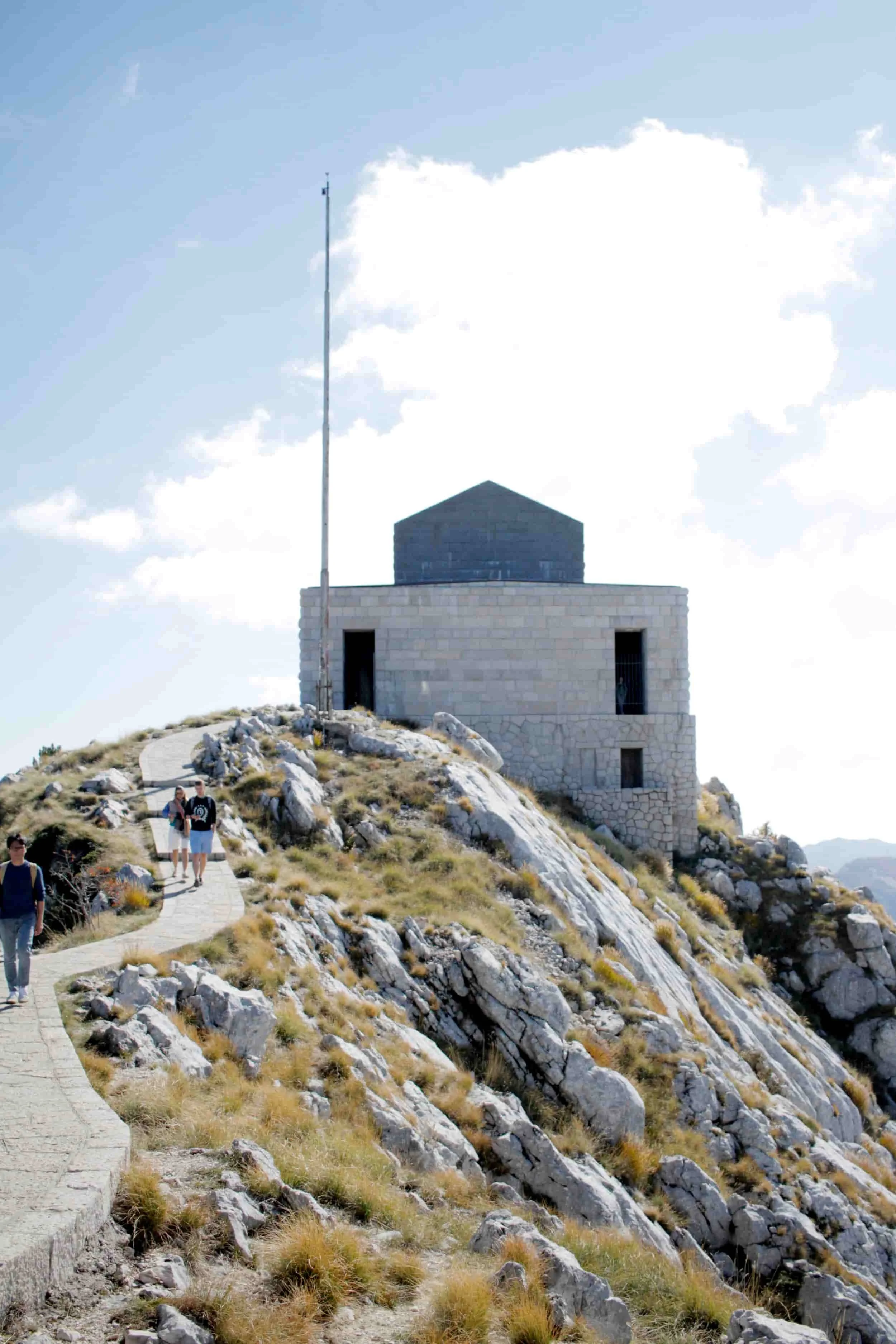
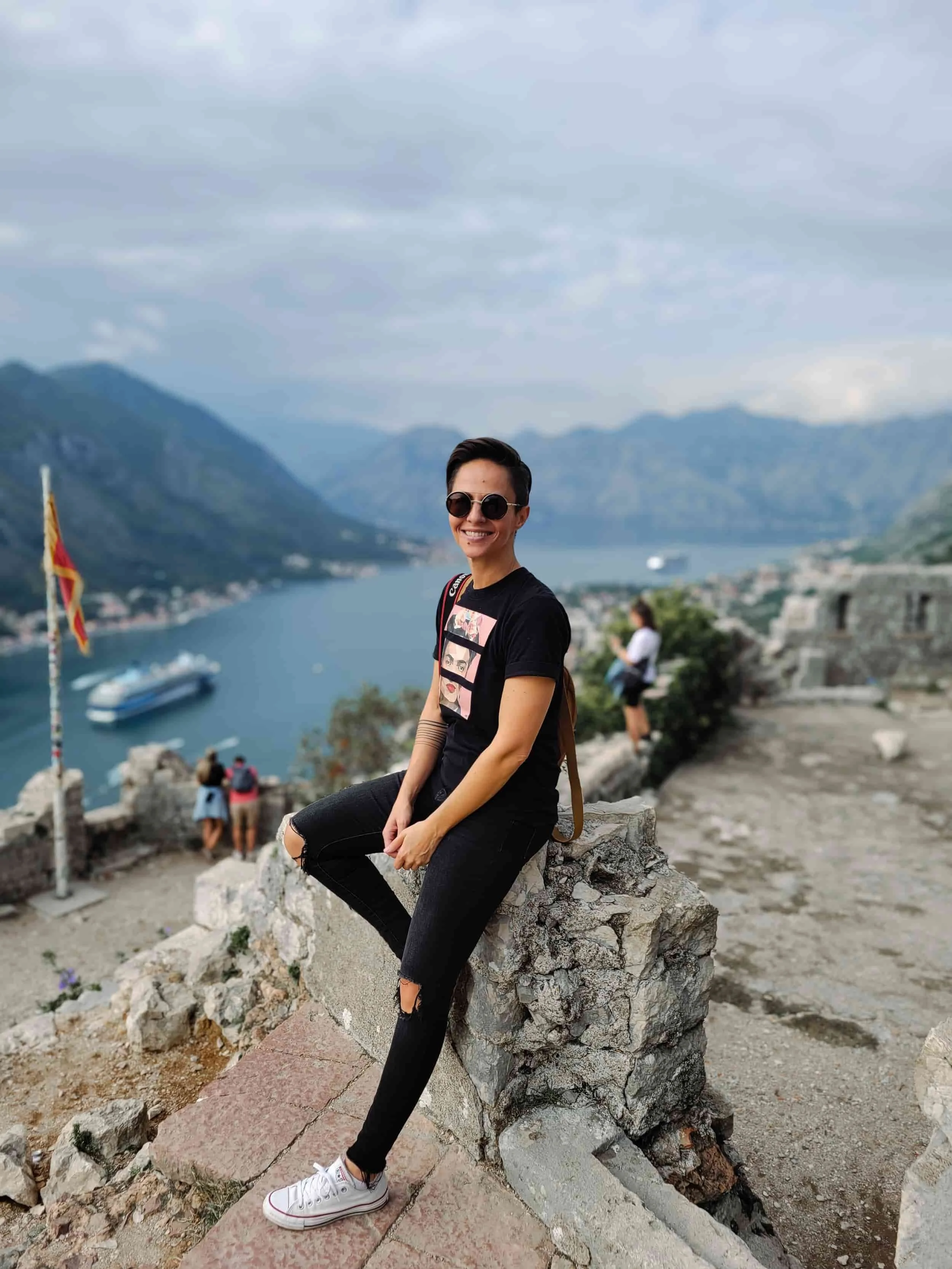
Durmitor National Park’s Black Lake: a pitch-black, mirror-still alpine gem framed by jagged peaks and pine — perfect for a serene, romantic day trip from Kotor.