Discover Dominica, the Caribbean’s untouched “Nature Isle,” where misty mountains, hot springs, cascading waterfalls & vibrant Creole culture invite you to explore raw beauty & restorative adventure.
Updated | October 2026
Why You’ll Fall for Dominica Island
Dominica Island feels wild in a way that much of the Caribbean no longer does.
Dense rainforest covers the mountains. Waterfalls disappear into deep green valleys, volcanic activity bubbles beneath the surface and narrow roads twist between tiny communities, coastline and jungle. There are beaches here but this isn't an island that asks you to spend the entire trip lying beside one.
Dominica rewards curiosity.
Hike into the rainforest. Soak in naturally heated pools. Follow a river beneath a canopy of trees. Chase waterfalls. Wander through Roseau. Stop when something catches your attention — or when the road, weather or landscape forces you to change your plans.
And expect getting around to occasionally become part of the adventure.
What makes Dominica Island special isn't only its dramatic landscape. Some of my strongest memories are much smaller: asking for directions when I was completely lost, conversations with people along the way, picking up hitchhikers, eating in Roseau and slowly beginning to feel more connected to the place rather than simply passing through it.
That balance is what stayed with me. Dominica can be adventurous without feeling performative and peaceful without feeling polished. It still feels like somewhere you have to engage with rather than simply consume.
If you're looking for manicured resorts and an effortless Caribbean escape, there are easier islands to choose.
But if you want rainforest, waterfalls, geothermal landscapes, winding roads and a trip that leaves a little room for the unexpected, Dominica Island is extraordinary.
At a Glance
📍 Destination: Dominica Island
🕒 Time Needed: 4-7+ days
💰 Budget: $325-540 XCD/day ($120-$200 USD)
👟 Walking Level: Mild to strenuous
🌤️ Best Season: Dry season (December-April)
☕️ Don’t Miss: Ti Kwen Glo Cho Hot Springs
🖤 Perfect For: Nature and adventure lovers
My Bibimbap Moment
This trip added: Connection.
Dominica added the ingredient of connection to my Bibimbap Life. I fell in love with the island not just because of its extraordinary landscapes but because of the feeling of being part of its everyday rhythm. Renting a car and finding my way around, eating local food, talking with people, wandering through town and ending the day soaking in the warm waters of Ti Kwen Glo Cho all made the island feel wonderfully lived-in. Even the places that didn't impress me — like the botanical gardens — became part of getting to know Dominica as it really is. I wasn't simply passing through its beautiful scenery; I was beginning to understand the character of the place and the people who call it home.
My Two-Week Caribbean Island-Hopping Itinerary
Dominica Island was the middle stop on a two-week trip through three very different Caribbean islands: Sint Maarten/Saint Martin, Dominica and Antigua.
The trip began in Sint Maarten, where crossing between the Dutch and French sides gives one small island two distinctly different personalities. From there, the journey continued to Dominica — and the experience changed almost immediately.
Dominica was greener, wilder and considerably more rugged. Instead of beach-hopping and resort towns, the days here revolved around winding mountain roads, rainforest, waterfalls, hot springs and figuring out what might be waiting around the next bend.
Antigua came last, bringing the trip back toward beaches and the sea, but with plenty of exploring beyond the coastline as well.
My route: Sint Maarten / Saint Martin → Dominica → Antigua
Experiencing the three islands together made Dominica Island stand out even more. Each offered something completely different but Dominica was the place that asked the most of me — and ultimately became one of the most memorable parts of the trip.
Explore
Here’s where the journey will take us.
01 | Things to Do on Dominica
02 | When to Go
03 | What to Bring
04 | How to Get There
05 | Where to Stay
06 | How to Get Around
07 | How Long to Stay
08 | Tours & Day Trips
09 | Good to Know
Stay | Where to Stay on Dominica Island: A Rainforest Retreat
Explore More | What to See in Dominica: A Solo Hike to Middleham Falls & Best Things to Do in Dominica: Indian River Boat Tour
What to Do on Dominica Island — Places Worth Exploring
Deciding what to do on Dominica Island starts with understanding just how much of the experience revolves around its landscape. Rainforest covers much of the interior, waterfalls hide at the end of hiking trails and volcanic activity surfaces in hot springs and geothermal areas across the island.
But nature isn't the whole story. Roseau brings colorful streets, markets and everyday island life, while smaller communities, roadside stops and conversations along the way often become as memorable as the places you originally set out to find.
Dominica Island rewards a loose itinerary. Choose a few places you don't want to miss, give yourself more time than the map suggests and leave some room for getting lost, changing plans or stopping simply because something catches your attention.
These are some of the places and experiences that helped me begin to understand the island — and a good place to start planning your own trip.
Arriving on Dominica Island
My introduction to Dominica Island began after dark.
By the time I arrived, picked up the rental car and was ready to leave the airport, it was already late. Rather than immediately attempting the drive across the island to Roseau, I stayed nearby at Bruno’s Atlantic Breeze Cabin for the night — a practical decision that gave me the chance to start fresh the following morning.
After waking, breakfast at Pagua Bay became the real beginning of the journey south. With daylight came my first proper look at Dominica: mountains covered in dense green vegetation, small communities scattered along the road and a landscape that seemed to fold and unfold around every turn.
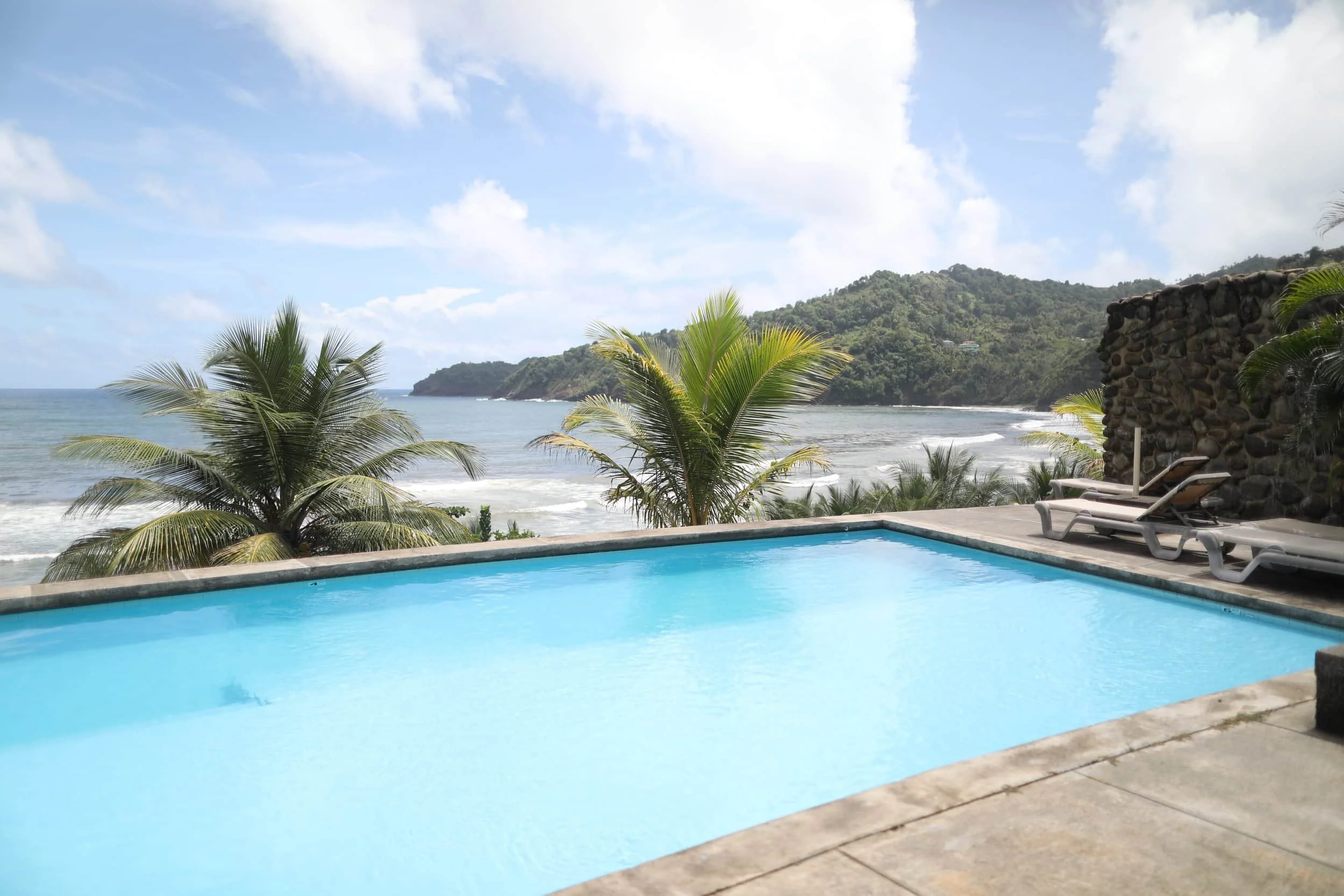
Then came the drive to Roseau.
On a map, Dominica Island doesn't look particularly difficult to cross. On the road, it's another story. Driving is on the left and the route twists through mountainous terrain where distances take longer than you might expect. It takes a little adjustment but that's also part of what makes driving here so memorable. You're not simply moving between destinations — the island keeps revealing itself along the way.
Somewhere along the drive, I picked up my first hitchhikers.
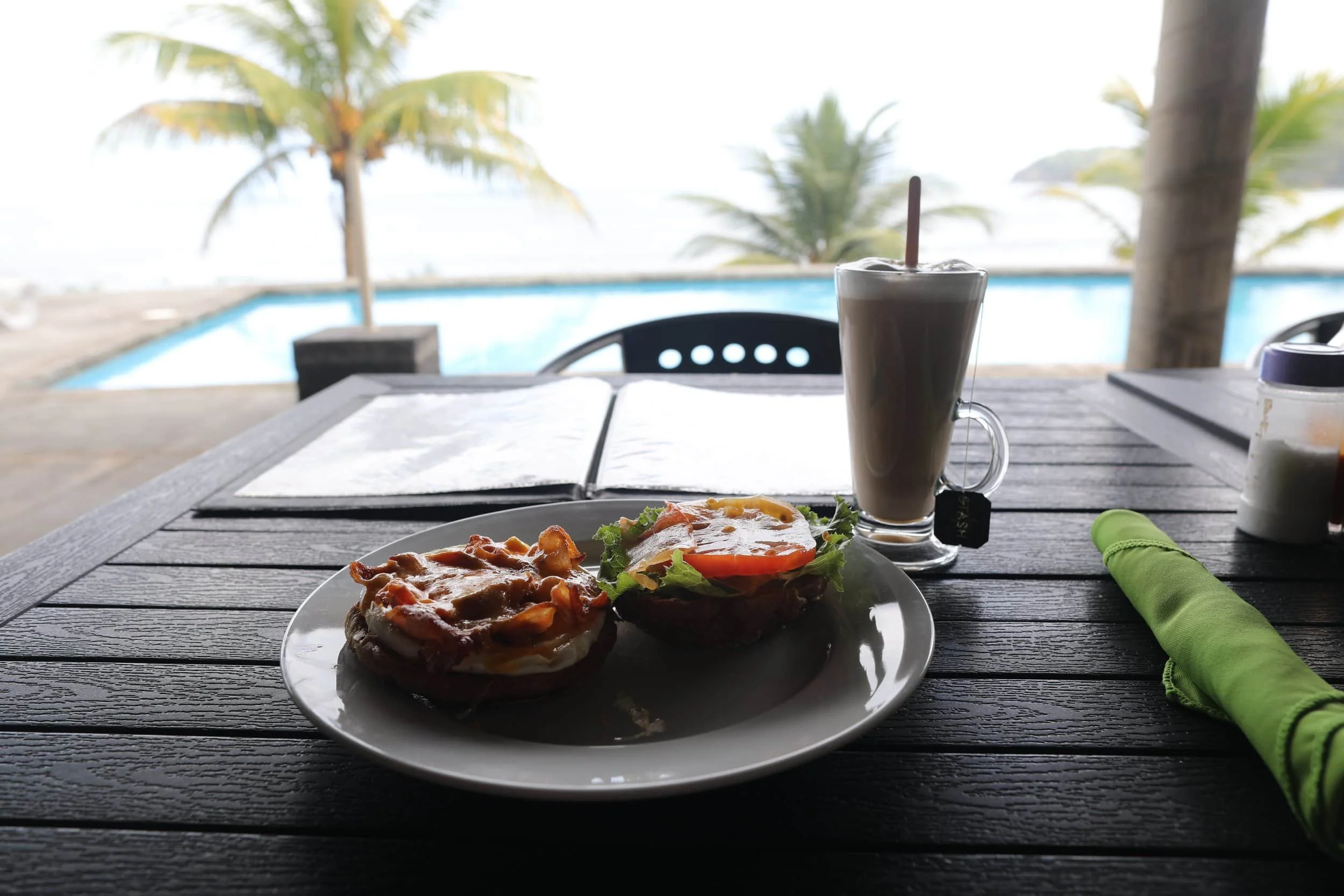
It felt unusual to me at first but I quickly realized that catching a ride is simply part of everyday life on Dominica Island. People stand along the road and drivers stop when they're heading in the same direction. It happened several times during my visit and before long it started to feel less like “picking up hitchhikers” and more like giving someone from the neighborhood a lift.
That was one of my earliest glimpses of the island's small-town rhythm. Despite Dominica's dramatic mountains and wild landscape, everyday life can feel surprisingly intimate — people recognize one another, help each other get where they're going and seem connected to the communities along the road.
By the time I reached Roseau, the drive had already given me a better introduction to Dominica than simply getting from the airport to the capital ever could.
Dominica makes you work a little for the journey — and that became part of why I loved it.
Downtown Roseau
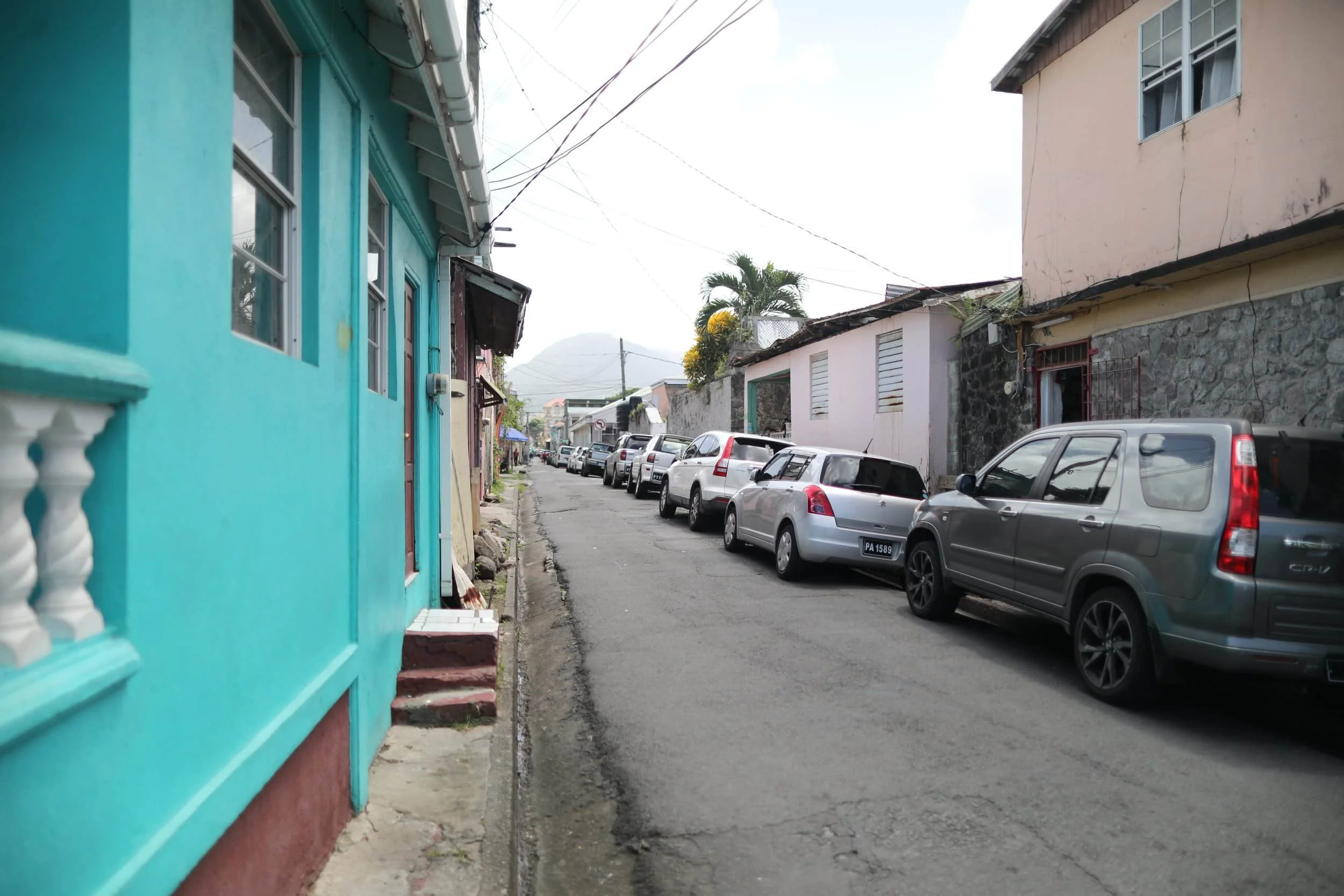
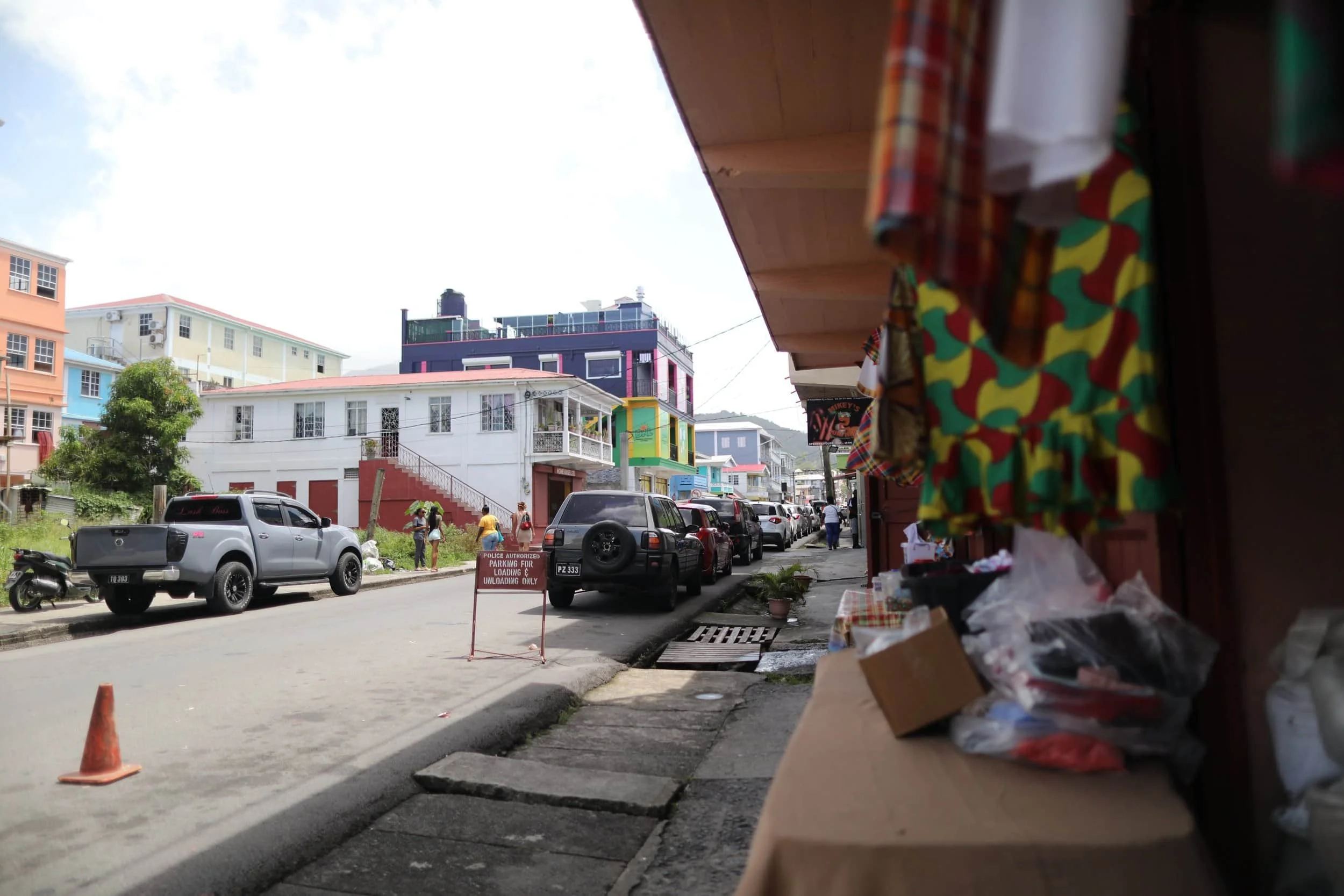
Roseau is small enough to explore on foot but busy enough to feel like a proper capital. Colorful buildings, restaurants, shops and everyday street life fill a compact center wedged between the Caribbean and Dominica’s mountainous interior.
Arriving by car requires a little patience. The one-way streets were busy and parking wasn’t immediately obvious but I eventually found a lot above the center and walked downhill into town. Once the car was parked, Roseau became much easier: this is a place best experienced on foot, following whatever catches your attention.
Breakfast at Tropical Blendz
Breakfast started at Tropical Blendz, a casual, no-frills spot that put me right in the middle of Roseau’s morning rhythm. Pancakes, eggs, bacon and coffee made for a simple start before heading out to explore.
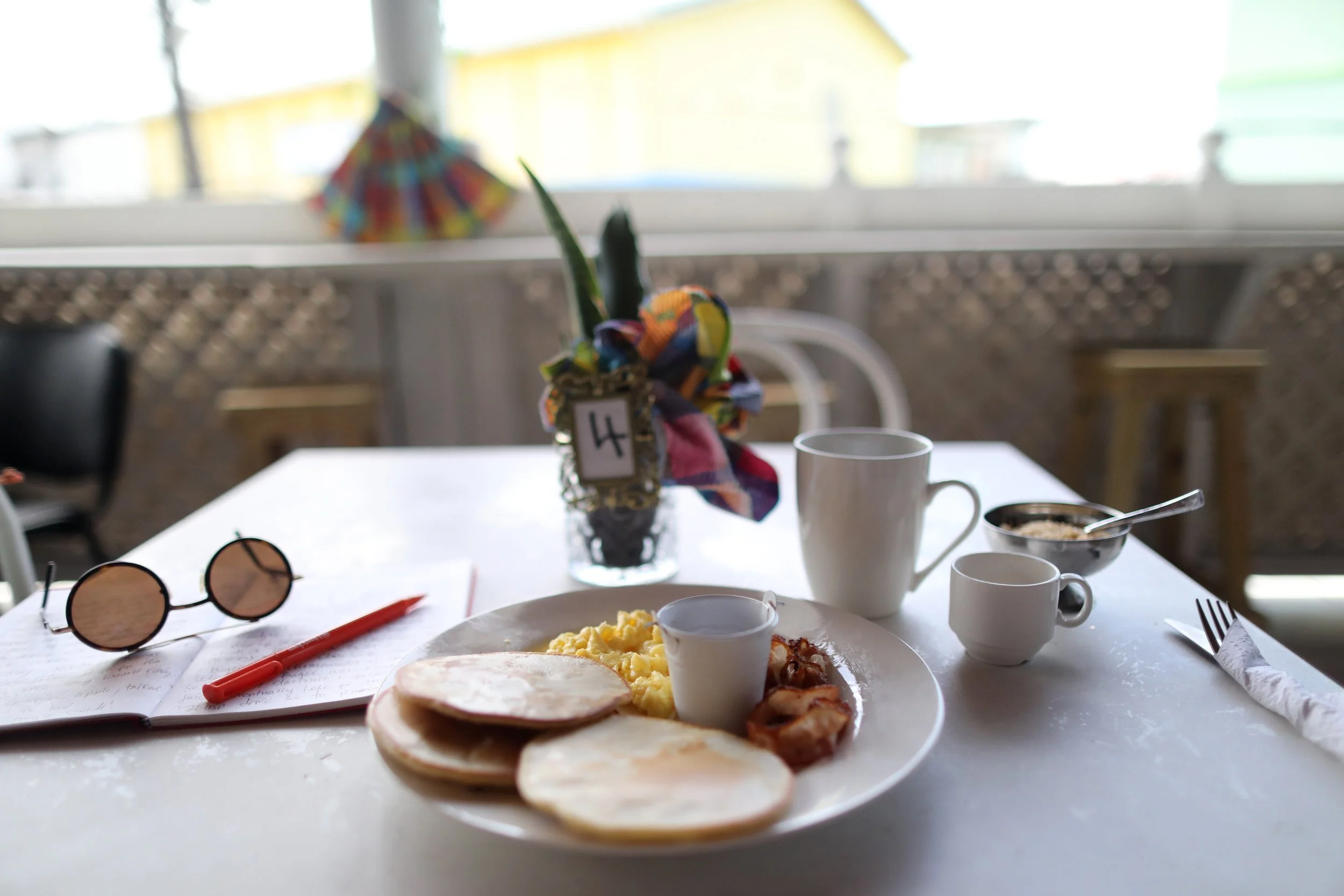
The breakfast itself wasn’t really what made the stop memorable.
A little girl nearby, dressed in a bright purple top with a tiny gold-chained purse, struck an absolutely adorable pose while I was eating. Then music started drifting over from across the street.
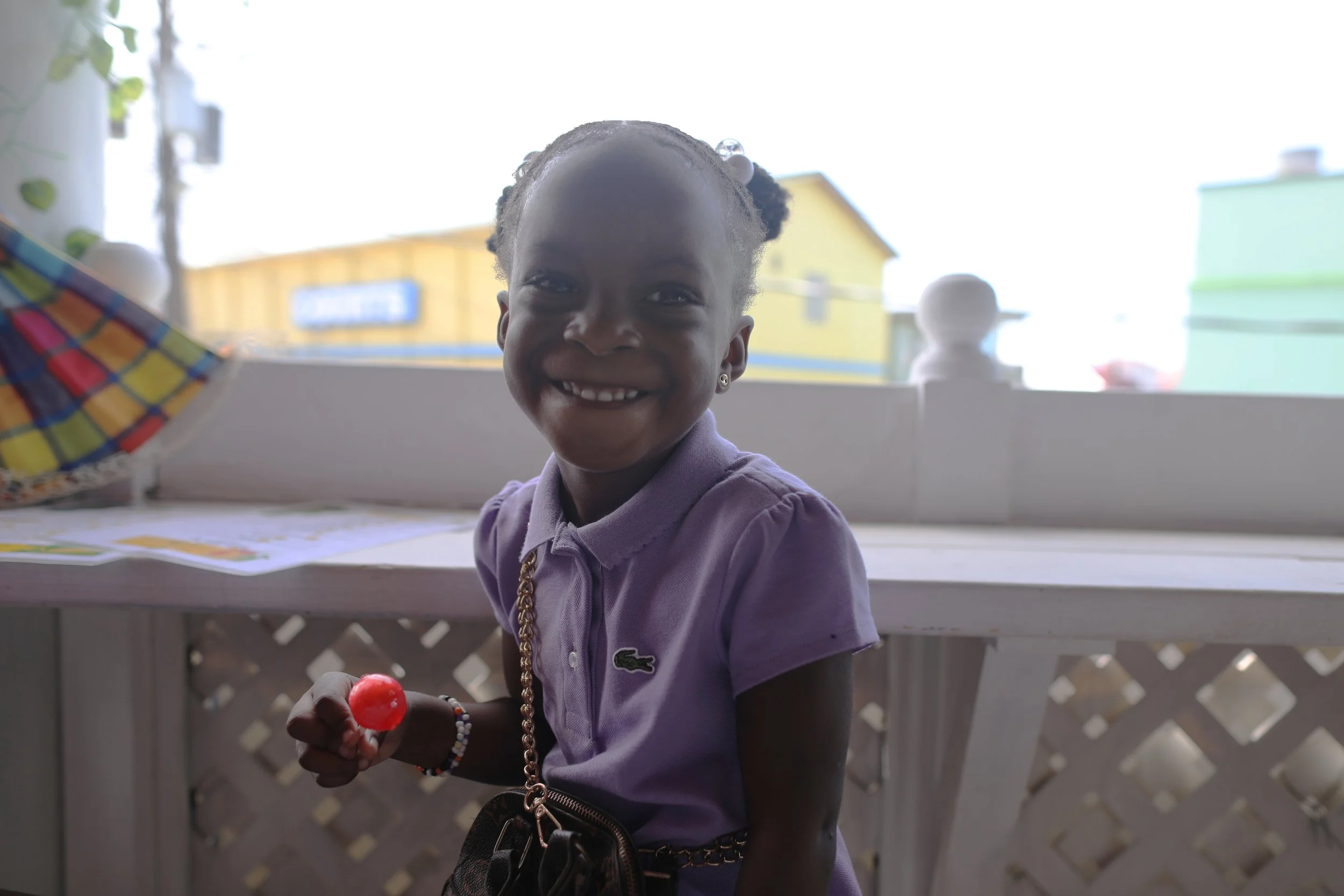
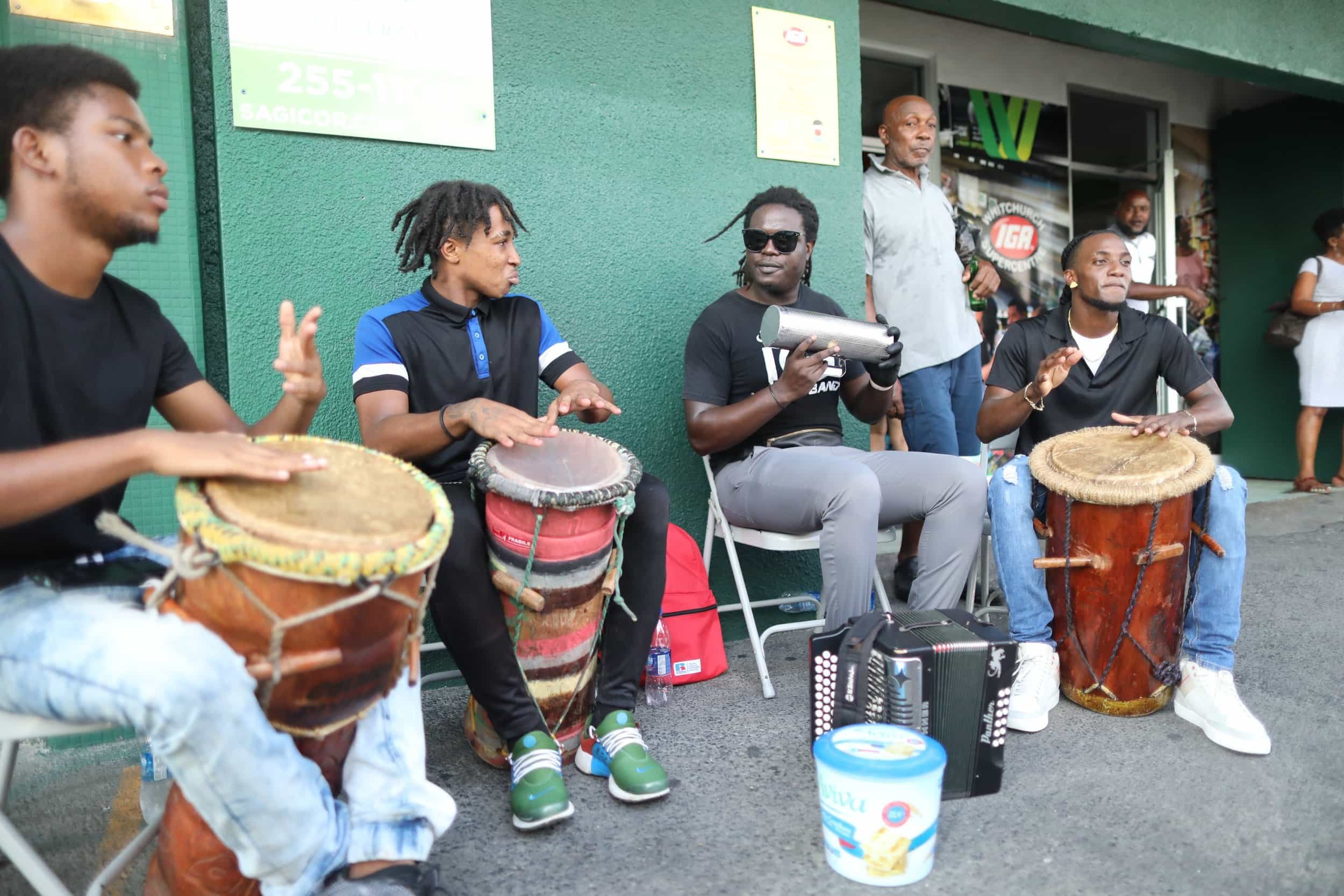
A group of young musicians had gathered nearby, playing percussion as people moved through town. Suddenly breakfast had a soundtrack, and what had started as a simple meal became one of those small moments that made Dominica Island feel less like somewhere I was sightseeing and more like somewhere I was briefly participating in everyday life.
Try Cassava Bread
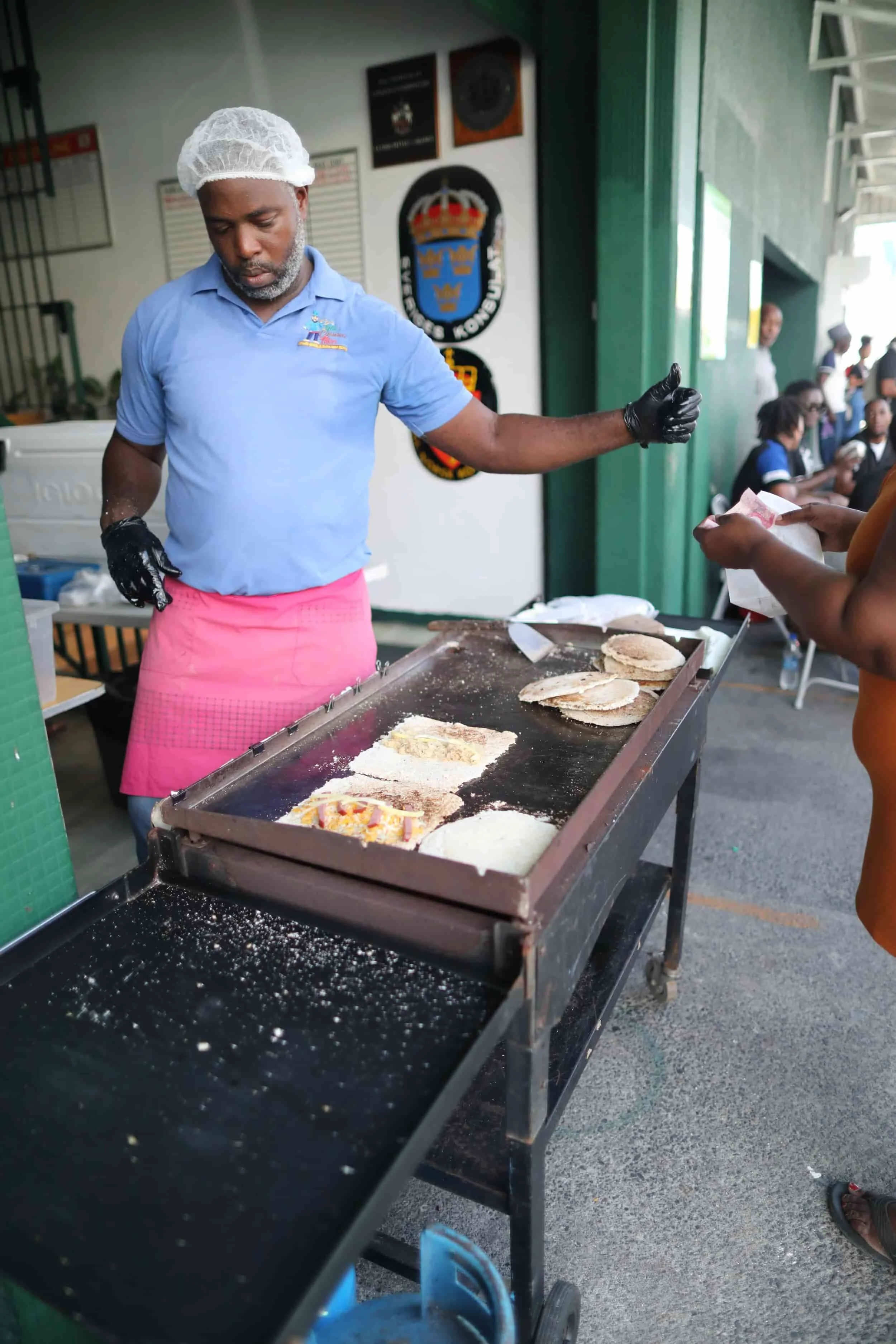
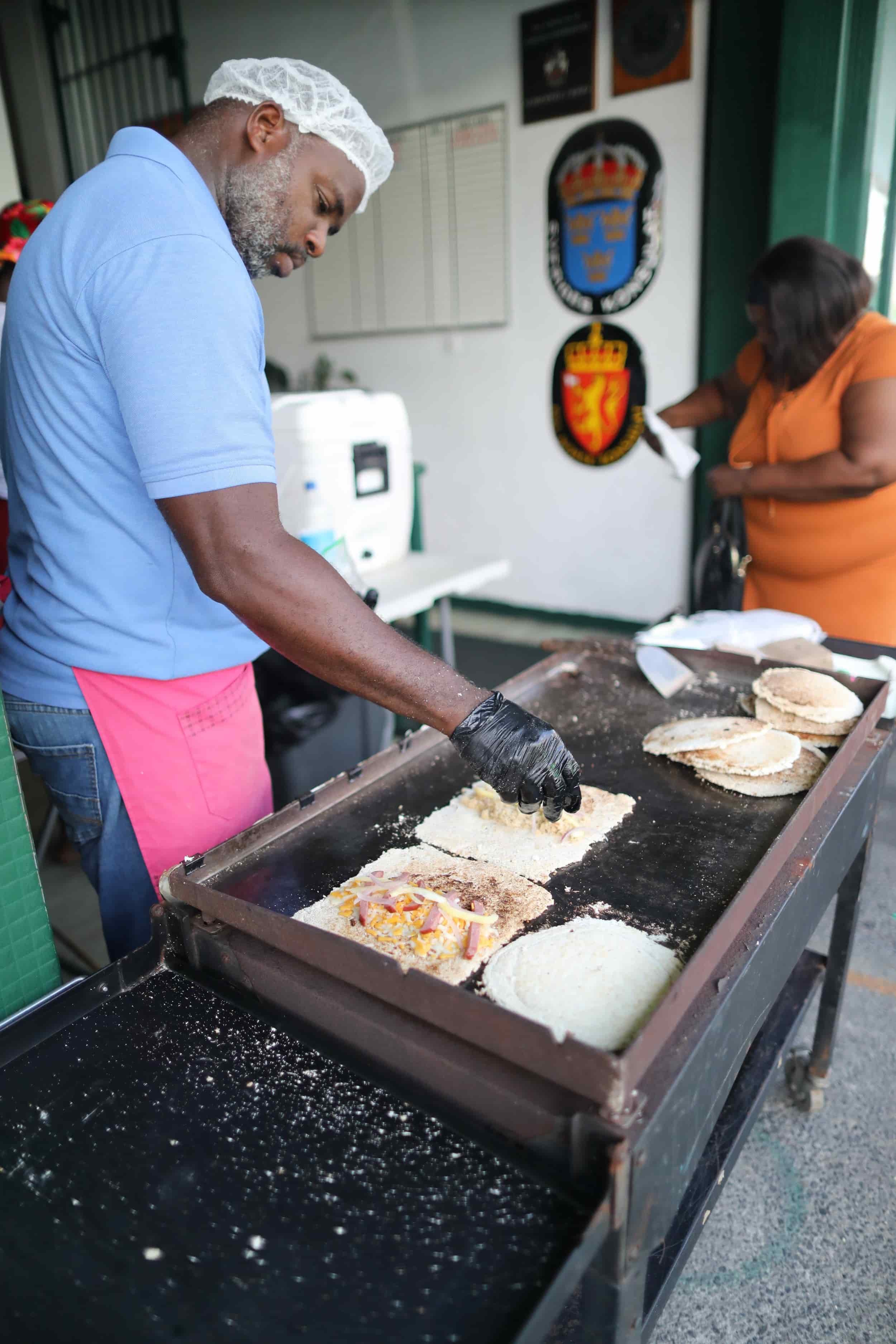
Not far away, the Cassava Man offered another reason to stop.
He worked slowly at the griddle, flattening the cassava mixture, adding grated coconut and cooking each piece until the outside developed a crisp edge while the center remained chewy. Warm from the griddle, the cassava bread was simple, slightly sweet and one of my favorite little food discoveries in Roseau.
Cassava has long been an important staple across the Caribbean, and seeing it prepared right in front of me made this feel like more than grabbing a quick snack.
✨ Don’t Miss | If you come across freshly made cassava bread, try it warm. I especially loved it with coconut.
Wander Through Roseau
Walking through Roseau makes the scale of Dominica Island easier to understand. The capital is compact, with colorful buildings, narrow streets and a mix of older Caribbean architecture and more utilitarian concrete structures, while steep green mountains rise almost immediately behind it.
That relationship between town and landscape is difficult to ignore. Even in the country’s capital, nature never feels particularly far away.
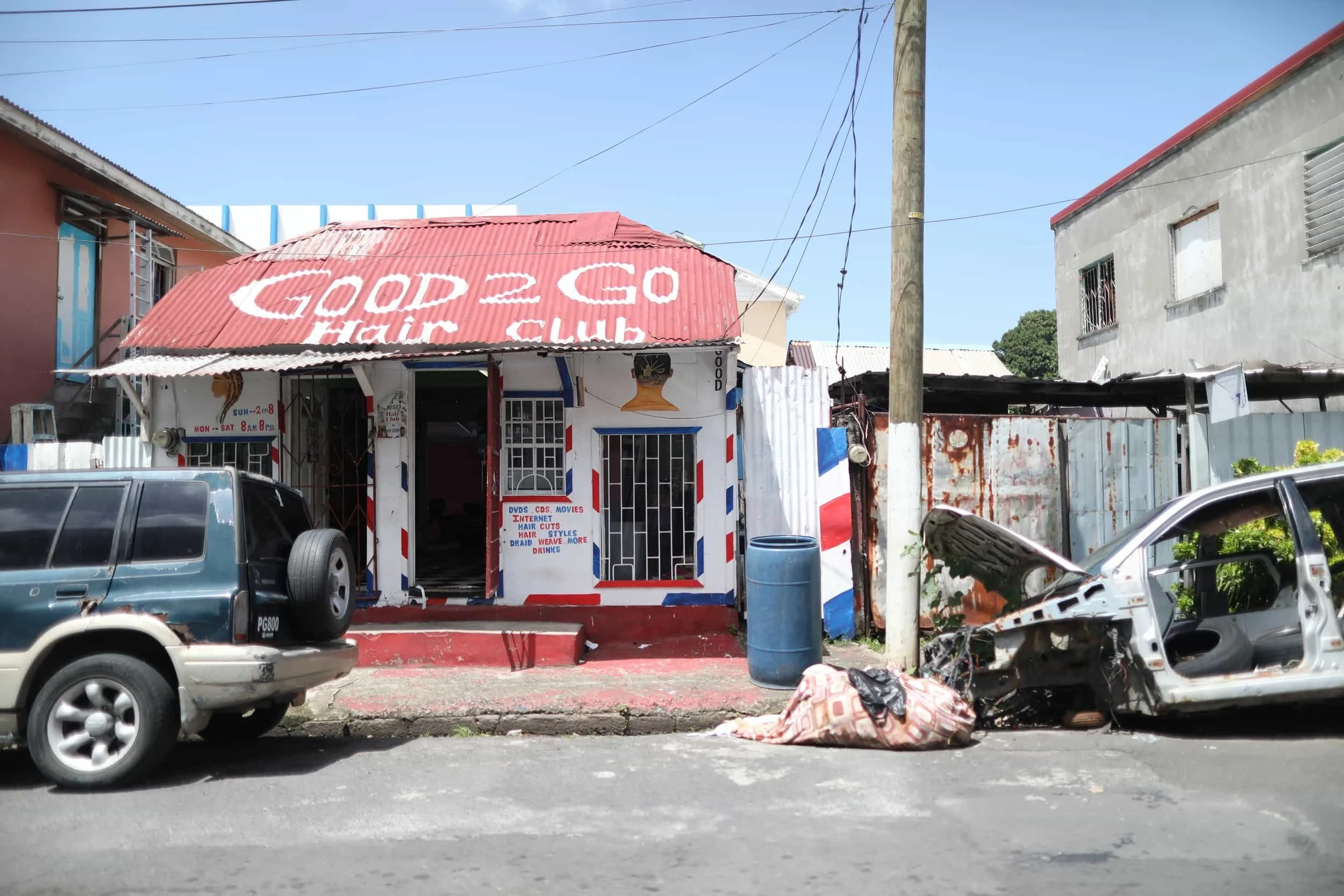

There also doesn’t need to be a destination waiting at the end of every street. Leave some time to wander, duck into shops and pay attention to the smaller details of everyday life.
✨ Don’t Miss | Look for locally flavored coffee while you’re in Roseau. Cinnamon and vanilla were my favorites, and the coffee was so naturally sweet that it didn’t need any honey.
Dinner at Epic Bar & Restaurant
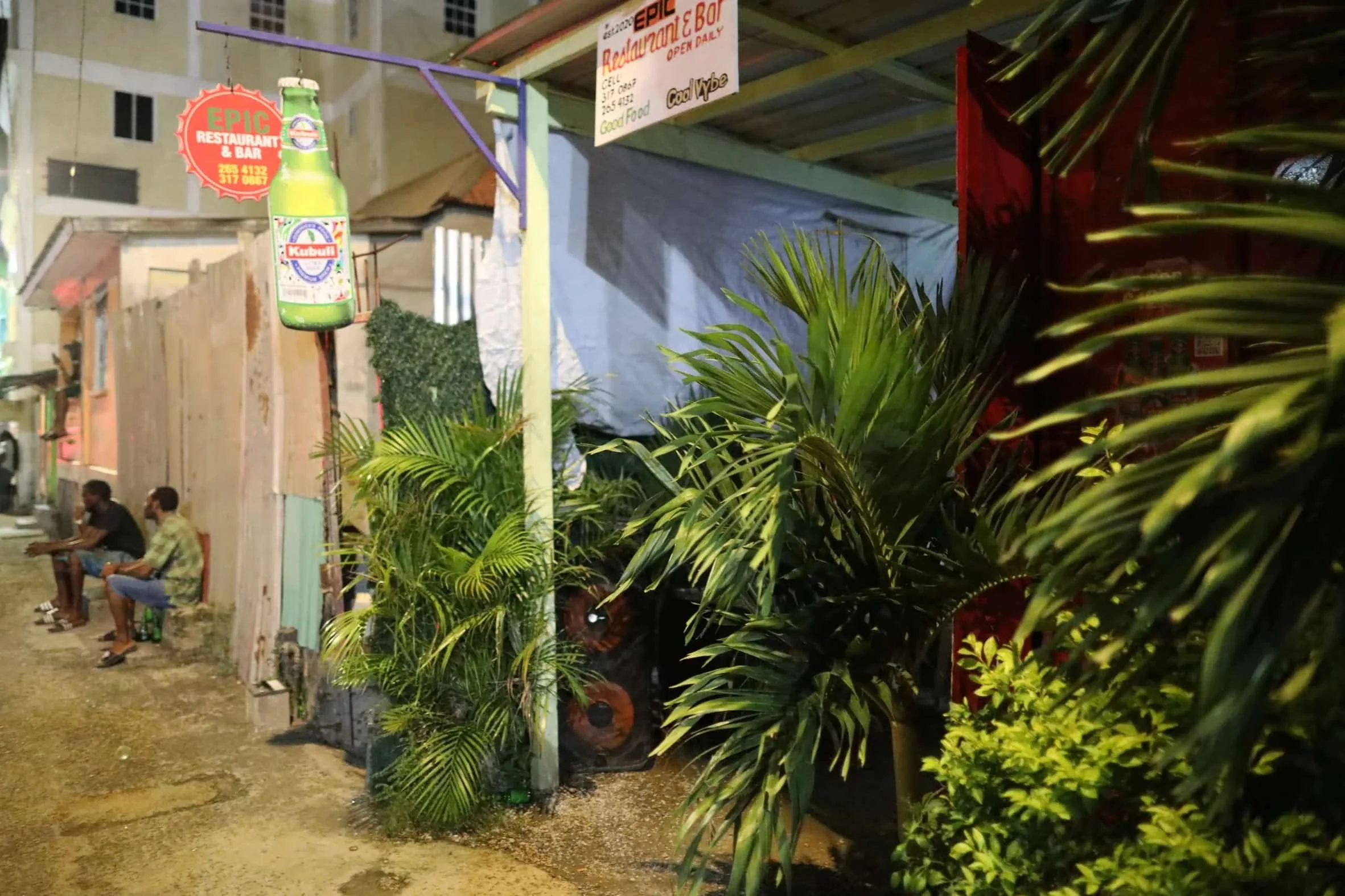
Dinner at Epic Bar & Restaurant was about as casual as Roseau gets. From outside, I wasn’t entirely convinced I’d found a restaurant at all. The bar was crowded, music spilled into the street and the whole place felt more like a neighborhood hangout than somewhere I’d planned to sit down for dinner.
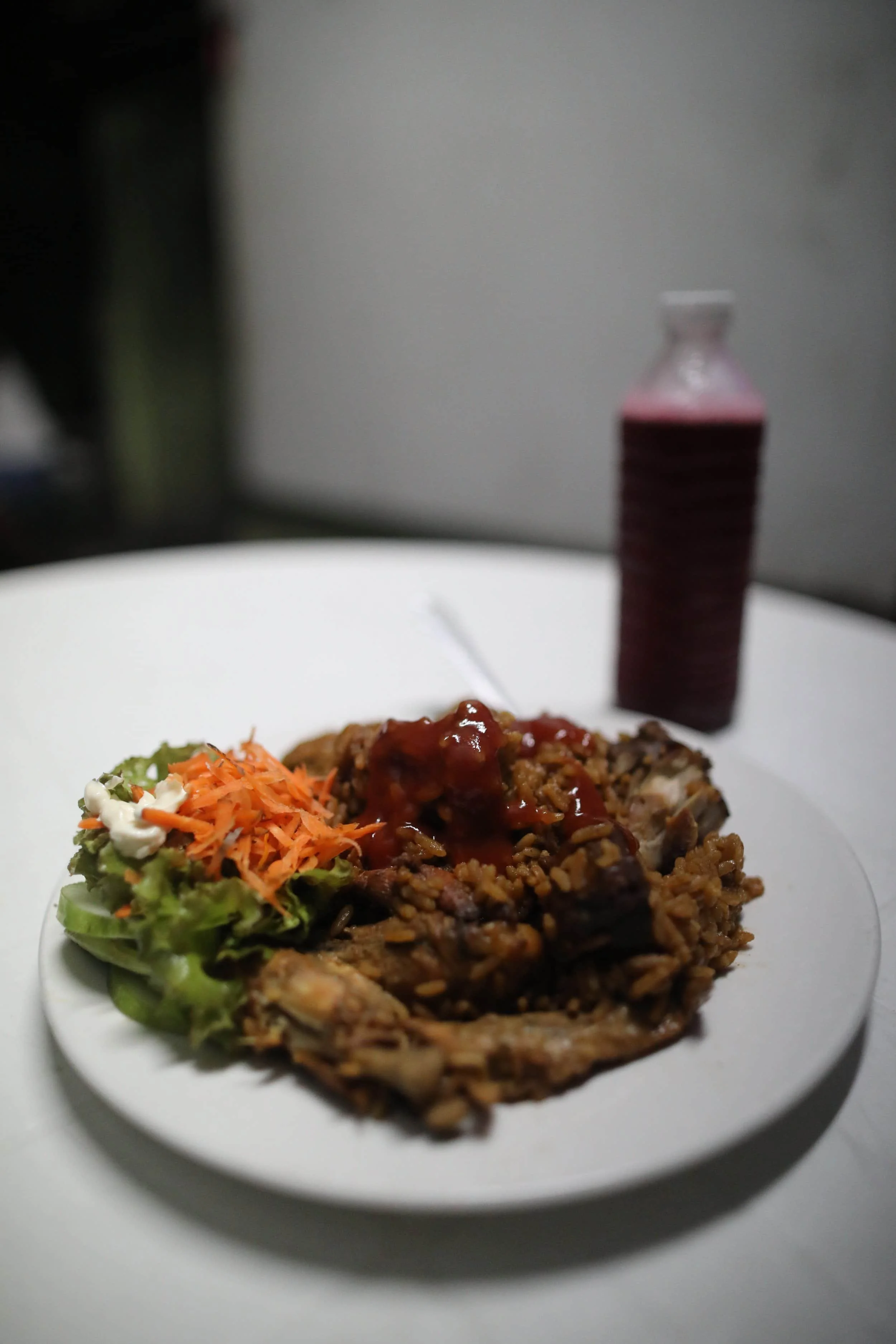
There wasn’t much deciding to do once inside. The meal on offer was roasted chicken with rice and salad, served with a deep red bottle of sorrel juice.
Sorrel — made from roselle hibiscus — has a tart, slightly spiced flavor and is especially associated with the Caribbean Christmas season. Paired with such a simple plate of food, it became one of those meals I remember as much for where I was eating it as what was on the plate.
Dinner at Lacou Melrose House
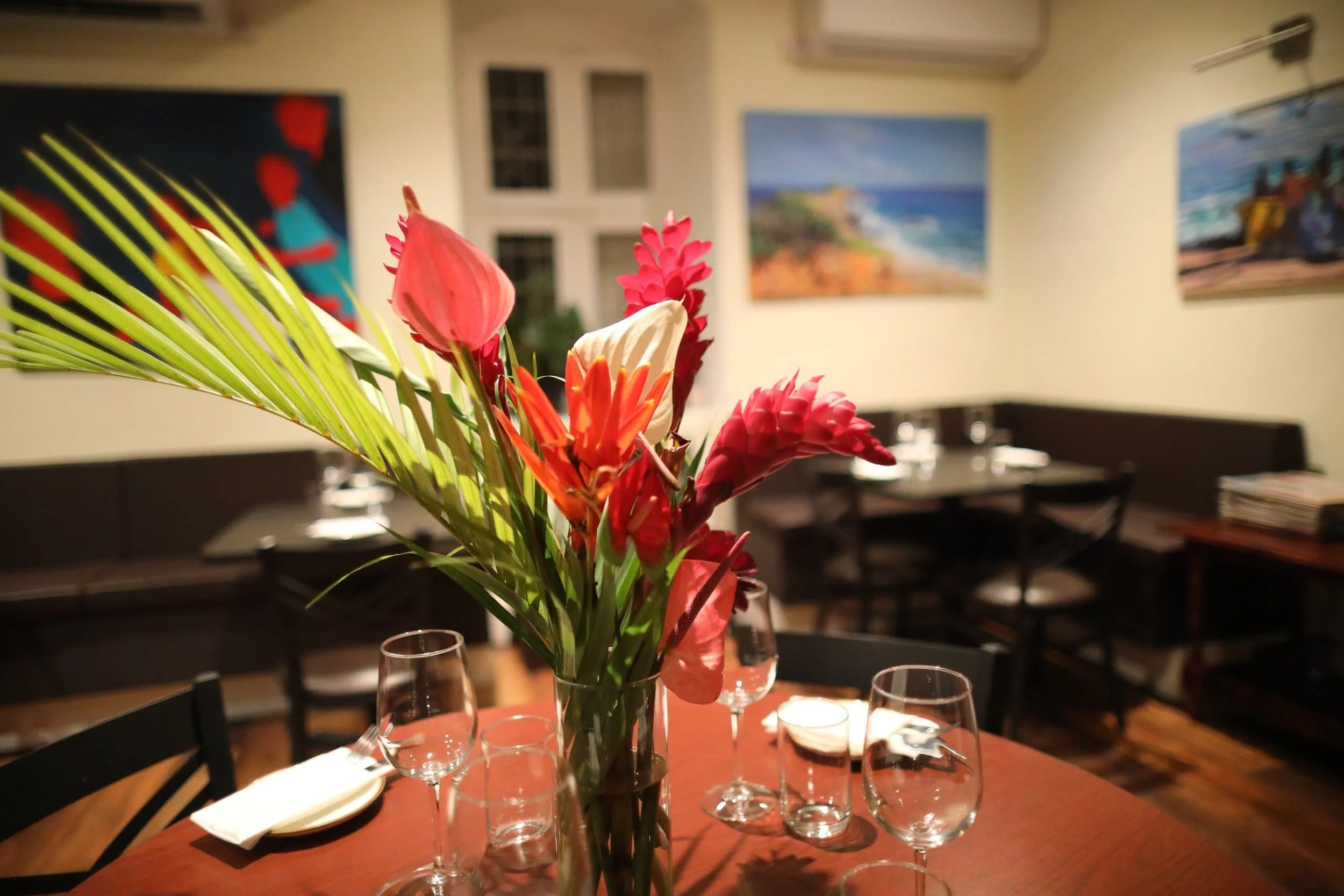
Lacou Melrose House showed me a completely different side of dining in Roseau. Set inside a historic house, the restaurant felt intimate and polished without losing its connection to the island.
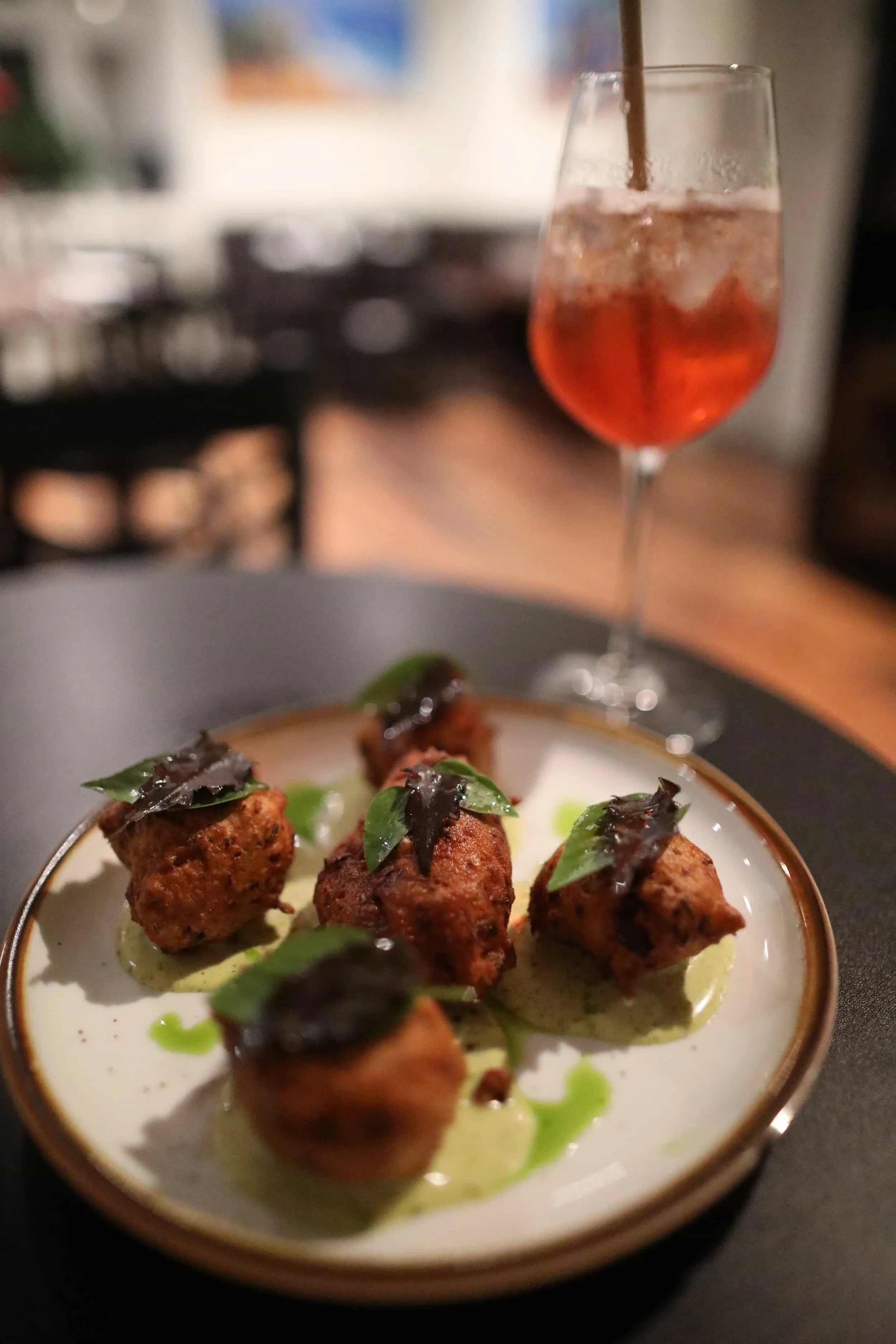
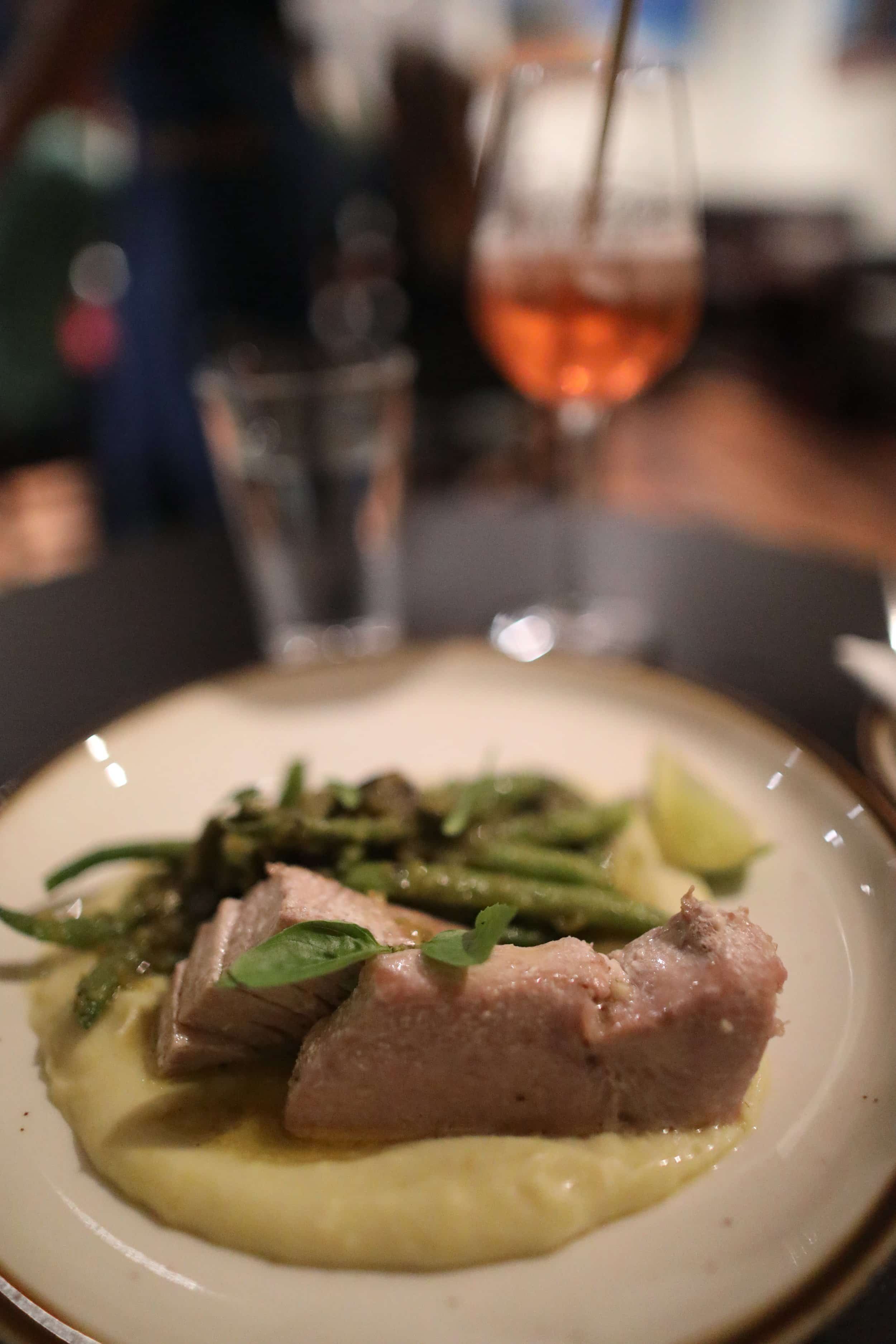
I started with a sorrel spritzer, followed by accras — small, savory Caribbean fritters traditionally made with salted fish, herbs and spices — served with a coconut-lime sauce. Crisp on the outside and tender inside, they were completely new to me. The main course paired oven-roasted tuna with white sweet potato purée, green beans and okra — a much more refined interpretation of ingredients and flavors I’d been encountering elsewhere on Dominica Island.
What I liked most was the contrast. One evening could mean chicken, rice and sorrel in a crowded neighborhood bar; another could mean a carefully composed dinner inside an old house. Both felt like Roseau, just seen from very different angles.
Dominica Botanic Gardens
Just above central Roseau, Dominica Botanic Gardens offers a quiet green break from the streets of the capital. Established in 1889, the gardens began as an agricultural research station for cultivating and introducing economically useful tropical plants before evolving into a public botanical garden.
Full disclosure: this wasn't one of my favorite stops on Dominica Island.
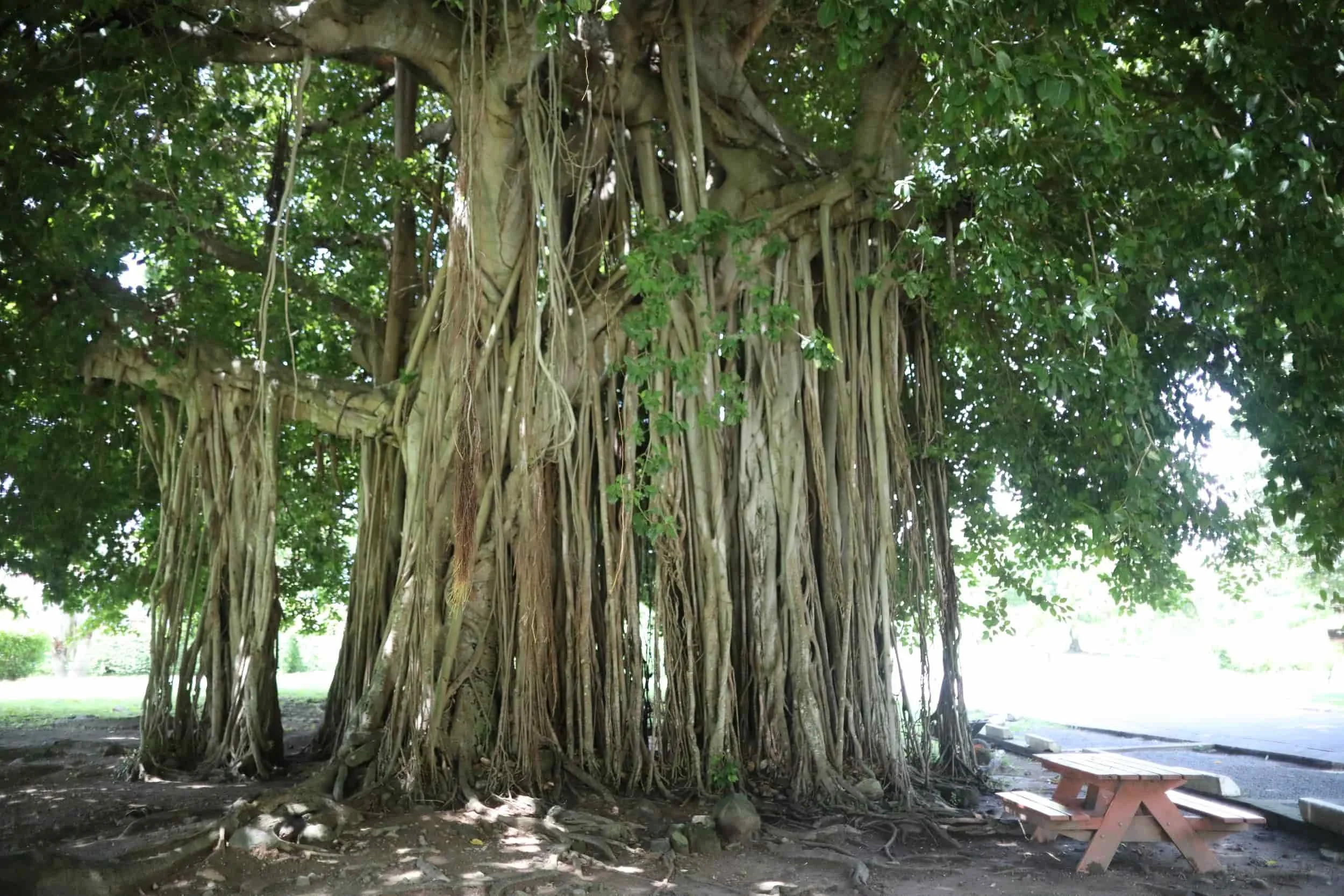
I love botanical gardens and tend to seek them out when I travel, so perhaps my expectations were a little high. The grounds are pleasant and shaded, with mature tropical trees and paths to wander but compared with some of the botanical gardens I've visited elsewhere, this one felt fairly understated. I wouldn't come expecting elaborate displays or an immersive garden experience.
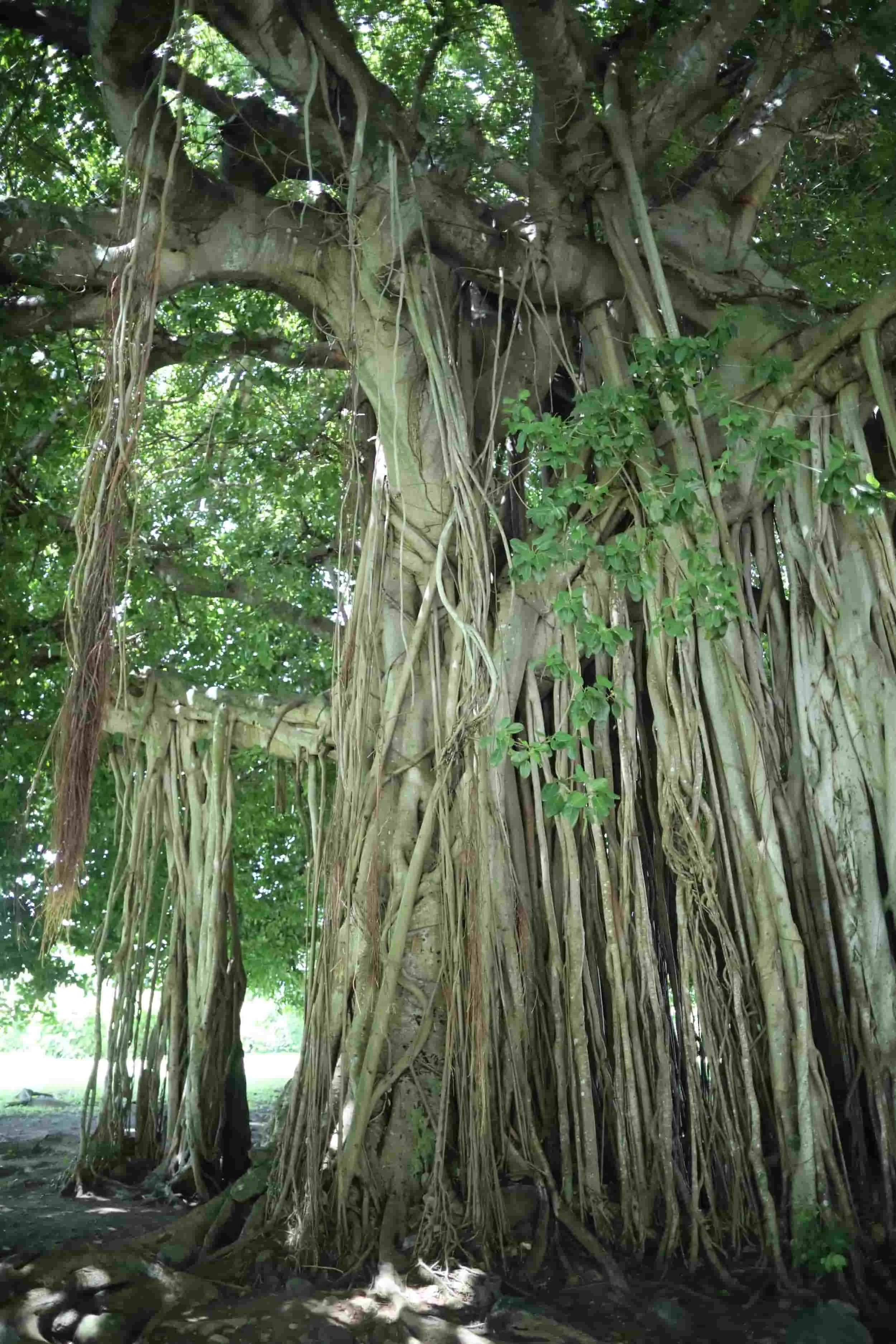
What did make the visit memorable was something completely unexpected: a crushed yellow school bus beneath a massive baobab tree.
During Hurricane David in 1979, the tree was toppled onto the empty parked bus, crushing it beneath its enormous weight. No one was inside. Rather than remove the wreckage, the bus was left in place, and today the twisted metal and tree remain together inside the gardens.
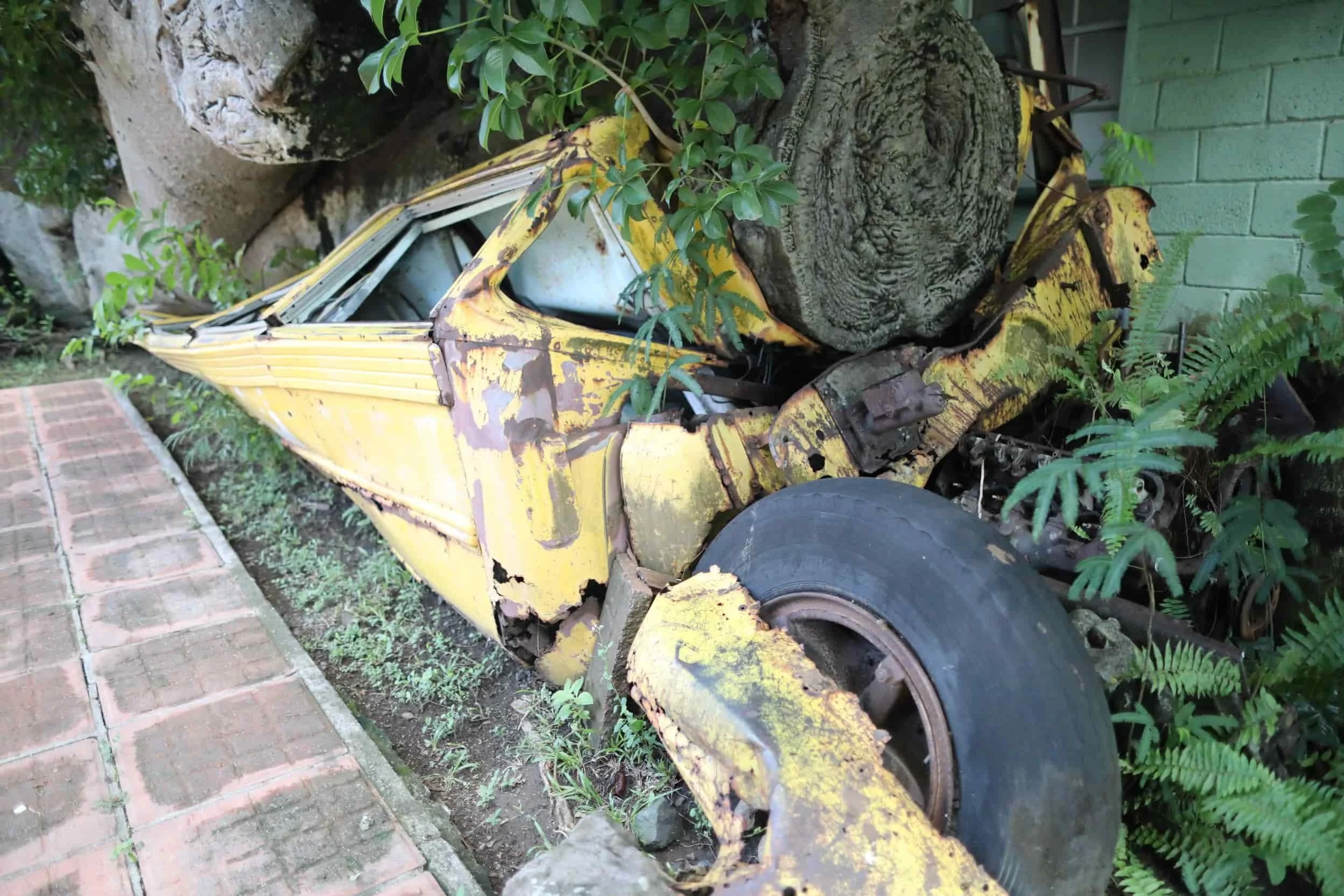
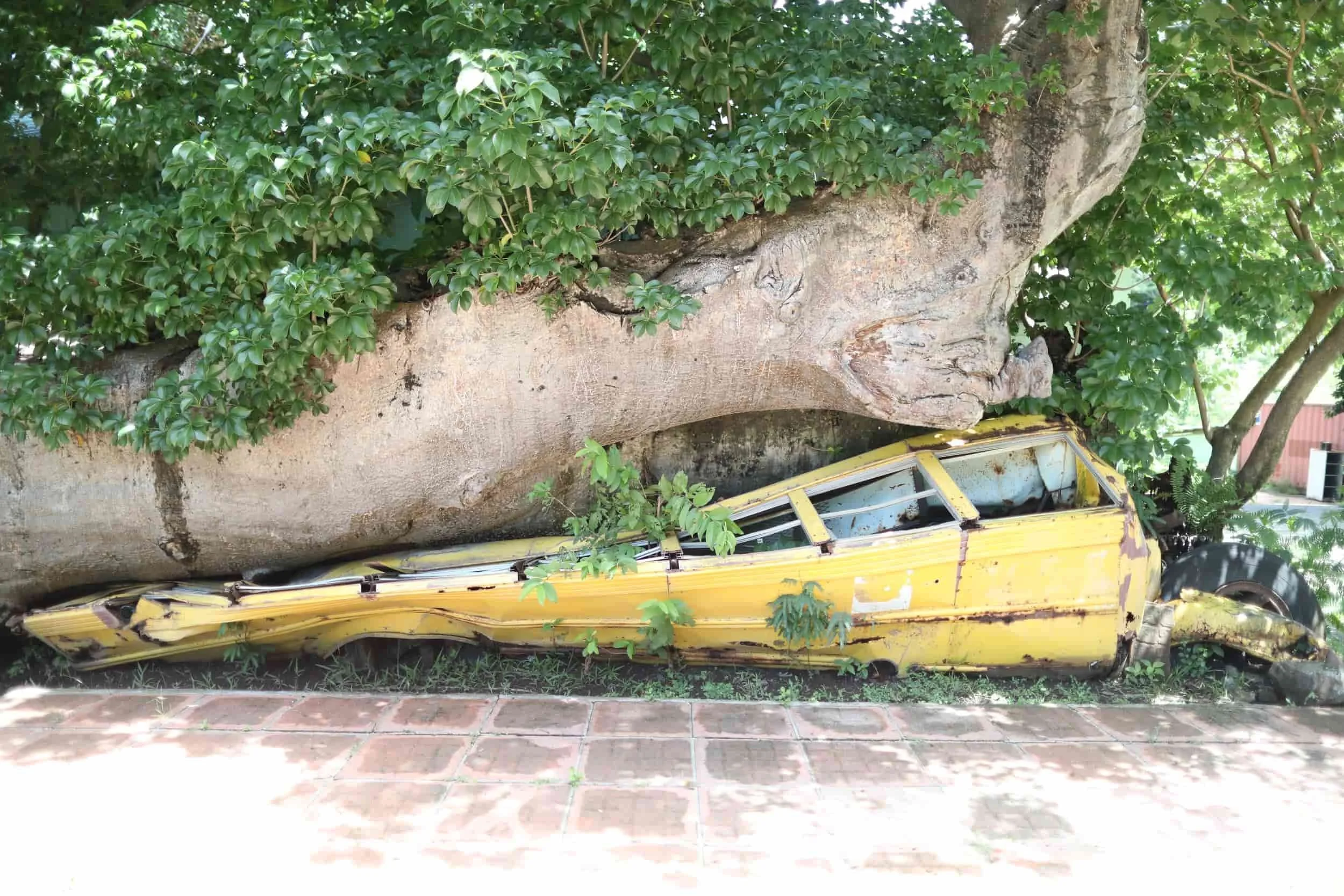
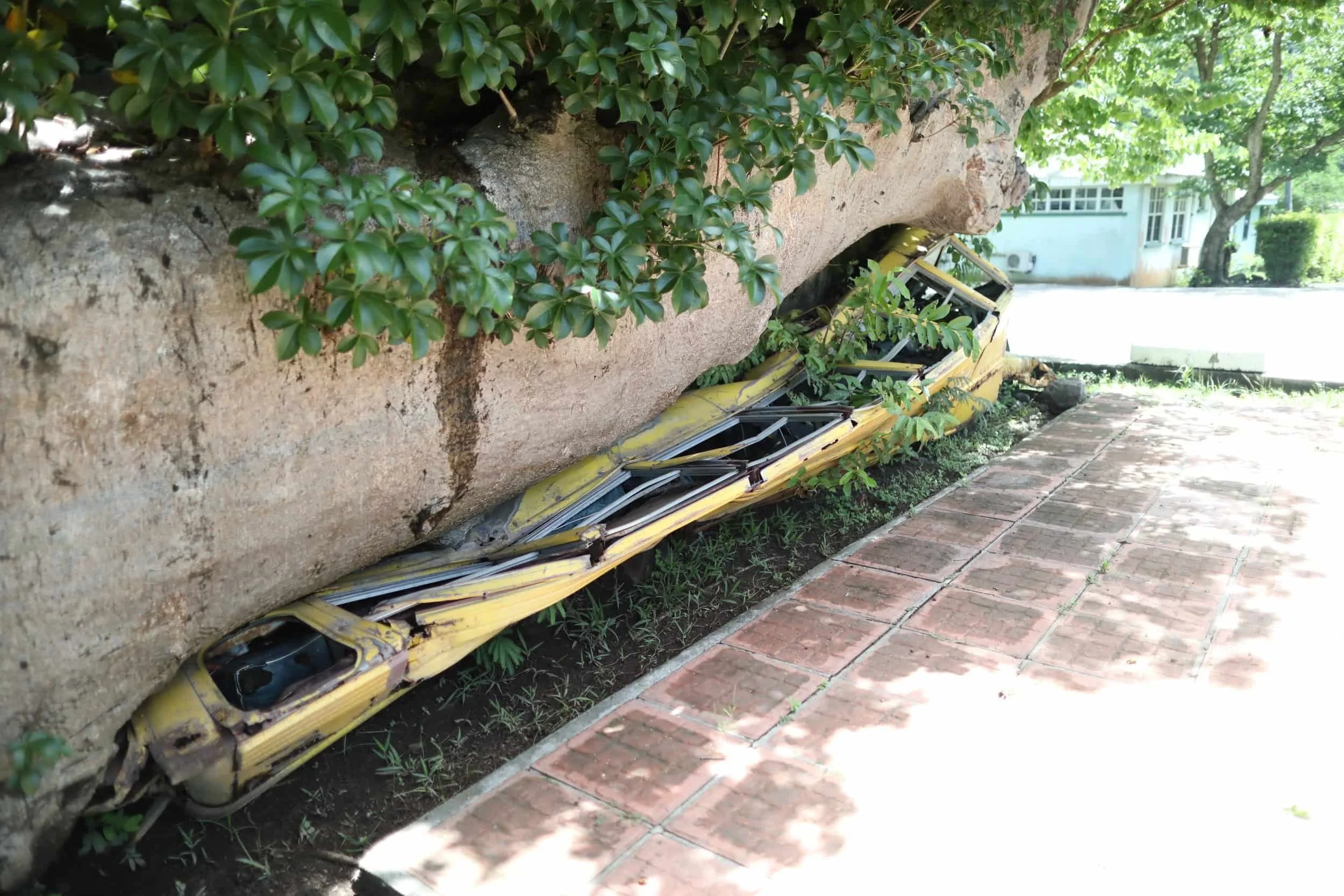
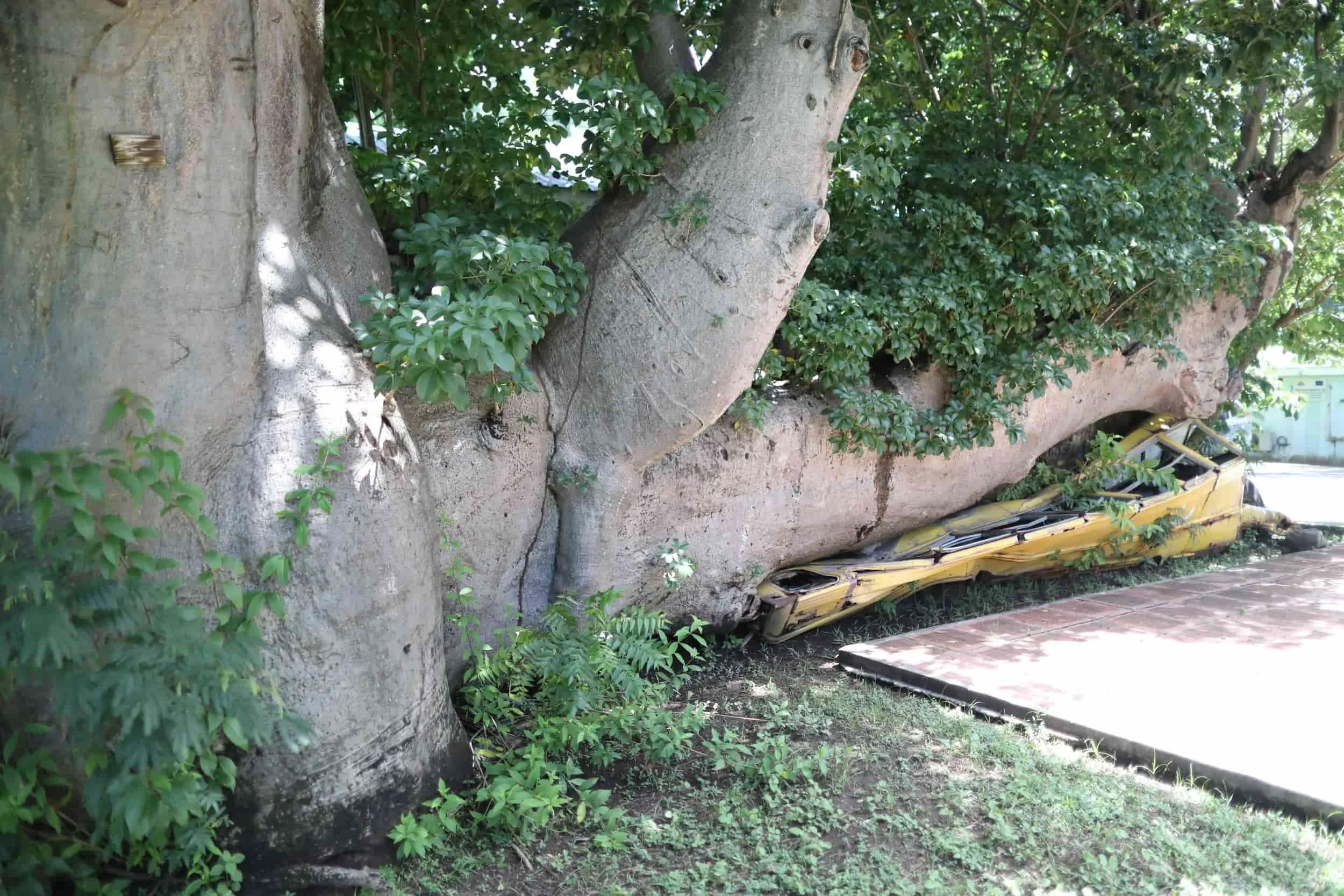
It’s a strange sight — almost like an art installation until you understand what happened.
And in some ways, that single image says more about Dominica Island than the gardens themselves did for me. Nature here isn't simply scenery. Hurricanes, volcanic terrain, rainforest and water continually shape how people live, build and rebuild. Seeing a piece of human infrastructure literally flattened beneath a tree makes that relationship unusually tangible.
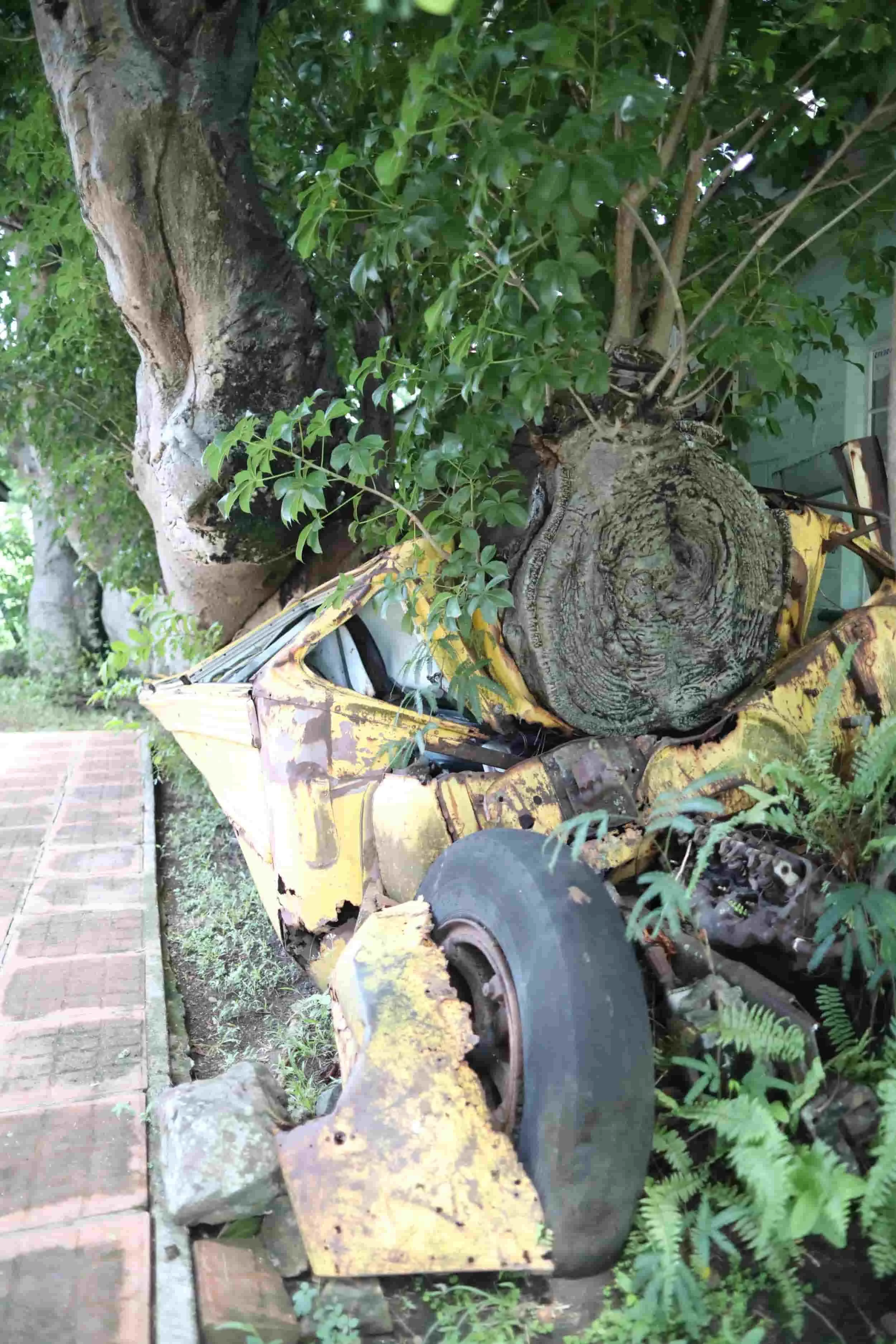
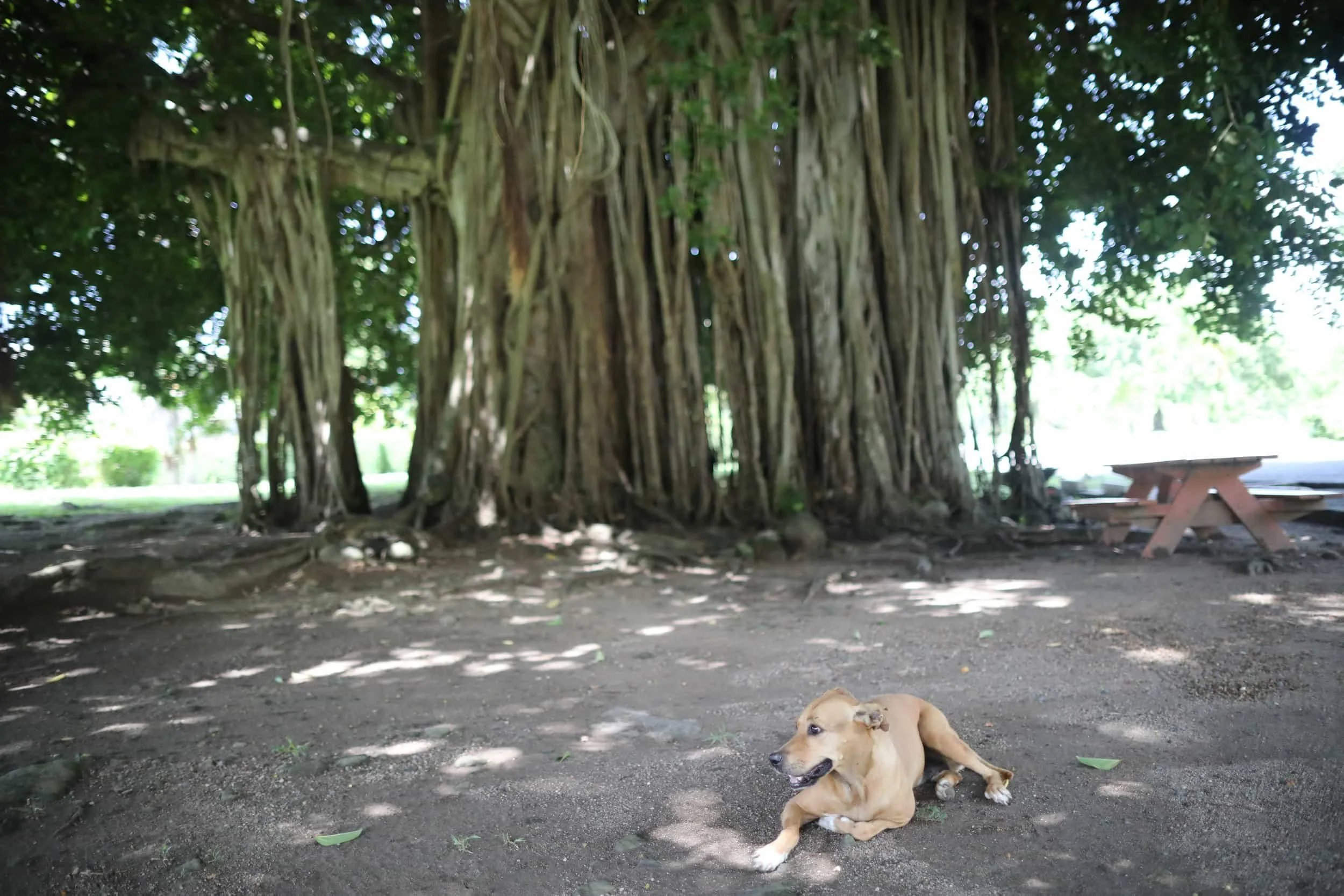
The other highlight? The local pups wandering around the grounds. Sometimes a botanical garden doesn't need to be spectacular to give you something worth remembering.
⚠️ Good to Know | If botanical gardens are a major part of why you travel, I'd keep expectations modest. The gardens are easy to combine with time in Roseau but I wouldn't build a day around them.
✨ Don’t Miss | Find the crushed school bus beneath the baobab tree. Even if the gardens themselves don't grab you, this unusual remnant of Hurricane David is worth seeking out.
Ti Kwen Glo Cho Hot Springs
Dominica's volcanic landscape doesn't only create mountains and dramatic terrain. Beneath the surface, geothermal activity feeds hot springs across the island, and the village of Wotten Waven is one of the easiest places to experience them.
I chose Ti Kwen Glo Cho, a small, family-run hot spring tucked into the lush hills above Roseau. Getting there turned out to be part of the experience. Google Maps became increasingly unhelpful as the roads climbed and twisted through the village, and eventually I gave up on the blue dot and started asking locals for directions.
Once I finally found it, the pace changed completely.
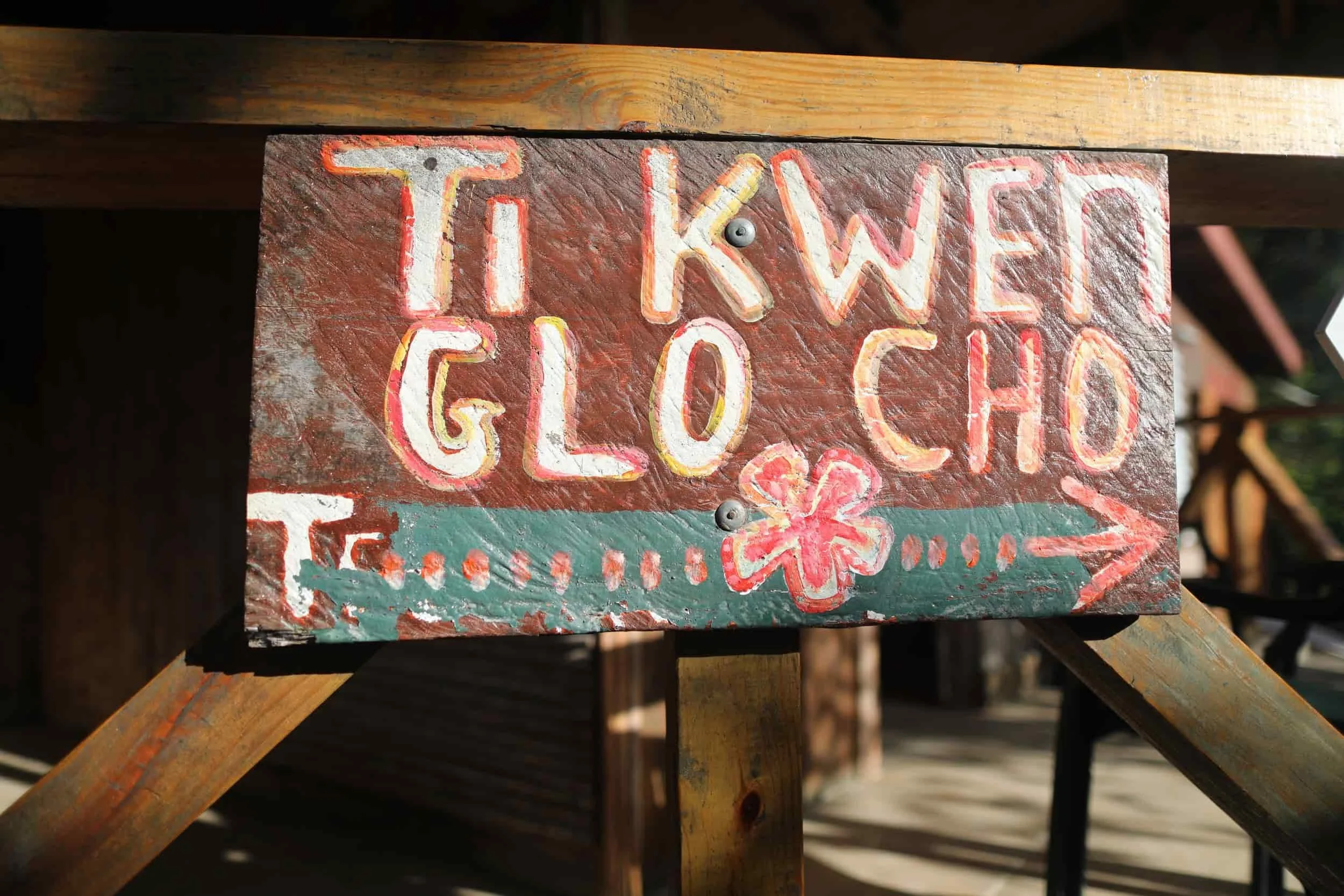
Tropical plants surround a collection of naturally heated pools, baths and cool water where you can move between temperatures rather than simply sitting in one spring. I started with one of the hottest pools, its water tinted rusty red by the surrounding earth, before discovering how good it felt to alternate between the heat and a blast of cold water.
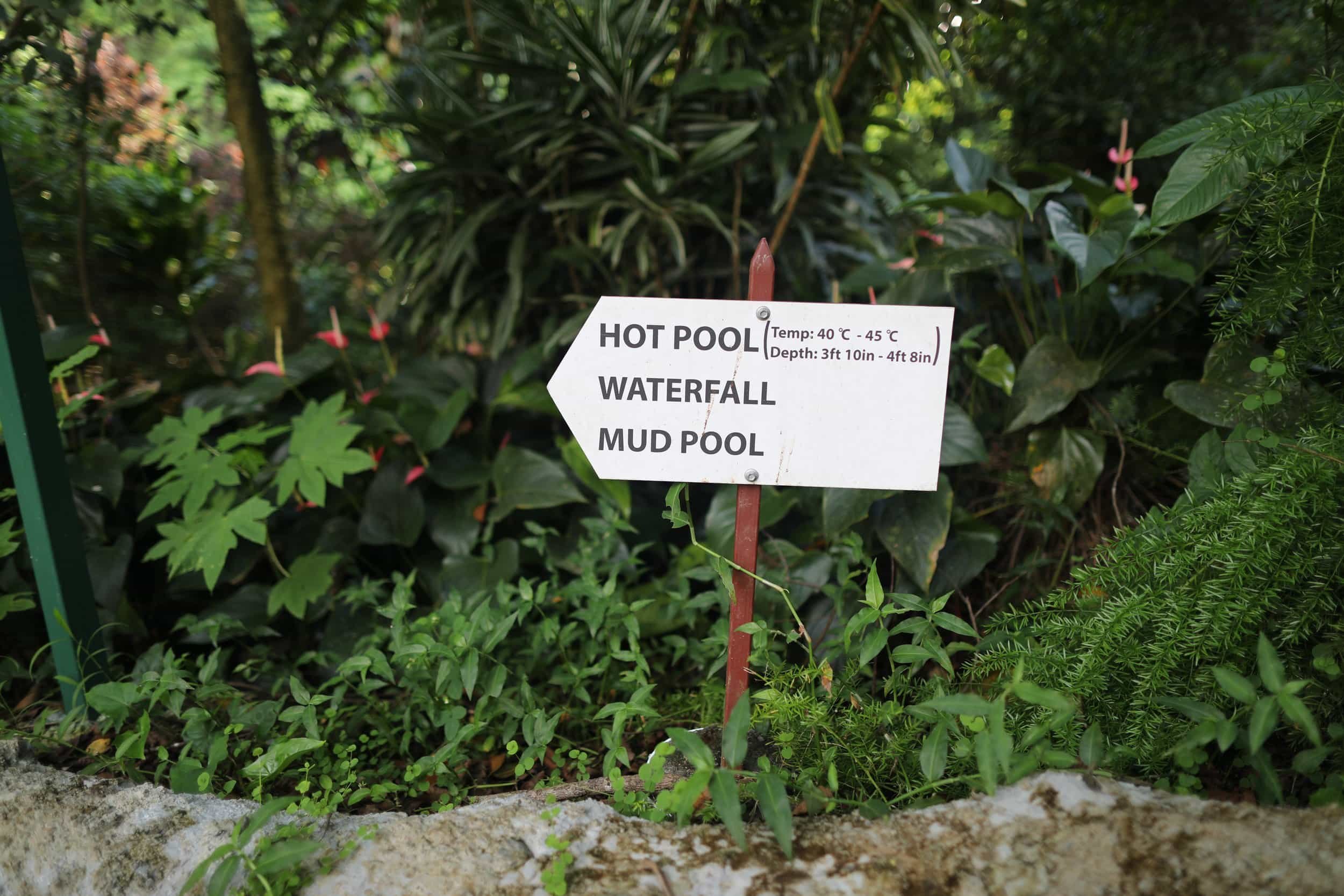
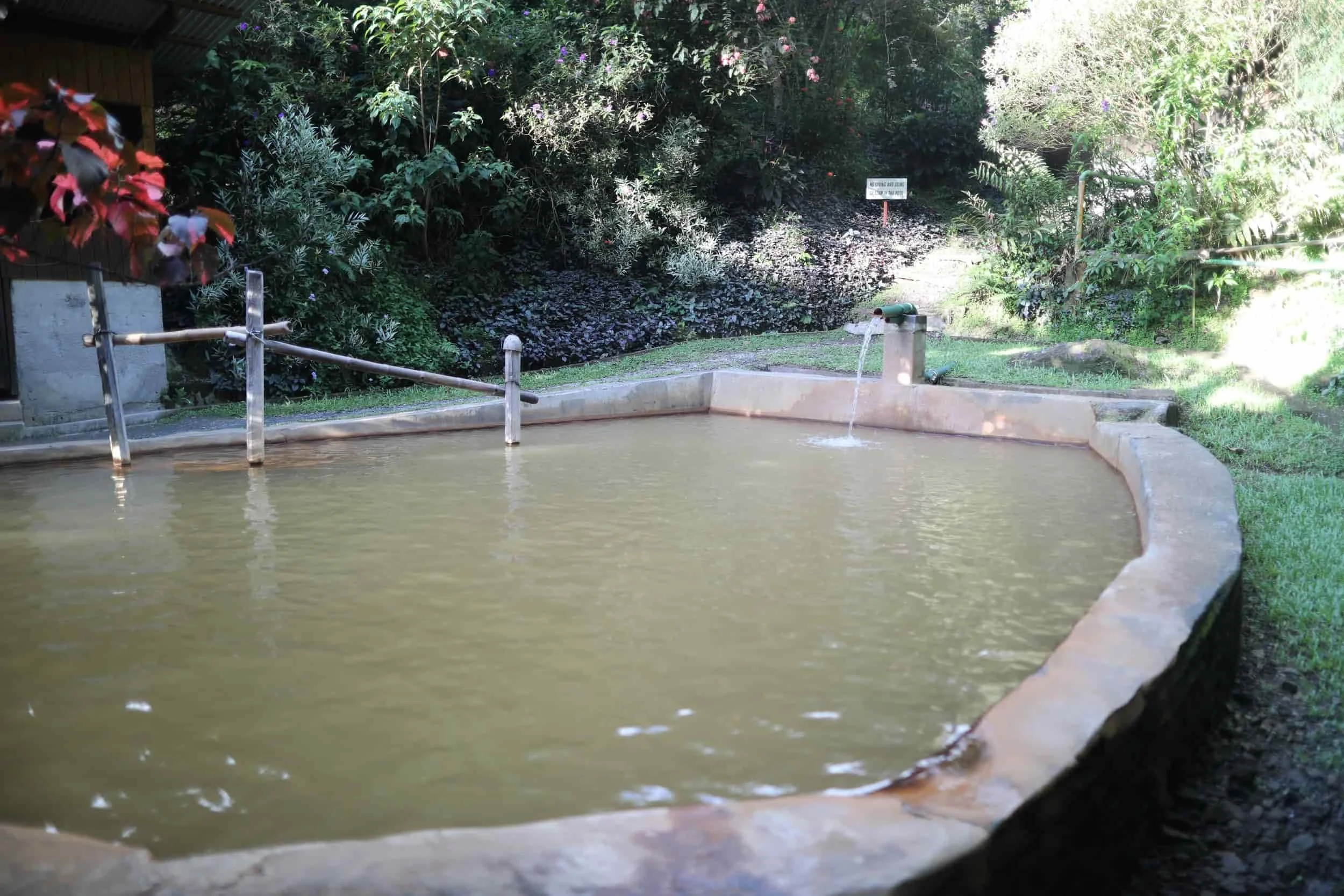
After hiking and exploring Dominica Island, this was exactly the kind of afternoon I needed. There was a mud pool too, but I skipped it — I was already clean, warm and far too content to voluntarily cover myself in mud.
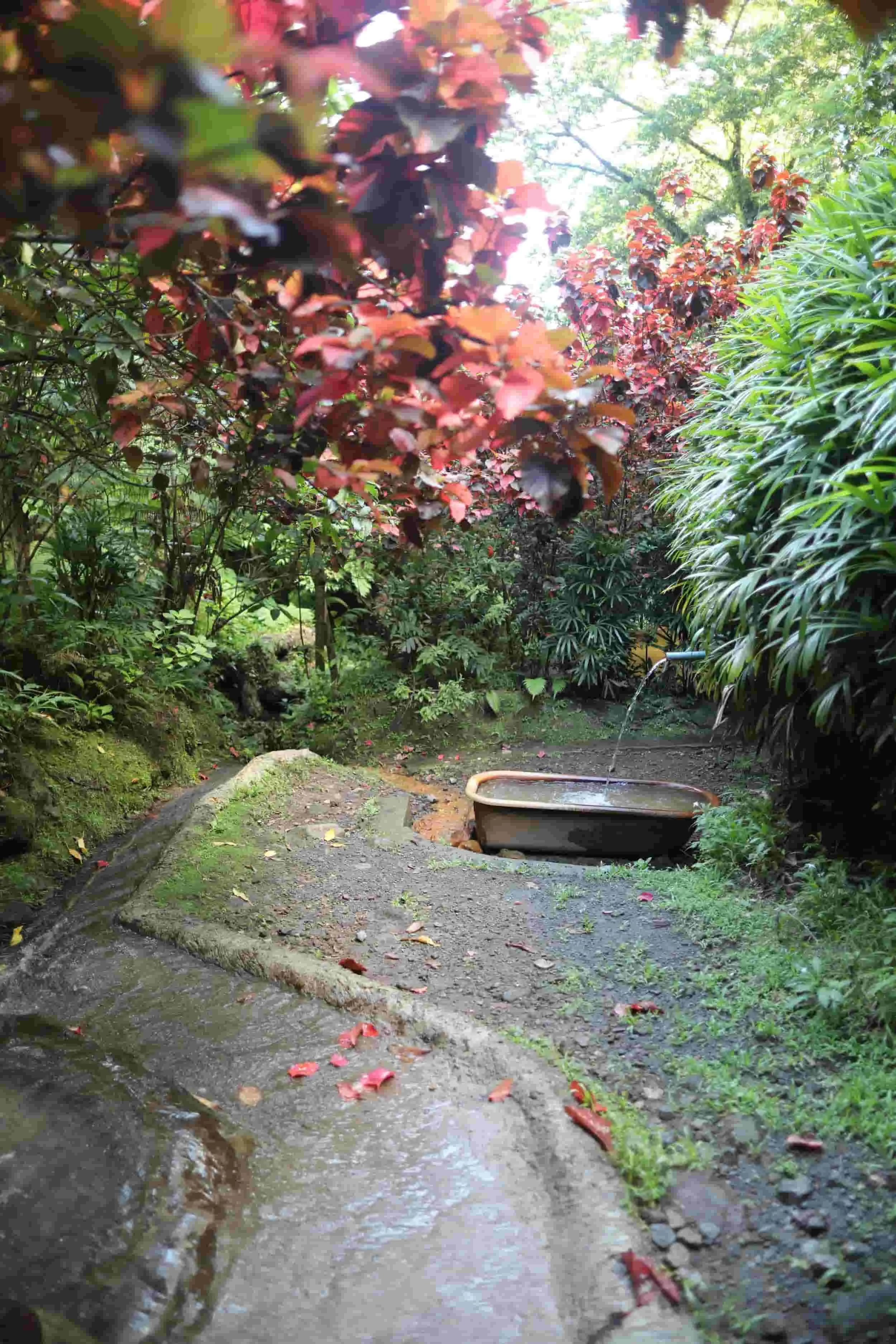
Ti Kwen Glo Cho ended up being one of my favorite experiences on the island, not because it was polished or luxurious, but because it wasn't. The setting is simple, lush and wonderfully connected to the volcanic landscape around it.
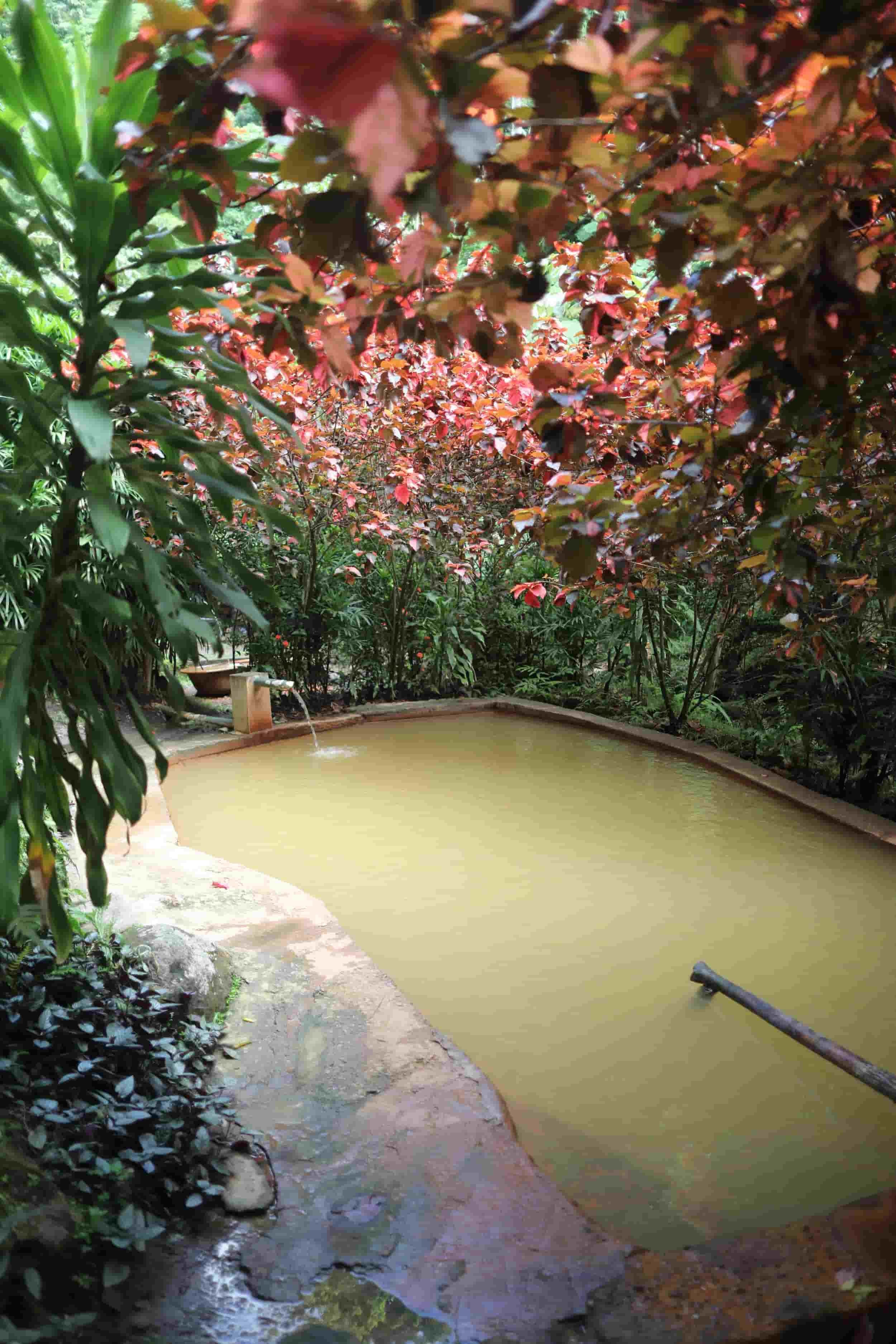
💡 My Tip | Don't rely entirely on Google Maps to get you here. Navigation became confusing once I reached Wotten Waven and asking locals for directions proved considerably more useful. Also watch your footing around the pools — the steps can be steep and slippery.
Ti Kwen Glo Cho turned into much more than a quick soak, with a few unexpected moments before the afternoon was over. It's a story worth telling on its own but for this guide, just know that the hot springs are well worth making room for on a Dominica Island itinerary.
Dominica’s Waterfalls
You could spend an entire trip to Dominica Island chasing waterfalls — and I made a pretty good attempt at it. Some require a proper hike through the rainforest, while others are only a short walk from the road. A few invite you straight into the water and others are best appreciated from the rocks below.
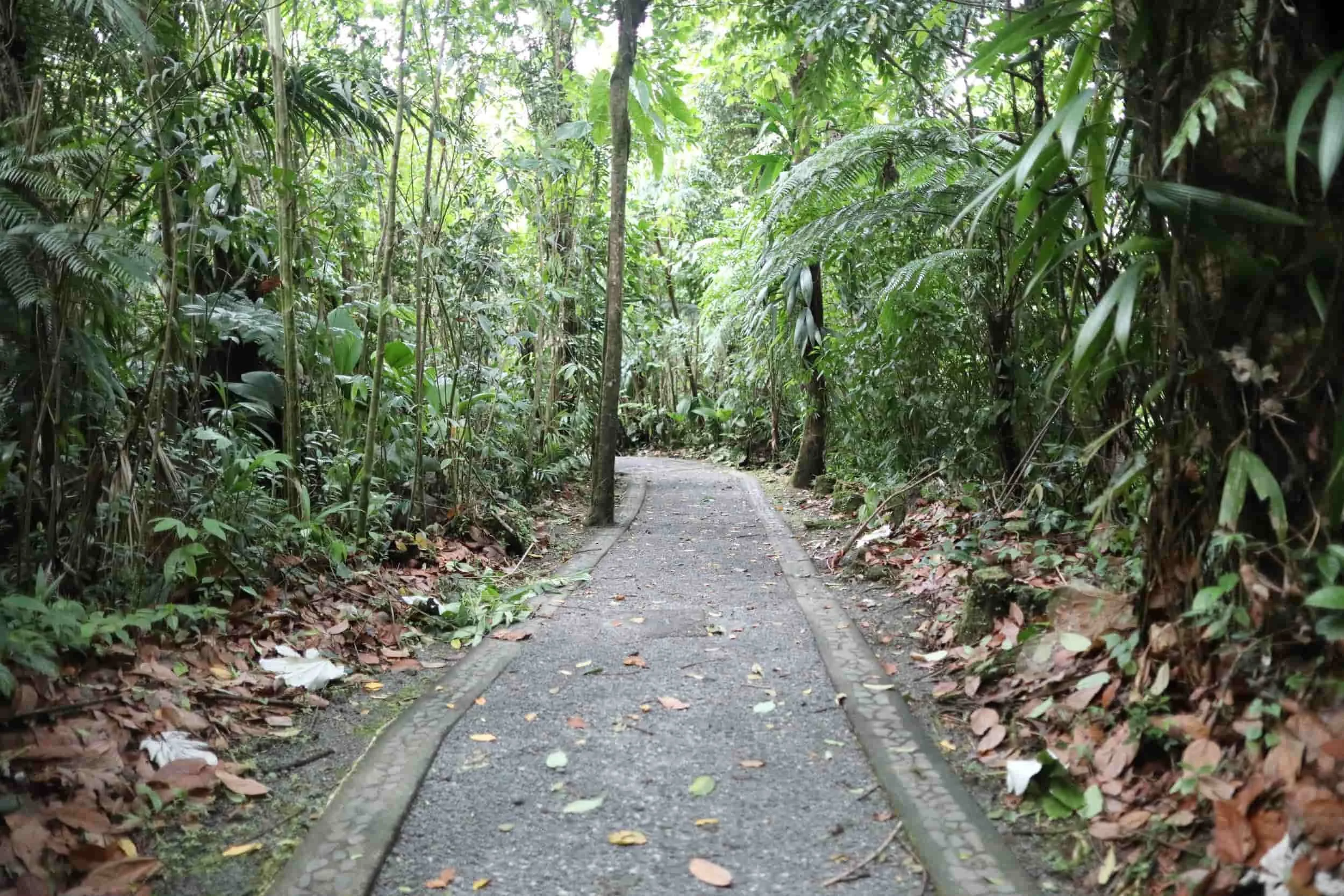
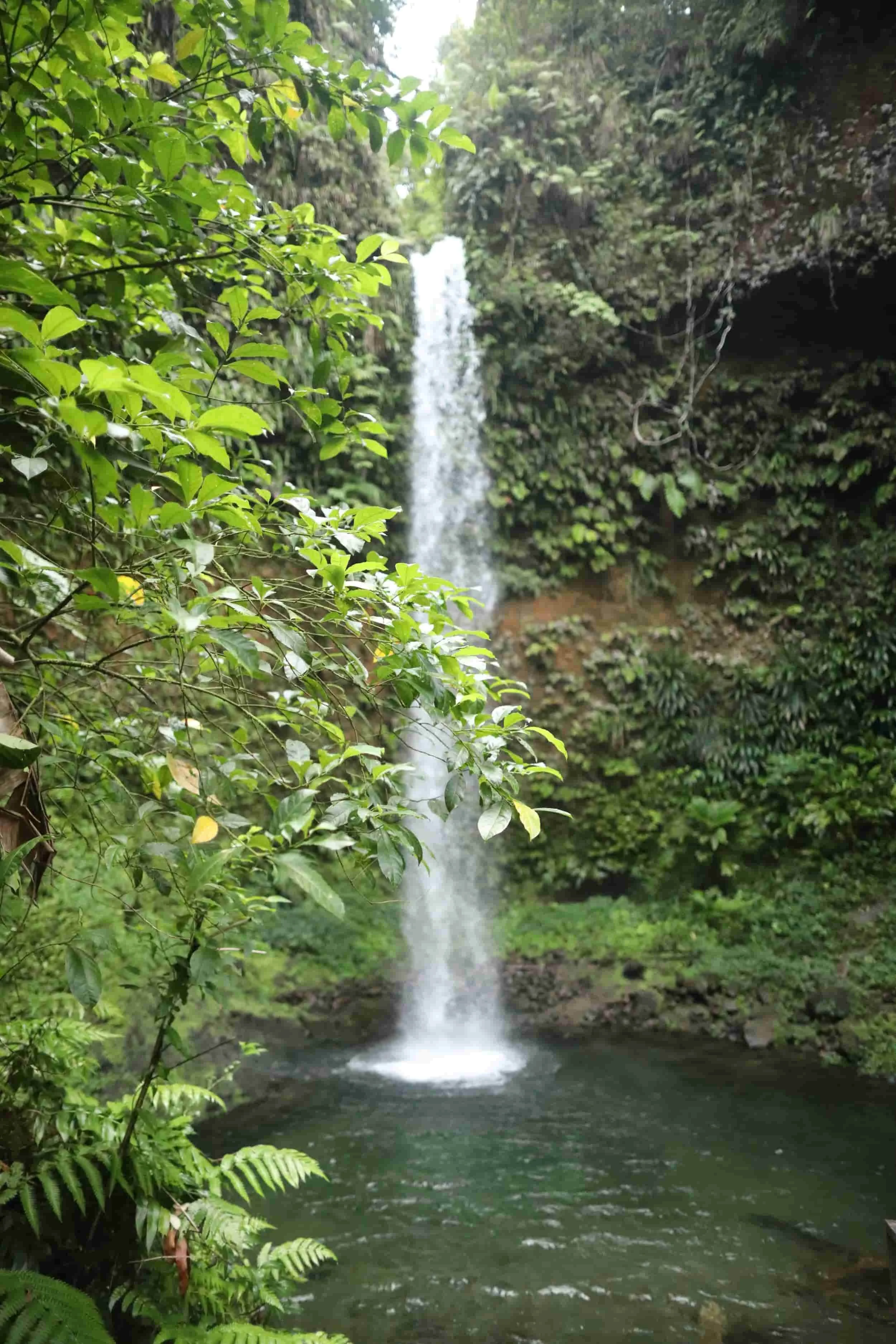
My waterfall trail took me from the easy rainforest walk to Emerald Pool to the much more overgrown path toward Salton Waterfall, with stops at Spanny Falls, compact but powerful Jacko Falls and the dramatic twin cascades of Trafalgar Falls along the way. Each felt surprisingly different, which became part of the fun of seeking them out.
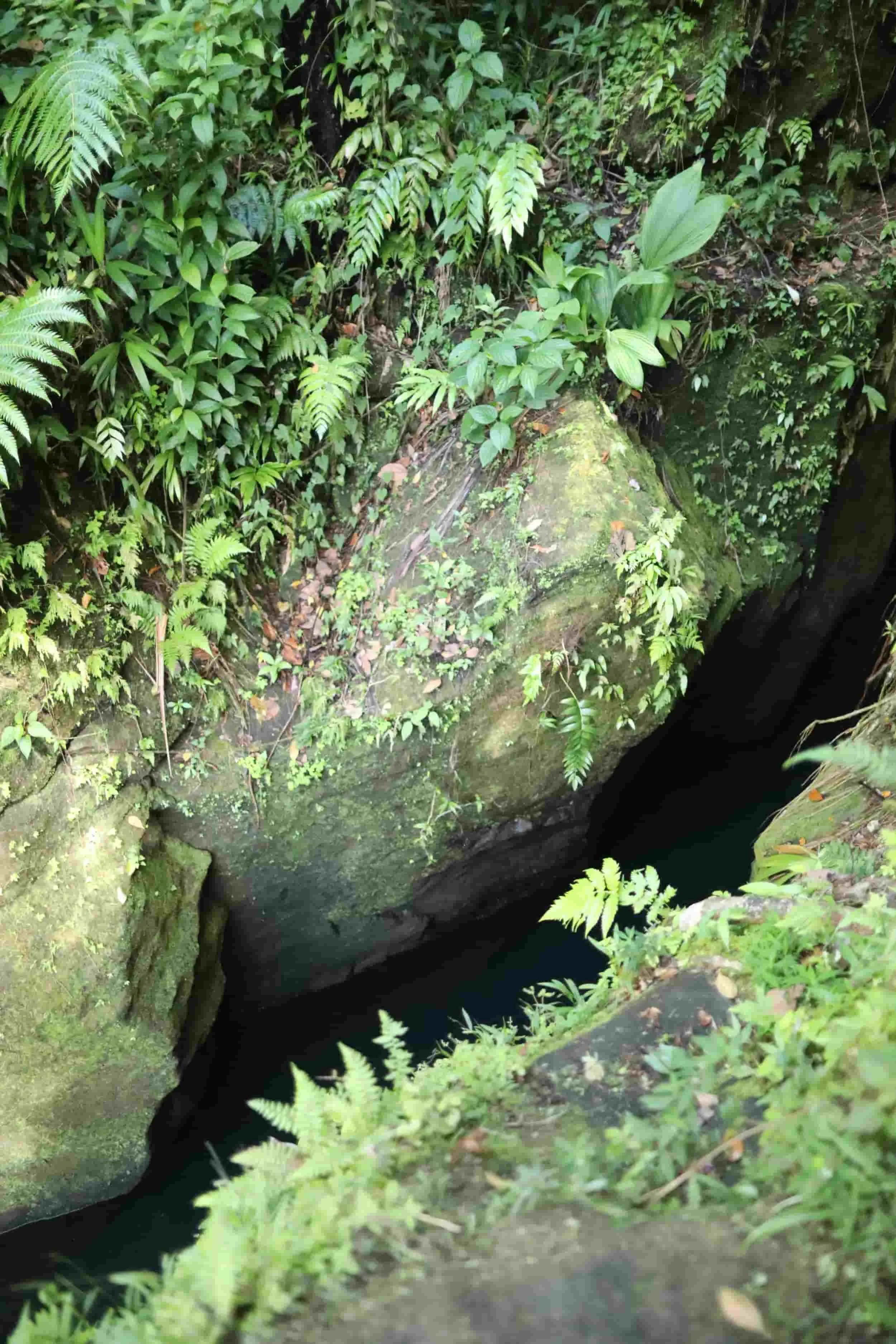
And then there was Titou Gorge. It's not quite a traditional waterfall stop: you enter the water and swim through a narrow volcanic gorge, surrounded by towering rock walls and vegetation, to reach the waterfall tucked inside. It felt like an appropriately adventurous finale to exploring Dominica's water.
💡 My Tip | Don't try to judge Dominica's waterfalls by size alone. Some of my favorite stops were the smaller or less polished ones, where getting there — or having the place almost to yourself — became part of the experience. Bring water shoes, expect to get wet and leave more time than you think you'll need.
Want to chase them all? I'm putting the full waterfall route, trail details and what to know about each stop into a separate guide.
Middleham Falls
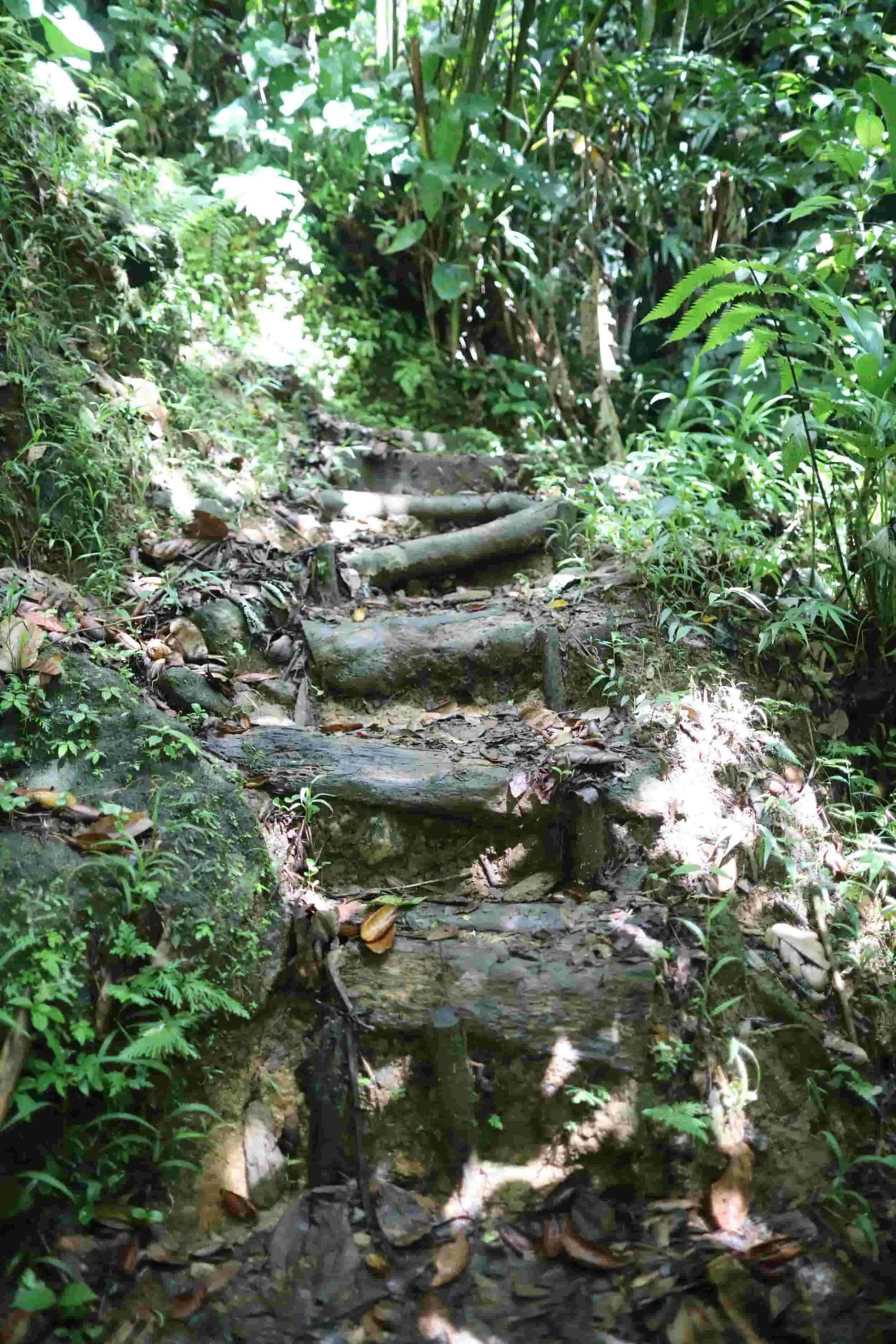
Tucked into the rainforest of Morne Trois Pitons National Park, Middleham Falls is reached by a moderately challenging hike through dense tropical forest, muddy paths, exposed roots and small stream crossings. The trail itself is part of the experience, gradually pulling you deeper into Dominica's mountainous interior before the waterfall finally appears through the trees.
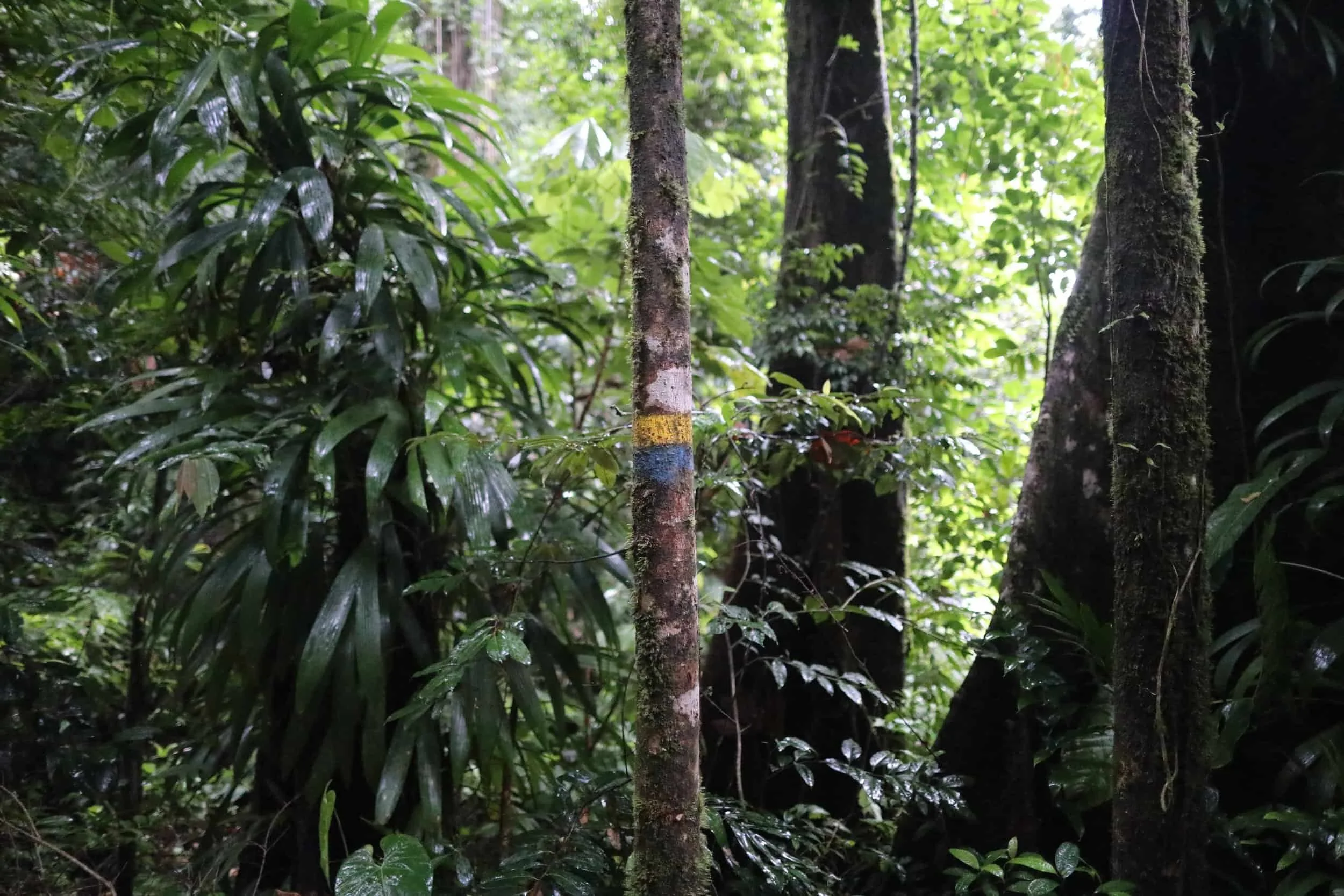
When I hiked it, recent storms had left sections especially muddy and slippery and I encountered only a handful of other hikers along the way. There were a few moments when the route wasn't completely obvious — particularly toward the final stretch — which made reaching the falls feel genuinely earned.
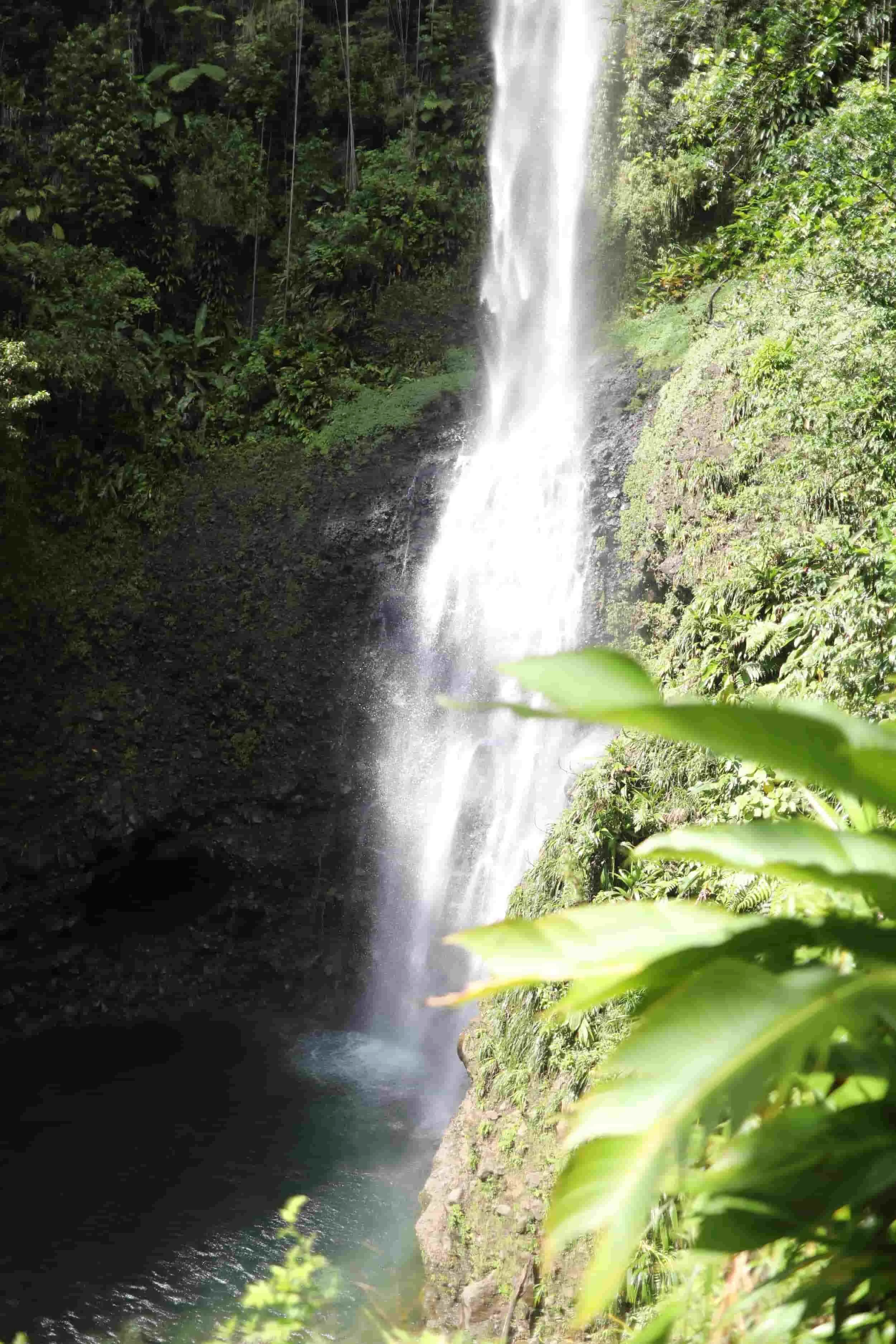
And the payoff is substantial: a tall, narrow cascade plunging from the volcanic cliffs into a fern-lined gorge, surrounded by the kind of dense rainforest that makes Dominica Island feel so wonderfully wild. Of all the waterfalls I explored here, Middleham was as much about the journey through the forest as the waterfall waiting at the end.
💡 My Tip | Wear proper hiking shoes and expect mud, particularly after rain. Give yourself roughly 2–3 hours for the round trip and don't rush the trail — the roots, rocks and stream crossings deserve your attention.
Ready for the full hike? My Middleham Falls guide covers the trail experience, getting there and what to know before you go.
Indian River
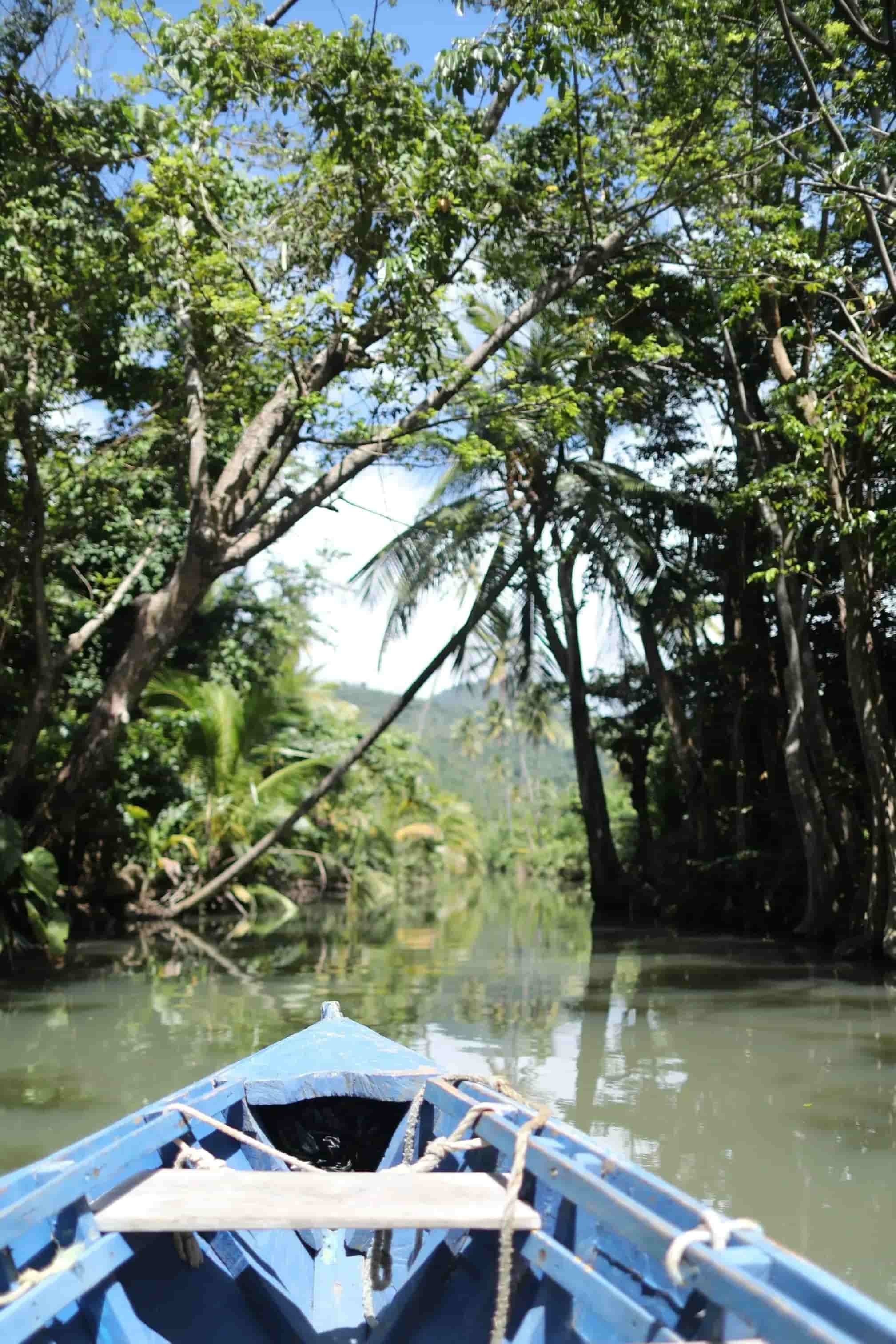
On Dominica's northwest coast near Portsmouth, the Indian River winds through a dense corridor of tangled roots, tropical vegetation and calm, brackish water. Local guides row small wooden boats through the protected waterway without motors, turning the experience into a wonderfully slow contrast to the hiking, waterfalls and winding roads that fill so much of a Dominica Island trip.
My guide, Dinosaur, quietly rowed us beneath the canopy while pointing out wildlife, stories from the river's past and remnants of the Pirates of the Caribbean: Dead Man's Chest set hidden among the vegetation. With little more than the sound of oars, birds and insects around us, it became one of those rare travel experiences where there really wasn't anything to do except slow down and pay attention.
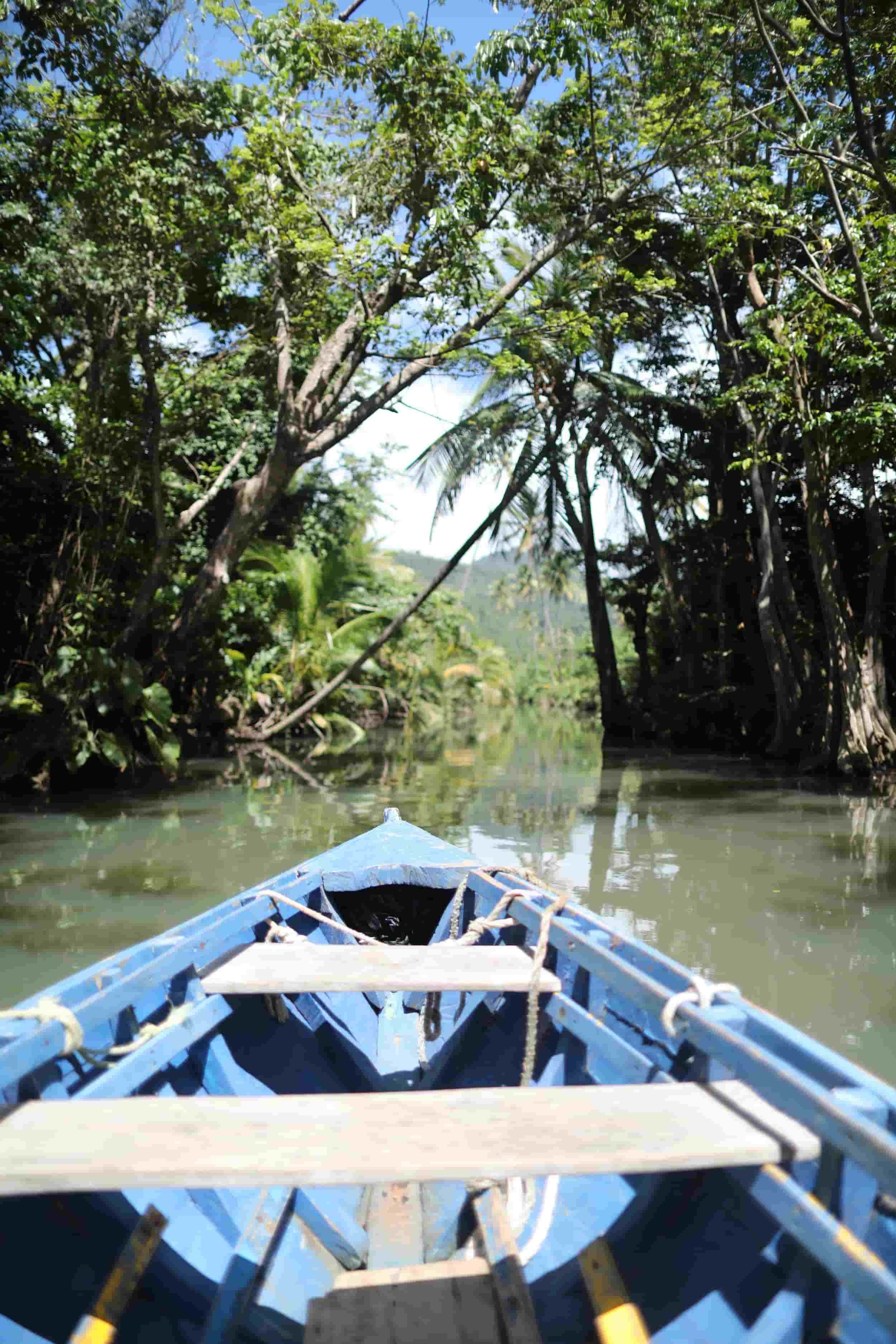
Most tours also stop at the rustic Indian River Bush Bar, tucked into the greenery along the water. Mine included a potent cup of jungle juice before we eventually made our way back down the river.
✨ Don’t Miss | Let a local guide take you down the river rather than treating this simply as a scenic boat ride. The stories, wildlife and small details they point out are a big part of what makes the experience memorable.
Want to drift a little deeper? The full Indian River guide covers the boat ride, Bush Bar and everything to know before you go.
Falling for Dominica Island’s Wild Charm
By the end of my time on Dominica Island, a few things had become very clear. This is a place that rewards curiosity, patience and a willingness to let go of the plan every once in a while.
Driving is an adventure in itself. Roads twist around steep slopes, narrow without much warning and occasionally run uncomfortably close to deep roadside ditches. Locals navigate them with a confidence I never quite developed — stopping in the road, squeezing past one another and making impossibly narrow stretches somehow work. If you're driving, slow down, be patient and expect the unexpected.
Google Maps isn't always much help either. When technology failed me, pulling over and asking someone for directions usually worked better. Keep your phone charged but don't be afraid to rely on people instead.
And people were one of the things I loved most about Dominica Island. Conversations began easily, whether I was asking for directions, stopping somewhere for coffee or simply figuring out where I was going. Even the hitchhiking that initially surprised me quickly began to feel like part of the island’s small-town rhythm. Locals regularly catch rides along the road and I ended up giving people lifts several times during my stay.
One of those rides came on my final drive back toward the airport. Two young men in their twenties were waiting along the road, so I stopped and picked them up. What could have been an ordinary drive turned into one of the conversations I remember most from the trip.
They had never left Dominica — not because they weren't curious about the world beyond it but because travel simply wasn't financially realistic. Work came where they could find it: carpentry sometimes, farm work at others, whatever jobs were available.
It was a small interaction but an important one. Travel can make it easy to see an island through waterfalls, beaches and beautiful landscapes while overlooking the realities of everyday life for the people who actually live there. That conversation stayed with me long after they got out of the car.
Then there were the cats. Cats seemed to be everywhere — slinking along walls, wandering through villages or stretched out somewhere in the sun. It's a tiny detail but one I still associate with everyday life here.
And while Dominica may be known as the Land of 365 Rivers, for me, the waterfalls stole the show. Some are surprisingly easy to reach; others require river crossings, steep climbs, slippery trails and considerably more effort. No two felt quite the same. Some were gentle and easy to linger beside, while others were loud, powerful and completely deserving of the work it took to reach them.
I chased enough of them that they deserve their own story.
The bugs deserve a warning of their own. This is a lush, tropical island and the insects come with it. Bring proper bug repellent and actually use it — I left Dominica Island with plenty of bites to prove that I hadn't been nearly diligent enough. I also found natural insect creams in local shops, which are worth looking for if you prefer another option.
Sundays require a little planning. The island becomes noticeably quieter, with many restaurants, shops and grocery stores closed and public transportation limited or unavailable. Excursions may still operate but don't assume you'll be able to figure out meals and errands as you go. Stock up or make a plan beforehand.
And finally: island time is real.
Dominica unfolds slowly. Schedules can feel more like suggestions, roads take longer than the map says they should and sometimes the best solution is simply to stop trying to rush.
That became part of what I loved about Dominica Island. It isn't polished into an effortless vacation experience and I wouldn't want it to be. Slow down. Ask for help. Follow the locals' lead. Chase the waterfalls. Carry bug spray. Leave room for things not to go exactly as planned.
Dominica rewards curiosity — and a willingness to get a little dirty.
My Bibimbap Moment
Every destination adds another ingredient to our life's recipe and sometimes it's not a single experience that stays with us but the feeling of settling into a place. In Dominica, I loved the simple rhythm of getting around by car, wandering downtown, finding good food, meeting locals and slowing down enough to enjoy the island between adventures. This guide is about those everyday moments — the places that helped me get to know Dominica beyond its famous waterfalls and hiking trails. Here's the ingredient the island added to my Bibimbap Life.
Today’s Bibimbap Recipe
🥢 Flavor: Easygoing
🌿 Ingredient: Connection
❤️ Best Memory: Unwinding at Ti Kwen Glo Cho hot springs
🎒 Take With You: Some places stay with us because of what we saw. Others stay because of how it felt to be there. Dominica gave me a little of both.
Looking back on my time in Dominica, it's the feeling of the island that comes back first. The conversations, the food, the winding drives, the little discoveries around town, the warmth of the people and those wonderfully ordinary moments between the big adventures. Even a stop that didn't live up to expectations became part of the story of getting to know the island. Dominica never felt like a place I was simply checking off a list. It felt like somewhere I was getting to know, one meal, conversation, road and quiet afternoon at a time. And somewhere along the way, I fell completely in love with it.
Dominica Travel Essentials
Dominica Island is the Caribbean’s “Nature Island” — not to be confused with the Dominican Republic — and exploring it takes a little more planning than its small size suggests. Rugged mountains, rainforest and winding roads mean getting from one place to another often takes longer than expected, while many of the island’s best experiences involve hiking, waterfalls, rivers and geothermal landscapes rather than resort-style sightseeing.
A rental car gives you the most freedom but driving here is part of the adventure: traffic keeps to the left, roads can be narrow and steep and navigation isn’t always straightforward. Sundays are especially quiet, so transportation, meals and basic errands require a little more forethought.
Give yourself enough time to explore without rushing, pack for rain, mud and bugs and leave some flexibility in your plans. Dominica Island rewards travelers who slow down, ask for help when they need it and leave room for the unexpected.
When to Go
December through April is generally the best time to visit Dominica Island, with comparatively drier weather that makes hiking, waterfalls and exploring the island easier. That said, this is a tropical, mountainous island — rain is possible at any time of year and is part of what keeps Dominica so green.
Dry Season | December to April: This is the most popular time to visit, with generally less rainfall and better conditions for hiking and outdoor adventures. It’s also peak travel season, so expect higher accommodation demand.
Late Spring & Early Summer | May to June: A useful shoulder period if you want fewer visitors and don’t mind increasing humidity and more frequent rain. Conditions can be less predictable but the island remains very much open for exploring.
Rainy & Hurricane Season | June to November: Expect heavier rainfall, high humidity and a greater chance of tropical storms, particularly later in summer and into fall. Trails can become muddy or difficult, rivers rise quickly and weather can affect outdoor plans, so build more flexibility into your itinerary.
Festival Time | February/March & October: Dominica’s Carnival takes place in the weeks leading up to Lent, while the World Creole Music Festival is typically held in October. Either can be a reason to plan your trip around a specific date rather than simply choosing the driest weather.
⚠️ Good to Know | On Dominica Island, weather can change quickly in the mountains even during the dry season. Pack a lightweight rain layer and check local conditions before setting out on longer hikes, river crossings or waterfall trails.
What to Bring
Dominica Island calls for a little more adventure gear than your typical Caribbean escape. Rainforest trails, river crossings, waterfalls, hot springs, mud and plenty of bugs mean packing for getting wet and dirty — not just warm weather.
Water Shoes | For Rivers & Waterfalls: Choose something with good grip that can handle slippery rocks and being completely submerged.
Hiking Shoes | For Trails & Mud: Sturdy shoes with good traction are worth bringing for the island’s steeper, muddier trails.
Dry Bag | Keep Essentials Dry: Useful for protecting your phone, camera and valuables around rivers, waterfalls and sudden tropical rain.
Quick-Dry Layers | Expect to Get Wet: Lightweight clothes, a swimsuit and a simple rain layer will cover most outdoor adventures.
Bug Repellent | Bring the Good Stuff: Don't underestimate the insects. I came home with plenty of souvenir bites after learning that lesson the hard way.
Water + Portable Charger | For Longer Days Out: Carry a reusable water bottle and backup power, particularly when hiking or driving into more remote parts of the island.
💡 My Tip | Pack for adventure first and Caribbean vacation second. If you’re prepared to get wet, muddy and a little bitten, you’ll be much better equipped for the experiences that make Dominica Island so much fun.
How to Get There
Dominica Island is a little more remote than many Caribbean destinations but that’s part of what keeps it feeling so different. Most international travelers arrive by air through Douglas–Charles Airport (DOM) on the island’s northeast coast, while ferries connect Dominica with several neighboring Caribbean islands.
Fly | Easiest for Most Travelers: Douglas–Charles Airport (DOM) is Dominica’s main airport, with regional Caribbean connections as well as service from select international gateways. From the airport, allow roughly an hour or more to reach Roseau — the winding drive across the island takes longer than the distance suggests.
Connect Through Another Caribbean Island | More Flight Options: If you can’t find a convenient flight directly to Dominica, connecting through another Caribbean hub can open up additional regional flight options. Check the full itinerary carefully, as schedules and connections can vary.
Ferry | Best for Island Hopping: Regional ferries connect Dominica with Guadeloupe, Martinique and Saint Lucia, making arriving by sea a useful option if Dominica is part of a larger Caribbean trip rather than your only destination.
💡 My Tip | If you're renting a car, think carefully about your arrival time. I landed late and stayed near Douglas–Charles Airport rather than immediately tackling the drive across Dominica Island in the dark. Starting fresh the next morning made that first mountain drive much more enjoyable.
Where to Stay
Where you stay on Dominica Island can shape the experience quite a bit. This isn't an island where everything radiates from one central resort area and the winding roads mean choosing a base close to the places you most want to explore can save a surprising amount of driving.
Roseau & the Roseau Valley | Best for a First Visit: Staying in or around Roseau gives you access to restaurants and everyday conveniences while keeping the rainforest interior within reach. Head farther into the Roseau Valley toward Trafalgar or Laudat and you'll trade some convenience for waterfalls, hot springs, hiking trails and a much more immersive natural setting.
Portsmouth & the North | Best for Exploring Northern Dominica: A northern base makes sense if places like Indian River and the island's northwest coast are priorities. It's a different experience from the mountainous Roseau Valley and can be worth considering if you're dividing a longer trip between two parts of the island.
Calibishie & the Northeast | Best for a Quieter Coastal Stay: The northeast offers a more relaxed coastal base with easier access to this side of Dominica Island and Douglas–Charles Airport. It works particularly well if you want to balance inland adventures with time closer to the coast.
For my own trip, though, I'd still choose the rainforest. Waking up surrounded by greenery felt like part of experiencing Dominica rather than simply somewhere to sleep between outings.
Where I Stayed
For a budget-friendly nature escape — Papaya Creek (Coconut Garden)
This is where I stayed on Dominica Island and it became part of the trip itself — a quiet, tucked-away escape surrounded by greenery, with a stream running through the property and an intimate, easygoing feel that suited the island perfectly.
Where I’d Stay
For another rainforest escape — Cocoa Cottage
Surrounded by tropical gardens in the Roseau Valley, Cocoa Cottage keeps you close to waterfalls, hot springs and some of Dominica's best interior hiking. I especially like that it offers the immersed-in-nature feeling I loved about Papaya Creek while still being well positioned for exploring.
For riverside comfort — Sabifi River Resort
Sabifi River Resort offers a little more comfort while maintaining the connection to nature I'd want from a stay here. Its small scale, river and garden setting and on-site restaurant make it appealing for slower evenings between days spent exploring Dominica Island.
For the serious splurge — Coulibri Ridge
At the opposite end of the spectrum, Coulibri Ridge is the place I'd consider for a few nights of indulgence. The sustainability-minded retreat combines contemporary architecture, dramatic Caribbean views and a strong relationship with the surrounding landscape. It's far beyond the budget-friendly Dominica experience but for a milestone trip, this is the one I'd have on my wish list.
Additional Options
Want more options?
For a first trip, I'd start by browsing Roseau and the Roseau Valley, then look farther north or along the coast if your itinerary is concentrated in another part of the island.
How to Get Around
Getting around Dominica Island takes more time than the map might suggest. Roads wind through mountainous terrain, traffic drives on the left and many of the island’s best experiences are scattered well beyond Roseau. For the freedom to explore waterfalls, hot springs and smaller communities at your own pace, a rental car worked well for me.
Rental Car | Most Flexible: Renting a car gives you the most freedom to explore independently and stop along the way. I managed most of Dominica Island in a smaller car, although there were definitely a few questionable stretches where something with more clearance would have been welcome. Roads can be narrow, steep and winding, so drive slowly and allow considerably more time than the distance suggests.
Local Driver or Taxi | Easiest Without Driving: Hiring a driver is a good alternative if you're uncomfortable with left-side driving or simply want someone familiar with the island's roads. It's particularly useful for day trips into the mountainous interior.
Minibus | Cheapest: Privately operated minibuses connect Roseau with towns and villages around the island and are part of everyday local transportation. They're inexpensive but routes and schedules are less convenient for reaching remote trailheads, waterfalls and other nature-focused stops.
💡 My Tip | Don't underestimate driving times on Dominica Island. Google Maps wasn't always reliable during my trip and asking locals for directions sometimes worked better. Bring a car charger that works with a cigarette-lighter outlet, keep your phone charged and leave extra time between stops.
How Long to Stay
Plan on at least four to five days on Dominica Island, especially if you want time for rainforest hikes, waterfalls, hot springs and exploring beyond Roseau without rushing between them. The island may look small on a map but winding mountain roads make travel slower than you might expect.
3 Days | A Quick Introduction: Enough for Roseau and a few of the island’s signature nature experiences but you'll need to be selective.
4–5 Days | Best for Most Trips: Gives you time to explore the rainforest interior, chase a few waterfalls, visit the hot springs and venture north or south while keeping the pace relatively relaxed.
7 Days | For a Deeper Dive: A full week gives you room for longer hikes, different parts of the island and slower days without having to plan every experience back-to-back.
💡 My Tip | If Dominica is part of a larger Caribbean island-hopping trip, I'd give it more time than you initially think. Getting around is part of the experience here and Dominica Island is much better when you leave some room for unexpected stops and changing plans.
Tours & Day Trips
There's far more to Dominica Island than you can fit into a single trip. Waterfalls, volcanic landscapes, rainforest hikes, snorkeling and small coastal communities are scattered across the island and a guided day trip can be especially useful for experiences where local knowledge, transportation or trail guidance matters.
Morne Trois Pitons National Park | Hiking & Geothermal Landscapes: This UNESCO-listed national park encompasses some of Dominica's most dramatic interior landscapes, including the Boiling Lake, Valley of Desolation, Emerald Pool, Freshwater Lake and several major hiking areas. The full Boiling Lake trek is a serious day out; shorter excursions can focus on waterfalls, lakes and geothermal landscapes.
Scotts Head & Soufrière | Coast & Snorkeling: Head south for dramatic coastline, snorkeling and views around Scotts Head, with Soufrière's geothermal landscape nearby. This makes a good contrast to a day spent hiking in the rainforest interior.
Champagne Reef | Snorkeling & Diving: One of Dominica's more unusual underwater experiences, where volcanic gases rise through the seafloor and create streams of tiny bubbles around the reef. A guided snorkeling or diving trip is an easy way to experience it without planning the logistics independently.
Cabrits National Park & Fort Shirley | History & Northern Dominica: Pair restored colonial-era Fort Shirley and its views over Prince Rupert Bay with other northern stops. This also combines naturally with Portsmouth and the Indian River if you're already heading north.
Waitukubuli National Trail | Serious Hiking: Dominica's long-distance trail crosses the island through rainforest, mountains and rural communities. You don't need to tackle the entire route — individual segments can give hikers a deeper look at the island beyond its most visited waterfalls.
💡 My Tip | You don't need to book a tour for everything on Dominica Island. With a rental car, I was able to explore much of the island independently. I'd save guided experiences for places where local knowledge genuinely adds something — challenging hikes, snorkeling or diving, river experiences and destinations that are difficult to navigate on your own.
Want to Explore Dominica with a Guide?
You can explore plenty of Dominica Island independently but a guided tour can make sense for more challenging hikes, hard-to-reach natural sights or simply seeing several places without navigating the island’s winding roads yourself. Browse the options and choose the experience that fits the way you want to explore.
Good to Know
Language | English & Kwéyòl: English is the official language, while Dominican Creole French, commonly known as Kwéyòl, is also widely spoken. English-speaking travelers should have little trouble communicating throughout the island.
Currency | Eastern Caribbean Dollar: The Eastern Caribbean dollar (XCD) is the official currency, although US dollars are widely accepted. It's still useful to carry some local currency and smaller bills, particularly outside larger businesses.
Driving | Local Permit: If you're renting a car, check the current requirements for a temporary Dominican driving permit when you book. Rental companies can often help arrange what's needed.
Sundays | Plan Ahead: Sundays can be very quiet. Restaurants, shops and grocery stores may close or operate limited hours and public transportation is reduced. If you're arriving or exploring on a Sunday, plan meals and basic supplies ahead of time.
Navigation | Don't Rely Entirely on Google Maps: Directions weren't always reliable during my trip, particularly once I headed farther into the island. Asking someone nearby for directions often proved much more useful.
Weather | Expect It to Change: Rain is part of exploring a mountainous, tropical island. Conditions can change quickly in the interior, so a sunny start doesn't necessarily mean a dry hiking day.
Pace | Give Yourself Extra Time: Distances look deceptively short on a map. Winding mountain roads, changing conditions and unexpected stops make Dominica Island a place where trying to pack too much into one day can work against you.
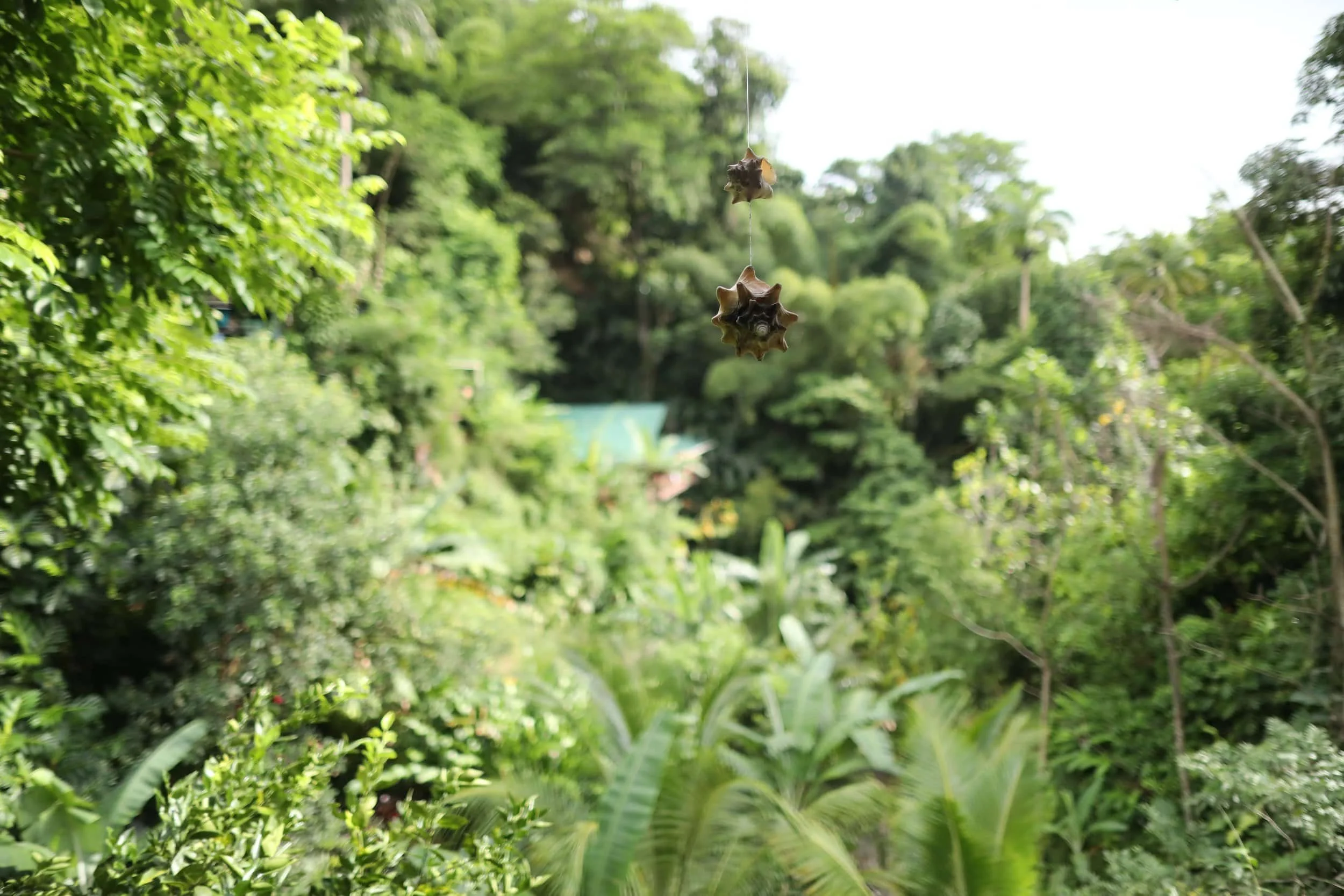
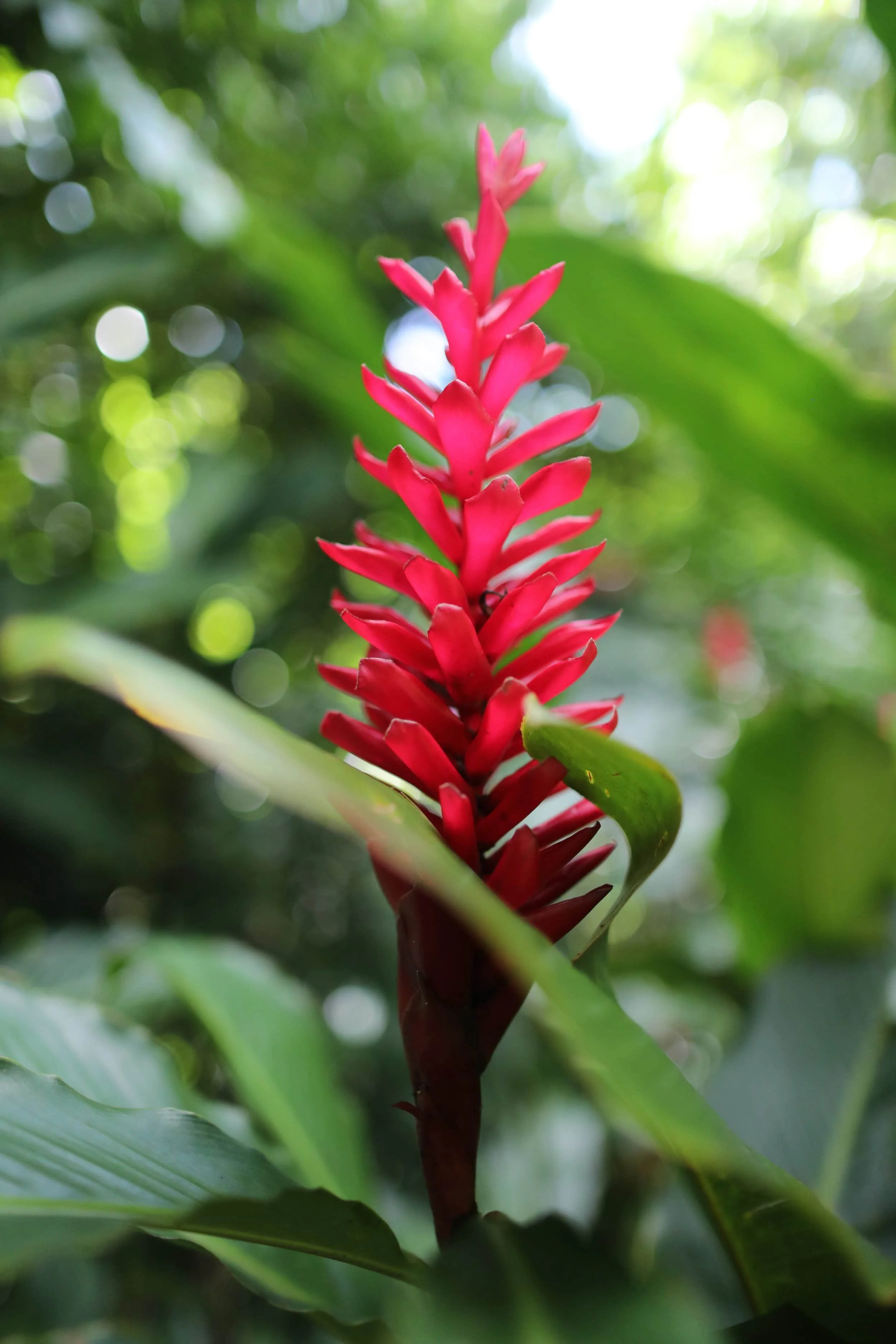
Discover Ti Kwen Glo Cho, where Dominica Island’s volcanic landscape meets lush tropical gardens, naturally heated pools and an unexpectedly memorable escape.