New Zealand’s South Island: Lake Wakatipu’s Queenstown
Queenstown — South Island: experience jaw-dropping alpine vistas, heart-pumping adventures & cozy lakeside charm with this travel guide.
Published | June 2026
Why You’ll Fall in Love with Queenstown — New Zealand’s South Island
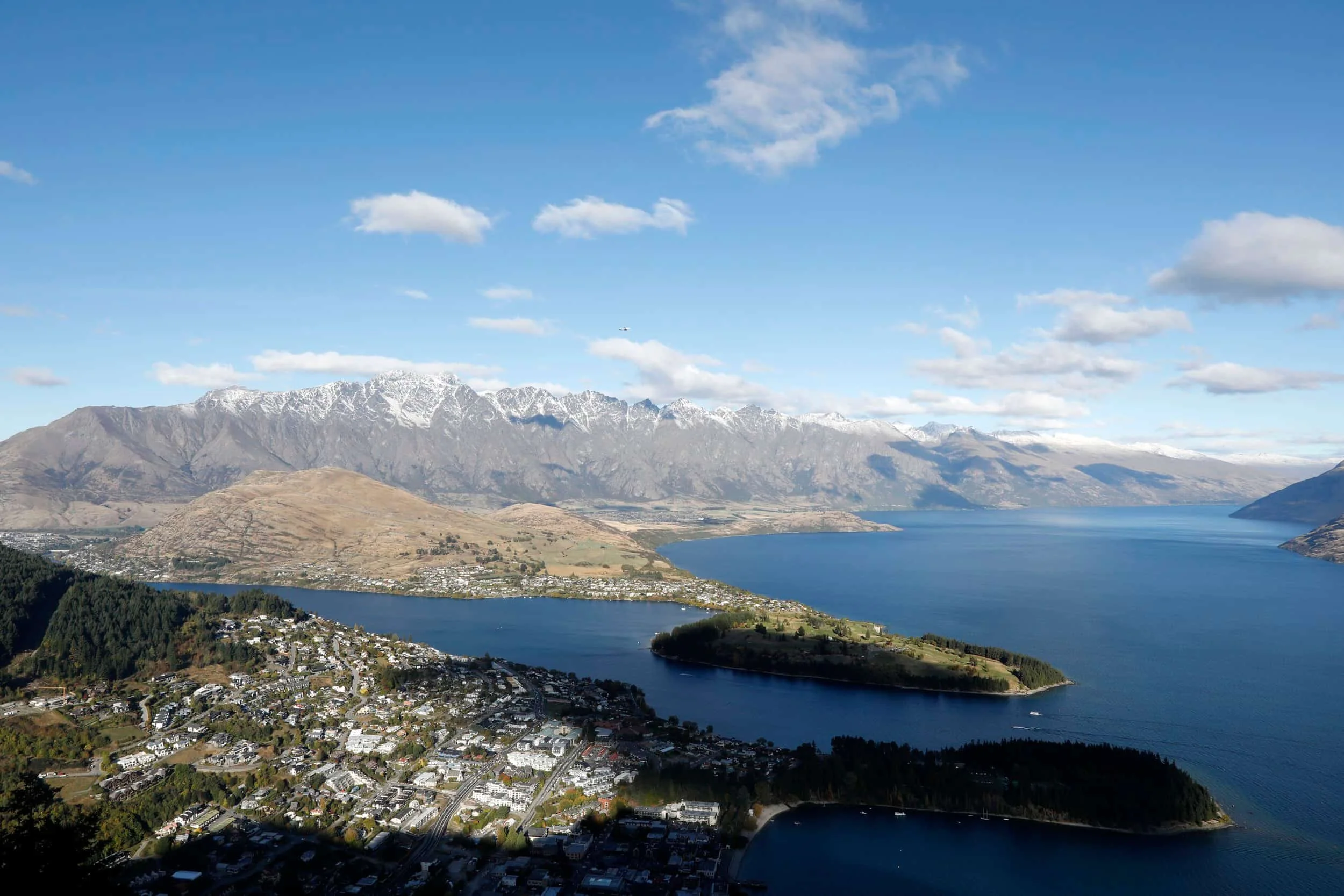
I’ll never forget my drive into Queenstown. As we rounded the bend and Lake Wakatipu appeared between the mountains, the scale of the landscape seemed to swallow everything around it. Paragliders drifted above the little town and my place to stay sat just uphill with ridiculous views across the lake. I was immediately in love.
Queenstown has a funny way of making you feel tiny while still being incredibly easy to settle into. The town itself is compact and lively but mountains, hiking trails, wineries and some of New Zealand’s biggest adventures are right outside it. I even splurged on a helicopter ride into the mountains — an experience so memorable that I’m giving it a story of its own.
But I didn’t do everything. Traveling solo, some of the bigger excursions were expensive and I found myself wishing I had a co-pilot to rent a car with and explore farther at our own pace. Instead of forcing it, I slowed down. I walked along the lake, wandered through town, took in those absurd mountain views and left Milford Sound and a few other adventures for another trip.
Maybe that’s part of why Queenstown stuck with me. It left me wanting more.
At a Glance
📍 Destination: Queenstown, New Zealand
🕒 Time Needed: 3-5 days
💰 Budget: NZ$330-$550/day ($195-$315 USD)
👟 Walking Level: Mild to strenuous
🌤️ Best Season: Autumn (March-May)
☕️ Don’t Miss: Skyline Gondola to Bob’s Peak
🖤 Perfect For: Nature lovers and adventure seekers
My Bibimbap Moment
This trip added: Zest.
An enthusiastic, keen enjoyment of life — if there’s one thing you’ll feel in Queenstown, it’s alive.
Queenstown added the ingredient of zest to my Bibimbap Life. Mountains plunging into the glassy blue of Lake Wakatipu feels like a scene pulled from a dream. The air is brisk, the seafood impossibly fresh and the sun seems to favor this town. Whether I was admiring the Remarkables or simply walking through town, I felt more awake — more connected to both the landscape and myself with a renewed appetite for life. Queenstown reminded me that some places don't just inspire adventure; they awaken a sense of aliveness that's easy to carry long after you've left.
Queenstown easily earned a spot on my list of favorite cities; I hope it finds a place on yours, too.
My Two-Week New Zealand & Australia Itinerary
This was my first trip to New Zealand and Australia, combining New Zealand’s North and South Islands with a quick run along Australia’s east and southern coasts. It was an ambitious two weeks but it gave me a first look at an incredible variety of landscapes — and Queenstown ended up being one of the places I most wanted more time in.
I started in Auckland, with a day trip to Waiheke Island for vineyards, food and a slower look at life beyond the city. From there, I traveled south through Waikato and Rotorua, where glowworm caves, geothermal landscapes and Māori culture gave me a completely different experience of the North Island.
Then came Queenstown. I spent a few days exploring the town, walking along Lake Wakatipu and taking in the surrounding mountains, including one particularly memorable helicopter flight near Glenorchy. There was much more I could have done — Milford Sound included — but traveling solo, I decided not to force every possible excursion into the itinerary. Queenstown was one of those places I left knowing I’d happily return.
From New Zealand, I continued to Australia, starting on the Gold Coast with a trip inland to Tamborine Mountain before heading south to Melbourne. I used Melbourne as my base for a full-day drive along the Great Ocean Road, then finished the trip with a very quick 36 hours in Sydney.
It was a fast-moving introduction to this part of the world and I certainly didn't see everything. But between New Zealand’s geothermal landscapes and mountains and Australia’s beaches, cities and coastline, I came home with a very long list of reasons to return.
My route: Auckland → Waiheke Island → Waikato → Rotorua → Queenstown → Gold Coast → Tamborine Mountain → Melbourne → Great Ocean Road → Sydney
Explore
Here’s where the journey will take us.
01 | Things to Do in Queenstown
02 | When to Go
03 | How to Get There
04 | Where to Stay
05 | How to Get Around
06 | How to Get Across the South Island
07 | How Long to Stay
08 | Is Queenstown Safe for Solo Travel
09 | Tours & Day Trips
10 | Good to Know
Travel More | New Zealand Travel Guides
Queenstown: You Don’t Have to Do It All
Queenstown has a reputation for going big. Bungee jumping, jet boats, mountain hikes, helicopter flights, wine country, Milford Sound — there are enough things to do here to make even a few days feel wildly inadequate. Add New Zealand prices to the equation and deciding what actually deserves your time and money becomes part of planning the trip.
I felt that pressure too. This was my first time in New Zealand, I was traveling solo and I wanted to experience as much as I could. But Queenstown ended up being a good reminder that you don’t have to do everything for a place to leave an impression.
I chose a few experiences that genuinely excited me, splurged on one that I’ll probably remember forever and left plenty undone. Some of my favorite time in Queenstown was much simpler — good food, wandering around town and having nowhere particularly important to be.
This guide is a mix of both: the experiences worth making room for and the smaller things that made me love being in Queenstown in the first place. You’ll find all the practical details — where to stay, getting around, how long to visit and tours worth considering — in the Essentials section at the end.
Lake Wakatipu & Oysters
Arriving in Queenstown is refreshingly easy. The airport is small and close to town and almost immediately you’re surrounded by the mountains and water that define this part of the South Island.
The drive into town gives you your first real sense of Queenstown’s setting, with Lake Wakatipu appearing between the mountains as you get closer to the center. What I remember most, though, were the paragliders drifting high above town, suspended against the mountains like tiny specks in the sky. It was such a distinctly Queenstown welcome — this quiet alpine landscape with people casually floating through it.
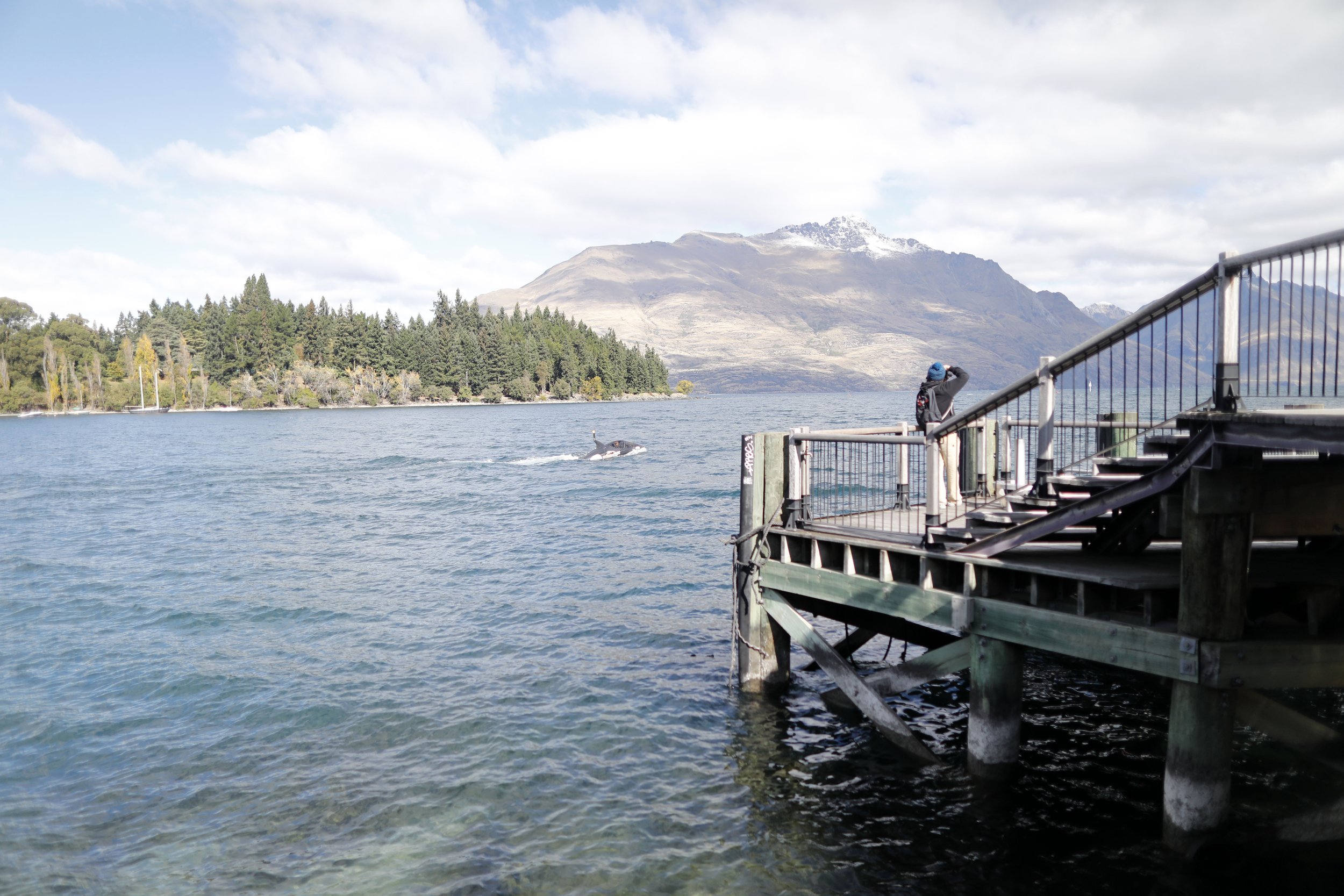
After settling in, head toward Lake Wakatipu. The town gathers naturally along its shoreline, with walking paths, cafés and restaurants woven around the water and the Southern Alps rising dramatically beyond. It’s worth spending some time here without much of a plan — walk the lakefront, watch the boats come and go or simply find somewhere to sit and take in the scale of it all.
If you’re hungry, make your way to Public Kitchen & Bar on Steamer Wharf. The waterfront setting is reason enough to stop but my suggestion is the New Zealand oysters. They’re the perfect welcome to Queenstown — and a good excuse to slow down, take in the view and let it sink in: you’ve arrived.
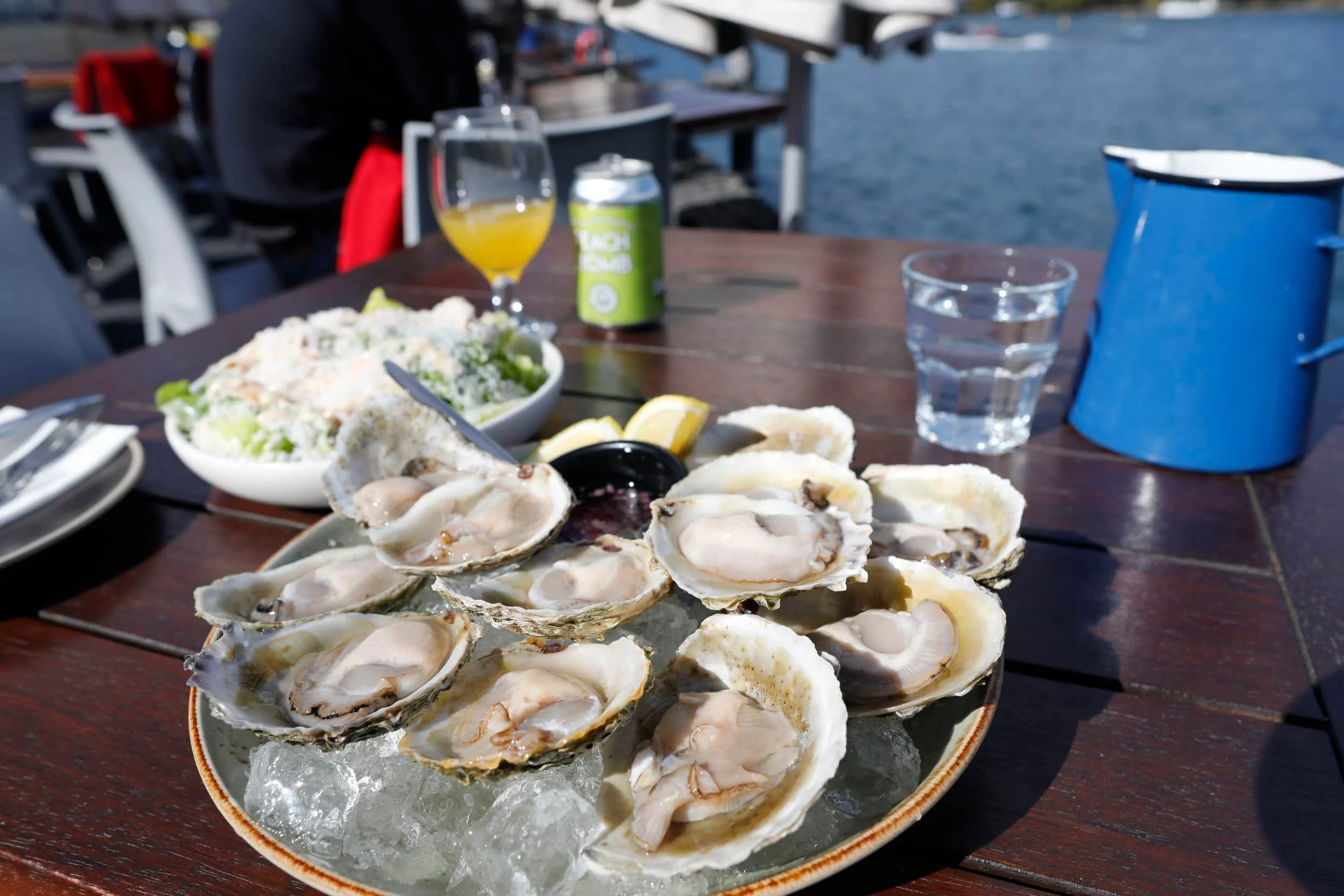
Served simply with shallot vinaigrette and lemon, they were large, mild and incredibly fresh. Add a Caesar salad and a local cider — I had the Peach Bomb from Hawke’s Bay Brewing Company — and you’ve got the perfect lunch beside the lake.
The oysters are a bit of a splurge but this is one of those places where the setting is part of the experience. Oysters, cider, Lake Wakatipu and the Southern Alps in front of you — not a bad introduction to Queenstown.
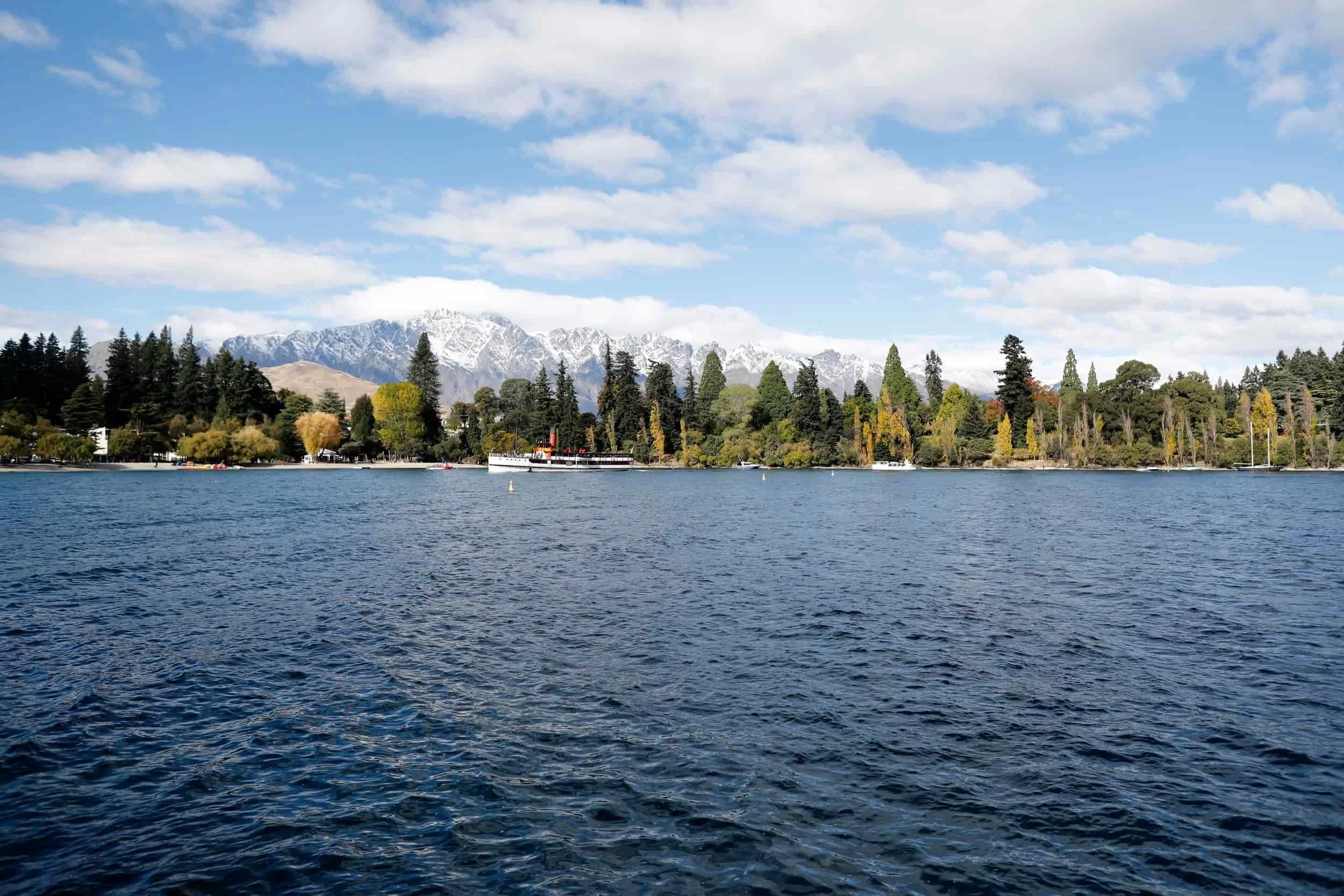
If the view from shore leaves you wanting more, Lake Wakatipu is worth experiencing from the water too. Cruises leave from the Queenstown waterfront, including trips aboard the historic TSS Earnslaw, whose red funnel and white hull are hard to miss around the harbor.
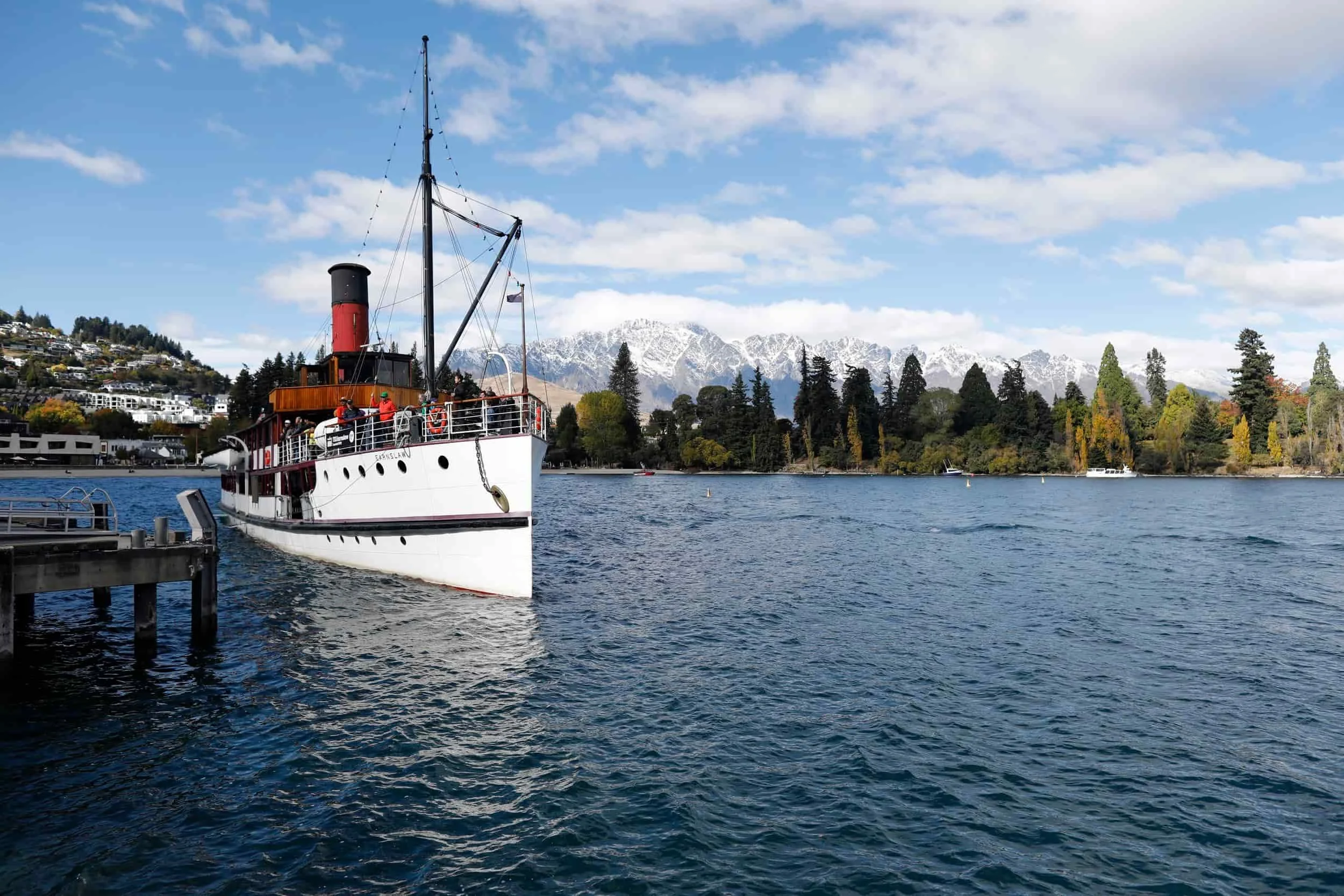
Or simply linger along the shore and watch the boats come and go — the deep blue water, snow-dusted mountains and little flashes of activity across the lake are a pretty good reminder that you don't always need another big adventure on the itinerary.
Downtown Queenstown
If you’re looking for things to do around Queenstown, there’s no shortage.
Downtown Queenstown unfolds like a beautifully written love letter — a cluster of narrow streets and lakeside promenades that somehow feel both lively and intimately small-town. Expect easy strolls where you can see other travelers pausing to take photos of dramatic mountain silhouettes mirrored in the lake, then ducking into a café for a hot coffee. The air carries a crisp alpine freshness, occasionally tinged with the sweet salt of roasted peanuts or bread baking in a nearby bakery.
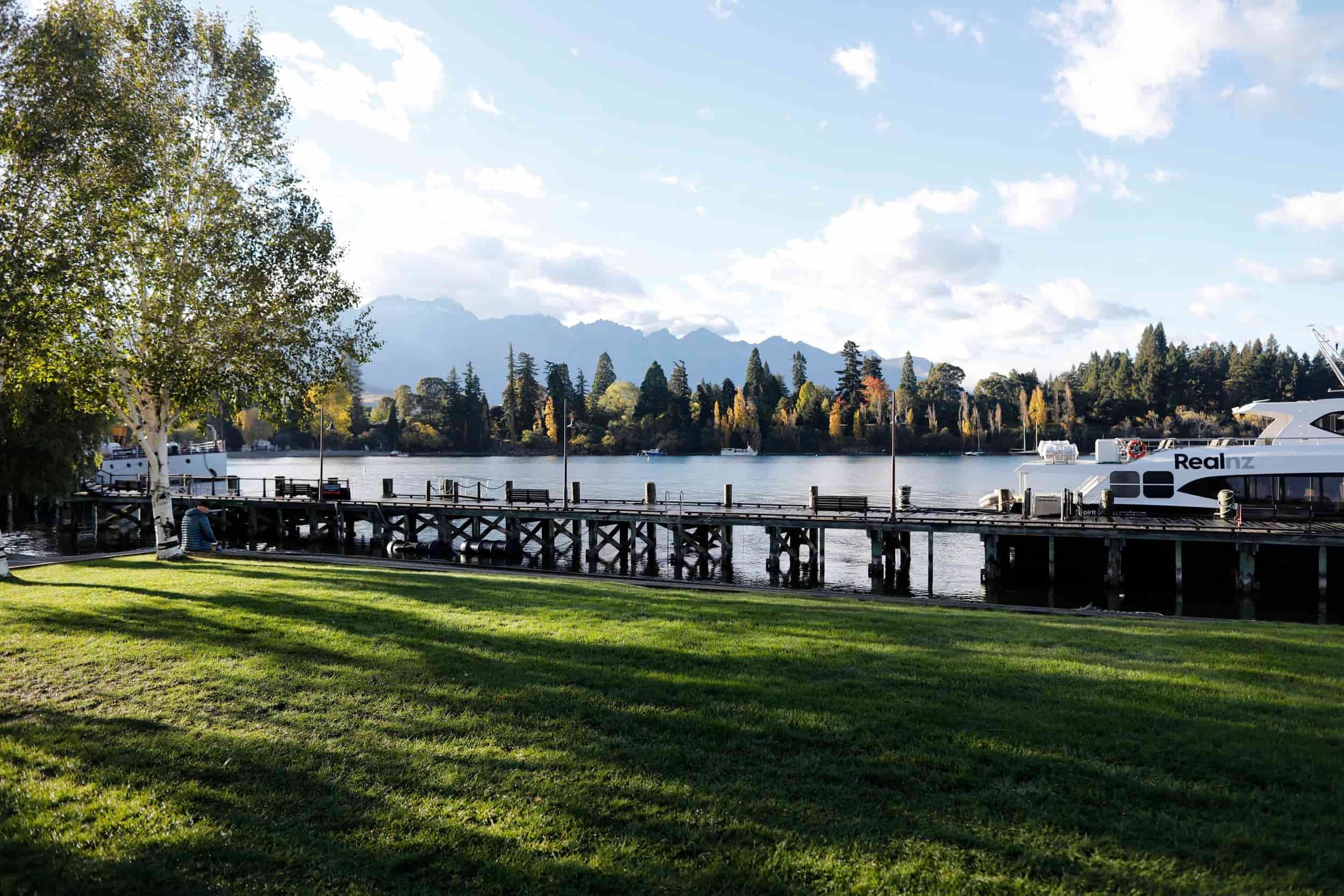
Cafés line the main thoroughfares, each with its own personality: sunlit corners with mismatched chairs, minimalist spots that showcase single-origin beans and family-run places offering hearty scones and soups. Many have outdoor seating that faces the water or the busy footpath, perfect for people-watching as gondolas and tour boats slip across the surface. Don’t miss specialty patisseries where the display cases are filled with pastries and savory tarts — ideal alongside a steaming cup and a quiet moment.

Shopping in downtown Queenstown is a charming mix of practical and whimsical. You’ll find stylish outdoor-gear shops whose displays nod to the adventurous spirit of the region, alongside boutiques selling local design, knitwear and well-curated souvenirs.
Small galleries and storefronts showcase graphic art — bold prints and delicate watercolors that capture the mountains, lakes and birds of the area. These pieces feel like portable memories of the landscape and the shopkeepers are often happy to share the stories behind their featured artists.

Downtown also doubles as a treasure trove for locally made goods. Aotea Gifts is the kind of shop that reminds you why New Zealand’s fibers are prized by designers: racks of socks, gloves and sweaters knit from sheep, cashmere, alpaca and even fox fur sit alongside carved jade, bone and wooden keepsakes. I came away with carved wooden coasters, warm gloves and wool socks — perfect reminders of the town.

Snack culture here tilts toward the artisanal: packets of roasted nuts and locally made crisps sit beside jars of honey and small-batch chocolate. Street vendors and deli counters offer convenient, high-quality fare perfect for a lakeside picnic or a quick bite between explorations. Even quick snacks feel thoughtfully prepared, reflecting a local appreciation for good ingredients and simple pleasures.

Cleanliness and order are striking in Queenstown — pavements are well cared for, shopfronts are tidy and public spaces are regularly maintained, which enhances the overall sense of welcome. That care extends to the waterfront, where benches and viewpoints are positioned to maximize the panoramas.
Standing at the edge of the lake, you’re rewarded with sweeping views of glassy water framed by rugged peaks — a sight that gently reminds you why this small downtown feels so special.
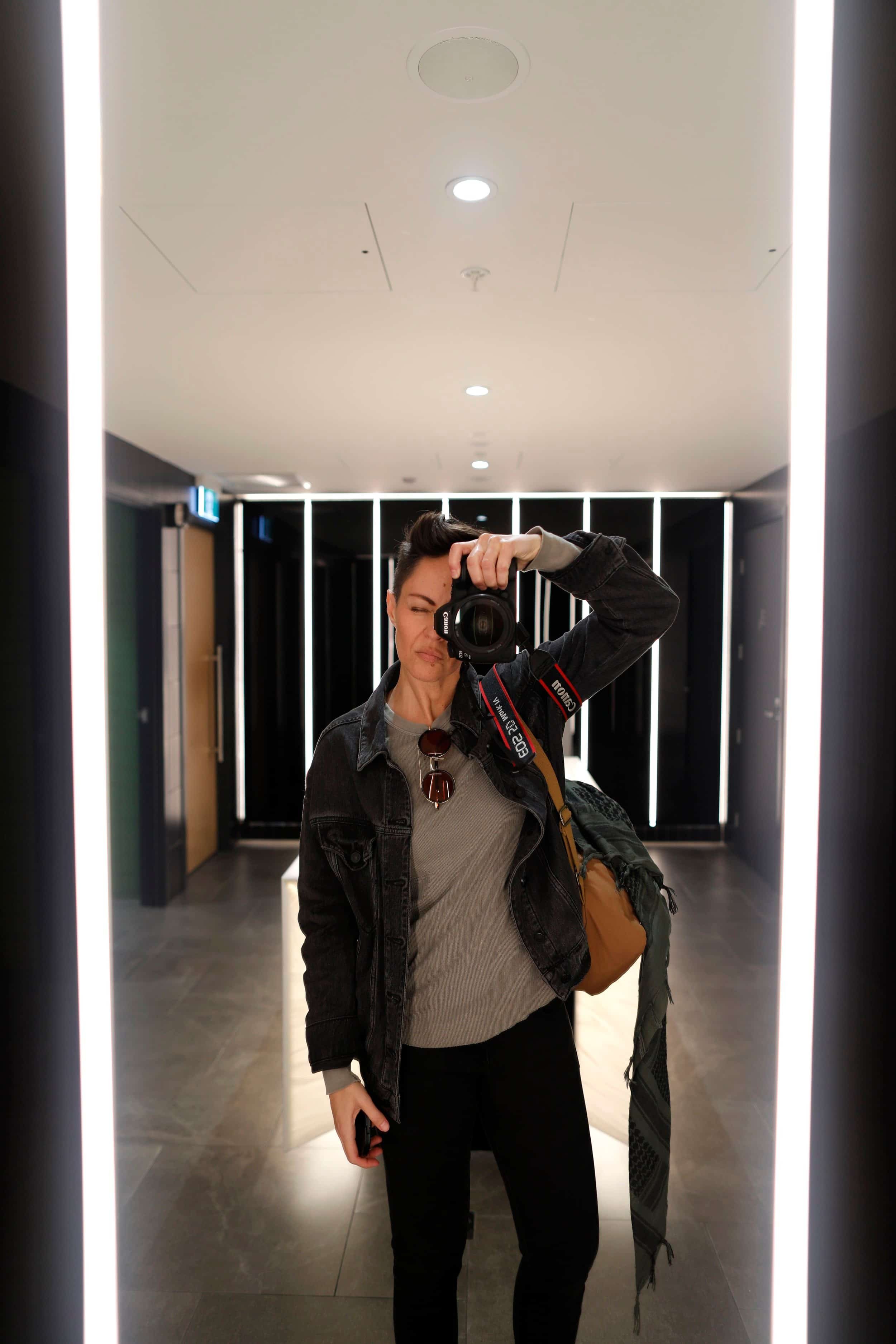
I was even pleasantly surprised by the gorgeous restrooms tucked inside the main shopping center, O'Connells Pavilion — I kept ducking in just to warm my hands and admire the design. Inside the pavilion, you'll find a nice mix of clothing boutiques and a busy ground-floor food court serving every craving — don’t miss Bronze Elephant Thai; it’s delicious.
But the real standout downtown has to be Flora Fauna — sadly it’s temporarily closed but I have a feeling it won’t be for long.

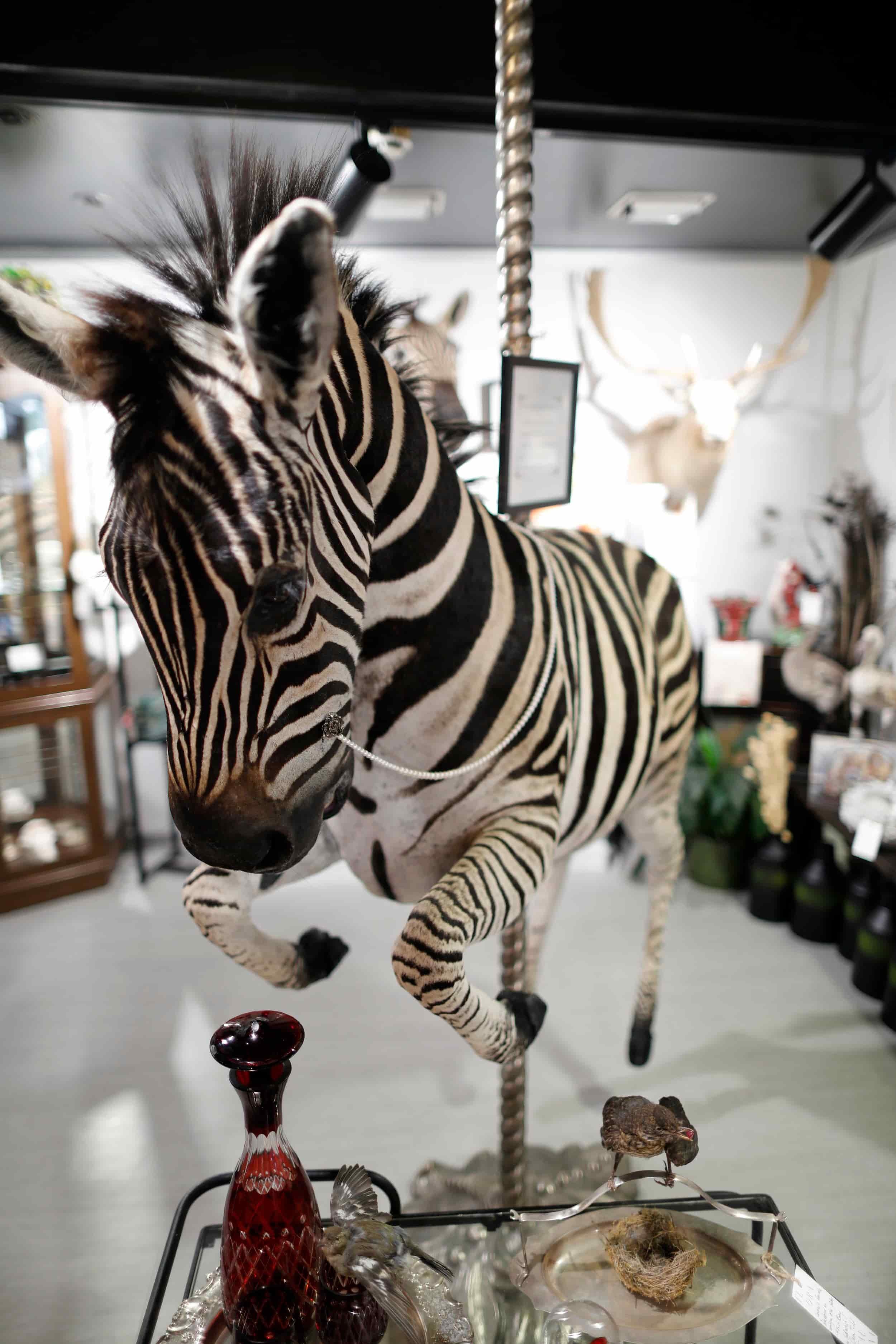
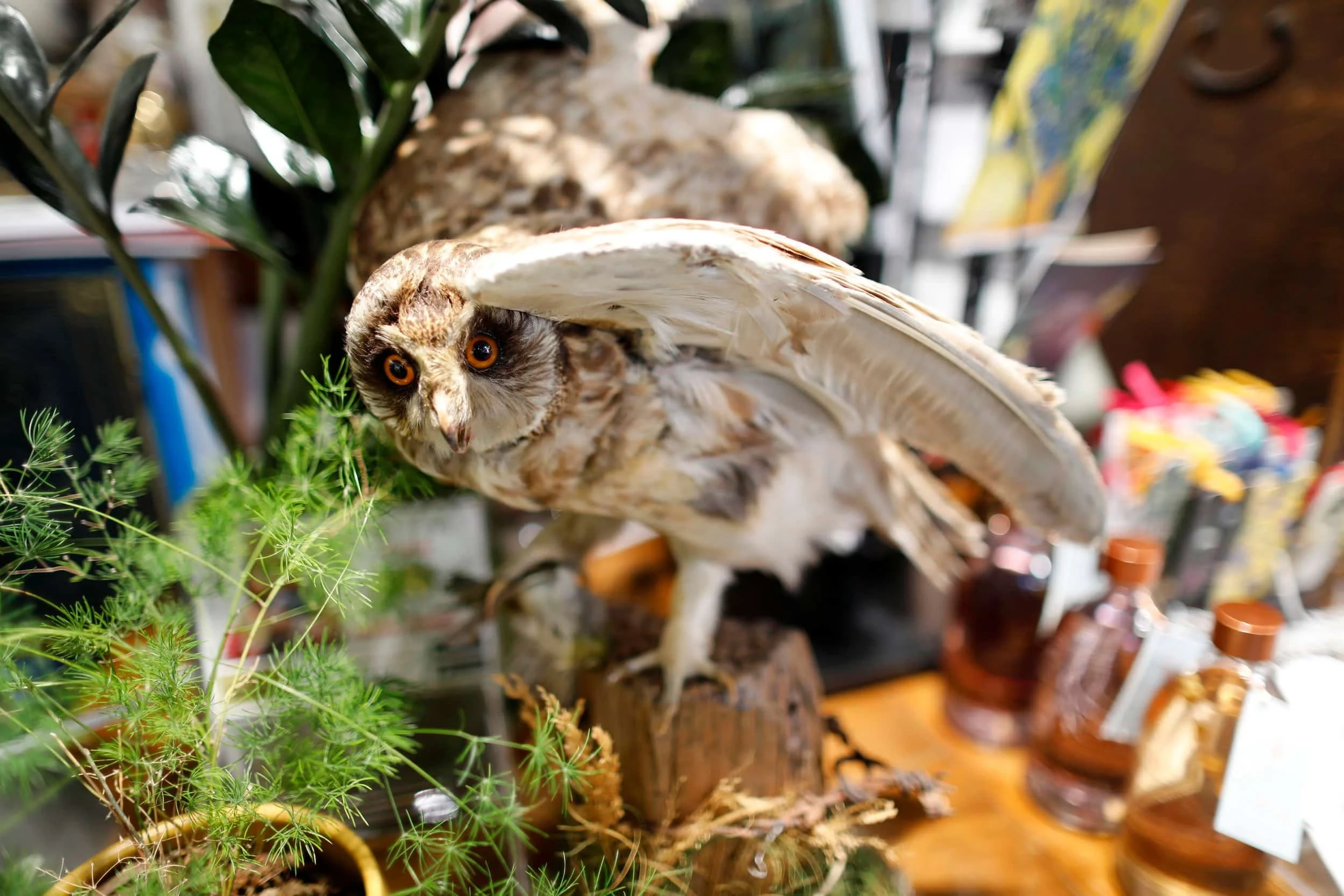
Tucked down a quiet side street near the lakefront, Flora Fauna feels like a small cabinet of curiosities for the modern traveler. The shop curates an odd mix — from delicate butterflies and taxidermy owls to bold prints and handcrafted jewelry — each shelf and nook invites a slow, exploratory wander.
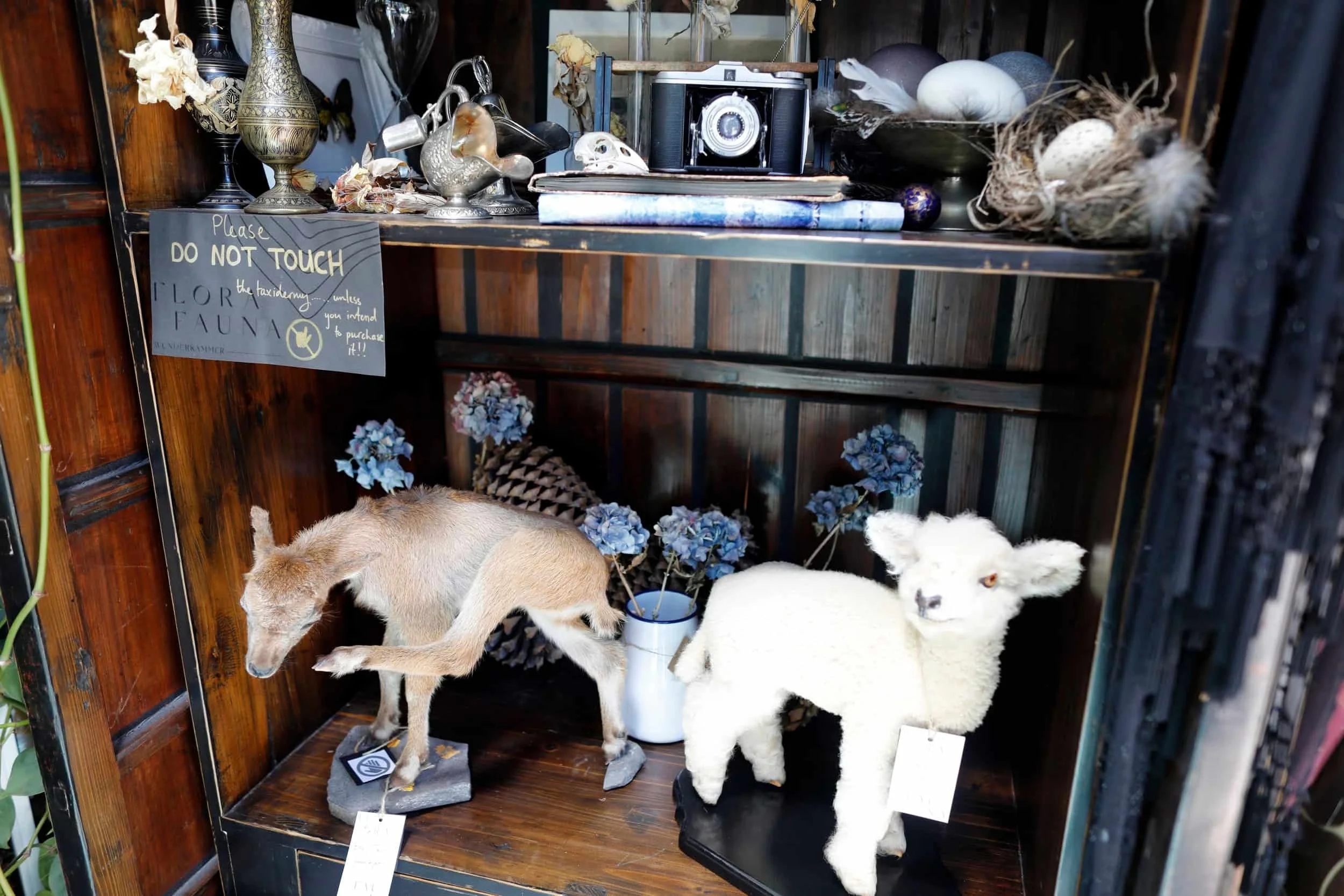
You’ll find art, books, beetles, bats and an amusing menagerie that ranges from puffins and foxes to a polar bear and even a zebra. Items are interspersed throughout the space so discovering each new surprise becomes part of the fun. If you’re wary of taking home anything too literal, there are plenty of posters and prints perfect for framing once you return home.
The owner clearly has a clear point of view and a playful, inventive spirit. I kept drifting back to the shop, each visit revealing more intriguing details I’d missed. Afraid I might mishandle something fragile, I settled on a poster — now patiently waiting to be framed and admired.
Hetties Rock and Crystal Shop feels like a hidden treasure tucked between alpine air and lakeside calm. Hettie Feith Wells opened the doors to this shop, which today holds the proud title of New Zealand’s oldest rock and crystal emporium. They specialize in exquisite, rare crystals, gemstones, minerals and fossils — each piece chosen for its beauty and story. As the last manufacturing rock and crystal shop in New Zealand and one of the few of its kind left in the world, they carry on a hands-on tradition that makes every item truly special.
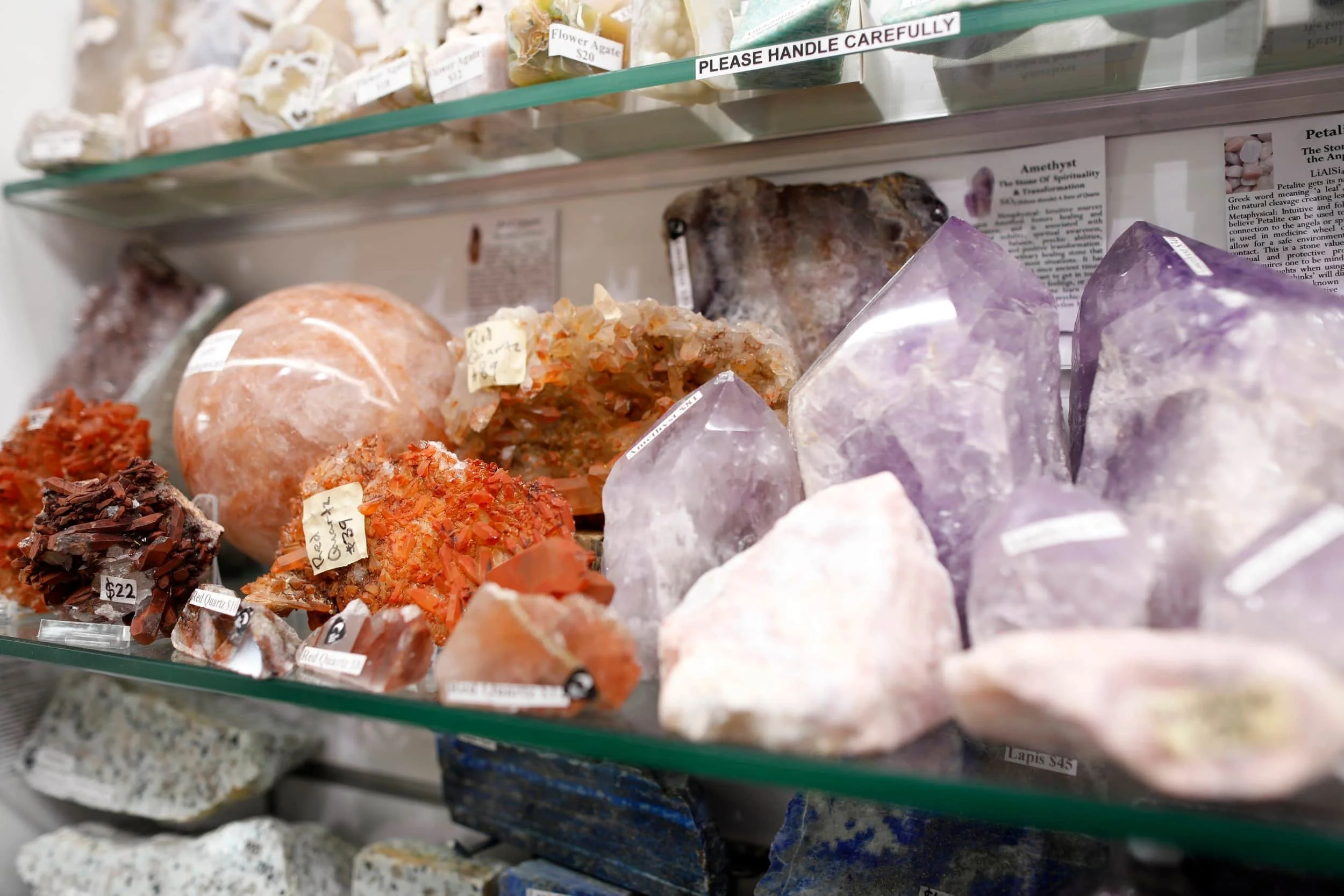
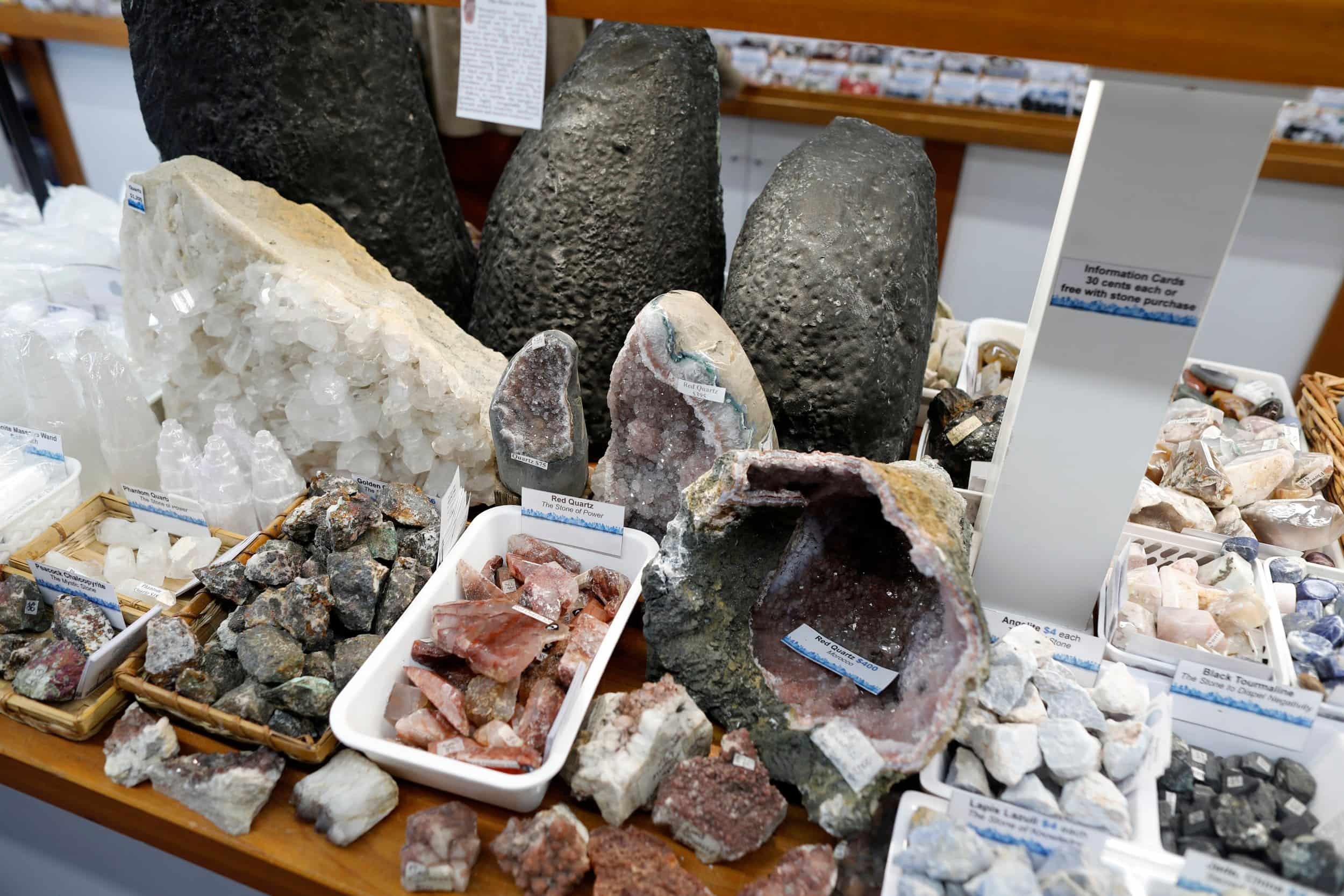
Shelves shimmer with hand-picked crystals, each stone quietly promising a little wonder, while warm, friendly service makes browsing feel like catching up with an old friend. Pop in and you’ll leave with a pocketful and a small story to carry on your travels.
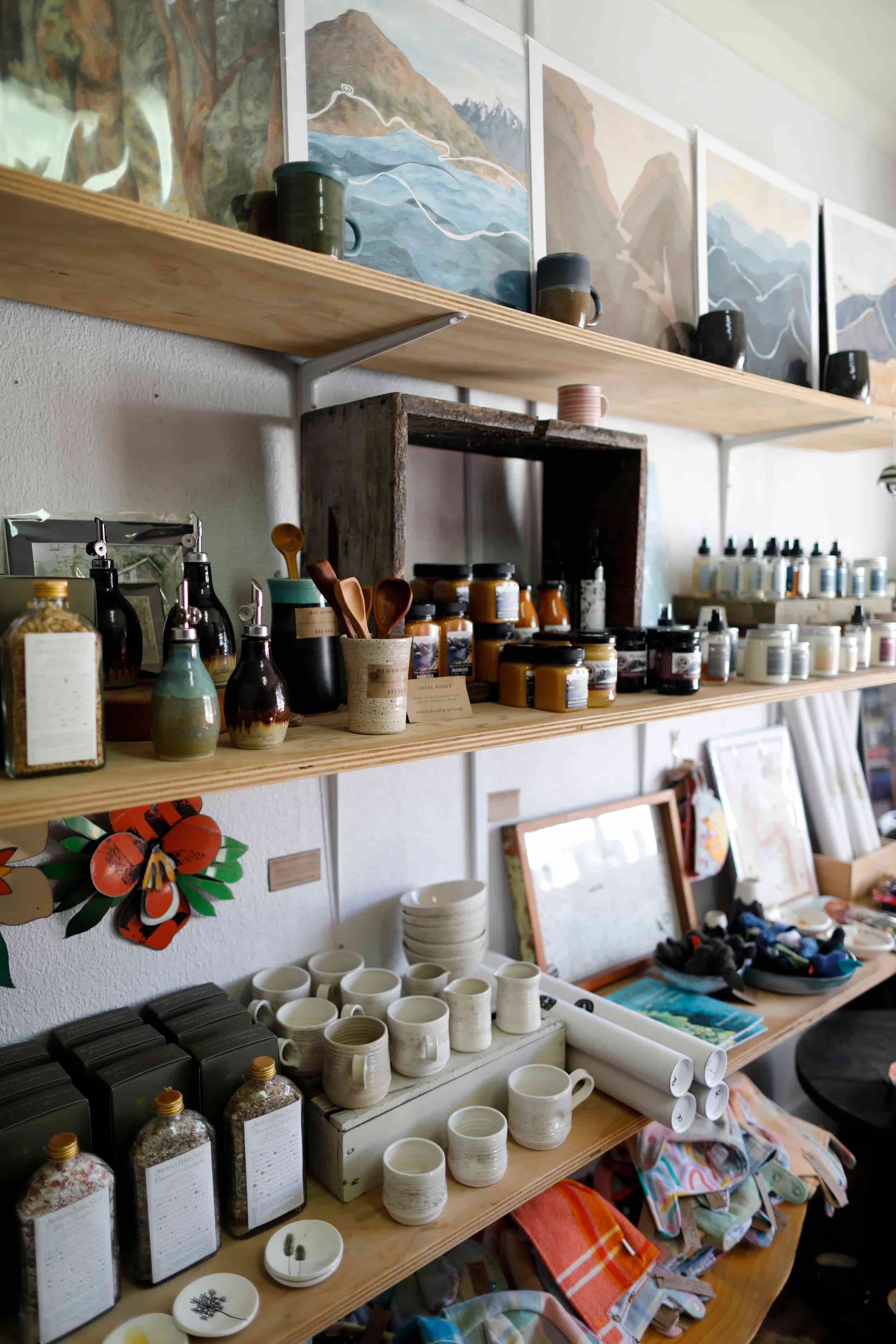
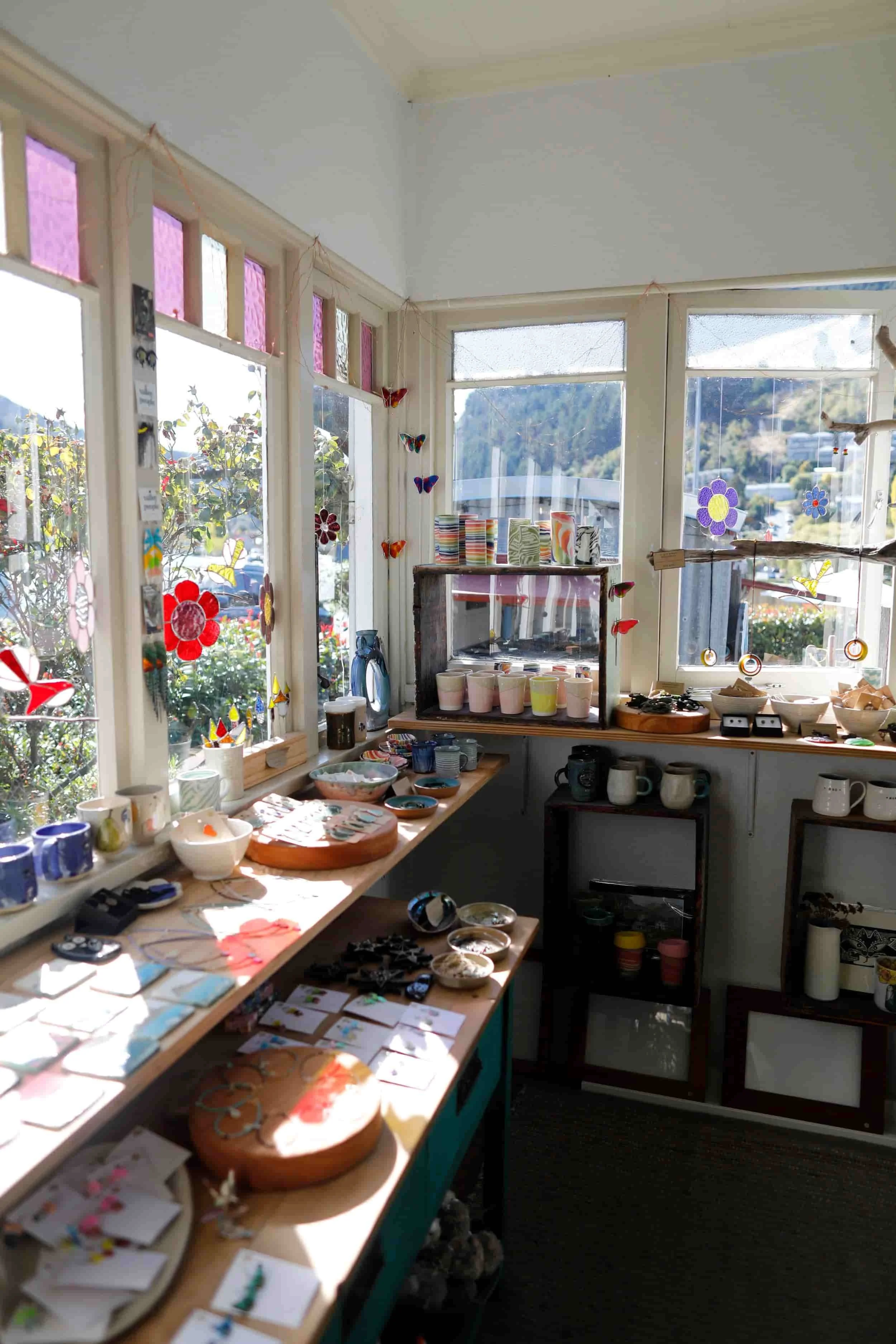
Frank’s Corner Queenstown is a beautifully curated gift shop that celebrates the best of New Zealand craft. Shelves and corners overflow with work from more than 90 independent makers — think sumptuous wools and hand-thrown pottery, quilted cushions, artful jewelry and little oddities that feel very local. I couldn’t resist picking up a few items: balms in tiny tins, a specialty cream and a handful of unique stickers — the kind of souvenirs that make you smile long after the trip.

Down alleyways, Queenstown's street art pops against the alpine backdrop, turning laneways into playful galleries where bold murals and whimsical stencils tell stories of local life, adventure and the town's surprising, colorful soul. Each piece feels unexpected, vibrant and full of character.
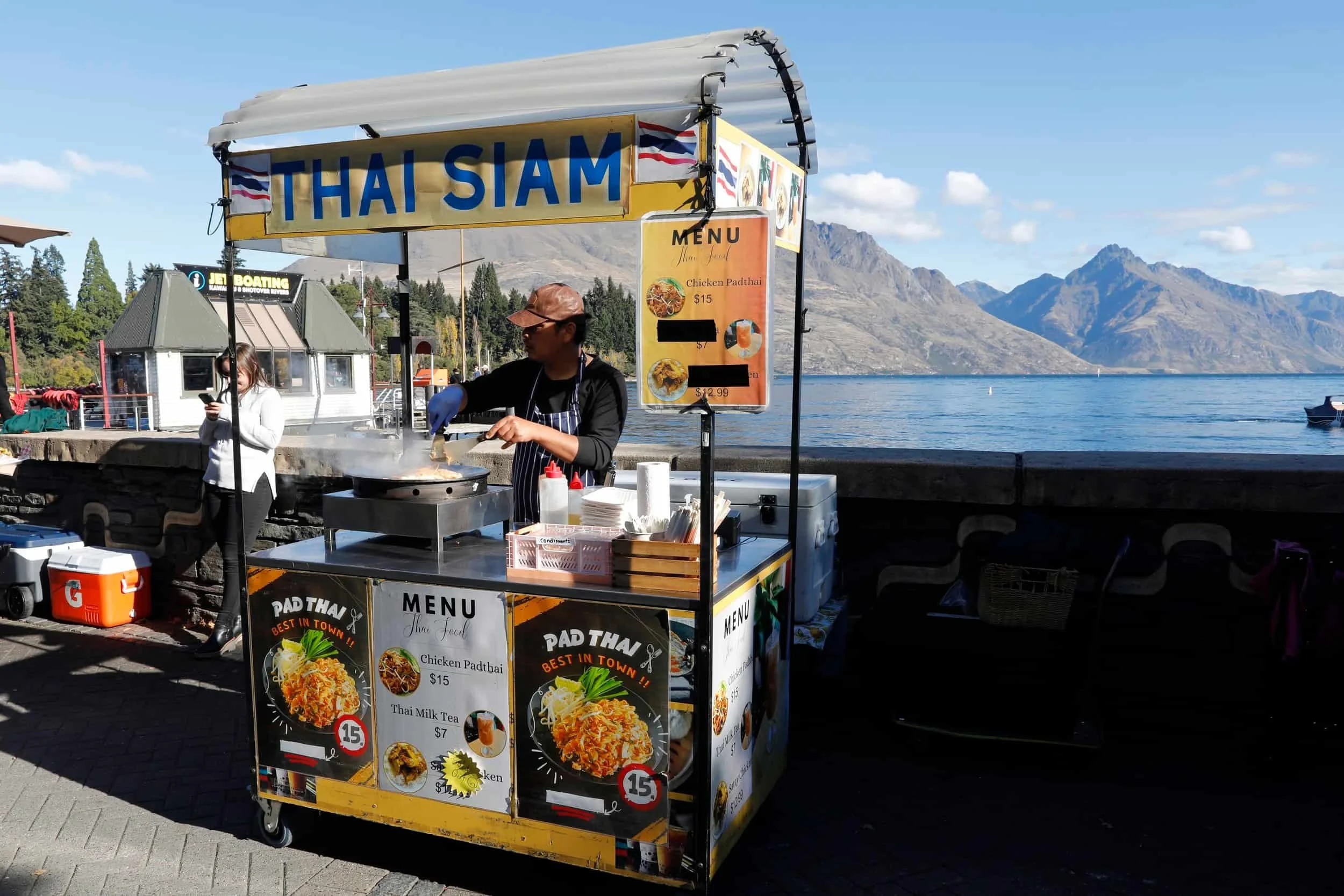
On sunny afternoons and crisp evenings along Queenstown’s lake edge, a row of colorful carts and friendly stalls transforms the waterfront into an aromatic parade: steam wafts from bubbling pots of laksa and dumplings, the sizzle of skewered lamb and garlic prawns mingles with the sweet caramel hiss of hot crepes and the air carries the salt-sweet promise of fish and chips wrapped in paper.
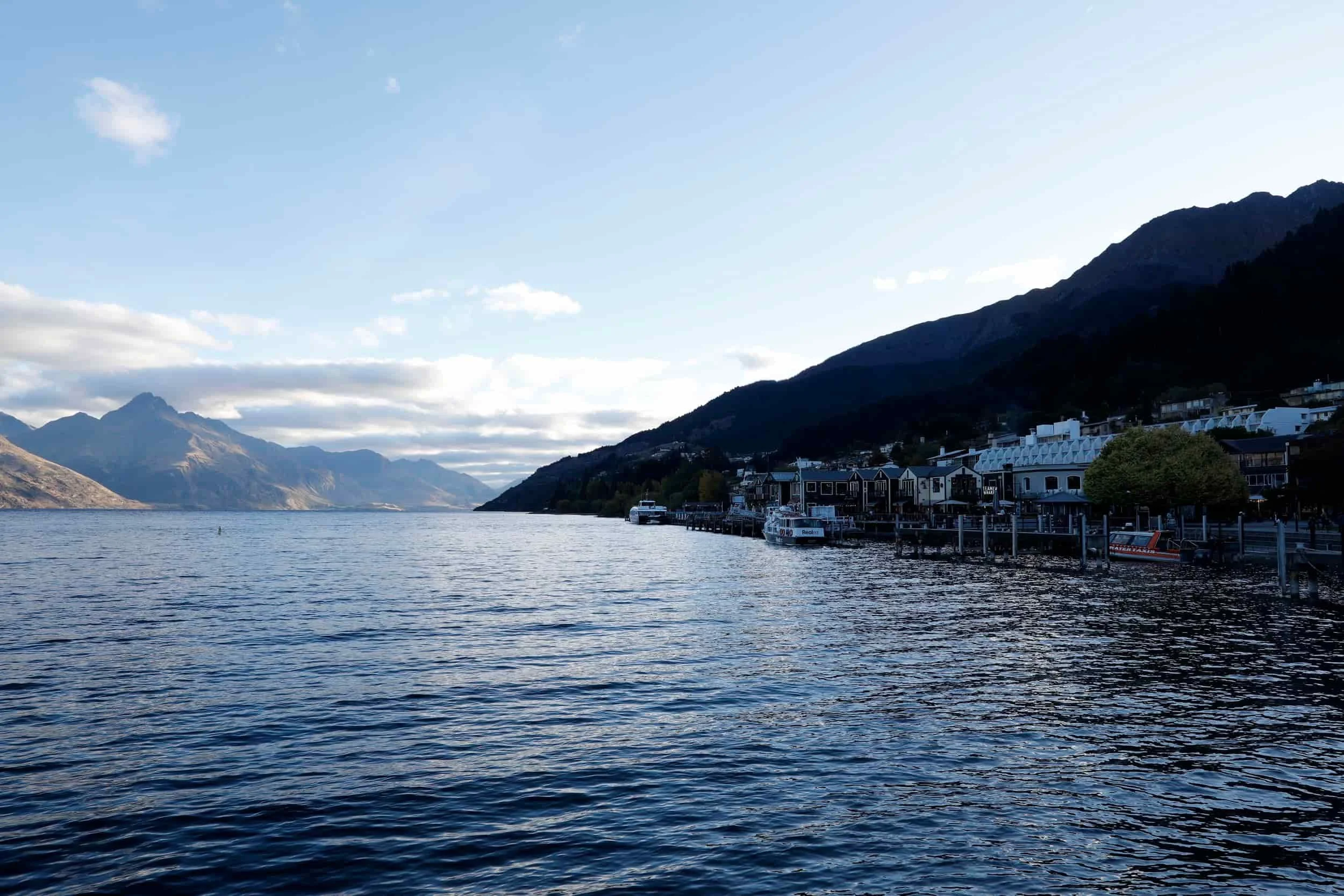
Locals and travelers cluster on benches and low stone walls, exchanging travel tips over cones of crispy fries or piping-hot empanadas while the Remarkables silhouette the sky, gondolas hum softly in the distance and fairy lights blink on — each bite tasting like a small, perfectly timed pause in a day of exploration.
Skyline Gondola
One of the most quintessential Queenstown tourist attractions has to be the gondola ride to Bob’s Peak.
Perched on the slopes above Queenstown, the Skyline Gondola climbs from the small town center to panoramic lookout points and hiking trails. Reach it easily from Brecon Street by a short walk along the waterfront or by a quick taxi ride — the base station is unmistakable and well signed.
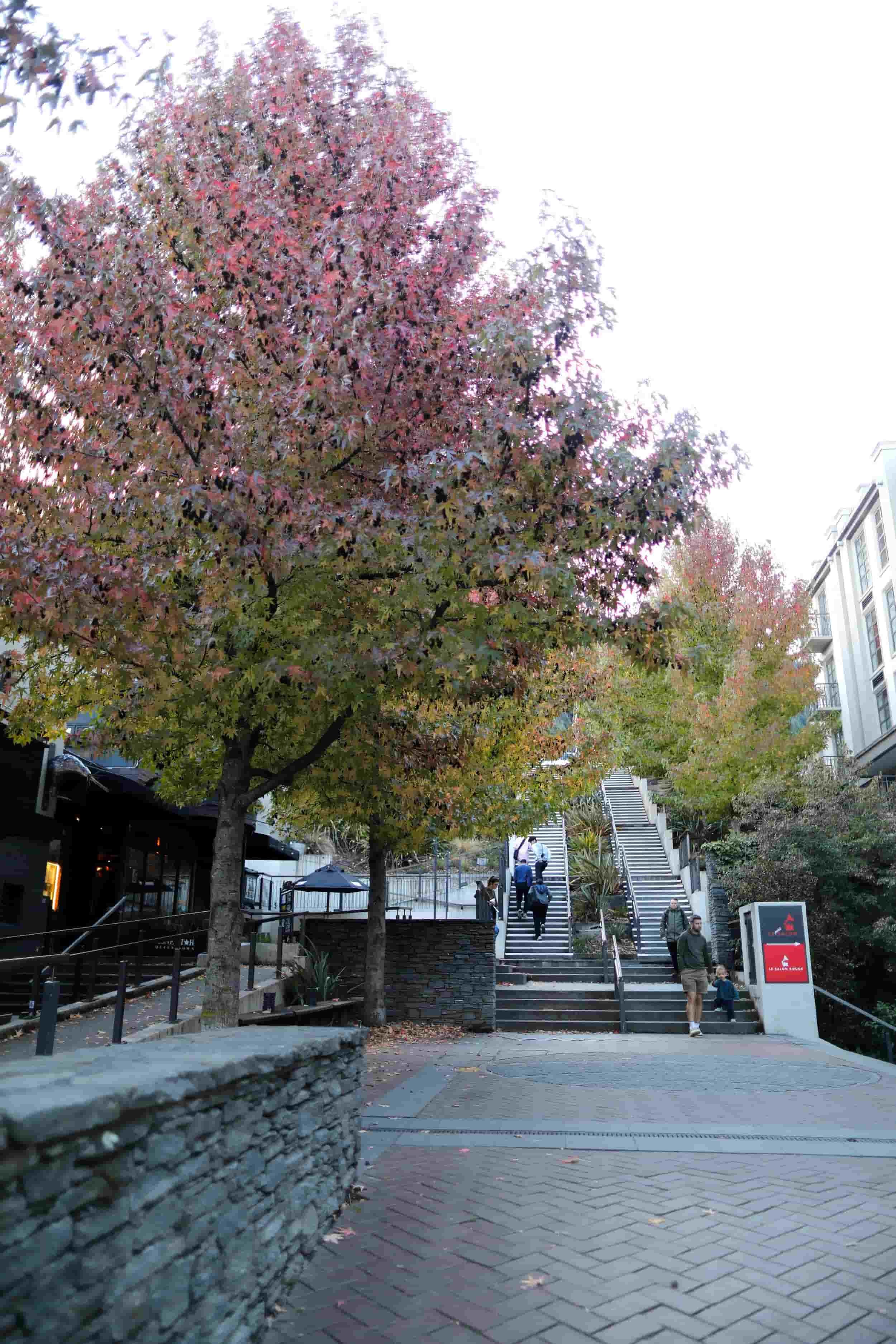
Tucked between the alpine sidewalks and the lakefront breeze, Sweet Coffee Trailer is a tiny delight that turns a quick caffeine stop into a small ritual. The trailer’s undeniably pink exterior and hand-painted menu invite you in before the smell of freshly ground beans and warm pastries does. A bell chimes softly as customers approach — perfect for travelers, locals and hikers refueling after a chilly walk.
💡 Local Tip | On the way up to the station, don’t miss Sweet Coffee Trailer, parked among a cluster of food trucks on a small gravel lot.
Service here is friendly and unpretentious; the owner greets every customer with an infectious grin. Orders are taken from a small window with speedy precision. If you’re in a hurry, they’ll have your espresso or pour-over ready in minutes. If you have time to linger, there are a few bench seats nearby and plenty of scenic people-watching to accompany your cup.

Offerings are thoughtful and seasonal. Signature espresso drinks showcase a smooth, medium-roast blend with notes of chocolate and stone fruit, pulled into classics like flat whites and cortados. Their pour-overs highlight single-origin beans from small roasters, brewed to order for clarity and brightness. For something sweeter, try their specialty “Queenstown Honey Latte,” a velvety latte sweetened with local honey and topped with a dusting of cinnamon.
Chai and matcha lattes are made with real spices or ceremonial-grade tea and hot chocolate is rich without being overly so — ideal for warming up after a mountain walk. The trailer also offers freshly baked goods sourced from nearby bakeries: buttery croissants, fruit-filled danishes, and dense banana bread. I treated myself to a matcha latte made with oat milk — bright, creamy and the perfect pick-me-up for a day of exploring.

Skyline is a playground for both the relaxed and the adventurous. Famous for its serene gondola rides and the adrenaline-pumping downhill luge tracks, the area also features mountain biking trails, guided nature walks, ziplining, stargazing tours and paragliding — plenty of ways to play in the mountains. Dining ranges from casual fare at the Market Kitchen Café to elevated meals at the Stratosfare Restaurants, each with sweeping panoramas that make every bite feel cinematic.
💰 Budget Tip | Gondola tickets run about NZ$69 ($35 USD) and cabins are comfortable and roomy — ideal for slow, scenic ascents even when you’d rather skip the heart-racing activities. But if you’d like to luge, pair a gondola ride with luge rides, beginning at NZ$94 ($53 USD).
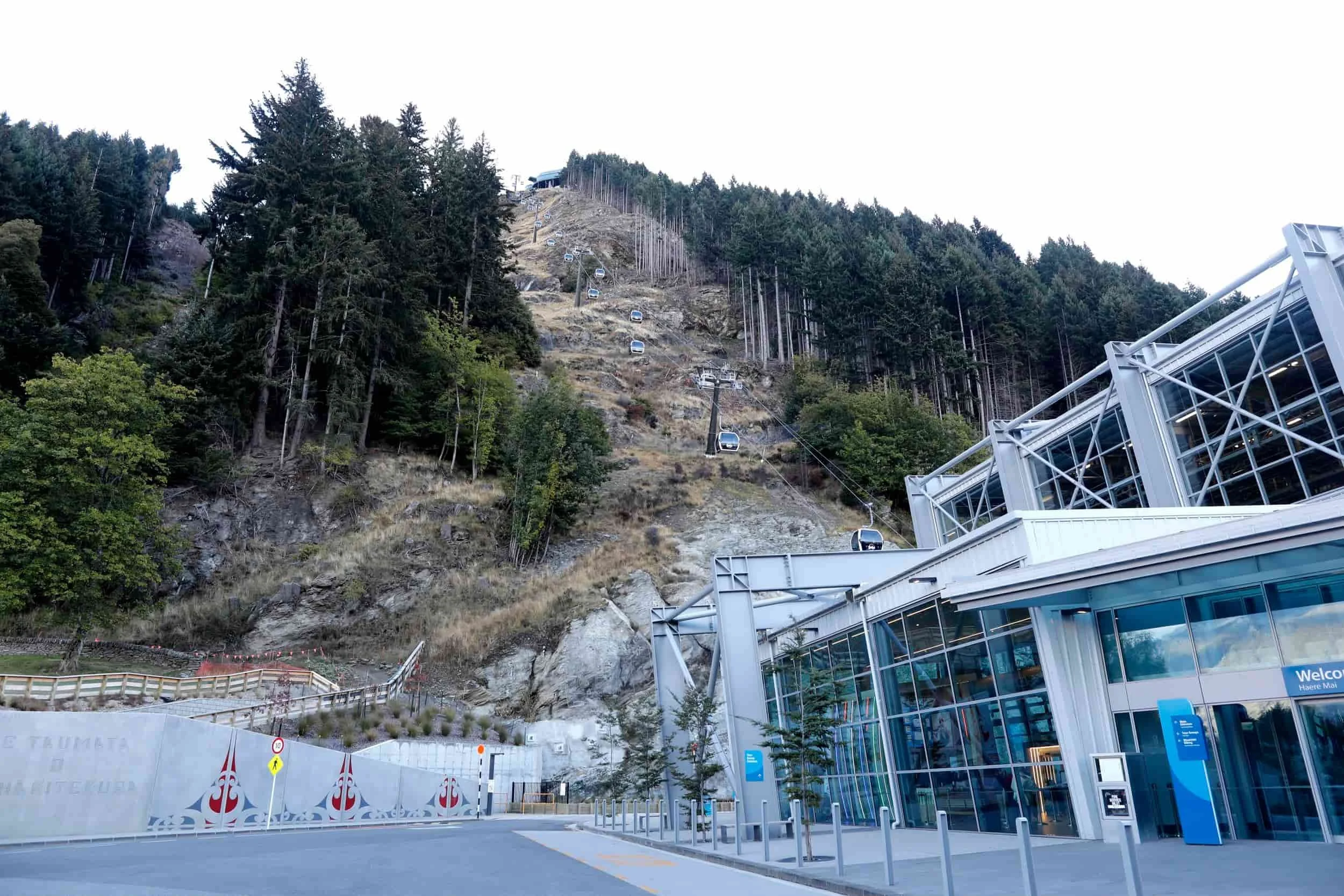
Go early at sunrise to dodge the crowds and catch the soft gold on Lake Wakatipu and the Remarkables or ride at dusk for fewer people and a dramatic sunset that sets the peaks ablaze. Golden-hour light slants across Queenstown, casting long, soft shadows that trace the valley below.
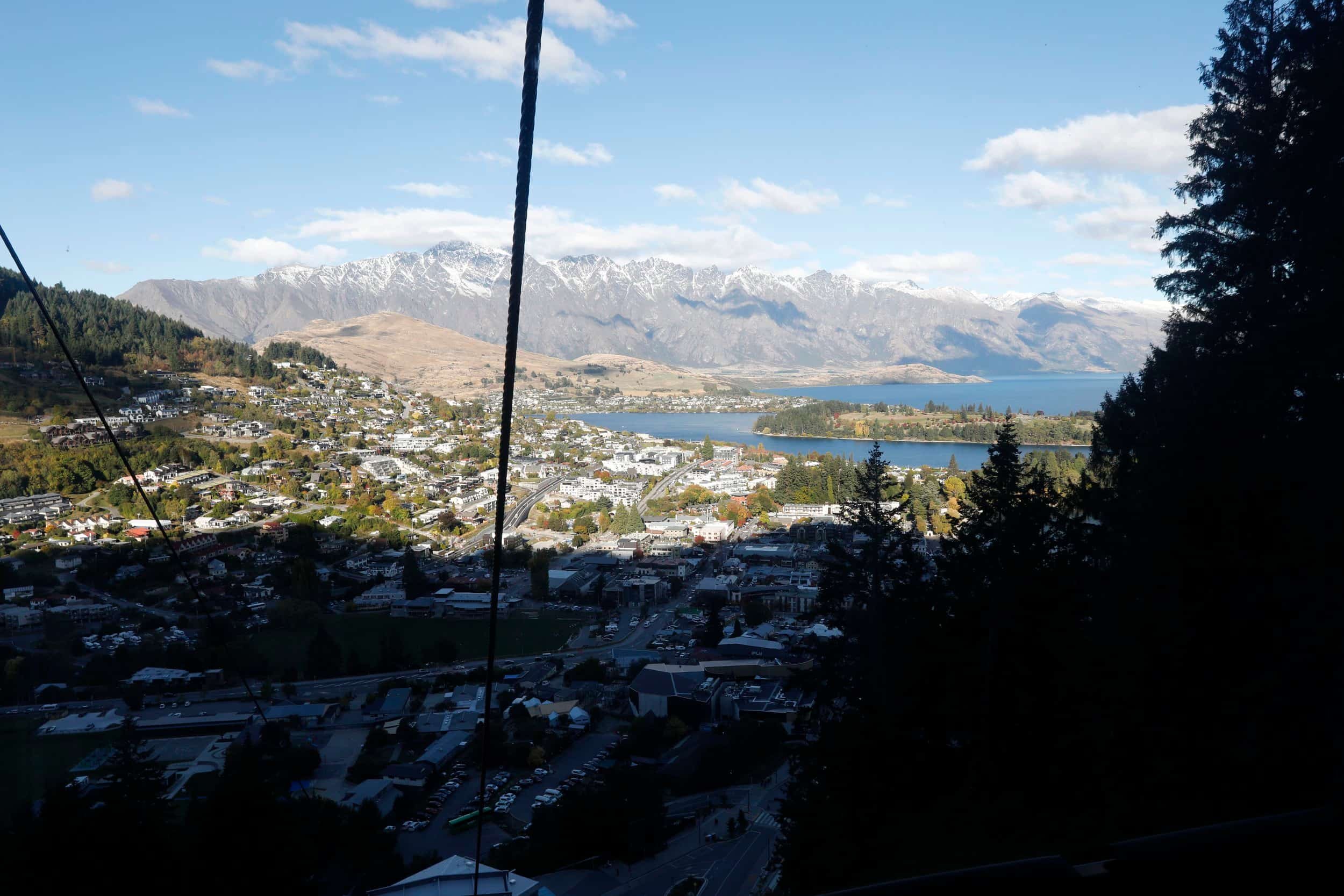
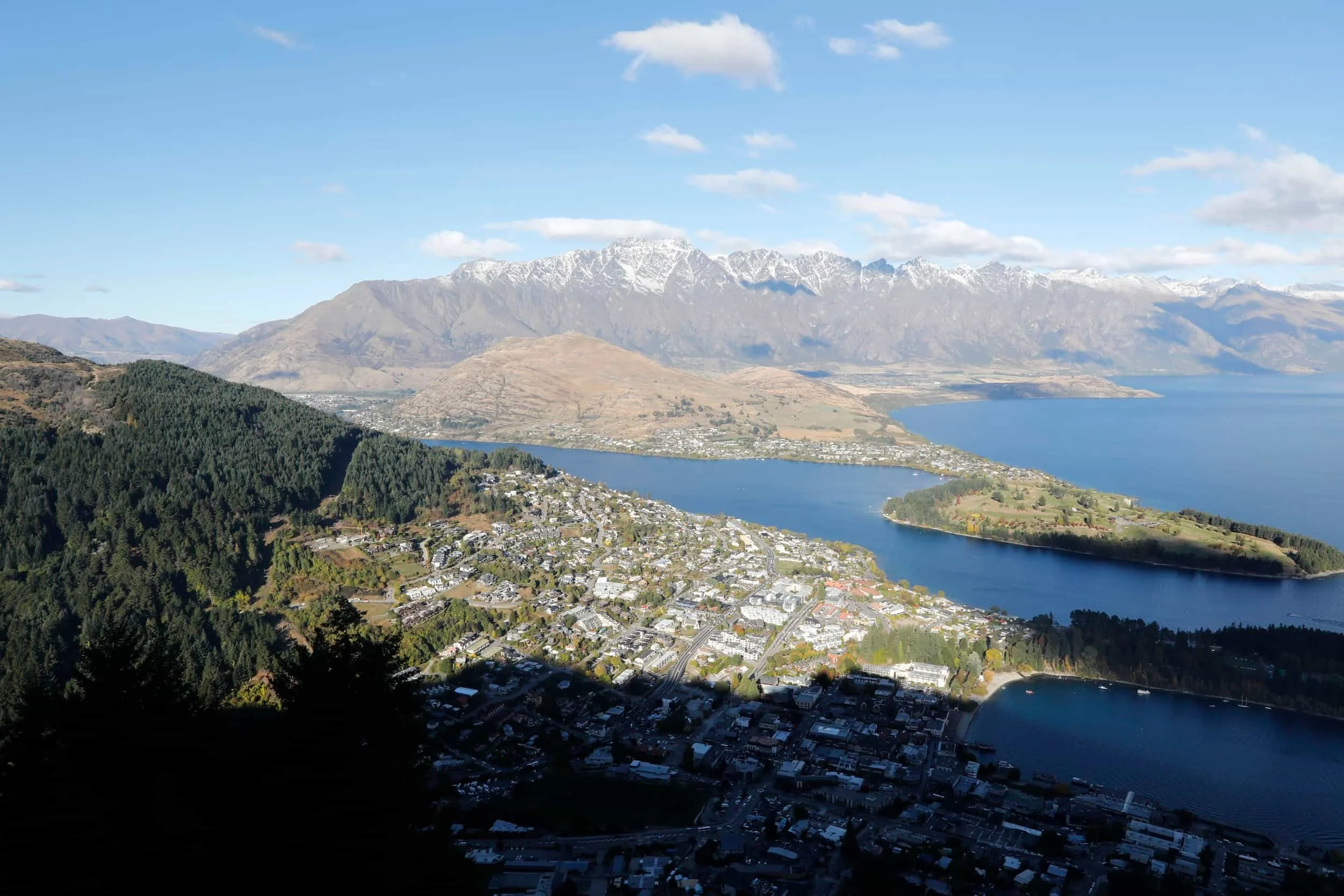
The gondola ride itself is a highlight: glass-sided cabins glide up the slope, delivering uninterrupted views of the valley below. And if you’re lucky, securing a gondola all to yourself is really something else. It allows you the freedom to move around and catch views from every angle.
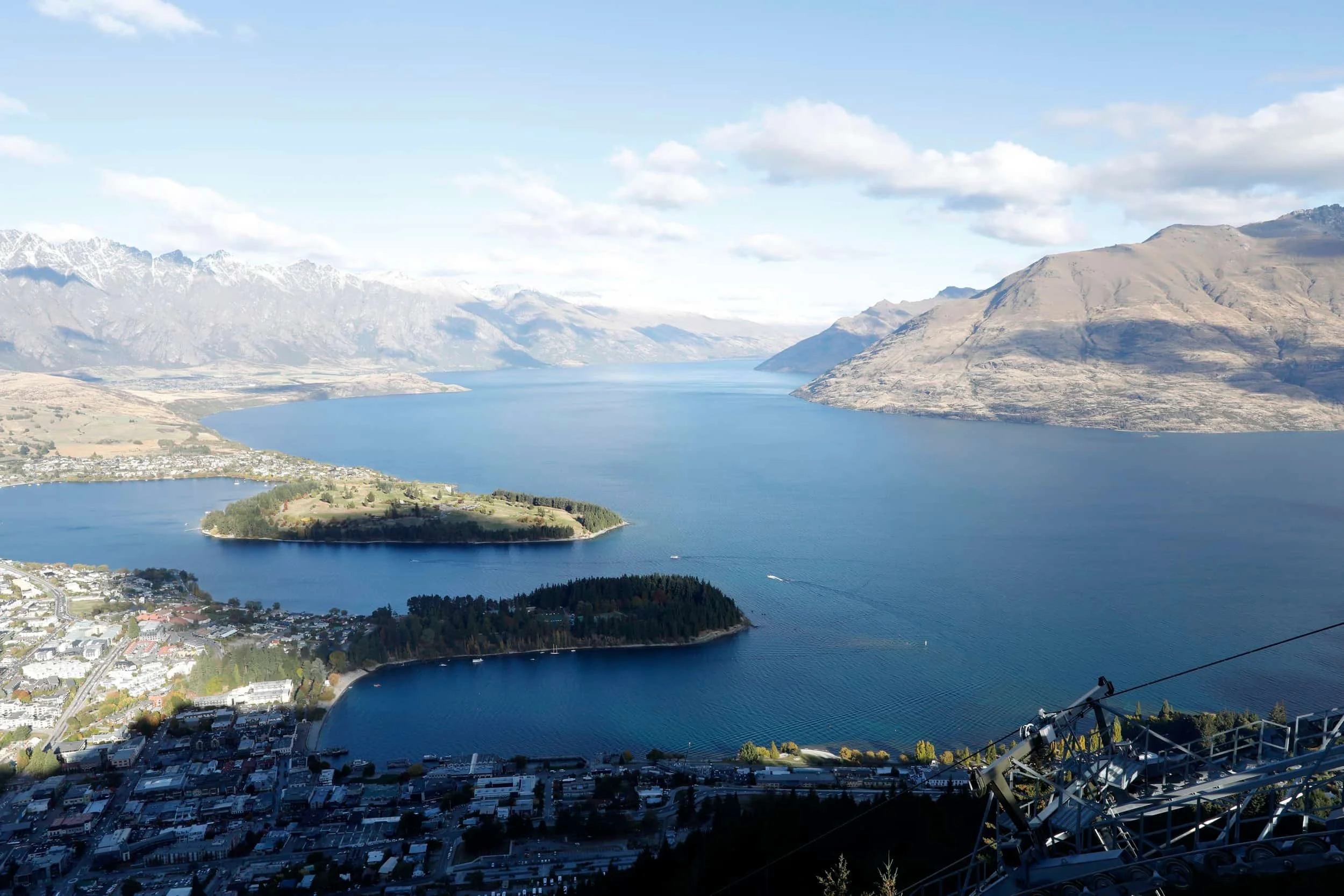
As you climb, Queenstown shrinks into a scatter of rooftops, parks and the slow arc of the lake, while the mountains press in closer, suddenly eminently touchable. From the top, the view is cinematic: Lake Wakatipu unfurls like a ribbon, its curving shape framed by alpine ridges and the town’s lively strip below. The light here has a sharp, clear quality — the air is thinner, the colors more saturated — and at sunset the whole scene warms into gold and rose, turning the lake into a molten mirror.
There’s a calm up there that invites a quieter kind of awe. Families point out tiny boats, lovers linger at lookout rails and hikers toast a summit snack while the town below hums faintly. Whether you’re catching a panoramic photo, sipping hot chocolate at the café or simply standing with the wind, the combination of mountain, water and sky creates one of those rare views that settles into the memory. Queenstown’s lake and skyline together feel both dramatic and intimate, like a postcard you never tire of sending to yourself — it’s a must-see on your South Island trip.
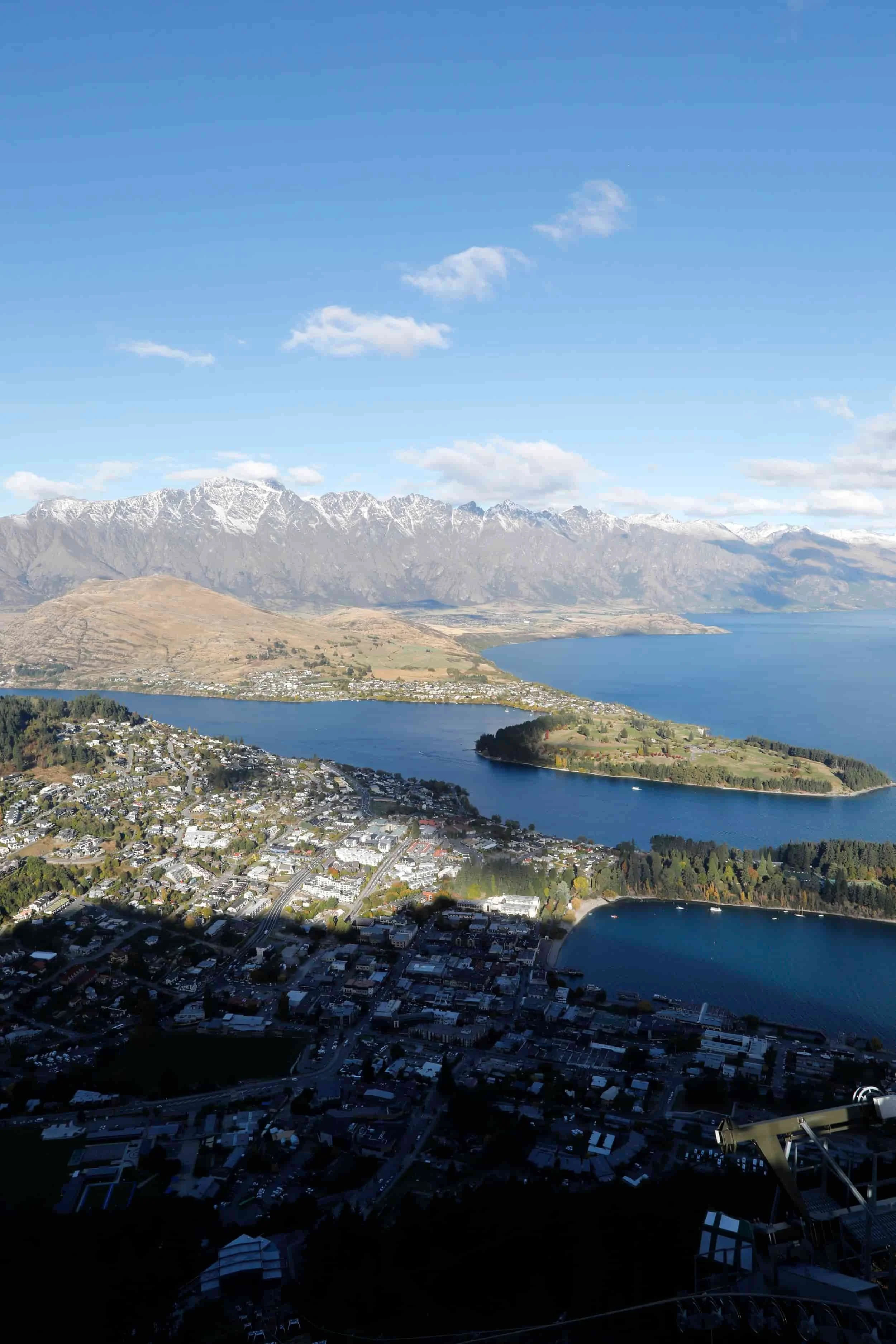
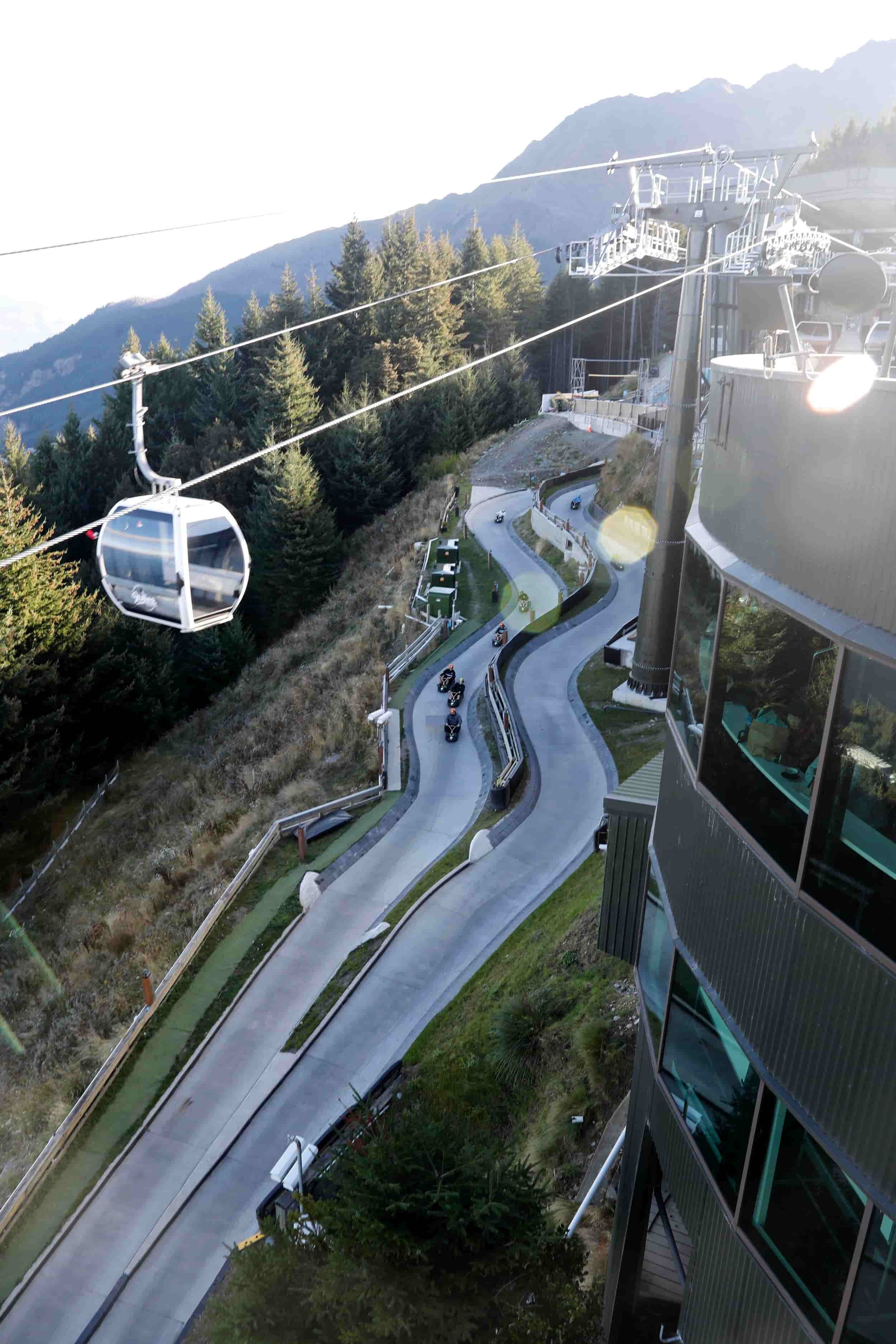
At the summit, you’ll find a viewing deck and a restaurant where crowds often gather to soak up the vistas; on busy days it can feel bustling, so plan accordingly if you want quieter moments. For those who prefer more active options, there are downhill bike routes, hiking paths back to the base and tandem paragliding launches for a truly memorable descent. The viewing deck is also the perfect spot to watch luge riders zip by.
From above, Lake Wakatipu feels like the heart of the town — long, glassy and impossibly blue, cupped by jagged mountains that wear snow like a crown even into the warmer months. Below, walk the waterfront at any hour and the lake changes its mood: silver-sheen morning that mirrors the rising light, midday so clear you can count the ripples and late afternoon when the sound of distant jet boats threads across the water. Boats and bronzed rowers carve gentle wakes; on calm days, the Remarkables are reflected so perfectly it’s as if the skyline were doubled, one range above and one beneath.
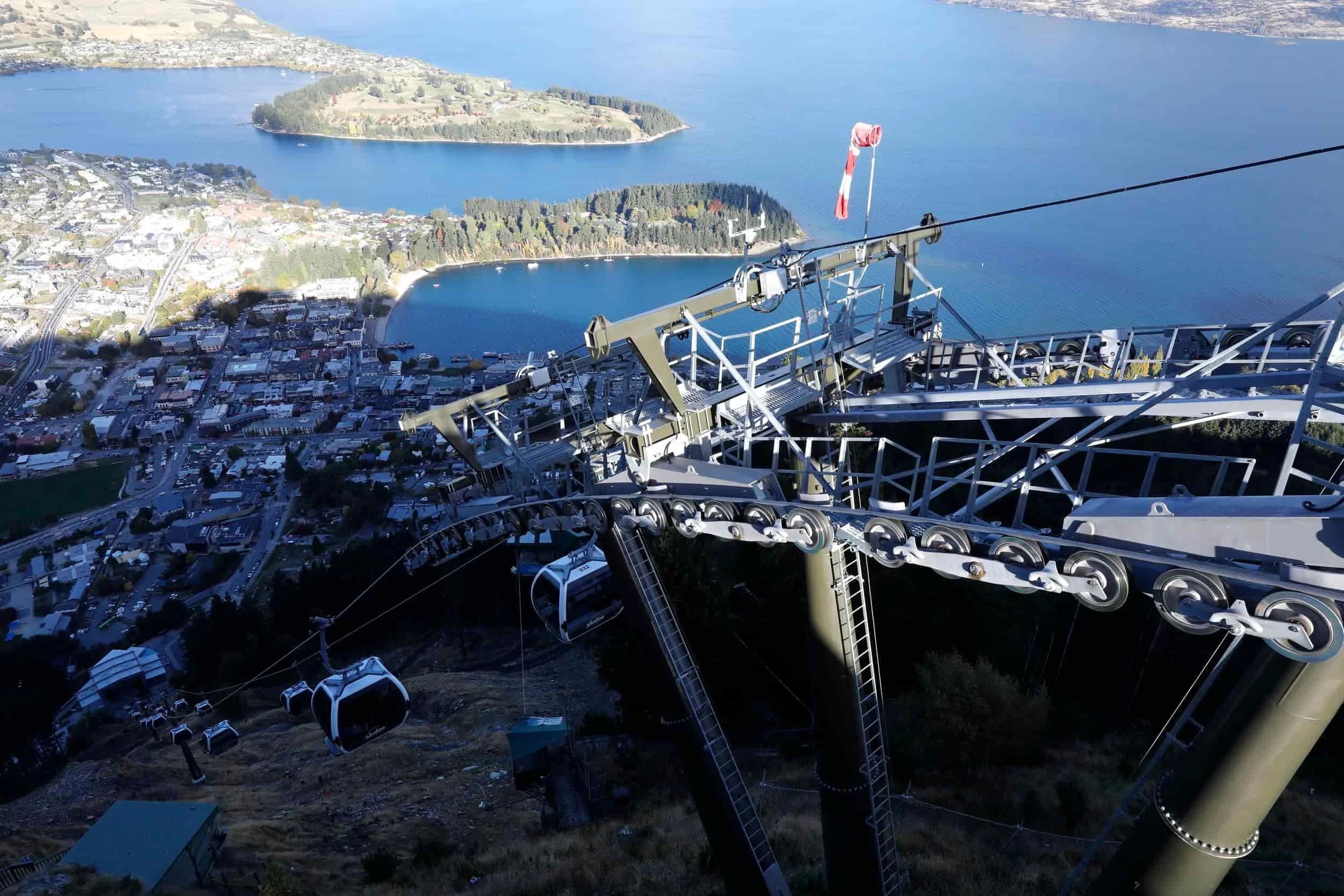
When the sun slips behind Queenstown’s jagged peaks (Bob’s Peak), the mountain exhales a cool, dignified shadow that rolls down into town — instant calm, instant cool. Street lamps flicker awake as the air sharpens; the harbor water darkens to ink and the laughter from lakeside cafés softens into cozy conversation. That crisp drop in temperature feels like an invitation to pull a scarf tighter, to linger just a moment longer and watch the alpine silhouette settle over rooftops, promising starry skies and the serene hush that makes this place feel vividly alive.
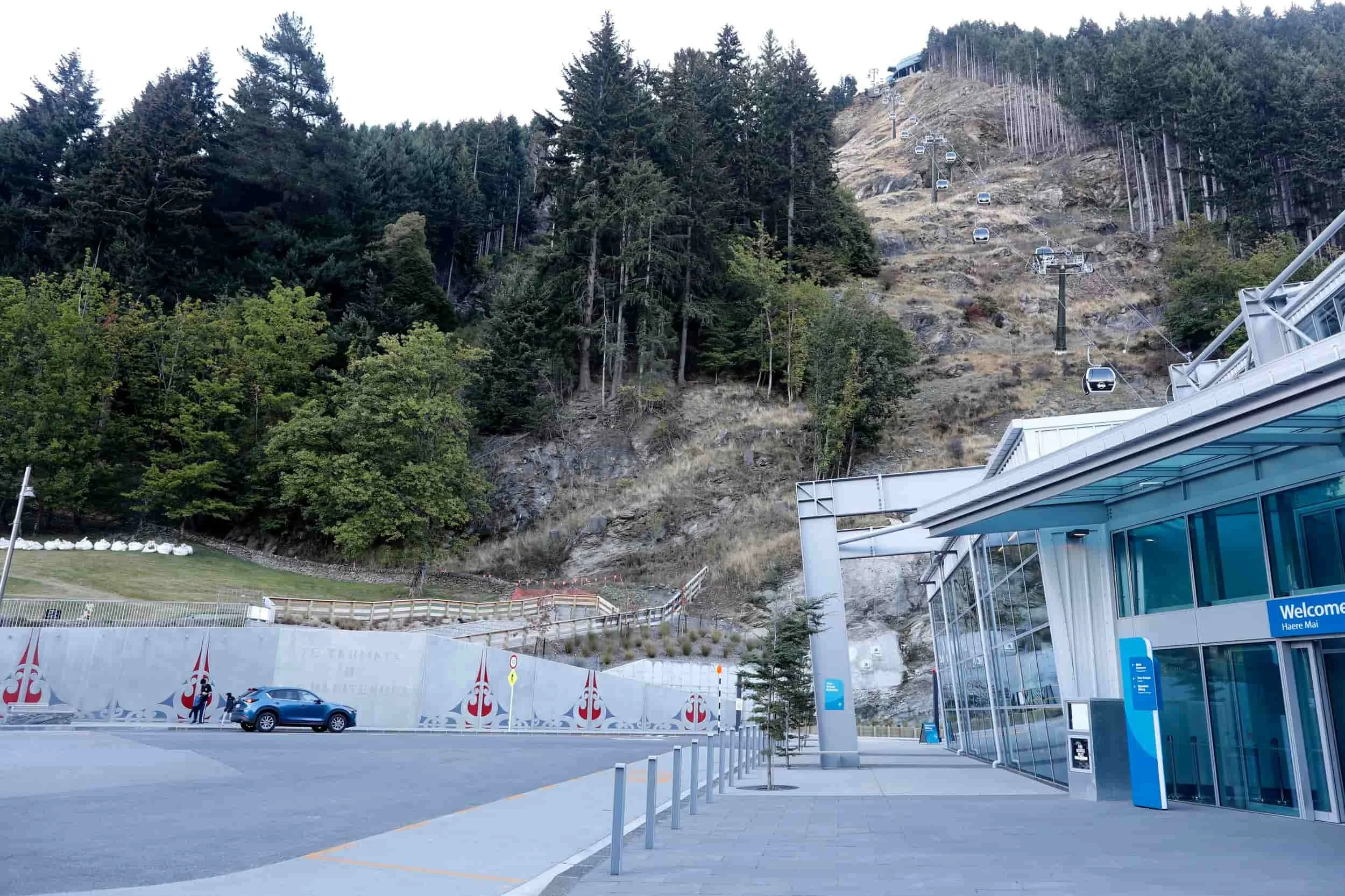
💡 Local Tip | If you’re staying out into the late afternoon, especially during winter months, bring something to keep warm after the shadow stretches across the town below. Temperatures can cool very quickly. In Winter (June/July) this time lands around 3-4 p.m., while during summer months (December/January) shadows show up later, around 7:30-8:30 p.m..
Queenstown Gardens
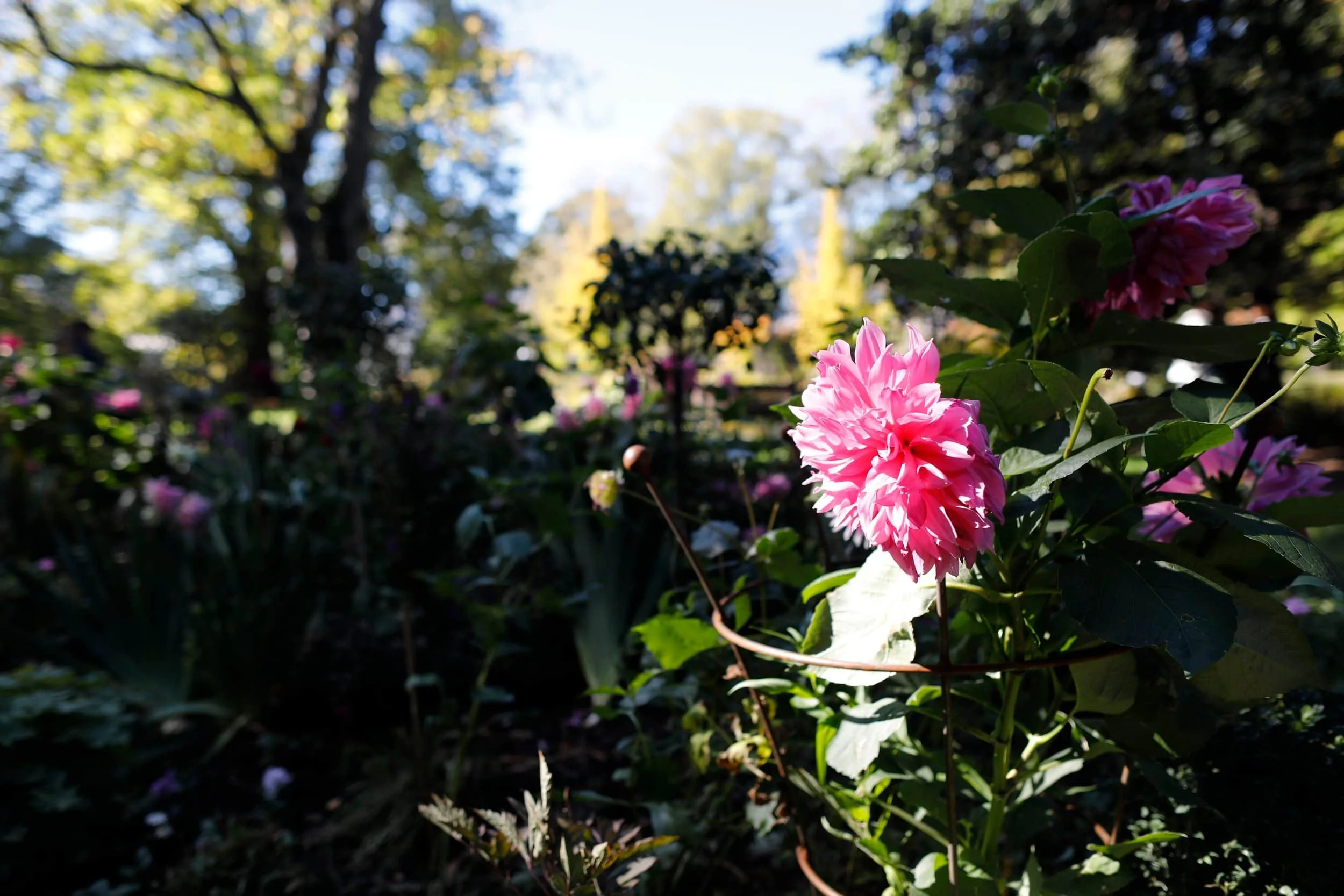
Among the top sights to see in Queenstown, are the Queenstown Gardens, a fragrant, leafy refuge on Lake Wakatipu. The gardens are a delightful mix of exotic and native trees and plants, with something for everyone — playgrounds for kids, tennis courts, lawn bowls, skate parks and BMX trails, plus disc golf and even ice sports in season. It’s the kind of place that invites both gentle wandering and energetic play, a refreshing contrast to the bustle of a morning café or gondola ride.
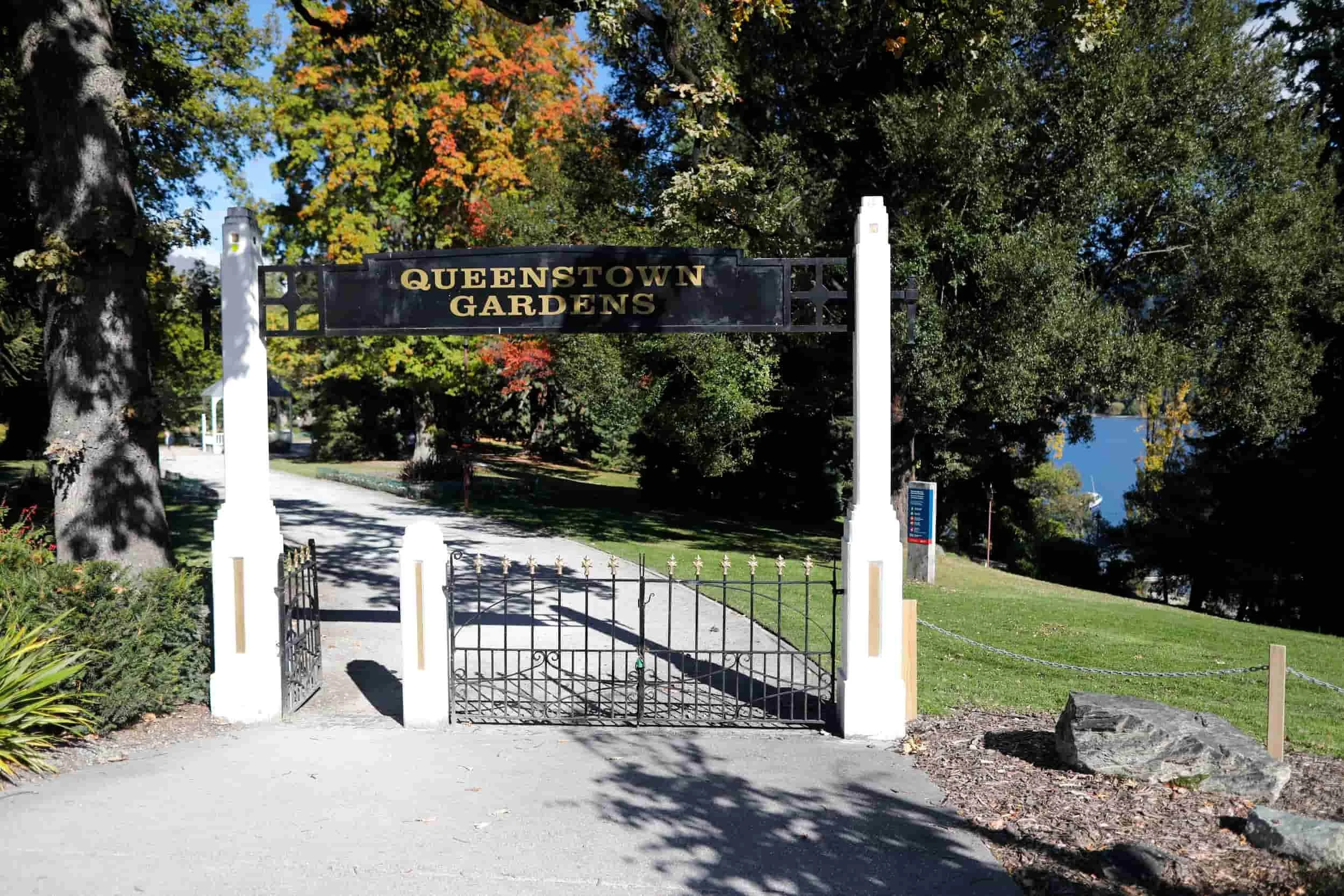
Queenstown Gardens is a verdant jewel tucked on a peninsula that curves into Lake Wakatipu, offering a peaceful counterpoint to the town’s alpine drama. A network of well-kept paths winds through the park, each route rewarding walkers with different perspectives: panoramas of snow-capped peaks, sweeping views down the Frankton Arm and intimate glimpses back toward Queenstown’s shoreline and skyline.
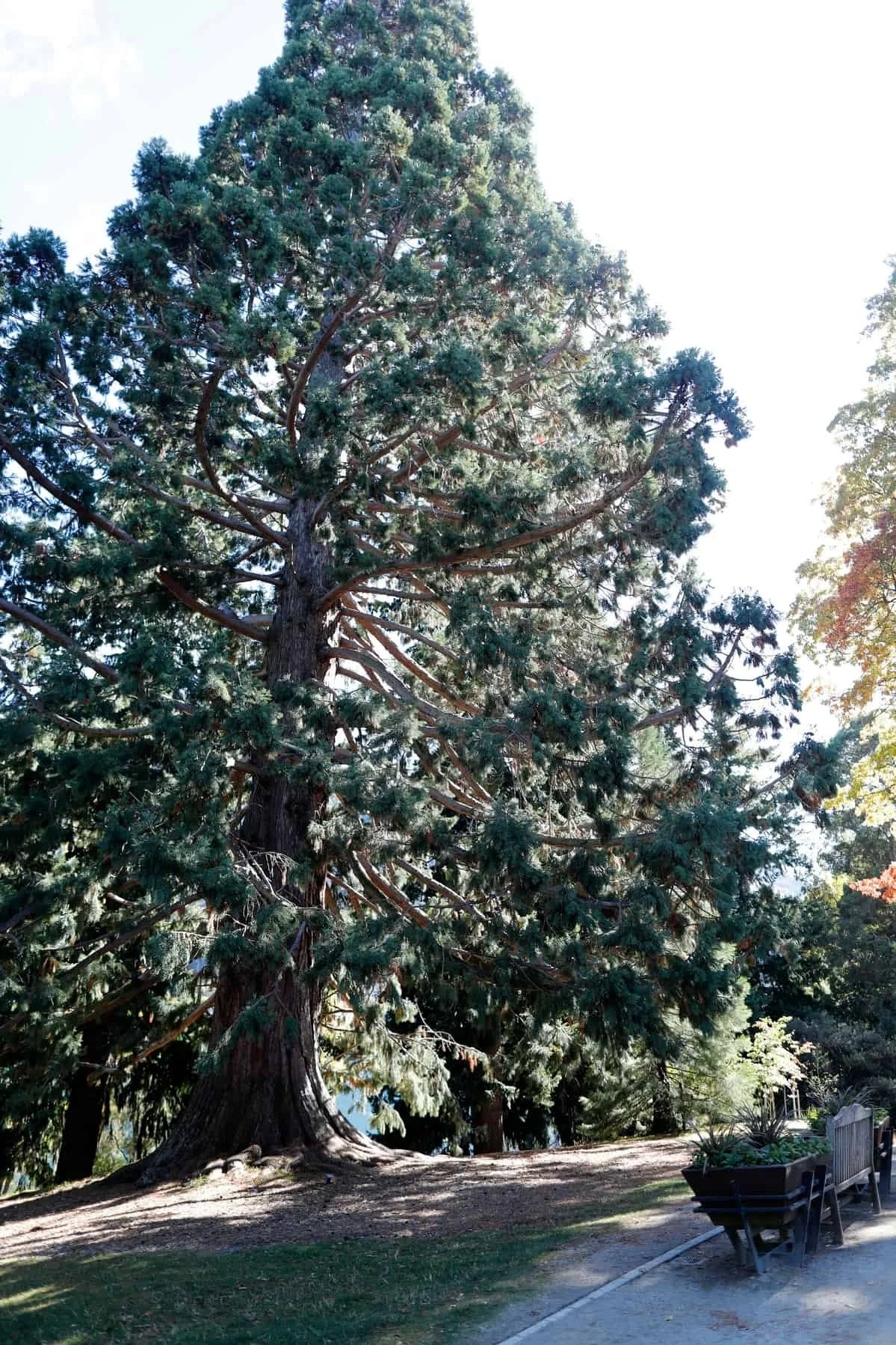
Towering Douglas firs dominate the skyline here — impressive, evergreen soldiers that form a protective green ring around much of the gardens. Their trunks and needles create a cathedral-like calm beneath the canopy, while open lawns and smaller specimen trees offer sunny contrasts. Near the tennis courts, a formal Rose Garden bursts into color each summer; established in the 1960s with some 850 bushes, it remains a fragrant, photogenic highlight.
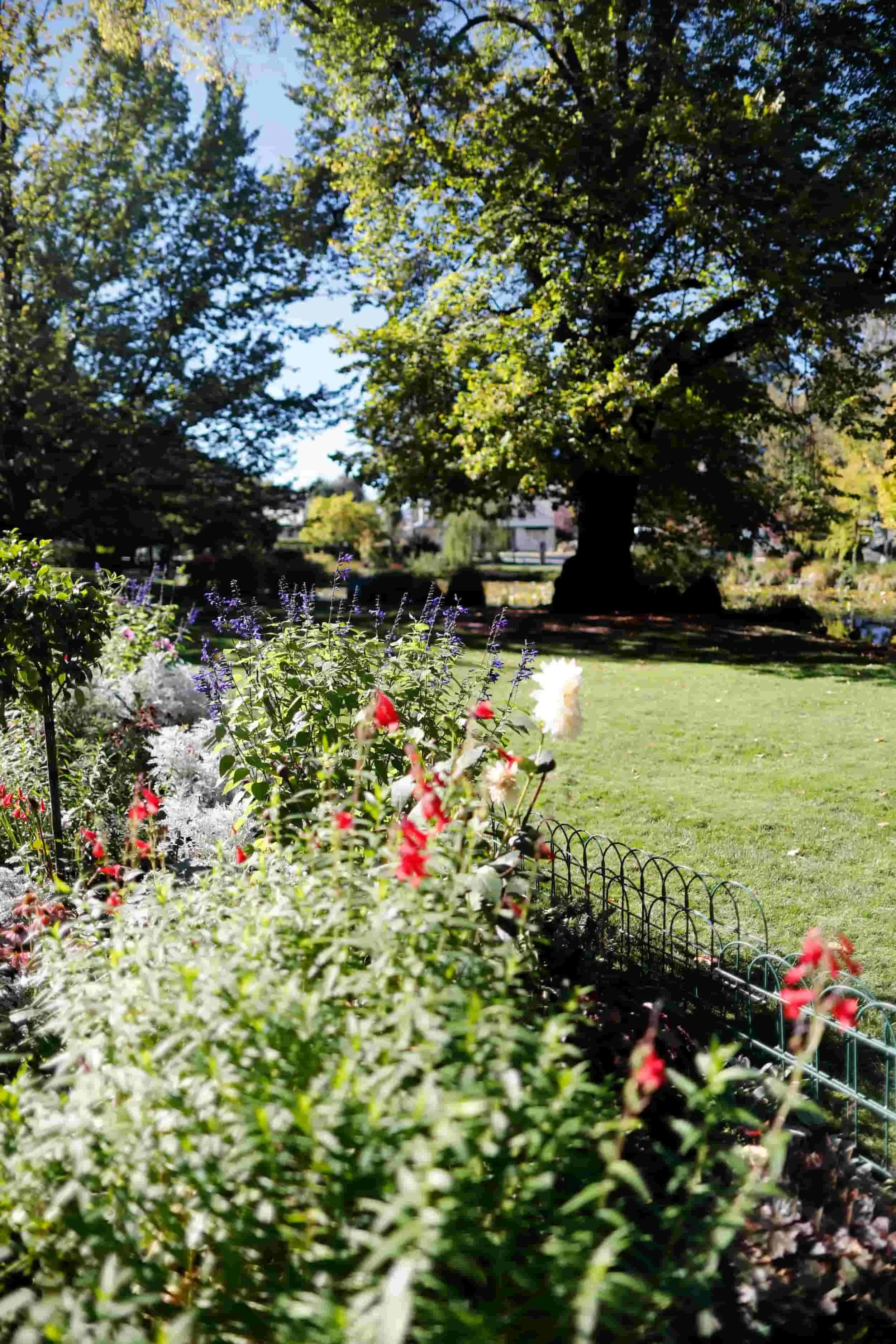
The garden carries layers of history. Long before European arrival the Kāti Māmoe had a settlement on the peninsula and later 19th-century townspeople began shaping the gardens we see today. In 1866, the first two trees, English oaks, were planted by Queenstown’s first mayor and a local nurseryman to mark the borough’s incorporation. By 1867, the gardens were officially opened and matured into a showcase that, by the early 1900s, was being promoted internationally for visitors seeking both healthful scenery and respite.
Historic touches punctuate the landscape: a band rotunda established in 1891 and lovingly rebuilt by the Queenstown Lions Club in 1999 stands near the Park Street entrance and a surprisingly modern amenity — New Zealand’s first permanently marked Disc Golf Course — brings a playful, active edge to the park.
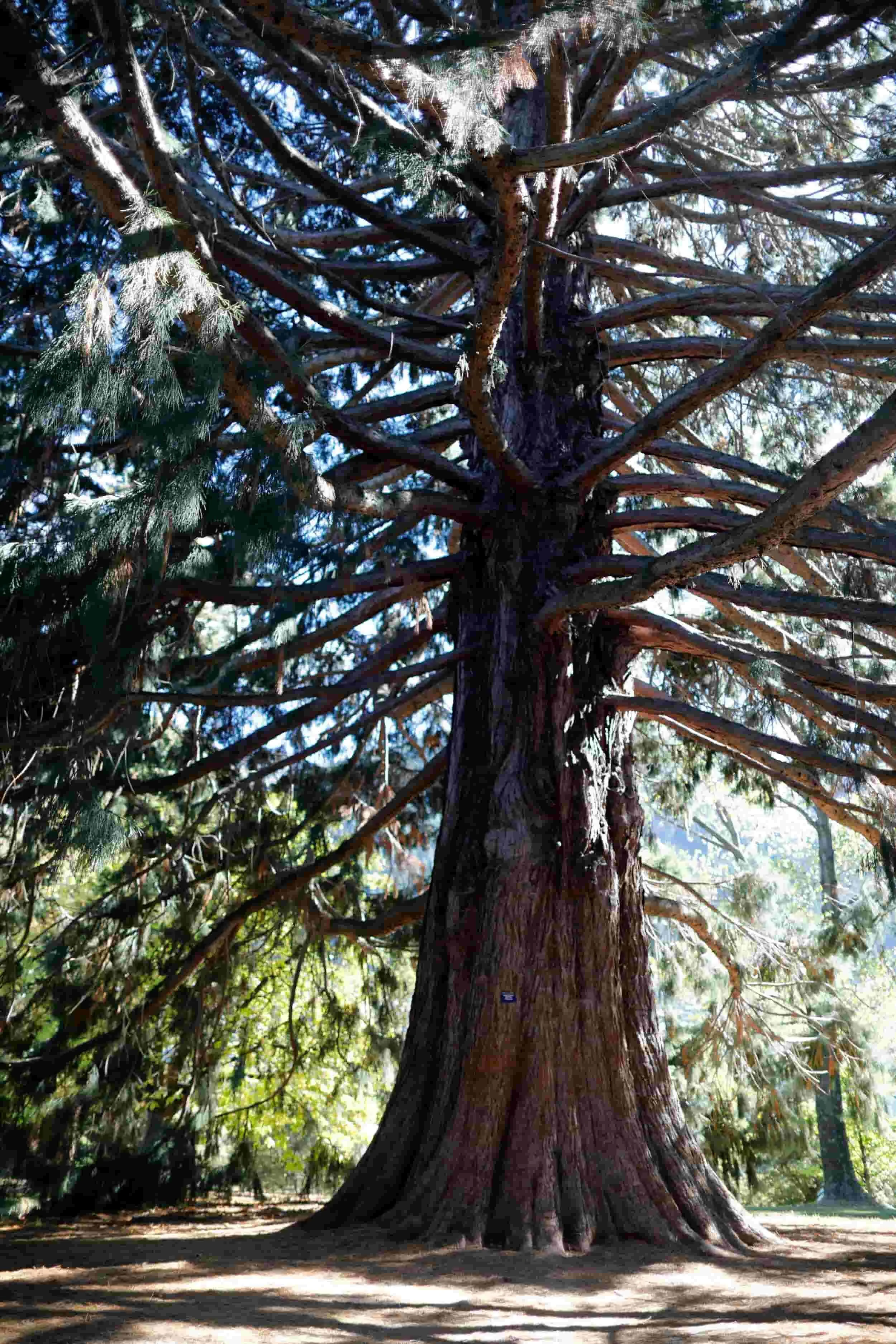
Strolling any of the looped trails offers variety: ponds with tasteful sculptures reflect the sky and trees, shaded avenues lead to sunny shorelines and lakeside promenades let you pause and watch soft breezes skim across Wakatipu. Whether you linger among the roses, picnic beneath the firs or follow the water’s edge back toward town, Queenstown Gardens feels like a quietly curated escape where nature, recreation and history meet.
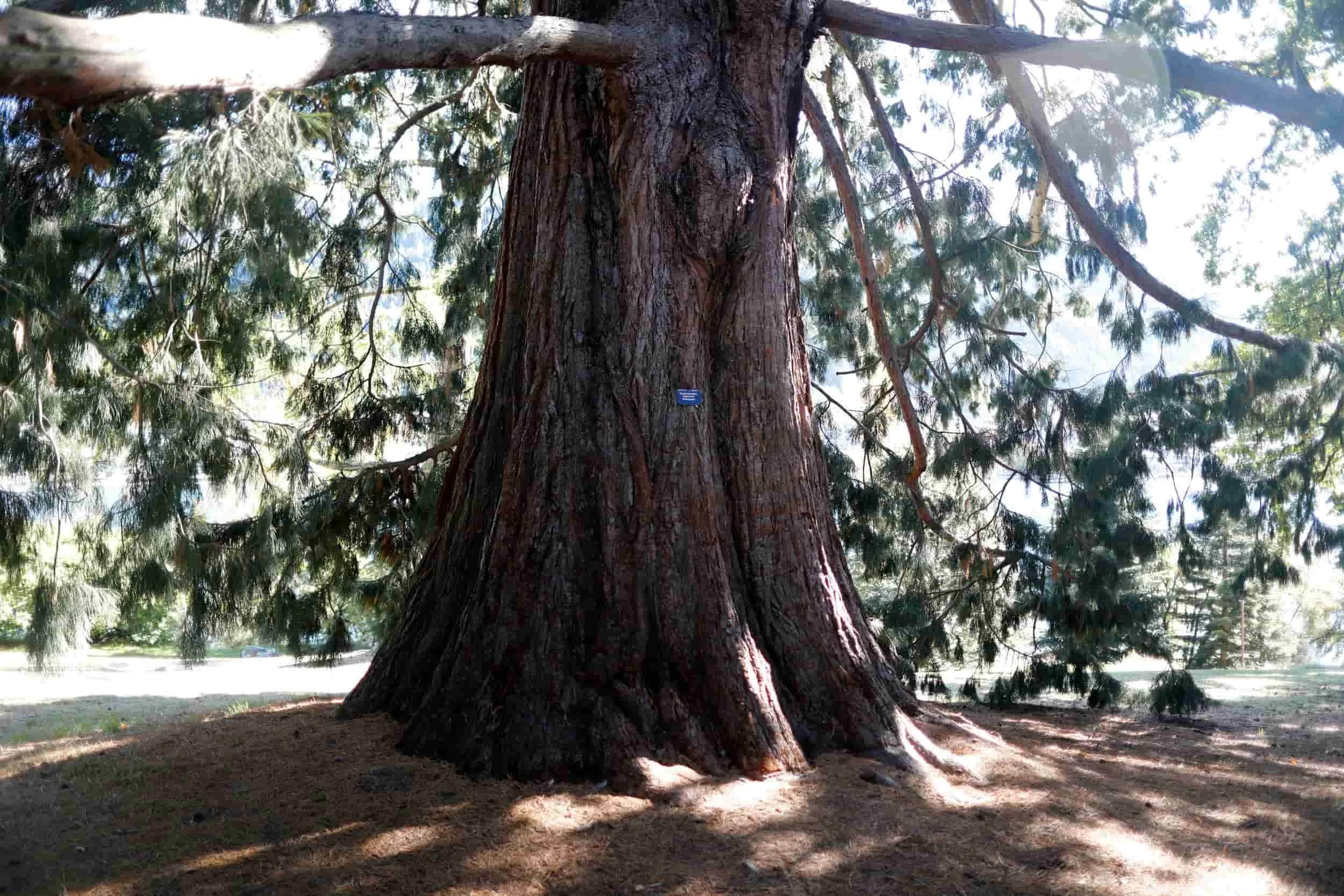
Suggested route — begin your stroll at Queenstown Bay Beach and follow the Te Araroa Trail into the Queenstown Gardens — a peaceful lakeside haven of shady lawns, inviting benches and a lively children’s playground. Pause to admire the memorials to Robert Falcon Scott and William Gilbert Rees, the area’s first European settler or try your hand at Frisbee golf, lawn bowls or tennis.
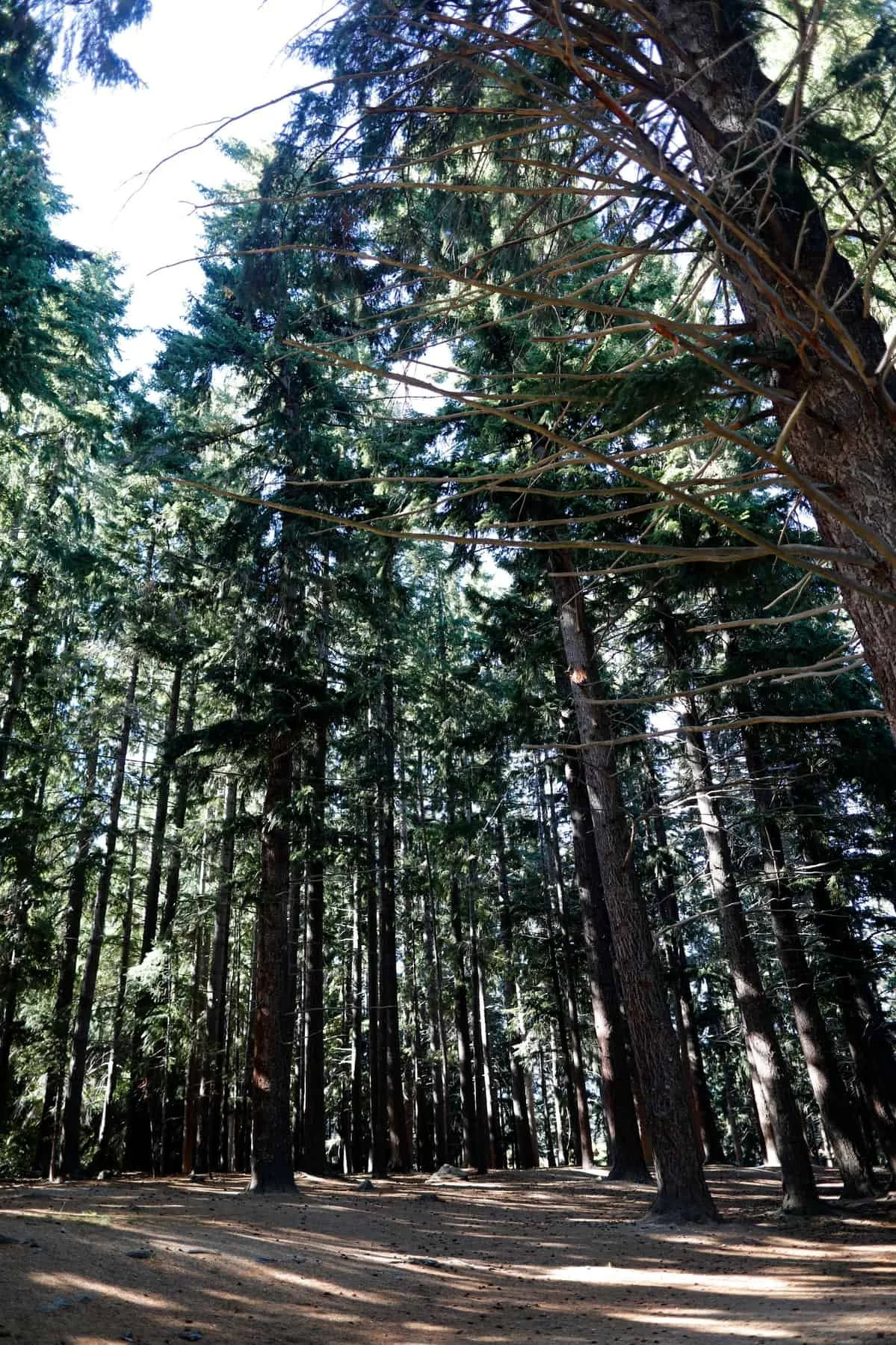
Circle the garden peninsula on the trail, then continue along the wide lakeside path. Take your time on the many benches dotted along the shore, watching the shimmering waters of Lake Wakatipu and the elegant outline of Kelvin Peninsula with Cecil and Walter Peak beyond.
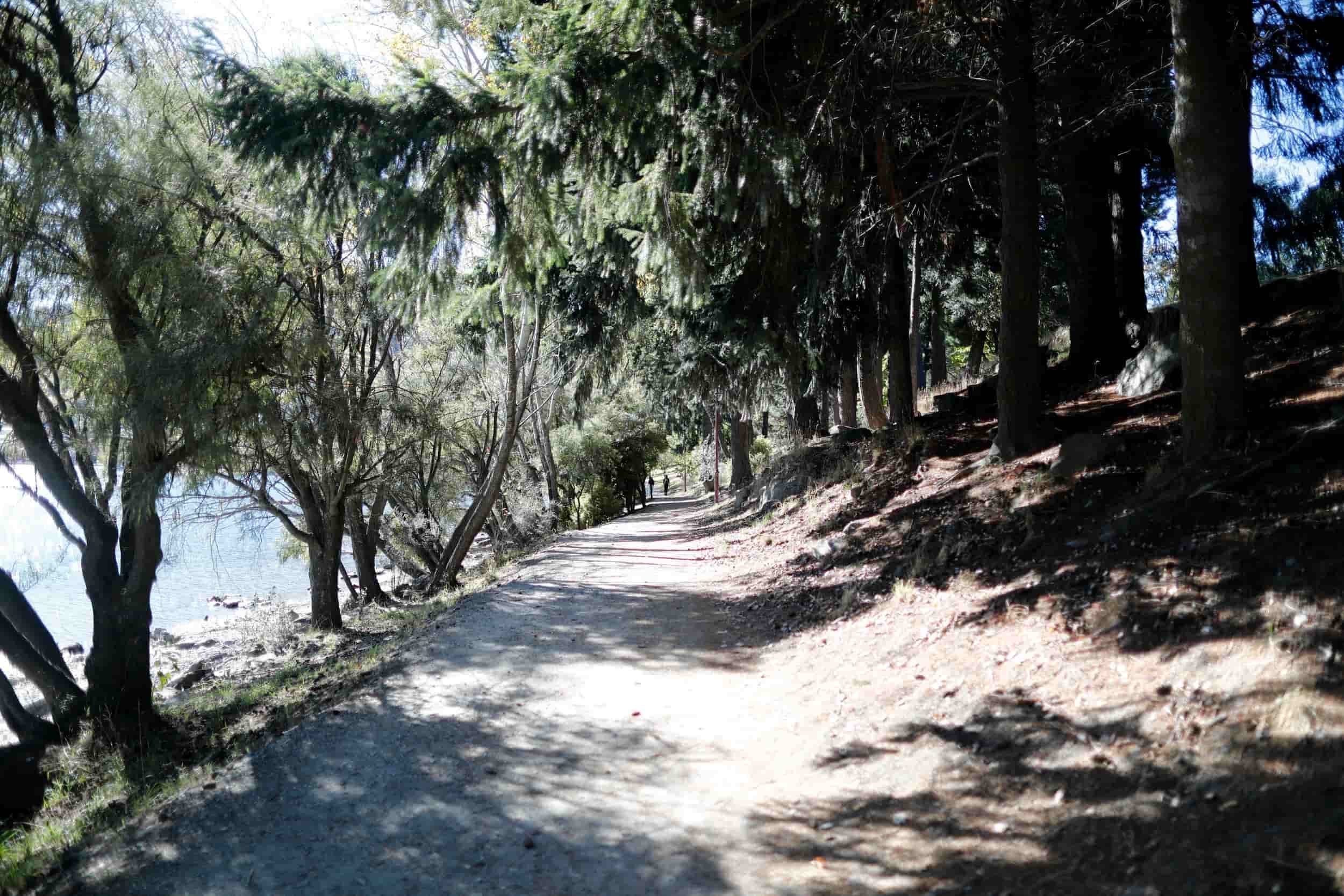
When you’re ready, either retrace your steps or cut across the peninsula via Park Street and return to town to wander the boutiques, sip coffee at a cozy café or settle in for a drink at one of the local bars.
Kiwi Park
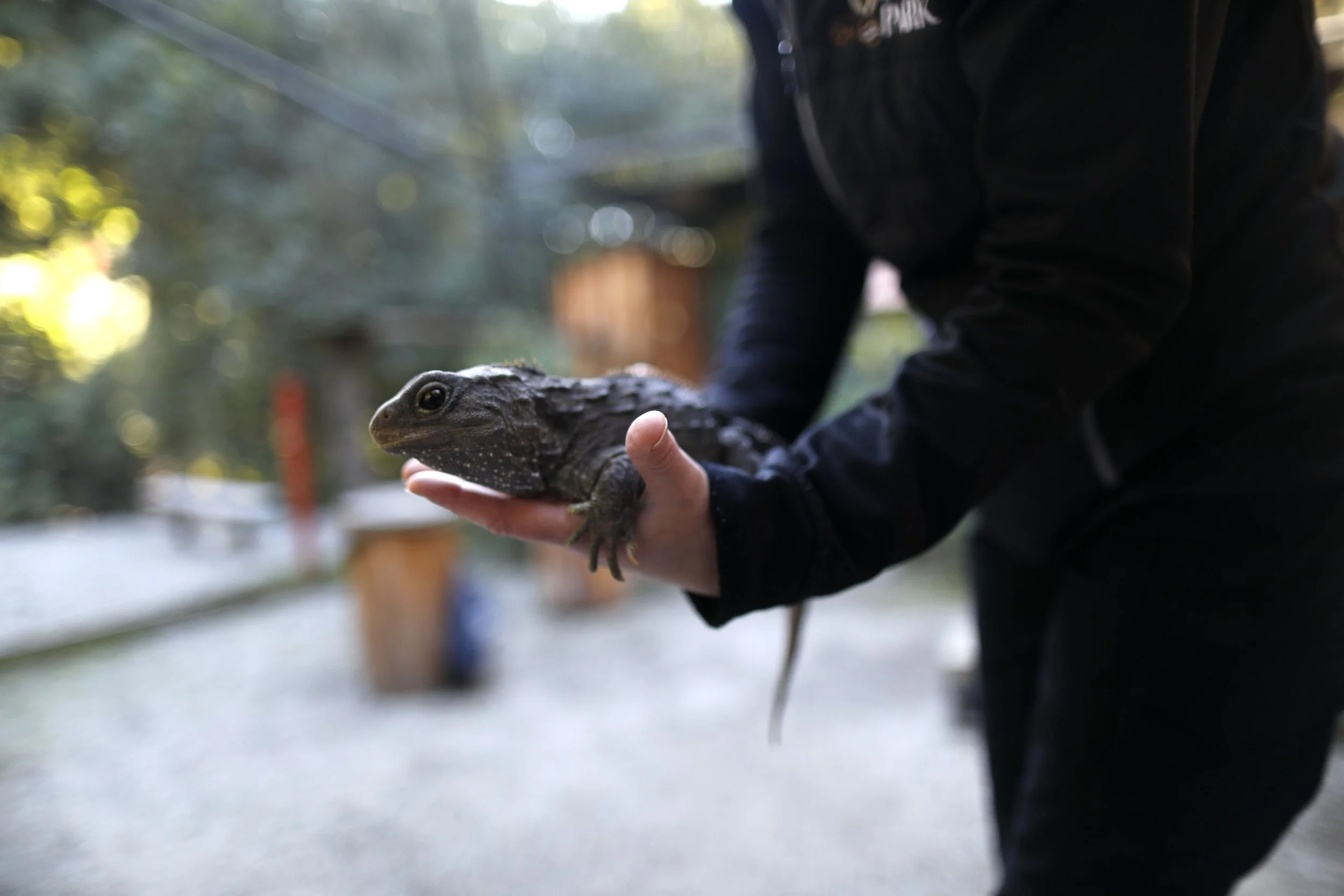
Tucked into five beautifully landscaped acres in the heart of Queenstown, on the hilly Brecon Street just below the Skyline Gondola, Kiwi Park is a family-run wildlife center with a conservation-first mission. It’s an easy, restorative detour from the town’s adrenaline fueled attractions: wander the native bush, pause by aviaries and enclosures housing over 20 species of native wildlife — including New Zealand’s beloved kiwi and the ancient tuatara — and enjoy a slower, gentler side of the region.
The park’s compact size and peaceful setting make it an ideal stop for families, nature lovers and anyone keen to learn about local species. Best of all: by visiting you’re directly supporting on-the-ground conservation work aiming to protect birds like the yellow-crowned kākāriki. Check entry details on arrival and let the bush do the rest — there’s a good chance you’ll leave with a new favorite feathered memory.
⚠️ Good to Know | Visits are by appointment: pick a time and arrive within your window, then stay as long as you like.
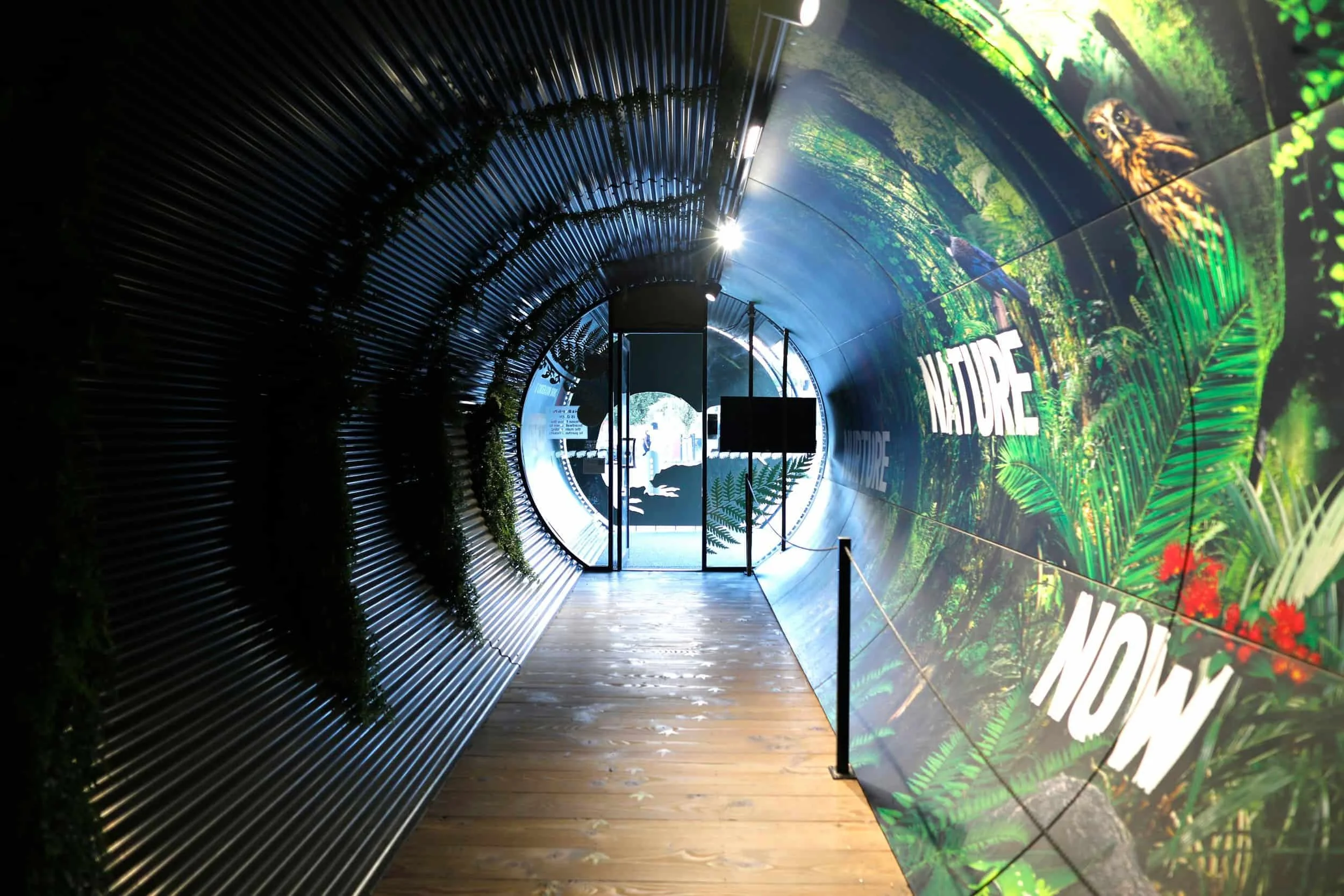
You can explore the sanctuary in a few ways — choose a private tour, an annual pass or a day pass. General admission grants entry to the park plus Kiwi Encounters, a Conservation Show and a complimentary honey tasting at the Honey Bee Centre. Note that the Kiwi Encounters and Conservation Shows run on limited, scheduled times, so plan your visit carefully if those experiences are at the top of your Queenstown must-see list. Arrive 15 minutes before your scheduled Kiwi Encounter.
The park also offers scheduled guided walks and occasional night tours to see kiwis when they’re most active; bring sturdy shoes, a warm layer for cooler weather visits and a respectful hush to keep the wildlife calm.
💰 Budget Tip | The park is open daily, usually from 9:30 a.m. to 5 p.m., with small seasonal tweaks to the schedule. While there’s no parking on site, the Skyline Gondola carpark is just a two‑minute walk from Kiwi Park. Currently, general admission costs NZ$64 ($36 USD) — children half and families NZ$150 ($85 USD).
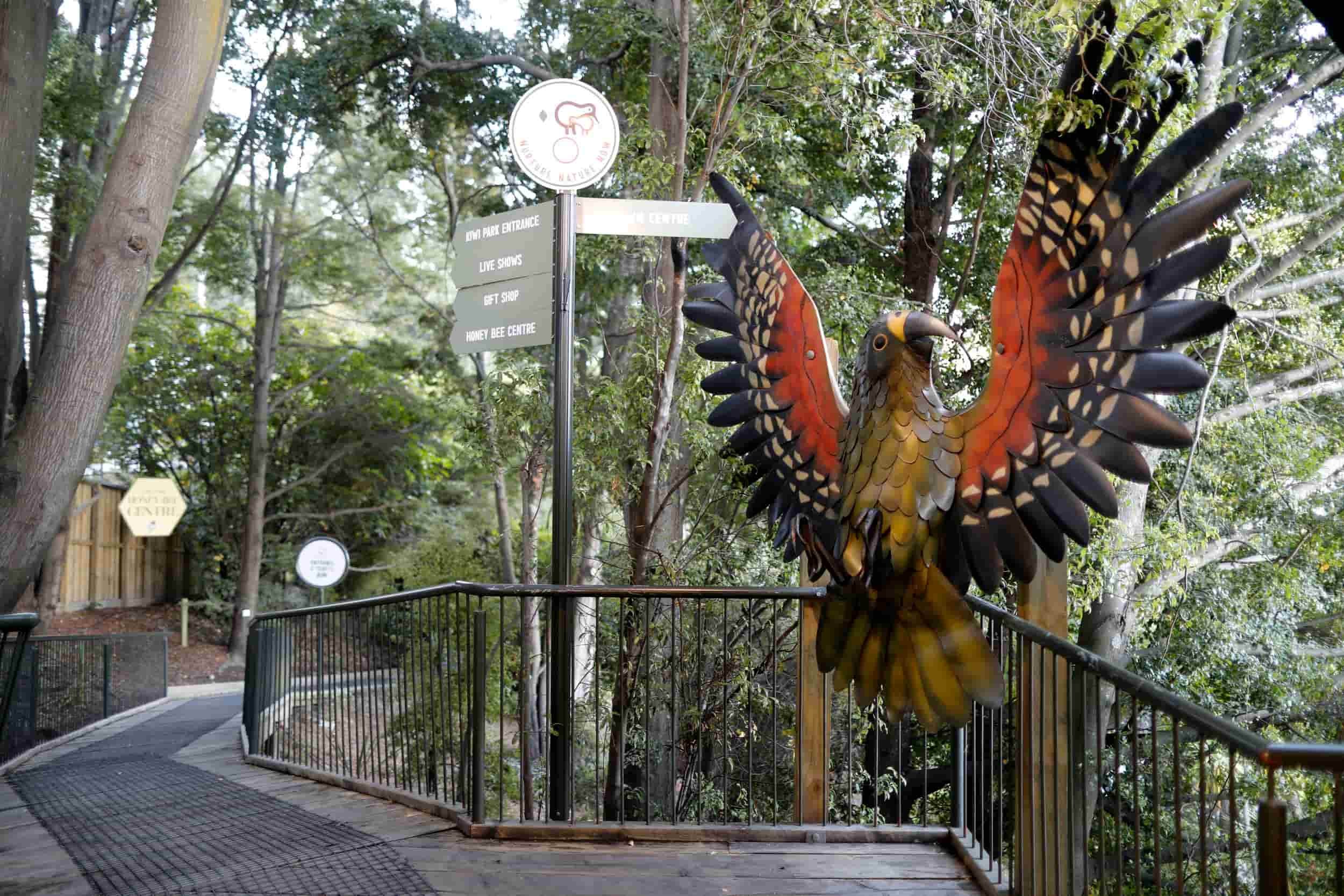
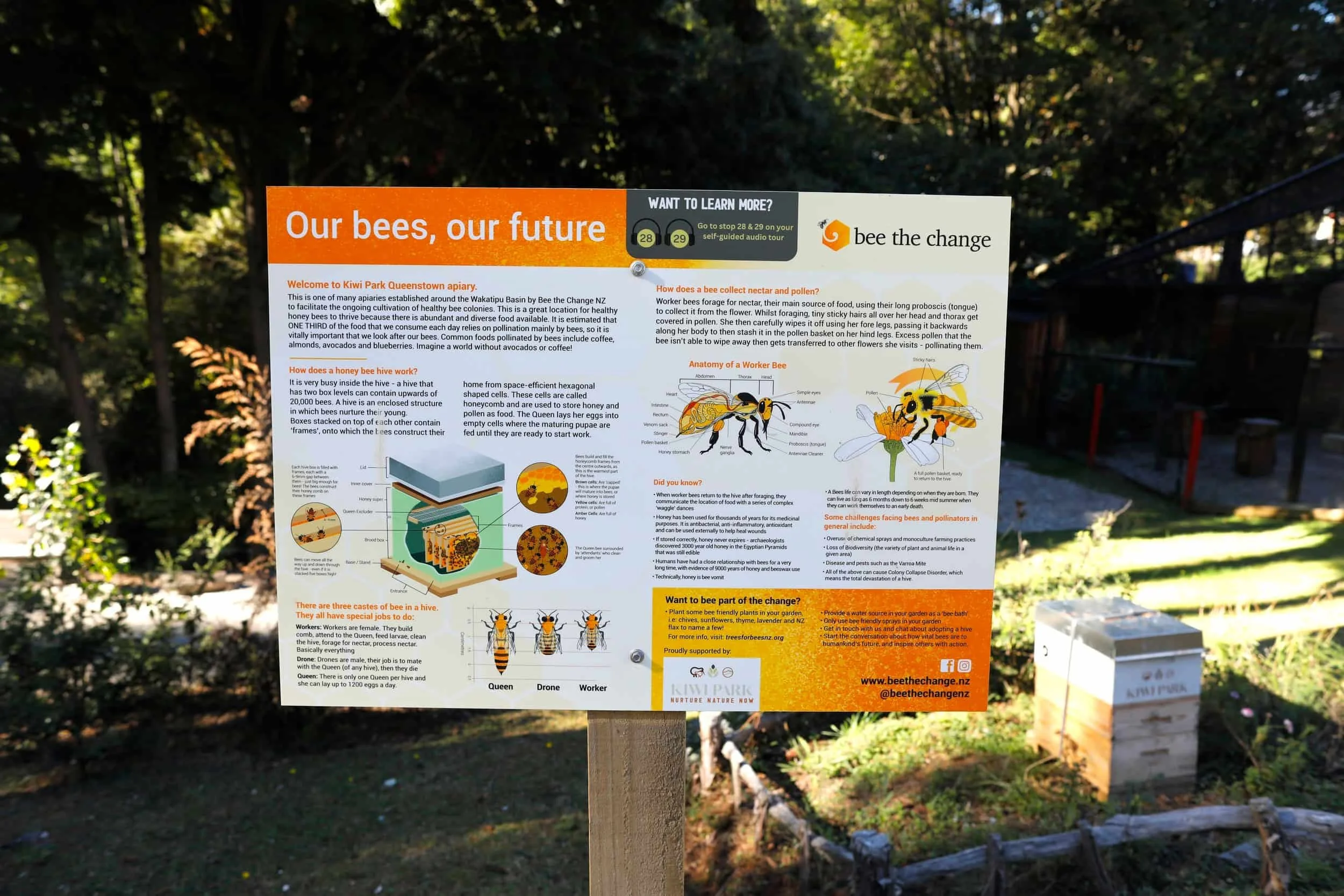
A long way from its humble beginnings, Kiwi Park has had a remarkable transformation over the years — from rubbish dump to flourishing wildlife sanctuary. Once an unofficial waste site, the land was leased in 1984 by locals Dick and Noeleen Wilson, who spent two years clearing car bodies, oil drums and invasive scrub to reimagine the space as a pocket of native habitat. They planted native trees and shrubs, built aviaries and carved pathways — and their small act of restoration has flourished.
Through the years, Kiwi Park has been dedicated to nurturing and protecting New Zealand’s unique wildlife and the places they call home. A lively center for conservation research and public outreach, the park shines a light on the urgent need to safeguard endemic species from threats like habitat loss and introduced predators.
“Our mission is to help protect and restore our native taonga species through managed conservation projects and education. We provide a sanctuary for wildlife and show conservation in a natural setting. We aspire to instill hope in our visitors that everyone can make a difference to help wildlife and the environment.”
Visitors can dive into the park’s work through hands-on exhibits, guided walks and educational programs designed for curious minds of every age. Today, Kiwi Park remains at the heart of conservation efforts, collaborating closely with government agencies, conservation groups and local communities to preserve Aotearoa’s natural treasures.
And decades on, the park is dense with ferns, kōwhai, beech and broadleaf trees and supports more than 20 species of native wildlife. Many of these species participate in Department of Conservation–managed programs — from the iconic kiwi and ancient tuatara to the South Island kākā, whio and pāteke — making Kiwi Park a surprising, peaceful sanctuary right in the heart of Queenstown.
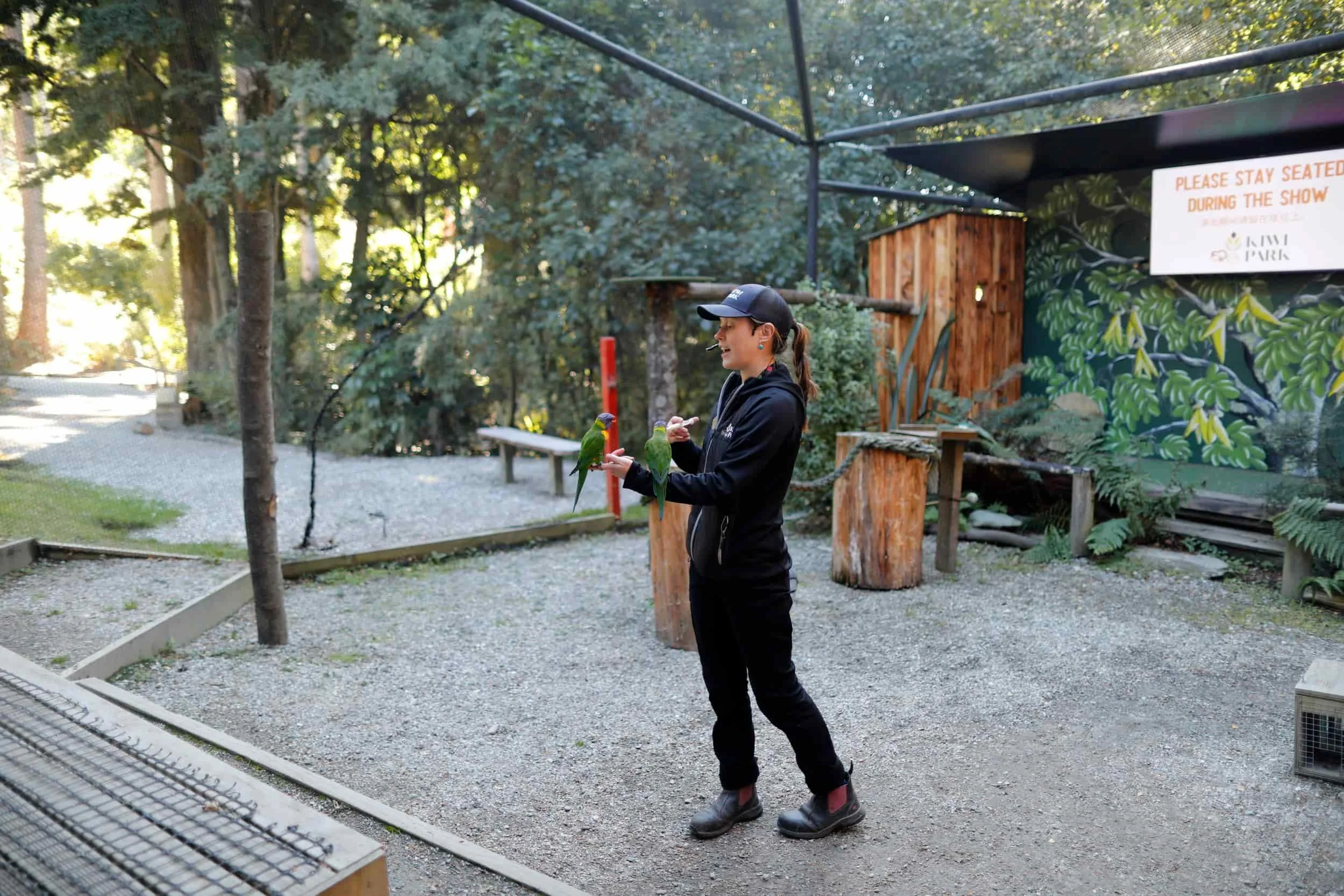
To discover what the sanctuary is up to, join a lively and informative performance led by their team of dedicated wildlife experts — equal parts entertaining and enlightening. Expect laughter, surprising facts and a close-up look at the distinctive behaviors of New Zealand’s native animals, along with clear-eyed stories about the pressures they face in the wild. You’ll leave with a renewed sense of wonder and a better understanding of why conservation matters.
💡 Local Tip | This one-of-a-kind show is a highlight of the Kiwi Park visit — memorable, uplifting and perfect for all ages.

I arrived a little before the 1:30 p.m. show and meandered the grounds until it was time to drift toward the center stage. People of all ages clustered on the stepped seats — chatting, craning their necks and settling in with the eager quiet that comes before something special. Once the show began, I was completely entranced. Birds of every size sailed from the handler’s gloved hand to her assistants: parrot-like beauties, hefty pigeons and, unexpectedly, even rats took part in the performance. Wings skimmed just above our heads; one bird nearly grazed my shoulder and I laughed at the thrill of it.
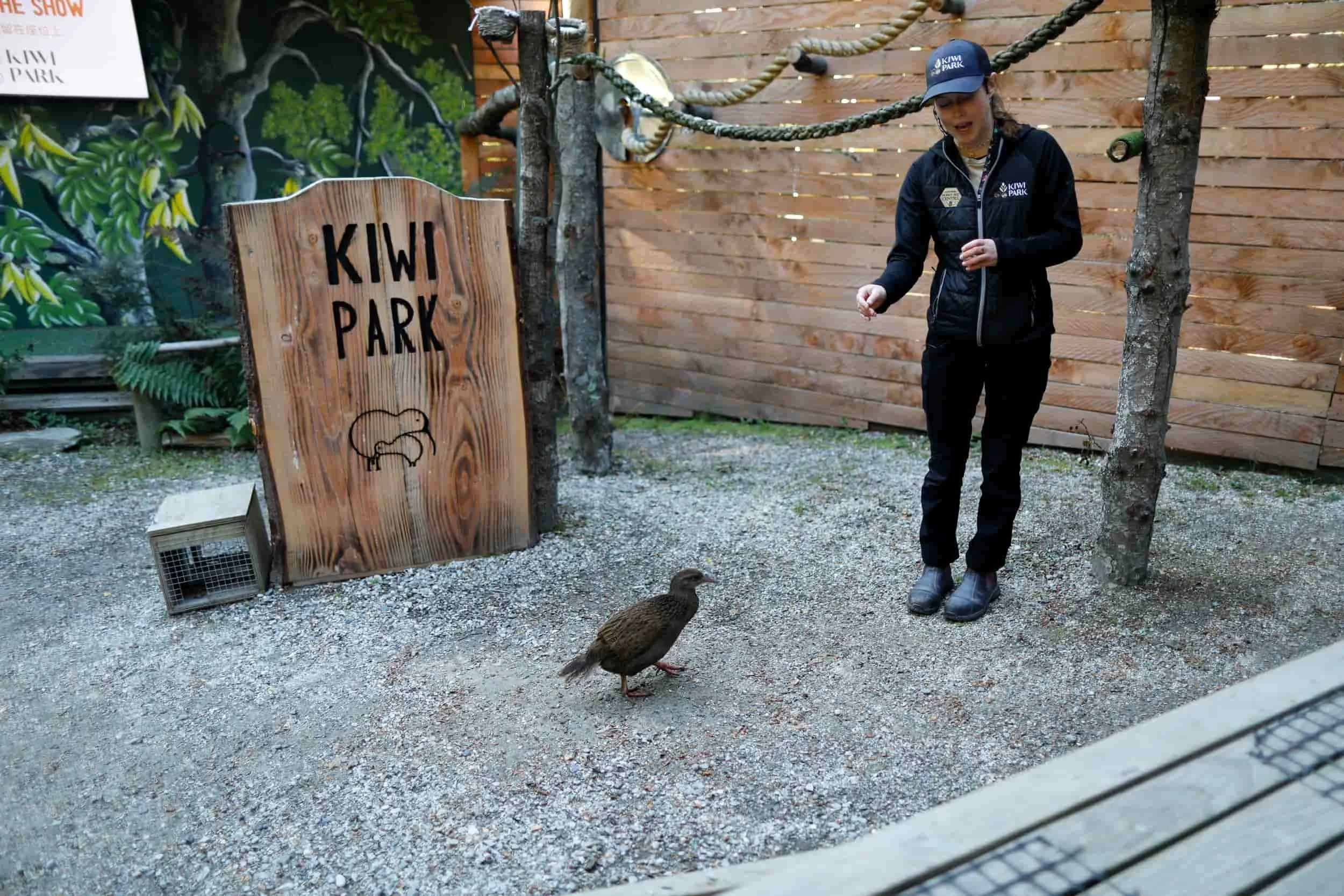
We also learned about New Zealand’s bold conservation efforts: a nationwide mission to remove non-native mammals, including those deceptively charming rats. Though small, they wreak havoc on delicate ecosystems by feasting on eggs of vulnerable birds. With roughly 30 native species lost over time, biosecurity here is no small matter — hence why travelers are carefully questioned about any food or animal items they bring in.
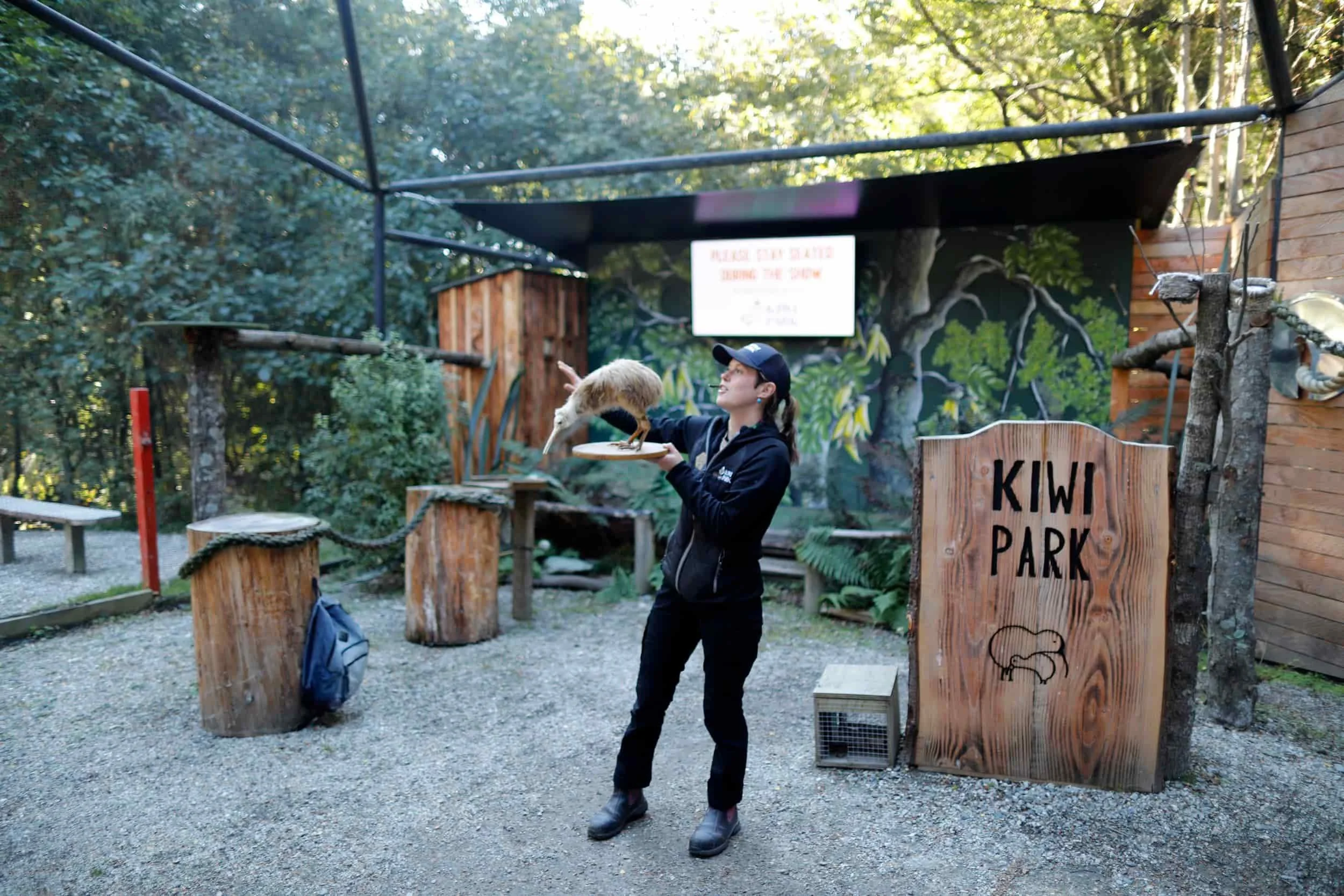
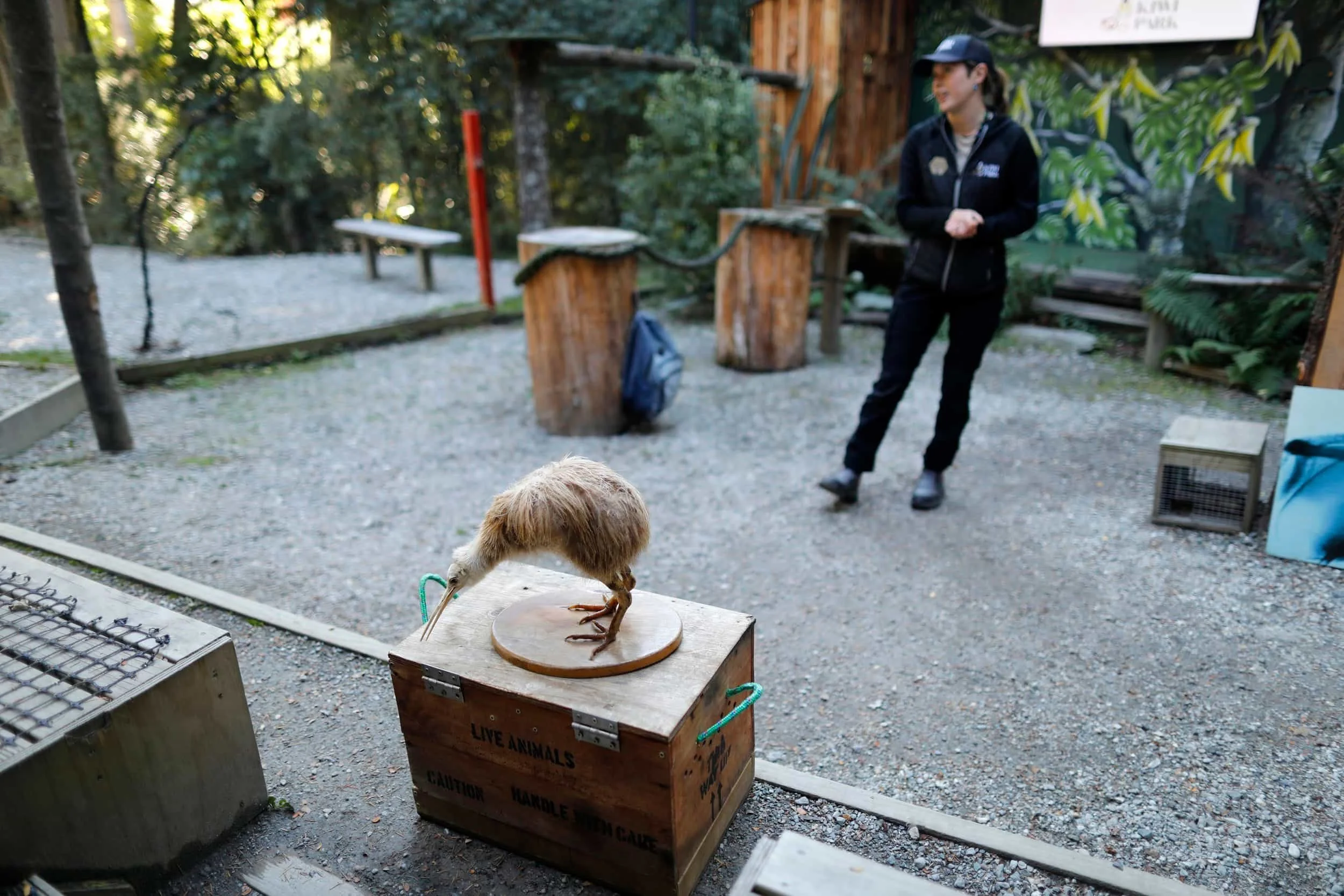
After the show, I wandered for another hour along a looping trail that felt lovingly stitched into the landscape. The sanctuaries are wonderfully approachable — many invite you to walk through habitats rather than gawking from behind glass.
The grounds balance tidy paths with wild pockets of greenery: tiny streams and ponds host fish and a parade of ducks, while the trees and sky brim with life. I spotted falcons, pigeons, owls, ducks, parakeets, buff weka and parrots — some endangered, others common — each one adding to a lively, hopeful sense that conservation is happening right before your eyes. A two thumbs up type of experience.
If your curiosity about Kiwi Park’s residents is tickled even further, here’s a lineup of some of the animals who call the park home:
North Island Brown Kiwi (Apteryx Mantelli) | Conservation Status: Not Threatened
Kiwi are among the most delightfully oddball birds you’ll encounter in New Zealand — small, round and built for nocturnal mystery. Once common across the islands, their numbers have slipped as introduced predators have spread, so spotting one in the wild is a rare treat. In carefully managed kiwi houses, you can get an intimate, close-up look at their long beaks and soft, hair-like feathers without disturbing their night-time routine. The kiwi you see at the park are part of a recovery effort: all are released into predator-controlled wild habitats and their facility currently cares for ten individuals awaiting their return to the bush.
South Island Kākā (Nestor Meridionalis) — Conservation Status: Recovering
If you hear a raucous, inquisitive racket drifting through the canopy, chances are a kākā is nearby. These large, forest-loving parrots wear olive-brown plumage with surprising splashes of scarlet hidden beneath their wings — a gentler, earthier cousin to the alpine kea. Kākā are often heard before they’re seen, chattering and calling as they move through native forest. Their range has contracted because of habitat loss and introduced predators, so today they’re most plentiful on predator-free offshore islands and protected forest pockets on the main islands. Spotting a kākā means you’re in the heart of regenerating native bush.
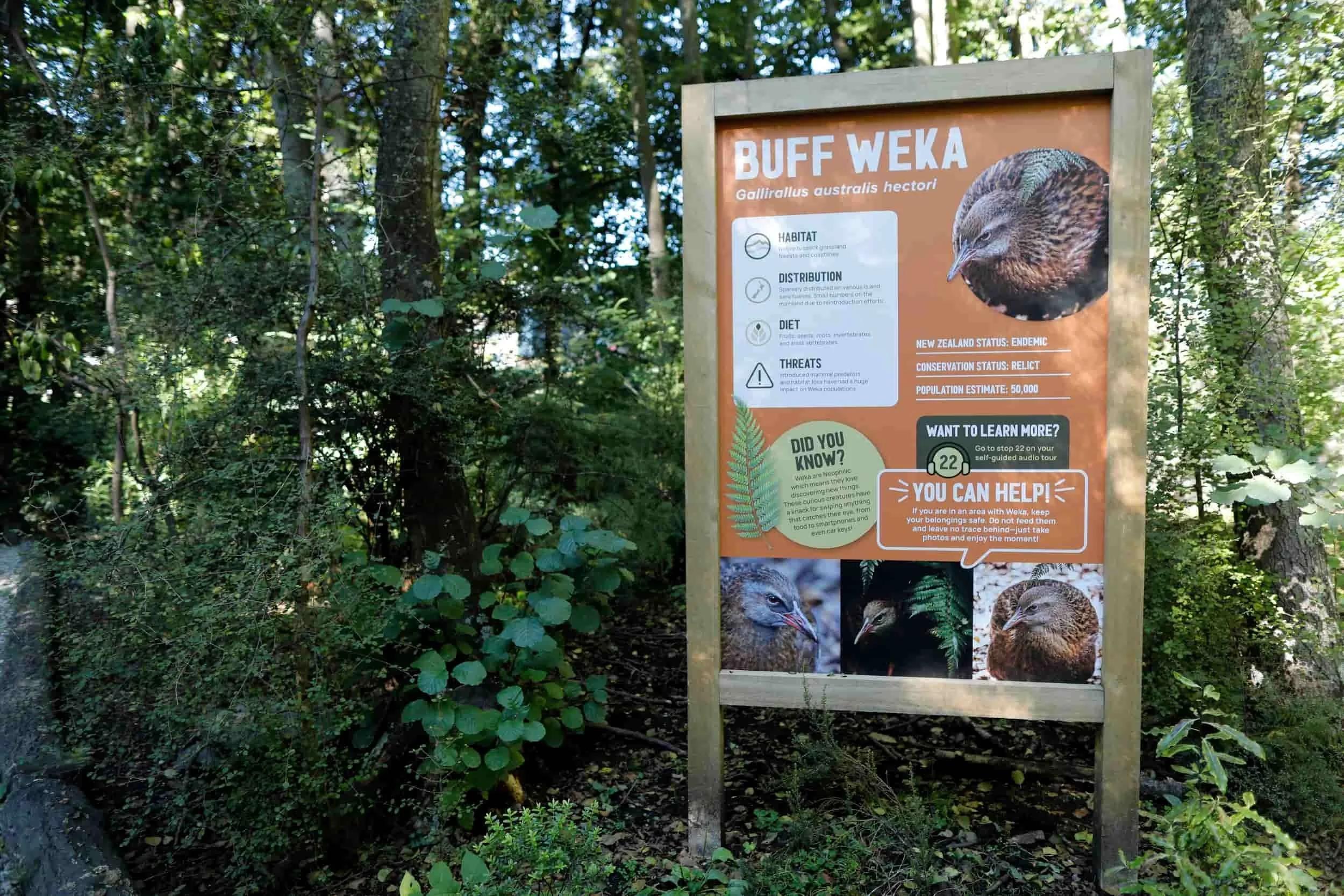
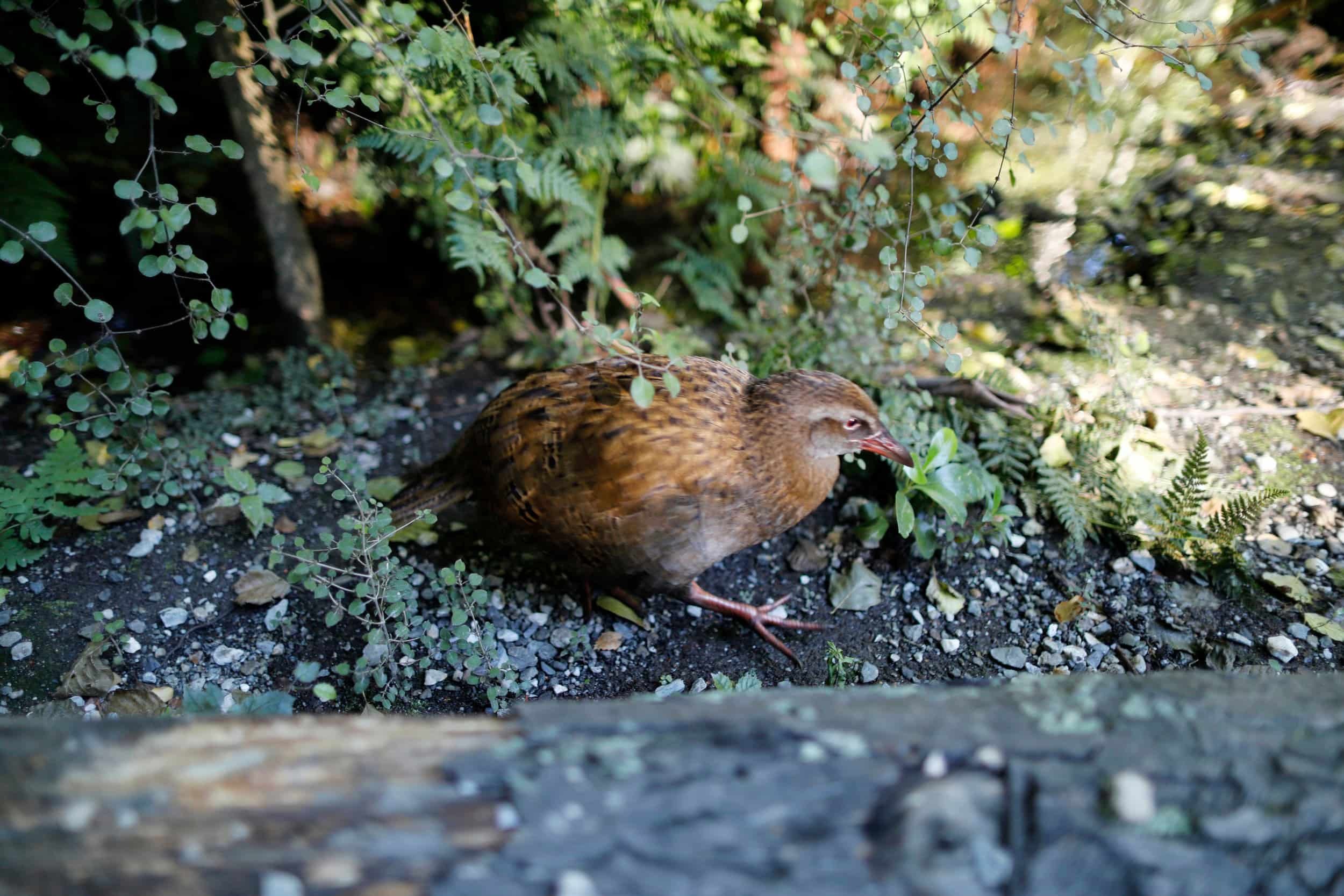
Buff Weka (Gallirallus Australis) — Conservation Status: Not Threatened
Weka are the cheeky locals of New Zealand’s bird world: bold, curious and utterly unbothered by human company. These flightless birds often wander up to investigate campsites, boats and picnic spots, on the hunt for whatever tasty bits an unsuspecting visitor might offer. Visitors sometimes mistake them for Kiwi but their sociable behavior and daytime activity make them a very different kind of wildlife encounter. While they’re not common on the mainland, keep an eye out around Pigeon Island in Lake Wakatipu, where these charming birds have been spotted. Bigger than the banded rails they’re related to, the weka’s sturdy, independent presence feels emblematic of the rugged New Zealand landscape.
Whio/Blue Duck (Hymenolaimus Malacorhynchos) — Conservation Status: Nationally Vulnerable
The whio is the river’s spirit: compact, slate-blue and perfectly adapted to life on fast, clear mountain streams. Known for its high-pitched “whio” call, this duck prefers the rush of high-altitude river segments and fiercely guards both territory and long-term pair bonds. Blue ducks are best found where water runs clean and cold, and seeing one is a reminder of the fragile waterways that sustain them. Conservation programs breed whio and release offspring back into protected river catchments, helping these specialist birds reclaim stretches of their former range.
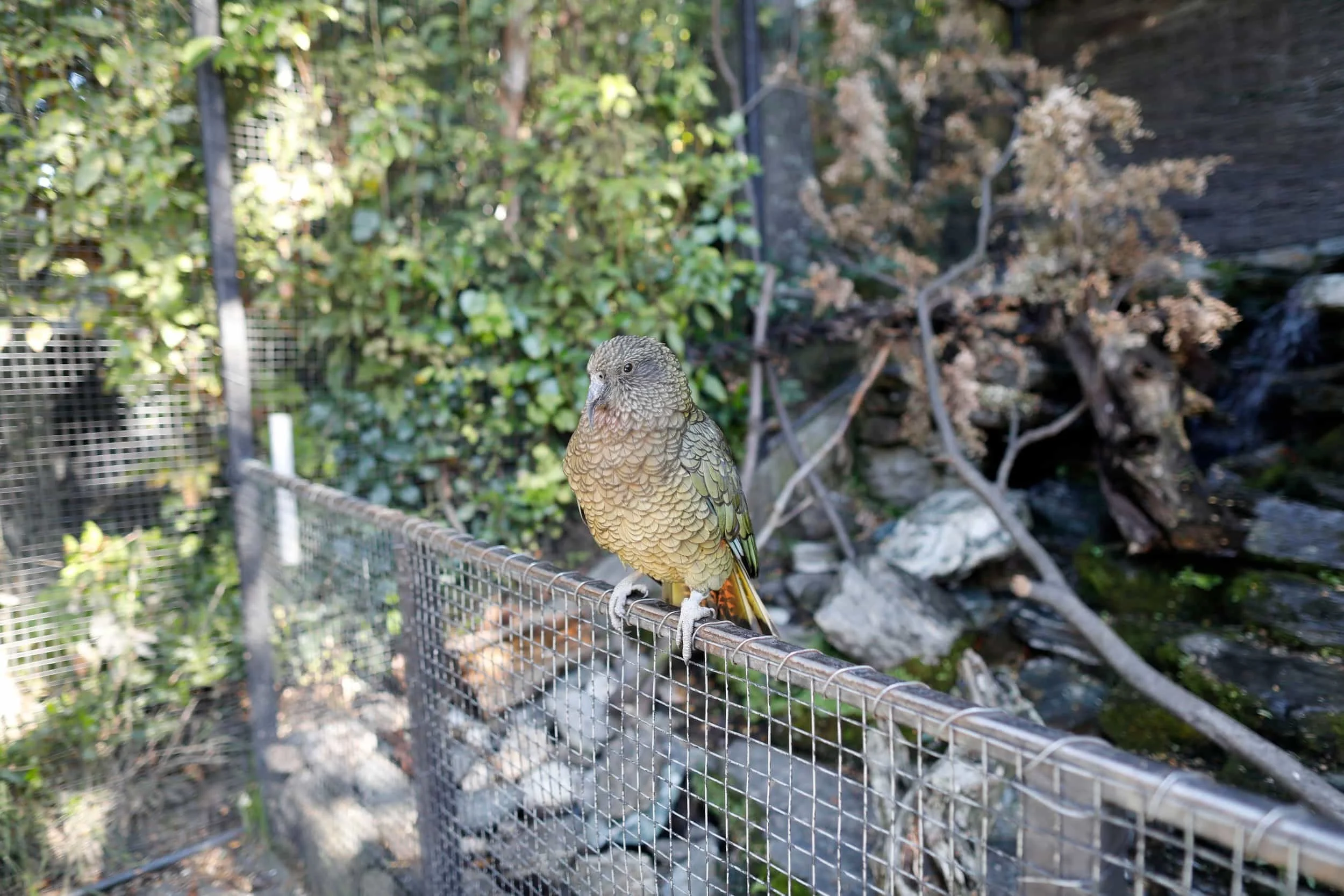
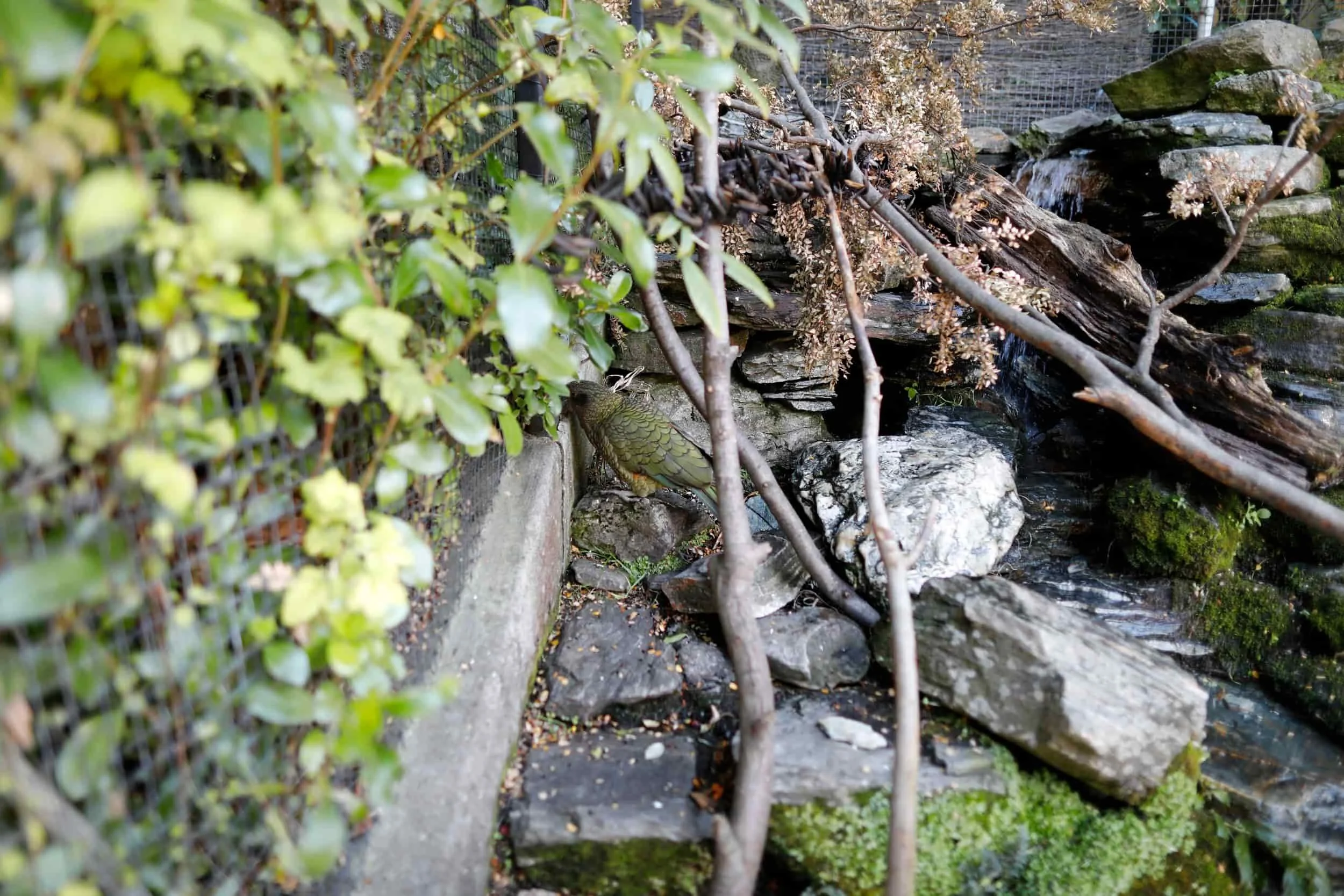
Kea (Nestor Notabilis) — Nationally Endangered
Meet the world’s only mountain parrot: the kea. Endemic to New Zealand’s South Island, these clever, olive-green birds make their homes among mountain beech and lowland podocarp forests. Kea are notorious for their curiosity — they investigate backpacks, poke at car parts and seem to treat anything new as a potential puzzle. That bold neophilia has made them beloved by visitors and occasionally troublesome for locals, creating a rare human–bird dynamic you’ll rarely find elsewhere. Spotting a kea in the wild feels like encountering an alpine comedian with a feathered coat.
Ruru/Morepork (Ninox Novaeseelandiae) — Not Threatened
The ruru, or morepork, is the bush’s night guard. Common across New Zealand’s native and exotic forests, this compact owl has rounded wings and eyes built for low light. In Māori tradition, the ruru carries powerful meanings: some stories link its presence to the spirit world, while others cast it as a guardian or bringer of good news, its “more-pork” call echoing through dark trees. Quiet, stealthy and expert at hunting by night, the ruru is a must-hear on any twilight walk. At the park they have three ruru — keep an ear out during the conservation show and you might hear one calling from the treetops.
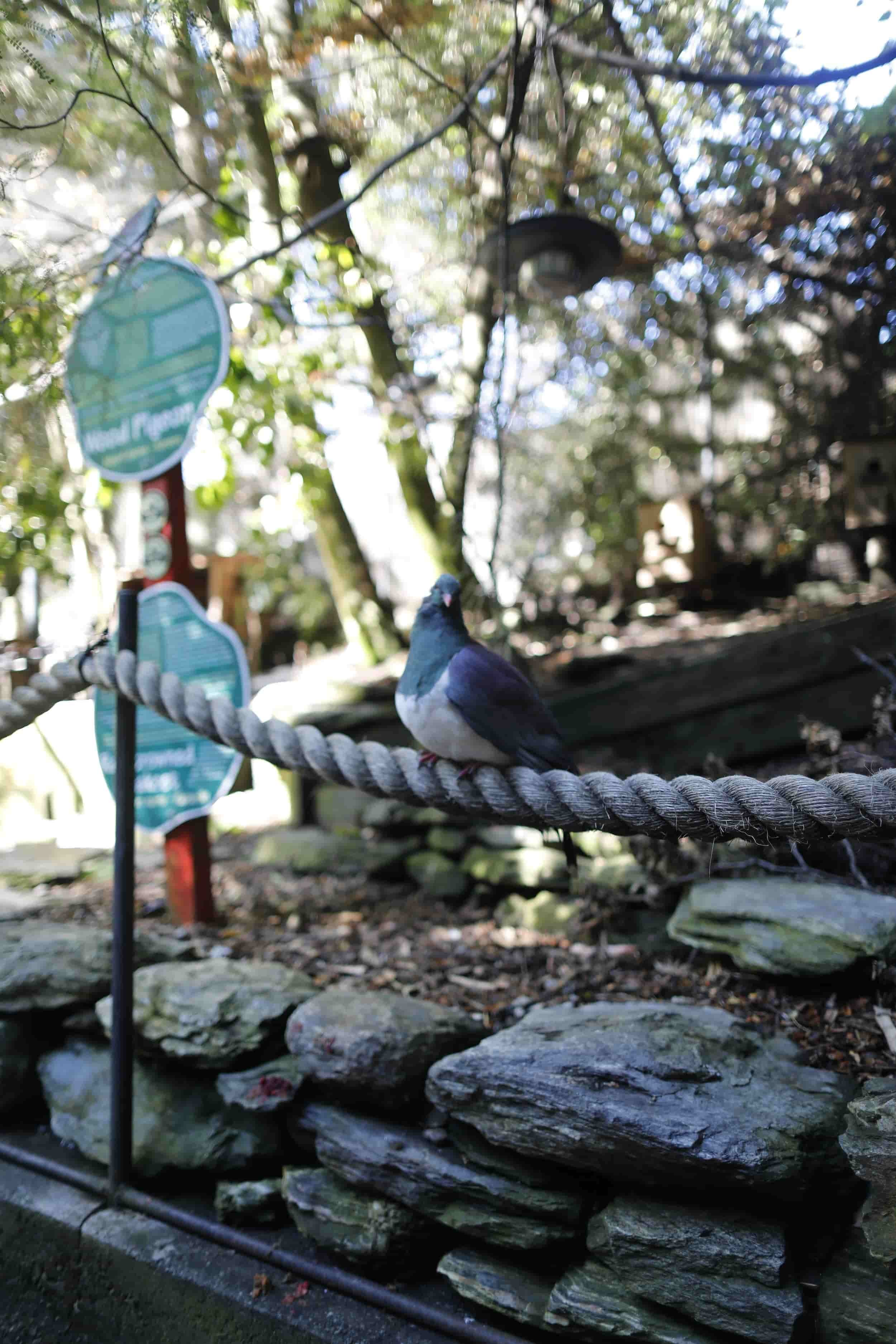
Kererū/Wood Pigeon (Hemiphaga Novaeseelandiae) — Not Threatened
The gentle kererū is New Zealand’s second-largest pigeon and a quiet hero of the forest. With a beak big enough to swallow fruits whole, kererū are unique seed carriers: they fling themselves through the canopy and disperse the seeds of native trees like karaka, tawa, miro and puriri across the landscape. Walk beneath fruiting trees and listen for the soft wingbeats of a kererū — without them, many forests would struggle to renew themselves. Seeing one glide between branches is a peaceful reminder of how interconnected island ecosystems are.
Kārearea/New Zealand Falcon (Falco Novaeseelandiae) — Conservation Status: Threatened
The Kārearea is New Zealand’s own small, fierce raptor — elegant in flight, relentless in the hunt. Skilled at navigating dense forest and open tussock country alike, these falcons prey on live birds and small mammals with swift, precise strikes. In places where they nest on or near the ground, the Kārearea’s protective streak is legendary: fly close and you might experience an adrenaline-inducing dive-bomb as it defends its nest. Spotting one in the wild is a reminder of the country’s untamed spirit and the intensity of its native wildlife.
Antipodes Island Kākāriki (Cyanoramphus Unicolor) — Conservation Status: Naturally Uncommon
A flash of unbroken green against the windswept scrub, the Antipodes Island kākāriki is a parakeet like no other. Endemic to the remote subantarctic Antipodes Islands, this bird is uniformly green and instantly recognizable. Though perfectly capable of flight, these parrots often prefer to clamber through low vegetation and walk along the ground while foraging. Their diet is largely leafy but they reveal an unexpected edge: they scavenge carcasses and broken eggs and have even been observed killing and eating grey-backed storm petrels — making them, alongside the kea, one of New Zealand’s occasionally predatory parrots.
Tuatara (Sphenodon Punctatus) — Conservation Status: Threatened
Resembling a lizard but belonging to an ancient and unique reptile lineage, the tuatara are living links to a world from more than 220 million years ago. The sole survivors of the Sphenodontia order, they grew alongside the dinosaurs and persist with astonishingly slow life histories: growth continues up to about 35 years. Their Māori name, tuatara, means “peaks on the back,” a fitting nod to their spiny dorsal crest. Once widespread across New Zealand, tuatara populations were decimated after introduced predators — particularly rats — began preying on their eggs and young. At the park you can see a small, precious group: 4 adults, 5 juveniles and 3 hatchlings, a hopeful sign for this ancient lineage.
Red-Crowned Kākāriki (Cyanoramphus Novaezelandiae) — Conservation Status: Relict
Once a familiar presence across New Zealand, the red-crowned kākāriki are now confined to pest-free offshore and outlying islands. These medium-sized parrots, with long tails and vibrant green plumage, are marked by a striking crimson forehead and fore-crown, and matching flashes behind the eyes and near the base of the tail. They adapt to a variety of habitats — from tall forest to grassy and shrubby terrain — and their remaining island strongholds offer some of the best opportunities to glimpse this beautiful and resilient species.
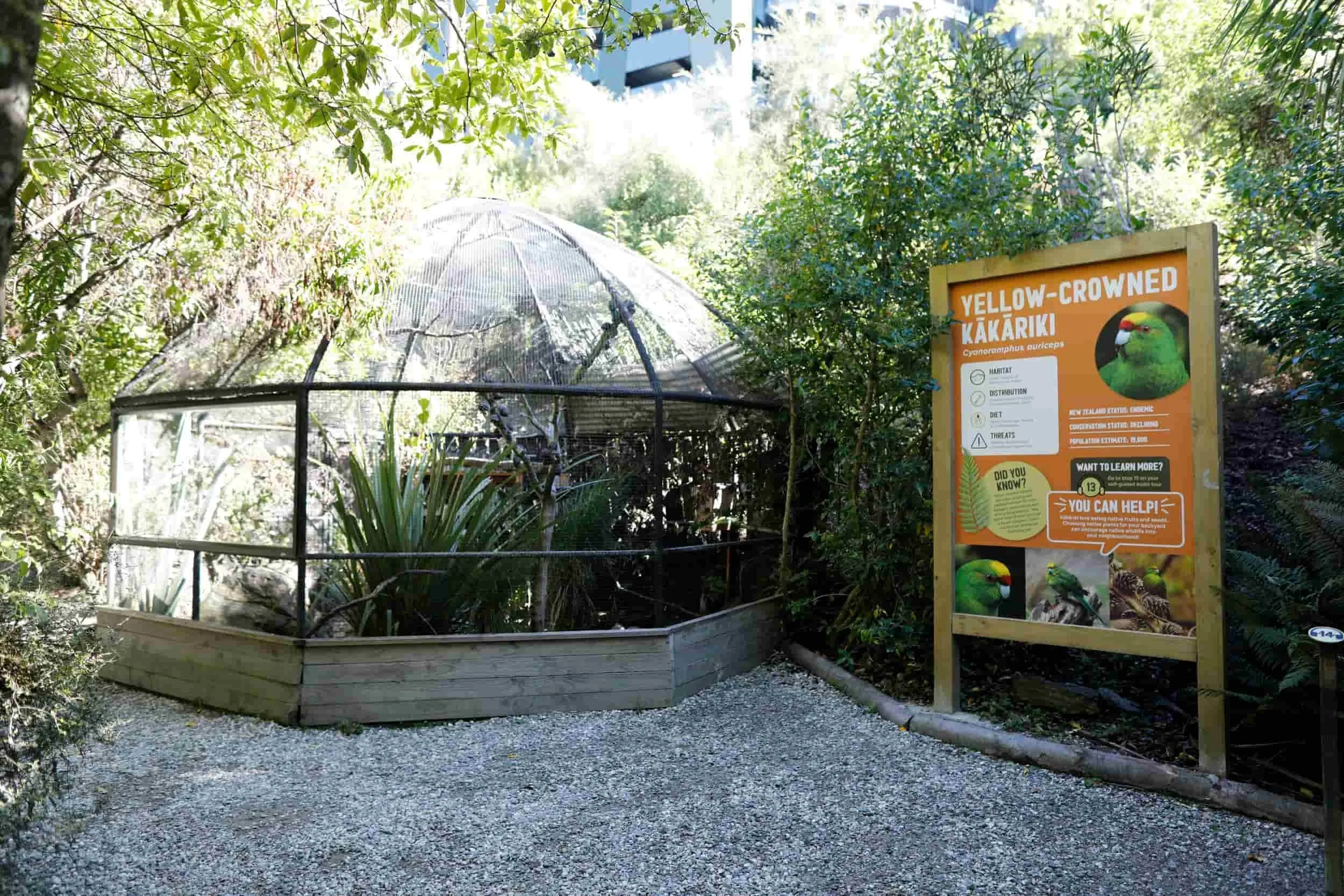
Yellow-Crowned Kākāriki (Cyanoramphus Auriceps) — Conservation Status: Declining
Spotting a flash of green with a jaunty yellow crown is one of those small travel thrills that makes a day in New Zealand feel like a nature documentary come to life. The yellow-crowned kākāriki is a compact, chatty forest parrot: bright green plumage, a neat yellow crown, a slim scarlet streak between crown and beak, a red patch at each rump and a surprising dash of blue along the outer wing. They’re bold little characters, honest about their presence with a chorus of high-pitched calls that echo through native bush.
Though you’ll still find them on some offshore islands and in pockets of mainland forest, their numbers are under pressure. Predators such as stoats, rats and possums pose the biggest threat — especially when these parrots are nesting or nesting in tree holes. Keep an eye and ear out for them while wandering woodland trails; there have been several reported wild sightings around the park and across the Wakatipu region, making the area an inviting spot for birdwatchers and curious travelers.
Visiting the Kiwi Park sanctuary feels like stepping into a quiet, protected corner of Aotearoa where native birds and plants are given a second chance. Wander the peaceful trails, spot shy takahē and curious saddlebacks and learn from passionate local guides who make conservation feel personal and hopeful. Supporting the sanctuary — whether by volunteering, donating or simply sharing your experience — helps protect these fragile species and the special habitats that make New Zealand so unforgettable.
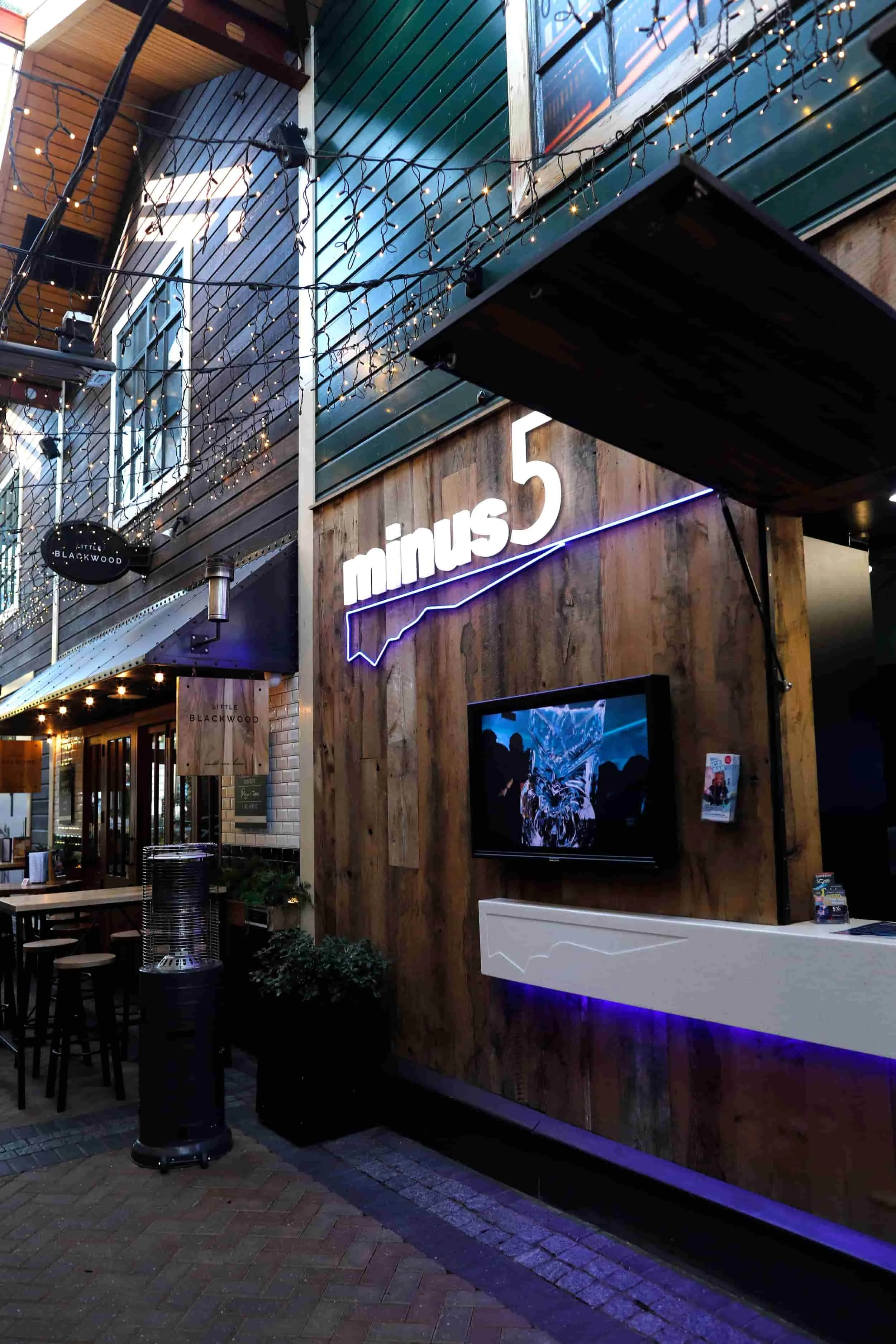
Minus 5° Ice Bar in the Steamer Wharf
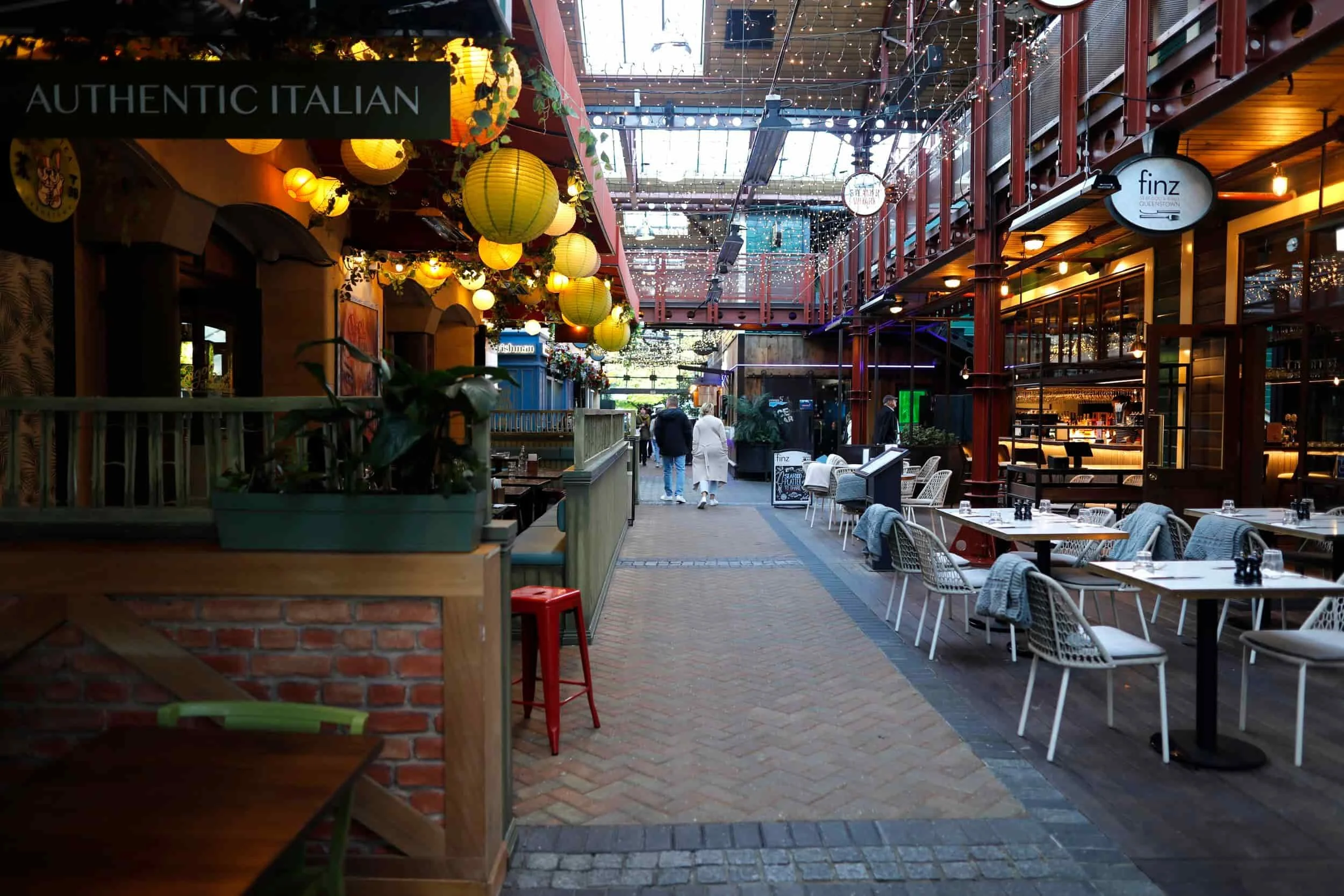
Back at Steamer Wharf — a charming area worth exploring — a frozen ice bar is one of the most interesting things to do around Queenstown city. The Steamer Wharf is a historic waterfront precinct that blends restored 19th-century industrial charm with modern dining, shopping and art spaces, set against the dramatic backdrop of Lake Wakatipu and the Remarkables mountain range.

Originally a working wharf and engineering hub, its preserved buildings now house boutique galleries, waterfront cafes, craft stores and occasional markets, making it an easy, atmospheric spot for a lakeside stroll, scenic photography and sampling local food and souvenirs while watching boats glide across the water.
This time — step into a frosty, fairytale moment at Queenstown’s original Minus 5° Ice Bar — a compact, cool experience that’s easy on the wallet and big on novelty. For roughly $25 USD, you get an hour inside a dazzling frozen room where more than 18 tons of hand-carved ice transform furniture, statues and the bar itself into a glittering winter scene.
You’ll be fitted out in cozy winter jackets and knitted gloves before entering, so the chill feels more like refreshing fun than an ordeal. Lounge on fur-covered ice chairs and sip cocktails or mocktails poured into solid ice glasses while admiring intricate ice sculptures and frosted tables. Kids and adults alike enjoy wandering through the icy displays and posing for photos — it’s inherently photogenic and one of those quirky Queenstown highlights that makes for memorable snaps.
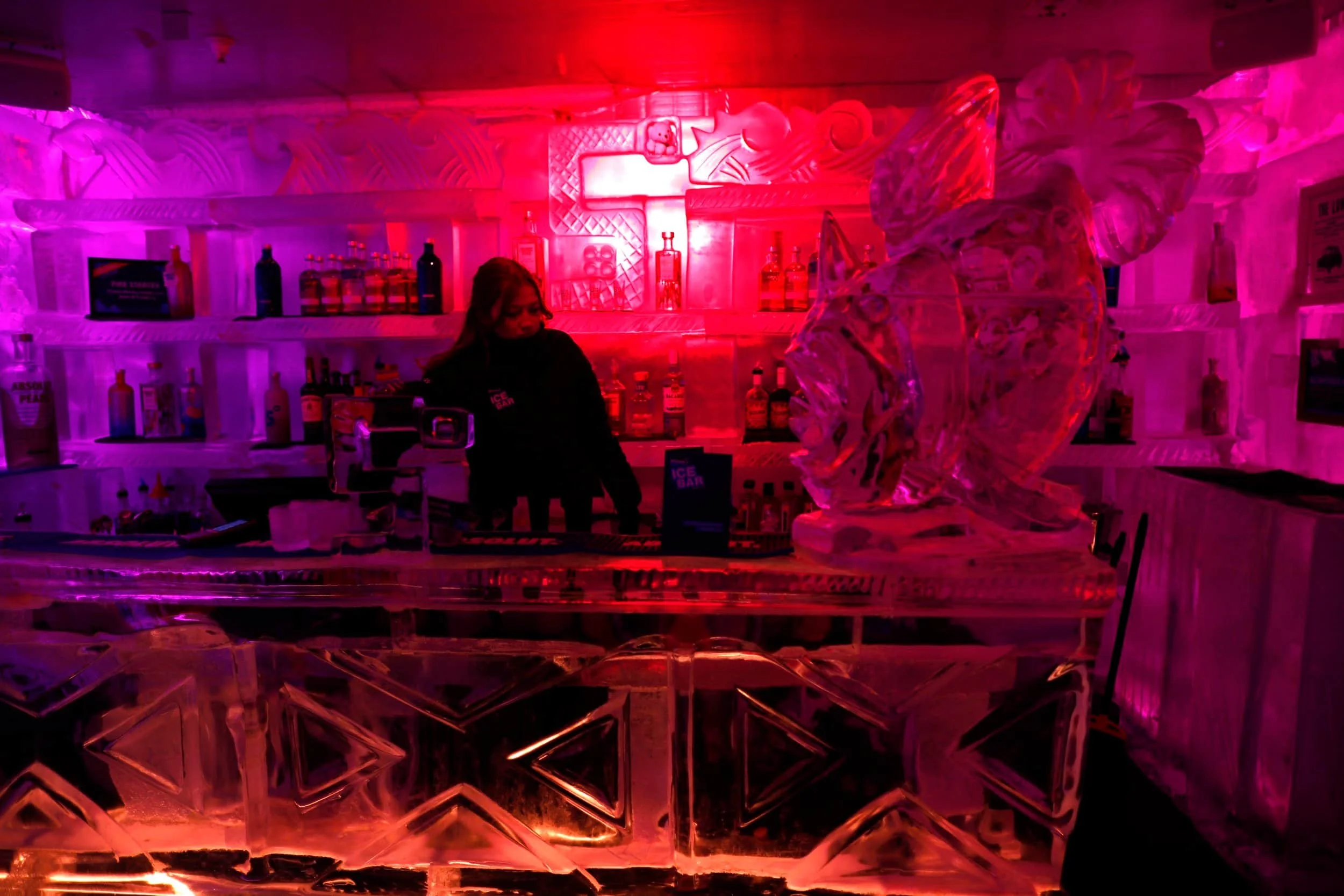

Signature cocktails and mocktails shine with tropical touches — passionfruit, mango, pineapple and cranberry — paired with spirits such as vodka, rum, tequila and whiskey. Step inside, make your way to the cozy rear bar and let the bartender mix up your perfect pick.
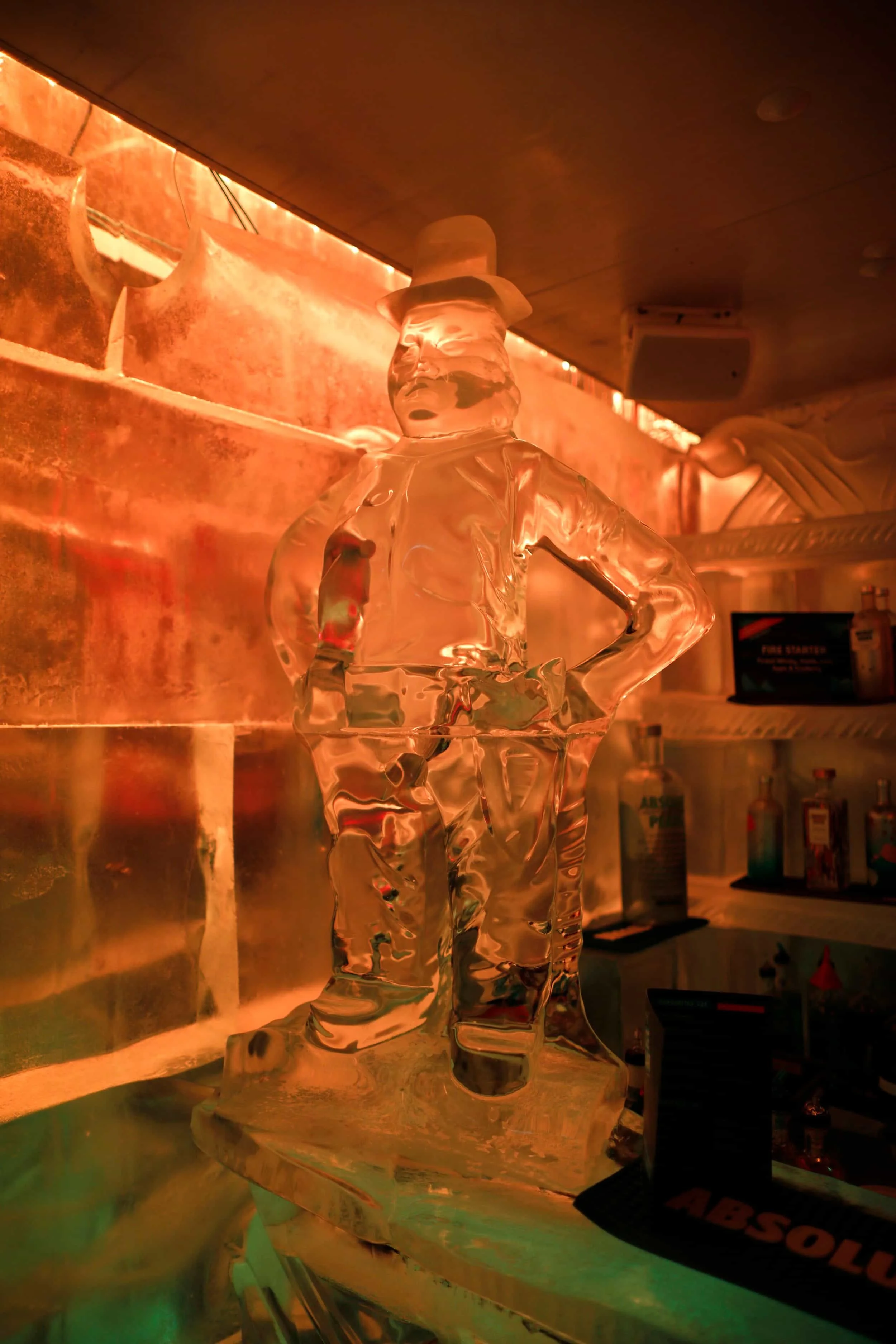
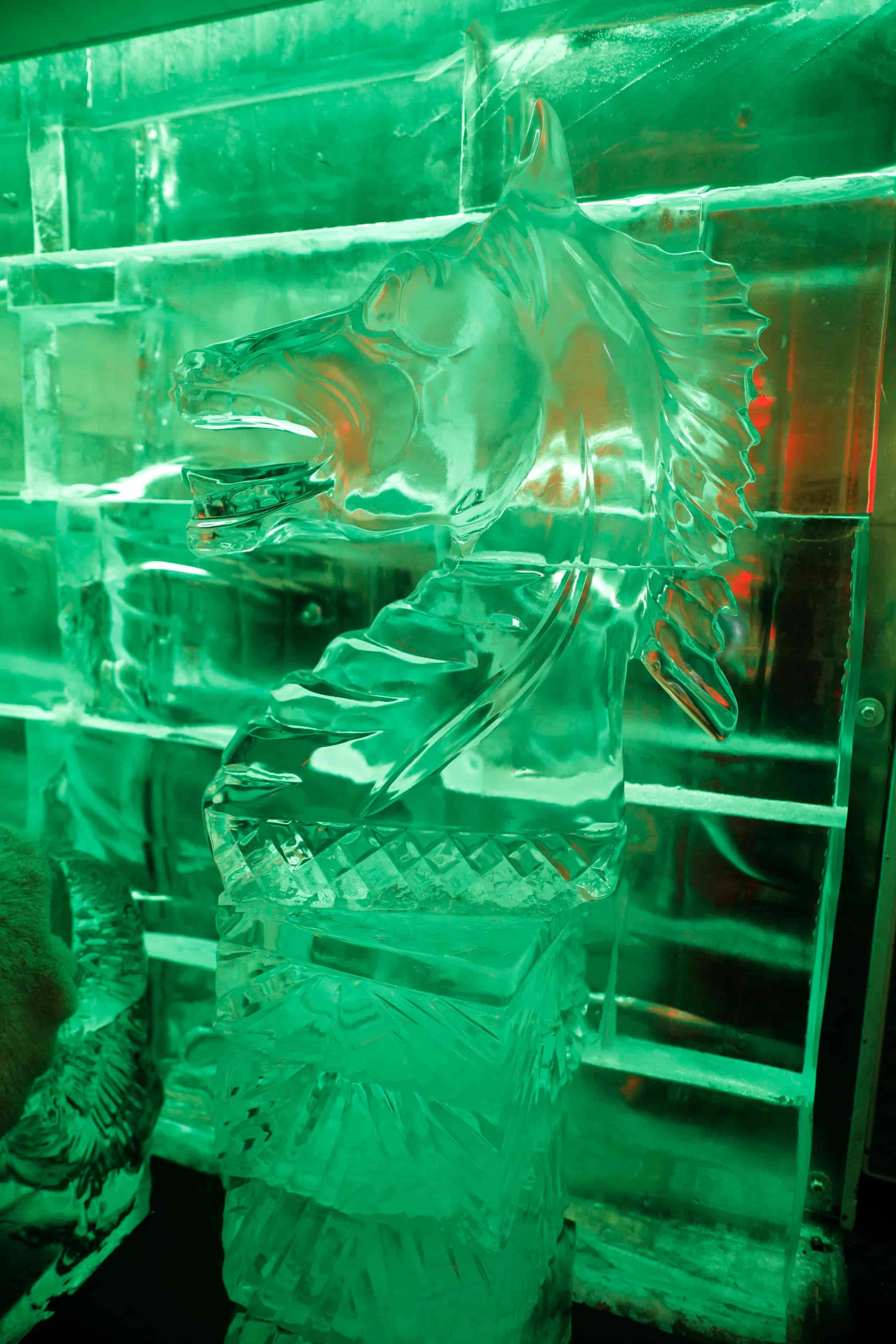
The bar also offers a small selection of souvenirs to take the experience home: think shot glasses, faux-fur hats and branded keepsakes that keep the chill (and the memory) alive. Whether you’re after a short, whimsical stop or an unusual family activity, Minus 5° delivers a charming, instantly Instagrammable slice of winter — no snowfall required.
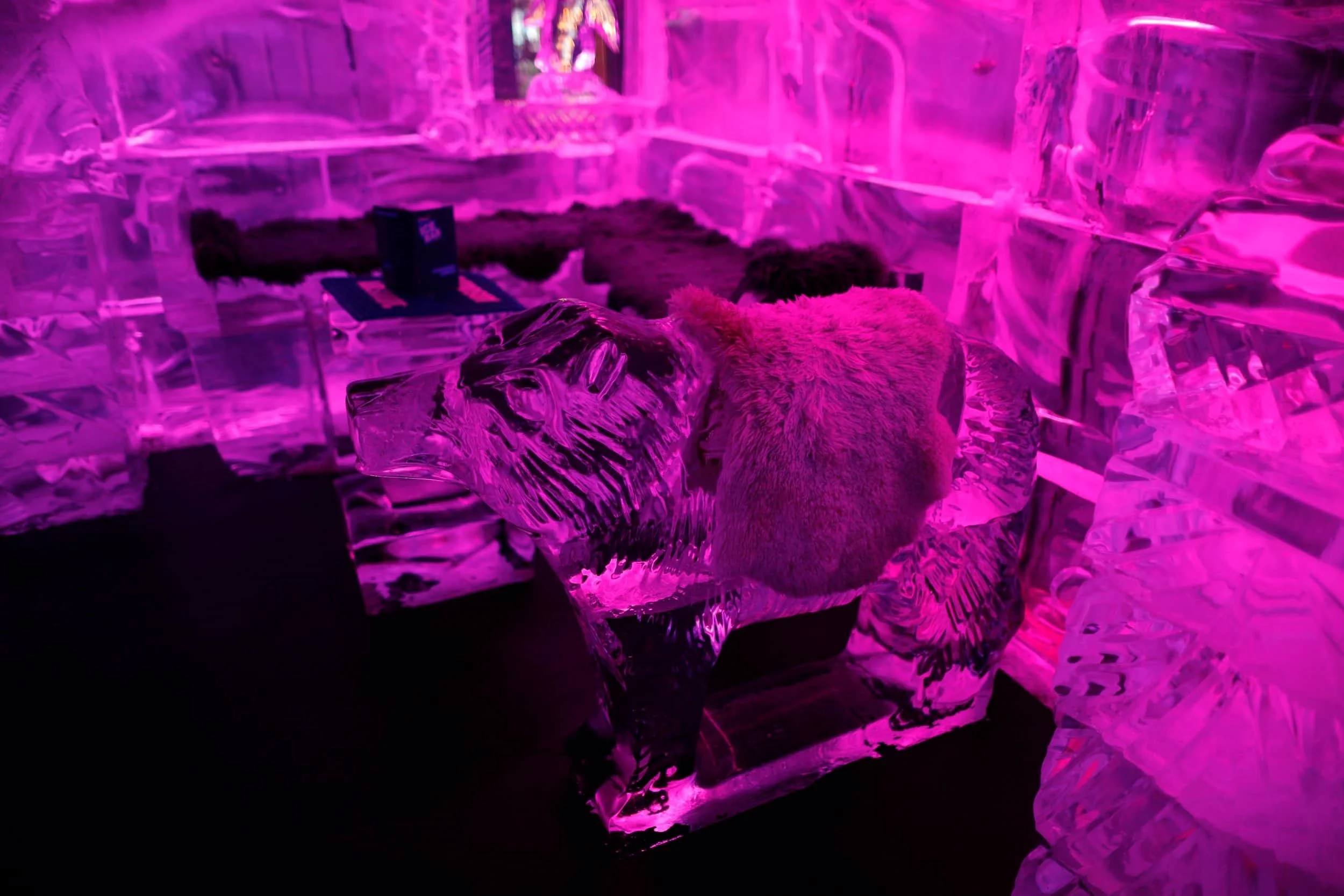
At 4 p.m. promptly, a small group of us shuffled forward and a guide cheerfully ran through the do’s and don’ts. Thick gloves and long parkas were handed out to ward off the cold and each ticket included a drink served in a thick glass carved from ice — hold it tight, we were warned, or it will slide off its frosty pedestal.
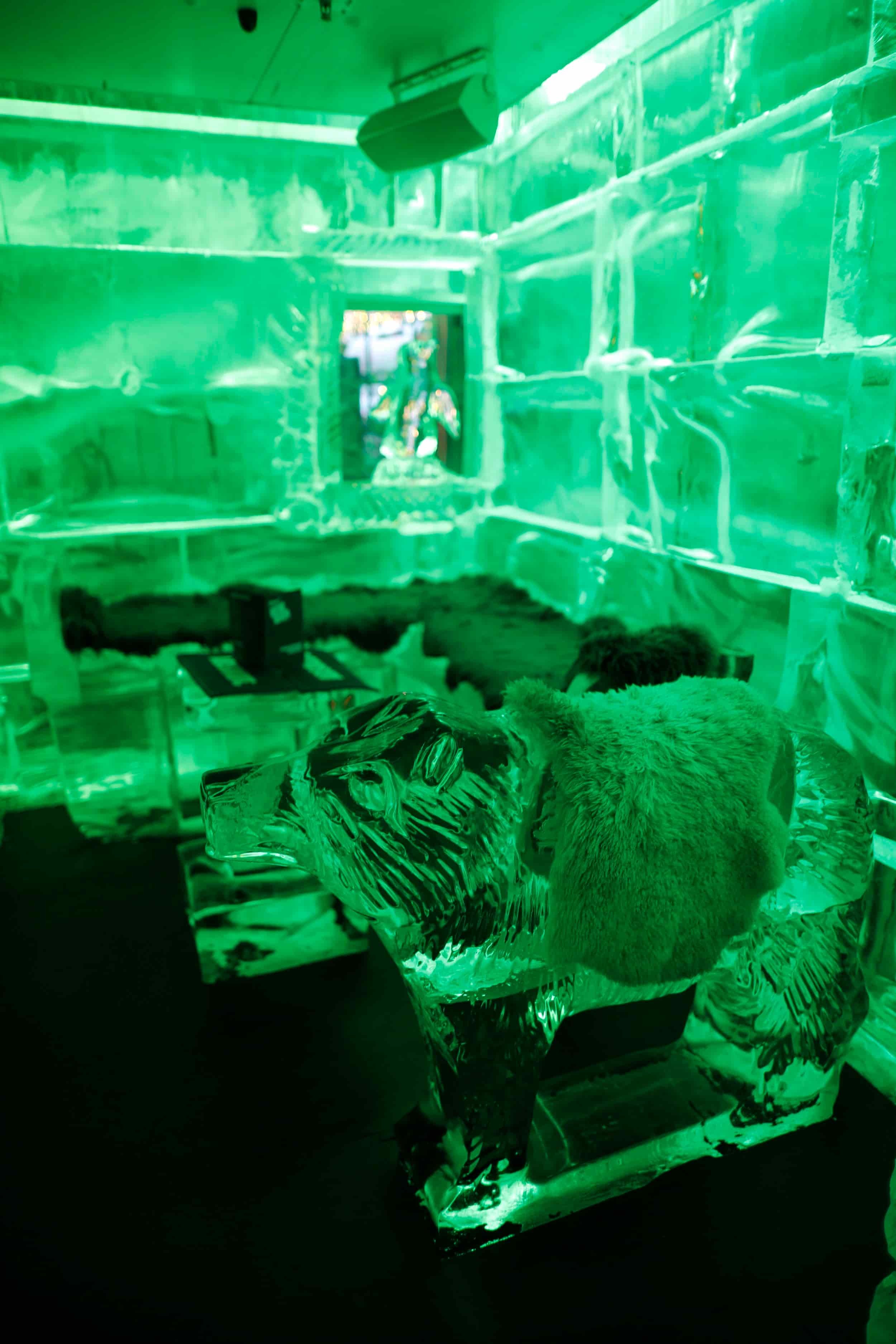
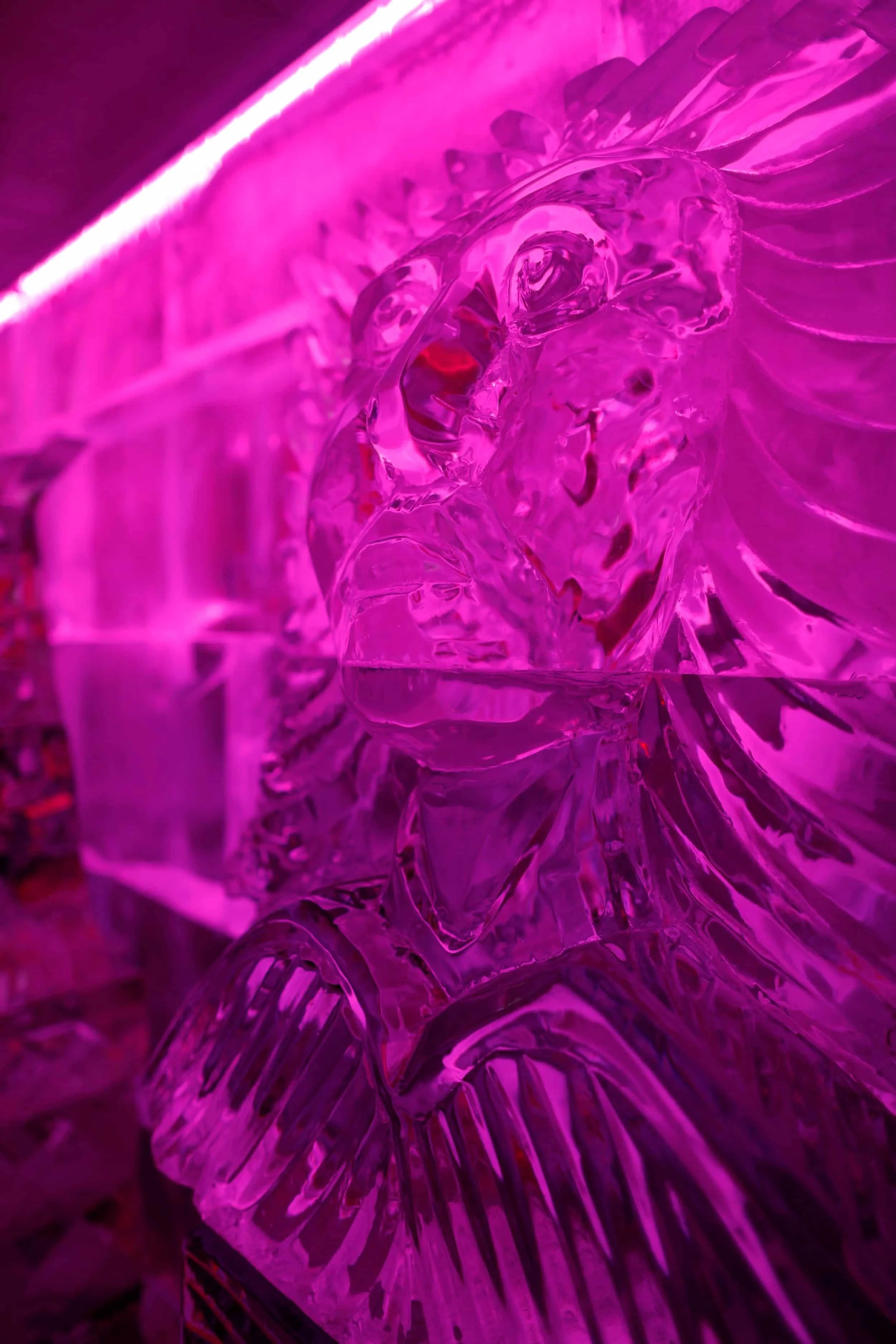
Inside, the bar felt like stepping into a winter wonderland: sculpted ice figures glinted under soft colored lights, an ice counter dispensed cocktails and mocktails and a few benches of solid ice were softened with animal furs for sitting. My mocktail arrived as a bright, fresh fruit juice that only improved as the room nipped at it; within minutes a delicate rim of frost and tiny ice crystals began to form, adding a playful crunch to every sip.
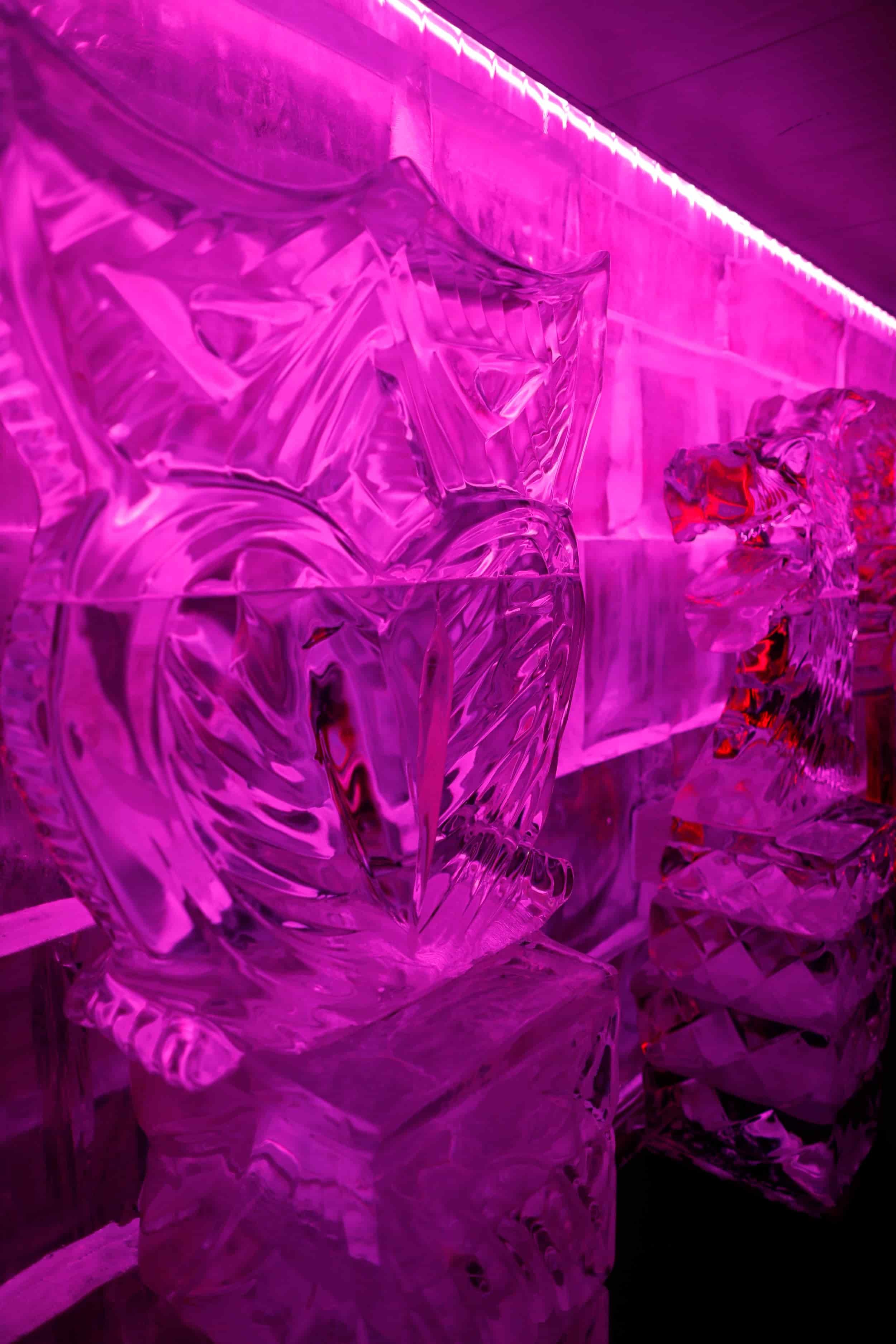
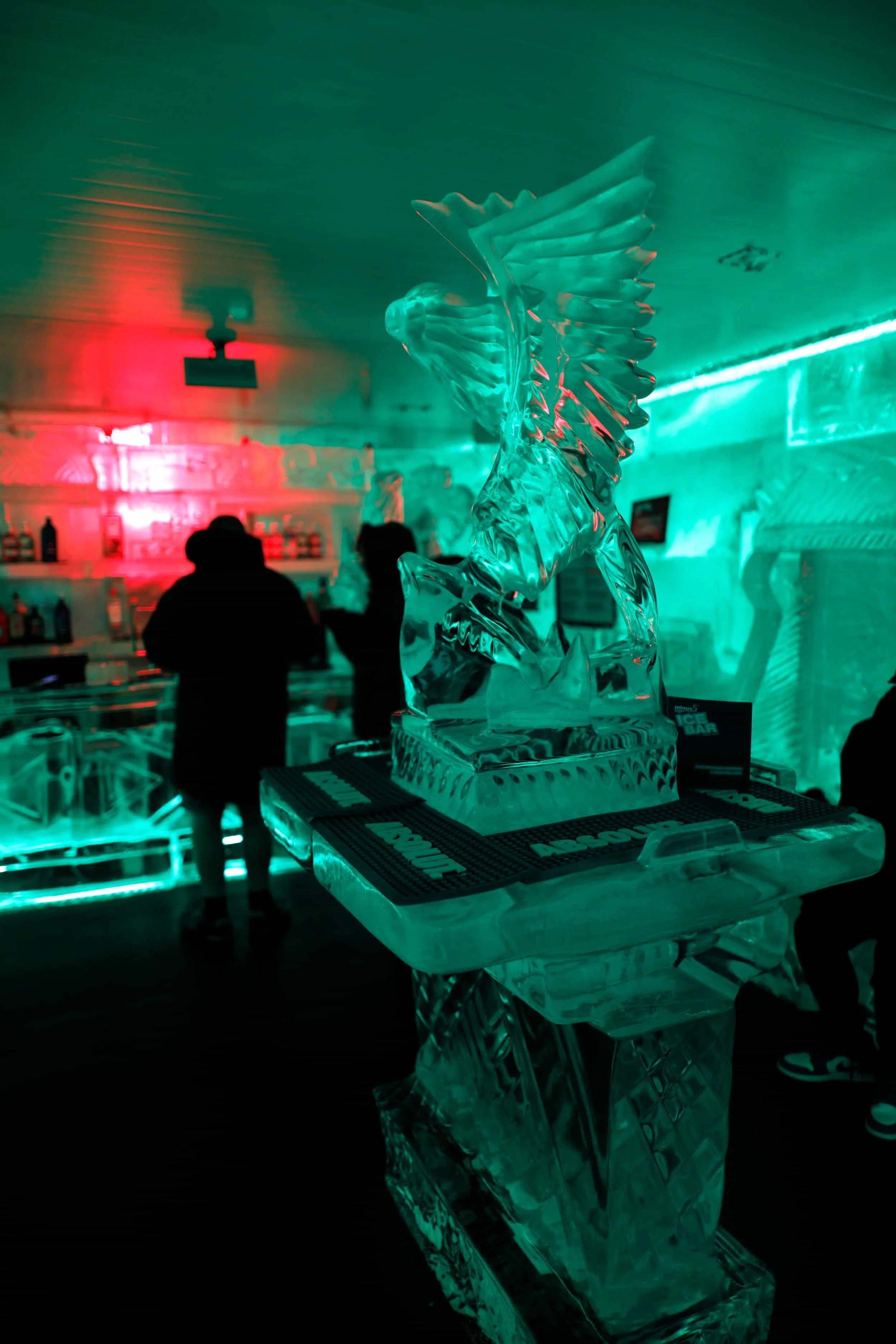
Even though one of the most unique places to visit in Queenstown, after about twenty minutes, I’d had my fill. The chill started to wear through the layers, so I made my way out before the full hour was up — a brisk, memorable taste of something uniquely cool.
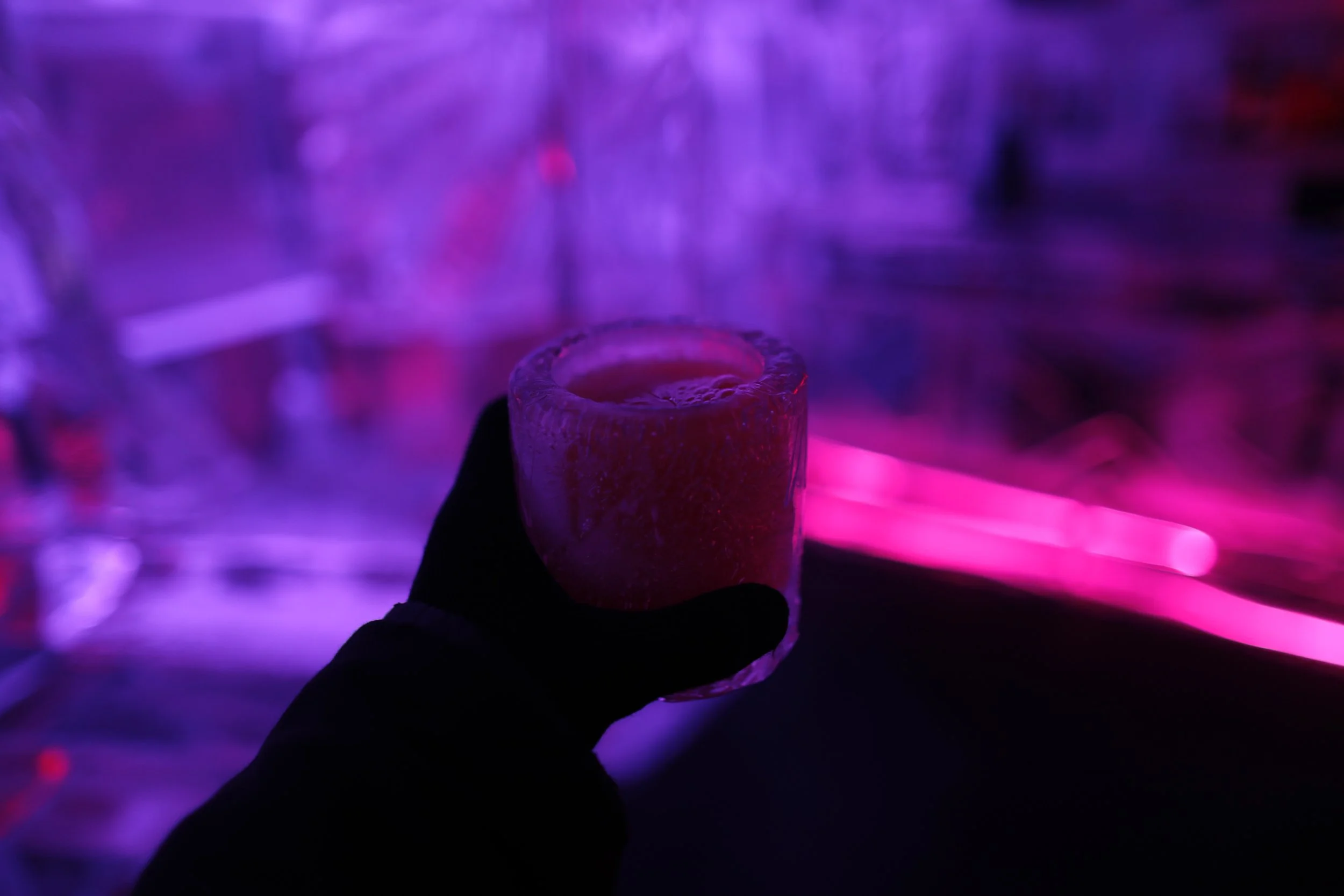
Don’t forget to give your icy cocktail glass a satisfying smash in the ice bin before you head out — completing one of many incredible experiences in Queenstown.
Truly, Queenstown feels like a storybook come to life: dramatic, snow-capped peaks framing a glassy lake, crisp, chilled air that makes every breath feel sparkling and winding streets dotted with cozy cafés and restaurants serving hearty, delicious fare — perfect after a day outdoors. The town has a quaint, charming feel, all rustic timber and twinkling lights, while nearby trails and pristine nature invite slow wanderings or adrenaline-fueled adventures.
It’s the kind of place whose views etch themselves into memory and whose pace makes you want to stay longer, one of those rare destinations you can’t wait to revisit.
My Bibimbap Moment
Every destination adds another ingredient to our life's recipe, sometimes leaving us with a feeling that's difficult to put into words. Queenstown was all crisp mountain air, dramatic landscapes, lively streets and the promise of another adventure around every corner. Even the quiet moments seemed to have a little energy behind them. Here's the ingredient Queenstown added to my Bibimbap Life.
Today’s Bibimbap Recipe
🥢 Flavor: Lively
🌿 Ingredient: Zest
❤️ Best Memory: My very first helicopter ride — more on that to come
🎒 Take With You: Some places have a way of waking us up. Hold on to that feeling — the one that reminds you to seek fresh air, say yes to adventure and stay curious about what lies beyond the next bend.
When I think back on Queenstown, I remember the feeling of being completely awake. The crisp air, enormous landscapes, charming streets and constant hum of activity seemed to sharpen everything around me. There was something invigorating about being somewhere so beautiful and so alive at the same time. I didn't leave Queenstown with one particular moment that defined it; I left with a lingering sense of energy — a little more spark, a little more appreciation for being here and a strong desire to keep moving.
Queenstown Travel Essentials
I’ll admit, Queenstown — and New Zealand as a whole — felt a little daunting at first as a solo traveler. There was transportation to figure out, expensive accommodation to navigate and an overwhelming number of things I wanted to squeeze into the itinerary. Once I arrived, though, Queenstown was surprisingly easy to settle into.
A little planning goes a long way here, particularly when it comes to where you stay, how you get around and which experiences you book ahead. Give yourself enough time to enjoy the landscape between activities, expect prices to be higher than in some other parts of New Zealand and don’t feel like every day needs to be packed with adventure. Queenstown is just as good when you slow down and simply take in where you are.
When to Go
Queenstown shines year-round but the best time to visit depends on what you want to do: for powder-hungry skiers and snow-laced alpine vistas, June through August deliver crisp, cold days and world-class runs; spring (September–November) brings blooming gardens, mild temperatures and fewer crowds — ideal for hiking and wine touring.
Summer from December to February is warm, long‑day perfection for lake activities, biking and outdoor festivals; and autumn (March–May) offers crisp air, spectacular foliage and quieter trails, making it a wonderfully mellow sweet spot for photographers and food lovers seeking cozy cafés after scenic walks.
Summer (December–February): Warm, long sunny days; peak season for hiking, biking and water sports
Winter (June–August): Snow-covered peaks; peak season for skiing and snowboarding
Shoulder Seasons (March–May & September–November): Crisp air, fall colors, fewer crowds and lower prices
How to Get There
Queenstown sits on Lake Wakatipu in New Zealand’s South Island, surrounded by the Southern Alps. Despite the dramatic setting, it’s surprisingly easy to reach by air or road.
Fly: The quickest option is flying directly into Queenstown Airport (ZQN), with connections from major New Zealand cities and select Australian destinations. The airport is only a short drive from central Queenstown — and on a clear day, the approach through the mountains is spectacular.
Drive: Queenstown is a natural stop on a South Island road trip. From Wanaka, allow roughly 1–1½ hours; from Te Anau, around 2 hours; and from Christchurch, plan for a full day of driving. Routes through the Southern Alps are incredibly scenic but roads can be winding and weather conditions can change quickly, particularly in winter.
Coach: Long-distance buses and coaches connect Queenstown with several South Island destinations, including Christchurch, Wanaka and Te Anau. They’re a good alternative if you don’t want to rent a car, although journey times are longer and schedules less flexible.
If Queenstown is your main destination, flying is by far the simplest option. If it’s part of a larger South Island itinerary, I’d rent a carv—vthe freedom to stop along the way is a big part of the experience.
Where to Stay in Queenstown
In Queenstown, I’d choose where to stay based on two things: how close you want to be to town and how much you care about the view. Staying around the town center puts restaurants, nightlife and the waterfront within easy walking distance, while hillside neighborhoods like Fernhill trade some convenience for the sweeping Lake Wakatipu and mountain views Queenstown is famous for. Frankton is convenient for the airport and generally feels a little more removed from the tourist center, while Kelvin Heights offers a quieter, more secluded setting across the lake. If you don't mind staying farther out, Arrowtown gives you historic character and a much slower village feel.
Queenstown is also expensive, particularly if you want a lake view. This is one destination where I think it’s worth deciding what matters most — location, view or price — and being willing to compromise a little on the other two. For me, the landscape wins.
Where I Stayed
For incredible views without the splurge — Mountain Vista
I stayed in a cozy private room in Fernhill, a quiet neighborhood tucked into the hillside above Queenstown. It wasn't fancy but the sweeping views over Lake Wakatipu and the surrounding mountains were breathtaking, and the price was excellent by Queenstown standards. It's about a 20-minute walk into town, so you give up a little convenience — but waking up to that landscape was absolutely worth it to me.
Where I’d Stay
If I were heading back, I’d still prioritize the landscape. Queenstown has plenty of polished hotels but I'd rather stay somewhere with a little character, privacy and a view — even if that means being slightly farther from the center.
For a cozy alpine escape — The Cabin
Tucked into the forest at the base of Ben Lomond in Fernhill, this little one-bedroom cabin feels made for Queenstown: mountain and lake views, a log-burning fireplace, private deck and cedar hot tub. It's removed enough to feel like an escape while still being only a short drive from town.
For historic character & a little luxury — Hulbert House Luxury Boutique Lodge
A beautifully restored Victorian villa overlooking Queenstown, Hulbert House combines historic character and individually designed rooms with sweeping views of Lake Wakatipu and the surrounding mountains. It’s definitely a splurge but the intimate scale, thoughtful interiors and easy walk into town make it a special option if you want both personality and location.
Additional Options
Prefer a place of your own?
Queenstown is a great place to consider an apartment, cabin or holiday home — especially if you're willing to stay just outside the center. Look for something elevated or along the lake and you may trade a little walkability for the kind of view that makes staying in Queenstown so special.
Browse Queenstown vacation rentals →
Want more options?
If you’re looking for something specific, browse more stays to find the location, style and price point that works best for your trip.
How to Get Around
Central Queenstown is compact and very walkable, so you won’t need a car for most of your time in town.
Walk: The easiest way to explore central Queenstown, the lakefront and Queenstown Gardens. Many restaurants, shops and activity departure points are within easy walking distance.
Bus: Queenstown’s local bus network connects the town center with the airport, Frankton and surrounding areas, making it a useful and affordable option if you’re staying outside the center.
Taxi & Rideshare: Readily available for airport transfers, evenings out or destinations that aren’t convenient by bus.
Bike or E-Bike: Queenstown’s network of lakeside and regional trails makes cycling a scenic way to explore beyond the center. E-bikes are particularly useful once the terrain gets hillier.
Rental Car: You don’t need one for Queenstown itself but having a car gives you much more freedom for day trips to places like Arrowtown, Glenorchy and the surrounding wine region. If you’re driving in winter, check road and weather conditions before heading into the mountains.
For Queenstown itself, I’d rely on walking and public transportation, then rent a car only if you want to explore farther afield.
How to Get Across the South Island
If Queenstown is part of a larger South Island itinerary, how you travel between destinations can shape the trip almost as much as where you go. Distances can be deceptive and some of the most beautiful routes take considerably longer than they appear on a map.
Self-Drive: This would be my choice for a longer South Island trip. Having a car gives you the freedom to stop at viewpoints, small towns and unexpected places along the way. Popular routes from Queenstown include Wanaka, Te Anau and Milford Sound but allow plenty of time for winding roads, photo stops and changing mountain weather.
Coach: Intercity buses and coaches connect Queenstown with many of the South Island’s major destinations. They’re a useful alternative if you don’t want to drive, although schedules can be limited and you’ll have less flexibility for spontaneous stops.
Fly: Domestic flights can save considerable time when traveling longer distances between major hubs such as Queenstown and Christchurch. For shorter journeys, though, I’d stick with the road — the landscape is one of the best parts of traveling around the South Island.
Train: Passenger rail is limited and doesn’t extend to Queenstown. Scenic routes such as the TranzAlpine and Coastal Pacific can be incorporated into a larger itinerary but you’ll need to combine them with other transportation.
Whichever way you travel, don’t underestimate driving times. Mountain roads, weather and the temptation to stop every twenty minutes for another ridiculous view can turn a seemingly short journey into a much longer — and usually much better — day.
How Long to Stay in Queenstown
Three to five days is the sweet spot for exploring Queenstown: enough time to soak in the town’s lakeside charm, take one full-day excursion (Milford Sound or a rugged glacier heli-hike) and leave room for a relaxed half-day wine tour or an adrenaline-packed activity like bungee jumping.
Weather changes fast in the Southern Alps — pack layers, a waterproof jacket and sturdy shoes so a sunny morning won’t derail a stormy afternoon plan. Book popular tours in advance during peak season, allow a day for buffer in case of cancellations and factor in travel time if you’re using Queenstown as a base for Wanaka or Fiordland adventures.
Is Queenstown Good for Solo Travel?
Absolutely. I traveled Queenstown solo and while planning New Zealand on my own initially felt a little intimidating, Queenstown turned out to be one of the easier places to settle into. The center is compact and walkable, there are plenty of organized activities and day trips to join and being surrounded by other travelers makes doing things on your own feel completely normal.
I also never felt like I was missing out because I was traveling solo. Activities like the Skyline Gondola, hiking, biking and exploring the lakefront are easy to do independently, while experiences like Milford Sound, wine tours and adventure activities naturally put you into a group when you want a little company.
From a safety perspective, I felt comfortable exploring Queenstown on my own. I used the same precautions I would anywhere else — keeping track of my belongings, paying attention to my surroundings and being more cautious when hiking alone or heading farther into the mountains.
The biggest thing I learned? Don’t let traveling solo convince you that you need to fill every minute. Queenstown makes it very easy to book one adventure after another but some of my favorite time was simply walking along Lake Wakatipu, taking photos and enjoying the ridiculous scenery on my own.
Tours & Day Trips in Queenstown
Queenstown is one of those places where choosing what not to do can be harder than filling your itinerary. From Milford Sound and Central Otago wineries to bungee jumping, jet boats and scenic flights, there’s an almost ridiculous number of ways to experience the surrounding landscape.
You definitely don’t need to book everything. I’d choose one or two experiences you’re genuinely excited about, leave yourself some time to explore without a schedule and, if your budget allows, consider splurging on one experience you’ll really remember. For me, that was seeing the mountains from a helicopter.
When to Book
Queenstown’s most popular experiences can fill up quickly, particularly during summer and ski season. If something is a priority — especially Milford Sound, a scenic flight, a major adventure activity or a popular spa — I’d book it before you arrive, anywhere from 2-6 weeks in advance.
Weather is also a factor. Mountain conditions can change quickly and scenic flights are particularly weather-dependent, so avoid packing your itinerary so tightly that you have no flexibility if something gets moved or canceled.
I also found it helpful to stop into some of the tour shops around Queenstown and talk with the operators in person. They’re everywhere and it was an easy way to compare options and get a better sense of what was available — even if I wouldn’t wait until then to book something I absolutely didn’t want to miss.
Top Tours & Experiences
Milford Sound Cruise
One of the biggest day trips from Queenstown — and also one of the longest. Most trips combine transportation through Fiordland National Park with a cruise through Milford Sound beneath waterfalls and towering cliffs. Coach-and-cruise tours take most of the day, while scenic flight combinations cut down considerably on travel time.
Milford Sound Overnight Cruise
If you want more time in Fiordland, an overnight cruise turns Milford Sound into the destination rather than a very long day trip. Depending on the experience, you may have opportunities for kayaking, wildlife watching and exploring the fiord when the daytime crowds have disappeared.
Bungee Jumping
Queenstown practically made its name on adventure sports and bungee jumping remains one of its signatures. Kawarau Bridge offers the classic experience, while Nevis takes things considerably higher — and considerably farther outside my personal comfort zone.
Jet Boat Ride
For adrenaline without stepping off a bridge, jet boats race through the narrow river canyons surrounding Queenstown with high-speed turns and plenty of spray. Experiences on the Shotover and Kawarau Rivers are relatively short, making them easy to fit into a day without giving up everything else.
Central Otago Wine Tour
If jumping off things isn't your idea of a vacation, spend an afternoon exploring Central Otago wine country instead. Guided tours take care of the driving while you visit several cellar doors, often with lunch or food pairings along the way. The region is particularly known for its Pinot Noir.
The Helicopter Tour I Took — Heli Glenorchy Alpine Express
One experience you won’t find elsewhere in this guide is my helicopter flight over the mountains near Glenorchy — mostly because it deserves a story of its own. I took the Alpine Express with Heli Glenorchy, a short scenic flight that took us above Lake Wakatipu and into the Humboldt Mountains before landing high in the alpine landscape.
The flight itself was only about 20 minutes but stepping out of the helicopter surrounded by mountains made it feel much bigger than that. If you want to see this part of New Zealand from above without committing to one of the longer — and considerably more expensive — helicopter excursions, this was an incredible introduction.
See the Alpine Express tour I took →
My full helicopter experience is coming in a separate guide, with plenty more photos and everything I learned along the way.
Want a Different Helicopter Experience?
Queenstown has plenty of other options if you want to spend more time in the air or venture farther into the Southern Alps, from alpine and glacier landings to flights toward Milford Sound and Fiordland. These are definitely splurge experiences, but the landscape around Queenstown is particularly incredible from above.
Explore more Queenstown helicopter tours →
One I Missed
If Onsen Hot Pools is on your Queenstown wish list, book it early. I waited too long and couldn't get a reservation during my visit — and was particularly bummed after a friend came back raving about hers. Consider reserving a relaxing session early at Onsen Hot Pools Retreat and Day Spa; it’s a popular spot, so spaces fill up fast.
Looking for More Ways to Experience Queenstown?
There’s no shortage of things to do around Queenstown, whether you want mountain adventures, time on the water, local food and wine or an easy way to explore farther beyond town.
Good to Know
Book Ahead: Queenstown can get busy during both the summer and winter seasons. If your dates aren’t flexible, book accommodation and any experiences you really care about well in advance.
Leave Some Flexibility: Mountain weather can change quickly and outdoor activities or scenic flights may be delayed or canceled. Avoid scheduling every day back-to-back so you have room to rearrange plans if needed.
It’s Expensive: Queenstown isn’t the cheapest place to travel in New Zealand, particularly when you start adding adventure activities, tours and dining. Decide which experiences matter most to you rather than feeling like you need to do everything.
You Don’t Need to Do Everything: Queenstown is famous for adrenaline but you can have an equally memorable trip hiking, exploring the lakefront, visiting nearby towns or simply slowing down and enjoying the landscape. Pick the experiences that actually sound like you.
Give Yourself Enough Time: Queenstown makes a great base for exploring the wider region but places like Milford Sound are much farther away than they appear on a map. Build in enough time that your entire trip doesn’t become a series of long day trips.
A North Island must-do: Rotorua’s Te Puia — powerful geysers, bubbling mud pools and sacred Maori crafts stir the senses and spirit with unforgettable warmth.