Durmitor National Park — Black Lake: A Little Guide to Magic
Drift into the fairytale stillness of Montenegro’s Black Lake at Durmitor National Park, where glassy waters mirror jagged peaks & every quiet path whispers a new story of nature & nostalgia — with this travel guide.
Published | June 2026
Why Visit Northern Montenegro’s Black Lake — A Wild Escape into Durmitor National Park
Montenegro — “Black Mountain” in name and fairytale in feeling — is a compact country that reads like a travel novel. Nestled in Southeast Europe, it unspools rugged, rocky summits, glassy glacial lakes, medieval villages etched into hillsides and a slim Adriatic coastline that gleams under the sun.
Kotor is the crown — a must-see base for exploring nearby wonders like the Black Lake in the north. Its narrow lanes are hemmed by stone walls, ornate palaces and ancient churches, and the cathedral stands as a testament to generations of craft. Wander between towns and hiking routes for days: every turn offers a new panorama or a tranquil moment of everyday life.
Montenegro keeps you guessing — one minute you’re on a sunlit shore, the next you’re threading a mountain pass — and throughout, small culinary joys abound: tangy rustic cheeses, fragrant wild honey, briny fresh seafood and paper-thin pršut that dissolves on the tongue.
Northern Montenegro unfolds in vast, untamed sweeps — the country’s largest region and the one nearest Kotor — where craggy peaks rise into a sharp continental sky. Winters are severe, snow lingers into spring and the short growing season only heightens the landscape’s stark beauty. At the heart of this rugged country sits the Black Lake, a mirror of deep, brooding waters cradled beneath soaring summits.
Its dark surface reflects jagged ridgelines and fir forests, lending the valley a stillness that feels almost sacred. Around it, the terrain fans out into soaring mountains and hushed, glacial valleys, protected by three national parks — Durmitor, Biogradska Gora and Prokletije — and watched over by the nature parks of Piva and Komovi.
At a Glance
📍 Destination: Black Lake, Durmitor National Park, Montenegro
🕒 Time Needed: 1-1.5+ hours
💰 Budget: Approximately €75 guided bus tour; €5 entrance fee
👟 Walking Level: Mild but muddy
🌤️ Best Season: Late Spring to early Autumn (May-September)
☕️ Don’t Miss: Fresh raspberries for sale
🖤 Perfect For: Nature lovers
My Bibimbap Moment
This trip added: Groundedness.
Every new destination adds a fresh perspective. Black Lake added the ingredient of groundedness to my Bibimbap Life. Standing at the water's edge, surrounded by towering mountains and the quiet stillness of Durmitor National Park, I found myself paying attention in a way that's easy to forget in everyday life. There was nothing I needed to do except take in the reflections on the lake, the crisp mountain air and the silence that seemed to settle over everything. It reminded me that some places don't ask for our excitement — they simply invite us to be fully present, and that's more than enough.
My Two-Week Croatia, Bosnia & Montenegro Itinerary
This two-week trip took me through Croatia, Bosnia and Herzegovina and Montenegro, combining historic cities and the Adriatic coast with islands, waterfalls and, eventually, the mountains of northern Montenegro. It was an ambitious route but one that showed me just how much the landscape can change across a relatively small part of the Balkans.
I started in Dubrovnik, with a day trip across the border to Mostar and Kravica Waterfall in Bosnia and Herzegovina. From there, I traveled north to Split, where I explored the city and took a speedboat trip out to the Blue Cave, Stiniva Cove, Budikovac and Hvar.
Next came Plitviče Lakes National Park, followed by a quick stop through Zagreb before flying to Podgorica and continuing into Montenegro.
I based myself in Kotor for the final part of the trip, using the Bay of Kotor as a jumping-off point for exploring more of the country. One of those days took me north to Ostrog Monastery, Tara Canyon and Durmitor National Park, where I finally reached Black Lake. After so much time along the Adriatic, being surrounded by mountains, forest and glacial lakes felt like seeing an entirely different Montenegro.
I also spent another day exploring Lovćen, Montenegro’s historic royal capitals and Lake Skadar, which only reinforced how much variety there was beyond the coast.
Two weeks gave me an incredible introduction to this part of the Balkans but certainly not enough time to see everything. Montenegro in particular left me wanting more — especially the mountains I only had a day to explore.
Dubrovnik → Mostar & Kravica → Split → Croatian Islands → Plitviče Lakes → Zagreb → Kotor → Black Lake & Northern Montenegro
Explore
Here’s where the journey will take us.
Location | 43.1532°N 19.0369°E Mount Durmitor, Durmitor National Park, Montenegro
Elevation | 4,646 feet (1,416 meters)
What to Bring | Hiking shoes, sun screen, bug spray, water
Duration | Allow 1-1.5+ hours
Distance | 2 miles (3.5 km) loop hike
Difficulty Level | Easy
When | Dry season (June to September)
Cost | Approximately €5 entrance fee, plus €2-€3/hour for parking; day tours around €100 but include several other sites
Tour | Book your Northern Montenegro day trip with 360 Monte or go on your own; more booking options below
Travel More | Montenegro Travel Guides
Discover Black Lake at Durmitor National Park: A Serene Alpine Jewel
Black Lake in northern Montenegro is a serene jewel tucked beneath Durmitor’s rugged peaks — a place where alpine drama meets quiet charm — and it’s one of the best day trips from Kotor. Stroll the easy lakeside paths or follow forested trails that reveal glassy reflections, mossy pines and the occasional ripple from trout beneath the surface. In summer, the water glows a cool, inviting blue; in autumn the surrounding beech and firs flame with color. Early mornings bring mist that drifts across the mirror-like surface, while evenings offer golden light and the quiet of the mountains settling in.
For a touch of activity, rent a small boat or dip your toes in shallower coves; photographers and sketchers will find endless views with the relationships of water, stone and sky. Winter transforms the lake into a silent, frosted scene with snow-draped branches and a hush perfect for slow walks. Whether you seek gentle adventure, reflective solitude or picture-perfect scenery, Black Lake charms with a timeless, peaceful presence at the heart of Durmitor.
💡 Local Tip | If you want to wander beyond Durmitor’s iconic Black Lake, try summiting Bobotov Kuk for a thrilling alpine challenge, hiking to Ćurevac for jaw-dropping canyon views, spelunking into the otherworldly Ice Cave or cruising the P14 Panoramic Road for unforgettable mountain vistas.
Discover the Magic of Durmitor’s Black Lake
My visit to Durmitor’s Black Lake was among the highlights of an unforgettable day with 360 Monte: a dreamy route that also treated me to sweeping views of St. George Island and Our Lady of the Rocks, a cozy breakfast at Floyd Coffee Shop, the dramatic gorge of the Tara River Canyon and the serene heights of Ostrog Monastery.
☕️ Worth the Detour | If you’ve got time, stop by Floyd Coffee Shop for coffee and priganice — you won’t regret it.
Slipping deep into Montenegro’s wild heart, the road unfolds through rolling hills and forests, where the trees dress themselves in brilliant autumn colors. Every bend reveals something new — russet meadows, steely rivers and the occasional shepherd guiding a woolly flock.
You’ll pass through Šavnik, a small town that feels suspended in time. Once active, it emptied after WWII as many people left for the brighter lights and steadier pay of the cities. Now, what remains is shuttered houses and quiet streets. There’s a hopeful energy too: local efforts to coax life back into the village — gifting livestock, easing debts — are quietly trying to rewrite Šavnik’s story.
Ivica Tunnel is next — Montenegro’s second-longest. You’ll emerge almost a mile and a half later as if transported through the spine of the mountain. This ribbon of road links the quiet town of Šavnik with the highland of Žabljak, opening straight into the rugged core of Durmitor. Durmitor isn’t just a mountain range; it’s Montenegro’s largest national park, a dramatic sweep of the Dinaric Alps where jagged peaks, deep canyons and hidden lakes make you want to stop the car at every turn.
Durmitor rises like a storybook kingdom of stone and forest, its skyline stitched with nearly 50 peaks. Bobotov Peak steals the show at 8,274 feet (2,522 meters), presiding over a rugged massif that holds 18 shimmering glacial lakes — each one tucked into the folds of dense, whispering woods.
To the north, the Tara River carves a dramatic canyon; to the west, the Piva cuts its own deep path; and to the south, the Komarnica sculpts the terrain with wild elegance. This stunning limestone massif and its protected Durmitor National Park feel timeless — a landscape chiseled by ice, threaded by rivers and secreted away in underground streams — all playing their part within the vast Tara River Basin Biosphere Reserve.
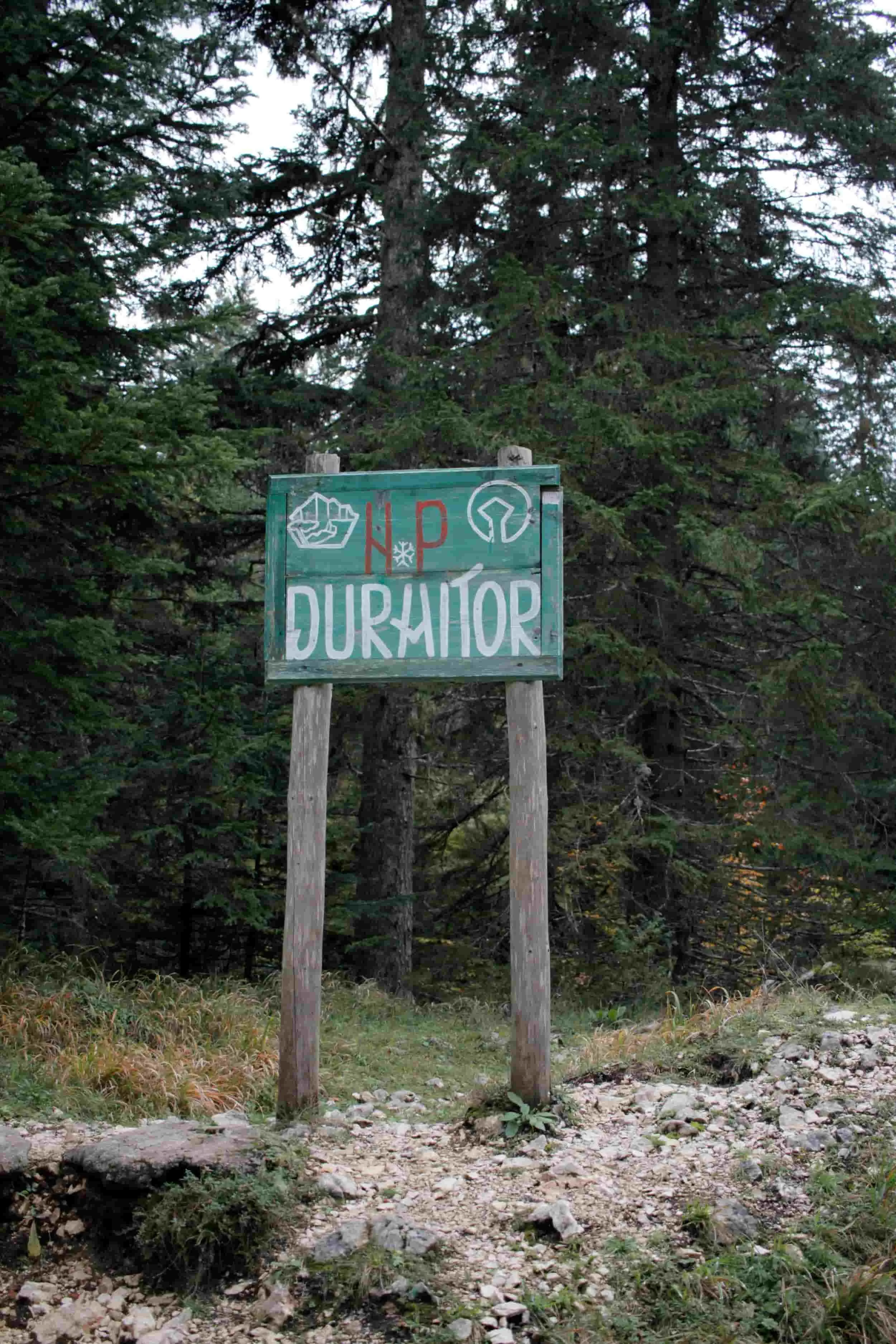
Durmitor National Park spills across 150 square miles (388 square km), the largest protected wild in Montenegro and a UNESCO World Heritage wonder since 1980. Nicknamed the “Mountain Eyes,” its landscape is dotted with crystal glacial lakes that seem to wink at you from meadows and rocky hollows. But the real showstoppers are the dramatic canyons carved by the Draga, Sušica, Komarnica and Tara rivers — and the Tara, in particular, plunges into Europe’s deepest gorge, a breathtaking scar of stone that makes you feel wonderfully small and wildly alive.
Arriving at Durmitor National Park, our guide began to share the plan: a quick stop at Black Lake, one of the park’s 18 glacial gems, perched at about 4,645 feet (1,416 meters). Time was tight — if we rushed, we were told, we could walk all the way around in roughly 30 minutes. The clock was set for a 12:35 p.m. return, so off we went, hopeful that the lake’s mirror-like surface and the mountain air would cooperate with our schedule.
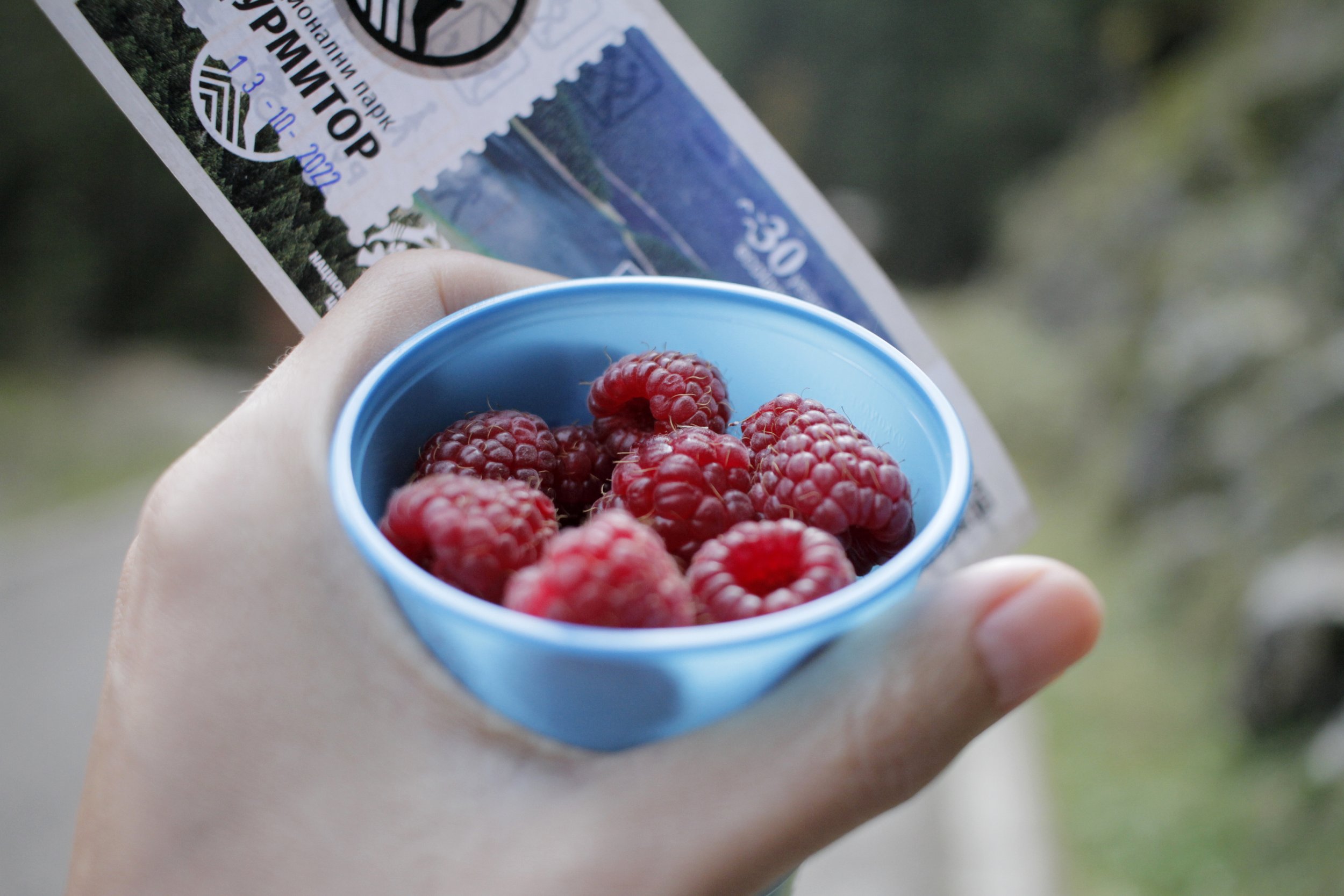
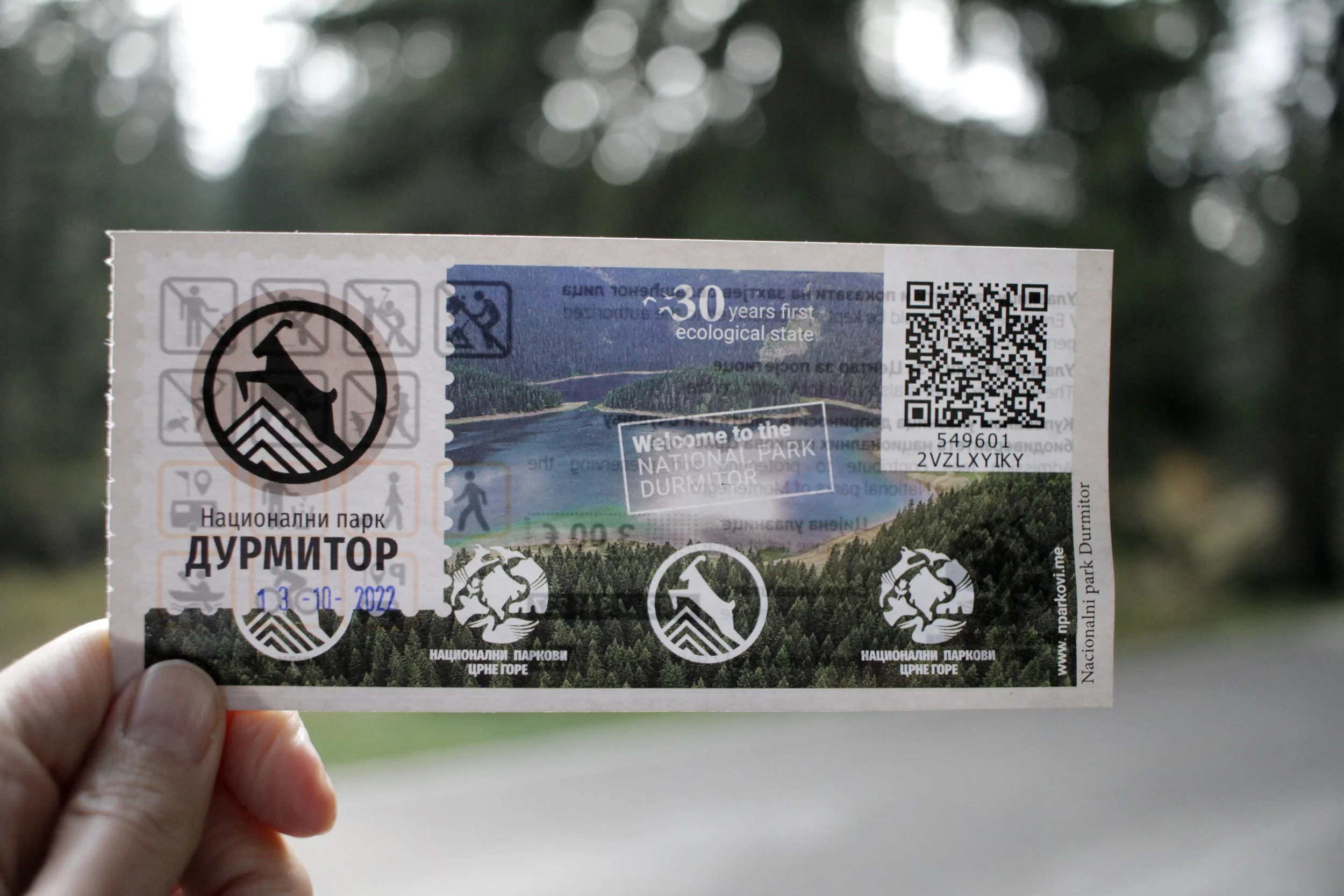
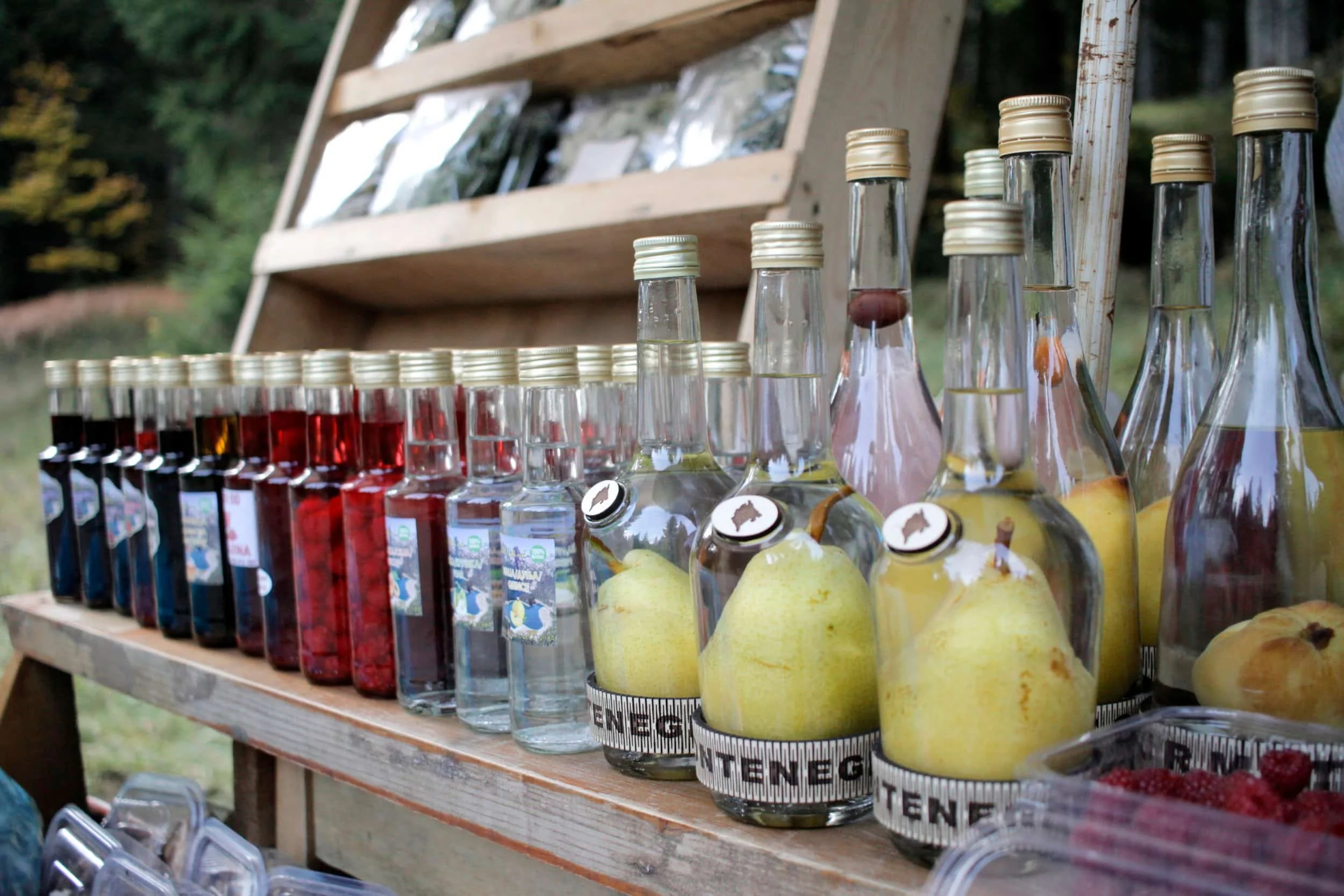
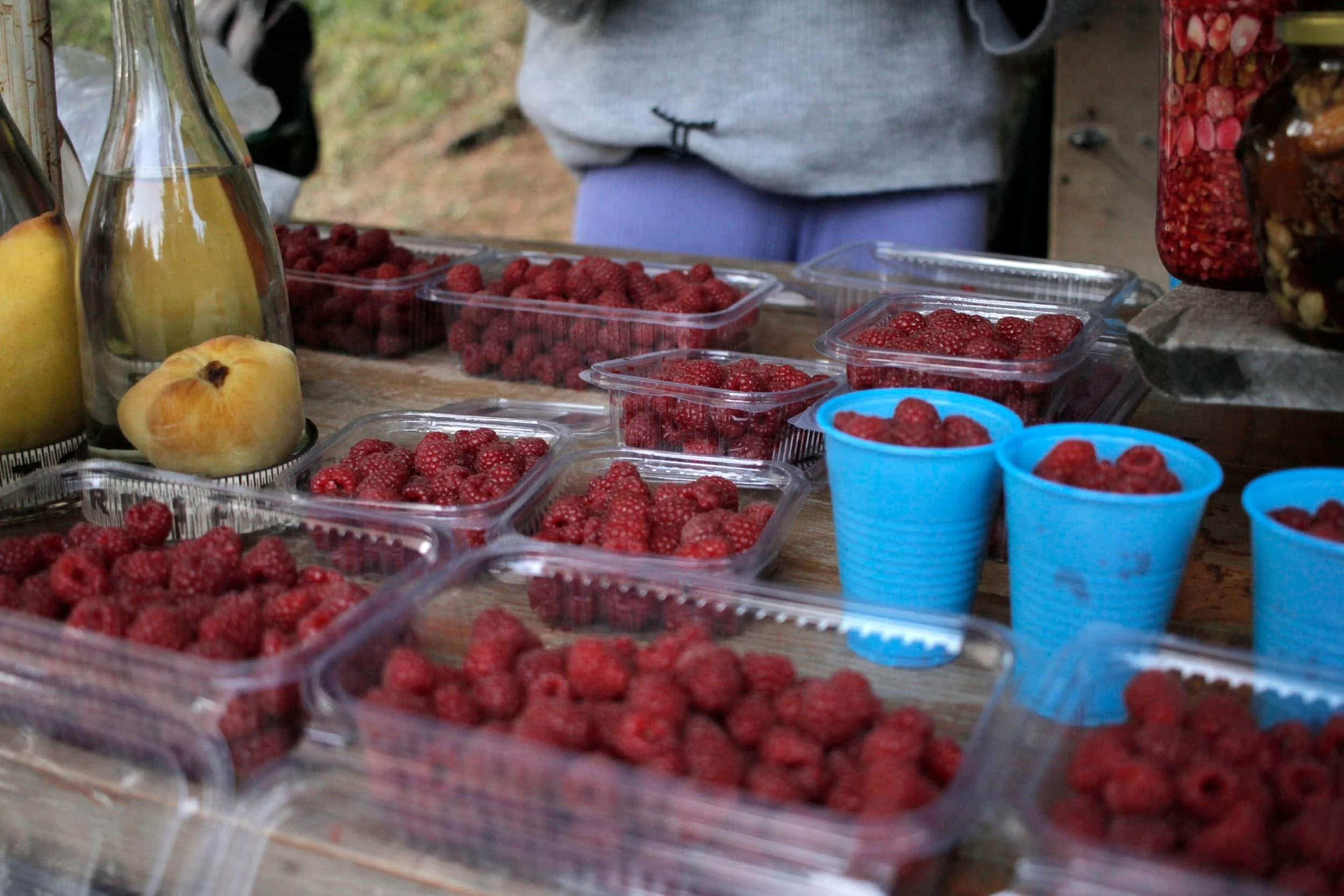
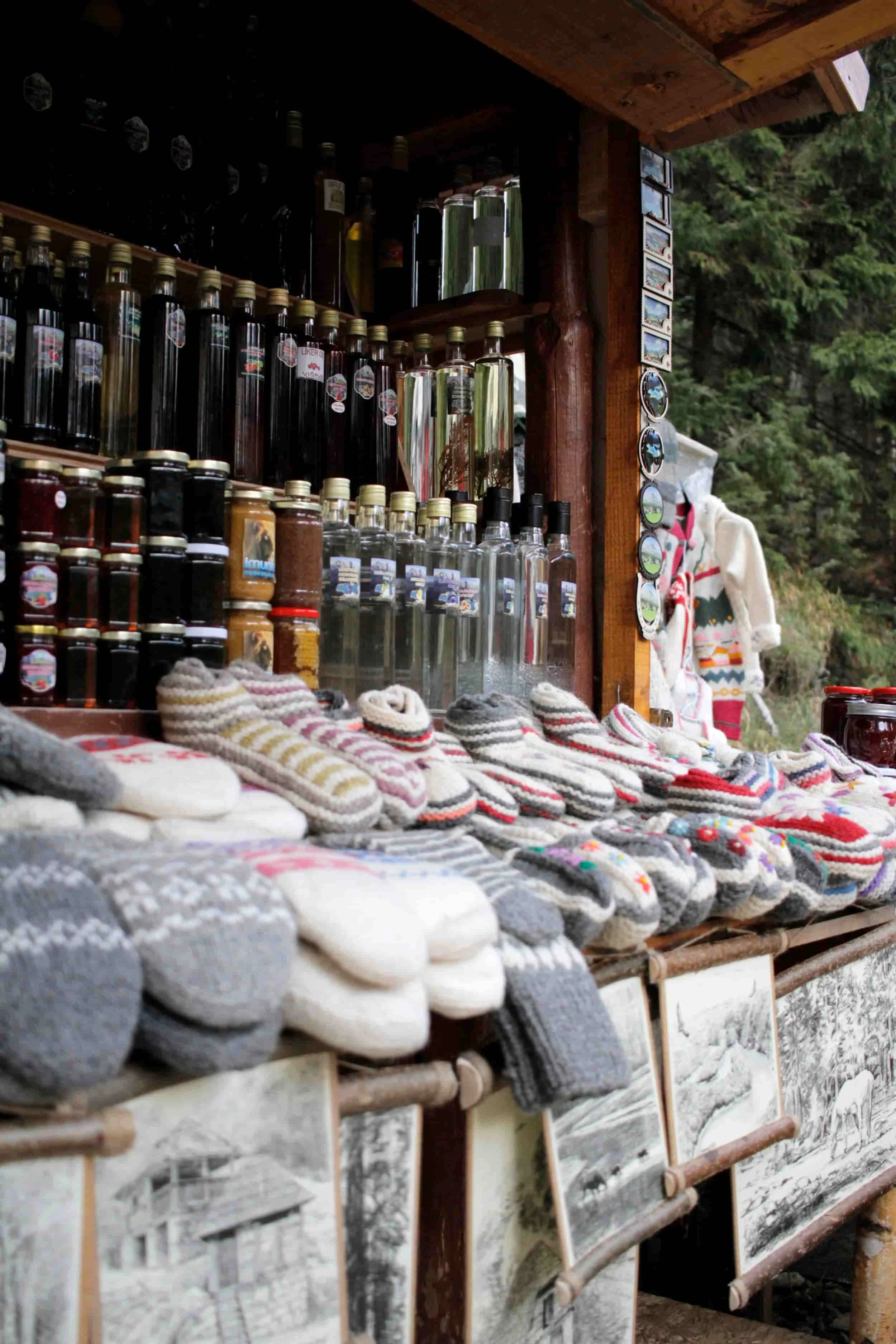
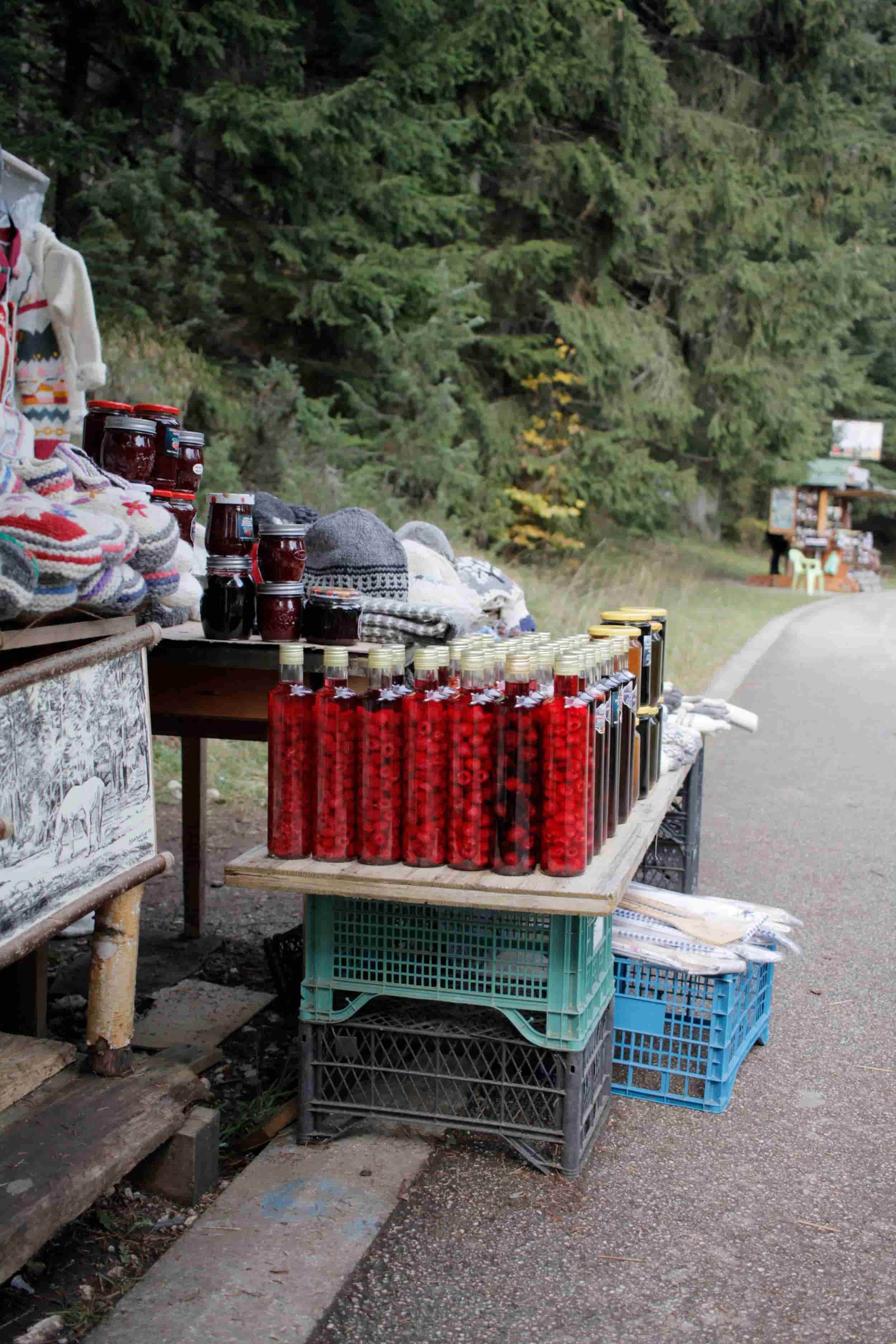
Our driver dropped us just shy of the main gate and we set off on a leisurely ten-minute walk toward the lake; entry cost €5 at the time. The road into the park spread out before us like a small market parade. Stalls dotted the way, piled high with jars of honey and jam, bottles of local liquor, ripe fruit and a mix of warm-weather gear — slippers, hats and gloves. I couldn’t resist a northern treat: a small cup of sun-ripened raspberries. Sweet and tart on the tongue, they were the perfect companion for the walk ahead.
Earlier, we’d heard the news: Montenegro had quietly stolen the crown for the tallest people in the world, nudging past the Dutch. The average Montenegrin man now stands about 6 feet 0.2 inches — impressive but not shocking when you see the landscape. Up north, locals attribute their height to the food: mountain-grown produce, tended with time-honored methods, soaked in clear air and mineral-rich soil. The fruit and vegetables there taste like proof. Naturally, I was eager to see for myself.
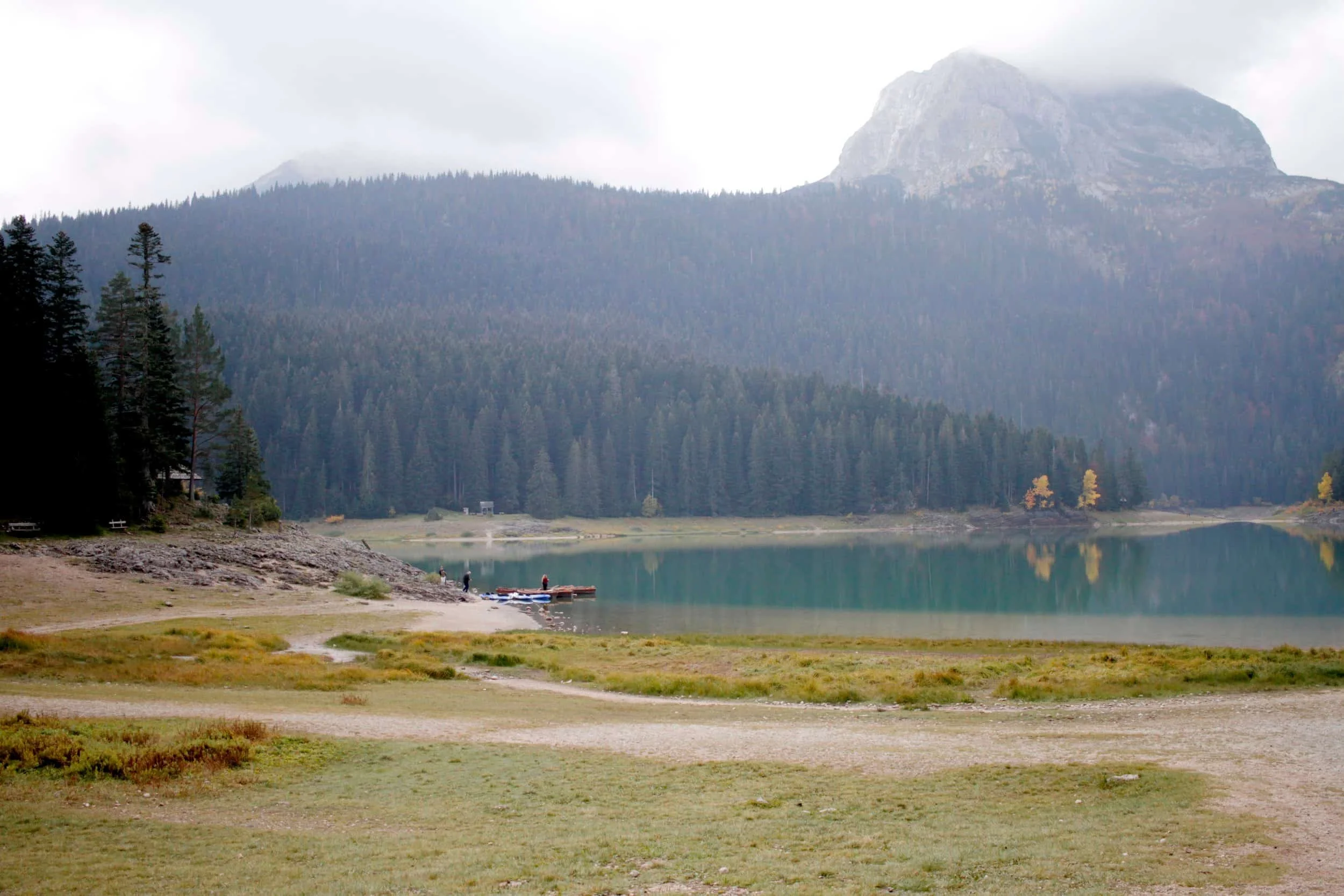
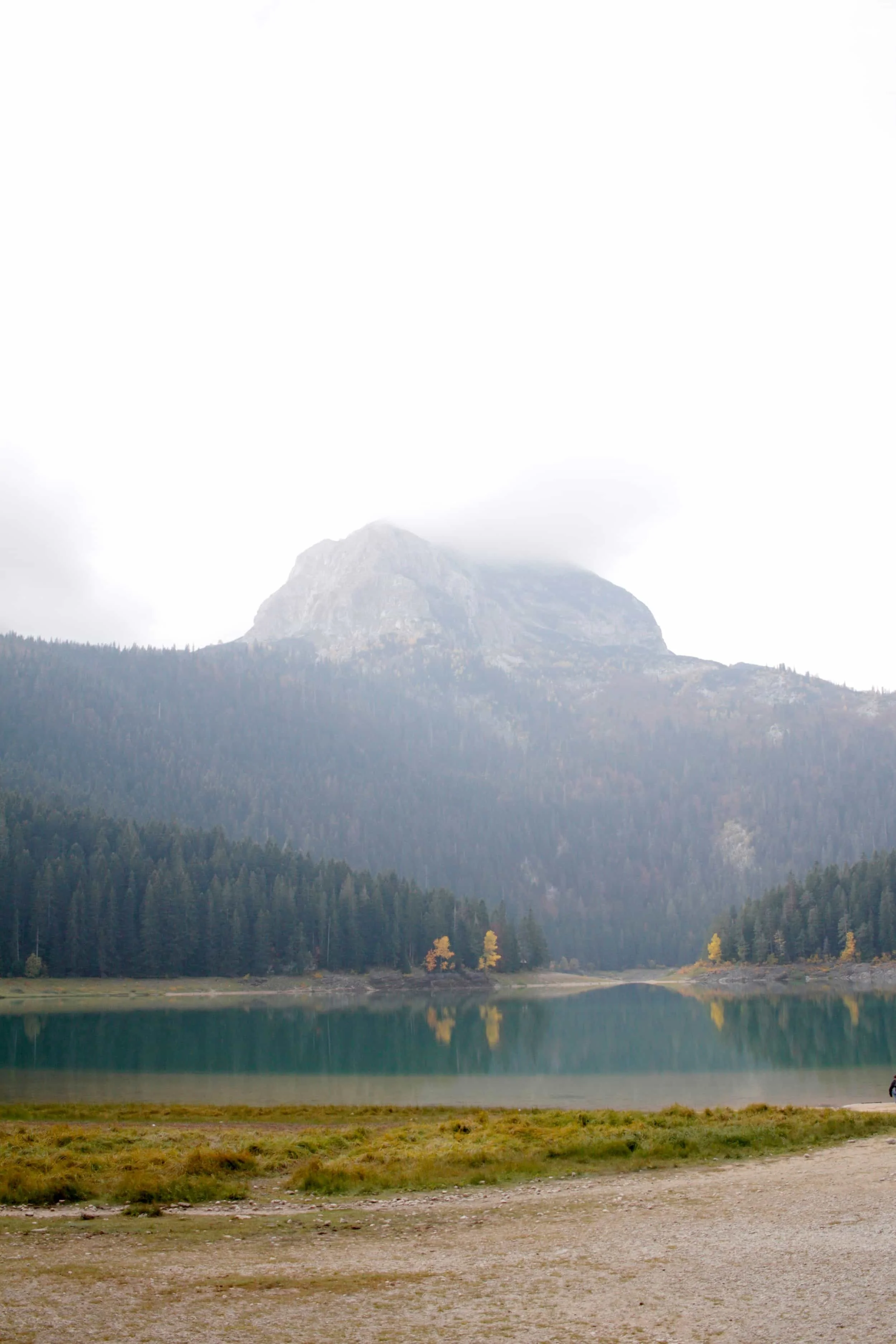
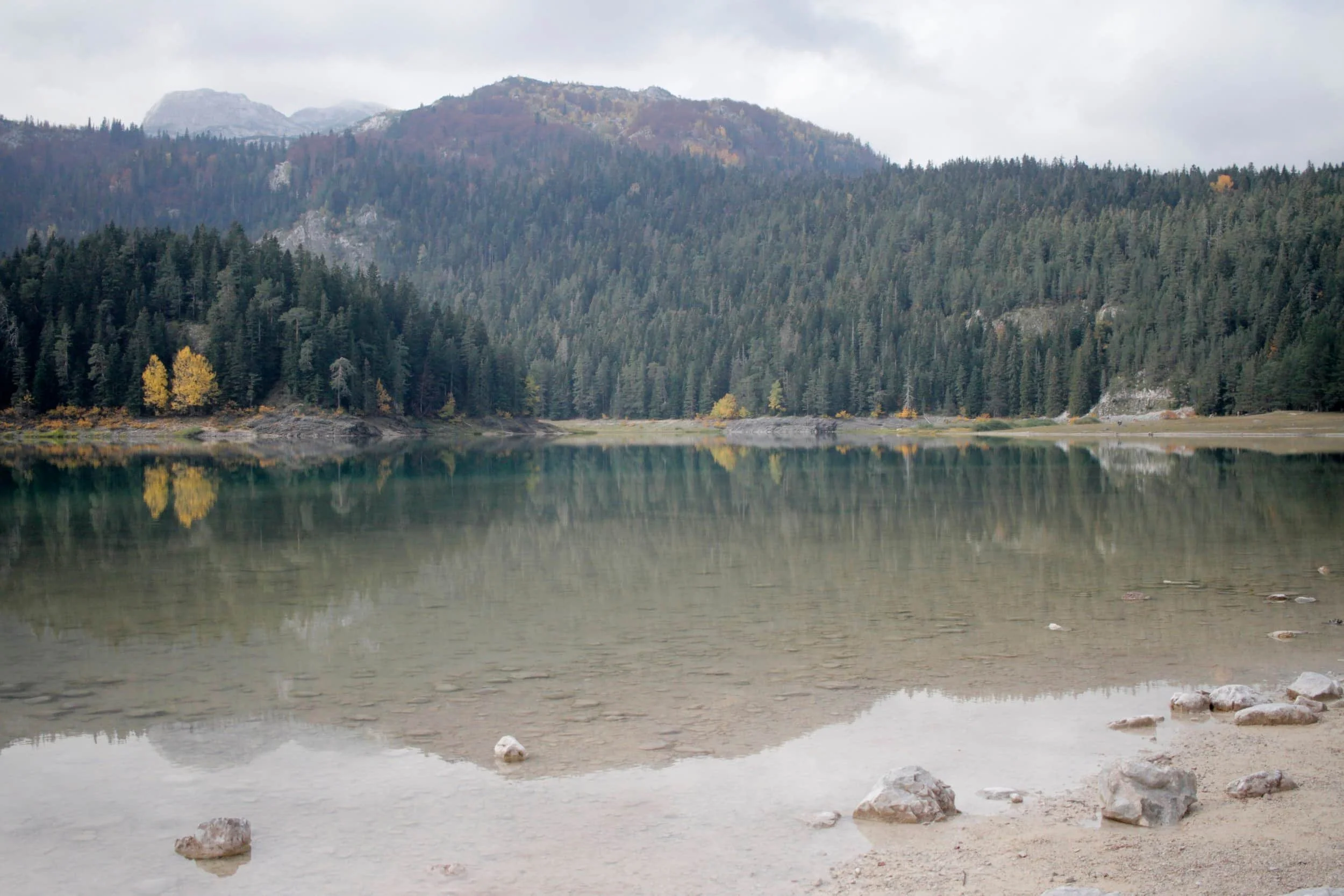
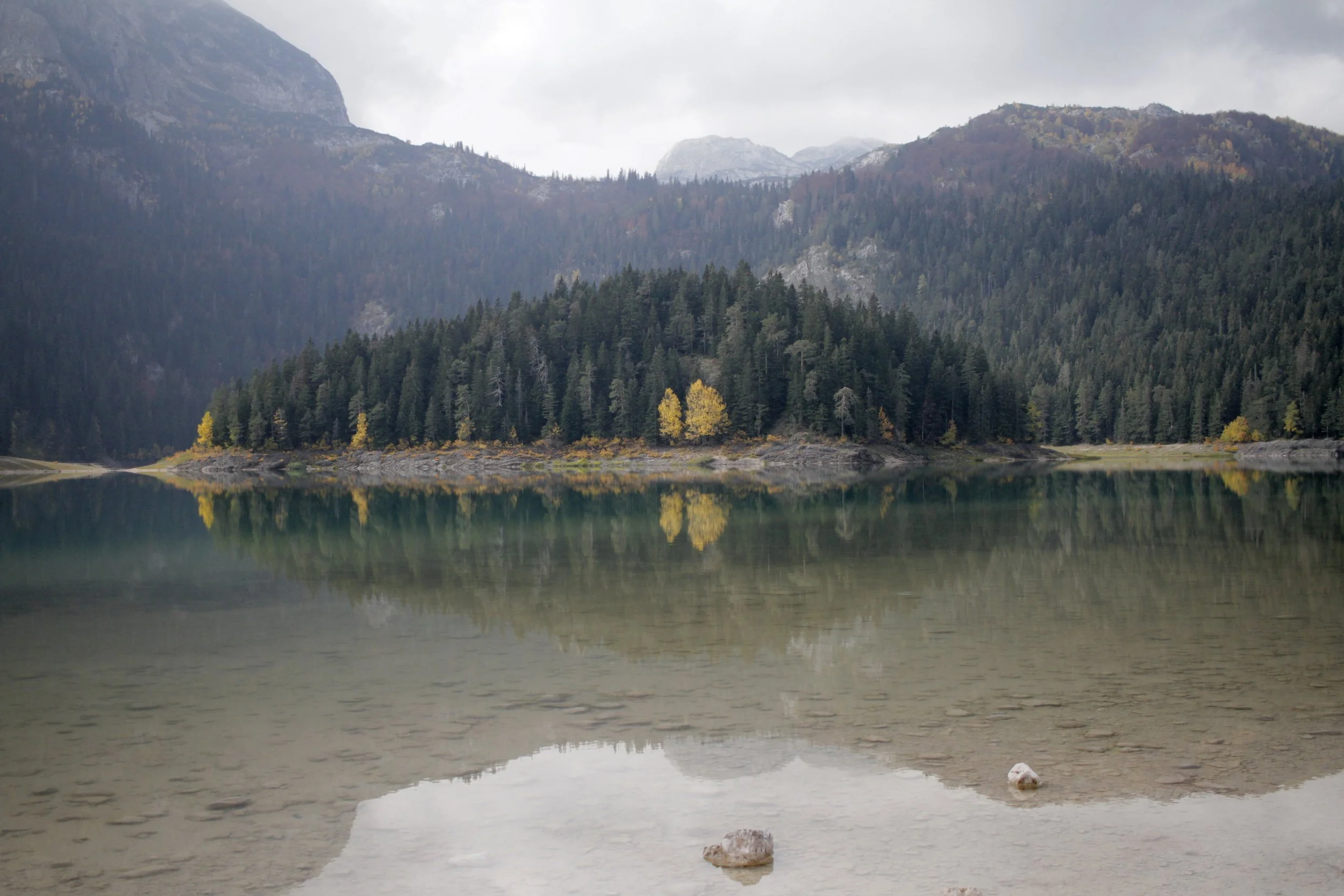
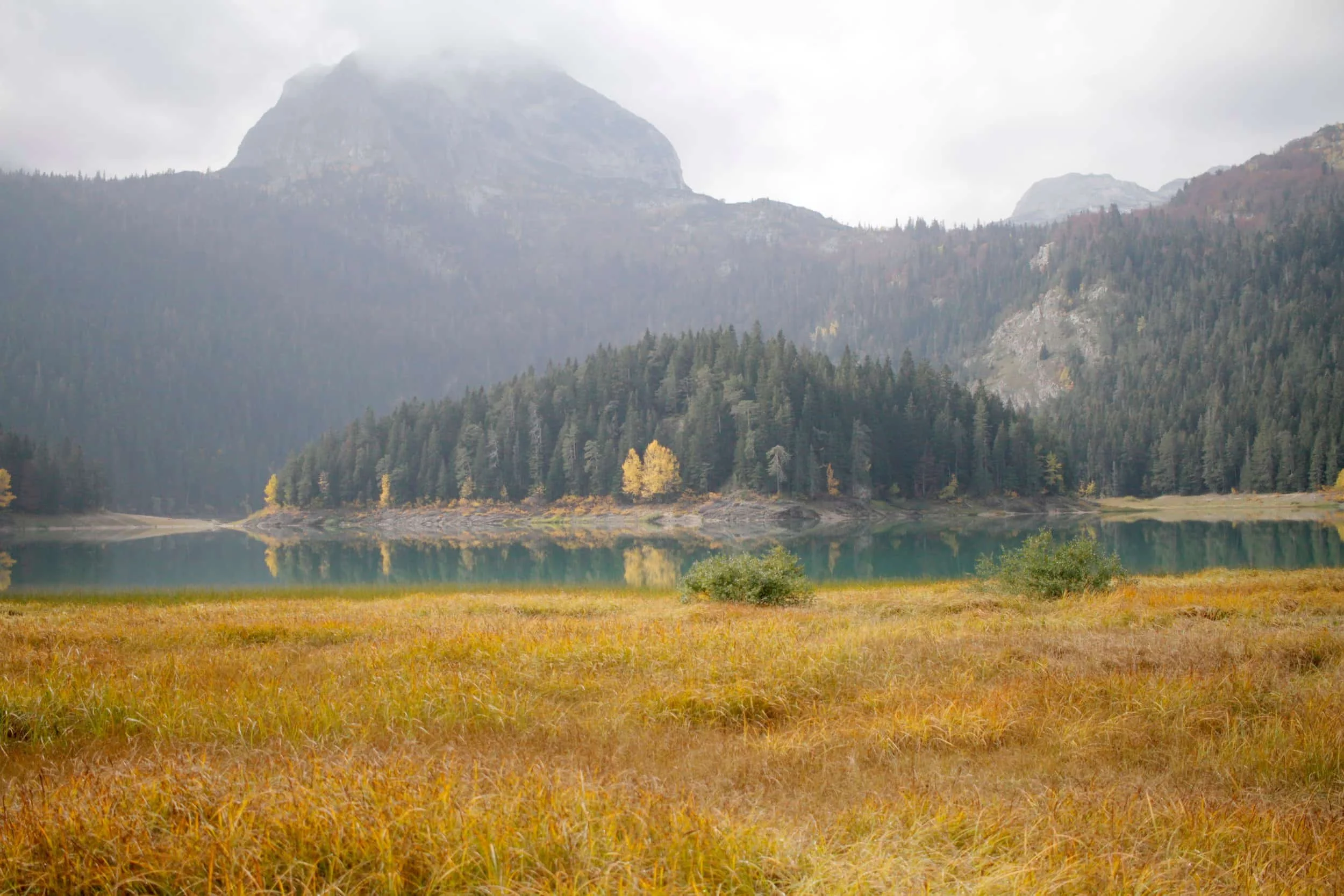
Crno Jezero — Black Lake — sits like a jewel at the foot of Međed Peak and the mountain’s looming silhouette gives the water its dramatic name. From certain angles, the peak throws a cool, permanent shadow over the surface, darkening the lake and lending the place an almost mythical silence.
What looks at first glance like one sheet of water is actually two: Veliko Jezero (Big Lake) and Malo Jezero (Little Lake), joined by a slim stone-fingered strait. In high summer, the neck dries and the lakes become two separate mirrors, each reflecting the rocky slopes in its own way. Don’t be fooled by their modest size — Veliko and Malo plunge far deeper than they appear, reaching roughly 80 and 160 feet (18 and 24 meters), respectively.
Black Lake is fed by a handful of mountain streams, the most familiar of which is Mlin Creek (Mill Creek). In spring and early summer, hidden rivulets born from Mount Durmitor’s melting snow wake up and thread into the lake, some so small they never earn a name. All summer long, Big Lake gently pours into Little Lake, a slow handover of clear, cool water. Come winter, the roles reverse — Little Lake nudges its way back into Big Lake, a quiet, seasonal exchange that keeps the two forever connected.

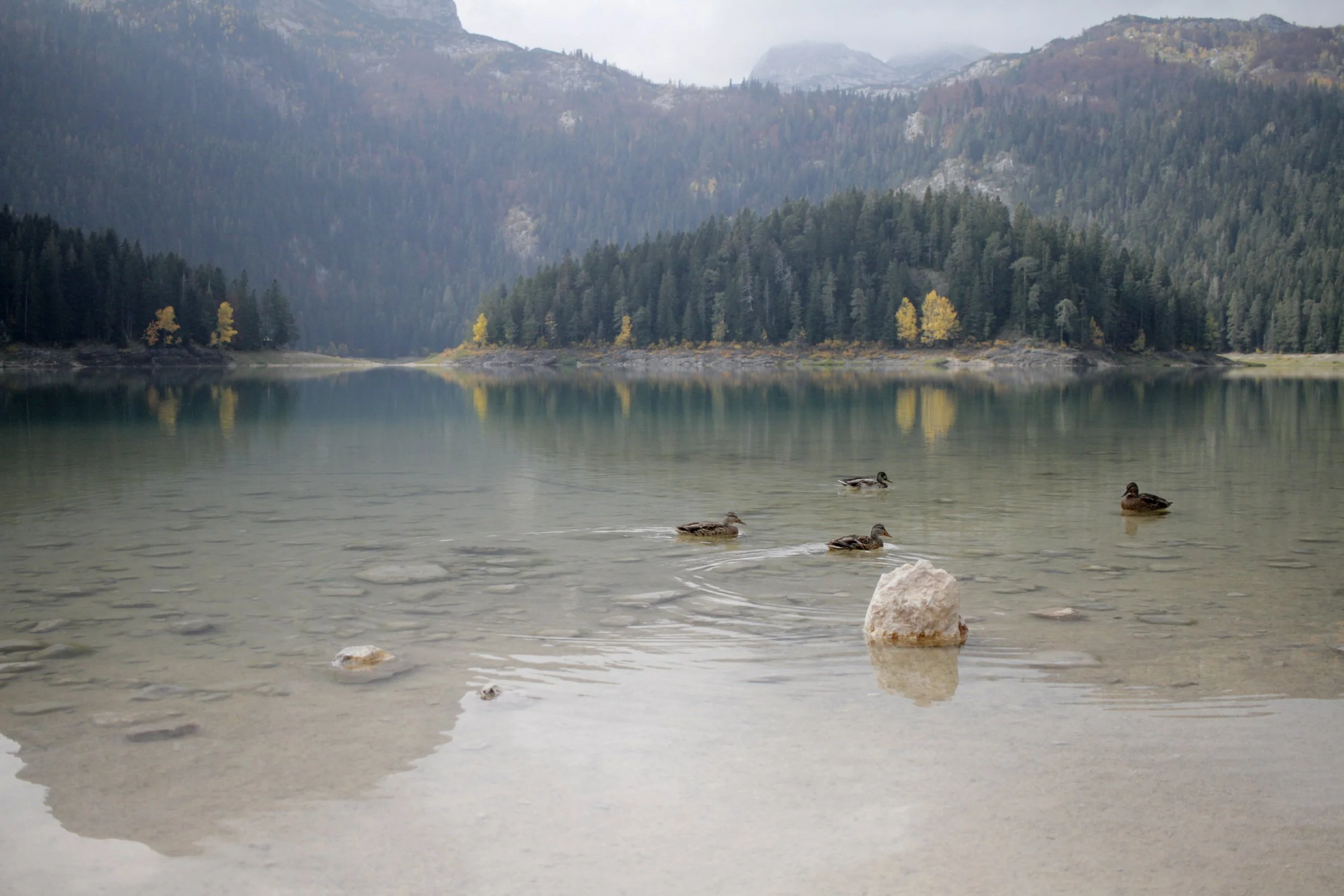
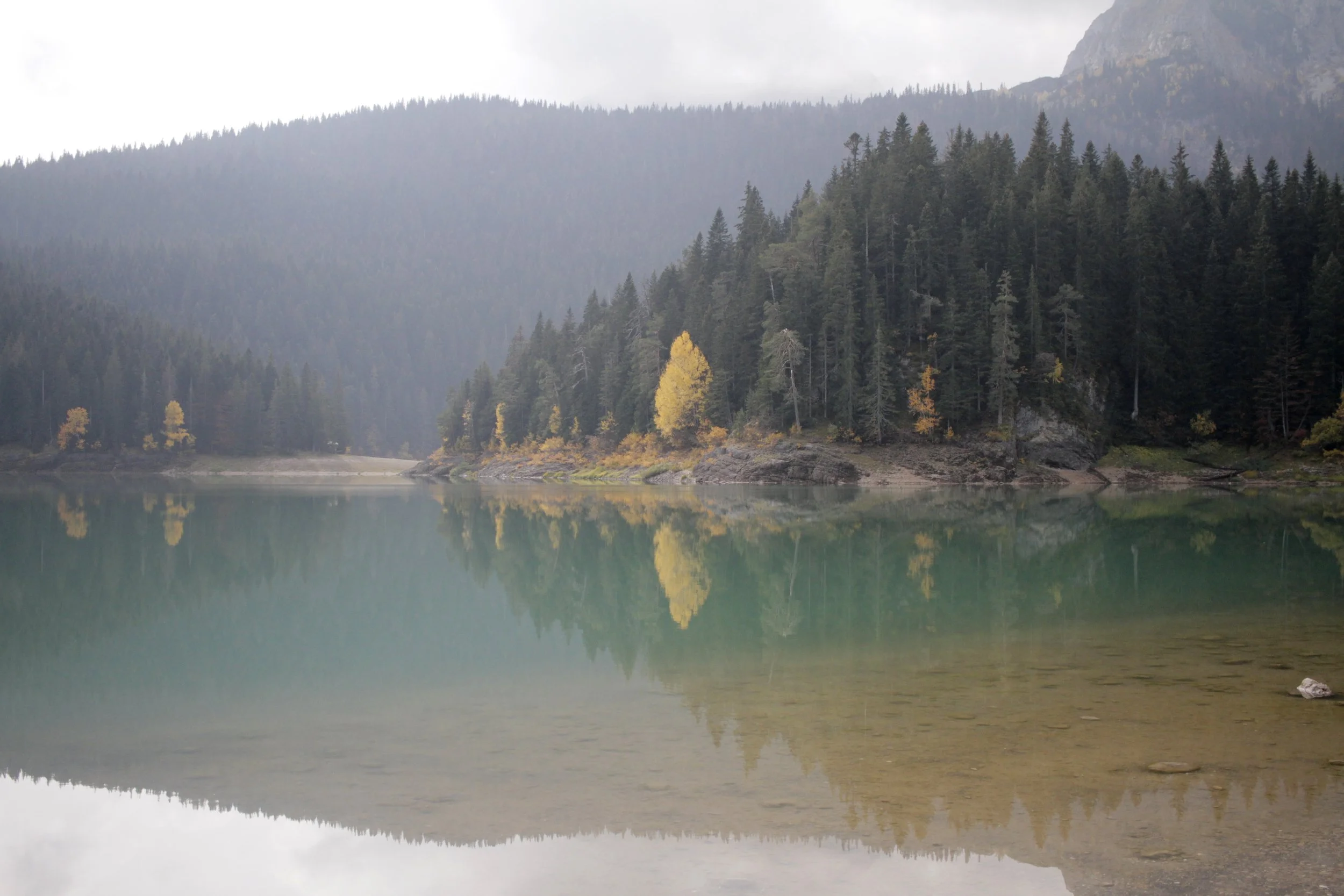
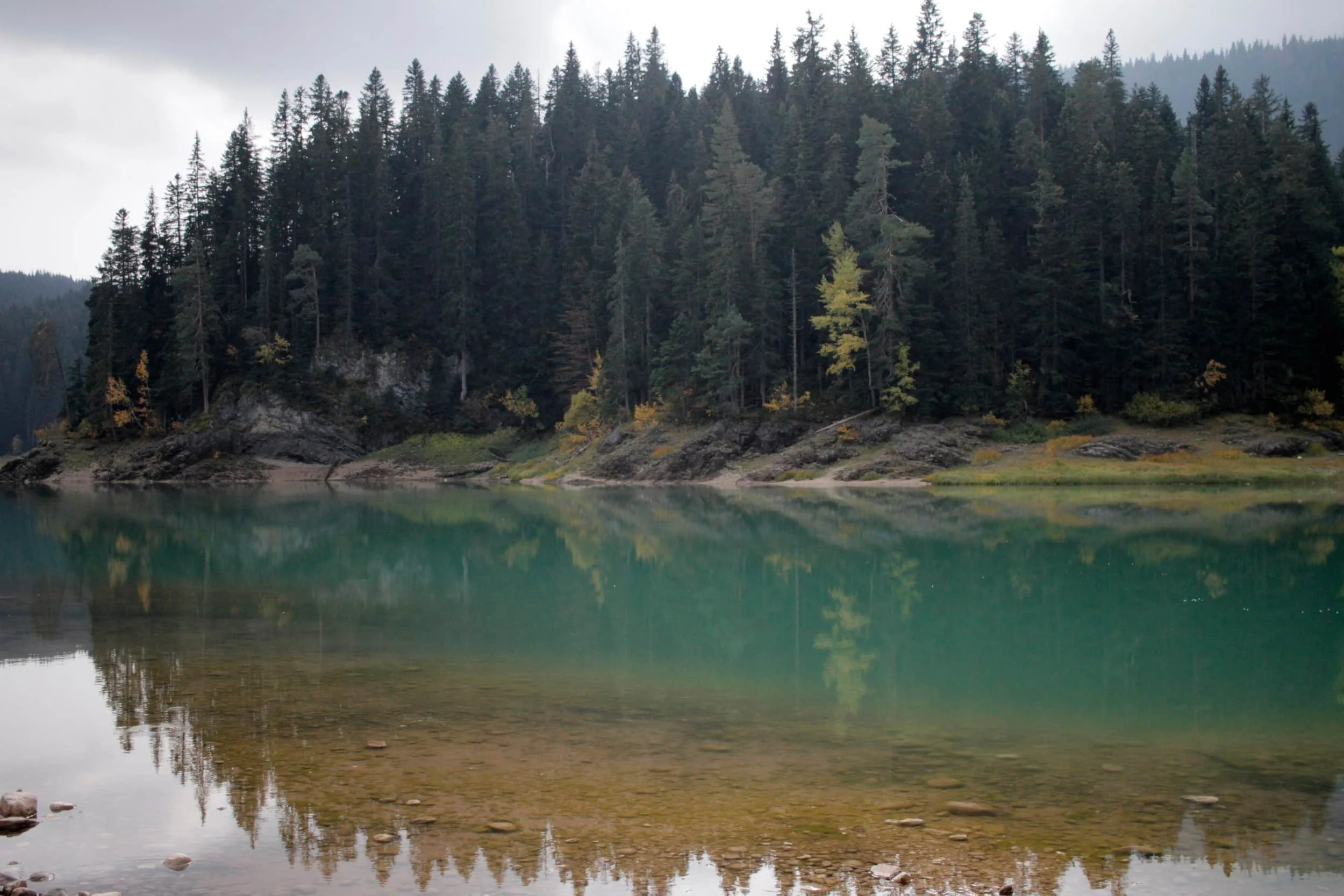
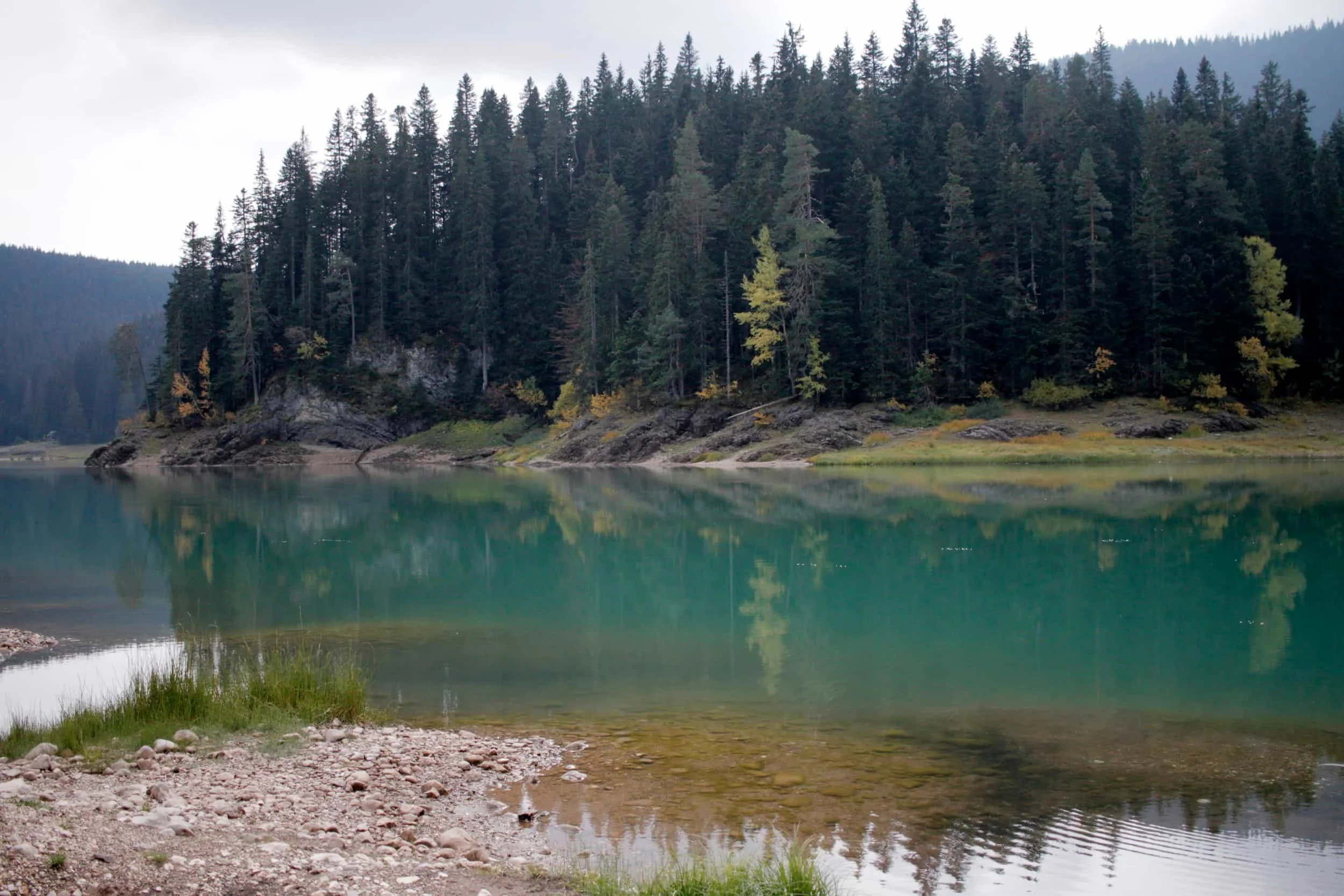
When the lake finally reveals itself, you can’t help but hurry forward for a better look. Slip down to the soft, damp shore and watch the small parade of ducks bobbing in the glassy water. The color of the lake will stop you in your tracks — a brilliant turquoise so vivid it belongs more to a Caribbean lagoon or a hidden Asian cove than to this patch of earth.
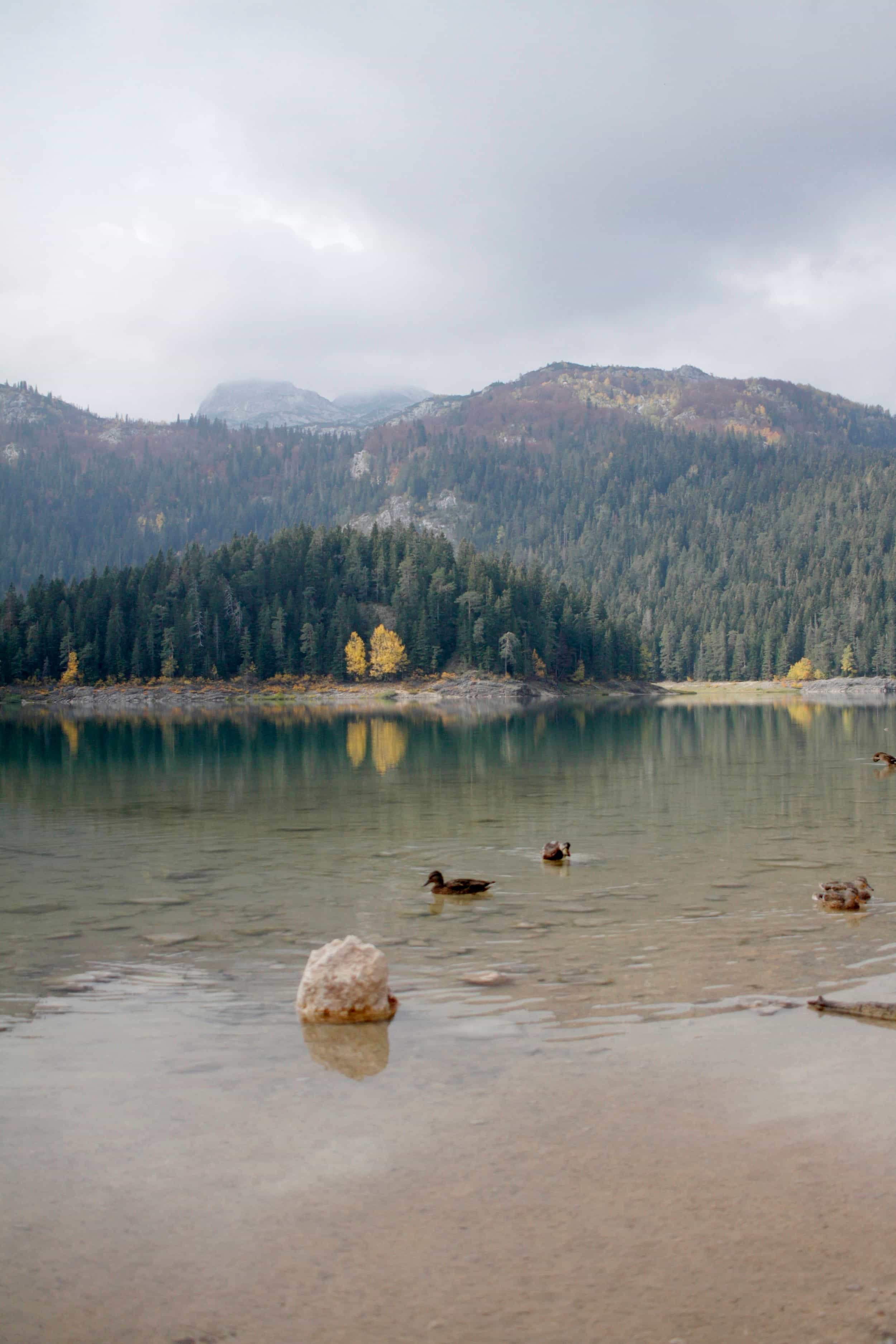
The lake looks as if it can’t decide on a single personality — split into two shimmering halves or maybe just pretending to be. The divide is subtle and a little mysterious. Our guide asked us to stick to one side, which sounded sensible…and ambitious, given we only had an hour. The trail hugs the water but be warned: much of the shoreline is soft and spongey. What looks like a neat path can quickly turn into a muddy marsh underfoot.
⚠️ Good to Know | If you plan to circumnavigate the lake, bring hiking shoes (or a pair you won’t cry over ruining) and give yourself more time than suggested. Officially, the loop is about two and a half miles but with soggy ground and so many places to stop and stare, you’ll want a slow pace.
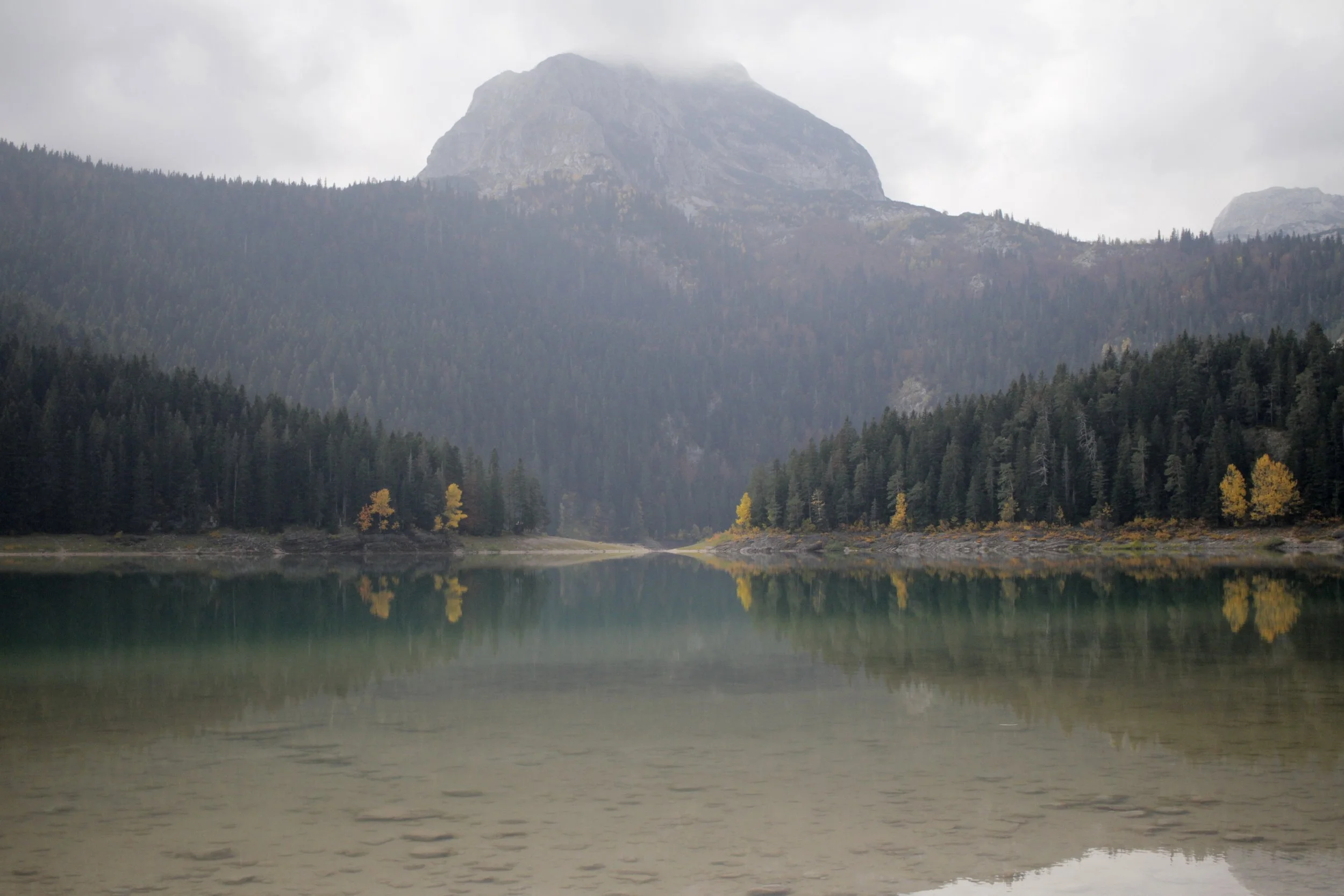
The lake lay serene as I wandered along its edge, the surface a mirror of the sky and landscape. Around halfway, I paused — the wooded stretch ahead looked like a mystery best left for someone with a map. I couldn’t spot a clear path, only the occasional glimpse of fellow walkers slipping out of the trees and reappearing by the water. My fresh white sneakers, now caked in mud, made the decision for me: I’d soon turn back, savoring the calm instead of getting lost beneath the forest canopy.
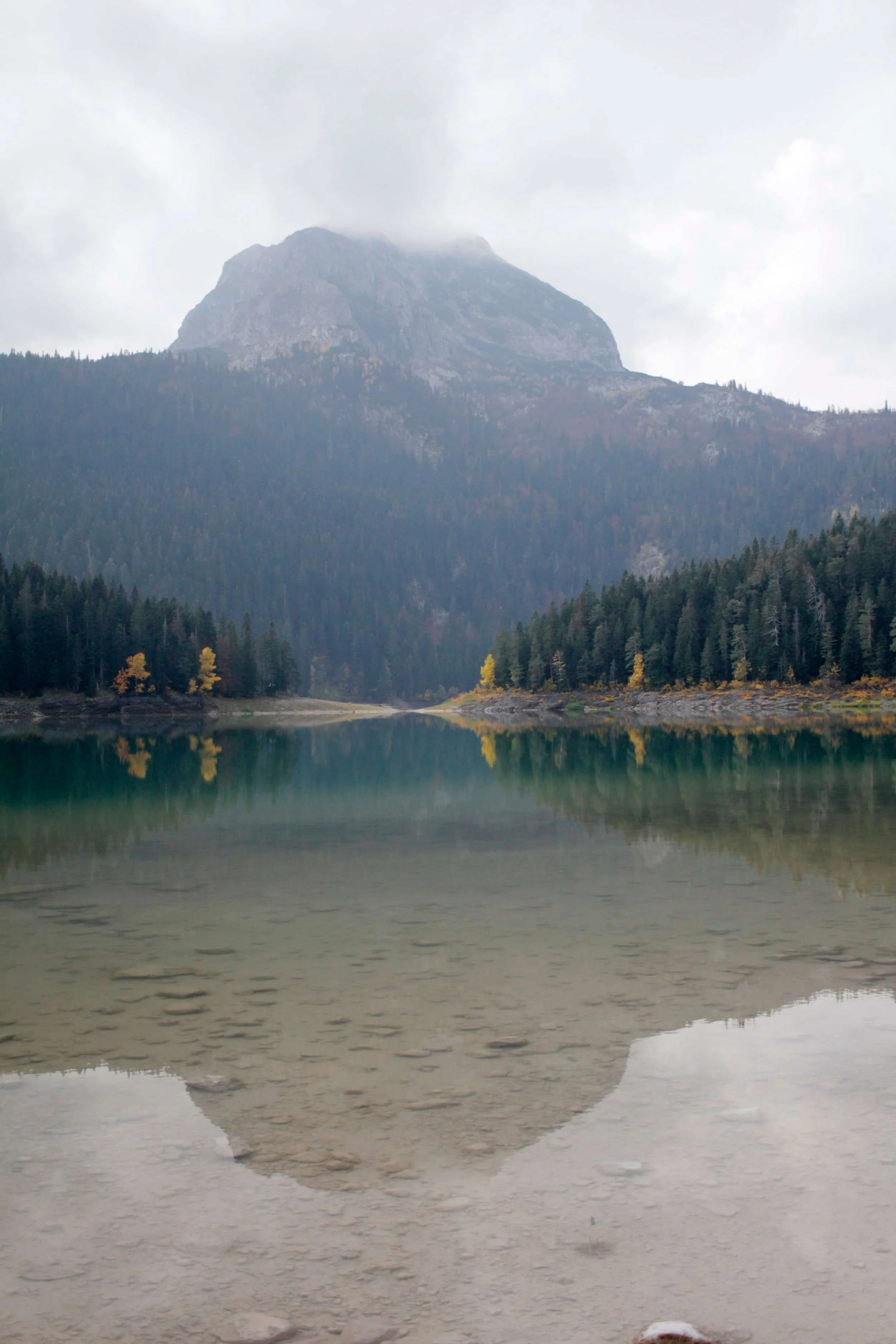
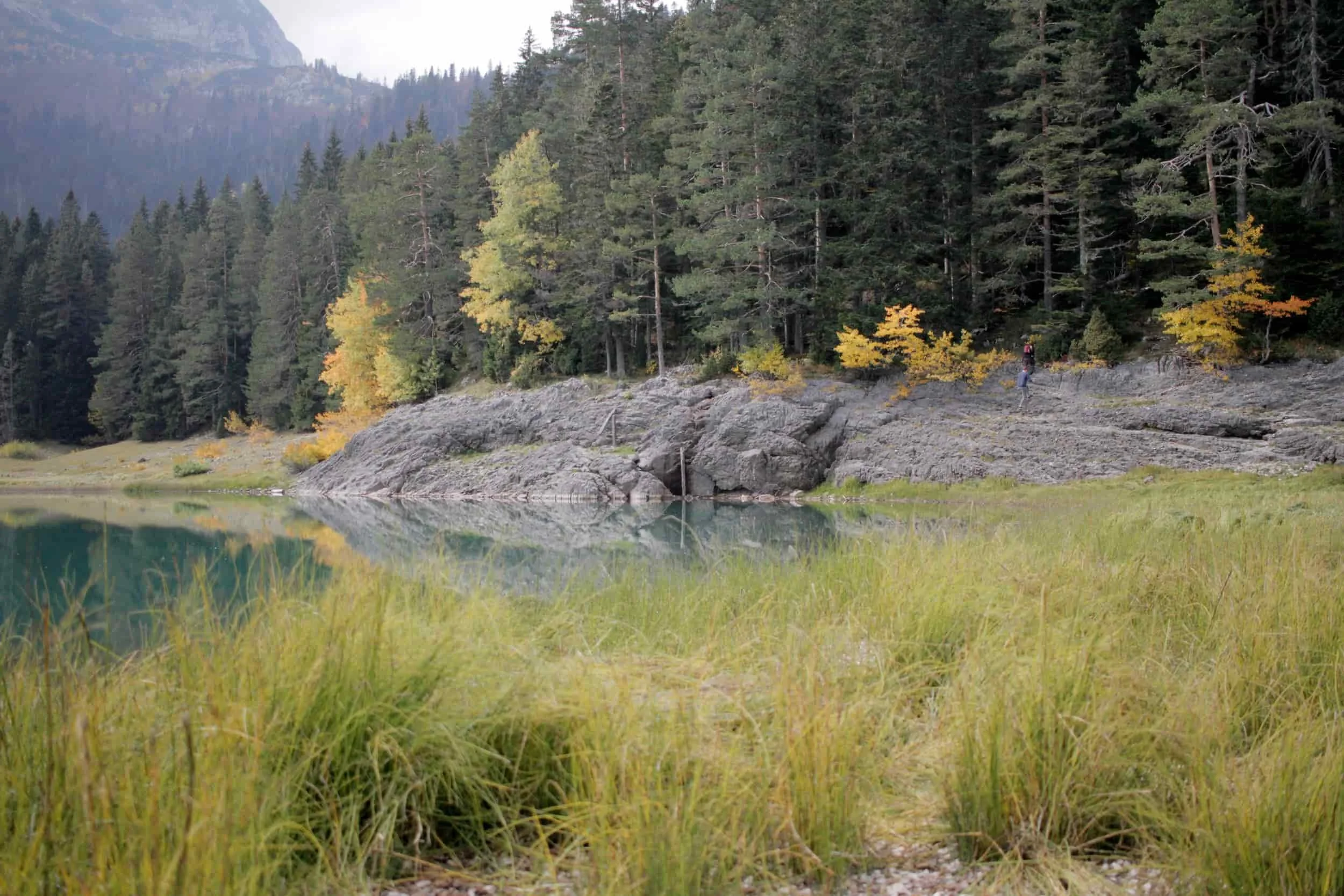
From each new vantage point, the lake revealed itself differently but my favorite scene remained the stand of trees across the way, a few glowing a molten gold that seemed to set the water alight.
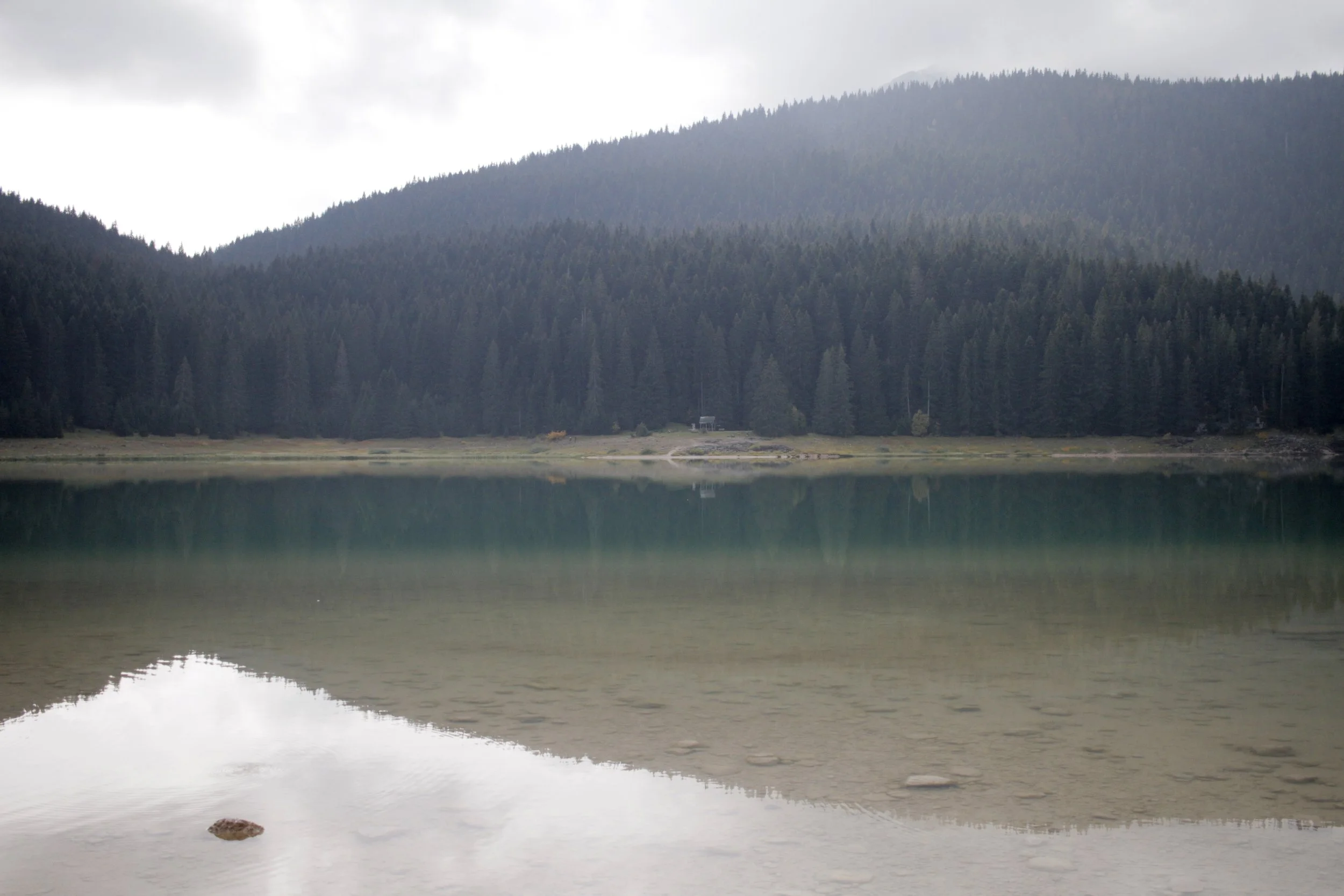
Besides its dramatic landscapes and fascinating geological history, Durmitor National Park is an impressive mix of biodiversity. Wander beneath ancient European black pines — some over 500 years old and reaching up toward 165 feet (50 meters). Their presence gives the forest an enduring, almost cathedral-like atmosphere, where every trail feels like a step back through centuries of wild, slow-growing life.
The region’s sweeping plateaus, flowering alpine meadows and ancient forests are alive with wildlife. You might witness a secretive brown bear padding through the pines or catch sight of a grey wolf moving along a ridgeline. European wild cats prowl the underbrush while golden eagles and peregrine falcons float overhead. Beneath the rivers’ glassy surfaces, the rare Danube salmon carves its way through cool currents — a quiet, precious reminder of this landscape’s untamed spirit.
Each summer, the high mountain meadows fill with the soft shuffle of shepherds and their flocks, while the low stone huts dotting the slopes come alive with the simple, steady work of farmers. Here, pastoral life hasn’t been pushed aside for tourism — it’s woven into the landscape.
Grazing sheep graze beneath rugged peaks, bell-collars tinkling like a local soundtrack, while shepherds move with an ease born of generations spent reading weather and grass. In the cool morning light, you’ll see women gathering herbs and men tending small plots, all using these alpine pastures as their seasonal kitchens and storehouses.
Durmitor is a playground for anyone who loves fresh air and wild landscapes. Towering pines, glacial lakes that mirror the sky and jagged peaks invite you to spend your days outside: pitching a tent beneath the stars, casting a line into a quiet stream or weaving your way down roaring rivers by raft or canoe.
Adventurers can test themselves on craggy climbs, scramble through canyons or hike trails that unfold into panoramic views. In winter, the nearby town of Žabljak comes alive as Montenegro’s main ski hub, while summer opens the door to swimming in ice-clear lakes and mountaineering across ridgelines. Whether you crave gentle nature walks or heart-pounding pursuits, Durmitor delivers an honest, unforgettable taste of the outdoors.
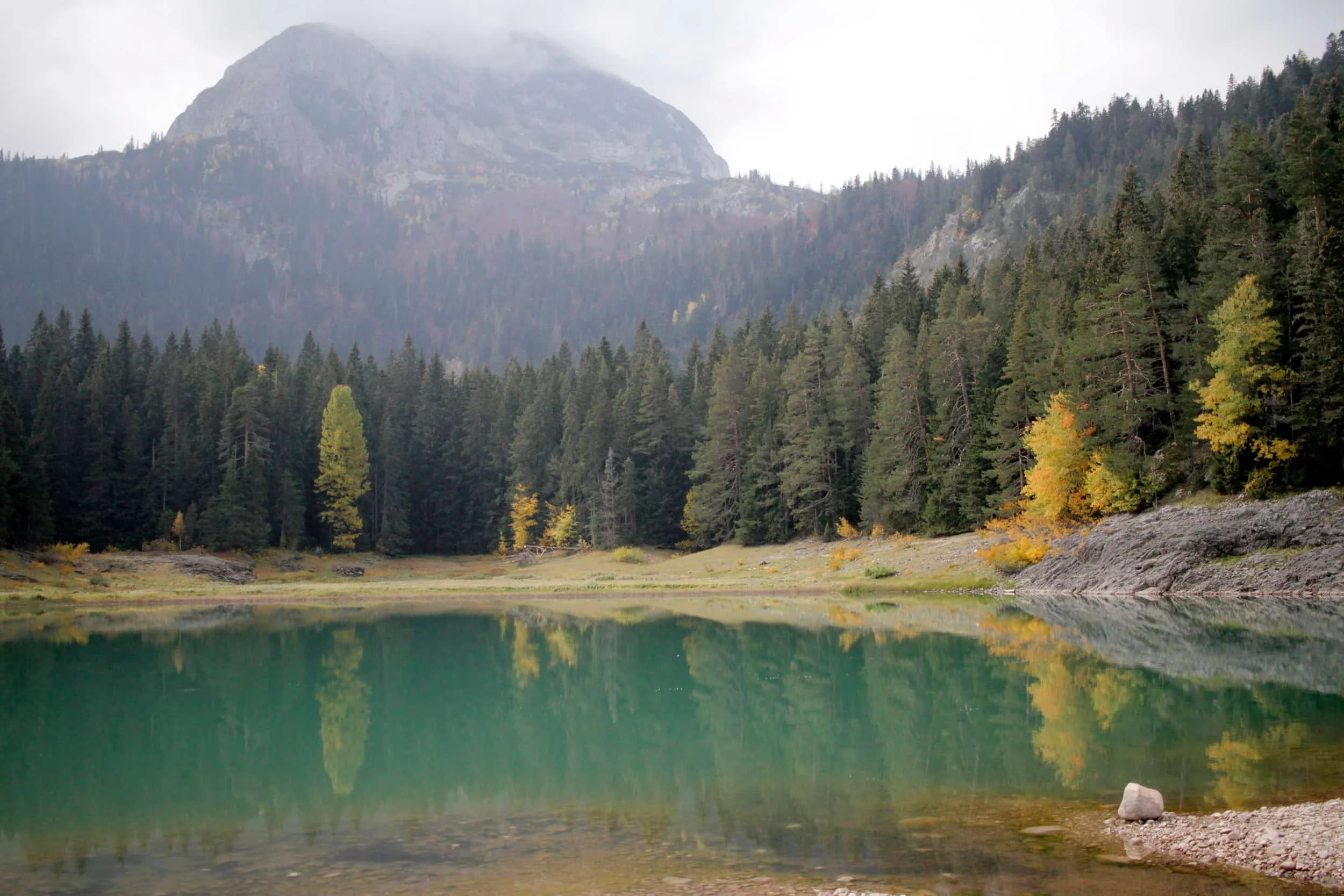
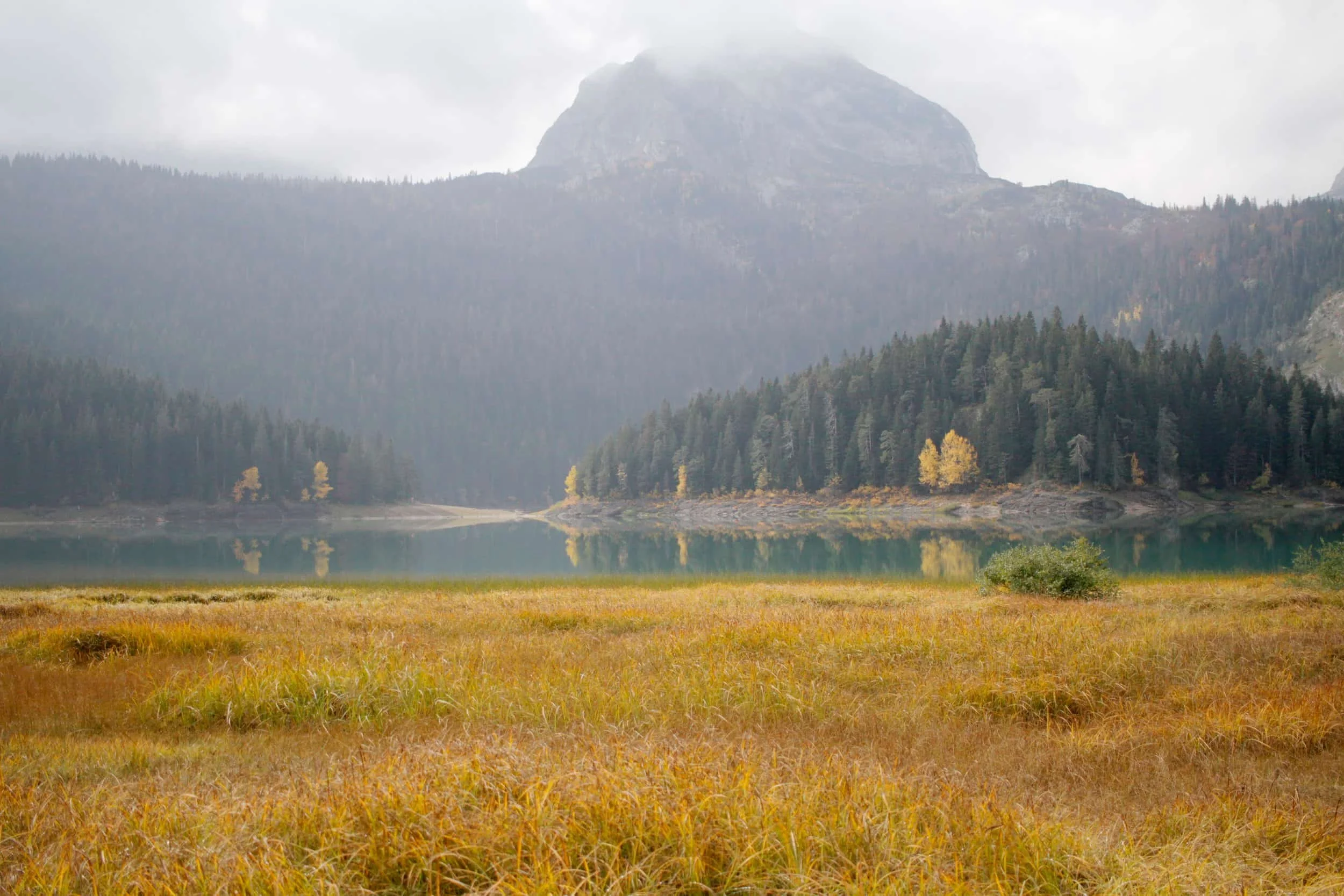
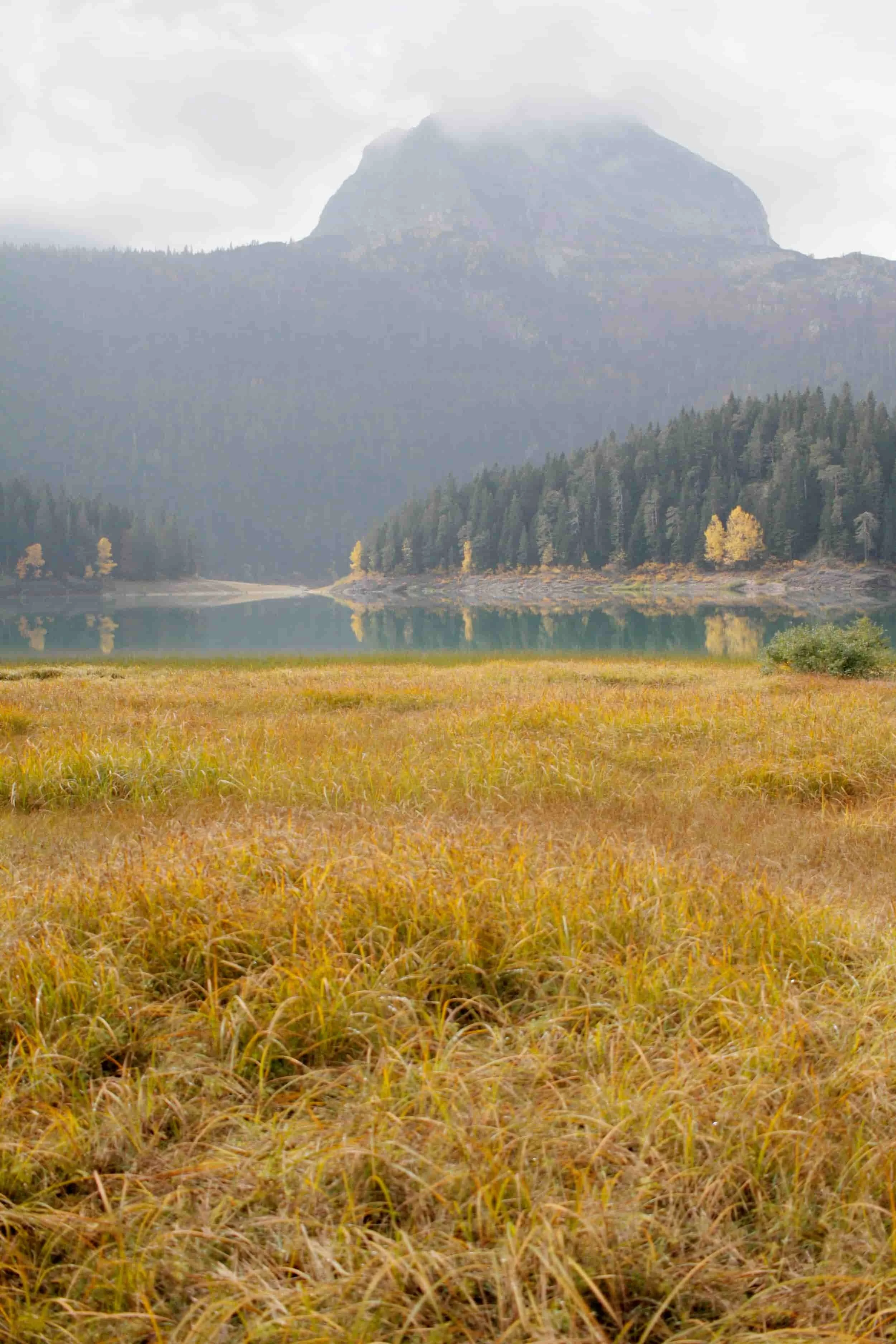
At the lake, where the shore turns rocky, tufts of tall grass create little green refuges from the squishy mud, perfect for perching and soaking in the view. Rising behind the water, Medjed Peak steals the scene — rugged and bear-like, it’s the emblem of Durmitor National Park and the reason so many cameras are set on Black Lake.
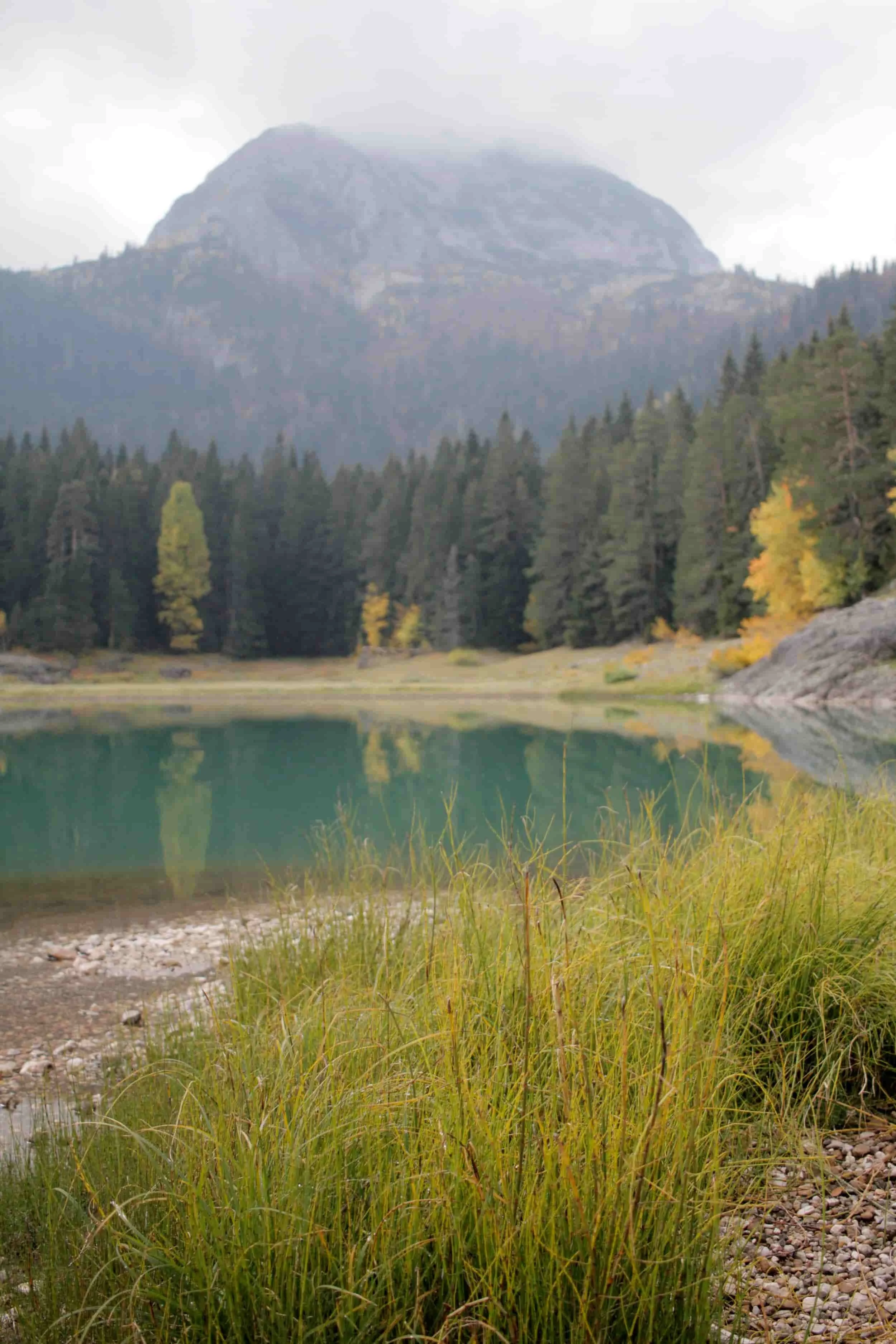
Rising from the edge of the black pine forests, Medjed’s jagged silhouette belongs in everyone’s camera roll. Hikers and nature photographers linger here, amazed by the way light and shadow play across its peaks. The name “Medjed” — “The Bear” — fits perfectly: from certain angles the rock’s hulking, rugged profile suggests a sleeping beast. Look closely along the ridge and you’ll spot its two crowns: Veliki Medjed (Large Bear) and Mali Medjed (Small Bear), as if the mountain wears twin hats.
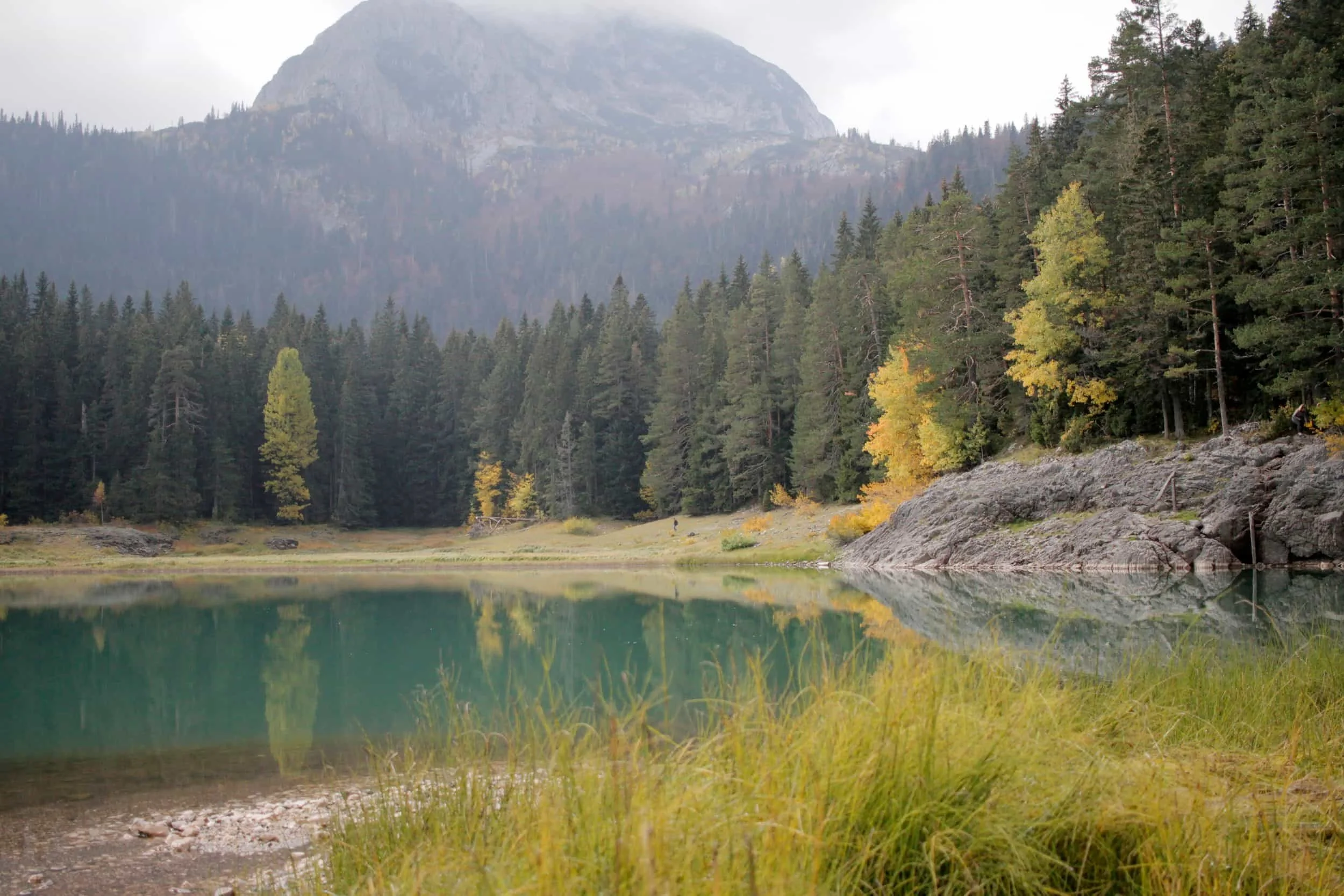
From nearby town of Žabljak, the peak announces itself like an old friend — rising boldly above the Durmitor region, it anchors the landscape and gives the whole area its unmistakable character.
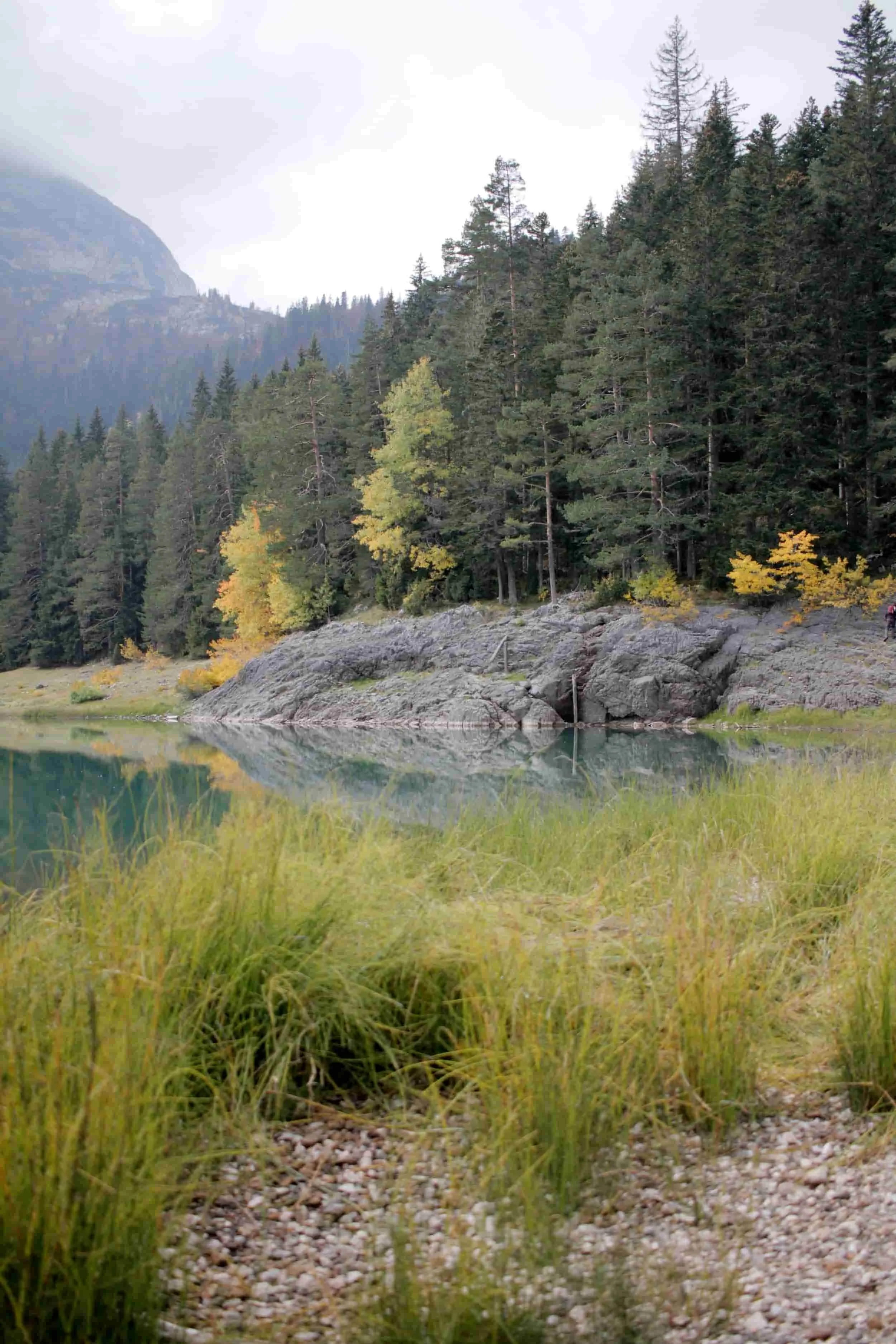
Trails circling the Medjed massif wind through rough slopes and fragrant scrub, rewarding every step with ever-unfolding views. Hikers come here for the sense of discovery: narrow paths that climb to wind-scoured ridges, secret hollows dotted with wildflowers and sweeping panoramas that make you pause and breathe.
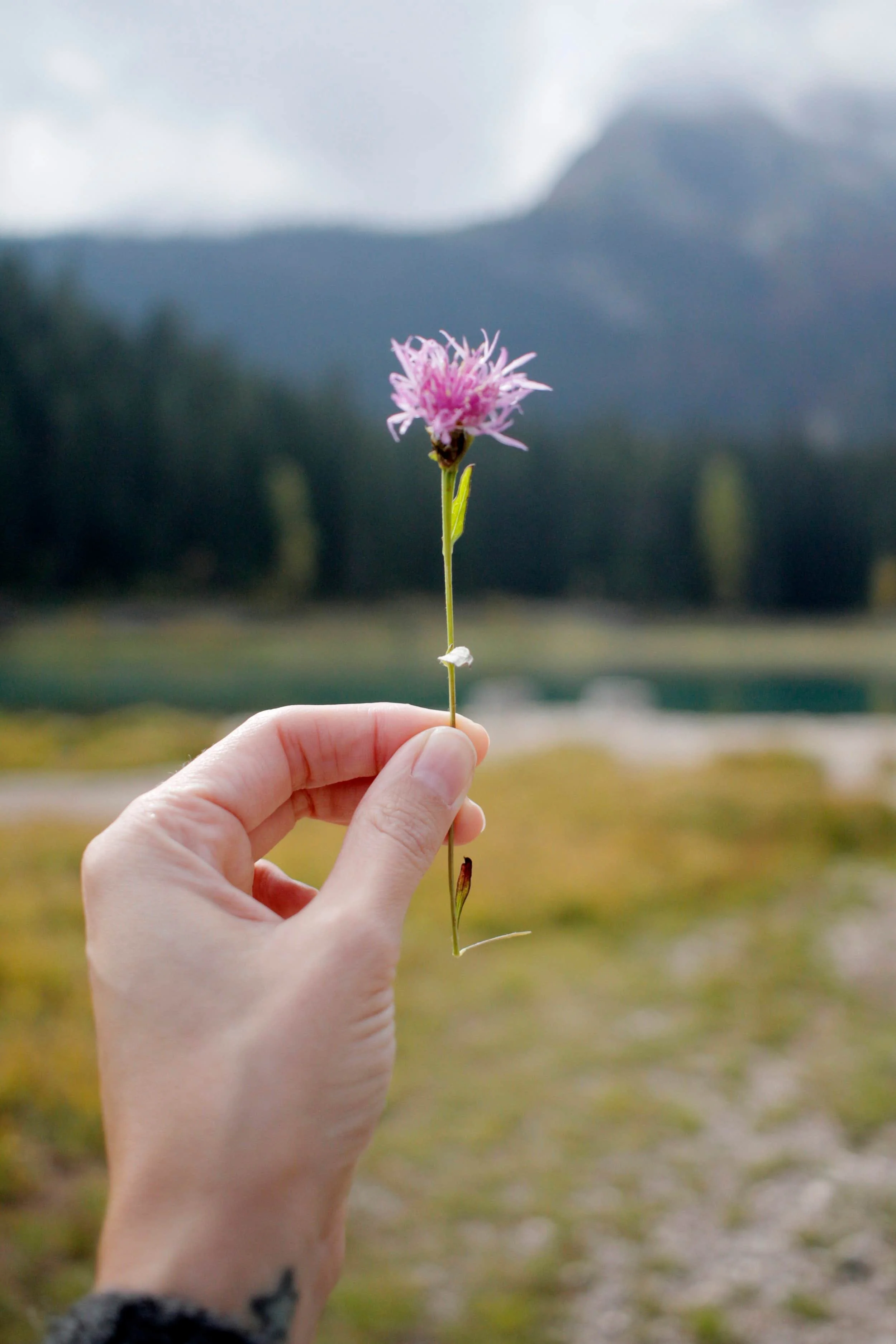
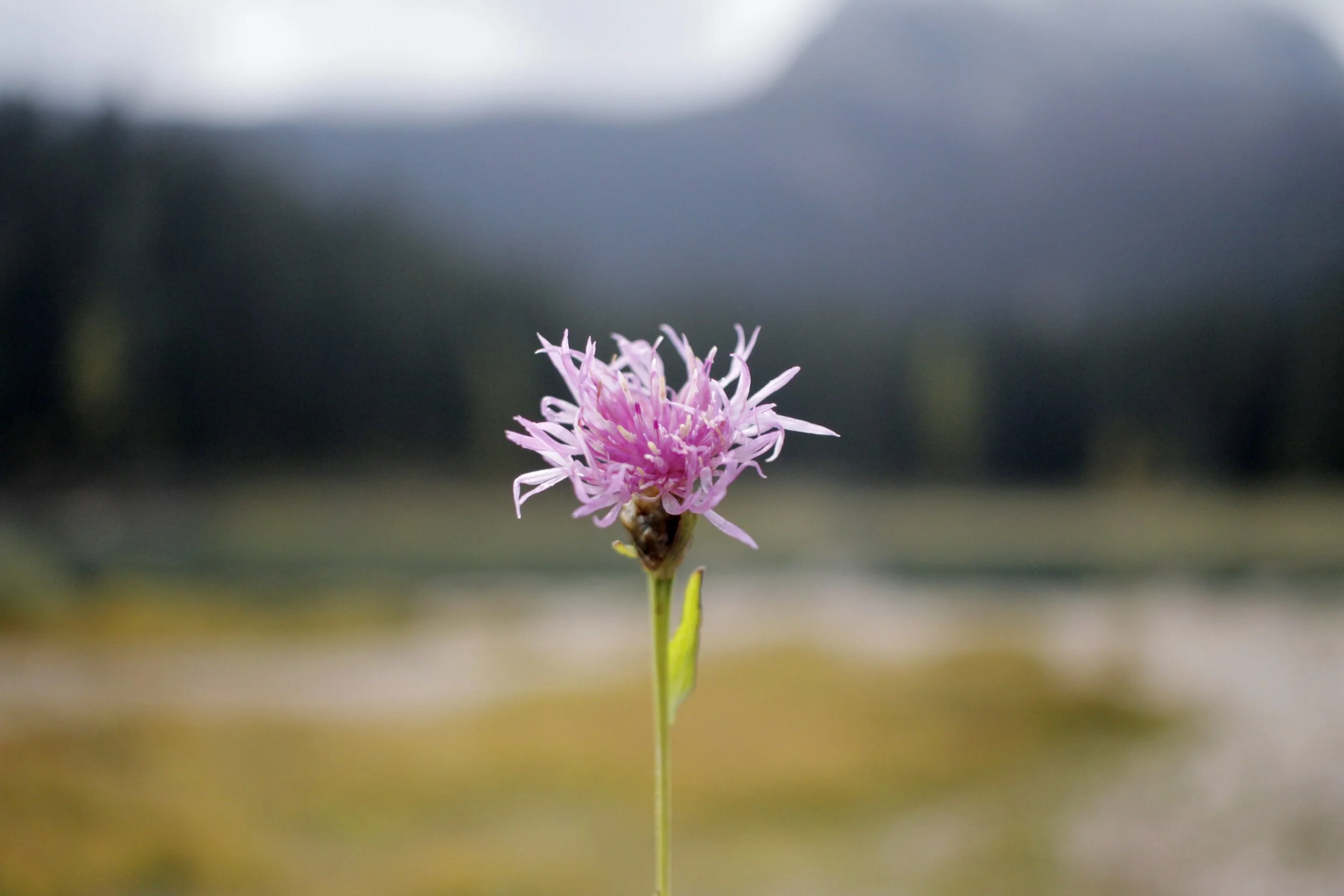
Along the lake’s edge, tiny hot-pink flowers are tucked like confetti into the alpine grass. For a moment, the stony landscape softens; their bright, cheerful faces a silent hello from Durmitor itself.
After about an hour, the group slowly drifted back toward the park entrance, each of us lingering a moment longer to soak in the last slant of sun on the slopes and the quiet of the pine-scented air. We walked in easy conversation, boots crunching on the trail, reluctant to let Durmitor’s mountain magic release its hold — a few lucky ones from the group had made the trek around the lake successfully.
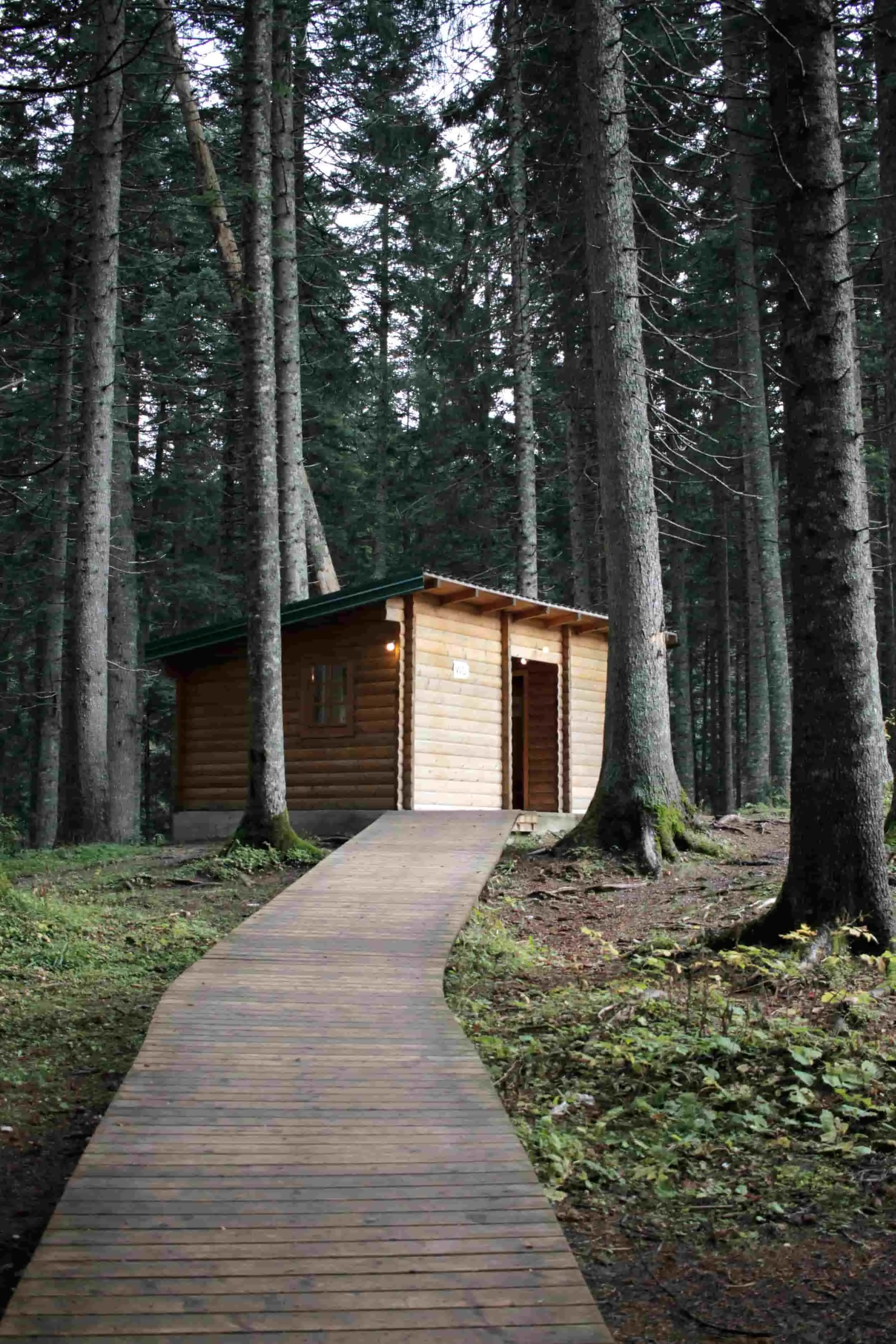
A restroom on the grounds gave me a moment to pause; while waiting, I wandered a little, letting the scent of pine and distant mountain air draw me into exploring more of Durmitor's hidden corners.
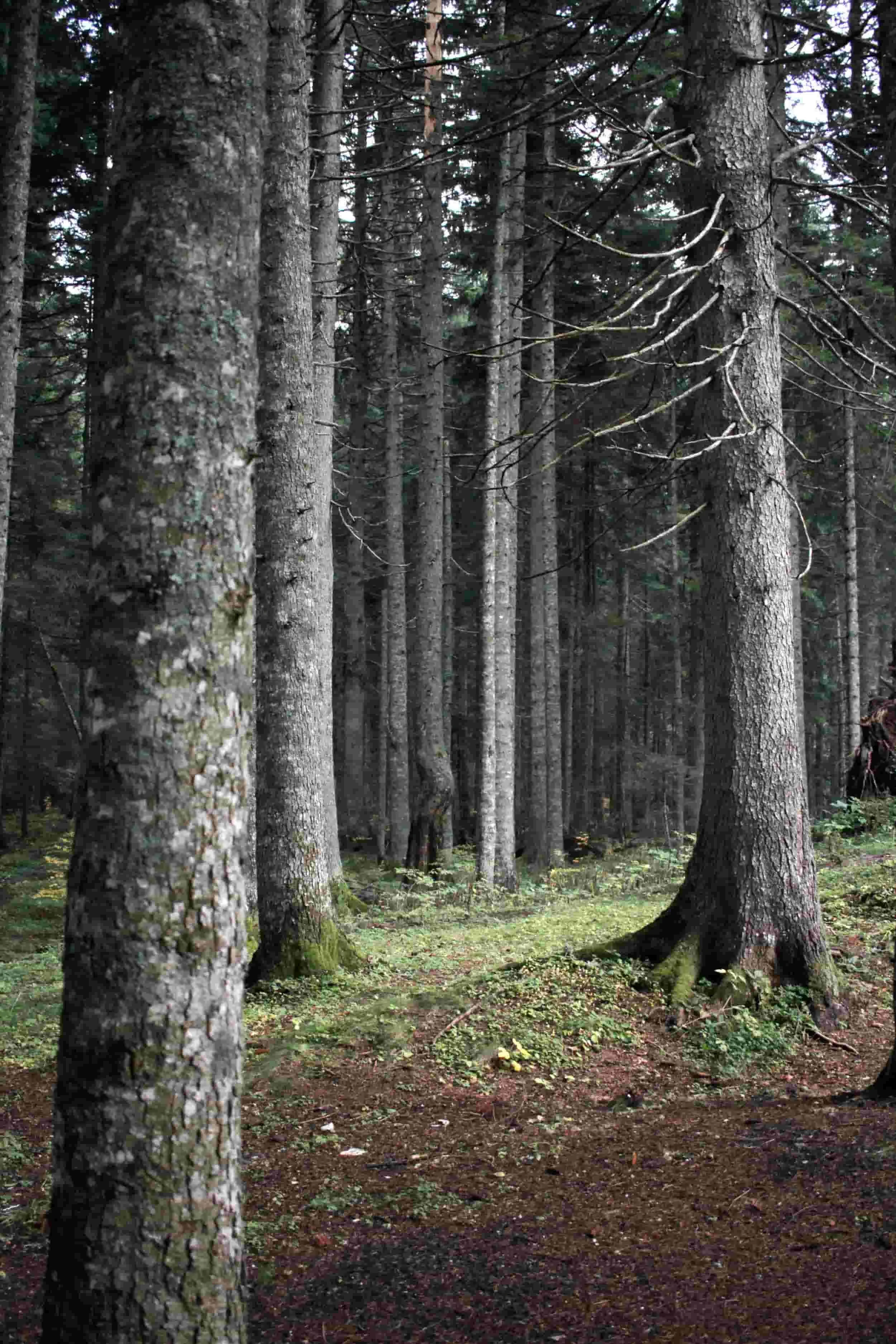
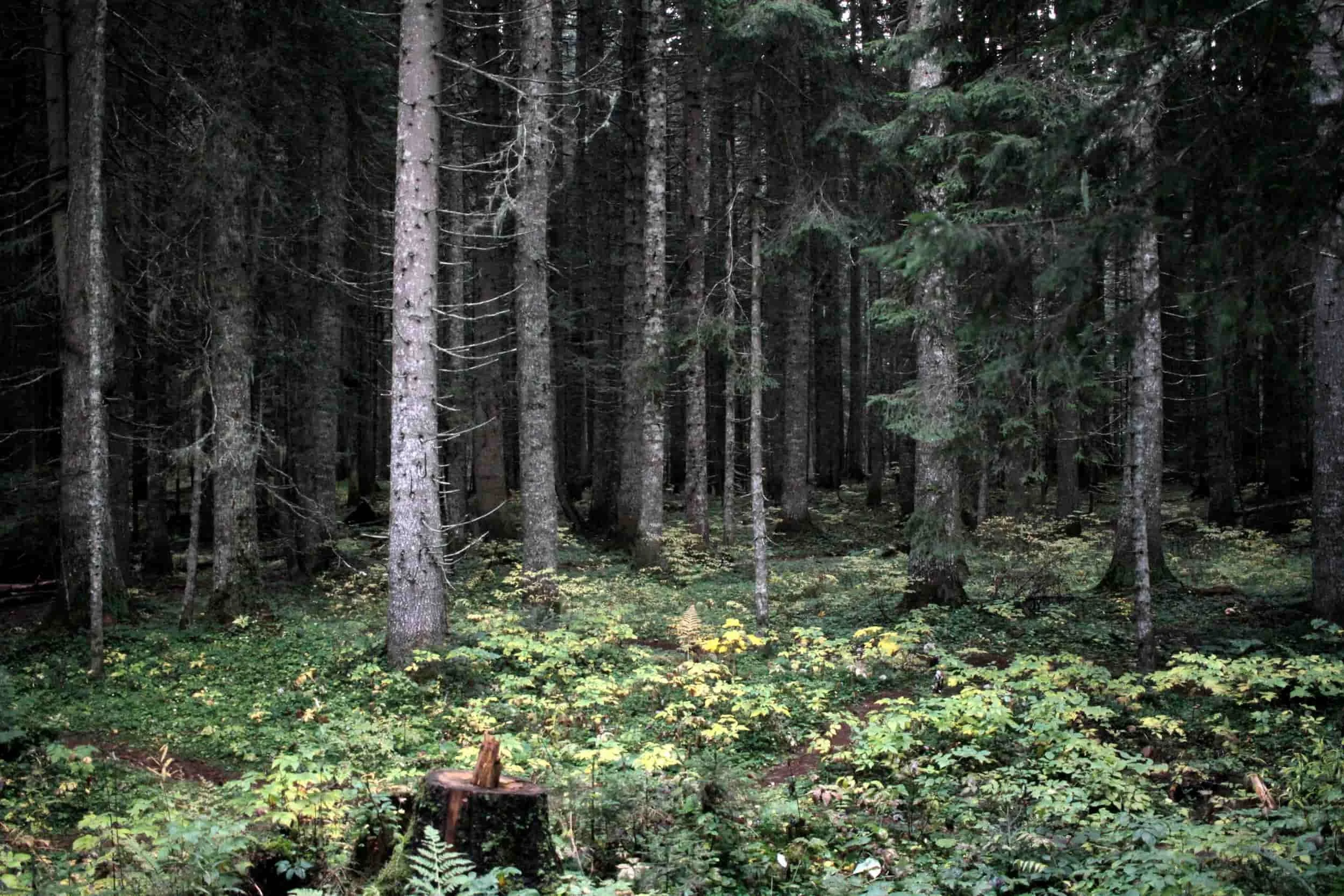
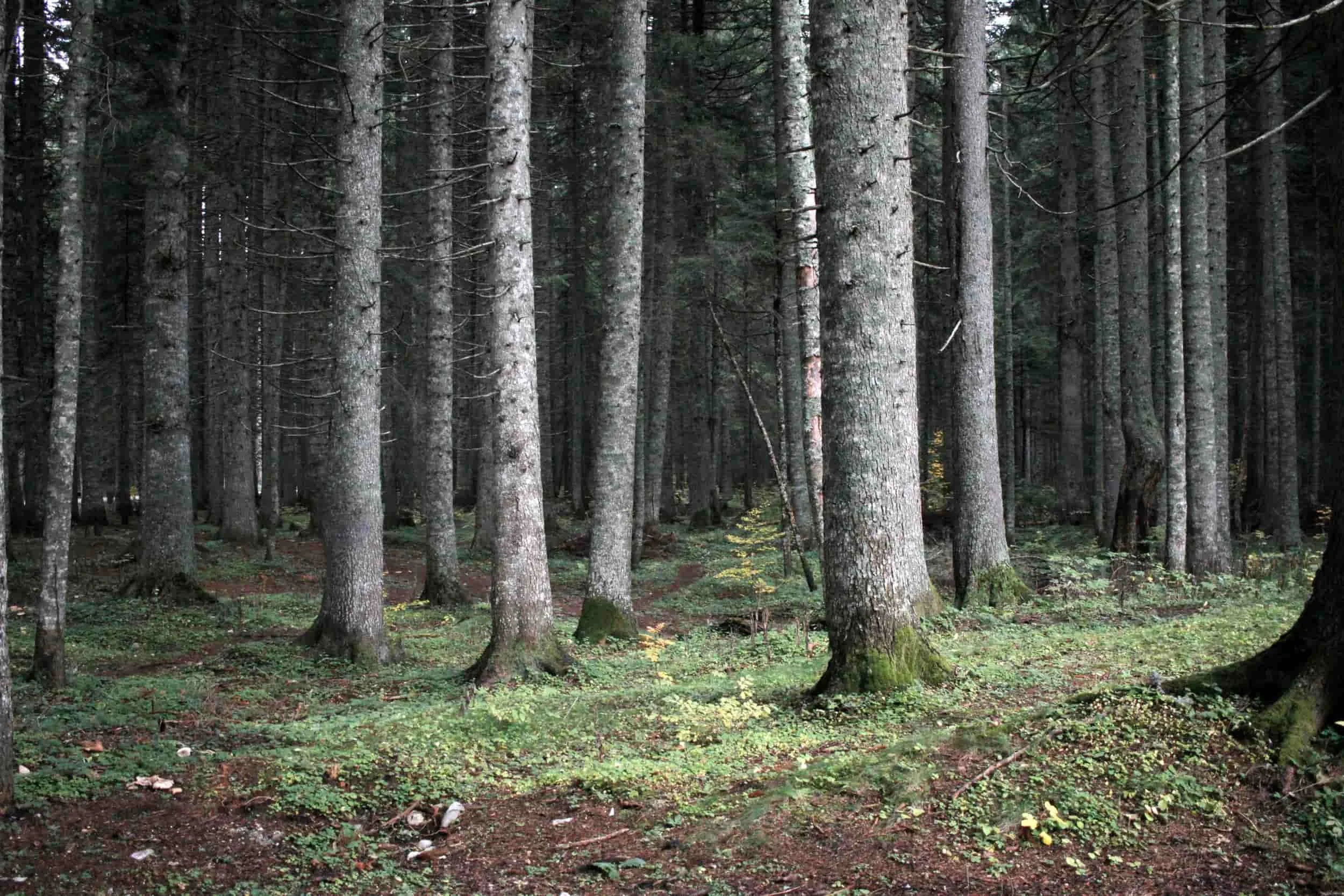
The towering trees felt almost mystical, their trunks wrapped in a quilt of moss and emerald undergrowth.
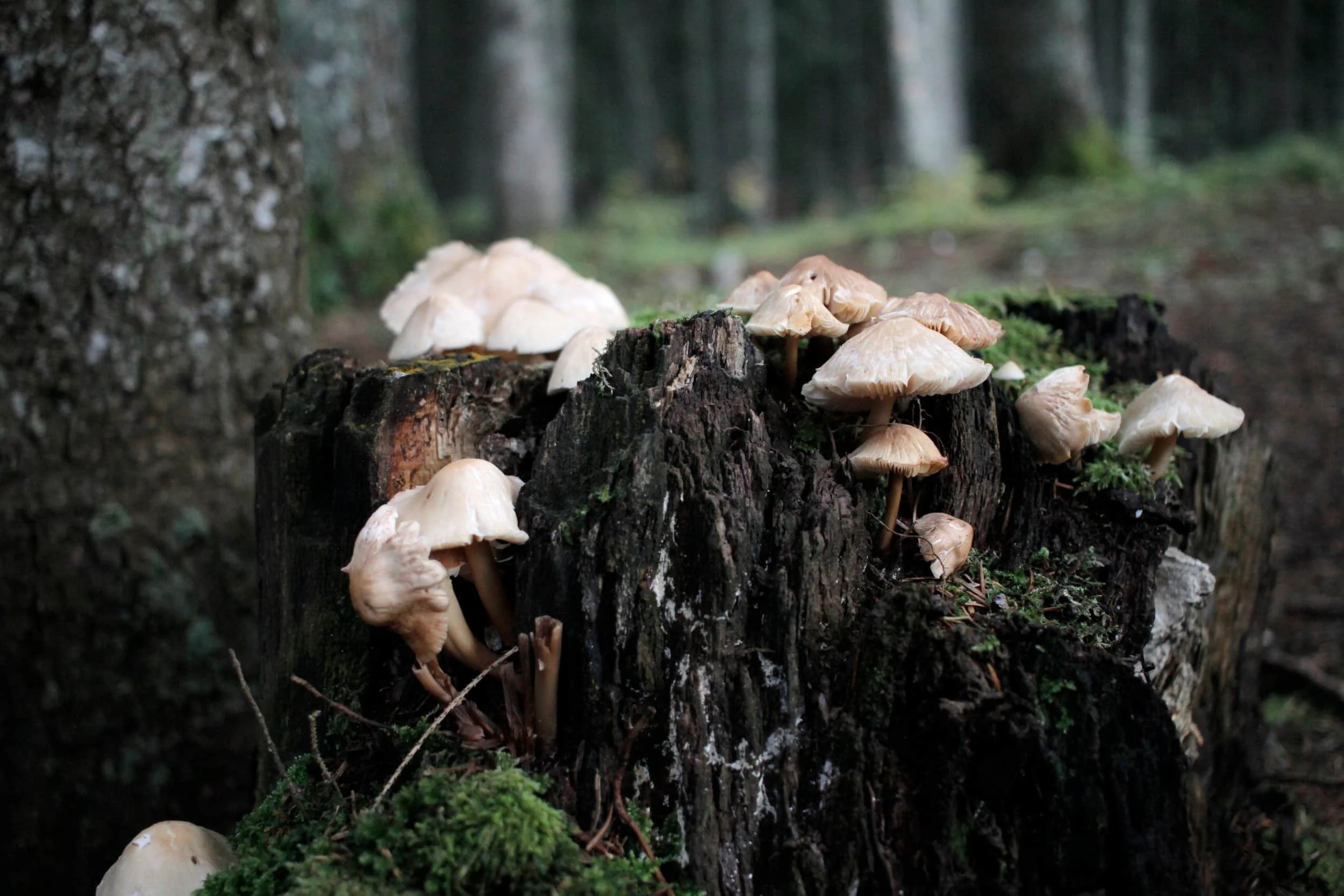
Wild mushrooms emerged from damp tree stumps like tiny lanterns, clustering in merry little bouquets of a dozen or more — a tiny village of fungi tucked into Durmitor’s mossy undergrowth. Each cap and stem was a small, whimsical reminder that the forest has its own quiet festivals, blooming where sunlight and rain conspire.
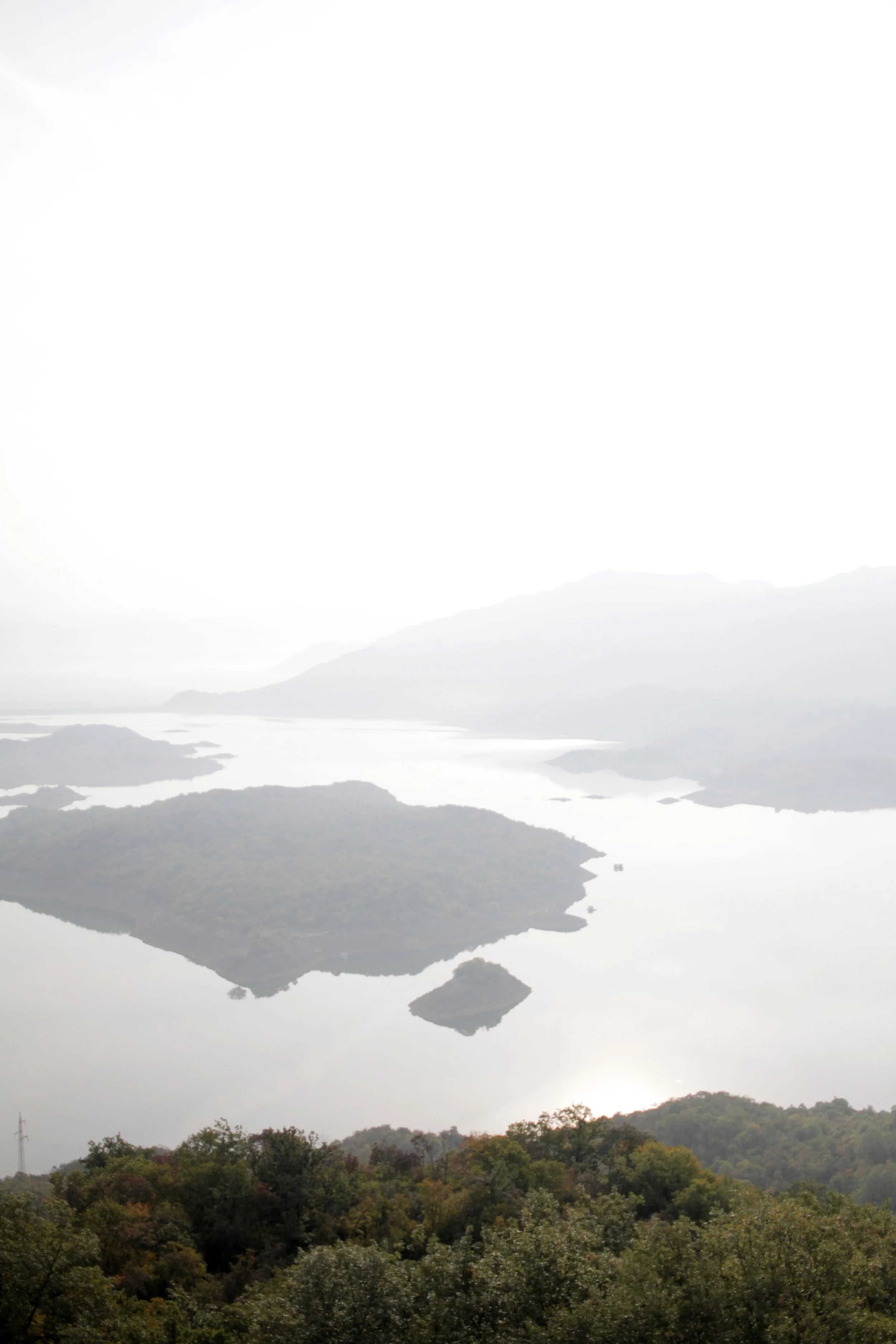
Black Lake was one of the highlights of my day exploring northern Montenegro — a quiet stretch of water surrounded by forest and mountains that felt completely different from the coast I’d left behind that morning.
By evening, I was back in Kotor, trading Durmitor’s alpine landscape for stone streets and views across the bay. It’s a long day trip but if your Montenegro itinerary is centered around the coast, it’s an easy way to experience just how much the landscape can change within a few hours.
My Bibimbap Moment
Every destination adds another ingredient to our life's recipe, sometimes without asking anything of us at all. At Black Lake, surrounded by towering mountains and reflected in perfectly still water, I found myself slowing down naturally. There was something about the quiet, the cool mountain air and the sheer scale of the landscape that made everything else feel very far away. Here's the ingredient this peaceful corner of Montenegro added to my Bibimbap Life.
Today’s Bibimbap Recipe
🥢 Flavor: Serene
🌿 Ingredient: Groundedness
❤️ Best Memory: Eating warm raspberries in the forest
🎒 Take With You: Some places don't ask us to do more — they simply remind us how good it feels to pause.
When I think back on Black Lake, I remember how still everything seemed — the water, the mountains, even my own thoughts. The landscape was grand enough to make me feel small, yet somehow it had the opposite effect; standing there, I felt more settled in myself and more connected to the moment around me. There was nowhere I needed to be and nothing I needed to do except take it in. Black Lake left behind a quiet feeling that has been easy to return to, even long after leaving Montenegro.
Black Lake Travel Essentials
Exploring Black Lake and Durmitor National Park is fairly straightforward once you arrive but getting into Montenegro’s mountainous north takes a little planning — especially if you’re visiting as a day trip from Kotor like I did. Give yourself time to walk around the lake, take in the surrounding forest and mountain views and explore more of Durmitor if your itinerary allows. Weather can change quickly at this elevation, even when conditions along the coast are completely different, so come prepared with layers, comfortable shoes and a little flexibility. Whether you visit independently or as part of a northern Montenegro tour, the journey into the mountains is very much part of the experience.
When to Go
The best time to visit Durmitor’s Black Lake is late spring through early autumn — May to September — when the trail is clear, the alpine meadows are alive with wildflowers and the lake reflects the jagged peaks like a glass mirror; May offers quieter, misty mornings and snow-capped contrasts, June and July bring warm days perfect for hiking and picnicking and August into early September provides long golden evenings and calmer waters for canoeing or simply lingering on the shore as the light fades.
Best Season: Late spring through early autumn (May to September) when weather is warm, trails are clear of snow and park facilities are open
Best Time of Day: Start from Kotor by 7:00 a.m. or earlier to beat the crowds, secure parking and maximize daylight in the mountains
How to Get There
Black Lake (Crno Jezero) sits within Durmitor National Park near the mountain town of Žabljak, roughly three hours from Kotor by road. It’s a long journey from the coast but the drive through Montenegro’s mountains and canyons is part of what makes the day so memorable.
Guided Tour: This is how I visited and the option I’d recommend if you’re staying in Kotor and only have one day for northern Montenegro. Full-day tours handle the long drive and typically combine Black Lake with other highlights such as Tara Canyon and Đurđevića Tara Bridge, letting you see considerably more without spending the entire day focused on navigation.
Self-Drive: Renting a car gives you much more flexibility, particularly if you want to spend longer at Black Lake or stop along the way. From Kotor, allow roughly three hours each way depending on traffic, weather and stops. Mountain roads can be winding and conditions can change considerably with the season, so check the forecast and road conditions before setting out.
Stay in Žabljak: If hiking and Durmitor National Park are a major part of your Montenegro itinerary, I’d consider spending at least one night in Žabljak rather than treating the mountains as a day trip. You’ll have much more time for Black Lake, longer trails and the surrounding national park without the long return drive to the coast.
Public Transport: Buses can get you to Žabljak but connections from Kotor can be slow and may require a transfer. It’s a reasonable option if you’re staying overnight but I wouldn’t rely on public transportation for a same-day trip from the coast.
For a day trip from Kotor, I’d choose a guided tour. If you want to experience more of Durmitor itself, rent a car and spend a night or two in Žabljak.
Where to Stay
If you’re visiting Black Lake as part of a day trip through northern Montenegro, I’d keep your home base around the Bay of Kotor. Kotor Old Town is my first choice, especially for a first visit — the medieval streets, stone buildings, cafés and restaurants are right outside your door and it makes an atmospheric place to come home to after a long day exploring Durmitor.
If you’d prefer somewhere quieter, there are several beautiful alternatives around the bay. Dobrota keeps you close to Kotor while adding waterfront views and a more relaxed feel; Prčanj offers historic stone architecture and a slower village atmosphere across the bay; and tiny Perast is particularly beautiful if you want something romantic and peaceful surrounded by mountains and water.
If Black Lake and the mountains are the main focus of your trip, consider spending a night or two in Žabljak instead. Staying near Durmitor gives you much more time for hiking, the Tara River Canyon and exploring beyond the lake without making the long return journey to the coast.
Where I Stayed
For living inside the Old Town — Katareo Apartments
This is where I stayed in Kotor, tucked into a traditional stone building right in the heart of the Old Town. I loved being able to step outside and immediately wander the narrow streets, cafés and squares, while having my own apartment-style space to come home to at the end of the day. For me, the location was hard to beat.
Where I’d Stay
If I were choosing somewhere different next time, I’d either stay within the walls again for that unmistakable Old Town atmosphere or move out along the bay for water views and a quieter pace.
For a quiet waterfront escape — Galathea House
Set directly on the waterfront in Prčanj, Galathea House trades the energy of Kotor Old Town for sea views, gardens and a much slower pace. The apartment-style setup and historic surroundings make this one I'd consider if I wanted to experience the quieter side of the bay while keeping Kotor within easy reach.
For historic character in the center of it all — KAŽIN Supreme
If you want to stay inside Kotor’s walls, KAŽIN Supreme combines the character of a historic building with polished, contemporary rooms right in the Old Town. It’s a good alternative if you want the atmosphere and walkability I loved about staying here but prefer more of a boutique guesthouse experience.
Additional Options
Prefer a place of your own?
Kotor and the surrounding bay are filled with apartments and vacation rentals, from tucked-away spaces inside the Old Town to waterfront homes with mountain views. If you want more space, a kitchen or simply something that feels a little more like home, this is a great place to go that route.
Browse Kotor vacation rentals →
Want more options?
If you’re looking for something specific, browse more stays to find the location, style and price point that works best for your trip.
Tours & Day Trips
Explore the crystal-clear shores of Black Lake with a relaxed boat ride and lakeside picnic or take a guided hike through Durmitor National Park’s dramatic peaks and glacial canyons for unbeatable views of Tara Canyon.
Best options: a half-day Black Lake boat-and-walk tour for gentle scenery and photo stops and a full-day Durmitor adventure that combines a guided summit hike (or easier ridge walk), a visit to the Black Lake viewpoint and a Tara River canyon drive — or choose a whitewater rafting add-on for thrill-seekers.
Want to Experience Black Lake for Yourself?
If you’d rather leave the planning and transportation to someone else, a guided tour can be an easy way to experience Black Lake and the surrounding beauty of Durmitor National Park — often with a few other highlights of northern Montenegro included along the way.
Explore tours to Black Lake & Durmitor →
Want to Explore More of Durmitor?
Black Lake is only one glimpse of what makes this part of Montenegro so beautiful. If you want to venture deeper into Durmitor National Park, a guided experience can take you beyond the lake—from dramatic mountain landscapes and deep canyons to viewpoints and places you might otherwise miss.
Good to Know
National Park Entry: Black Lake sits within Durmitor National Park, so an entrance fee applies. Fees can change and carrying a little cash is useful if you’re visiting independently.
The Lake: Black Lake is actually made up of two connected glacial lakes — Veliko Jezero (Big Lake) and Malo Jezero (Small Lake). Water levels change throughout the year, affecting how distinct the two appear during your visit.
Walking the Lake: A roughly 3.5-kilometer (2-mile) trail loops around the lake. Allow around 1–1½ hours if you want to complete it without rushing and longer if you’re stopping frequently for photos or simply enjoying the views.
More Than a Viewpoint: If you have extra time, Black Lake is a starting point for additional trails deeper into Durmitor National Park. Seasonal activities around the lake may also include rowboat or kayak rentals.
Mountain Weather: Conditions in Durmitor can be completely different from the coast, even on the same day. Weather changes quickly in the mountains, so check the forecast before leaving Kotor or Žabljak.
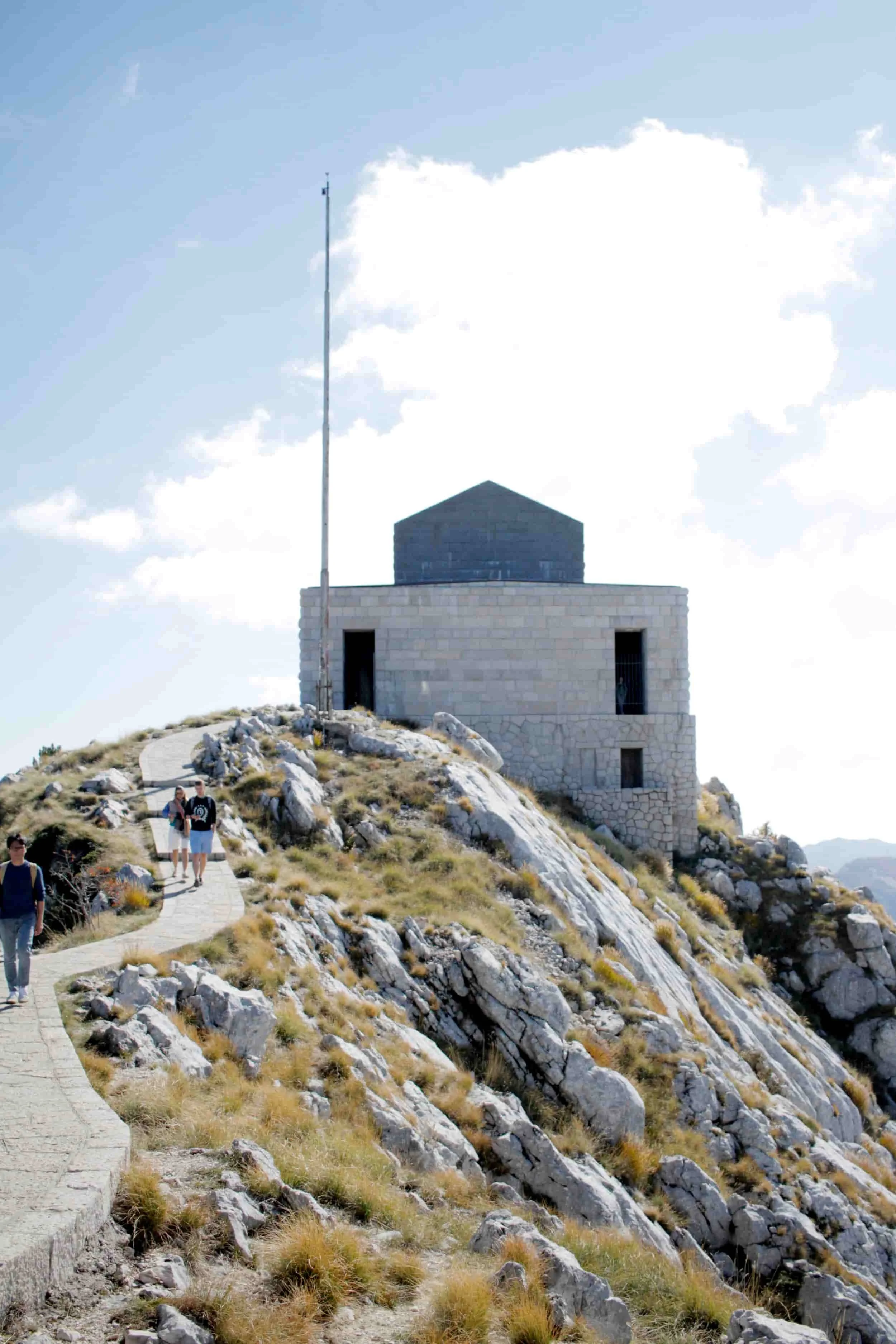
Durmitor National Park’s Black Lake: a pitch-black, mirror-still alpine gem framed by jagged peaks and pine — perfect for a serene, romantic day trip from Kotor.