Glowworms of Waitomo & the Geothermal Wonders of Te Puia
Discover the magic of Waitomo’s glowworm-lit caverns & the living cultural heart of Rotorua at Te Puia with this travel guide.
Float silently beneath a ceiling studded with a thousand tiny stars — that’s the first, unforgettable impression of New Zealand’s Waitomo Glowworm Caves. Drifting on the black water of an underground river, the boat glides through caverns sculpted by eons, while phosphorescent glowworms cling to the rock like constellations come to earth; the effect is equal parts fairytale and natural cathedral. The air holds a cool, earthy hush broken only by the soft voice of your guide and the occasional drip of mineral-rich water and the cave’s textures — smooth flowstone, jagged stalactites and delicate rimstone pools — seem to have been designed to showcase the glowworms’ gentle light. It’s one of those rare travel moments where landscape and biology conspire to make you feel both infinitesimal and utterly awe-struck, an intimate pause in nature that lingers long after you’ve stepped back into daylight.
Rotorua enchants from the first sulfur-scented breeze — a bold, earthy perfume that promises geothermal wonder and living Māori culture. Te Puia sits at the heart of that magic: a geothermal park where geysers punctuate the skyline, steaming vents sculpt the landscape and a sculptors’ school preserves traditional carving and weaving. Wander boardwalks over bubbling mud pools, watch the majestic Pohutu Geyser erupt and step into a Māori cultural performance that pairs powerful waiata (traditional Māori songs or chants) with stories as warm as the thermal pools. It’s a place where raw natural forces and human creativity meet, leaving you both awed and quietly centered.
My island stop was one chapter of a two-week whirlwind through New Zealand and Australia — delightfully impossible in the best way. Thanks to direct flights from Los Angeles, I landed in Auckland first: a lively waterfront city where volcanic cones punctuate the skyline and sunlit cafés spill onto the sidewalks. A day trip to Waiheke Island revealed winding vineyards, olive groves and beaches made for slow, easy afternoons.
From there, I traveled three hours south to Waikato. The glowworm caves felt like stepping into a starry, subterranean cathedral and Rotorua offered a vivid cultural exchange — steam vents, geothermal pools and warm, welcoming stories at every turn. On the South Island, Queenstown awaited: mountains rising straight from the lake, their peaks dusted with snow while the water below shone a deep, impossible blue. Adventure and stillness sat side by side, each view tempting me to take one more photograph.
Crossing into Australia, I kept to the east coast. The Gold Coast was my sunny introduction — surf, a laid-back vibe and nearby Tamborine Mountains offering a lush, green counterpoint. Melbourne felt like the country’s creative heart, its laneways humming with café culture, street art around every corner and a style all its own, followed by an unforgettable drive along the Great Ocean Road. I finished with 36 bustling hours in Sydney, savoring the harbor, iconic architecture and the brisk energy of a global city that still finds time to breathe by the water.
What’s Inside | Roadmap
Join a Road Trip | Travel rom Auckland’s shores to Rotorua’s steam & soul; book your tour here
Float | Drift beneath a sky of glowworms at Waitomo Caves
Reach | Arrive at Te Puia: a first glimpse of Rotorua’s living culture
Observe | Witness the magic of Rotorua’s Pōhutu Geyser — a fiery Maori wonder
Learn | Uncover the culture of the Māori: stories, places & people
Visit | Discover the magic of the Māori Arts & Crafts Institute
Admire | Gaze into the blazing heart of Rotorua Caldera
A Delightful Day in Waitomo & Rotorua: Glistening Glowworms, Geothermal Wonders & Maori Culture
Drifting through Waitomo's caves beneath a ceiling of tiny, electric-blue stars is akin to gliding inside a living, whispering galaxy, while steam-scented mornings in Rotorua feel like stepping into another world — bubbling mud pools, hissing geysers and the warm glow of Te Puia’s carved meeting house make every corner brim with wonder. Wandering the glowworm caves and geothermal trails and watching skilled Māori artisans at work is the kind of day trip that leaves you smiling, soot-smudged and strangely soothed.
Travel From Auckland’s Shores to Rotorua’s Steam & Soul
Tours can be booked online for NZ$399 ($235 USD) — a price that raises an eyebrow at first but includes cave entry and the cultural experiences woven into the day — schedule with Cheeky Kiwi. The tour kicks off at 6:05 a.m.; guests are asked to pick a hotel as the meeting point. Beginning my day, Grant pulled up right on schedule and our small convoy of about a dozen travelers — mostly Americans — piled in, buzzing with the quiet excitement that only early-morning departures seem to inspire.
Tip | Plan to rise with the morning light for an early breakfast or tuck a delicious snack into your bag. Whether you savor a quiet café croissant at sunrise or nibble on something homemade while you watch the city wake up, having a bite keeps your energy up and lets you enjoy the day’s discoveries without interruption. Sadly, the tour lacks much in the way of yummy food.
After nearly two hours on the road, you’ll drift into the little village of Pirongia — the perfect spot for a coffee and a quick stretch. Tucked on the banks of the Waipā River and shadowed by the bush-clad slopes of Mount Pirongia, this small Waipā District town feels like a welcome exhale between drives. Its proximity to the Pirongia Forest Park gives the place a quietly wild backdrop: 3,155 feet of native forest rising just west of town.
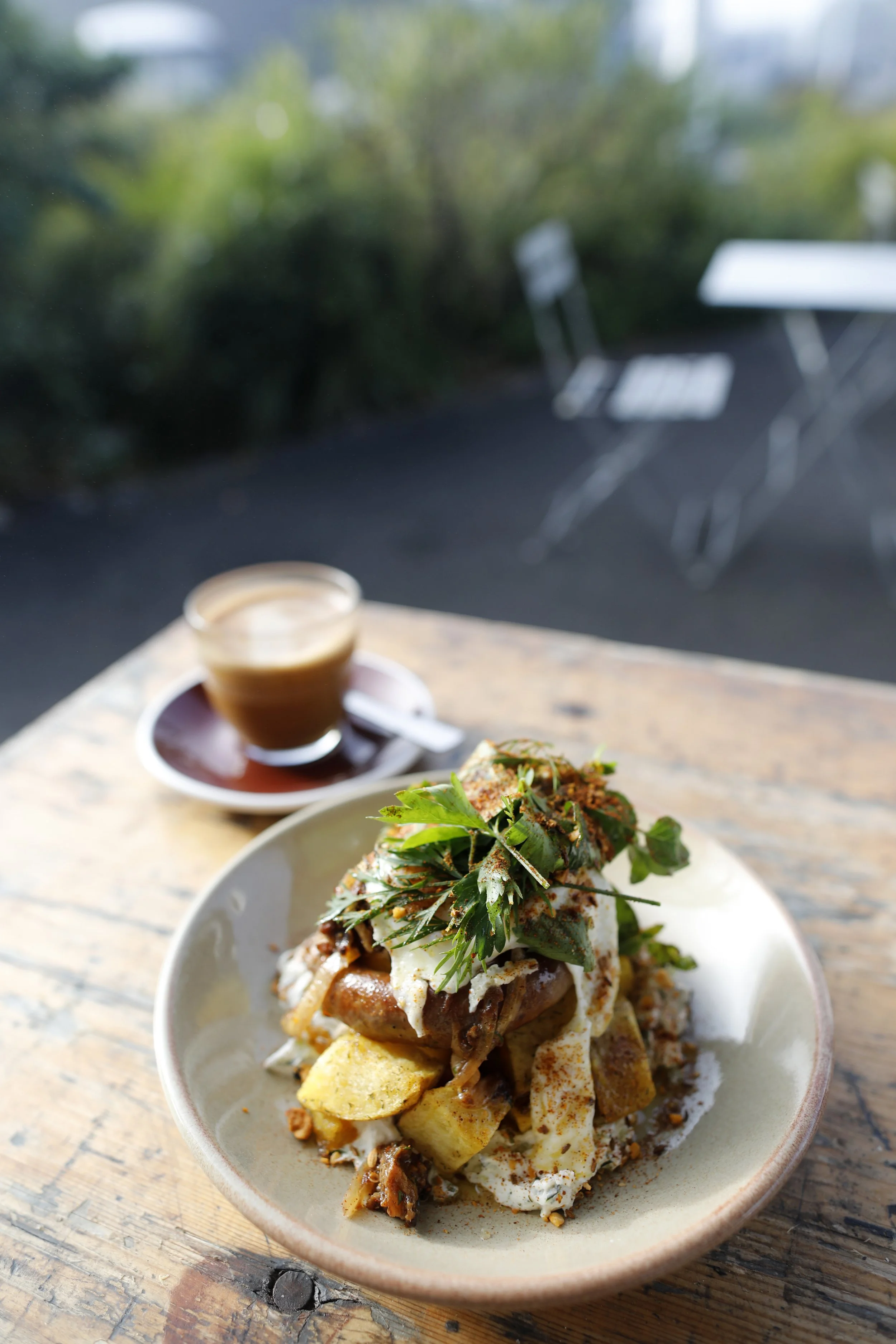
The bakery is a friendly, comforting pit stop: shelves lined with pastries, pies and sandwiches, the kind of place where local life hums softly. Among the usual tempting choices, a stash of crisp, golden hash browns made a clever roadside breakfast and a creamy dirty chai warmed the next stretch of the journey. From there, the road unfurls through changing landscapes — patchwork farms, rolling hills and pockets of native bush — until the glow of a very different kind of attraction calls: the Waitomo Glowworm Caves, where an entirely new kind of twilight waits underground.
Drift Beneath a Sky of Glowworms: A Magical Float Through Waitomo Caves
Famous for its shimmering canopy of glowworms, an intricate underground river system and cathedral-like stalactites and stalagmites, a visit to the Waitomo caves feels like stepping into another world. Read on to discover why the Waitomo caves belong on every New Zealand itinerary.
Tucked into the Northern King Country of New Zealand’s North Island, the Waitomo Glowworm Caves are home to Arachnocampa luminosa, a glowworm species found only in New Zealand. Part of the larger Waitomo streamway network — which also includes Ruakuri Cave, Lucky Strike and Tumutumu Cave — the site offers a mix of geological wonder and living light.
Located about 7 miles northwest of Te Kūiti, the caves sit roughly two hours south of Auckland, an hour south of Hamilton and two hours west of Rotorua by car. At the entrance a warm, wood-clad visitor centre welcomes guests before guided tours lead you into the cool, echoing chambers. The highlight for many is the serene boat ride beneath a ceiling freckled with glowworms, a quiet, unforgettable moment where nature turns the dark into a starry sky.
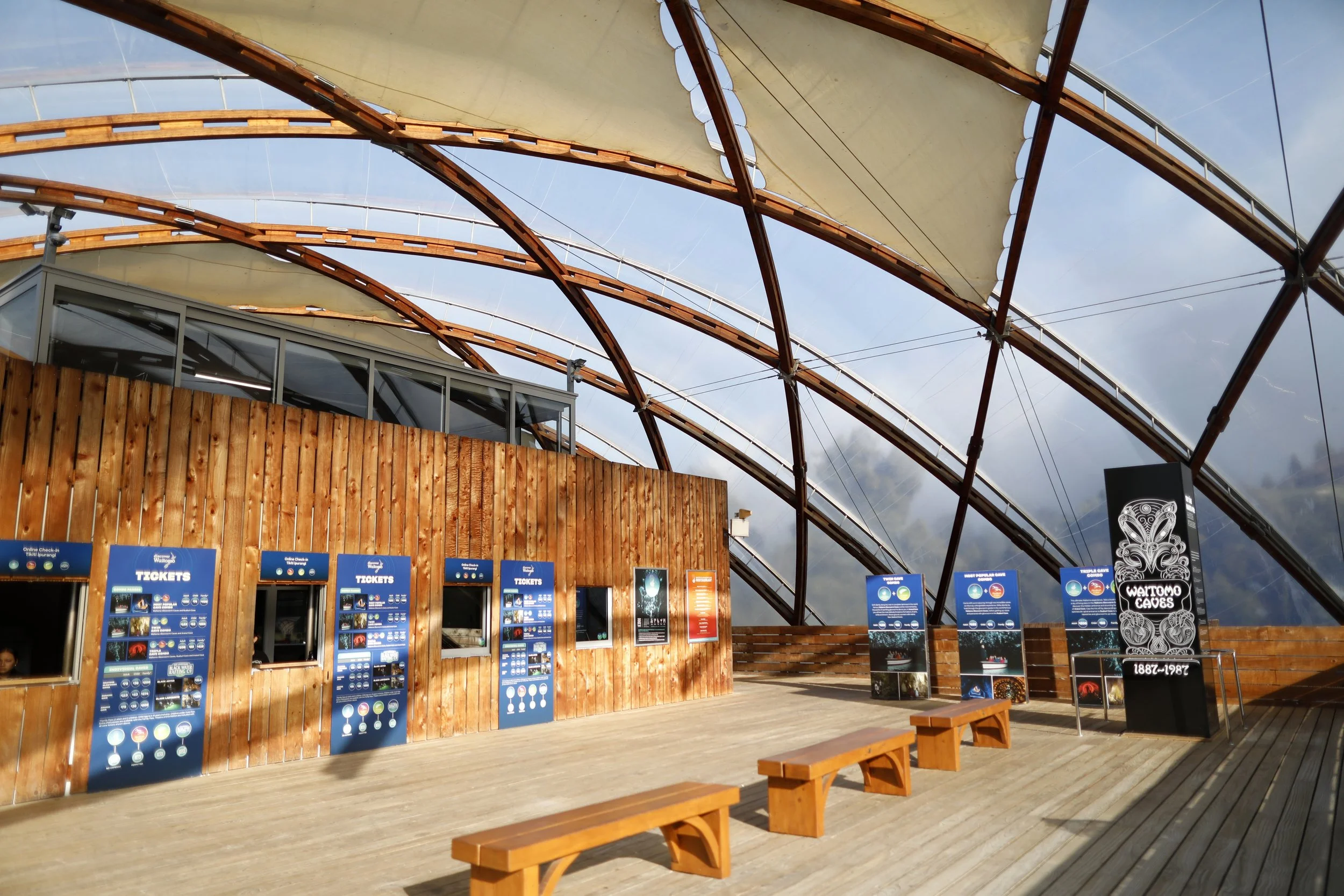
In the gentle hills of Waitomo, three very different caves invite curious travelers to step into another world: Waitomo Glowworm Caves, Ruakuri Cave and Aranui Cave. Each has its own tale to tell — geological theatre, cultural threads and a kind of quiet magic that lingers long after you leave.
The Waitomo Glowworm Caves are the headliners, drawing visitors for more than 130 years. Wander into the cavern and pause beneath the Cathedral, the cave’s tallest chamber, where vaulting limestone feels cathedral-like in more than name. The moment’s centerpiece, though, is the hushed boat ride through the glowworm grotto: you glide in silence as thousands of tiny lights sparkle overhead, a natural star field mirrored in black water. It’s a peaceful, almost reverent spectacle — best enjoyed with your voice turned down and your eyes turned up.
Ruakuri Cave offers a contrasting kind of wonder. The largest cave in the area, with origins traced back 400–500 years, it welcomes visitors through an elegant spiral entrance carved into the landscape. The path — wheelchair accessible — unfurls into a realm of sculpted limestone and shimmering crystal curtains. Guides highlight the intricate rock formations and, if you look closely, you’ll find glowworms nestled among the textures, a quieter, more intimate encounter than the grotto’s grand display.
Aranui Cave’s charm is subtler but no less spellbinding. Lacking the moisture the glowworms favor, Aranui instead showcases a delicate palette of pale browns, pinks and creams in its stalactites and stalagmites. The formations here are fragile and glittering, creating an up-close, almost private atmosphere — like wandering through a miniature, mineral-studded chapel where every surface sparkles.
Together, these three caves offer a balanced portrait of Waitomo: luminous spectacle, cavernous grandeur and crystalline intimacy. Pack a light jacket, tread respectfully and leave a little time afterward to sit quietly and let the memory of underground light and stone settle in.
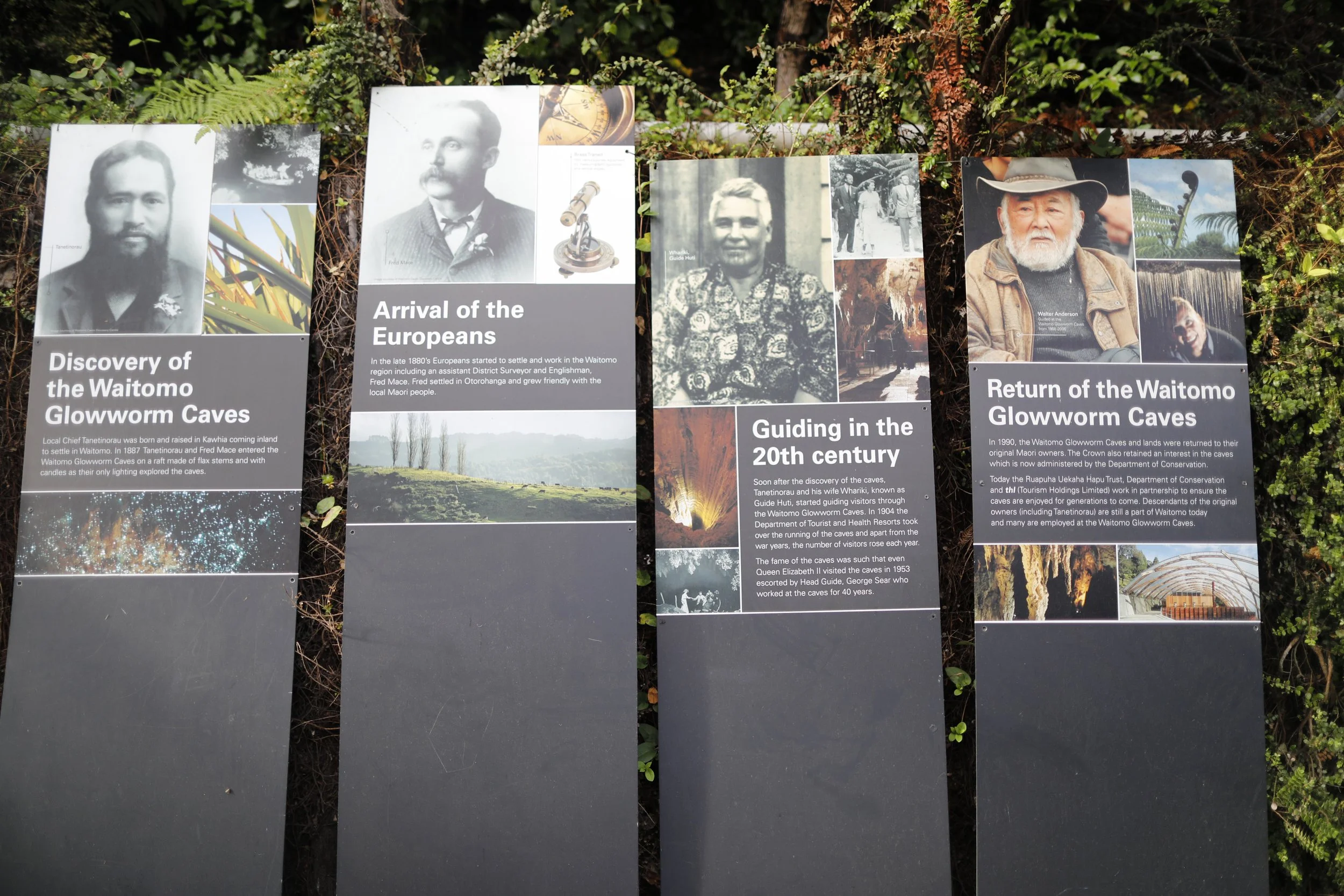
The name Waitomo is rooted in Māori language: “wai” for water and “tomo” for hole or shaft — a fitting title for a place where rivers disappear beneath the earth and reappear as hidden caverns. Long known to local Māori, the caves were introduced to a wider audience in the 1880s when Tane Tinorau, originally from Kawhia, led English surveyors Laurence Cussen and Fred Mace to the entrance in 1884. Over the next few years, Tane and Mace pushed deeper into the subterranean world, navigating by candlelight on a raft along the underground stream (today’s tourist exit).
Imagine drifting into darkness, the only light a guttering flame, until the ceiling above you erupts in a gentle starlight — the famed Glowworm Grotto. The tiny bioluminescent dots hang like a suspended galaxy, turning the cavern into something between a cathedral and a planetarium. As they poled themselves onward toward an embankment, explorers found themselves surrounded by sculpted limestone: swooping curtains, delicate stalactites and cavernous columns in every conceivable shape. It’s the kind of place that makes you feel both very small and thoroughly enchanted.
They came back time and again and Chief Tane — ever curious — eventually found a higher entrance to the cave that became the one we use today. Things changed quickly once the railway reached Ōtorohanga in 1887: suddenly the caves were within reach of more travelers. By 1889, Tane Tinorau and his wife Huti were welcoming visitors, guiding small groups for a modest fee. That same year, Thomas Humphries, the Commissioner of Crown Lands and Auckland’s Chief Surveyor, completed a survey and observed that even then some of the cavern’s most delicate formations bore graffiti. He also recorded that the local people were increasingly protective of the site and recommended government involvement to improve facilities for visitors.
Interest grew fast — about 500 people toured the caves in the first two years — and after several attempts to secure the land, the government stepped in under the Scenery Preservation Act 1903 and the Public Works Act 1905, purchasing the caves for £625. Rising vandalism prompted official administration in 1906 and by 1910 the Waitomo Caves Hotel had been built to accommodate the steady stream of travelers eager to glimpse those luminous, otherworldly chambers.
The story of the caves reads like a short tour through New Zealand’s recent history. In 1957, the state stepped in and Tourist Hotel Corporation took the reins, then a new chapter began in 1990 when Southern Pacific Hotels Corporation became the owner. Four years later, that company reached a liscence agreement with the Department of Conservation and the Māori owners and in 1996 the property passed into the hands of Tourism Holdings Limited.
A key moment came in 1989, when the land and cave were returned to the descendants of Chief Tane Tinorau and Huti — many of whom still work at the caves today. Under the 1990 Waitomo Deed of Settlement, the descendants receive a share of the cave’s revenue and play an active role in its management and development, ensuring that the site’s stewardship remains rooted in the community connected to it.
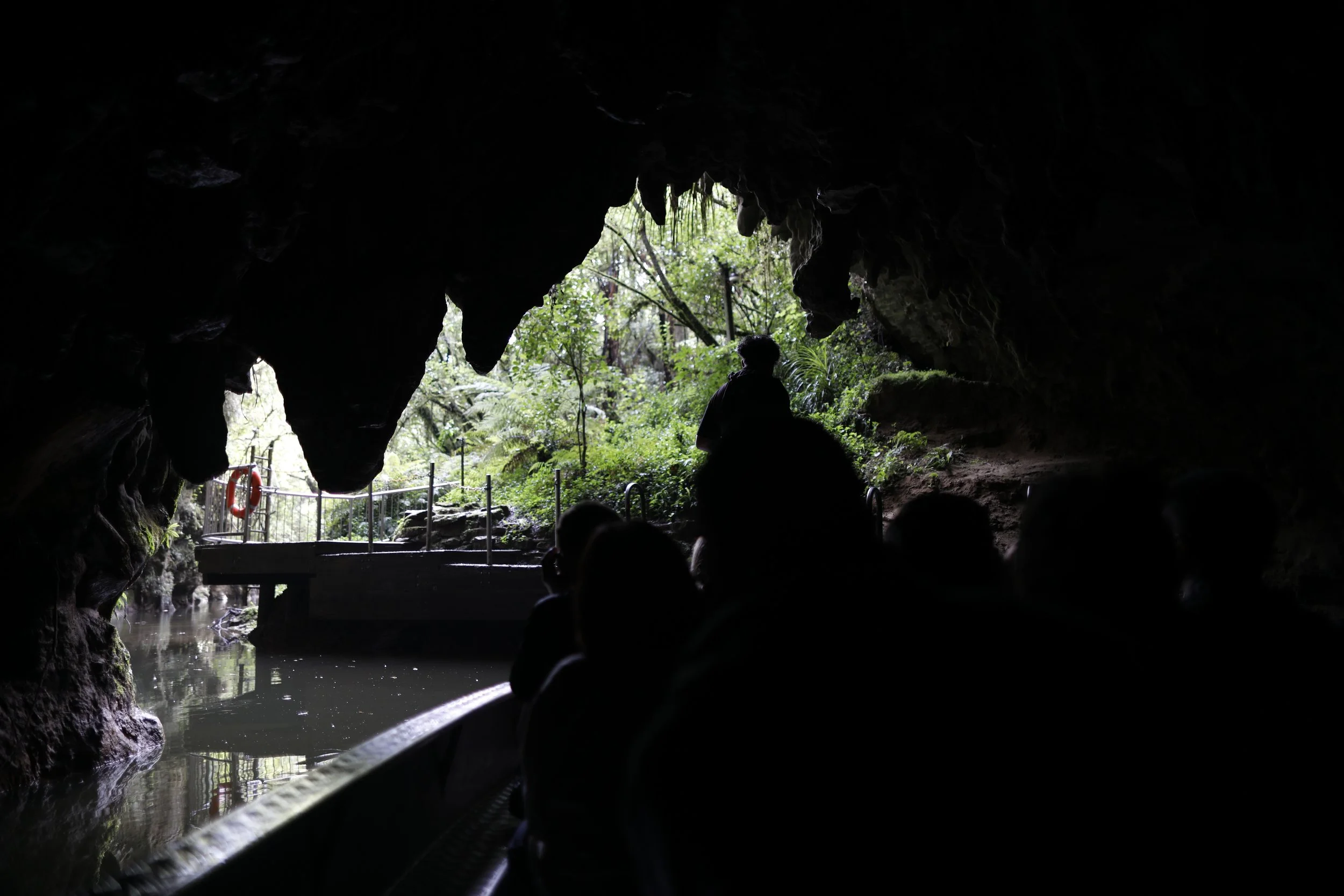
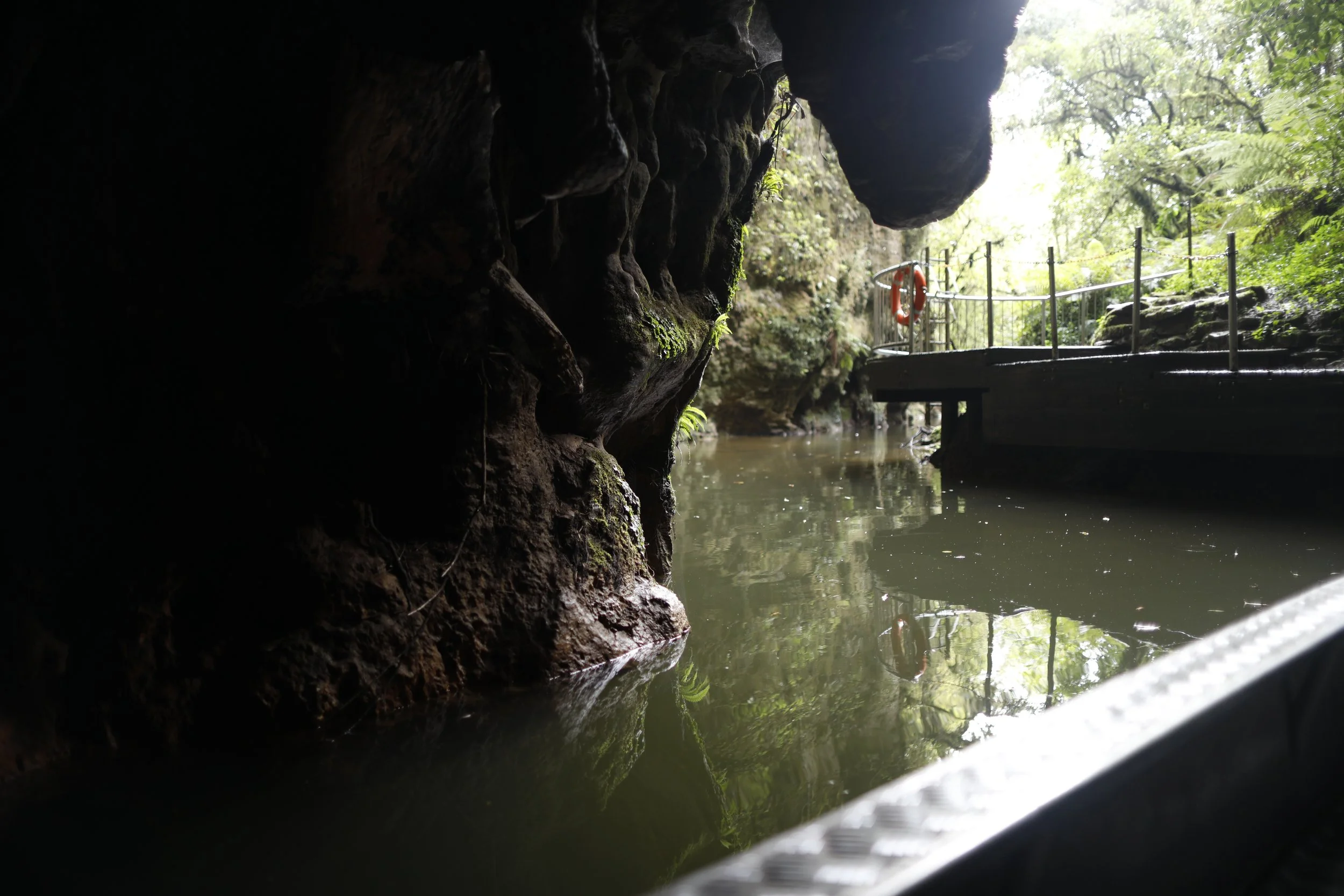
But how did these caves come to be?
Geological and volcanic activity has created around 300 known limestone caves in the Waitomo region over the last 30 million years.
Beneath the surface of New Zealand’s lush North Island lies a story written in stone and sea. Around 30 million years ago, the land that is now Waitomo slumbered beneath the ocean. There, on ancient seabeds, corals, shells, fish bones and countless tiny marine creatures settled and piled up — their remains slowly turning into the thick, fossil-rich limestone that underpins the region today. In some places, those layers stack more than 650 feet deep, a testament to ages of patient accumulation.
Then, the earth moved. Tectonic forces folded and lifted those seabed layers, nudging the limestone up above the waterline. Once exposed to air, the rock began to crack and weather, and rainwater — slightly acidic and persistent — slipped into every weakness. Over millions of years, that quiet dissolving carved out caverns and passages, hollowing the stone into the mysterious chambers we now know as the Waitomo Glowworm Caves. Wander beneath their ceilings and you’re tracing the slow, elegant handiwork of ocean, time and rock.
Drip by patient drip, the cave sculpts its slow, silent cathedral. Stalactites hang like icy chandeliers from the ceiling while stalagmites rise steadily from the floor; when they meet, they form graceful pillars or columns and on rare occasions twist together into the whimsical spirals known as helictites. These stone “decorations” are not ornaments but timekeepers — each stalactite gains about a cubic centimeter every hundred years, so you’re really looking at millions of years of geology in every curve and spike.
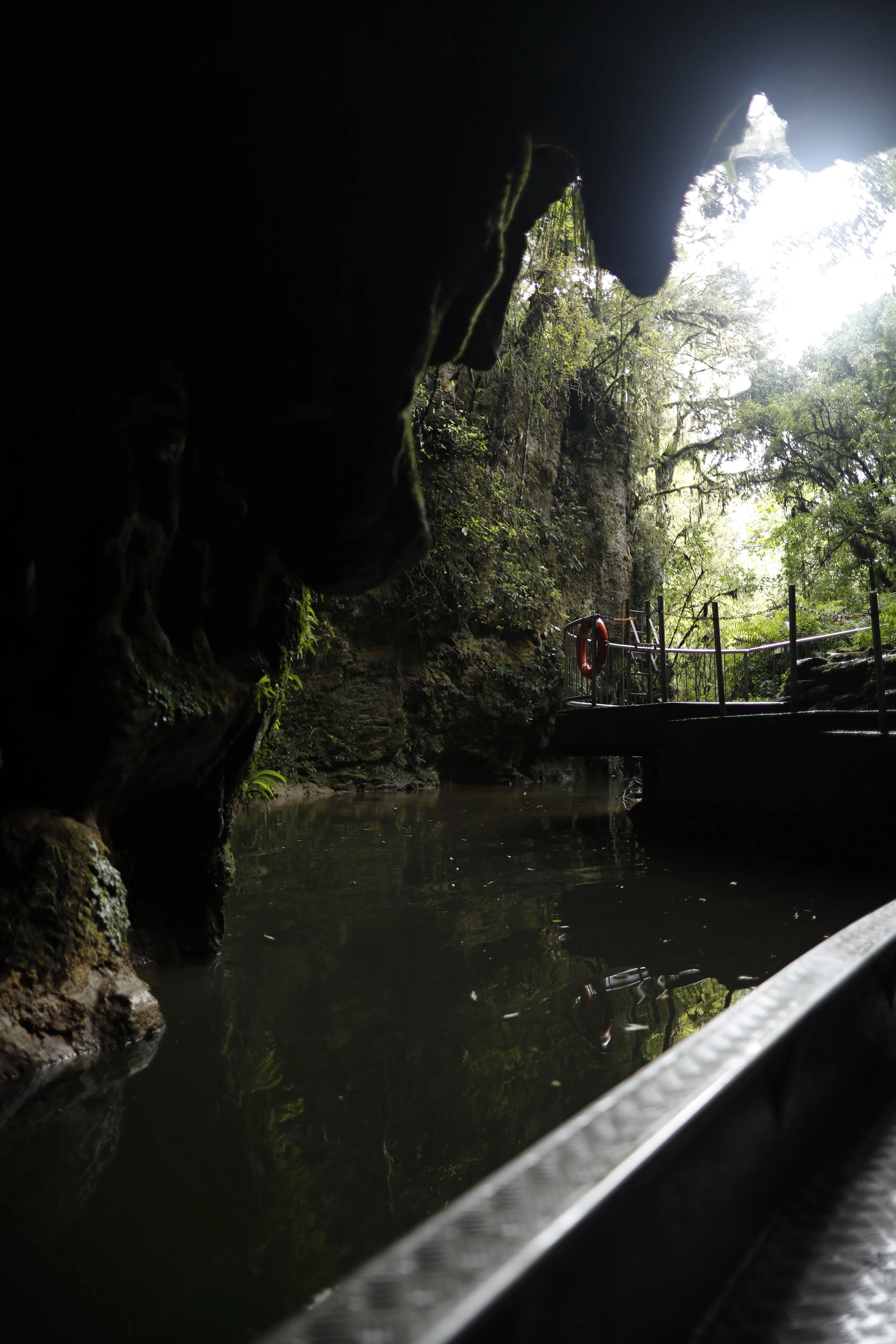
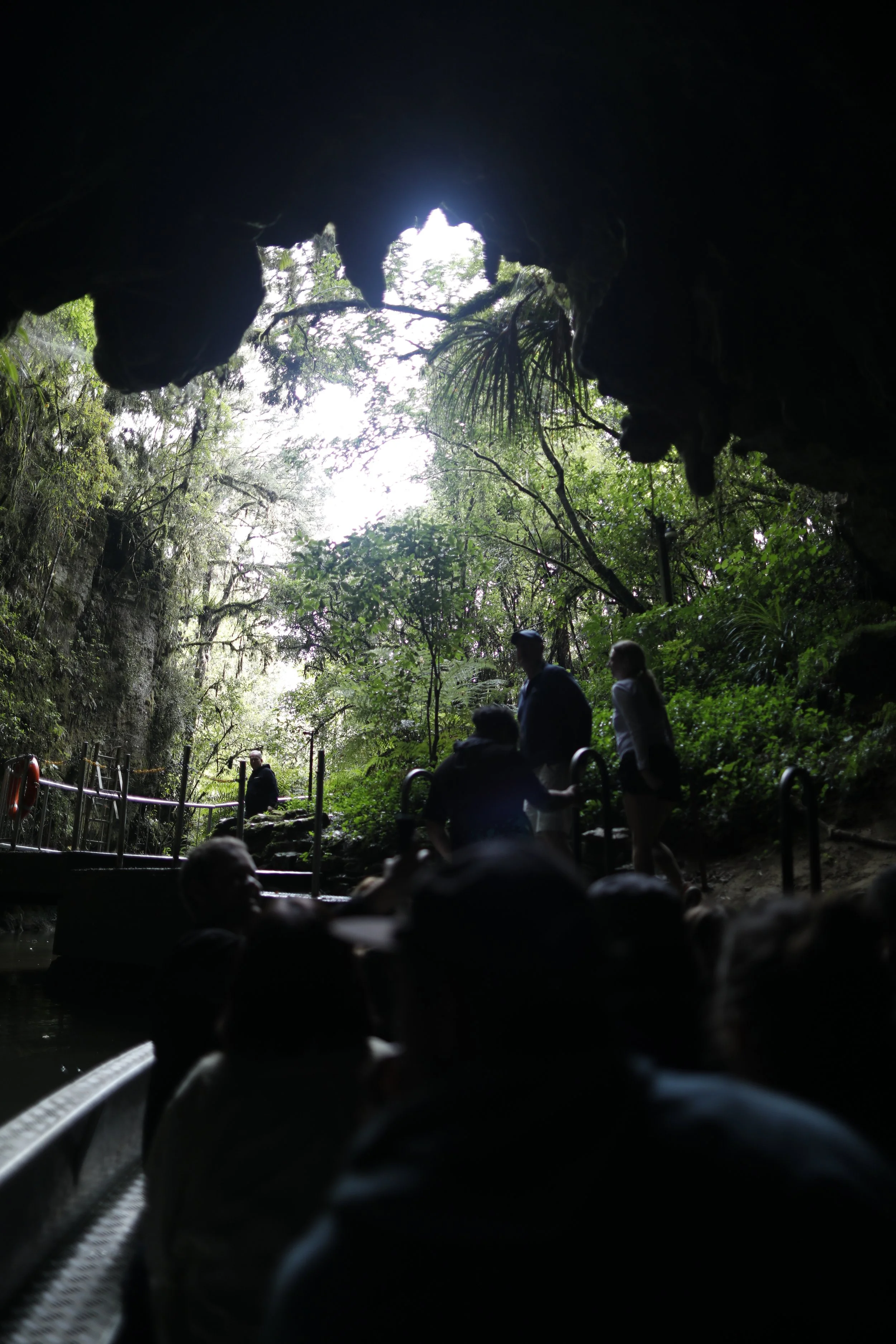
The caves are not silent, though. Tiny explorers scuttle through the shadows: pale albino ants and oversized crickets, and most famously the glowworm Arachnocampa luminosa. No larger than a mosquito, the adult glowworms nevertheless turn the dark into a suspended night sky, their bioluminescent threads twinkling like constellations. Hidden freshwater pools, fed by subterranean creeks and brooks, are home to the secretive New Zealand long fin eel, slipping through the depths where light rarely reaches.
Even the cave walls carry life — carpets of fungi cling to crevices, including the so-called cave flower, a mushroom-like relative of Pleurotus. Together, rock, water and living things weave a hush-filled world that feels both ancient and alive, a subterranean theatre that reveals how patiently and beautifully nature designs.
Deep inside the limestone tunnels of the Waitomo Glowworm Caves, a dedicated Scientific Advisory Group keeps a close, careful watch over the tiny stars that light the ceilings. Quietly humming in the background, automated sensors record carbon dioxide levels, rock and air temperatures and humidity around the clock. Specialist staff pore over this steady stream of data, turning numbers into insight. From those findings, the advisory group crafts the cave’s care plan — deciding when to adjust airflow patterns and how many visitors the caves can welcome each day — to protect the glowworms’ fragile, luminous world.
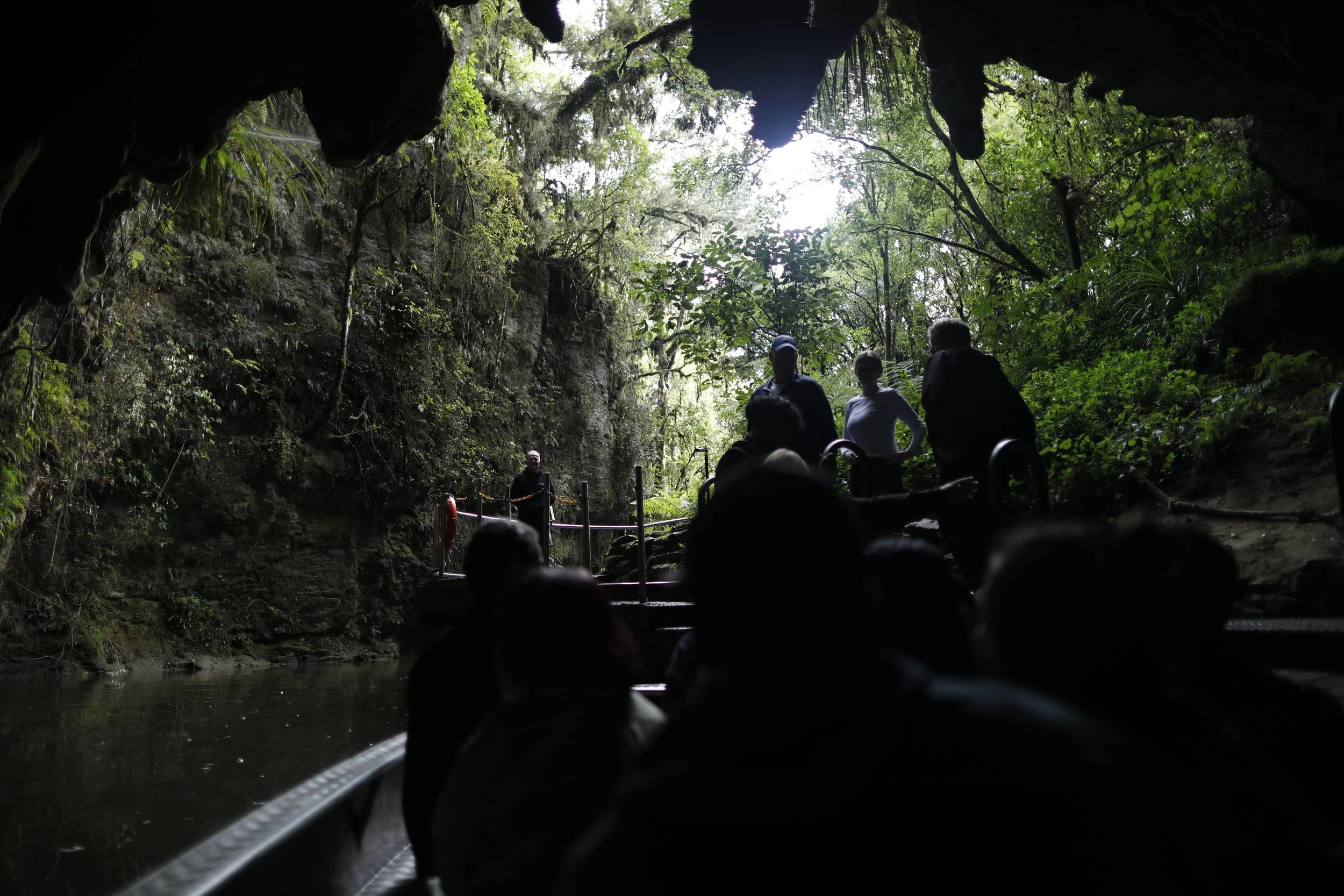
A guided visit to the Waitomo Glowworm Caves feels like stepping into a secret world carved in limestone. The journey begins at the highest tier — the Catacombs — and descends through three distinct levels linked by the Tomo, a dramatic 52-foot vertical shaft that slices through the rock.
Midway lies the Banquet Chamber, a roomy, echoing gallery where early explorers once paused to eat. Today, you can still spot the ghostly traces of those fires in the darkened ceiling, a quiet reminder of past visitors gathered beneath the stone. On clear, quiet days it’s sometimes possible to retrace your steps to the upper level and glimpse the Pipe Organ, the cave’s largest formation; on busier days, that passage is closed to protect visitors from pockets of carbon dioxide.
The final descent opens into the Cathedral — a broad, vaulted space about 60 feet high with rough-hewn walls that have been gently paved for visitors. Its natural acoustics are so splendid that renowned singers and choirs have performed here, lending the cavern an almost ceremonial atmosphere.
The tour ends with the moment everyone remembers: boarding a small boat and floating into the Glowworm Grotto. The underground river slips you forward in near-darkness, while above you a galaxy of tiny bioluminescent lights hangs like a living night sky — quiet, otherworldly and utterly unforgettable.
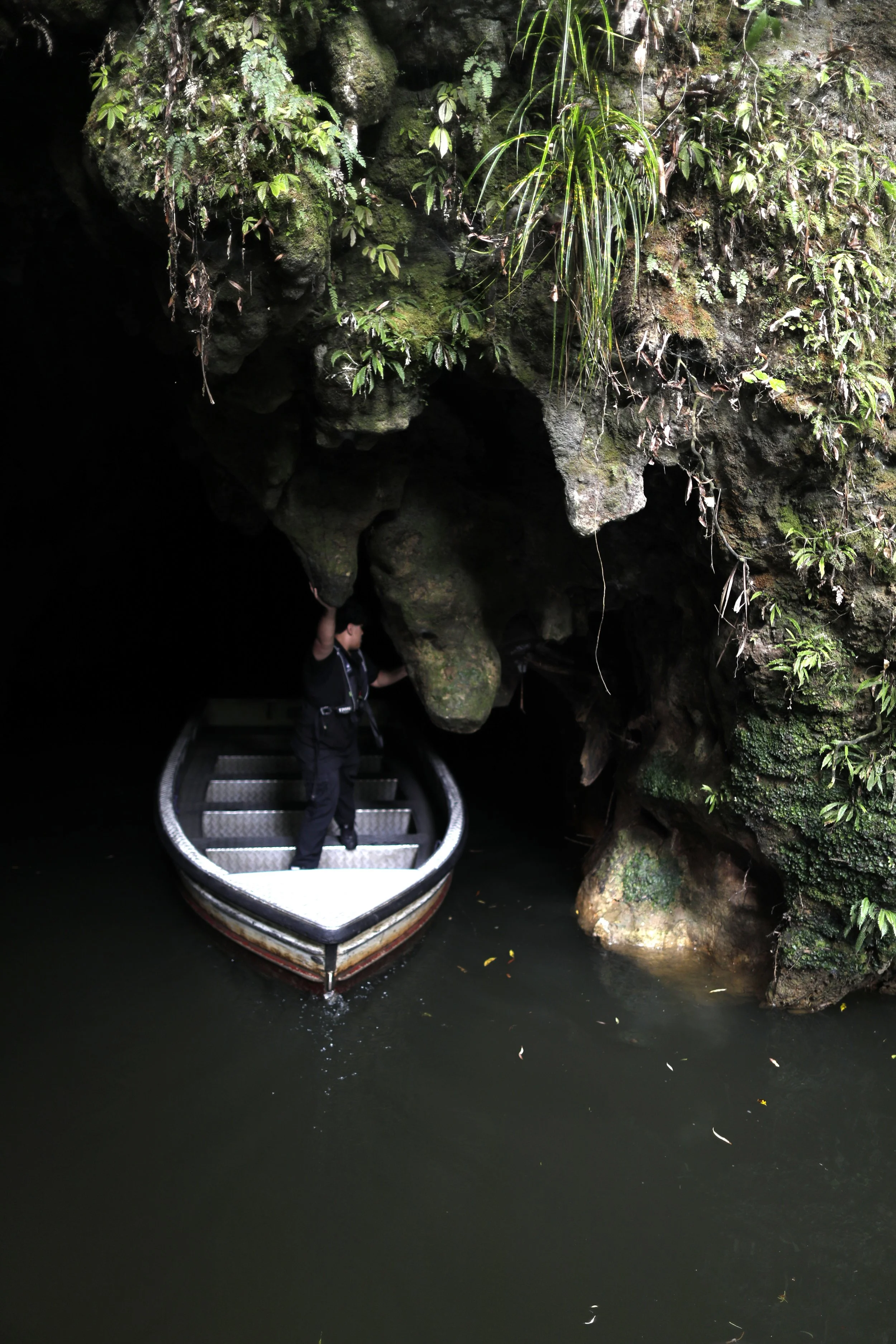
Our afternoon tour began at 1 p.m., when the small group gathered and received the cave’s simple but strict house rules: no photos, no lights, no loud noises and absolutely no touching the walls. It felt like being handed a secret handshake for a very special place.
Tip | Single entrance fee: $61 USD.
A local guide led us into the cool, damp hush of the limestone passages. The rock wore names like titles in a novel — the Great Room, the Cathedral — and here and there the formations suggested familiar shapes: a family huddled in stone, an elephant frozen mid-trumpet. Then came the first hint of the real reason we were there: a fleck of blue-green light tucked under a ledge.
We switched off our torches. In the dark, the cave revealed a galaxy of tiny pinpricks — glowworms, clustered in their silken snares. Up close you could see the delicate threads they spin to trap insects; each worm hangs sticky silk and waits, reeling prey in over the span of an hour. Their life cycle is almost melancholic: the larval arachnocampa luminosa emit that ethereal bioluminescence thanks to a chemical reaction between an enzyme and a luciferin molecule, then go on to pupate and emerge as short-lived adults that don’t feed. For them, glowing is survival and legacy.
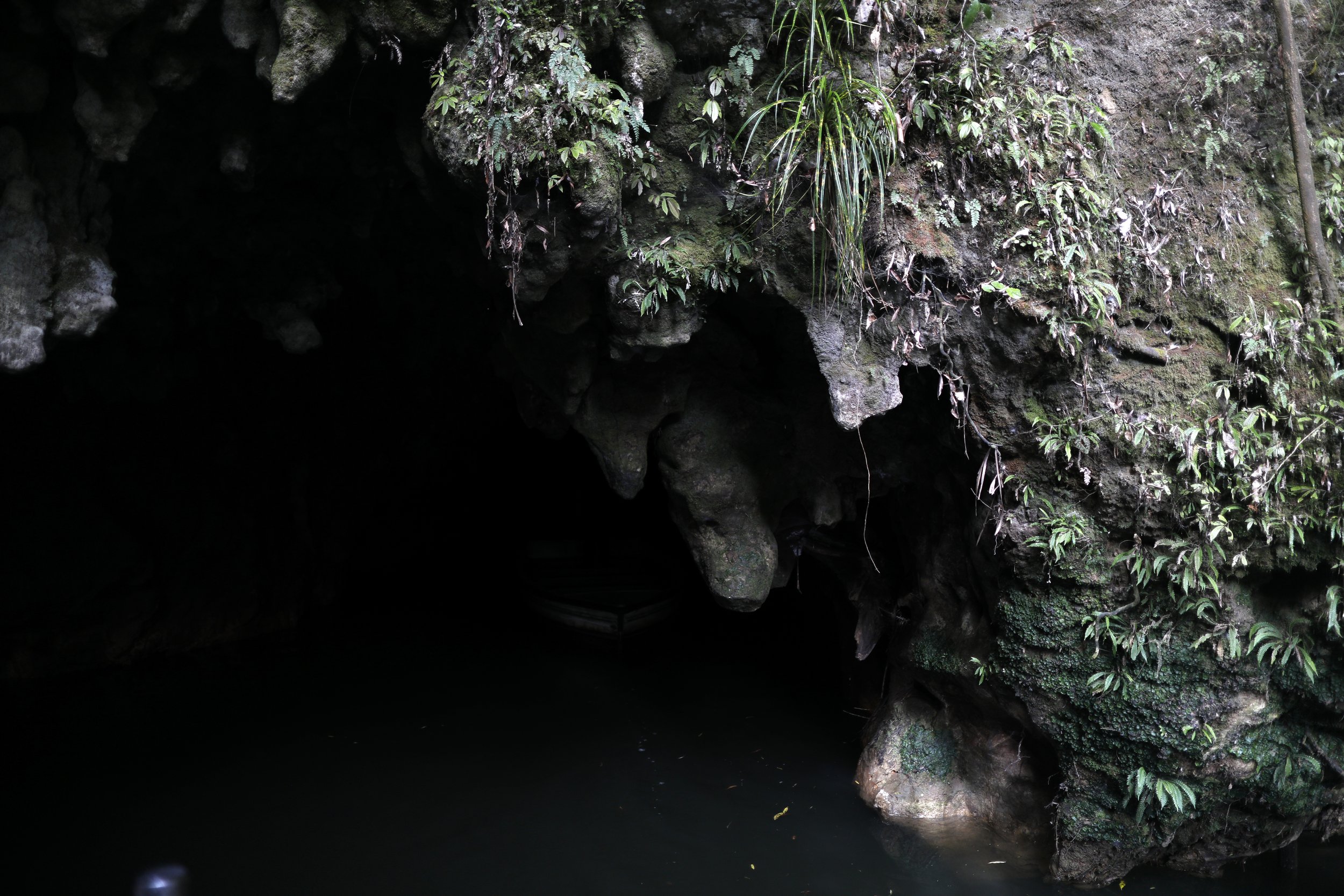
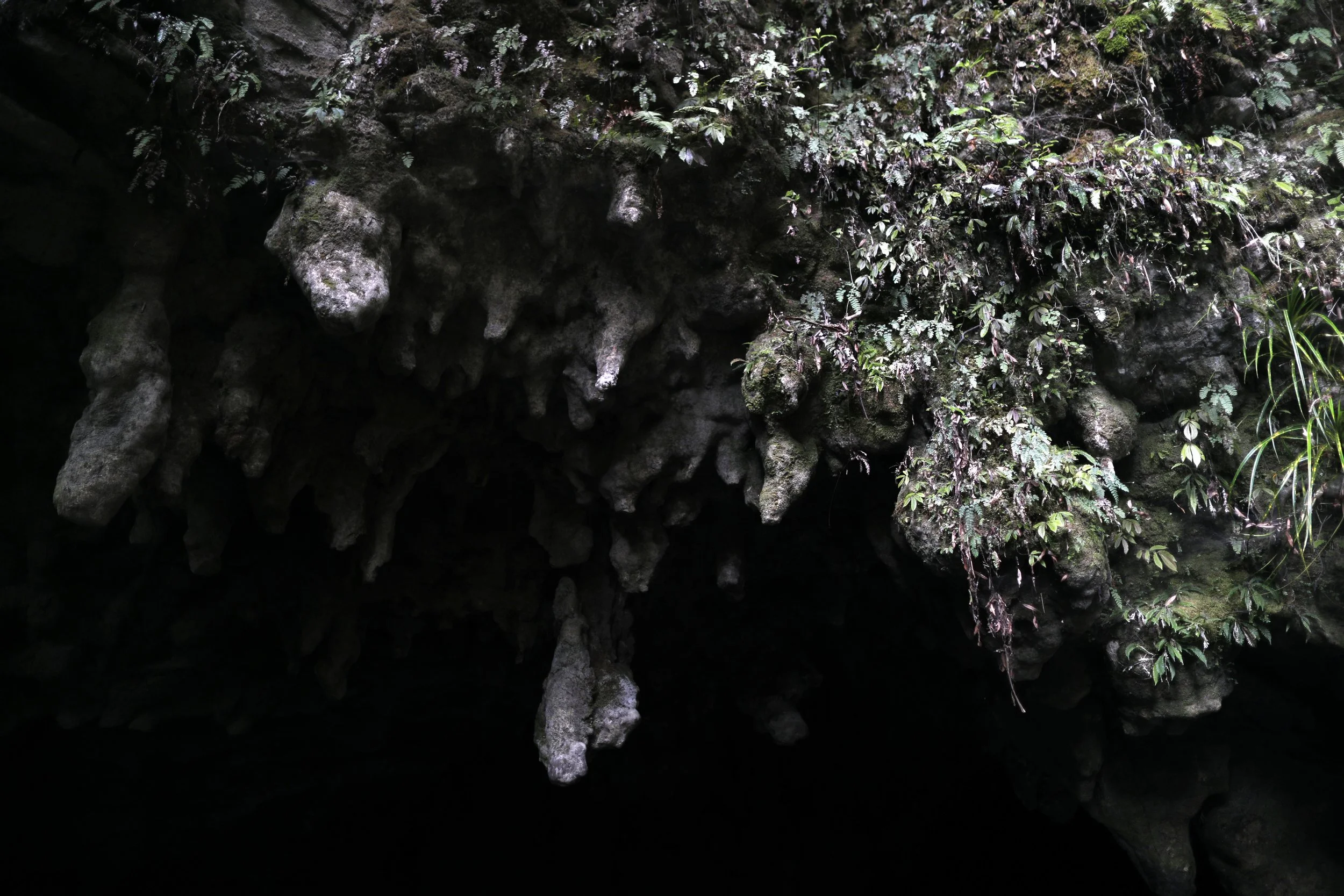
We drifted toward the river in a small, motorless boat. The guide used a pulley system to glide us through the cave’s quiet corridors so as not to disturb the glow worms. We didn’t travel far — most of the lights were concentrated in one magical alcove — but the slow, silent row felt like being carried through a starry night sealed in stone. The experience was less about distance and more about stillness: the hush, the faint scent of damp limestone and that surreal ceiling of suspended light.
Darkness unfolded like a velvet sky and thousands of tiny lights blinked to life — glowworms clustering like miniature constellations. Their hues ranged from blue to green to soft white, though most shone a mesmerizing turquoise that made the cave feel supernatural. Remarkably, the air was still and quiet; not a fly or insect disturbed the spell.
The boat ride through the cavern was brief but unforgettable. As we glided toward the exit and the daylight, there was just enough time to capture the moment when the glow gave way to the outside world. Because photography inside the cave is not allowed, the site thoughtfully provides a green-screen photo opportunity at the exit so visitors can take home a keepsake. A charming gift shop nearby sells those pictures and a few local treats and a cozy little café is perfect for lingering over a warm drink while the memory of the glowing ceiling lingers.
Arrive at Te Puia: A First Glimpse of Rotorua’s Living Culture
We continued on for another hour and arrived at Te Puia, the heart of Rotorua’s living culture. Nestled within steaming geothermal valleys, the New Zealand Māori Arts and Crafts Institute (NZMACI) preserves and teaches the country’s most treasured Māori art forms — carving, weaving and whakairo (art of carving, encompassing intricate work in wood, stone and bone) — since its founding in 1963. The site hums with creativity: the Āhua Gallery displays striking contemporary and traditional pieces, the geothermal features hiss and bubble nearby and a kiwi conservation centre offers a rare, hushed glimpse of New Zealand’s shy national bird.
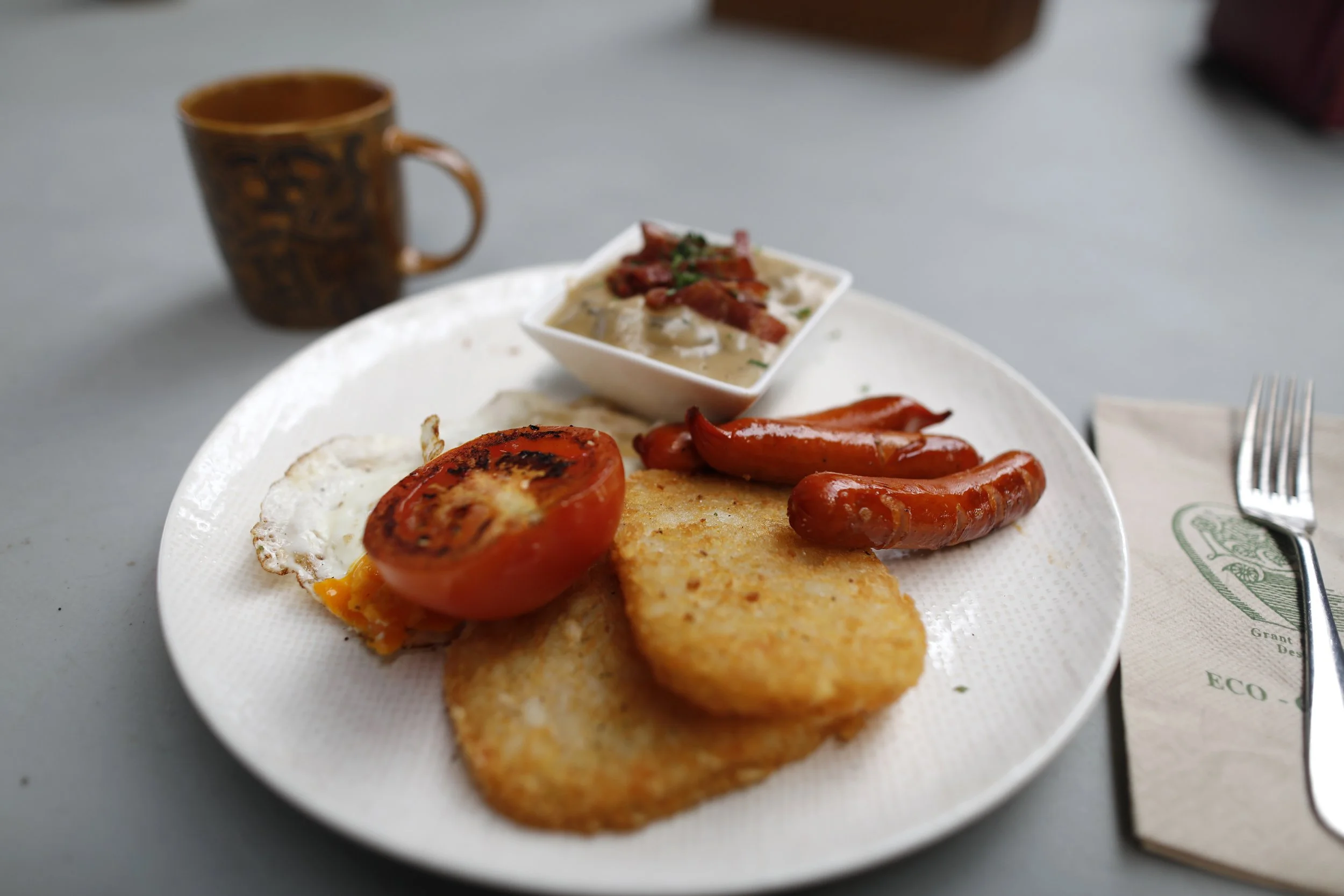
After a quick bite at the on-site café, the group split for the guided experience.
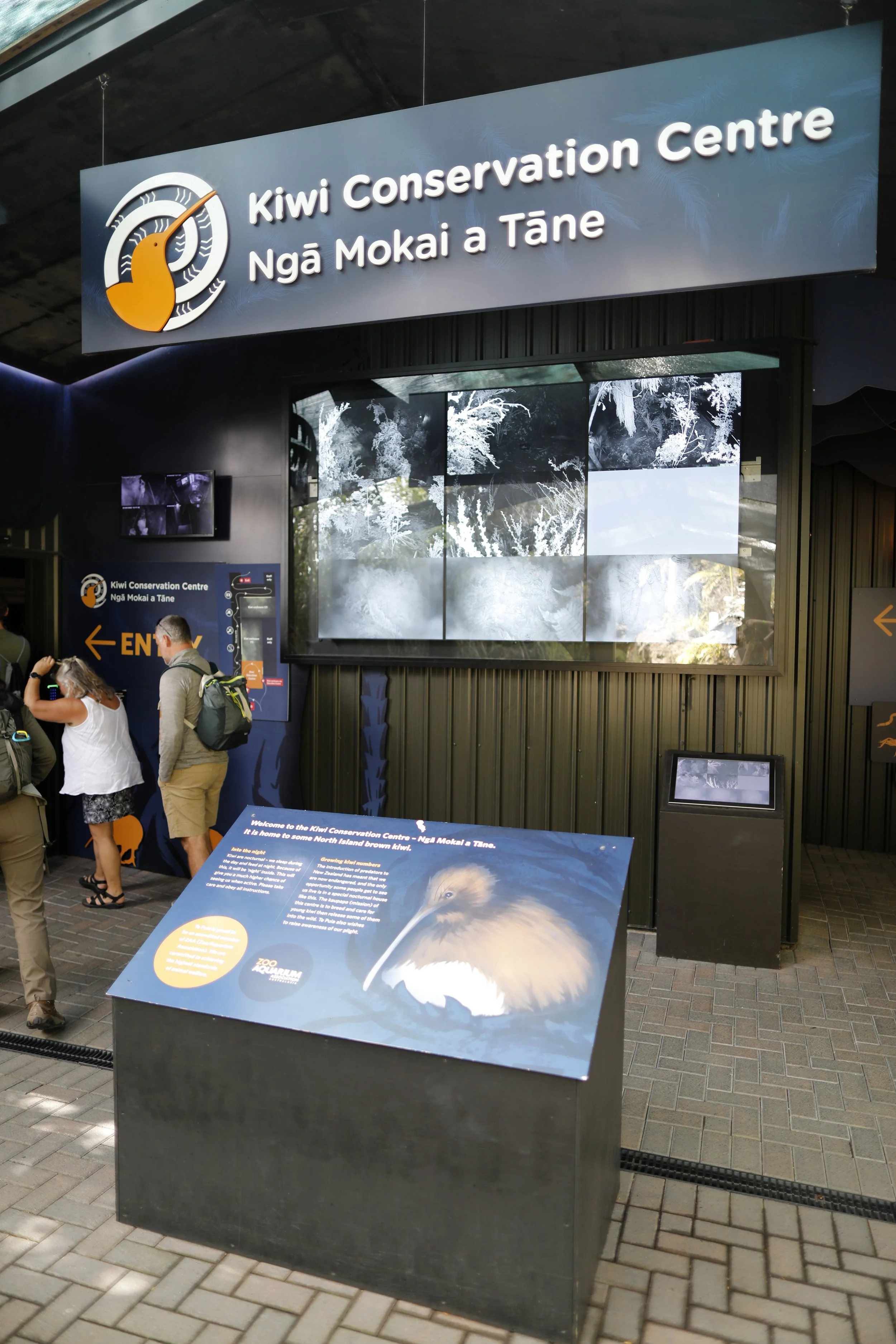
The walkway led first to the kiwi house, a dim, quiet sanctuary where photography is not allowed — part of protecting these nocturnal creatures. Inside, we watched two sibling kiwis, housed apart by sex to mirror their natural habits and a tiny, endearingly clumsy chick. The encounter felt intimate and reverent, a gentle reminder of the conservation work woven through Te Puia’s cultural mission.
Witness the Magic of Rotorua’s Pōhutu Geyser — A Fiery Maori Wonder
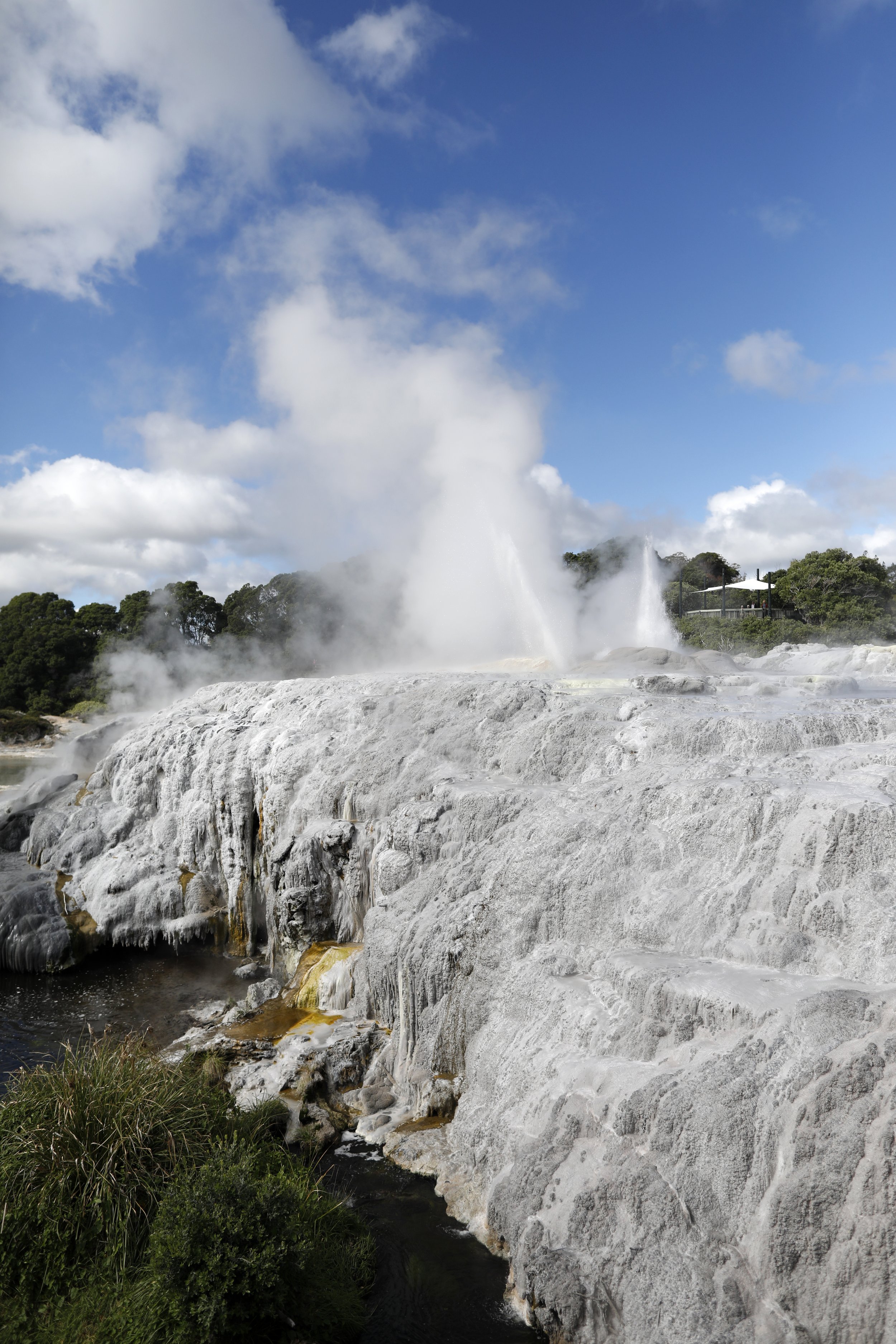
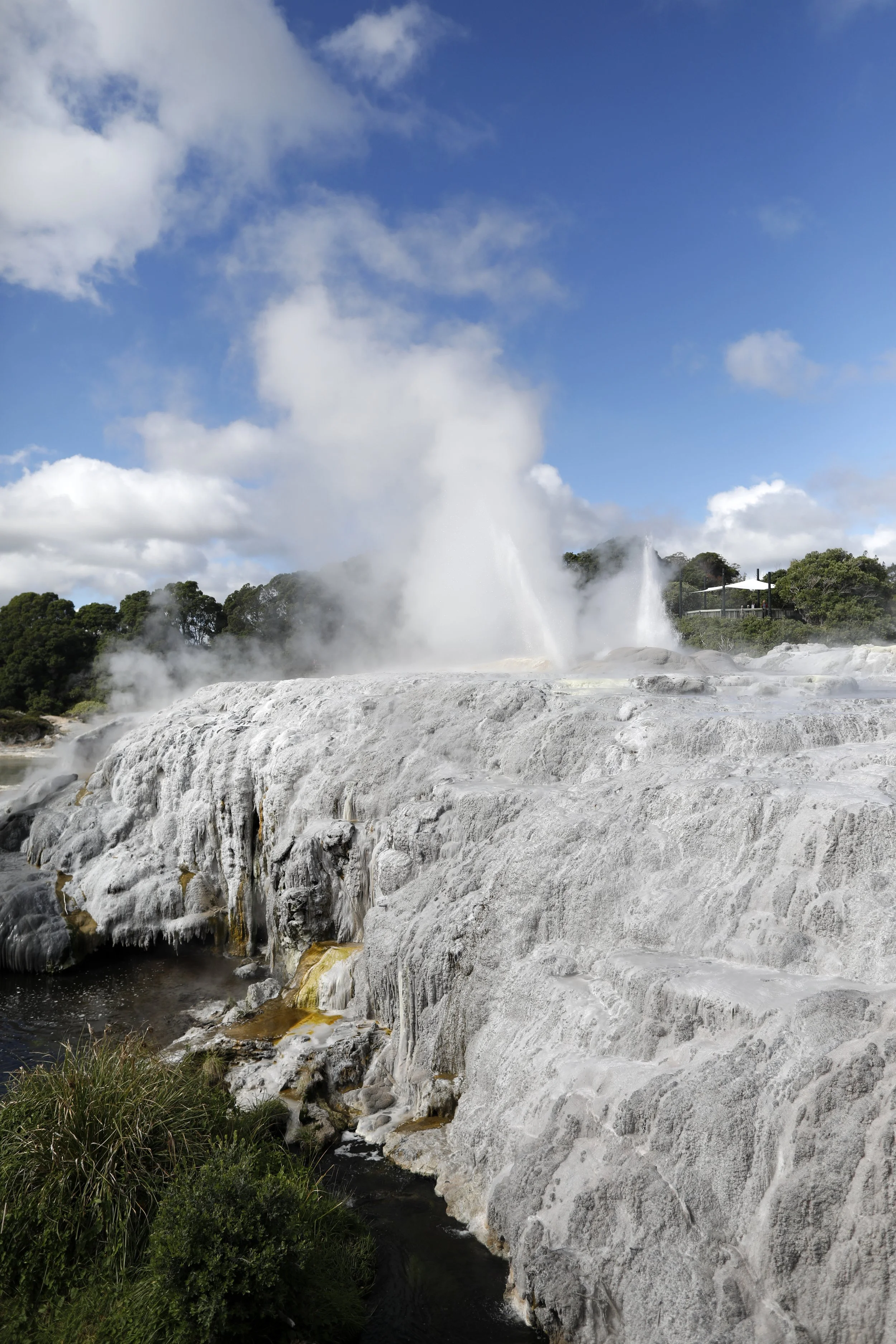
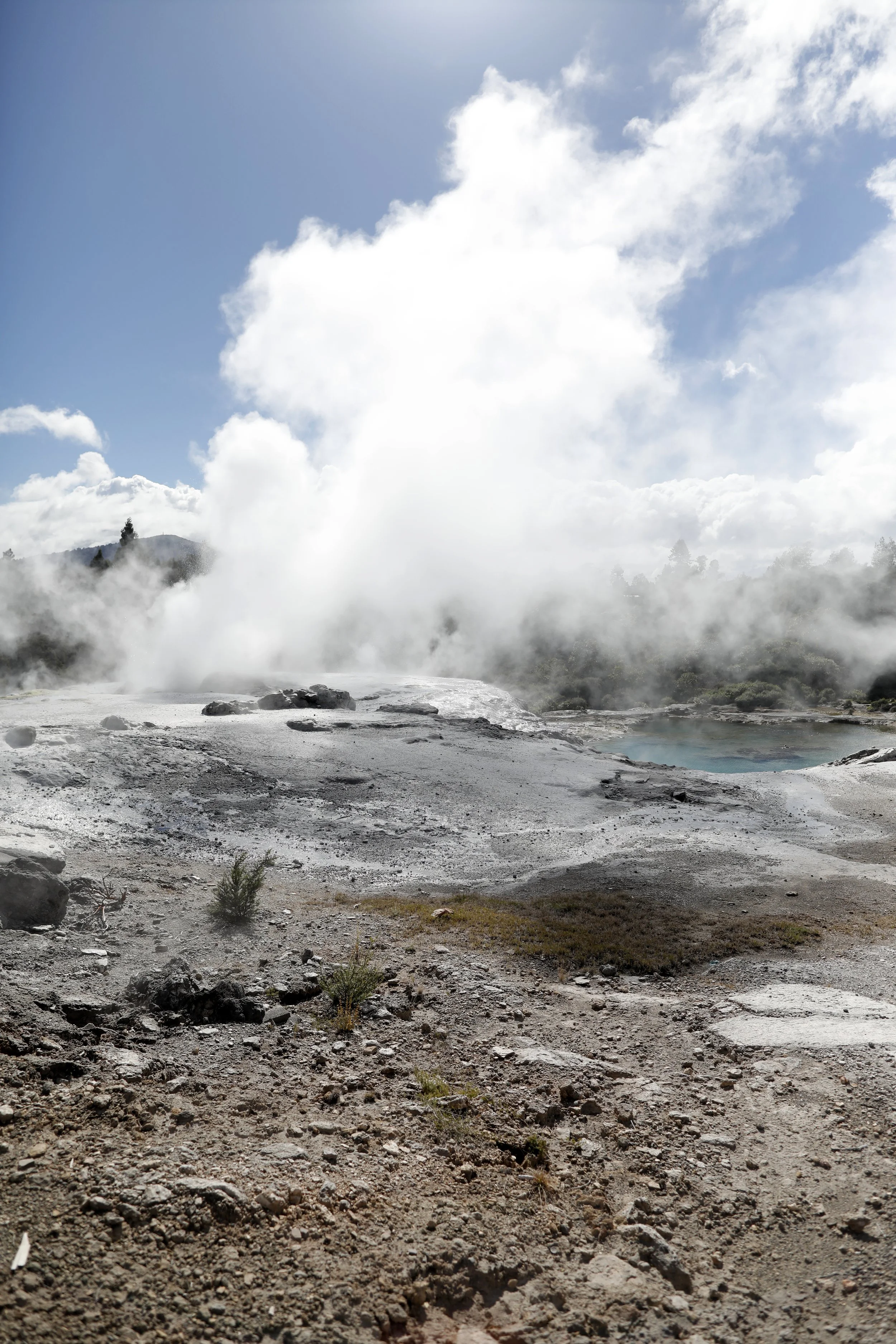
We wandered next to the Kōkō mud pool and the famed Pōhutu Geyser — and just as we arrived the geyser began to roar into life, spraying steam and water skyward in a dramatic burst that drew everyone closer.
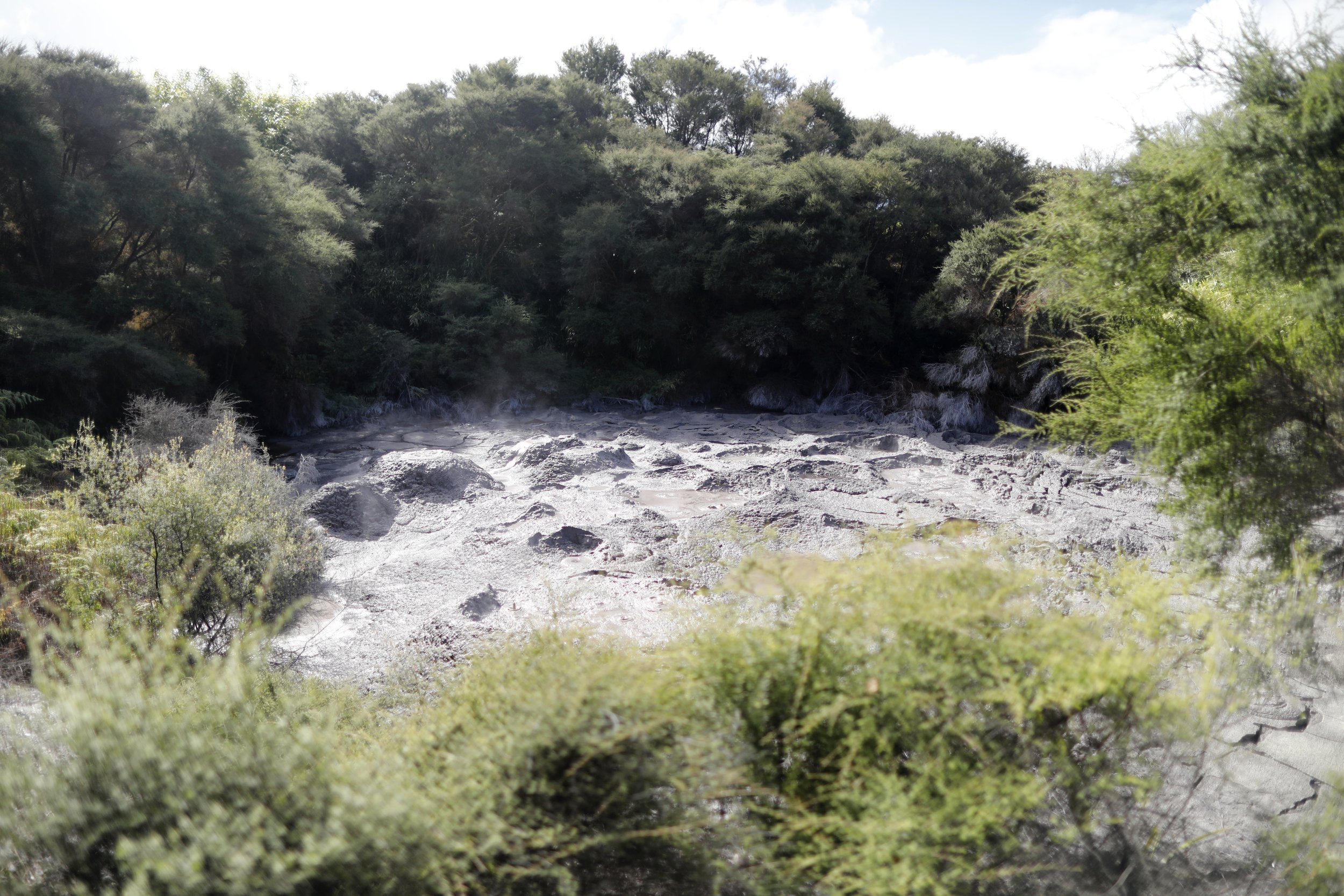
Pōhutu Geyser, in the Whakarewarewa Thermal Valley of Rotorua, bursts skyward in dramatic spurts of steaming water and mist, painting the thermal landscape with a wild, elemental beauty.
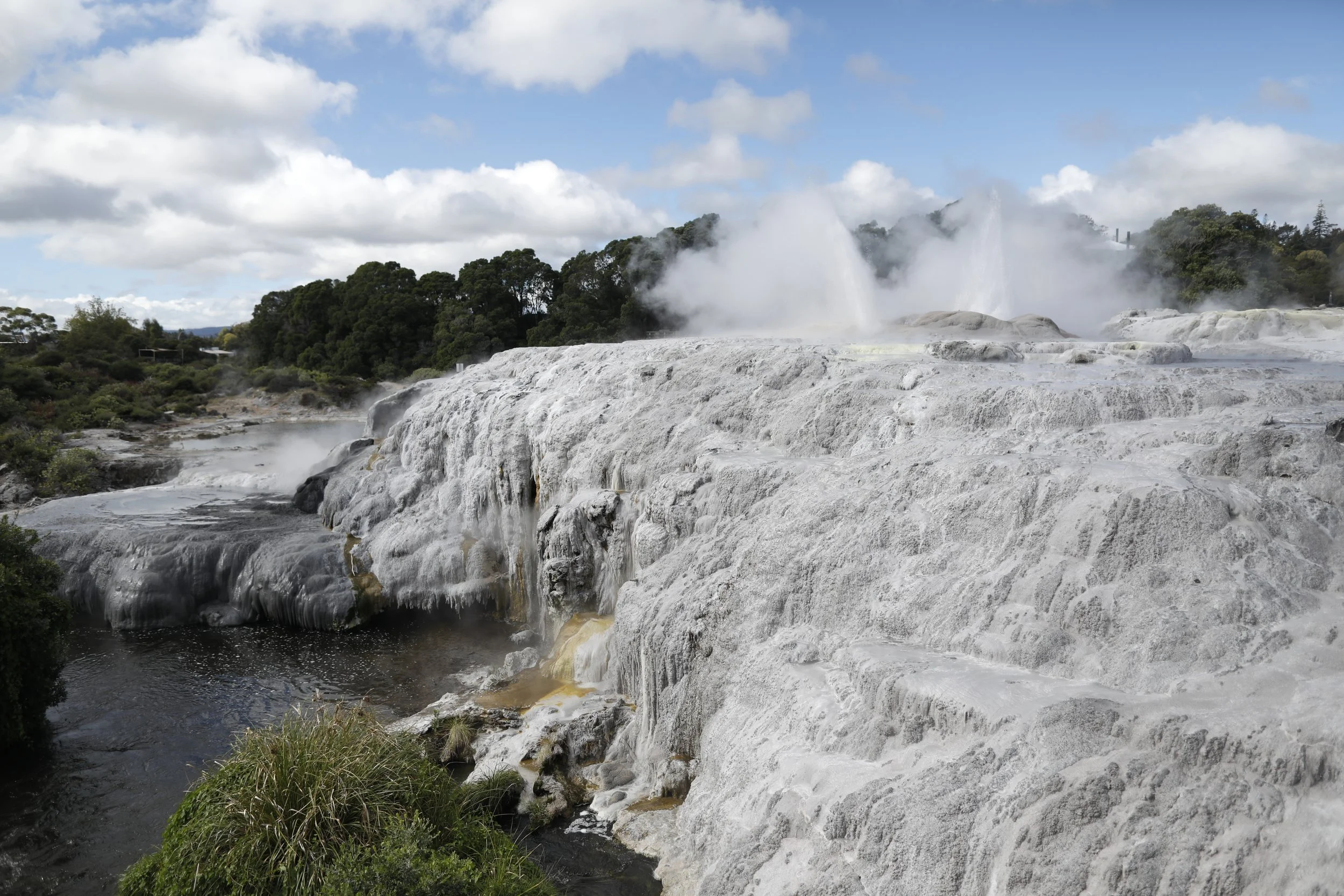
It’s the largest in the southern hemisphere and one of the most active local spectacles. It can erupt up to twenty times a day, sometimes reaching heights around 100 feet. Its eruptions are driven by a complex underground plumbing system heated by a shallow magma body beneath the Rotorua caldera.
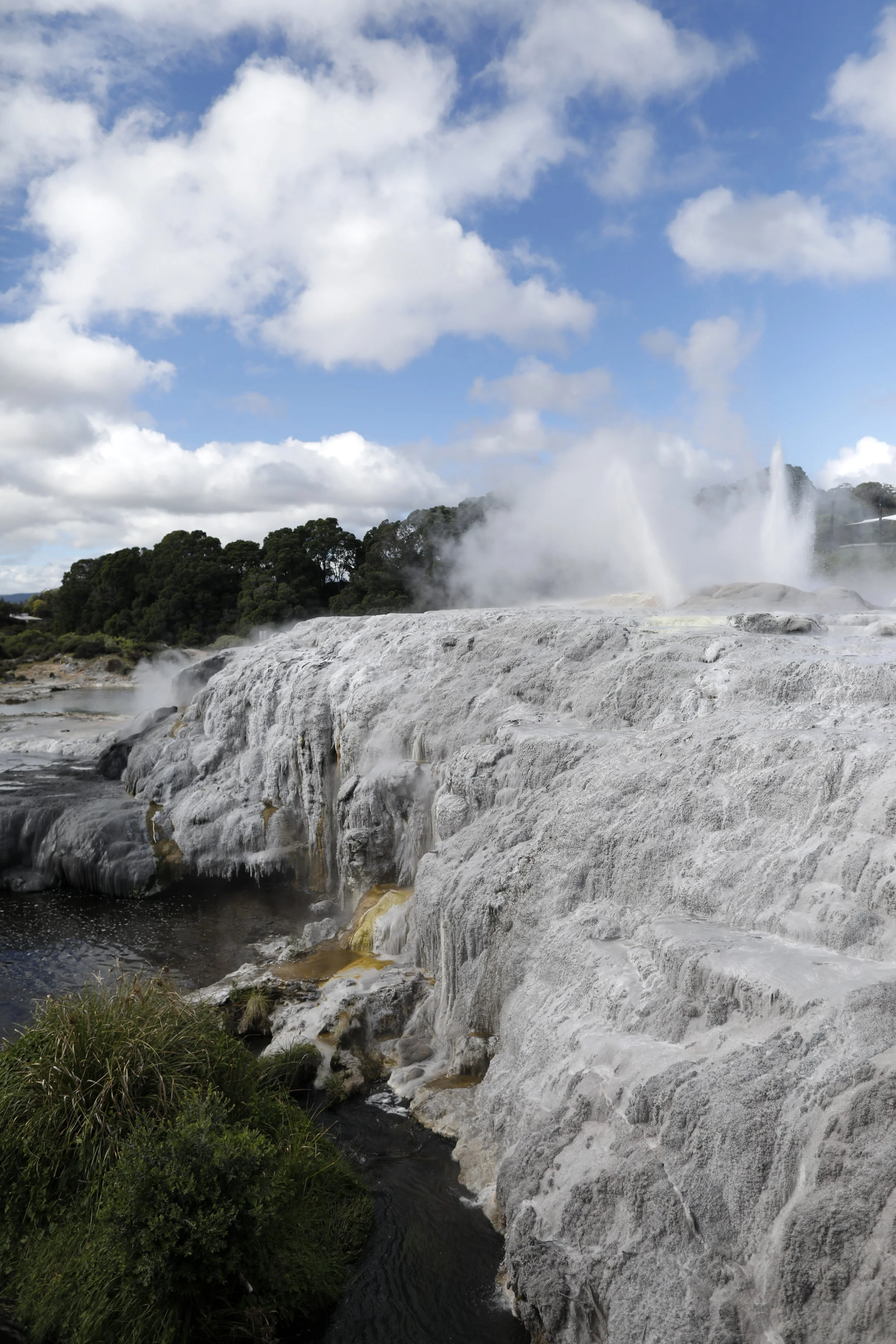
The name Pōhutu comes from te reo Māori and is variously interpreted as “big splash,” “explosion” or “constant splashing,” a fitting set of images for such a lively feature. Its crater is a modest 1.65 feet across but what it sends up is anything but small.
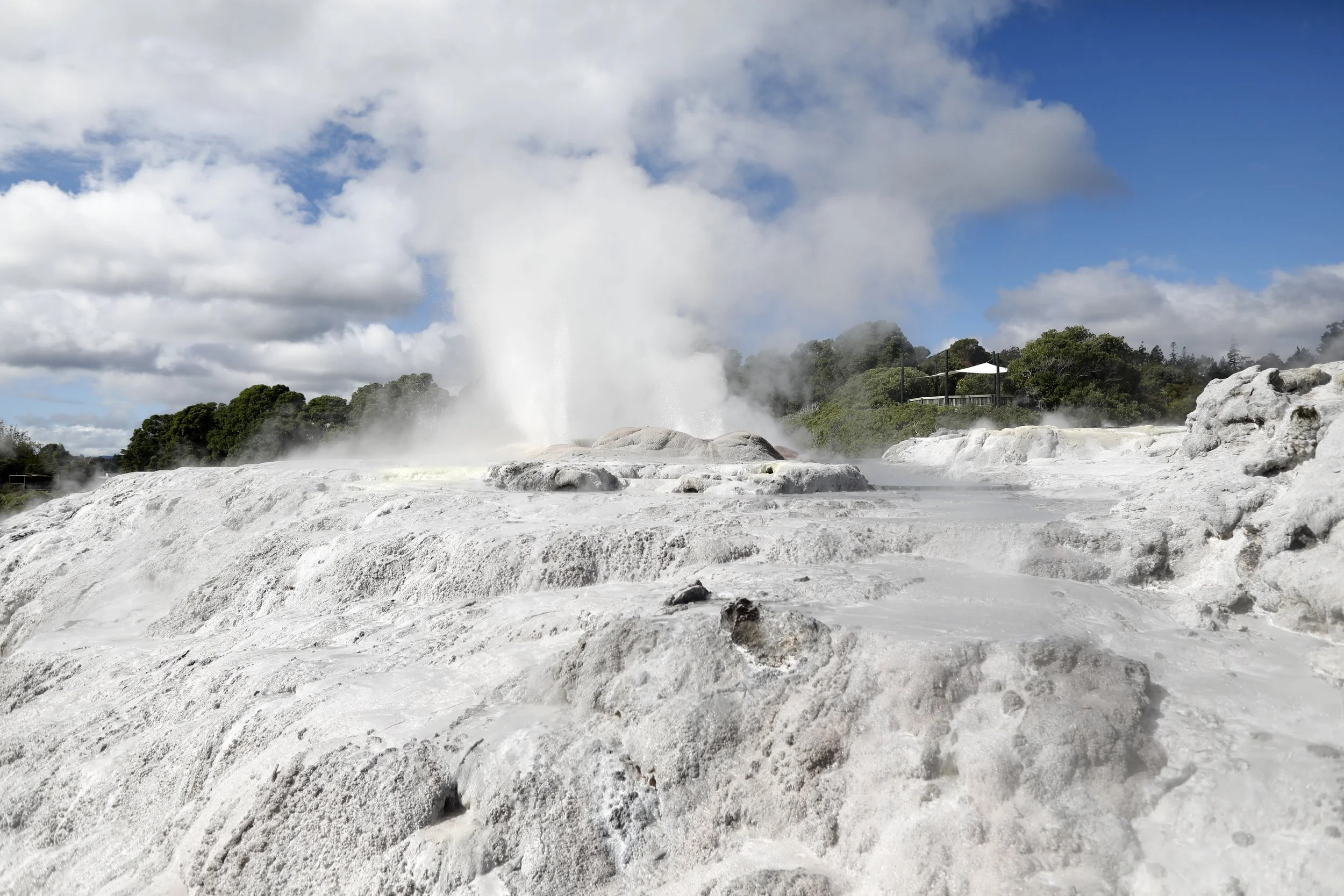
Local geothermal activity has been shaped by human use: boreholes drilled for geothermal heating in Rotorua reduced activity in the past and a late-1980s program to close bores within about one mile of the geyser noticeably increased its eruptions. That rebound has stirred debate among scientists, some of whom worry that more frequent eruptions could, over time, destabilize the system.
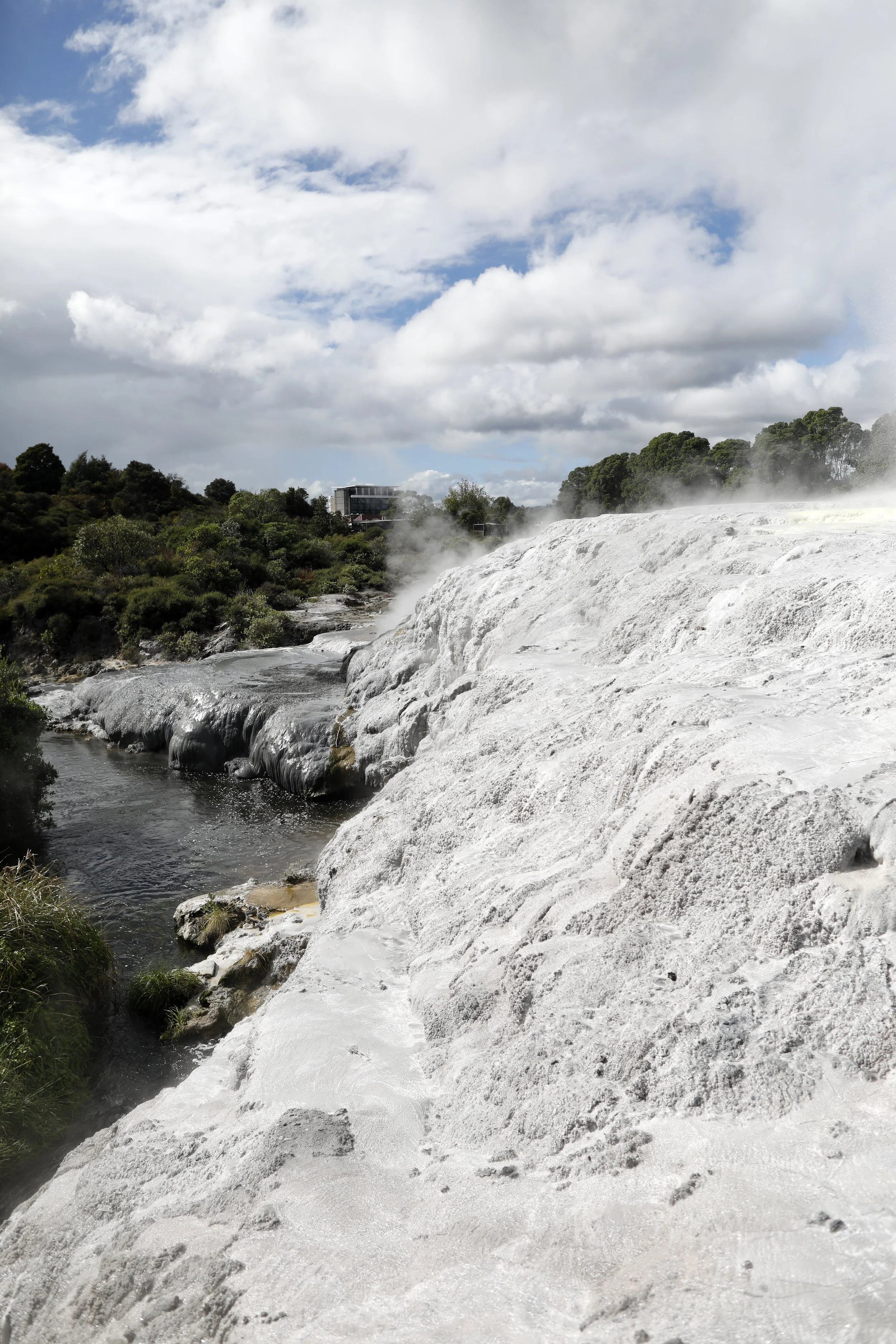
The eruption lasted longer than expected — several minutes rather than a brief jet — which made it feel almost theatrical compared with quicker geysers elsewhere. Pōhutu tends to blow every hour or so, giving visitors plenty of opportunities to time a visit.
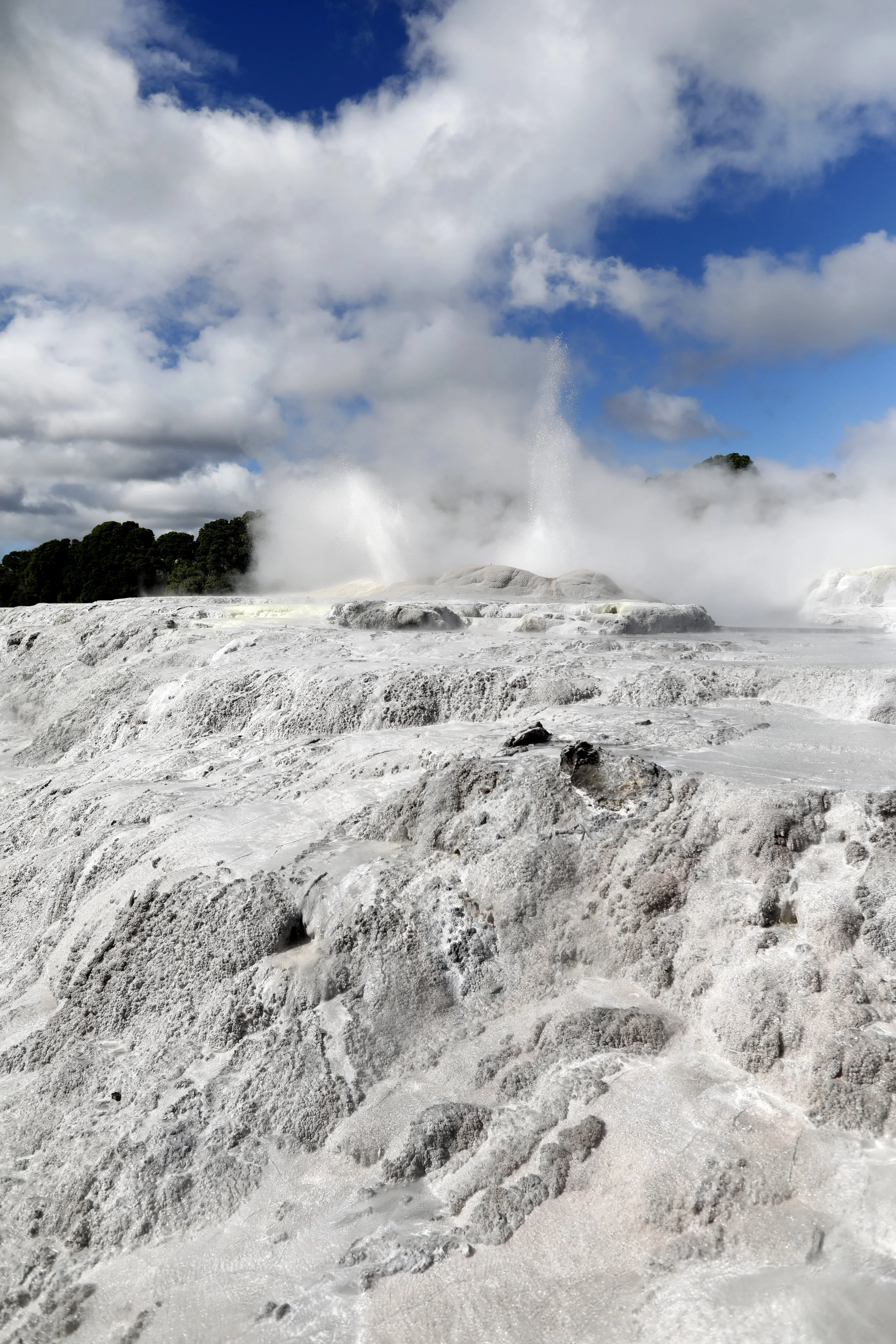
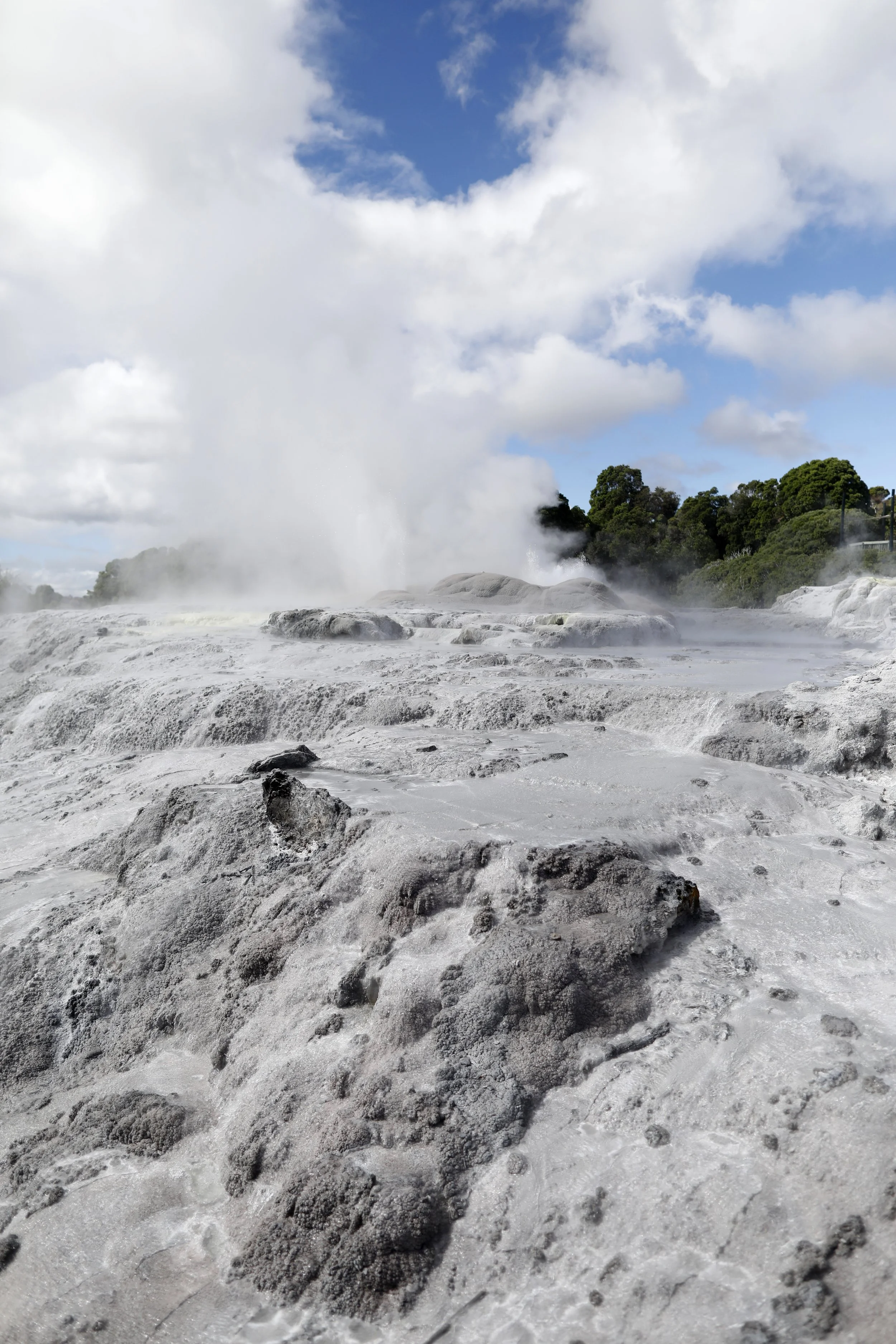
Geyser steam drifts like pale silk across the Rotorua flats, softening the edges of ferns and boardwalks as if the land itself is breathing. Sunlight pierces the vapor in warm ribbons, turning each plume into a fleeting moment that fades back into the quiet steam.
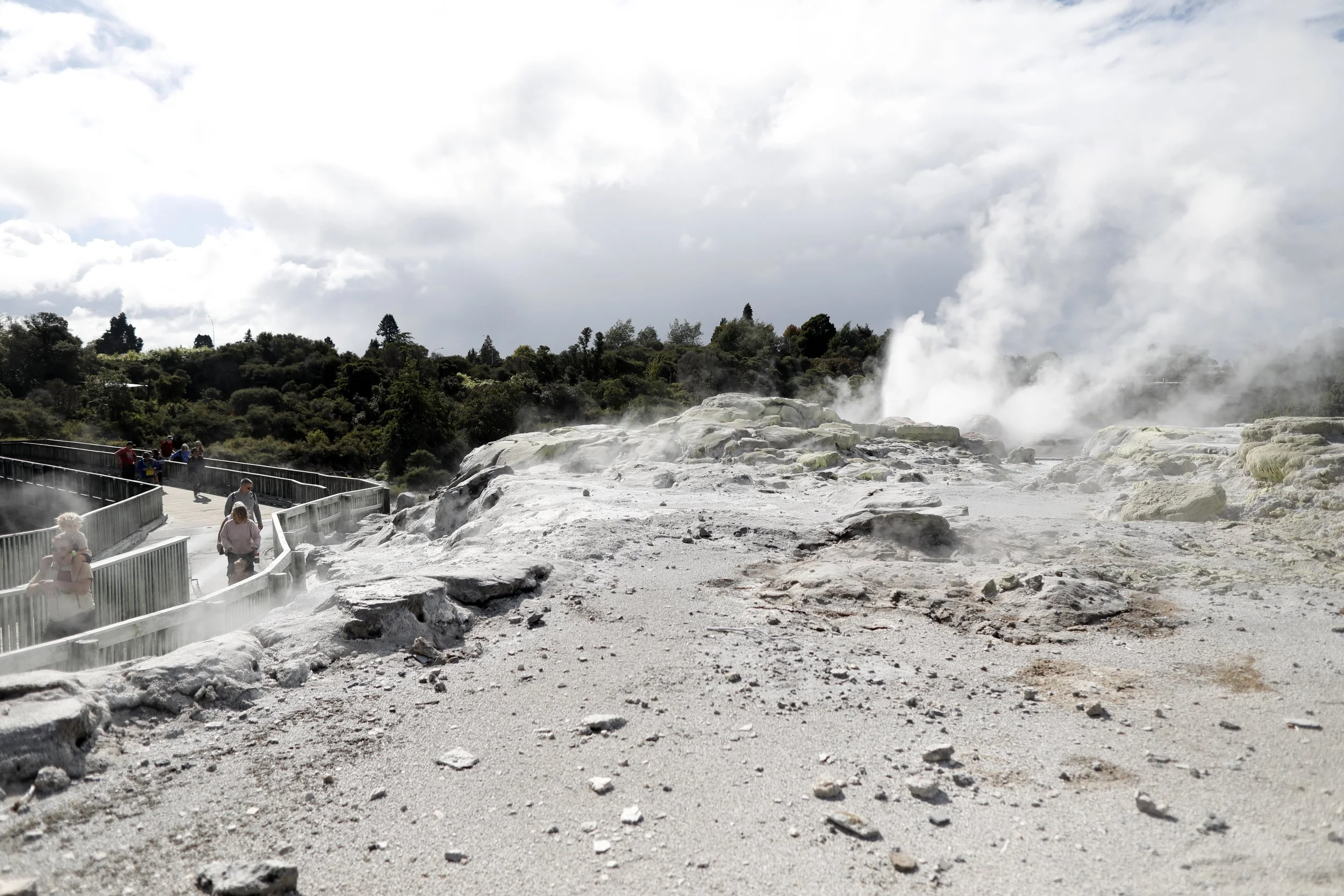
Standing there, the earth feels intimate and alive — old heat and new air sharing a simple, spectacular moment.
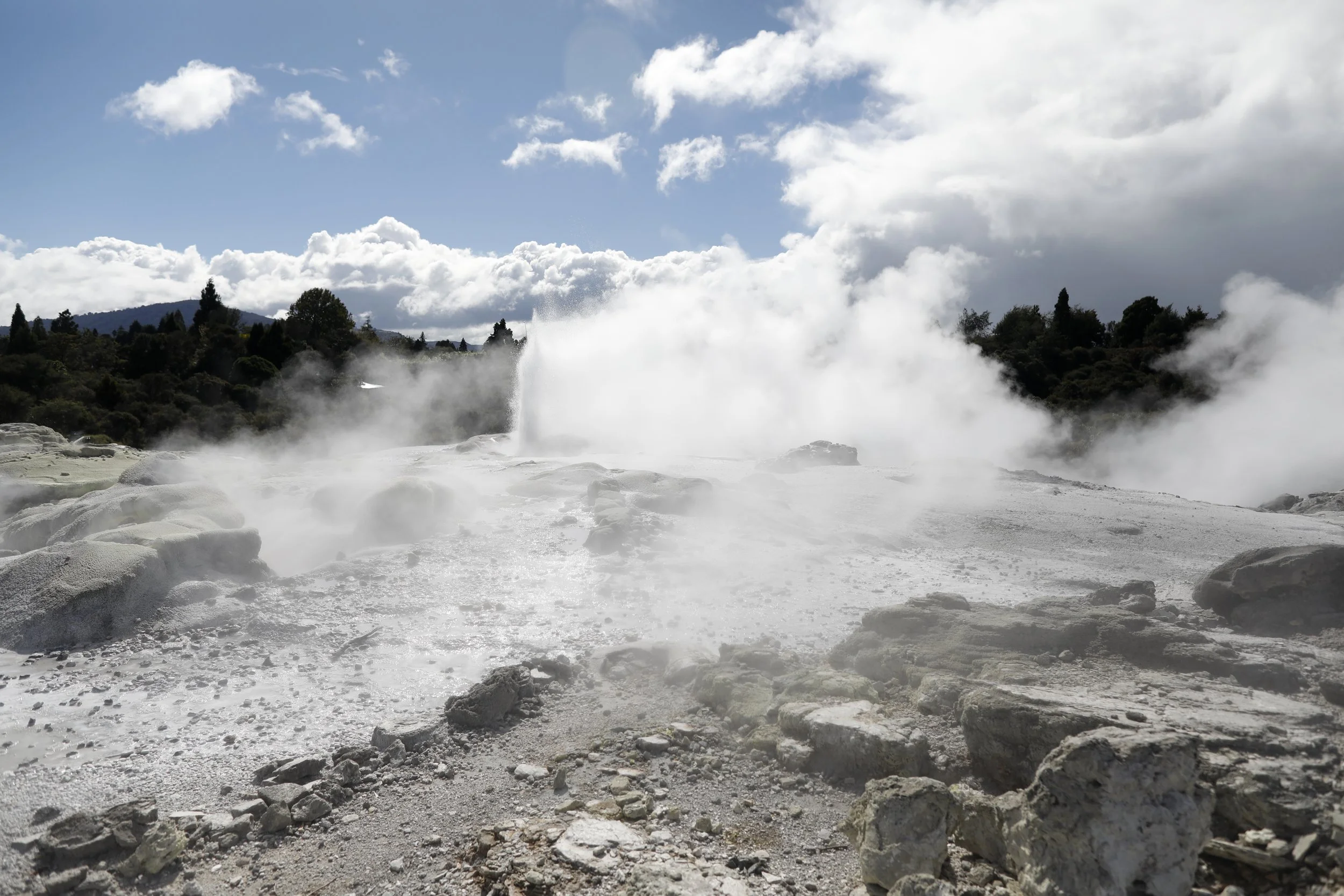
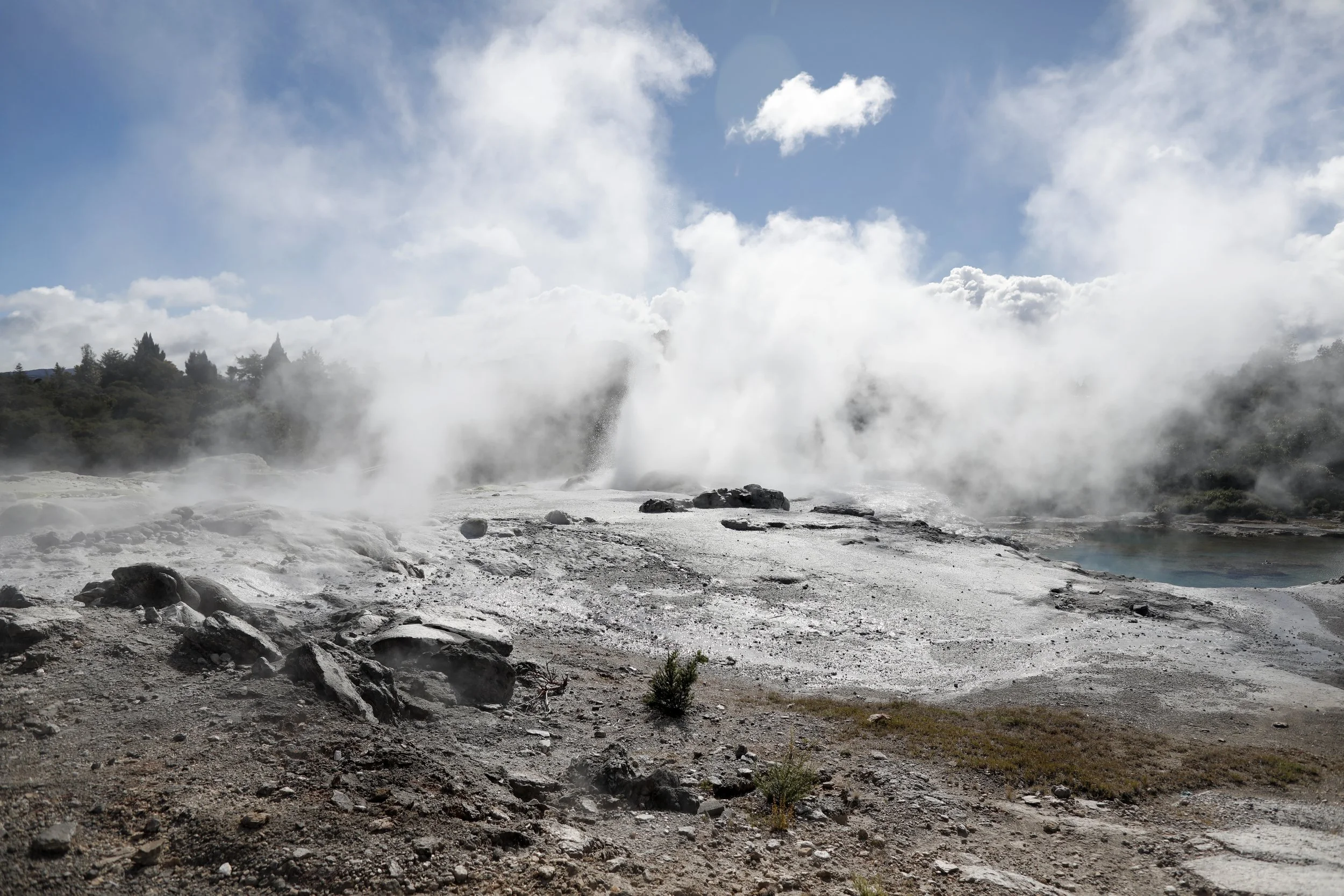
After watching, it’s worth wandering the boardwalks up to the higher viewpoints along the Tarawera fault line for sweeping views — where earth’s movement has shaped steaming valleys and vivid silica terraces.
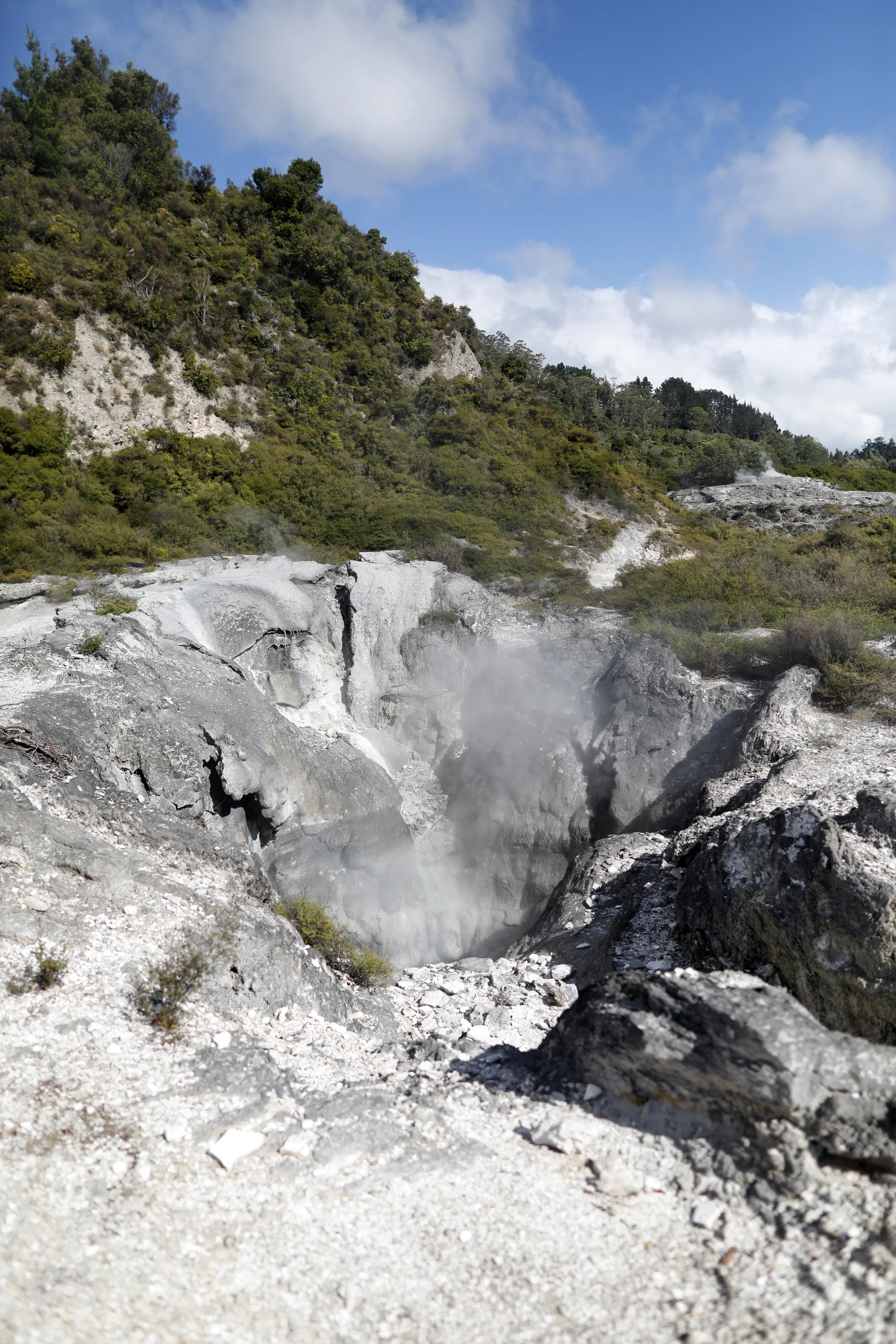
It’s also worth peeking at the traditional geothermal steam box ovens that still steam food in the old way. Locals have long turned the steam’s natural power into warmth for cooking — steam box ovens steaming hangi-style parcels with gentle, mineral-kissed heat.
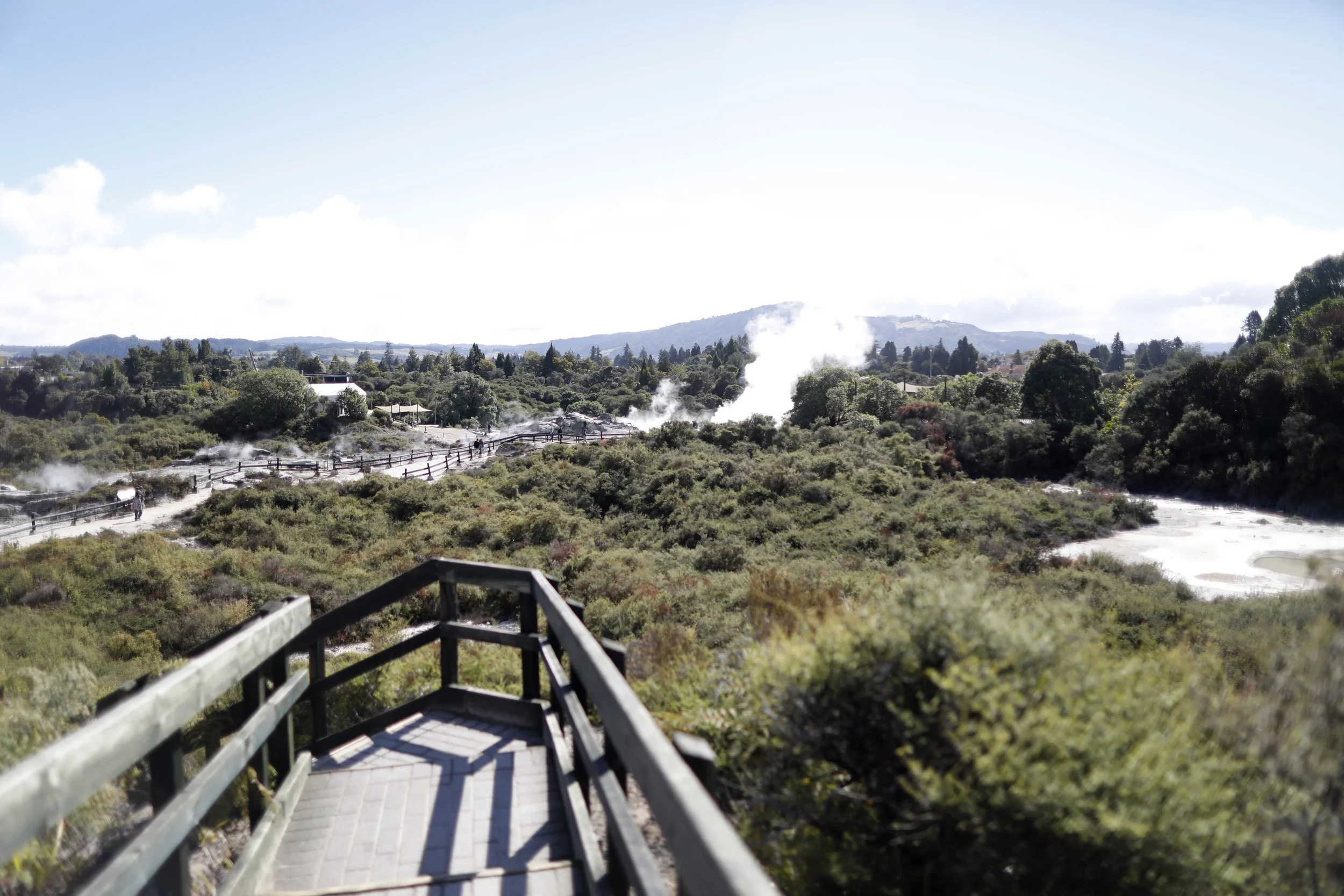
After experiencing the geyser’s power, move toward the Māori arts center.
Uncover the Culture of the Māori: Stories, Places & People
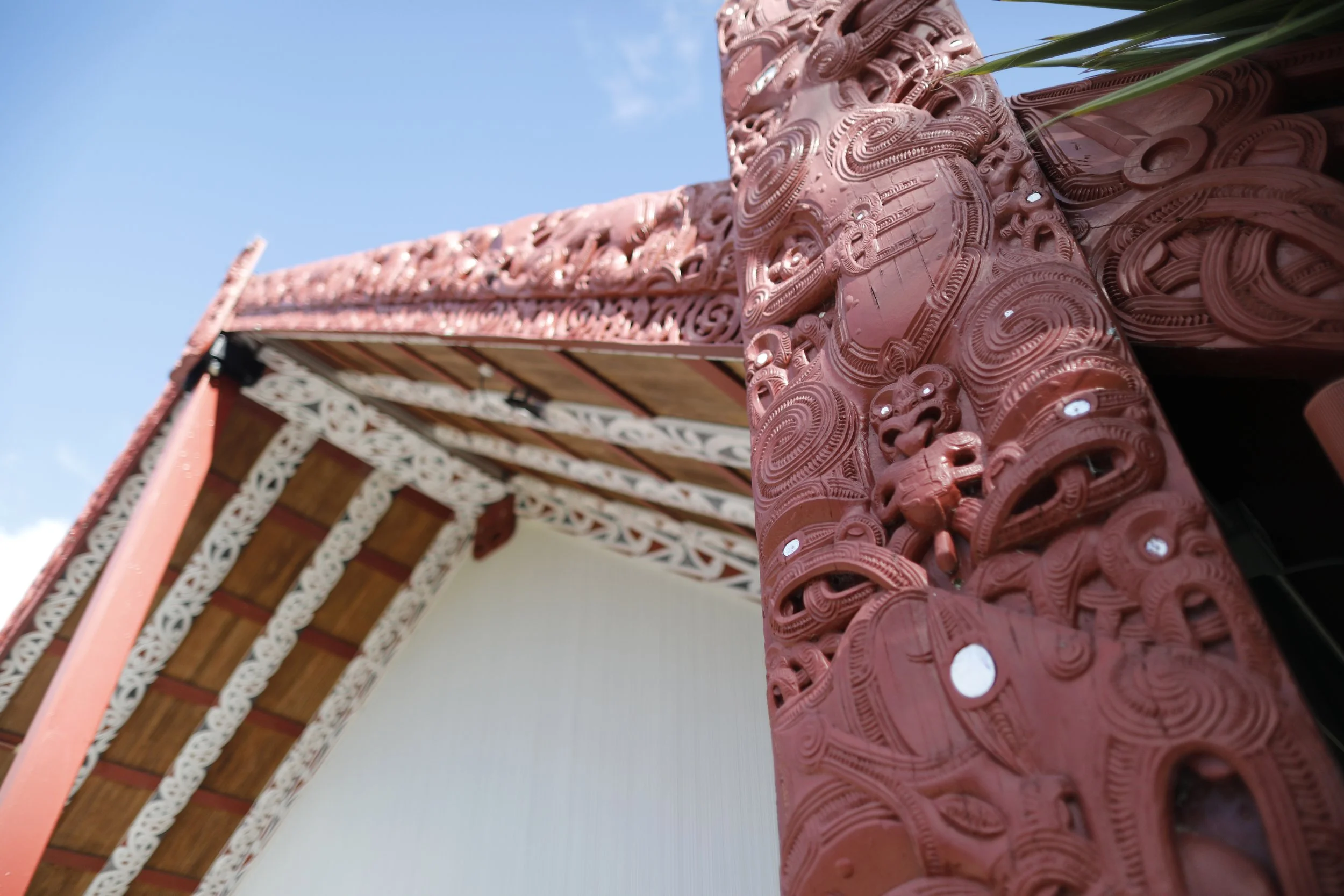
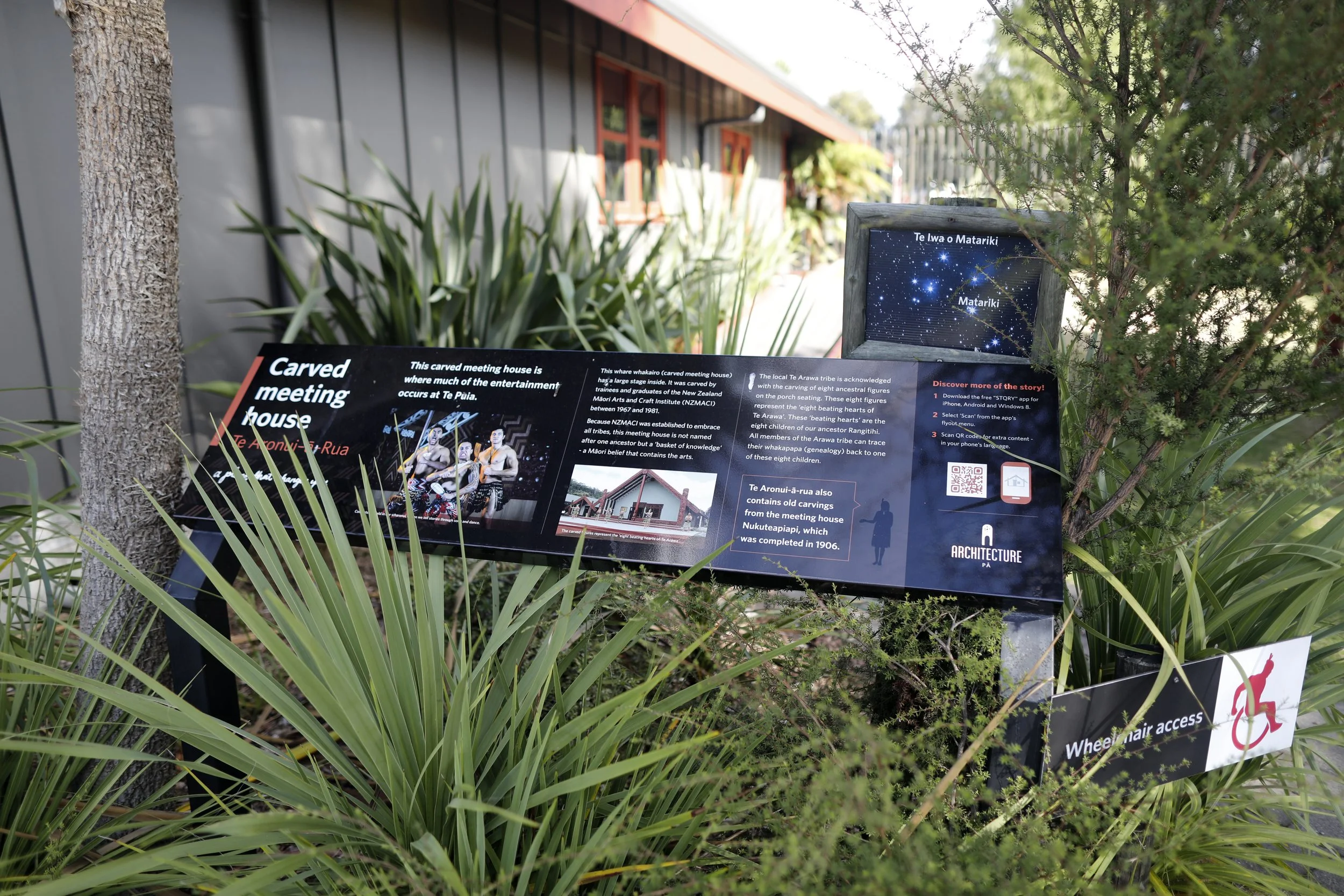
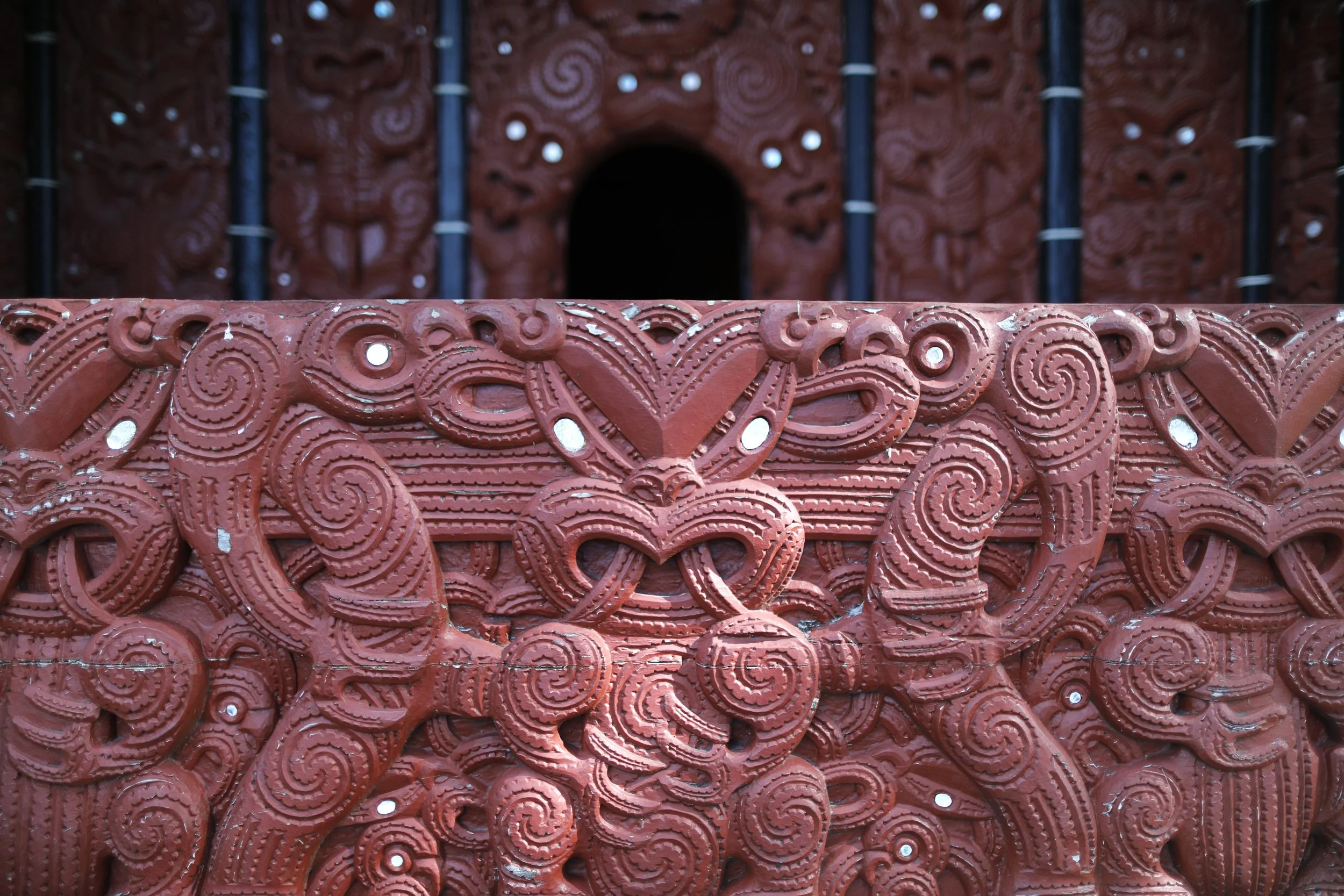
Stepping into the marae feels like entering a storybook. Outside, the grounds are punctuated by traditional Māori structures — grand meeting houses with their carved facades and, nearby, the smaller storage sheds and playful little whare for children. Inside, the space blossoms with exquisite examples of Māori arts: intricate carvings that seem to breathe history and woven panels whose patterns carry generations of meaning.
Know | A marae is a revered communal meeting place at the heart of Māori life — a living hub of identity, culture and ceremony. Its carved meeting house (wharenui), warm dining hall (wharekai) and open ceremonial space (marae ātea) come together to host gatherings, funerals (tangi) and important meetings, where stories, song and mana are shared and upheld.
Our guide unfolded the wider tale: the turbulent years of conflict from 1845 to 1872, when many Māori communities suffered heavy losses and waves of cultural suppression followed. For decades, Māori language and customs were marginalized across New Zealand. Only in recent decades has there been a meaningful shift — growing recognition, restoration of rights and efforts toward reparations that honor the resilience and rich heritage of the Māori people.
The Māori are the indigenous Polynesian people of Aotearoa New Zealand, with origins traced to eastern Polynesia and a migration wave that reached New Zealand between roughly 1200 and 1300 CE. They developed a distinctive culture adapted to New Zealand’s climates and environments: complex social organization based on iwi (tribes), hapū (subtribes) and whānau (extended families); rich oral traditions and genealogies (whakapapa); distinctive art forms including carving (whakairo), weaving (raranga) and tattooing (moko); and a deep customary relationship with land (whenua), waterways and other living things. Traditional housing, gardening and resource management reflected local ecologies, while waka (canoe) traditions and navigational knowledge linked their past to wider Polynesian voyaging.
European contact began in the 17th and 18th centuries and intensified after British and other settlers arrived in the early 19th century. Initial trade and sometimes cooperative relationships soon became strained by competition for land and resources, differing legal ideas about land tenure and increasing settler numbers. The 1840 Treaty of Waitangi — Te Tiriti o Waitangi — signed between many Māori chiefs and representatives of the British Crown, is central to New Zealand history and to contemporary debates. The English and Māori language versions of the treaty differ in key waords and concepts, and disagreements over sovereignty, governance and the interpretation of guarantees of rangatiratanga (chieftainship or chiefly authority) and tino rangatiratanga (self-determination) have had long-lasting consequences.
From the 1840s through the later 19th century, conflict known commonly as the New Zealand Wars (or Māori–Pākehā wars) erupted in several regions. These conflicts involved government troops, settler militias and Māori groups defending territory, sovereignty and self-determination. Many of the wars centered on land disputes and were marked by sieges, guerrilla tactics and large-scale confiscations of land reserved for punitive or settlement purposes. The loss of land, coupled with introduced diseases, social disruption and economic marginalization, caused major population and cultural impacts. Throughout these trials, Māori communities showed resilience — forming new movements, holding on to cultural practices and creatively engaging with changing circumstances.
The 20th century saw ongoing pressure on Māori language, land and customs but also important revival movements. Urban migration after World War II, drawn by industrial employment, altered demographics and social structures; many Māori moved from rural tribal areas into cities, often losing direct access to ancestral lands but building new urban whānau networks. From the 1970s onward, Māori activism and legal advances — including Waitangi Tribunal claims and language preservation efforts — brought renewed recognition of Māori rights and identity. Te reo Māori (the Māori language) has seen a strong revival through kura kaupapa Māori (Māori-medium schools), immersion programs and national awareness. Treaty settlements since the late 20th century have returned some lands, provided financial redress and included formal Crown apologies, although many iwi continue to seek fuller recognition and remediation.
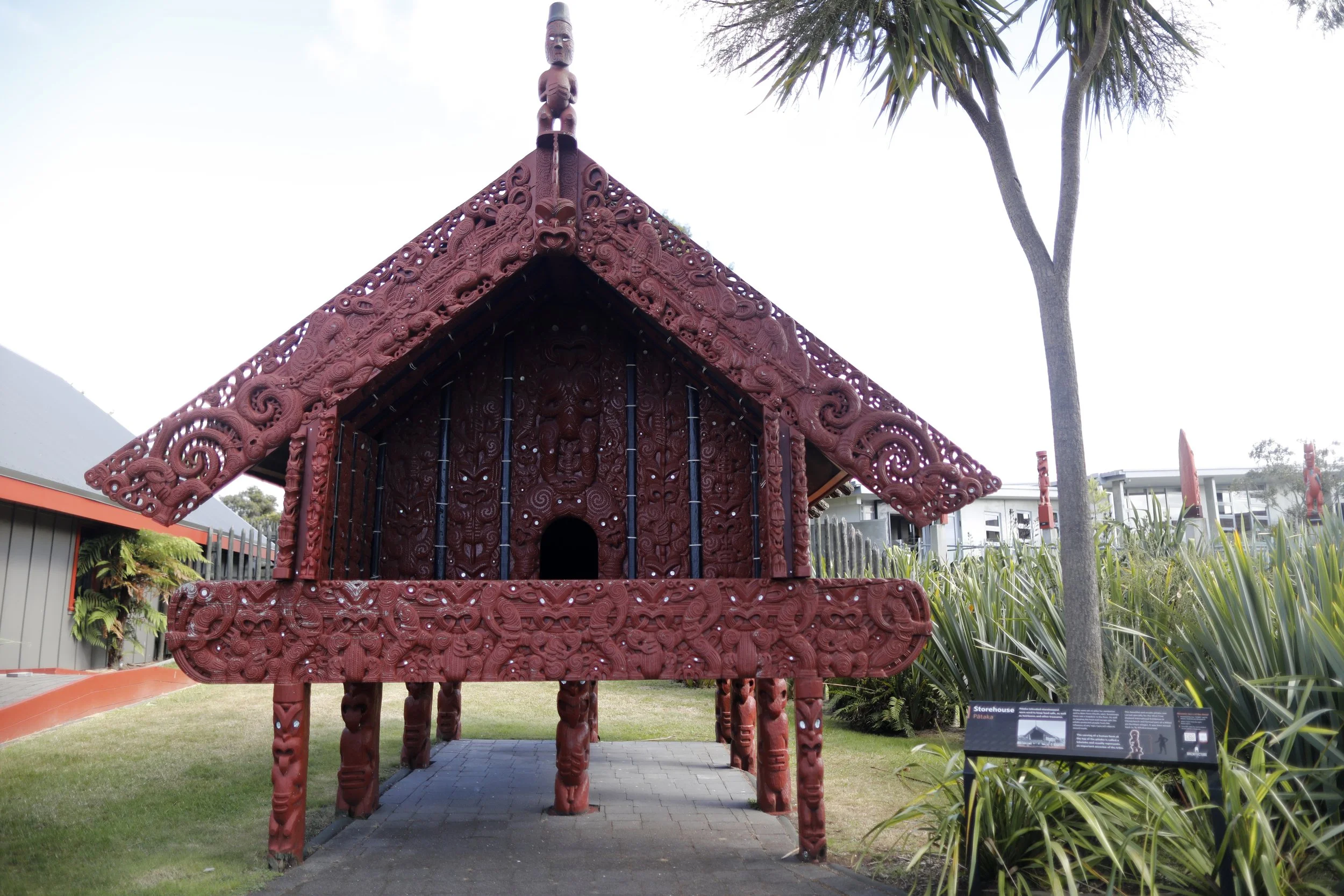
Today’s landscape for Māori is complex and diverse. Māori make up a significant and growing proportion of New Zealand’s population and are a dynamic presence in politics, arts, education and business. Iwi and hapū play active roles in resource management, cultural revitalization and local governance; many hold settlement agreements that fund social, economic and cultural development. Māori leaders and communities are engaged in co-management arrangements over natural resources, legal and political processes to strengthen treaty partnerships and initiatives to restore language, traditional ecological knowledge and cultural practices. Socioeconomic disparities remain: Māori on average face higher rates of unemployment, poorer health outcomes and lower incomes than non‑Māori, and these challenges are the focus of targeted policy, iwi-led initiatives and grassroots efforts.
Culturally, Māori traditions are widely visible in contemporary New Zealand life: marae (communal meeting grounds) are central to community life, pōwhiri (welcoming ceremonies) structure social protocols and Māori performing arts, visual arts and kapa haka (performance) are celebrated nationally and internationally. The integration of Māori concepts into national identity — seen in language use, place names, public ceremonies and bicultural frameworks — reflects ongoing negotiation between past injustices and aspirations for partnership and equity. The picture is one of endurance and adaptation: Māori communities maintain deep ties to whakapapa and whenua while shaping modern New Zealand through activism, creativity and governance.
Discover the Magic of the Māori Arts & Crafts Institute
Our group somehow splintered en route, which was a touch exasperating but those who pressed on were rewarded with a visit to the Māori Arts & Crafts Institute. The campus is home to three national schools — Te Wānanga Whakairo Rākau (wood carving), Te Takapū o Rotowhio (stone and bone carving) and Te Rito o Rotowhio (weaving) — arranged so visitors can observe students at work while wandering past displays of finished pieces.
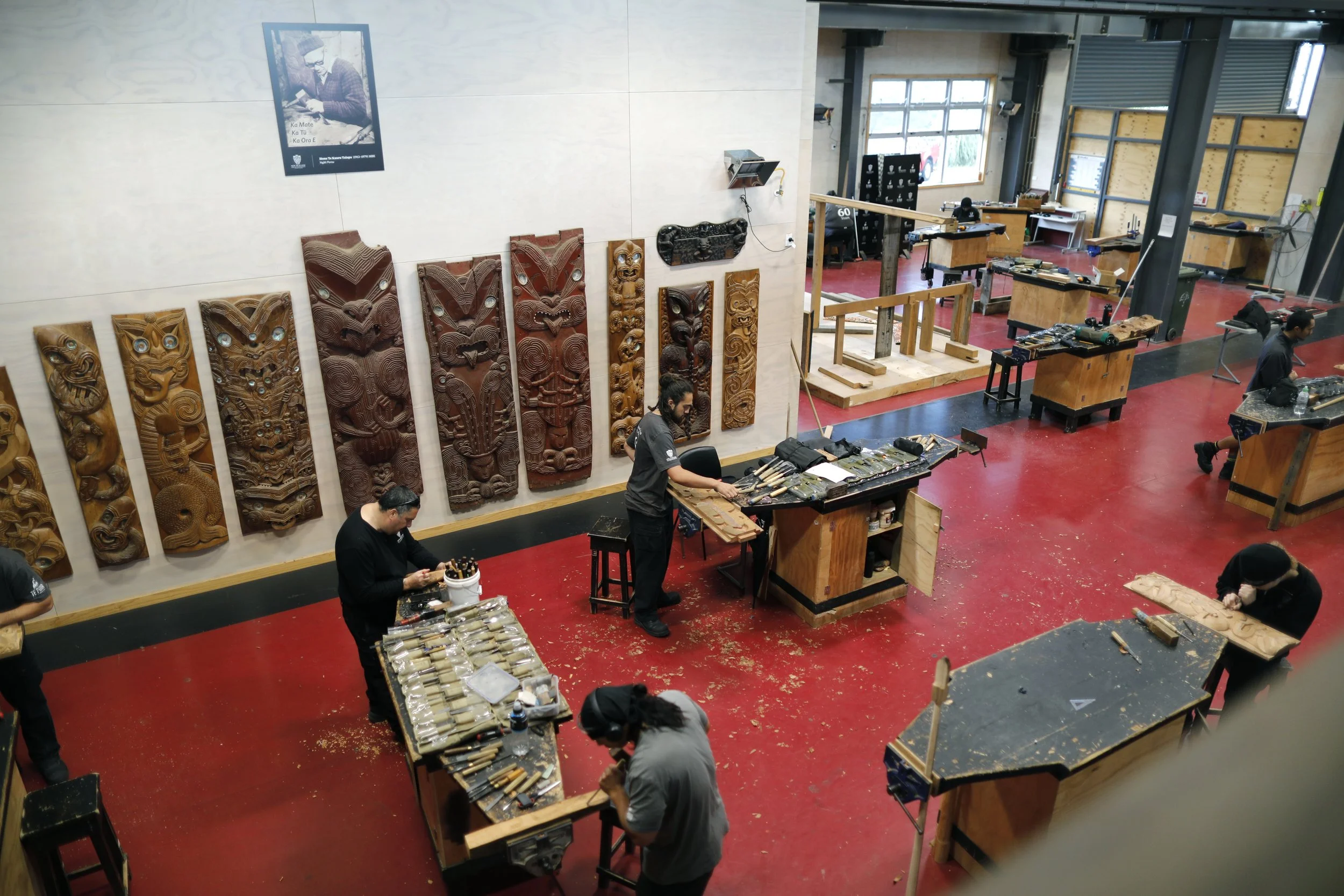
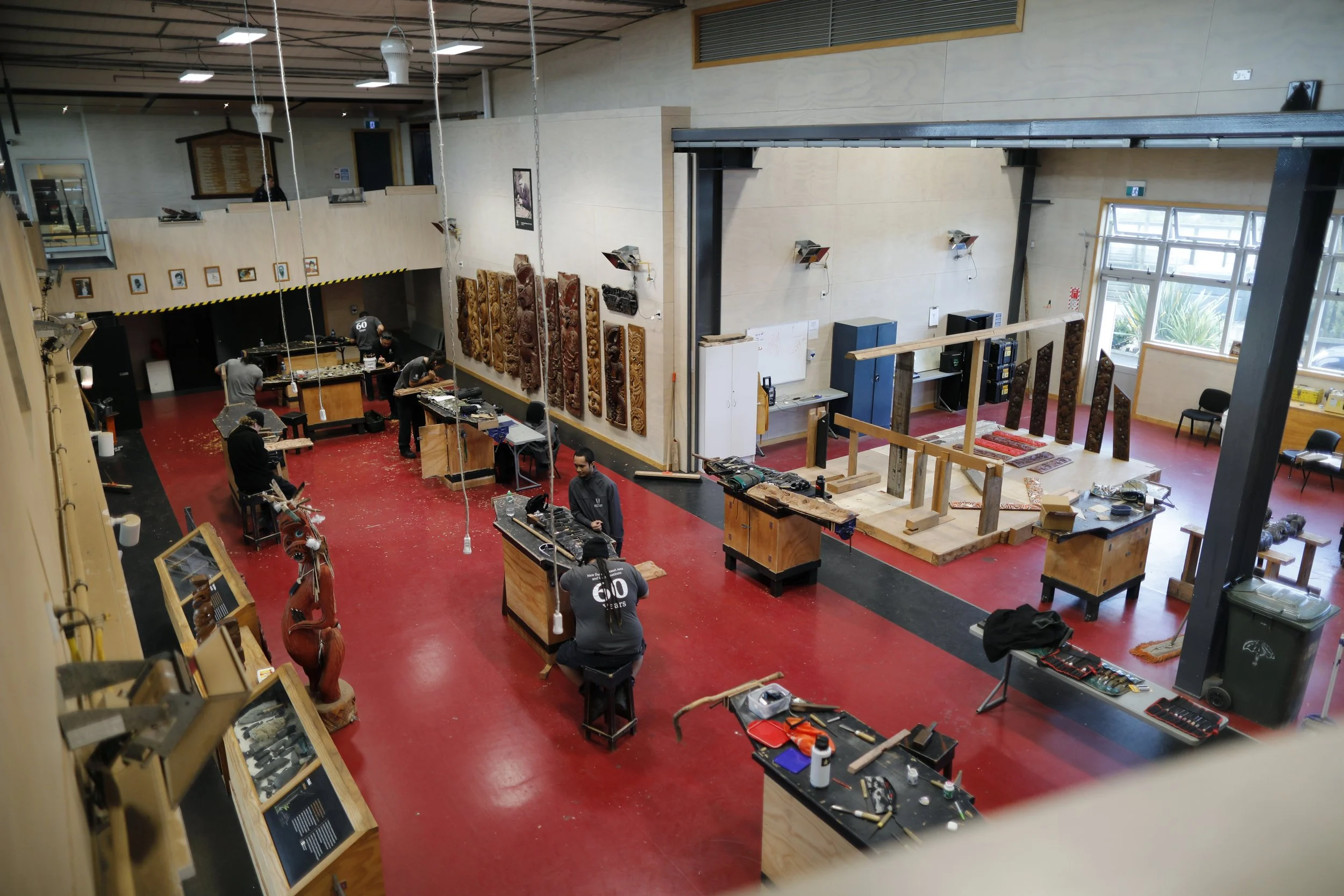
Watching the artisans quietly shape wood, carve jade and weave intricate patterns feels like peeking into a living tradition. A guided explanation would have added depth and the working spaces were a little distant for close inspection but the atmosphere itself was quietly powerful. The visit ends in a beautiful gallery where striking works are displayed and available for purchase — jade carvings, woven kete (bags) and other handcrafted treasures. Prices tend toward the high end but the quality and cultural significance make it easy to see why; it’s the kind of place where you almost wish you’d bought a keepsake to take home.
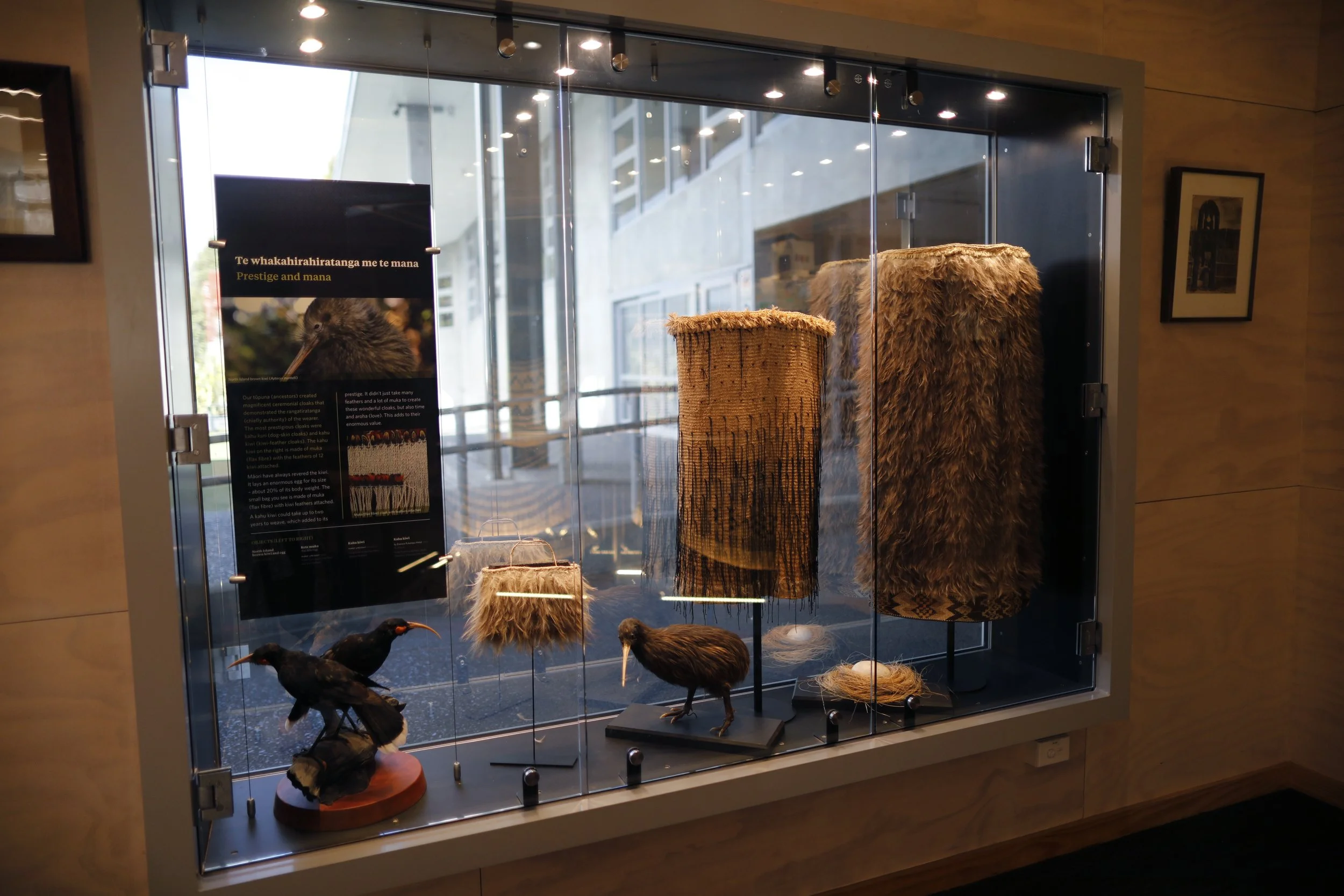
Each Māori handmade piece carries the quiet weight of generations — carved kowhaiwhai patterns and braided muka tell stories through touch. The finest tukutuku panels and raranga woven kete can take dozens to hundreds of hours: a small flax kete might demand 20–40 hours of careful preparation and weaving, while intricate korowai cloaks, with woven muka fibers and thousands of muka tassels, can take a single weaver several months and upwards of 300–500 hours to complete. The slow rhythm of preparation — harvesting, stripping, softening and dying the fibers — is as important as the final weave and each knot and twist honors both skill and whakapapa.
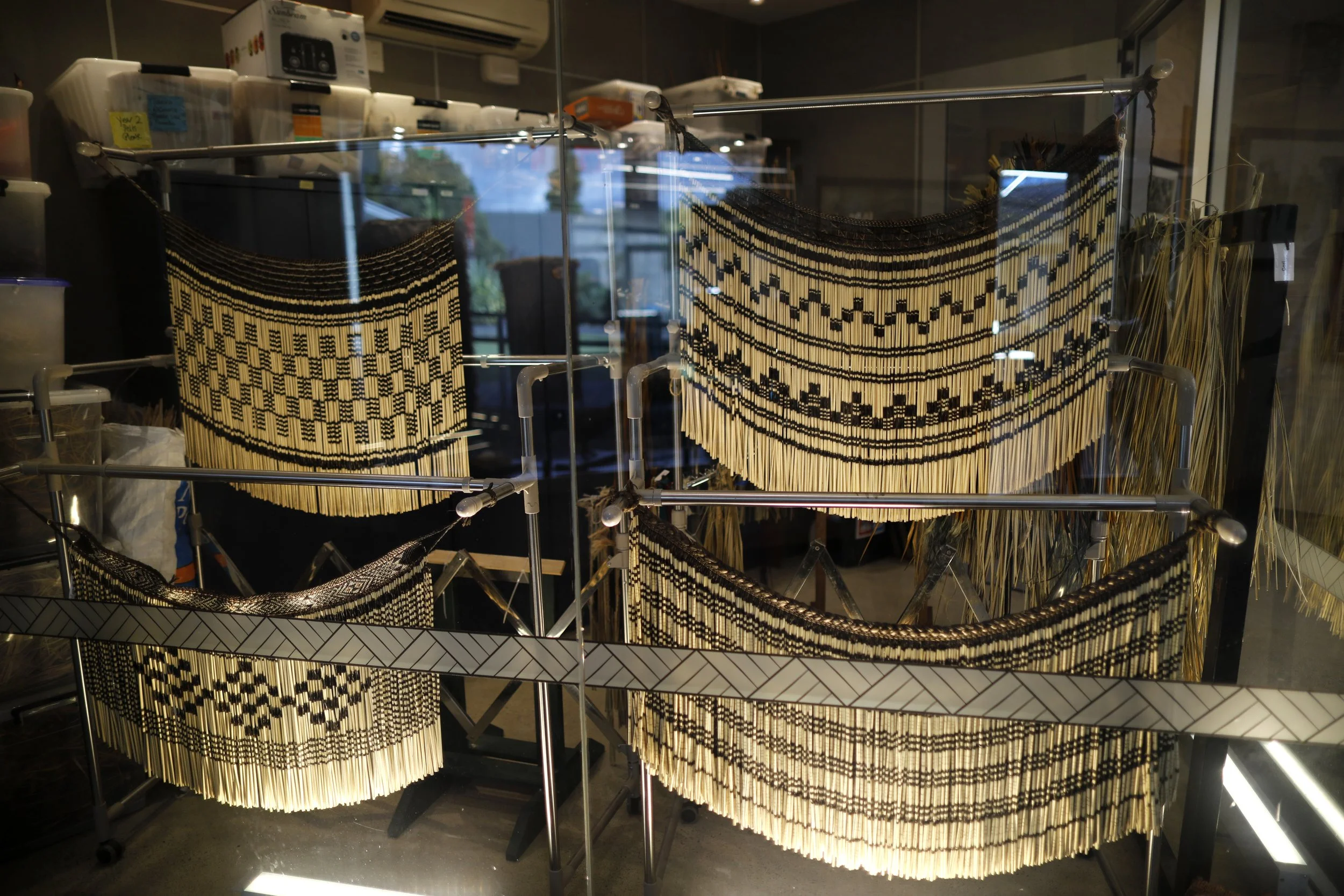
Sixty years on from the 1963 Act that established the NZ Māori Arts & Crafts Institute, it’s a perfect moment to pause and appreciate the living legacy tucked into Aotearoa’s cultural landscape. NZMACI is more than a historic name — it’s where centuries-old crafts are taught, practised and renewed: Te Wānanga Whakairo Rākau (the national wood-carving school), Te Takapū o Rotowhio (stone and bone carving) and Te Rito o Rotowhio (the national weaving school).
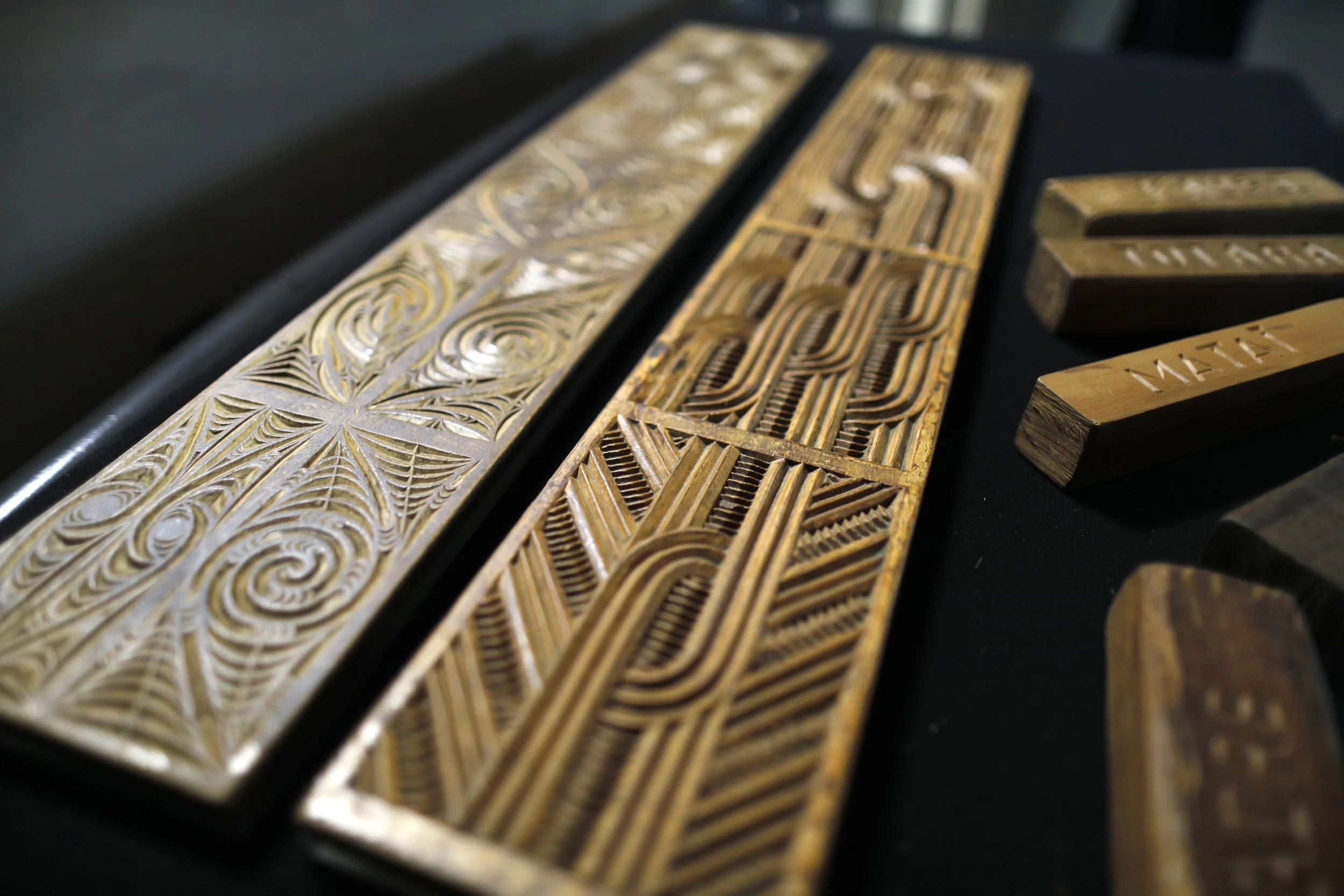
Eraia Kiel, general manager at NZMACI, describes the institute’s work as a proud fulfillment of the Act’s aim to protect, preserve and promote Māori culture. Visiting feels like stepping into a workshop of stories: carved panels and woven patterns that hold whakapapa, technique and the hands that continue them.
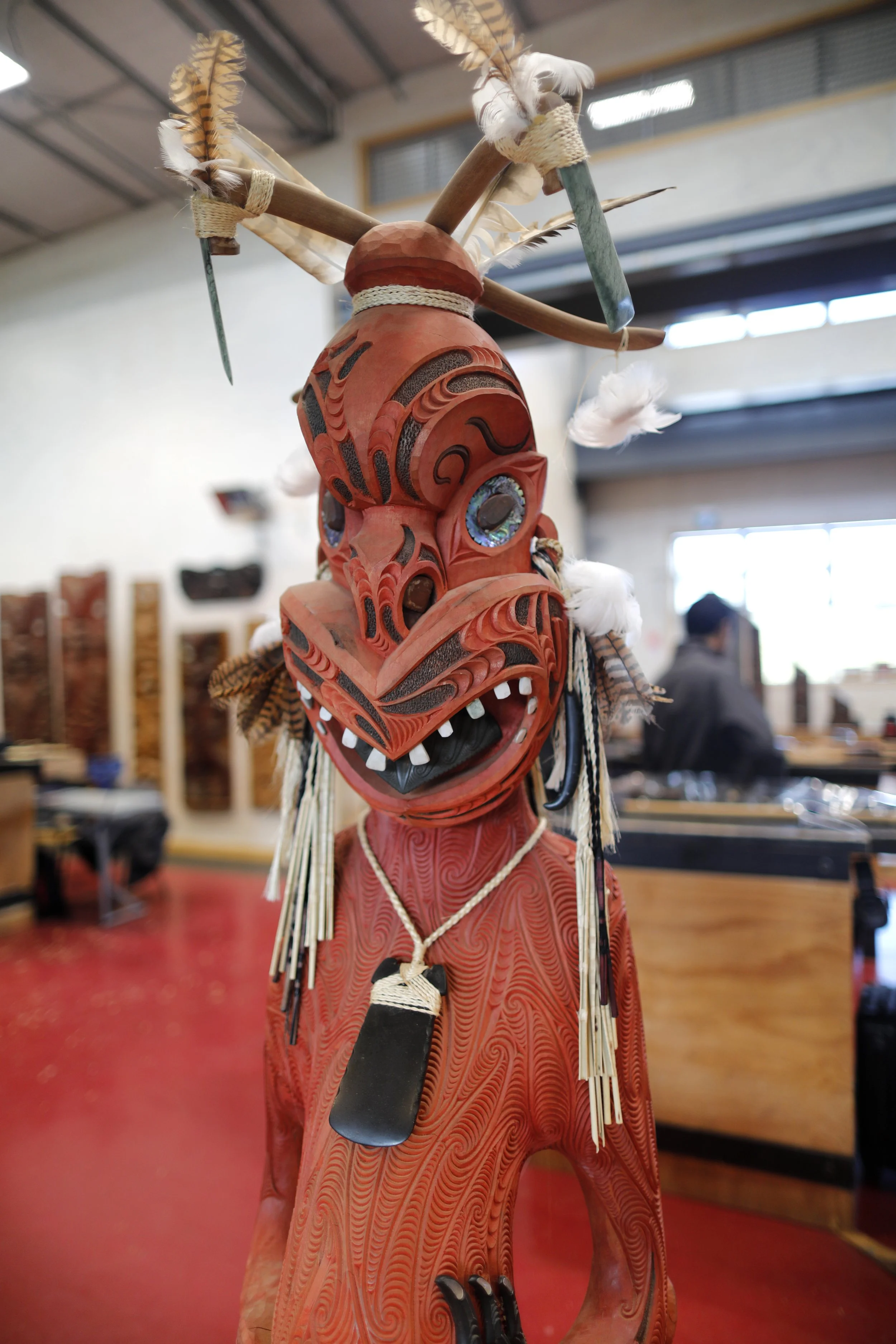
The anniversary also invites reflection on recent milestones. In 2020, Parliament passed the New Zealand Māori Arts and Crafts Institute Vesting Act, transferring ownership into the care of mana whenua through Te Puia NZMACI Limited Partnership. That partnership — Wāhiao Tūhourangi o Whakarewarewa, the Pukeroa Oruawhata Trust and the hapū Ngāti Hurungaterangi, Ngāti Taeotū and Ngāti Te Kahu o Ngāti Whakaue — makes Te Puia | NZMACI iwi owned, anchoring the institute’s future in local guardianship.
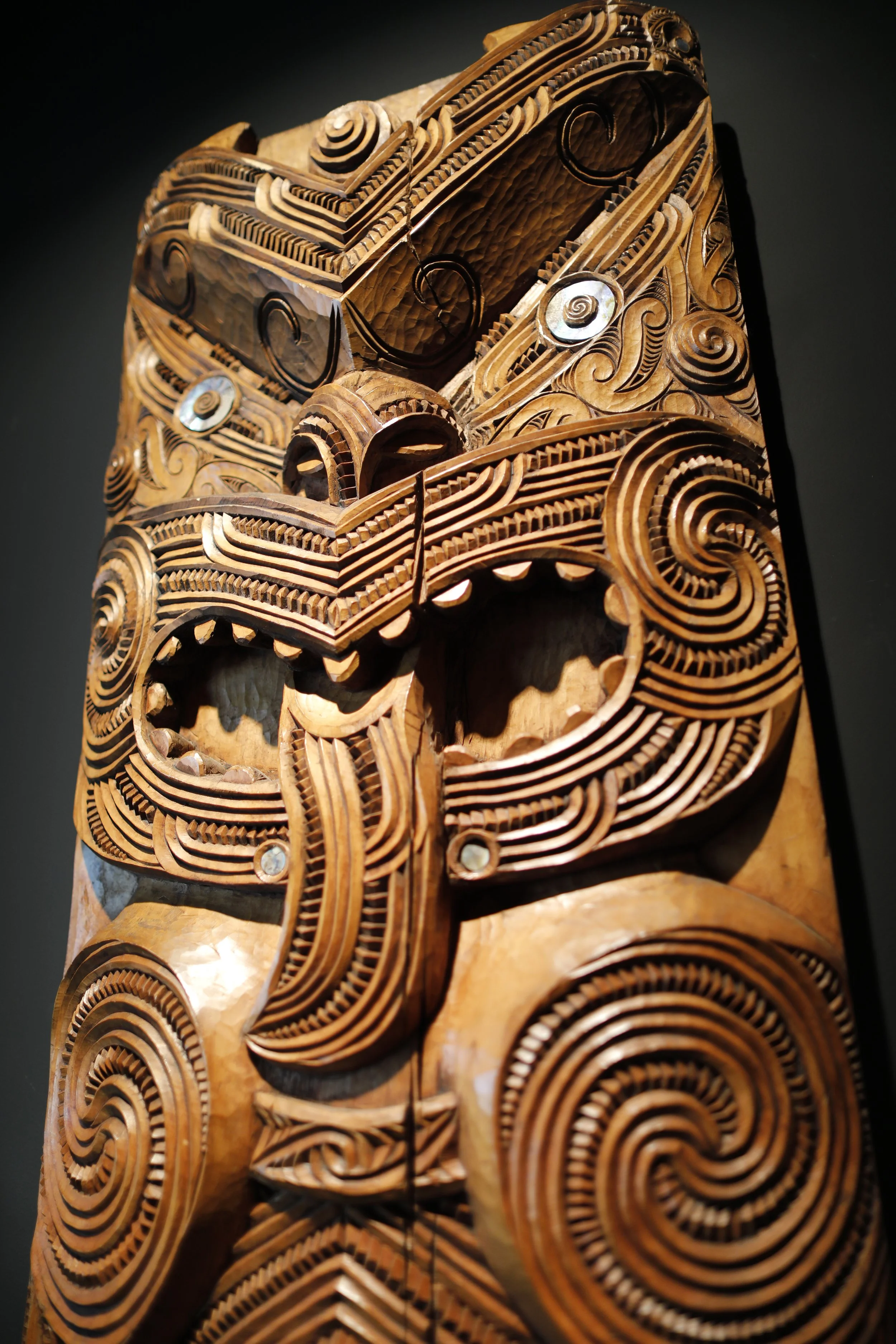
The New Zealand Māori Arts and Crafts Institute, as set out in the Vesting Act of 2020 (carrying forward the spirit of the 1963 Act), is charged with six warm-hearted responsibilities that celebrate and sustain Māori creativity and culture:
Nurture and champion ahurea and toi Māori — keeping New Zealand’s Māori culture and artistic traditions vibrant and alive.
Provide hands-on training for iwi, from whakairo rākau (wood carving) to raranga (weaving), so skills are passed confidently from one generation to the next.
Offer grants that open doors for people to study, train and gain practical experience in creating Māori arts and crafts or in other fields endorsed by the Partnership.
Award diplomas and certificates to those who complete training or achieve qualifications in Māori arts, crafts or wider cultural knowledge.
Support and present demonstrations, exhibitions and tours that showcase toi Māori and toi whakaari Māori (performing arts), bringing these expressions to local and visiting audiences.
Steward the sustainable development of scenic and tourist attractions in Rotorua and beyond, ensuring cultural landscapes are cared for and appreciated.
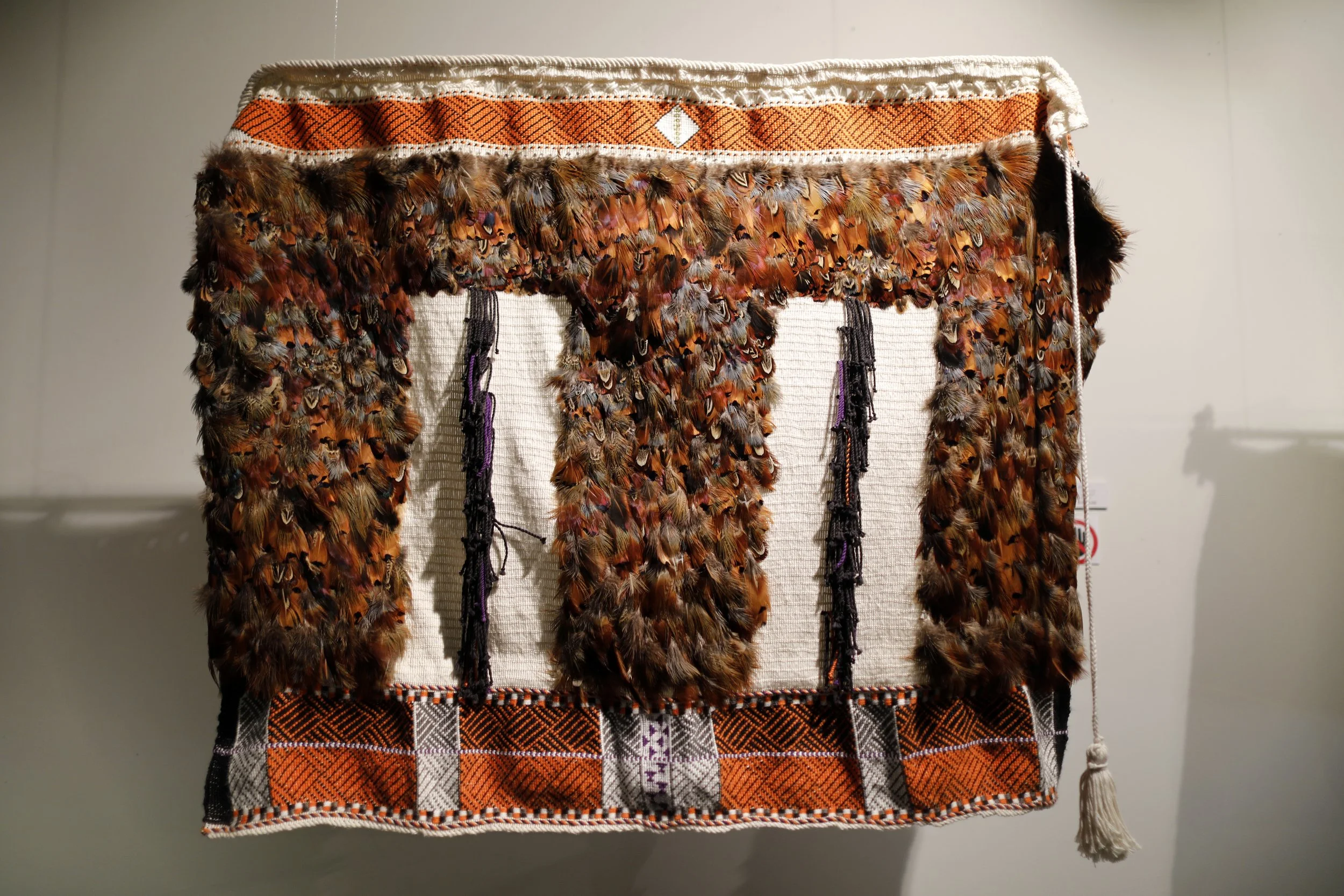
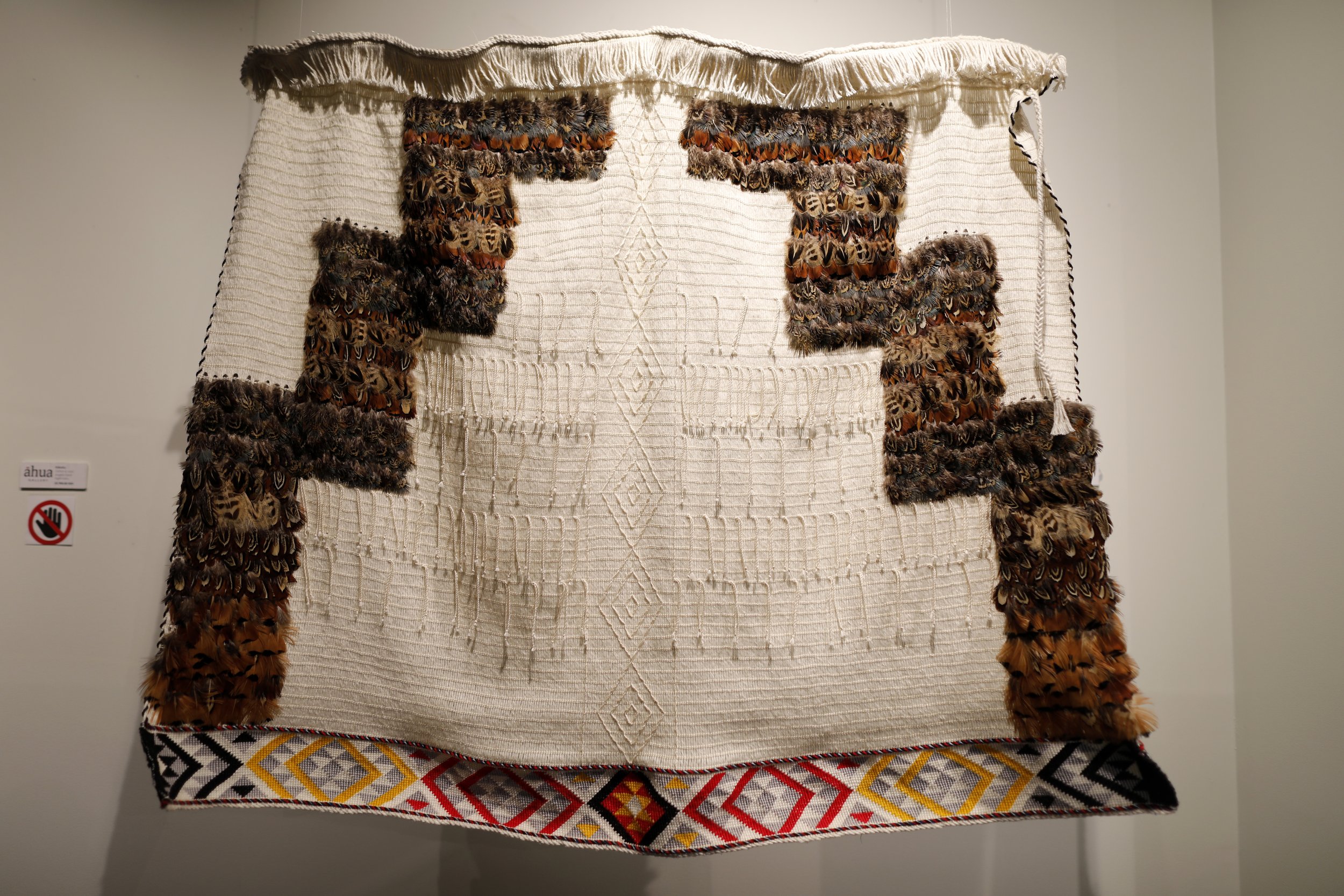
Together, these functions shape an institute that is part school, part gallery and entirely devoted to honoring Māori art, knowledge and place-making for present and future generations.
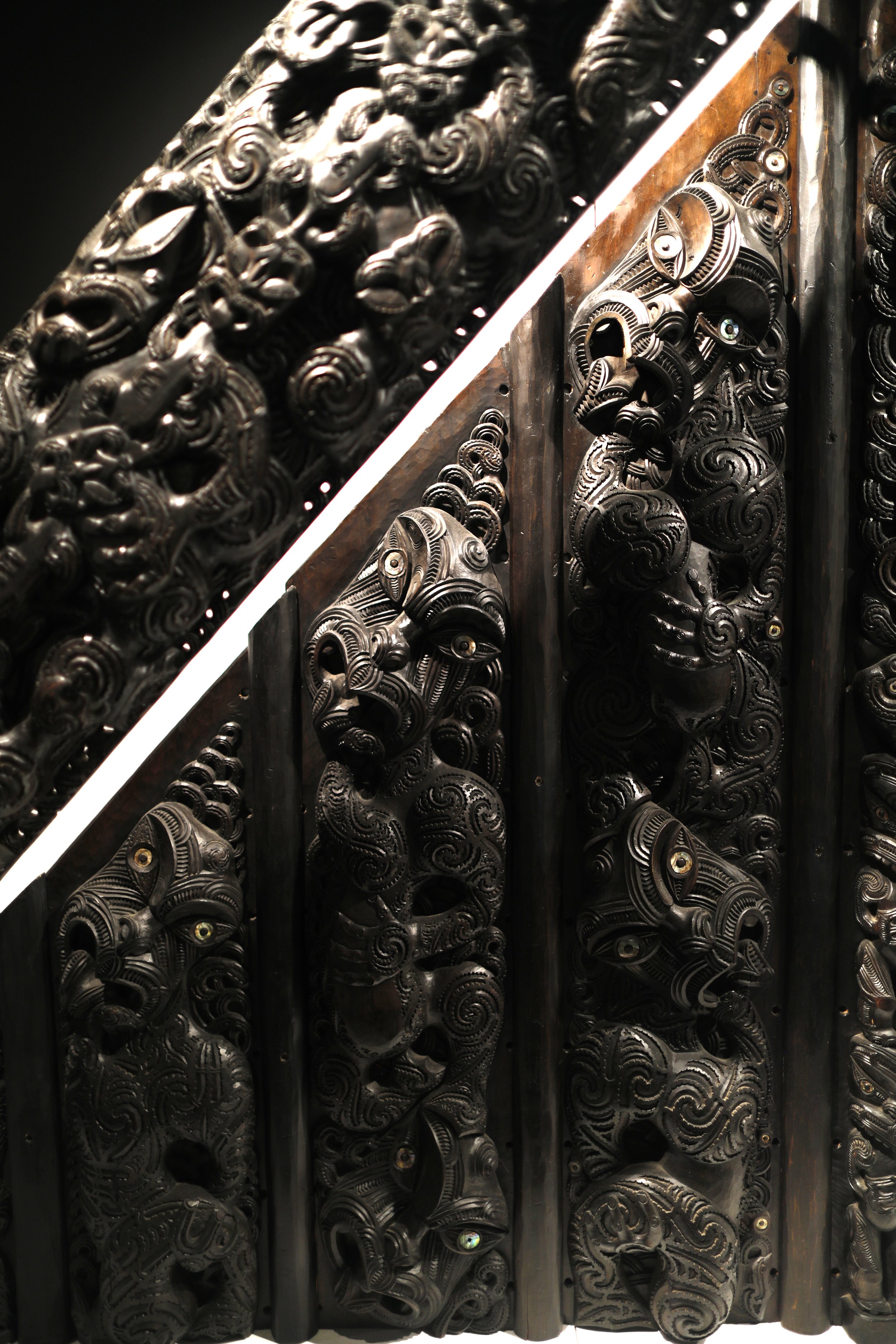
For travelers curious about cultural craft and continuity, the center offers a rare chance to witness skills alive and evolving. It’s a reminder that preservation isn’t about locking things in the past but tending them in the present so they thrive for the next sixty years and beyond.
Gaze Into the Blazing Heart of Rotorua Caldera
A sunlit lake rests within a sleeping giant: the Rotorua Caldera, a broad rhyolitic hollow in New Zealand’s North Island now cradling the shimmering waters of Lake Rotorua. Roughly 13.5 miles across, its circular rim hints at a violent origin — a colossal eruption about 240,000 years ago that blew massive pyroclastic clouds and left the land to sag as the emptied magma chamber collapsed.
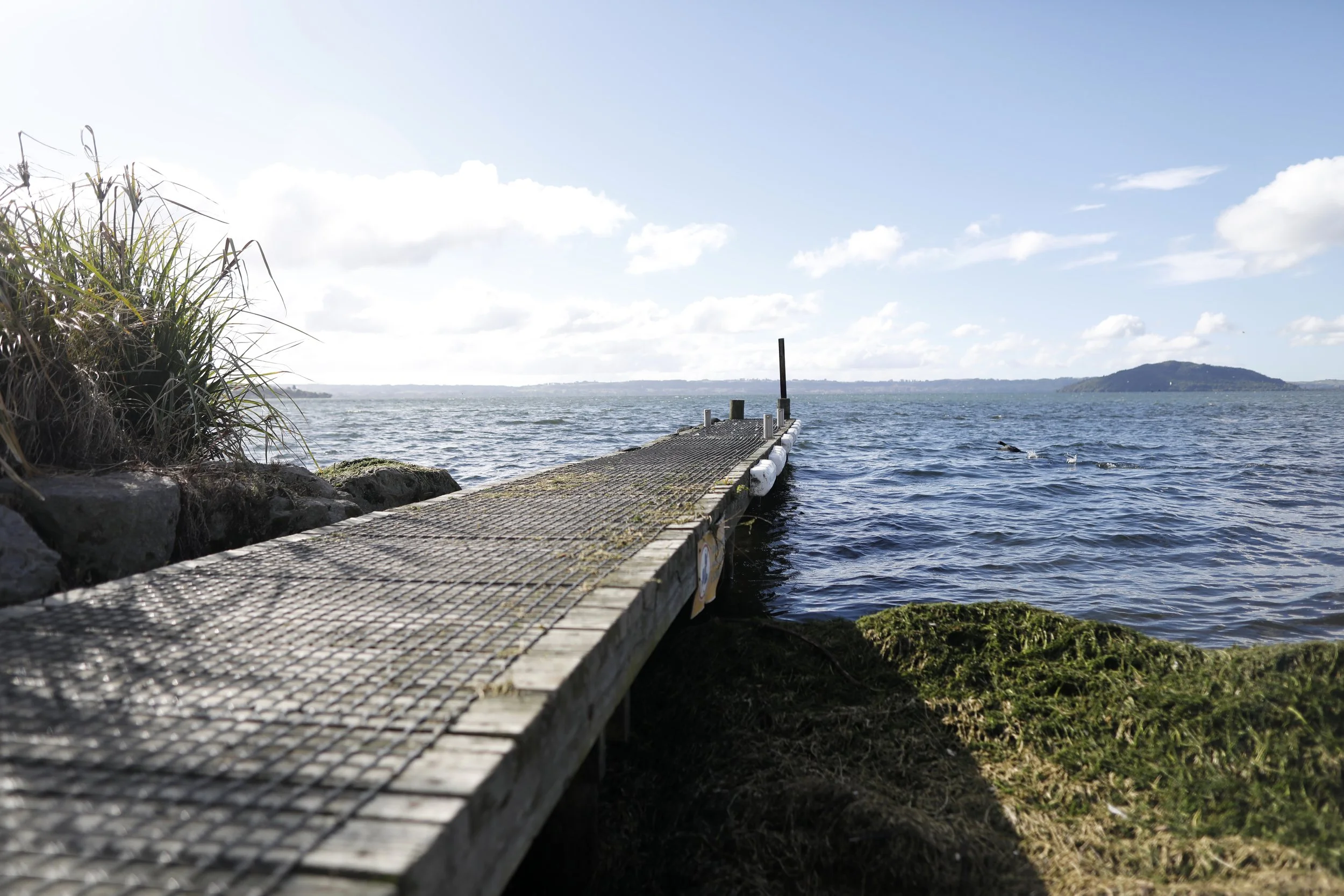
That ancient upheaval also laid down the thick Mamaku Ignimbrite, a signature deposit of pumice and ash that tells the story of the caldera’s birth. Over millennia, the basin filled with water and the lake became a quiet counterpoint to the restless forces below. Steam and heat still stir beneath the surface, feeding the city’s famed geothermal displays: spouting geysers, steaming hot springs and churning mud pools that perfume the air with a faint, sulfurous tang.
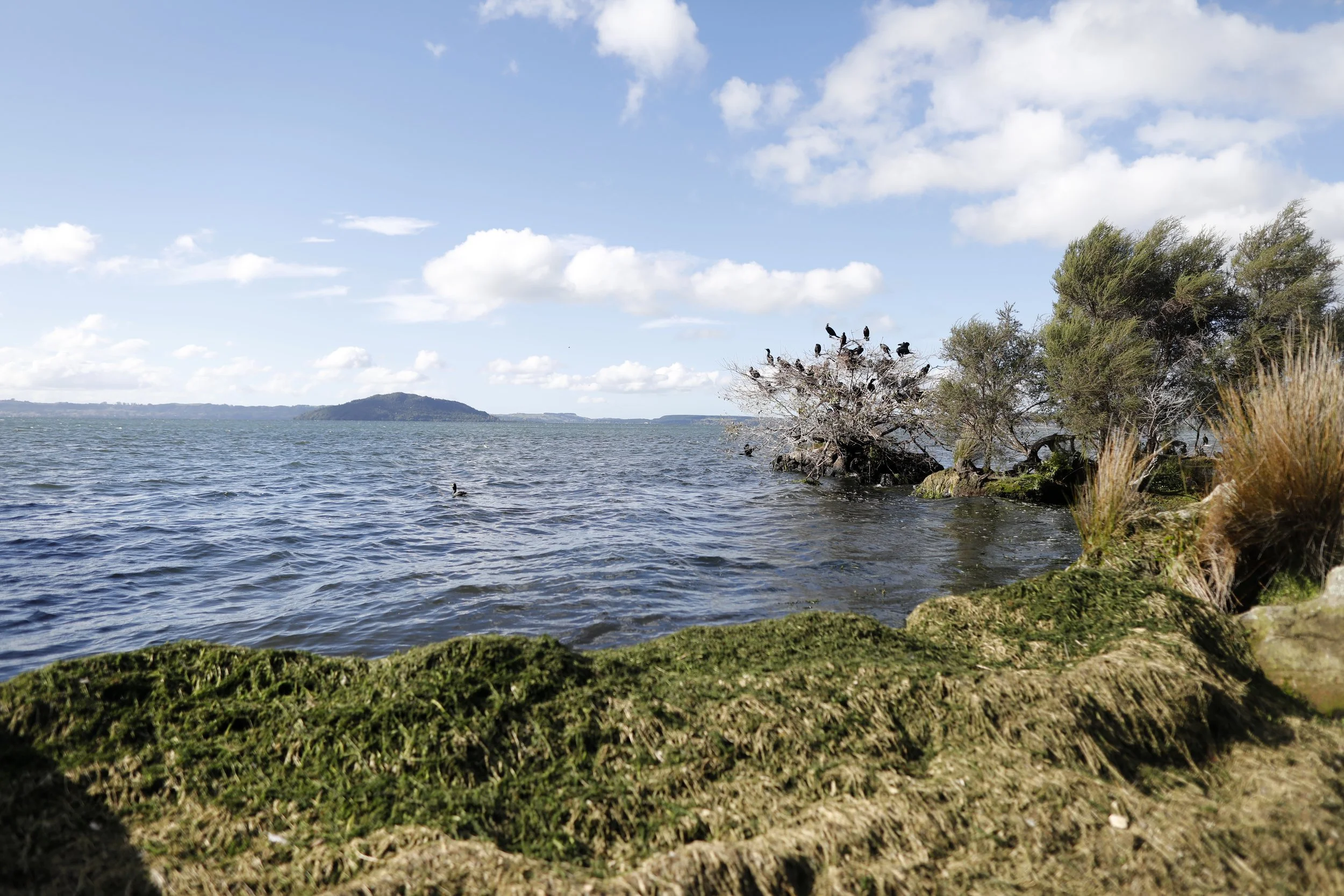
Though the great, caldera-forming blast belongs to deep time, the region hasn’t gone entirely quiet. Smaller eruptions and lava dome intrusions have punctuated its more recent history, the last of them occurring under 25,000 years ago — reminders that this landscape is shaped by processes far grander than a single human lifetime.
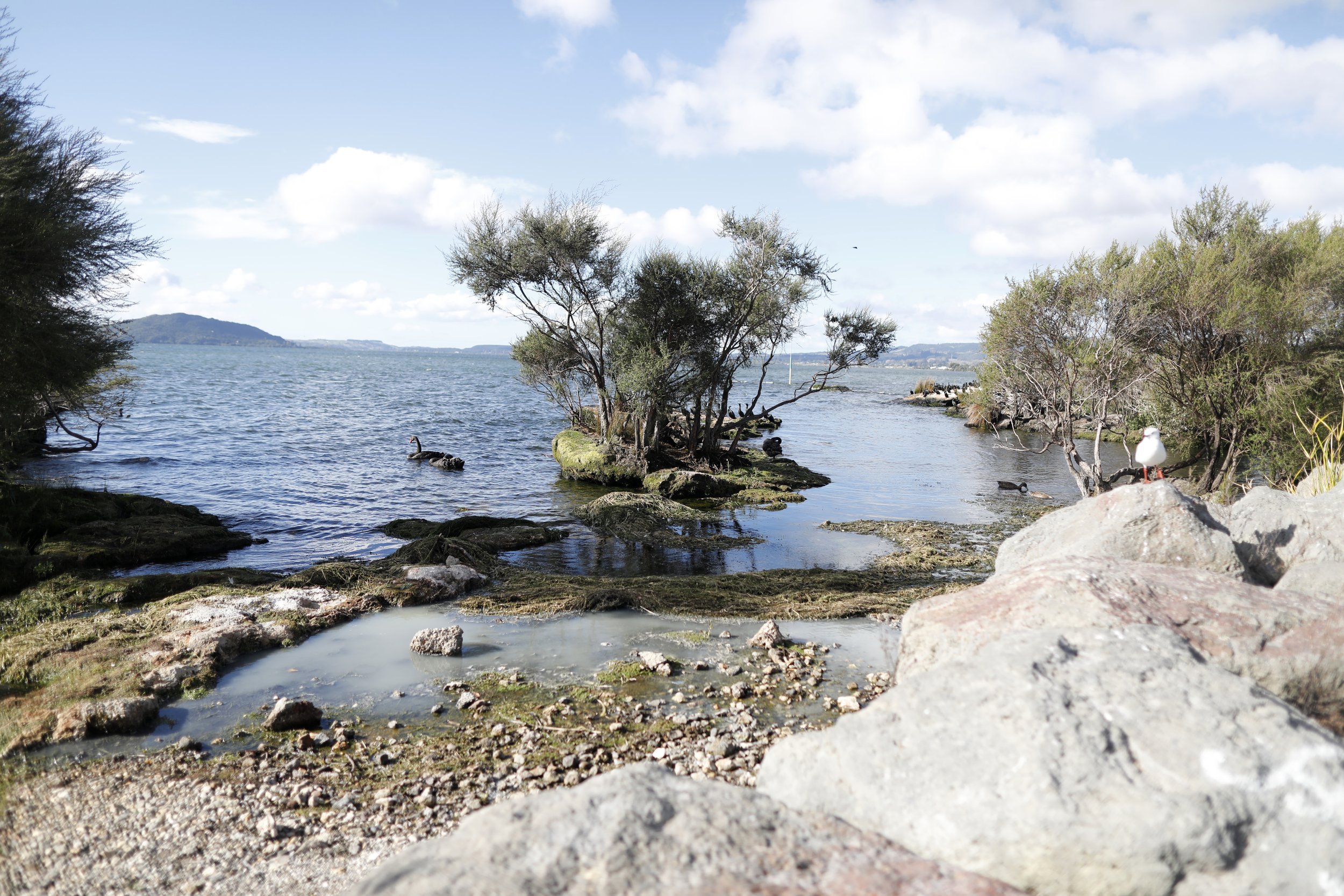
Visiting Rotorua, then, is a chance to stand at the edge of a landscape written in fire and water: a lake that mirrors the sky above, sitting atop a theatre of geothermal spectacle, with layers of volcanic history waiting to be read.
Once a graceful vessel known as the Lakeland Queen, now moored in quiet repose, the viewpoint beside her is an idyllic spot to pause and drink in the lake’s calm. From this perch, you can watch black swans glide past, ducks splash at the surface and the light ripple across the water. Later, the return drive to Auckland brings you full circle, dropping you back where the day began after a scenic two hours and forty-five minutes.