Oaxaca City Day Trip: Hierve el Agua’s Petrified Waterfalls
Discover the enchanting natural wonders just outside Oaxaca City as you hike Hierve el Agua’s petrified waterfalls & dip into its pistachio colored mineral springs with this travel guide.
Updated | June 2026
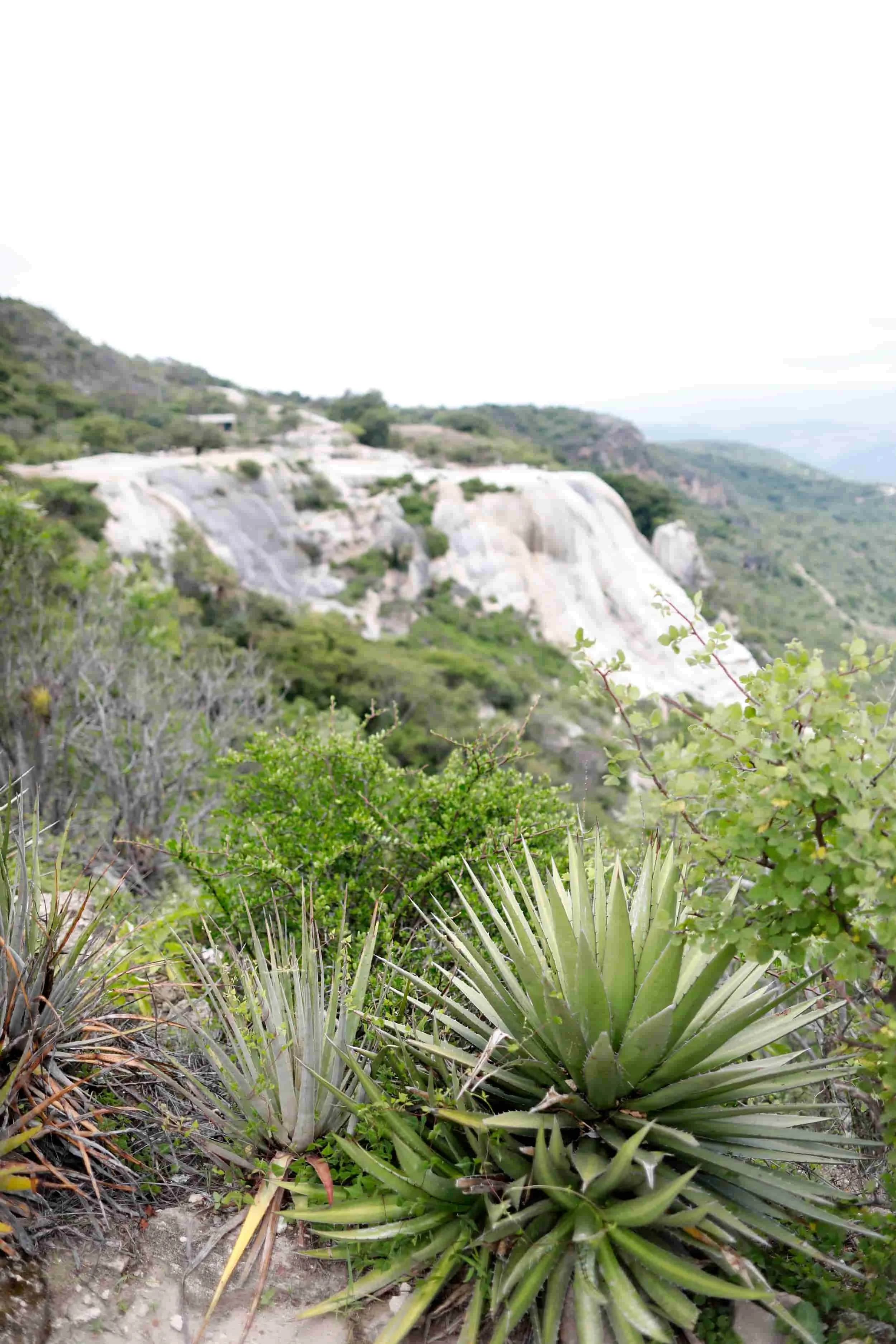
Why Visit Hierve el Agua — A Travel Guide to Its Surreal Calcified Waterfalls, Ivory Terraces & Crystal Pools
The perfect Oaxaca City day trip, Hierve el Agua is more than a photo op — it’s a chance to connect with the Zapotec communities who have tended these lands for generations, taste mezcal and market fare on the return trip and witness how Oaxaca’s cultural richness extends beyond its colonial center into dramatic natural landscapes that feel both ancient and alive.
Perched high in the Sierra Madre del Sur, Hierve el Agua is a natural cathedral carved from stone and mineral-rich springs, where terraced, calcified waterfalls cascade into the sky and turquoise pools invite contemplative dips; its surreal formations and panoramic views of Oaxaca’s semi-arid valleys and distant mountains make it a perfect microcosm of the region’s blend of geology, indigenous heritage and rural beauty.
At a Glance
📍 Destination: Hierve el Agua, Oaxaca, Mexico
🕒 Time Needed: Full day tour or 5-6 hours from Oaxaca; 2-3 hours on-site
💰 Budget: MX$700-1,300 ($35-$65 USD) guided bus tour or MX$265 ($15 USD) public transport; MX$40-60 ($5-$6 USD) entrance fee
👟 Walking Level: Mild (more if add’l hiking)
🌤️ Best Season: Dry season (November-April)
☕️ Don’t Miss: Mineral springs and mezcal tasting
🖤 Perfect For: Nature lovers and culture enthusiasts
My Bibimbap Moment
This trip added: Renewal.
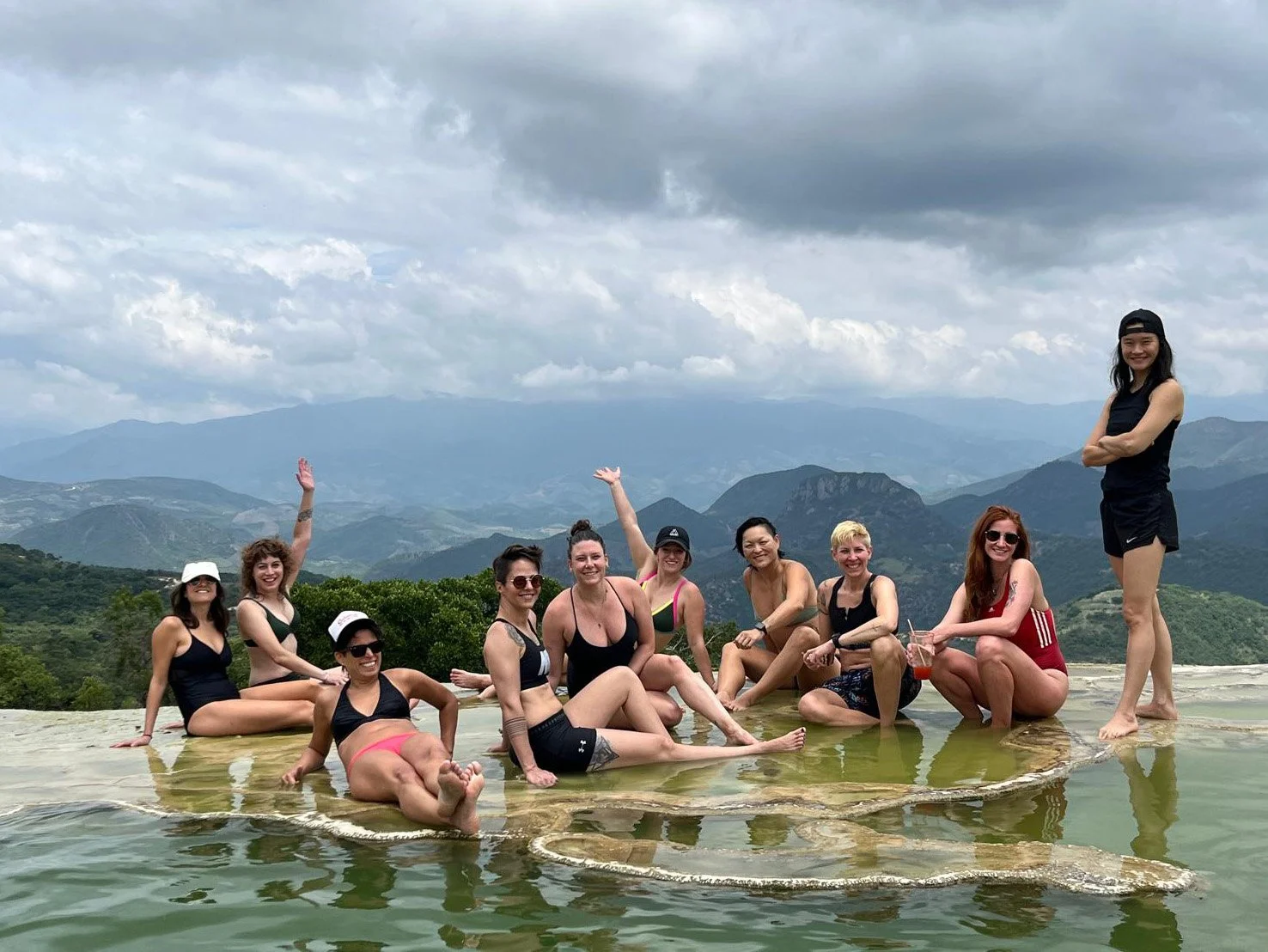
Every new destination brings something special and Hierve el Agua was no different. Hierve el Agua added the ingredient of renewal to my Bibimbap Life. The hike through Oaxaca's rugged landscape, a refreshing dip in the mineral springs and a slow afternoon tasting locally crafted mezcal each offered their own way of helping me slow down and recharge. But what made the experience truly memorable was sharing it with my queer friends while celebrating a birthday. Surrounded by nature, laughter and people who make me feel at home, I was reminded that renewal isn't only about resting — it's about reconnecting with the people, places and experiences that leave us feeling more like ourselves.
Explore
Here’s where the journey will take us.
01 | Hierve el Agua Tour from Oaxaca
Espacio Cocijo
Panadería Artesanal Yazmín
Hierve el Agua
El Rey de Matatlán
02 | When to Go
03 | What to Bring
04 | Costs & Logistics
05 | How to Get There
06 | Where to Stay
07 | Tours & Day Trips
08 | Good to Know
Travel More | Mexico Travel Guides
Hike Hierve el Agua’s Petrified Waterfalls & Dip Into Mineral Springs — the Perfect Oaxaca City Day Trip
Hierve el Agua is a set of natural rock formations and mineral springs in Oaxaca, Mexico, resembling cascading waterfalls frozen in stone. Formed over millennia by mineral-rich spring water depositing calcium carbonate and other minerals, the site features dramatic travertine cliffs, natural pools and panoramic views of the Valley of Oaxaca.
Beyond its geological significance, Hierve el Agua holds cultural importance for local Zapotec communities, who have used the springs for irrigation and ritual purposes for centuries. Today, it’s a popular destination for ecotourism and geological study, offering insights into regional hydrology, ancient water management and the intersection of natural and cultural heritage.
Espacio Cocijo
Espacio Cocijo in Oaxaca makes for a calm, convenient meeting point before a day trip to Hierve el Agua. The small courtyard and sunlit tables are easy to spot and there’s enough room to spread maps, wait for friends and sip coffee without feeling rushed.
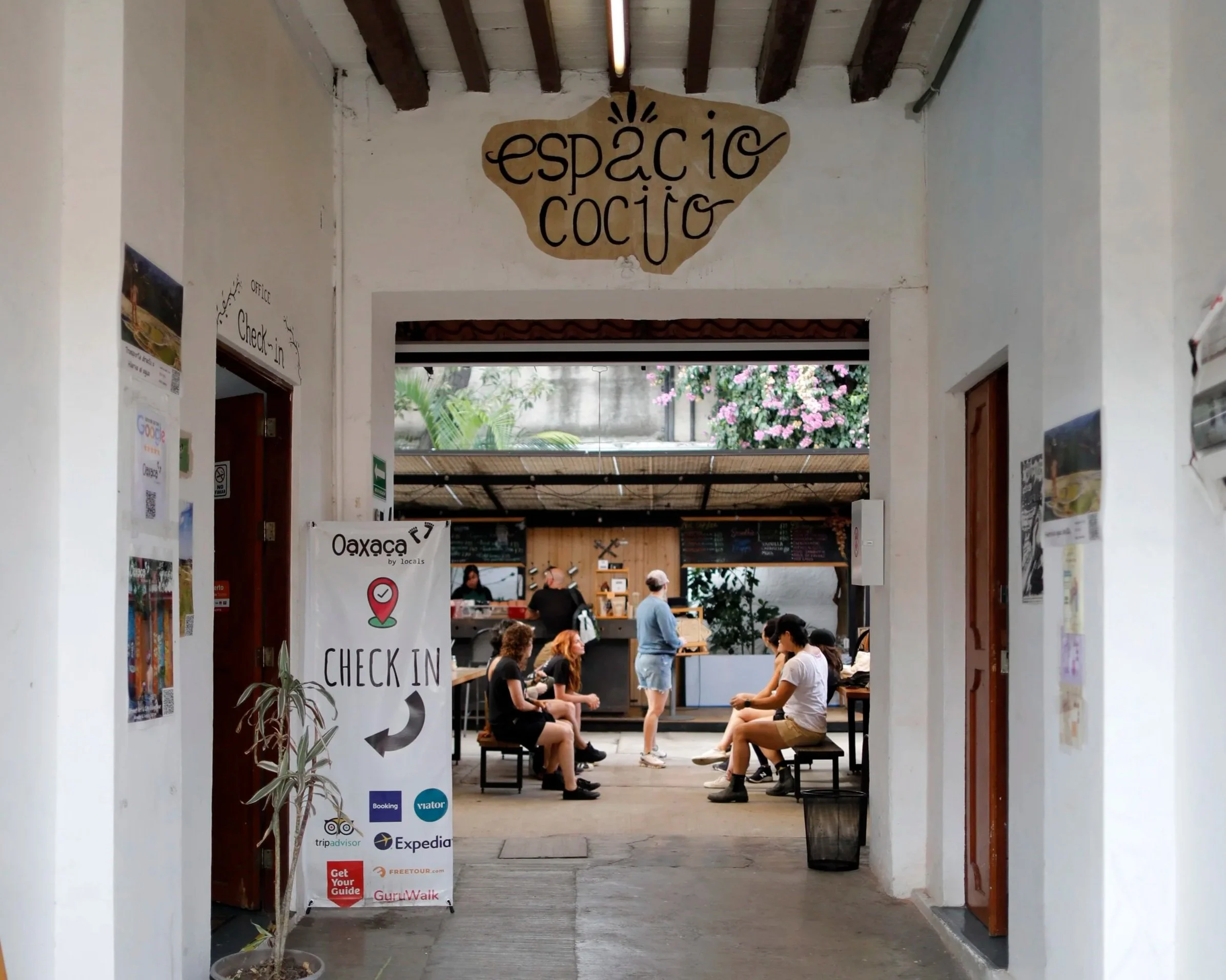
Even better — they serve up lite breakfast and coffee so you can fuel up and mingle before setting off.
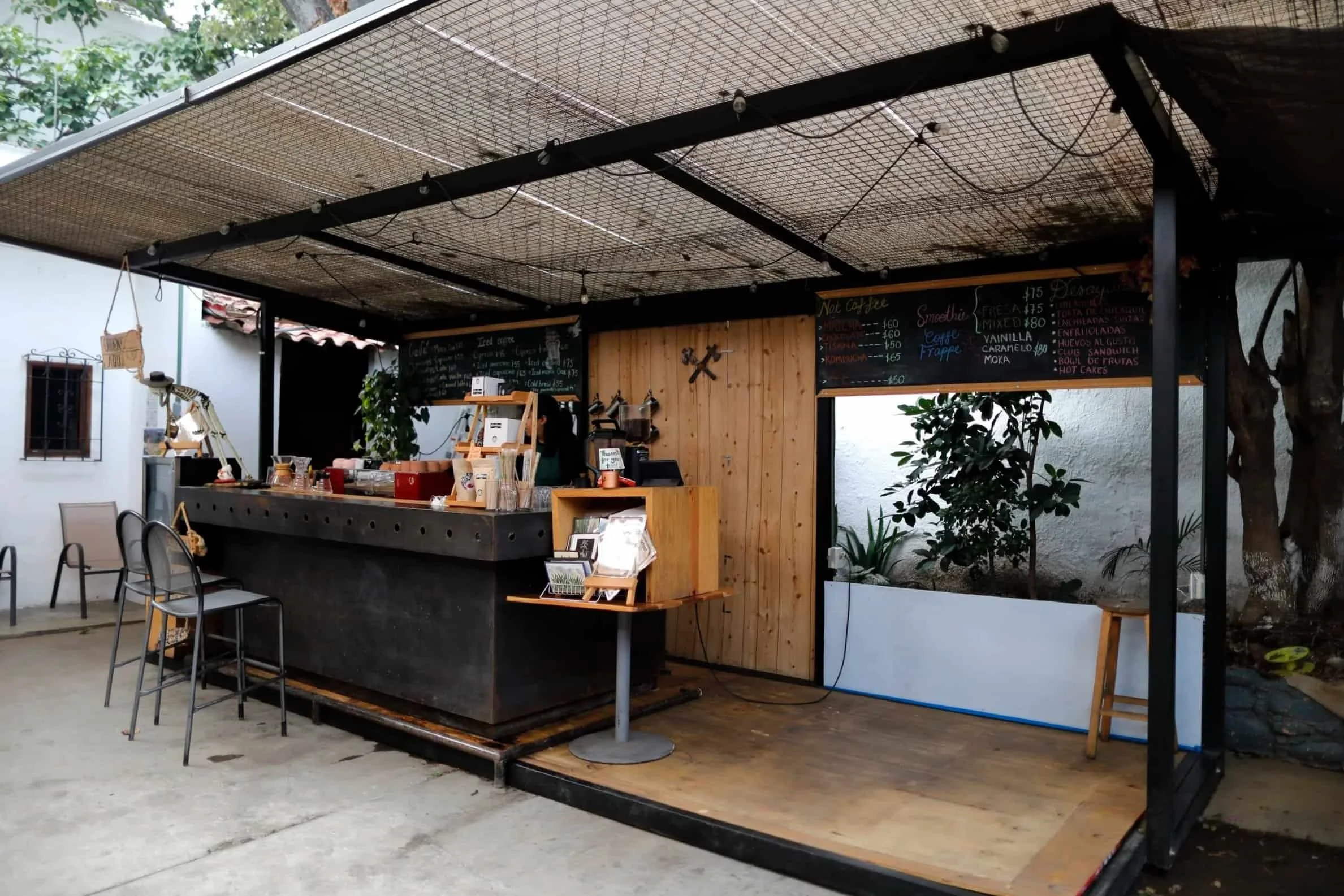
Start with something traditional: a light plate of chilaquiles or a warm tamal paired with strong Oaxacan coffee sets the right tone — just check what’s on the menu for the day. The staff are used to travelers and can pack a to-go coffee or suggest quick bites if you’re on a tight schedule.
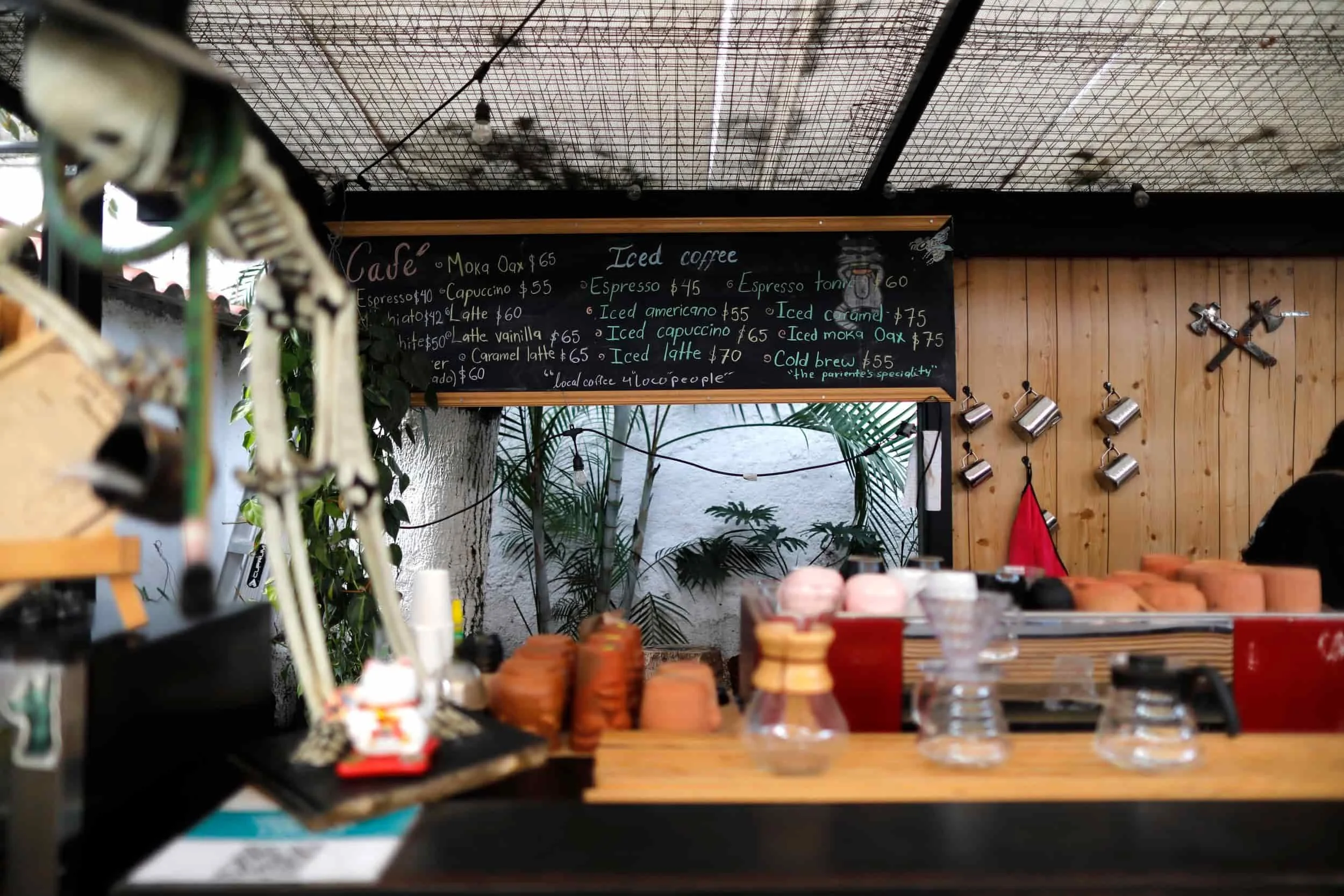
As with big groups and packed schedules, getting everyone fed takes time — a few from my team ducked out down the street for coffee elsewhere to save time. Regardless, I got my fill and was super happy about something warm to start the day.
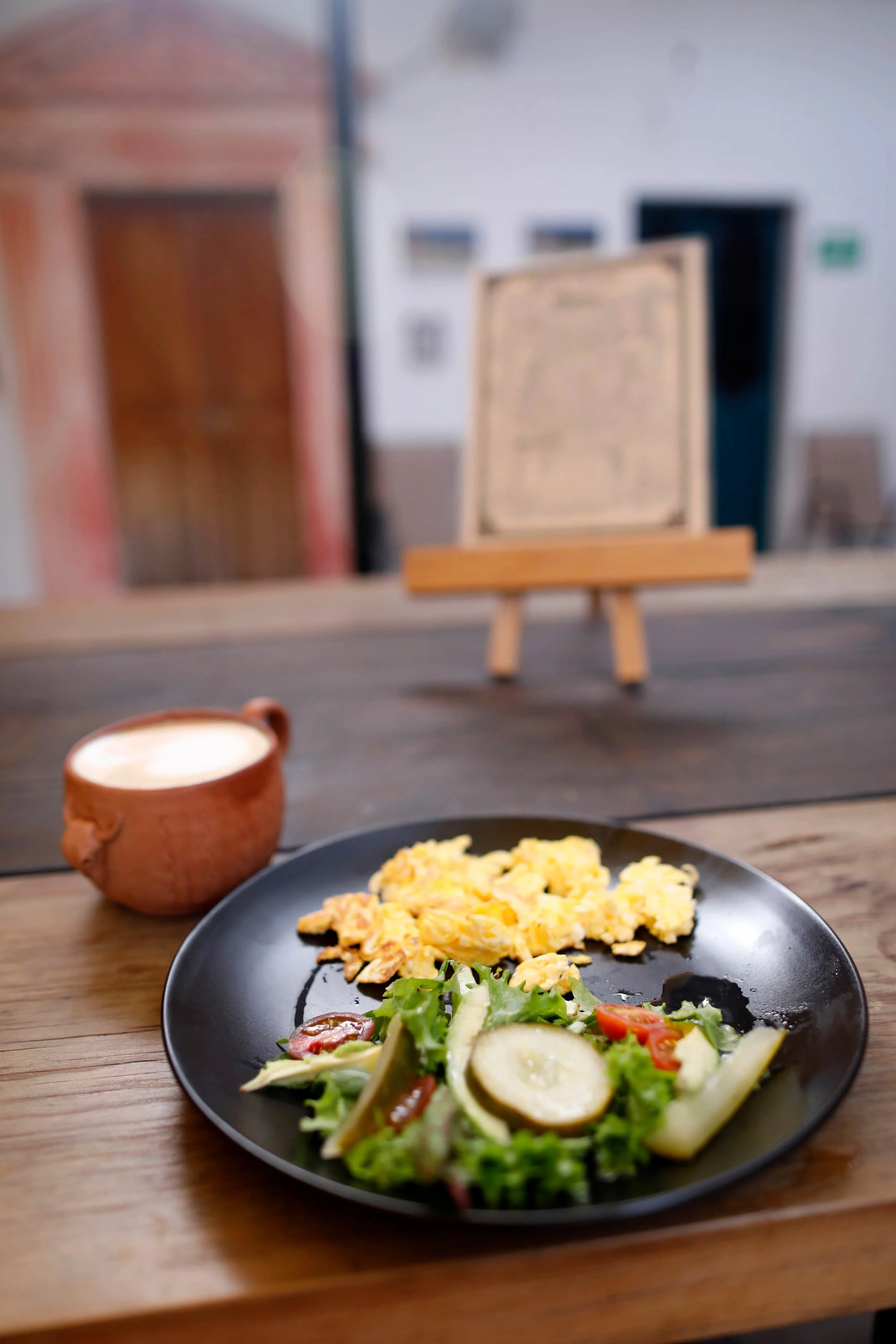
Once fed, take a few minutes to connect with friends, share sunscreen and load backpacks into the bus. Restrooms make last-minute changes easy, especially if you’re looking to throw on your swimsuit before arriving at the mineral springs.
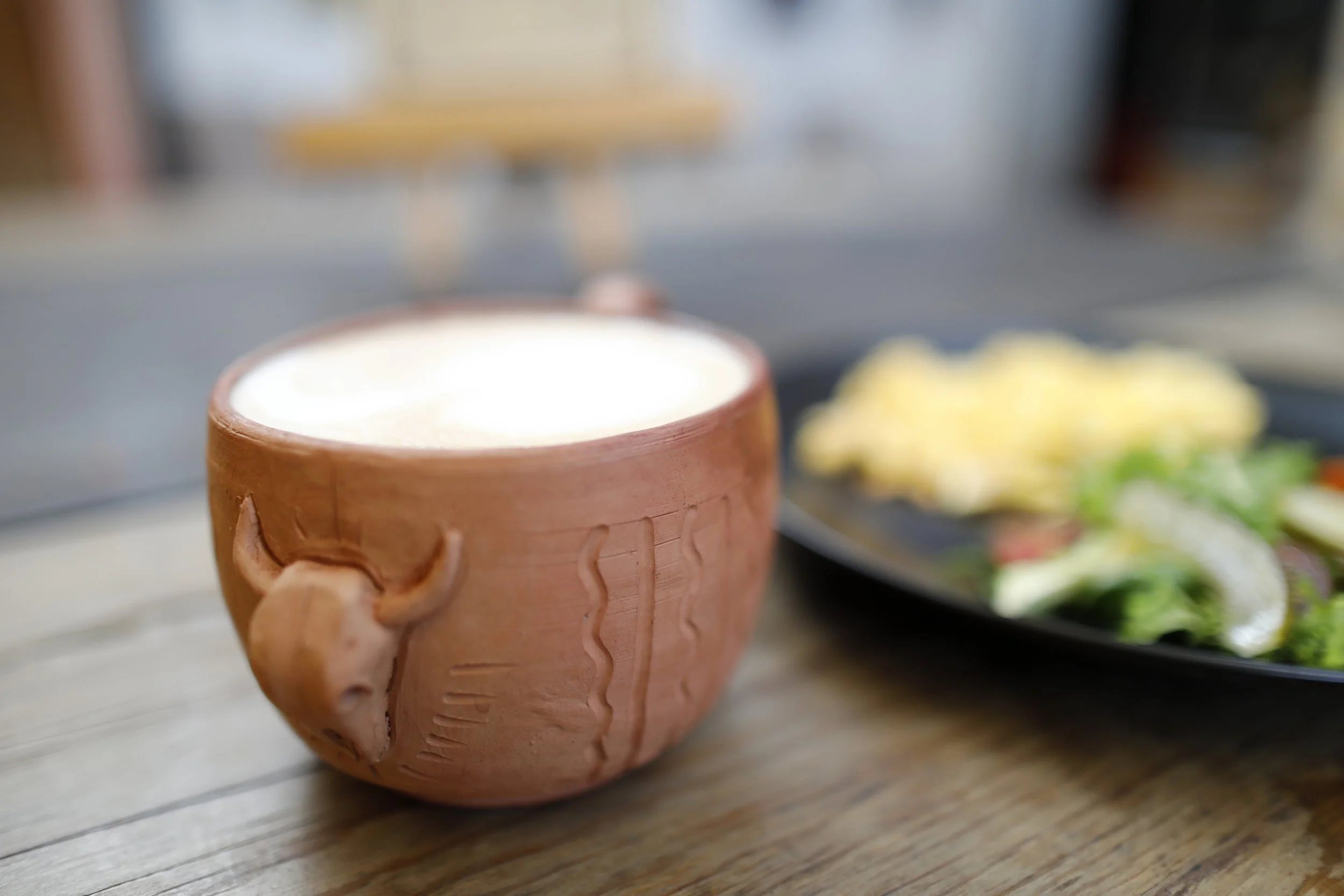
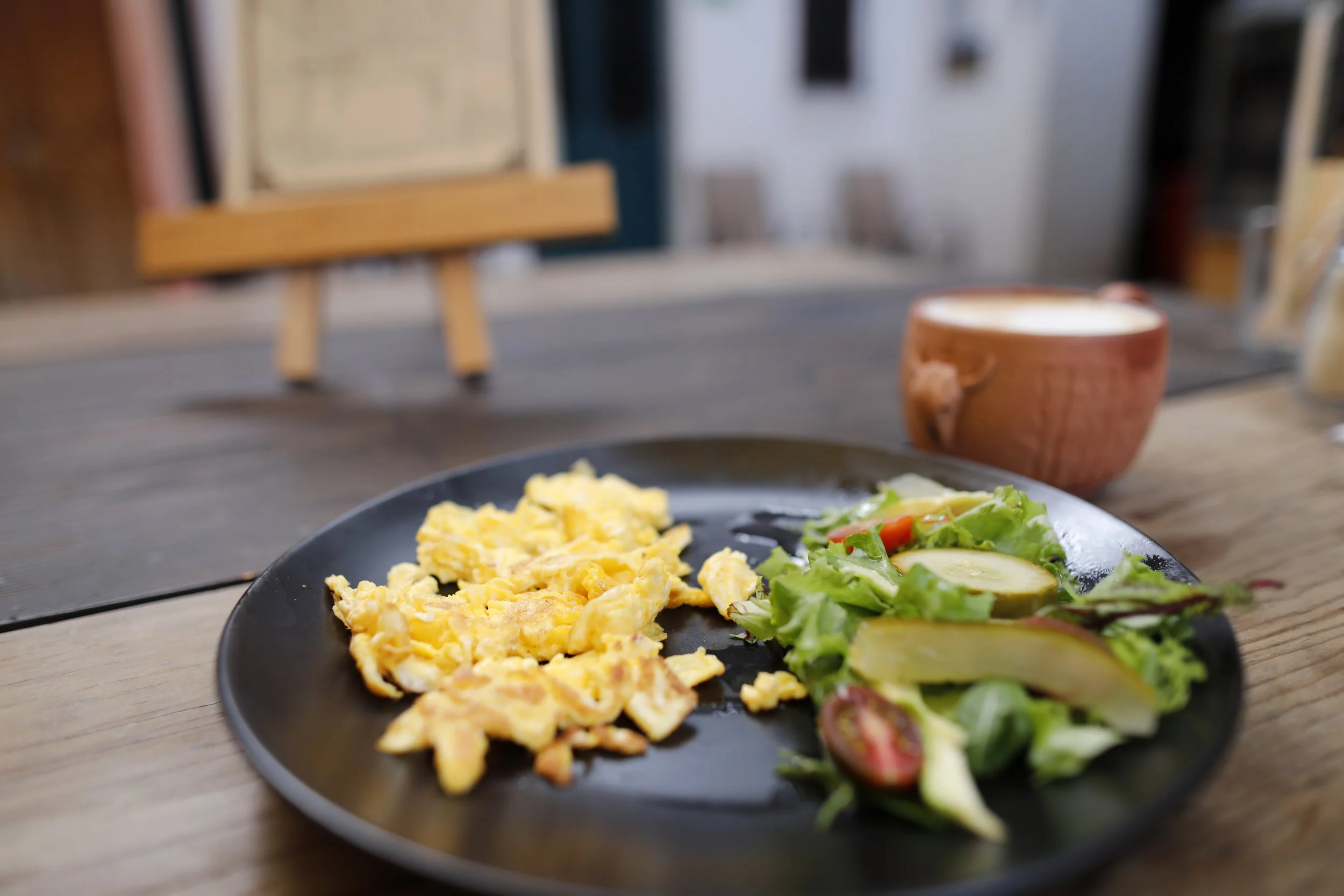
From Espacio Cocijo, it’s a straightforward drive toward the dusty, scenic road that leads up to Hierve el Agua. Leaving from such a spot means everyone arrives fed, on time and ready to hike the mineral terraces.
Panadería Artesanal Yazmín
But first, a much-needed stop for sweet breads and hot chocolate.
On the way out of Oaxaca, we stopped at Panadería Artesanal Yazmín in Tlacolula de Matamoros, a working neighborhood bakery known for traditional Oaxacan breads. It was an unexpected addition to our Hierve el Agua day — and exactly the kind of stop I love finding along the way.

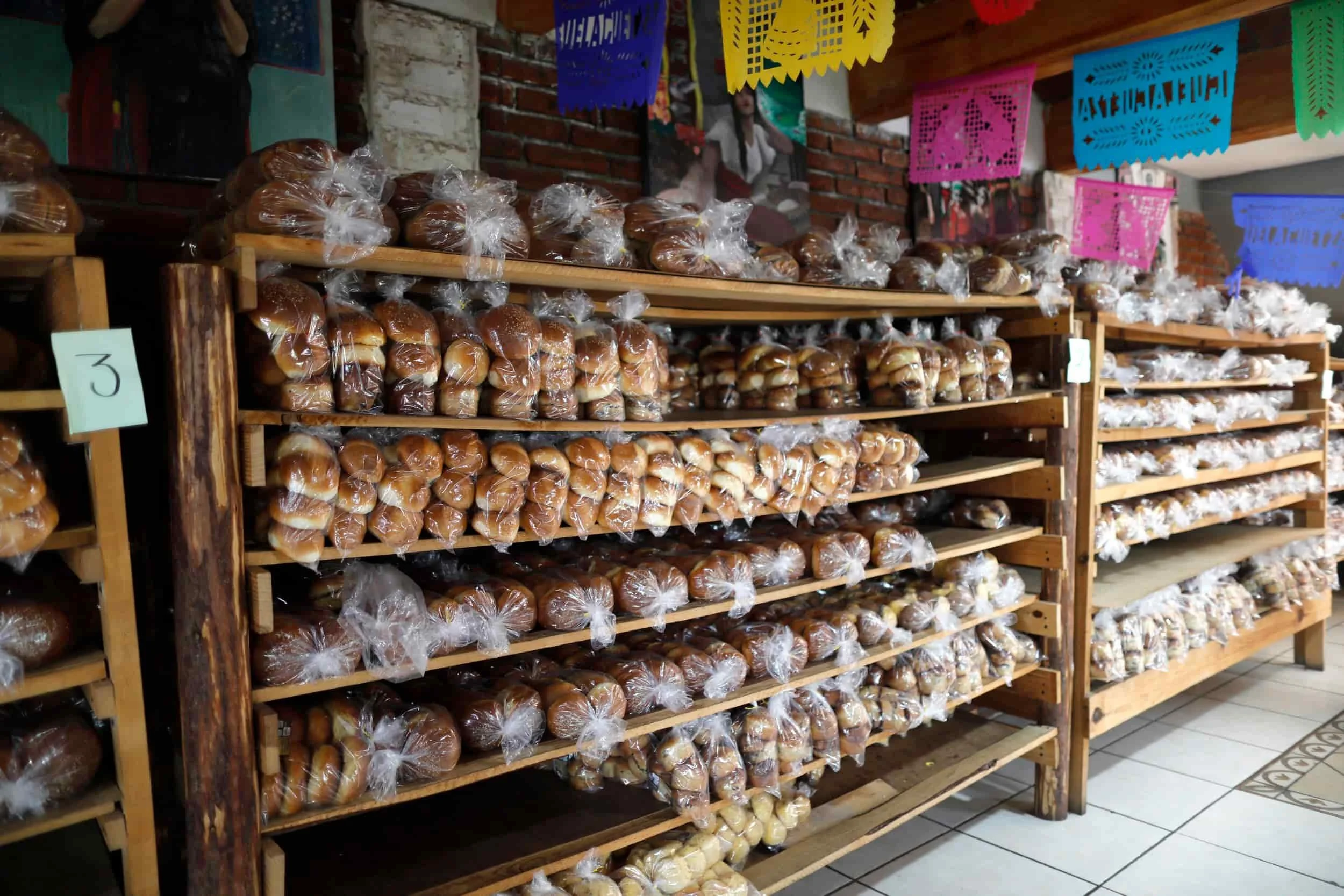
The bakery itself is simple and unpretentious, with shelves and counters filled with breads in different shapes, textures and flavors. This isn’t a polished café designed around the visitor experience. It feels like what it is: a local bakery making bread that is part of everyday life here.
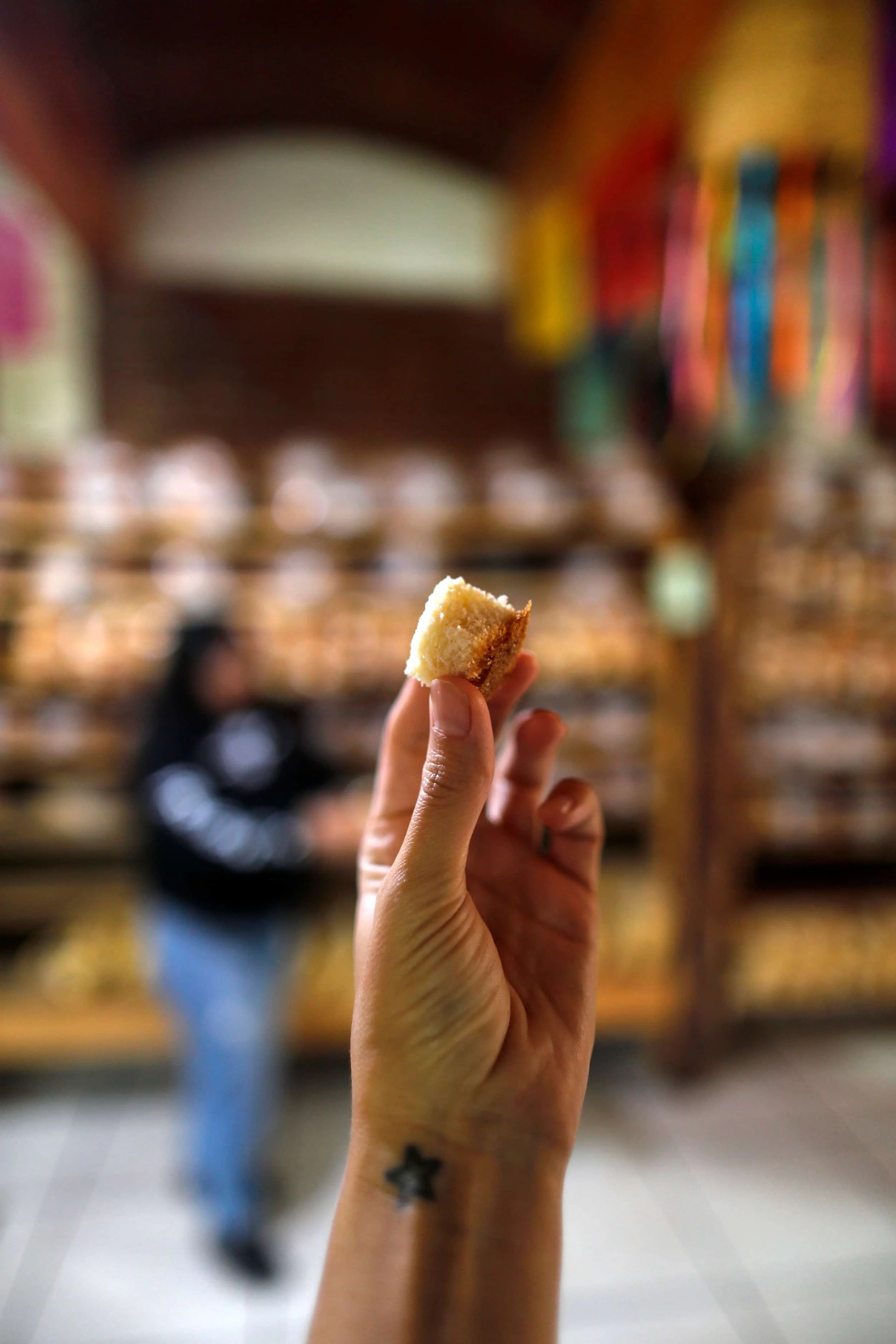
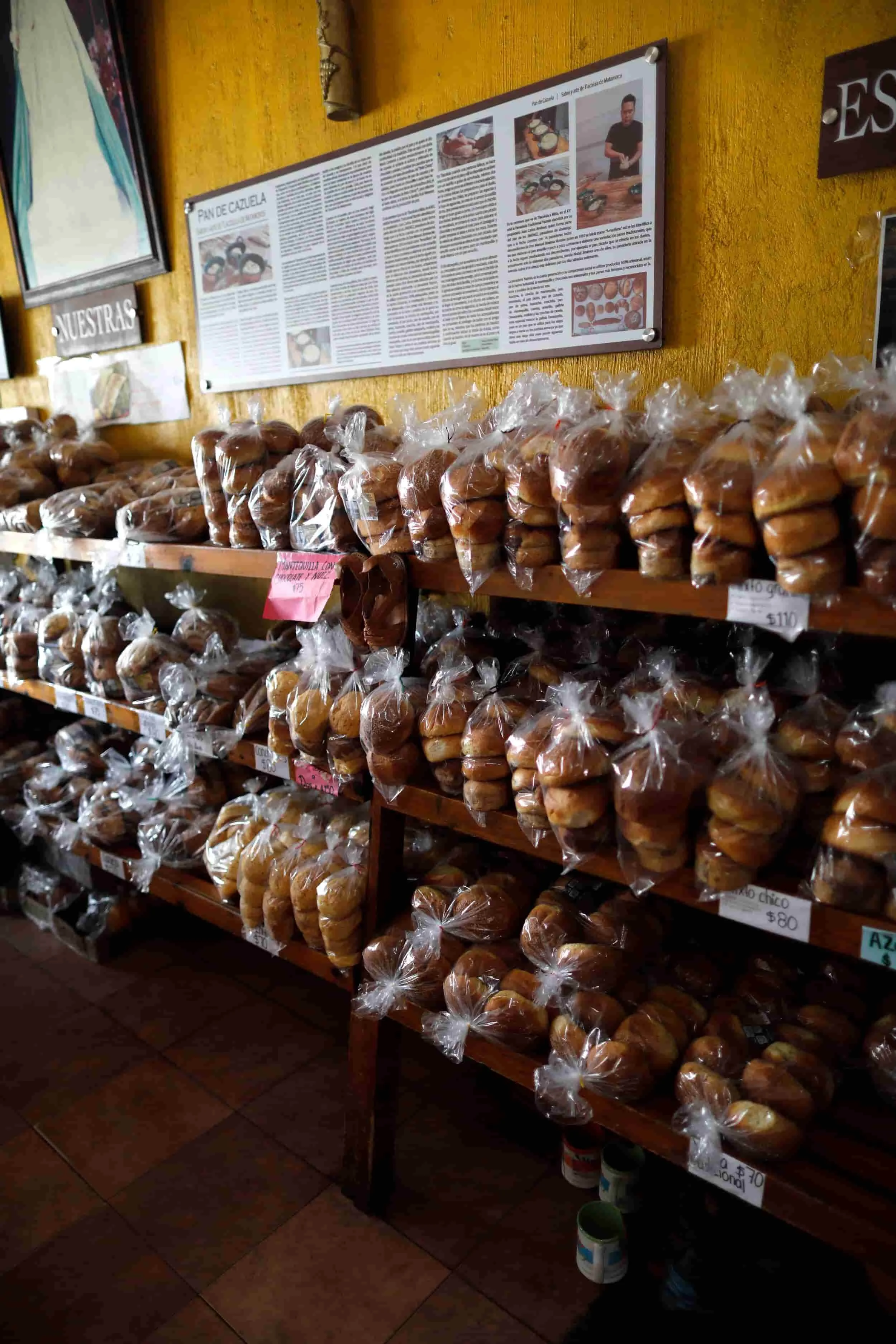
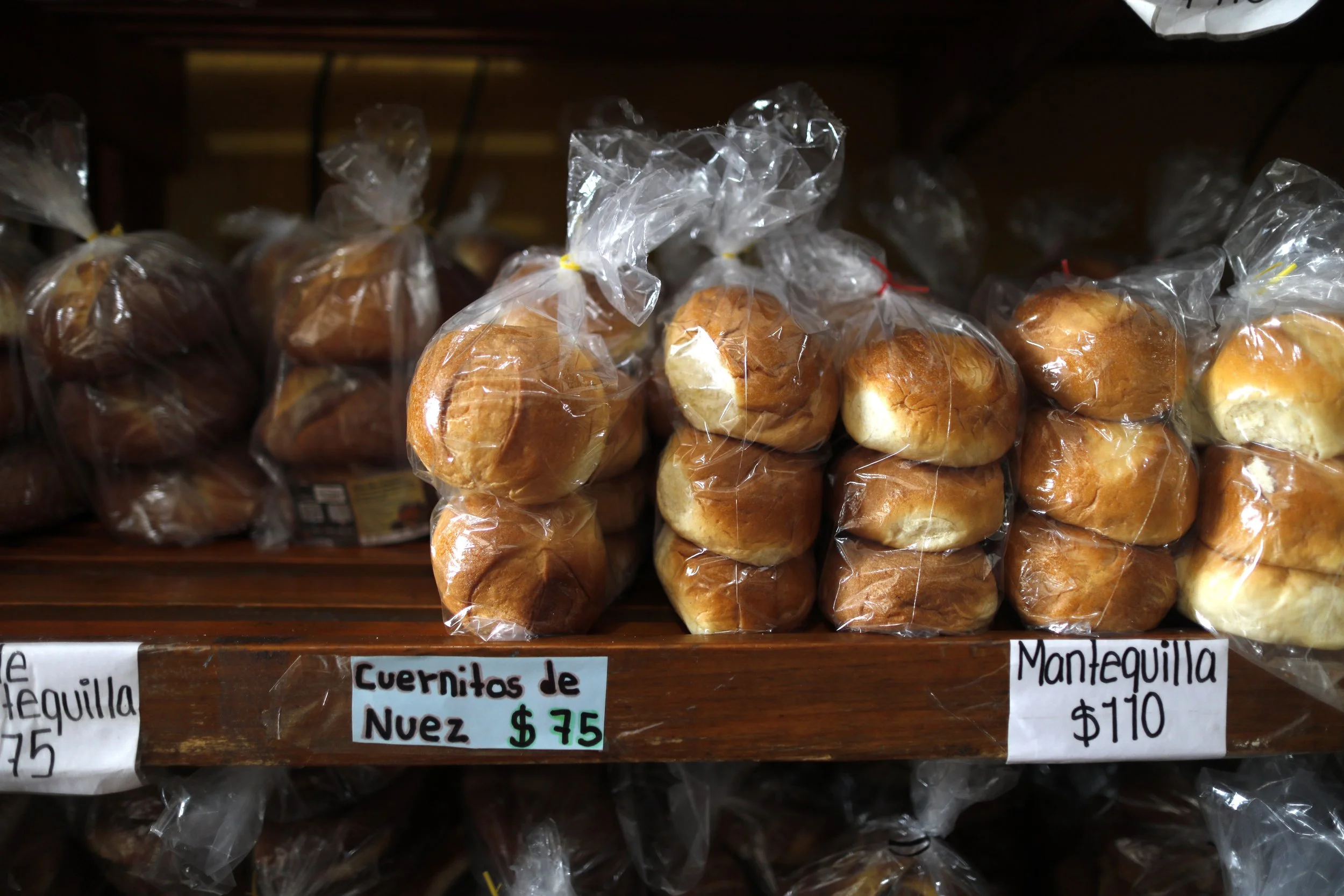
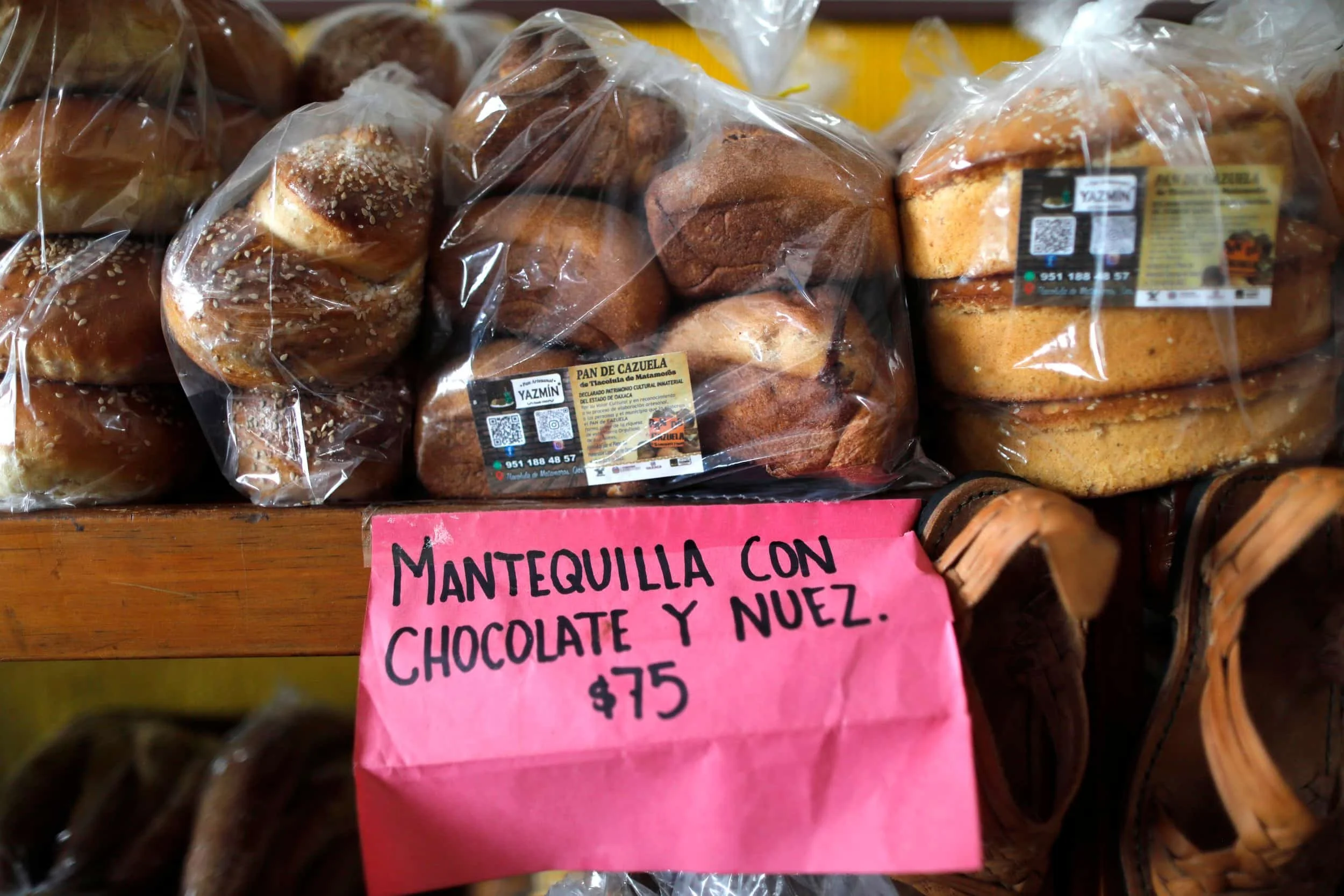
One of the bakers walked us through some of the local favorites and explained a little about what we were seeing before handing out warm samples to try. I tasted a small piece, while the rest of the group happily sampled more. Oaxacan baking has its own regional traditions and bakeries around Tlacolula are particularly known for breads flavored with ingredients like chocolate, anise and cinnamon, alongside familiar Mexican pan dulce.
After the tasting, we were free to wander around the bakery and the rest of the group stocked up on breads and pastries to take with them.
What to Try
If you’ve never explored a traditional Mexican bakery, don’t overthink it. Pick a few things that look good and share them. Part of the fun is trying breads you might not recognize.

Look for regional specialties such as pan de cazuela, along with conchas and the bakery’s other sweet and savory breads. Pan de cazuela is especially associated with this part of Oaxaca and can include chocolate, raisins, cinnamon and anise — a combination that gives you a much better sense of the region than simply grabbing a pastry you already know.
And Then, Hot Chocolate
There was one thing I wasn't leaving without: hot chocolate.
Two women were preparing it while we were there, using a traditional wooden molinillo to mix and froth the chocolate. They held the carved handle between their palms and rolled it rapidly back and forth, spinning the whisk through the liquid until it became frothy. It was such a simple process to watch but one I loved seeing firsthand — especially because I make Mexican hot chocolate at home and use a molinillo myself.
The finished chocolate was warm, rich and gently spiced, and after watching it being made, drinking it felt like more than simply grabbing something for the road. It was one of those small moments that made the bakery stop memorable before we climbed back onto the bus and continued toward Hierve el Agua.
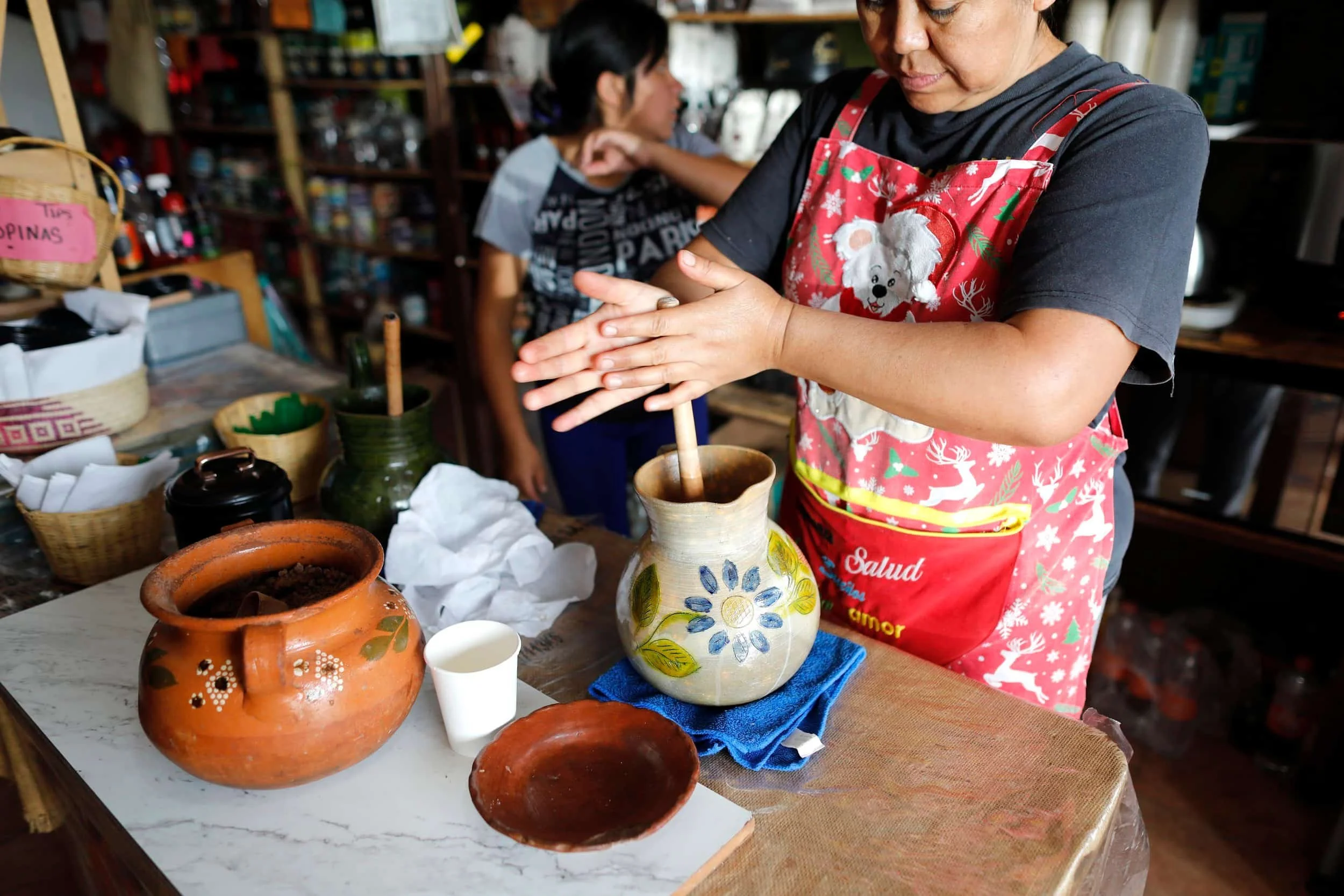
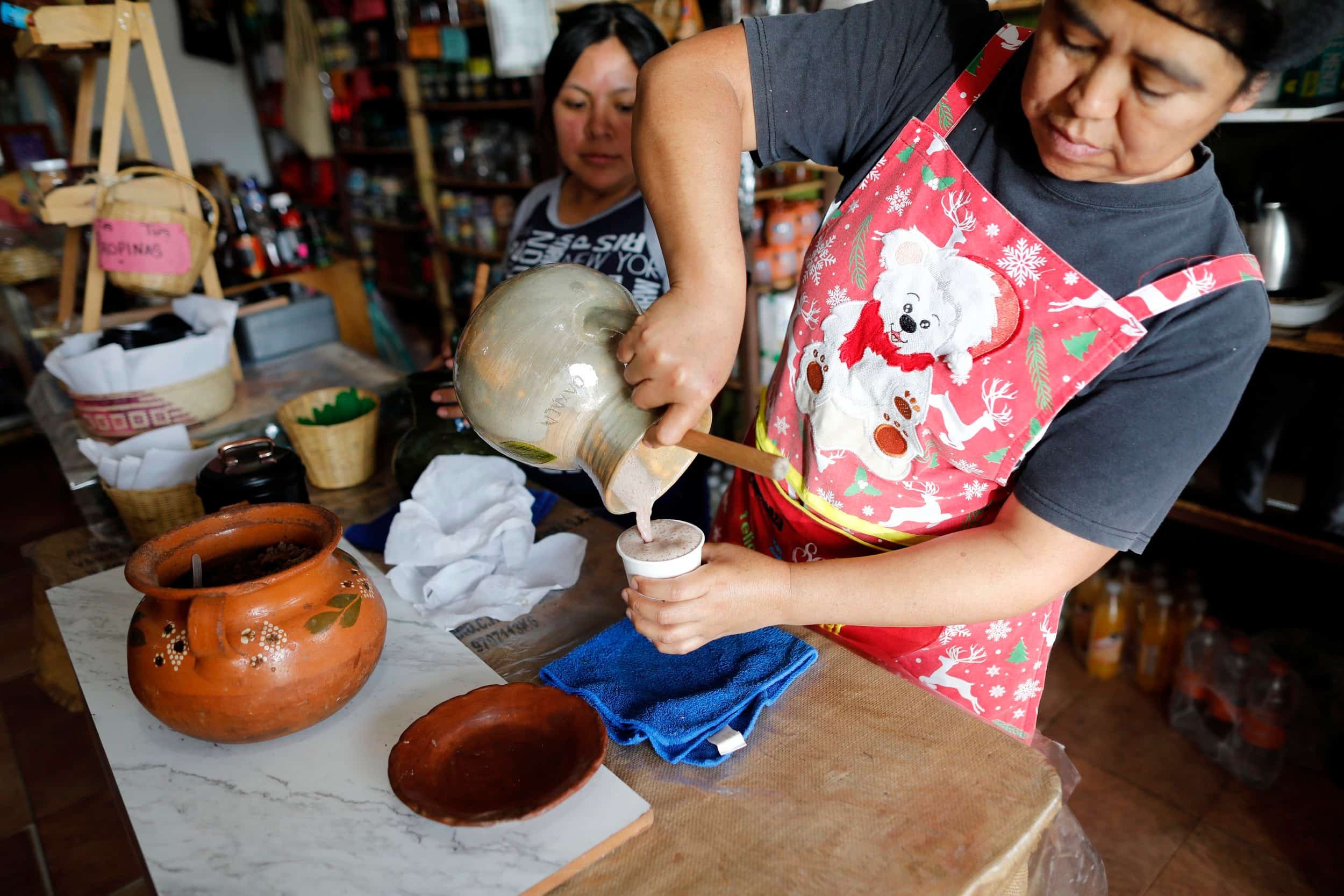
The bakery wasn't the reason I'd booked the tour but I’m glad it was part of it. Stops like this are often what I remember most about a travel day — not another landmark to check off but a brief look at something ordinary to the people who live there and completely new to me.
Everything You Need to Know About Hierve el Agua
Arriving at Hierve el Agua, we knew the photographs — the mineral pools perched above the valley and the white formations spilling down the cliffs — but I don't think we fully understood what we were about to explore.
Hierve el Agua sits within the Zapotec communities of San Lorenzo Albarradas and San Isidro Roaguía and the landscape is much more than a beautiful place to swim. Mineral-rich spring water has moved across these cliffs for thousands of years, gradually depositing layers of calcium carbonate and creating the enormous formations that look like waterfalls frozen against the mountainside.
Despite the name — Hierve el Agua translates roughly to “the water boils” — these aren't hot springs. The name refers to the way the mineral springs bubble as they emerge from the ground.
Why Hierve el Agua Is So Special
The petrified waterfalls are the obvious draw but what makes the site particularly fascinating is the relationship between geology, water and human history.
Ancient Zapotec communities engineered an extensive system of canals and terraces here, using the springs to manage water in an otherwise dry landscape. Some of those archaeological remains can still be seen around the site today. The pools, mineral terraces and dramatic white cliffs you see as a visitor are therefore only part of the story.
And then there is the setting itself. Hierve el Agua sits high above a broad valley surrounded by mountains, with the pale mineral formations standing out against a much drier landscape than I had expected. You can admire much of it from above but hiking below the formations completely changes their scale — which is where we were headed next.
A Community-Managed Landscape
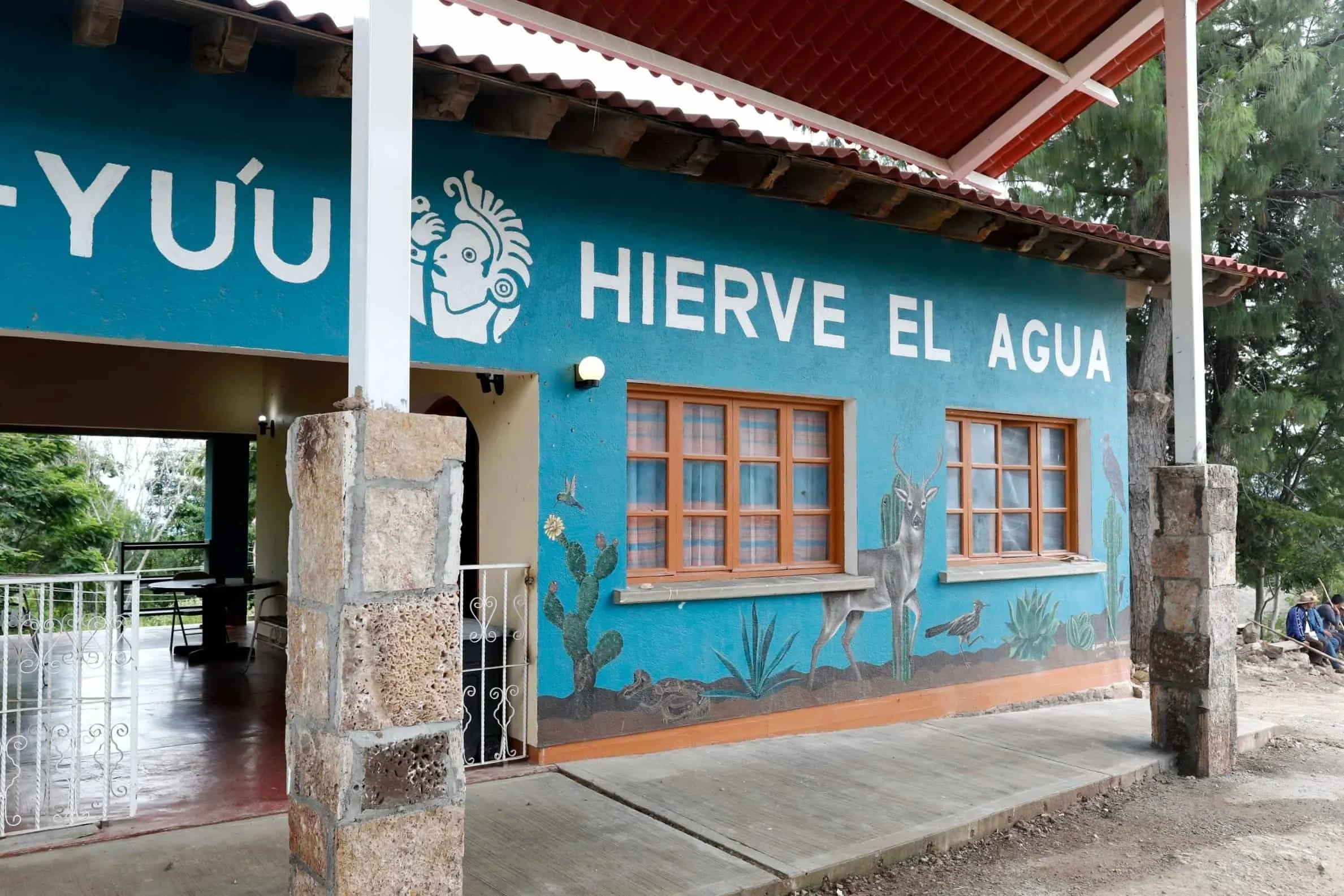
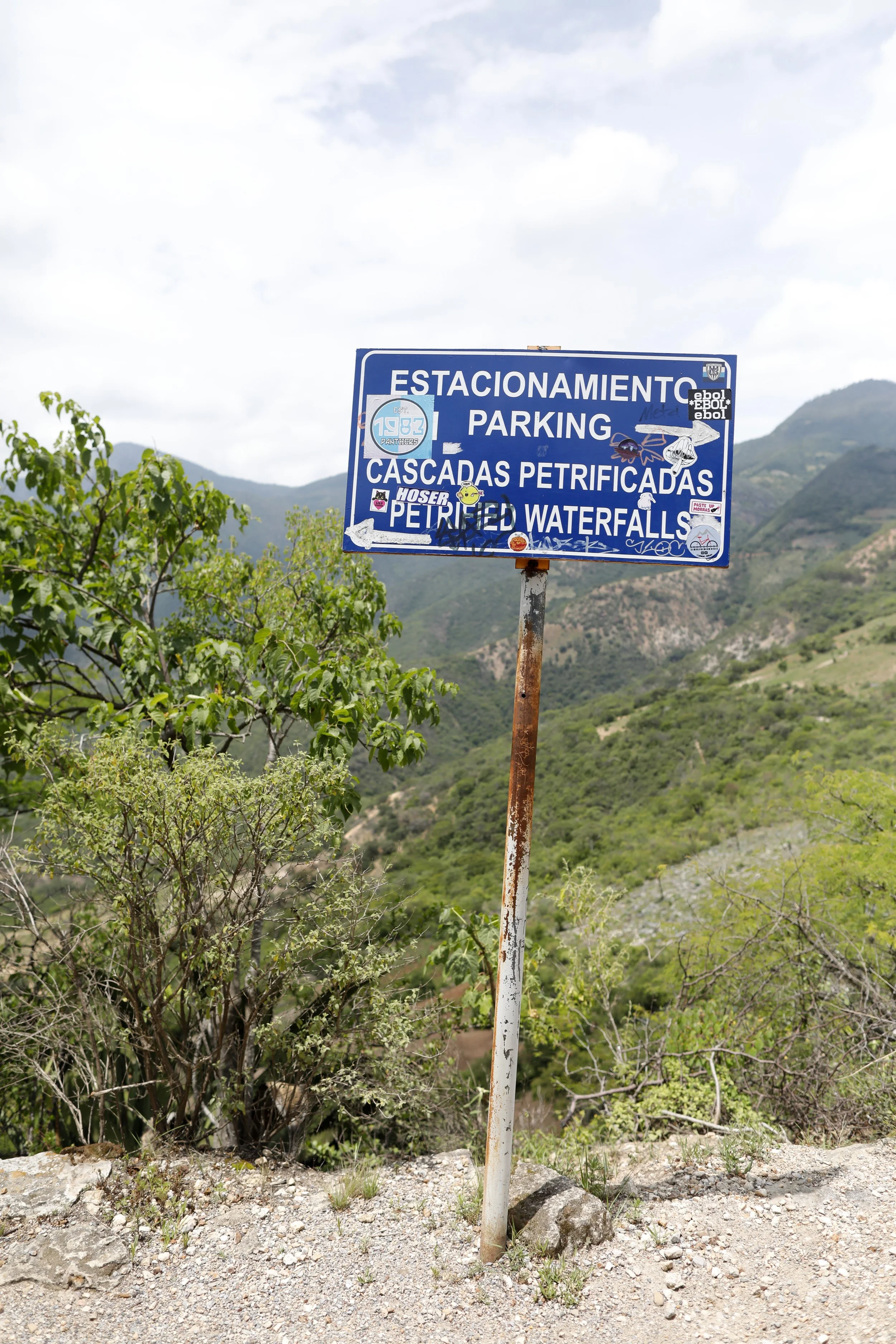
Something I didn't fully appreciate when I visited is that Hierve el Agua is managed locally rather than functioning like a conventional national park. Access involves fees collected by the communities around the site and you'll also find local food stalls, crafts and guides near the entrance.
When we arrived, several local guides approached us offering their services. At the time, we politely brushed past them. We were already on an organized tour and assumed we had everything covered — but our tour was really transportation to Hierve el Agua, not a guided experience once we arrived.
Knowing what I know now, I wish I'd paid more attention.
Hiring a local guide can give you much more context for the geology, Zapotec history, ancient water systems and communities connected to the landscape while also keeping more of your tourism spending within the region. Oaxaca also formally recognizes and accredits local and specialized cultural guides.
Would you need a guide simply to follow the trails and see the pools? Not necessarily. But if I went back, I'd at least stop and have the conversation. There's considerably more happening at Hierve el Agua than I understood when I first walked through the entrance.
Before You Start Walking
The visitor area sits above the main formations, with trails leading toward the pools, viewpoints and down toward the base of the petrified waterfalls. You'll find basic facilities and local vendors selling food, drinks and crafts around the entrance.
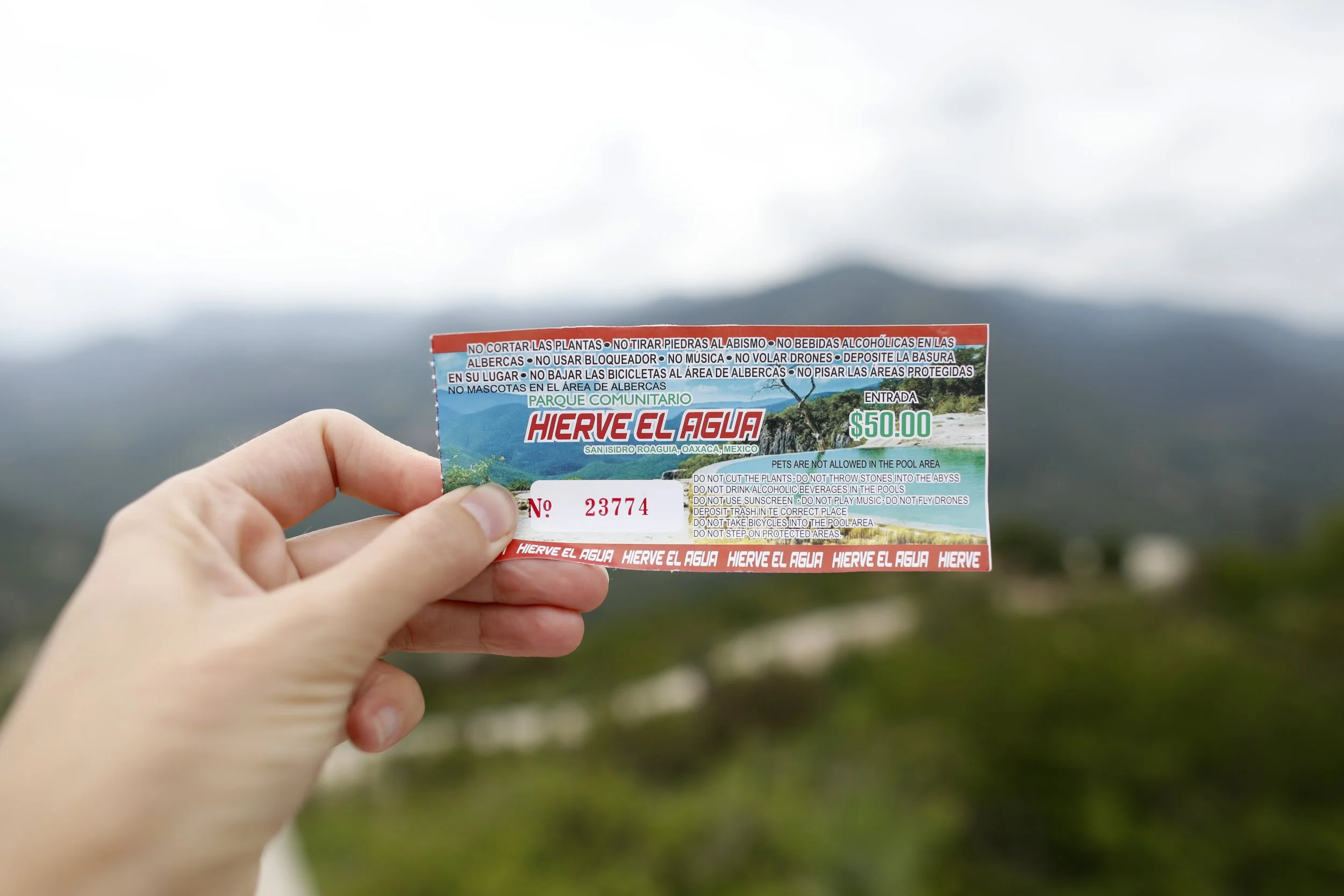
Bring cash. Access is currently handled through separate local charges, and parking, restrooms and other services can involve additional small fees. Exact amounts have changed over time, so rather than planning around a specific peso amount, bring enough small bills to cover entrance fees, local purchases and anything unexpected along the way.
From here, we headed toward the trail — and this is where Hierve el Agua started to look very different from the photographs I'd seen before coming.
Hierve el Agua
The initial stretch is easy and well-trodden: a mix of compact dirt and stone steps. The trail slopes down toward the lip of the cliffs, offering your first reveal of the mineral cascades — white to beige calcified formations that look like waterfalls but are actually petrified deposits formed over thousands of years by mineral-rich springs. The smell of dry earth and the faint mineral tang in the air create a distinct atmosphere.
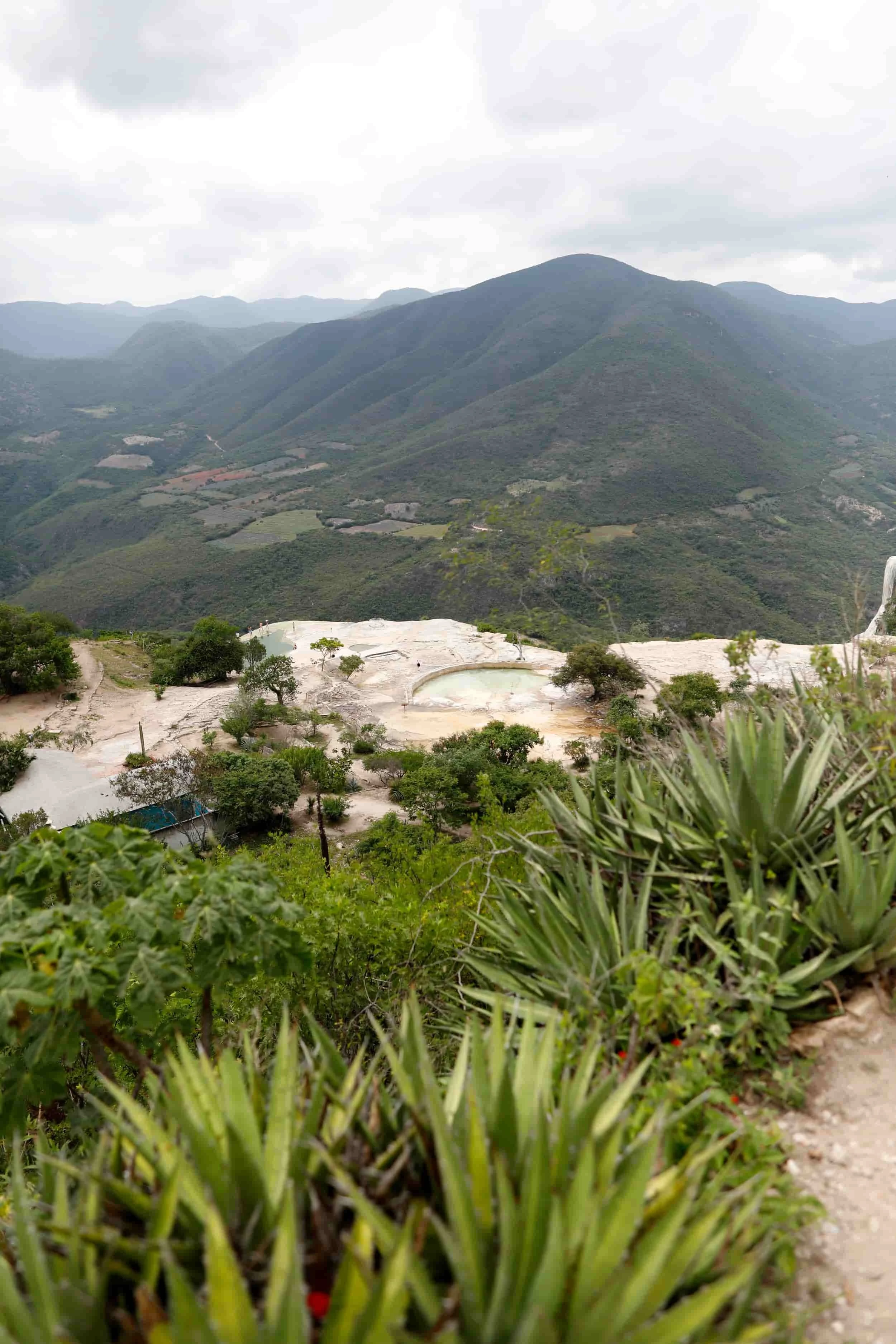
Before You Hit the Trail
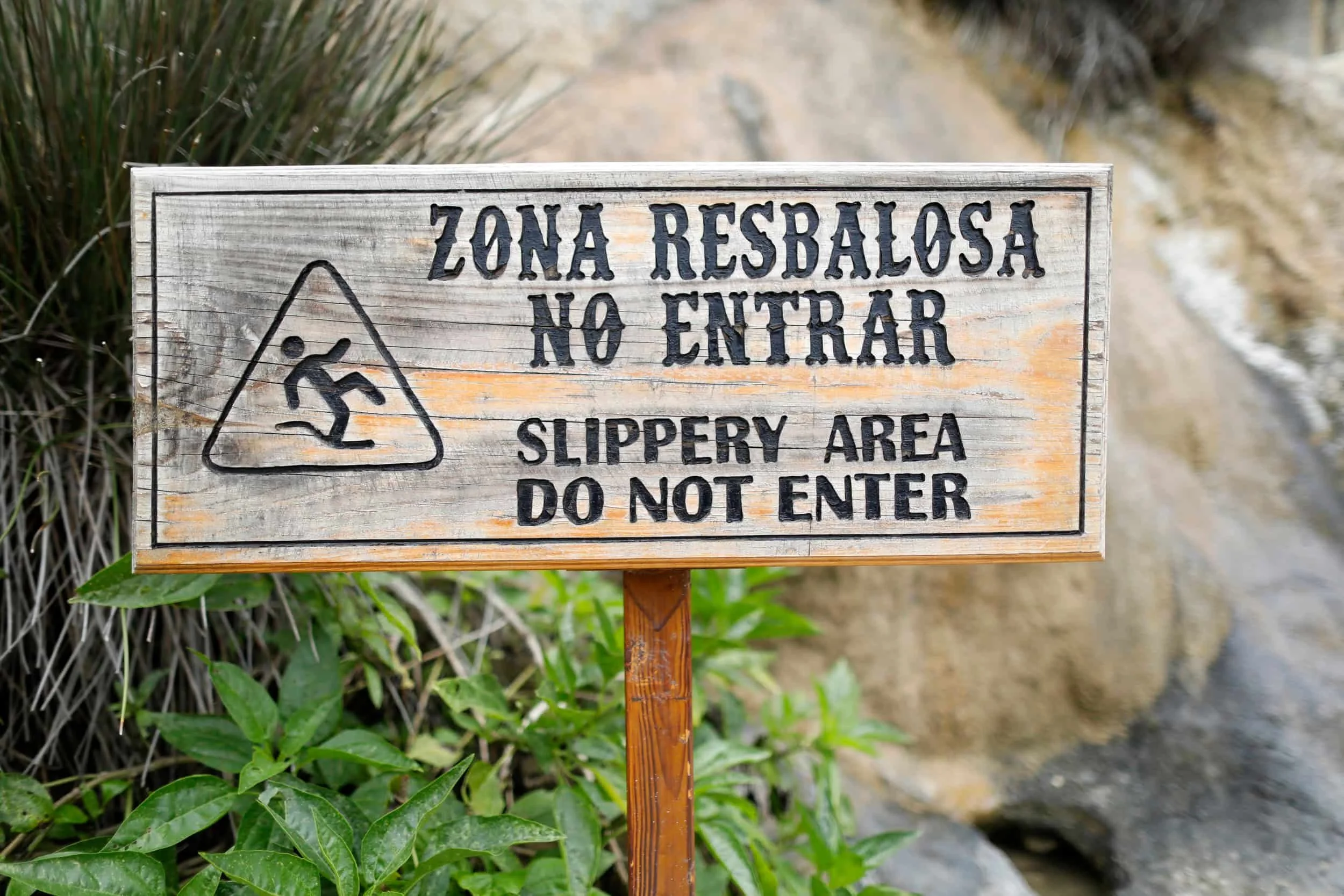
Take your time going down. The trails around Hierve el Agua can be uneven, rocky and exposed, with very little shade. Wear shoes with good traction, carry plenty of water and watch your footing, particularly on the steeper sections.
Stay on established paths and avoid climbing onto the mineral formations — the landscape you're here to see is also surprisingly fragile. And don't rush simply to reach the next viewpoint. Some of my favorite views came from stopping along the way and looking back at where we'd just been.
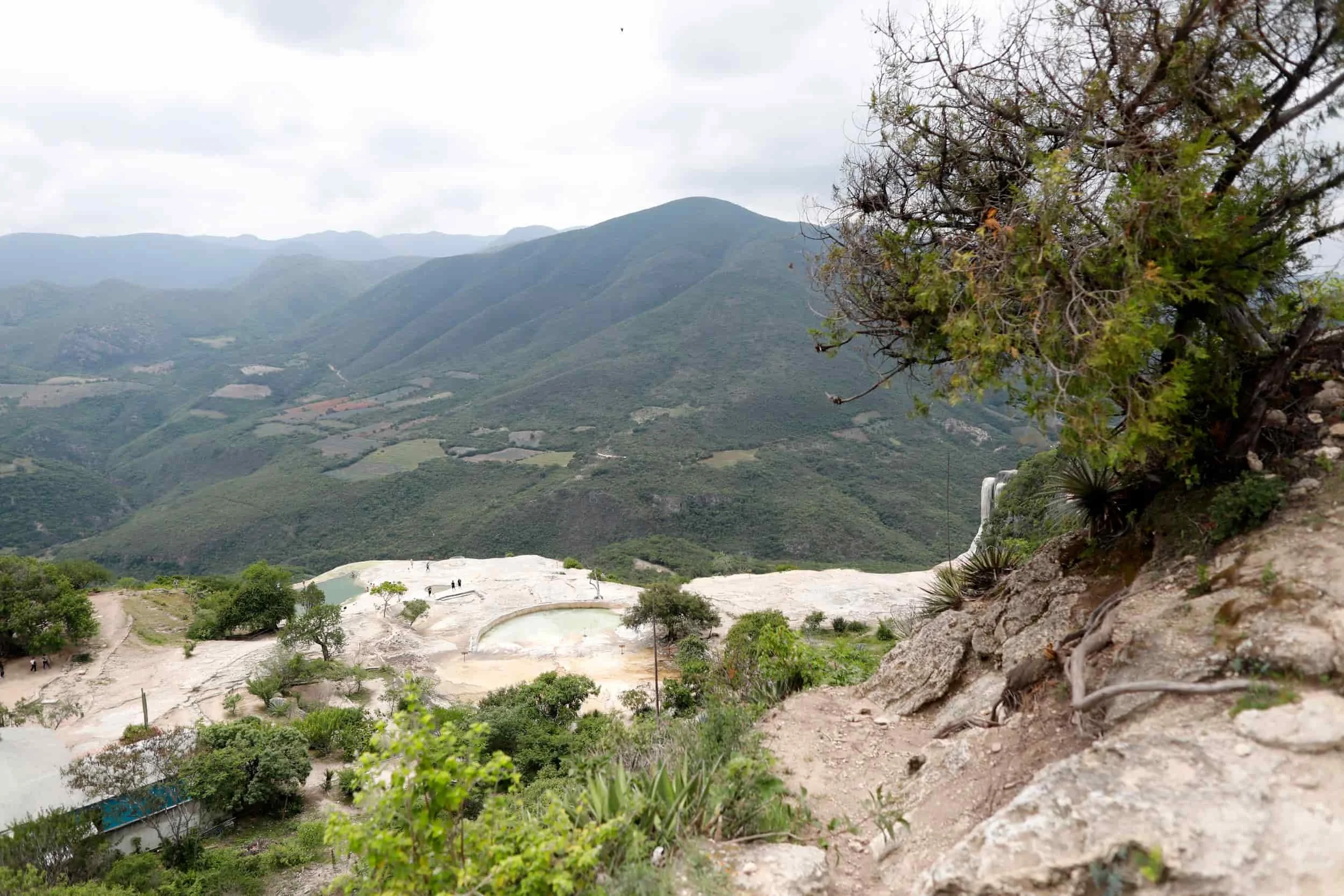
Choose Your Hierve el Agua Experience
There isn't just one way to explore Hierve el Agua. How far you go depends on how much time you have — and how much hiking you actually want to do.
Keep It Easy | Upper Terraces & Pools
If you’re short on time or don't want a substantial hike, stay around the upper portion of the site. You can see the mineral pools, take in the expansive valley views and get a good sense of Hierve el Agua without descending all the way below the formations.
Go Deeper | Hike Below the Petrified Waterfalls
For a completely different perspective, follow the trail down toward the base of the formations. The descent is more demanding but seeing the petrified waterfalls from below finally gives you a sense of their enormous scale. This is the route we took and I think it was well worth the extra effort.
Explore Further | Go with a Local Guide
If you want to venture beyond the primary visitor trails and explore more of the surrounding landscape, this is where I'd consider hiring a local guide. Rather than heading off independently in search of longer village routes, a guide can help you explore farther while adding context about the land, local communities and history you might otherwise walk straight past.
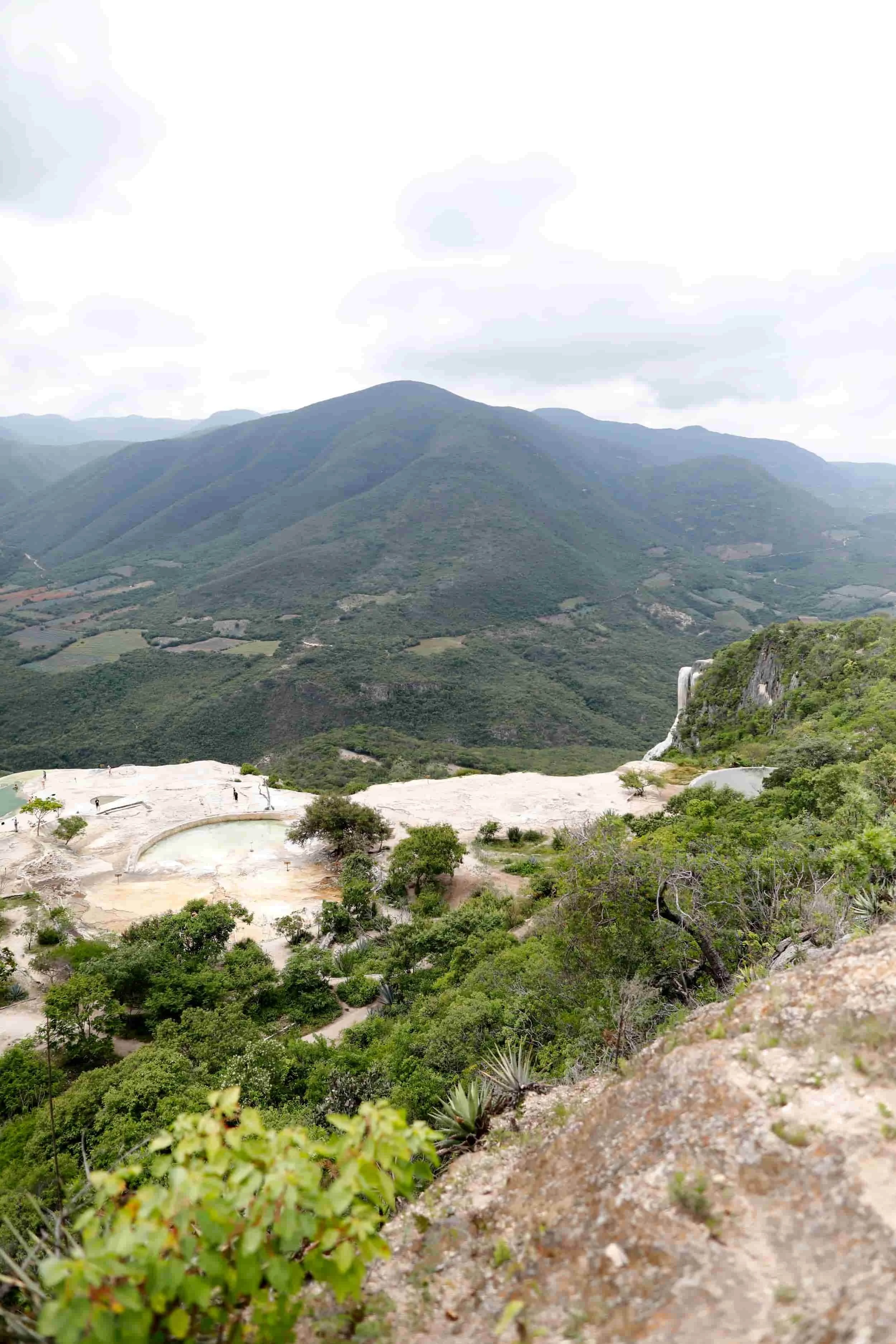
And with that, we started down. Almost immediately, the landscape began to change — the familiar views from above giving way to a much closer look at the cliffs and mineral formations that make Hierve el Agua so unusual.
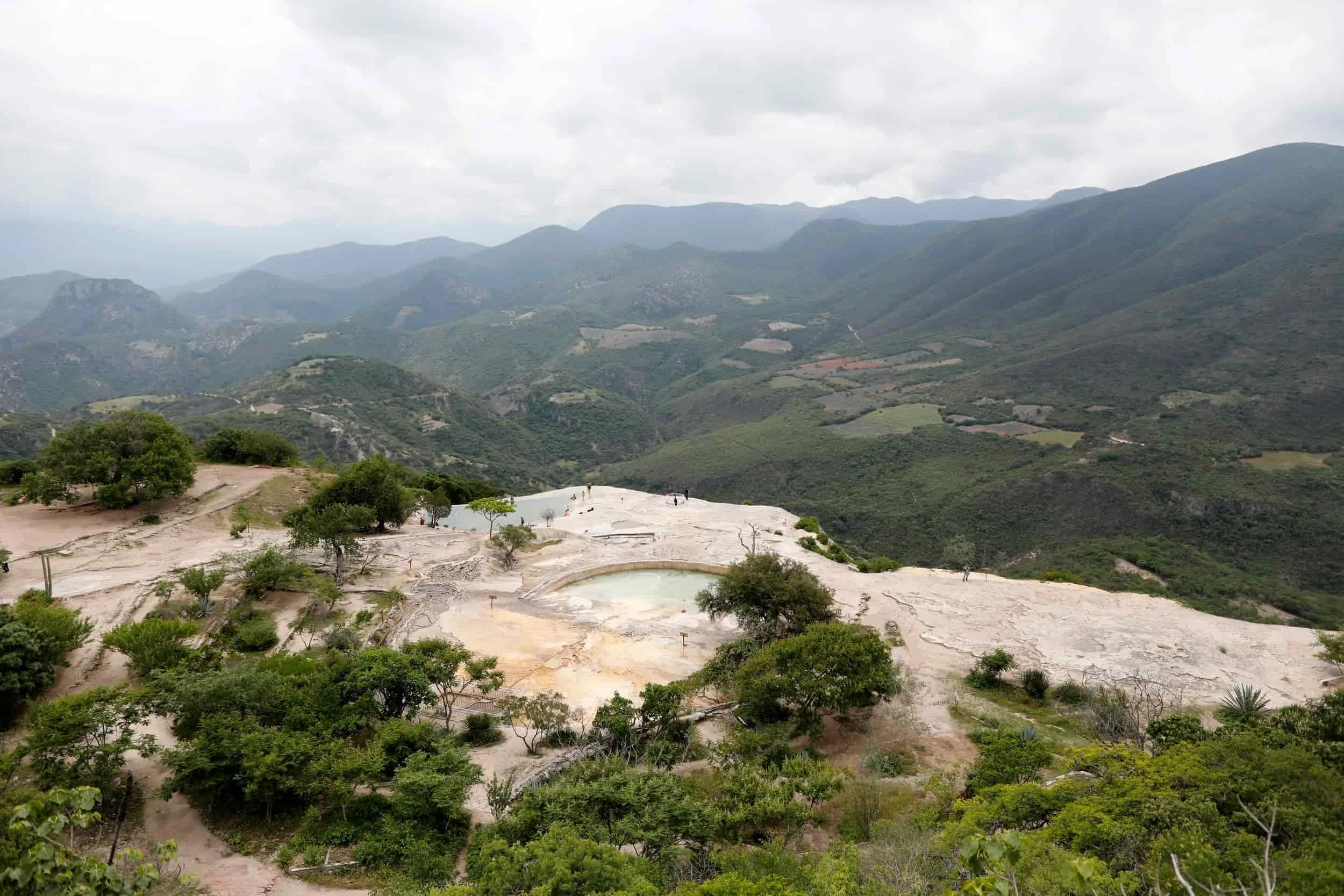
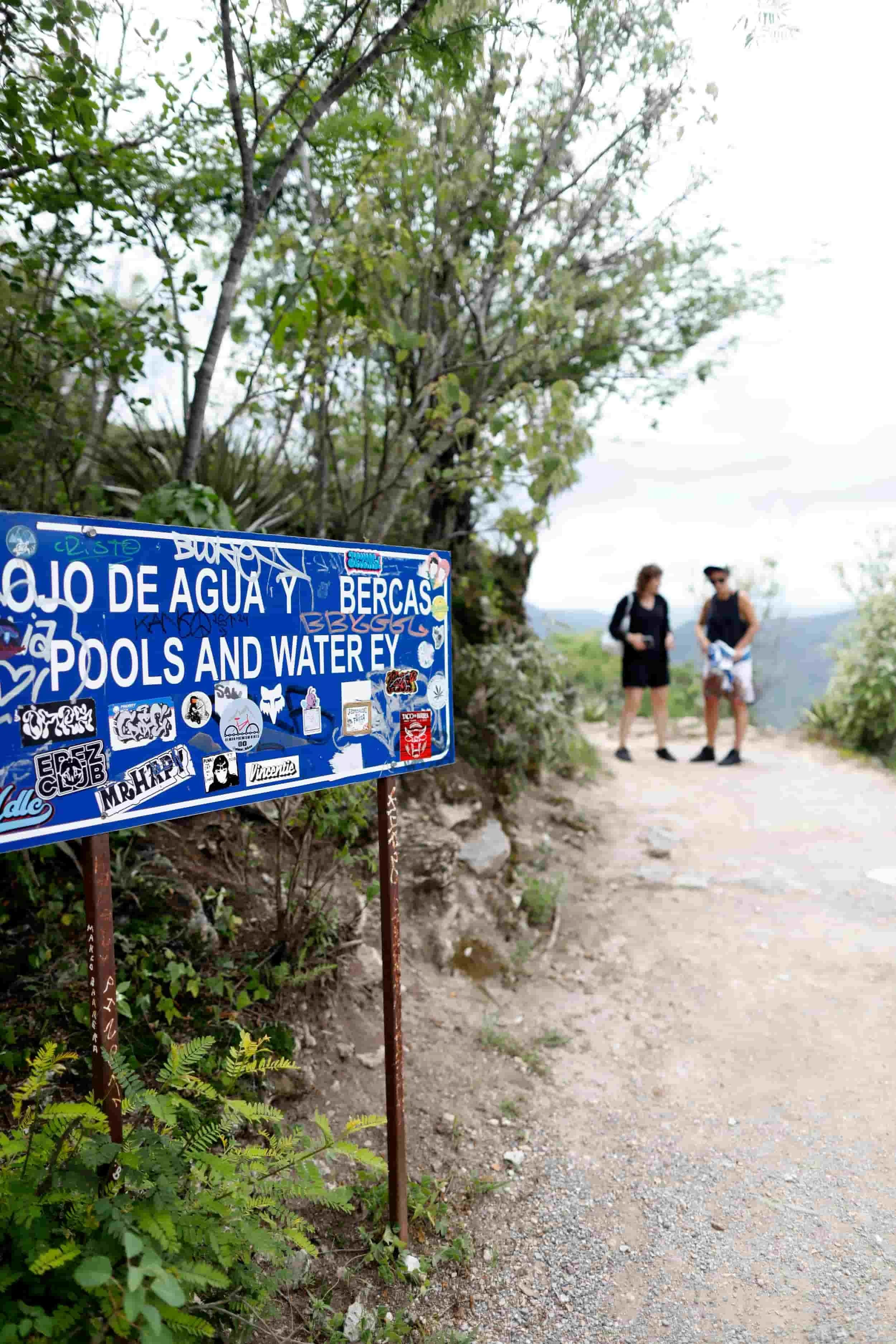
A small, open-sided stone structure perched near the edge of the cliff above the petrified waterfalls offers incredible views of the pistachio colored pools and valley below. Its thatch roof is supported by rough stone columns and provides a shaded spot to pause while taking in the panorama.



From this lookout point, the hike to the petrified waterfalls of Hierve el Agua begins.
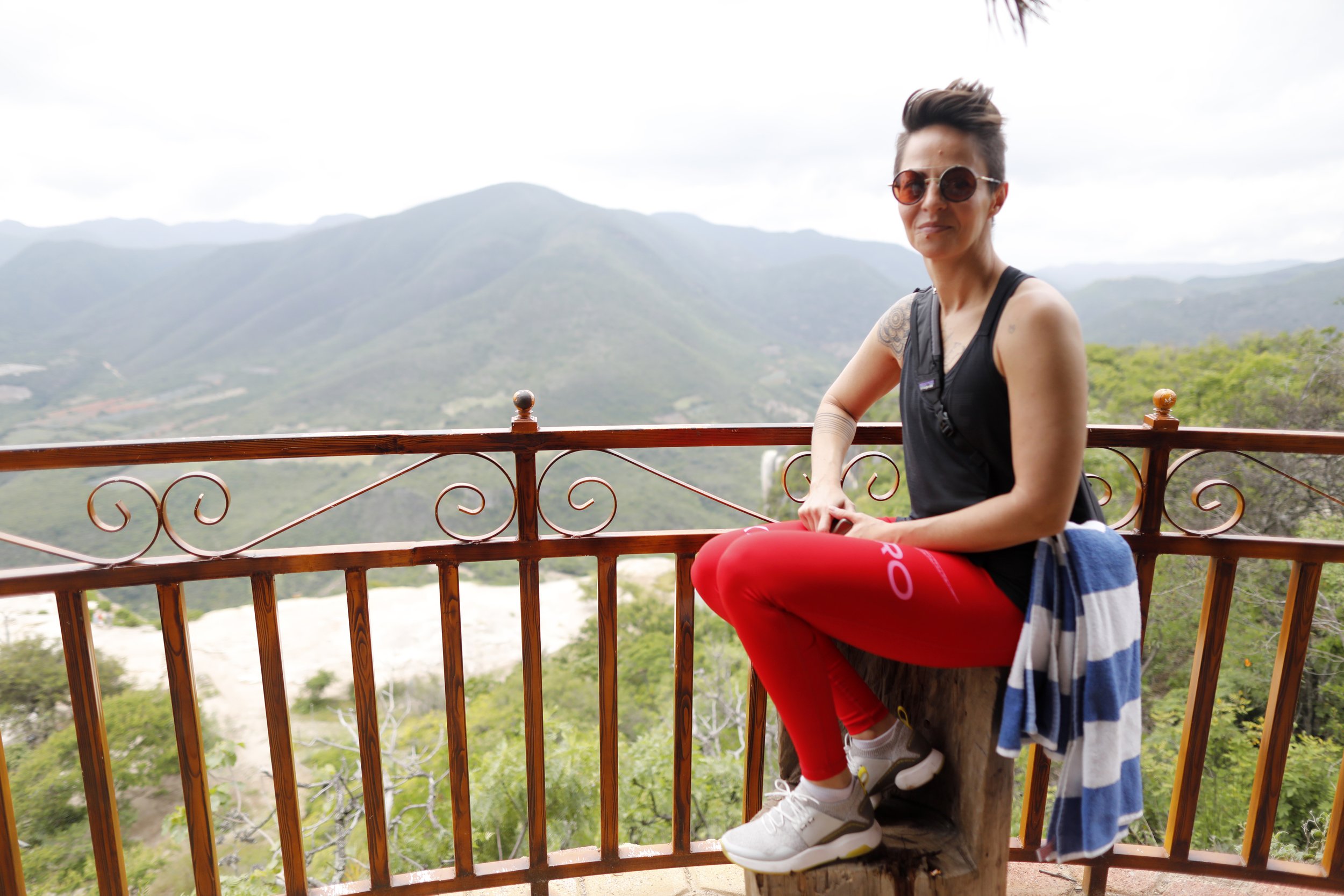
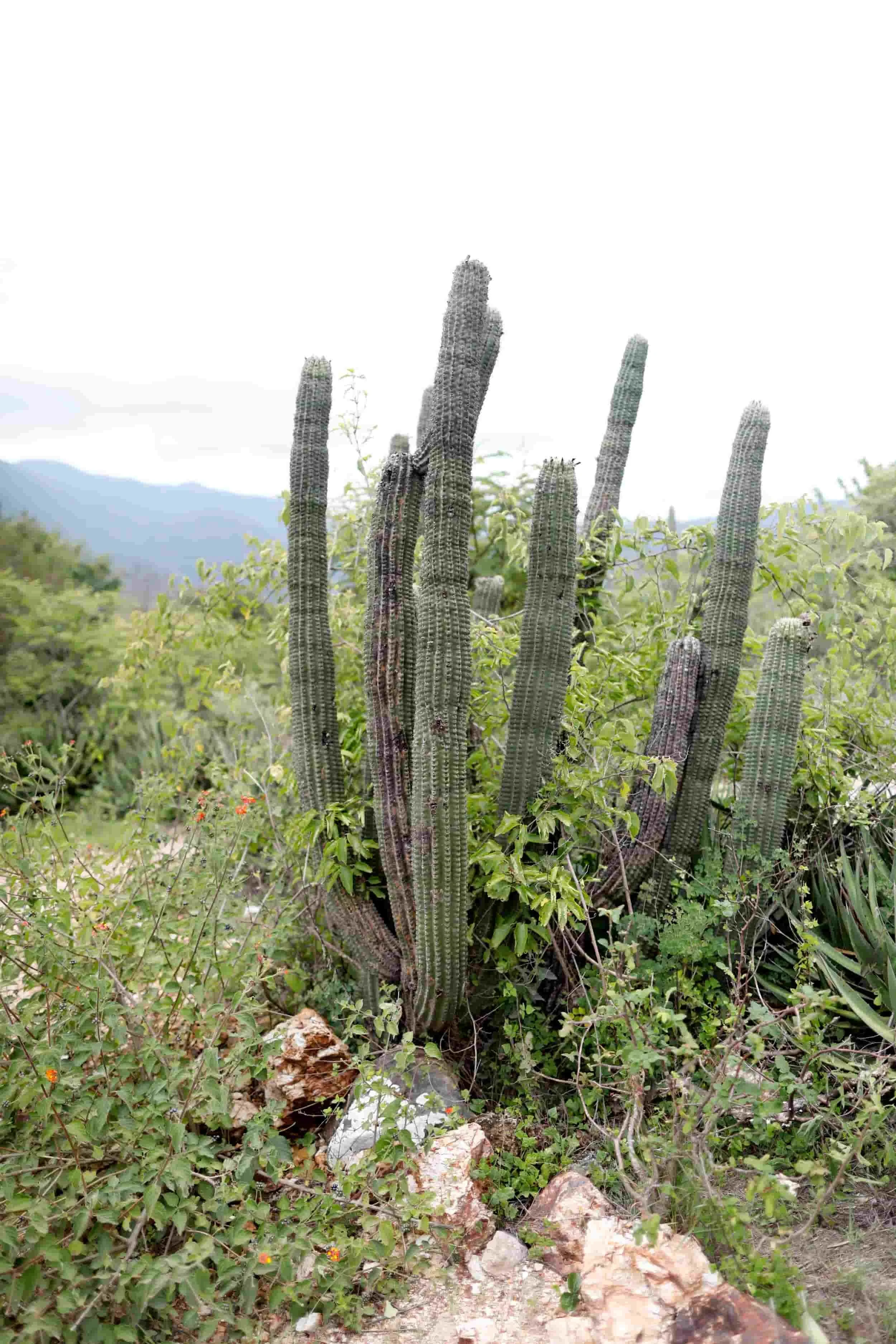
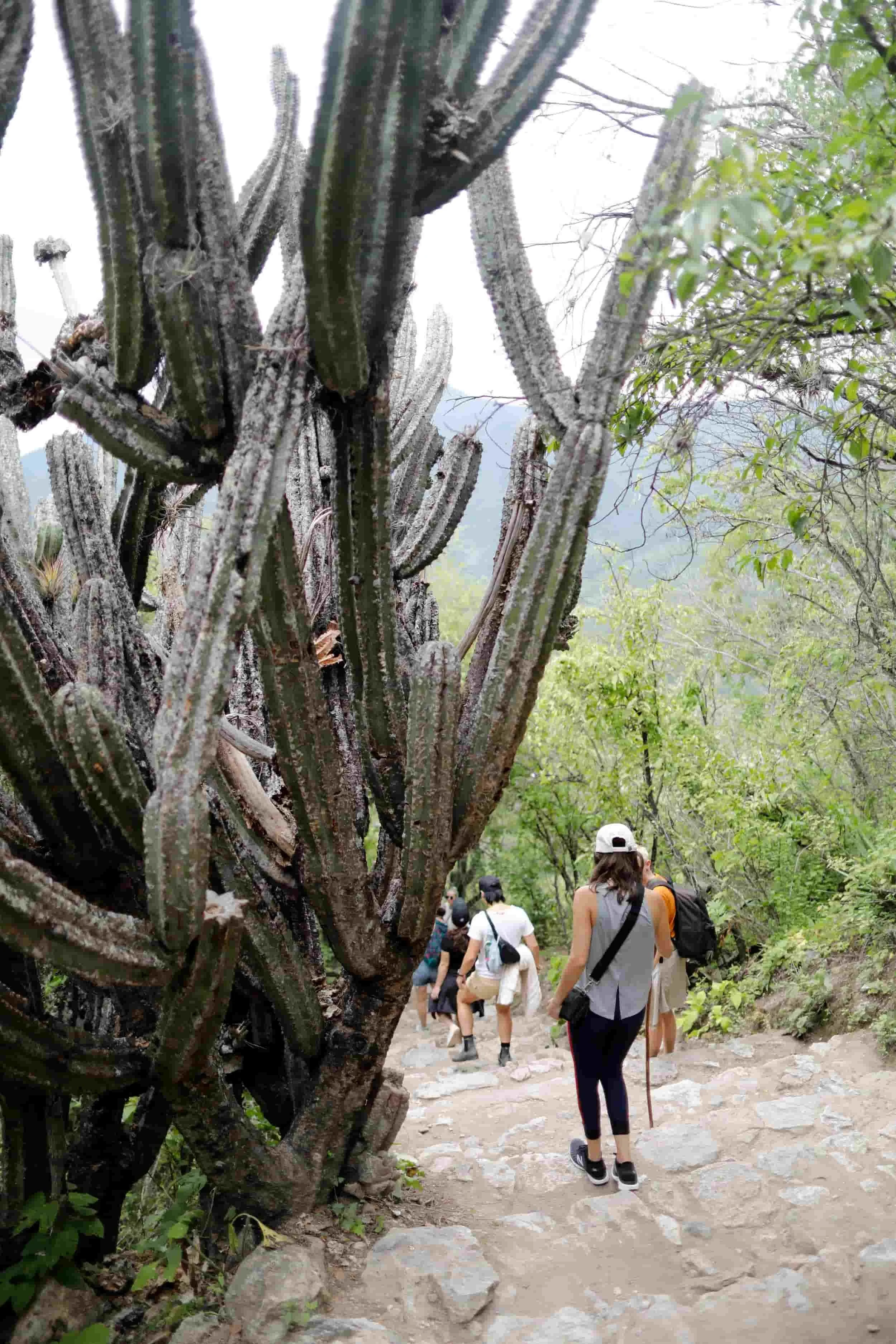
Though the trail to Hierve el Agua is well-marked, the place still feels delightfully untamed — rough, rocky terrain underfoot and scrubby vegetation pushing into the path. Each step reminded me I was walking a landscape shaped by time, where the natural world quietly reclaimed the route and lent the hike a sense of adventurous, untouched beauty.
Set between roughly 6,200–6,600 feet (1,890-2,012 meters), this highland landscape lives by two rhythms: a long dry season and a summer that dispenses sudden, life-giving rains. By day, the sun can bake the slopes, turning temperature into an almost tactile thing; by night the air cools quickly, leaving the kind of clean, brisk chill that makes you zip your jacket and breathe easier.
Hidden among the rock formations are small miracles: mineral springs and tiny pools that collect after rains. These water pockets act as oases, supporting mosses, moisture-loving invertebrates and other species rarely found in the surrounding dry expanse. They’re also magnets for birds and mammals, a reminder that even the driest-seeming places have secret lifelines if you know where to look.

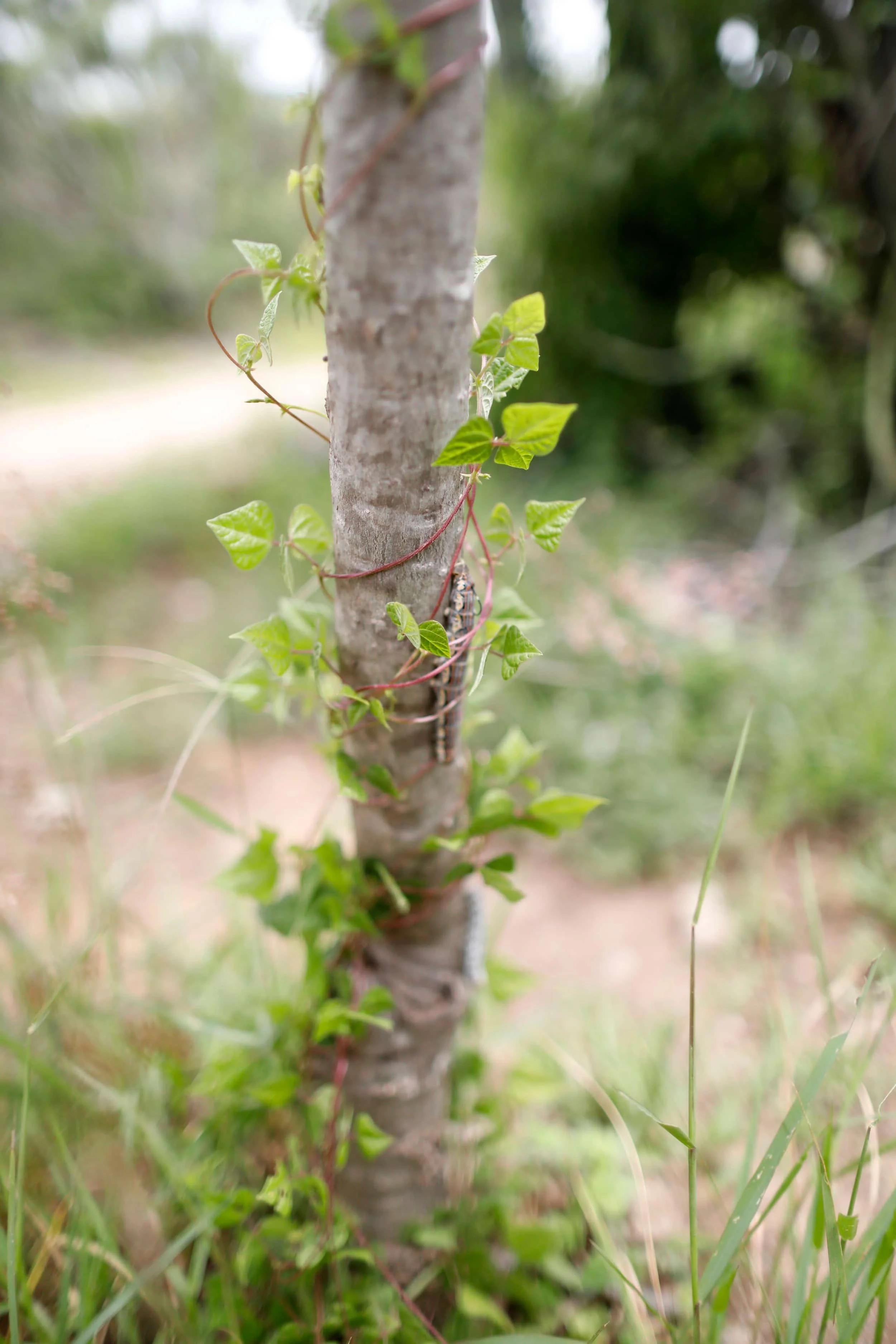
When you visit, the dramatic mineral cascades and panoramic desert vistas often steal the show — but the tiny locals deserve a look too. Keep your eyes peeled: the site’s mix of dry highland scrub, seasonal springs and flower-speckled terraces makes it a great home for insects, especially around the rainy season.
Look for solitary bees — small carpenter and sweat bees — working the wildflowers and agave when rains bring blooms. They’re most active in low shrubs and tight flower clusters, darting in and out with surprising purpose. Paper and potter wasps are equally industrious, building nests under rock overhangs, on shrub branches and even near man-made structures.
The warm months bring a chorus: camouflaged katydids and grasshoppers hidden in grasses and shrubs, revealed more by sound than sight. They’re the foliage-eaters of the landscape — quiet when you approach, noisy when the air warms.
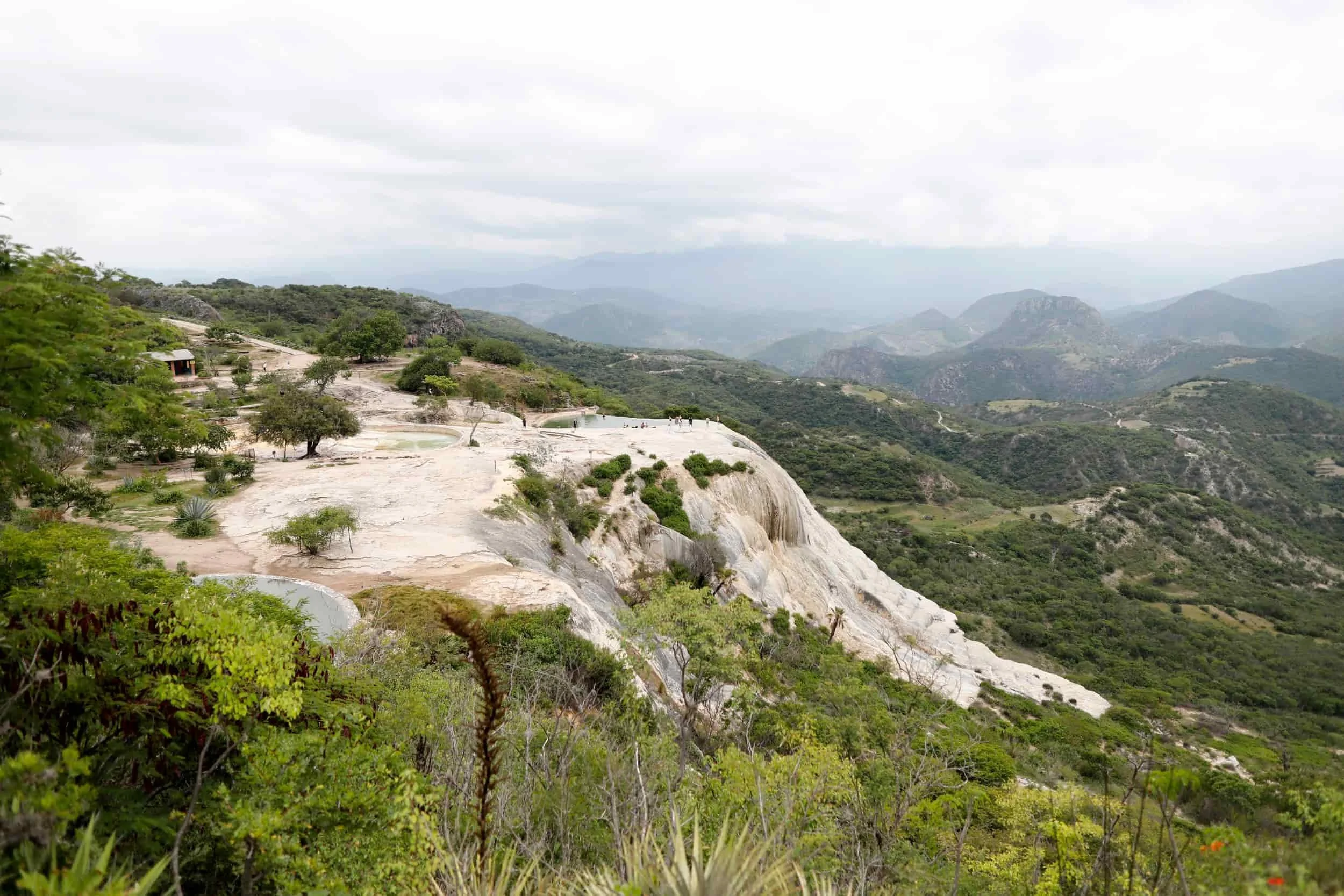
Insects aside, within about 10–20 minutes on the trail, you’ll arrive at the main overlook, a dramatic vantage that reveals the full sweep of the petrified waterfall and the stepped terraces spilling below.
Setting eyes on Hierve el Agua for the first time feels like stepping into a sculpted dream — cliffs poured into terraces and mineral “waterfalls” frozen mid-flow against a sky that seems wider than usual.
The area offers sweeping views of terraced farmland, distant mountains and the Zapotec villages below. Small natural pools — some shallow, some deep — collect on top of the terraces and are filled by the same mineral springs. The water is warm in places and slightly alkaline, and while the pools are often used for bathing by visitors, conservation concerns mean access to certain areas can be restricted to protect the fragile formations.
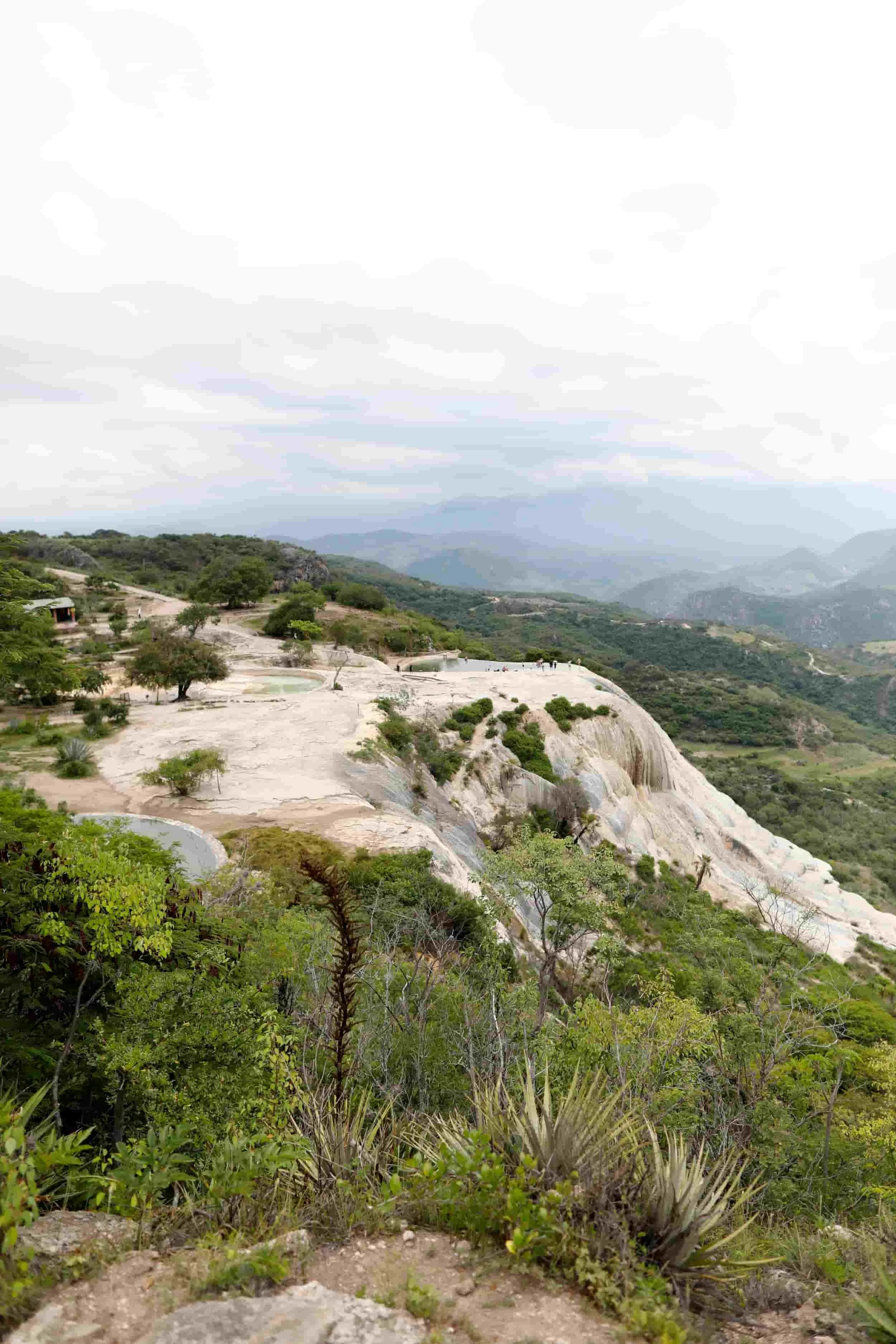
From this high point, visitors choose one of two ways to spend their time.
Some linger at the viewpoint, soaking up the panoramas, framing the layered formations with their cameras and ambling along the rim — an option that suits travelers who want a shorter, gentler stop with plenty of photo opportunities and time to appreciate the geology from above.
Others head down to the mineral pools, following a steeper path that snakes to a series of small, otherworldly basins carved by mineral deposits; for a closer encounter, people sometimes dip in to soak, though rules about swimming change to protect the fragile site, so check the latest regulations before wading in.
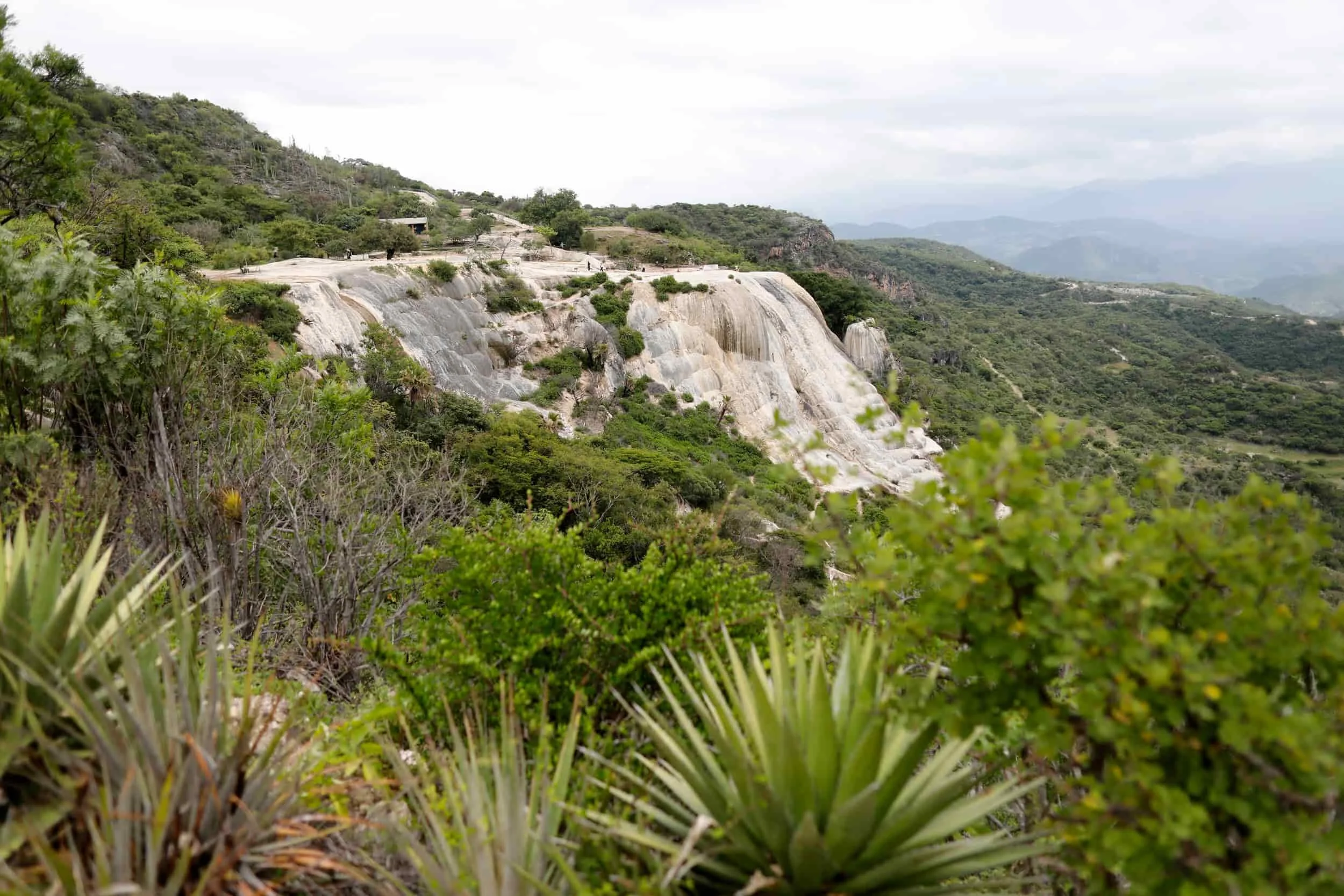
We pressed on, descending deeper into the valley toward the foot of the petrified waterfall, where stone seemed to have frozen in time. Soon, the waterfall would appear through the foliage, a sudden, playful reveal like nature's own game of peek-a-boo.
Long before tourists arrived with cameras and hiking boots, Hierve el Agua was already a lifeline and a sacred stage for the people who lived here. Archaeologists have uncovered compelling evidence that pre-Hispanic communities didn’t just admire these calcified cascades — they actively harnessed them.
Carved channels and feeder canals snake off the terraces, showing a nuanced understanding of hydraulics: locals diverted mineral-rich spring water to irrigate terraced fields clinging to the arid slopes, coaxing crops out of a landscape that otherwise offered little for cultivation.
But water at Hierve el Agua was more than practical; it was spiritual. The combination of hot springs, dramatic cliffs and the constant hiss of flowing mineral water likely made the site a natural focal point for ritual bathing and purification ceremonies. Ceramic fragments, offering stones and nearby ceremonial platforms suggest people came here to perform rites tied to fertility, rain and the cycles of life — themes that make sense in a place where water is both scarce and sacred.
During the colonial period, these uses persisted and adapted. Indigenous water-management knowledge was incorporated into new agricultural systems and the terraces continued to support small-scale irrigation. Spanish colonial records and later archaeological layers hint that the site remained an active community resource, bridging ancient practices and the transformed social landscape of colonial Oaxaca.
Walking the terraces today, you can still trace the ingenuity of those early engineers and feel the echoes of ritual — an ancient interplay of survival, technology and spirituality etched into stone and flowing water.
By the late 20th century, word of Hierve el Agua began to spread beyond Oaxaca’s mountains. As Oaxaca transformed into a must-visit destination for travelers seeking culture, food and landscape, more curious visitors made the bumpy drive out to these surreal mineral formations.
In recent decades, the site evolved from a little-known geological oddity into a busy attraction: terraces of fossilized cascades shimmer beneath the sun while visitors soak in cliff‑edge pools and photograph the otherworldly views.
Today, Hierve el Agua is officially protected as a natural monument, its fragile rock and spring systems managed to balance tourism and conservation. Local communities now run most of the visitor services — small open‑air cafés serving coffee and traditional snacks, modest entrance booths and guides who lead hikes across the surrounding hills.
Their stewardship gives the place a rooted, human dimension: you don’t just see a geological wonder, you experience it through the stories, foods and hospitality of the people who have lived here for generations.
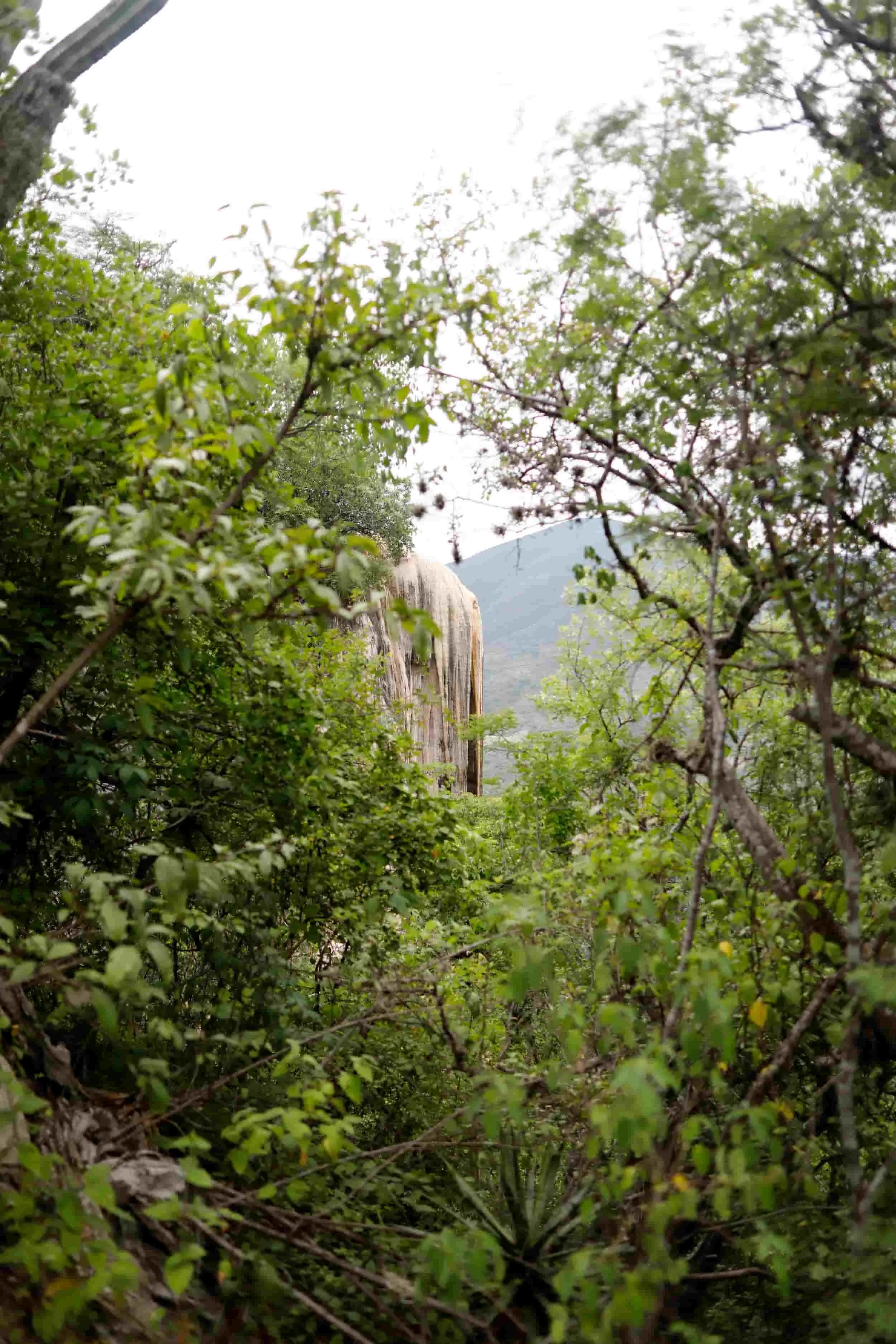
Finally, the largest falls emerge. The petrified falls feel like a geological miracle — cascades turned to stone, their rippling terraces frozen mid-flow. They gleam like molten metal suddenly stilled, as if someone had poured silvery oil down a cliff and time solidified every delicate icicle and curve. Standing there, I felt like I was looking at a waterfall caught between time.
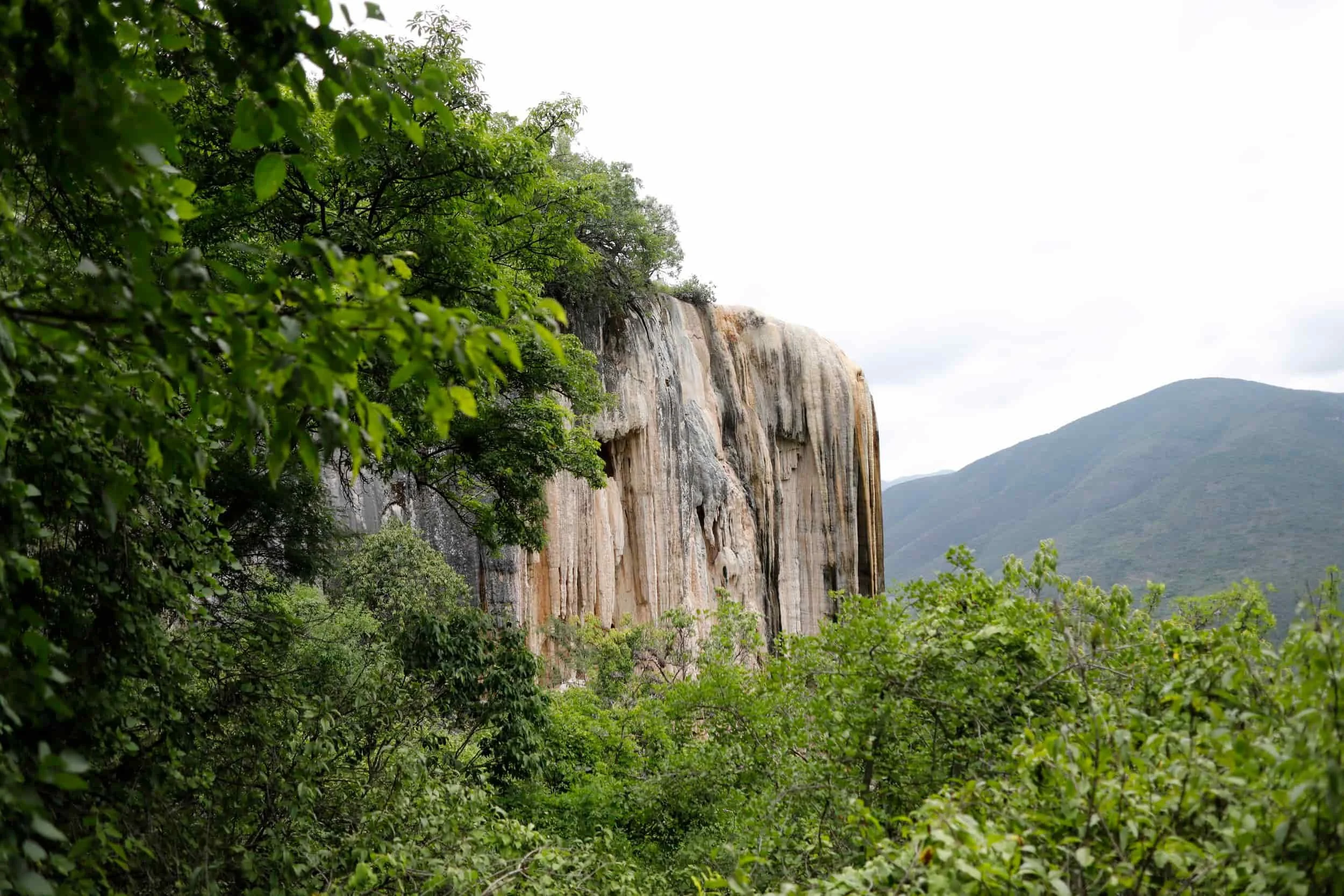
The most astonishing part was that the path kept going, slipping beneath the frozen cascade. As we drew nearer, the vistas opened up — bigger, sharper, almost unreal — each step revealing a new, breathtaking angle of ice and sky.
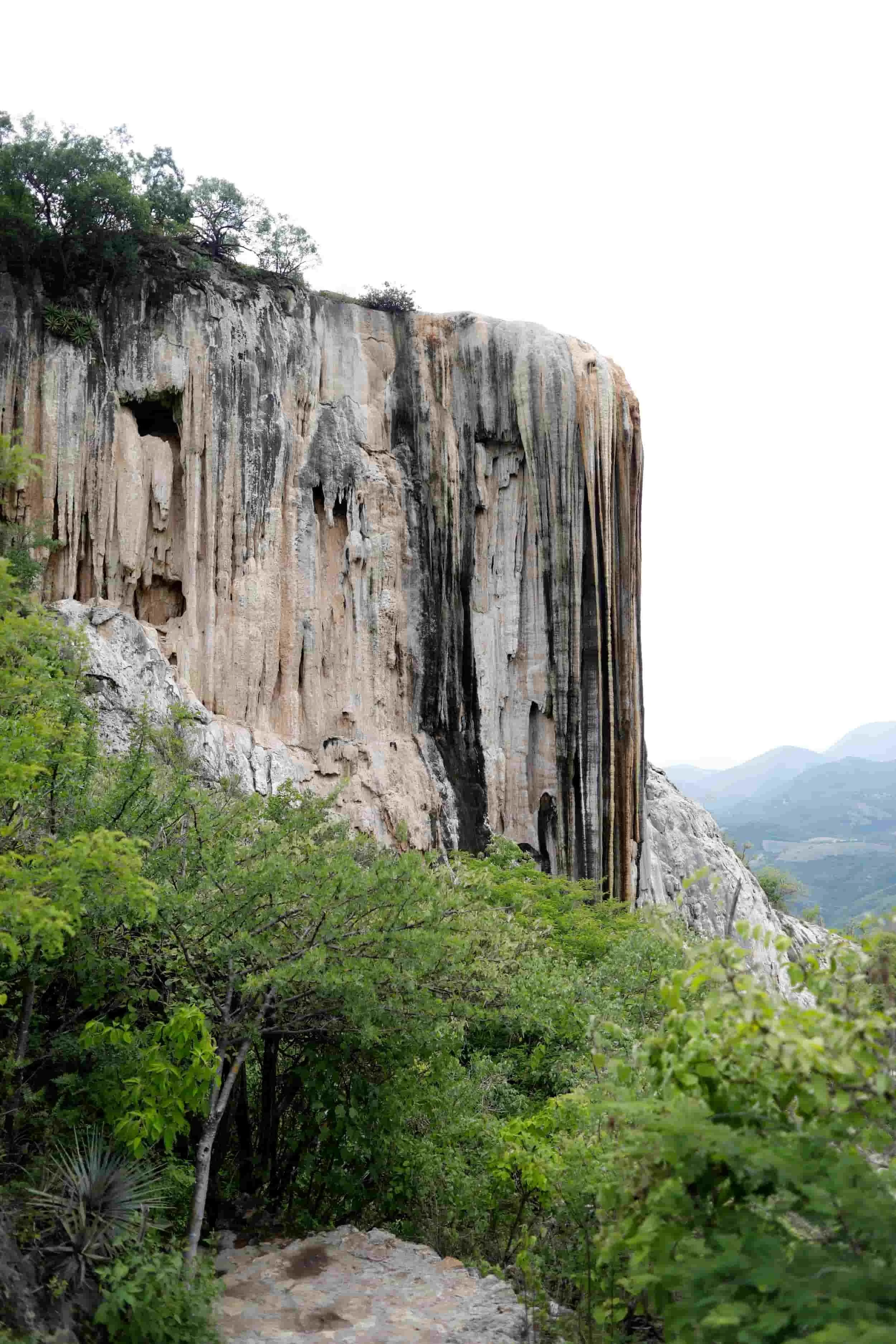
The taller of the two main cascades reaches roughly 160 feet (49 meters) in vertical height, while the shorter one is about 100 feet (30 meters). The terrace-like calcified ledges spread outward, with widths varying but generally extending 65–100 feet (20-30 meters) across at their broadest points. These measurements are approximate, as the formations are irregular and measured estimates can differ slightly between sources.
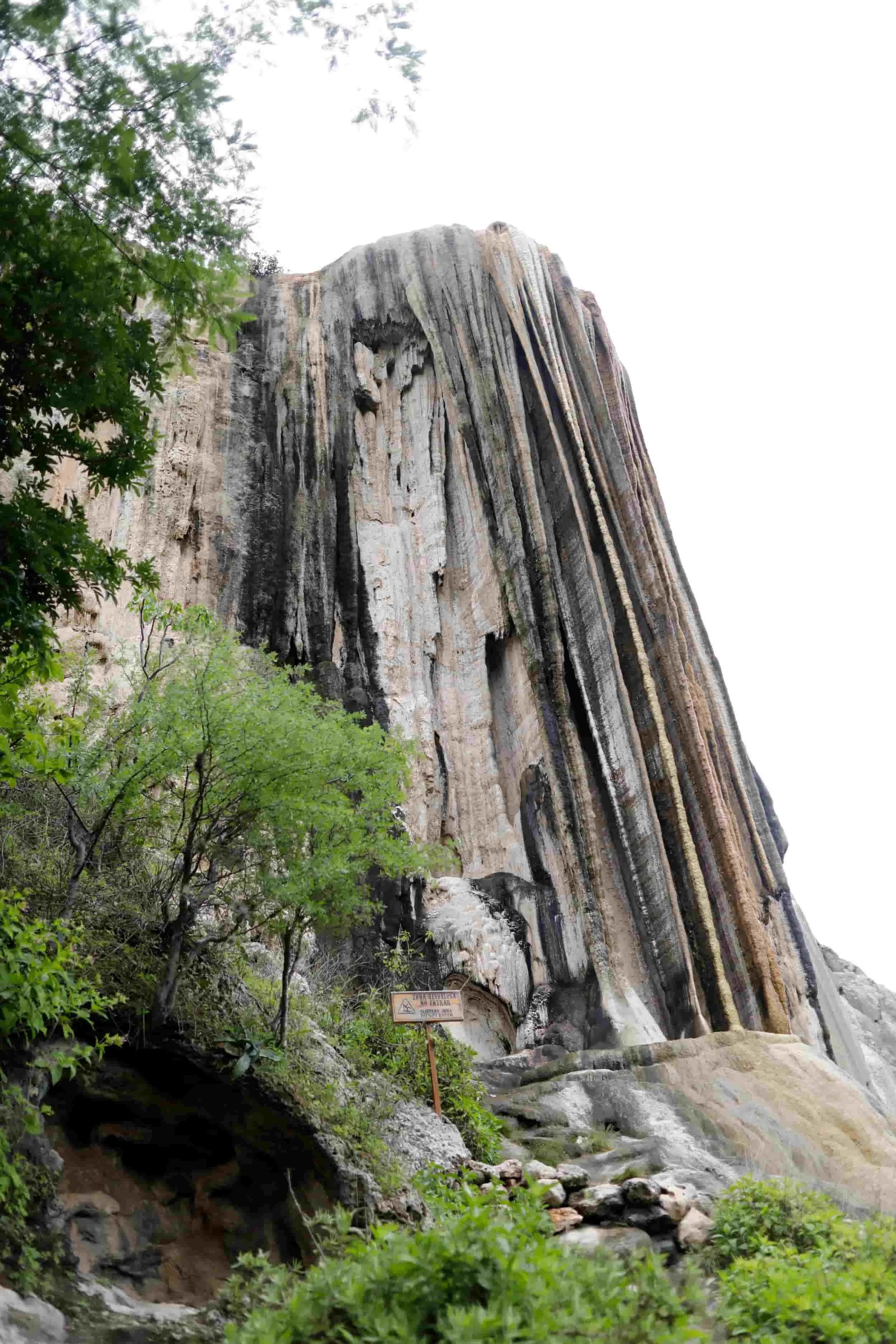
The dramatic, white calcified cliffs and delicate petrified waterfalls were not sculpted by ice but by water — a process that has been unfolding for thousands of years. Mineral-rich spring water, laden with calcium carbonate and other dissolved minerals, has bubbled up through underground channels and flowed over the cliff edges.
As the water reaches the surface and evaporates, it deposits thin layers of travertine that slowly build up into terraces, pools and the illusion of cascading falls. Each new layer takes centuries to form, so the terraces are living records of geological time; tiny, continuous deposits have gradually stitched the landscape into the spectacular, otherworldly formations you see today.
The striking color of the petrified waterfalls comes from the mineral-rich water that has flowed and deposited layers of calcium carbonate and other minerals. As groundwater carries dissolved minerals from surrounding limestone and volcanic rock, it emerges at natural springs; when the water reaches the surface and evaporates, the minerals precipitate out and build up travertine terraces and cascades, leaving behind the various tones of color.
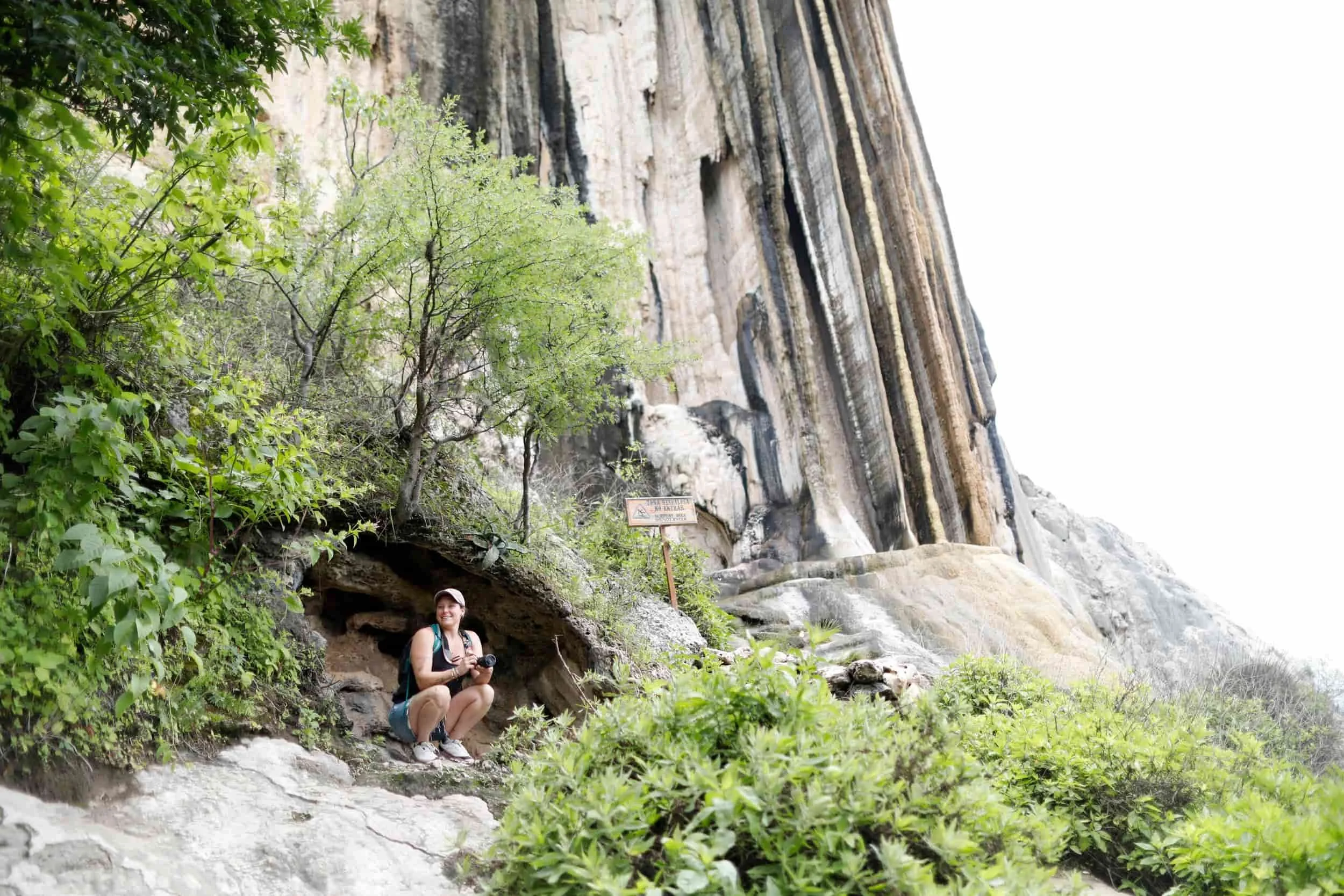
Variations in color result from:
Mineral composition: Calcium carbonate typically forms white to cream-colored deposits but iron oxides and manganese can introduce warm tones — yellows, oranges and rusty browns.
Organic matter and microorganisms: Algae and bacteria that thrive in the seepage ponds can add green or brown hues and influence mineral precipitation patterns.
Oxidation and weathering: Exposure to air and changing moisture over time alters the surface appearance, deepening reds and browns where iron compounds oxidize.
The overall pastel and earthy palette you see — whites, creams, ochres and occasional greens — reflects this combination of dissolved minerals, biological activity and long-term weathering.
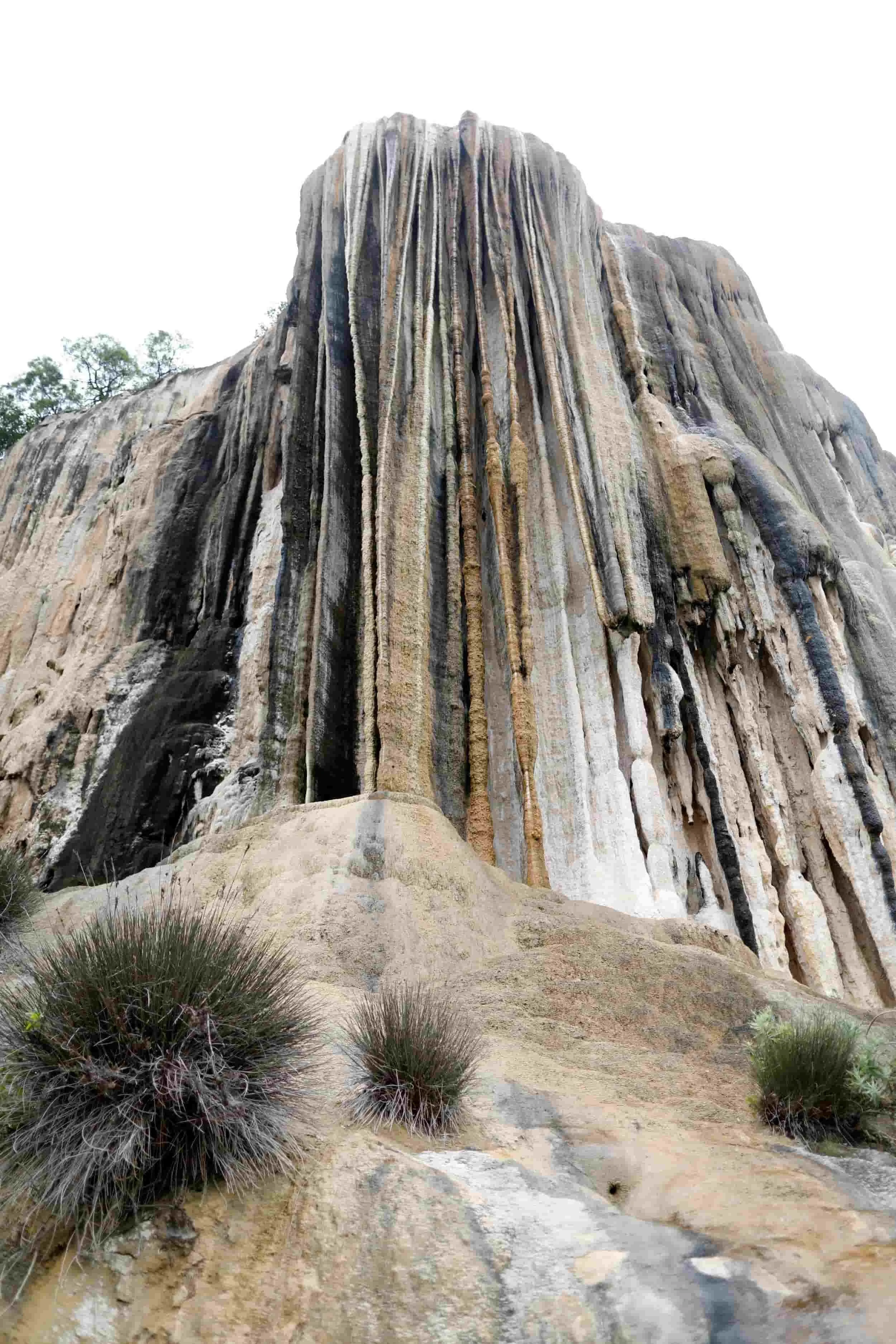
Near the bottom, a small cavern yawns beneath the waterfall, its icicles stretching long — a picture-perfect spot but don’t venture any deeper.
With its dramatic travertine "petrified" waterfalls and high-elevation springs, Hierve el Agua is both a geological wonder and a deeply valued cultural landscape. Preserving it requires thoughtful action on several fronts including managing visitor impact, controlling water use and contamination, strengthening local support, enforcing regulations and monitoring, encouraging sustainable tourism and restoration and research.
That’s were we come in.
Small actions — respecting signs, staying on trails, minimizing water use and supporting locally run guides and services — help protect Hierve el Agua so future visitors can experience its unique beauty and cultural value.
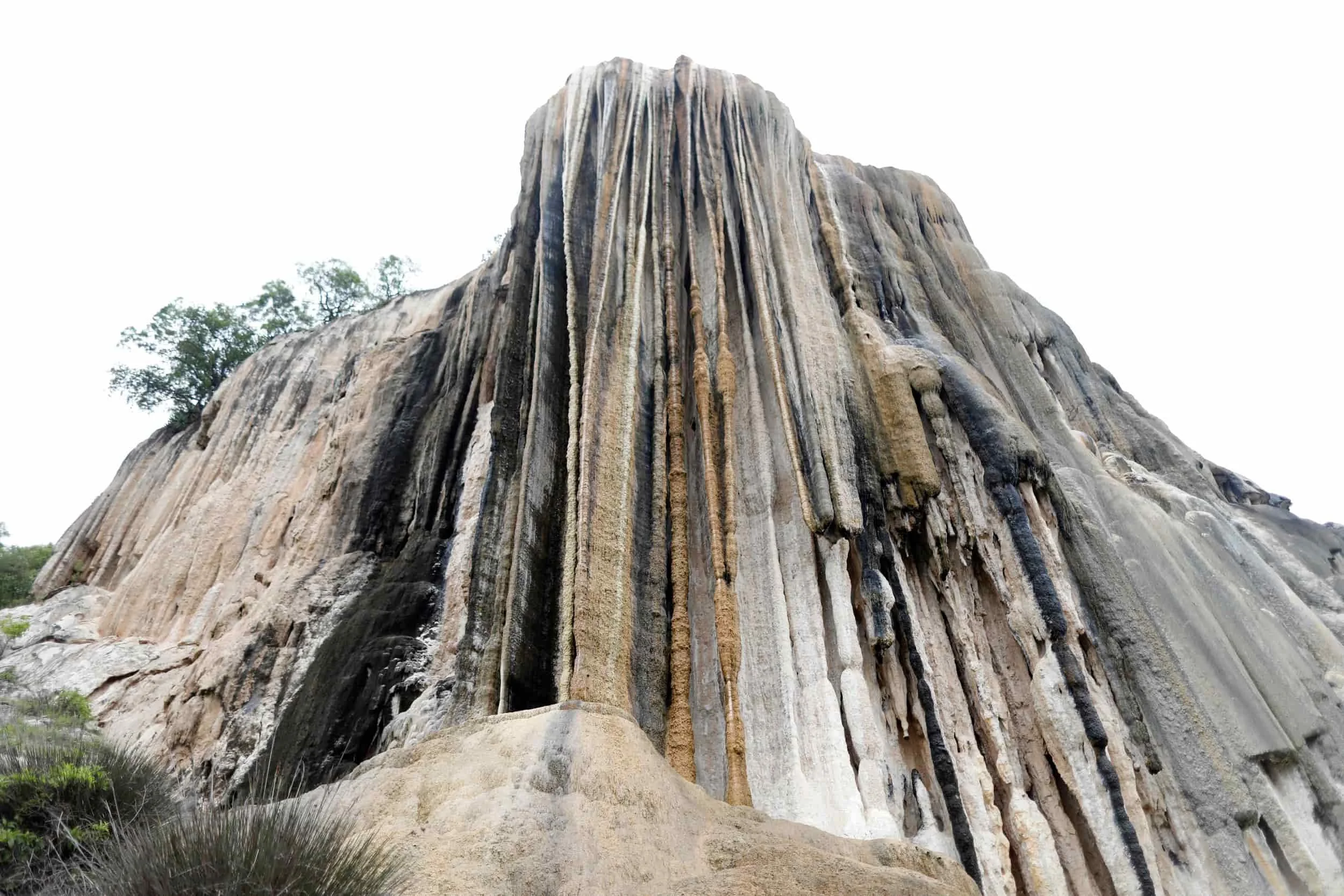
Visiting feels like reading a slow-motion story written in stone: you can stand beside the ancient terraces, watch the trickle of modern springs still feeding them and imagine the patient, persistent chemistry that shaped this place — one mineral-rich drop at a time. The process continues now, imperceptibly but relentlessly, ensuring Hierve el Agua remains a quiet, evolving wonder.
Hierve el Agua Mineral Pools
Make your way to the pistachio-hued mineral springs of Hierve el Agua to cool off — the next stop on your Oaxaca City day trip.
📸 Photo Spot | Get your camera ready — the views of the valley and the pistachio-colored springs are something you won’t want to miss.
Natural pools tucked into terraced basins offer one of the most memorable ways to experience the valley’s landscape. Perched on slopes with sweeping views of the surrounding mountains, these public pools invite visitors to wade or swim while taking in panoramic scenery.
The water is mineral-rich and mildly alkaline — refreshing for a short soak but not chlorinated, so anyone with sensitive skin or open wounds should exercise caution. Local guidance about current conditions is helpful before entering, since the springs are natural and unregulated.
The terraced pools cascade across the landscape like nature’s own amphitheater. Formed by mineral deposits, these rimmed basins stack in layers, ranging from tiny, bowl-like pockets to broad, shallow ledges that create the familiar stepped silhouette. In wetter seasons, some hold clear, reflective water that accentuates their geometry; in drier months the terraces reveal their sculpted edges and textural detail.
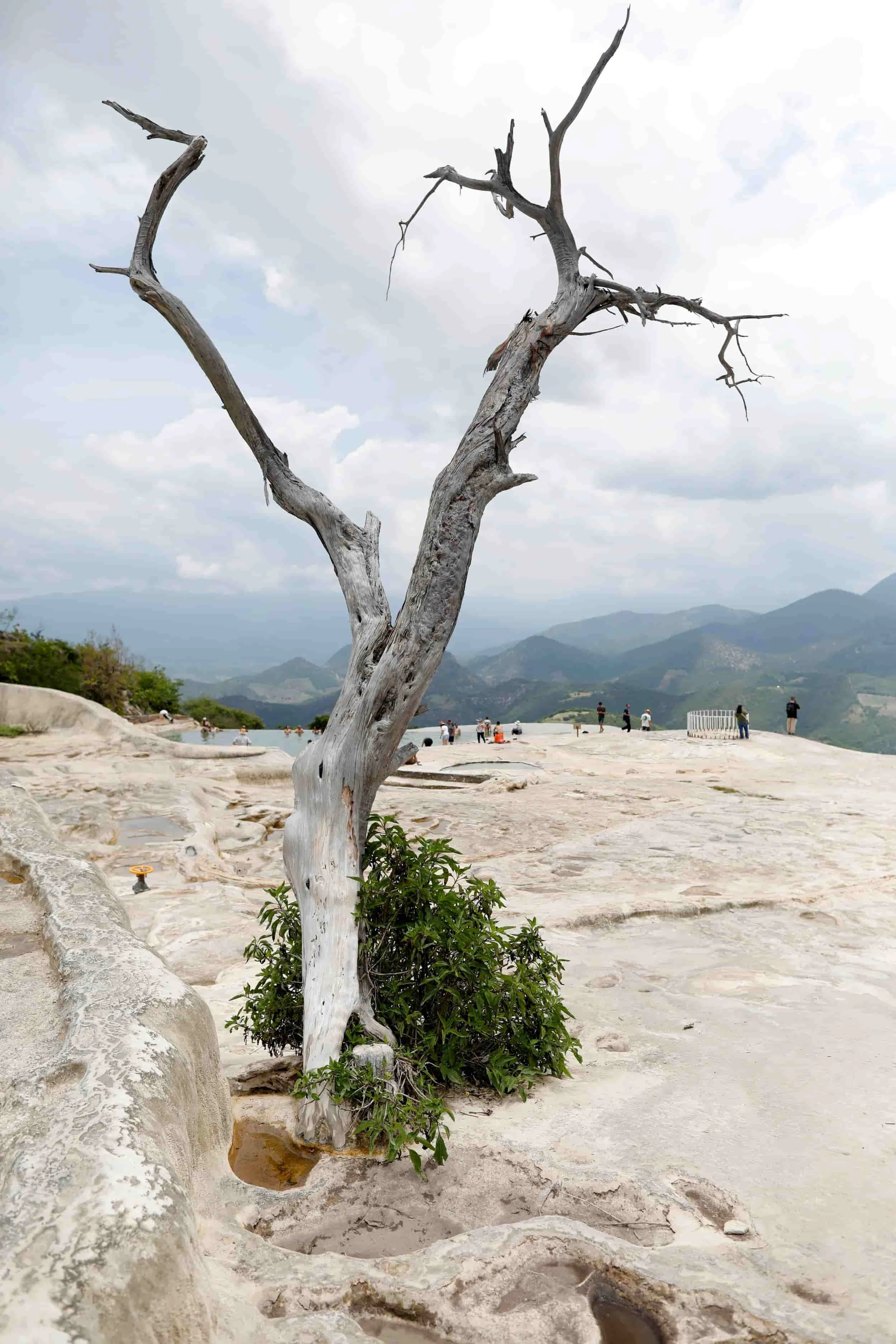
Interspersed among the terraces are petrified waterfalls — vertical and sloping sheets of mineralized rock that mimic frozen cascades. Their scalloped, textured surfaces record the routes of ancient flows, offering a sculptural reminder of water’s slow artistry.
Scattered throughout the area are countless small springs and seepages, localized outlets where mineral-rich water still emerges. These tiny sources feed the larger terraces and keep pockets of the site damp year-round, a subtle, living connection between past and present processes.
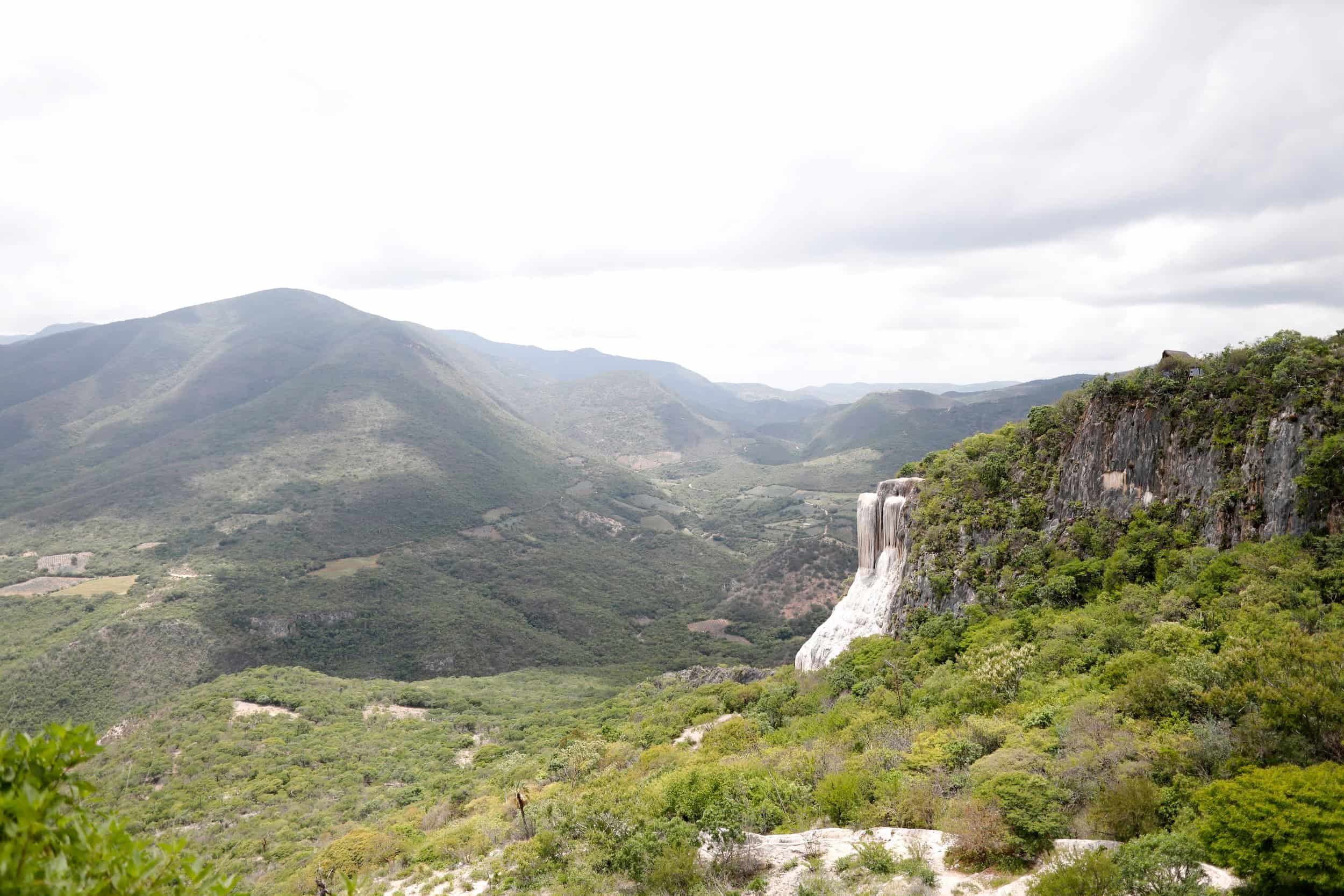
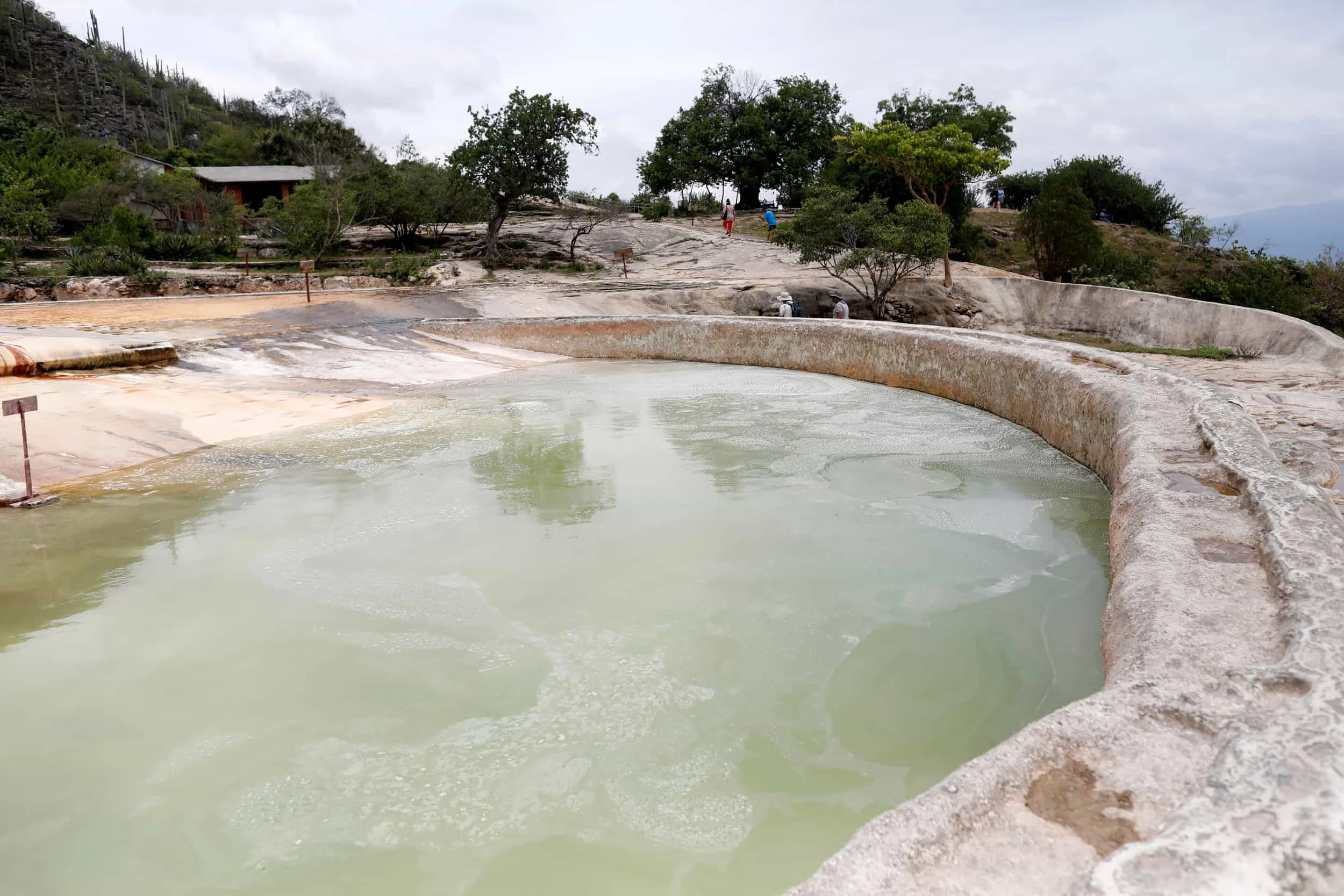
The palette here is quietly varied. Mineral concentrations, flow intensity and biological growth such as algae or lichen combine to paint the formations in subdued greens, browns and oranges. Close inspection reveals the interplay of color and texture — a landscape shaped by chemistry and time that rewards slow, attentive viewing.
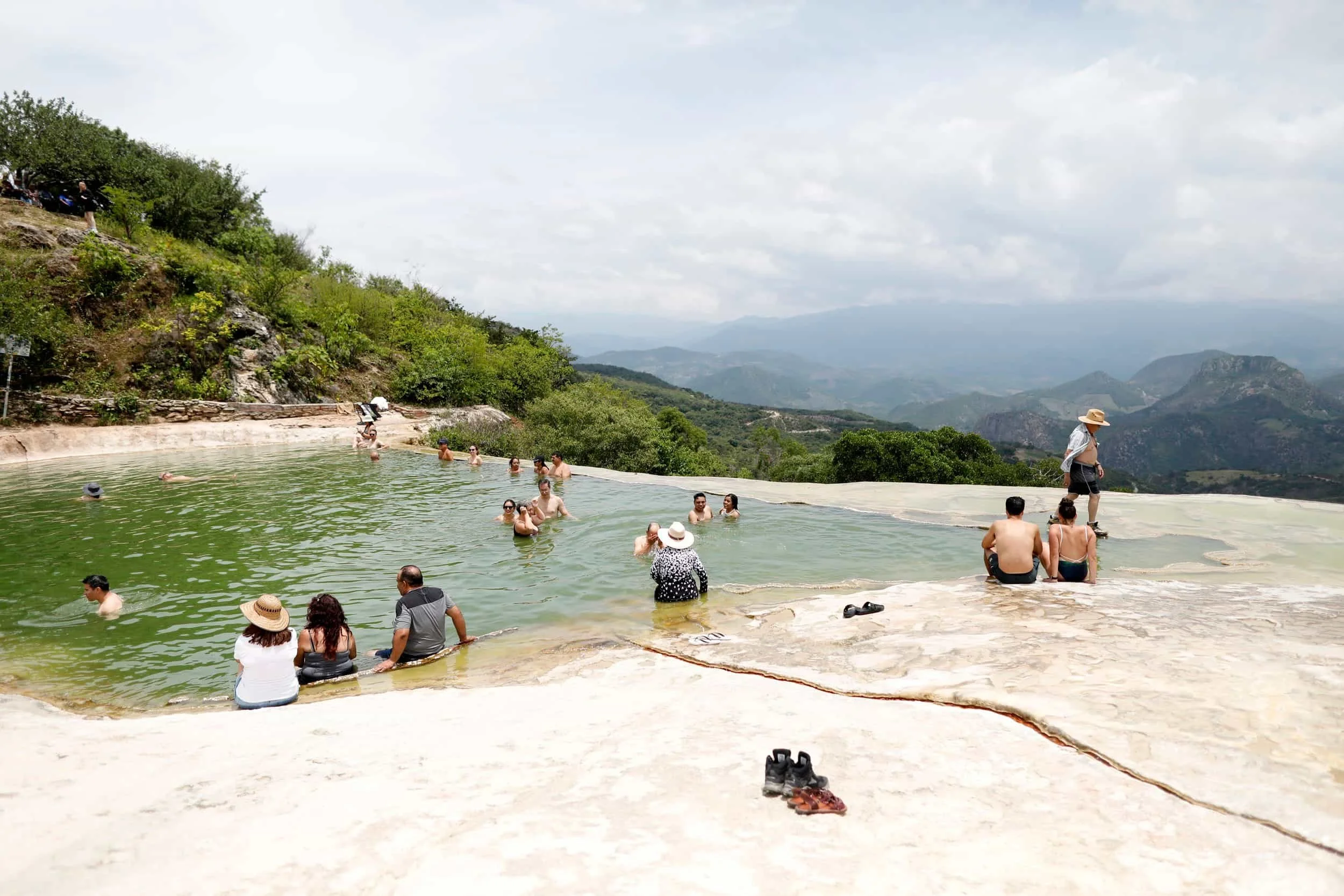
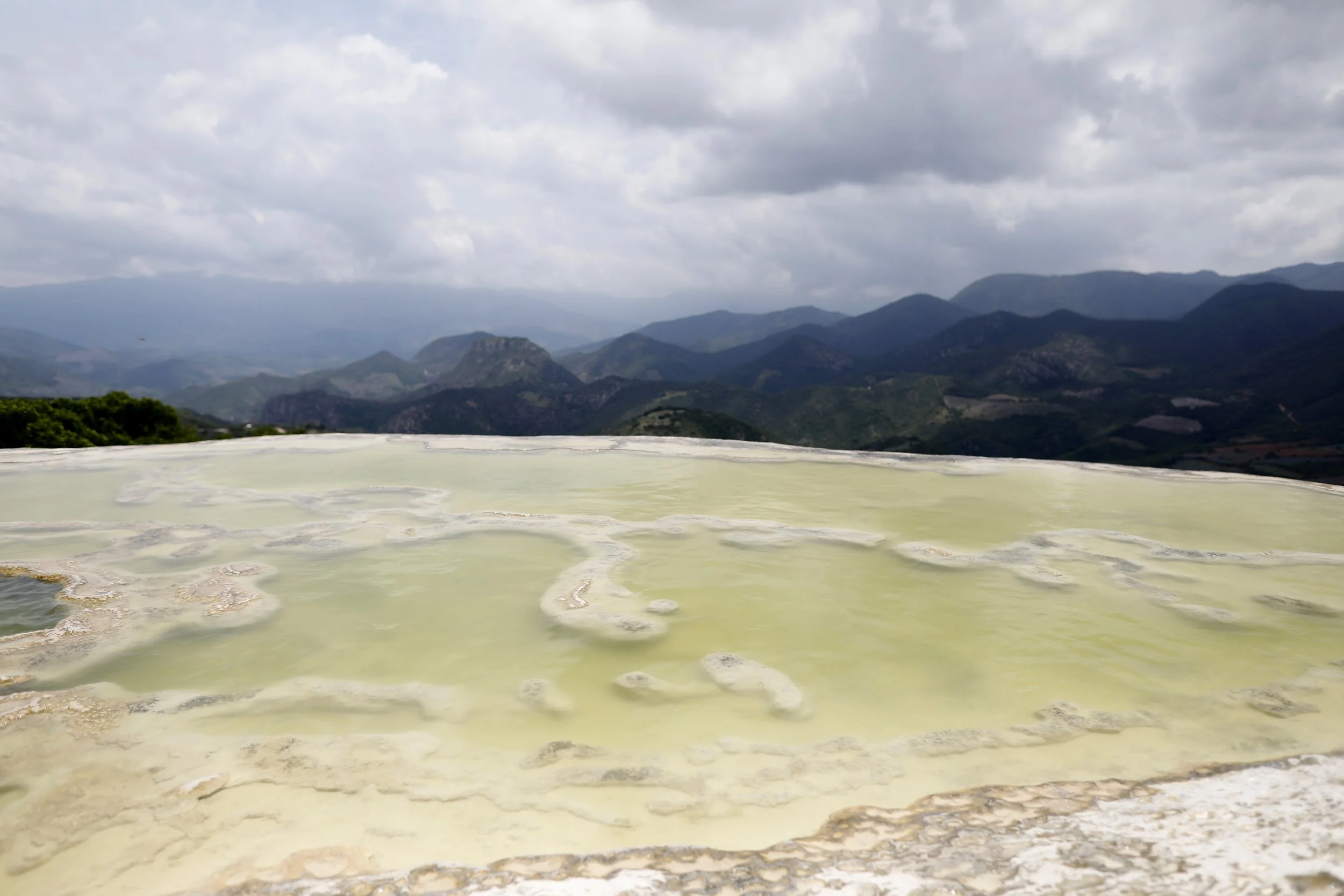
The spring pools are rimmed with delicately layered mineral terraces that resemble frozen waterfalls, their banded calcite and travertine forming lace-like patterns in shades of white, cream and pale ochre. Mineral-rich water slowly deposits these intricate formations, creating natural basins and sinuous ridges that catch light and shadow, highlighting vein-like striations and tiny crystalline textures. Close up, the surfaces reveal tiny ripples and porous pockets where minerals accumulated over centuries, giving each pool a unique, otherworldly mosaic.
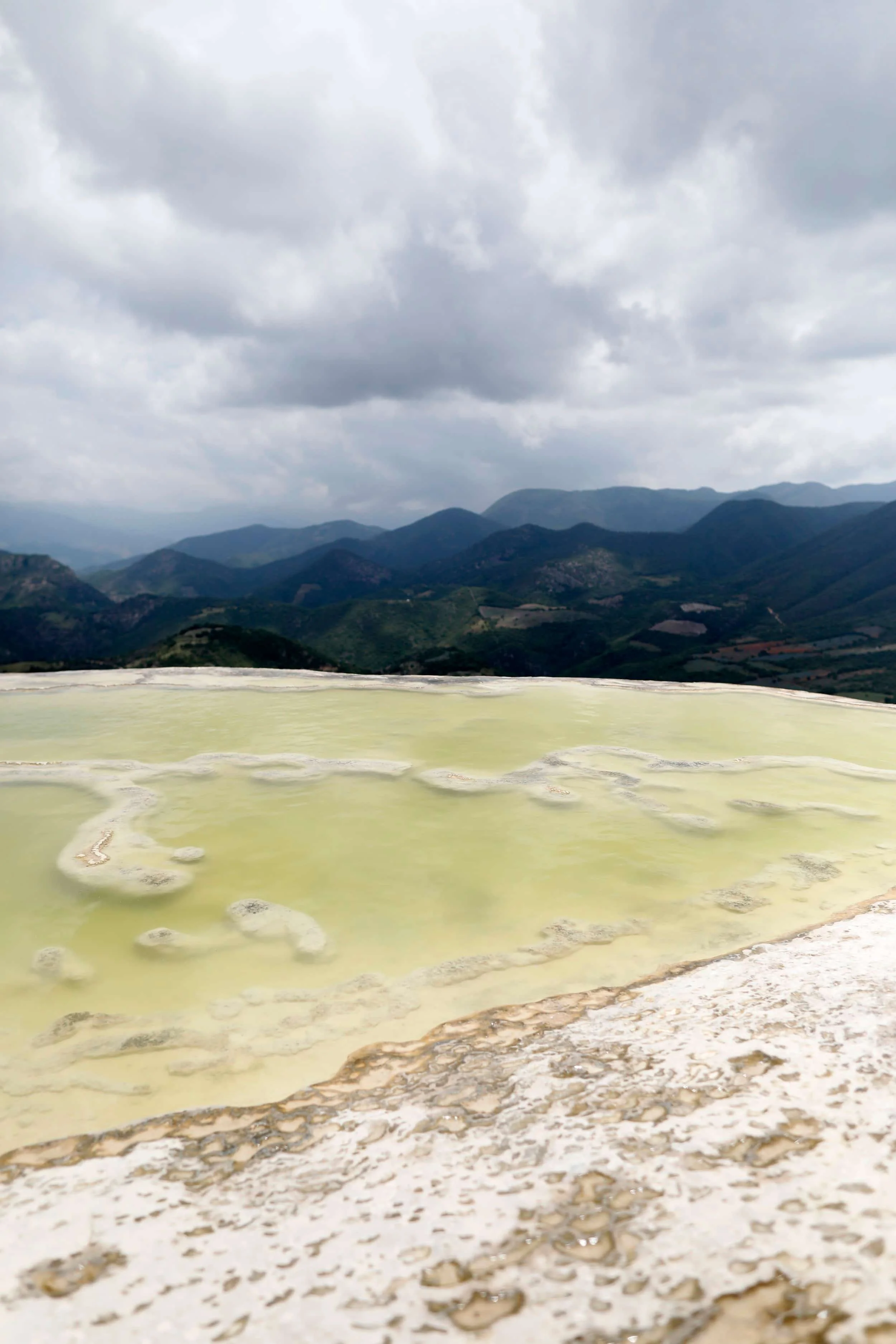
The character of the pools changes with the seasons. After rains and during higher spring flow the basins can be full and inviting; in dry months, some terraces become shallow or may even dry up entirely. Many of the better-known pools sit within areas managed for tourism, where small entrance fees sometimes apply.
⚠️ Good to Know | Expect basic facilities: lifeguards are uncommon, paths can be slippery and uneven and footwear suitable for rough terrain is recommended.
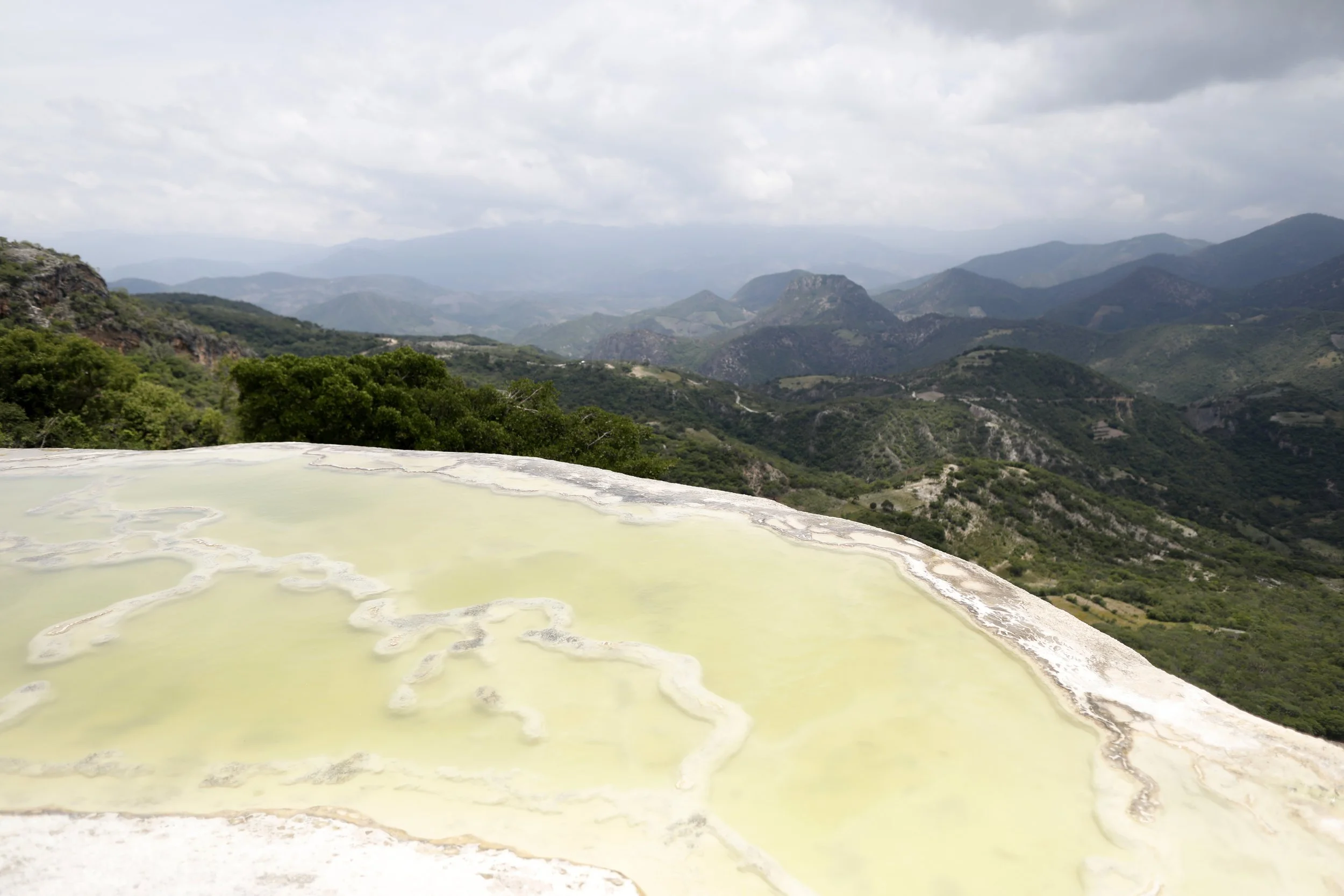
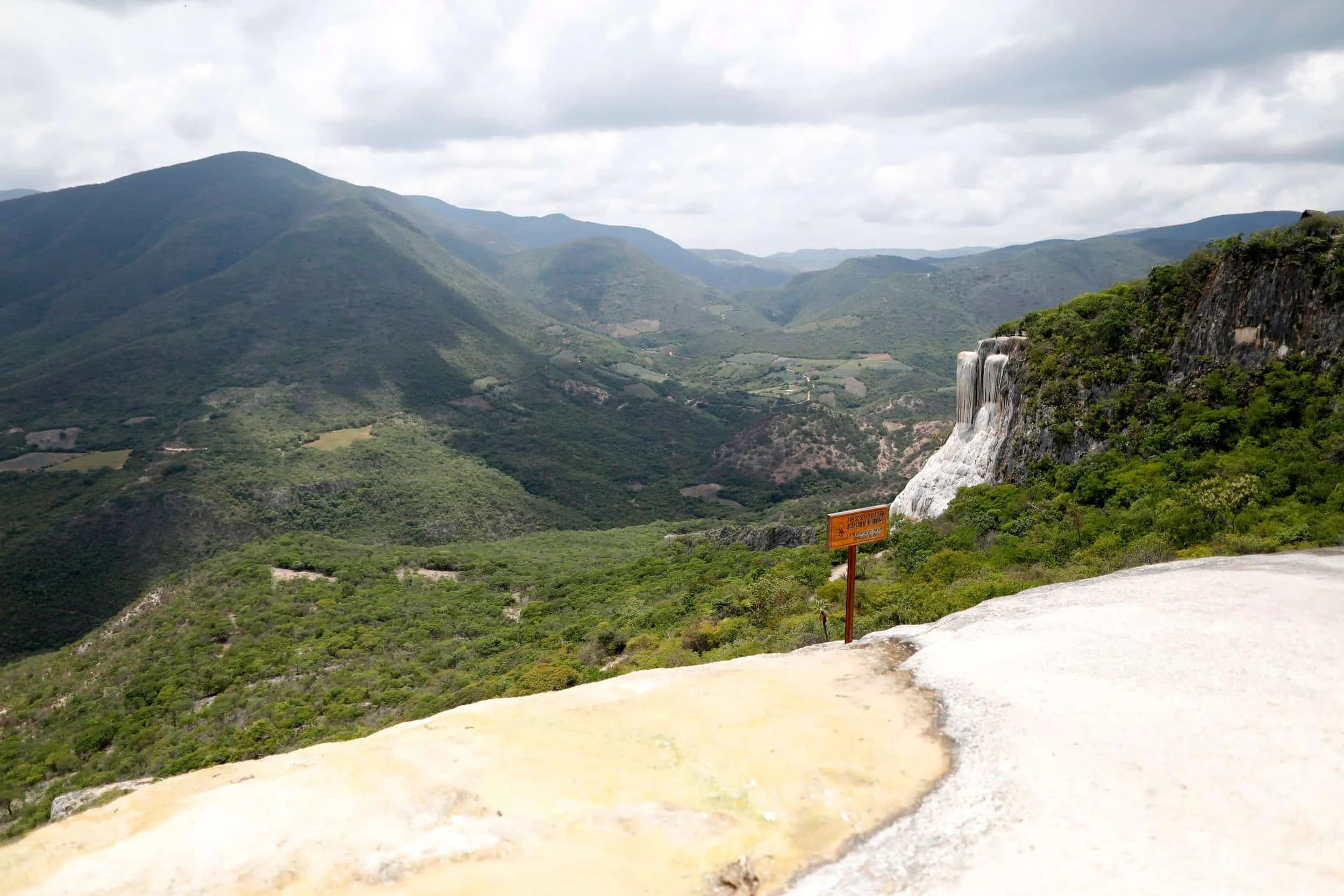
These travertine formations are beautiful but fragile — they form very slowly and are easily damaged. Respect posted rules and stick to designated pathways; avoid standing on or digging into delicate deposits. To help preserve water quality and protect the terraces, do not use soaps, shampoos or lotions in the pools. With a little preparation and care, a visit to the terrace pools can be a scenic, restorative stop on any itinerary.
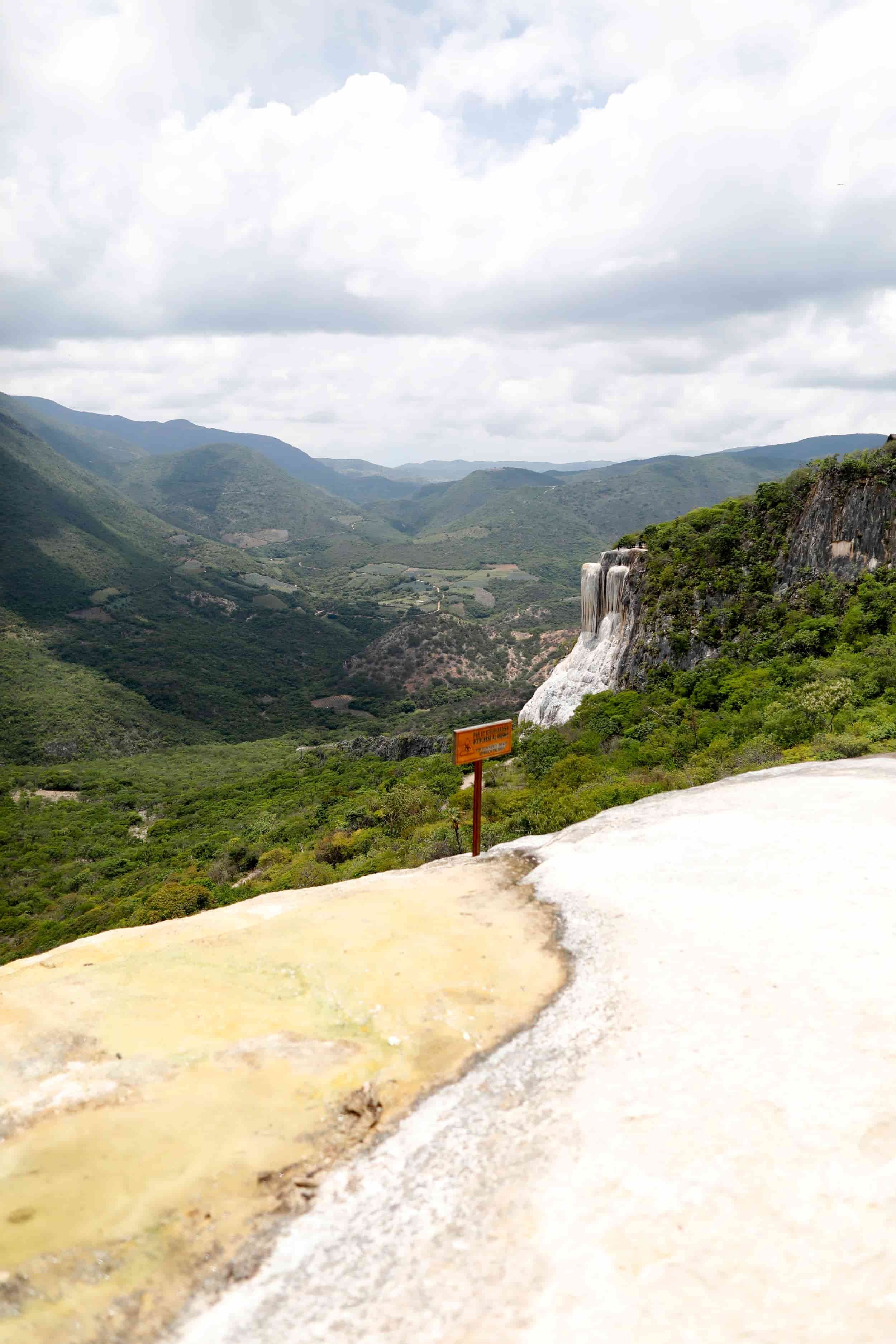
The travertine terraces cascade like sculpted stone, their white to cream hues created by mineral-rich waters. As the thermal water — loaded with dissolved calcium and bicarbonate — cools and releases carbon dioxide, calcium carbonate precipitates out and builds up the characteristic terraces and delicate, stalactite-like formations.
Faint variations in tone and texture reveal the presence of magnesium and other trace minerals, which subtly tint the deposits. The springs themselves are alkaline and carry a complex mix of dissolved salts and minerals picked up as groundwater moves through nearby volcanic and sedimentary rock, giving the landscape its supernatural appearance and tactile diversity.
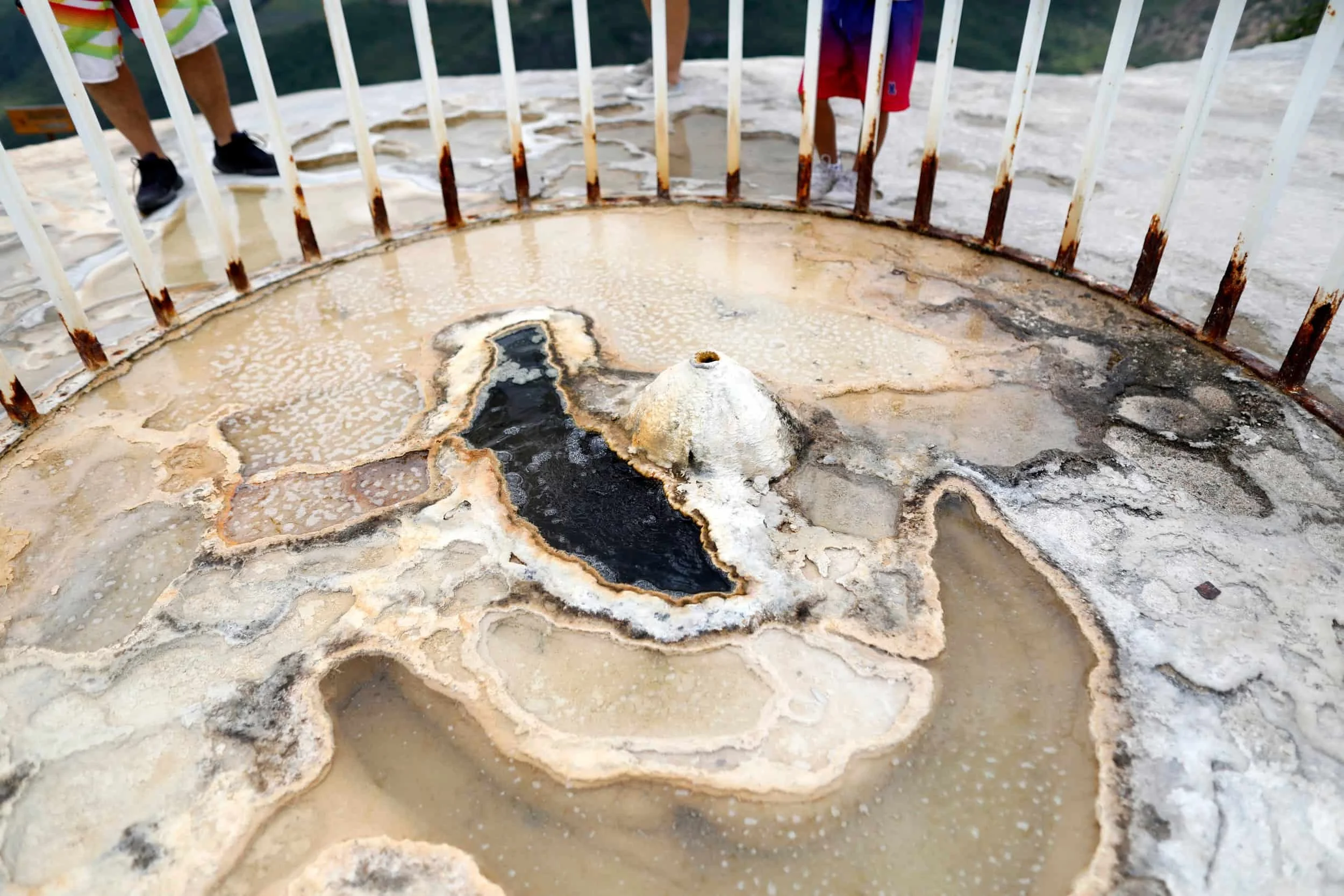
The water in the spring pools is cool and clear, a surprising contrast to the sunbaked, mineral-streaked terraces that hold it. Slide in and the stone underfoot is smooth and slightly warm where the hot sun has touched it; the pool itself feels fresh, with a gentle buoyancy from the dissolved minerals. As you float near the edge, the air smells faintly of earth and lime and the landscape opens wide — dizzying cliffs, craggy rock formations that look like petrified waterfalls and a valley that stretches green and distant.
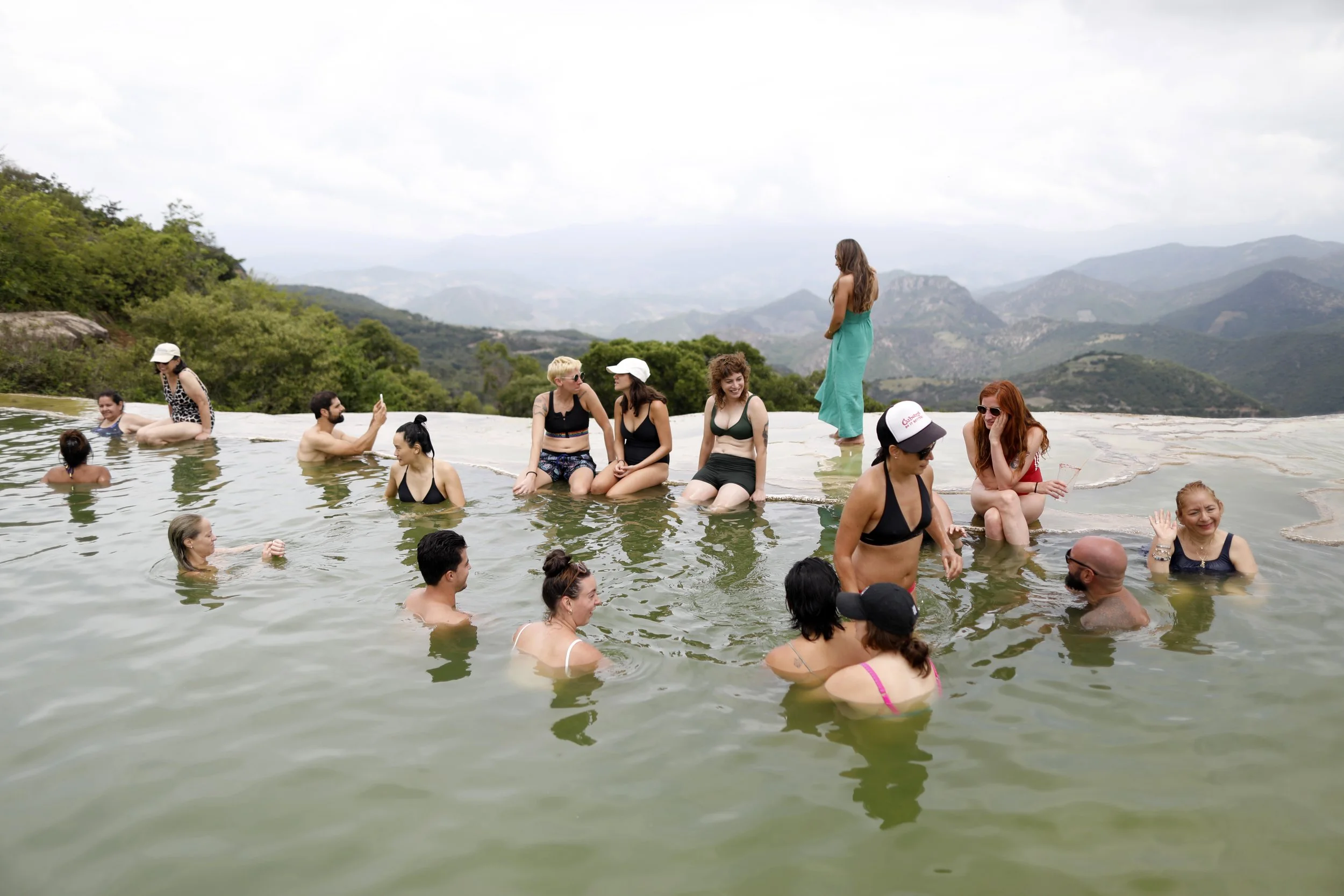
Movement in the pools is slow and deliberate. Small ripples carry mineral crystals that glint in the light. Skin tightens pleasantly from the coolness, then relaxes as circulation steadies. The sound is minimal: wind, distant bird calls, the soft murmur of other swimmers — nothing mechanical, no traffic — which makes the place feel removed from time.
When you rise and look back over the terrace, the contrast between the luminous water, the white and ochre mineral deposits and the deep sky is unexpectedly serene, like a natural spa carved into the edge of the world.
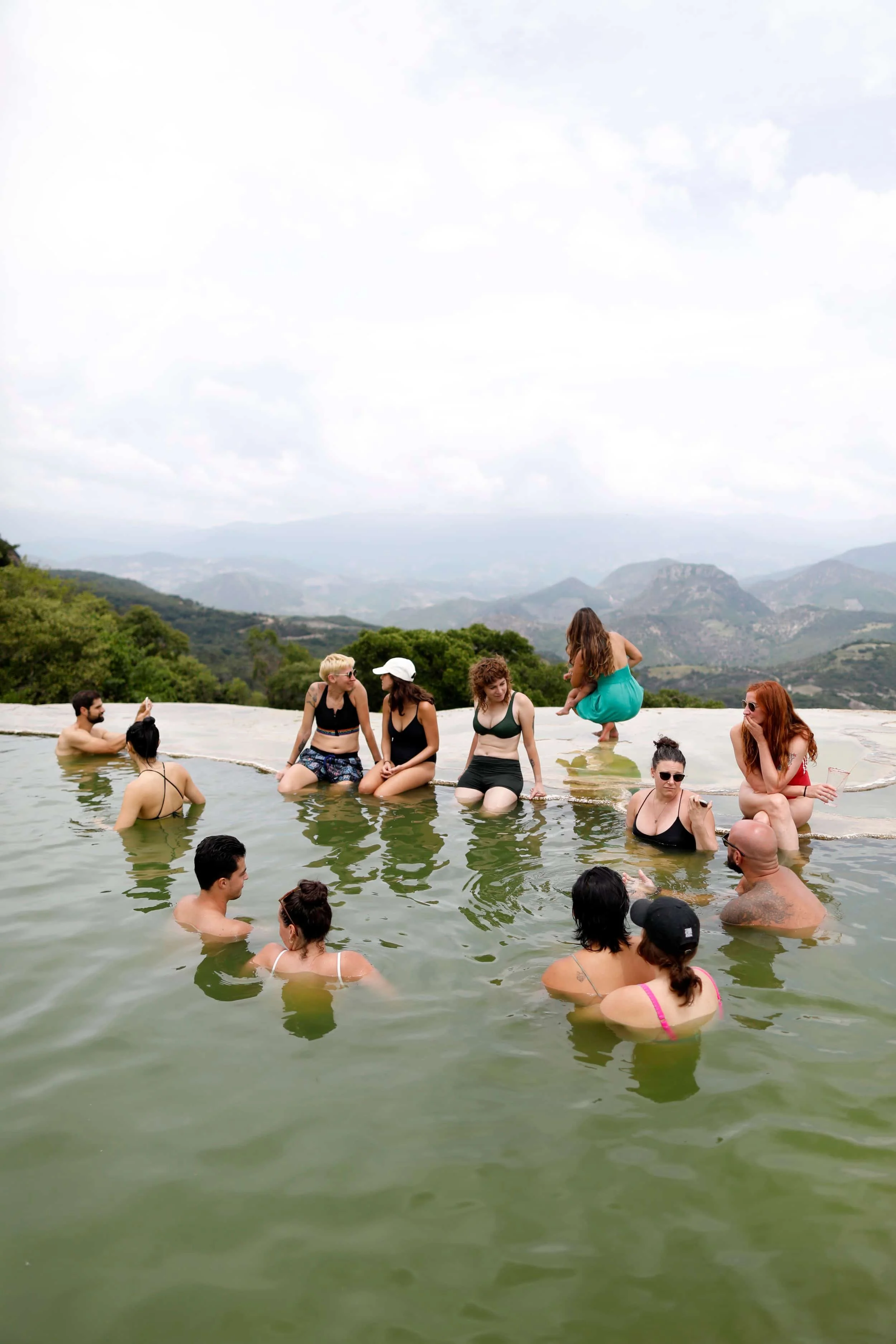
The spring pools are fed by natural mineral-rich springs and feel cool to pleasantly cool most of the year. Water temperature typically ranges from about 60°F to 70°F (roughly 15°C to 21°C). In the warmest months, the shallow edges can warm a few degrees higher in direct sun, while higher-elevation breezes and cooler seasons can keep it toward the lower end of that range.
Sweeping out from the cliff edge, the view down to the spring pools feels like looking into a frozen cascade of the earth. Terraced mineral formations cascade in creamy white and pale ochre, their rippled edges catching sunlight so they glint against the deep green valley below. The natural pools sit like mirrors, reflecting slabs of sky and the rugged ridge lines that hem the valley, while thin rivulets trace delicate paths between terraces.
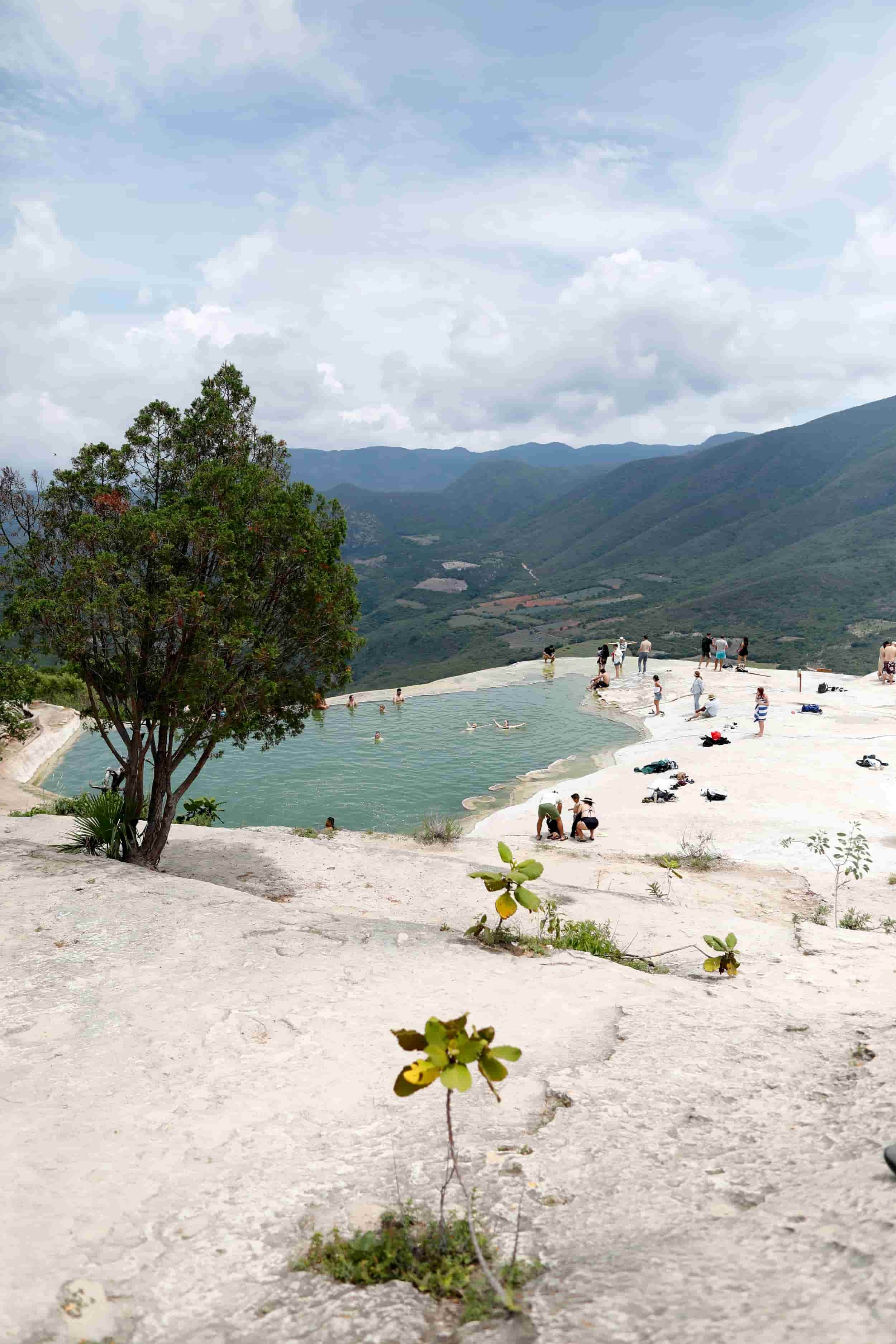
From above, you notice the contrast between the pools’ tranquil surfaces and the jagged canyon walls; seasonal vegetation dots the slopes in bursts of rust and olive and distant farmland patches weave the horizon. Wind carries a dry scent of mineral and grass, and small figures — visitors who look almost toy-sized — move along narrow paths, giving a scale that makes the terraces appear both monumental and intimate. On clear days, the light sharpens every contour; at dusk, the scene softens, terraces turning warm gold and the water’s reflections cooling to indigo.
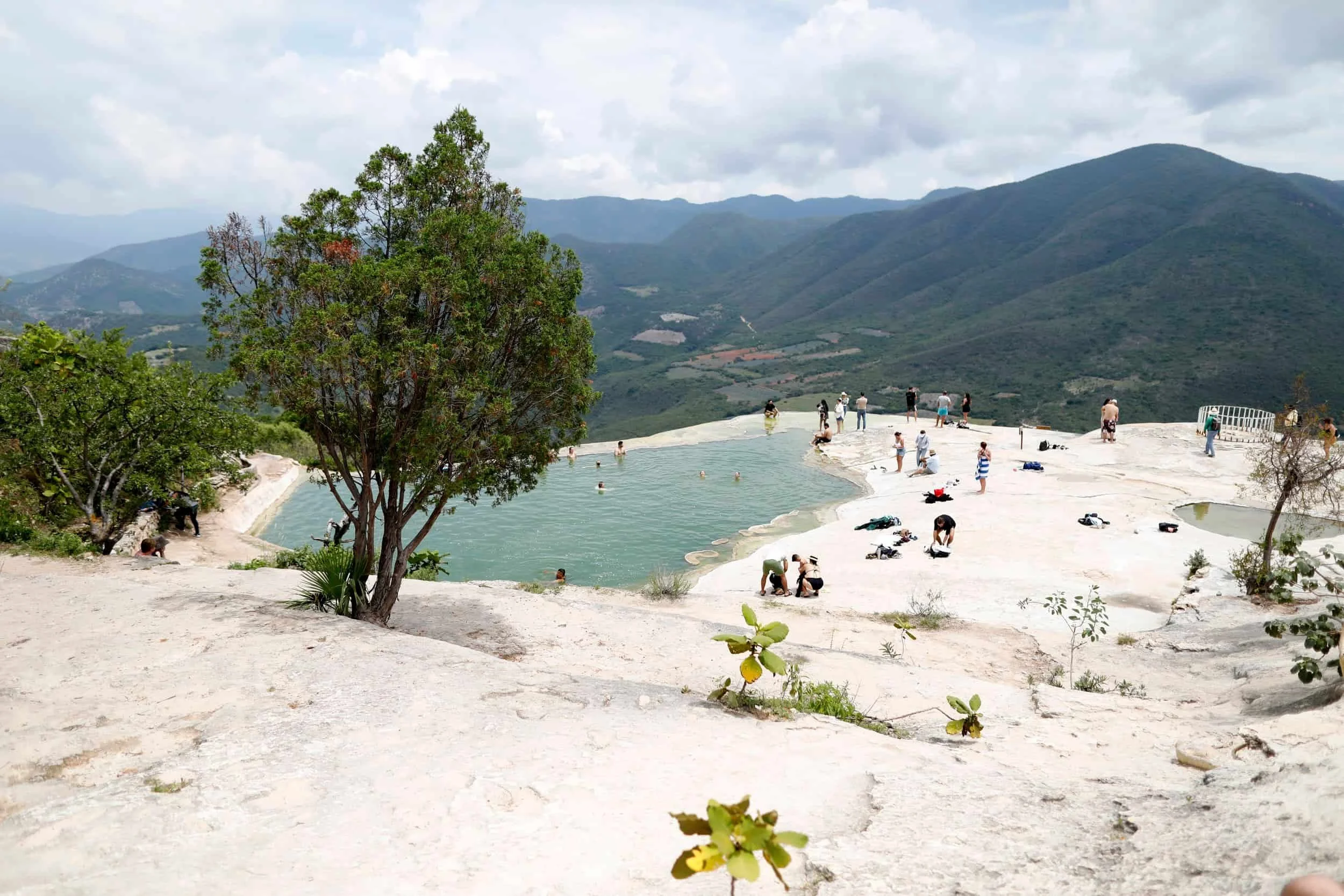
Hierve el Agua offers a rare combination of dramatic mineral formations and natural pools. The calcium-rich travertine creates the iconic landscapes, while the springs continue to shape the site — slowly building new terraces even as visitors enjoy the shallow, mineral-filled basins.
It’s best to visit the pools in the morning or late afternoon to avoid crowds and enjoy the terraces in softer, more flattering light. Carry water, sun protection and non-slip footwear to navigate uneven or slippery paths comfortably. If you choose to swim, rinse off afterward to remove mineral residues from skin and swimwear. Follow posted signs and the guidance of local guides — conservation efforts depend on visitors treating the springs and terraces with care.
Hierve el Agua’s Vendors
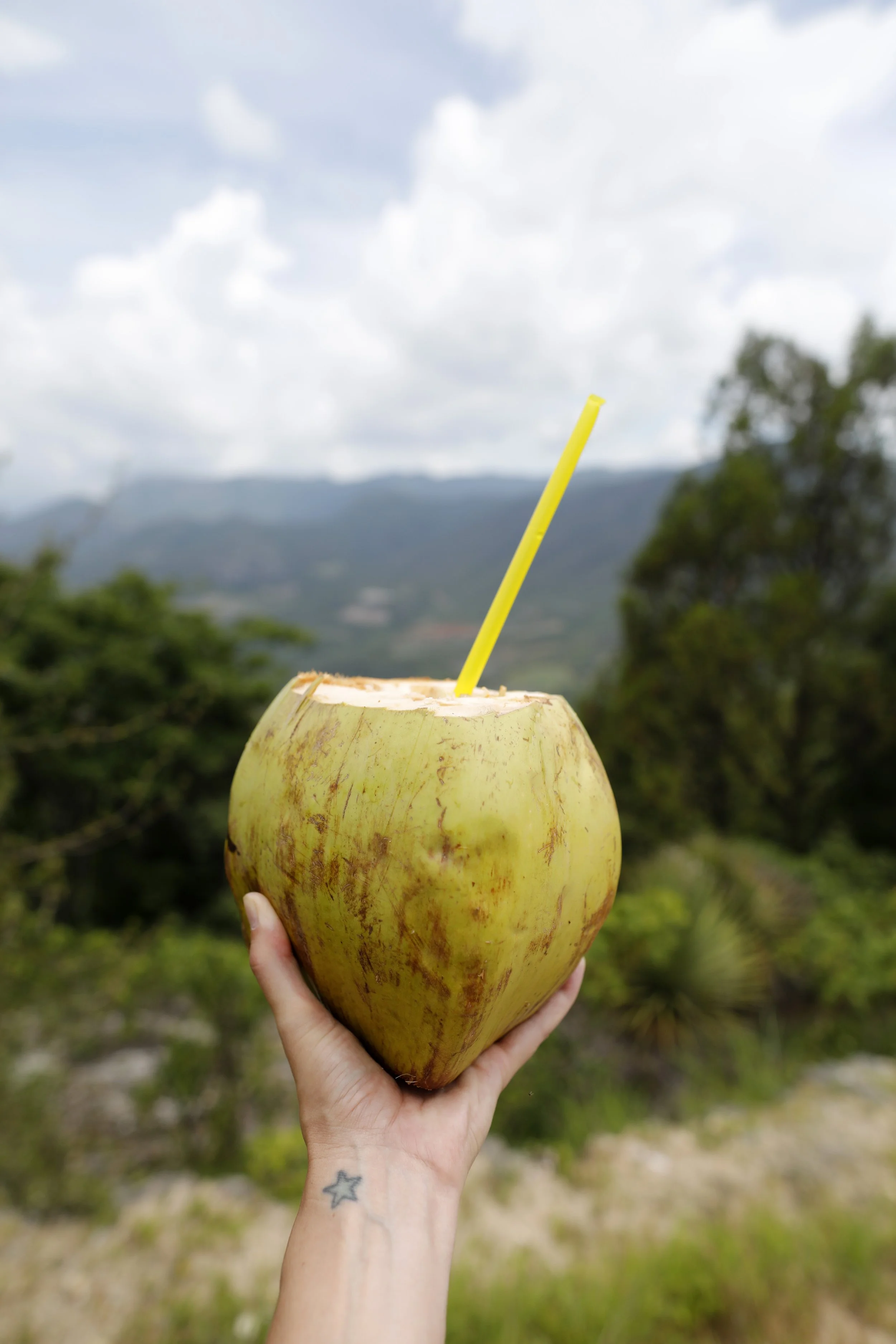
Vendors selling coconut water and other drinks at Hierve el Agua create a welcome, practical presence amid the rocky terraces and mineral springs. Typically positioned along the walking paths and near the main pools and mirador, these small stalls and carts offer cold coconuts, bottled water, aguas frescas and sometimes soft drinks or beer.
Many vendors carry coconuts whole and will hack them open on the spot with a machete, handing you the chilled, slightly sweet coconut water and the soft meat inside — a refreshing treat after climbing the steep steps and hiking between viewpoints.
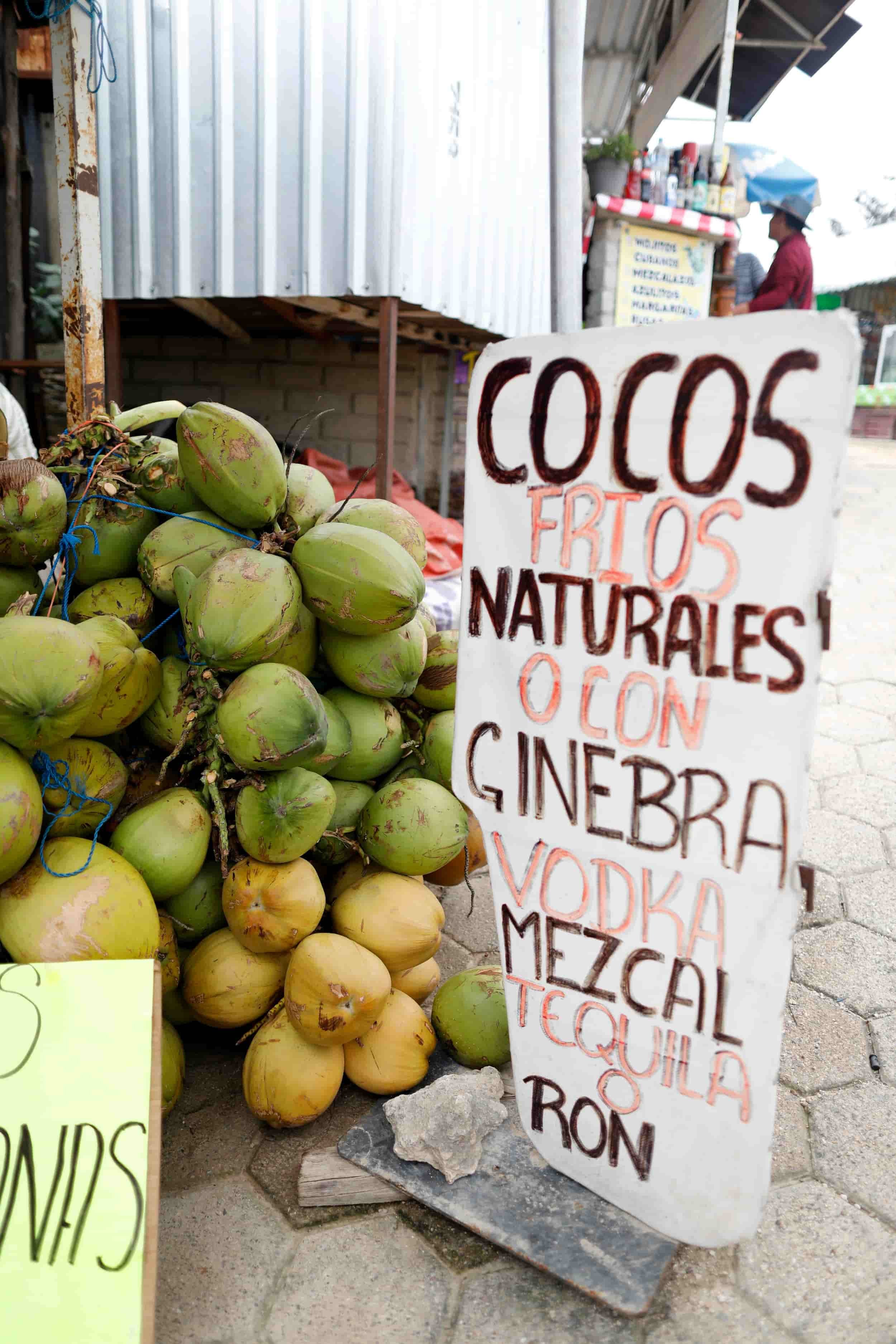
Prices are reasonable compared with tourist sites in cities, though slightly higher than in nearby villages to account for the remote location and the effort of transporting goods. Vendors often wrap coconuts in plastic or paper and provide a straw; some keep drinks in coolers with ice. Service is friendly and informal and a small tip is appreciated for the quick, physical work of opening coconuts.
💡 Local Tip | Support local vendors by grabbing something refreshing to drink and a bite to eat after your hike.
Beyond refreshments, a few vendors sell packaged snacks, sunscreen and basic souvenirs like woven bracelets. Small bills and coins are easiest — since card machines and reliable phone service are rare on-site.
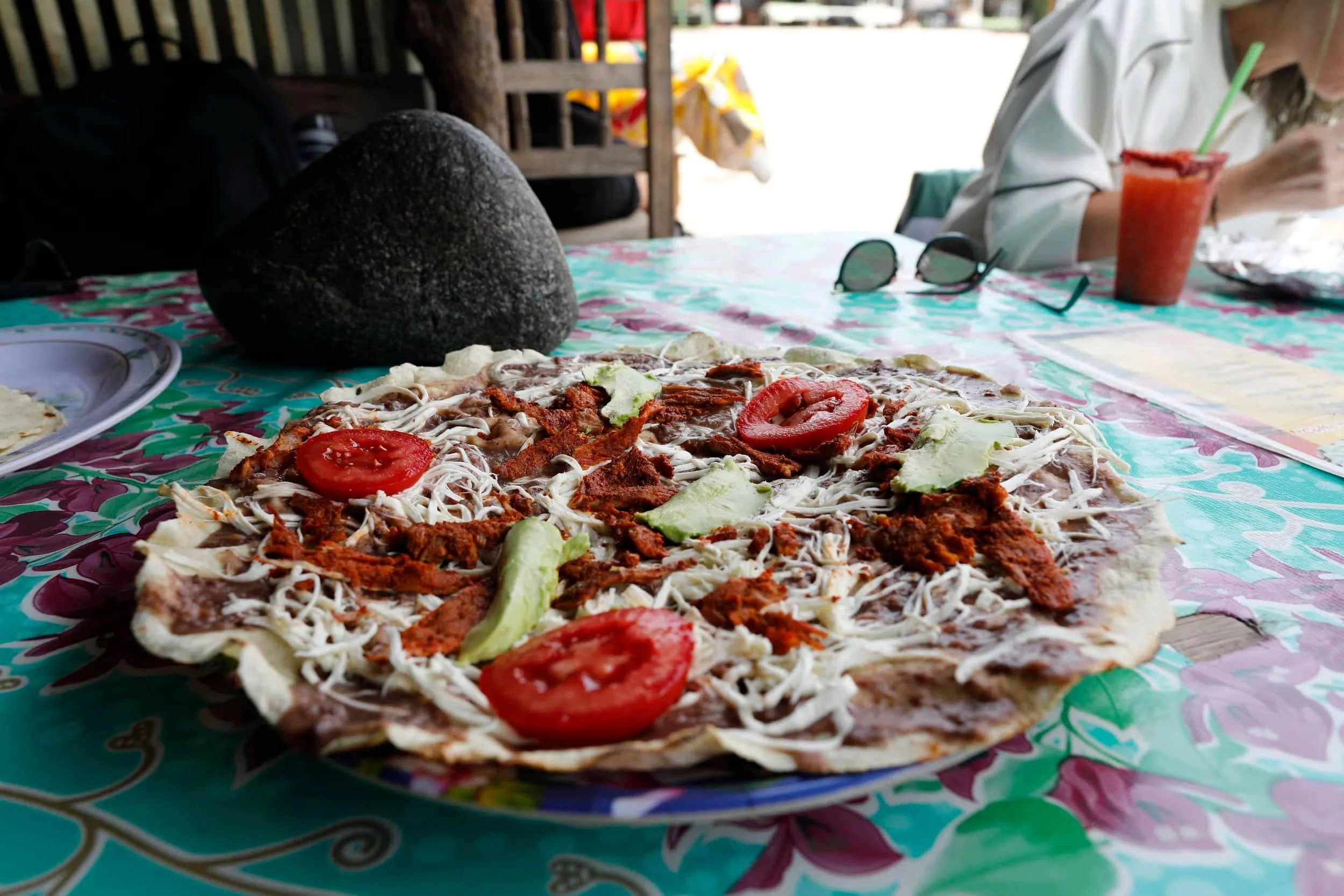
Food vendors set up small, colorful stalls and umbrellas near the parking and trailhead, offering practical, comforting meals for hikers and day trippers. One standout is the vendedor who makes tlayudas — a Oaxaca-style large, thin toasted tortilla piled with refried beans, melted cheese, avocado, shredded meat or chorizo and a bright splash of salsa. These tlayudas are often cooked on a comal over coals or a portable griddle, arriving charred at the edges and served folded or whole for sharing — Mexico’s version of pizza.
Beyond tlayudas, vendors sell an assortment of Mexican staples suited to the outdoor setting: tamales wrapped in corn husk or banana leaf, quesadillas griddled to order, esquites (toasted corn in a cup with mayo, cheese, lime and chili), fresh fruit, aguas frescas and bottled water. Portions are generous and aimed at refueling hikers — expect hearty, savory flavors and simple, satisfying preparations.
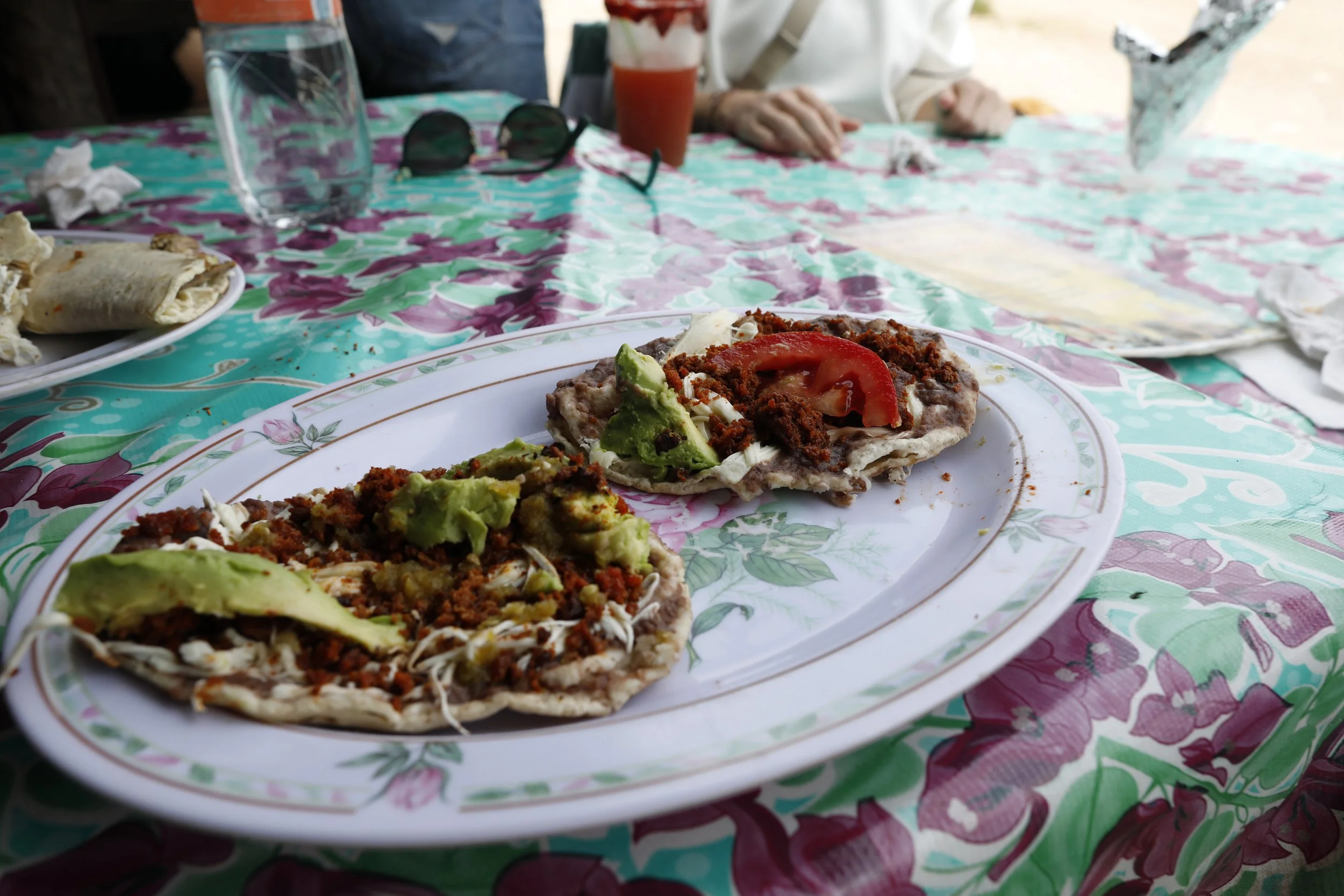
Prices are modest and usually negotiable and vendors are used to serving visitors with limited time, so service is quick. Eating near the terraces or along the trail, you get a taste of regional cuisine against the dramatic backdrop of the petrified waterfalls — practical, flavorful food that complements the rugged natural beauty.
El Rey de Matatlán
After a refreshing hike and a cooling dip in the springs, towel off and move on to the next stop — everything mezcal — to complete the perfect Oaxaca City day trip. This stop lies about an hour northwest of Hierve el Agua.
El Rey de Matatlán is a mezcal brand from Matatlán, a village in the Central Valleys of Oaxaca often called the "World Capital of Mezcal." Matatlán lies about 20 miles north of the city of Oaxaca (distance varies slightly by route) and is part of a region renowned for its mezcal tradition: semi-desert hills dotted with palenques, agave planted on terraces and authentic rural landscapes.
Visiting the area around Matatlán offers a quintessential mezcal experience: tours of family-owned palenques (traditional, often rustic, distillery where mezcal is handcrafted using centuries-old methods), explanations of agave roasting, milling and fermentation and guided tastings. Many producers are located in nearby communities and on rural roads, so it’s helpful to arrange your trip in advance or go with a local guide who can facilitate access and explain traditional practices.
From Oaxaca City, you can drive there — roughly a 40–60 minute drive depending on traffic and the road. The surroundings are rural, with small villages, local food stands and agave-lined views. If you plan to sample mezcal, do so respectfully of local traditions and arrange safe transport for the return trip.
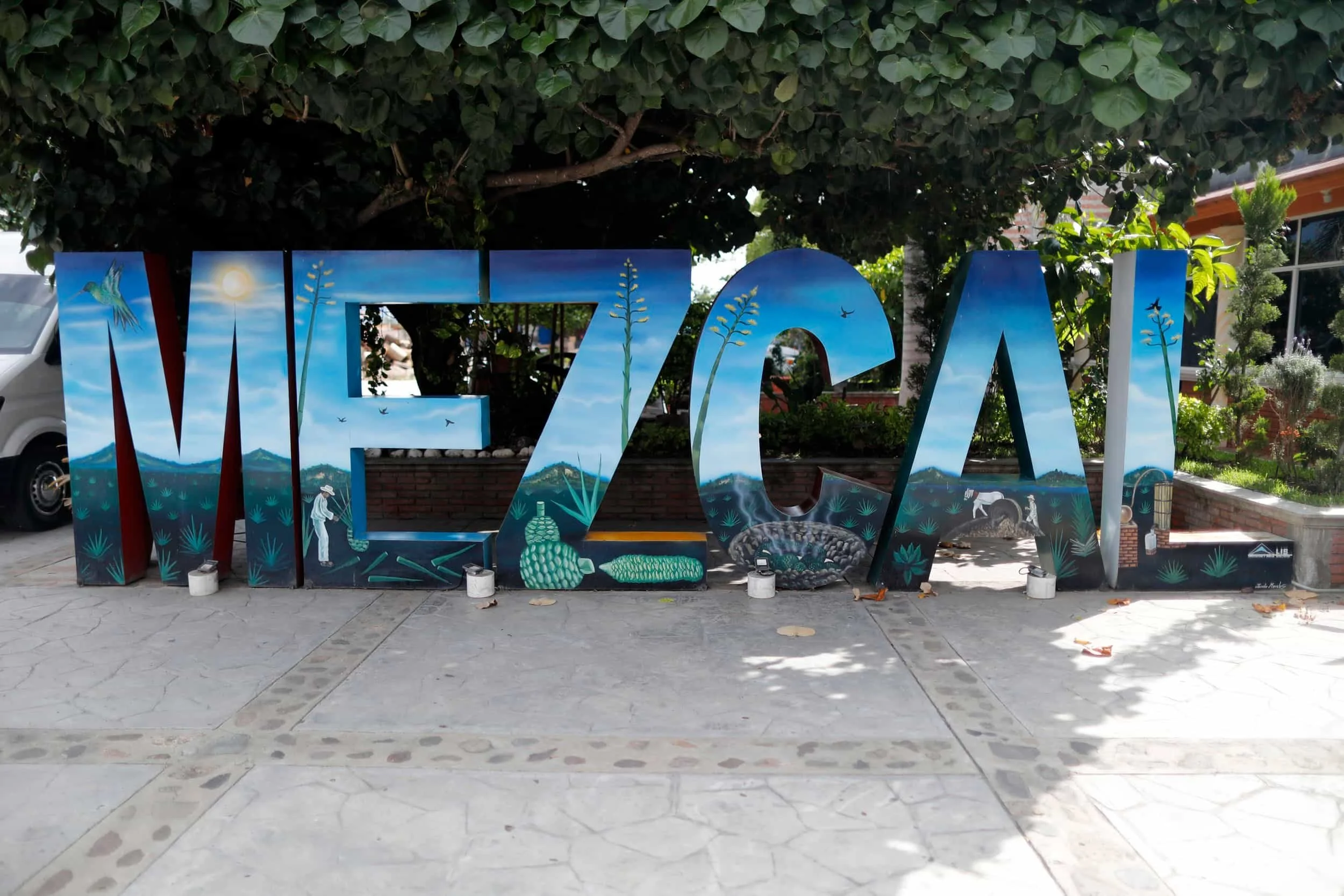
El Rey de Matatlán distillery is widely regarded as one of the most authentic places to see traditional Zapotec mezcal production. The distillery preserves artisanal methods that have been handed down for generations, combining native agave varieties, wood‑fired earth ovens, stone and copper equipment and the guidance of experienced mezcaleros and palenqueros. Below is an overview of the agave types they commonly use, the step‑by‑step Zapotec process and the equipment involved.
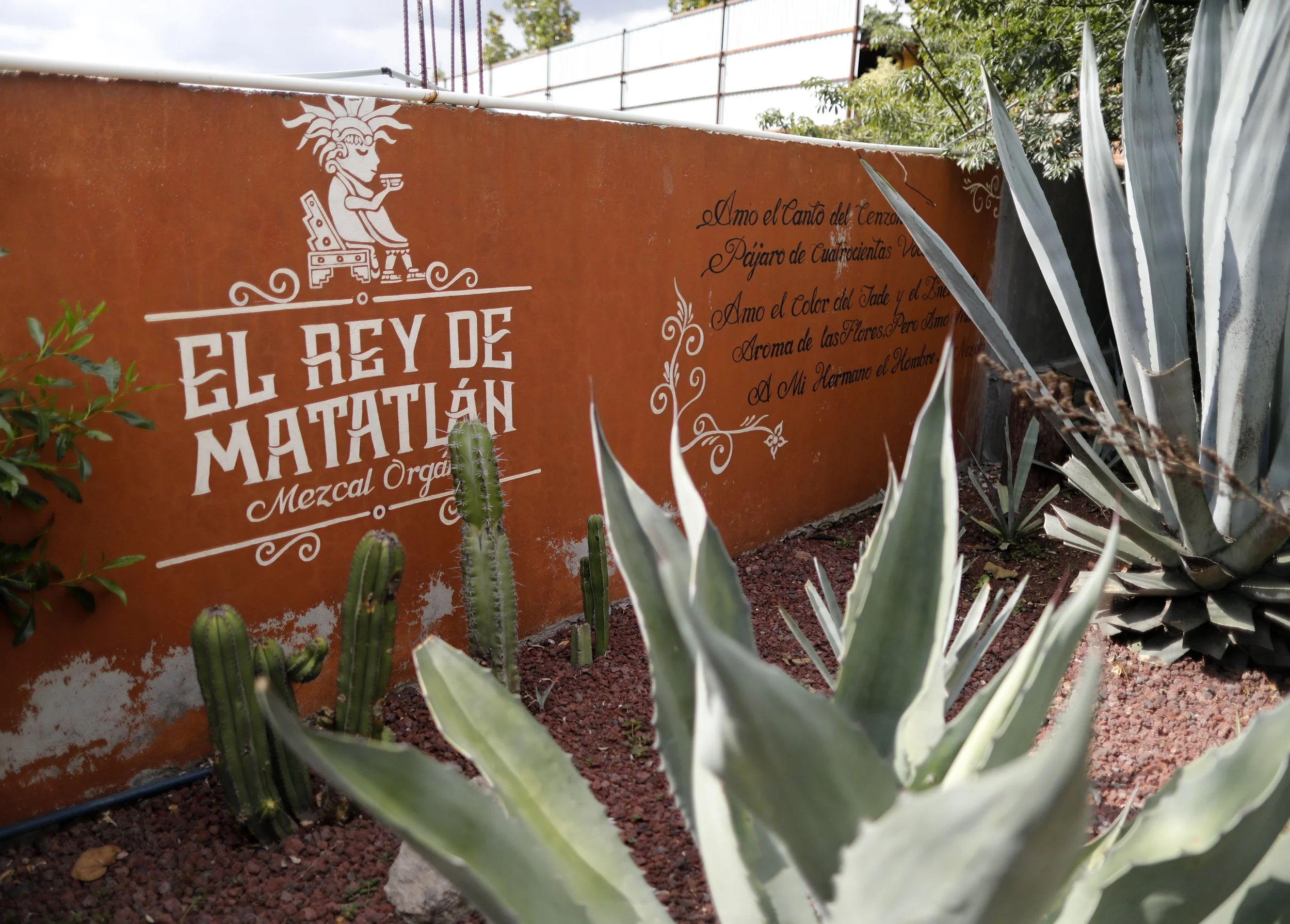
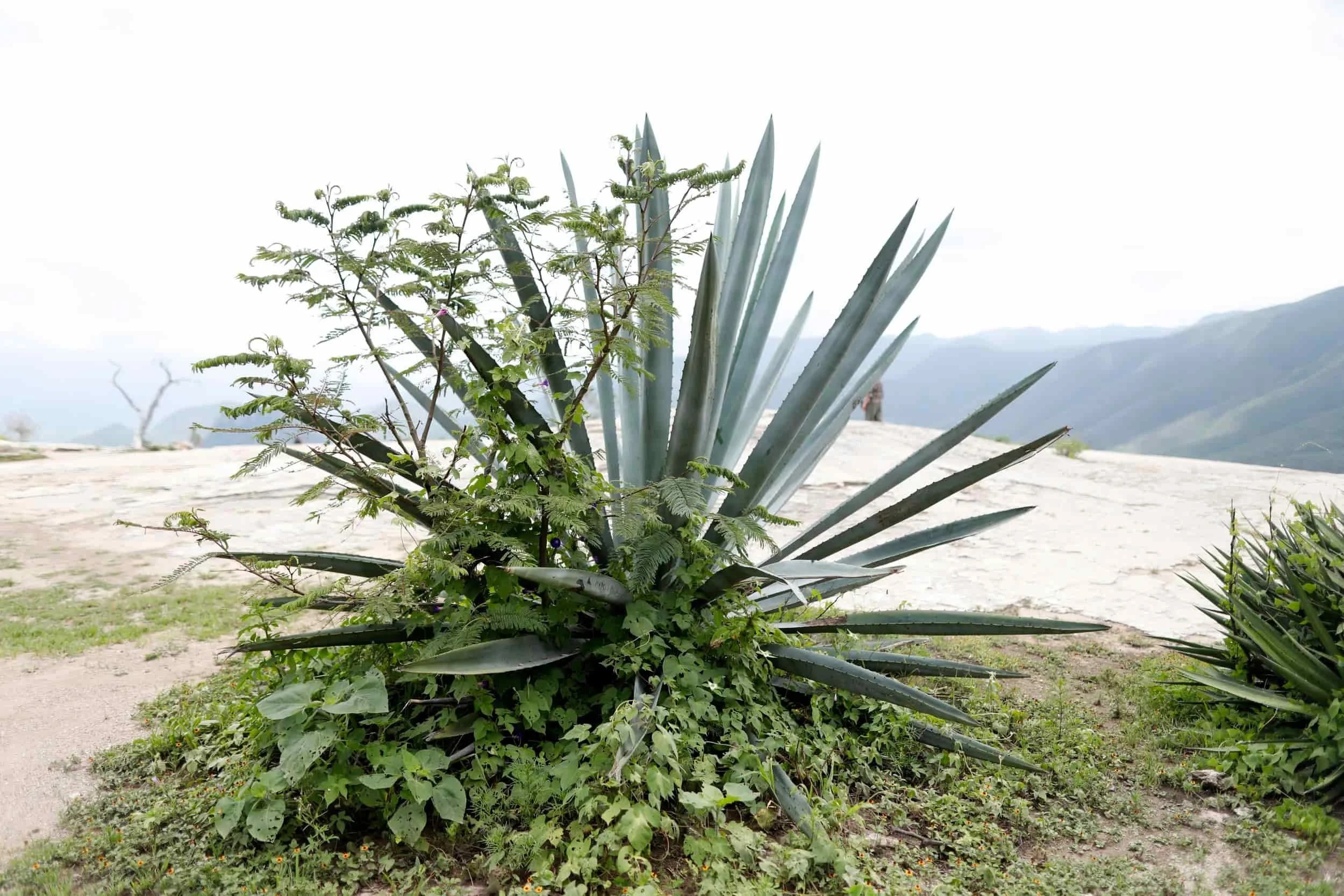
The tour begins with a vivid introduction to the agave — a rugged, sculptural plant that hides centuries of flavor and tradition in its thick, silvery leaves. Mezcal is made from agave because agave plants are native to Mexico and contain high concentrations of fermentable sugars in their piñas (hearts), which, when roasted, produce the distinctive smoky, vegetal flavors prized in mezcal.
Agave varieties — like espadín, tobala and madrecuixe — offer diverse flavor profiles, allowing artisans to craft a wide range of expressions tied to terroir and plant species. Traditional production methods, including slow-roasting agave in earthen pits and wild fermentation, evolved around agave’s chemistry and availability, making it the ideal raw material for this uniquely Mexican spirit.
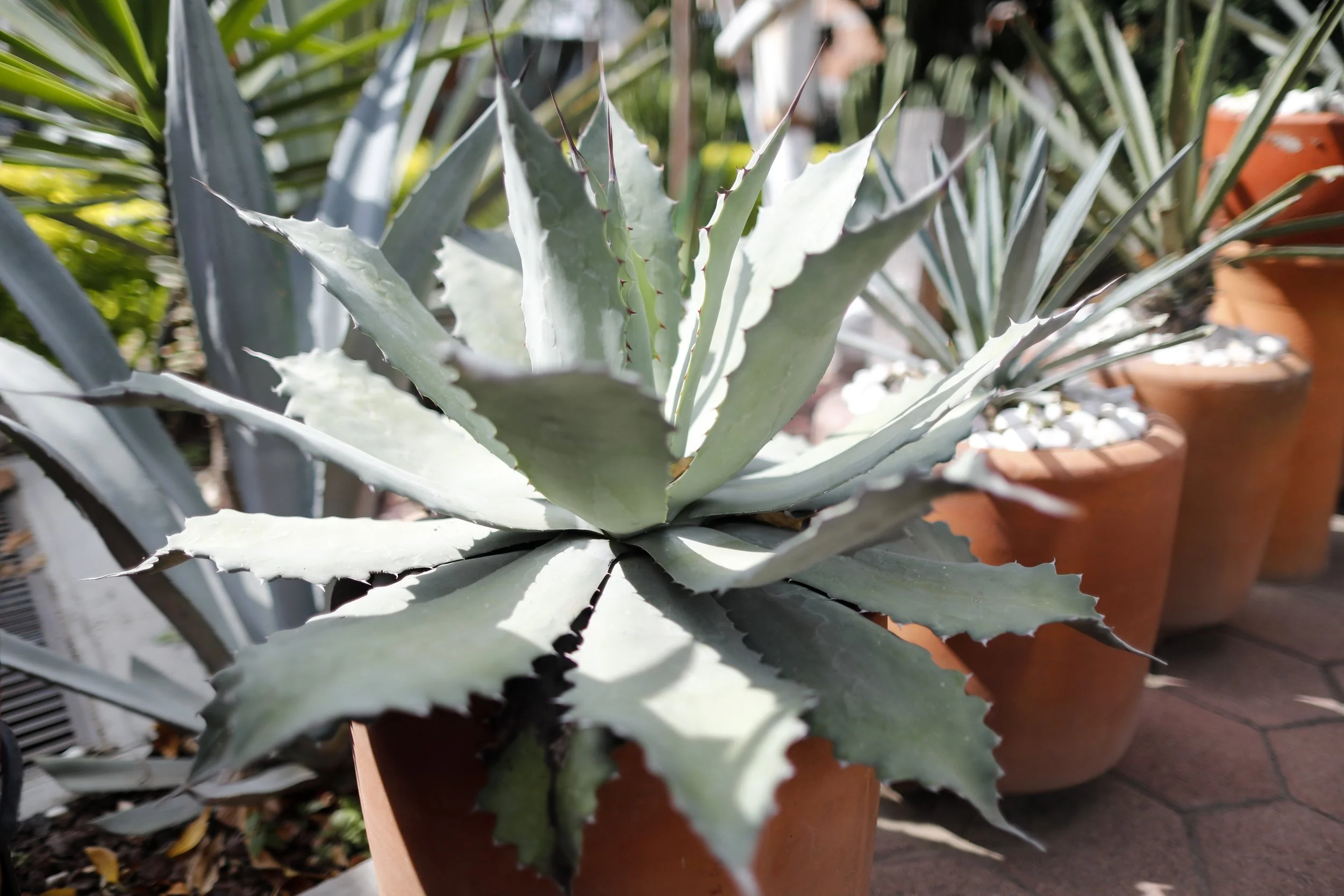
El Rey de Matatlán stands as a quiet guard of mezcal tradition in the high, sunbaked hills where Oaxaca’s agave country folds into the horizon. Visiting is to trace the arc from raw plant to smoky spirit and to understand how the choice of agave — each species a different voice — shapes the character of mezcal produced here.
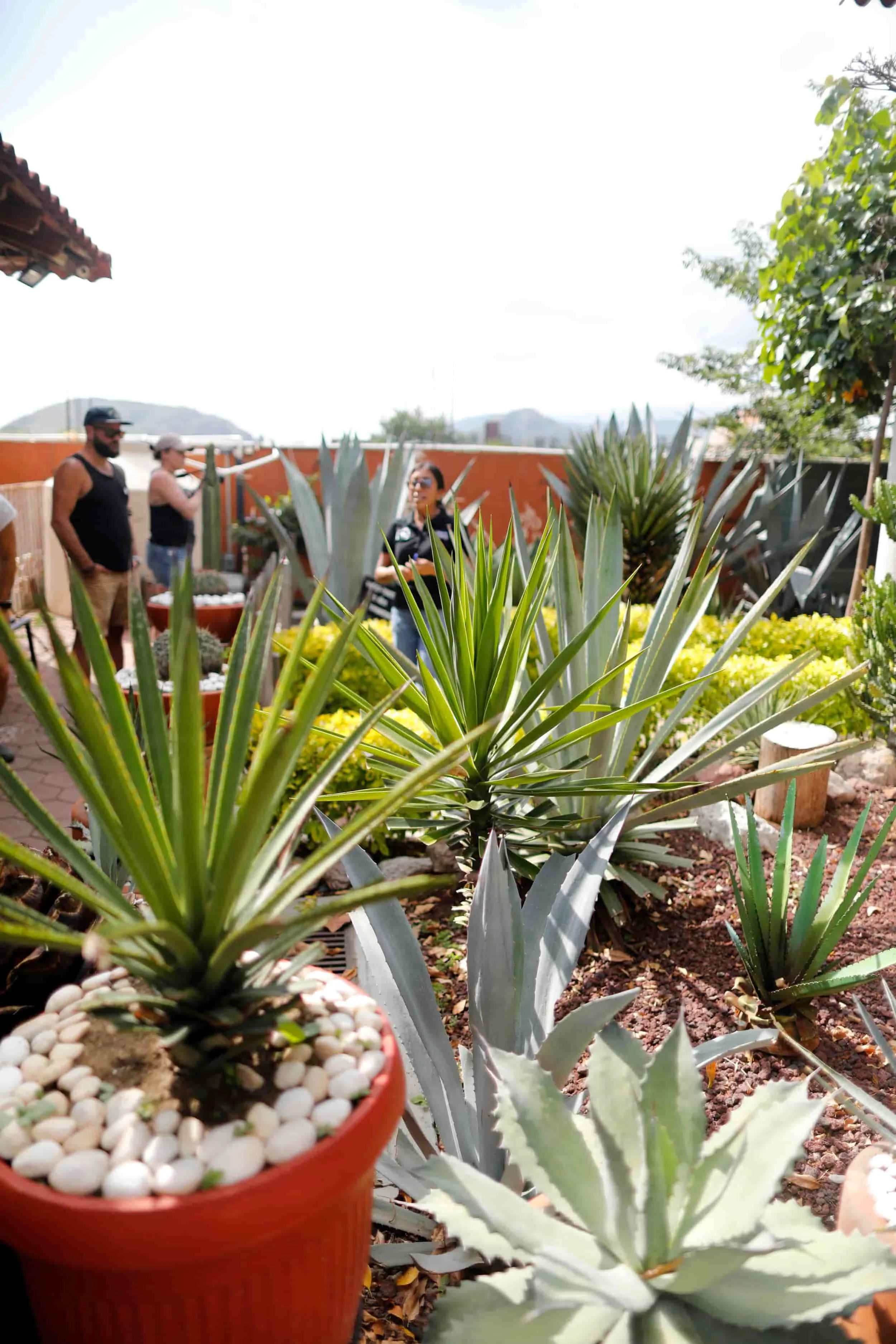
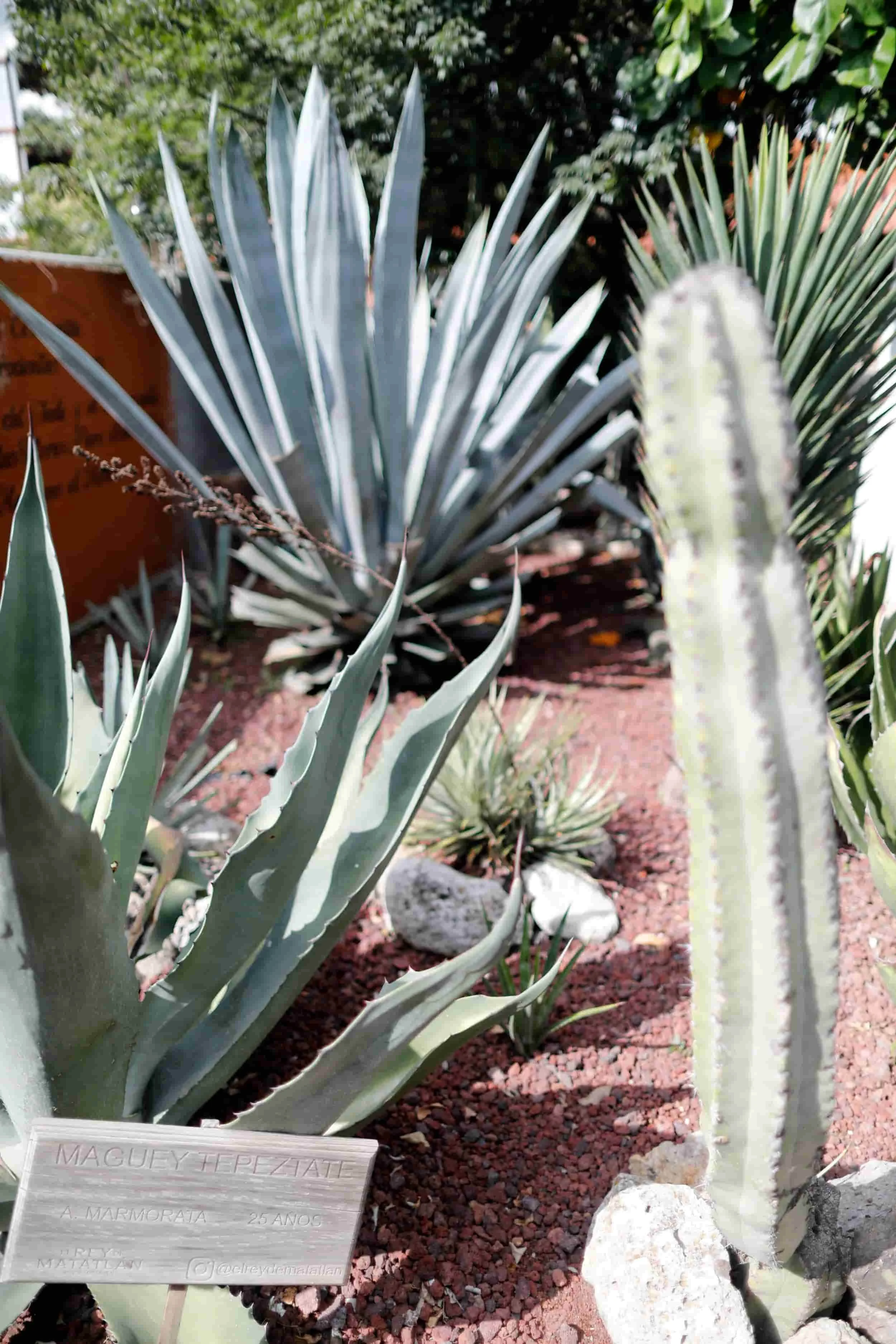
Espadín (Agave angustifolia) is the workhorse of El Rey de Matatlán, the variety that most visitors encounter first in tastings and bottles. Domesticated and intentionally cultivated, espadín reaches maturity in a comparatively short span, typically six to ten years, which makes it economically reliable for small-scale producers. Its piñas are substantial and yield sugars predictably, giving distillers a steady canvas on which to build flavor.
The resulting mezcal is often noted for its balance: approachable smokiness framed by warm, vegetal sweetness and a rounded mouthfeel that carries well across different aging choices and blends. For many drinkers, espadín is the gateway — familiar enough to please newcomers while offering subtle depth for more discerning palates.
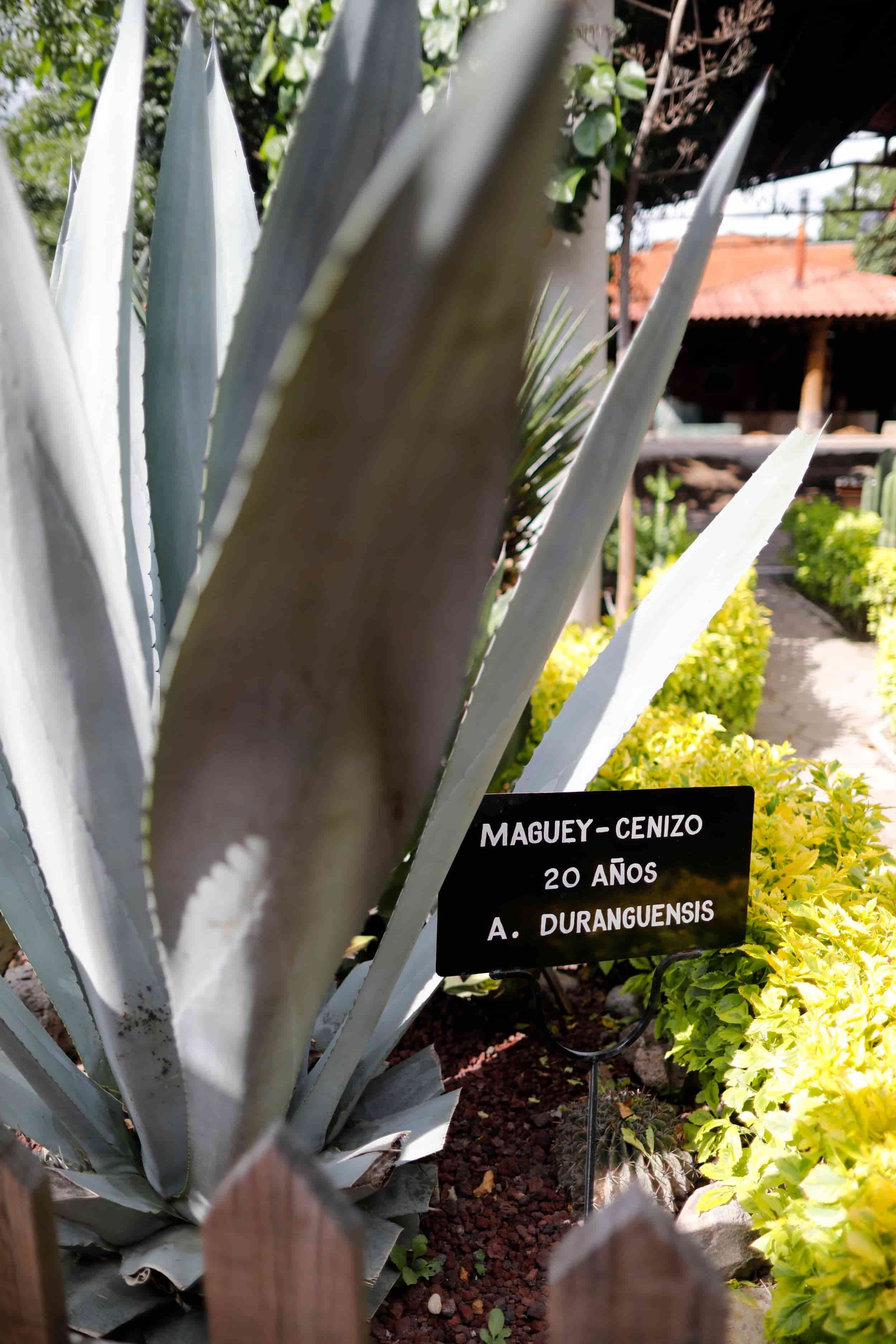
Tobalá (Agave potatorum) occupies a very different place in the palenque’s story. Tobalá grows wild, usually in crevices and higher-elevation niches where soil is thin and conditions are harsh. Smaller than cultivated agaves, its piñas are compact and scarce, which makes its sugars precious and its use limited to small-batch expressions.
At El Rey de Matatlán, Tobalá is an occasional splurge: when master palenqueros blend a touch of it into a batch or bottle a single-agave run. The mezcal produced from Tobalá is prized for its delicate, floral aromatics and herbaceous complexity — bright notes of citrus peel, wild herbs and a whisper of earthiness that can feel almost perfumed. Because yields are so low, Tobalá-driven mezcals are often more expensive and treated as special releases.
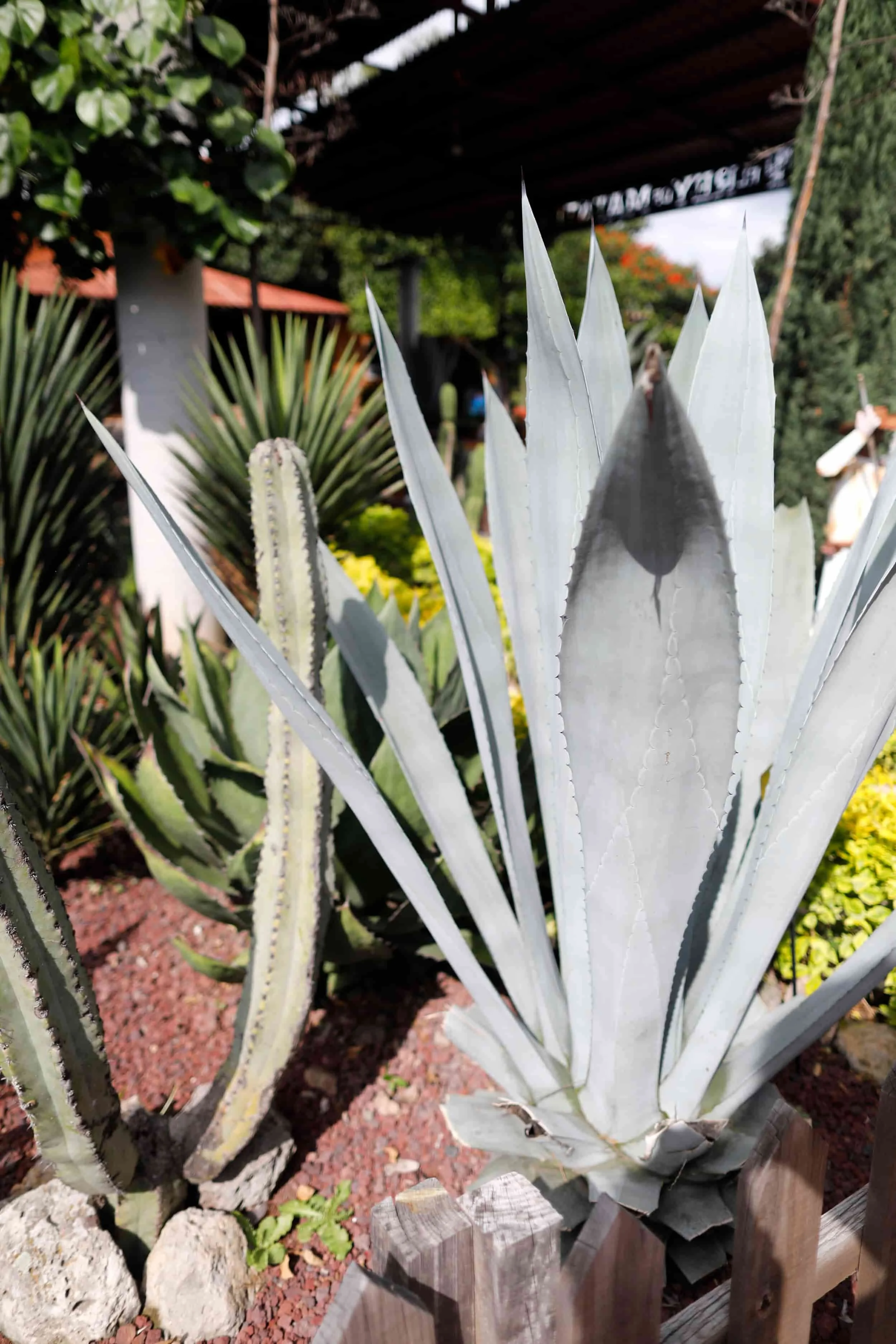
Beyond those two, the mountains around Matatlán yield a roster of wild agaves — Madrecuixe, Tepextate, Barril, among others — that introduce a sense of place into every sip. These species tend to be longer-lived and more rugged than espadín, often taking many more years to mature.
Madrecuixe, for example, can give mezcal a mineral, almost saline backbone with savory herb notes, while Tepextate is known for producing intensely wild, sometimes resinous flavors with smoky, leathery edges. Barril contributes body and a deep, earthy density that complements sugary or floral components. Because these agaves are harvested from varied microclimates and soils, mezcals made with them are strongly terroir-driven: you taste the mountain slopes, the rocky substrate, the sun and wind exposure in the glass.
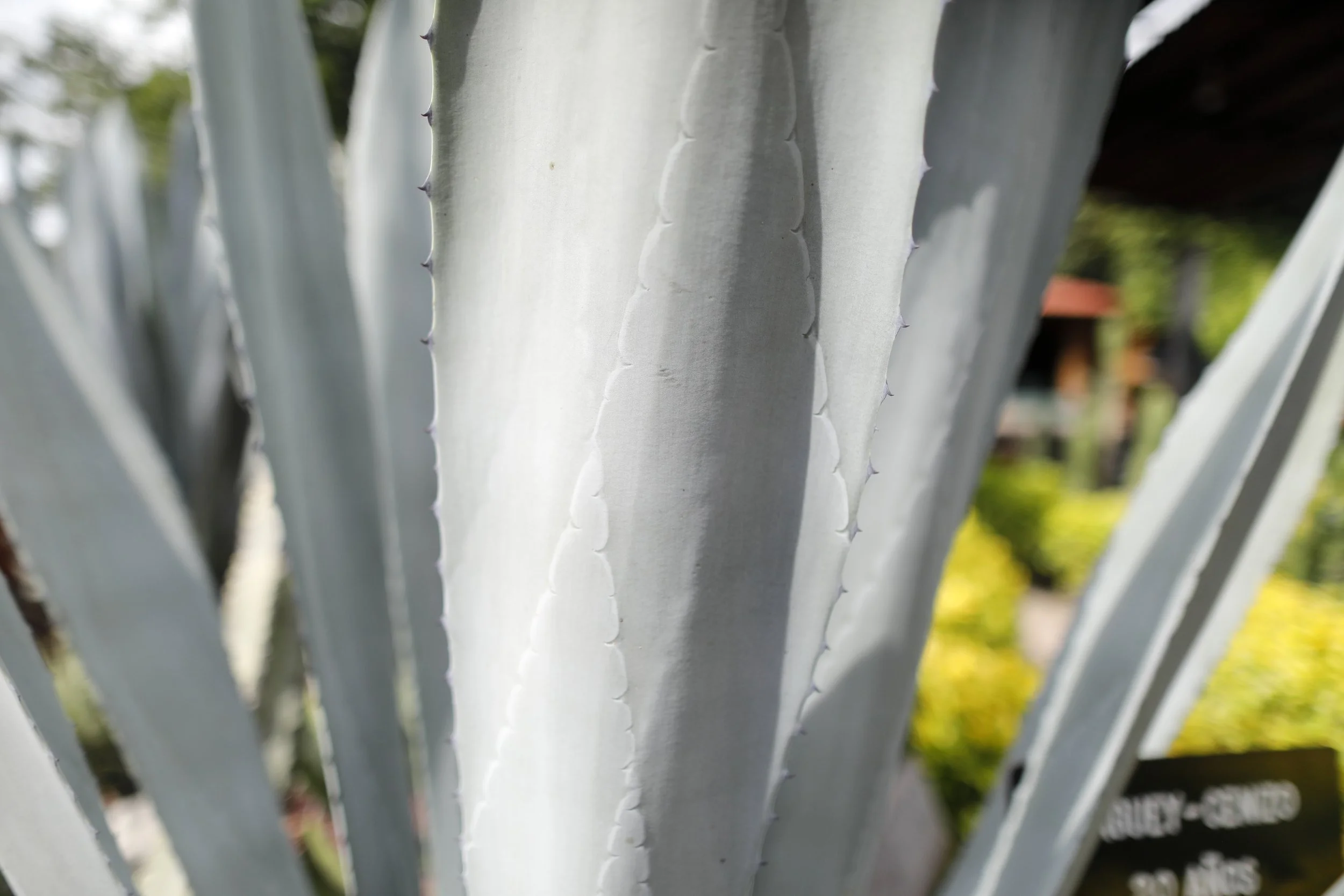
El Rey and other producers in the region frequently work with local hybrids and variations, as well. Mezcal culture here is not rigidly purist; it’s pragmatic and creative. Producers will blend cultivated espadín with wild relatives to achieve a balance — espadín supplies reliable yield and sweetness, while wild species contribute the complexity that aficionados seek.
These blends can be tailored year to year, depending on which wild agaves are abundant, which micro-harvests were strong and the flavor profile the palenquero aims to achieve. The result is a mezcalic palette that is both consistent enough to be produced sustainably and varied enough to reflect seasonal changes and mountain moods.
Walking through El Rey de Matatlán’s agaves is to appreciate mezcal as a living craft: a dialogue between cultivated fields and wild slopes, between plant and distiller and between place and palate. Each agave — from the dependable espadín to the elusive tobalá and the wild, character-rich Madrecuixe, Tepextate and Barril — contributes a distinct texture and story to the spirit. Together, they form a mix of flavors that invites slow, attentive tasting and keeps the tradition of Matatlán’s mezcal dynamic and deeply rooted in the land.
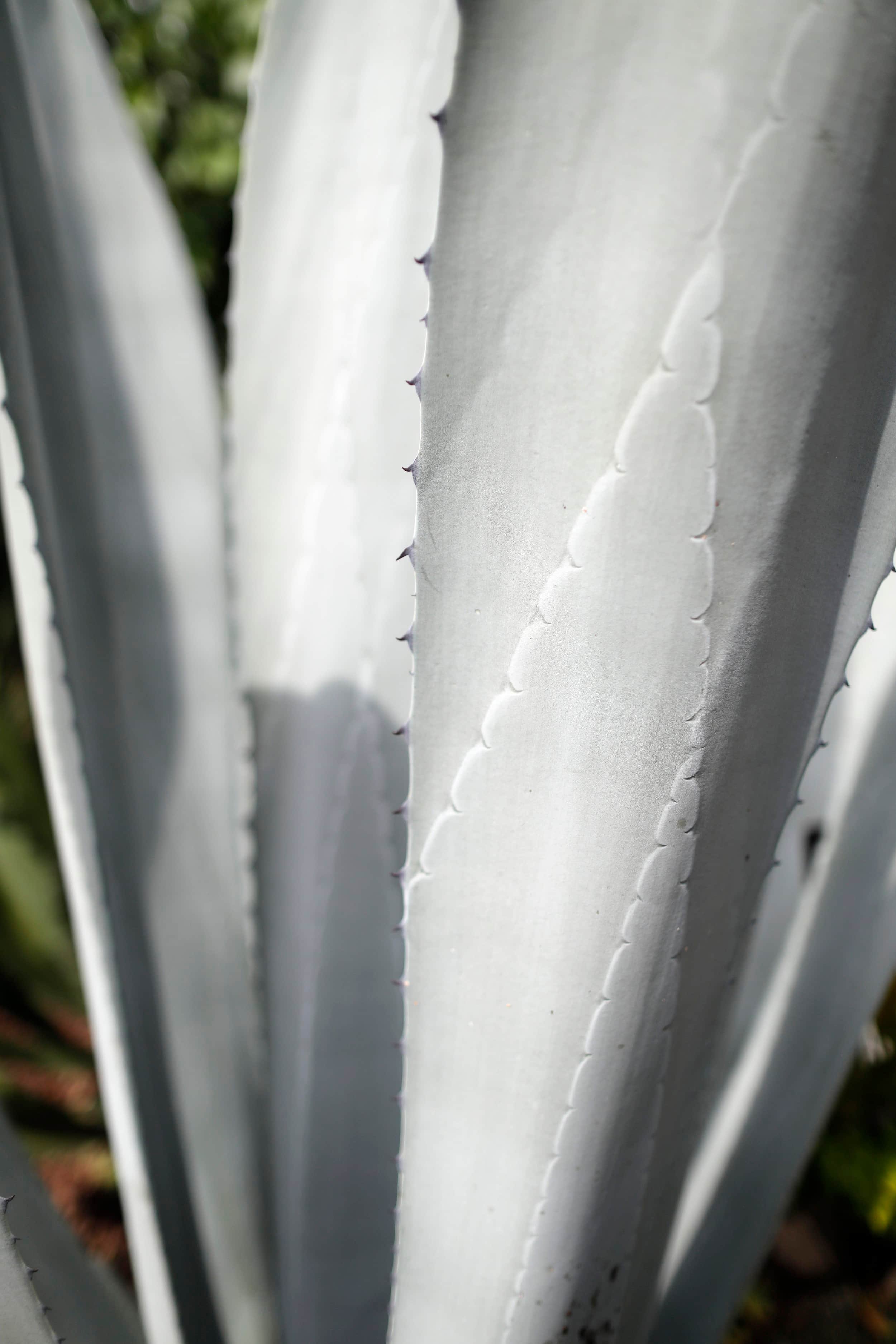
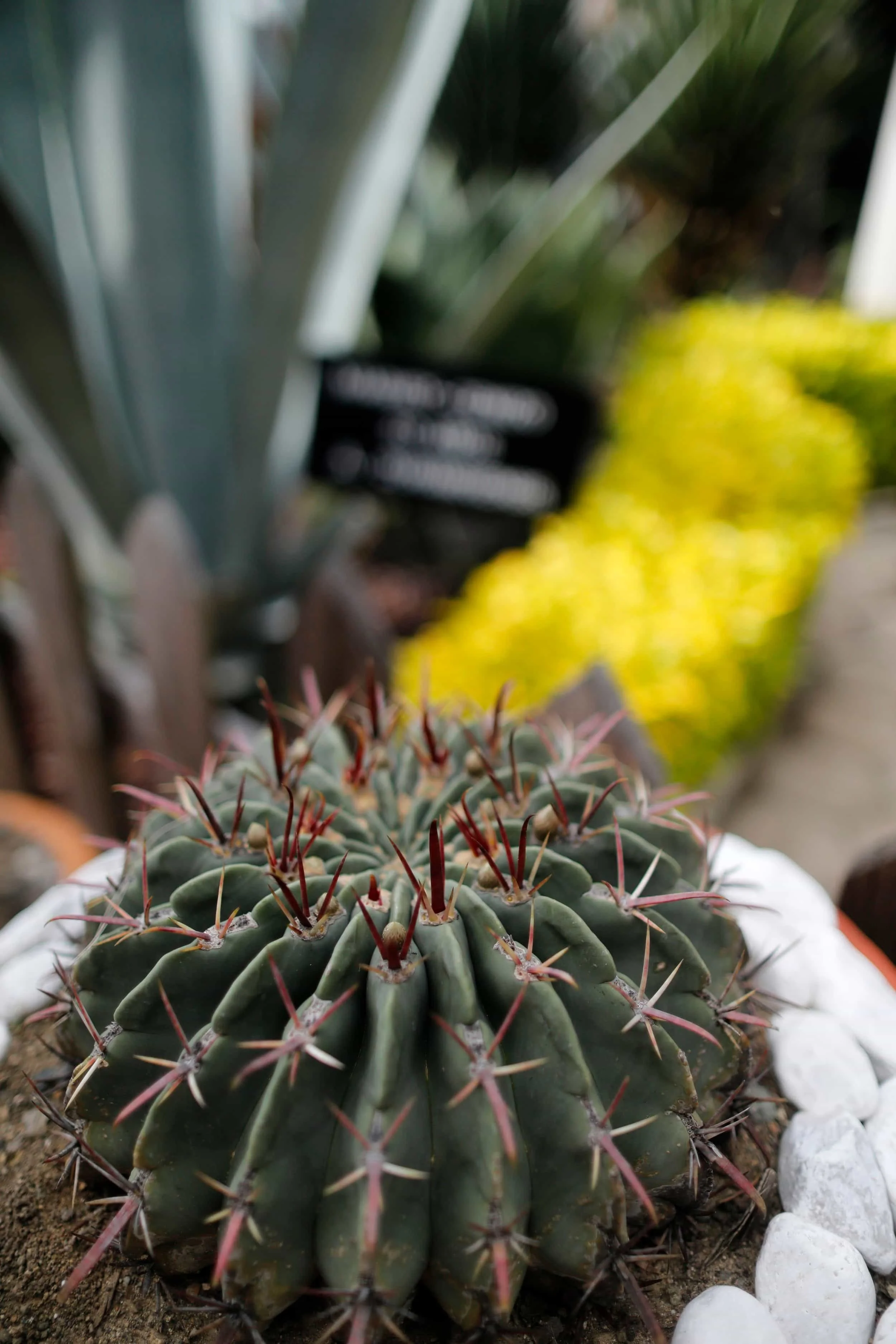
The work of turning sun-soaked agave into mezcal is a ritual that begins long before the first ember is lit. The agaves themselves keep time with the seasons: mezcaleros judge readiness not by a calendar but by the plant’s shape and weight, the dense sweetness hidden in the piña. Espadín, the reliable heir in many palenques, will often be coaxed from the earth after six to ten years; the wild agaves that lend mezcal its wilder, earthier notes arrive as surprises, each boasting its own unpredictable timetable.
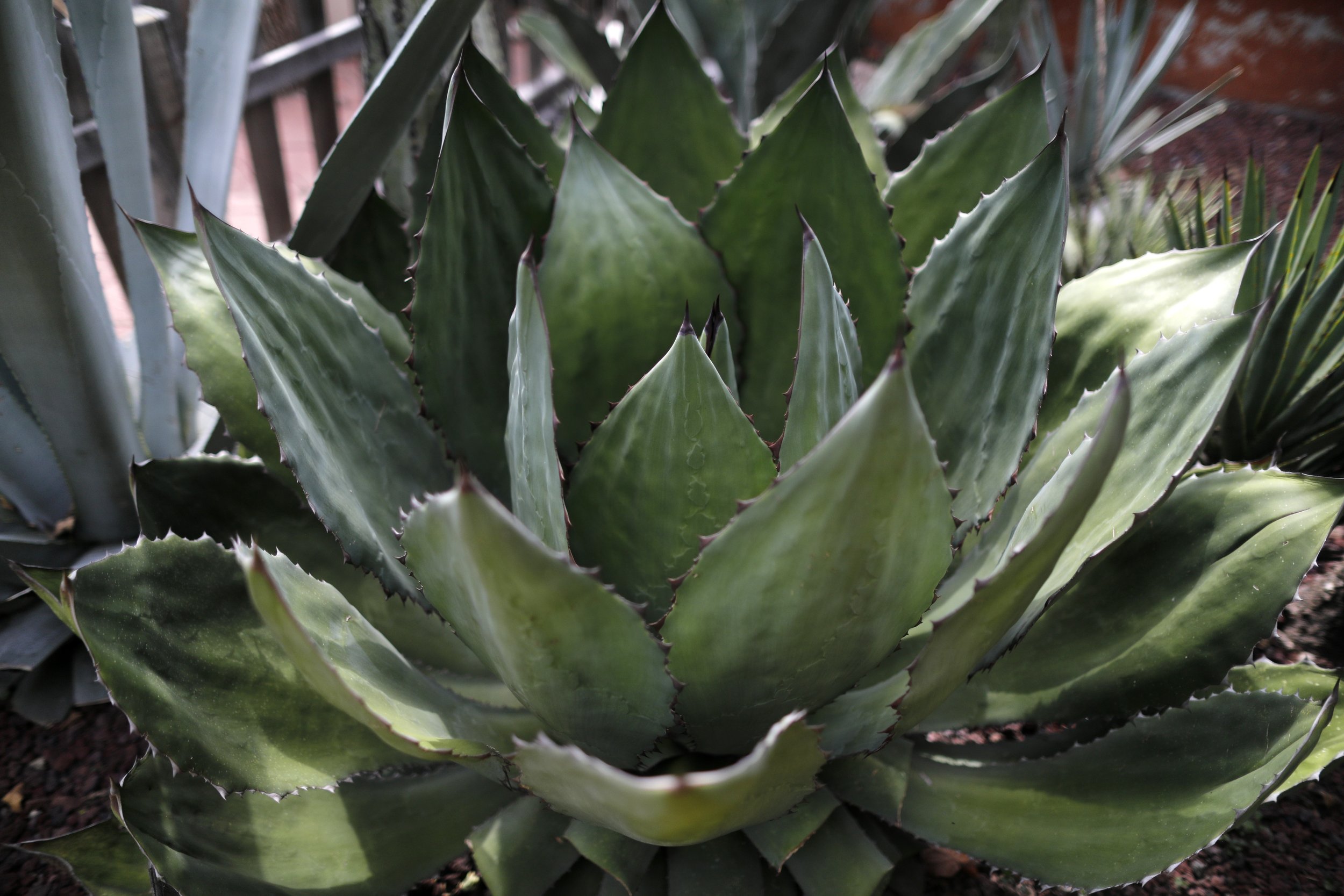
Harvesting is a show of practiced grace. Jimadores, with the long-handled coa balanced over a shoulder, circle the agaves like field surgeons. With a few expert chops they strip away the protective leaves and reveal the piña — the rounded heart that will become nectar. In some yards, the leaves are trimmed clean; in others, the blades remain, a mark of family custom and regional style. There’s a quiet choreography to it: one swing, one peel, a careful assessment of each plant’s density and sweetness.
Then comes the slow procession. Piñas are hauled down dusty tracks to the palenque, sometimes by mule, sometimes by truck, sometimes by strong hands and sweat. Those gathered from high, rocky slopes travel farther and weigh heavier, the labor of mountain-grown agave visible in the rounded bulges of their cores.
At the palenque, the stacked piñas are a promise — of smoke, of heat, of the slow alchemy that will turn earth and time into mezcal. Observed from a distance, the harvest and prep at El Rey feel less like industry and more like an ancient, sunlit rite that binds landscape, craft and flavor.
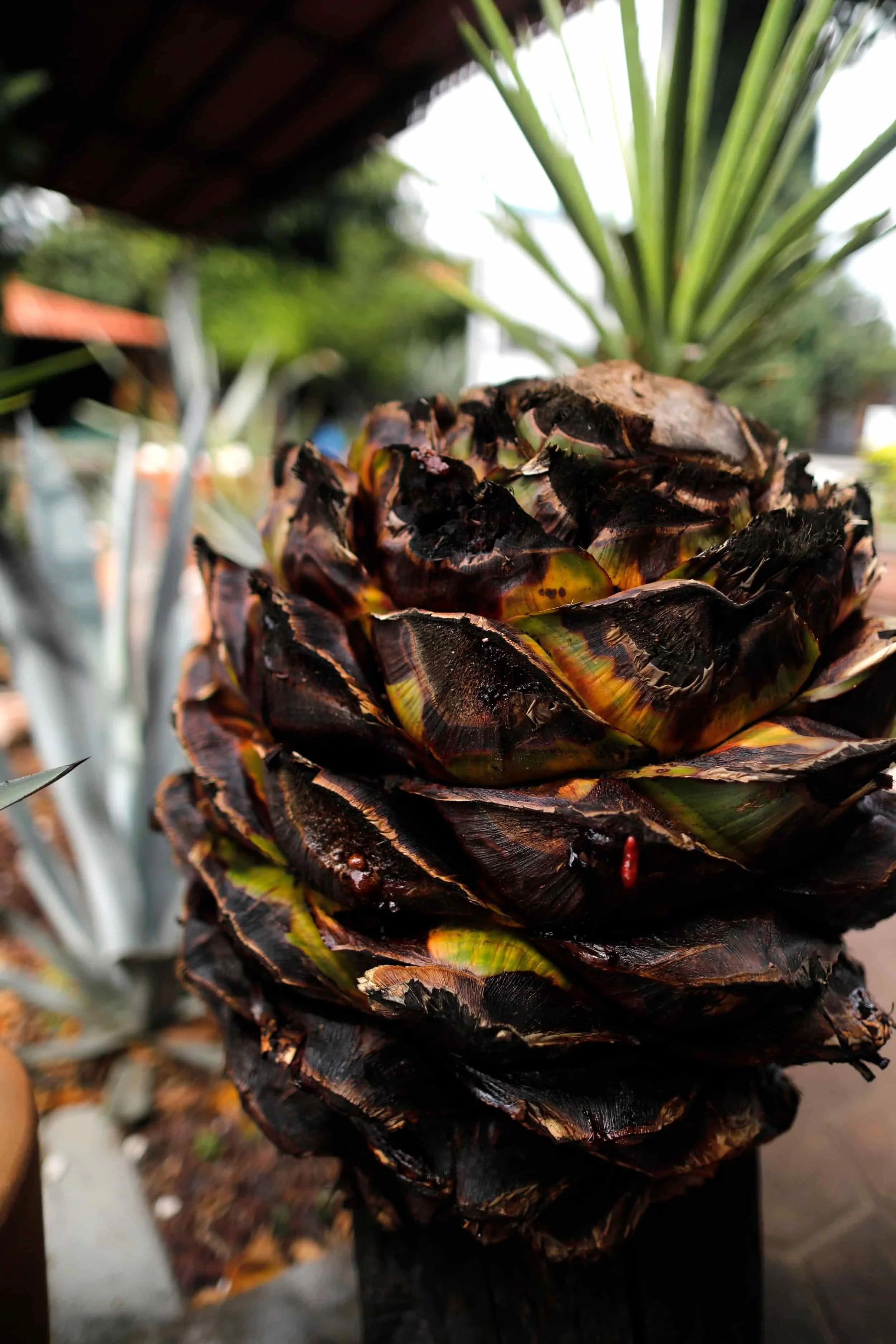
The mezcal kitchen here is nearly a secret passed down through smoke and stone. Imagine a bowl of earth carved into the ground — sometimes conical, other times rectangular — lined with river-smooth stones that will become the heart of the oven. For hours, a wood fire breathes life into those stones until they glow red, a patient ritual that sets the stage for transformation.
Once the stones are searing, they are smothered with a damp blanket of agave fiber or packed earth and the stars of the show — piñas, the roasted hearts of the agave — are piled into the pit. In some of the ovens, you’ll find a mix of hot stone and green agave layers, each alternation building heat and smoke into the stack. Agave leaves and cloth are laid over the pile, then the whole arrangement is sealed with earth, trapping heat, steam and the bitter-sweet aroma of cooked agave.
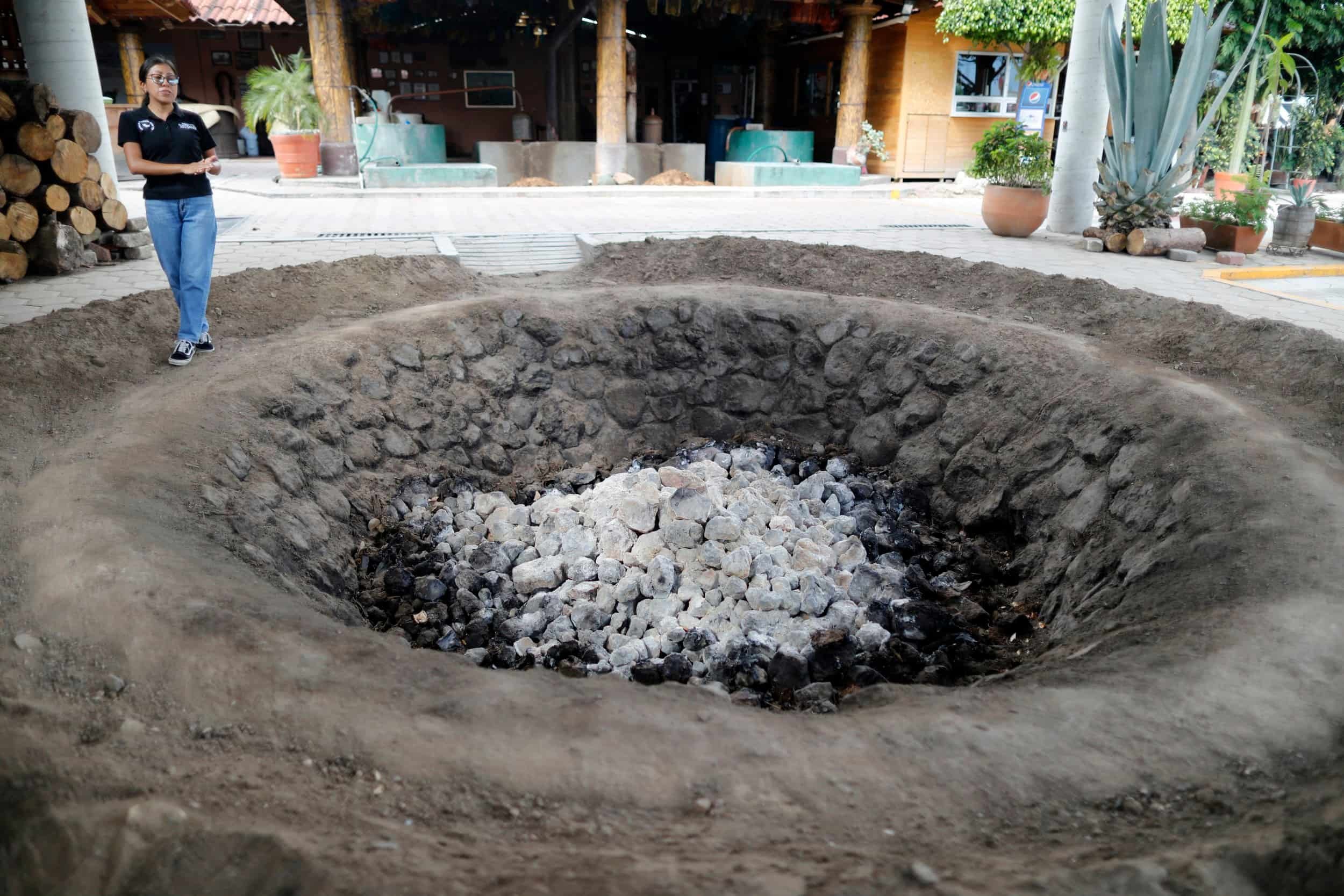
What follows is a slow, almost geological kind of cooking. For three to seven days — depending on the size and species of the agave — the buried piñas simmer in their own buried furnace. Wood smoke and persistent, even heat weave into the plant’s flesh, converting inulin into fermentable sugars and leaving that signature smoky-roasted flavor that defines mezcal.
At El Rey de Mazatlán, this age-old earth oven method isn’t just a technique; it’s a sensory page of heritage, where time, soil and smoke collaborate to turn wild agave into liquid gold.
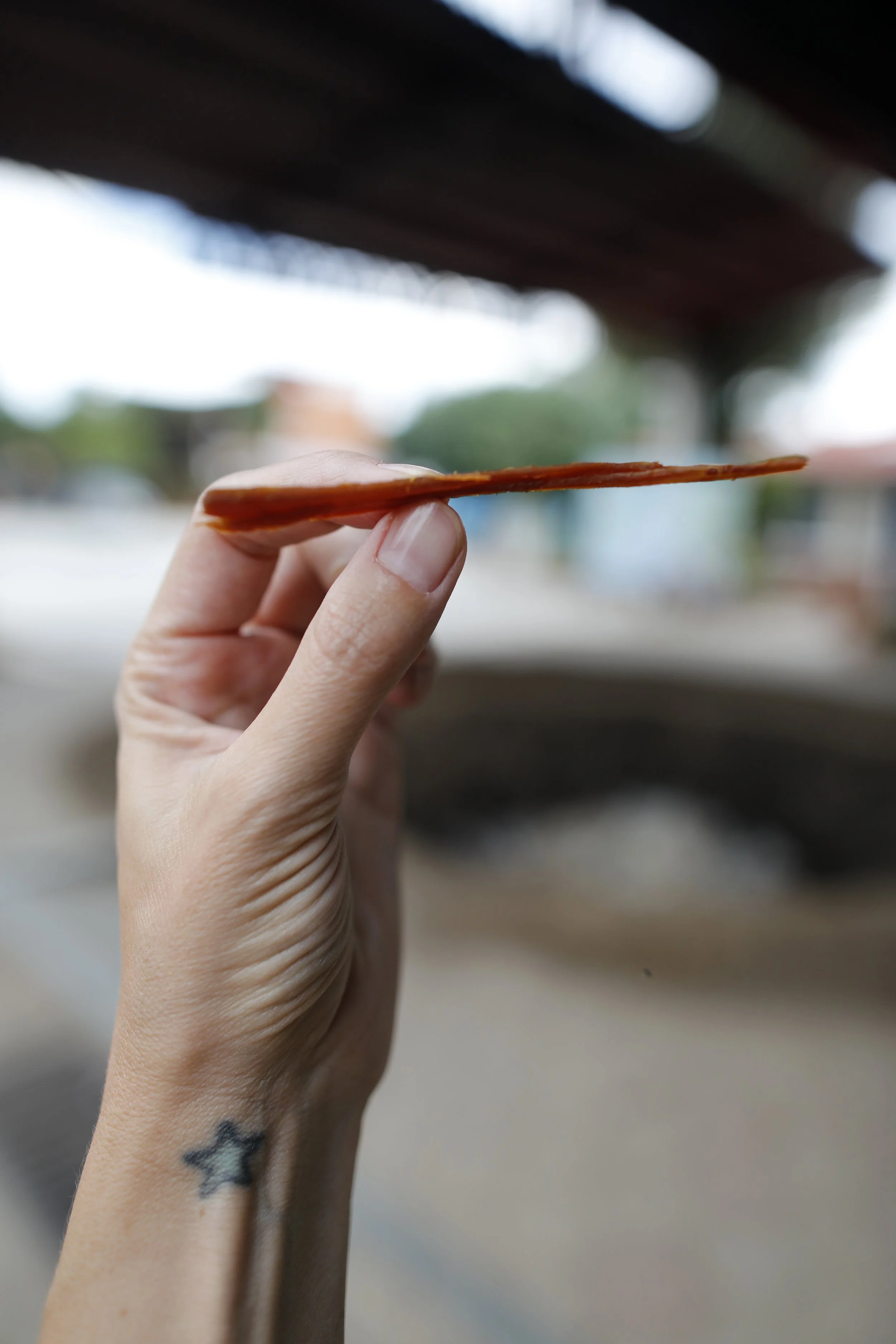
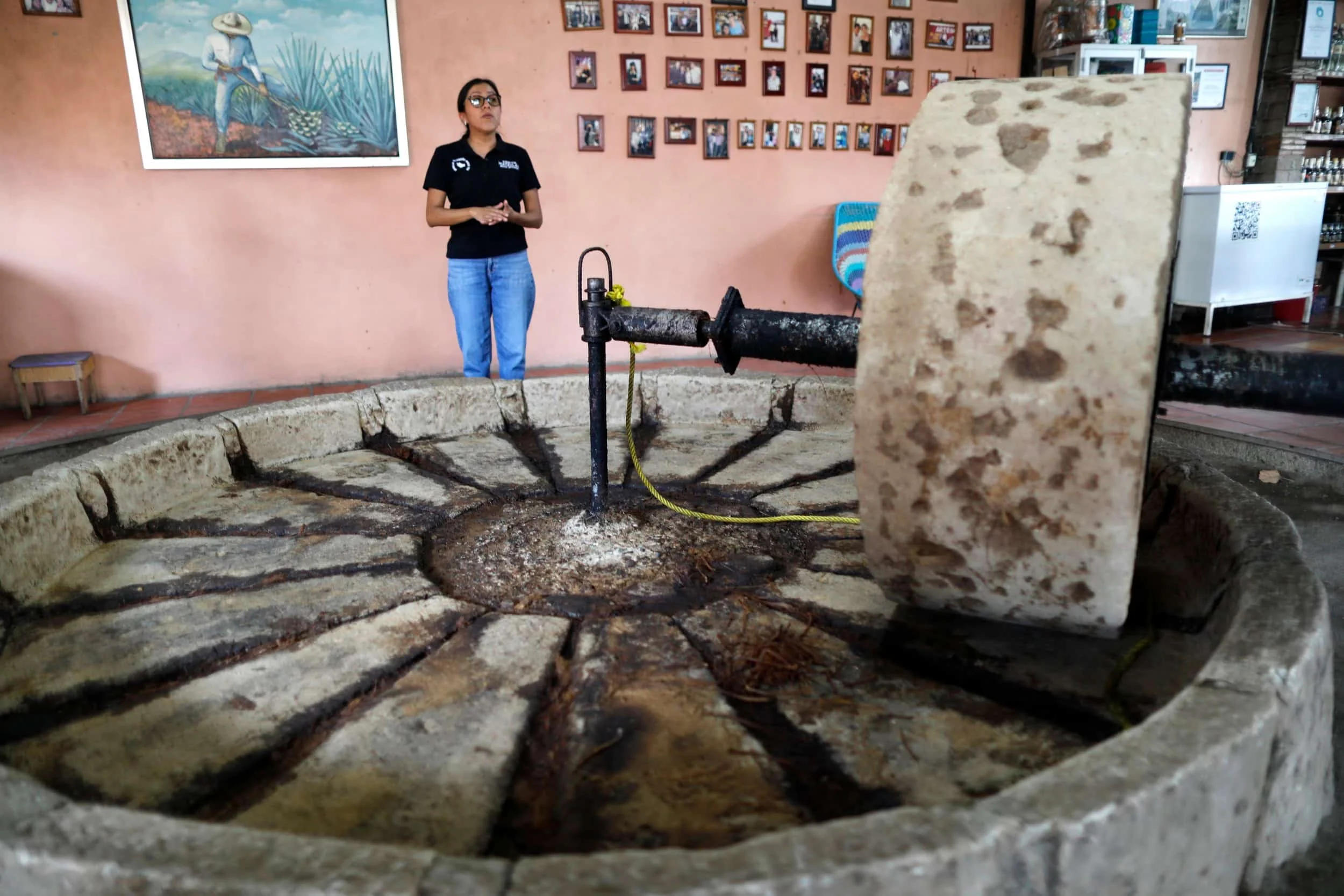
The agave’s journey from field to fermentation is a deliberate, tactile ritual — a choreography of weight, stone and muscle that anchors mezcal to earth and history. Central to that ceremony is the tahona: a massive, circular wheel hewn from volcanic rock that slowly grinds cooked agave piñas into a dense, fragrant pulp.
Once turned by mule and now often by mechanized means in larger workshops, the tahona’s patient rotation teases sugars and fibers from the steamed hearts of the plant, producing the bagazo, a wet, fibrous mash that carries the aroma of smoke, earth and caramelized agave.
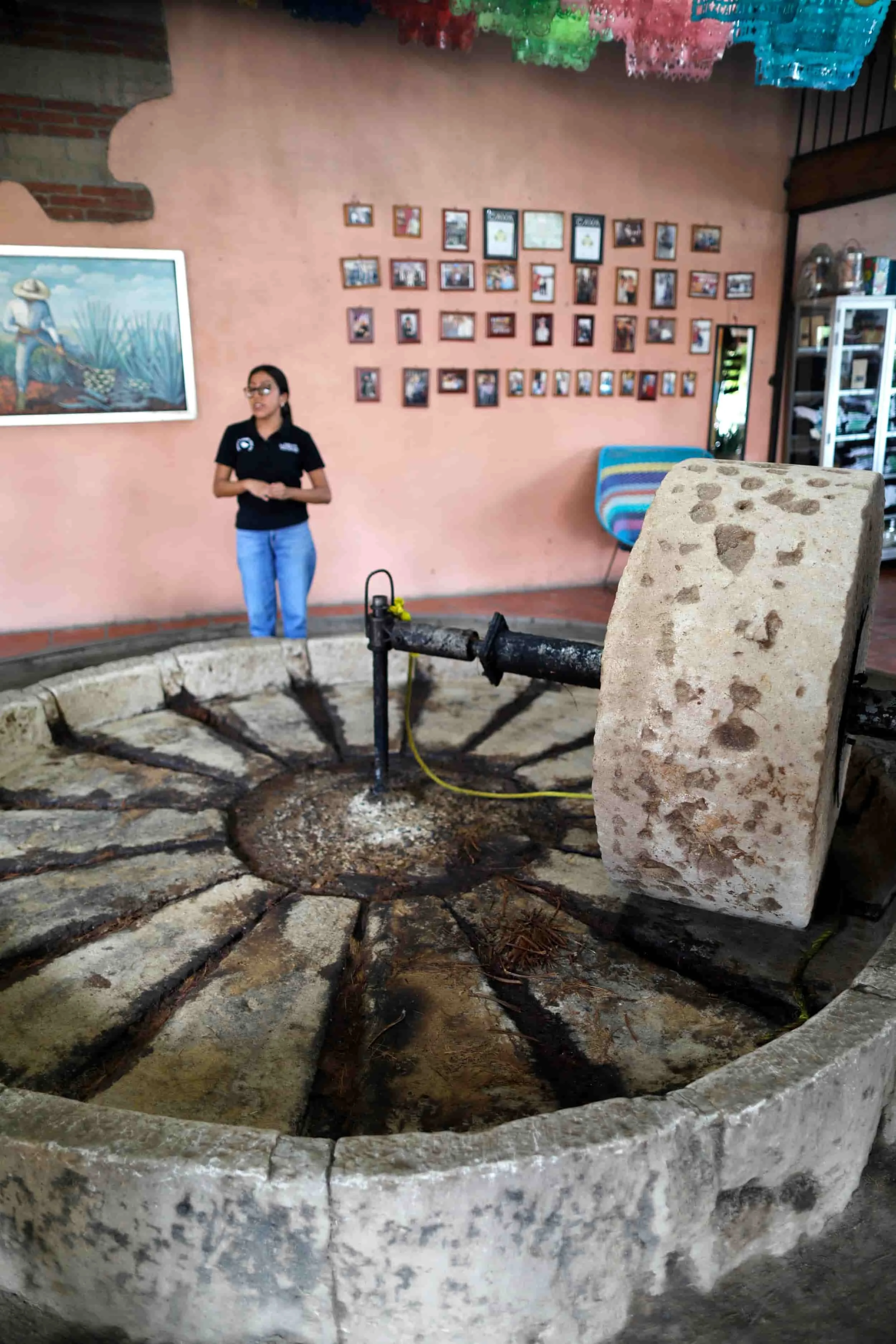
Though some palenques have adopted roller mills to speed the process, El Rey de Matatlán intentionally highlights the tahona, choosing the older cadence of stone over the clinical efficiency of machines. The result is not only a different texture of mash but a continuity with generations of makers — a physical link to techniques that shaped mezcal’s character long before industrial convenience arrived.
After crushing, hands still play a crucial role. Workers break apart the pulp to expose inner fibers and encourage the even uptake of wild yeasts during fermentation. It’s a quiet, intimate labor, a bridge between the monumental tahona and the invisible microbes that will transform the bagazo into something altogether alive. In Matatlán, the milling phase is less a step in production than a ritual that preserves the spirit of mezcal itself.
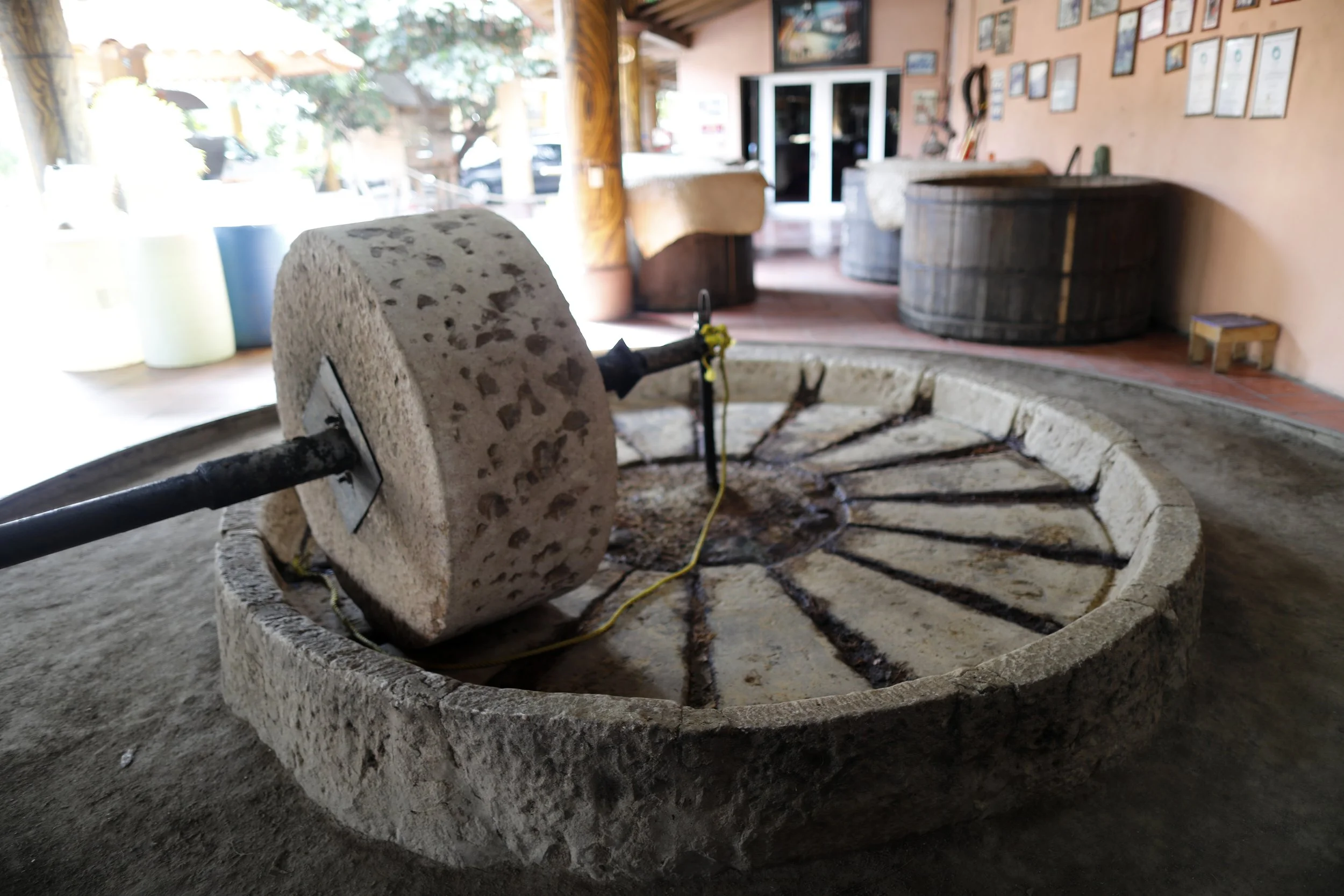
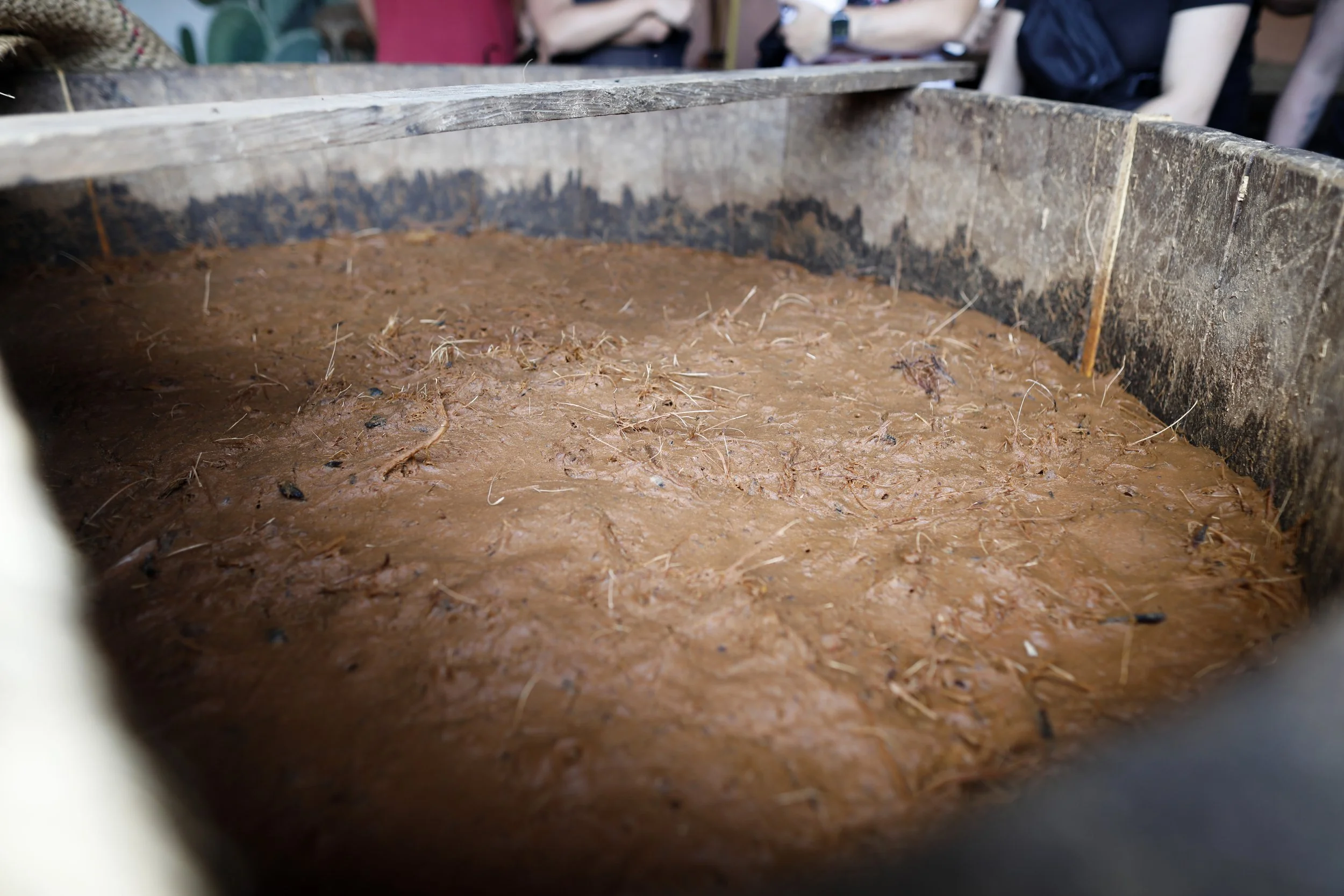
After the agave piñas are cooked and crushed, the pulp is poured into open vessels that vary with tradition and resources: shallow wooden vats, stone-lined pits or large barrels made from local woods. At El Rey, wooden tubs and stone-lined pits are common, each contributing its own subtle influence to the process.
Industrial yeast strains are not used here. Fermentation is spontaneous: wild yeasts from the air and local microorganisms convert the sugars into alcohol. Water is sometimes added to adjust the must’s consistency and it’s not unusual for some of the bagasse — the fibrous agave residue — to be returned to the fermenting mass to affect texture and flavor.
Fermentation lasts between three and ten days, depending on temperature and sugar levels. But beyond calendar time, the Zapotec method honors seasonality and the local microflora: heat, humidity and the native microbes of Matatlán leave their mark on every batch. The result is more than mezcal; it’s a liquid reflection of the landscape, the climate and the hands that make it.
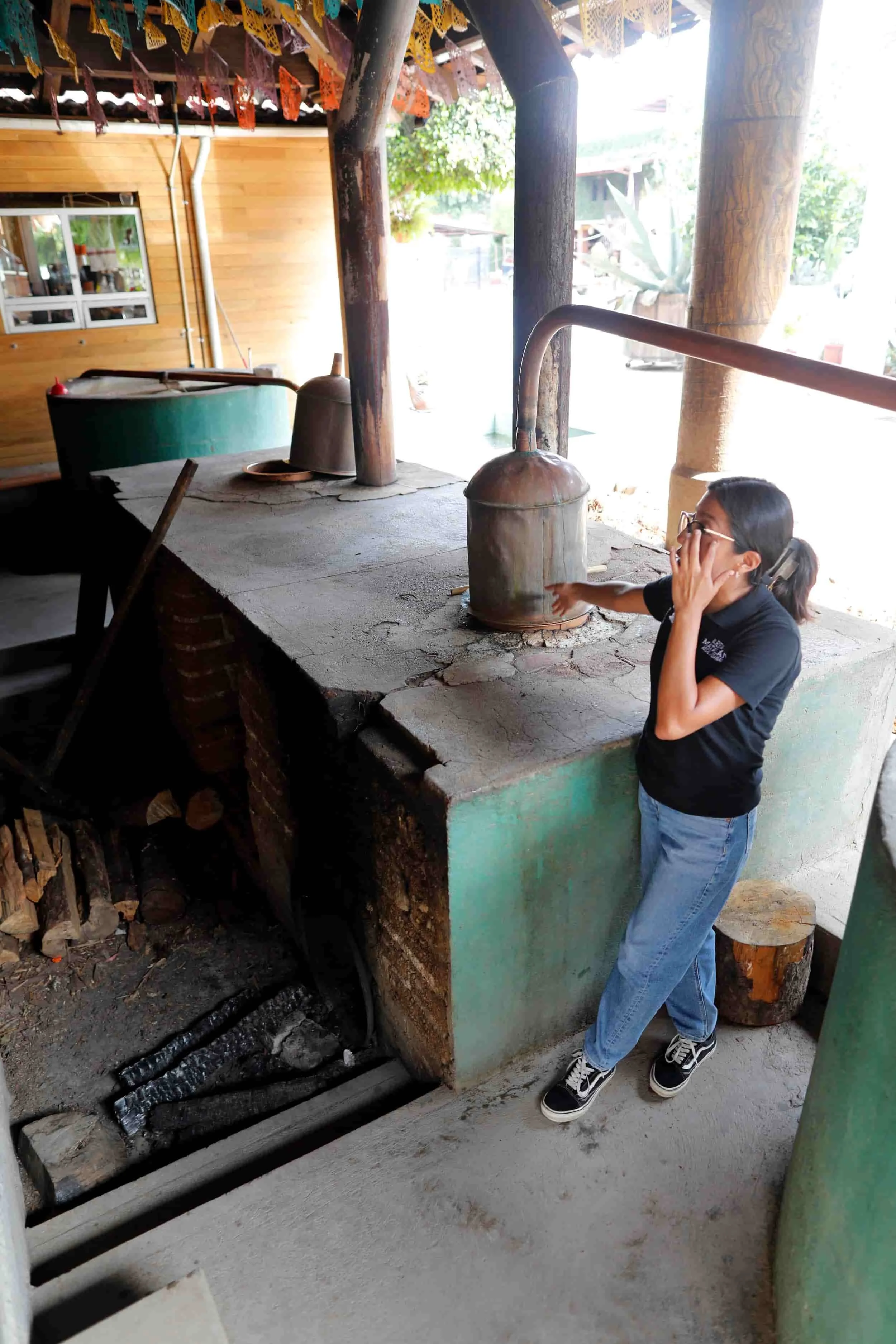
The distillation process blends traditional methods with careful attention to flavor.
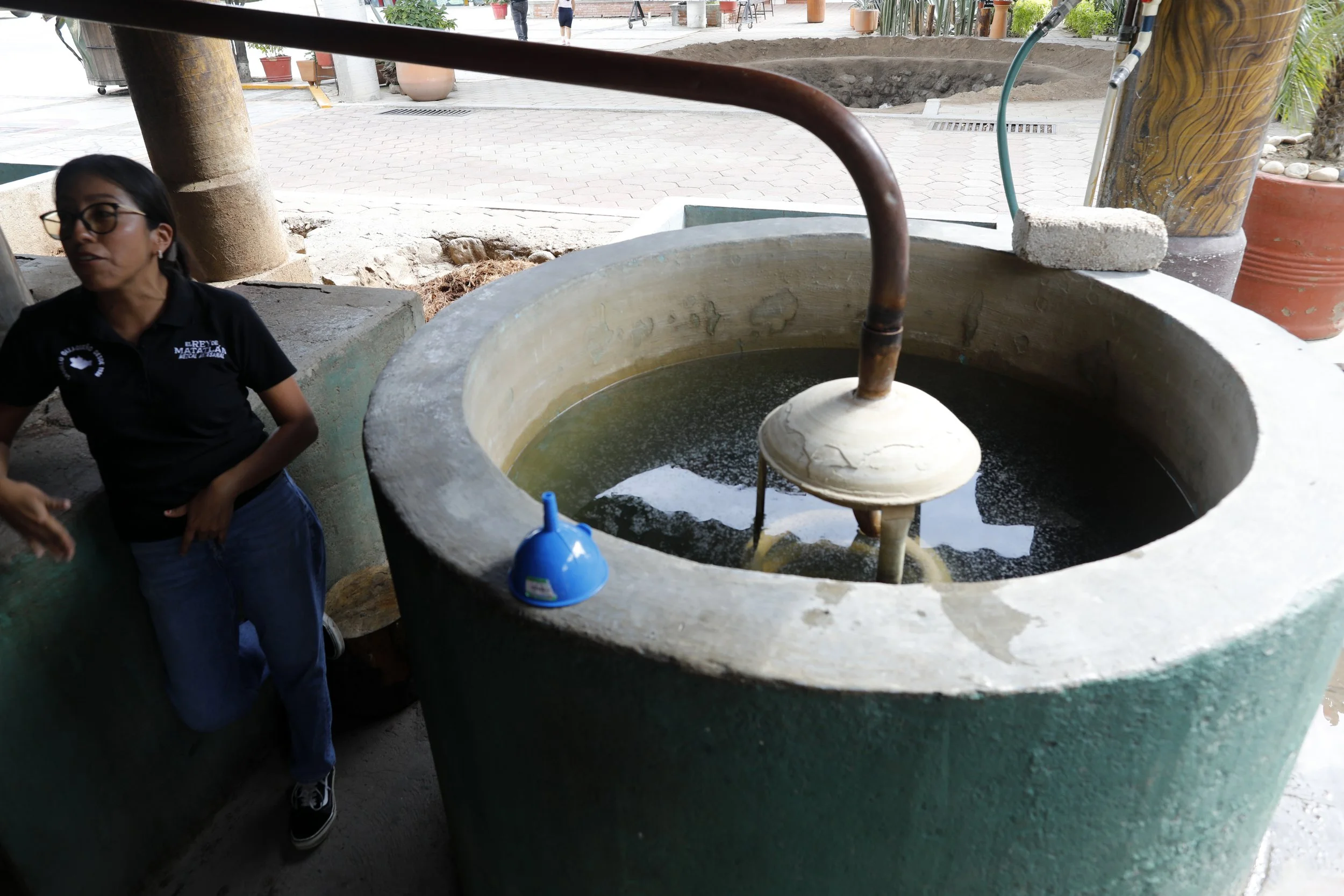
The distillery resembles a small theater where fire, metal and clay perform a ritual that turns roasted agave into something fragrant and drinkable. The stills themselves — gleaming copper pots alongside hybrid clay-and-stainless vessels — aren’t just machines; their materials shape the chemistry of the spirit. Copper draws away unwanted sulfurous notes, while clay holds heat differently, coaxing out subtler, earthen flavors.
The process unfolds in two distinct passes. The first run, the ordinario, is a blunt instrument: it concentrates alcohol and separates the wash into a more potent, rougher distillate. The real artistry happens on the second run, where rectification and the crucial “corazón” cut take place. This is where the distiller becomes an editor, sculpting a narrative from volatile aromatic fragments.
Rather than relying on instruments alone, the team at El Rey trusts their senses. They sniff and sip the developing distillate, making the delicate decision of when to move from heads — the sharp, aggressive compounds that can bite — to hearts, the clean ethanol laced with the agave’s floral and smoky signatures. The final shift is equally deliberate, leaving behind the heavy, oily fractions that cloud the clarity.
Pace and temperature are the understated heroes here. A steady, moderate distillation preserves the agave’s floral high notes and the subtle smoke imparted during roasting, while avoiding the oils that sneak in with a fevered boil. The result is a spirit that carries the landscape — the mineral hush of the soil, the warmth of the cook pit — in every sip, proof that thoughtful technique can translate terroir into glass.
El Rey keeps a strong focus on the raw, roasted-agave personality of mezcal, so many of its offerings arrive as joven — unaged and bright, the terroir and smoke taking center stage. These joven expressions are brought to bottling strength and given a short rest so the spirit settles before it heads into bottles.
When aging is used, barrels become the palette for added nuance. Neutral oak softens edges, American oak contributes vanilla and baking-spice notes and other woods introduce their own oxidative complexities. Time in wood deepens color, rounds the mouthfeel and layers in new aromatic dimensions, so the choice of barrel and the length of maturation map directly onto how the mezcal evolves.
Between those two approaches, small batches sometimes receive a gentle interlude in glass or stainless steel — a brief harmonizing rest that lets disparate flavors marry without altering the core character. The result is a lineup that ranges from raw and expressive to quietly nuanced, each bottle reflecting deliberate choices about rest and aging.
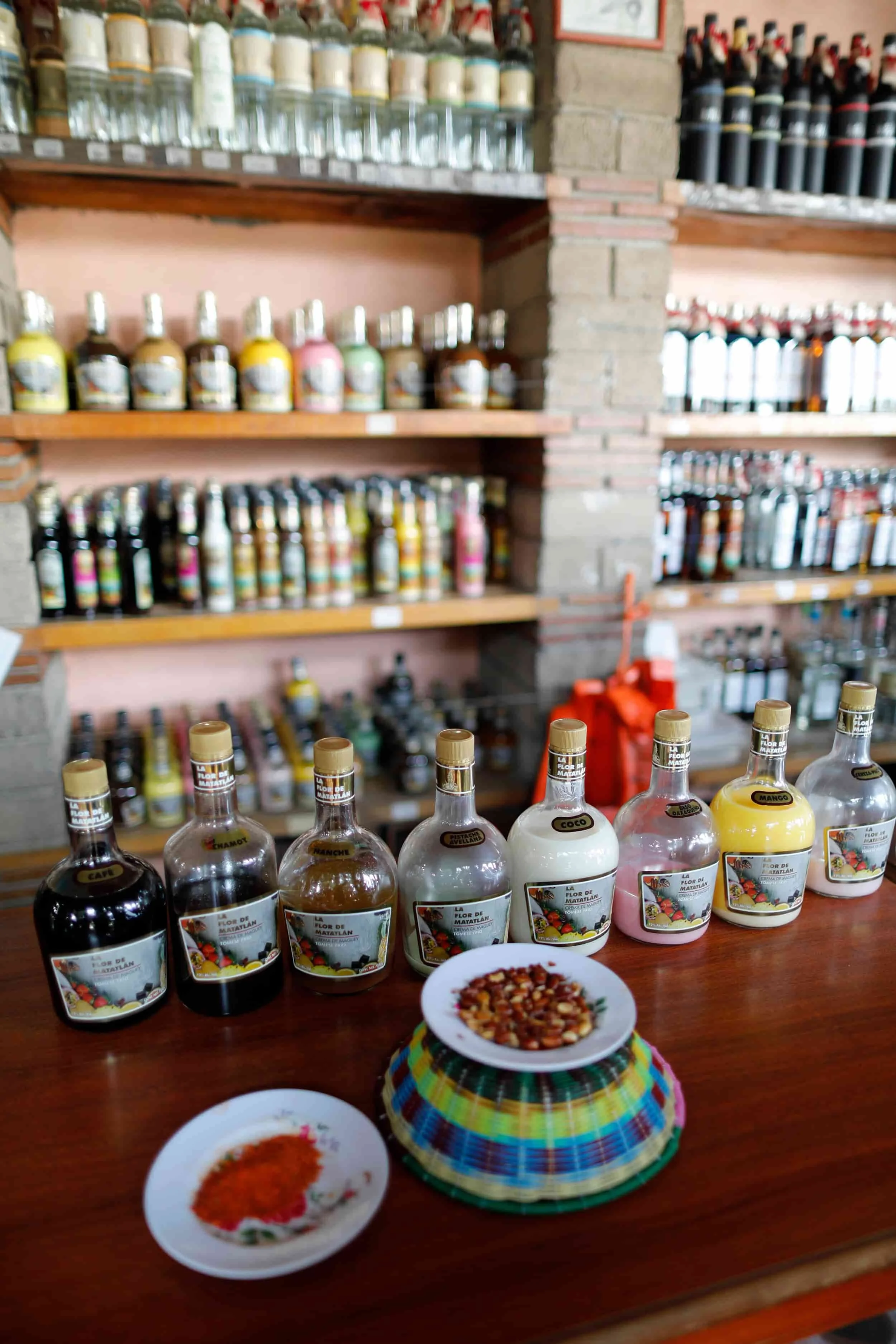
The final act of mezcal-making is as meticulous as the craft that precedes it. Each expression is proofed down to its target ABV with care, then filtered according to the distiller’s chosen method — decisions that preserve texture, clarity and the spirit’s intended character. Bottles from this small-batch producer often wear their lineage proudly: numbered editions and batch details on the label tell the story of where and when that mezcal was born.
Before a release leaves the distillery, it undergoes a sensory evaluation — an exacting tasting for balance, aroma, mouthfeel and finish. This tasting is the distillery’s final quality gate, ensuring every bottle carries the signature standards of El Rey de Mazatlán and delivers the nuanced experience drinkers expect.
Mezcal Tasting at El Rey de Mazatlán
Over in the bar area, the team prepares for a delicious mezcal tasting, turning an ordinary afternoon into an immersive discovery of Mexico’s smoky spirit. The tasting typically begins with a brief introduction: what mezcal is, how it differs from tequila and the regions and types of agave used to make it. At El Rey de Mazatlán, the staff guide guests through a curated flight that highlights the main styles of mezcal and the subtle variations that come from different production methods.
What is mezcal anyway?
Mezcal at El Rey de Mazatlán is a smoky, handcrafted agave spirit served with regional flair — often presented alongside orange slices and a sprinkle of sal de gusano (worm salt). Unlike industrial tequila, mezcal highlights artisanal production: roasted agave hearts, slow fermentation and small-batch distillation, giving each bottle a distinct, earthy character. Here, mezcal is paired with local seafood and bold flavors, offering a taste of Oaxaca and Mexico’s coastal traditions in a lively, authentic setting.
And what gives each variety its distinct flavor?
Mezcal unfolds like a landscape in a glass, each sip mapping the journey from earth to spirit. The telltale smoke and char of pit-roasting form the first contour lines, a dramatic imprint of fire on agave. The wood chosen for the pit and the way the hearth is built sculpt that smoke — sometimes a soft, embered whisper, sometimes a bold, campfire proclamation — and even hints of mineral grit can surface from the buried oven itself.
Beneath the smoke, the agave species and the terroir act as the distillery’s atlas. Some plants lend floral or grassy brightness, others lean into deep earthiness or ripe, fruity sweetness; certain locales add a saline or rocky edge that anchors the spirit to its place. During fermentation, the vessel and the native yeasts tucked within it quietly weave in esters that can brighten the mezcal with tropical or stone-fruit aromas, or introduce a cheeky funk that keeps the palate lively.
Finally, distillation and the distillateur’s choices polish the map. How cuts are made and whether the spirit is left intentionally rustic or refined governs its clarity and roundness, while the retention of complex congeners (minor impurities) leaves echoes of spice, smoke and botanical complexity. Taken together, these elements make each mezcal not just a drink but a layered tale of place, process and patience.
Boarding a mezcal flight is like stepping into a tiny museum of Oaxaca’s volcanic valleys — each pour a miniature exhibit that tells a different chapter of agave’s journey from field to glass. The first stop is the joven, or blanco: unaged mezcal bottled soon after distillation. It arrives bright and clear on the palate, all sharp agave sap and smoke, a raw portrait of the plant and the still that shaped it. Here, you feel the skeleton of mezcal, its elemental flavors unsoftened by time.
Next, comes reposado, a mezcal that has lingered in oak for a few months. The spirit takes a softer form; wood and vanilla whisper at the edges while the fresh agave and characteristic smoke remain firmly in the foreground. Reposados are like a village house with a thatched roof and a freshly painted door — familiar, tempered and quietly civilized.
Añejo is the long-view variant, aged a year or more in barrels until it acquires a deeper hue and a richer vocabulary: caramel, dried fruit and warm oak notes fold into mezcal’s earthy backbone. An añejo is the evening conversation around a wooden table, complex and resonant, with the smoke of the earlier stages still threaded through.
Beyond these categories, a curated flight often includes bottles from different agave species — espadín, tobalá, arroqueño, cenizo — and inventive styles like joven abocado, where a touch of aged mezcal is blended into a joven. Each species and each terroir contributes its own signature: floral perfumes that rise like a mountain breeze, vegetal undercurrents as green as agave leaves or mineral edges that echo the rocky soils. Together, they form a concise but revealing map of mezcal’s diversity, perfect for travelers who want to taste the landscape in single, measured sips.
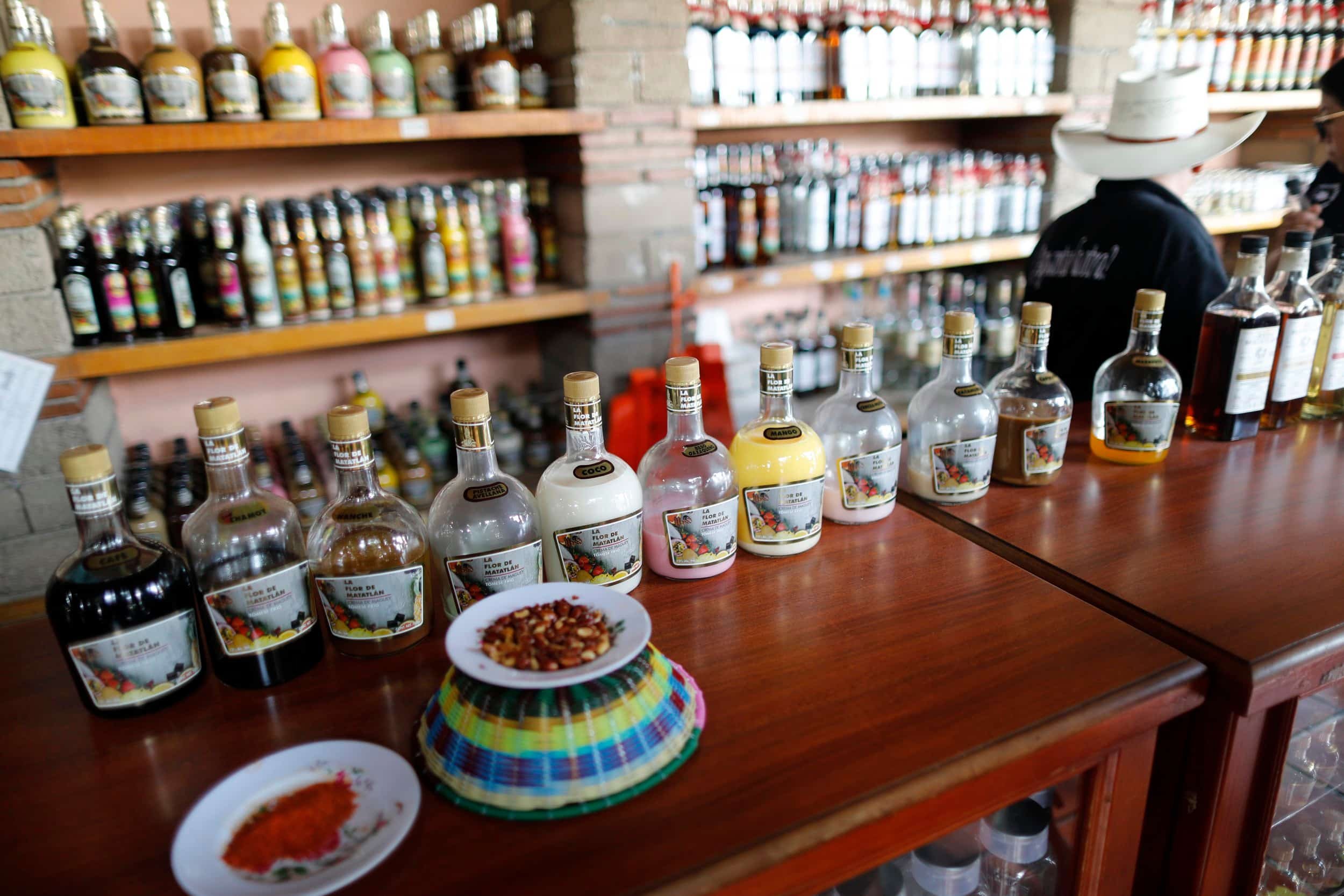
At El Rey, the mezcal tasting is a small theatrical ritual. Each pour arrives cradled in traditional copitas — those earthy, tulip-shaped clay cups that funnel the spirit’s scent toward your nose — though you may also notice the occasional velvety snifter, chosen to coax out deeper, floral and smoky layers.
Flights are arranged like a carefully plotted map: begin with the light, floral mezcals and follow a deliberate arc toward the older, wood-aged or intensely smoky bottlings, so the subtler notes can unfurl before the bolder ones arrive. Between sips, the palate is reset with humble, potent accompaniments: crisp orange segments dusted with sal de gusano or simple crackers, each bite brightening the senses and preparing you for the next whisper or roar from the glass.
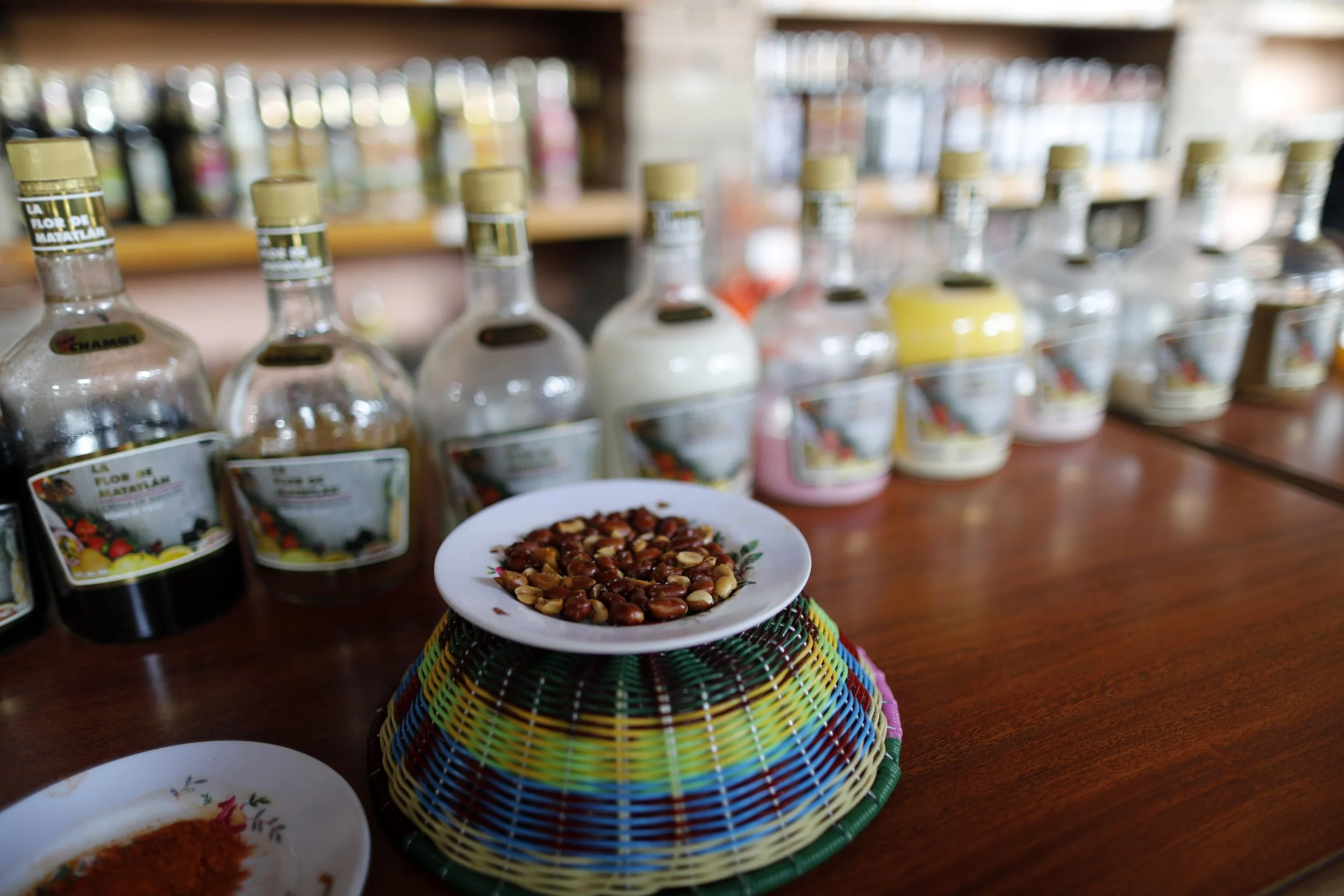
A glass of mezcal is a small, smoky map of Mexico — and knowing how to read it turns a drink into a journey. Start by holding the glass up to the light: young mezcals gleam crystalline, while reposado and añejo take on warm golds and ambers that hint at barrel time and subtle oxidation. Let your eyes travel over the liquid’s legs; viscosity can whisper of age and texture before you even lift it.
Bring the rim to your nose and breathe gently. Mezcal’s aroma is layered and often surprising: bright agave sweetness at the front, a ghost of smoke that can be campfire or distant woodsmoke, floral or fruity high notes and sometimes an earthy or mineral backbone. Don’t rush this — agave spirits are nuanced and aggressive inhalation muddles more than it reveals.
When you sip, let the mezcal spread across the palate. Start small; the first impression is frequently vegetal or floral, then the heart of the spirit unfurls — smoke, spice, tropical fruit or saline minerality — before a lingering finish ties the experience together. Watch how the flavors evolve from entry to aftertaste; that arc is where mezcal’s character lives.
Mezcal is meant to be savored, not shot. Share it slowly, let conversation ebb and flow around each glass and allow the spirit to connect you to the place it came from. In that patient appreciation, you’ll find not just flavor but a sense of the land, the fire and the hands that made it.
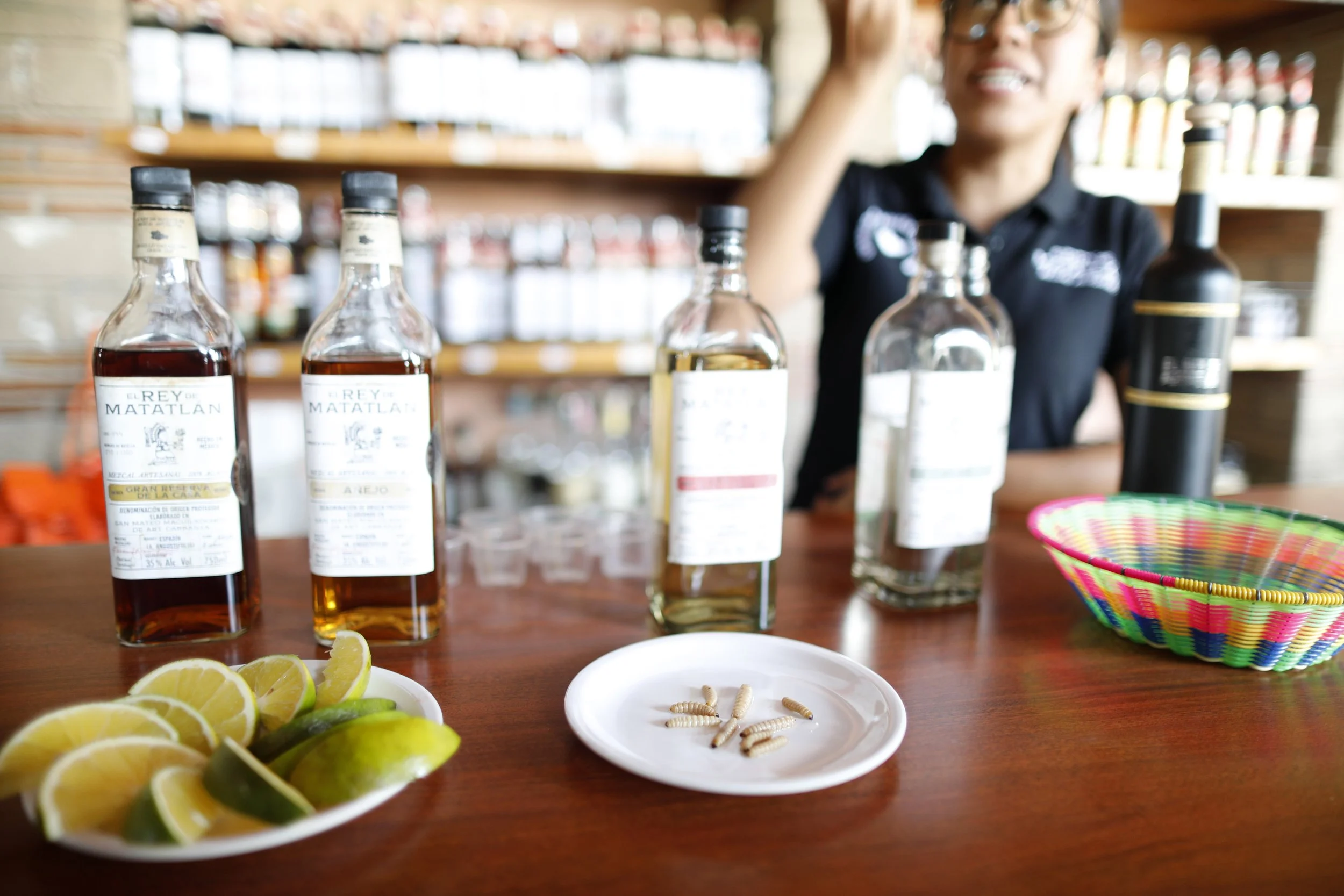
They call it the “worm,” though what squiggles at the bottom of some mezcal bottles is actually a larva: either the rust-red gusano rojo or the pale chinicuil that feeds on the agave. Far from a centuries-old ritual, the practice of dropping a bug into mezcal is a 20th-century flourish — part marketing, part folklore — that has since taken on its own curious mythology.
For travelers, the worm is less a culinary imperative than a conversation piece. It is edible, absorbs alcohol and can lend a faint earthy note to the spirit but it is not a passport to quality; respected mezcaleros rarely rely on it to prove their craft. Instead, the presence of a worm signals a story — of showmanship, of regional identity and of the playful edge of mezcal culture that invites tasting and tales in equal measure.
Etiquette around the worm is easygoing. If you spot one in a bottle during a tasting, feel free to sample it out of curiosity but there’s no pressure. Guides and staff at places like El Rey are used to every reaction: they’ll tell you whether the worm was added as a nod to tradition or as a subtle flavor experiment and they’ll gladly handle the tasting for you if you’d rather watch than chew.
In the end, the worm is part of the mezcal experience — less a test of bravery than a small, vivid reminder that so much of what we sip carries stories worth savoring.
⚠️ Good to Know | Popular stories say the little larva in mezcal boosts flavor, proves the booze is strong or sparks hallucinations — but Oaxacans largely call it a touristy flourish. I’ve had a few myself, and honestly, they don’t seem to do much beyond adding a bit of novelty — and a good dare.

A mezcal tasting here is more than a set of pours: it’s an education in tradition, terroir and technique, guided by a team passionate about sharing the nuances behind each glass.
El Rey unfolds like a small school of mezcal, where each pour comes with a story. The room hums with conversation about the mezcaleros who coax flavor from the agave, the seasonal rhythms of the harvest and the distinct names and personalities of each bottle lined up for tasting.
Rather than rushing through samples, lean into curiosity: ask the staff which agave species the spirit came from, whether the piñas were roasted in an earth pit or a brick oven, what kind of still was used and whether the liquid saw time in barrels. Those details — agave variety, cooking method, distillation style, aging — are the fingerprints of the final spirit. And because mezcal can surprise you with its strength, sip slowly, let the bites they offer reset your palate and let the afternoon unfold at a thoughtful pace.

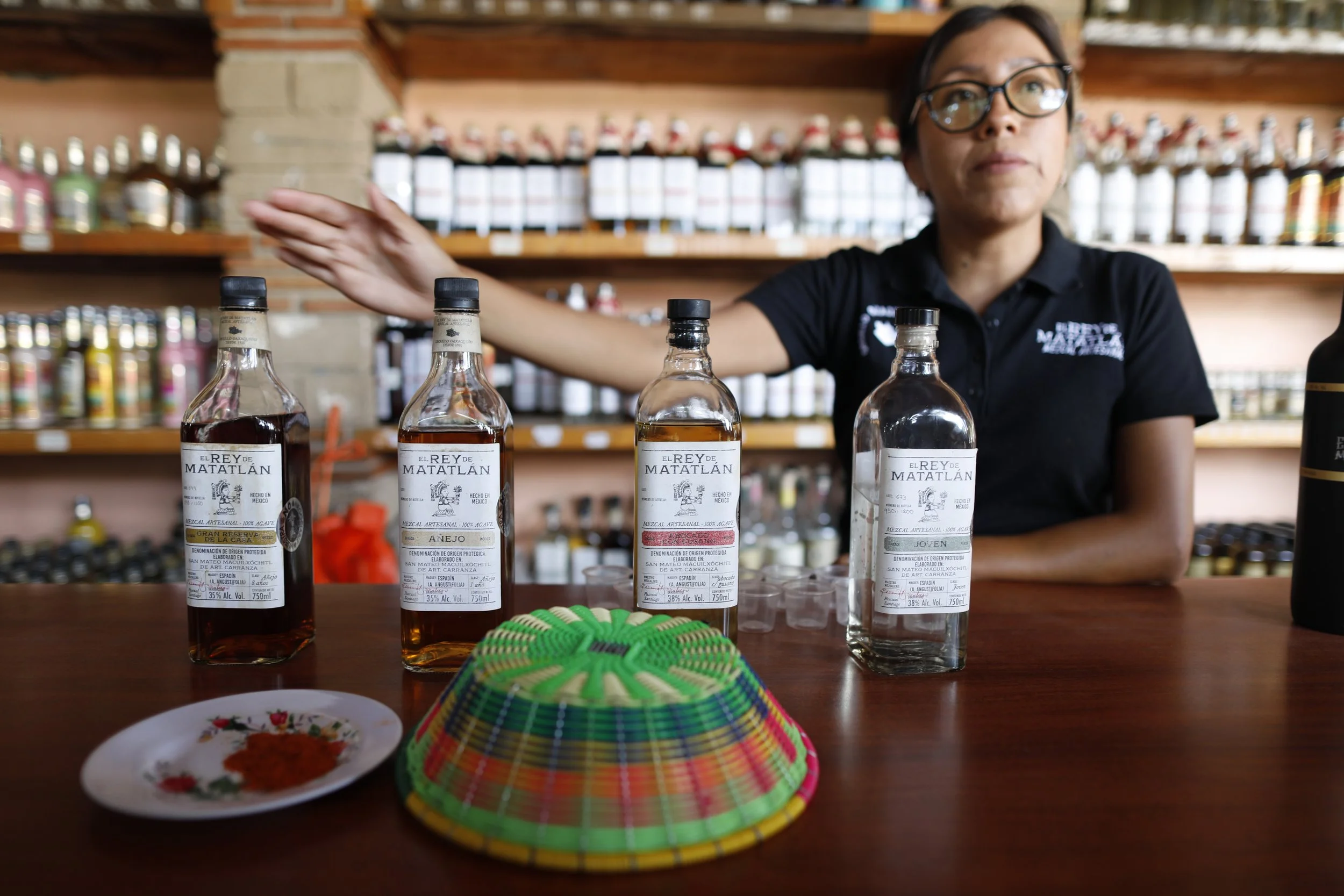
Our tasting felt like a lively celebration of flavors. The staff welcomed us with warm smiles, shared stories about each drink and answered every question with enthusiasm. Bottles kept arriving — no rush, no limits — so we could linger over favorites and discover new ones. Best of all, anything that made us swoon was right there to buy and bring home, turning a great afternoon into a delicious souvenir.
💡 Local Tip | Before you leave, make sure to gather a few favorite mezcal samples to bring home — little bottles that carry the smoky, sun-warmed spirit of the region. Several sizes available.
Mexican Ice Cream
As if the mezcal tasting weren’t enough, tucked inside was a small ice cream counter — a completely unexpected and very welcome surprise. Brightly colored tubs of nieve and paletas filled the case, with flavors ranging from familiar favorites to ones distinctly rooted in Mexico.
Mexican nieve is often lighter and icier than the dense, cream-forward gelato you might know from Europe, with both milk- and water-based varieties that let fresh fruit and local ingredients shine. Look for flavors like cajeta (goat’s milk caramel), mango con chile, tart tamarind and creamy nieve de nata, along with seasonal fruits such as mamey, guanábana and guayaba.

It wasn’t something we had planned to seek out, which was probably part of the fun. After tasting mezcal, picking a couple of unfamiliar flavors from the case felt like one of those small, spontaneous travel moments that ends up sticking with you.
💡 Local Tip | Try a couple of small scoops rather than sticking with something familiar. If there’s a flavor you’ve never heard of, this is the place to give it a shot.
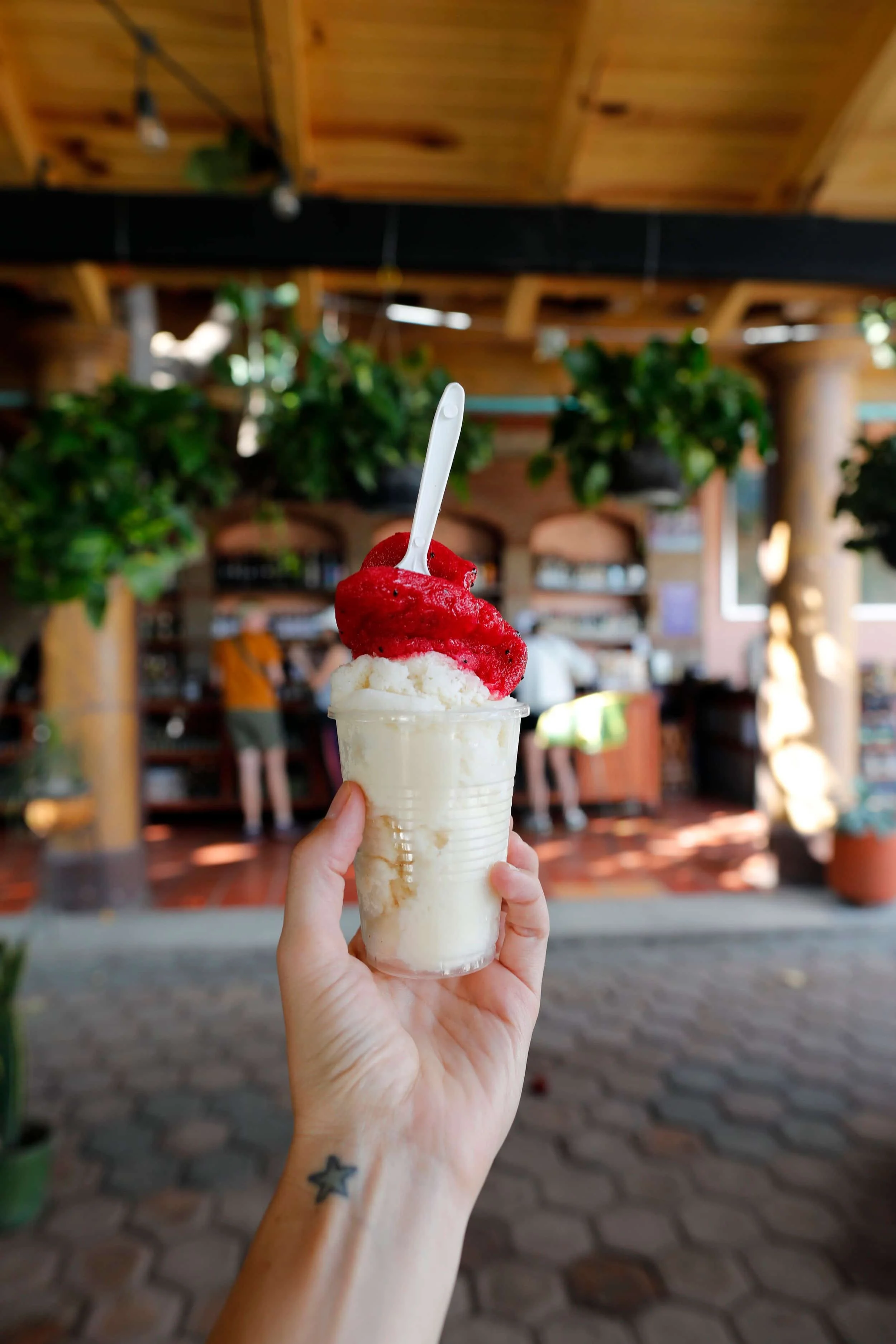
Mezcal El Rey de Matatlán ended up being more than a quick tasting stop. Between learning a little more about how mezcal is made, sampling more varieties than I probably needed and discovering the unexpected ice cream counter tucked inside, it was a fun introduction to another side of Oaxaca’s food and drink culture.
And after a day spent exploring Hierve el Agua, ending with mezcal and a few scoops of nieve felt pretty hard to argue with. I may have left a little tipsy but very happy.
My Bibimbap Moment
Every destination adds another ingredient to our life's recipe, often in ways we don't expect. My day exploring Hierve el Agua and El Rey de Matatlán wasn't just about soaking in mineral springs or tasting mezcal — it was about returning home with a renewed sense of energy, gratitude and connection. Here's the ingredient Oaxaca added to my Bibimbap Life.
Today’s Bibimbap Recipe
🥢 Flavor: Joyful
🌿 Ingredient: Renewal
❤️ Best Memory: The party bus on the way home ;) — but also all the tiny delicious moments along the way
🎒 Take With You: Celebrate often, rest without guilt and surround yourself with people who make you feel fully yourself. Those moments don’t just create memories — they renew us.
When I think back on that day in Oaxaca, I remember more than the sweeping mountain views or the refreshing mineral springs. I remember sharing laughter with friends, lingering over locally crafted mezcal and feeling completely immersed in the moment. Somehow, the day struck a beautiful balance between adventure and stillness, celebration and rest. Looking back, I think that's what has stayed with me most — not a single memory but the quiet feeling of returning home a little lighter, a little more energized and quietly renewed.
Hierve el Agua Travel Essentials
Visiting Hierve el Agua takes a little more planning than its postcard-perfect pools might suggest but the journey into Oaxaca’s mountains is part of the experience. Give yourself time to explore the mineral pools, walk the trails for different views of the petrified waterfalls and simply take in the vast landscape surrounding you.
The sun and elevation can be intense and facilities are relatively simple, so arrive prepared with water, sun protection, comfortable shoes and a swimsuit if you plan to take a dip. Whether you travel independently or join a day trip from Oaxaca City, this is one place worth slowing down for.
When to Go
The best time to visit Hierve el Agua is in the dry season, from November to April, when clear skies and golden light make the mineral terraces shimmer and the hike feels effortlessly magical.
Season: Visit during the dry months from November to April for sunny skies, clear mountain views and safe hiking trails. Avoid the rainy season (June to September) when downpours and muddy paths are common.
Time of Day: Arrive as early as 7:00 AM to 8:30 AM to beat the large tour buses from the city and enjoy the mineral pools without heavy crowds.
What to Bring
Pack a wide-brimmed hat, sturdy sandals that can handle slick travertine, a lightweight swimsuit for dipping in the mineral pools and a sunshirt for when the desert breeze turns warm.
Cash (Pesos): Essential because cards are not accepted for the park entry fee (approx. 50–100 pesos) or local food stalls.
Swimwear & Towel: Worn under your clothes since changing rooms are basic. The water is refreshing (around 22–27°C / 72–81°F), though it can feel chilly if the wind blows.
Sturdy Walking Shoes: Crucial if you want to hike down the steep, dusty dirt trails to the bottom of the waterfall formations for the iconic view.
Sun Protection & Water: There is very little shade at the top and the sun gets intense.
How to Get There
Hierve el Agua is roughly 1½–2 hours from Oaxaca City, depending on traffic and road conditions. The journey takes you out through the valleys and into the mountains, so getting there is part of the day rather than a quick trip outside the city.
Guided Tour: This is the easiest option and the one I chose. Transportation from Oaxaca City is handled for you and many tours combine Hierve el Agua with other stops such as Mitla, local villages or a mezcal distillery. Our small group made a full day of it, including a bakery stop, Hierve el Agua and a mezcal tasting at Mezcal El Rey de Matatlán.
Rental Car or Private Driver: Driving gives you the most flexibility, particularly if you want to arrive earlier, spend longer at the pools or add your own stops along the way. The final approach involves winding mountain roads, so allow plenty of time and check current road conditions before setting out.
Public Transport: It’s possible to reach Hierve el Agua independently using public transportation but it requires more patience. From Oaxaca City, travel first to Mitla, then connect with a local shared vehicle for the journey into the mountains. Departures can be informal, so this option works best if you have a flexible schedule.
For most visitors, I’d choose between a guided tour for convenience or a car/private driver for flexibility.
Costs & Logistics
Entrance to Hierve el Agua is a small, cash-only fee (bring pesos — ATMs are limited) and the site is typically open from early morning until late afternoon.
Fees: Bring roughly 70–90 MXN total in cash per person for the local community entrance fee (50–70 MXN) and the road maintenance toll (20 MXN).
Cash Only: There are no ATMs or card readers on-site.
Hours: The site is generally open daily from 7:00 AM to 5:00 PM.
Where to Stay
For most travelers visiting Oaxaca City, I’d stay in or around the Centro Histórico. You’ll be able to walk to markets, restaurants, mezcalerías, museums and many of the city’s most beautiful streets, while also being conveniently located for day tours to Hierve el Agua and the surrounding valleys.
For my trip, however, we did something a little different. Because I was traveling with a large group, we rented a huge private house in the hills outside the center. I loved having the extra space, privacy and views — and for a group trip, I’d absolutely do it again. If I were returning solo or with just a few people, though, I’d choose a smaller stay in the city center and take advantage of being able to explore Oaxaca on foot.
Where I Stayed
For a group trip — A private home in Oaxaca
I visited Oaxaca for a friend’s birthday with a group of about 10 friends and renting a private house ended up being perfect for the trip. We had plenty of room to spread out while still having shared spaces where everyone could hang out together — something I really appreciated with such a big group. Having our own place also made Oaxaca feel a little more like home for the few days we were there rather than simply somewhere we were passing through.
See the Oaxaca home where I stayed →
Prefer a place of your own?
If you like the idea of having your own space but don’t need a house for ten, Oaxaca has plenty of smaller apartments and vacation rentals for solo travelers, couples and smaller groups.
Browse Oaxaca vacation rentals →
Where I’d Stay
If I were heading back with a smaller group — or on my own — I’d do things differently and stay closer to the heart of Oaxaca. These are a few that caught my eye for their character, design and connection to the city.
For understated design & character — Grana B&B
Set within a restored historic building in the center of Oaxaca, Grana pairs traditional architecture and craftsmanship with beautifully restrained contemporary interiors. The courtyards, natural materials and thoughtful details make this the kind of small, design-minded stay I’d gravitate toward, while the central location puts much of the city within walking distance.
For color & local personality — NaNa Vida Hotel Oaxaca
Warm, colorful and filled with work from Mexican artisans, NaNa Vida feels rooted in Oaxaca rather than like a hotel that could exist anywhere. Its central location makes exploring on foot easy, while the intimate courtyard and locally inspired interiors give it plenty of personality.
For a stay with a social mission — Hotel con Corazón Oaxaca
A colorful boutique hotel with an especially good story, Hotel con Corazón combines thoughtful contemporary design with a social mission supporting local education projects. It’s a little removed from the busiest part of Centro while still keeping Oaxaca’s markets, restaurants and historic streets within walking distance.
Additional Options
Ready for a serious splurge? — Casa Rufina
If you want to make the stay itself part of the Oaxaca experience, Casa Rufina is the one to splurge on. Its intimate scale, striking interiors and attention to Mexican craft and design make it feel more like a beautifully considered private home than a conventional hotel — an especially tempting choice for a special trip.
Want more options?
Oaxaca is full of beautiful boutique hotels, restored casas and apartment-style stays. If none of these quite fit, browse more options around the Centro Histórico for an easy, walkable base with the city right outside your door.
Tours & Day Trips
Tours can be booked directly with Oaxaca by Locals and typically cost MX$700-$1,300 ($35-$65 USD) for the full day, including stops at a local bakery, Hierve el Agua and El Rey de Matatlán for a mezcal tasting. Half day tours are also an option.
💡 Local Tip | I can’t recommend the full-day tour to Hierve el Agua with Oaxaca by Locals enough — it’s truly worth every penny.
Looking for Another Way to Visit Hierve el Agua?
The local company I recommended above would be my first place to start but there are plenty of other ways to make the day trip from Oaxaca. If you’re looking for a different itinerary, schedule or combination of stops, browsing a few additional tours can help you find the experience that works best for your trip.
Good to Know
Despite the name — Hierve el Agua roughly translates to “the water boils” — the mineral springs here aren’t actually hot. The bubbling comes from naturally carbonated, mineral-rich water rising from underground; over thousands of years, those minerals created the enormous white formations that look like waterfalls frozen against the mountainside. The site is also locally managed by the surrounding Indigenous communities, so entrance and access fees help support the people responsible for maintaining the site, roads and facilities.

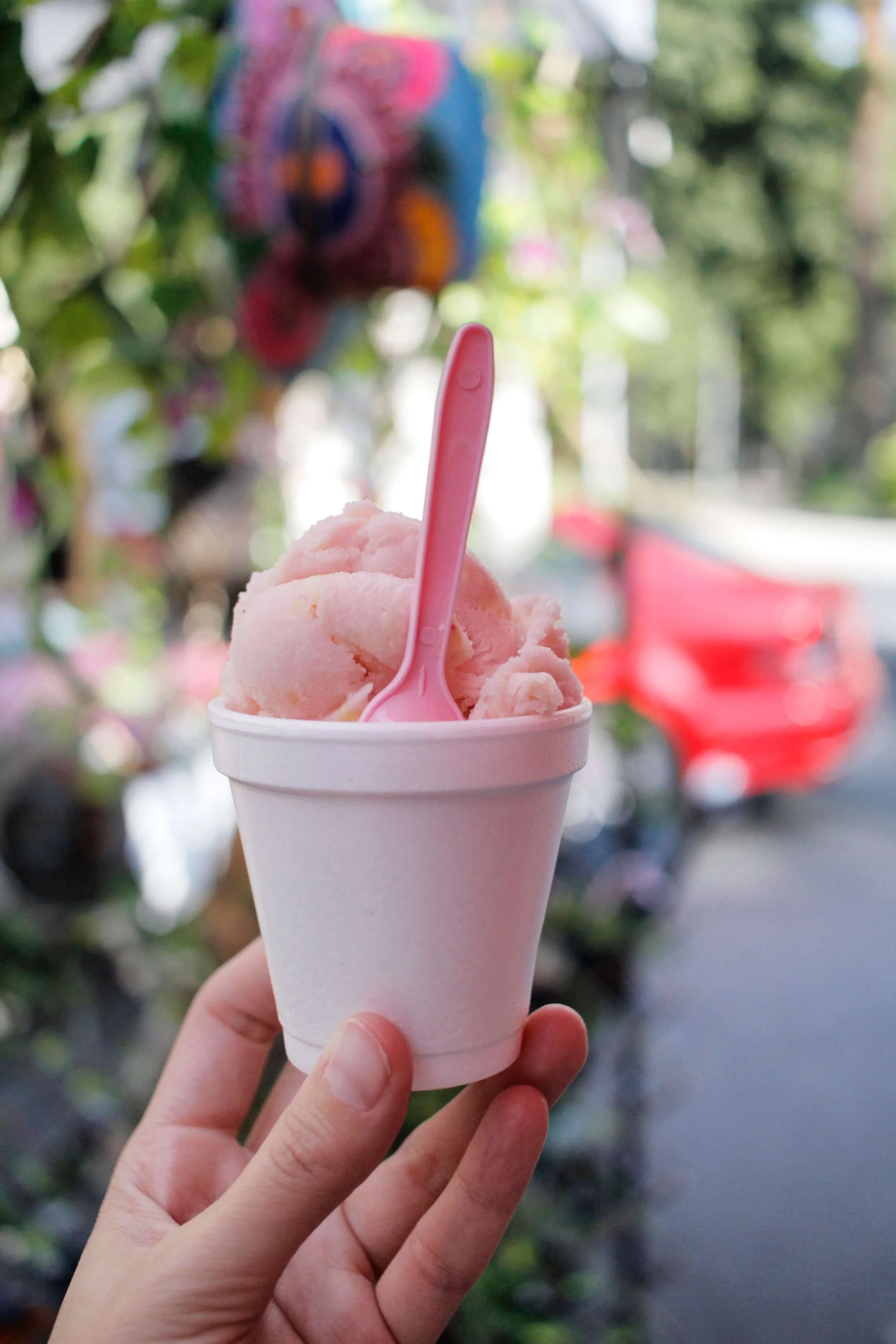

The perfect Oaxaca City day trip: Hierve el Agua is nature’s infinity pool — calcified waterfalls, warm mineral pools, vast terraced hills and mountain views.