Uncover Monaco’s maritime history through centuries of seafaring, trade & naval tradition with this travel guide — it’s the perfect day trip from Nice & the best of Monaco.
Updated | June 2026
Wondering What to See in Monaco — Uncovering Its Seafaring Soul & the Ideal Day Trip from Nice
Monaco is known for its concentrated luxury and glamour tucked into less than one square mile on the French Riviera. The principality’s identity is built on high-end experiences: world-class casinos, designer boutiques, Michelin-starred restaurants and super yacht lined harbors that make Monte Carlo a showcase of wealth and style. It’s also famous for the Monaco Grand Prix, an annual Formula 1 race that threads through narrow city streets.
Beyond its glitz, Monaco offers refined culture and history and a rich maritime past. The Prince’s Palace, the Oceanographic Museum perched on a cliff and the quiet gardens and museums reveal a region that balances tradition with modern opulence. Monaco’s compact size means many of its attractions are within walking distance, making it easy to move from lavish casinos and luxury hotels to peaceful promenades along the Mediterranean, where sparkling sea views punctuate the city’s polished ambience.
Tucked between France and the Mediterranean and just a short distance from Italy’s Liguria — Monaco feels like a rare jewel. It’s a quick coastal hop from Nice to take in its iconic harbor, maze of narrow streets and intriguing museums. Though small, the country crams a surprising amount into its sunlit shoreline and staying nearby makes it an easy, irresistible day trip.
At a Glance
📍 Destination: Monaco
🕒 Time Needed: Full or half day
💰 Budget: €45-€115 ($50-$125 USD) low, €140-€275 ($150-$300 USD) mid, €550+ ($600+ USD) lux
👟 Walking Level: Mild to moderate
🌤️ Best Season: Shoulder seasons (April-May and September-October)
☕️ Don’t Miss: Views from Le Rocher
🖤 Perfect For: Culture enthusiasts, automotive fans and luxury seekers
My Bibimbap Moment
This trip added: Perspective.
Exploring Monaco’s maritime history added the ingredient of perspective to my Bibimbap Life. Before visiting Monaco, I expected a destination defined by luxury but what stayed with me were the peaceful gardens, charm of the old town and simple moments overlooking the Mediterranean. It reminded me how often a place’s reputation shapes our expectations before we even arrive. Monaco added a new ingredient to my Bibimbap Life: perspective. The most meaningful part of travel isn’t always what a destination is famous for — it’s what you discover when you look beyond the stereotypes and let a place reveal itself on its own terms.
My Two-Week England, Wales, Jersey, France & Monaco Itinerary
This two-week trip took me from London through Wales and the Channel Islands before continuing into France and ending on the Mediterranean in Monaco. It covered a lot of ground but traveling largely by train and ferry made the journey feel surprisingly connected — and each stop was completely different from the one before it.
I started in England — London, before taking the train west to Wales — Cardiff, followed by the seaside town of Tenby. From there, I briefly returned to London before flying to Jersey, where a few days of island life gave the trip another change of pace.
Next came France. A ferry brought me to Saint-Malo, where an unexpected overnight stay inside the walled city ended up being one of my favorite surprises of the trip. From there, I continued to Nantes, a city I knew relatively little about beforehand and ended up loving for its mix of historic architecture, art and wonderfully unexpected creativity.
For the final stretch, I headed south to Nice, trading northern France for the Mediterranean and using the city as my base for exploring the French Riviera. From there, Monaco was an easy day trip — and a dramatic final contrast to everything that had come before it.
My time in Monaco included the famous streets of Monte Carlo but what interested me just as much was its relationship with the water: the harbor, yachts, coastline and maritime culture packed into such a remarkably small place. That side of Monaco is what eventually led me to this guide.
It was an ambitious two weeks but I loved how dramatically the trip shifted along the way — from Welsh cities and coastlines to Jersey, northern France and finally the Mediterranean.
My route: London → Cardiff → Tenby → Jersey → Saint-Malo → Nantes → Nice → Monaco
Explore
Here’s where the journey will take us.
01 | What to Do in Monaco
02 | When to Go
03 | Choose a Home Base: Nice or Monaco
04 | How to Get There
05 | Where to Stay
06 | How to Get Around
07 | How Long to Stay
08 | Tours & Day Trips
09 | Top Sights & Attractions
10 | Good to Know
Day Trip | Nice la Belle: Top Picks & Charming Things to Do in Nice
Travel More | Monaco Travel Guides
A Stroll Through the Principality’s Maritime Elegance — It’s What to See in Monaco
Perched on a sunlit stretch of the Riviera, Monaco's story is braided with the sea — a tiny principality whose fortunes, festivals and fearless navigators were shaped by salty breezes, glittering harbors and a lifelong devotion to the Mediterranean. Even today, sleek yachts, historic lighthouses and centuries-old maritime traditions keep the ocean at the heart of Monégasque life.
Monaco is a place where the sea is both playground and laboratory. Prince Albert I, an intrepid oceanographer and pioneer of marine science, turned royal curiosity into rigorous research that mapped currents, cataloged species and sparked early conservation efforts. His legacy threads through Monaco today — from research institutions to protected waters — reminding us that stewardship of the sea springs from wonder, study and the courage to act.
Bakery by Michel Fiori in Nice
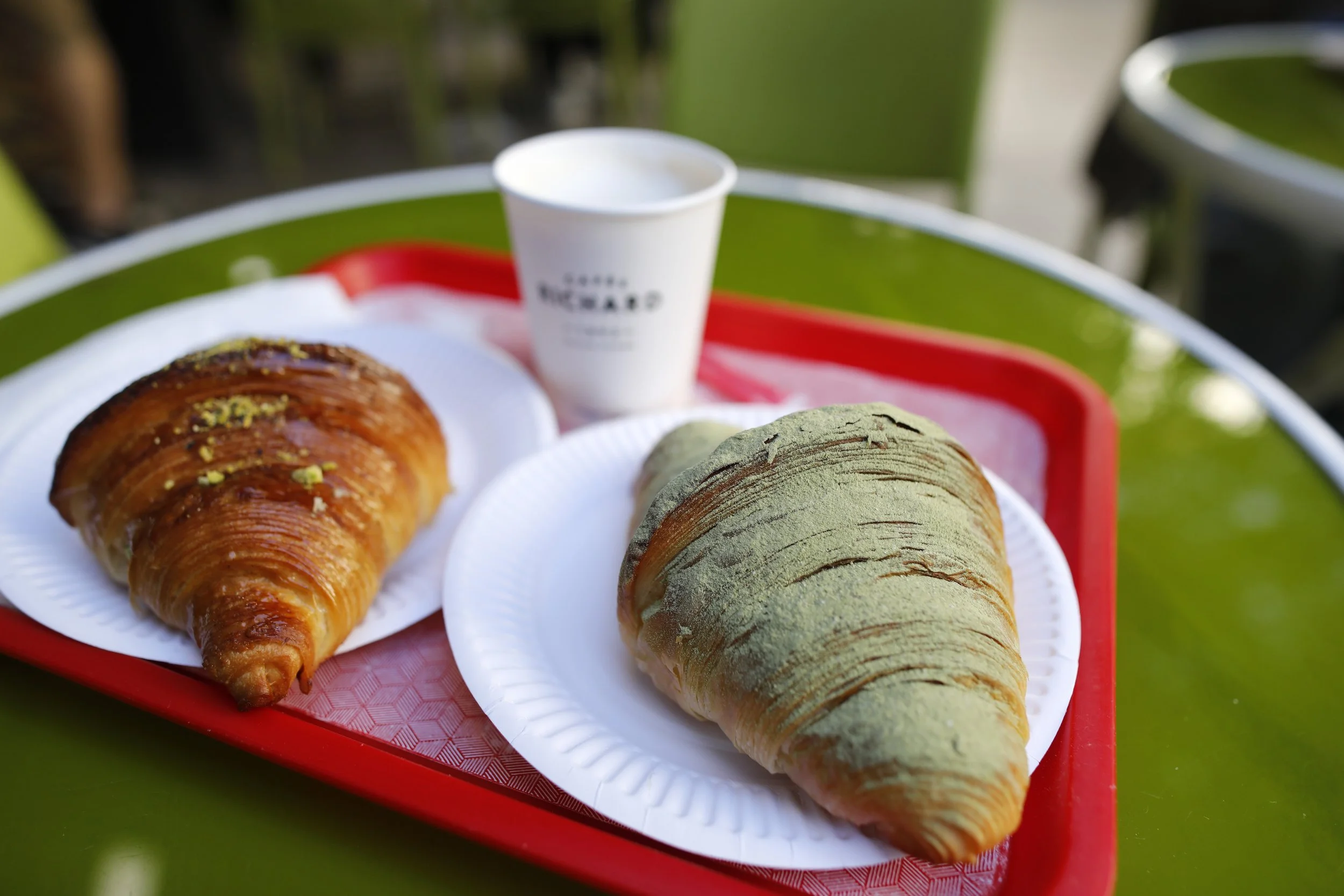
If you’re beginning your day in Nice, stop by Bakery by Michel Fiori on your way to the train station. The bakery offers flaky, golden croissants whose buttery layers and delicate crispness make them the perfect takeaway companion for a day trip.
💡 Local Tip | Treat yourself to two croissants — one pistachio, one matcha — each an unexpected twist on the classic. If you’re already in Monaco, grab a healthier bite at Seaside Juicery.
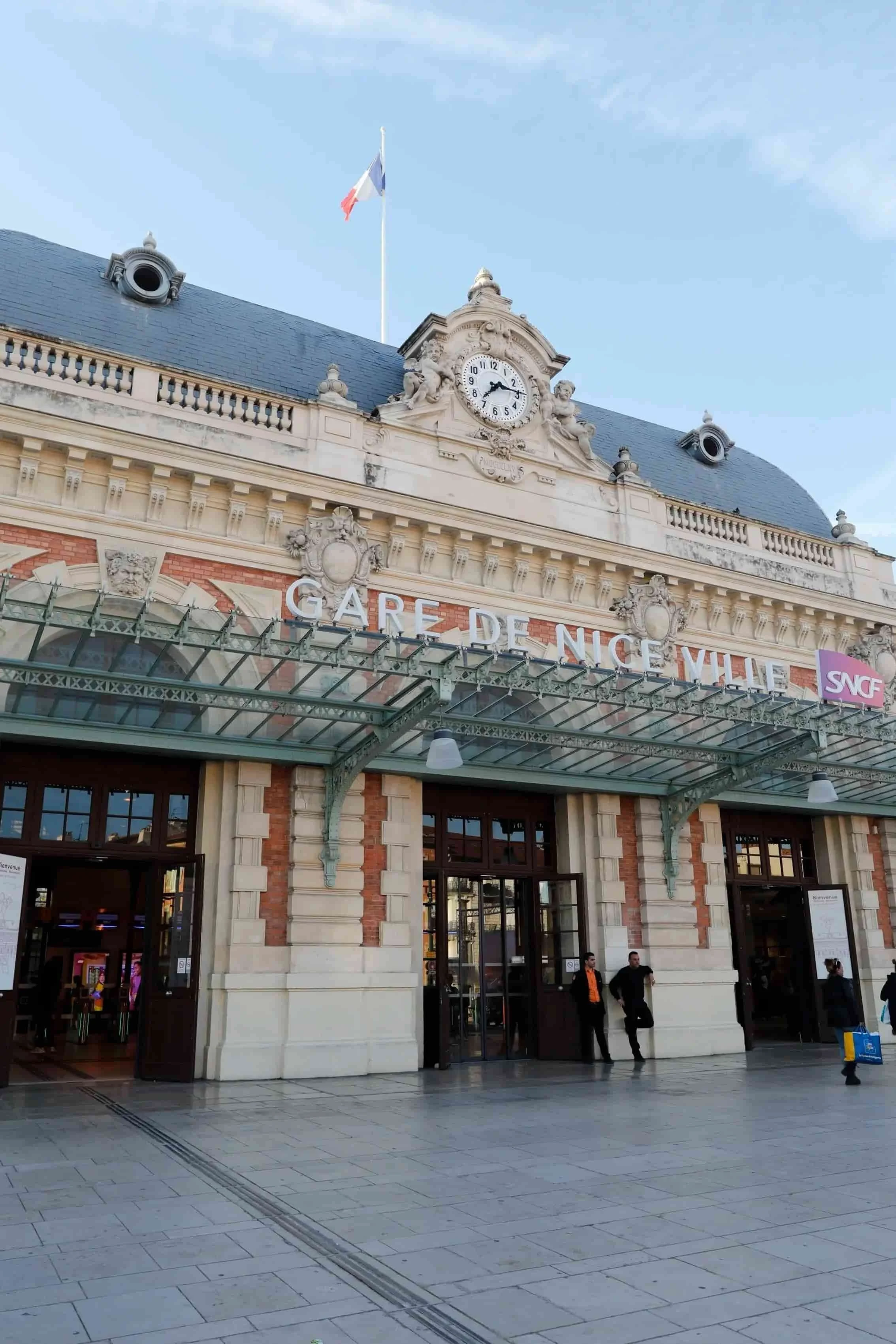
Grab your pastries early to avoid the line, walk to the Gare de Nice-Ville and board a short, scenic train ride east along the Riviera to Monaco, where the coastal views spread from window to window and the transition from relaxed Nice to glamorous Monte Carlo arrives in less than 30 minutes. With trains running often, Monaco is an easy, scenic day trip from Nice.
Port de Fontvieille
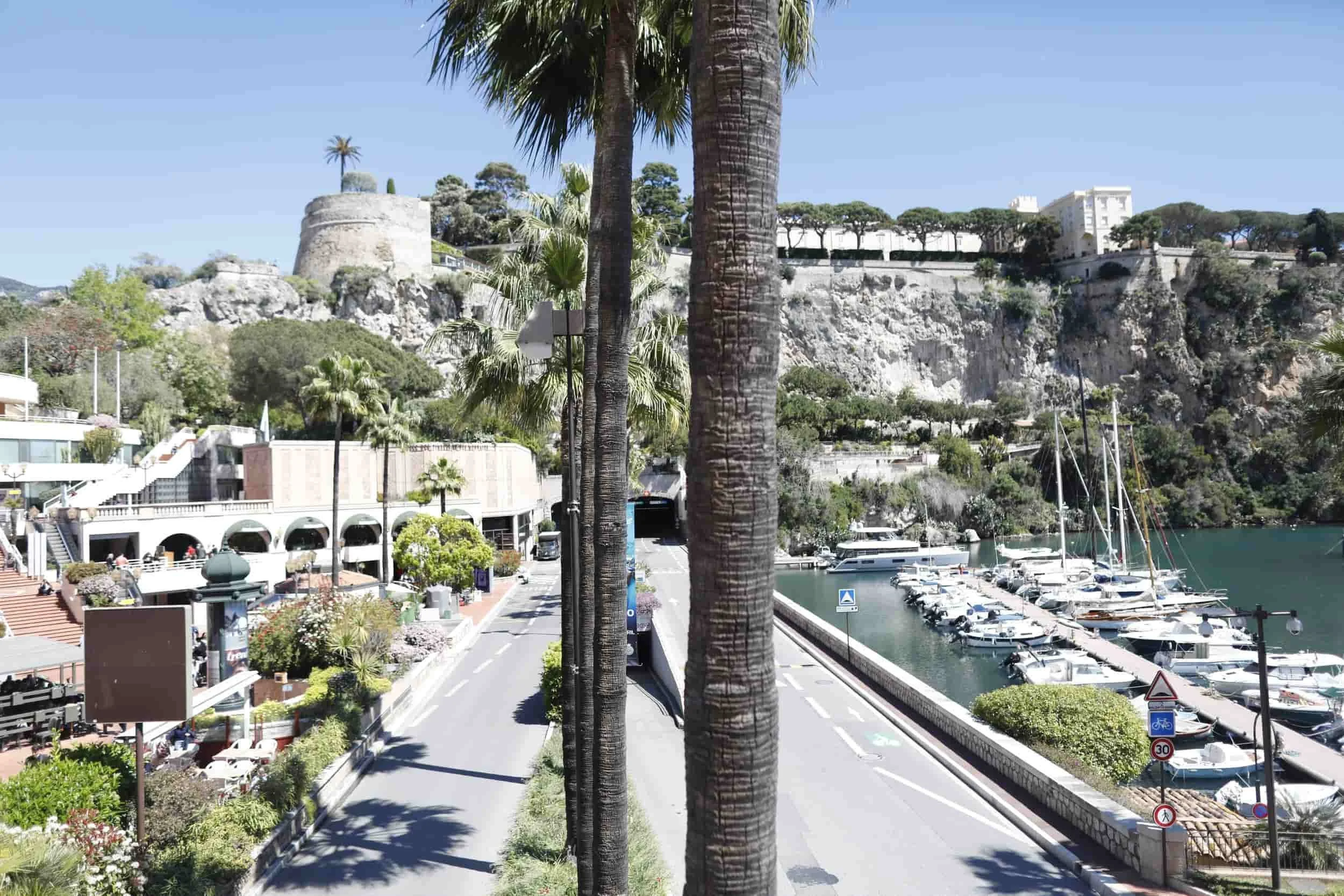
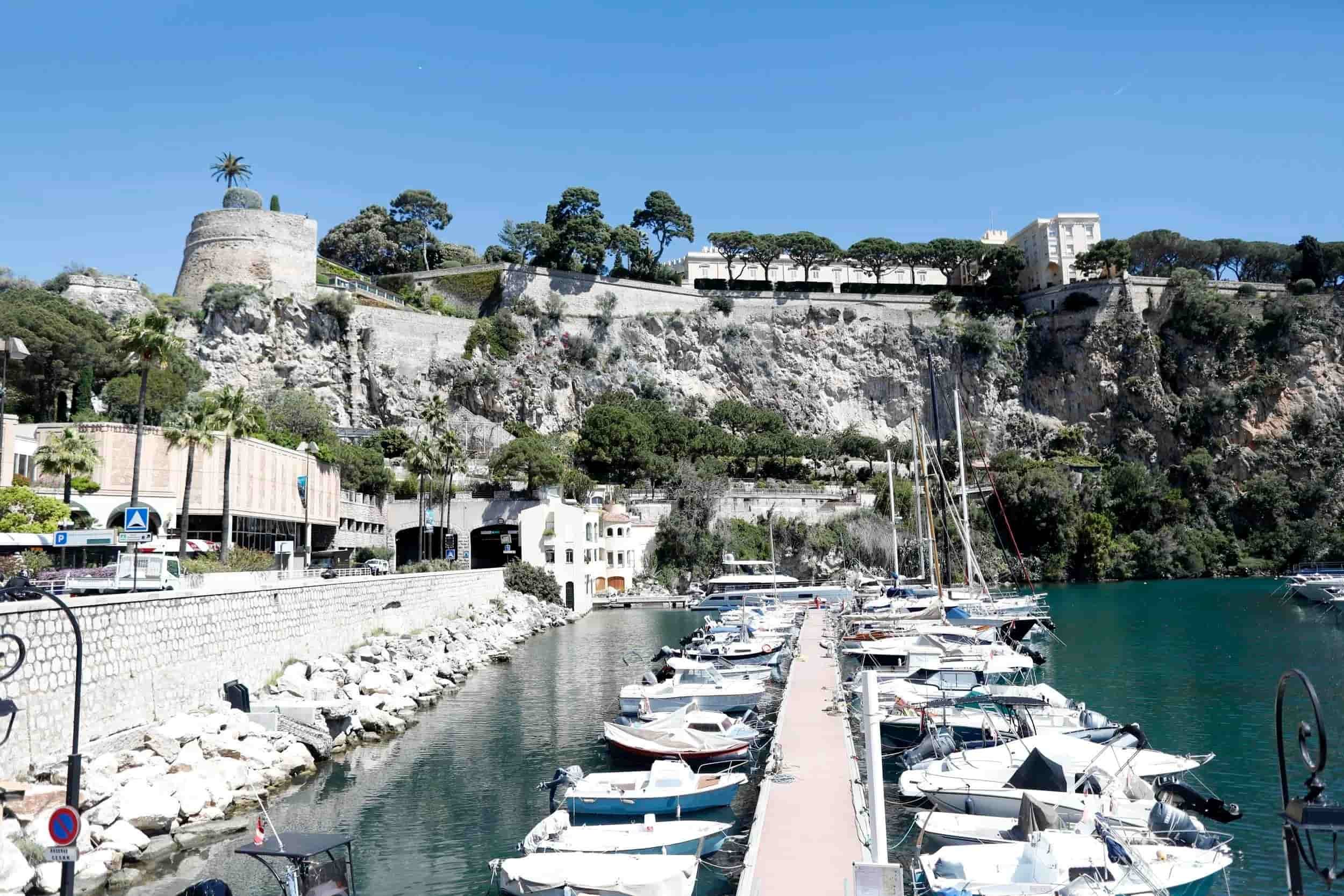
The first neighborhood that unfolds is Fontvieille, Monaco’s southernmost ward — a surprisingly tranquil counterpoint to the principality’s headline glamour. Modern architecture and a well-kept marina meet calm waterfront promenades, where leafy parks, tucked-away boutiques and cafes line the route.
Meander along the harbor and you’ll be rewarded with sweeping views of gleaming yachts and quiet corners that reveal Monaco’s softer, more understated side — all on the list of what to see in Monaco.
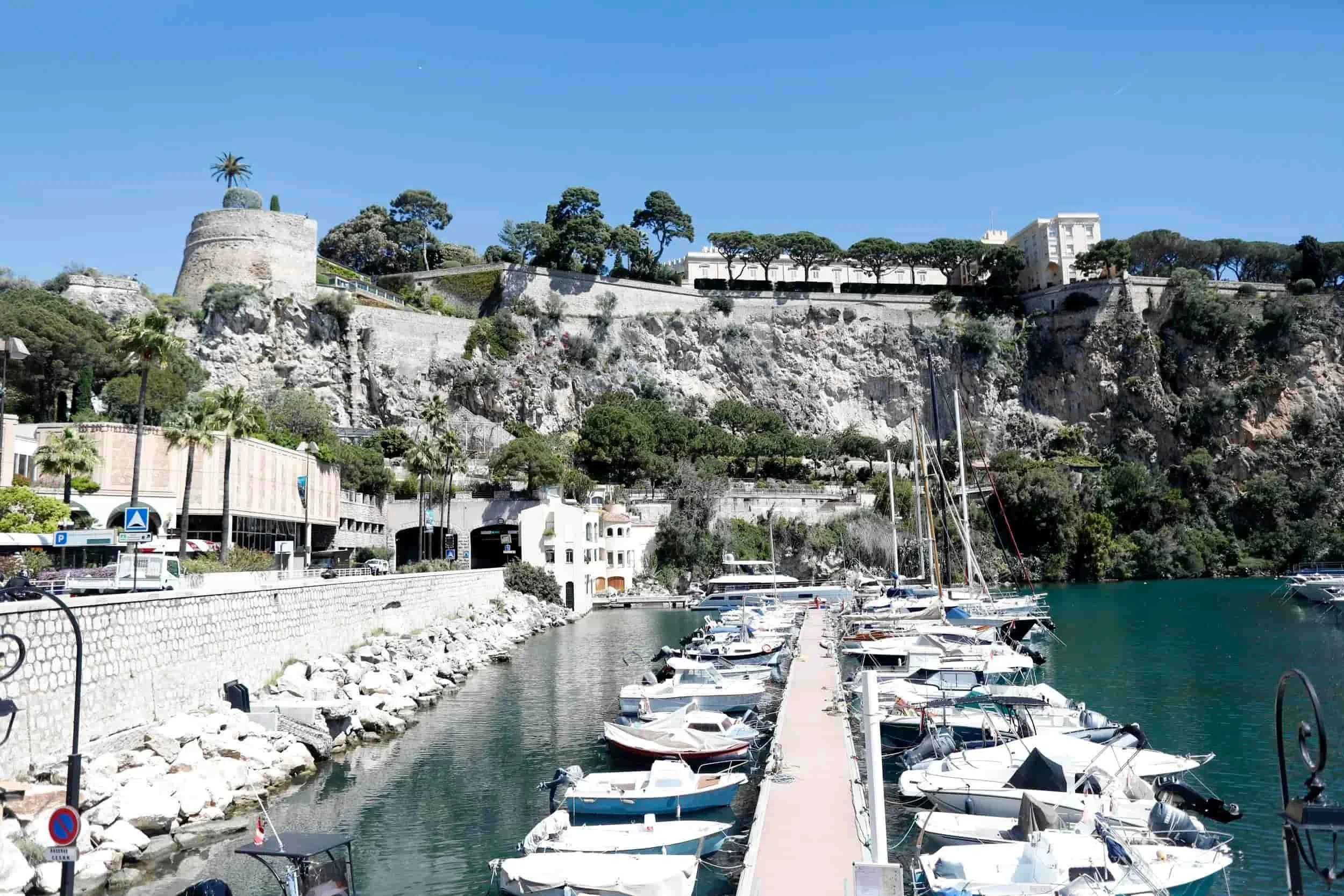
Port de Fontvieille hugs Monaco’s southwestern shore like a neatly folded letter from the sea, where pleasure boats and fishing crafts bob against a backdrop of pale stone and tidy promenades. Sunlight scatters across calm waters while terraces spill with café life and the scent of salt and grilled fish moves through alleyways lined with yachts and small artisan shops.
Here, the principality’s maritime heartbeat feels intimate and deliberate — an elegant, working harbor that invites slow strolls, quiet watching and the easy company of the Mediterranean.
Tucked beneath the principality’s limestone cliffs, the port is Monaco’s modern marina, a compact harbor built to expand the limited coastline. Unlike the glitzier Port Hercules, Fontvieille feels more intimate and residential, lined with sleek yachts, low-rise apartment blocks, small shops and waterfront cafés where locals and visitors mingle.
It’s also a practical hub: home to Monaco’s heliport, a quiet seaside park, the Musée des Timbres et des Monnaies (stamps and coins museum) and the exotic animal collection once part of Prince Rainier’s Menagerie, all within easy walking distance of the old town.
Port de Fontvieille occupies a unique place in Monaco’s maritime history as a deliberate act of expansion and modernization that reshaped the principality’s relationship with the sea. Built in the 1970s on land reclaimed from the Mediterranean under the direction of Prince Rainier III, the port marked a turning point: Monaco moved from relying solely on its historic Old Port to creating new coastal infrastructure that could support larger yachts, commercial activity and urban development.
This engineered harbor allowed Monaco to assert greater control over its shoreline, accommodate the growing pleasure craft culture of the late 20th century and position itself as a premier destination for maritime leisure and business.
Beyond its technical significance, Port de Fontvieille symbolizes Monaco’s forward-looking maritime identity. The design balances functionality with aesthetics — modern berths and maritime services sit alongside promenades, parks and residential buildings — demonstrating how maritime infrastructure can integrate with urban life.
The port facilitated the growth of yachting as a central feature of Monaco’s economy and image, attracting an international clientele and supporting related industries like yacht maintenance, marine services and high-end hospitality. In doing so, Fontvieille helped transform Monaco from a coastal principality into a global maritime hub for luxury boating.
The port’s creation also reflects broader themes in Mediterranean coastal development: land reclamation, adaptation to rising demand for maritime spaces and the negotiation between conservation and expansion. Fontvieille’s construction required careful planning to manage coastal currents and environmental impacts, setting precedents for later projects in the region.
Today, the port’s presence continues to influence Monaco’s urban planning and maritime policy, reminding visitors that the principality’s coastal charm is as much the product of human ingenuity as of natural geography. For anyone interested in Monaco’s maritime story, Port de Fontvieille is a concrete chapter — literally and figuratively — in how a tiny state harnessed the sea to secure its future.
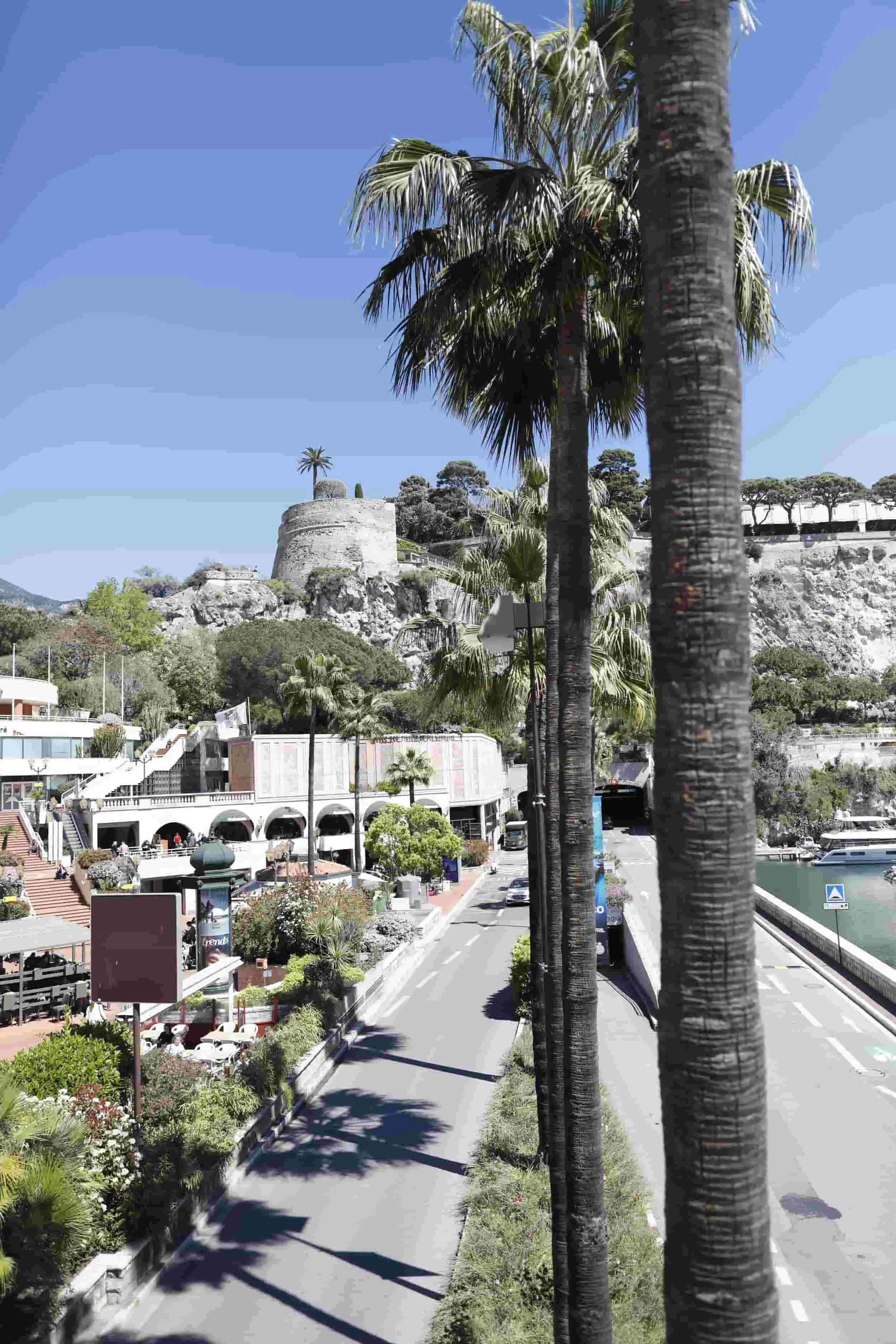
The port teems with things to see and do: wander the lively marina and sun-drenched promenade, lounge on nearby sandy beaches and dive into marine life at the oceanographic museum. Browse bustling local markets, savor freshly caught seafood at waterfront eateries, hop on a boat tour for coastal views or meander the picturesque streets to uncover hidden shops and art-filled galleries.
The Princess Grace Rose Garden feels like a secret slice of Monaco: over 4,000 roses bloom in neat terraces, all dedicated to Grace Kelly. It’s one of the city-state’s most picture-perfect corners, where fragrant pathways and quiet benches offer a gentle pause from the Grand Prix hum and casino bustle.
Just beyond the garden, Port de Fontvieille hums with a different energy. It sits next to Monaco’s sporting hub, including the Louis II Stadium, so check the schedule if you want to catch a lively football match — the local fans bring real passion. The neighborhoods compact Musée des Timbres et des Monnaies is a delightful detour for collectors and history buffs, revealing Monaco’s postal and monetary stories in an intimate, well-curated setting.
Fontvieille also has a practical, neighborhood feel: a shopping center and scattered boutiques for everyday finds — fresh groceries, casual fashion and cozy cafés where locals linger. Monaco’s coastline here isn’t about wide sandy beaches but you’ll find small pebble spots and private beach clubs a short walk or taxi ride away. In season, kayaks and paddle boards can be rented nearby, perfect for slipping out on calm Mediterranean water and seeing Monaco from a quieter perspective.
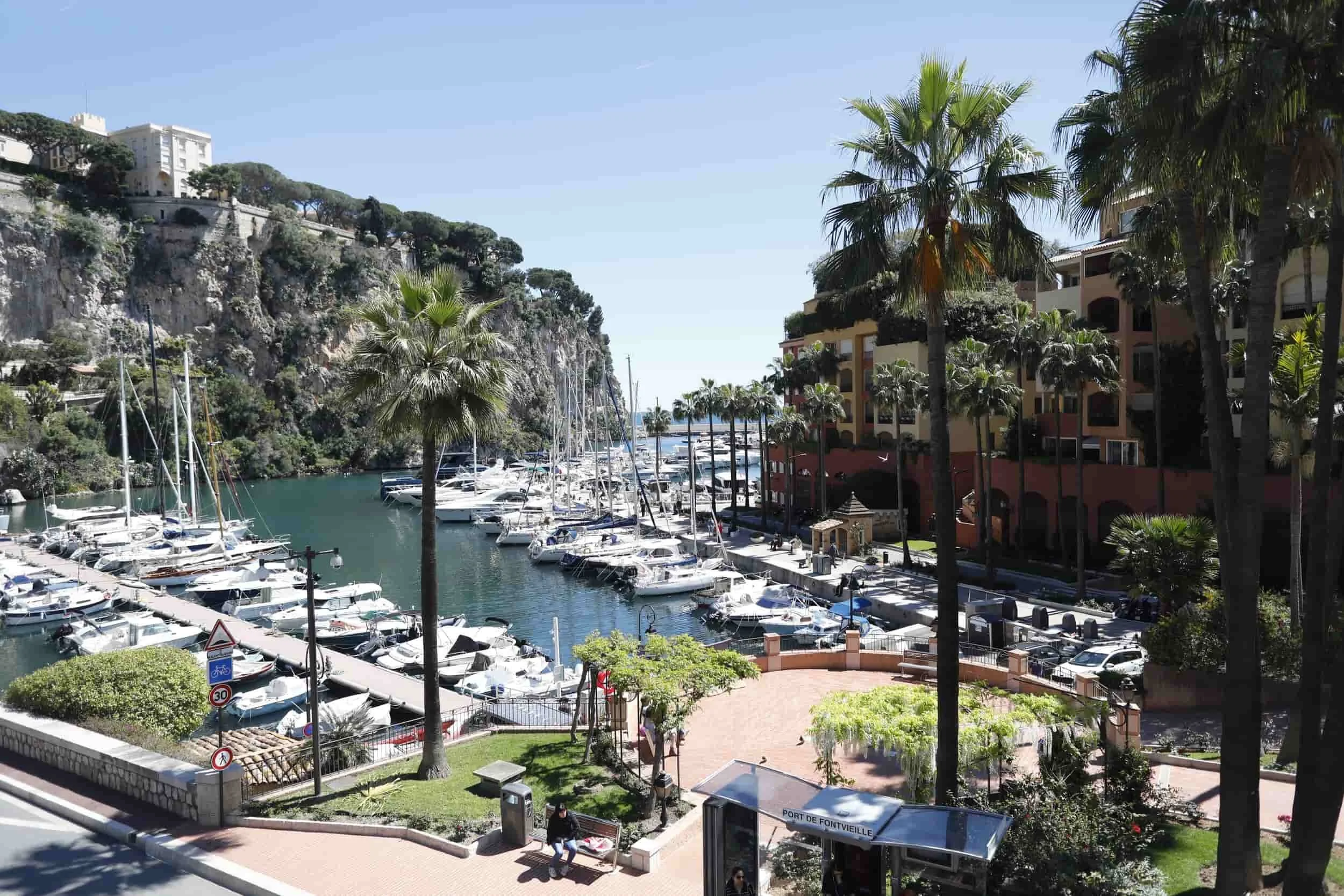
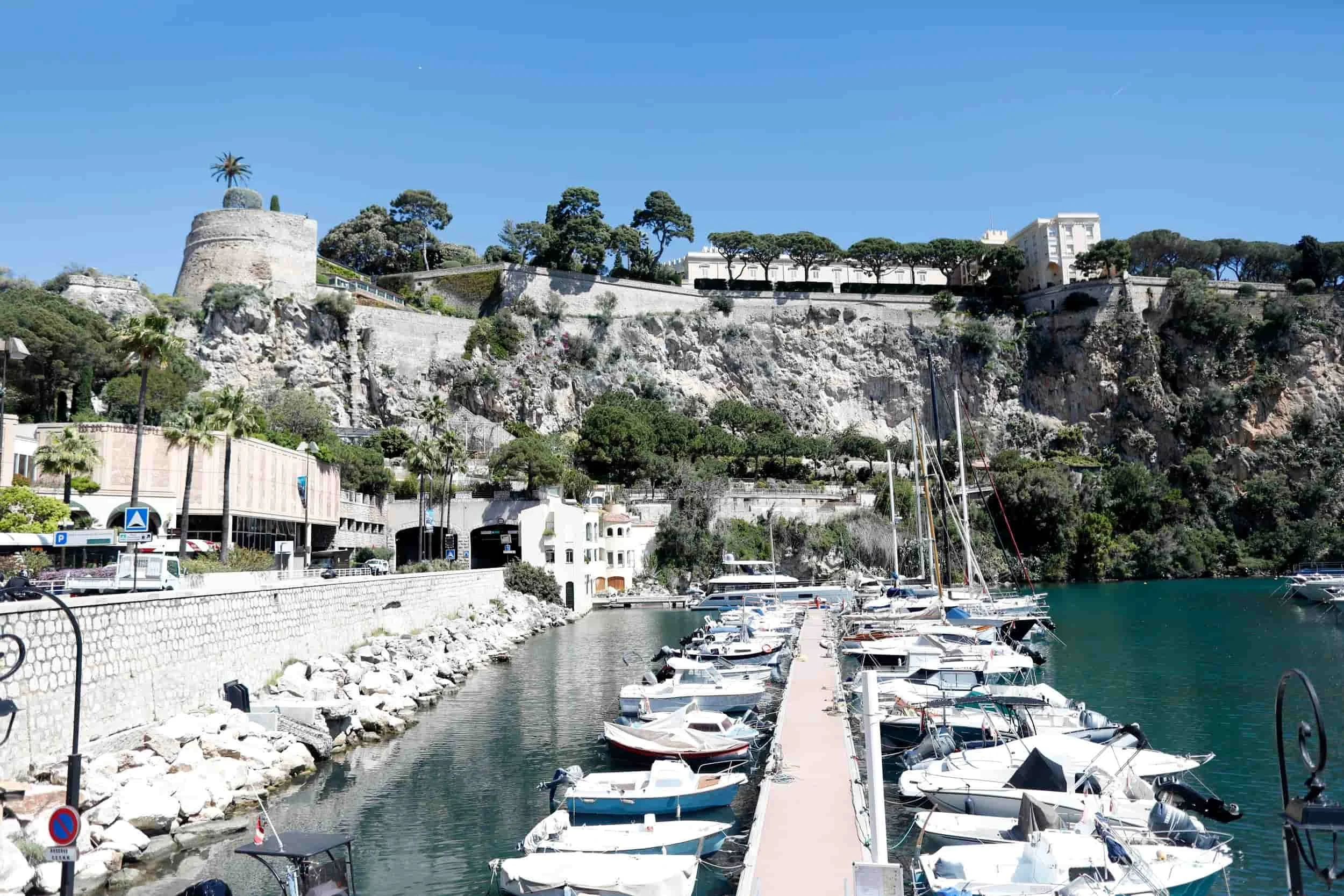
Though Monaco may wear a high-fashion label, Port de Fontvieille is its quieter, more approachable twin — where you can still enjoy seaside charm without the Monte Carlo price tag. Head to the waterfront cafés for unpretentious Mediterranean and Niçoise plates: briny, just-caught seafood, bright salads and delicate, olive-oil–kissed pastas. These eateries often serve locals rather than flash tourists, so the atmosphere is laid-back and the bills feel pleasantly ordinary.
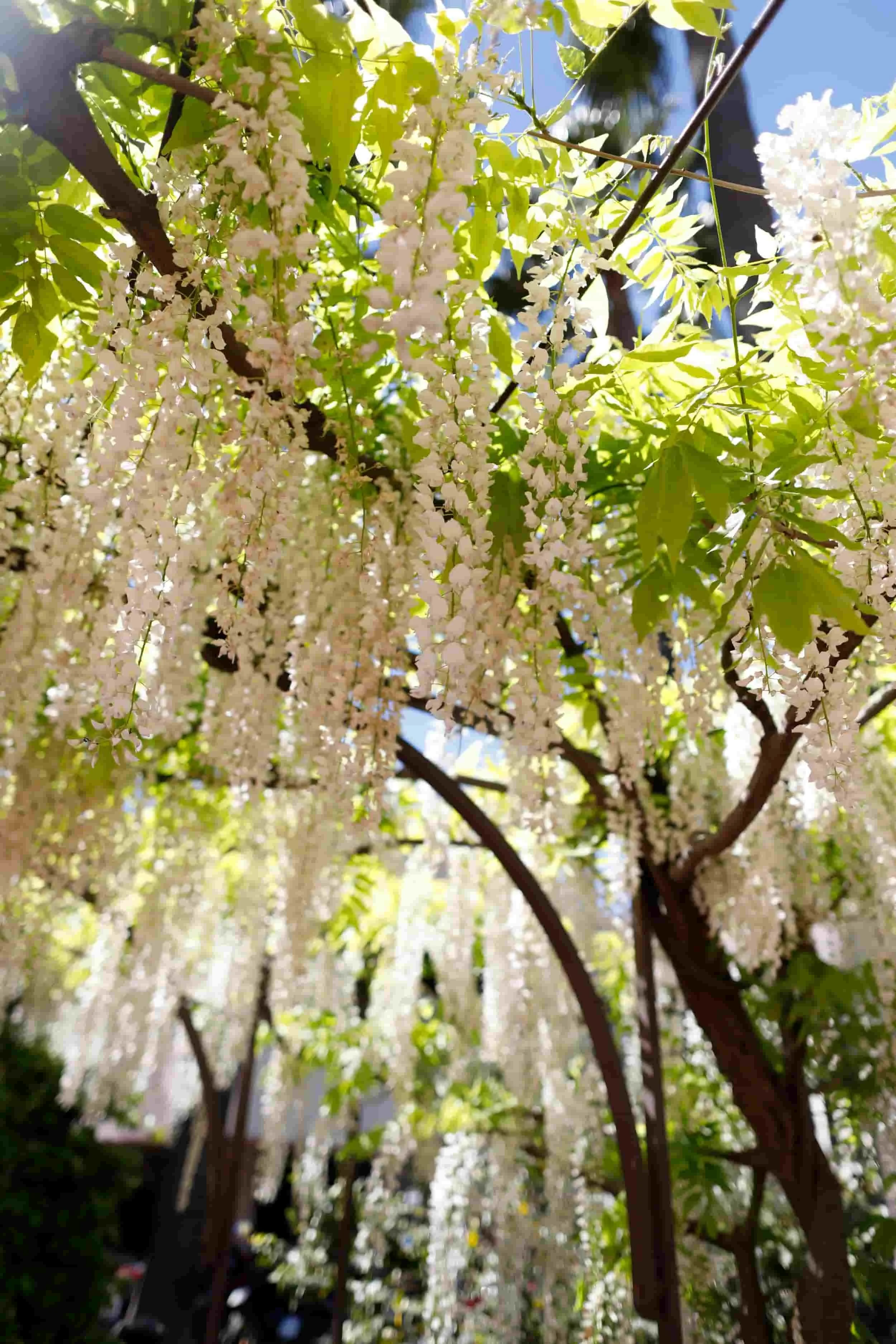
This compact harbor unfolds in crisp vertical and horizontal ribbons — piers, quays and boats stacking like a maritime collage. Once you start to read these layers and the sight lines they create, the best vantage points reveal themselves: places to frame a perfect shot, to drift along the water’s edge or to pause and soak up the harbor’s quiet rhythm.
At quay level, the scene feels intimate: you can almost reach out and touch the boats, the coiled ropes, the soft slap of wakes against stone. Light fractures on the water into shifting reflections and rippling patterns that steal the eye. A narrow promenade rises just above the quays, a gently elevated ribbon that gives uninterrupted views down the port — across docked yachts, toward the opposite facades, along the harbor’s graceful arc.
Here, cafés spill onto terraces, benches invite long pauses and people drift between town and tide; the focus is as much on human rhythms — low conversations, clinking glasses, the steady passage of passersby — as it is on boats and water. Behind this strip, little terraces and plateaus climb up, offering wider panoramas: the harbor’s curvature becomes readable, masts lace the horizon and the relationship between port, town and surrounding landscape snaps into clear relief.
Stairs and ramps stitch the harbor into a sequence of framed views, guiding your eye from basin to boulevard and back again. Climbing or descending them feels like turning pages in a story — close, tactile snapshots at the water’s edge give way to broader, cinematic vistas as you rise. A few streets and small rises just off the port act as natural perches, setting Port de Fontvieille against its city and sea backdrop.
Think of the port as a stack of scenes — waterline, promenade, terraces and distant lookouts — each one a different lens. At dock level, you notice rope fibers, varnished planks and boat chatter; on the quay, life pulses at human scale; from the higher terraces, you read the neighborhood and coastline in a single sweep. If you’re photographing or just wandering, moving between these layers lets you choose the story you want to tell.
💡 Local Tip | Climb the various stairways and paths to uncover every vantage point the harbor has to offer. Getting lost is not optional.
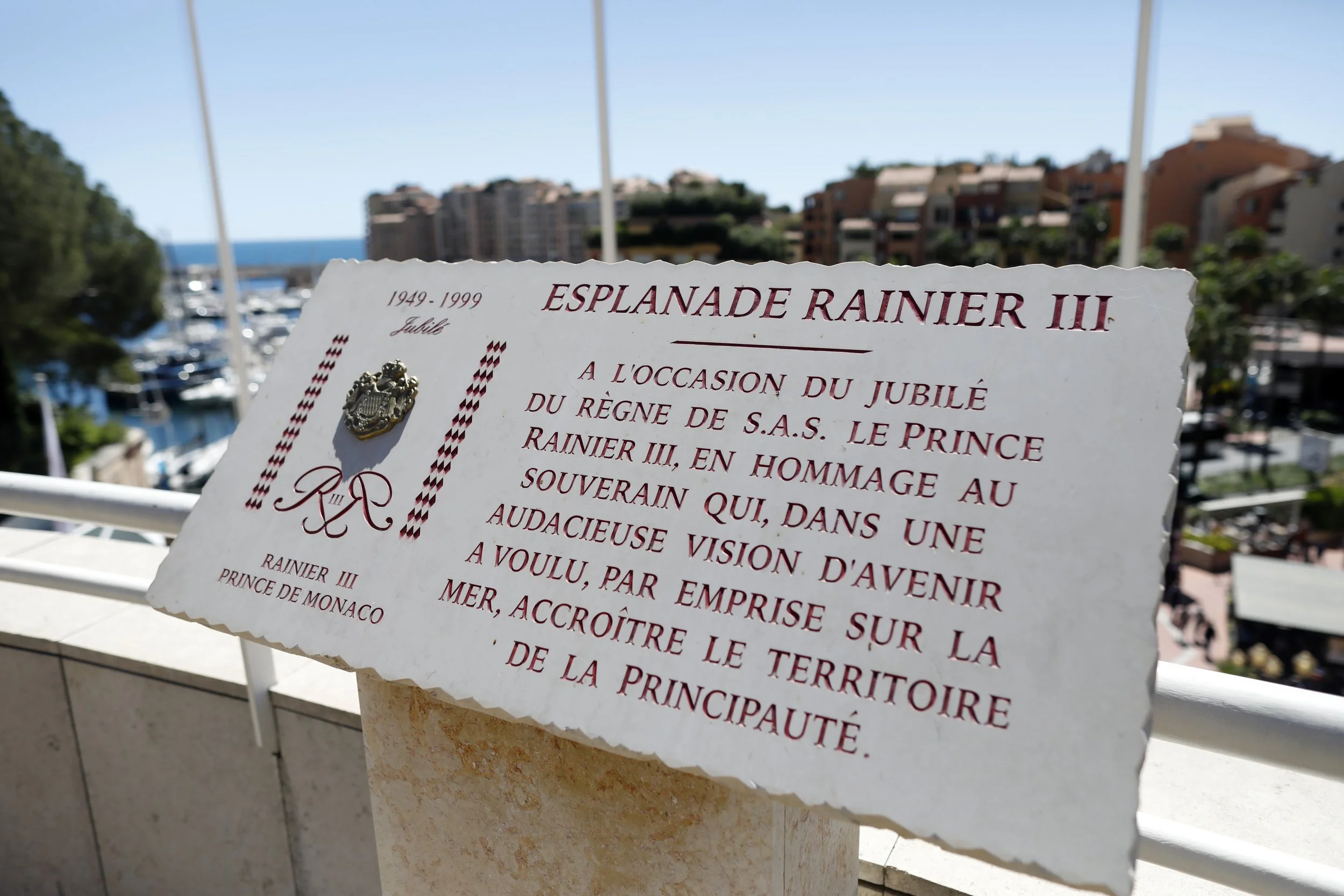
Above it all, the Esplanade Rainier III, a seaside promenade stretches from Casino Square toward the Monte-Carlo Bay and Fontvieille area. Dedicated to Prince Rainier III, it provides expansive Mediterranean vistas, views of elegant yachts, manicured gardens and convenient links to numerous key sights. Its level, paved path is ideal for quiet walks.
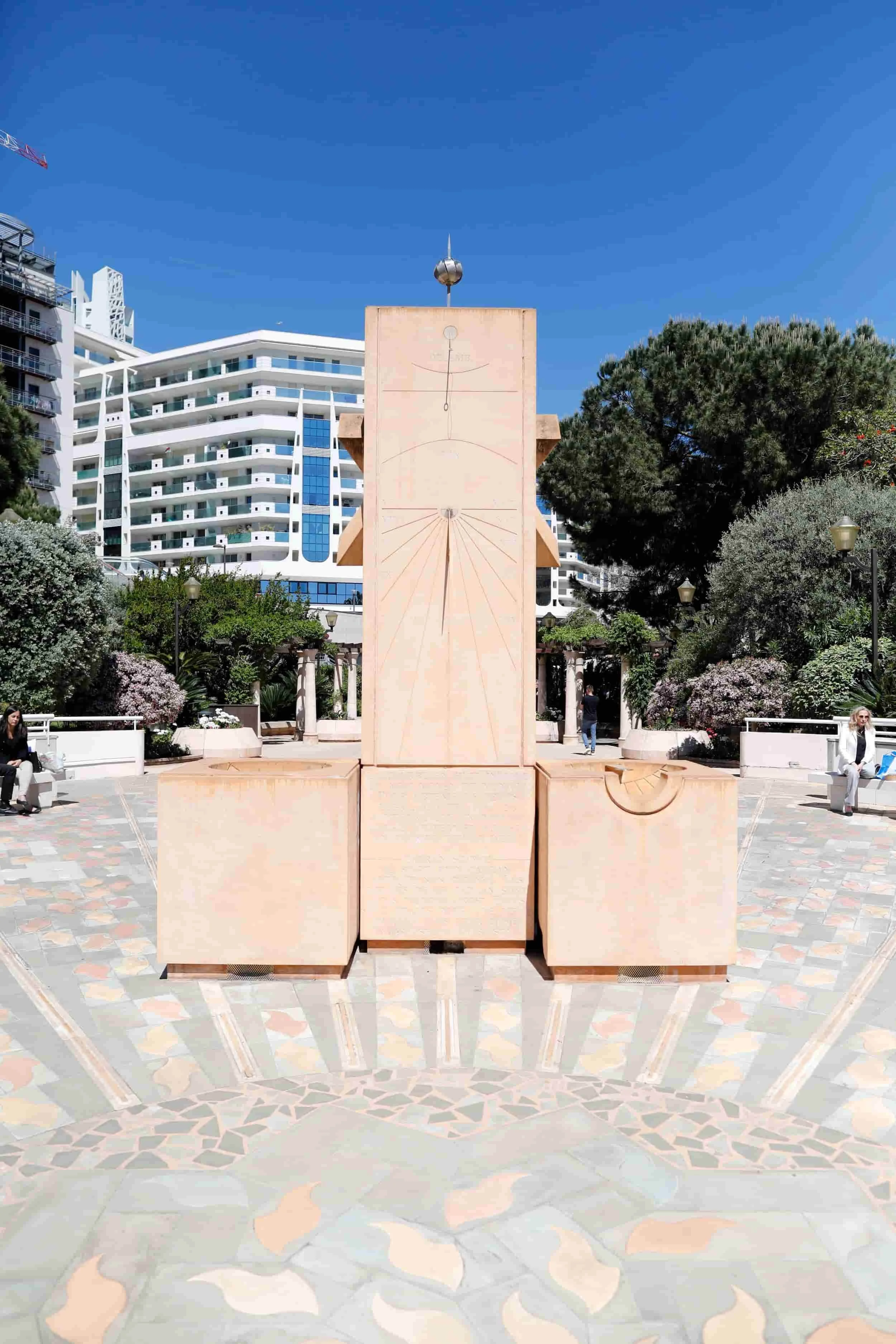
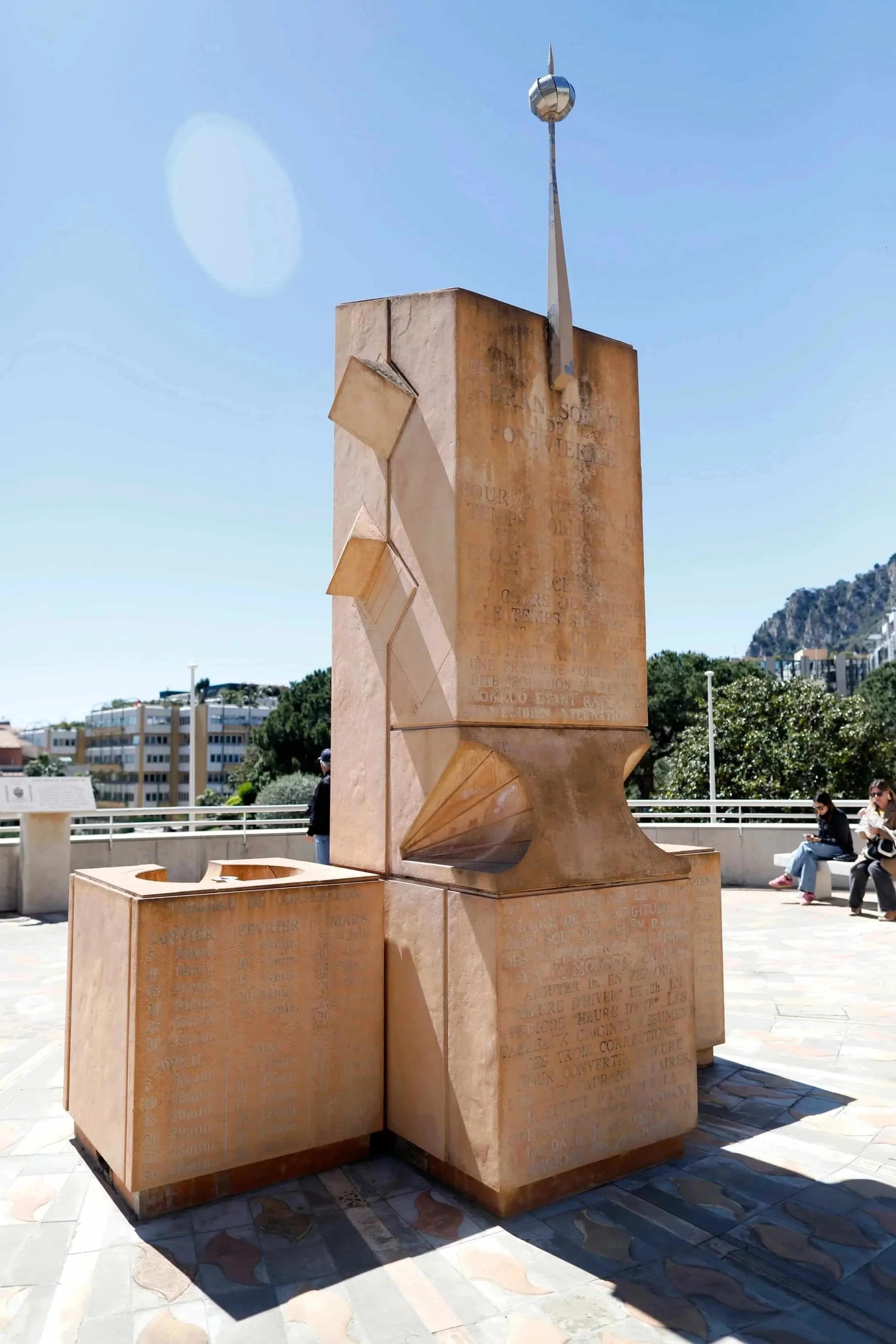
Basked in golden light, the promenade showcases a celebrated sundial that does more than mark the hour — it also points out the day and month, creating a charming, scientific centerpiece. From here, you get stunning views of the yacht-filled port and the nearby Jardin Animalier (Monaco’s zoo). Quiet, impeccably kept and steeped in gentle reverence, the perch is ideal for lingering to watch boats glide by or to pay respects to the late Prince Rainier III.
Musée Océanographique de Monaco
On the list of what to see in Monaco lies Musée Océanographique de Monaco, a wonder in so many ways.
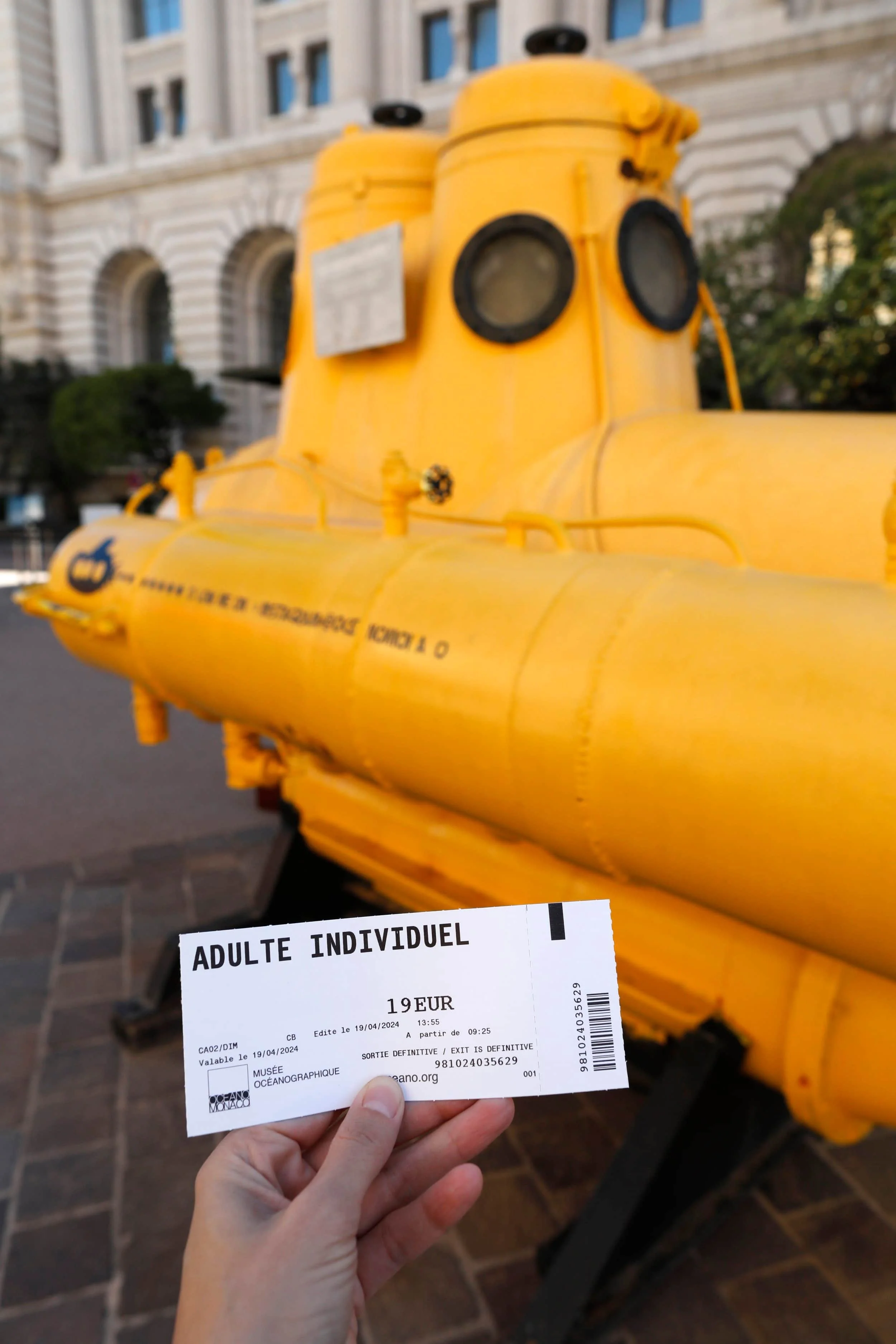
💰 Budget Tip | Admission is currently €22.50 for adults which grants you entry into the main museum collections, tropical and Mediterranean aquariums, Se Turtle Odyssey and the panoramic rooftop terrace. Be sure to visit each area (regrettably, I missed the rooftop).
At the edge of Monaco-Ville, a maze-like neighborhood nearby, stands the Musée Océanographique de Monaco, a striking marine science museum that rewards visitors with far more than its façade promises. Housed in a cliffside palace overlooking the Mediterranean, the museum blends historic architecture with cutting-edge aquariums and exhibits, creating a memorable experience for anyone curious about the ocean and Monaco’s rich maritime history.
Plan at least a couple of hours here to take in the main galleries, which include detailed displays on marine ecosystems, conservation and the history of oceanography. The aquariums are the highlight: vibrant reef tanks, a touch pool for hands-on exploration and large tanks showcasing native Mediterranean species and more exotic marine life. The layout encourages a slow, immersive visit — ideal for photographers, families and science enthusiasts alike.
💡 Local Tip | Allow 1.5–3 hours to explore depending on interest level and whether you join a guided tour or see temporary exhibits.
Timing your visit for a weekday morning helps avoid crowds and the museum’s elevated position offers sweeping sea views that are worth pausing for. Combine this stop with a stroll through the surrounding winding streets and nearby gardens to round out a pleasant half-day in Monaco.
⚠️ Good to Know | Arrive early to avoid crowds and to catch feeding sessions or scheduled talks.
The museum’s first floor plunges visitors into “A Sailor’s Career,” a vivid tribute to Prince Albert I. The gallery highlights his scientific legacy, featuring artifacts from L’Hirondelle — the prince’s pioneering research yacht — including its onboard laboratory. It was aboard vessels like this that observations were made that later unlocked the mystery of anaphylaxis, work that earned Dr. Charles Richet the Nobel Prize in 1913.
“I love the North whose seductions lead men away from injustice and greed, towards the purest glories, the offspring of the scientific spirit.”
During my visit, the ground floor presented a striking exhibition by Michel Bassompierre, the French sculptor widely regarded as a master of contemporary animal sculpture. In marble and bronze, Bassompierre captures bears, elephants, gorillas and horses with a signature blend of sensuality, softness and exacting detail; many of these works travel in international collections.

The display also includes a selection of the artist’s preparatory sketches, revealing the meticulous planning behind each impressively lifelike piece. Laid out to invite close scrutiny of surface and silhouette, this level is especially rewarding for visitors drawn to modern sculpture and faithful naturalistic portrayal.
“The role of artists is to share their sense of beauty, to arouse wonder. This reconnection with the
beauty of nature is necessary to inspire the desire to protect it.”
Below ground, the museum opens into an underwater world that feels like stepping into a real life encyclopedia.
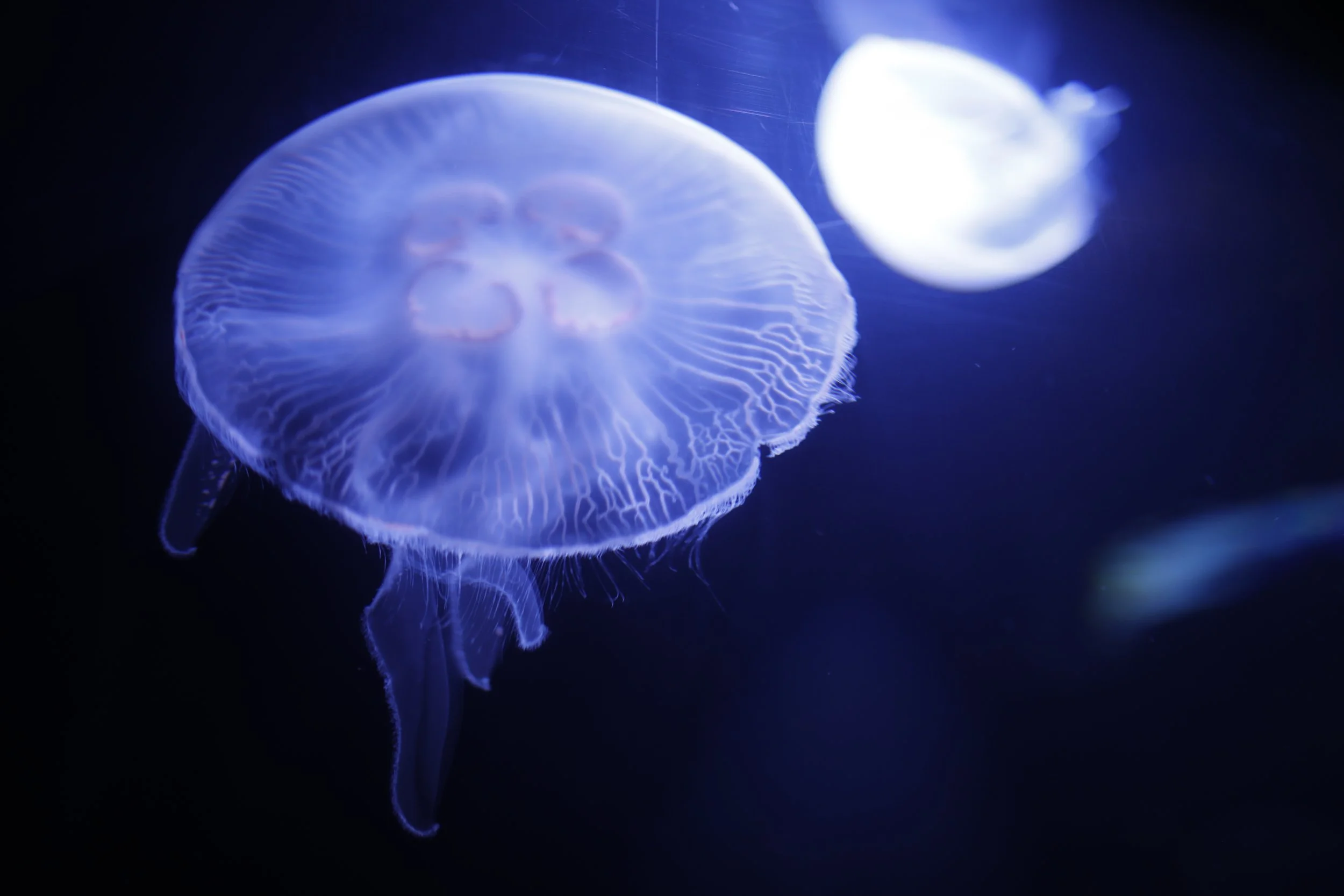
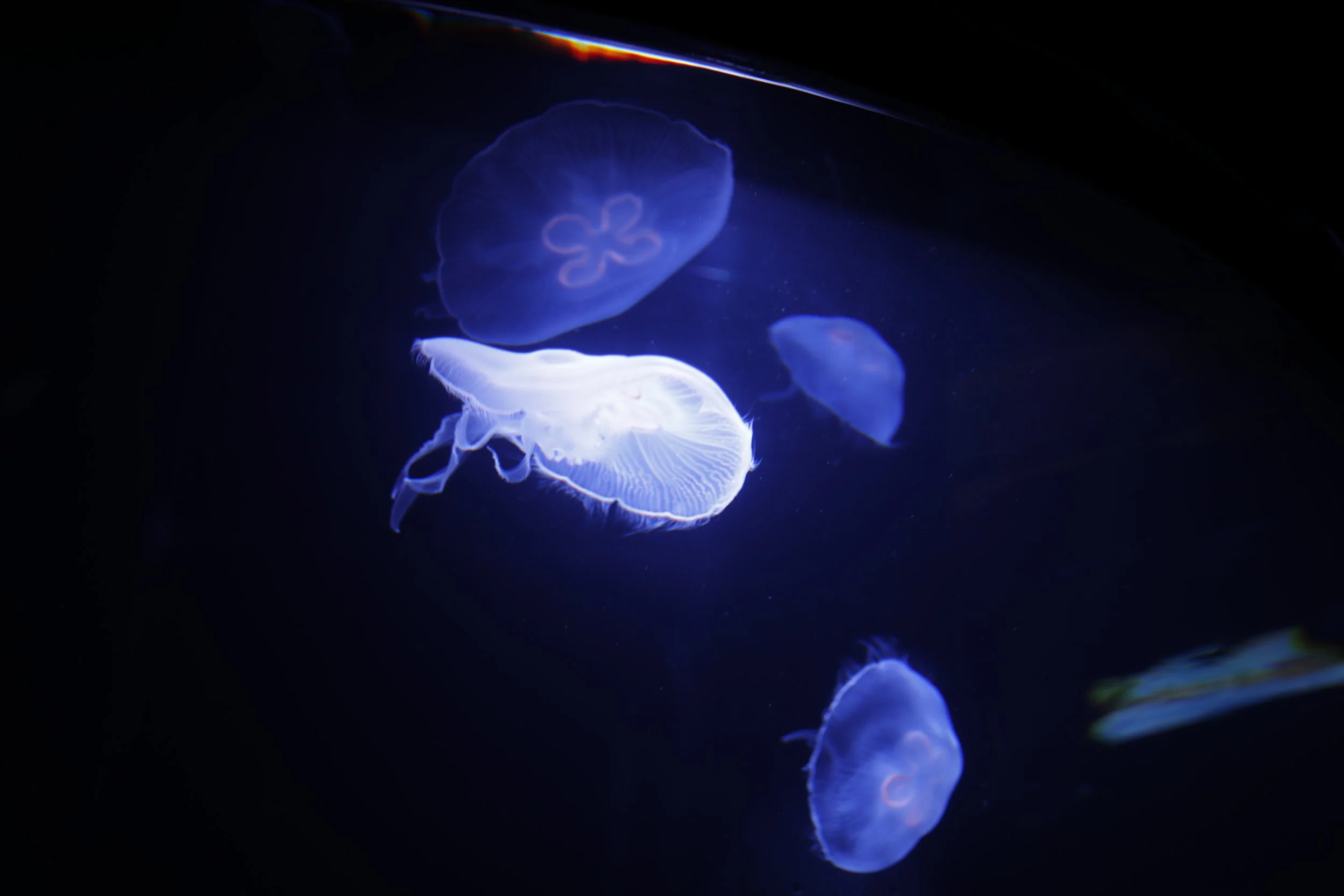
Wandering the lower levels, I found tanks and exhibits brimming with life — roughly 4,000 species of fish and more than 200 families of invertebrates — arranged to recreate both Mediterranean and tropical marine environments.
⚠️ Good to Know | Dress in layers; some aquarium galleries are cool and breezy.
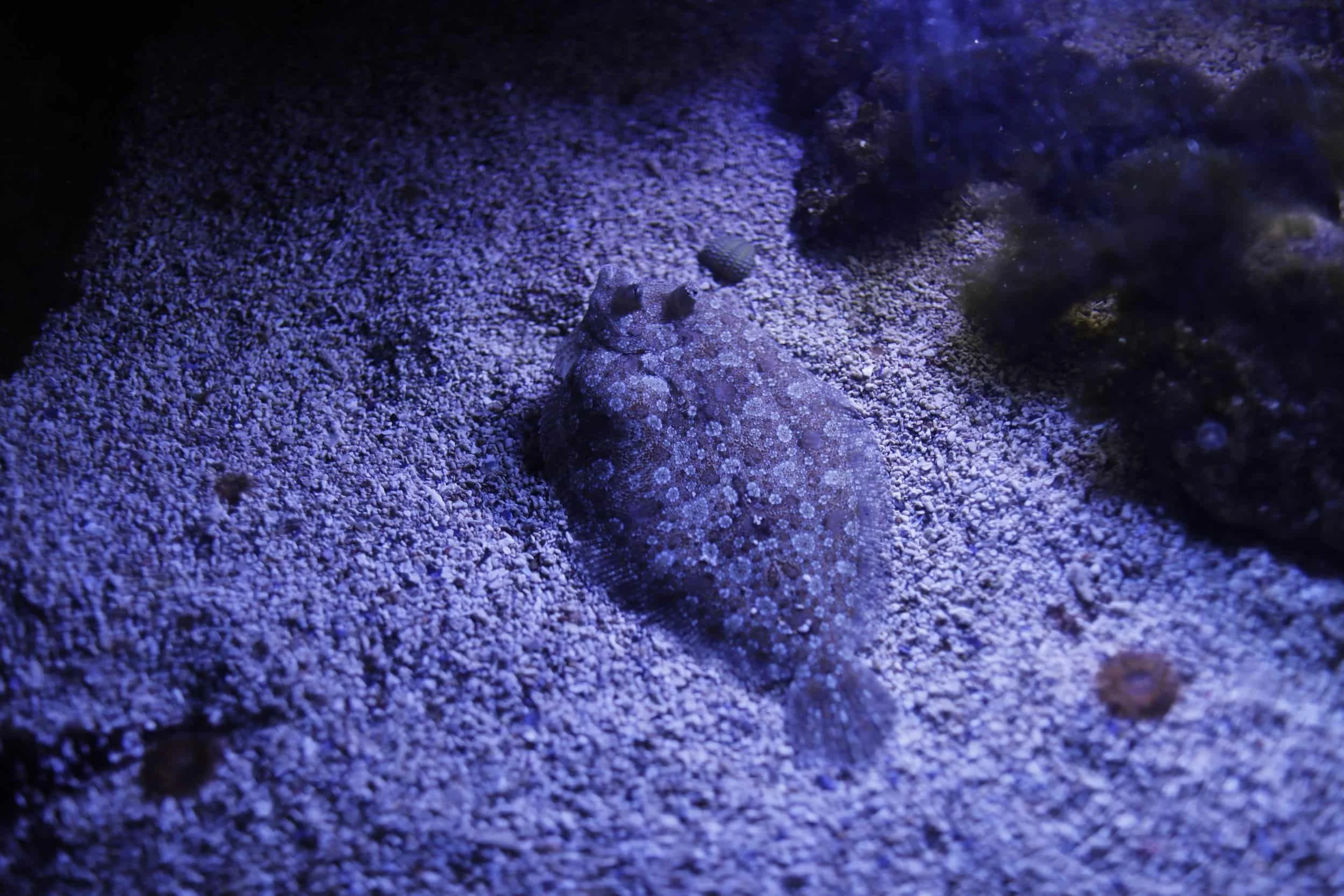
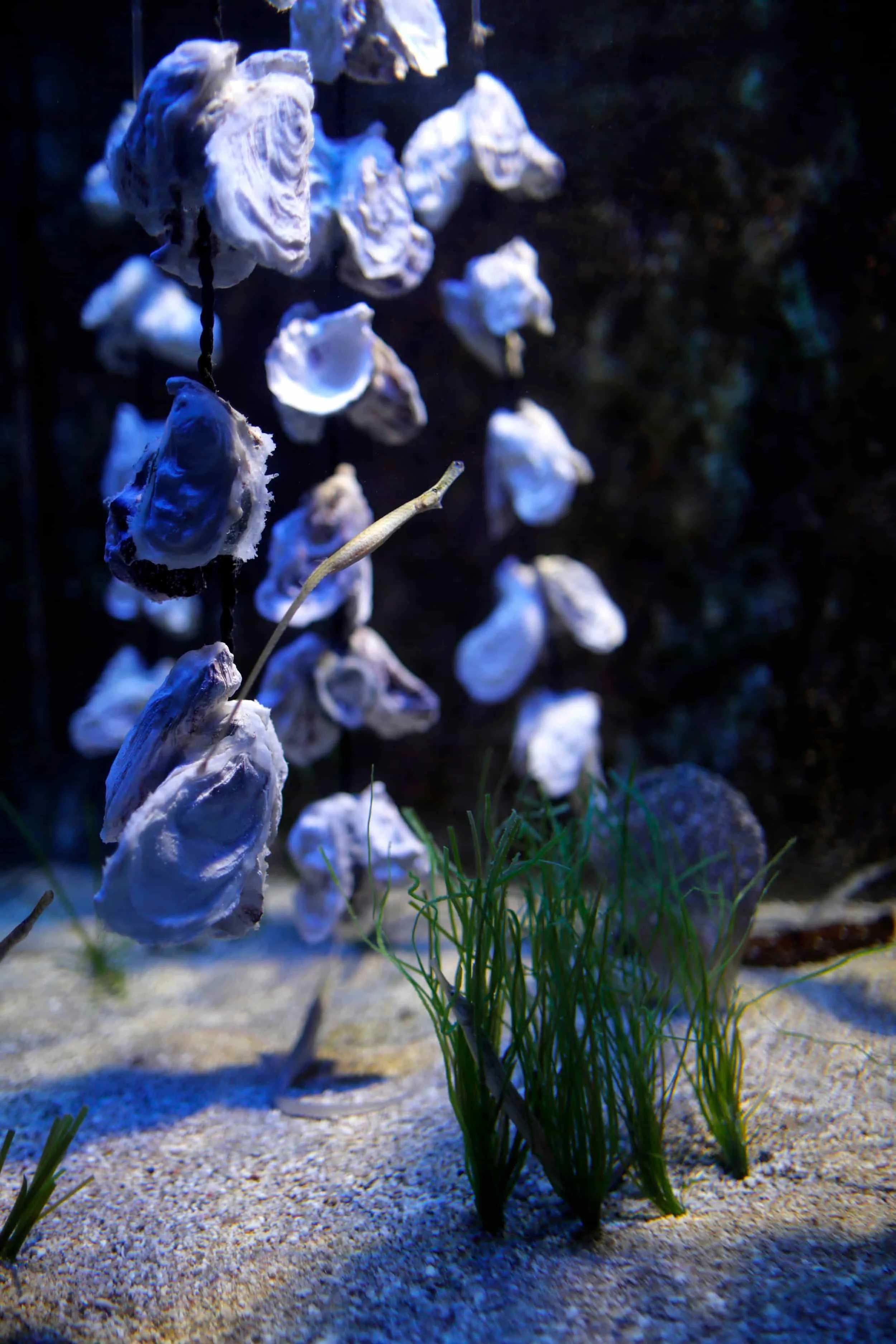
Strolling past displays, I watched seahorses hovering like tiny dancers, starfish clinging to rocks and elegant rays gliding along the sand. Glass-fronted tanks held sharks and eels, while smaller cases showcased jellyfish pulsing in slow motion, neon sea urchins and tuberous sea cucumbers. Crabs and lobsters scuttled along the bottoms, turtles paddled serenely and schools of shimmering fish shifted in synchronized waves. It’s the kind of place where every turn reveals a new, surprising creature — a reminder of how diverse and delicate ocean life really is.
The jellyfish exhibit is a quietly mesmerizing experience. The display combines scientific presentation with a contemplative, almost meditative atmosphere. Dim lighting, carefully timed currents and color-changing illumination allow visitors to see these delicate animals at their most graceful — pulsating, drifting and folding in water as if choreographed.
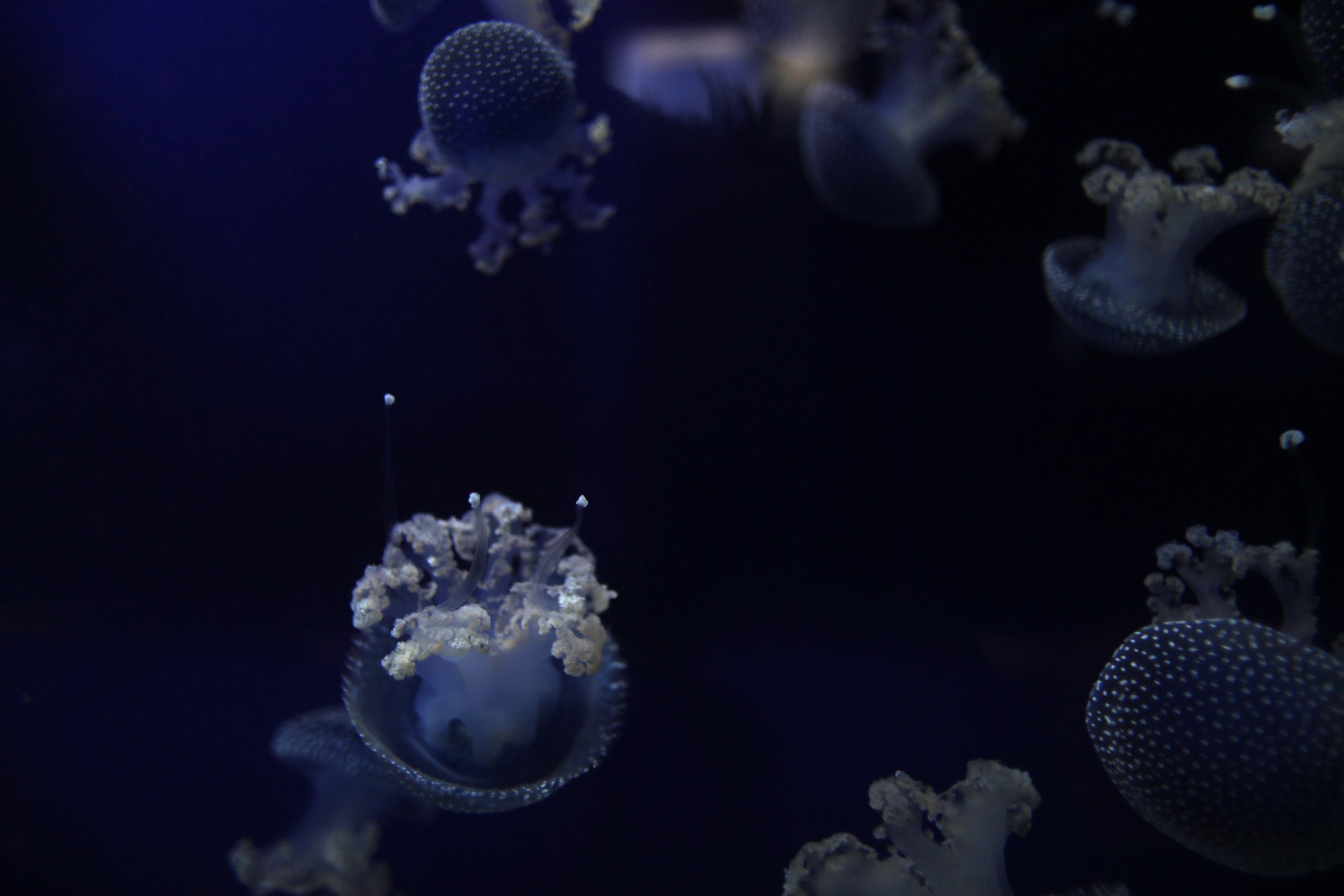
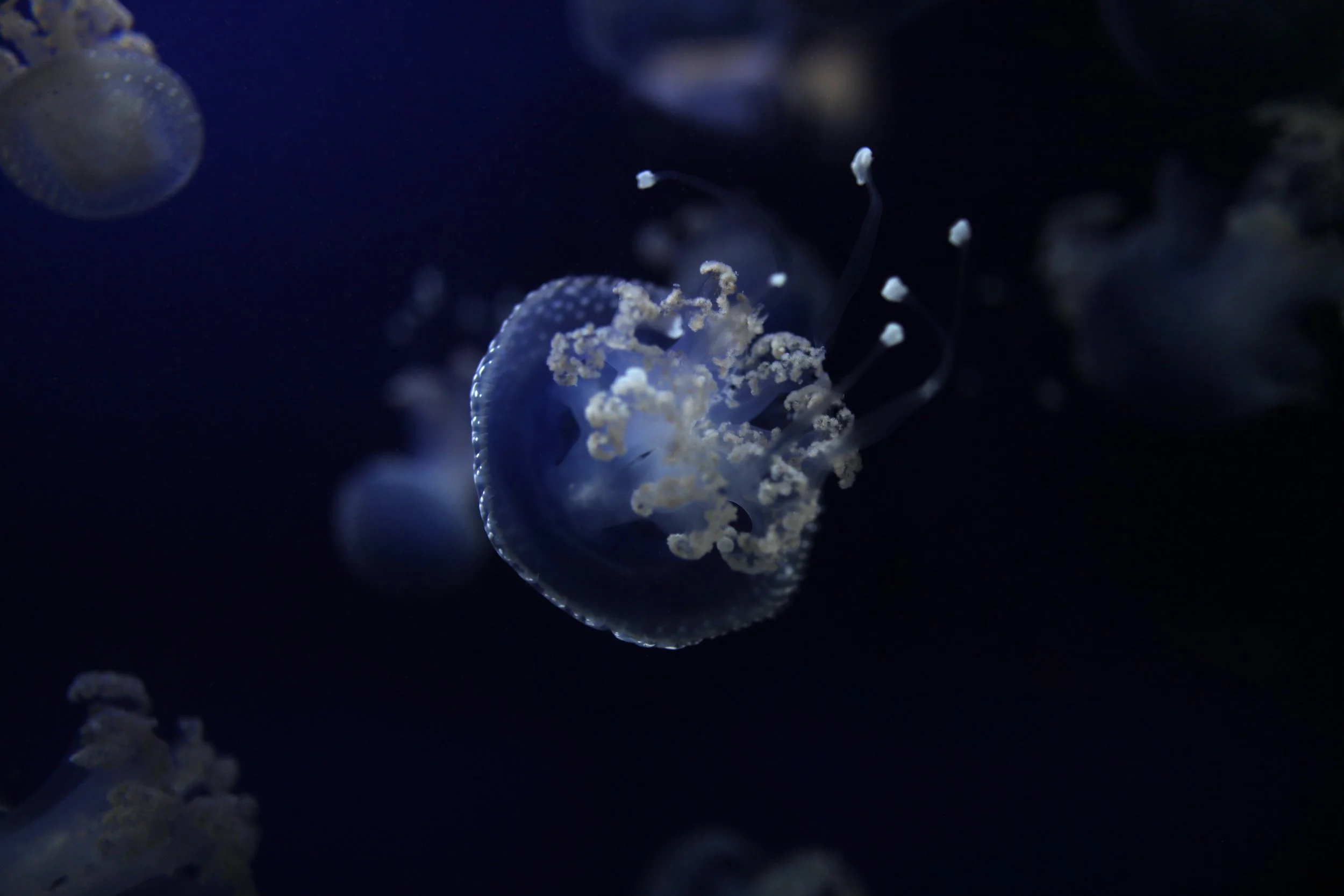
Moon jellies (Aurelia aurita) drift through exhibit tanks like pale moons, their translucent bells and lacy arms moving in a slow, hypnotic rhythm. Comb jellies (ctenophores) add a different kind of spectacle: instead of glow, they dazzle with rows of ciliary plates that catch and refract light into fleeting rainbows. The effect is a silent, prismatic shimmer that feels almost engineered for wonder.
Upside-down jellyfish (Cassiopea) turn the usual image of jellyfish on its head by reclining with their arms turned skyward. Beyond these favorites, the museum rotates regional and seasonal species to showcase Mediterranean jelly life and the broader diversity of jellies worldwide, offering visitors a changing panorama of forms, colors and behaviors.
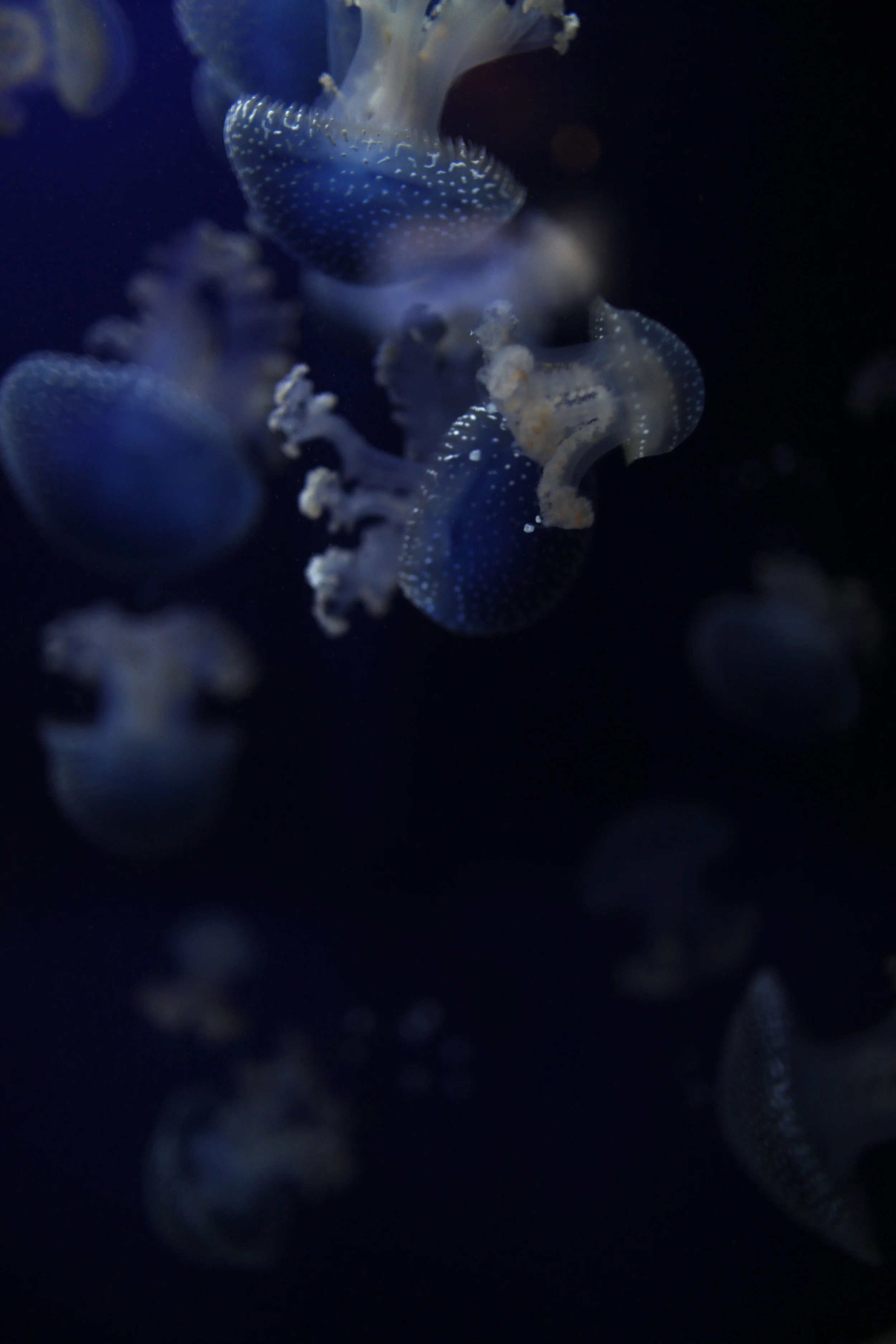
As a museum rooted in marine science, the institution highlights ongoing research into jellyfish ecology and aquaculture care. Staff and researchers concentrate on water quality, feeding routines and breeding methods that allow delicate species be kept for observation without undue stress. The exhibit presents jellyfish as indicators of ocean health, inviting visitors to think about practical conservation steps like cutting down on plastic and backing supporting fisheries.
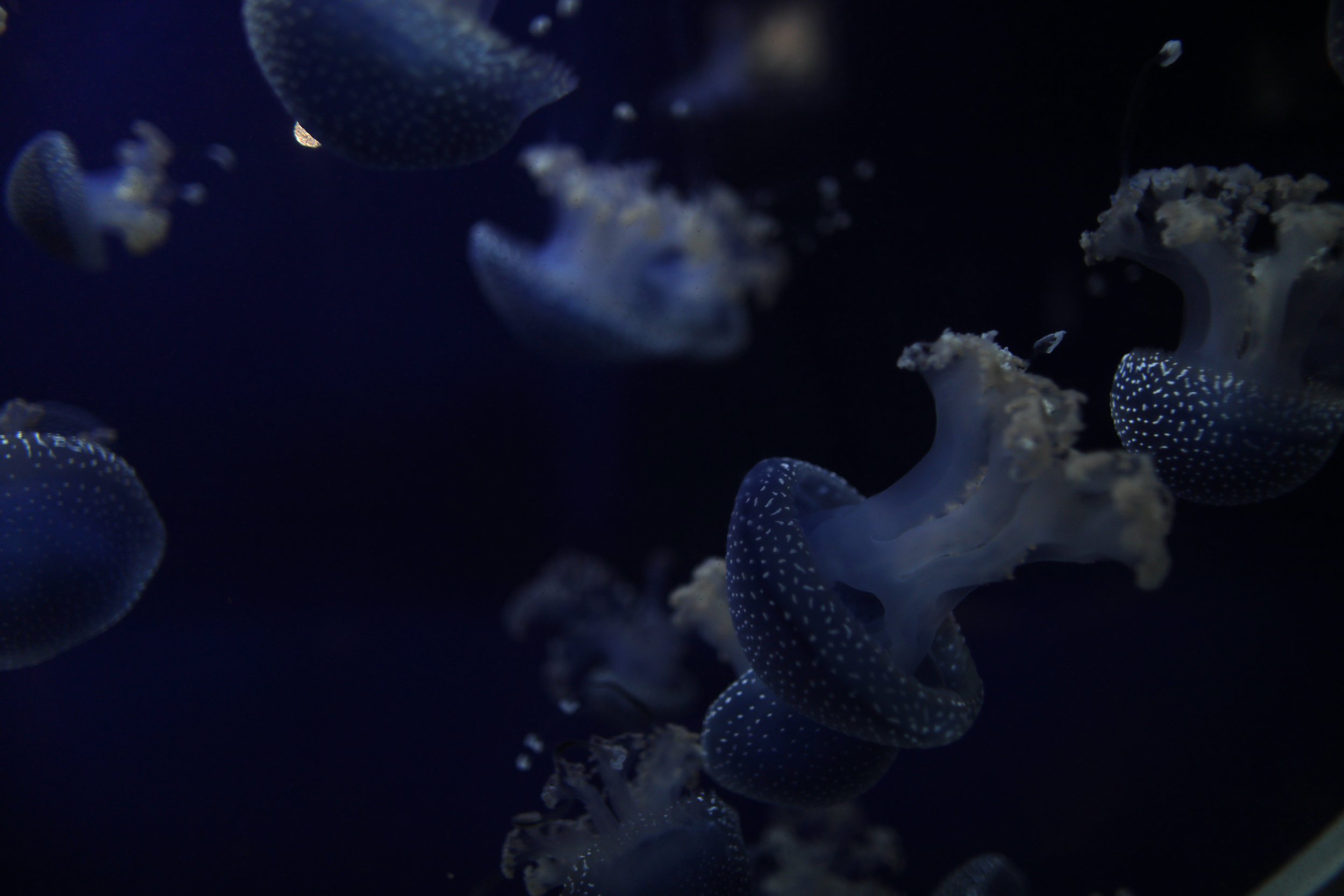
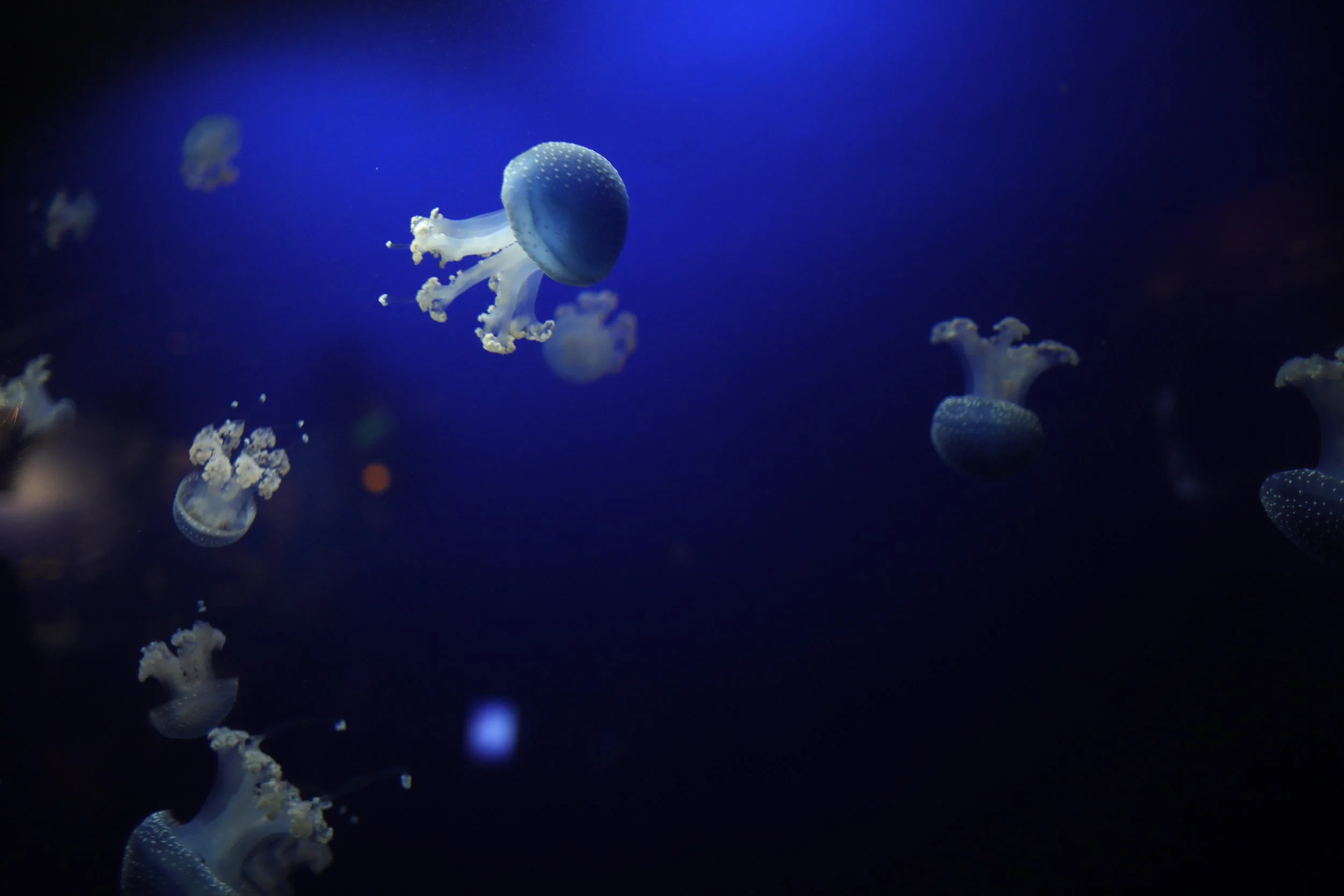
The jellyfish exhibit offers more than visual beauty: it presents fragile, ancient animals in ways that provoke curiosity about marine systems and human impacts on the sea. For visitors interested in marine life, science history or simply a peaceful, contemplative museum moment, the jellyfish are a standout feature and definitely my favorite.
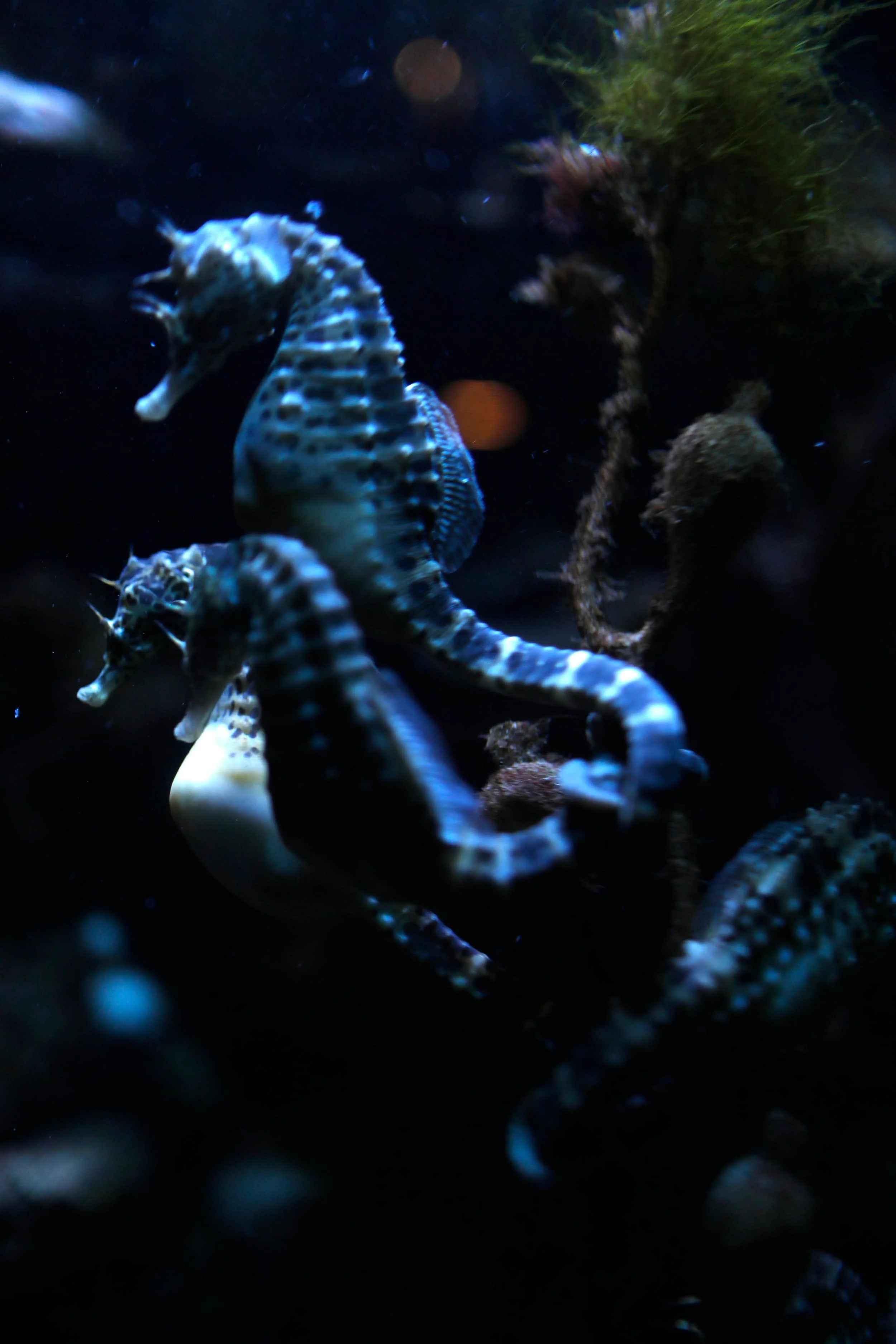
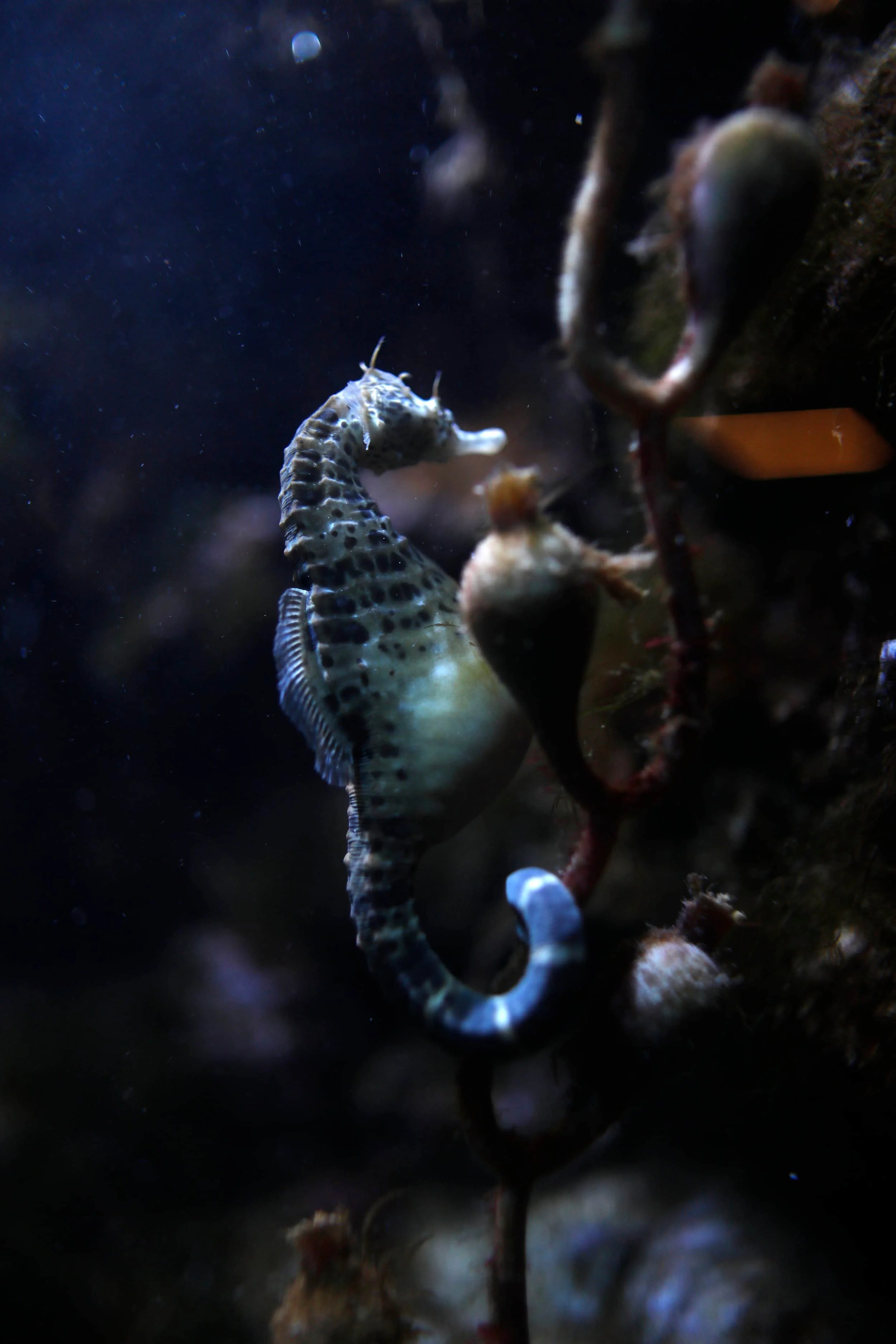
If you can tear your eyes away from the hypnotic jellyfish, the rest of the museum reveals even more wonders.
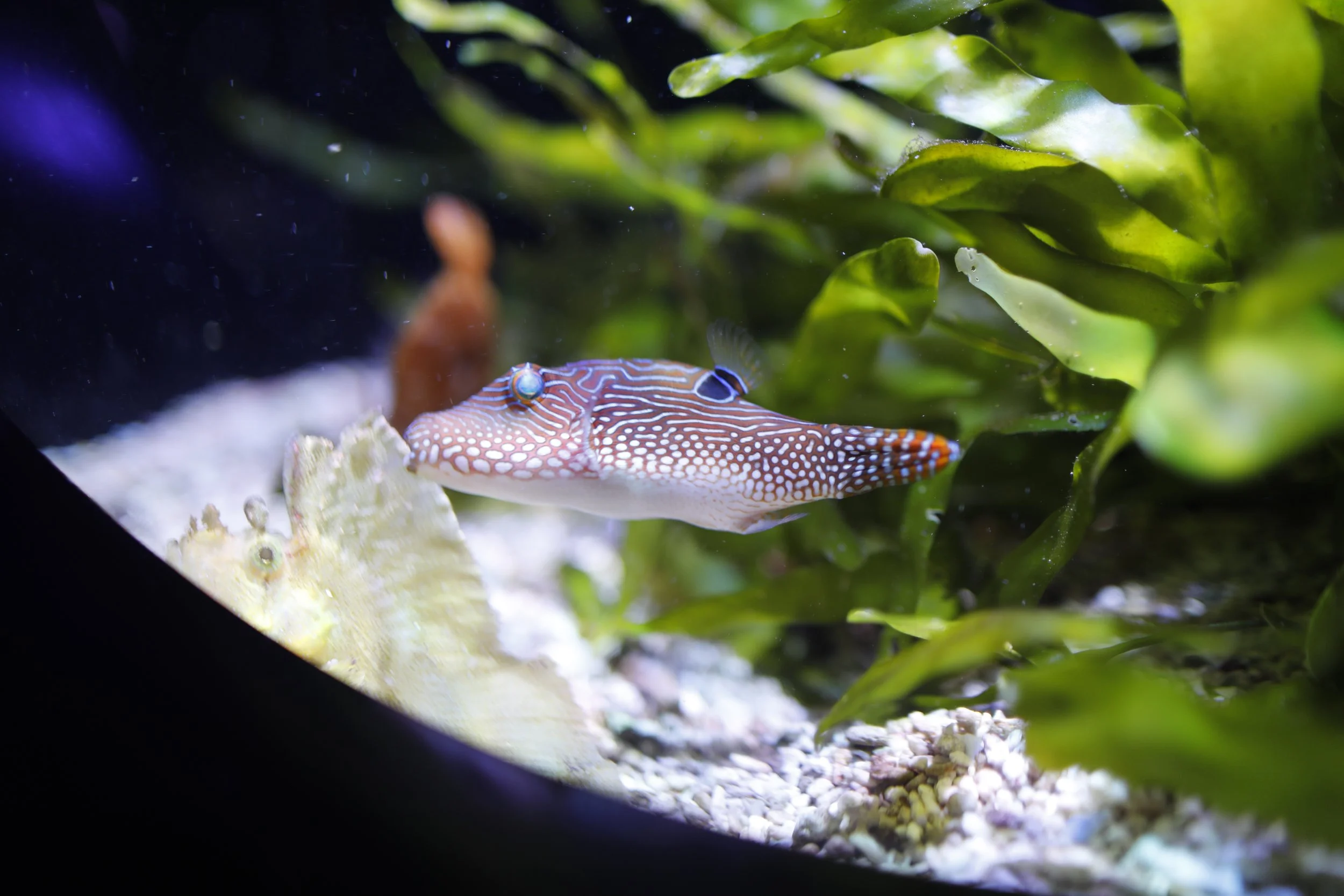
Grand aquarium galleries offer large tanks teeming with Mediterranean species and tropical displays. Visitors will see vibrant schools of fish, groupers, rays, moray eels and living coral exhibits, with walk-around vantage points and clear viewing windows that make close observation easy. The shark tunnel and expansive tanks stand out for their size and biodiversity.
Historic aquarium rooms preserve early 20th-century display cabinets, dioramas, taxidermy specimens and scientific instruments, conveying the institution’s founding-era natural history mission and creating the feeling of stepping into maritime science history.
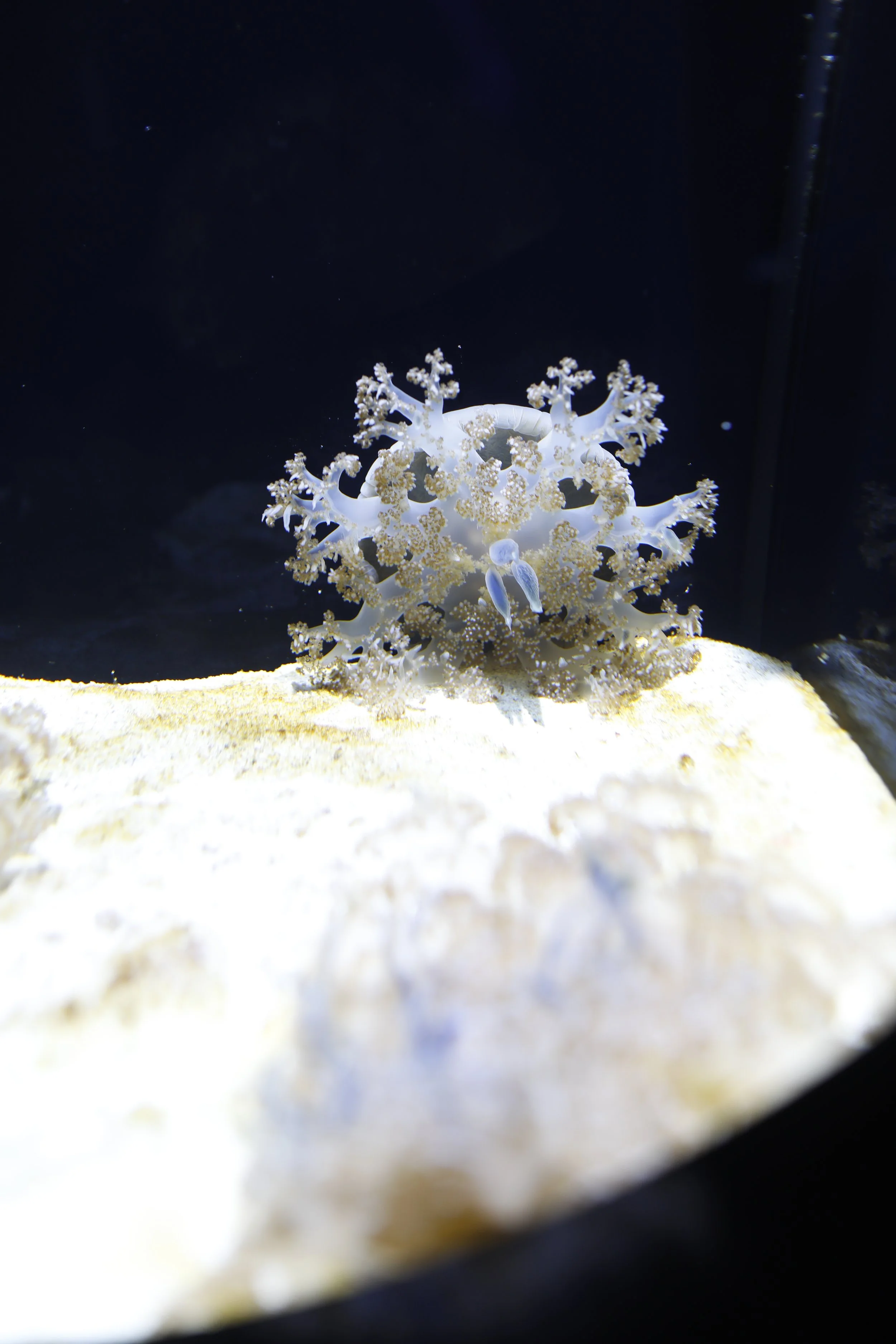
Themed temporary exhibitions rotate frequently, often focusing on contemporary marine conservation, oceanographic research, sea-inspired art or species spotlights; check current programming for timely, in-depth presentations and multimedia installations.
Touch pools and interactive displays provide hands-on encounters with sea urchins, starfish and other invertebrates when open, while interactive kiosks explain oceanography concepts and conservation issues in accessible ways.
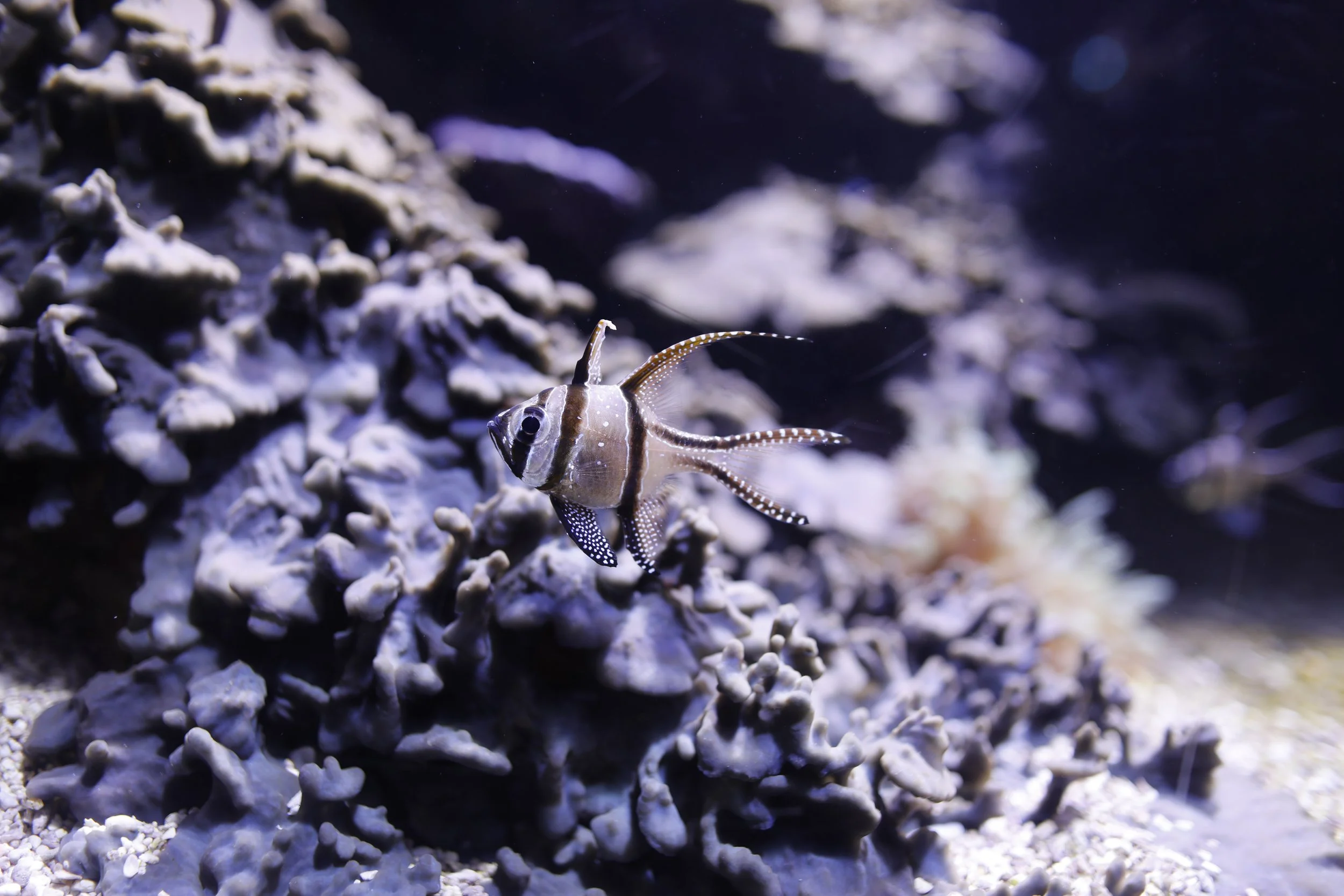
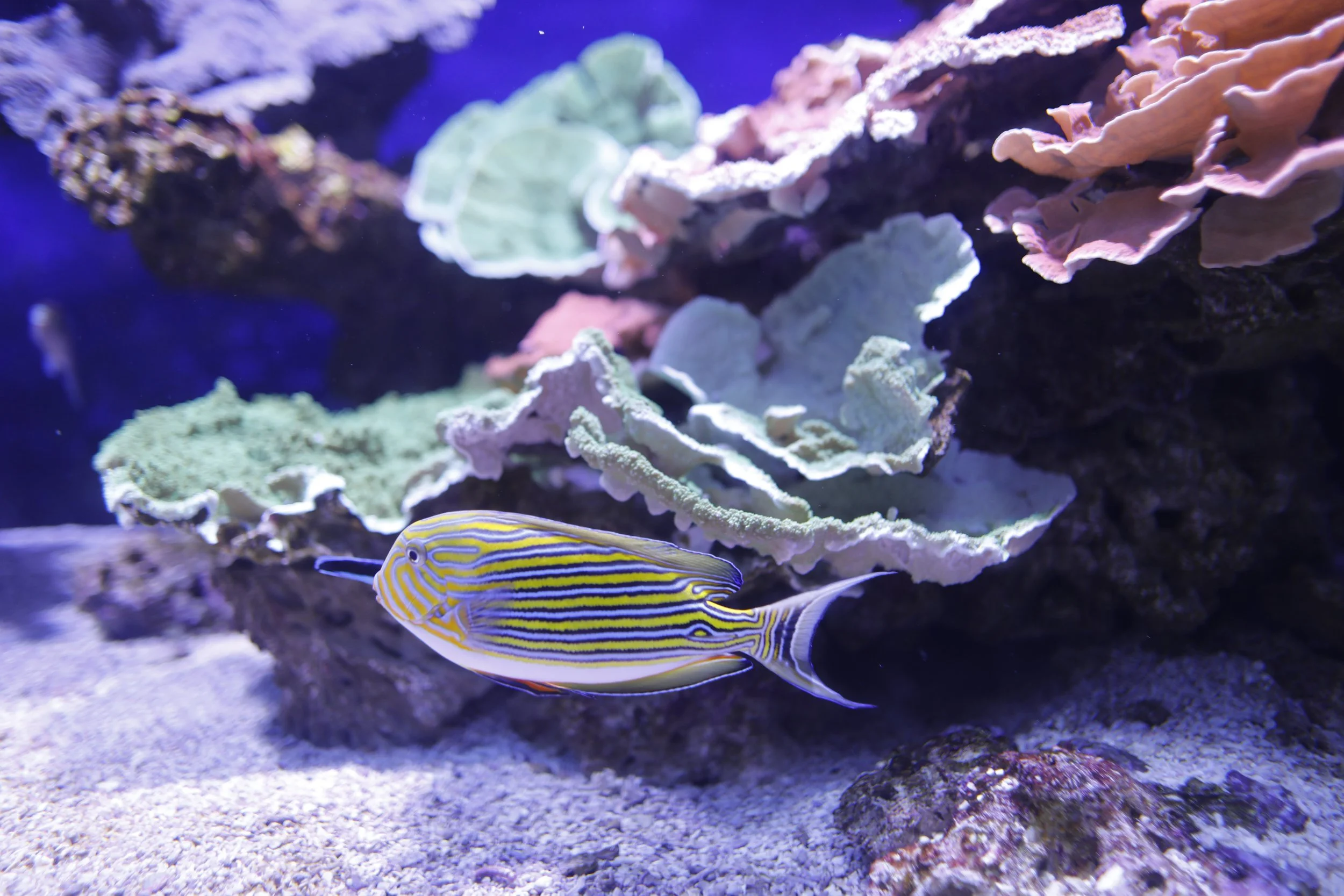
Deep-sea and rare-species displays highlight lesser-known marine life and scientific exploration methods, featuring bioluminescent organisms and unusual specimens collected during oceanographic expeditions.
Temporary and permanent research collections, including preserved specimens, skeletal mounts and curated materials, demonstrate taxonomy, anatomy and the historical breadth of oceanographic study.
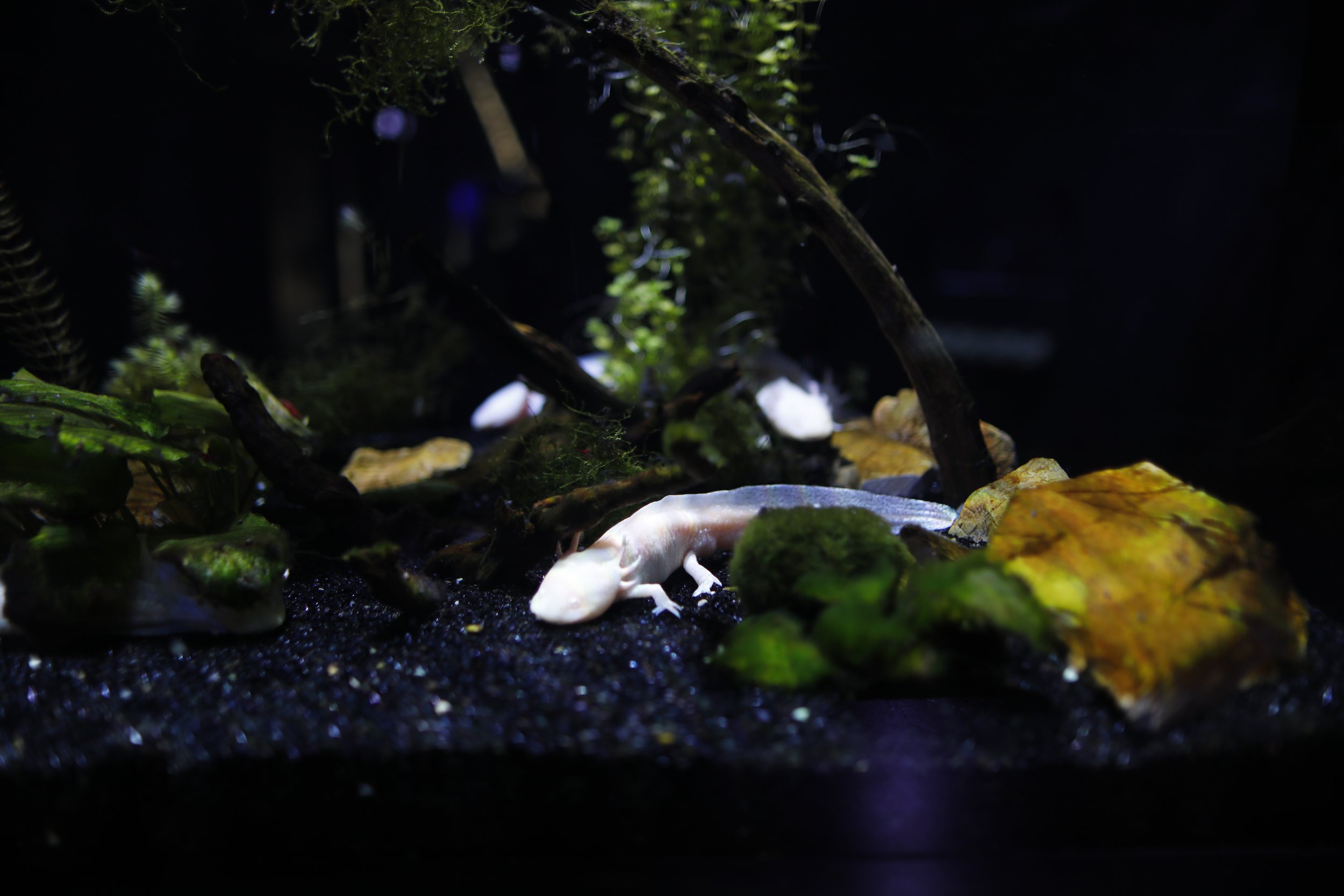
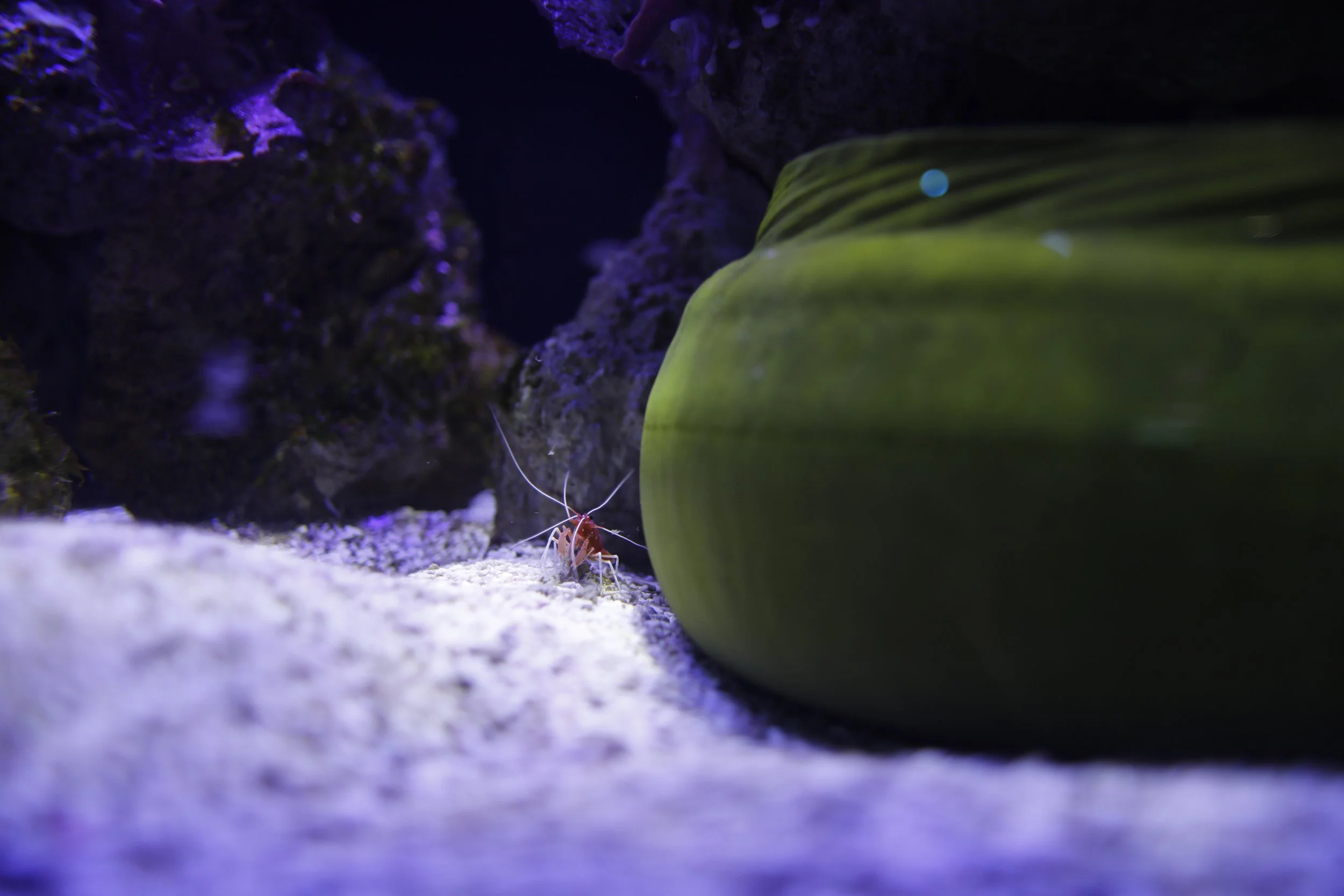
The museum’s rooftop terrace, set dramatically on a cliff, provides outstanding panoramic views of the Mediterranean and Monaco’s coastline, making it an ideal spot for photos and a reflective pause after exploring the indoor galleries.
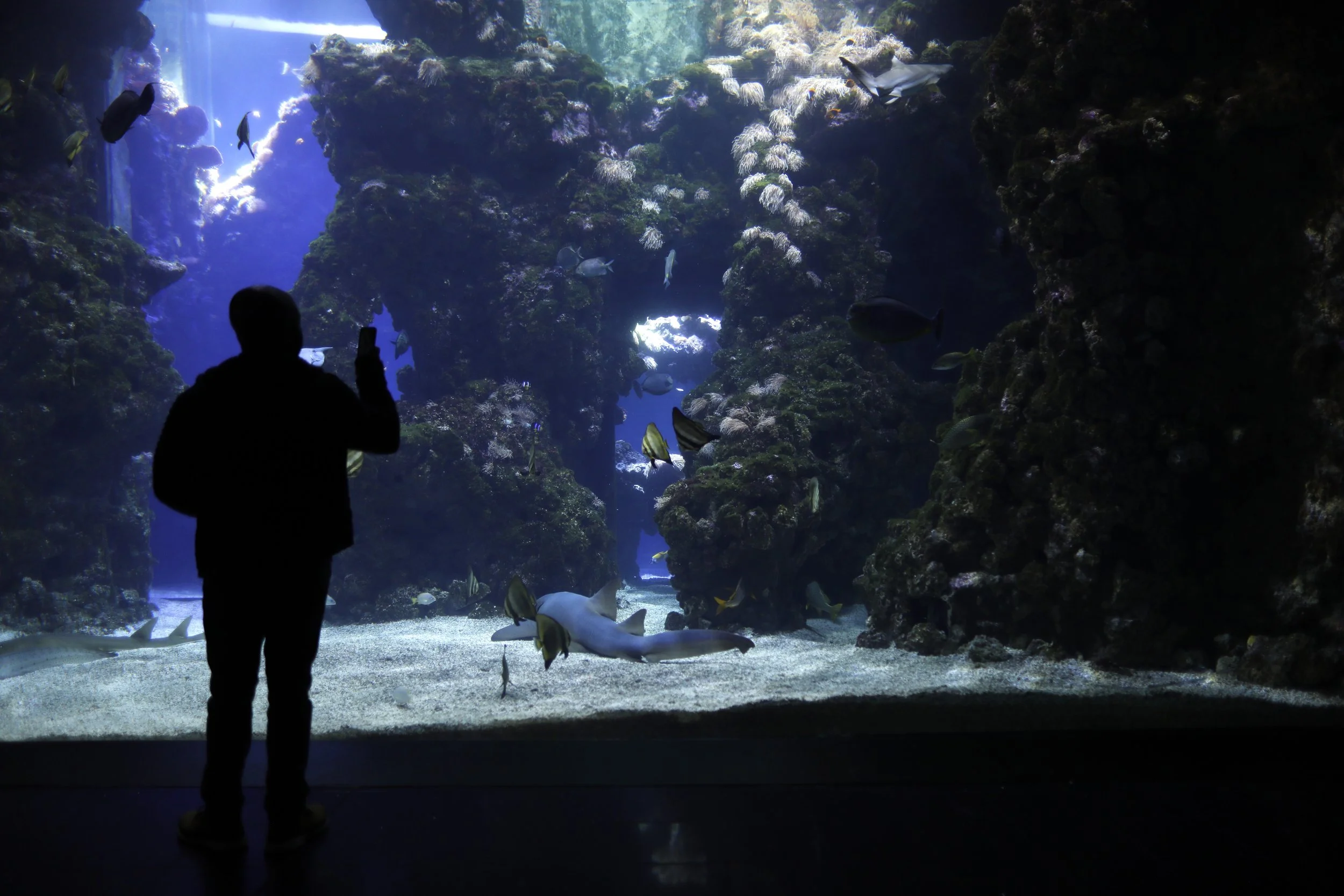
Balancing dramatically on a cliff above the Mediterranean, the Musée Océanographique is Monaco’s testament to a lifelong romance with the sea. Founded by Prince Albert I — an intrepid explorer whose expeditions brought back specimens, maps and stories from across the globe — the museum gathered and safeguarded a century’s worth of marine collections and archival evidence of ocean discovery.
Its grand façade and vaulted galleries frame modern aquariums and laboratories where vibrant marine life meets active research and public outreach. Visiting the museum is more than sightseeing: it reveals Monaco’s pivotal role in expanding ocean science and shows how the principality continues to shape marine conservation thinking and policy.
Monaco to Nice by Train
After a day exploring Monaco, the easiest way back to Nice is by train. Skip the coastal traffic and head to Monaco–Monte-Carlo station, where frequent TER trains connect the principality with Nice in around 20–25 minutes. Tickets are inexpensive and can be purchased at the station or in advance through SNCF.
The journey back is part of the experience. The railway traces the Mediterranean coast, slipping between tunnels and opening suddenly onto views of the sea, hillside villages and colorful towns tucked along the shoreline. Grab a window seat if you can, settle in and enjoy one last look at the Riviera before arriving back in Nice.
💡 Local Tip | Rush hour trains can be particularly busy, so hop on and grab a seat quickly to enjoy the views.
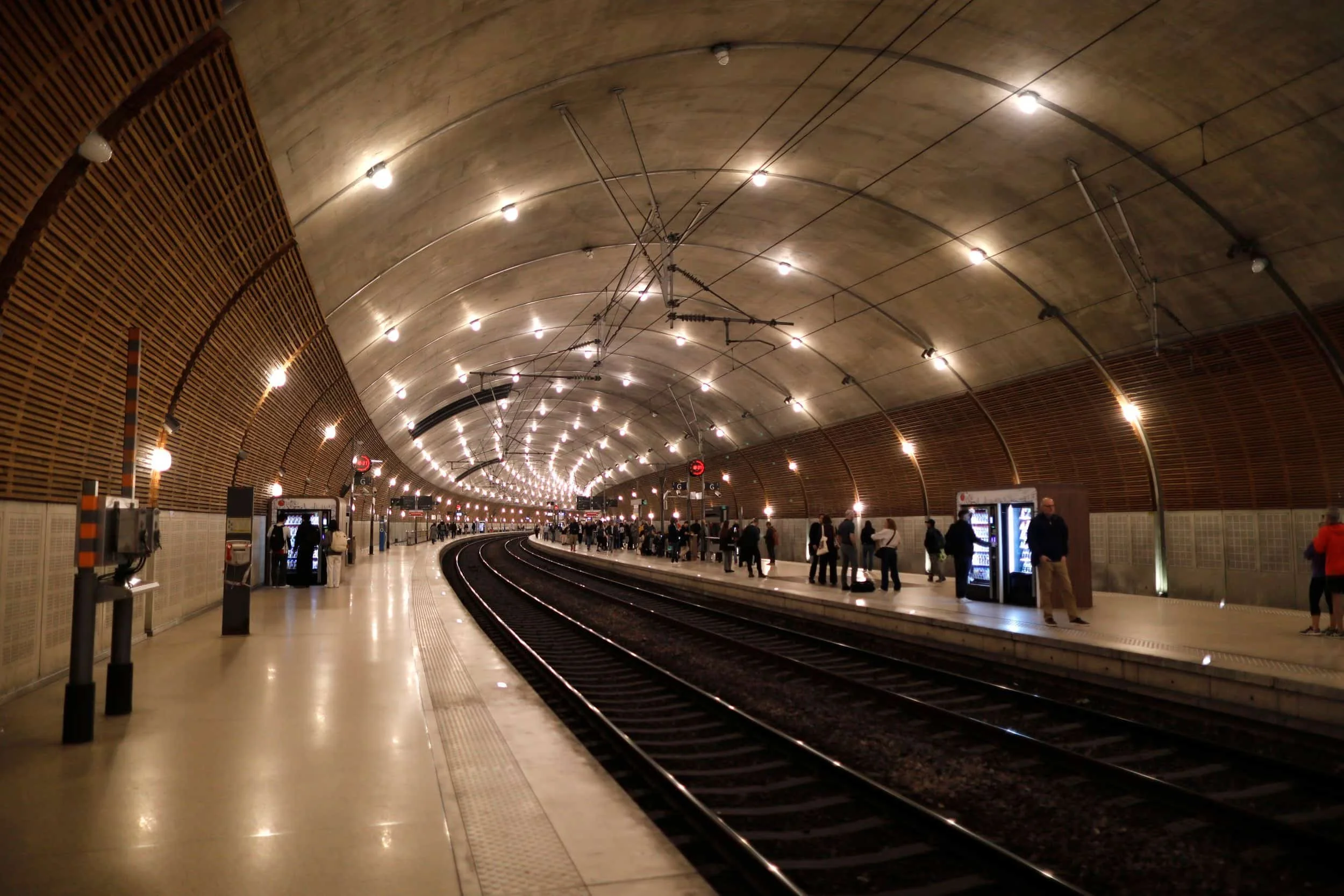
When your train rolls into Nice, step off at Nice-Ville, the city's main station. From there, you can catch a bus or tram but for the best welcome, walk out into the sun: it’s just a 10–15 minute walk to Place Masséna and the palm-lined Promenade des Anglais — perfect for easing into the Côte d’Azur rhythm.
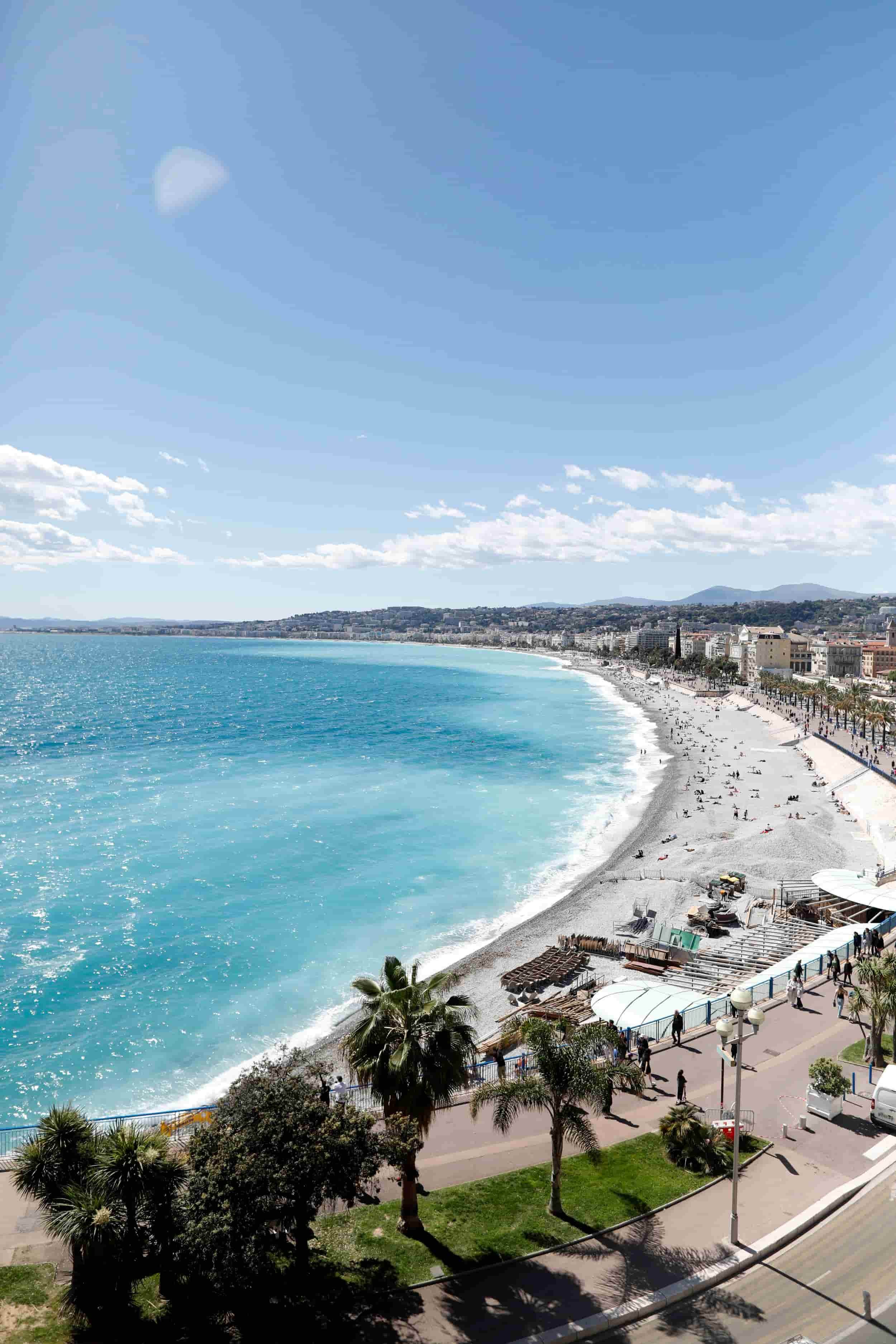
Back in Nice, there’s plenty to fill the rest of the day. Walk along the Promenade des Anglais, wander through the narrow streets of Vieux Nice or stop by Cours Saleya for its markets, cafés and restaurants. The city also has an interesting mix of Belle Époque architecture, museums and colorful Mediterranean buildings that make simply walking around worthwhile.
As evening approaches, find a café terrace for a glass of wine or head toward the waterfront before dinner. Nice is particularly easy to enjoy without much of a plan — most of the center is walkable, there’s always somewhere to stop for a coffee or something to eat and the sea is never very far away.
My Bibimbap Moment
Every destination adds another ingredient to our life's recipe, sometimes simply by giving us a new way to look at the world. Along Monaco's waterfront, surrounded by the Mediterranean and the stories held within the Oceanographic Museum, I found myself thinking beyond the shore — to the vastness, history and life beneath the surface. Here's the ingredient this corner of Monaco added to my Bibimbap Life.
Today’s Bibimbap Recipe
🥢 Flavor: Fresh
🌿 Ingredient: Perspective
❤️ Best Memory: Frozen in wonder, watching the drifting jellies at the museum
🎒 Take With You: Travel with fewer expectations and more questions. The places that change us most are rarely the ones we think they will be.
When I think back on Monaco's waterfront, I remember the bright Mediterranean air, the boats moving through the bay and the feeling of standing at the edge of something so much larger than myself. The Oceanographic Museum brought another layer to that feeling, connecting the beauty outside with the mysteries beneath the surface. There was something refreshing about spending the day with the sea as the backdrop and the subject — a reminder that sometimes a change in scenery can quietly change the way we see things, too.
Monaco Travel Essentials
Monaco may be tiny but there’s a surprising amount packed into its steep streets and waterfront. It’s easy to visit as a day trip from Nice, with regular trains bringing you right into the principality and most major sights within walking distance once you arrive. Give yourself a full day to explore the harbor, Monaco-Ville and the coastline without rushing, and be prepared for plenty of hills and stairs along the way. If you’re interested in the maritime side of Monaco, leave time for the Oceanographic Museum, Port Hercule and the waterfront alongside the better-known palace and casino.
When to Go
The best time to visit Monaco is in late spring, when mild sunshine warms the Riviera, gardens burst into bloom and the city hums with elegant events without the peak-summer crowds.
Spring (April-June) & Fall (September-October): Ideal weather, fewer crowds and lower hotel prices than mid-summer. May hosts the famous Formula 1 Grand Prix, making it lively but very crowded and expensive.
Summer (July-August): Very hot, packed beaches and high prices but great for yacht culture and outdoor nightlife.
Winter (November-March): Mild weather and cheap rooms, though some outdoor spots are quiet.
Choose a Home Base: Nice or Monaco
Choosing to stay in Nice versus Monaco comes down to vibe, value and convenience.
Nice offers a more relaxed, authentically Provençal experience with colorful markets, broad beaches and a lively Old Town where you can sample local cuisine and stroll without the formality of a casino state; accommodations range from charming guesthouses to modern hotels, making it easier to find good value for longer stays.
Monaco, by contrast, is compact, ultra-glamorous and ideal if you want a high-end, glamorous short stay focused on luxury shopping, Michelin-star dining and people-watching near the marina and casino; expect steep prices and a more manicured, exclusive atmosphere.
If you prioritize cultural immersion, budget flexibility and easy access to nearby day trips along the Côte d’Azur, pick Nice; if you’re aiming for a lavish, status-driven experience and don’t mind paying a premium for convenience and spectacle, Monaco is the choice.
Discovering that day trips from Nice to Monaco are simple was a sweet surprise — two glamorous destinations for the price of one. Perfect for travelers based in Nice, a short journey puts you in the heart of Monaco’s famed casinos, yacht-lined harbors and compact walkable streets, all easily explored within a day.
How to Get There from Nice
A short coastal train ride offers sunlit views of the Promenade des Anglais in Nice before you slip into Monaco’s glittering harbor, while a scenic drive along the Grande Corniche winds past clifftop villages and fragrant pine forests; for a touch of glamour, arrive by helicopter and descend into a skyline of yachts and casinos.
Train: Catch the coastal train from Nice to Monaco — a breezy, postcard-perfect ride that saves your feet, your time and your budget compared with a taxi. Take the frequent TER regional train from Nice-Ville to Monaco-Monte-Carlo (about 20–30 minutes) for roughly €3–€8 each way, depending on time and ticket type.
Car or Bus: Drive or take regional bus line 100 from Nice along the coastal road, which takes roughly 30-45 minutes depending on traffic.
Taxi or Uber: If trains aren’t your thing, summon an Uber or grab a taxi to reach Monaco. Expect to pay around €40 ($45 USD) — steeper than you might think — though, the journey is comfortable and effortlessly scenic.
Air: Fly into Nice Côte d’Azur Airport, then take a short taxi, train or helicopter transfer into the principality.
Entering & Exiting Monaco
Approaching Monaco from the French Riviera by car, be prepared for slow-moving traffic at the border; it usually keeps flowing but progress can be gradual. The roads within the principality are narrow, winding and often one-way, carved into cliffs or threading through tunnels, so driving here feels both tight and unusually scenic.
Ride-hailing and taxis work differently than in France. Monaco limits Uber and most app-based taxi bookings unless you’re a guest at certain luxury hotels, so don’t expect to summon a ride once you’re inside the principality. Private cars can usually drop you off but arranging pickups from within Monaco can be challenging.
If you want an easy, inexpensive way out, the local train back to Nice is a reliable option — tickets are roughly €5 and services run frequently. Another workaround for app-based rides is to walk across to the French side of the border, where requesting a ride is allowed; signal strength can be patchy there, though, so plan accordingly.
ℹ️ Good to Know | You’ll often cross into or out of Monaco without being asked for a passport but carry yours just in case. It’s the safest option if authorities request ID or if you have onward international travel planned.
ℹ️ Good to Know | Calling an Uber inside Monaco is not an option, so plan your return travel accordingly.
Where to Stay
For a day trip to Monaco, Nice makes an excellent home base. The train journey is quick and easy, so you can spend a full day exploring the principality and return to Nice for dinner without changing hotels. It’s exactly what I did and if Monaco were one stop on a longer French Riviera trip, I’d happily do it the same way again.
If you want more time around the harbor, museums and waterfront — or simply want to experience Monaco after many of the day-trippers have left — staying overnight can be worthwhile. Accommodation comes at a premium, though, so I’d be selective about whether the extra night is worth it for your trip.
Where I Stayed in Nice
For design, space & a furry roommate — Architect-Designed Apartment
I used Nice as my base and stayed in a beautifully designed apartment that gave me much more space than a traditional hotel room and felt like having my own little home on the Riviera. The thoughtful interiors were an obvious bonus for me but the real star may have been Neomaya, the resident cat — a silk-coated beauty with impossibly long fur and mesmerizing green eyes. With Monaco just a short train ride away, it was an easy base for exploring both.
Where I’d Stay in Monaco
Monaco isn’t somewhere I’d automatically choose to stay overnight, especially with Nice so close but if I wanted the experience of waking up in the principality, I’d look for something smaller and more approachable near the waterfront rather than one of the big luxury hotels.
For harbor views without the full Monaco splurge — Boutique Hotel Miramar
If I were spending the night in Monaco, Boutique Hotel Miramar is one of the few places I’d seriously consider. Its location overlooking Port Hercule feels especially fitting for a maritime-focused trip, putting the harbor, Monte Carlo and much of central Monaco within easy reach. The rooms are contemporary and relatively simple but the waterfront setting is the real draw — and it offers a way to stay in the heart of Monaco without automatically jumping to one of the principality’s ultra-luxury hotels.
Additional Options
Want to stay in Monaco or nearby?
If Miramar isn’t quite right, browse more stays around Monaco and neighboring Beausoleil. Staying within the principality gives you more time to enjoy the harbor and explore after the day-trip crowds thin out, while Beausoleil can broaden your options while keeping Monte Carlo close by.
Want to stay in Nice?
For most French Riviera trips, Nice would still be my first choice as a home base. You’ll have a much wider range of hotels and apartments to choose from, plenty to explore before and after your Monaco day trip and easy train connections to other towns along the coast. Look around Vieux Nice for atmosphere and walkability, the Port for restaurants and waterfront life or neighborhoods like Libération and the Musicians’ Quarter for a slightly more residential feel.
Prefer a place of your own in Nice?
If you’d rather have more space, a kitchen or simply somewhere that feels a little more like home, Nice has plenty of vacation rentals that make an easy base for exploring both the city and Monaco.
How to Get Around
Monaco is compact and surprisingly easy to explore on foot but don’t let its size fool you — the principality is built into a steep hillside, so expect plenty of stairs and elevation changes. Public elevators and escalators connect different levels of the city and can save you a lot of climbing once you learn where they are.
Local buses are useful for longer stretches between areas like Monaco-Ville, Monte Carlo and Larvotto, while much of the harbor and waterfront is best explored on foot. For a day trip, you won’t need a car, and parking and traffic make public transportation the easier option anyway.
How Long to Stay
For most travelers, one full day in Monaco is enough to see the highlights and it worked perfectly as a solo day trip for me from Nice. Monaco is compact, so you can comfortably explore the harbor, Monaco-Ville, the Oceanographic Museum and Monte Carlo without needing to stay overnight.
If you want more time for the beaches, museums, gardens or a slower dinner-and-drinks kind of evening, consider staying one or two nights. An overnight stay also lets you experience Monaco after many of the day-trippers have left but if you’re exploring the French Riviera from Nice, a well-planned day gives you plenty of time to get a feel for the principality.
Tours & Day Trips
There are plenty of ways to explore Monaco, whether you visit independently or prefer a guided experience. From Nice, full- and half-day tours often combine Monaco and Monte Carlo with nearby Riviera stops such as Èze, making them an easy option if you don’t want to coordinate transportation yourself.
Once in Monaco, local walking tours offer more context around Monaco-Ville, the Prince’s Palace and Monte Carlo, while boat trips and coastal cruises give you a completely different perspective from the water — especially fitting if you’re interested in Monaco’s maritime side.
For this trip, I explored independently but a guided tour can be worthwhile if you want more history and local context than you’ll get simply wandering on your own.
Want to Make a Day of Monaco from Nice?
If you’d rather leave the logistics behind, a guided day trip is an easy way to experience Monaco and the surrounding Riviera from Nice. Many tours combine Monaco’s waterfront and famous harbor with stops in Monte Carlo and along the coast, giving you a little more of the French Riviera along the way.
Explore Monaco day trips from Nice →
Want to See More of Monaco While You’re Here?
Monaco may be tiny but there’s a surprising amount packed into its coastline and winding streets. If you want to go beyond the harbor, a guided experience can introduce you to more of the principality — from Monte Carlo and the Old Town to its architecture, history and Mediterranean views.
Top Sights & Attractions
Perched between glittering sea and dramatic cliffs, Monaco sparkles with timeless allure — wander the cobbled streets of Monaco-Ville to the Prince’s Palace, marvel at the luxury yachts in Port Hercule and feel the pulse of glamour on the legendary Monte Carlo Casino terrace. Every corner blends Mediterranean charm with a cinematic dose of opulence, making even a short stroll feel like a small celebration.
Monaco-Ville (The Rock): The historic old town home to narrow medieval streets, the Price’s Palace of Monaco (changing of the guard at 11:55 a.m.) and the Oceanographic Museum.
Fontvieille: A seaside escape where rugged cliffs, pastel fisherman cottages and tranquil coves meet lively cafés, artisan boutiques and sun-soaked promenades.
Monte-Carlo: Home to the iconic Casino de Monte-Carlo, luxury shopping and grand architecture.
Port Hercule: A stunning marina filled with massive superyachts and waterfront cafes.
Larvotto Beach: A clean public urban beach with seaside restaurants.
Good to Know
Monaco is its own sovereign country but visiting from France is remarkably seamless. The euro is the official currency, French is the official language and you can generally move between France and Monaco without routine border checks.
One thing that may surprise you is just how vertical the principality is — what looks close on a map can involve steep climbs, tunnels and multiple levels, so take advantage of Monaco’s public elevators and escalators.
And while Monaco has a reputation for extreme wealth, you don’t need a luxury budget to visit; wandering the harbor, Old Town and many of its public spaces costs nothing.
A personal guide to where to eat in Nice, France, from sunny café breakfasts and local specialties to markets, pastries and memorable meals worth seeking out.