How to Explore the Towers of Morocco’s Atlas Mountains
Uncover ochre villages clinging to sunbaked slopes, cedar-scented air & jagged towers of rock in the Atlas Mountains with this travel guide.
Updated | September 2026
Why Visit the Atlas Mountains Just Outside Marrakesh: A Charming Escape from the Medina
Marrakesh greets you like a storybook come to life: an ancient medina of winding alleys, fragrant spice stalls and tumbling courtyard gardens. Lose yourself deliberately in the maze-like streets until the Djemaa el-Fna square appears — an ever-changing stage of snake charmers, storytellers and food vendors where the city’s pulse is loudest. Around every corner, the souks beckon with piles of ceramics, glittering jewelry and brass lanterns that catch the light like tiny moons.
Exploring Marrakesh takes patience, a sense of adventure and a willingness to be pleasantly surprised. Stick with it and you’ll stumble on quiet riads, secret galleries and cafés where locals sip mint tea and watch the world go by.
A short trip from the city opens into the Atlas Mountains, a dramatic spine of some 1,500 miles (2,414 km) that separates the Atlantic and Mediterranean from the Sahara. Terraced slopes, deep ravines and Berber villages dot the landscape; families live close to the land, baking fresh bread, churning butter and sharing simple, generous hospitality.
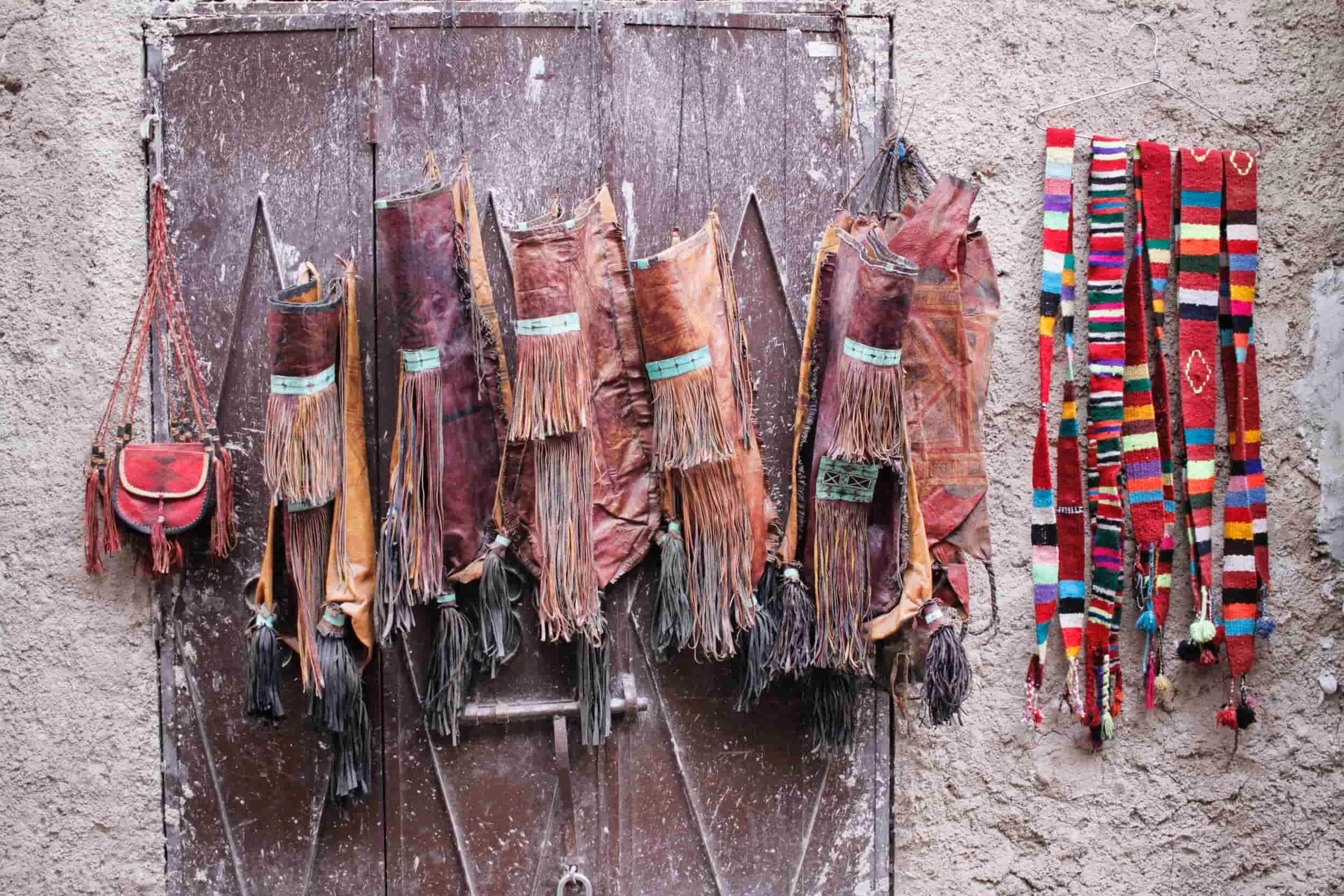
Along the roads you’ll find argan oil vendors, hand-woven carpets made by indigenous communities and, for the curious, camel rides that feel like a wink to another era. For a truly authentic souvenir, pull over at one of the roadside workshops and meet the artisans who weave those stunning Moroccan rugs by hand. The experience is quieter and more personal than the busy souks — less bartering theater, more a chance to take home a story woven into every thread.

At a Glance
📍 Destination: Atlas Mountains, Morocco
🕒 Time Needed: Full day
💰 Budget: 900-2,500 MAD ($90-$250) private tour
👟 Walking Level: Mild to moderate
🌤️ Best Season: Spring (March-May) or Autumn (September-November)
☕️ Don’t Miss: Mint tea and local hospitality
🖤 Perfect For: Nature lovers, culture seekers and city escapists
My Bibimbap Moment
This trip added: Hospitality.
I keep thinking about that bread.
Warm khobz, butter, walnuts and hot tea served by two women who had welcomed a group of strangers into their home. I was aware of how simply they lived but what I remember more strongly is how generously they received us. For a little while, we weren't standing somewhere taking photographs or checking off another stop. We were simply sitting together, eating, chatting, trying to understand one another through language barriers.
It was such a small moment in the course of the trip but somehow it became one of the biggest.
The Atlas Mountains added the ingredient of hospitality to my Bibimbap Life.
Two-Week Travel Itinerary
Our Moroccan chapter was part of a two-week whirlwind adventure that began in Turkey. We fell into the graceful collision of East and West in Istanbul, then drifted on to Cappadocia — a moonlike heartland where hot-air balloons dot the sky and fairy chimneys rise like stories turned to stone. We woke before dawn to watch balloons bloom over the valleys, then wandered southwest to discover the hidden poetry of Pigeon Valley, the cave-carved solemnity of Selime Monastery, the river-sculpted Ihlara Valley and the almost eerie silence of an ancient Underground City.
When Morocco called, it felt like stepping into a different kind of dream. In Fes El Bali, we lost ourselves inside a labyrinth of honey-colored walls: medieval arches, buzzing souks and tiny courtyards that still seem to hold centuries of secrets. Poking beyond the medina, we found a city that earned its nickname, “the Athens of Africa,” with its intellectual pulse and quiet, dignified streets.
Our journey ended in Marrakesh, the Red City, where the colors sharpened and the rhythm quickened. We ventured into the nearby Atlas Mountains for hands-on moments — tasting homemade butter, learning about argan oil and clambering up camels for a slow, unforgettable ride.
Each place left its mark: Cappadocia’s sky-scattered wonder, Fes’s timeless lanes and Marrakesh’s vivid, sensory bustle — a travel journal of moments I keep returning to in memory.
Explore
Within the mountains.
What | Atlas Mountains
Location | 32.0000° N .0000° E Northwest Africa
Duration | Allow 5-8 hours
Cost | 600-2,500 MAD ($60-$250 USD) private vehicle excursion
What to Bring | Walking shoes, clothing layers, water and sun protection
Activities | Guided hikes, cultural visits to Berber villages and scenic drives
Don’t Miss | Visit to an authentic Berber village; consider bringing something to offer the family who hosts you
Bonus | Lunch by the Todra River
Must Know | Bring motion sickness pills if you’re sensitive
Travel More | Red City of Marrakesh
Read On | Morocco Travel Guides
Discover the Enchanting Atlas Mountains
Winding up from Marrakesh, the Atlas Mountains unfold like a medley of ochre villages, where the scent of argan oil and sizzling tagines drifts through narrow lanes and camels plod patiently by sun-baked terraces. In villages like Asni and along the Todra River, every twist reveals a new layer of rugged peaks, orchard valleys and the warm hospitality that makes wandering here feel like stepping into a world from another time.
For more details on tours, travel, when to go and where to stay, skip to the end of this article.
Escape to the Enchanting Atlas Mountains: Day Trip From Marrakesh
Renowned for their grand scale and dramatic presence, the Atlas Mountains spread for more than 1,500 miles (2,400 km) across northwestern Africa, threading through Morocco, Algeria and Tunisia. They stand like a vast natural spine, gently hemming the Sahara from the cool waters of the Mediterranean and the Atlantic.
Made up of several ranges, the Atlas offers a variety of landscapes — from craggy, snow-dusted peaks to sunbaked plateaus, each alive with its own climate and wildlife. At the heart of it all towers Toubkal, the range’s highest summit at 13,671 feet (4,167 meters), reigning over Morocco’s Toubkal National Park and promising unforgettable views and adventures for any traveler who makes the climb.

The drive into the mountains starts easy and unassuming, then at the base everything shifts. Low green shrubs ripple across rolling hills, layering into one another until they rise into jagged peaks that slice the clear blue sky. Elevation climbs fast; the air thins and each breath feels a little more precious.
📸 Photo Tip | Request your guide to ease onto the shoulder so you can step out to drink in the view — still, sharp and utterly unforgettable.
💡 Local Tip | If you’re prone to motion sickness, pop a tablet before you set off for the winding roads of the Atlas Mountains — your future self will thank you when the scenery starts to steal the show.

Driving south from Marrakesh, the landscape climbs like a storybook unfolding — in roughly an hour you leave the city's 1,500-foot (457-meter) hustle behind and find yourself in the cooler, quieter heights of the Atlas. By the time you roll into the sweet little town of Asni, the altitude has more than doubled to about 3,772 feet (1,150 meters), and with it came crisper air, mountain scents and a softer pace that feels like a welcome deep breath.
A Cozy Welcome Awaits in Asni: Heartwarming Hospitality in the Atlas Mountains
Asni (Arabic: أسني) perches like a quiet secret about 30 miles (48 km) from Marrakesh, curled at the foot of Mount Toubkal. Narrow tracks stitch it to neighboring Berber villages such as Ikkiss and Imlil and a handful of weekly buses tiptoe along those routes. Close enough to the city to feel its presence, Asni somehow slips into another world — stone houses, morning mists and a slow, gentle rhythm that makes time feel unhurried.

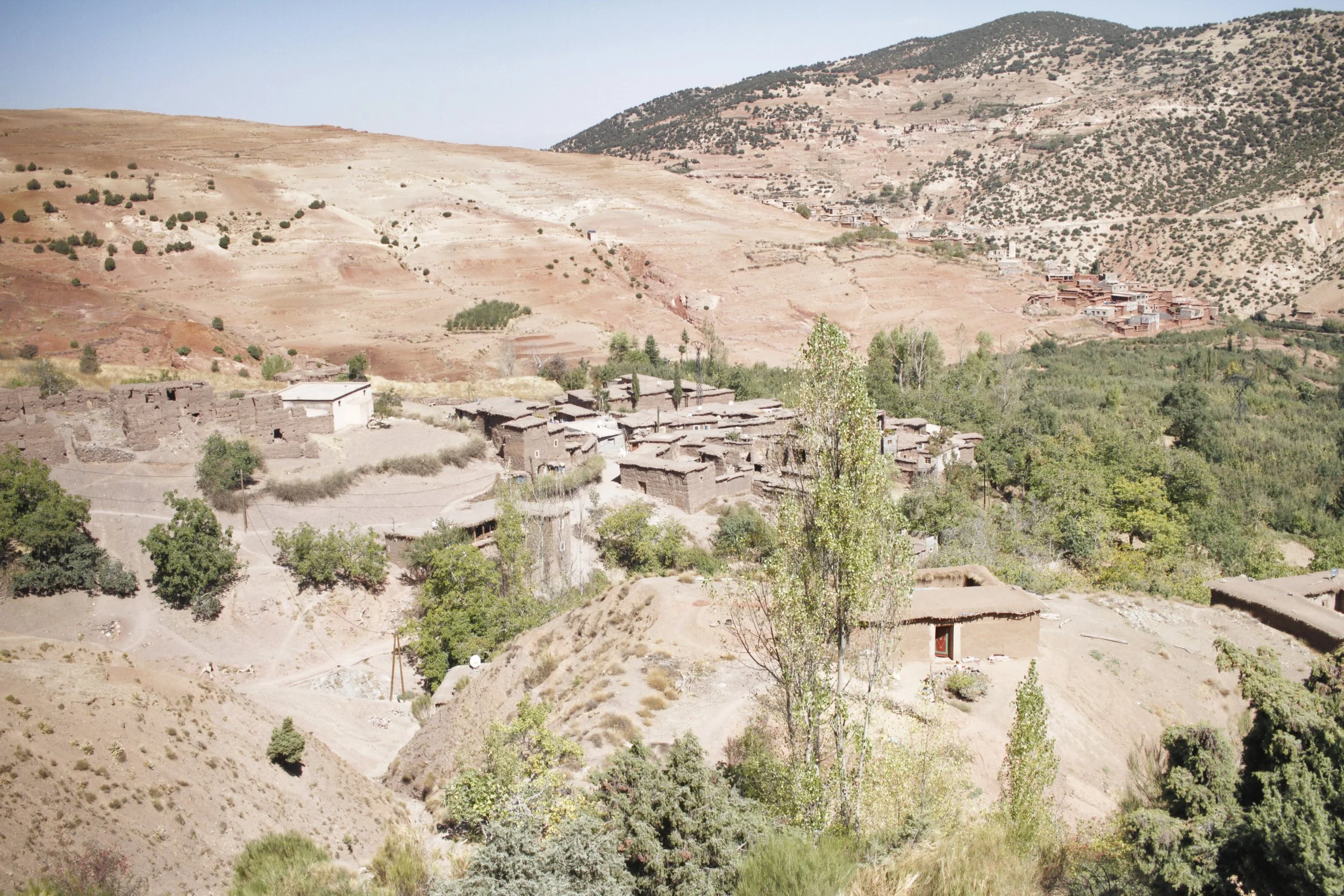
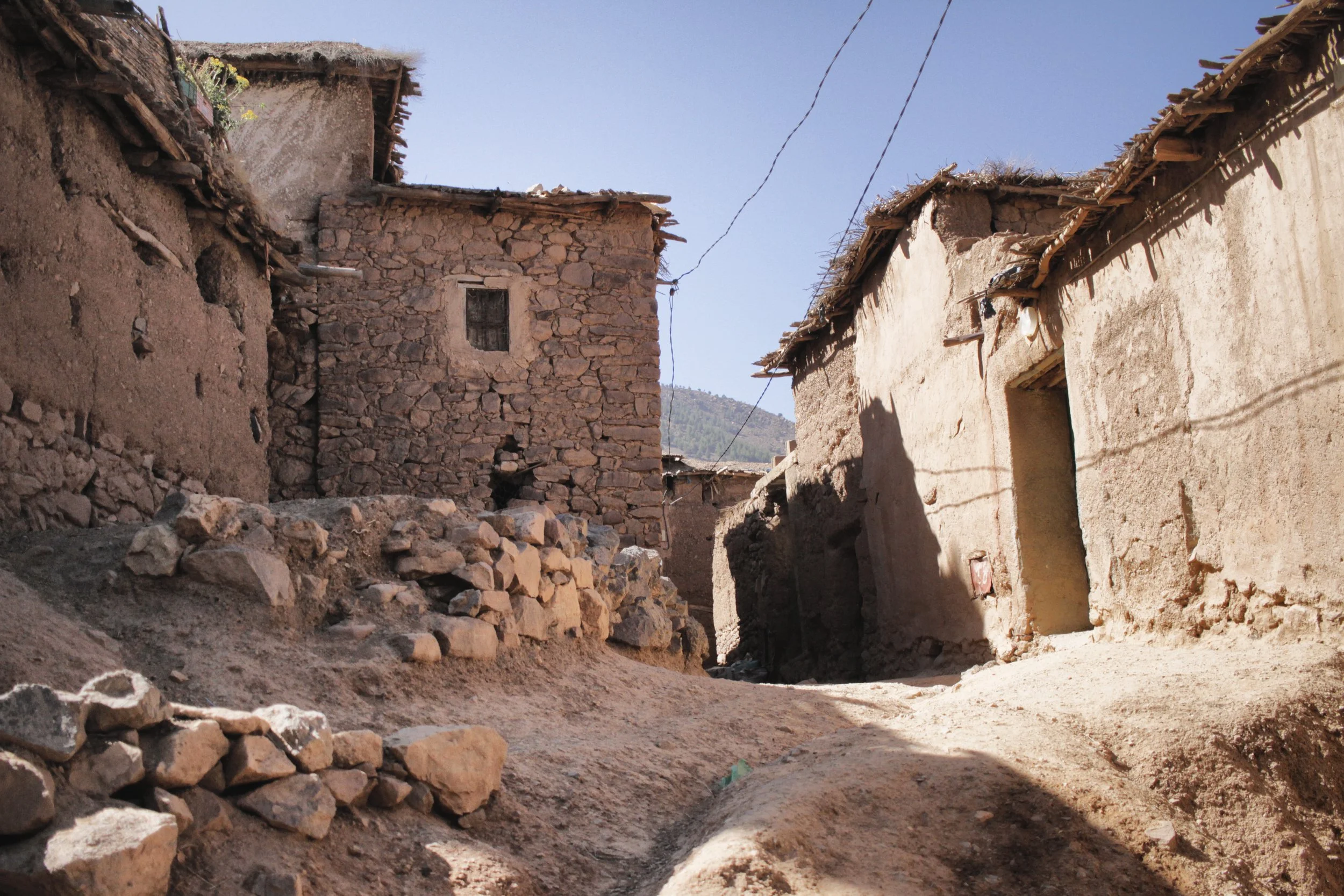
Stone-and-sky houses cluster like a sprinkle of warm puzzle pieces, snuggling into crevices or peeking proudly from hilltops. Crafted of sunbaked clay and mud, they wear the same reddish-brown of the earth, so that from a distance the village almost disappears into the landscape. Thick thatch roofs of dried grasses crown each home and inside their shaded rooms, the air is miraculously cool — a gentle refuge from the sun’s heat, where the rhythm of daily life feels slow and timeless.

Before I knew it, our guide pulled the car to the side and waved us out. It was just the three of us stepping into Asni village, shoes crunching on the narrow lane. The place felt almost cinematic — quiet and still, the kind of quiet that makes you expect a surprise around every corner. For a moment, I imagined a movie scene where anything could happen; instead, the stillness wrapped around us like a mystery waiting to be discovered.


Making our way toward the village, we met a group of schoolgirls on their way to class. Their curiosity sparked as they clustered around us, eager to chat and learn where we’ve come from. The smallest of them, bold as could be, fished out her phone and, with a grin, asked for my number — a sweet, unexpected moment that made the village feel even more alive. The girls beamed as they coaxed us into a few photos, then pressed warm, just-picked apples into our hands from their local harvest.

A tiny caravan wound past over the rocky trail — men on foot, donkeys plodding patiently. Each donkey carried wooden crates brimming with glossy red apples, so full their perfume drifted on the air. In a blink, they slipped into the folds of the hills, gone as suddenly as they came, leaving a quiet rustle and the faint sweetness of orchards behind.
The men continued on with the day's work and we moved into the village with light steps and curious eyes. What would happen next?
Taste Bread, Butter & Berber Hospitality: A Morning in Asni’s Atlas Village Home
Our guide wound us deeper into the village, strolling as if following an unspoken invitation. We paused on a narrow lane until, with a warm smile, he signaled — a local family appeared to welcome us, opening their home and hospitality as if they'd been expecting guests all morning.

A small, round woman peeked out from a green door and gave our guide a cheerful nod to come inside. The house is built from simple concrete blocks and smooth cement but it feels alive — tiny handmade flower pots perch on every windowsill and beside the entrance, and a well-loved pair of tennis shoes rests casually by the step.


A dim, airy room opens into a tiny kitchen where sunlight filters through a curtained window. On a well-loved shelf, pots and pans nestle beside rows of Tupperware packed with pale grains, each container like a little promise of a future meal. The concrete floor feels pleasantly cool underfoot, lending the whole house a calm, simple ease that makes lingering here easy.

A second woman arrives and we’re invited to wait while they create something together to share. Moments later, it appears — warm, thoughtfully arranged and ready for us.

The woman sets a generous basket of bread on the tiny table, alongside a dish of golden olive oil and a jar of creamy homemade butter; she follows with a tray of fragrant mint tea and four small glasses and for a moment the simple spread feels like a warm invitation.
💡 Local Tip | In Morocco, hospitality is an art. It’s polite and sample everything — don’t be shy. Smile, accept with curiosity and offer something in return: a compliment, a small token or a shared story. Food and favors travel better when exchanged with warmth.

Khobz is the quiet, humble star — round, flat and warm from the oven. Its crust is a little rustic, dusted with flour; when you tear it open the crumb is dense and slightly chewy, each bite tasting of grain and sun-warmed earth. It’s a bread that invites sharing: tear pieces with your hands, scooping up pools of olive oil, stews and salads, letting its nutty, wheaty flavor carry the meal.
In Morocco, khobz is more than an accompaniment — it’s a daily ritual, baked in communal ovens, fragrant with yeast and a hint of smoke. Simple, honest and deeply satisfying, it anchors every table with a comforting, homey note.

We watched with quiet delight as our host poured hot, sweet tea in the traditional way — high above the glass, one graceful stream at a time. The long pour cools and aerates the brew, forming tiny bubbles that give each sip a delicate, velvety texture and a moment of pure, shared ritual.

A bowl of glossy walnuts sat on the table, small treasures to crack between bites. Our guide leaned in with a soft smile and told us the women have probably laid out every morsel they have in the house. I can’t help but hover over my plate, uneasy at the thought of any food going uneaten, wishing I had more than a tip to give in return for their generous feast.

At first, we didn’t know where to begin but the women — and our guide — gently nudged us to dive in. There’s an unspoken rule: whatever lands on the table is meant to be eaten. We tear off pieces of warm bread, dipping them first into the fragrant oil, then into the rich butter, letting the simple, comforting flavors mingle in our mouths.

We sat together, tasting each dish as the sun leaned and our conversation drifted into the rhythms of life in this remote corner. The women were gentle and softly spoken, their smiles shy and warm. When I asked to use the restroom, a quiet blush passed through them — and in that small, soft moment I noticed the simple truth of their home: no running water, no electricity, only the soft glow of human warmth holding the space together.
Discover the Allure of Argan Oil in the Atlas Mountains: Afous Argan's Story
About an hour and a half east of Ansi, sits Afous Argan Ourika, a little shop where time feels softer and scents hang in the air like a promise. Here, skilled artisans — keepers of age-old techniques — handcraft 100% organic argan oil the same way generations of Moroccan women have for centuries.
Often called “Moroccan liquid gold,” this luminous oil has long been cherished for its ability to nourish and protect skin and hair. Rich in essential fatty acids, antioxidants and vitamins, it’s more than a beauty product — it's a graceful, centuries-old elixir that carries the warmth and wisdom of the Atlas Mountains region in every drop.

We stepped into the shop and found a small hive of activity: women bent over their work, hands moving with steady, practiced rhythm. Producing argan oil is truly a labor of love — it takes roughly 88 pounds (40 kgs) of dried fruit to yield a single liter. The result is versatile and treasured: cosmetic argan oil for skin and hair, and a culinary version that’s sweet, nutty and delicious when drizzled over warm bread.


Argan oil begins its journey beneath the warm Moroccan sun, where the gnarled argan trees dot the landscape of southwestern Morocco and neighboring Algeria. Locals gather the fallen fruit from the ground, their hands moving with practiced ease. The fruits are laid out to dry in the open air, sun and breeze coaxing moisture away until only the hard nuts remain.
Then comes the most mesmerizing part: women at low stools crack the tough shells between two stones, a rhythm of tiny percussion that reveals the pale, oily kernels inside. Those kernels travel to a cold-press mill, where they yield their liquid gold without heat or chemicals — pure, fragrant and full of the land’s essence. Finally, the unfiltered oil is poured and left to settle, decanted into jars that carry the story of soil, sun and skill.

We watched the women at work, their movements steady and practiced — it’s hard to tell whether they’re simply tired or quietly indifferent. The labor looks painfully grueling, each task demanding endurance. After lingering as the process unfolded, we were invited to taste a few varieties, with warm bread set out for dipping.

The fresh argan oil tasted bright and nutty — delicate and surprisingly lively on my tongue, a little moment of joy. We drifted through the shop afterward, weaving between bins and baskets and packed shelves; every inch is devoted to lotions, creams and remedies that promise a little more well-being. The air hummed with the quiet intimacy of a place where every jar has a story.

There are tables overflowing with glistening bottles of argan oil — tiny vials for a nightly beauty ritual, wider amber jars for hair masks and pump bottles labeled for nails and skin. The vendor proudly offers these varieties: cold-pressed culinary argan with a delicate, nutty aroma for finishing salads; cosmetic-grade argan refined for a silky face serum; organic, unrefined argan still flecked with sediment for traditional skin treatments; and specially blended blends infused with rosemary, lavender or prickly pear for targeted hair or anti-aging care.

Sunlight warms stacks of fragrant soaps wrapped in colorful paper, tins of herbal teas, bundles of dried mint and other herbs, cones of incense and pyramids of spices. Natural makeups — mineral powders and plant-based tints — sit alongside handcrafted soaps and scrubs, each a small taste of Moroccan self-care and culinary treasure waiting to be enjoyed.

The women in the shop beam with genuine warmth, as they invite guests to taste and test as if you’re old friends. They guide you through the overflowing aisles, offering samples of argan oils and pointing out favorites with easy confidence. Everywhere you look, there’s a riot of color — oils, herbs, soaps — and the air is alive with impossible scents: bright citrus of essential oils, deep earthiness of spices and the comforting, floral notes of tea that pull you from one display to the next.


Slightly overwhelmed but smiling, we tucked a few small bottles of argan oil into our bags and stepped back into the sunlit road. The women behind the counter waved and offered one last helpful tip as we thank them for their guidance, their warm hospitality lingering like the scent of nutty oil on our fingers.
Lunch by the Todra: Mint Tea, Mountain Air & Sunlit Tagines on the Atlas Riverbank
If you’re ready for a bite, move on to Restaurant La Vallée Ourika alongside the Todra. The Todra River slips through a narrow gorge between red cliffs and blue sky, its clear water catching sunlight in a ribbon of glass. Palm trees and small farms lean toward the riverbank, adding splashes of green that contrast the rust-colored canyon walls. Walk along the pebble-strewn shore and you’ll hear only bird calls and the soft, steady murmur of water — an intimate, timeless corner of the desert.
Cross the river and climb down to the opposite bank, plopping into a cluster of plastic chairs set among the river rocks. The water chatters nearby, the air smells of wood smoke and spice and every simple plate feels like a small, joyful reward.

The Todgha Gorges feel like nature’s own grand hallway carved into the High Atlas. Explorers hike among soaring limestone cliffs — walls of rock that the Todgha River and its neighbor the Dadès, have patiently etched into dramatic canyons. The gorge twists and narrows, sunlight slipping down sheer faces and in places the cliffs soar to nearly 1,312 feet (400 meters), making visitors look up and lose track of the sky. The nearby town of Tinerhir sits quietly beyond, while here, the river’s slow work creates vistas that are impossibly ancient and breathtakingly immediate.
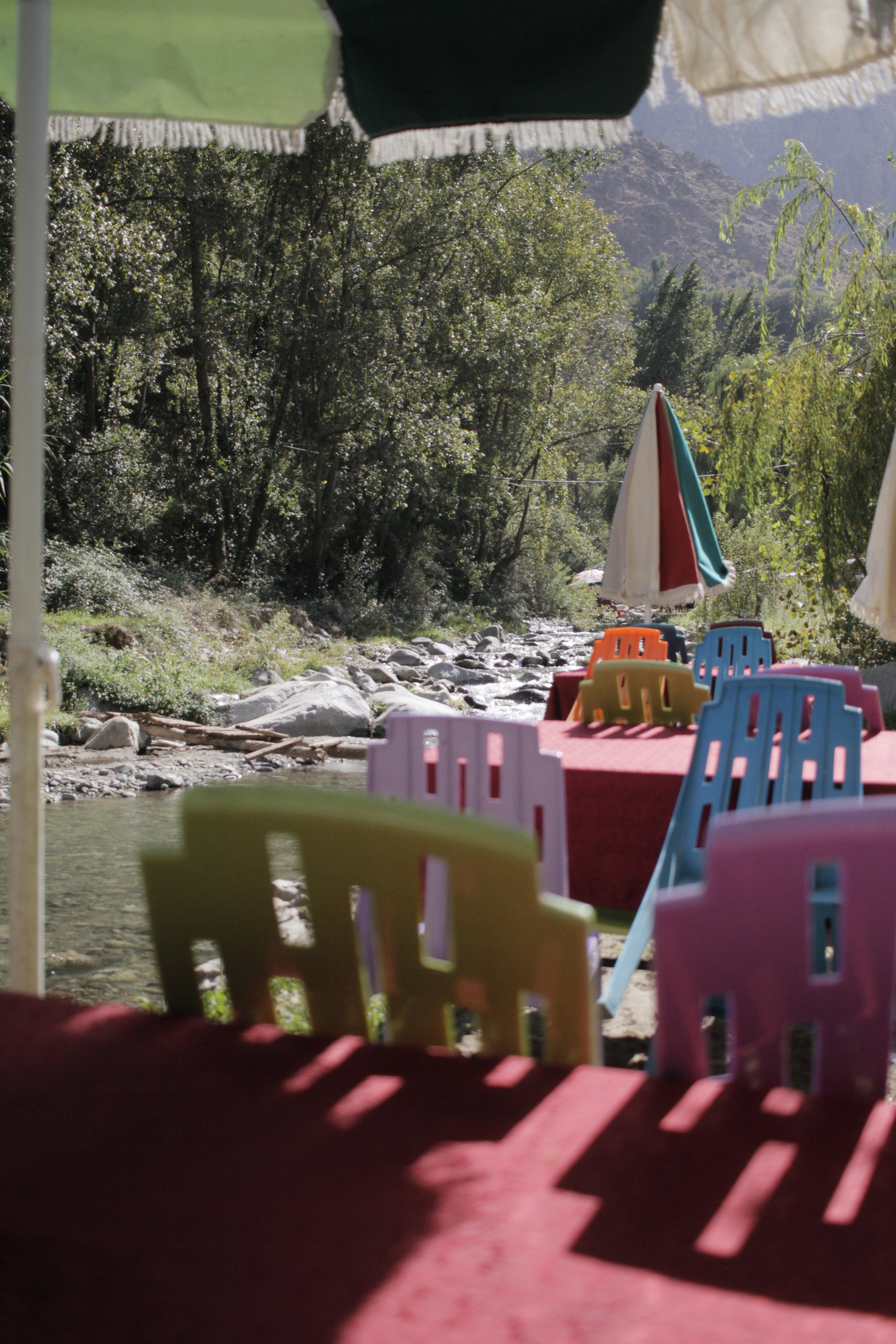
Along the Todra, the river breathes slowly and everything feels still. Sunlight warms your shoulders as you unwind into the moment, content to watch the water go by. A menu arrives like a friendly introduction — modest, unpretentious — its small entrées, hearty mains and simple desserts promising a leisurely meal that matches the river’s gentle pace.

Sit with your legs dangling near the Todra’s warm, sun-baked edge, the canyon’s red walls towering quietly around you. While you wait, a small glass dish and basket arrive: bright pickled vegetables that crunch and tang against the heat and wedges of still-warm Moroccan bread that soak up every drop of flavor.


When the rest of the meal arrives, it feels perfectly casual and indulgent — golden, hand-cut french fries sprinkled with coarse salt; a chopped vegetable salad alive with fresh herbs and a splash of lemon; and a Berber tagine, steam rising from its cone-shaped lid, fragrant with cumin and slow-cooked comfort. Each bite tastes of place: simple ingredients elevated by sun, patience and a landscape that makes even lunch feel like an event.
Say Hello to Delightfully Ornery Camels in the Atlas Mountains
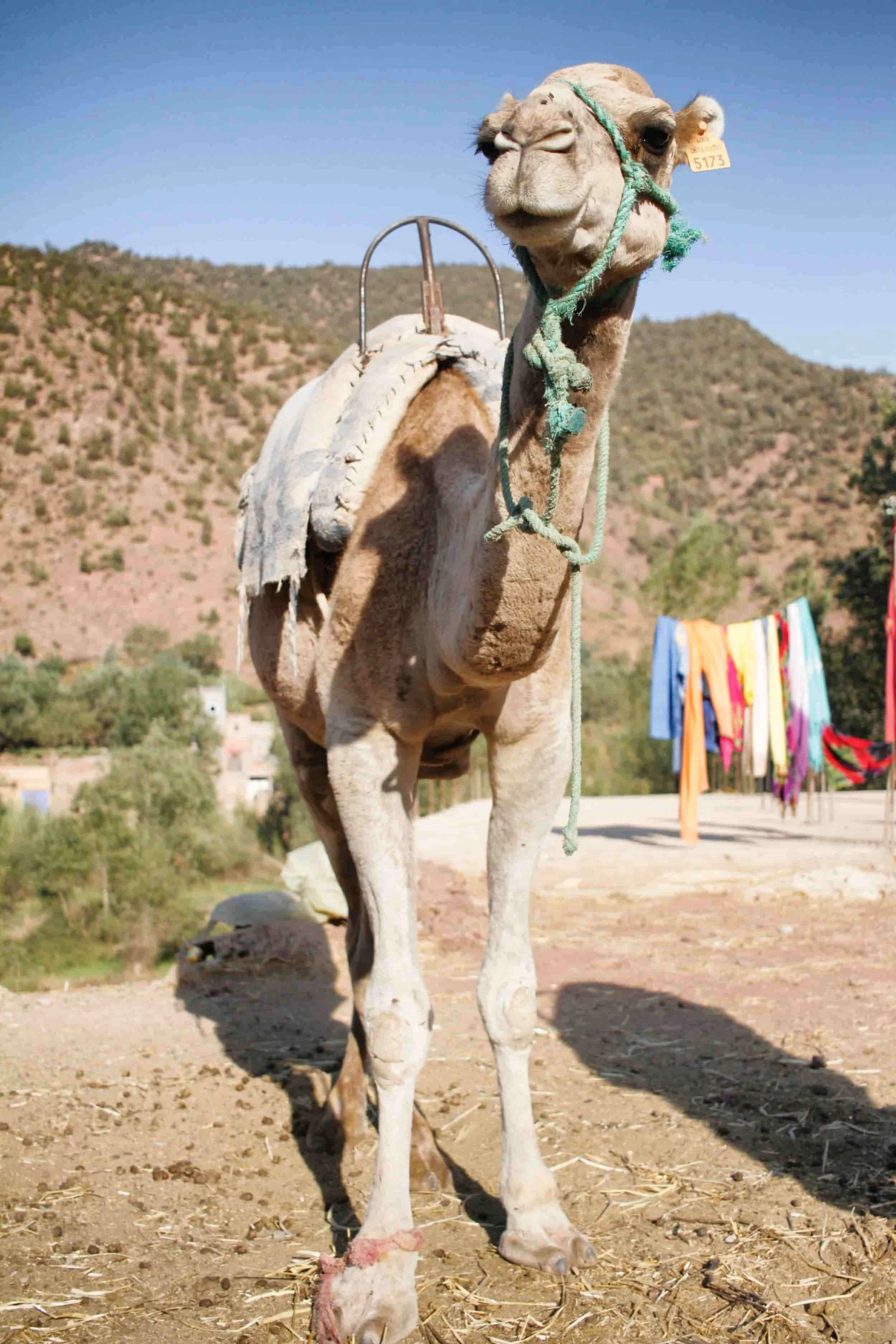
On your way back to Marrakesh, pause to meet camels — of course, a trip through the Atlas Mountains wouldn’t feel complete without a camel ride. Wander over to the patient animals, their giant eyes blinking in the afternoon sun as handlers offer gentle reassurances.

Dromedaries — the single‑humped camels of Morocco — feel like cast members from a desert fairytale. Calm and surprisingly clever, they move with a slow, steady grace and a patience that makes them perfect companions for long caravan journeys. Only the herd leaders break that gentle rhythm: when danger threatens, their protective side surfaces and they can become fiercely assertive, defending their group with quiet authority.


Edge toward the camels with soft steps, letting them size you up before you do the same. For me, proximity is the thrill — simply being near these gentle giants feels like a quiet privilege — so I moved with care, honoring their space and the calm energy they carry. Mounting is a slow, crooked choreography; once you’re settled atop the padded humps, the world shifts into a new, dromedary-paced rhythm.

But first, clamber aboard one of these gentle giants. The owner steers the tall camel into a slow, inelegant kneel. It sinks into the sand with a comic sort of grace, then waits patiently as you swing your leg over its broad, sun-warmed back.
Then, the owner gives a sudden upward heave and for a heartbeat you sail forward, clutching the reins as if you might arc over its head. The scare fades as you settle — surprisingly tall, your camel allows you to see the desert in a new, slow-breathing way.
A few quiet moments on his back are enough; call for the descent and feel the world tip back to street level.

⚠️ Good to Know | Brace yourself as the camel rises — their long legs sway you forward with a surprising lurch as you’re hoisted up into their lofty world. For a moment, you’re caught between ground and sky, heart skipping in gentle alarm, then settle into the gentle roll of the ride, feeling both small and oddly regal atop your desert companion.
After getting friendly with the camels, head back toward Marrakesh, as the city unfolds again — you arrive just in time to rest and ready yourself for the evening’s adventures.
My Bibimbap Moment
Leaving the energy of Marrakech behind, the day quickly became quieter. The city gave way to the wide landscapes of the Atlas Mountains — rocky slopes, valleys, small villages and roads winding farther into the countryside. It was beautiful but what I remember most wasn't a sweeping view. It was sitting inside someone's home in Asni.
Two women welcomed us into a simple room with a dirt floor and no running water and brought out fresh khobz, butter, walnuts and steaming glasses of mint tea. There was nothing elaborate about it, which somehow made the gesture feel even more generous. We sat together, ate what they had prepared and shared this small piece of their day. It was sweet, humbling and one of those travel moments that stays with you precisely because it wasn't grand.
Today’s Bibimbap Recipe
🥢 Flavor: Intimate
🌿 Ingredient: Hospitality
❤️ Best Memory: The quiet intimate moments connecting with local people.
🎒 Take With You: Sometimes the smallest offerings — a piece of bread, a glass of tea, a place to sit — become the moments you carry home.
The rest of the day seemed to carry that same sense of closeness. At Afous Argan, the shop was filled with wonderful smells and shelves of oils and products to explore. Later, lunch at Restaurant La Vallée Ourika brought pickled vegetables and a warm Berber tagine beside the river — the kind of meal that feels particularly good after spending the morning winding through mountain roads.
Even the ride back to Marrakech had one more little surprise waiting for us. We stopped to see some camels and I ended up climbing onto one for a short ride — slightly touristy, completely charming and impossible not to enjoy.
When I think about that day now, I don't remember it as a collection of attractions. I remember textures, smells, food, landscapes and people: rough mountain roads, fresh bread, hot tea, fragrant argan oil, tagine beside the river and the sway of a camel beneath me. It was a quieter and more intimate Morocco than the one I had experienced in Marrakech and I'm grateful I got to see it.
The Essentials
A day trip from Marrakesh to the Atlas Mountains takes about 1.5 to 2 hours each way, bringing you into high-altitude alpine scenery and traditional Amazigh (Berber) villages; to make the most of it, plan your visit between late spring and early autumn for milder weather and open trails (winter can be snowy and roads sometimes impassable), choose your transport — shared grand taxi, private driver or guided tour — based on comfort and flexibility and decide whether you want a short guided walk from Imlil or a longer trek with a local guide who can arrange mule support and village homestays.
Stay in Marrakesh and drive up for the day or stay locally in Imlil or a nearby guesthouse for authentic mountain hospitality if you want to extend beyond a day, book rides in advance during high season and pack essentials such as sturdy walking shoes, layered clothing, sun protection, a reusable water bottle, snacks, a basic first-aid kit, cash (small bills for tips and village purchases), a headlamp if staying overnight and a lightweight daypack — also respect local customs by dressing modestly and asking permission before photographing people.
How to Get There
Catch a shared grand taxi, local bus or rent a car from Marrakesh and wind east into the High Atlas — it’s about 60–90 miles (100–145 km) to the nearest dramatic foothills, with higher passes and remote villages a bit farther depending on whether you head to Imlil, Ouirgane or Tizi n’Tichka.
Private or Group Tour: Book a guided day excursion for a stress-free ride with hotel pickup and drop-off in Marrakesh.
Grand Taxi: Hire a private grand taxi from Marrakesh to take you to Imlil and wait for you but negotiate the full-day price clearly before setting off.
Driving: Rent a car if you are comfortable driving on winding, steep mountain roads.
How to Book a Tour to the Atlas Mountains
My day in the mountains was one of my favorite experiences from Marrakech. If you're planning something similar, I'd look for a small-group or private experience that includes time in the villages rather than a quick sightseeing stop.
Booking a local day trip from Marrakech to the Atlas Mountains is a straightforward process and you have several reliable ways to arrange it depending on your budget and preferred travel style.
Simply choose your Atlas Mountains itinerary, select dates and group size and confirm your booking with a deposit so you can start counting down to the crisp mountain air and dramatic ridgelines.
Online Tour Platforms (Most Popular)
Booking online in advance is the best way to secure your spot, read reviews and ensure flexible cancellation policies. Popular itineraries like the Three Valleys or Ourika Valley day trips typically cost between $17 to $75 per person, depending on whether you choose a shared or private option.
GetYourGuide: Offers highly-rated excursions like the High Atlas Mountains and 5 Valleys Day Trip which typically includes hotel pickup, a mountain guide and lunch in a traditional Berber home.
Viator: Excellent for finding tailored packages. You can browse options like the Atlas Mountains and 5 Valleys Tour or general Viator Day Trips from Marrakech to compare multi-valley hikes, camel rides and mule treks.
Tripadvisor: Great for comparing community feedback. Check out highly reviewed paths like the Atlas Mountains Guided Day Hike pages to find top-rated local operators.
Local Agencies in Marrakech (Best for Last-Minute)
If you prefer to book once you arrive, you can walk into local tour operator offices scattered throughout the Medina and around Jemaa El-Fna Square.
Process: Walk around, compare itineraries and negotiate the price.
Cost: Rates generally range from $22 to $110 USD per person. Always confirm exactly what is included such as transport, local guide fees and lunch.
Through Your Hotel or Riad (Most Convenient)
Almost every riad or hotel in Marrakech partners with local drivers and guides.
Process: Simply ask the front desk or your riad host a day or two before you want to go.
Advantage: They will handle the coordination entirely and the driver will pick you up directly from your accommodation. It's a seamless experience, though it might cost slightly more than booking on a public online platform due to convenience fees.
Direct Community Booking (Ethical & Sustainable)
For a deeply authentic experience that ensures your money directly supports the mountain communities, you can book directly with independent, certified Berber guides.
Booking: Book directly with local independent operators like Ahmed from Trek Atlas, Atlas & Sahara Tours, or similar.
What to Expect on an Atlas Mountain Tour
A standard day trip typically departs around 9:00 AM and lasts 7 to 8 hours. Most standard tours package your transport in an air-conditioned minivan or 4x4, a guided hike to local waterfalls, a stop at a women’s Argan oil cooperative and a traditional lakeside or rooftop Tajine lunch.
Confirm your itinerary before leaving Marrakesh — I wish we were able to check out a local waterfall.
When To Go
The best time to visit the Atlas Mountains near Marrakesh is in spring when wildflowers quilt the valleys and the air is cool and fragrant or in autumn when crisp days and golden light make exploring feel effortless.
Spring (March to May) & Autumn (September to November): These months offer the most comfortable daytime temperatures for walking and clear skies.
Summer: Mornings are pleasant but midday gets very hot; head to higher elevations to escape the Marrakesh heat.
Winter: Expect snow on the high peaks, cooler weather and dramatic views, though some higher trails may require extra gear.
Where to Stay
For an immersive, sensory stay in Marrakesh, choose the medina near Jemaa el-Fna to be in the heart of souks, riads and lively street life; for quieter luxury and leafy gardens, Gueliz and the Palmeraie offer modern hotels and peaceful villas a short drive from the action. It’s also possible to stay over in some of the smaller villages if that’s your vibe.
The Medina (Old Town): Best for a traditional cultural experience inside historic walls, putting you close to Jemaa el-Fnaa and local riads (traditional Moroccan houses with interior courtyards).
Guéliz (New Town): Best for modern hotels, wider streets, Western-style cafes and a quieter night's sleep.
Hivernage: Best for upscale luxury hotels, upscale dining and wider boulevards close to the center.
What to Bring
Pack a light daypack with sturdy walking shoes, a sun hat, a warm layer for the breeze, a refillable water bottle, some snacks for a picnic and your camera to catch the Atlas’s honey‑colored terraces and charming Berber villages.
Sturdy Footwear: Good walking shoes or lightweight hiking boots for rocky paths.
Layers: A fleece or jacket, as mountain weather changes quickly and gets chilly at altitude.
Sun Protection: Sunglasses, sunscreen and a hat (the mountain sun is strong).
Cash (Moroccan Dirham): Small bills for local tips, roadside vendors or mint tea in a local home.
Water & Snacks: Keep hydrated and water or a refillable bottle.
Other Important Tips
When visiting the Atlas Mountains, hire a knowledgeable local guide and embrace the rhythm and customs of village life — respecting dress, greetings and traditions will deepen your experience and leave a kinder footprint.
Hire a Local Guide: When you arrive in hubs like Imlil, hire a local certified guide to support the community and safely navigate the best footpaths.
Respect Local Culture: Always ask permission before photographing local residents.
Escape Marrakech for a sun-baked day in the Atlas Mountains — hike fragrant cedar trails, meet welcoming Berber villagers and savor homemade tagine by Todra River.