Mirissa Whale Watching: A First-Timer’s Guide to an Ethical Boat Tour
Head into the Indian Ocean for Mirissa whale watching, where blue whales dwarf the boats and playful dolphins have no problem stealing the spotlight. It's a wild ocean adventure off Sri Lanka’s southern coast and a pretty good reminder that we're not nearly as big as we think.
Updated | October 2026

Why Sri Lanka’s Mirissa Should Be Next on Your Map
Sri Lanka is a small island with an almost unreasonable amount of variety. Ancient history, lush mountains, wildlife-filled national parks, colorful towns and miles of coastline all compete for your attention. It's a place of contrasts, where centuries-old traditions sit alongside the everyday chaos of modern life, and the landscape seems to change every time you turn a corner.
On the southern coast, Mirissa trades mountain air and ancient ruins for palm-fringed beaches, warm Indian Ocean waters and a decidedly slower rhythm. There's surfing, snorkeling, little beachside cafés and quiet coves to explore, with plenty of opportunities to do absolutely nothing. A perfectly respectable travel itinerary, if you ask me.
But Mirissa has another draw beyond its beaches. Offshore, the Indian Ocean is home to blue whales, sperm whales and dolphins, making this stretch of Sri Lanka's southern coast a destination for whale watching. Heading out into open water offers the chance to see these animals in the wild — a pretty compelling reason to drag yourself away from the beach before sunrise.
At a Glance
📍 Destination: Mirissa, Sri Lanka
🕒 Time Needed: Half to full day
💰 Budget: Approximately Rs16,000 ($50 USD)
👟 Walking Level: Mild
🌤️ Best Season: Dry season (November-April)
☕️ Don’t Miss: Blue whales and dolphins
🖤 Perfect For: Animal lovers, wildlife enthusiasts and marine life seekers
My Bibimbap Moment
This trip added: Reverence.
Mirissa added the ingredient of reverence to my Bibimbap Life. Seeing my first whale in the wild was one of those moments that made the world feel enormous. I wanted to get closer, of course — to see more, to capture more, to take in every detail — but there was something meaningful about staying back and allowing the whale to move through the ocean on its own terms. Watching that blue whale breach before disappearing into the deep, preceded by dolphins racing through the water beside us, felt like being given a brief glimpse into a world that isn't ours. It was thrilling, humbling and incredibly special.
My Three-Week Sri Lanka Itinerary
My usual two-week holiday turned into three while I was moving from Chicago to Los Angeles, with a little time between leaving one city and starting a new job in another. It was a rare opportunity to travel without quite the usual rush, and Sri Lanka seemed like a pretty good place to spend it. This time, I also had a partner in crime.
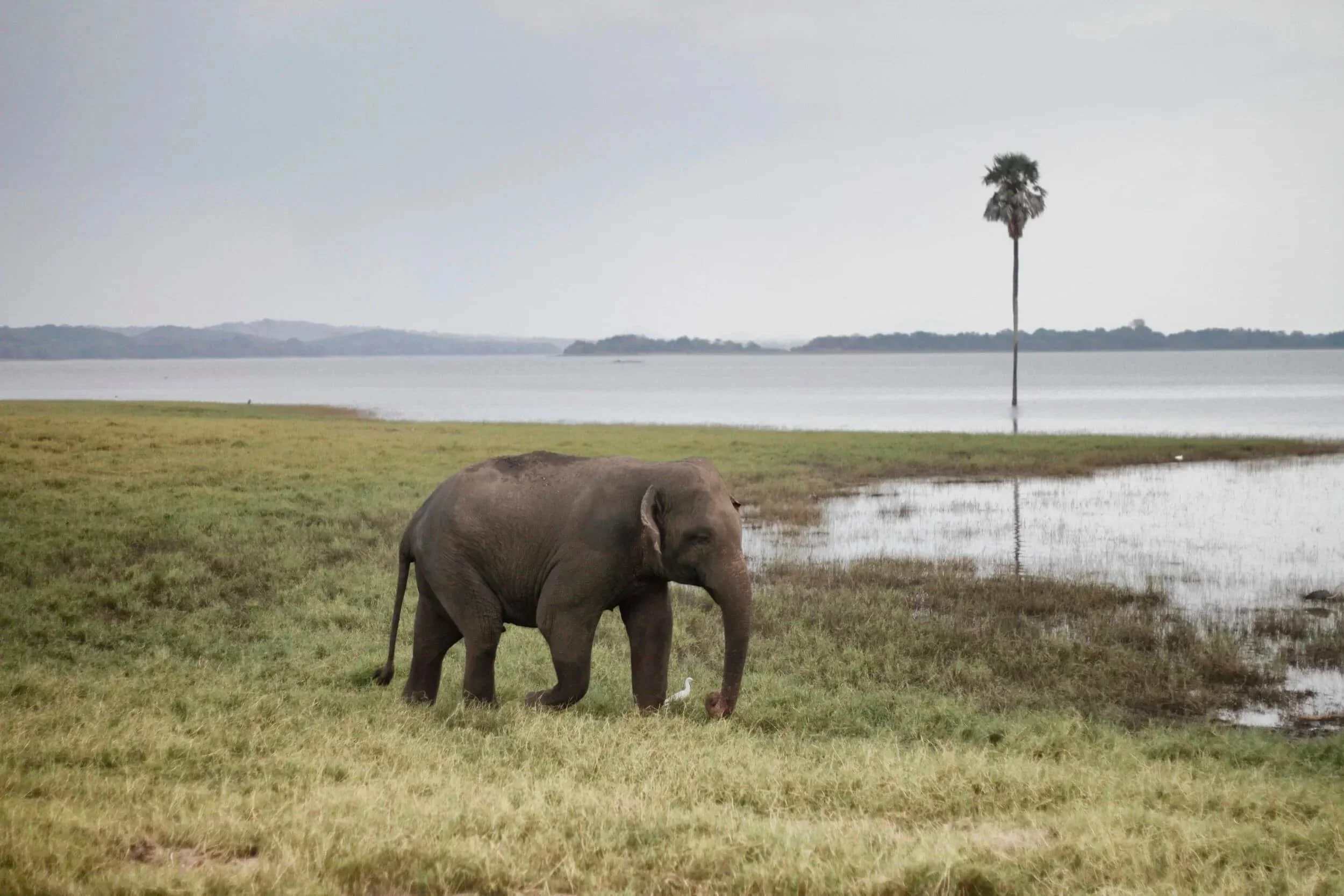
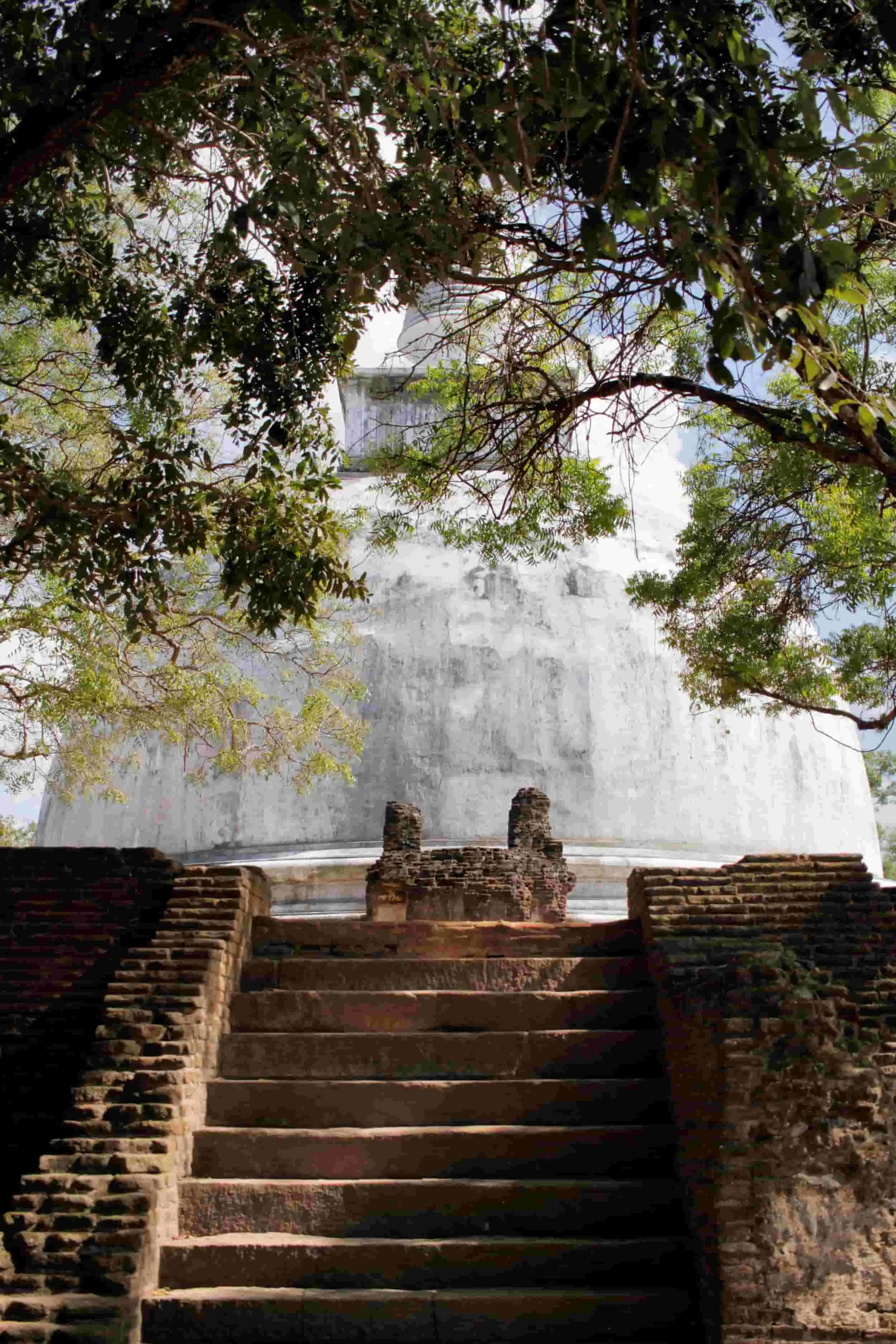
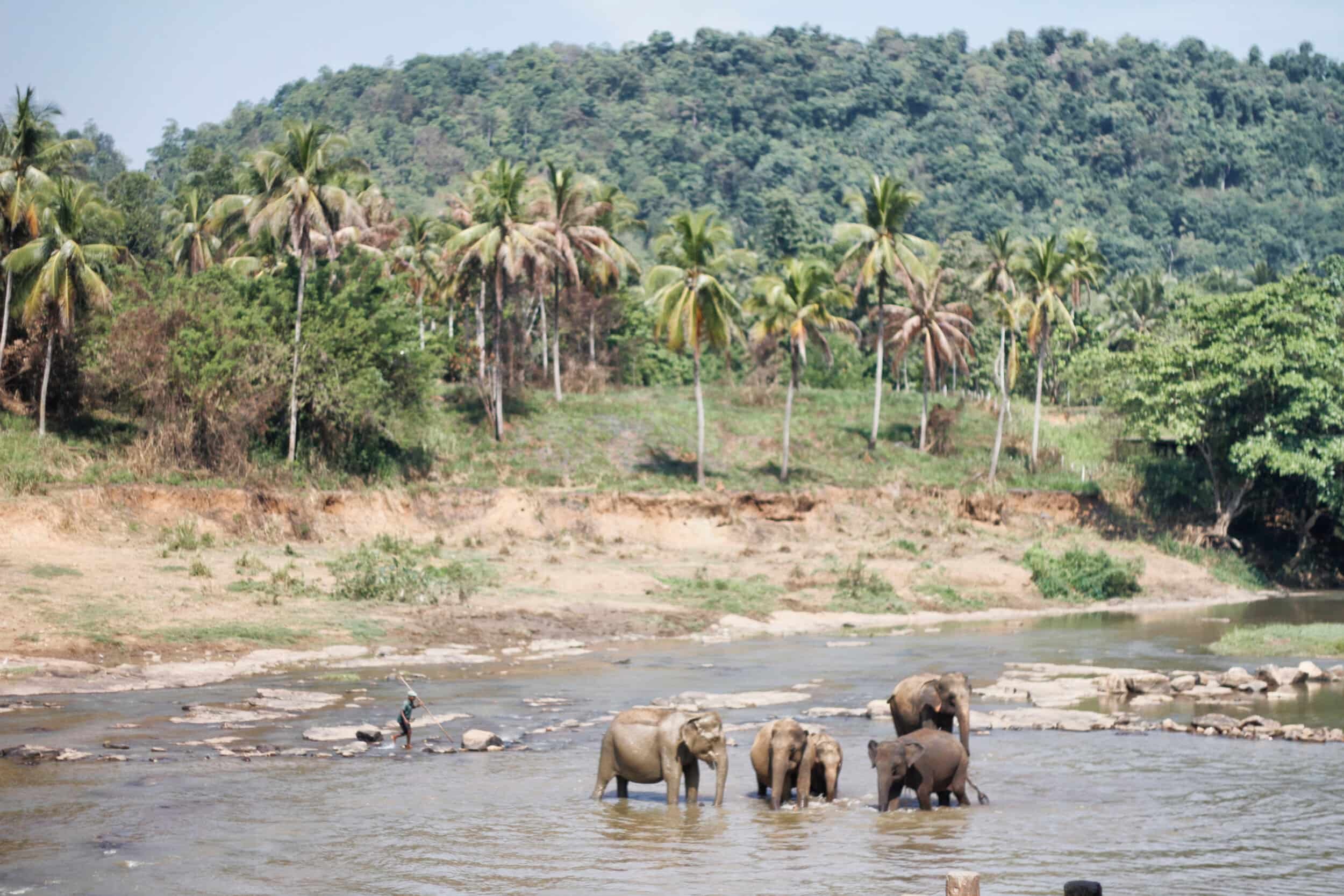
We started north of Colombo, stopping at Pinnawala before heading into Sri Lanka's Cultural Triangle. In Sigiriya, we climbed the enormous rock fortress for views across the surrounding landscape, explored the ancient ruins of Polonnaruwa and watched herds of elephants moving through Minneriya National Park. It was an incredible introduction to the island's history and wildlife.
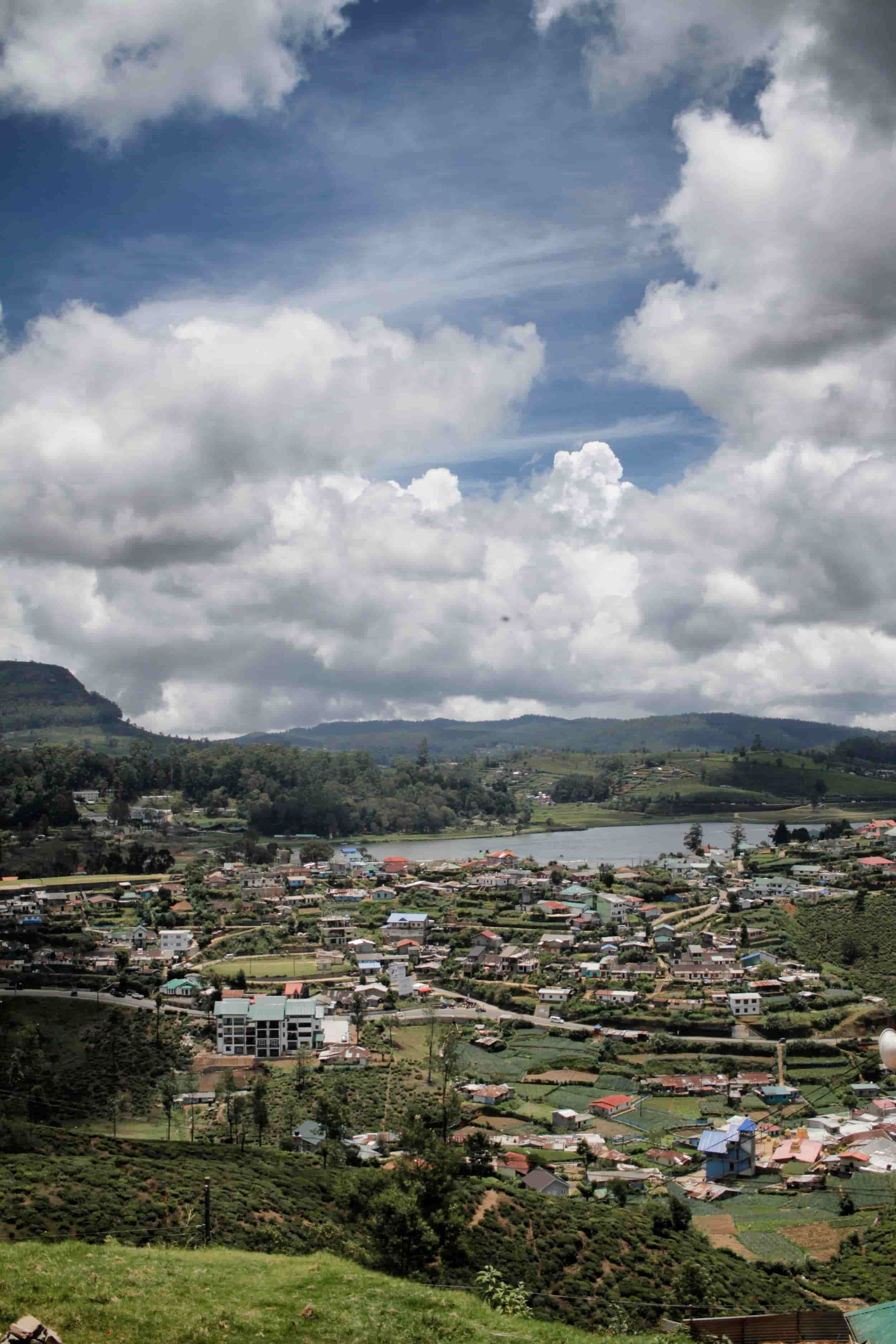
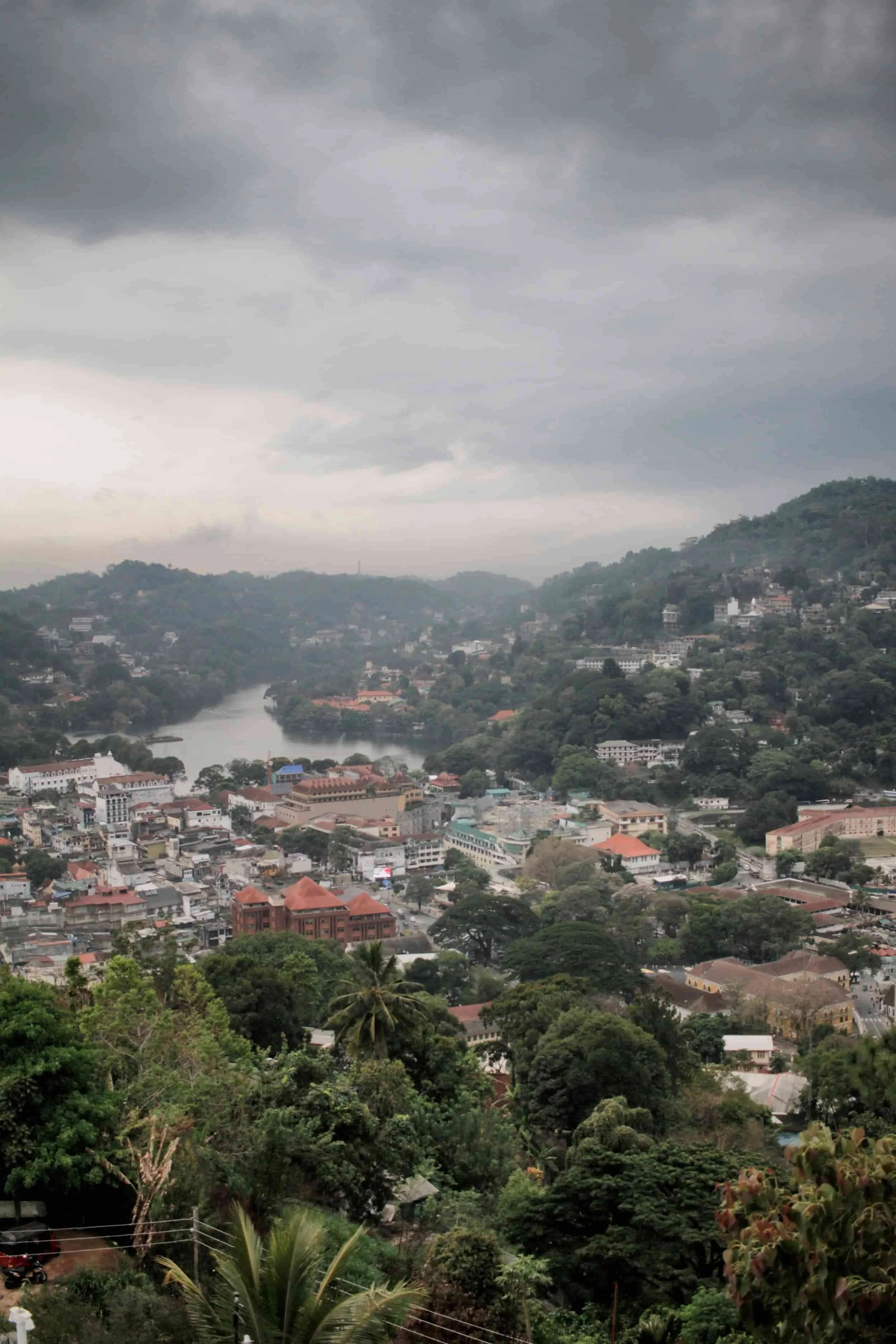
From there, we continued south through Kandy, with its temples, botanical gardens and traditional performances, before heading into the cooler hill country. Nuwara Eliya brought tea plantations and misty landscapes, while Ella offered mountain scenery, waterfalls and one of the most memorable train journeys of the trip.
The final stretch took us to Tissamaharama for a safari in Yala National Park, where we encountered elephants, wild boar and other wildlife. Then it was on to the southern coast and Mirissa, a welcome change of pace after so much moving around. We spent our final days enjoying the beaches, exploring historic Galle and heading into the Indian Ocean for a whale-watching trip that became one of the highlights of the entire journey.
My route: Colombo → Pinnawala → Sigiriya → Polonnaruwa → Minneriya → Kandy → Nuwara Eliya → Ella → Tissamaharama (Yala National Park) → Mirissa → Galle
Three weeks gave us the freedom to experience very different sides of Sri Lanka, from ancient cities and mountain landscapes to wildlife encounters and slow afternoons by the sea. And even then, there was plenty left to discover.
Explore
Here’s where the journey will take us.
What | Whale & dolphin watching
When | November to April/May & August to October
Where | Mirissa, Sri Lanka’s southern coast
Who | Raja & the Whales
Cost | Adults: Approximately Rs16,000 ($50 USD)
Time | 6:00 a.m. check in & 6:30 a.m. departure; verify current details
Duration | Typically 4-5 hours but can range from 2 to 8 hours depending on whale sightings
Don’t Forget | Motion sickness pills & zoom lens
Travel Essentials | Skip to the end of this guide for details on how to book, where to stay and more
Read On | Mirissa, Sri Lanka: Golden Sands, Swaying Palms & Coastal Charms
Travel More | Sri Lanka Travel Guides
Get Your Whale Watching On
Heading out into the Indian Ocean at sunrise is half the adventure of mirissa whale watching. Somewhere beneath those rolling waves are blue whales, sperm whales and pods of dolphins — and the possibility of seeing some of the ocean's most fascinating creatures in their natural habitat. There's no guarantee they'll make an appearance, of course, but that's part of the thrill.
Seeing these animals in the wild also comes with a responsibility to respect their space. Choosing an ethical tour operator makes a difference, both for the wildlife and the experience itself.
You'll find more on ethical whale watching, the best time to go, what to bring and how to choose a responsible operator in the Travel Essentials at the end of this guide.
Set Sail for a Mirissa Whale Watching Adventure
Whale watching in the Indian Ocean was something we'd been looking forward to, and we chose Raja & the Whales, a family-run operator based in Mirissa. Beyond their experience on the water, I appreciated their focus on responsible whale watching and their involvement in documenting marine wildlife sightings for research.
We managed to book our excursion the day before without any trouble, although I wouldn't necessarily recommend leaving it quite that late during the busy season. With an early departure ahead, we arranged our details and prepared for a morning at sea, hoping we'd be lucky enough to spot a blue whale.
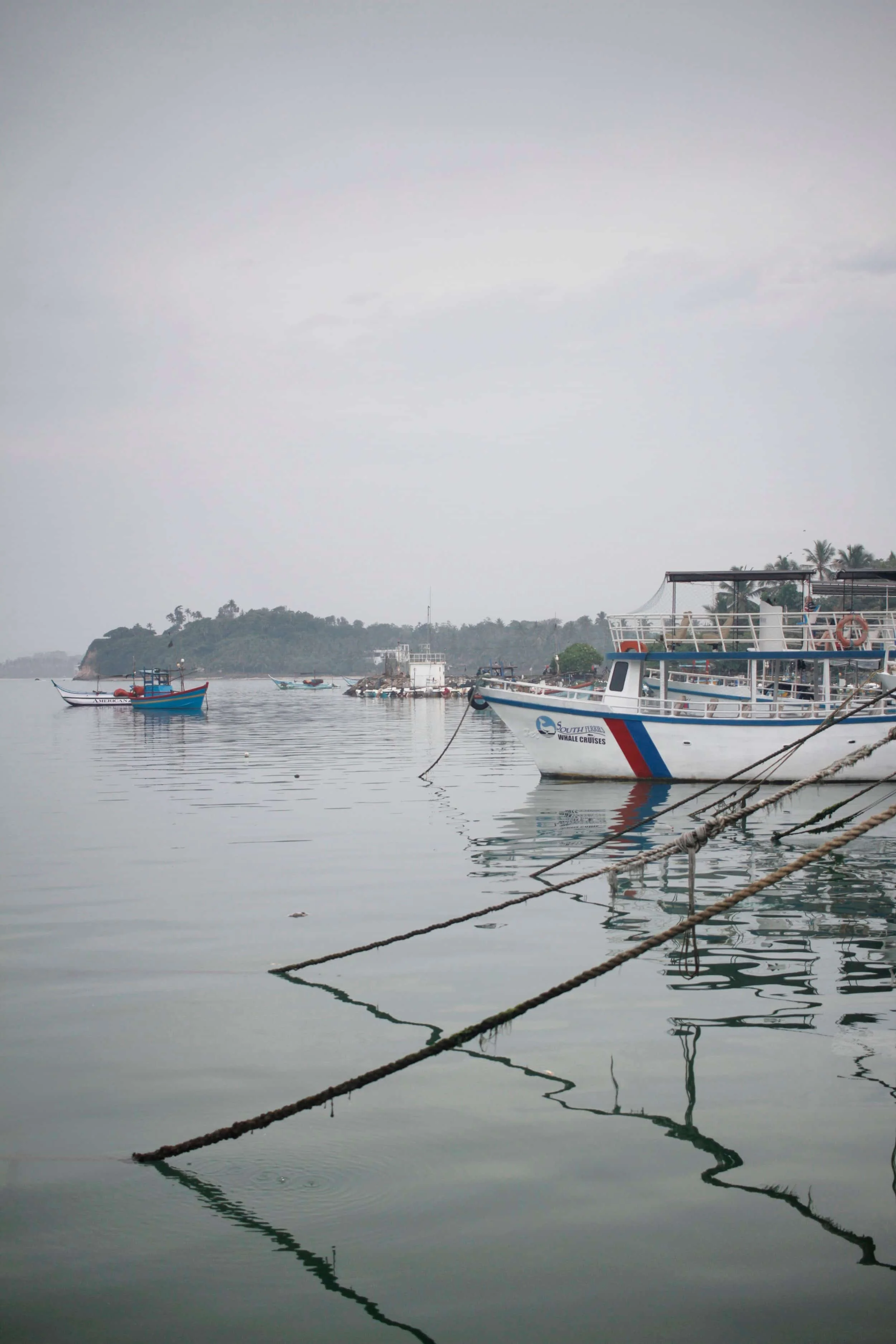
After an early tuk-tuk ride, we arrived for check-in around 6 a.m. There were quite a few passengers joining us — nearly 50 in total — so boarding took a little time. I also picked up some motion-sickness medication, a decision that would prove considerably smarter than most of my other early-morning decisions.
💡 My Tip | If you're prone to seasickness, plan ahead and take appropriate medication as directed before departure. The Indian Ocean can get surprisingly rough, even when the morning looks calm.
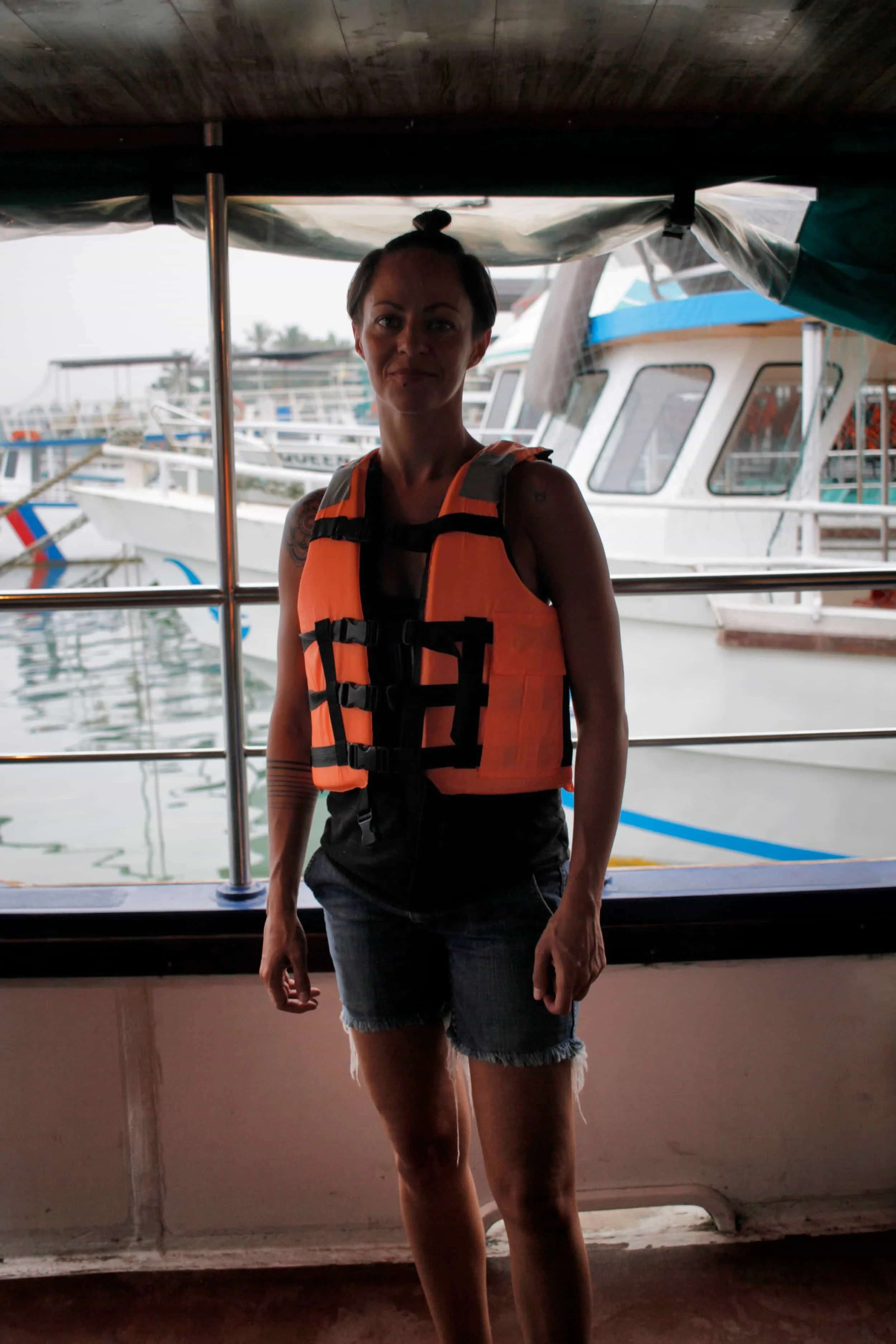
Once aboard, everyone settled into their seats and life jackets while the crew began serving breakfast. Coffee, omelettes, sausages, toast and a generous selection of tropical fruit made their way around the boat. Pineapple, mango, passion fruit, pomegranate — it was a pretty impressive spread considering we hadn't even left the harbor.

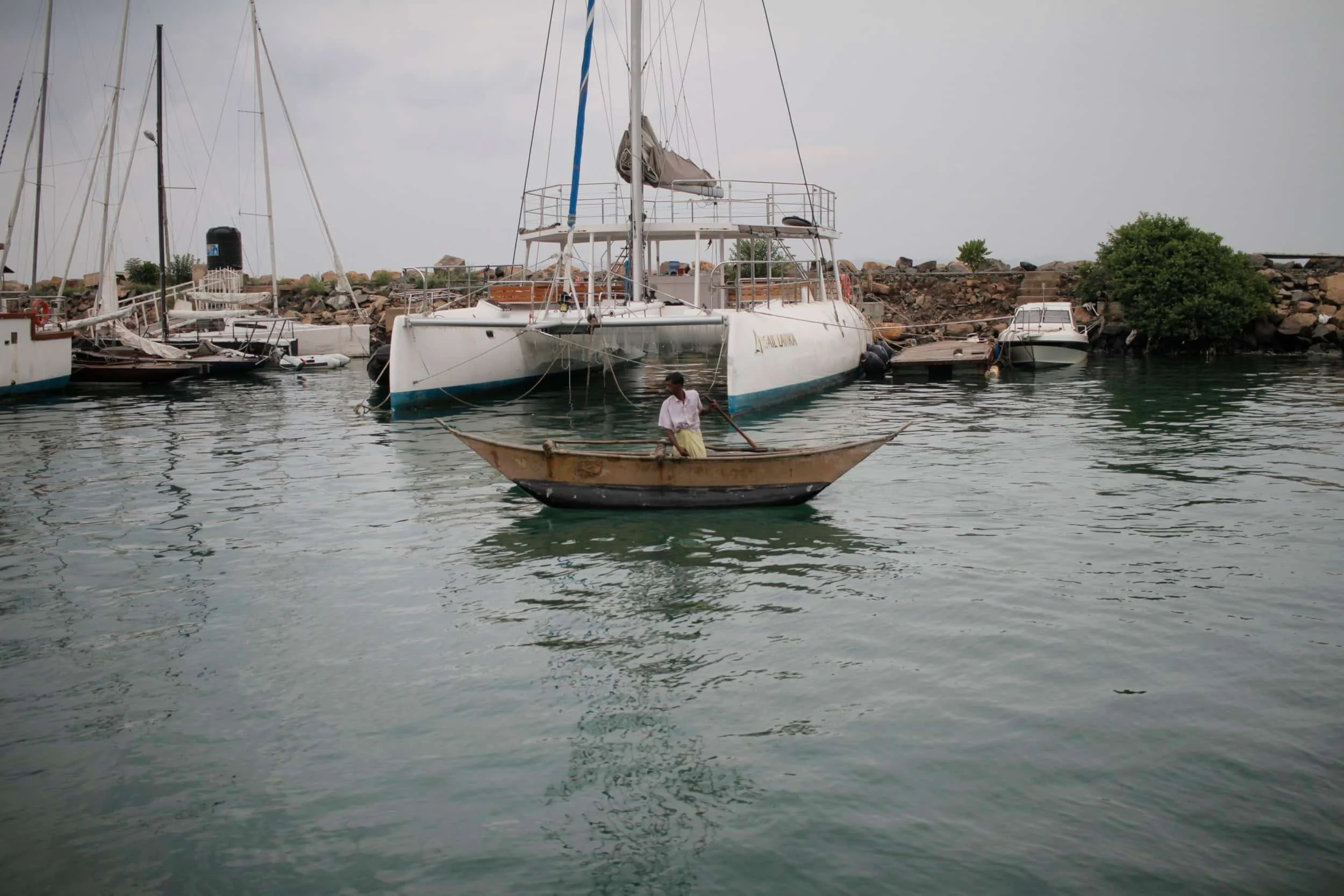
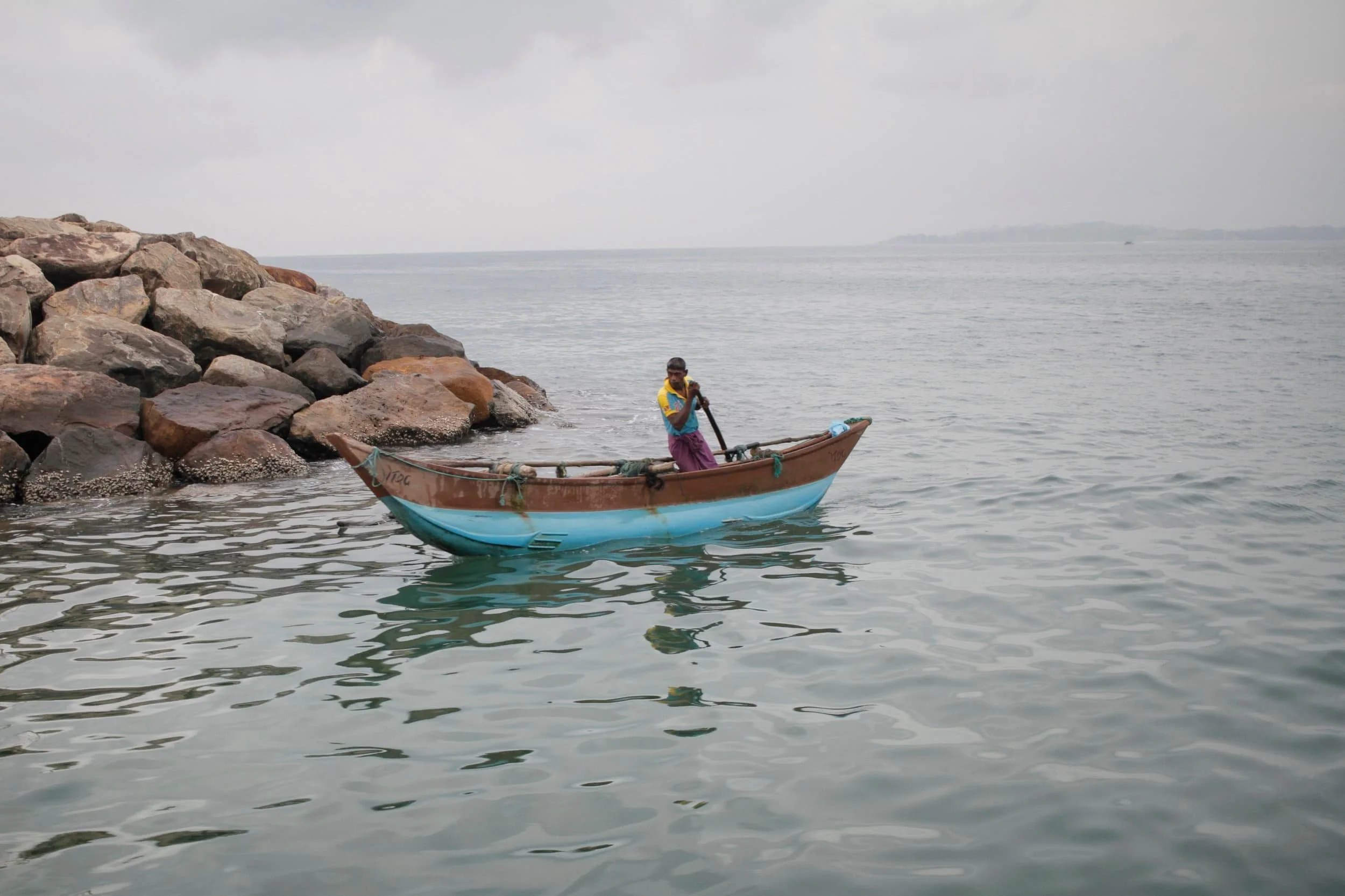
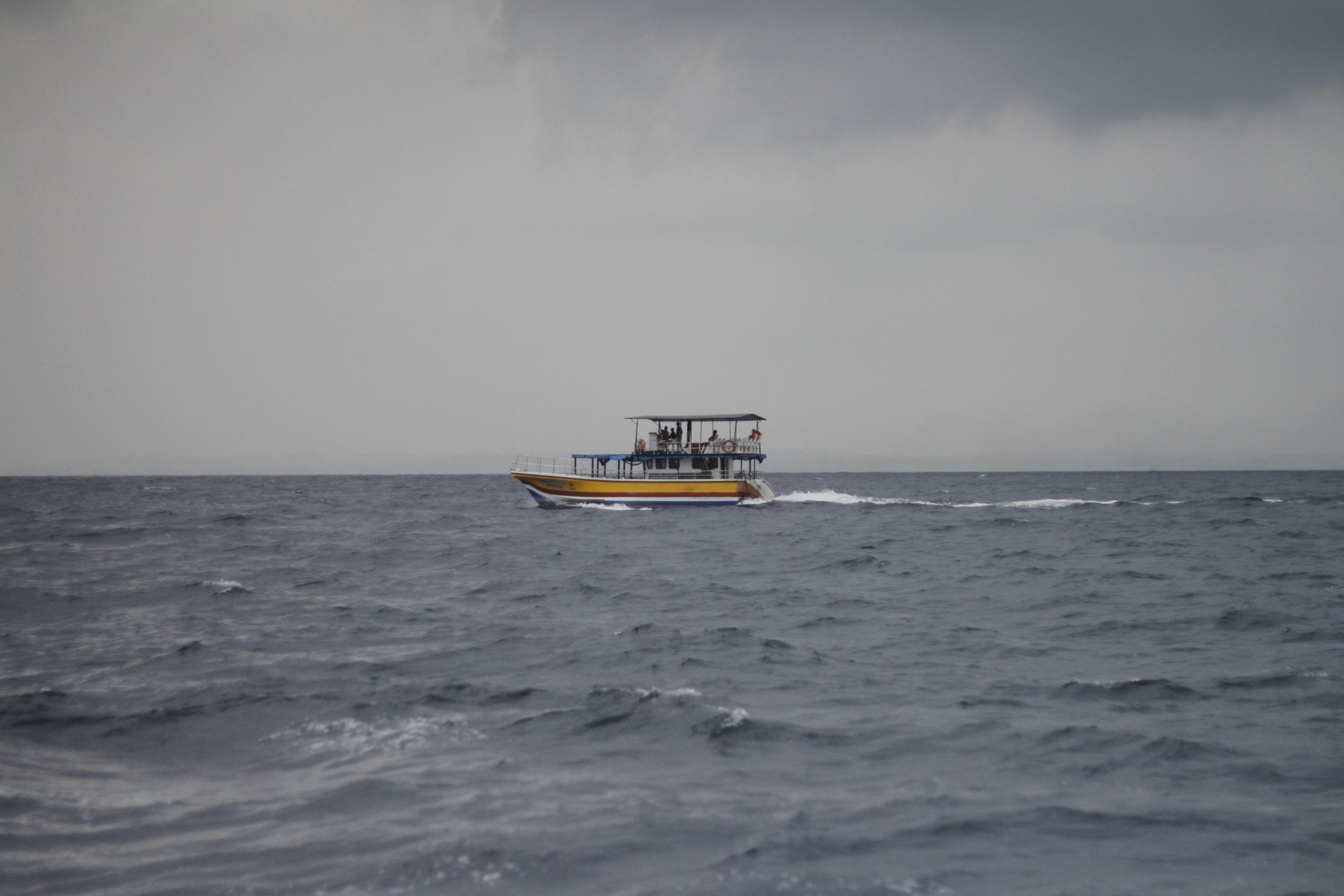
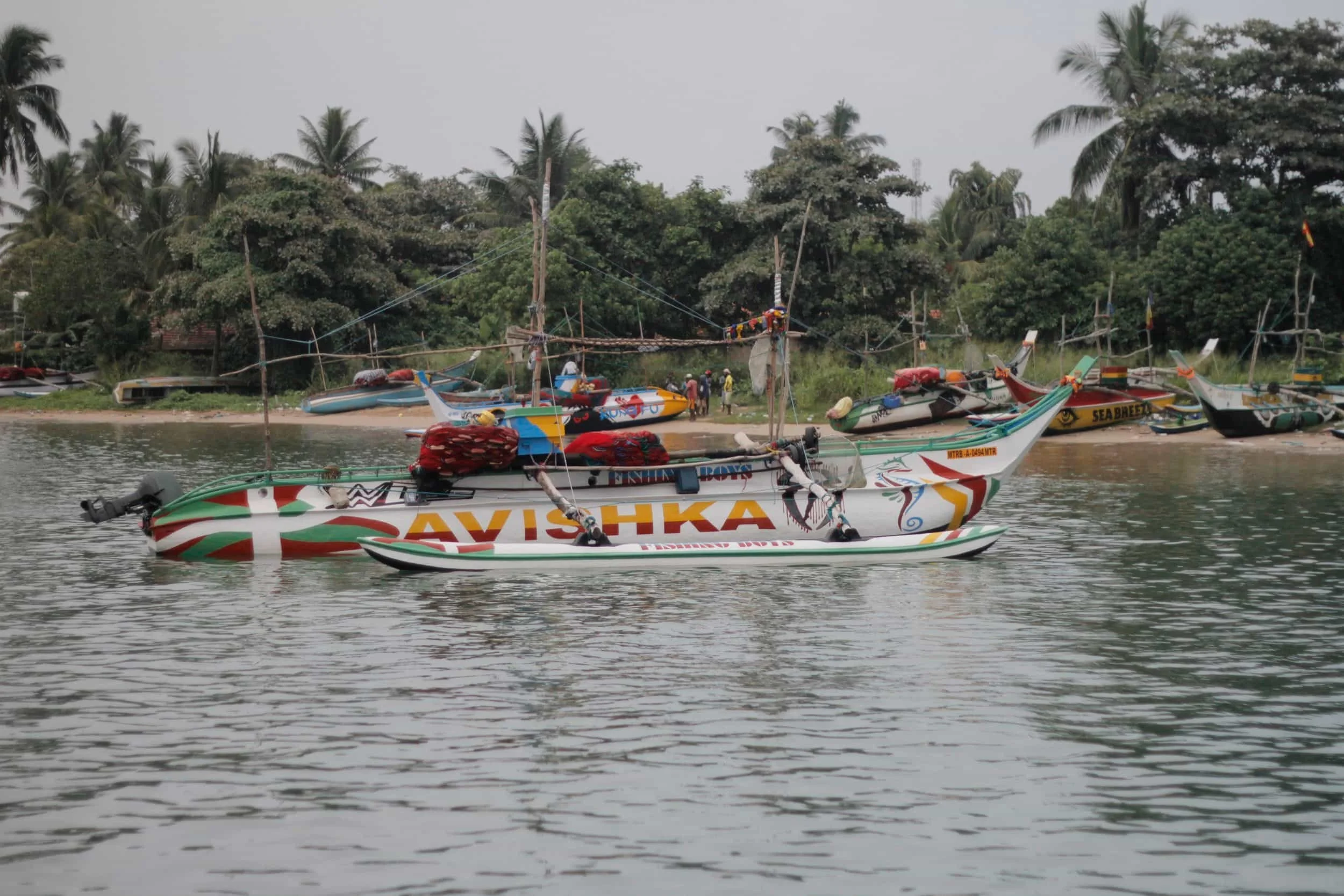
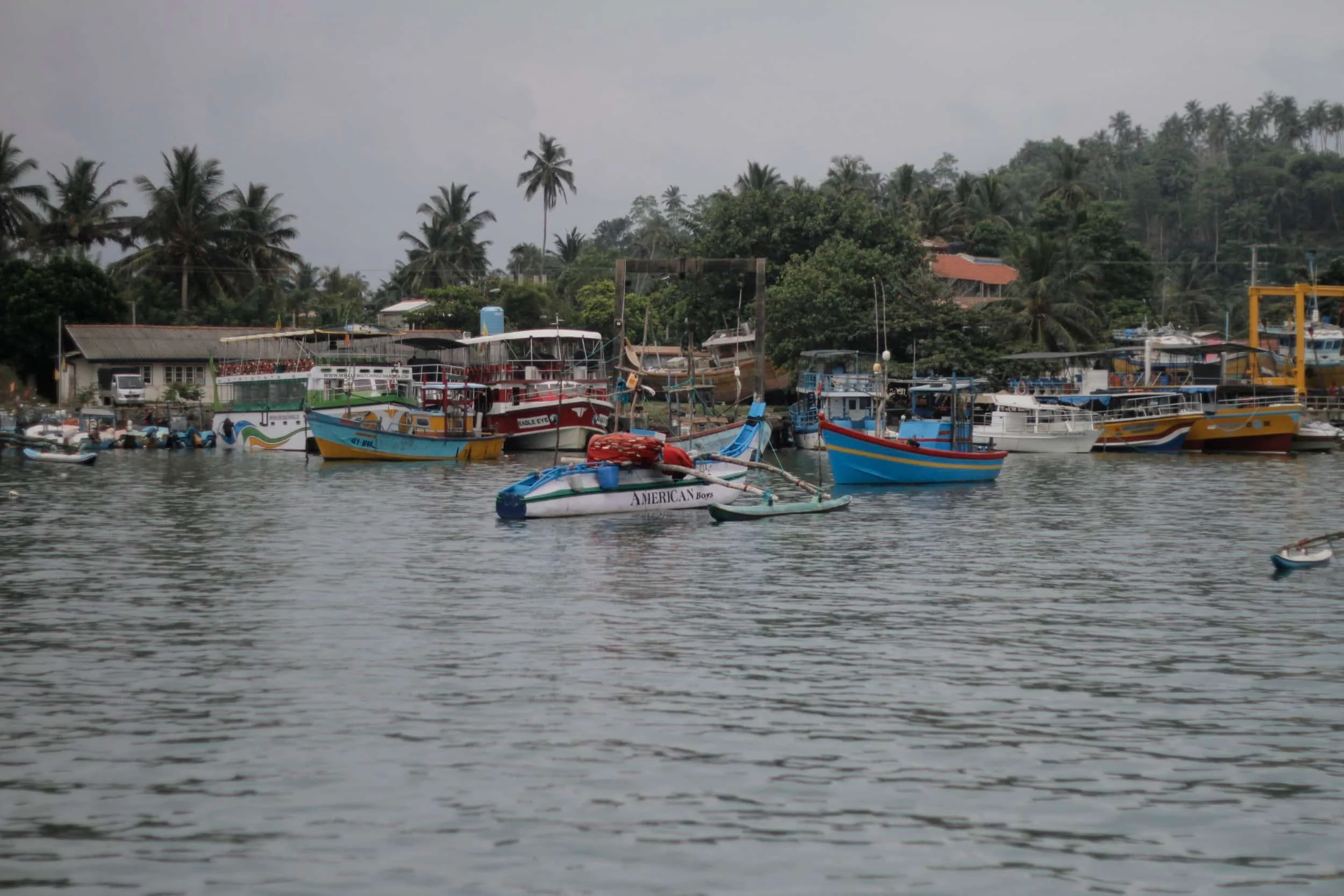
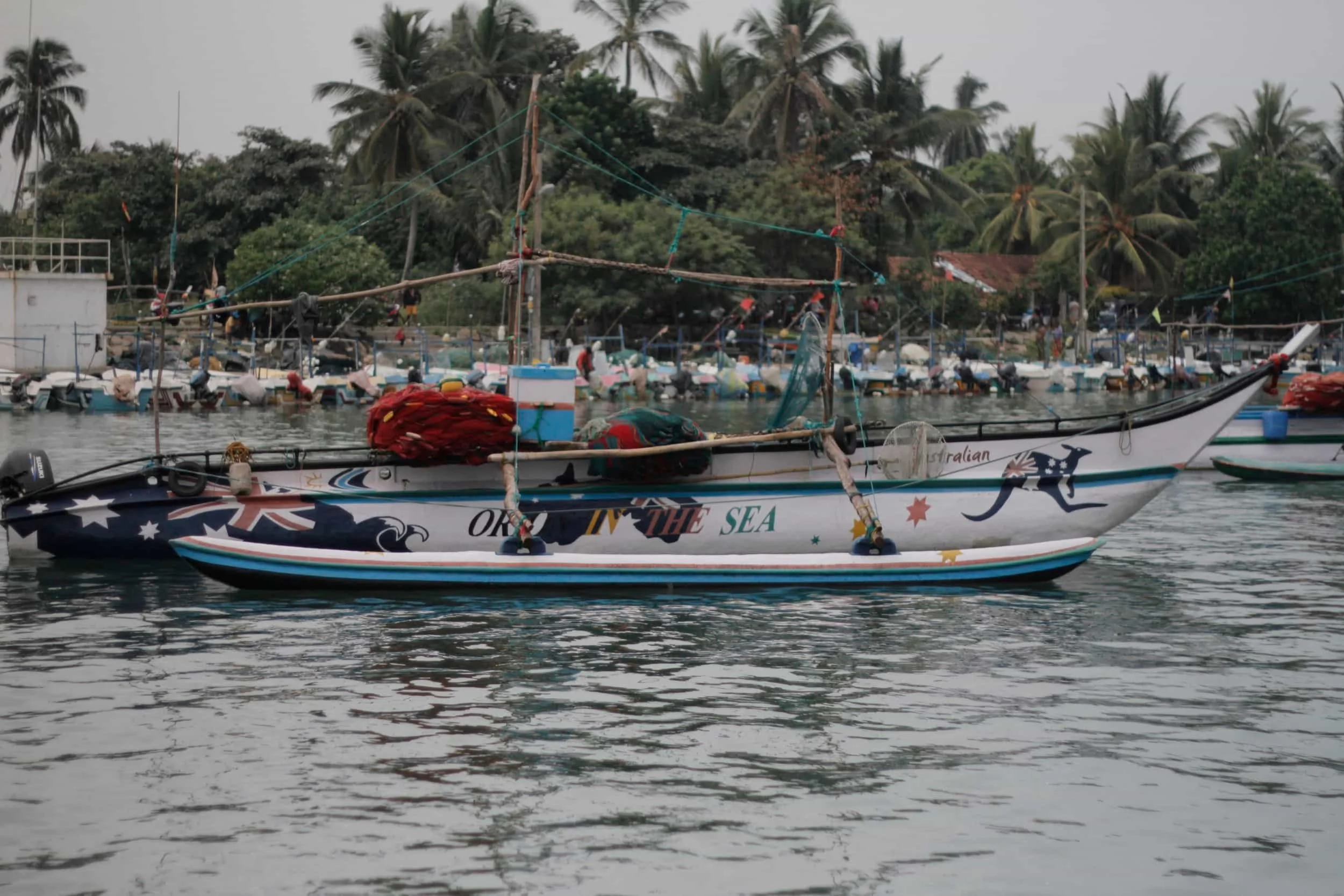
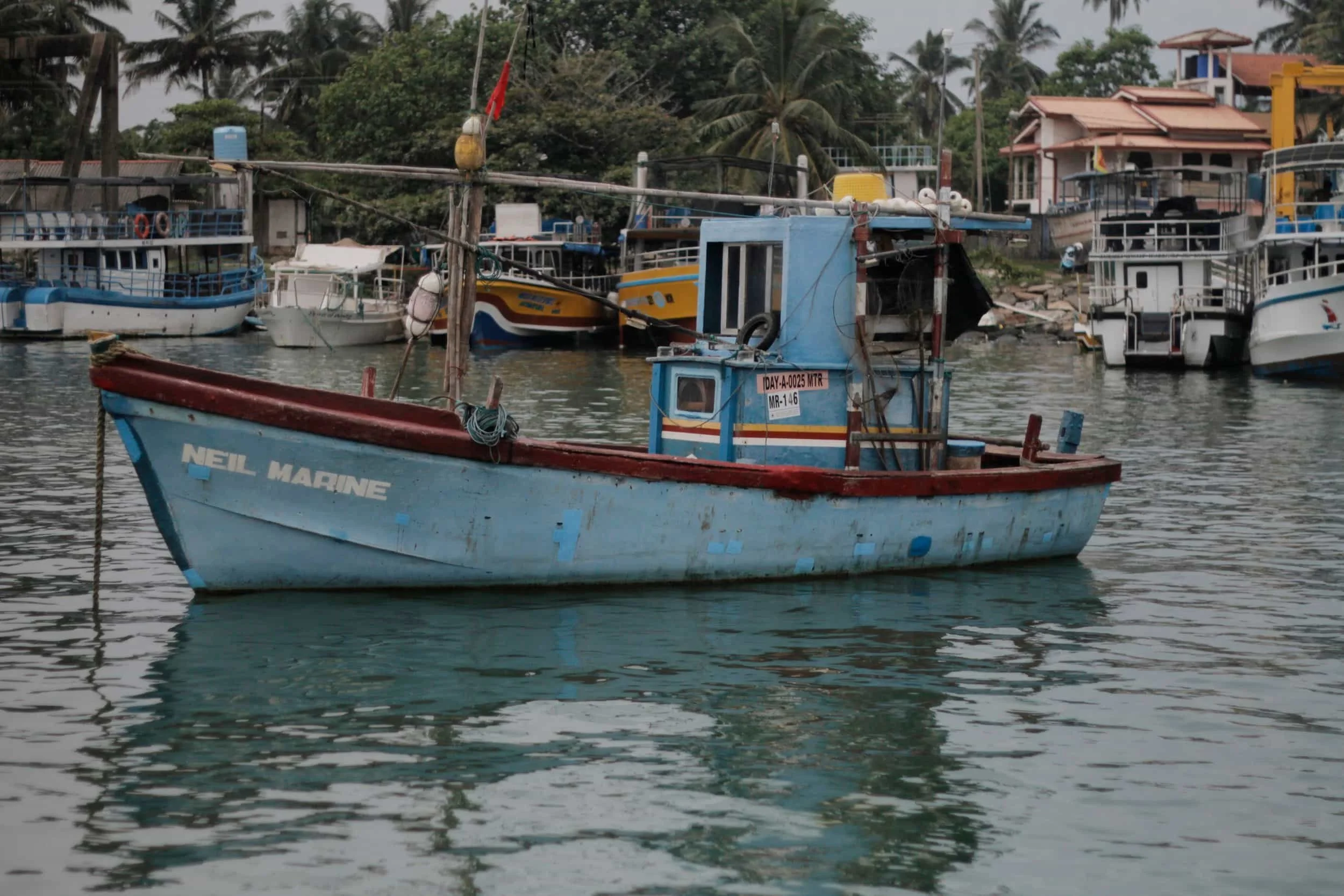
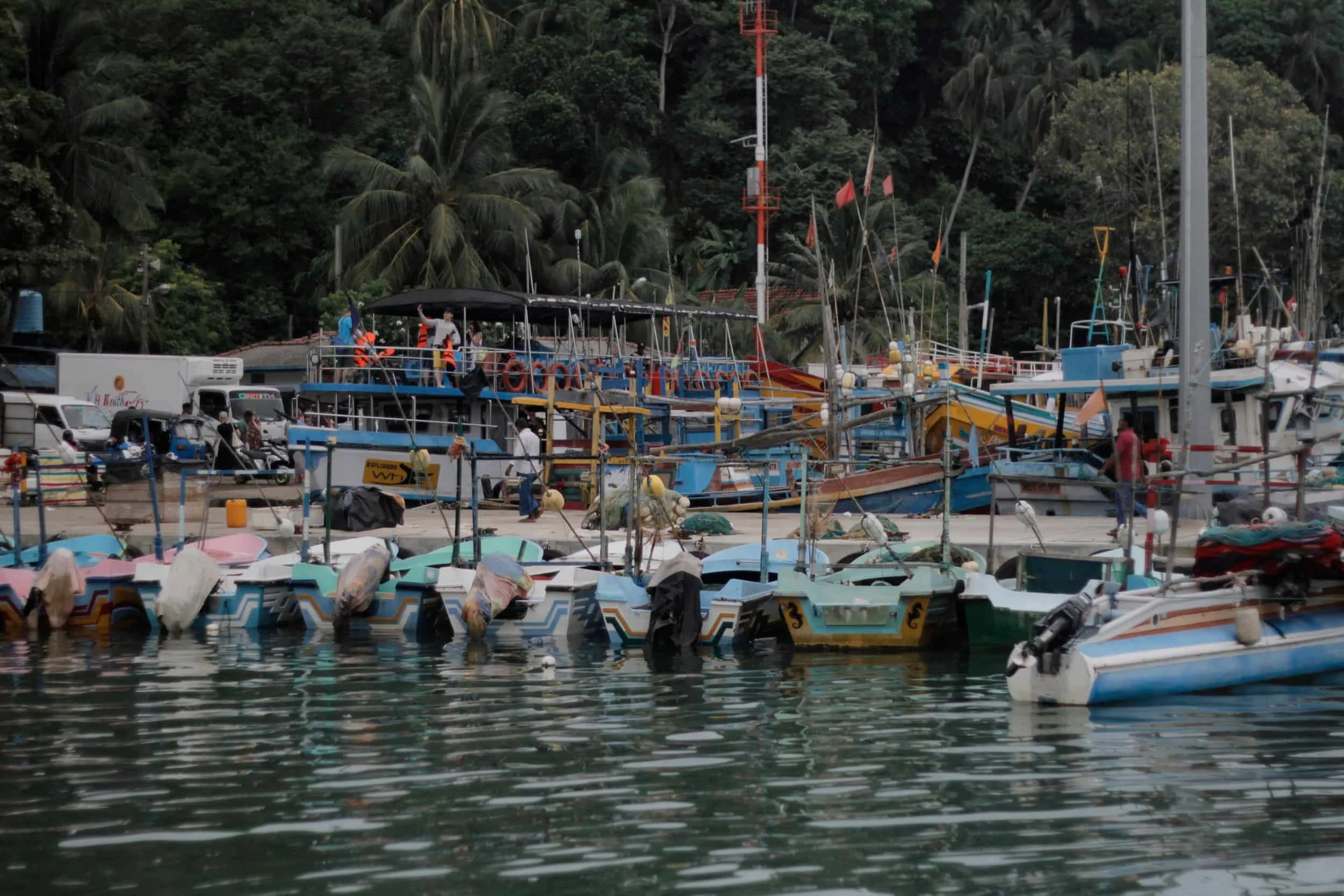
The morning sky was overcast, with low clouds hanging over the water as we headed away from Mirissa. Along the way, we passed brightly painted fishing boats, some with a single fisherman aboard, their colorful hulls standing out against the muted sea. I loved this quieter glimpse of daily life along the coast before we reached the open ocean.
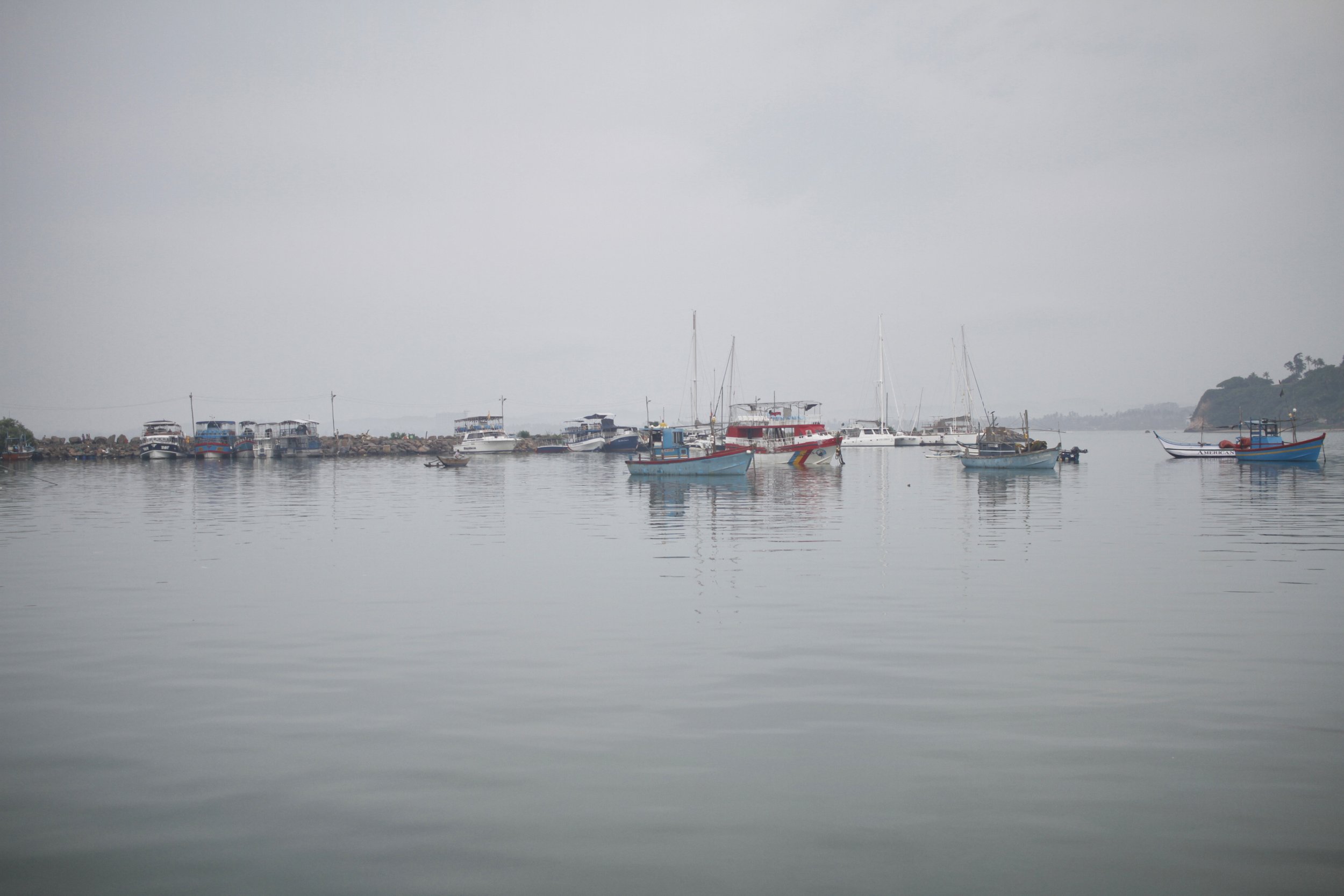
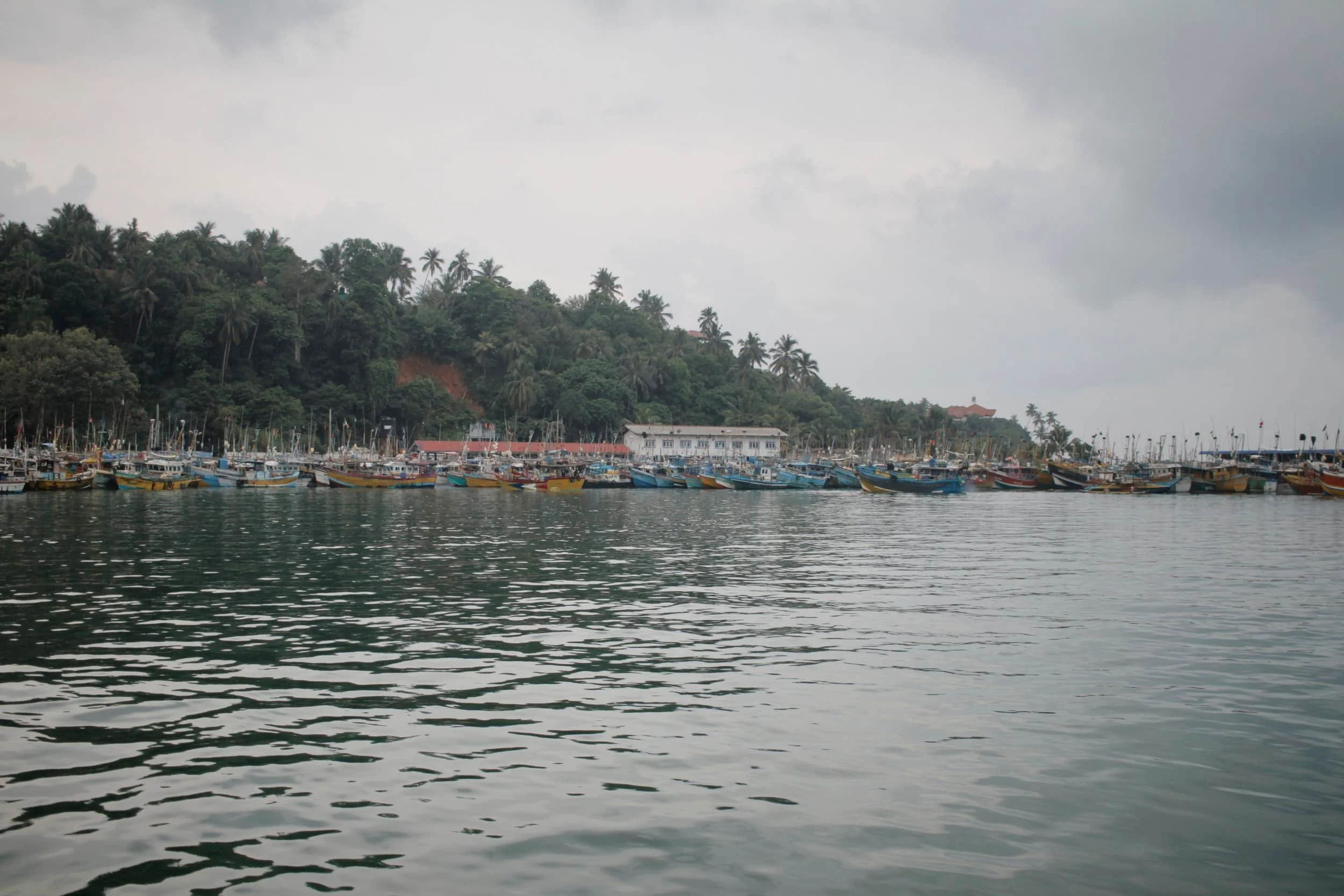
And then came the dolphins.
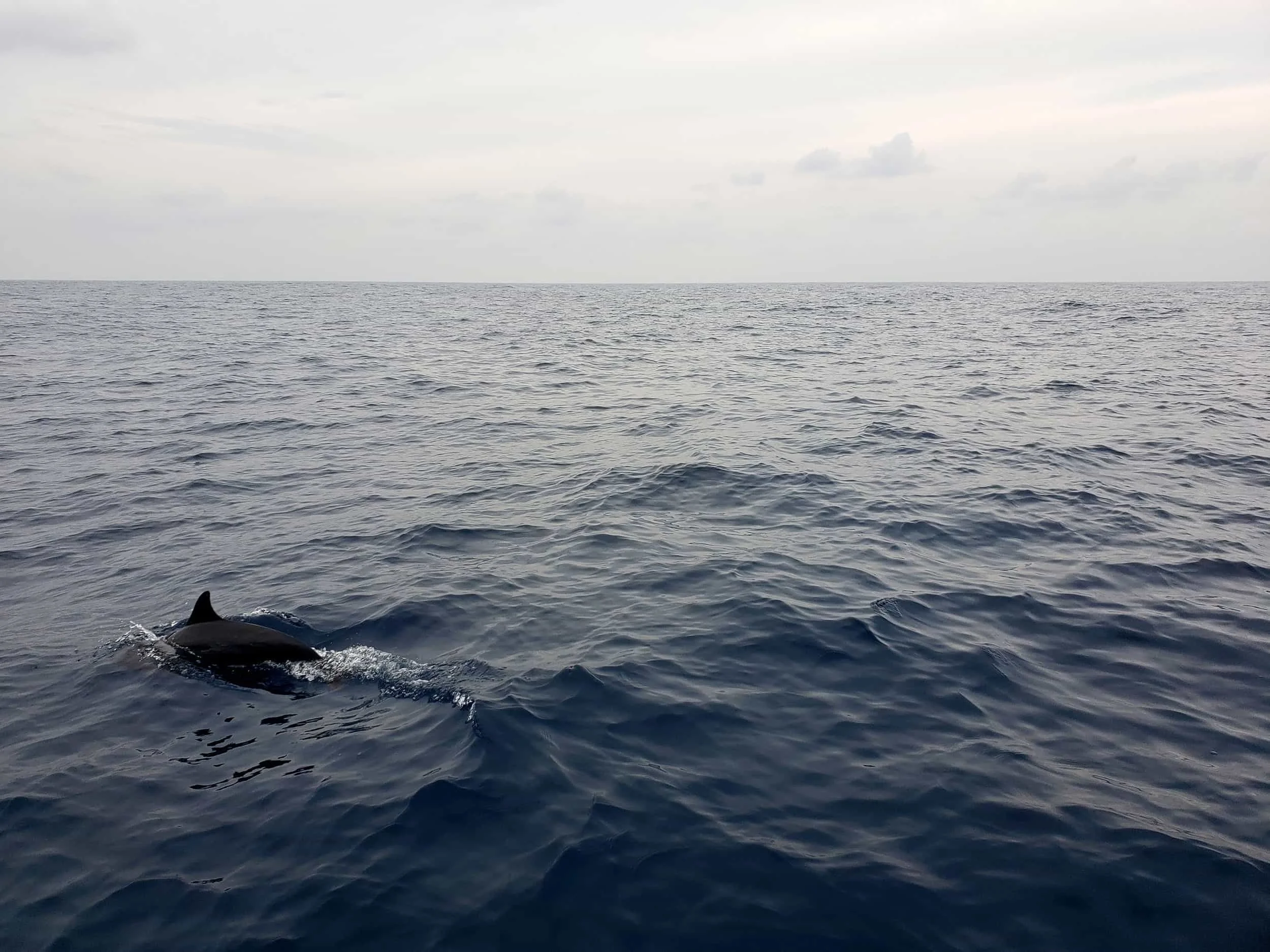
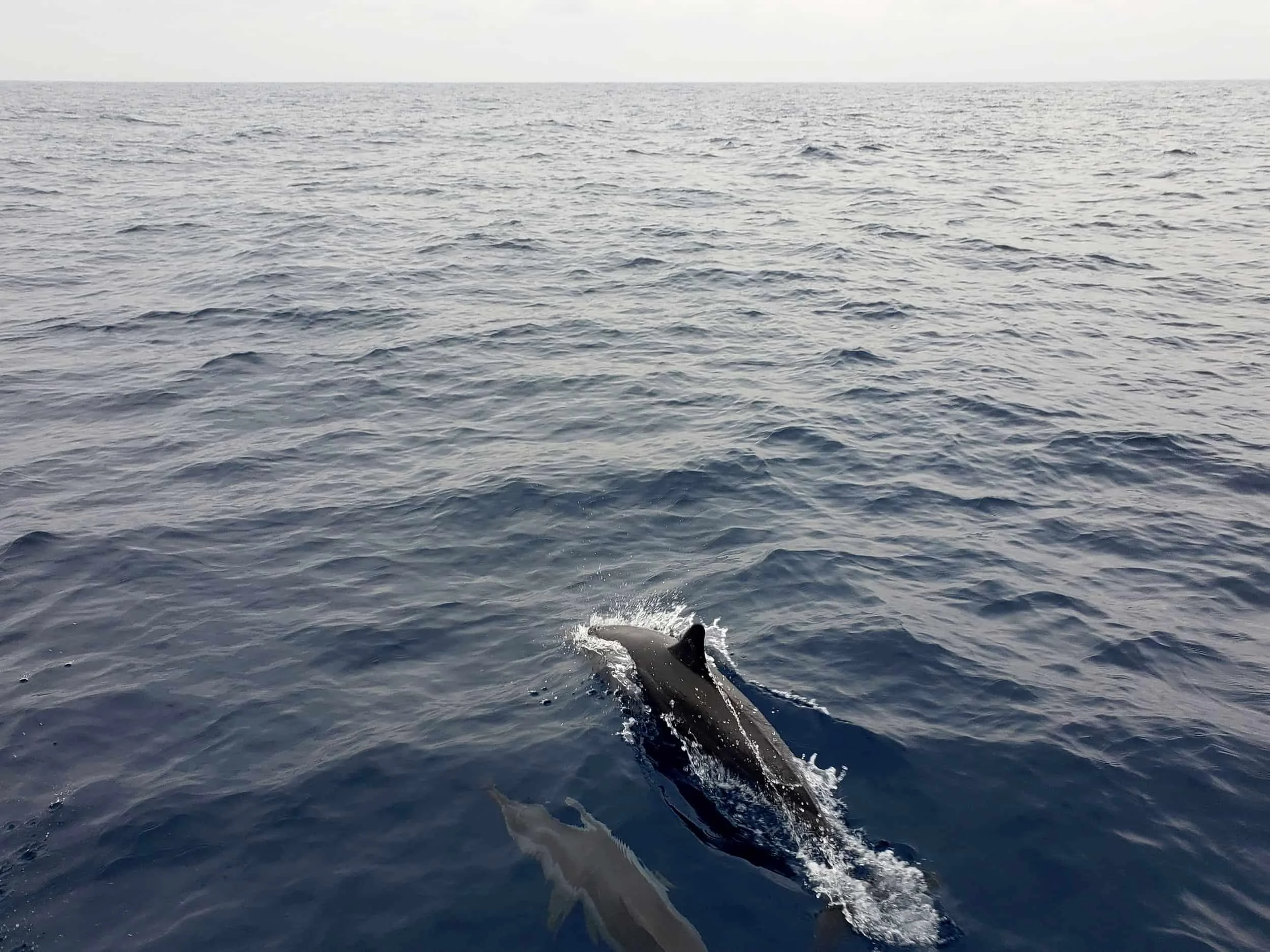
Pods appeared alongside the boat, cutting through the water with remarkable speed and occasionally leaping above the surface before disappearing again. They seemed completely at ease moving through the waves, and watching them race beside us was exciting enough that, for a moment, I almost forgot we were out there looking for whales.
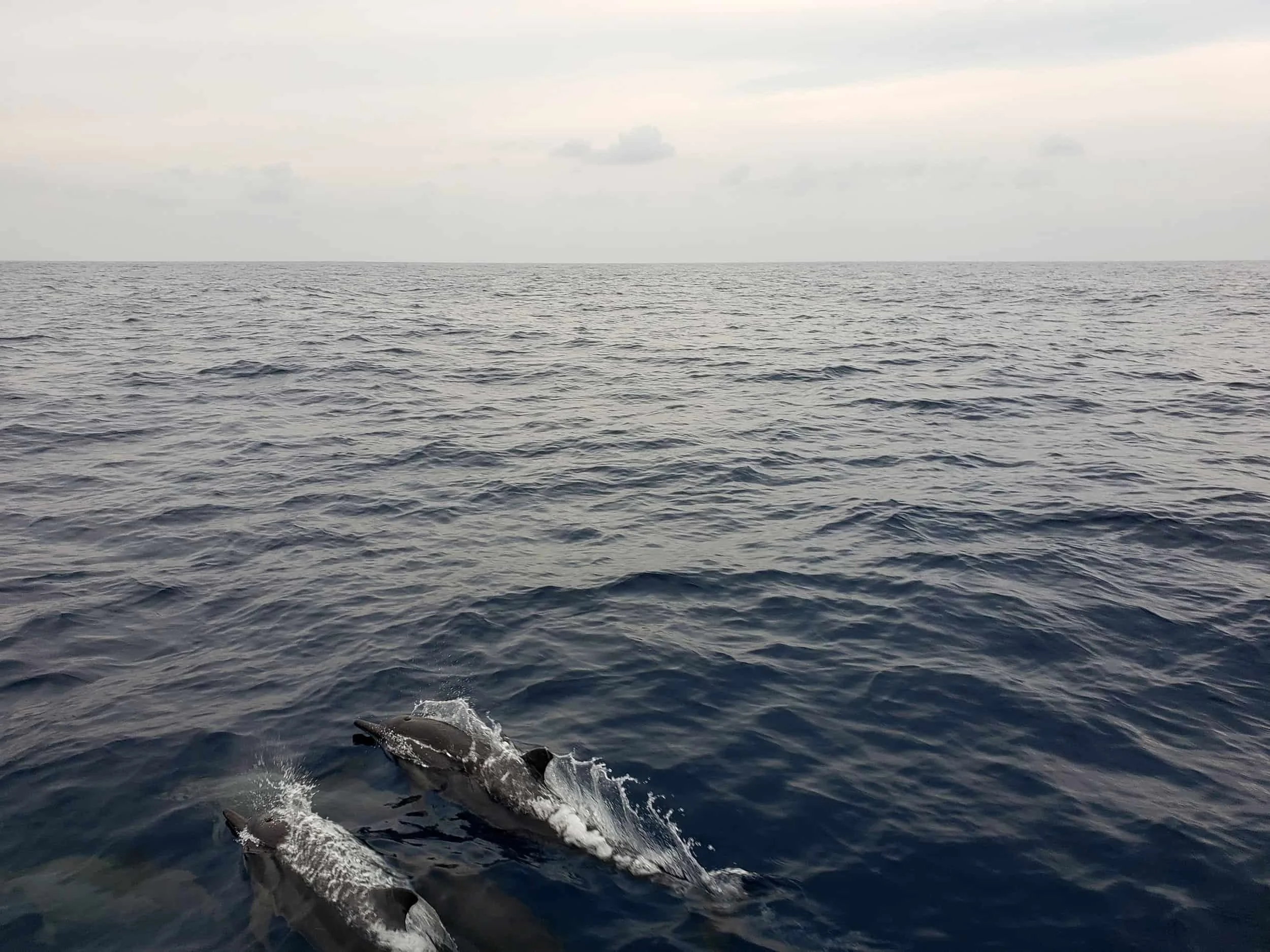
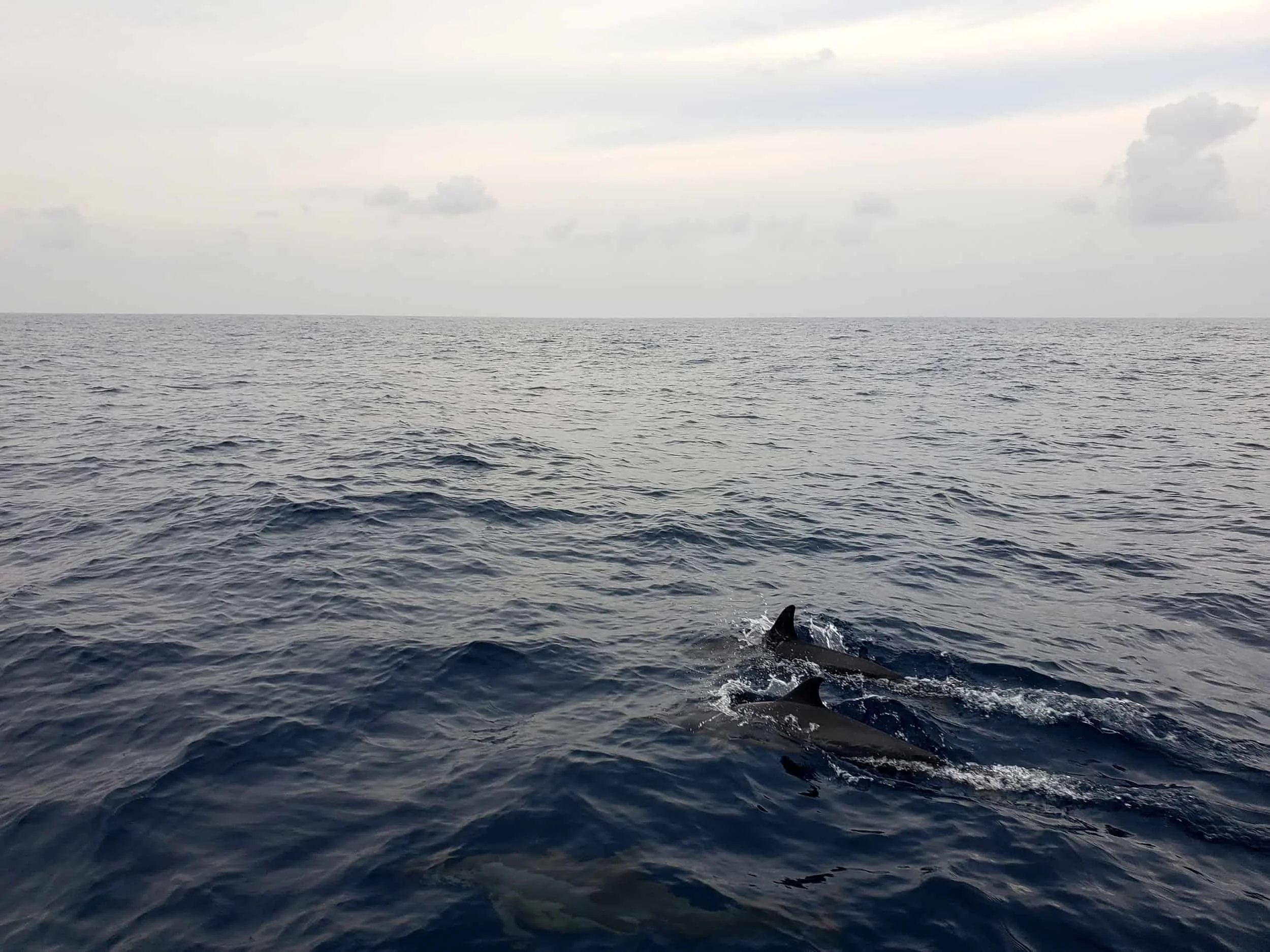
Almost.
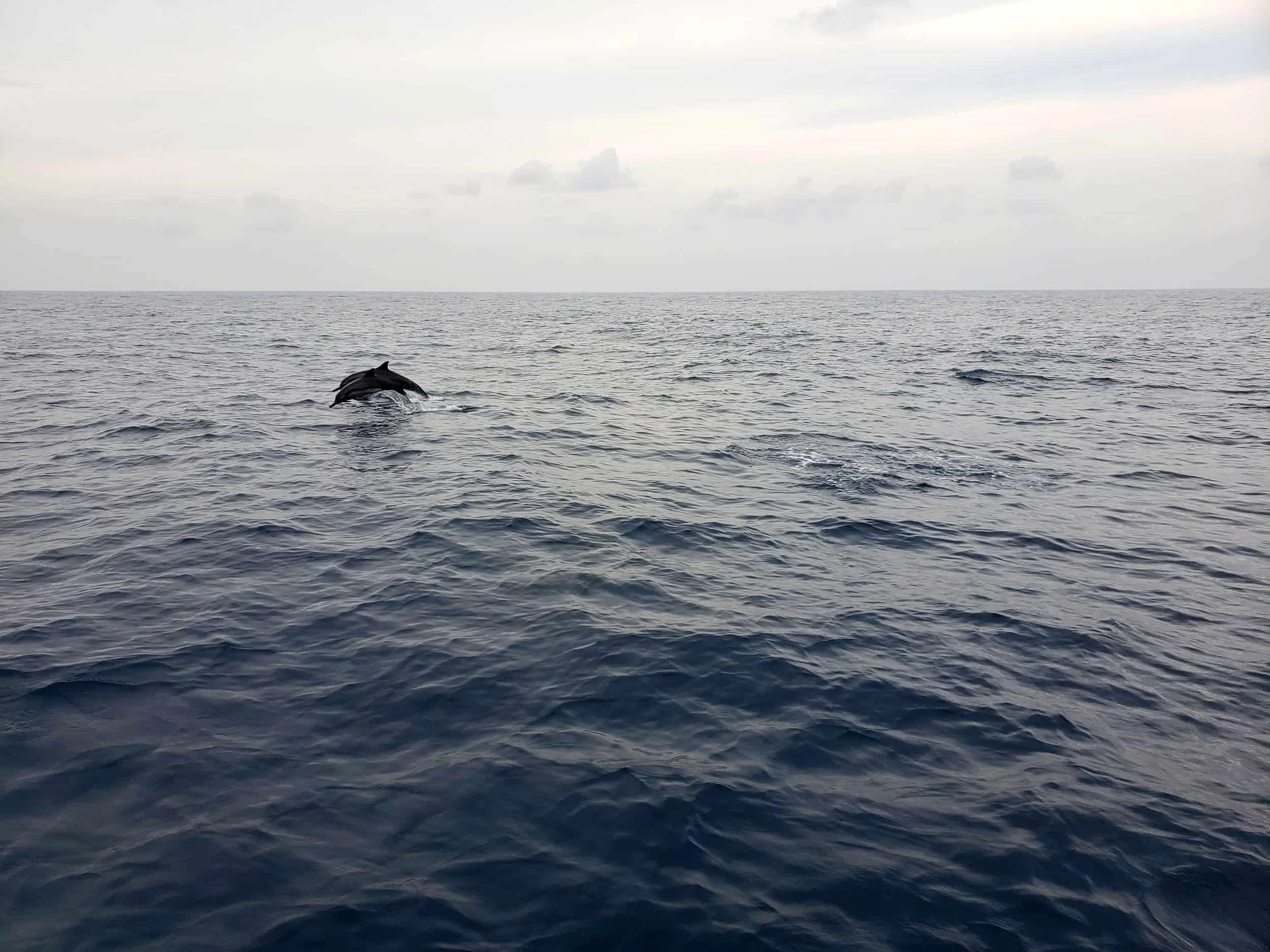
As we continued farther into the Indian Ocean, we began spotting blue whales. There was a sudden shift in attention whenever one surfaced, with everyone scanning the water for the next glimpse. Sometimes it was a plume of mist rising from a blowhole; other times, the enormous curve of a back appearing briefly before slipping beneath the waves.
Blue whales are the largest animals ever known to have lived on Earth — even bigger than the largest dinosaurs. They can reach nearly 100 feet (30 meters) in length and weigh upward of 150 tons (136 metric tonnes), with hearts roughly the size of a small car. Despite their enormous size, they feed primarily on tiny shrimp-like creatures called krill, consuming several tons in a single day.
Their powerful blows can rise nearly 30 feet (9 meters) above the surface, often making them easier to spot than the whales themselves. And perhaps most fascinating, their low-frequency calls can travel vast distances underwater. It's remarkable to think that an animal this enormous can spend most of its life almost entirely out of sight.
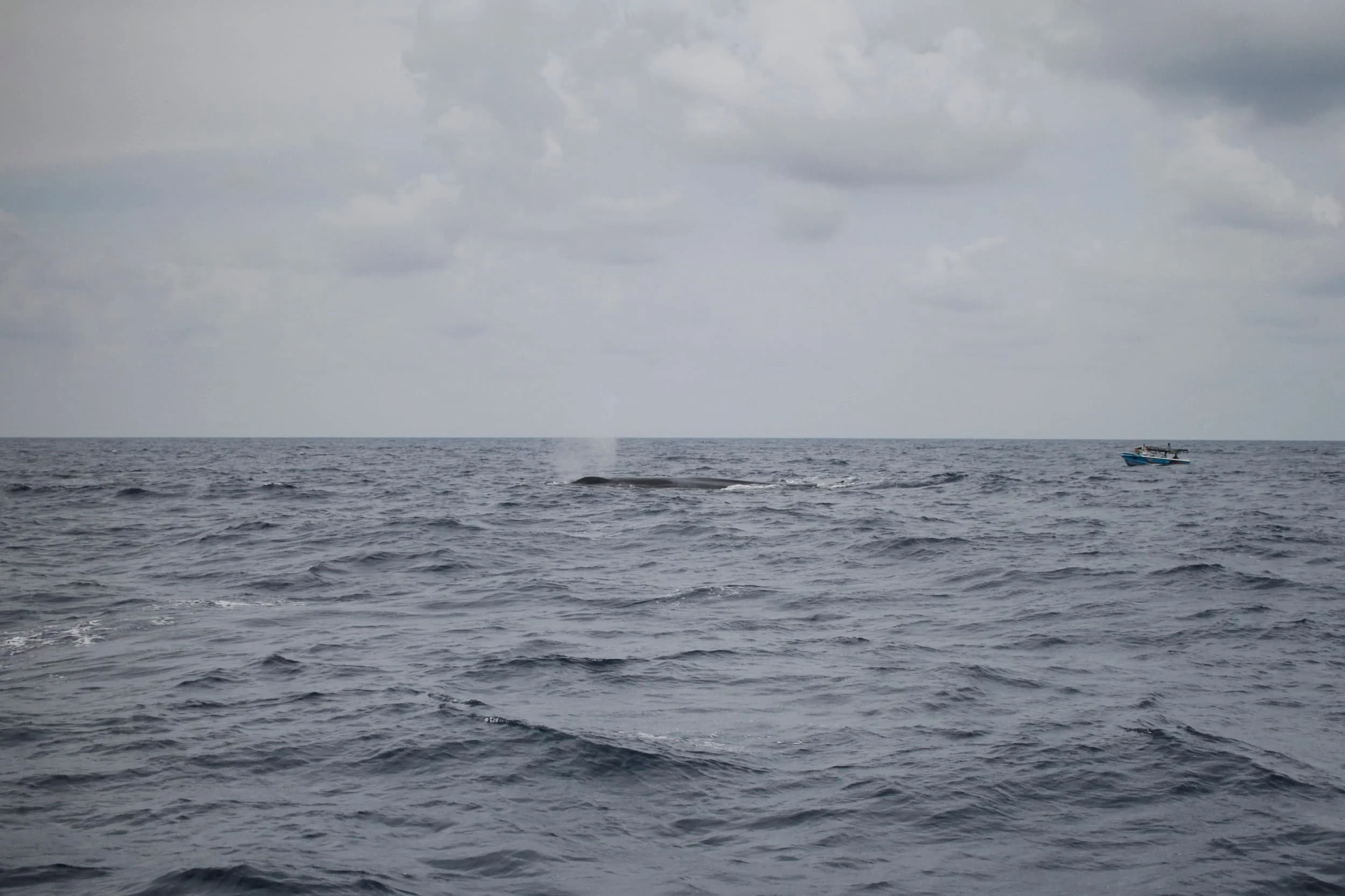
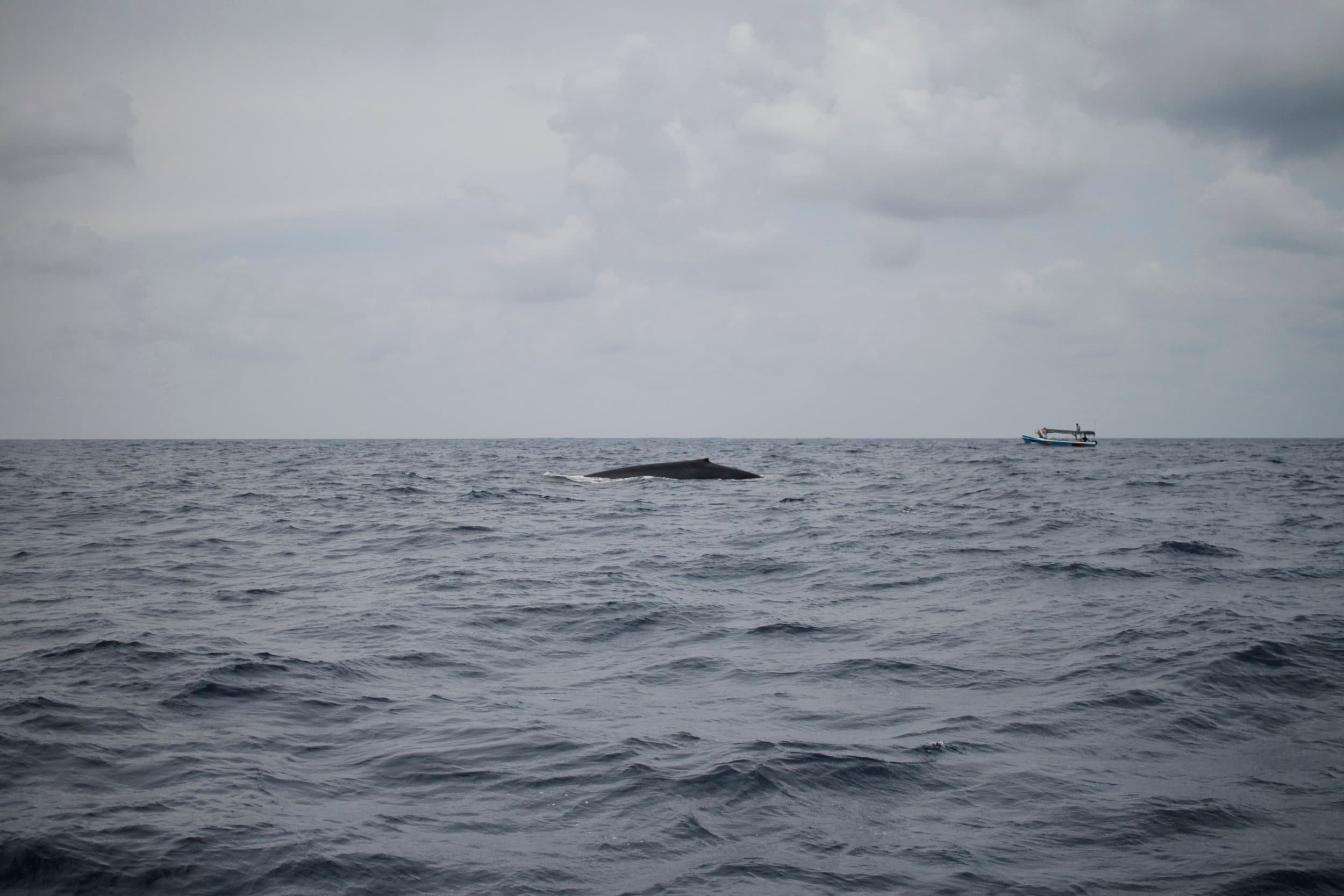
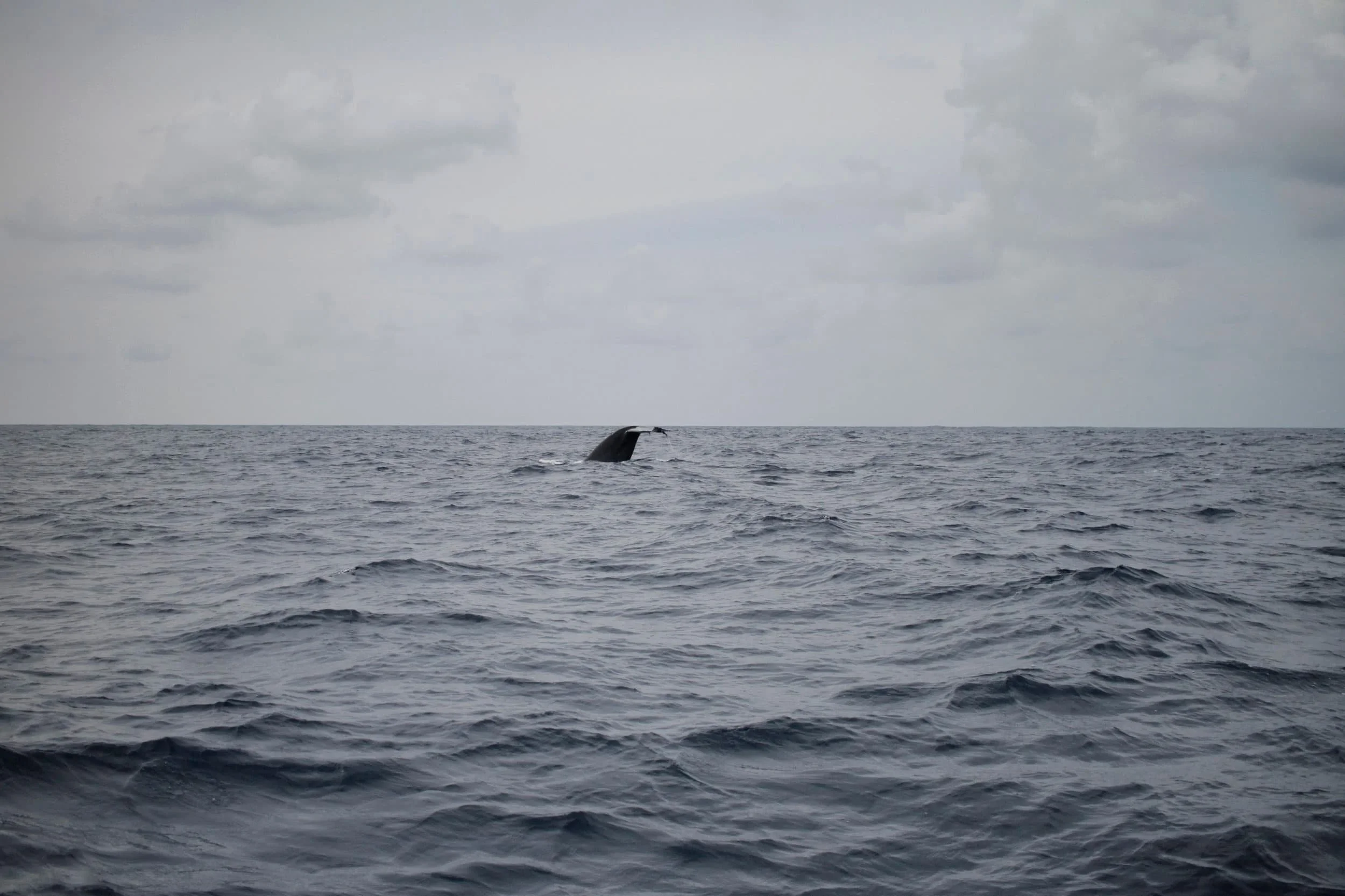
Our captain kept his distance as we watched, giving the whales room to move without crowding them. Seeing one lift its tail before diving was particularly memorable. Our guide explained that a raised tail can indicate a deeper dive, which made those final seconds above the surface feel even more fleeting.
It's difficult to appreciate the scale of a blue whale when most of what you see is only a fraction of its body. These animals can reach nearly 100 feet in length, yet even something that enormous can disappear into the ocean in seconds. The experience was a strange combination of excitement, patience and realizing just how little of the world we actually get to see.
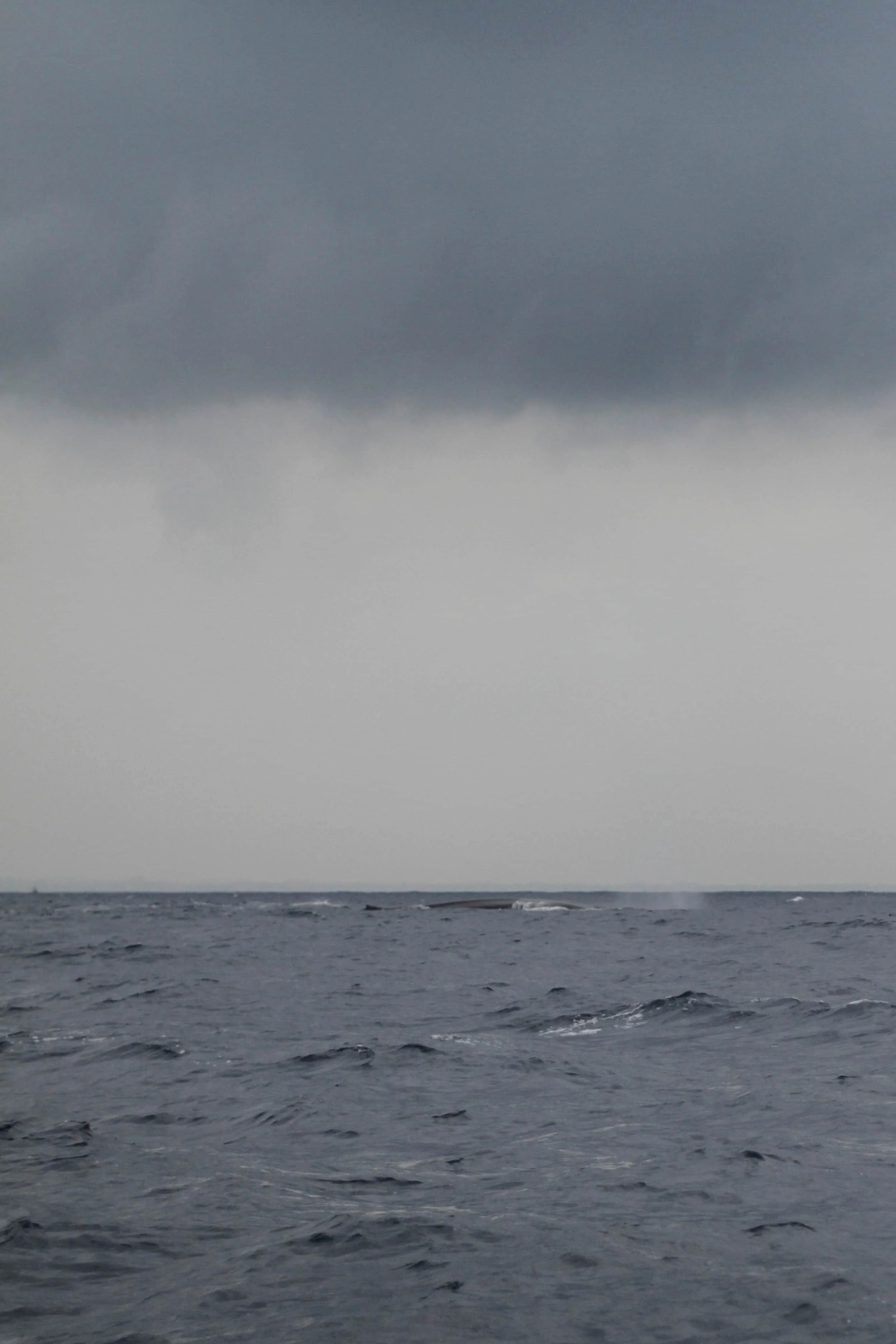
Throughout the trip, our guide shared information about the whales and other marine life found in Sri Lankan waters. Between sightings, there was time to settle back, watch the horizon and take in the sheer openness of the Indian Ocean.
As we made our way back toward shore, the crew served cake, juice and water — a welcome little treat after several hours on the boat. They'd been friendly and attentive throughout the morning and their knowledge added a lot to the experience.
The sea had become pretty choppy by this point and several passengers weren't feeling their best. I was particularly grateful for that motion-sickness tablet.
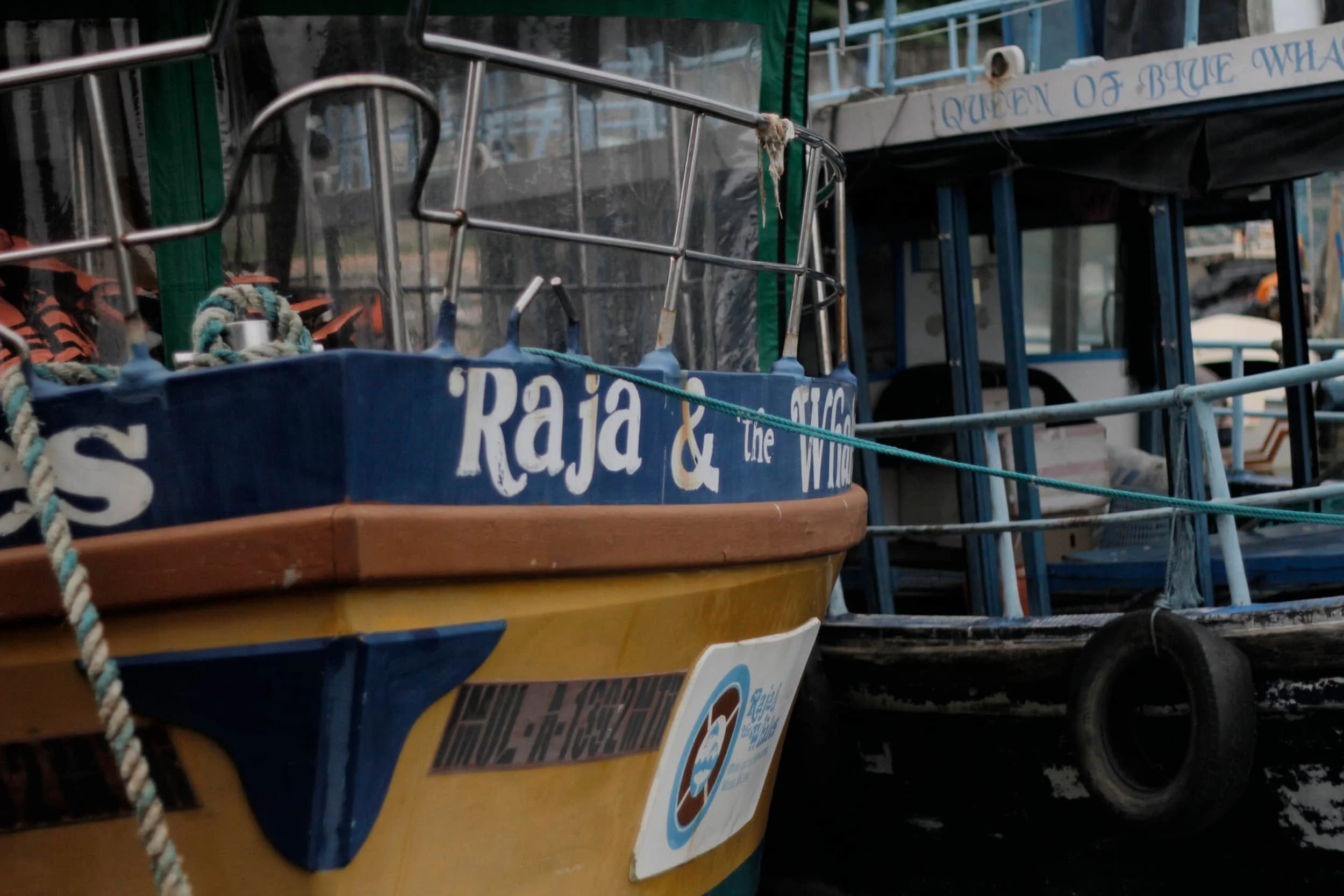
ℹ️ Good to Know | Raja & the Whales provided photographs from our excursion by email the following day, which was a lovely bonus. Check whether this is still included when booking, especially if you're hoping for close-up whale photographs.
We returned to Mirissa having seen dolphins and blue whales in the wild, with a few photographs, plenty of memories and a much greater appreciation for the animals living beneath that enormous stretch of ocean.
My Bibimbap Moment
Every destination adds another ingredient to our life's recipe, sometimes through a moment we know we'll remember forever. Out on the water in Mirissa, I was hoping to see a whale for the first time but I wasn't prepared for what it would feel like to actually watch a blue whale break the surface, disappear beneath it and send its enormous tail into the air as it dove. Dolphins raced alongside our boat, the ocean stretched endlessly around us and for a little while, the whole day felt almost unreal. Here's the ingredient this extraordinary encounter added to my Bibimbap Life.
Today’s Bibimbap Recipe
🥢 Flavor: Magical
🌿 Ingredient: Reverence
❤️ Best Memory: Witnessing my first blue whale
🎒 Take With You: I wanted to get closer but perhaps the distance was part of the gift — to see something extraordinary without needing to make it mine.
When I think back on that morning in Mirissa, I can still picture the whale's back breaking the surface and that final glimpse of its tail before it disappeared beneath the water. I remember the dolphins too, flying alongside the boat as if they were putting on their own little show. There was a part of me that wished I could have been closer, but with time, I'm glad the distance was part of the experience. These animals weren't there for us; we were simply lucky enough to cross paths with them. Sometimes the most extraordinary encounters are the ones we can only witness for a moment, from afar, before letting them return to their world.
Mirissa Whale Watching Travel Essentials
Mirissa, on Sri Lanka's southern coast, is one of the island's best-known destinations for whale watching, with opportunities to spot blue whales, sperm whales and playful dolphins in the Indian Ocean. The main whale-watching season generally runs from November through April, when calmer seas make boat excursions more comfortable.
Most tours depart around sunrise and last several hours, so plan for an early start and leave some flexibility in case conditions change. Mirissa is easily reached from Galle, Weligama or Colombo, making it a convenient addition to a southern Sri Lanka itinerary. Choose an operator that respects wildlife viewing distances, bring sun protection and consider motion-sickness medication — the ocean can get rough, even on a beautiful morning.
When to Go
Best Time for Whale Watching: The main Mirissa whale watching season runs from November through April, when the northeast monsoon generally brings calmer seas to Sri Lanka's southern coast. December through March is particularly popular, with favorable conditions for spotting blue whales, sperm whales and dolphins. Sightings are never guaranteed but these months typically offer the most comfortable conditions for heading out into the Indian Ocean.
Weather & Sea Conditions: Expect warm, tropical temperatures throughout the year, generally around 26–31°C (79–88°F). From May through September, the southwest monsoon brings rougher seas, stronger winds and more frequent rain, making whale-watching excursions less reliable. Even during peak season, conditions can change quickly, so allow some flexibility in your itinerary.
Best Time of Day: Most tours depart around 6–7 a.m., when seas are often calmer and conditions are better for spotting marine wildlife. Plan to arrive early and allow approximately 3–5 hours for your excursion, although trips can run longer depending on sightings and sea conditions.
What to Bring
Essentials: Bring your booking confirmation, a valid ID if required by your operator and a reusable water bottle. Check whether breakfast, snacks and drinks are included before packing extra food.
Clothing & Sun Protection: Early mornings on the Indian Ocean can be breezy, so bring a light jacket or windbreaker. A hat with a secure fit, sunglasses with a strap and water-resistant, reef-conscious sunscreen will help keep you comfortable once the sun comes out.
Camera & Binoculars: A camera with a good zoom lens is ideal for photographing whales and dolphins from a respectful distance. Small binoculars are useful for spotting activity farther out and a waterproof pouch or dry bag will protect your electronics from ocean spray.
Seasickness Remedies: Even during the calmer whale-watching season, the ocean can get rough. Bring motion-sickness medication if needed, following the recommended timing and directions before departure.
📸 Photo Tip | Whales and dolphins can surface unexpectedly and sometimes the best view is on the opposite side of the boat. Keep your camera ready, use a fast shutter speed and be patient. A zoom lens is far more useful than trying to get closer to the animals and sometimes it's worth putting the camera down and simply enjoying the moment.
How to Get There
Air: Most international travelers arrive at Bandaranaike International Airport (CMB), near Colombo. From there, Mirissa is approximately 112 miles (180 km) south, with the journey taking around 2.5–4 hours by private transfer, depending on traffic. If you're traveling around Sri Lanka, Mirissa makes an easy final stop after exploring the hill country or southern national parks.
Train: One of the most scenic ways to reach Mirissa is by taking the coastal railway from Colombo Fort to Weligama, the nearest major train station. The journey typically takes around 3–4 hours, passing fishing villages, palm-lined beaches and stretches of the Indian Ocean. From Weligama, Mirissa is just a 10–15-minute tuk-tuk ride away.
Bus: Regular buses connect Colombo, Galle, Matara and other southern towns. From Galle, the journey to Mirissa takes approximately 45–75 minutes, depending on the service and traffic. Buses are inexpensive but can be crowded, particularly if you're traveling with luggage.
Private Driver or Tuk-Tuk: Hiring a driver offers the most flexibility, especially if you're visiting Mirissa as part of a longer Sri Lanka itinerary. From Galle, the drive takes roughly 45–60 minutes, while Ella to Mirissa takes around 3.5–5 hours. Tuk-tuks are ideal for shorter journeys between Mirissa, Weligama and nearby coastal towns.
Getting to the Whale-Watching Boats: Most Mirissa whale watching tours depart early in the morning from Mirissa Fisheries Harbour, on the eastern side of the bay. Confirm your meeting point with your operator, as some arrange hotel pickups or require check-in at a nearby office before boarding. Allow extra time for the early departure, particularly if you're staying outside Mirissa.
💡 My Tip | Stay in Mirissa the night before your whale-watching excursion rather than traveling from another town at dawn. You'll have a much easier morning and more time to enjoy the coast afterward.
Where to Stay
Mirissa is a laid-back beach town with plenty of accommodation options, from small family-run guesthouses and tropical villas to boutique hotels tucked among the palms. Staying near Mirissa Beach puts you within walking distance of restaurants, cafés and the waterfront, while quieter spots around Thalaramba offer a little more privacy and a slower pace. Nearby Weligama is another good option, particularly for surfers and travelers looking for a wider selection of cafés and places to stay.
For Mirissa whale watching, I'd recommend staying locally the night before your excursion — those early morning departures come around quickly. Whether you're after a simple beachside retreat or somewhere with a little more character, Mirissa makes an easygoing base for exploring Sri Lanka's southern coast.
Where I Stayed
For a Modest, No-Fuss Stay — N 34
Not every place needs to be a boutique hideaway and N 34 was exactly what we needed in Mirissa. It was fairly basic but comfortable, easygoing and in a great location just a short walk from the beach. Nothing particularly fancy or design-forward but after long days exploring and early mornings chasing whales, we appreciated having a simple, comfortable place to come back to. Sometimes that's really all you need.
Where I'd Stay
For a future visit, I'd lean toward somewhere with a little more character, thoughtful design or a peaceful garden to retreat to after exploring. These three properties offer different takes on coastal living, from tucked-away tropical hideaways to a beachfront escape.
For a Tropical Hideaway — D Canal House
Tucked into lush gardens beside a quiet canal, D Canal House feels removed from Mirissa's busier beachfront without being far from the action. This intimate boutique property has just a handful of rooms and self-catering bungalows, a swimming pool, garden views and plenty of tropical greenery. I particularly like its small scale and relaxed indoor-outdoor atmosphere — a lovely option for travelers who appreciate somewhere peaceful and a little more personal.
For a Boutique Pool Retreat — Kiss Blossom
Kiss Blossom offers a more contemporary boutique-hotel experience, with bright, comfortable rooms, balconies overlooking the gardens or pool and a lovely outdoor swimming area. There's also an on-site restaurant, making it an appealing choice if you want to spend some time relaxing at the property itself. It's set away from Mirissa's busiest beachfront, so expect to use a tuk-tuk for some outings.
For a Beachfront Escape — Mirissa Beach Villa
For travelers who'd rather wake up to the Indian Ocean, Mirissa Beach Villa sits directly along the quieter Thalaramba coastline. The property combines beachfront access, a swimming pool, tropical gardens and rooms with sea or garden views. It's a lovely alternative to staying in the center of Mirissa, especially if your ideal afternoon involves very little beyond a book, a pool and the sound of the waves.
Additional Options
Prefer a place of your own?
Mirissa and the surrounding coastline have plenty of vacation rentals, from compact apartments and private guesthouses to tropical villas with gardens and pools. Having your own space can be particularly appealing for longer stays, especially if you'd like a kitchen, a little more privacy or somewhere to settle in between beach days and excursions. Look around Mirissa Beach, Thalaramba and Weligama, depending on whether you prefer convenience, quiet or a livelier surf-town atmosphere.
Browse all vacation rentals in Mirissa →
For a Splurge — Saltasia Boutique Beach Villa
Set directly on Thalaramba Beach, Saltasia Boutique Beach Villa is an intimate coastal retreat with an infinity pool overlooking the Indian Ocean, tropical gardens and beautifully appointed rooms. The interiors bring together warm natural materials, antique-inspired furnishings and a relaxed, understated elegance. With an on-site restaurant and a quieter beachfront setting, it's the sort of place I'd choose for a few days of doing very little — preferably with a good view and absolutely nowhere urgent to be.
How to Get Around
Beyond your Mirissa whale watching excursion, exploring the town and surrounding southern coast is relatively easy, with several ways to get around depending on how far you want to venture.
On Foot: Mirissa is a relatively small coastal town and walking is one of the easiest ways to explore Mirissa Beach, nearby cafés, restaurants and shops. Many accommodations are within walking distance of the beachfront, although some quieter guesthouses and villas are tucked farther inland or along the coast. Keep in mind that the main road can be busy and sidewalks are limited.
Tuk-Tuk: Tuk-tuks are the most convenient way to get around Mirissa and nearby coastal towns. They're inexpensive, easy to find and ideal for short trips to Mirissa Fisheries Harbour, Coconut Tree Hill, Secret Beach or neighboring Weligama. Agree on a fare before setting off or use a ride-hailing app where available.
Bus: Local buses run regularly along the main coastal road, connecting Mirissa, Weligama, Matara and Galle. They're an affordable option for exploring beyond town, although services can be crowded and aren't always the most comfortable choice with luggage.
Scooter or Private Driver: Renting a scooter offers flexibility for exploring nearby beaches and coastal villages but Sri Lankan roads can be hectic, so it's best suited to confident, properly licensed riders. For longer excursions, such as visiting Galle Fort, hiring a private driver or arranging a tuk-tuk for several hours can be a more relaxed alternative.
💡 My Tip | You don't need a rental car to enjoy Mirissa. Stay within walking distance of the beach, use tuk-tuks for shorter journeys and arrange an early pickup for your Mirissa whale watching excursion. It's an easy place to explore without overcomplicating things.
How Long to Stay
Whether you're visiting Mirissa primarily for whale watching or planning to explore more of Sri Lanka's southern coast, it's worth allowing a little extra time to enjoy the beaches, nearby towns and slower pace of coastal life.
One Day: If your main goal is Mirissa whale watching, one full day is enough for an early morning excursion and a relaxing afternoon on the beach. However, I'd recommend arriving the evening before rather than traveling in at dawn, especially since tours typically depart around 6–7 a.m.
Two to Three Days: This is the sweet spot for most travelers. You'll have time for whale watching, exploring Mirissa Beach, visiting Coconut Tree Hill and Secret Beach and enjoying the town's laid-back cafés and restaurants. It also gives you some flexibility if your whale-watching tour needs to be rescheduled due to rough seas.
Four Days or More: If you're looking to slow down, Mirissa is an easy place to linger. Spend a few days enjoying the coast, take a surfing lesson in nearby Weligama or plan a day trip to Galle Fort for its historic streets, colonial architecture and independent shops.
💡 My Tip | I'd recommend at least two nights in Mirissa, particularly if whale watching is a priority. The extra time gives you a little breathing room around the early departure and unpredictable ocean conditions, without feeling like you need to fill every afternoon with activities.
Tours & Day Trips
There's plenty to explore along Sri Lanka's southern coast but Mirissa whale watching is undoubtedly one of the area's biggest draws. Beyond the ocean, you'll find surfing beaches, historic coastal towns and opportunities to discover a different side of Sri Lanka. Whether you're heading offshore in search of blue whales or spending a day exploring the coast, these are a few experiences worth considering.
Whale Watching with Raja & the Whales
For our whale-watching excursion, we chose Raja & the Whales, a family-run operator known for its emphasis on responsible wildlife encounters. Our morning included sightings of blue whales and dolphins, a knowledgeable crew and plenty of time out on the Indian Ocean. Breakfast and refreshments were included, making the early departure a little more appealing.
What stood out was the experience of seeing these enormous animals in the wild, with the crew sharing information about their behavior and the importance of respecting their space. It's an excursion I'd happily recommend, particularly for travelers who want to be thoughtful about how they encounter marine wildlife.
Explore whale-watching excursions with Raja & the Whales →
Looking for Another Whale-Watching Option?
If Raja & the Whales is fully booked or its schedule doesn't work with your itinerary, there are other whale-watching excursions departing from Mirissa. Look for operators that prioritize animal welfare, maintain appropriate viewing distances and avoid chasing or crowding whales. Smaller groups, experienced guides and clear cancellation policies are also worth considering.
Explore alternative Mirissa whale-watching tours →
More Ways to Explore Mirissa & the Southern Coast
There's more to this stretch of Sri Lanka than whale watching. Nearby Weligama is popular for beginner-friendly surfing, while Galle Fort offers a completely different experience, with historic architecture, independent shops and atmospheric streets overlooking the Indian Ocean. You can also explore nearby beaches, arrange a coastal excursion or simply spend an afternoon discovering the quieter corners of Mirissa.
How to Book an Ethical Whale Watching Tour
Seeing a blue whale in the wild is an incredible experience but how we choose to encounter these animals matters. Whale watching can support local livelihoods, education and marine conservation but poorly managed tours can disturb the very wildlife we've come to see. Before booking your Mirissa whale watching excursion, it's worth looking beyond the price and promises of spectacular sightings.
What to Look for in a Responsible Operator
A good whale-watching operator puts the animals' welfare ahead of getting the perfect photograph. Boats should approach slowly and predictably, maintain appropriate distances and never chase, surround or block a whale's path. Extra care should be taken around mothers and calves and the captain should be willing to leave an encounter if the animals show signs of disturbance.
Look for operators with experienced crews, clear wildlife-viewing guidelines and a commitment to marine conservation. Some also document sightings or contribute information to research organizations, which is a meaningful bonus. Wildlife sightings are never guaranteed, so be cautious of anyone promising unusually close encounters or guaranteed photographs.
Practical considerations matter, too. Check that the boat has adequate life jackets, shaded seating and appropriate safety equipment. Read recent reviews and confirm the maximum number of passengers to get a better sense of comfort and the overall experience.
During peak whale-watching season, book ahead if you have a particular operator in mind. Booking directly through their website is often straightforward, although reputable tour platforms can be useful for comparing options. Confirm your departure time, meeting point, hotel pickup arrangements and cancellation or rescheduling policies before paying, particularly if rough seas prevent departure.
Five Questions Worth Asking Before You Book
How do you approach whales? Ask about viewing distances, speed and what happens if an animal changes direction.
How many passengers will be on board? Consider the space, comfort and viewing opportunities rather than assuming smaller is always better.
What safety equipment is provided? Confirm life jackets, emergency procedures and basic onboard facilities.
Do you support marine research or conservation? Ask whether the operator documents sightings, works with researchers or follows recognized wildlife-viewing guidelines.
What happens if conditions are unsafe? Check cancellation, rescheduling and refund policies before paying.
A Little Respect Goes a Long Way
Once you're on the water, follow the crew's instructions, avoid unnecessary noise and never attempt to touch, feed or attract wildlife. Responsible viewing means allowing whales and dolphins to behave naturally, even when that means watching from farther away than you'd hoped.
A blue whale doesn't owe anyone a close-up. And seeing one disappear beneath the surface on its own terms is still a pretty remarkable privilege.
Good to Know
A few things worth knowing before heading out on your Mirissa whale watching adventure, from unpredictable ocean conditions to what you can realistically expect once you're on the water.
Wildlife Sightings: Blue whales, sperm whales and dolphins can be spotted off Mirissa's coast but sightings are never guaranteed. Some days bring several encounters, while others require plenty of patience. Remember, these are wild animals who do not stick to a working schedule.
Time at Sea: Most excursions last approximately 3–5 hours, although trips can run longer depending on sightings and sea conditions. Keep your morning flexible rather than scheduling another activity immediately afterward.
Boat Comfort: Whale-watching boats vary in size, seating arrangements and onboard facilities. Some offer shaded upper decks, restrooms and refreshments, while others are more basic. Confirm what's included before booking, particularly if you'll be spending several hours offshore.
Harbor Fees & Extras: Check whether the advertised tour price includes any applicable harbor or wildlife-viewing fees, hotel transfers and refreshments. Some operators bundle everything together, while others may charge separately.
Cash & Payments: Sri Lankan rupees (LKR) are useful for tuk-tuks, small purchases and tips. Card payments may be available through established operators but it's worth confirming in advance.
Ocean Conditions: Even during the main whale-watching season, the Indian Ocean can be unpredictable. Tours may be delayed, shortened or canceled when conditions are unsafe. A calm-looking beach doesn't necessarily mean calm water farther offshore.
Photography Expectations: Whale sightings can be brief and you're often photographing from a moving boat. Don't expect every encounter to produce a perfect photograph. Sometimes the most memorable moments happen before you've even managed to lift your camera.

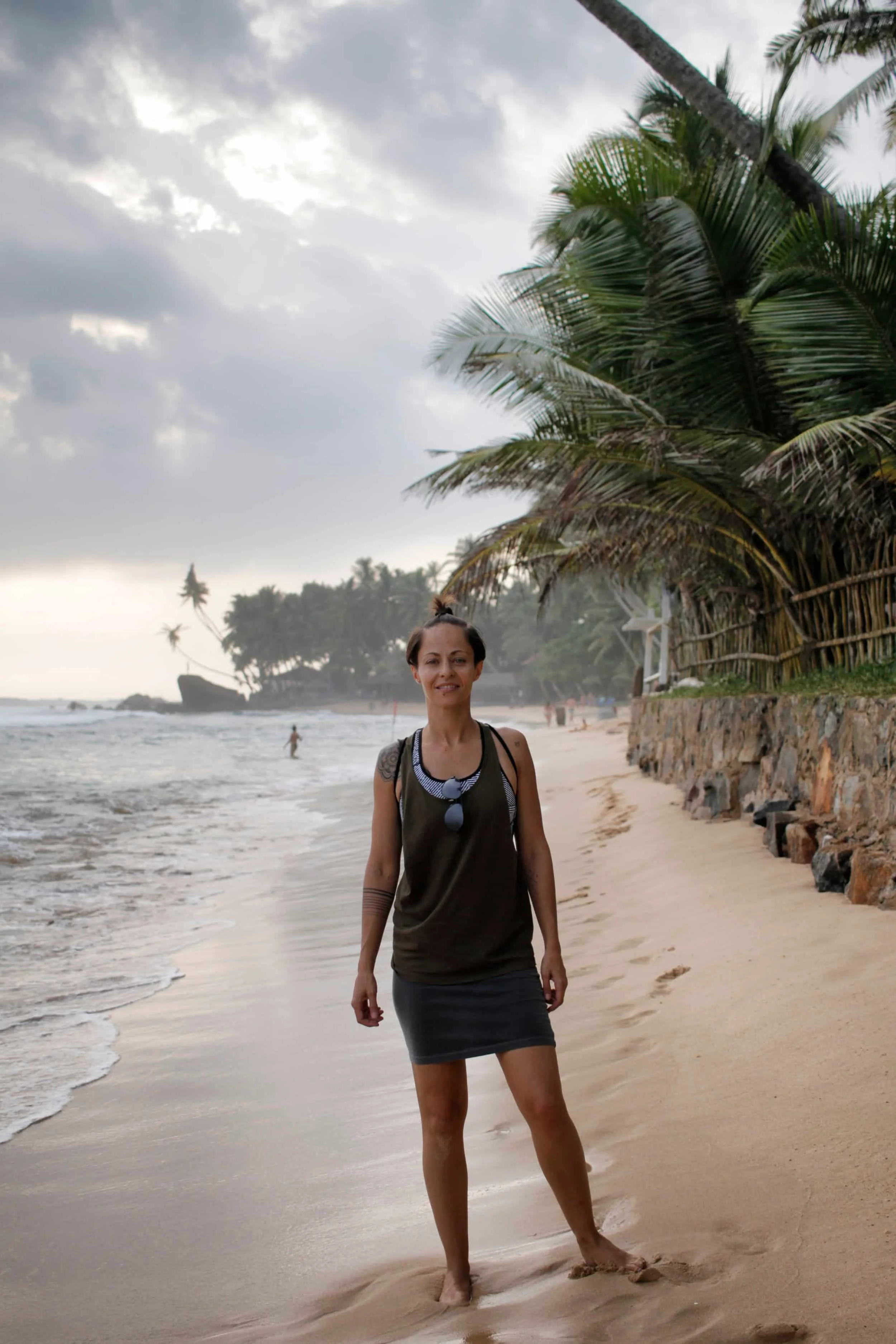


Set sail from sun-kissed Mirissa for an exhilarating Mirissa whale watching trip — blue whales glide beneath turquoise waves as dolphins dance around your boat.