Hospital of Emotions: LA’s Uniquely Unconventional Art Exhibit
Discover the Hospital of Emotions — LA’s uniquely unexpected pop-up where more than 70 artists have transformed 80 rooms into interactive installations that bring human feelings to life.
Published | September 2026
Why You Can’t Miss LA’s Uniquely Inspiring Hospital of Emotions — A Place to Heal Your HeART
This pop-up art exhibit in LA caught me at a curious crossroads: a designer who’s spent the past year and a half reimagining hospital spaces, an avid lover of art and self-expression and a proud empath who often absorbs the feelings of those around me. The project felt achingly personal — beautiful, sometimes jarring and deeply moving. It’s a tender, honest portrait of what it means to be human.
What is Hospital of Emotions Exhibition?
Heal your heART.
Step into the Hospital of Emotions, a magical pop-up tucked into a real Los Angeles hospital, where art, architecture and feeling mingle in vivid, unexpected ways. For a fleeting season, this former medical center becomes a living museum — 70 artists have transformed more than 80 rooms across four full floors into intimate, immersive installations.
Each room is its own emotional world: joy that makes you grin, tender love, prickling fear, fierce anger, quiet hope, deep sadness, warm gratitude and surprising resilience. Wander through at your own pace, letting discovery lead you — there’s no set route and no two rooms are alike.
This isn’t a usual gallery visit; it’s a personal journey through human feeling. Choose a time slot for arrival — entry is staggered to preserve the experience — and then lose yourself in the hospital’s many emotional landscapes.
The Artists of Hospital of Emotions
Working across visual art, installation, architecture, illustration, street art, design and set design, each artist lovingly transforms a hospital room into an immersive artwork, each one inspired by and shaped around a different human emotion.
Mônica Lóss | Lenny Gerard | David Otis Johnson | Anna Matsumoto | Bhumikorn Kongtaveelert | Javiera Estrada | Heather Bellino | Evan Wood | lisa waud | Jonathan Elkies | Kunna Haan | Rebecca Ann Carver | Olivia Barrionuevo- Minkin | Allison Reber | Yaara Sachs | Nathalie Auzepy | Dioz | Margüi | Madeline Verbica | DAK (David A Knudsen) | Caratoes | Dr. Maryam Trebeau | Kim Farbota | Pablo Thomas | Heriberto Gomes | Tommii Lim | Tara Rey | Michael Keppler | Alex Kemp | Alon Cohen Raz | Miran Nudell| Amit Greenberg | NYCHOS | Gil Hayun | Oshri Elmorich | Krisia kiki Powell | Mariell Guzman | John F. Malta | Jeremy Wojchihosky | Nellie Xie | Moran Sanderovich | Natalia Pavlova | Napo | KASEMONSTER | Corrie Sullivan | It’s A Living | Greg Corbino | Dmitry Kemell | Michelle Lougee | Christoph Florin | Tyler Goldfarb | Mark Girgis | Ginger Pearson | Scene Shift Collective | Adam Kyron Murillo | Leslie K Monroy | Ray Karam | Sayoko Osada | Santa Gross | Elif Sezgin | Kara Greenwell | Sandra Monty | Tim Schwartz | grisha stepanian | cosmodernism | Rose Zhang | Paal Anand | Dongpu Ling | Mads Christensen | Emily Strange | Almog Sachs
At a Glance
📍 Destination: Los Angeles, California, USA
🕒 Time Needed: 2-2.5 hours
💰 Budget: $59 USD ticket, plus parking
👟 Walking Level: Mild
🌤️ Best Time: Weekday mornings or early afternoons
☕️ Don’t Miss: Patient Emotional Chart
🖤 Perfect For: Art lovers, immersive experience seekers and introspective deep-feelers
My Bibimbap Moment
This trip added: Feeling.
There wasn't one room that defined Hospital of Emotions for me. It was the accumulation of them.
I laughed in some. Lingering in others felt uncomfortable. A few were so beautiful I didn't want to leave, while others made me curious about why I was reacting to them at all. Moving from one department to another made me unusually aware of my own emotional response to color, sound, scale, light, objects and space.
As a designer, I loved that. As a person walking through it, I loved that even more.
Hospital of Emotions added the ingredient of feeling to my Bibimbap Life.
Hospital of Emotions Guide
Heal Your HeART
Who | 70+ artists — many veterans of the film & television industry
What | Immersive pop-up art exhibition housed inside a former hospital
When | Open for a limited time through the end of 2026
Time | Select a time slot for your arrival
Where | 2131 W 3rd St, Los Angeles, CA
Cost | General admission $59 USD; purchase tickets here
Parking | Onsite $20 USD or public parking nearby
Heartbeats & Hallways: A Stirring Stroll Through LA’s Hospital of Emotions Exhibit
Wander through corridors of joy, linger in rooms of quiet longing and step into vivid, playful spaces that spark laughter, nostalgia or wonder. Each installation invites you to touch, play and reflect, offering a personal and communal exploration of what it means to feel. Perfect for a weekend outing or midweek break, this immersive show is equal parts art, therapy and adventure — come curious, leave feeling a little more seen.
About the Project: A Pop-Up Art Experience Healing Los Angeles' Heart
Presented by the curatorial and creative team of House of Art and Dreams in collaboration with ROYVA and St. Vincent Behavioral Health Campus, Hospital of Emotions invites visitors into a singular, heartfelt experience.
This project turns an entire hospital into a dynamic gallery where established and emerging artists show work side by side. Creators from diverse disciplines are encouraged to dream big, making site-specific pieces that respond to the building’s distinctive architecture. The result is an intimate, ambitious dialog between art and place.
By moving contemporary art out of conventional museum spaces and into an unexpected, everyday setting, the exhibition opens doors for a broader public. Encountering art in the hallways, rooms and nooks of a former hospital makes the experience immediate, approachable and deeply emotional.
The building itself is one of the exhibition’s most striking elements. Once a site of care, vulnerability and countless human stories, the hospital now becomes a canvas — its corridors and faded traces of the past woven into surreal, powerful installations. Here, the structure is not merely a backdrop but an active participant in the work, shaping how each piece is seen and felt.
Hospital of Emotions offers a rare meeting place where art, architecture and human feeling converge — an invitation to wander, reflect and be moved.
Begin Your Journey at the Hospital of Emotions
Stepping into the entrance of LA’s Hospital of Emotions, the air buzzes with a curious quiet as guides in soft uniforms greet you with easy smiles and gentle directions, their voices a warm counterpoint to the city's usual noise.
In the lobby, at check-in, you’ll meet the staff. A member for each emotion.
Then, a quick, human check-in — an exchanged name, a folded wristband, your Patient Emotional Chart — feels less like bureaucracy and more like a small rite of passage and when you’re gently steered toward the elevator, the silence deepens into something expectant.
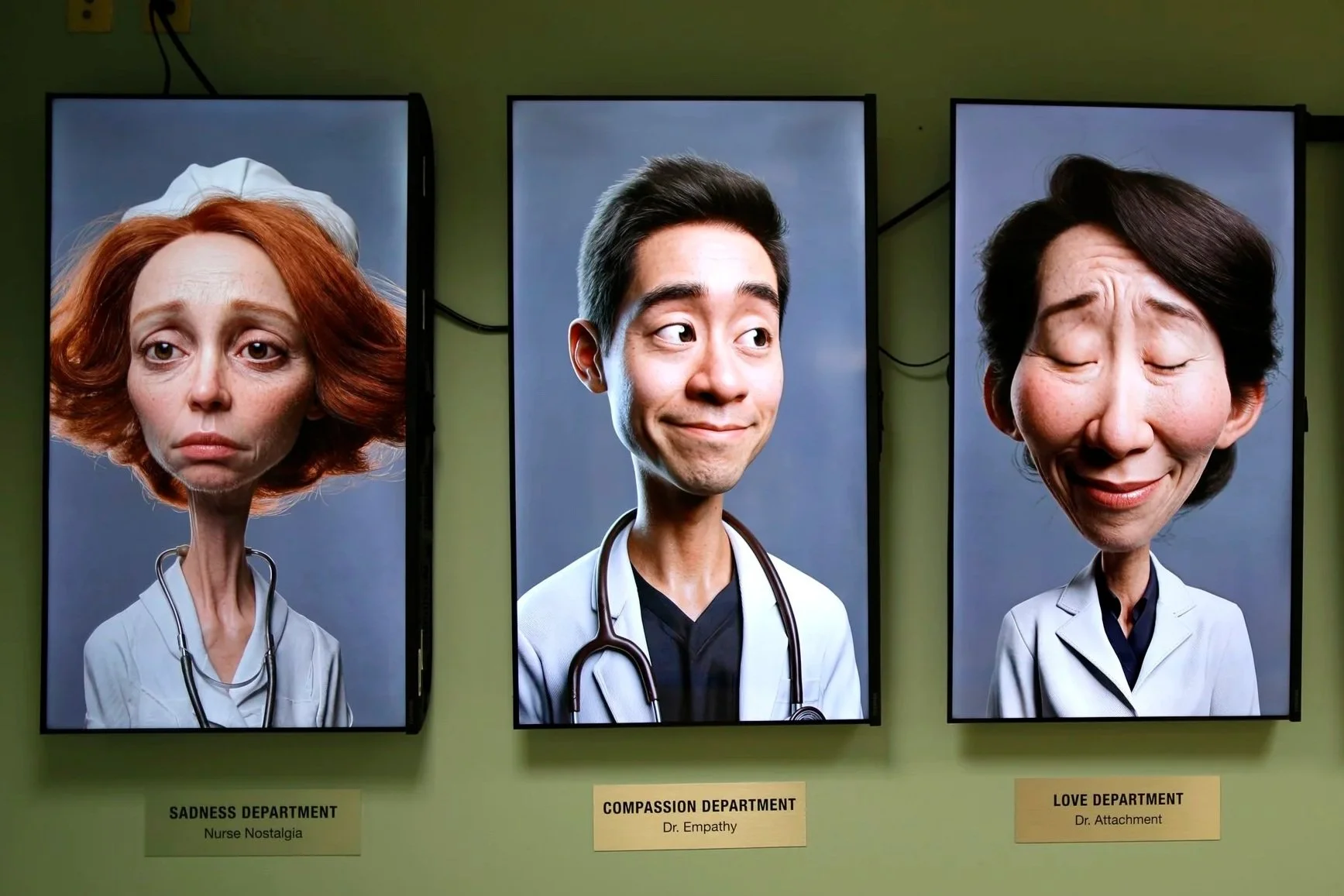
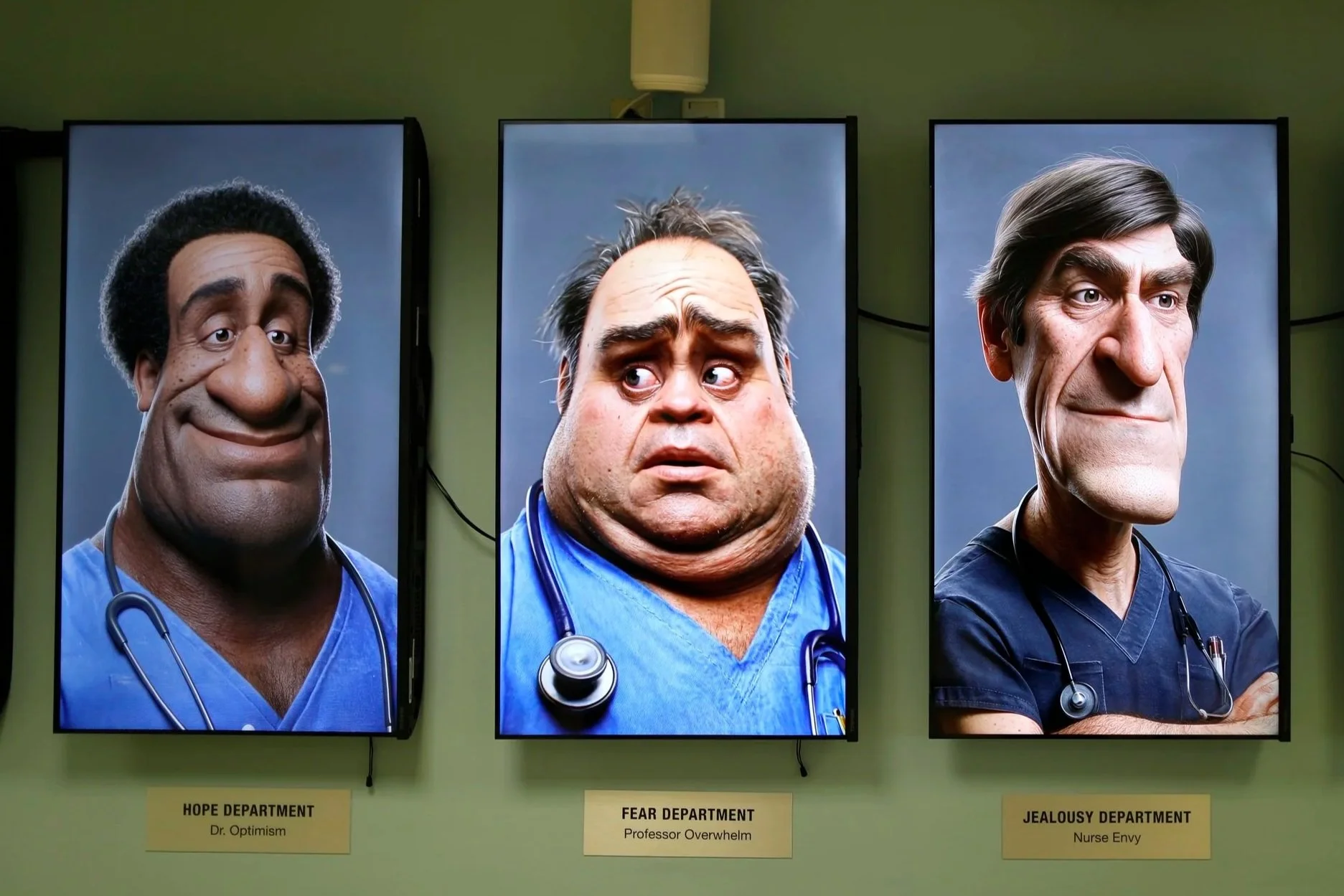
Guides direct you to the elevator and slowly, you rise to level six.
As you emerge, light and shadow play along the corridor and the murmur of other visitors becomes a layered soundtrack; the guides point out a detail here, share a quiet anecdote there and with each step you sense the journey shifting from outside world to an intimate, artful healing space, ready to unclasp the emotions you didn’t know you were carrying.
Wander at your own pace but try to peek into every room — each one has its own unique identity.
Wander the Hospital of Emotions: A Floor-by-Floor Journey
Begin on level six, where the Resilience and Joy Departments greet you with warm light. Drift down a floor to continue enjoying Joy, then slip into the Sadness and Gratitude Departments for quieter reflections. On level four, explore Hope, Compassion and Anger — each with its own surprising textures. Finish your descent by revisiting Anger alongside the sweet, expansive Love Department and the whimsical Jealousy flower shop. Before you leave, pop into the gift shop — there are charming keepsakes to carry a piece of this visit home.
💡 Local Tip | Keep your Patient Emotional Chart close — as you move through the exhibit, you’ll stamp each department as it’s completed. You can also use it to scan for a detailed exhibition map.
Level Six | Resilience Department
In the Hospital of Emotions, the Resilience Ward stitches new strength into frayed hearts. Resilience is the quiet courage to mend, adapt and keep moving forward — as the exhibits frame heartbreak and healing side by side, transforming raw emotion into something luminous and true.
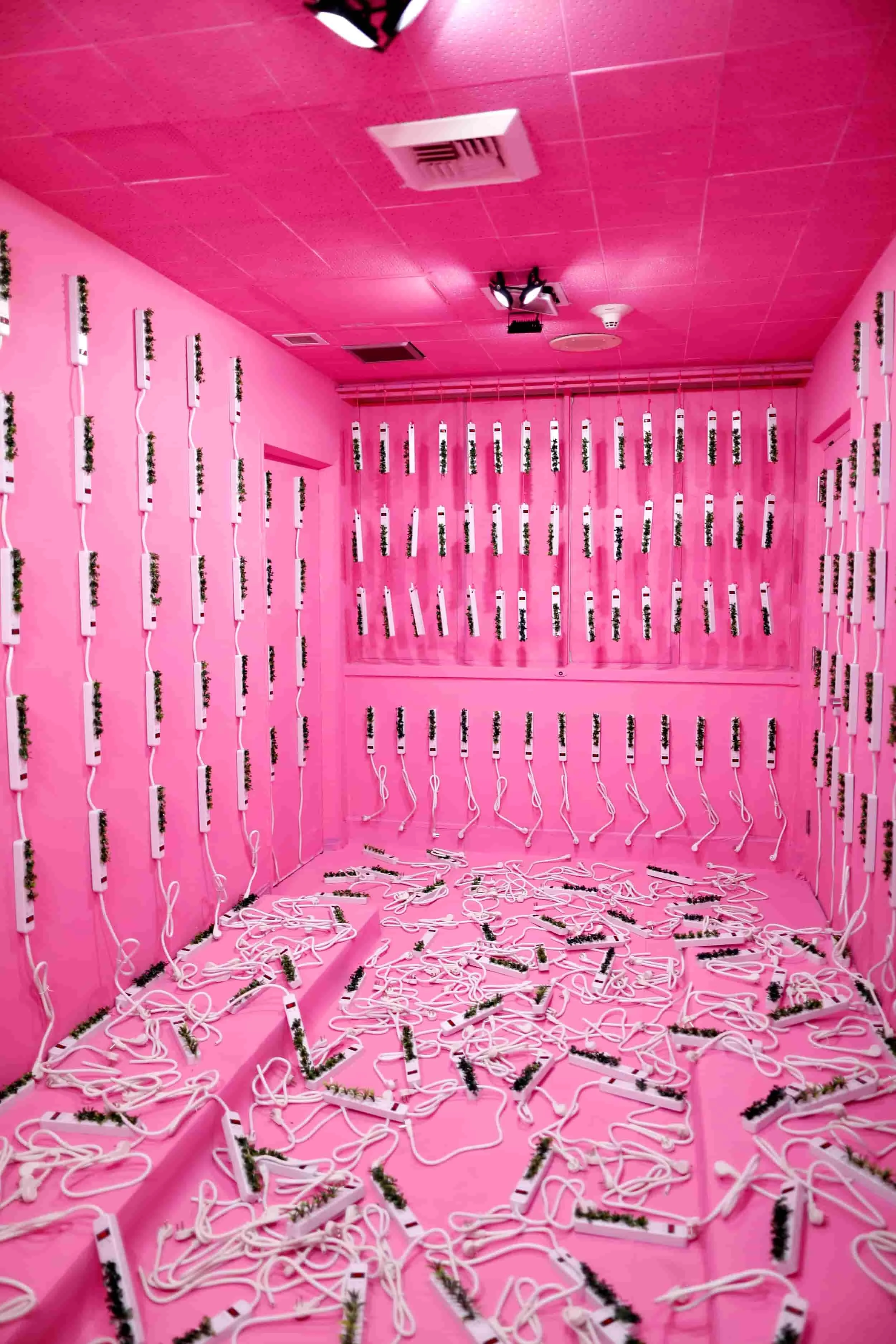
Botanical Current by Lenny Gerard
The artist thinks about how technology and nature mirror one another — both unfurling, spreading, evolving, quietly taking over space. Foliage spilling from the outlets gives the room a pulse, as if the space itself is alive or technology is quietly mutating into something organic.
The pink matters because it lives between worlds. It’s neither fully natural nor entirely artificial, especially when set against the cold blue flashes of electricity. It belongs to that uncertain borderland where human craft and wild life meet.
The artist reflects on how we erect these elaborate systems convinced of their permanence, yet a single earthquake, a sudden storm, a single disaster can erase it all. This installation speaks to that truth — the resilience of nature in the face of technological advance. In the end, nature always finds its way.
Room 04 | Resilience Department
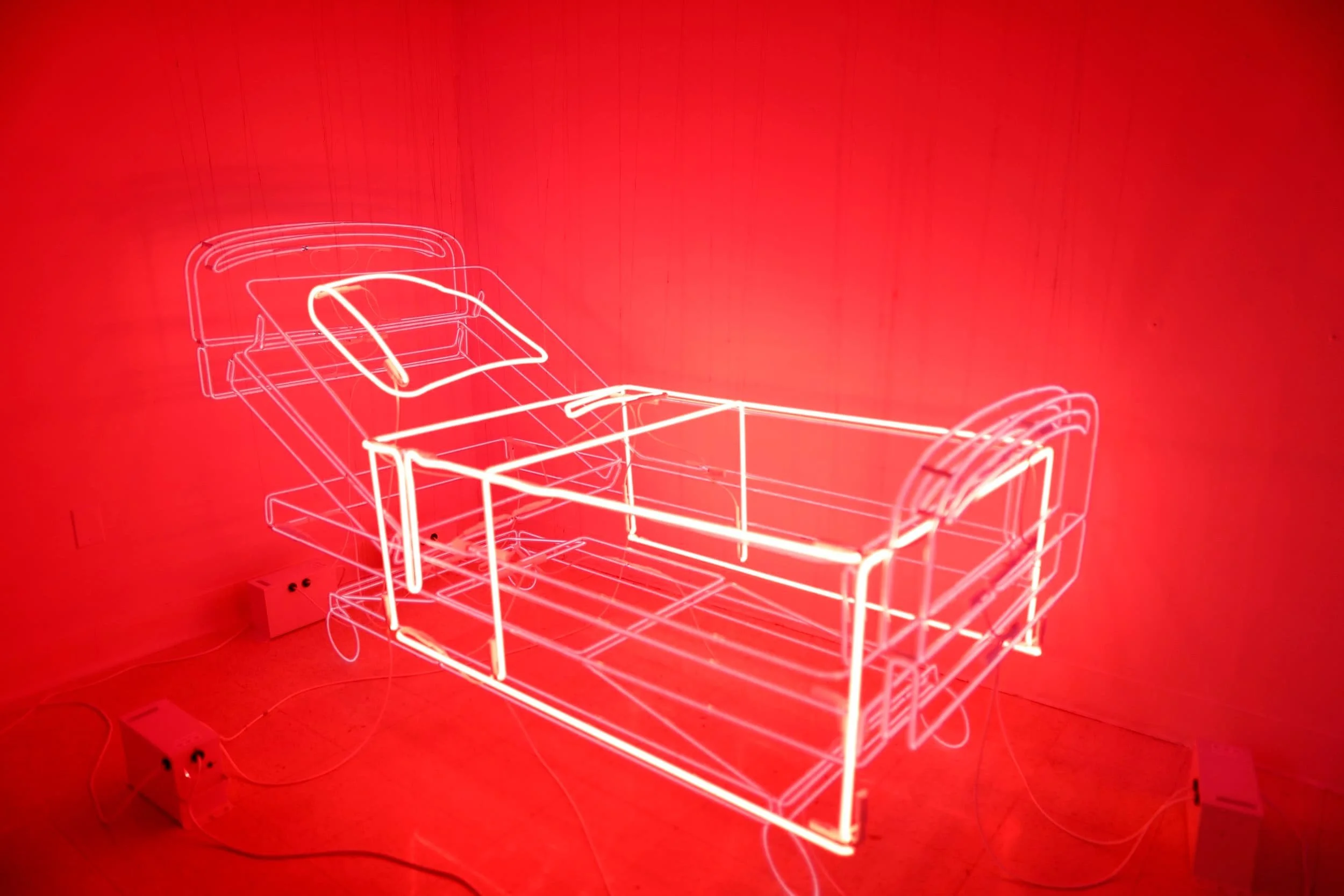
David Otis Johnson
David Otis Johnson sculpts with light and motion, weaving luminous lines into forms that feel at once playful and profound. Each work invites a pause — a moment to linger, wonder and converse with the space around it — where the boundary between the tangible and the softly glowing unknown seems to dissolve.
He often borrows from the electric grammar of signs and commerce, turning the familiar language of logos, color palettes and type into a gentle critique. By reworking those everyday symbols, his pieces flirt with the edge where art meets advertisement, coaxing viewers to notice how consumer imagery subtly shapes our sense of self and the world.
This exhibit celebrates light’s quiet persistence and the gentle strength of the unseen. The installation is a study in resilience — how rays carve out space against the night and how symbols become anchors for the human spirit in an ever-changing digital world.
Room 05 | Resilience Department
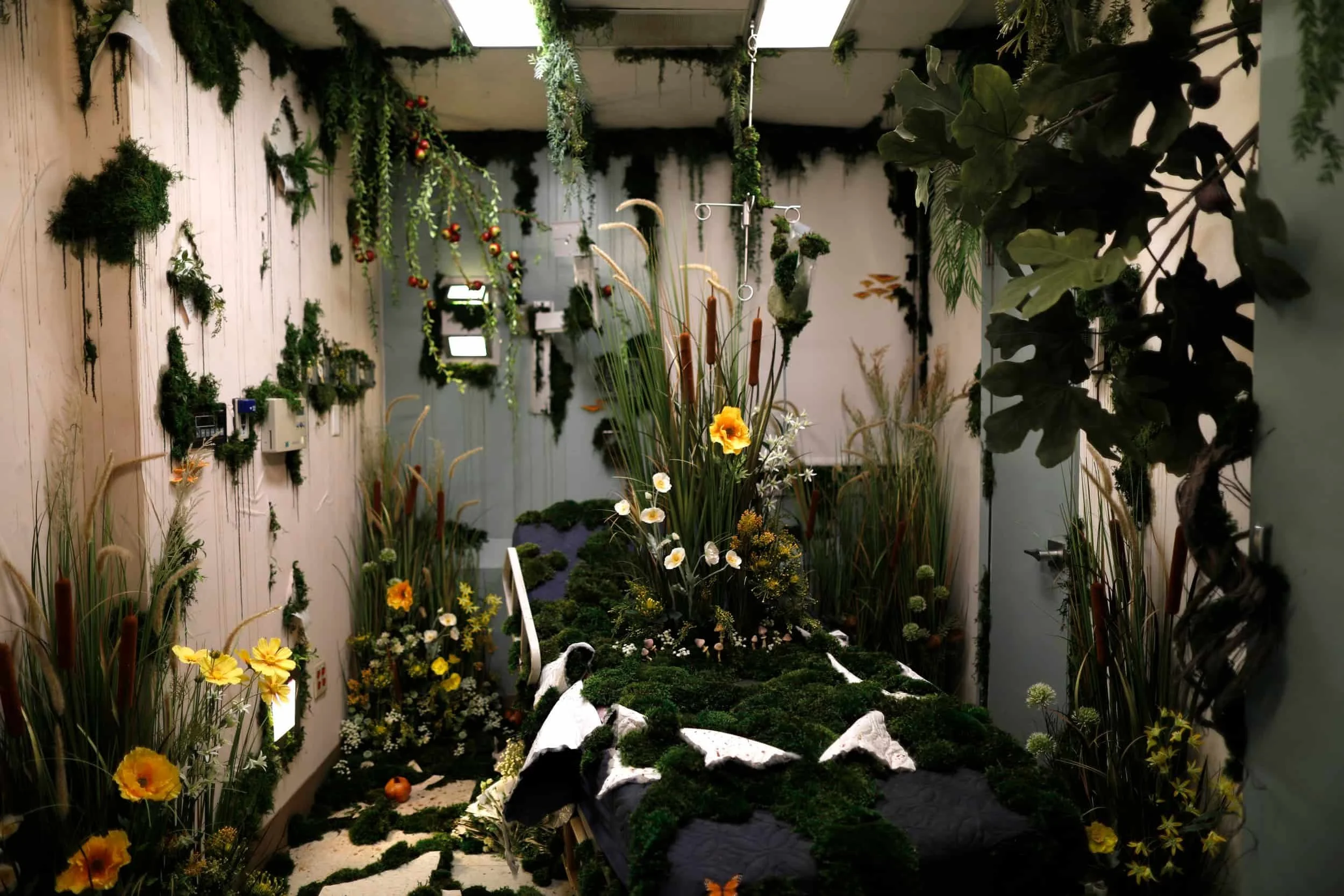
Allison Reber
The artist celebrates nature’s resilience — a hopeful vision of a greener future, while gently probing the quieter, wilder possibility: if we fail to move with nature, what will become of us?
We adore our world — until we forget to cherish her. We take and take, expecting her endless generosity, until she quietly reminds us she won’t be taken for granted. Her resilience shines through: she heals, endures and flourishes despite us. If we fail to honor our connection to her, nature won’t bail us out forever. One day, she’ll simply reclaim what is hers.
Room 17 | Resilience Department
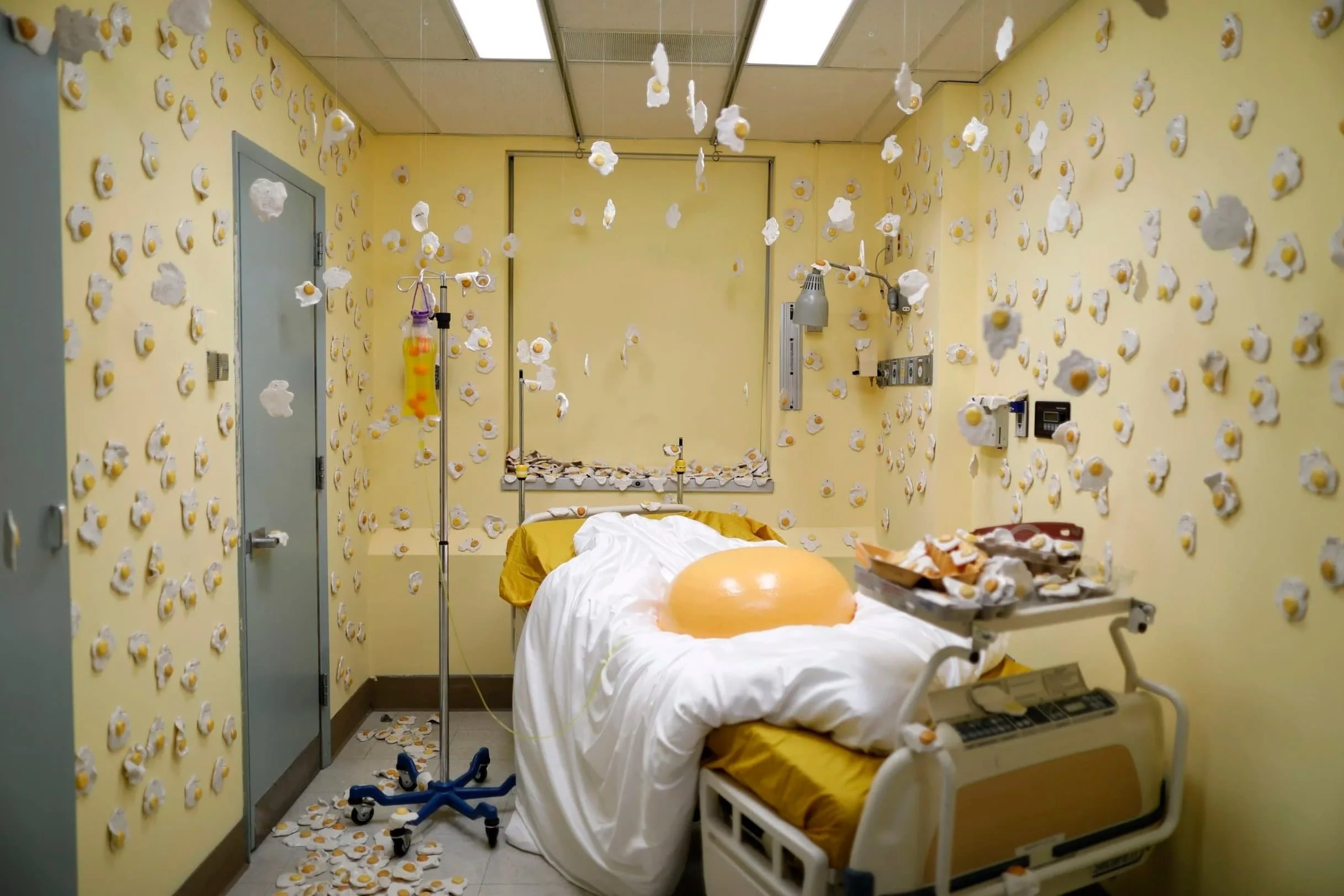
The Eggsibition by Melan Allen
This exhibit traces resilience through one artist’s childhood battle with an unlikely adversary: eggs. What began as a small, stubborn trauma — being made to eat something she hated — has been transformed into a quietly uncanny, often funny memory rendered in porcelain. The gallery is filled with 1,000 handmade ceramic eggs, each one shaped by the artist over five years, together making a tender, wry monument to endurance.
Melan grew up convinced eggs were the least appealing thing on the breakfast table — the vegetable of the morning, always present and never wanted. Each Saturday, she’d tell her mother they were gross, and each Saturday her mother would set them down anyway, pairing the offense with pancakes or biscuits so that everything around it felt almost redeeming.
Melan would happily eat the good bits and leave the egg alone, watching cooking shows while her siblings were excused from the table. Time would stretch; her father would switch the TV to golf. In Melan’s memory, Tiger Woods now tastes vaguely of cold eggs.
This installation is a playful, poignant inventory of those mornings — the persistence of an unwanted bite and the small, stubborn resilience required to finish the plate. The takeaway is both cheeky and sincere: turn a childhood grievance into something beautiful and keep it somewhere private — maybe even your dad’s garage — where it can be both art and a bit of harmless revenge.
Room 18 | Resilience Department
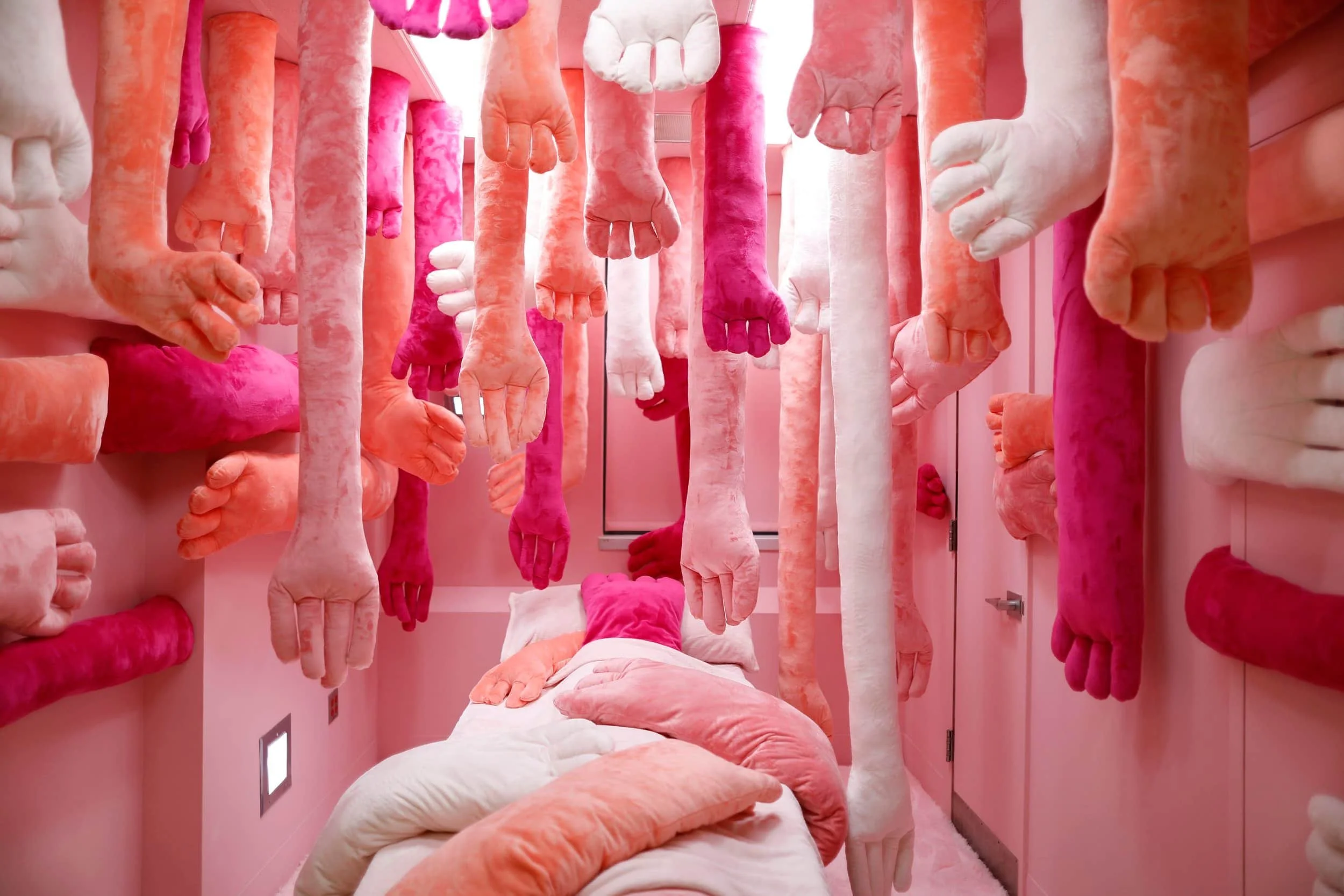
The Hug Room by Nathalie Auzepy
With The Hug Room, the artist turns a once-clinical ER into a haven of gentle warmth. Soft textile arms weave through the space like embraces from family, friends, caregivers and an ever-present, universal love — an homage to those who tend to us. Against the lonelier edges of illness, the plush fabrics recall childhood comforts, offering a tender reminder of safety and ease.
When body and spirit feel fragile, we crave warmth, touch and kindness. The installation becomes an architecture of hugs — an inviting refuge of compassion where art encourages communal solace and quiet resilience. Step inside, let down your guard and meet your vulnerability with a little poetry and a lot of heart.
The room easily felt like a warm, lingering hug — exactly as planned. Gentle hues, rounded forms and tactile materials wrap around you, inviting slow breaths and a soft smile. It quickly became one of my favorites, perfectly evoking the cozy feeling it set out to create.
Room 19 | Resilience Department
Guy “Dioz” Bloom
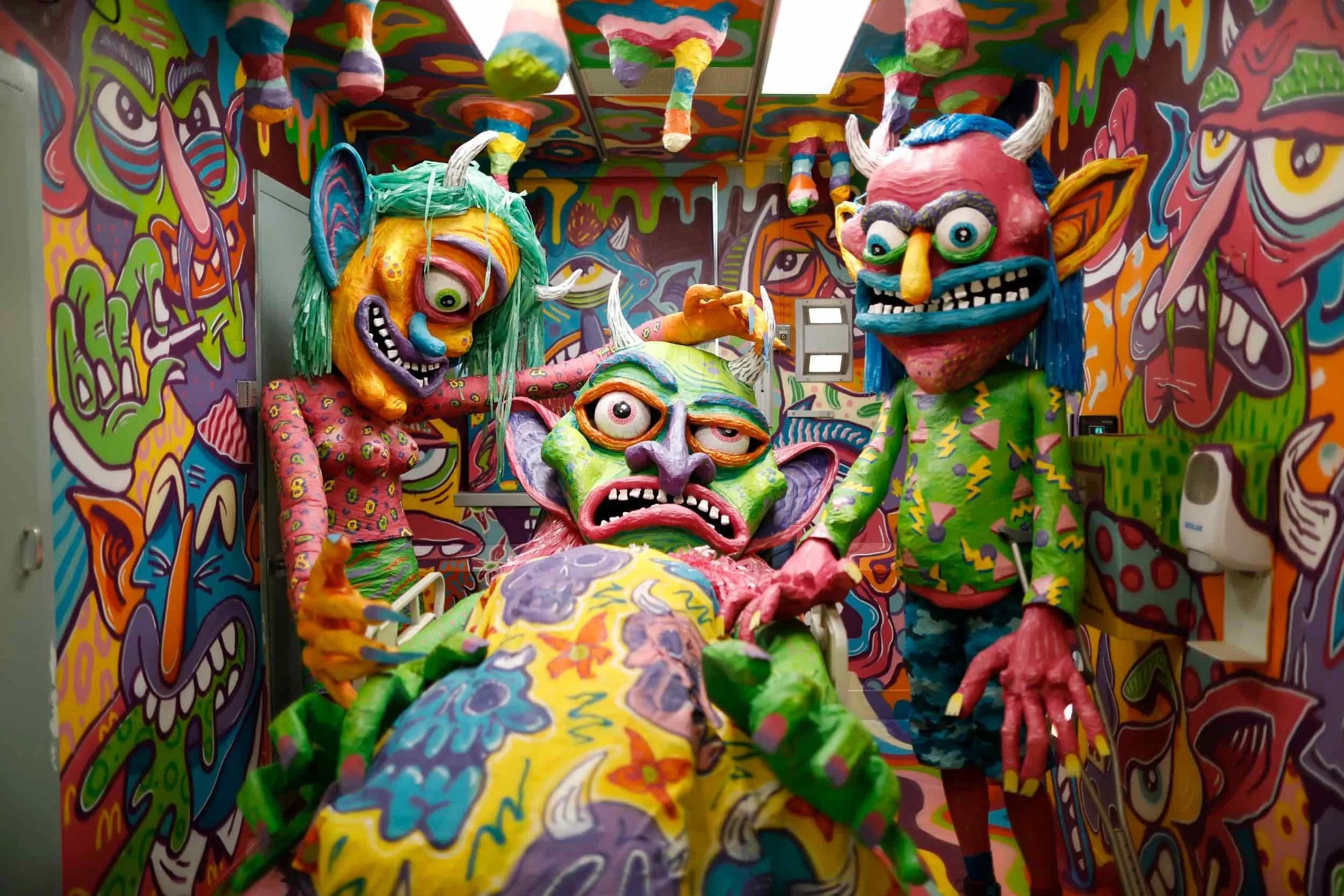
This installation turns a hospital room into a surreal, larger than life artwork. Bright, chaotic graffiti and life-size monsters give shape to hidden emotions — fear, anxiety, frustration, vulnerability — making the invisible startlingly visible. The clinical setting collides with a wild inner landscape: walls, floors and ceiling pulse with energy, feeling alive and unpredictable.
Stepping inside is like entering a distorted mirror of the mind, where reality and imagination blur. It invites you to meet your inner “monsters” and suggests that understanding them may be the key to finding peace.
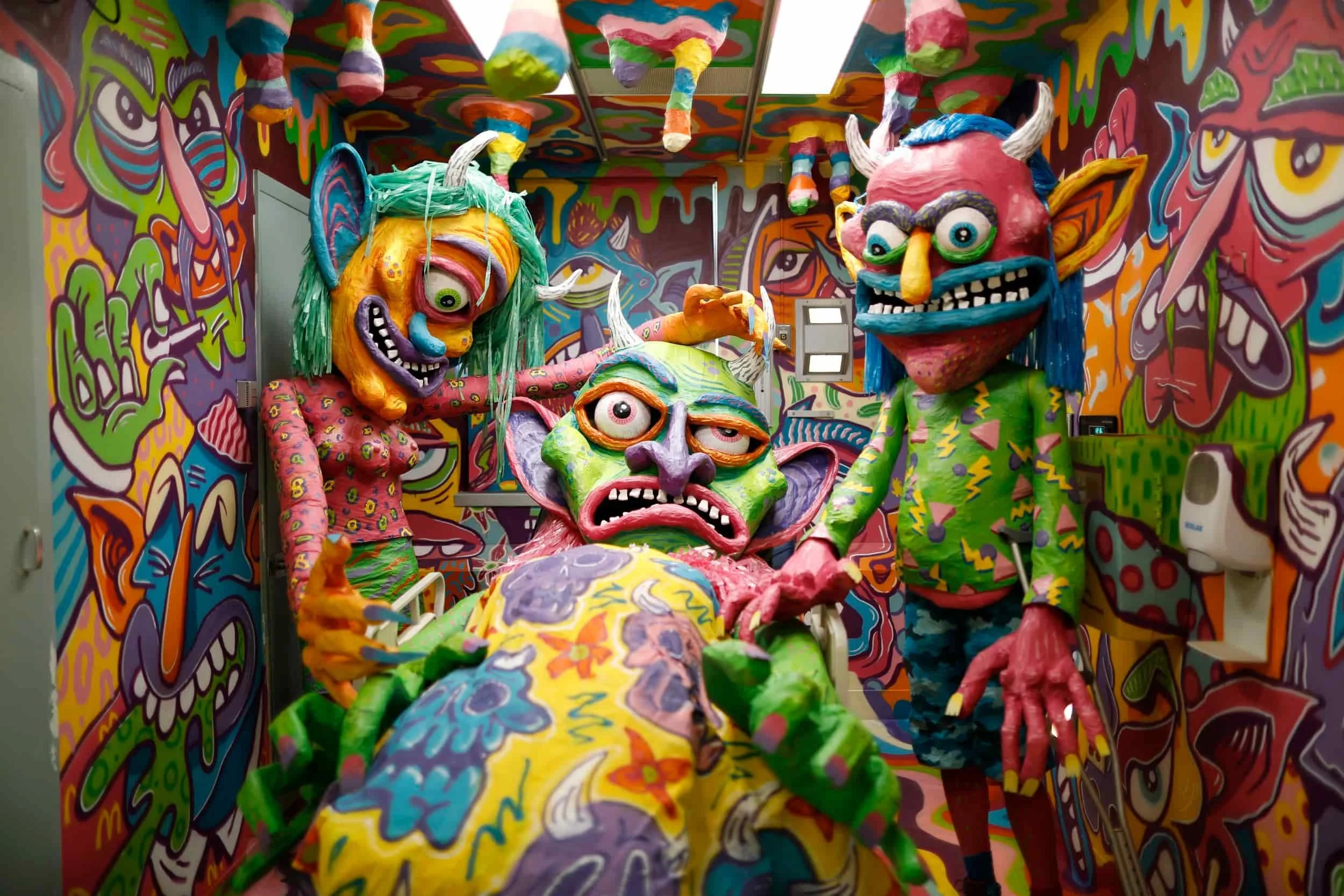
Room 20 | Resilience Department
Level Six | Joy Department
In the Hospital of Emotions, the Joy Department fills every room with unexpected light, proving recovery can be both steady and bright. Joy is gently insistent, reminding the body and heart that lightness is allowed, that curiosity still matters and that even small breaths can open a door to wonder.
Javiera Estrada
Twister: a childhood rite of passage, unfolded on living-room floors where limbs fanned across a rainbow of circles and laughter bounced off the walls. Unlike many modern games that live in screens, Twister demanded bodies in the same room — a little wobble, a lot of cooperation and the brave willingness to share someone else’s space. It coaxed people to lean in, lose balance and find the humor in the resulting tangle.
In a world growing ever more virtual, Twister feels like a small rebellion: play that insists on presence and human contact. Its colored dots and shouted directions become a playful map of proximity, a way of making joy visible and physical. Joy here is not solitary; it’s made by getting close, by moving together, by participating in the same awkward, delightful moment.
Maybe joy starts the instant we stop standing apart and begin to shift as one. As giggles multiply and bodies weave around one another, the laughter fills the room and the happiness spills into the space itself. What begins as a simple board game turns into a gentle reminder that some of life’s richest pleasures live in the messy choreography of being together.
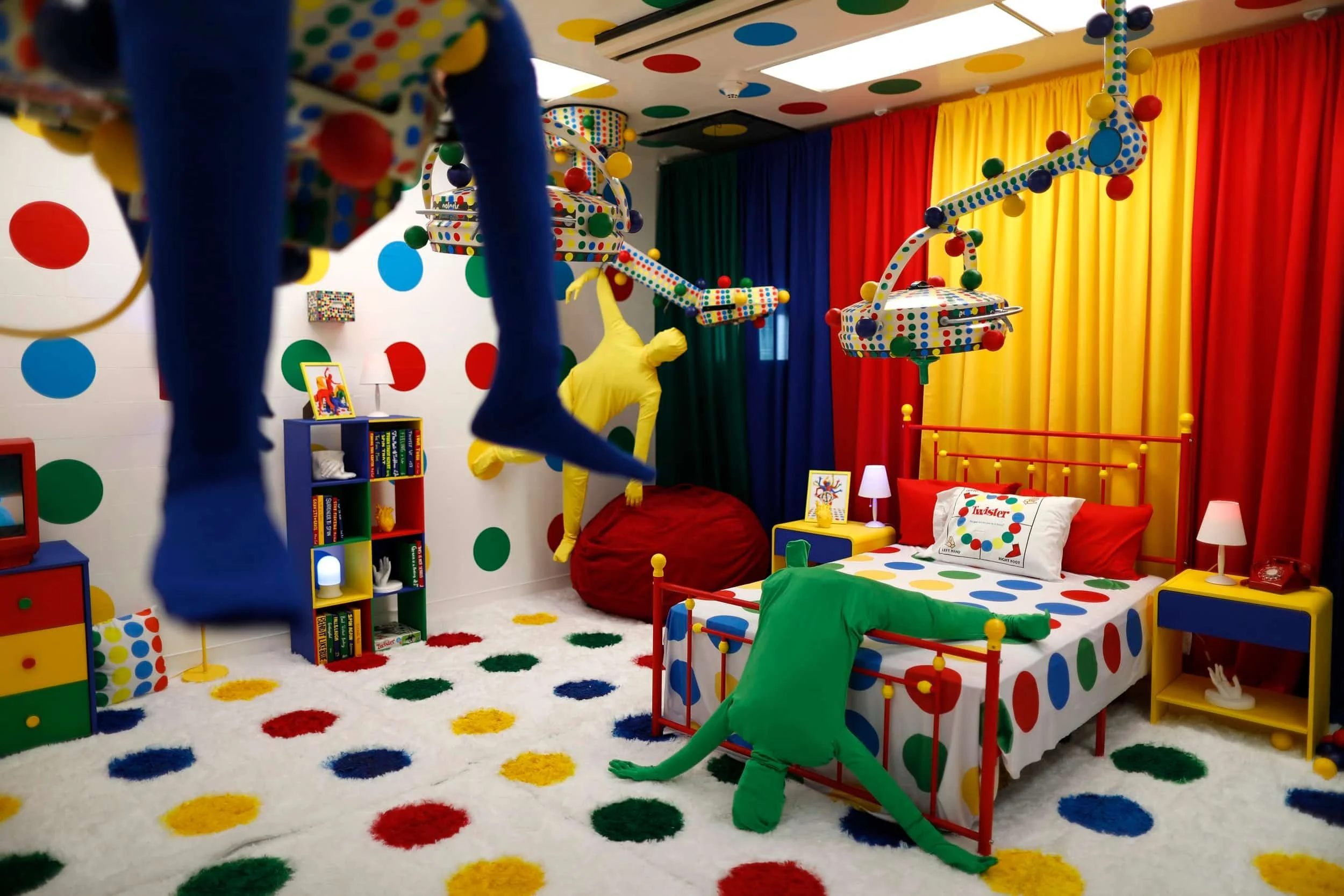
Room 07 | Joy Department
Yaara Sachs
Joy isn’t a condition; it’s a choice.
In this room, a fragile pause hangs between doubt and decision. Tubes and monitors trace the edges of reality, tempting us to let circumstance define the world. We hold our breath for the perfect moment, the ideal outcome, the “right” version of things. But joy doesn’t wait for perfection. It’s crafted by the angle of our gaze, the feelings we decide to welcome, the stories we let shape our experience. Even here — in a place stitched together with uncertainty — color insists on finding the light.
This installation stole my heart — though modest, it truly fills the room and me with joy.
Room 12 | Joy Department
Level Five | Joy Department
In the Hospital of Emotions, the Joy ward glows with light and laughter that mends — and continues on Level Five.
Age of Glory by Gil Hayun
Age of Glory was born in the silence of the COVID-19 lockdowns, when many older adults found themselves suddenly cut off in nursing homes. Instead of dwelling on fear and distance, this project celebrates the wit, grit and sparkle of women whose stories glow brighter than ever.
With audacious colors, theatrical styling and mischievous drag-inspired wigs, these women slip back into their vibrant alter egos — the jubilant selves that never truly left. Their wrinkles and lines aren’t concealed but cherished as badges of fully lived lives.
Inside this immersive room, photography blooms into a warm spectacle of color, light, music and treasured objects. Visitors are invited to step into a space where aging is hailed as strength, beauty and deep emotional richness.
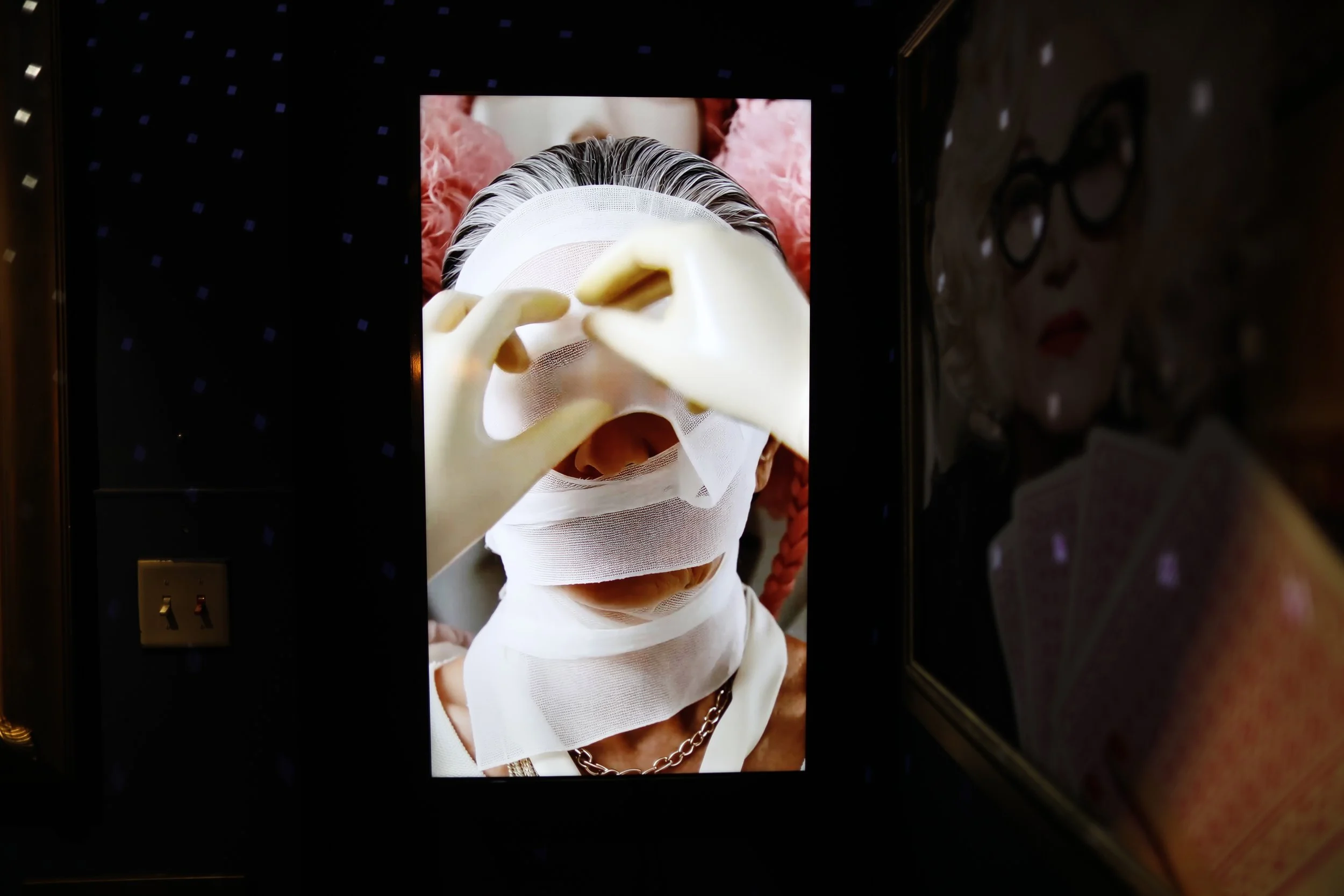
Room 38 | Joy Department
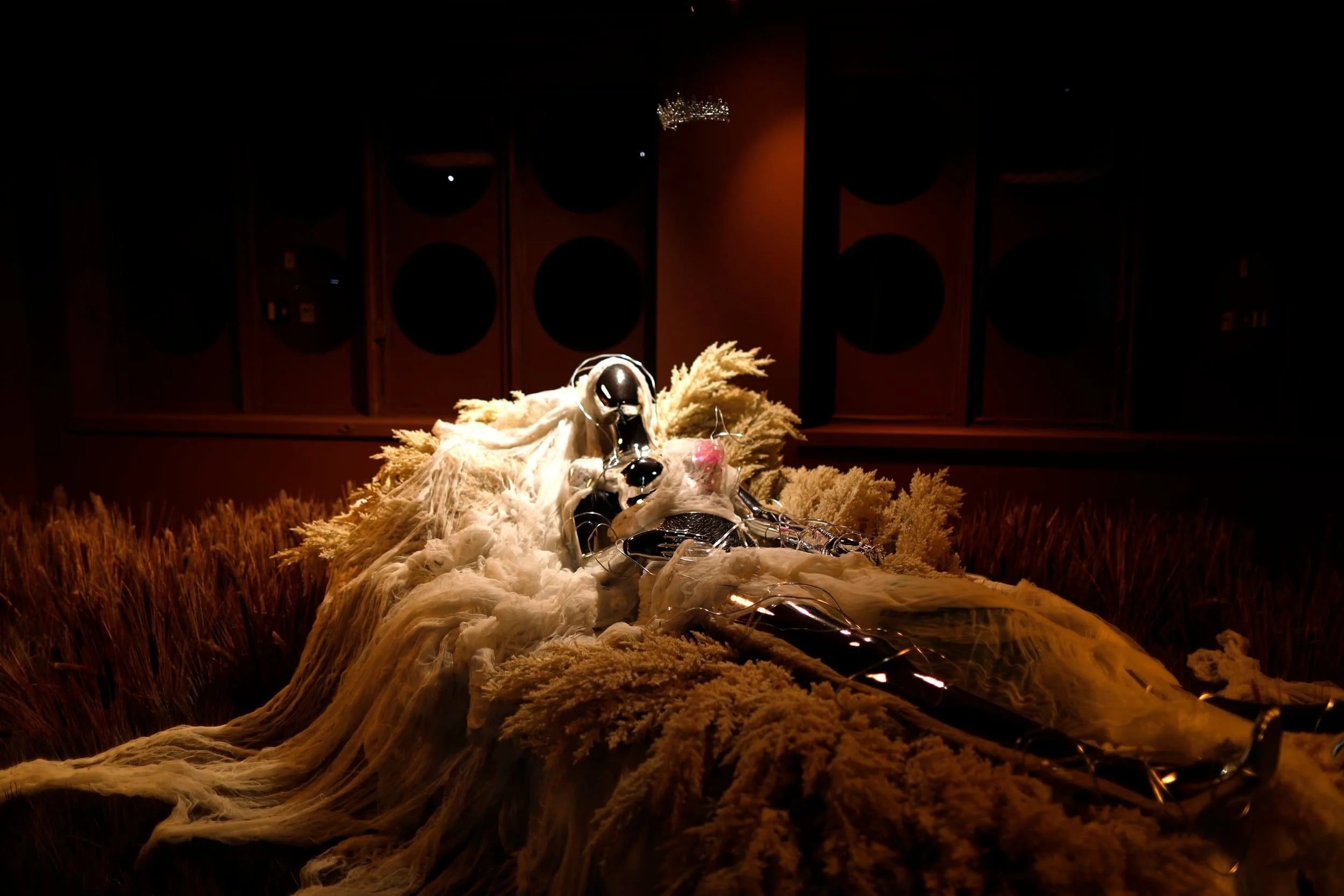
Case Study No. 018: A Study in Internal Restoration by Royva x Krisia KIKI Powell
Powell’s room in the Hospital of Emotions turns joy inward, inviting visitors into a muted, restorative space rather than a theatrical display. Inspired by her own slow recovery after a ruptured silicone implant was discovered and removed, the installation is an intimate meditation on stepping out of survival mode and finding a quiet, steady return to feeling whole.
Melding ROYVA’s refined design sensibility with Powell’s tactile use of raw materials, the space relies on subtle lighting and carefully chosen still-life details — an angel tucked in a corner, a phone left off the hook — to encourage pause and reflection. The result is a gentle, unassuming study in internal restoration: joy revealed not as a crescendo but as the soft, persistent settling of the heart.
Room 40 | Joy Department
Level Five | Sadness Department
In the Hospital of Emotions, the Sadness wing offers quiet rooms where tears are honored as necessary work. Here, sorrow is a gentle medicine — a patient, restorative practice that helps the body and spirit mend, one honest drop at a time.
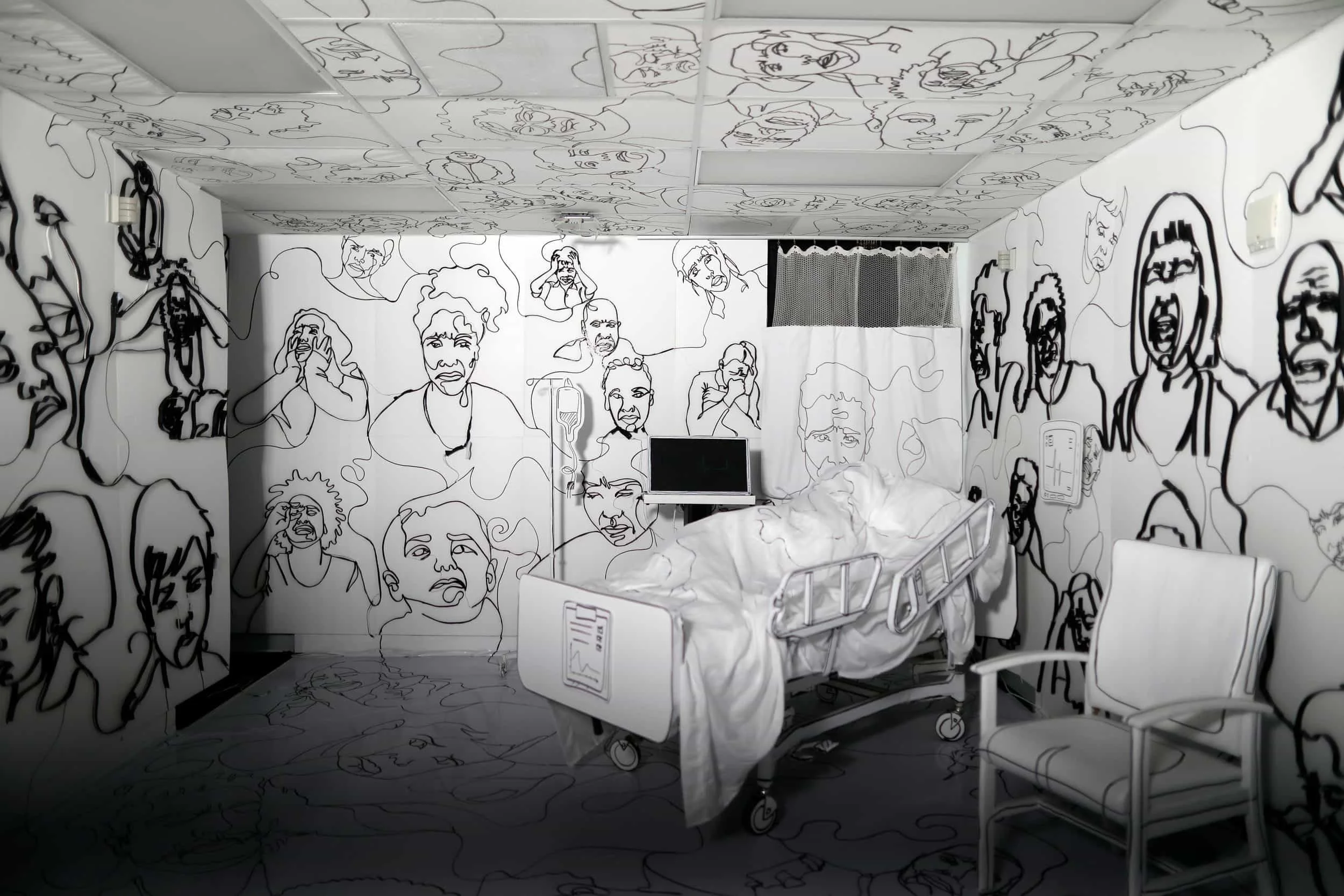
Dr. Maryam Trebeau
This installation turns a former hospital room into a gentle chamber that listens before it speaks. A single, continuous line trails across walls, ceiling and floor, coaxing human figures of every identity into being — pared back to their emotional cores and quietly insisting that sadness belongs to no single body or story.
Raised, tactile lines become lifelines that carry a soft, programmed pulse of light and sound, echoing a heart monitor — slow, deliberate, like breath, like waiting. The room begins in darkness; the work reveals itself only as light travels the lines, inviting viewers into an intimate conversation with feeling. Then the moment of fracture: the pulse stutters, sound blooms and light floods the space, laying every figure bare — not in catharsis but in recognition.
This is not a place of treatment so much as of truth: a tender room where emotion is held, witnessed and gently made visible.
Room 26 | Sadness Department
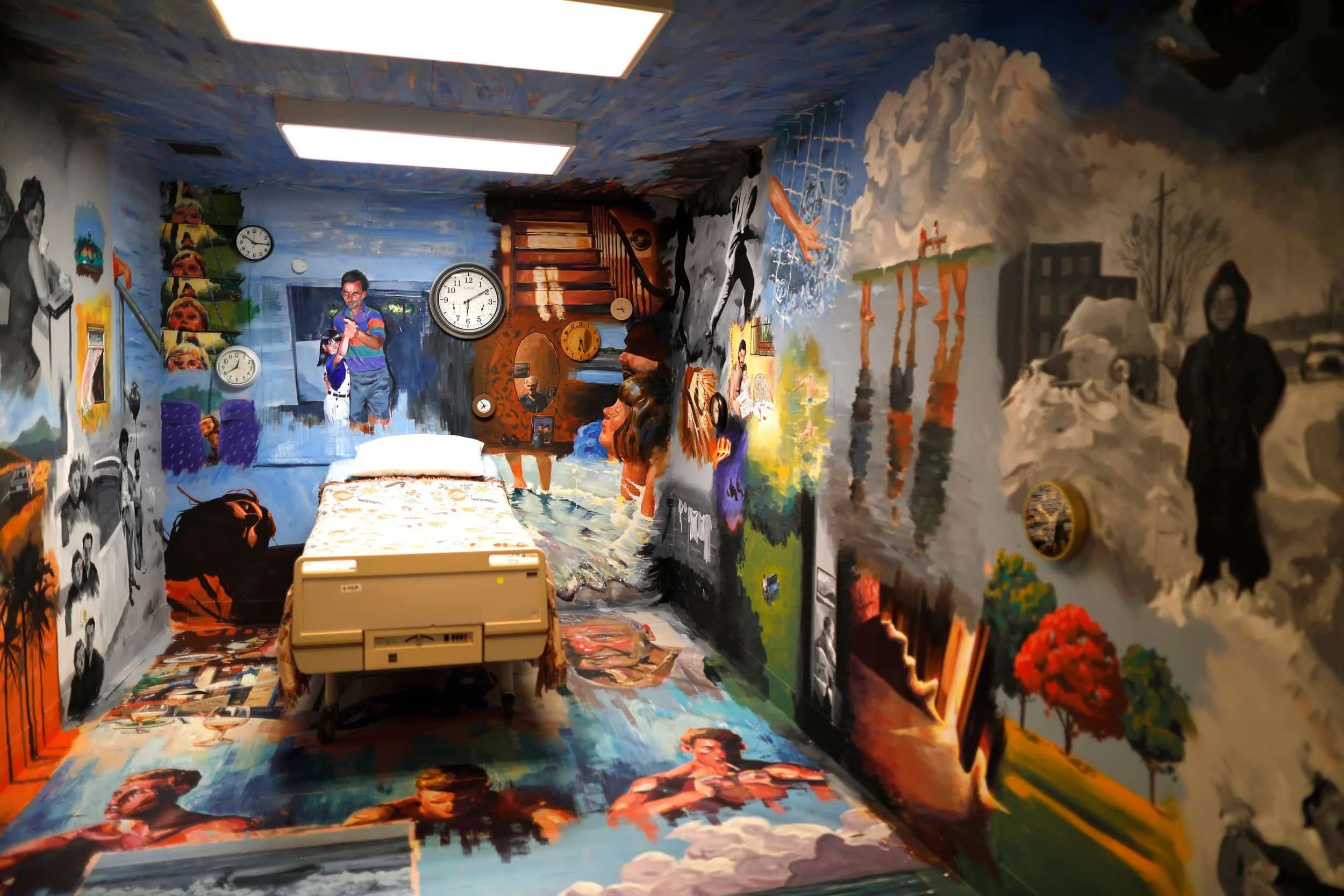
Time Eats It All (Cronos) by Pablo Thomas
Hospitals often become the quiet stage for the last act of a life. In those final moments, people say the past doesn't play out like a tidy story but rushes in as scattered fragments — images, faces, feelings, places — everything collapsing into one vivid, overwhelming now. This room sits inside that moment.
Time Eats It All is a portrait of being remembered as you fade. Joys and sorrows, triumphs and failures — none remain separate. Time levels them all, turning what felt permanent into memory and memory into something that slowly slips away.
This exhibit was another one of my favorites — it captured, with startling clarity, the way I imagine my final moments might unfold. The paintings are so vivid they draw you inside them. I can only hope that when my life plays back in an instant, it leaves me wrapped in peace rather than sorrow.
Room 28 | Sadness Department
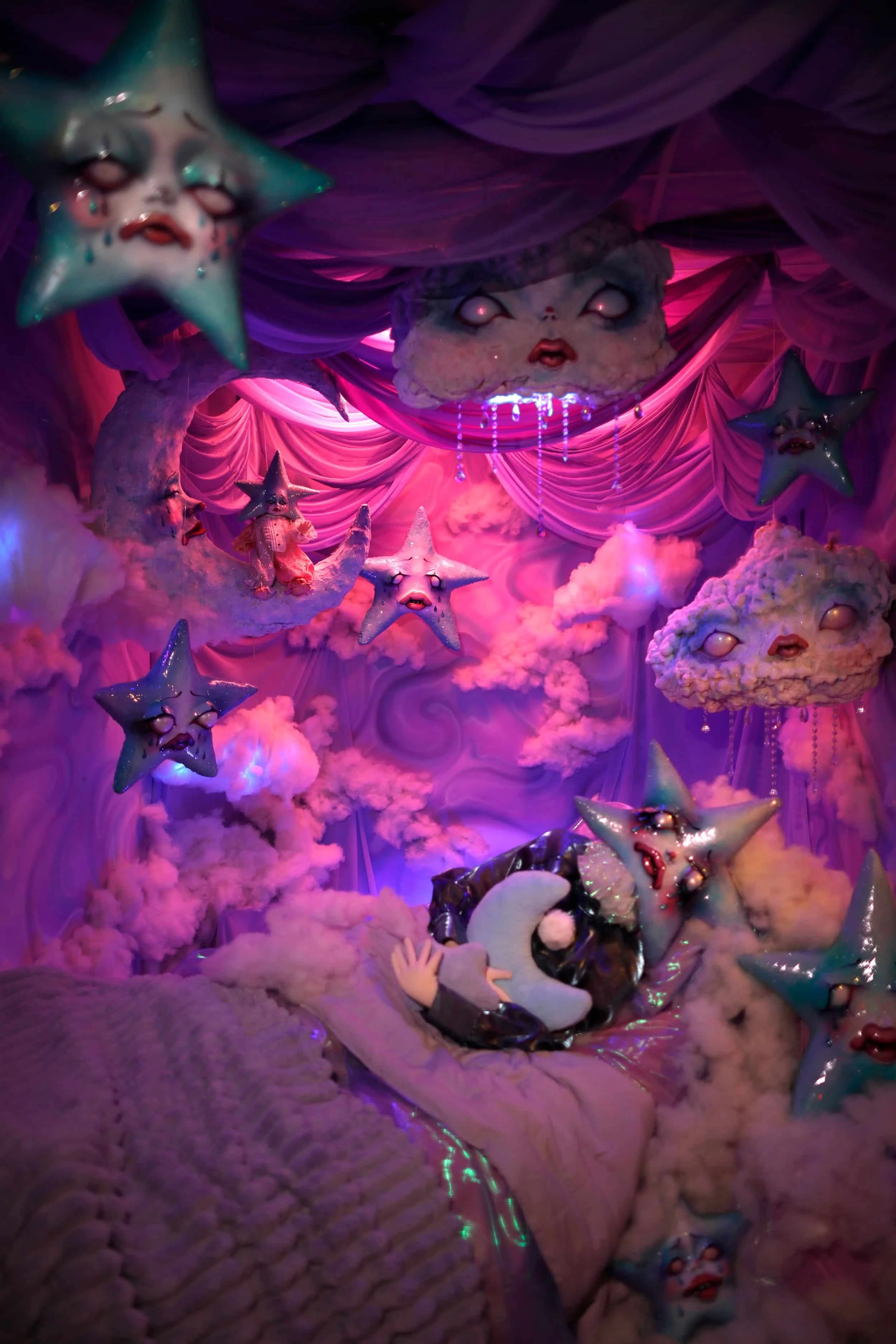
Tara Rey
Tara’s work discovers the gentle poetry in sorrow. It often feels like drifting on a cloud, thoughts wandering between moonbeams and starlight. She sees herself in clowns — those tender performers who brush a smile across their faces while a quiet weight lingers underneath. Through her art, she shows how sadness can wear a soft, dreamlike veil, even as it hums with a profound, aching truth.
Room 31 | Sadness Department
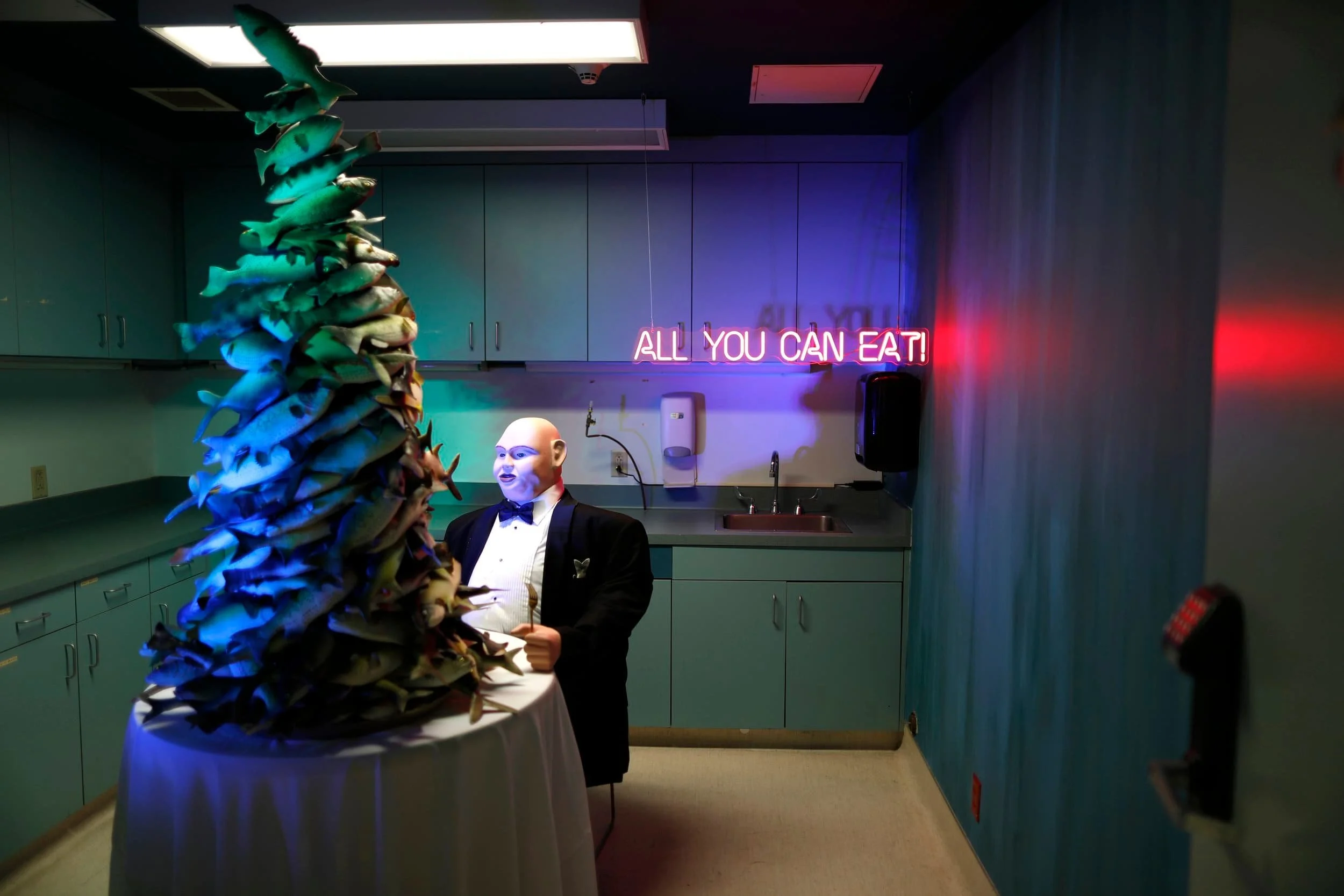
ALL YOU CAN EAT! | A Fragile Balance by Michael Keppler
A surreal tableau sits in the Sadness Department: a silent diner, rendered with uncanny stillness, faces an impossible mountain of foam fish while a neon sign blinks the guilty invitation, "All You Can Eat!" The scene is at once whimsical and disquieting — its bright, kitschy glow beckons like a carnival game even as the stacked fish loom like a tidal wave, turning appetite into absurdity.
Beneath the playful surface, the work cuts deeper. Placed where sorrow is meant to be felt, the endless feast becomes a metaphor for "eating your feelings," exposing how consumption can be a thin balm for grief and emptiness. Keppler widens the lens further: the gluttonous pile also reads as a critique of extreme wealth, asking when abundance tips from liberation into a burdensome spectacle that crushes the rest. Charming in its visual irony, the installation leaves you smiling and unsettled in the same breath.
Room 32 | Sadness Department
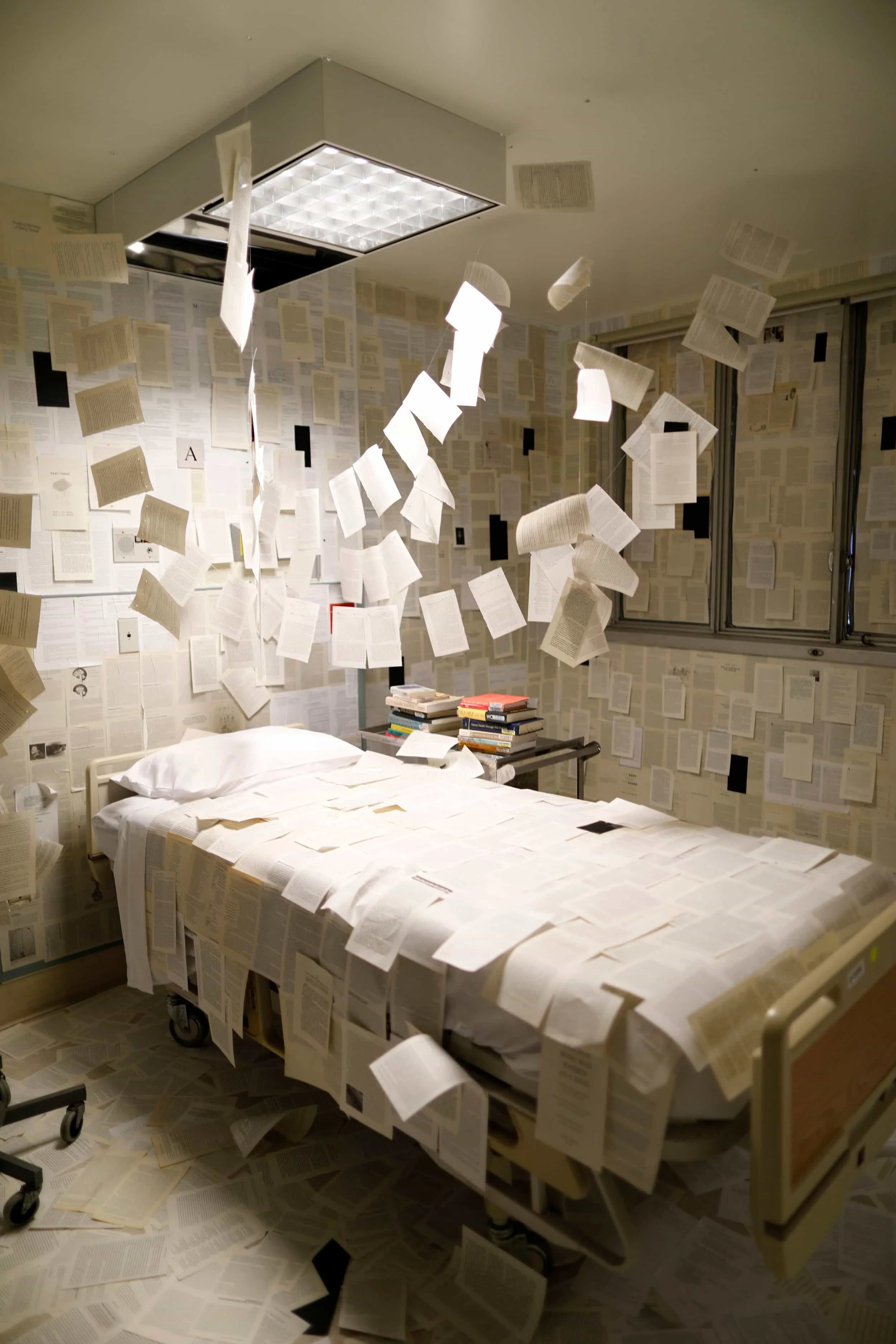
Hope by Alex Kemp
Stepping into this Hospital of Emotions installation feels like finding a quiet, honest room inside the body of the healthcare system itself — a place where the messy, private work of being ill is finally given room to breathe. The exhibit traces that untold-yet-recognizable arc: navigating tests and appointments while simultaneously learning to be your own doctor, therapist and champion. Pages torn from self-help books gently insist that medical treatment and internal healing are not the same thing, and that resilience often looks like patient self-advocacy as much as clinical progress.
There’s a tenderness in the way the space asks visitors to slow down and “make room” for feeling, echoing Kemp’s observation that sometimes the most profound act is simply allowing. The installation doesn’t soften the pain; it honors it, holding hope not as denial but as the quiet courage to name hurt, stay present with it and tend oneself through the long work of recovery. It’s a small, necessary reminder that healing often begins with the permission to feel.
Room 33 | Sadness Department
One of the sweetest details at the Hospital of Emotions is the bottled water — each label bears a tiny, hopeful message. I found mine: “Love again. Yes, it’s possible.”
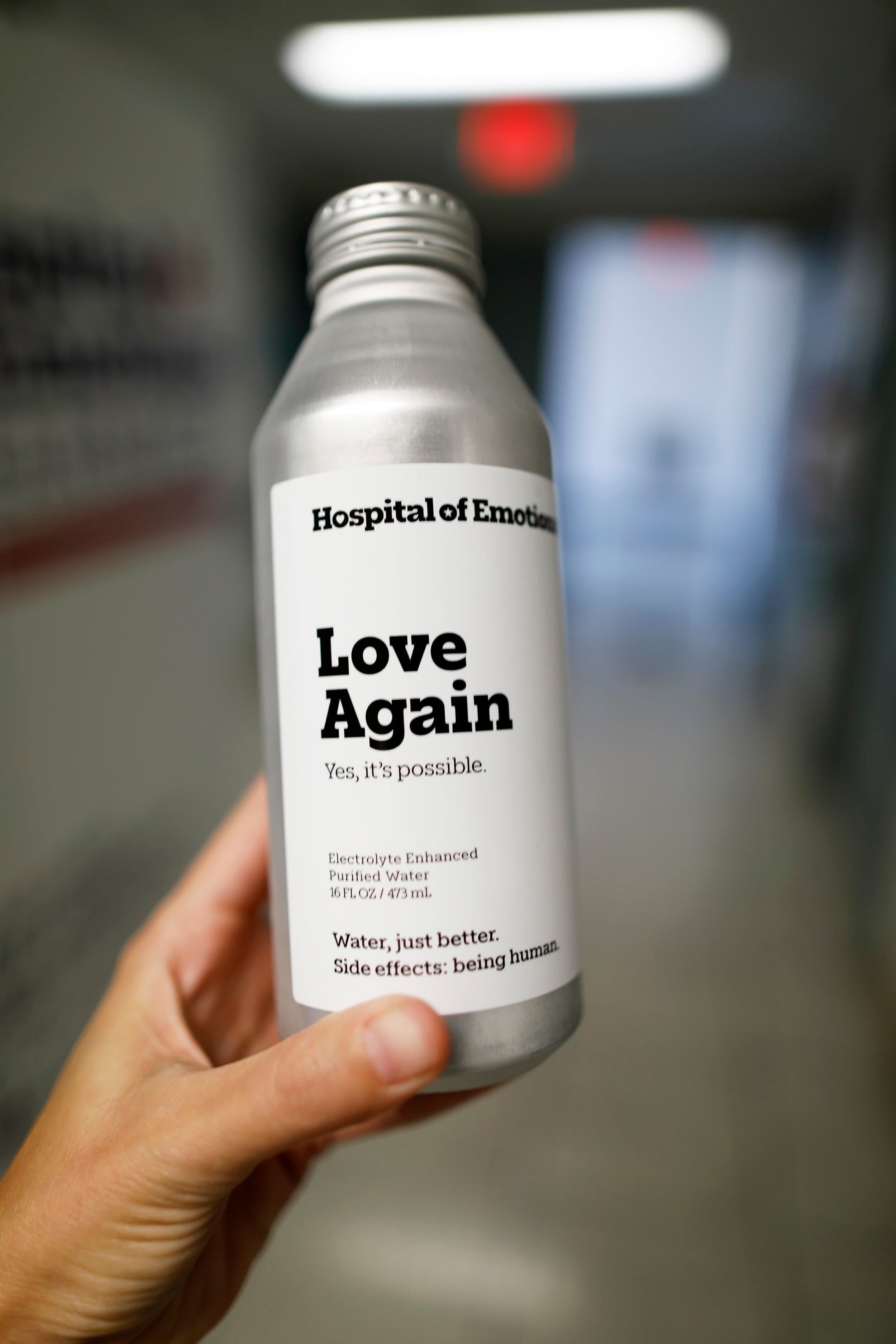
☕️ Worth the Detour | Grab a bottle of water from one of the vintage vending machines on display and carry a little encouragement with you.
Level Four | Compassion Department
In the Hospital of Emotions, the Compassion Ward wraps aching hearts in soft blankets and listens without rushing. Through gentle gestures and patient presence, the exhibit shows how compassion can be a catalyst for recovery — softening grief, restoring trust and creating space for healing to begin.
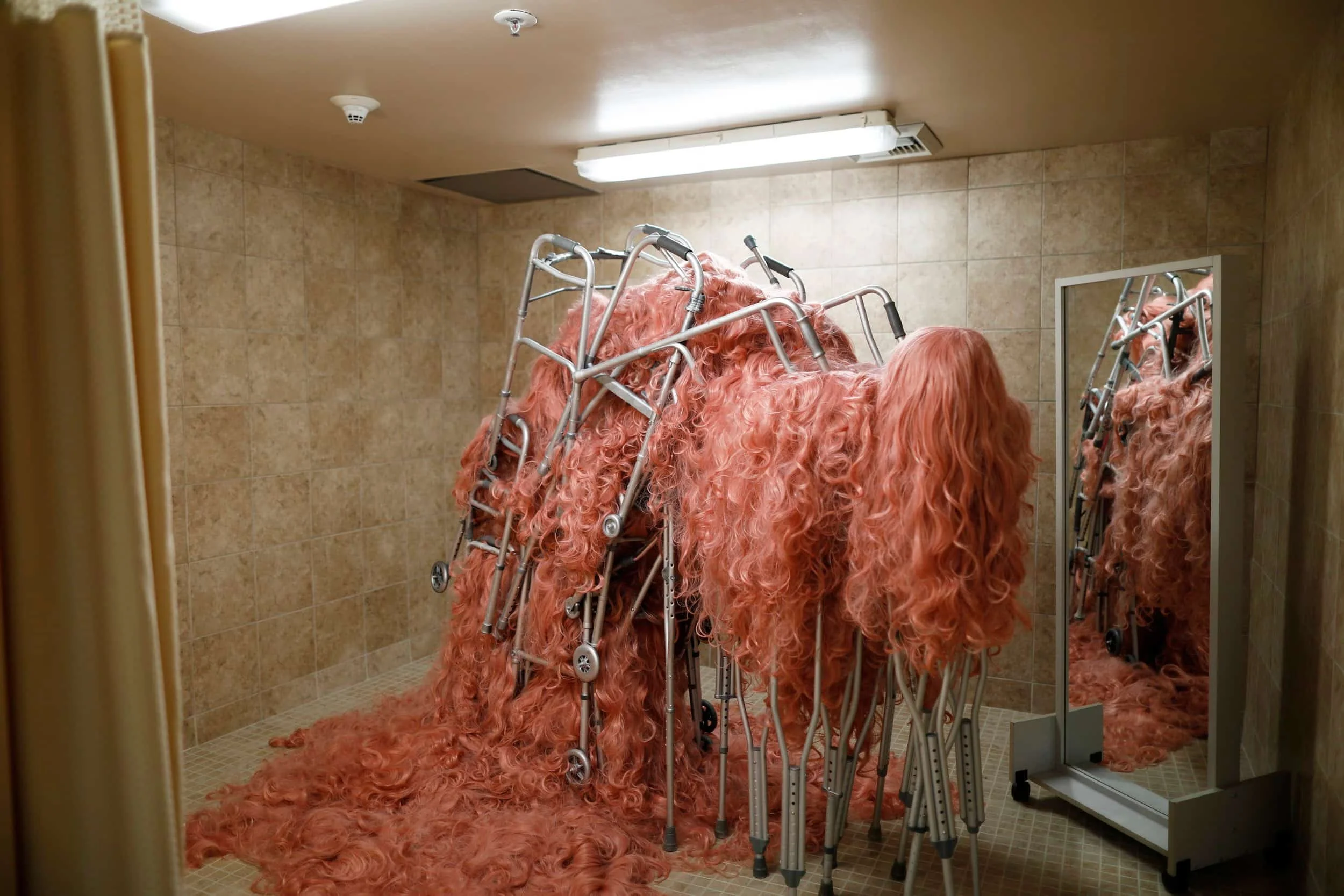
Her Hair by Moran Sanderovich
A stilted figure fills the shower room with a whimsical spectacle: a cloud of synthetic pink hair blooms from its form, spilling across the tiles in plush, velvety waves. The clinical neatness of the space and this exaggerated, almost prehistoric yet flirtatiously feminine creature create a gently playful tension. Motionless, it speaks through the soft abundance of hair that unfolds and drifts outward like a slow, deliberate sigh.
Room 49 | Compassion Department
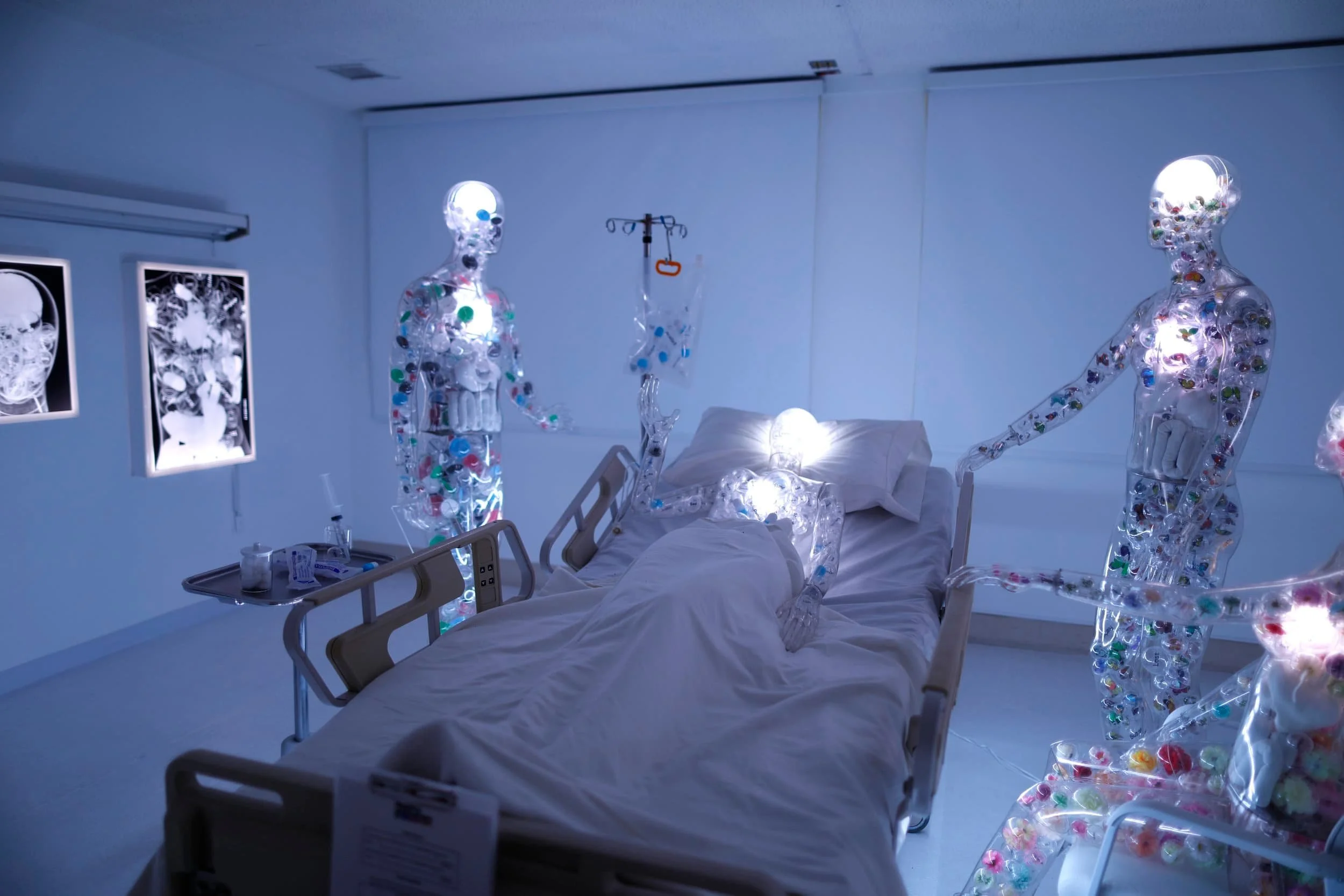
Mark Girgis
In this room, everyone appears translucent.
Hospitals tend to reduce us to roles — patient, caregiver, visitor — rarely revealing the whole person beneath. This installation asks us to imagine the private inner landscapes each figure carries and gently reminds us that any of us may move between these roles.
Every body holds two realms: the visible and the hidden. Our organs may be common to all but the stories, memories and feelings they shelter are utterly individual. In medicine, light exposes the physical; here, light and words illuminate thoughts and quiet reveries.
Compassion begins the moment we notice that everyone is carrying something. Your sorrow and your laughter are not separate from mine. Presence matters. Connection matters. Imagine how things might shift if we could truly see what each person holds inside.
Room 60 | Compassion Department
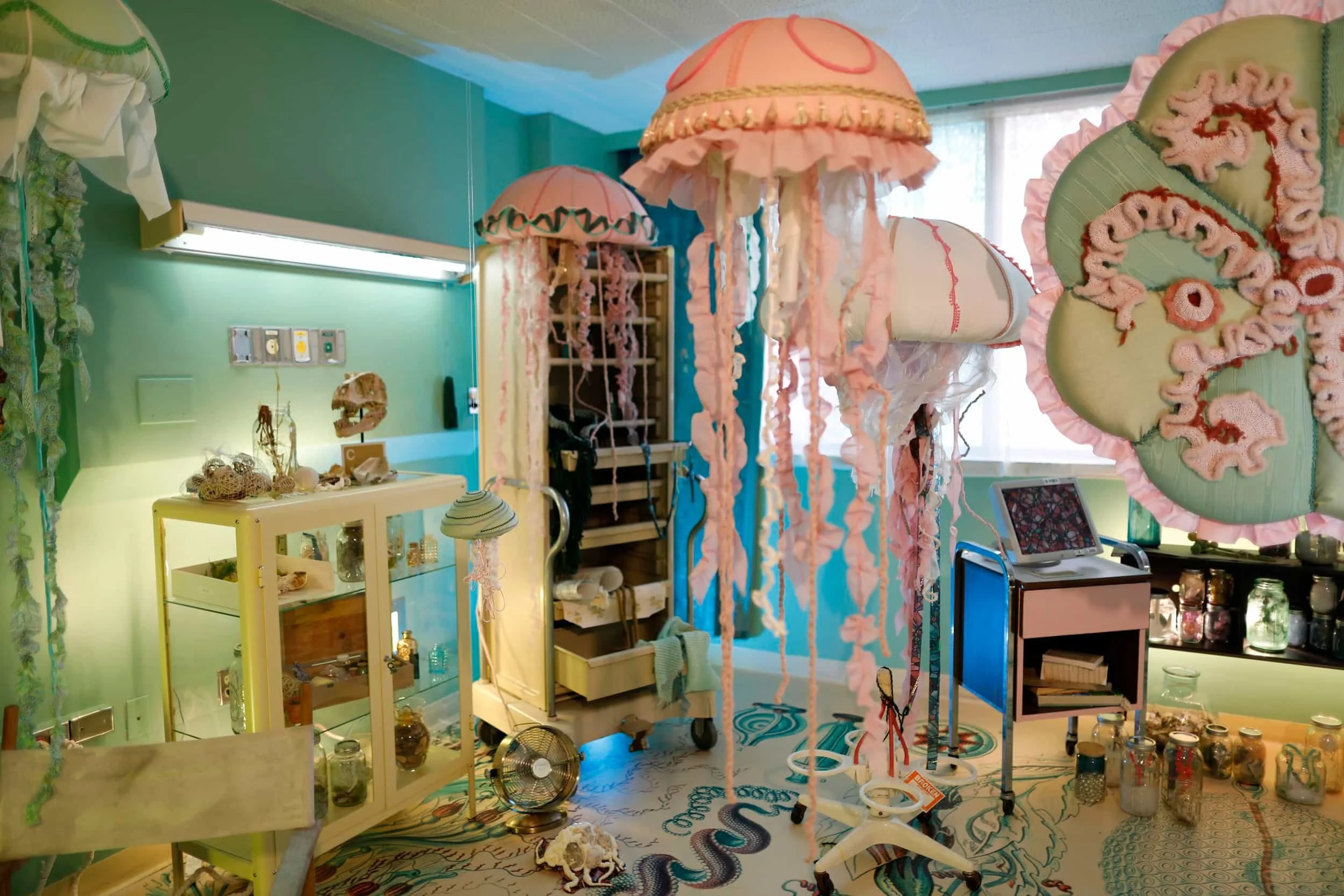
Scene Shift Collective
The Scene Shift crew gently takes over the Hospital of Emotions, one thoughtful touch at a time. A compassionate collective of artists, lighting designers, costume makers and prop and puppet creators transformed the ward into a place of wonder. The talented members include Hannah Burnham, Jack Pullman, Johnny Garofalo, Claire Fraser, Rowan Auckland and Lou Hartmann.
Soft, drifting jellyfish float into the hospital’s spaces, their luminous forms offering a soothing, otherworldly presence. Ethereal and surprisingly resilient, they seem to breathe with the building, reminding visitors of tenderness and endurance. Among them, a particular species — the Siphonophorae — beckons with delicate, cascading tendrils, inviting guests to pause, reflect and feel held by something both fragile and strong. The installation weaves light, texture and motion into a gentle embrace, turning the space into a moment of quiet awe.
Room 62 | Compassion Department
Level Four | Hope Department
In the Hospital of Emotions, the Hope Department feels like stepping into a small, patient smile — soft, stubborn and quietly contagious. Hope here acts as a gentle staging, reminding visitors that healing and recovery often begin with the simple, persistent belief that things can improve.
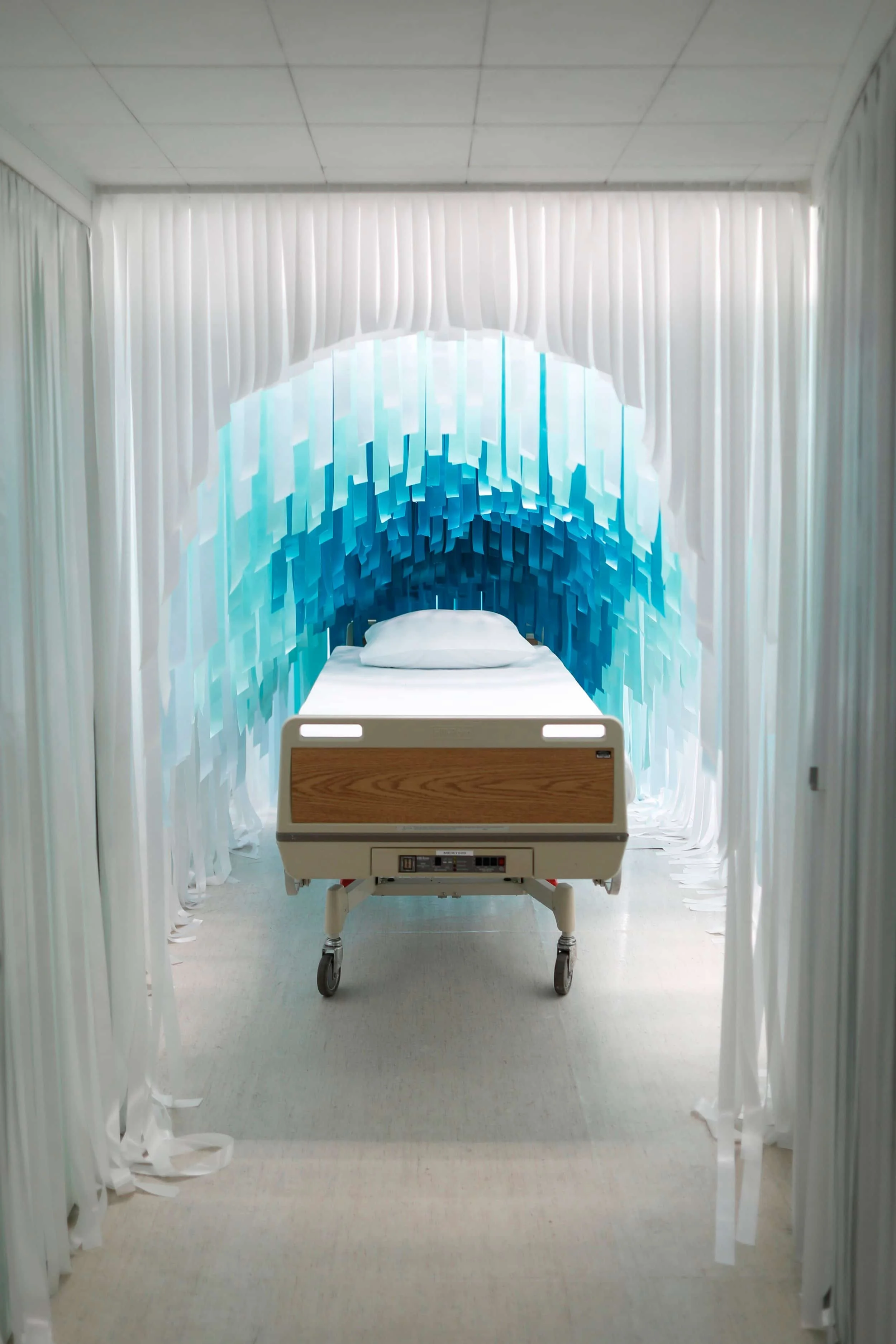
Layers of Hope by Corrie Sullivan
Hope often arrives in the silence of solitude. Whether in a hospital room or a quiet moment of everyday life, we all know the feeling of being gently cut off from the world.
This installation places a hospital bed at the center of cascading ribbons, a soft veil that both shields and separates. The space feels intimate and still — constrained, hushed, almost like a held breath. Outer ribbons are light and neutral; as they fold inward they deepen to turquoise, guiding the eye toward a subtle pulse of life at the core.
The piece asks us to notice how hope can quietly bloom inside separation: in stillness, in awareness, in the small threads of connection. And ultimately, hope begins when someone chooses to cross the distance between us.
This piece felt so tender and dreamy — I wanted to slip into the bed and melt into a blissful nap.
Room 53 | Hope Department
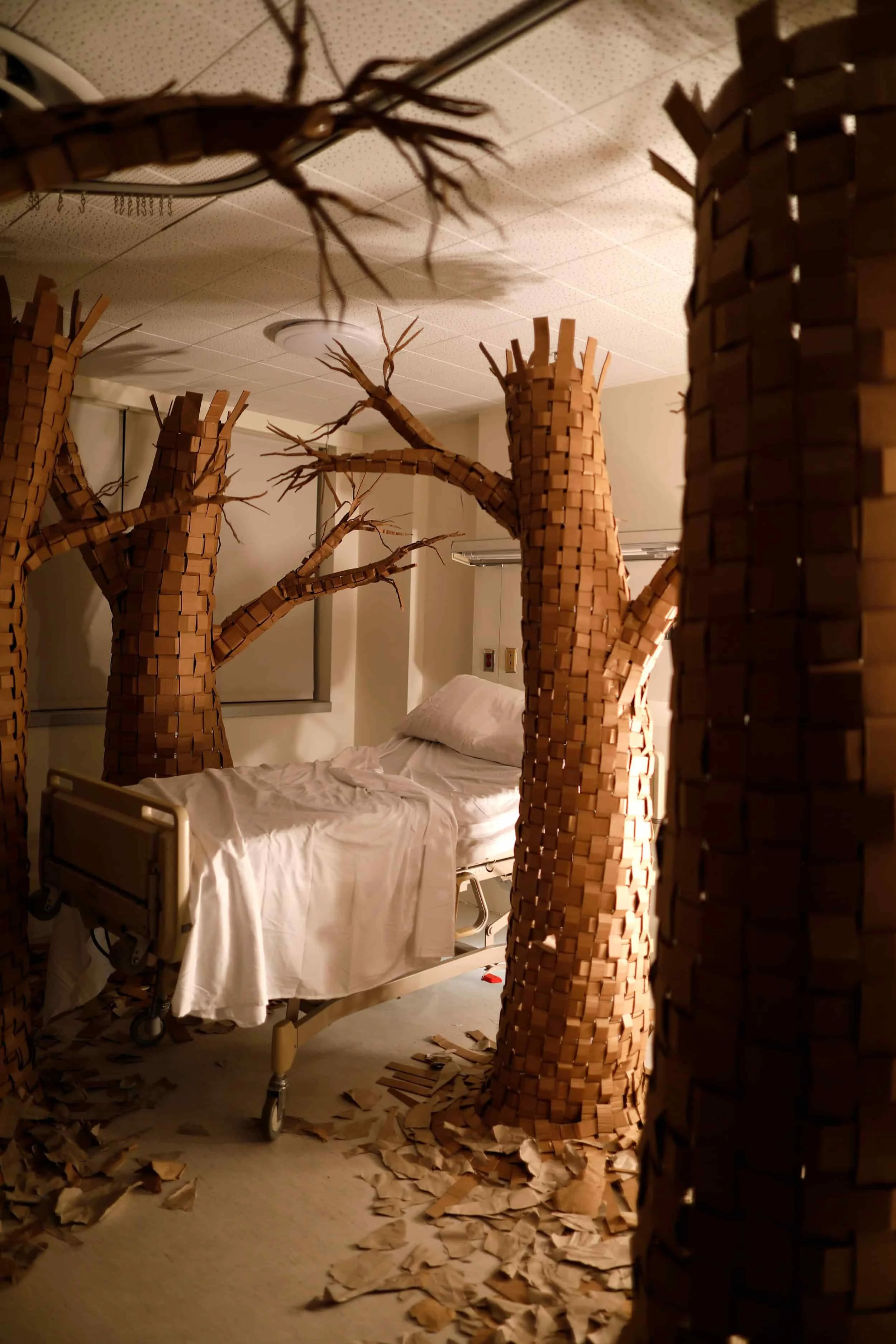
Greg Corbino
Crafted from post-consumer cardboard, this installation weaves recycled paper into a whispering forest of trees. Like root tangles and mycelial threads, each woven structure gains its strength through connection — no tree stands alone.
Remembering the paper’s past gives the discarded material a new purpose: a hopeful reminder that care, attention and the human touch can turn waste into renewal. When the exhibit ends, the forest itself can be fully recycled, letting the cycle of transformation continue beyond the hospital walls.
Room 55 | Hope Department
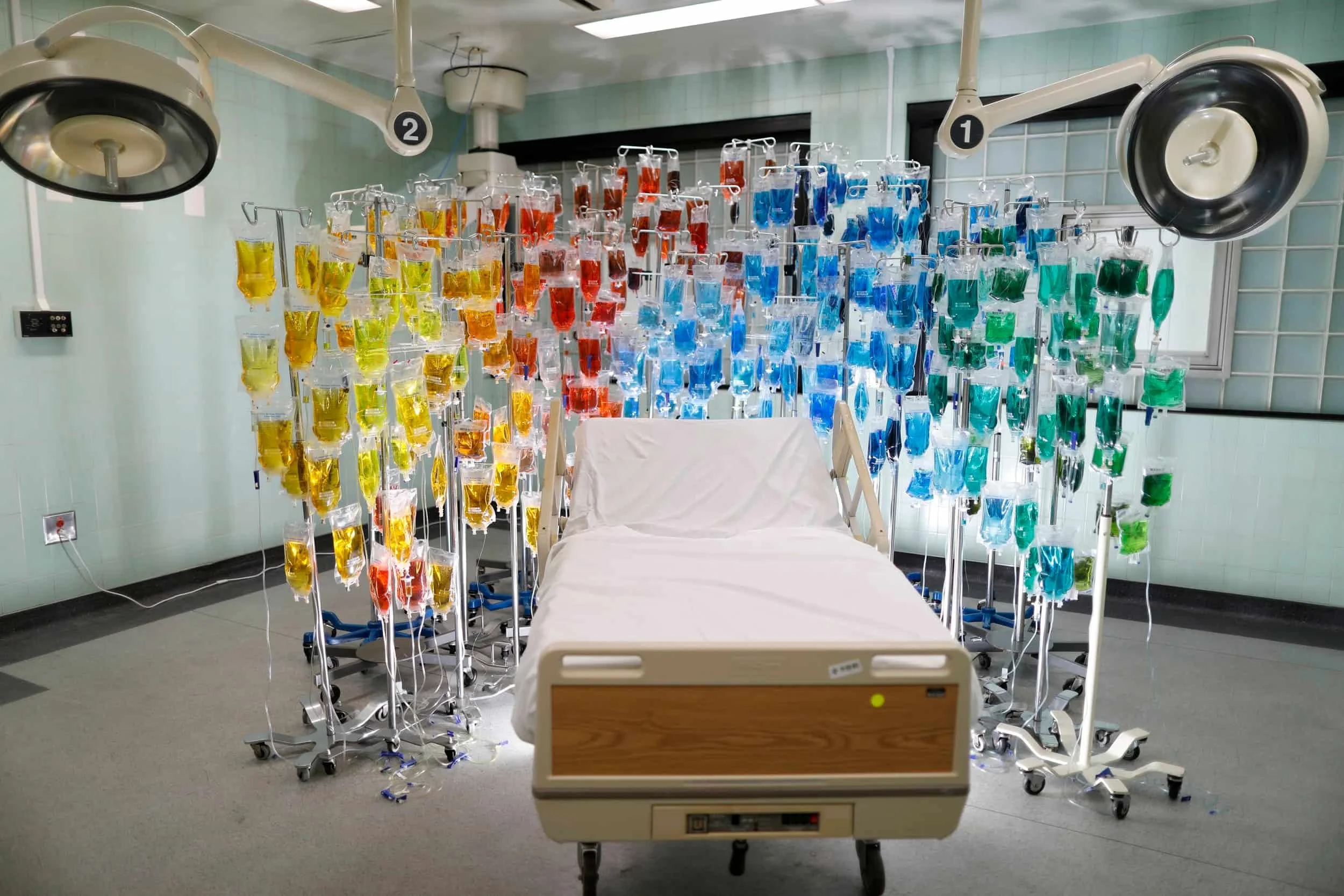
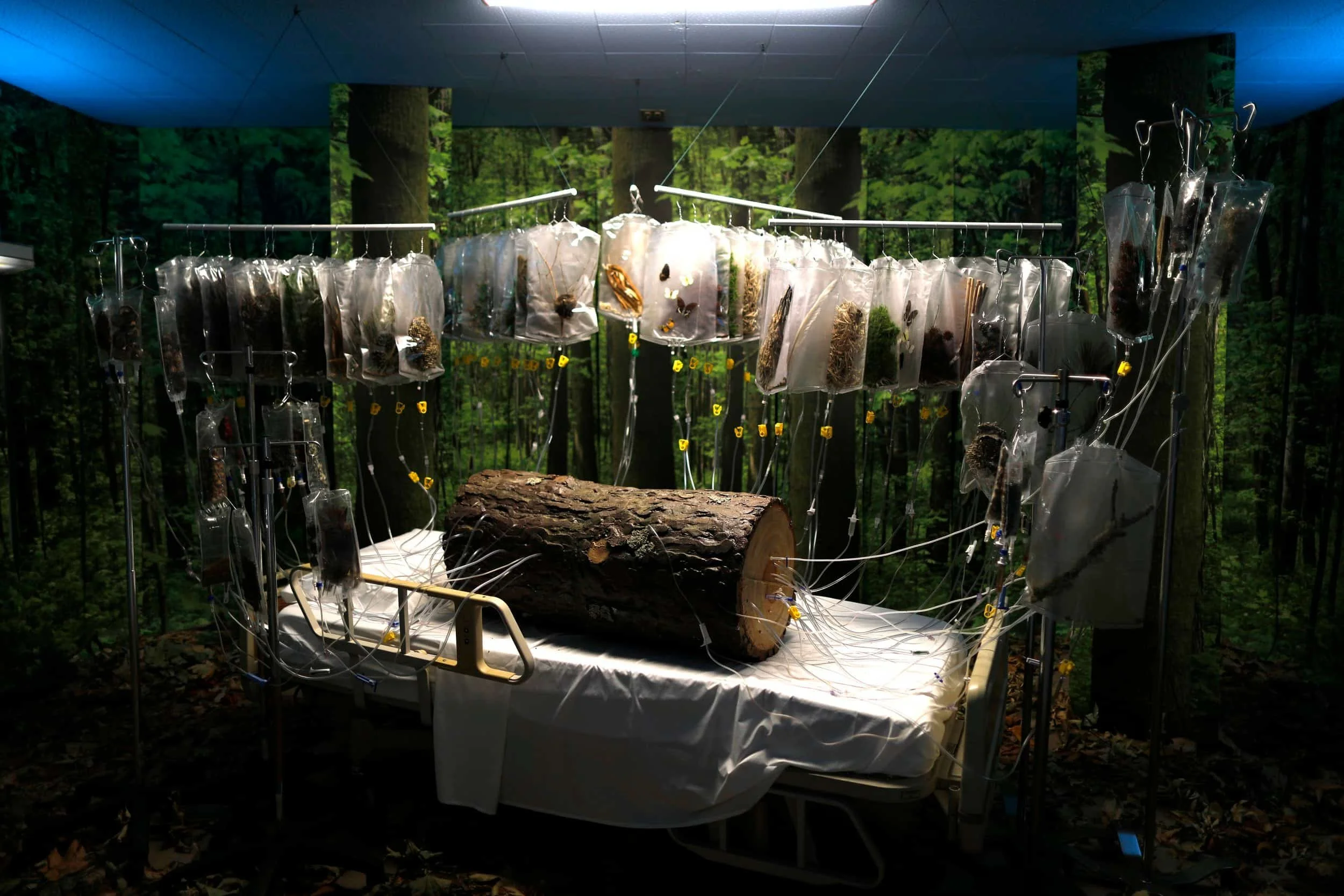
The Transfusion by Michelle Lougee
The Transfusion celebrates the resilience and quiet interdependence of a thriving forest. At its heart, a fallen trunk lies like a weary elder in a hospital bed, receiving an improbable "transfusion." Around it, a hanging orchard of IV bags forms a delicate, fragmented archive of the biome. Each bag cradles a single living element — fungi, seedpods, insects, tufts of moss — offering life-support to a community member in need.
The installation invites visitors to feel both the ache of loss and the gentle call to recommit to protecting the small, miraculous threads that keep our world alive.
Room 57 | Hope Department
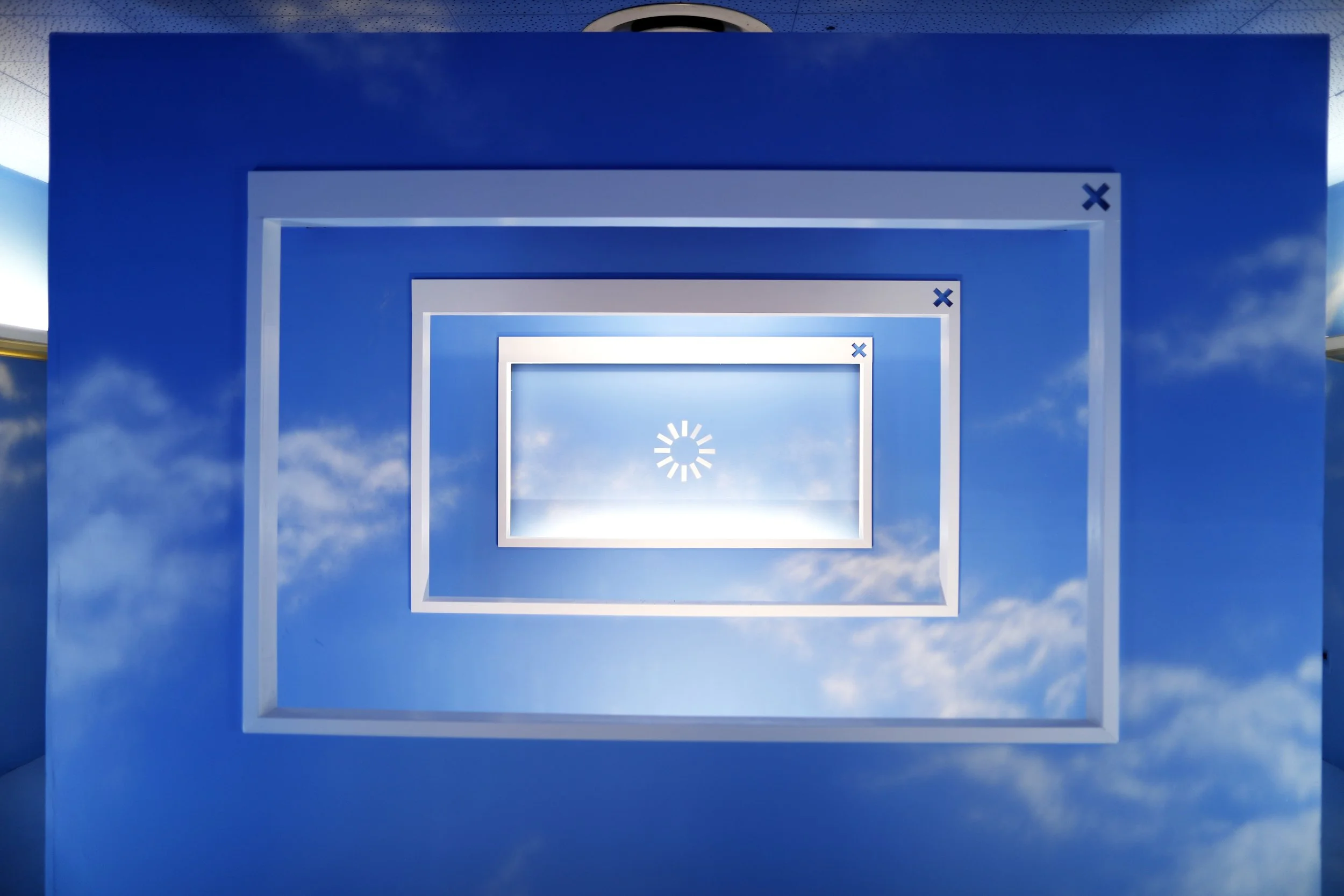
Open Source by Christoph Florin
Browser windows are tiny portals reminding us we live after the dawn of digital life. The line between paper and pixel is softening and those panes can be invitations: ways to reach out to people, to notice the world anew, to learn how others see things. They have a way of knitting us together more than pulling us apart — or at least, wouldn’t that be lovely?
That said, the web we loved feels increasingly hemmed in by algorithms and corporate interests. So let’s step away from the marketplace’s rules for a moment, rediscover the warmth of both our online and offline networks and take back a little bit of the agency those windows promised.
Room 58 | Hope Department
💡 Local Tip | Before you head down to the next floor, don’t forget to collect your Hospital of Emotions Patient Chart stamp at each station. Each colorful stamp represents a different department.
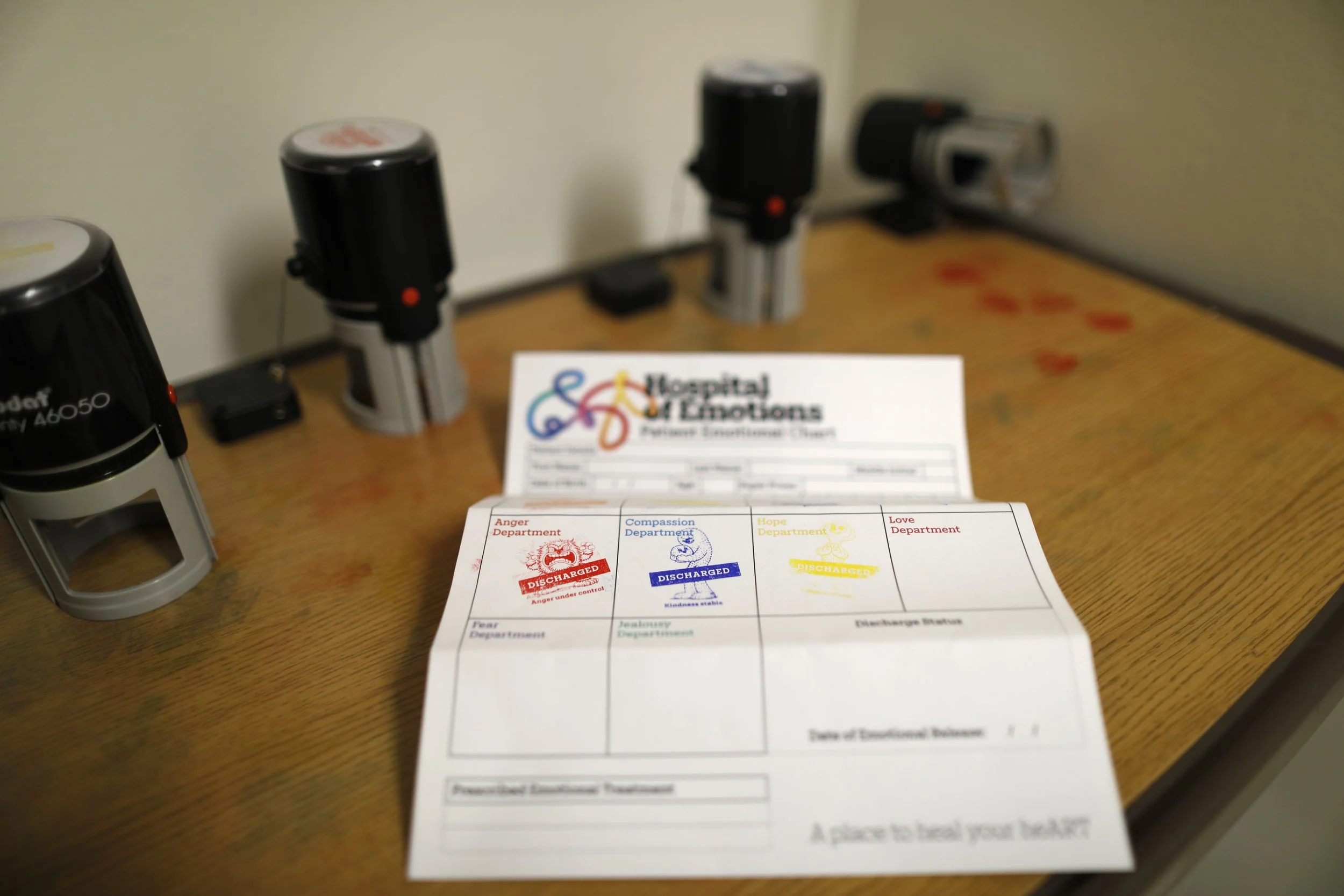
Line up your patient chart like a travel passport and press a tiny stamp for each emotion — joy in bright yellow, grief in soft blue, a nervous scribble in purple. Each stamped square feels like permission to feel, a gentle map of the day’s inner weather.
Third Floor: Love Department
The Love Department at the Hospital of Emotions transforms the abstract pulse of affection into a sensory experience: sculpted forms that mimic the hush of a heartbeat, light that blinks and warms like a shy smile, soundscapes that echo whispered promises and layers of paint and fabric that drape memory and longing across the walls.
Each installation reads like a love letter rendered in texture and tone — revealing how love feels beneath the skin, how it looks when it gathers in the chest and what it quietly carries through the corridors of the human heart.
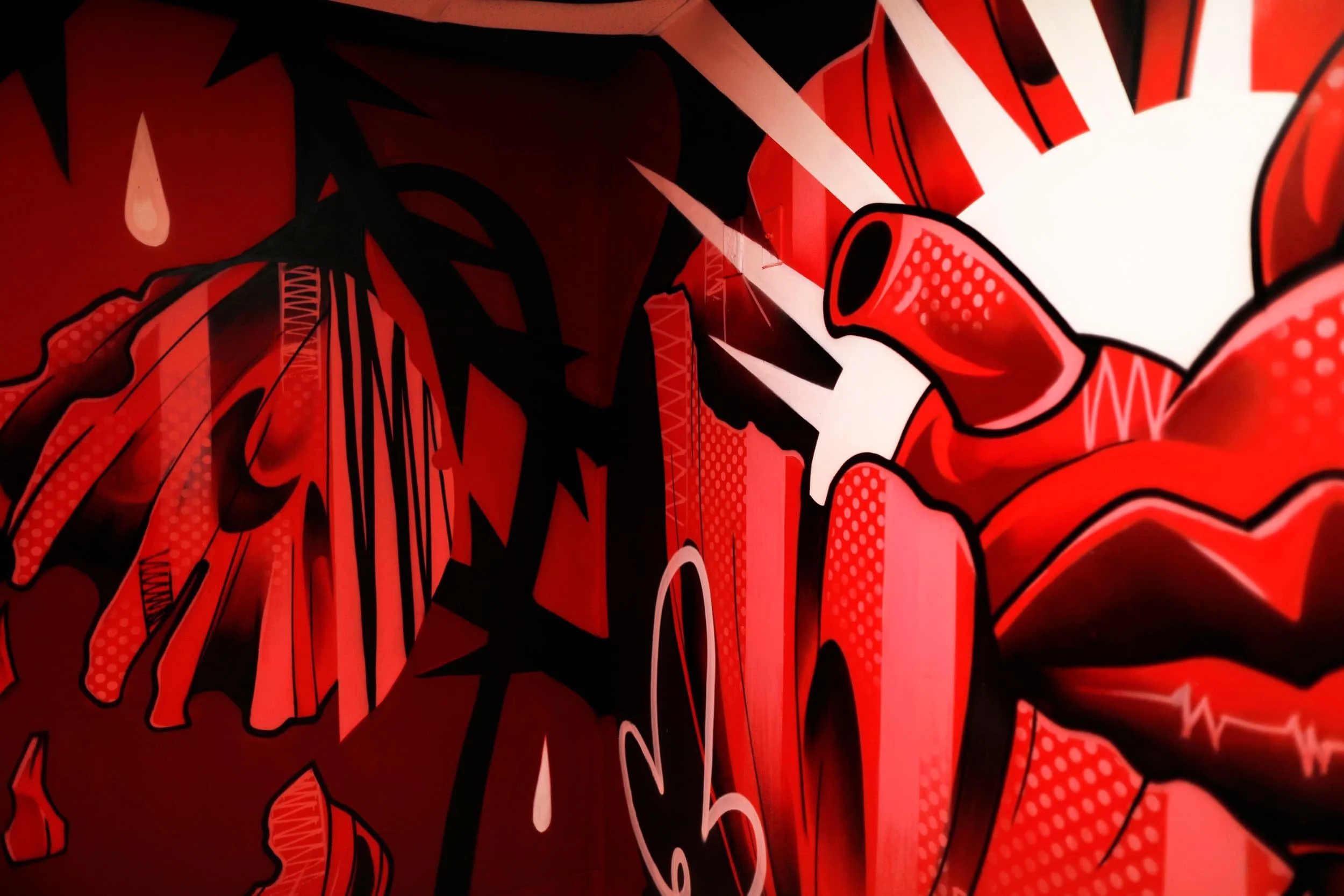
The Anatomy of a Bloom by Santa Gross
Anatomy of a Bloom spreads out like a bold invitation for visitors, its graphic layered petals and translucent veins illuminated to reveal the quiet architecture of feeling. Part botanical painting, part human map, the installation invites deep curiosity — its soft lines catch light and shadow in ways that feel both tender and precise, suggesting how delicate structures support sudden, unstoppable beauty.
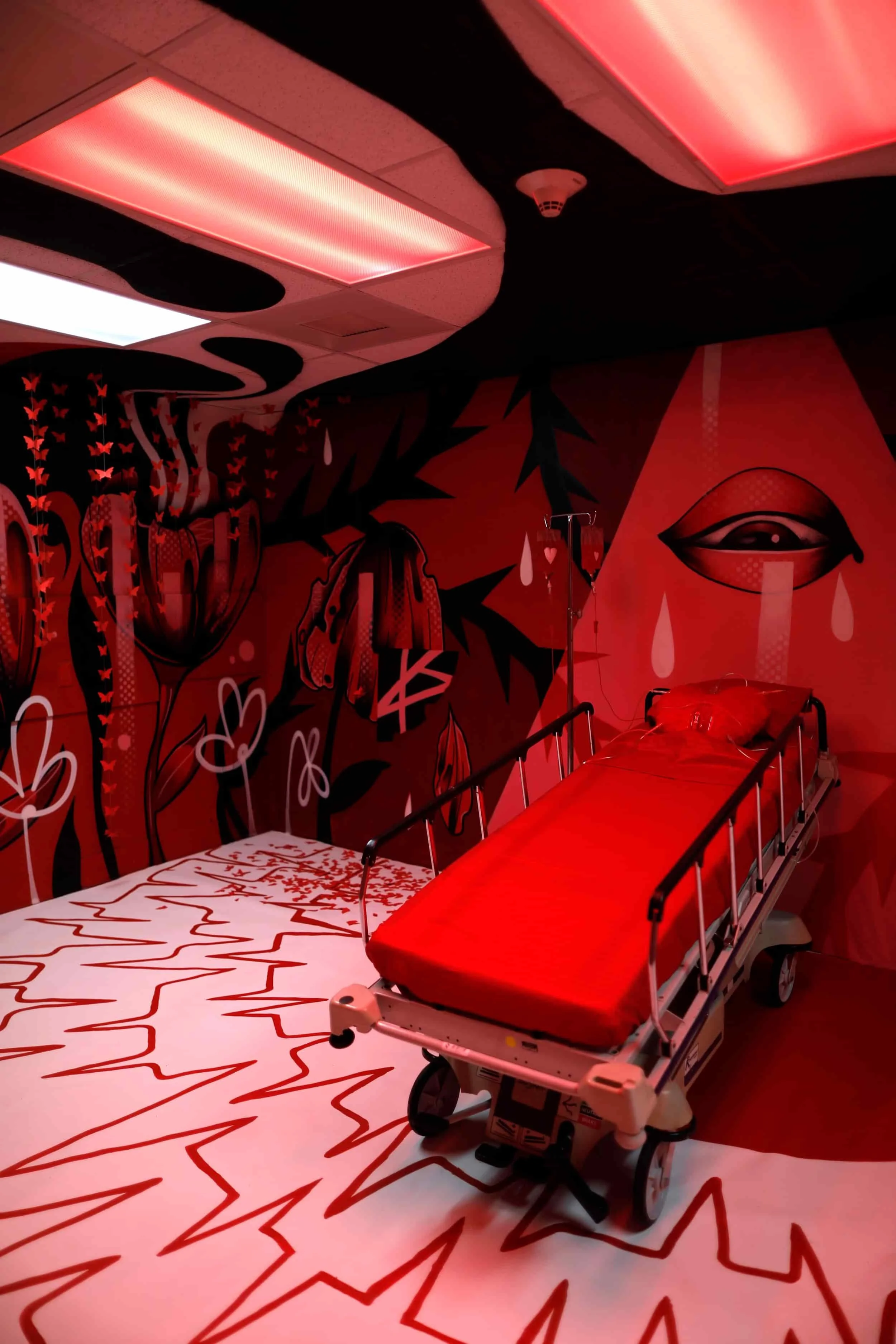
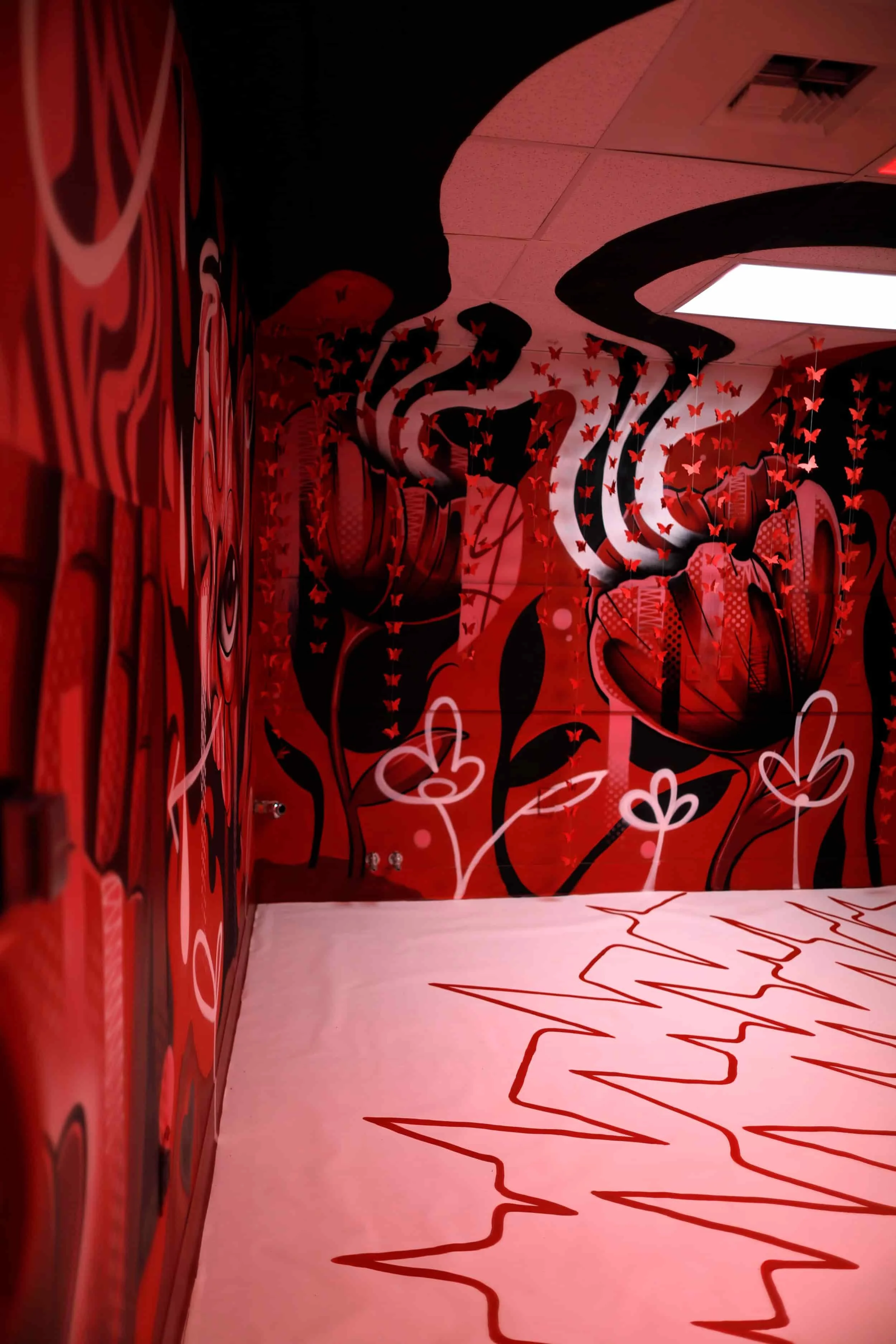
Guests find themselves tracing imagined lines of memory, pausing to breathe with the rhythm of the piece and discovering that tenderness can be both studied and shared. In this small, luminous world, 2D volumes and bright color palettes turn emotional transitions into a visual heartbeat.
Room 66 | Love Department
Elif Sezgin
A contemplative installation about the mended heart, where love lives in the sweet tension between softness and armor. Through scattered mirrors and gentle fragments, it celebrates vulnerability and self-protection as two sides of the same story — inviting us to consider when we cling to our shields and when we choose to lay them down.
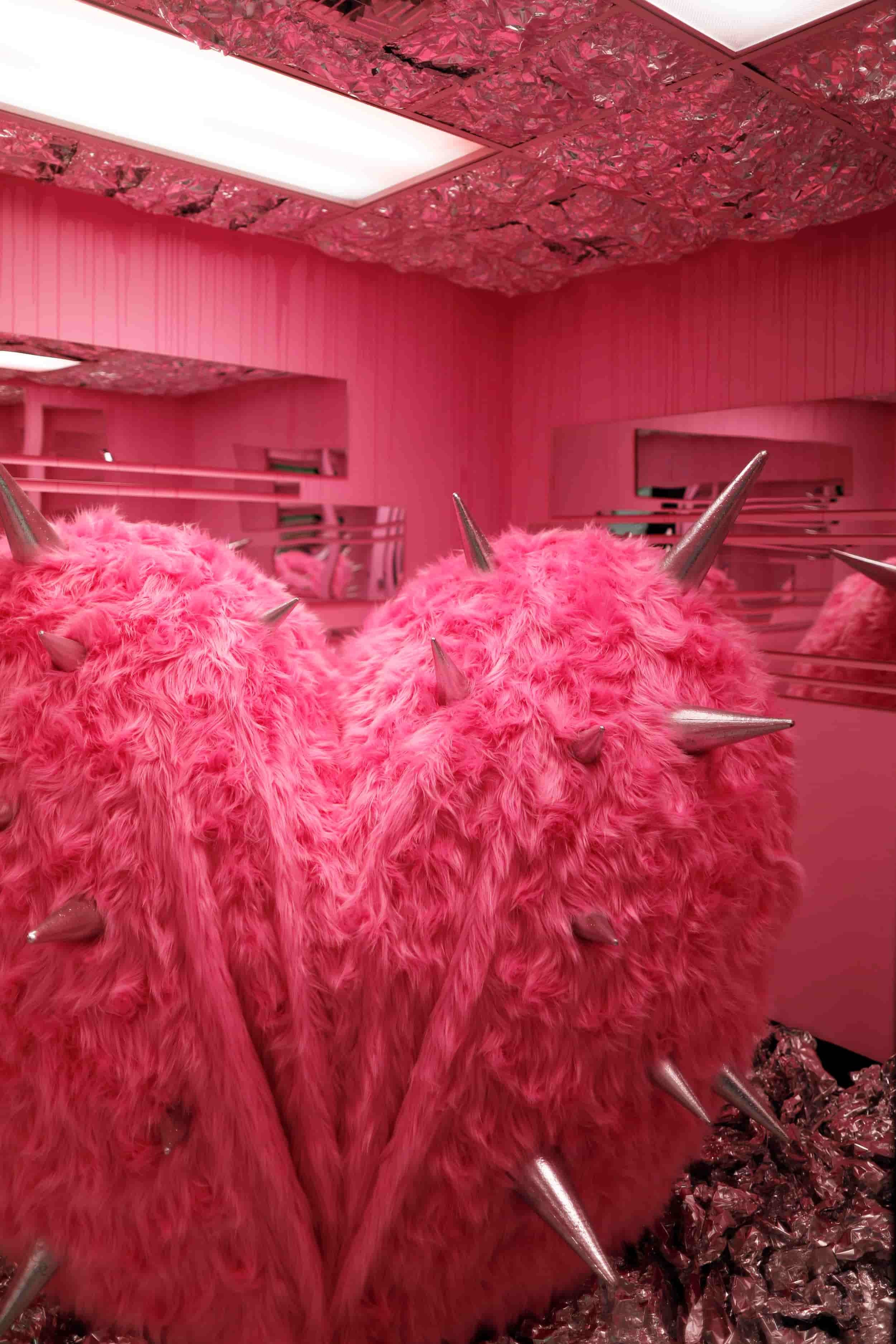
Room 67 | Love Department
Womb Room by Kara Greenwell
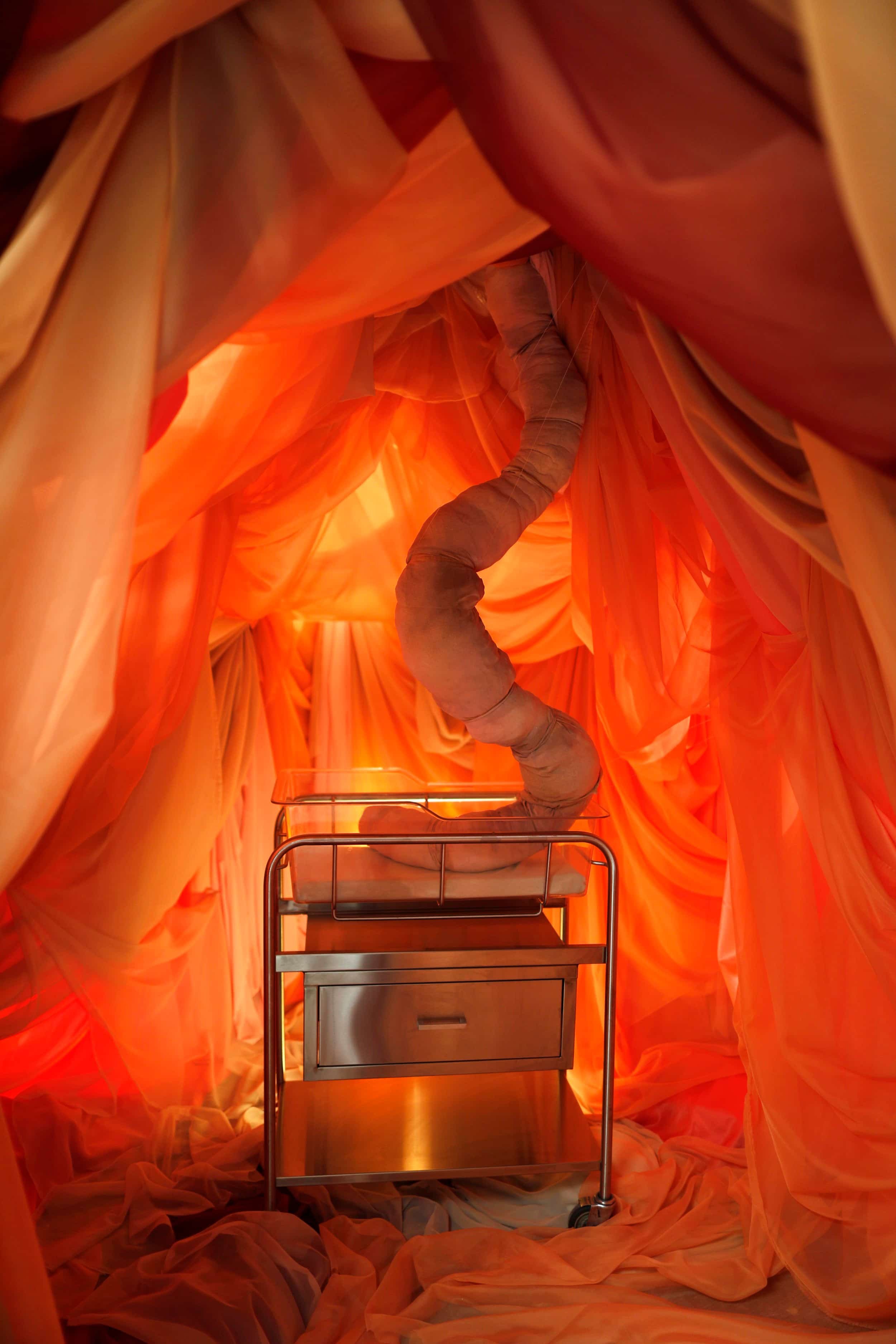
Step into the Womb Room, a gentle haven where time slows and you’re invited to be cradled. What once felt clinical becomes tender: billowing fabric drapes the space, warm light wraps everything in a soft glow and a steady heartbeat hums like a lullaby.
At the heart of the room, a newborn bassinet floats, linked to its surrounding cocoon by a lovingly crafted umbilical cord. The installation honors our first taste of love — the primal bond between mother and child — and whispers a reminder of the common beginning that comes before identity or divides. In a fragmented world, this womb-like refuge offers a small, quiet return to connection.
Room 68 | Love Department
Where Light Begins by Sandra Monty
Where Light Begins transforms a hospital birthing room into a quietly tender stage where love, fear and memory gently overlap. Soft, dusky figures — tactile and almost childlike — gather around the bed like silent witnesses, each one holding a different feeling: vulnerability, protection, exhaustion, care. Their imperfect forms, warm against the room’s clinical coolness, invite softness and humanity to live amid the machinery and white walls.
At the heart of the piece, a newborn glows as the sole burst of color, painted in a luminous rainbow. This child becomes a beacon — a small, bright promise that light and continuity can follow fear. Rooted in the artist’s own memory of losing her grandmother in a hospital, the installation traces a moving reversal: the same place that once held grief later welcomed her children into the world.
Through gentle contrasts of color and form, Where Light Begins celebrates birth as the purest act of love — the instant a mother offers her light, her color and her courage to a new life.
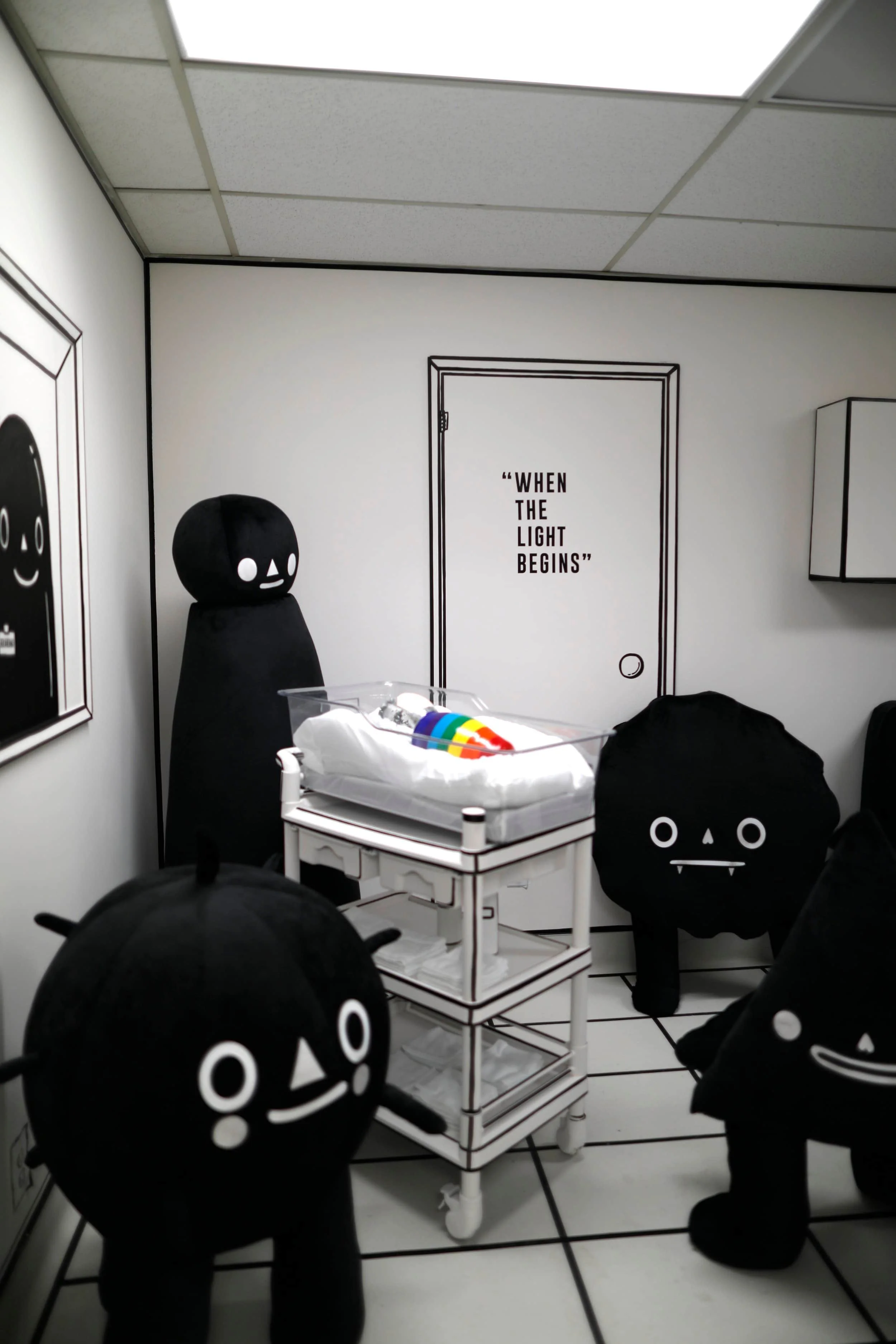
Room 70 | Love Department
Safe Container by Tim Schwartz
Safe Container gently explores love by centering emotional safety. What starts as a clinical space slowly softens into a cocoon of care: plush light, soft textures and a calm that invites ease. Stuffed animals spill across the room like quiet guardians — tiny ambassadors of comfort and unconditional support. For many, they are the first things to hold us tenderly, a memory of when love was uncomplicated and certain.
The installation is an invitation to reconnect with that inner child. In the simple act of being held and soothed, healing finds room to grow. And as we heal, we learn the truest forms of self-love. Safe Container asks a quietly radical question: what if every love story began with safety?
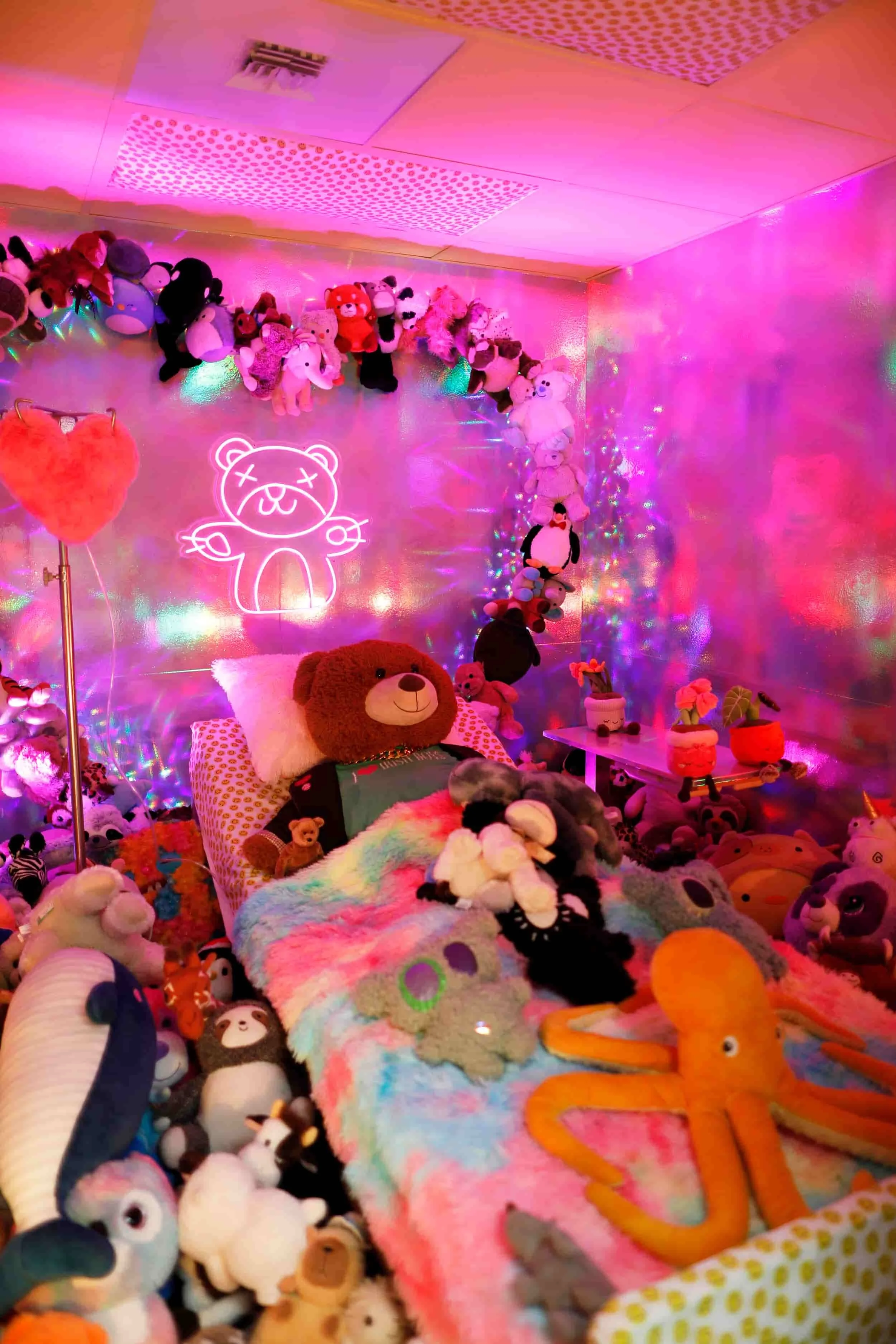
Room 72 | Love Department
Level Three — Fear Department
The Fear Department at Hospital of Emotions greets you with silent corridors and unexpected moments that turn anxiety into curious companionship. It’s a quiet, clever space where trembling reflections and soft, pulsing installations invite you to sit with fear — not to conquer it but to understand how close it sits to courage.
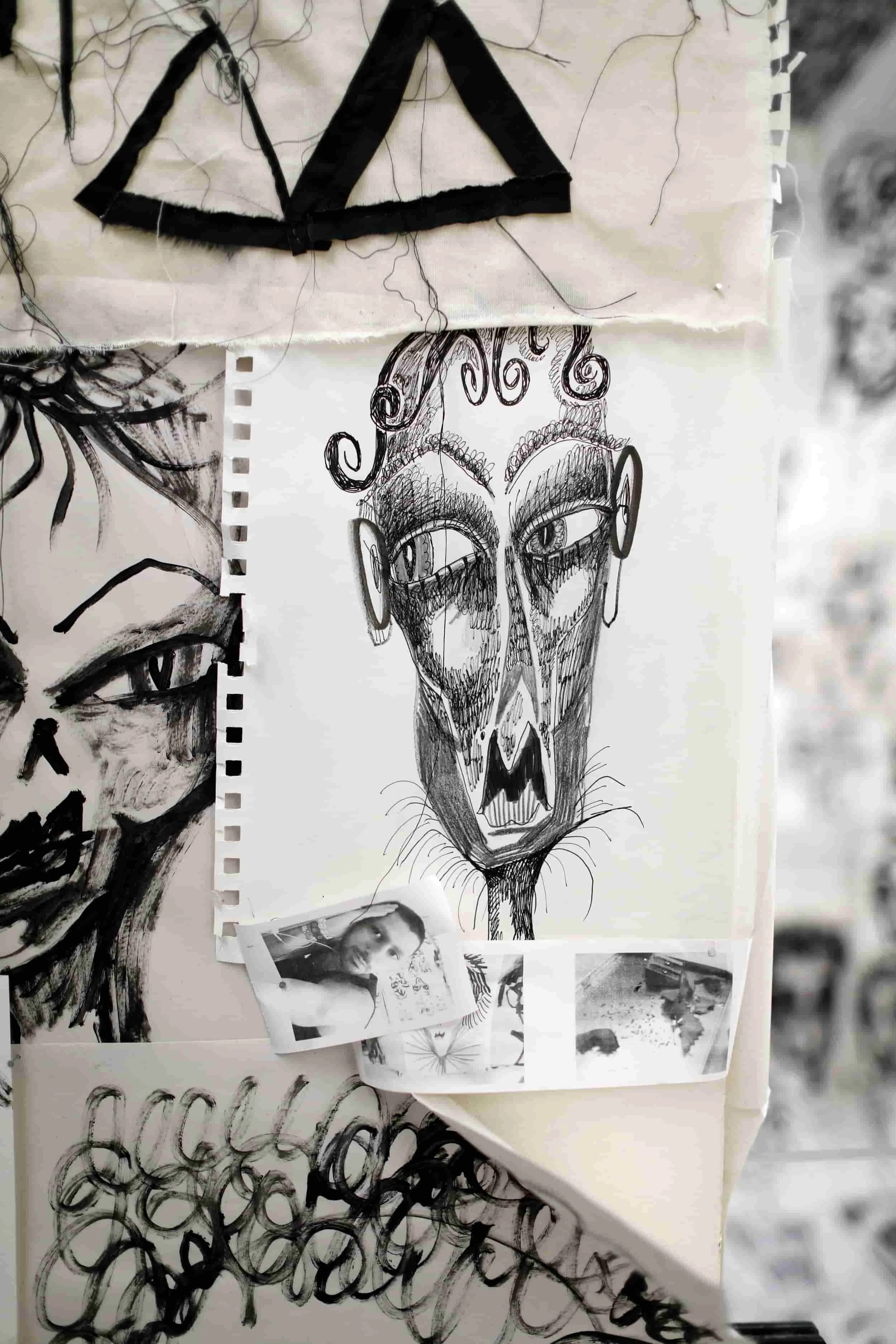
Grisha Stepanian
For fifteen months, Stepanian lived in immigration detention. Yet fear had arrived long before — an uninvited companion trailing him through countries and cities, quiet and persistent, never quite letting go.
He left Russia in 2022 because of his political beliefs and because he’s gay. What he had hoped would be a search for safety slowly unfolded into a prolonged intimacy with fear. Inside detention, the meaning of "shelter" shifted: the place designed to confine him also became the place that kept him alive.
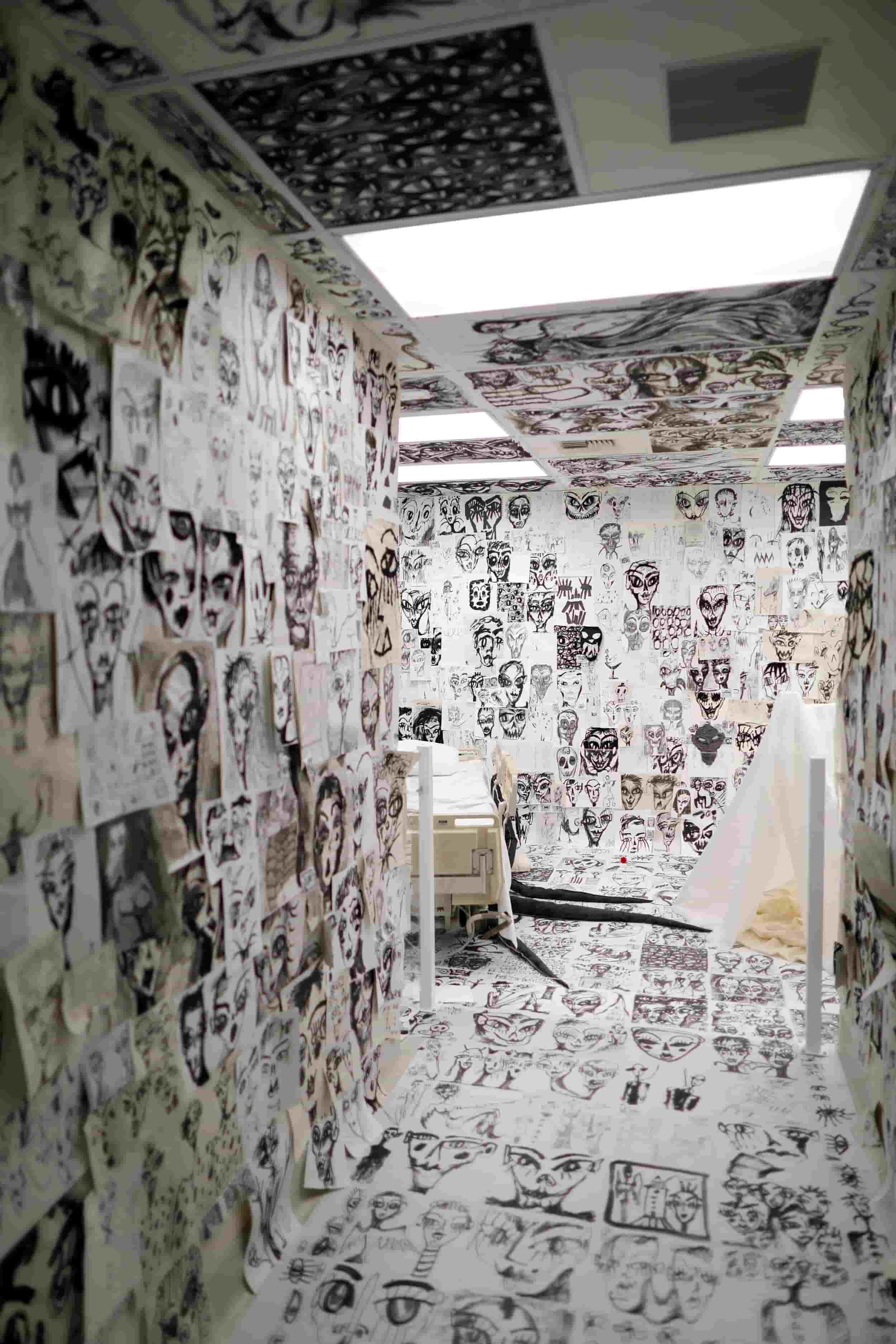
This installation captures that peculiar feeling — how fear embeds itself in the body, lingers even when danger has passed and how moments of safety, when they do come, can feel fragile and almost unreal.
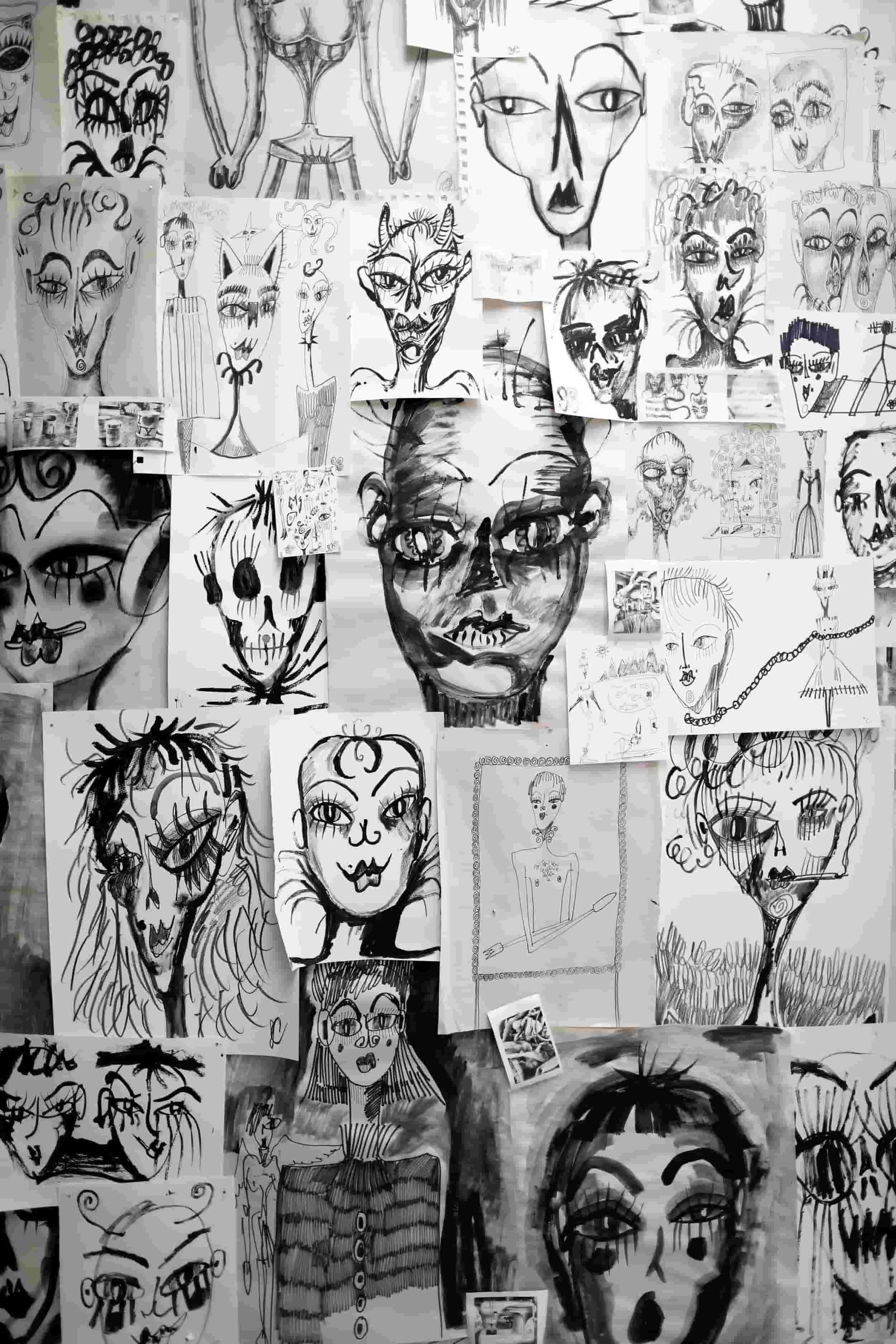
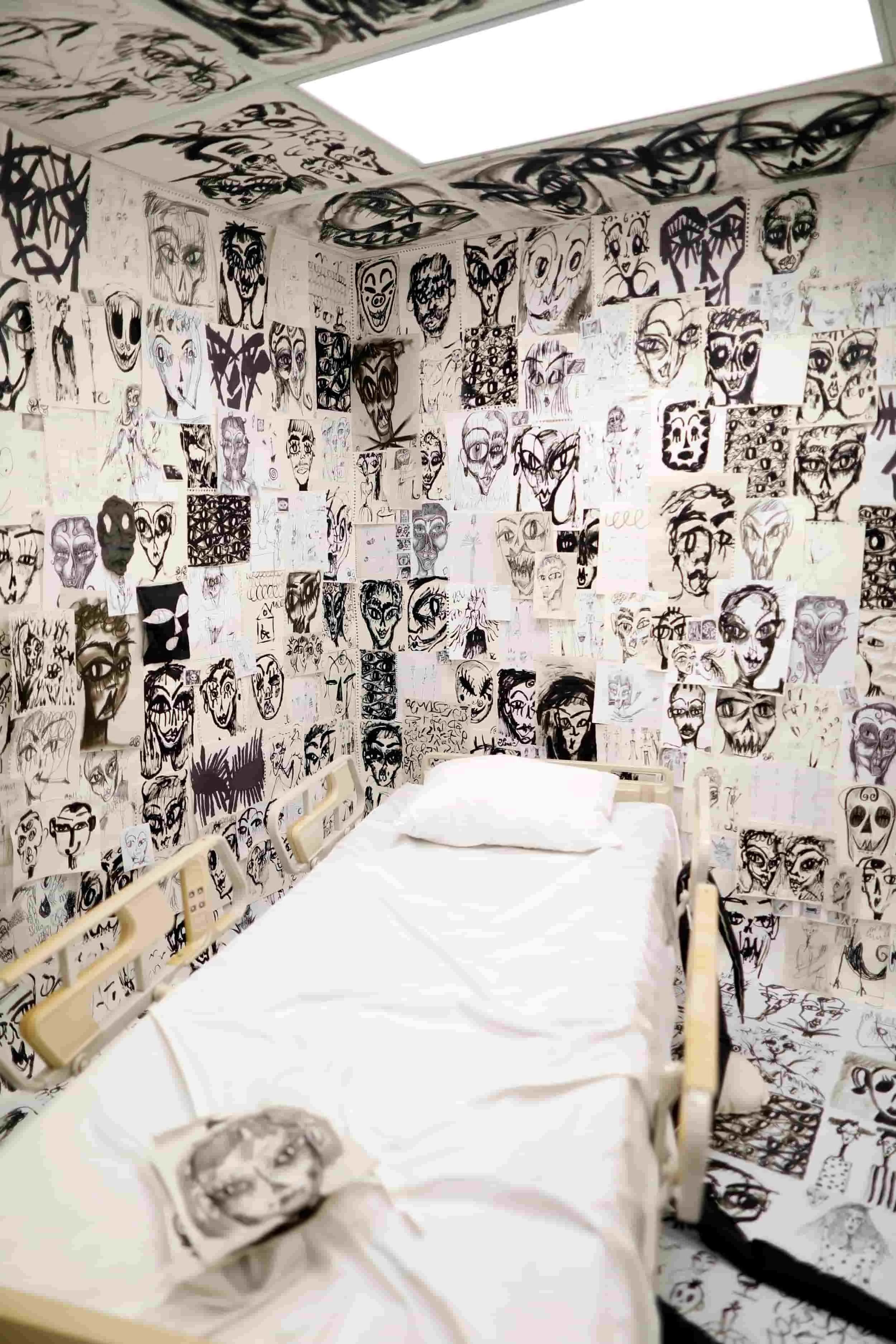
Stepanian’s exhibit instantly stole my heart. The moment I crossed the threshold, it felt intimate — as if I’d been invited into someone’s private dream or their most vivid nightmare. Pain and fear hung in the air, raw and unmistakable, but woven through them was a quiet beauty and an unshakable resilience that stayed with me.
Room 73 | Fear Department
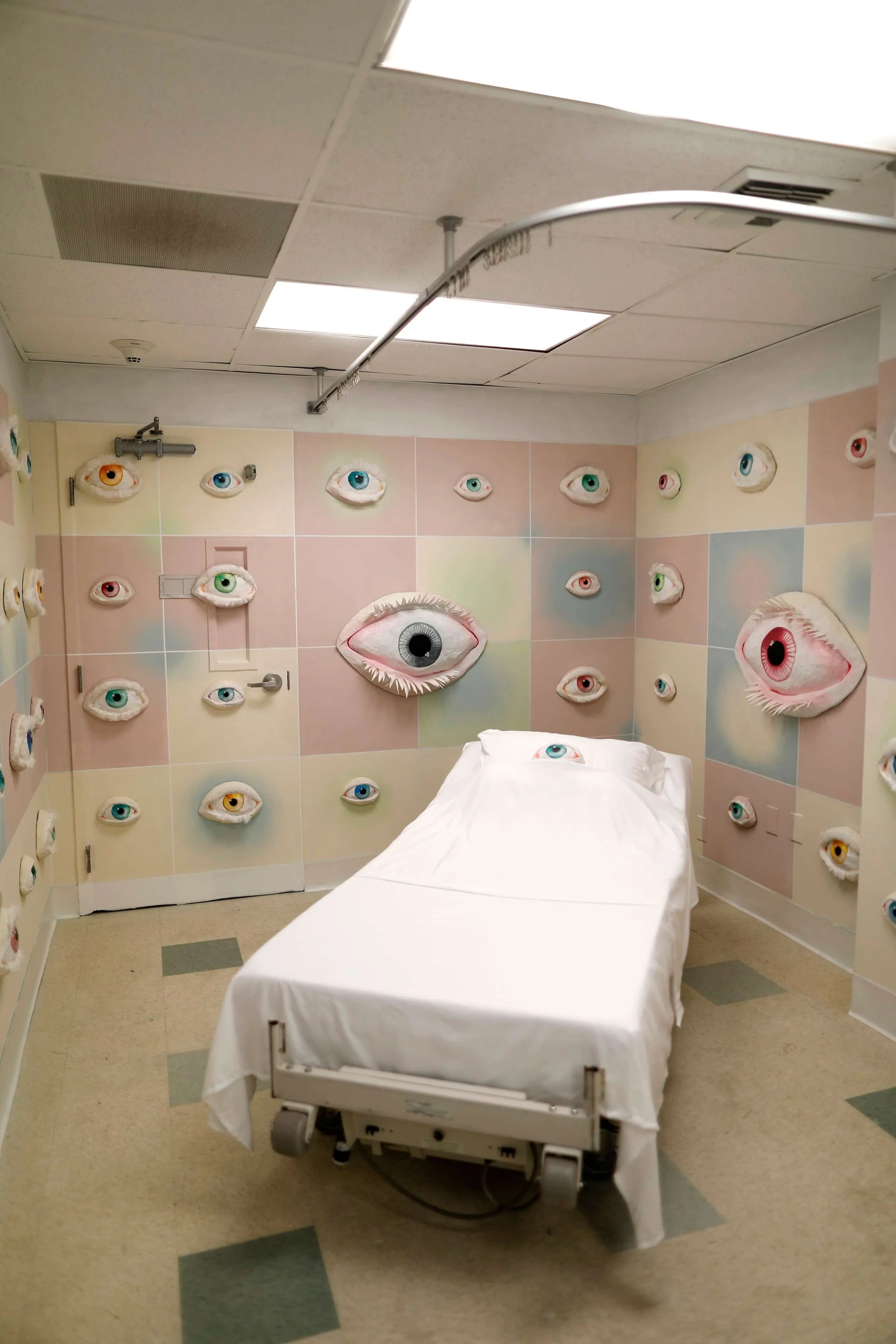
Exposure by Rose Zhang
Once trapped by agoraphobia, Rose lived for years with a quiet, ever-present fear. Real fear is a living thing — it nestles into your body and into the edges of your life, alert and eager to keep you safe by keeping you small. Crafted by hand from reclaimed materials in gentle pastel hues, this installation captures fear’s curious double nature: comforting and constricting, protective and immobilizing. In this space, fear is attentive and unblinking — impossible to ignore, impossible to leave behind.
“I see only from one point, but in my existence I am looked at from all sides.”
Room 76 | Fear Department
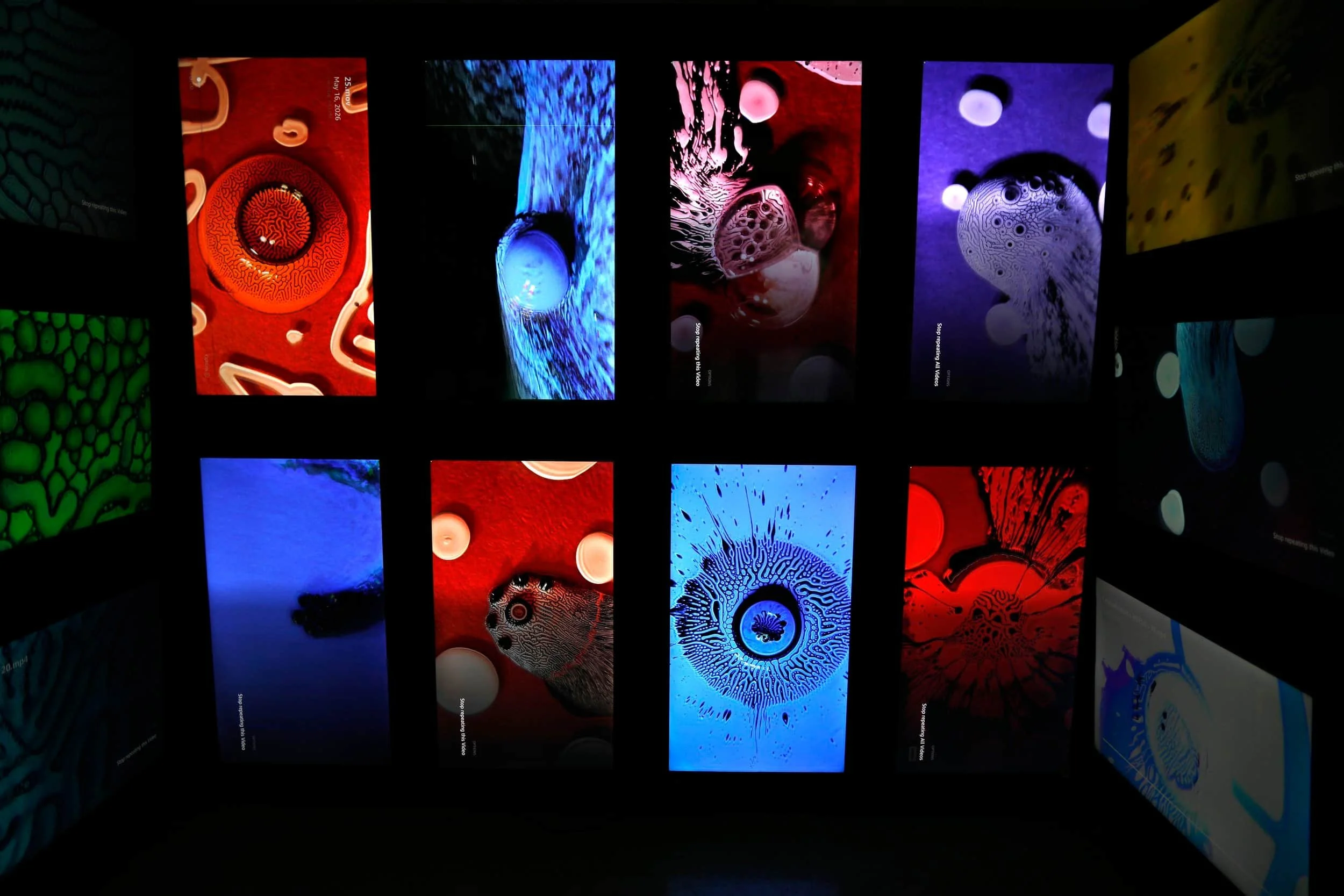
Cosmodernism by Kamil Czapiga
Admitted to the Fear Department, Kamil forgoes CGI and AI. He stages a tiny ballet of real physics — hands coaxing magnetic fields and ferrofluids into living, shifting forms. Those miniature sculptures bloom and pull apart like secret emotions made visible, tracing attraction, tension and the quiet weight of fear that shapes the human heart. In Kamil’s hands, matter becomes feeling — delicate, urgent and oddly tender.
Room 77 | Fear Department
Under Observation by Mads Christensen
Suspended from the ceiling like a constellation of nerves, dozens of illuminated eyes fill the room, their organic optic cords pulsing in time with help from Paul Corley’s layered soundscape. Thirteen channels of audio, thirty-three channels of video and synchronized ceiling lights create an immersive field that feels less like cold surveillance and more like a chorus of individual gazes — each eye carrying its own quiet judgment.
The installation turns the hospital’s vulnerability inside out: a space where patients surrender privacy and autonomy becomes a lingering presence of observation. Even after the physical patient has gone, the room retains a weight of scrutiny and unease, a haunting reminder of how clinical spaces can leave emotional traces of fear, loss of control and persistent anxiety.
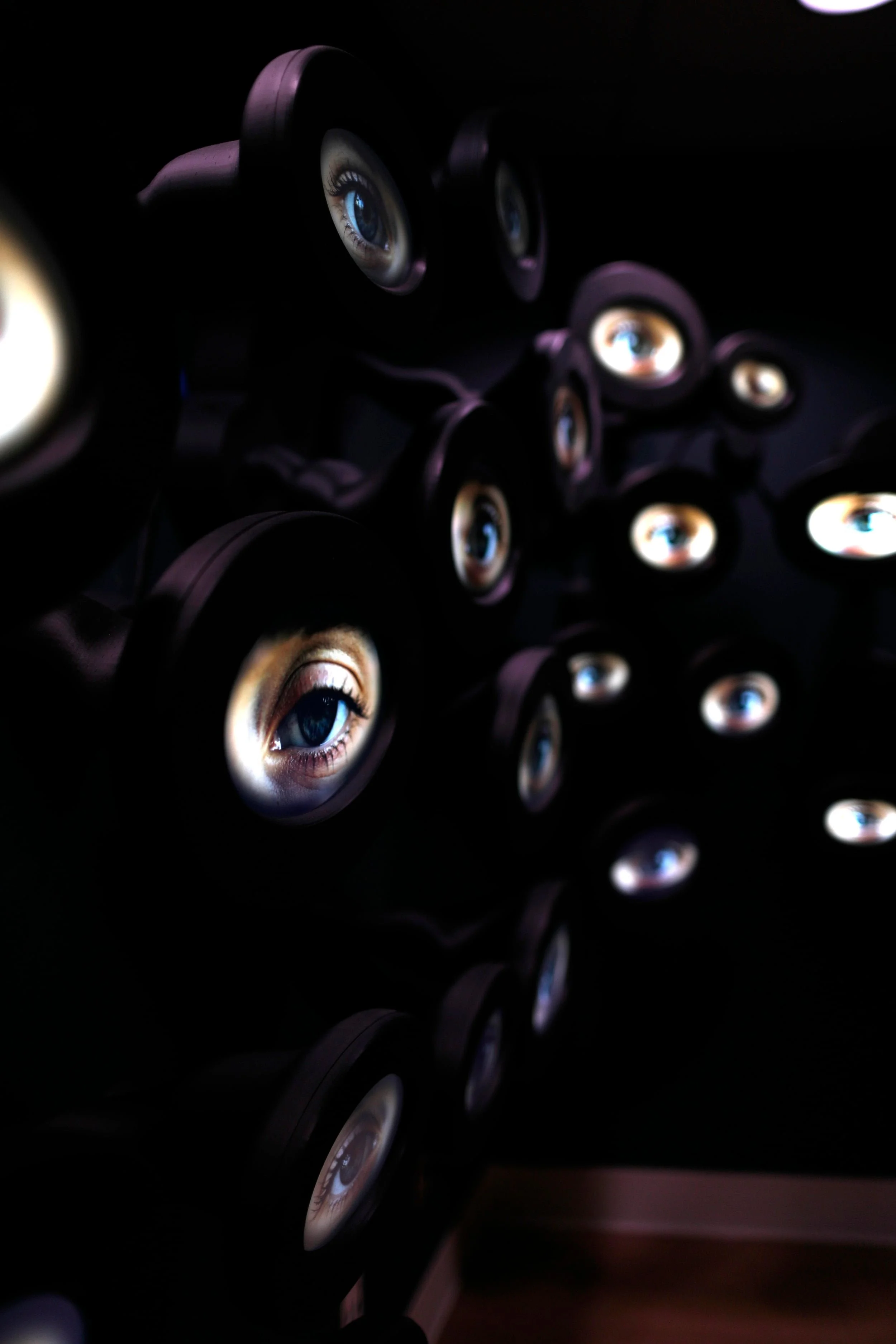
Room 79 | Fear Department
A Walk into Trypanophobia by Emily Strange
Drawing on Emily’s own tangled days and quiet recoveries, she’s always trying to trace the invisible architecture of mental health — the hallways, thresholds and doorways we move through inside ourselves. She makes the interior visible by turning feelings into places: that’s how strangers can sit with what feels familiar only to those who live there.
A Walk into Trypanophobia is her attempt to give shape to anxiety. Thousands of syringes locked into grids hum like a sharp, metallic chorus — the kind of noise that lives behind the chest when panic hits. A narrowing tunnel pulls you inward, echoing the hollow, bottomless sensation of being trapped by fear. To balance that tension, she lays down a steady path of rhythmic typography: the word “Breathe” repeated like a metronome, a cadence you can follow back to yourself.
At the center, a hospital bed becomes a communal sanctuary. It’s draped in raw, handwritten narratives — small, honest maps of how others have met fear and found a way through. Those voices are the work’s true heartbeat; they remind us that vulnerability is shared, not solitary.
This piece is Emily’s quiet invitation to you: notice the fear, stand with it a moment and reclaim the power of a single breath.
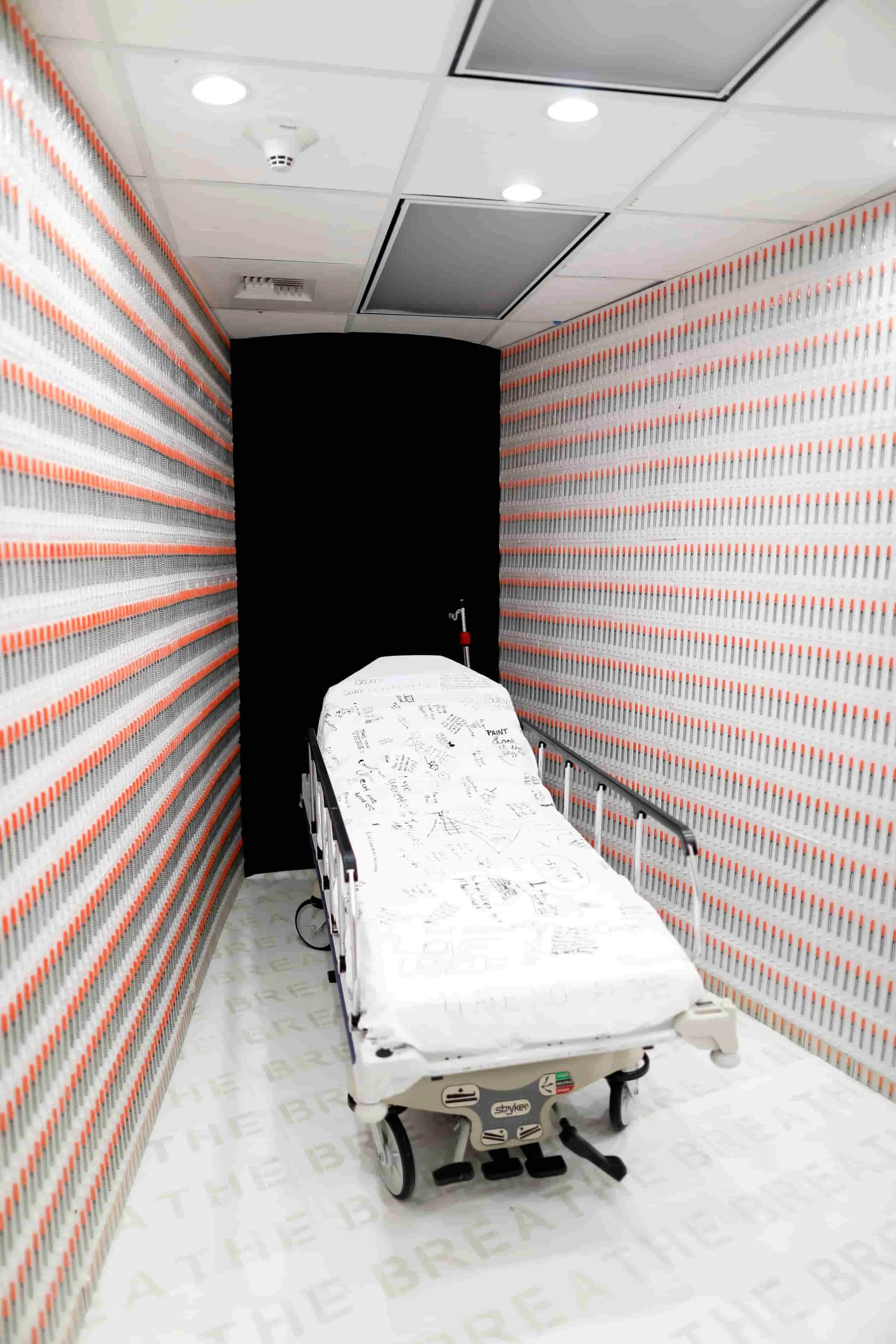
Room 80 | Fear Department
Level Three - Jealousy Department: “Build Your Own Bouquet” Flower Shop
For the finale, bright, cheerful flowers made of pipe-cleaners twist and bloom at the Hospital of Emotions art exhibit, each stem a tiny rebellion against clinical sterility and a soft invitation to linger. Their fuzzy petals — crafted in complementary colors and earnest imperfections — offer visitors a playful, tactile comfort that feels both homemade and heartbreakingly sincere.
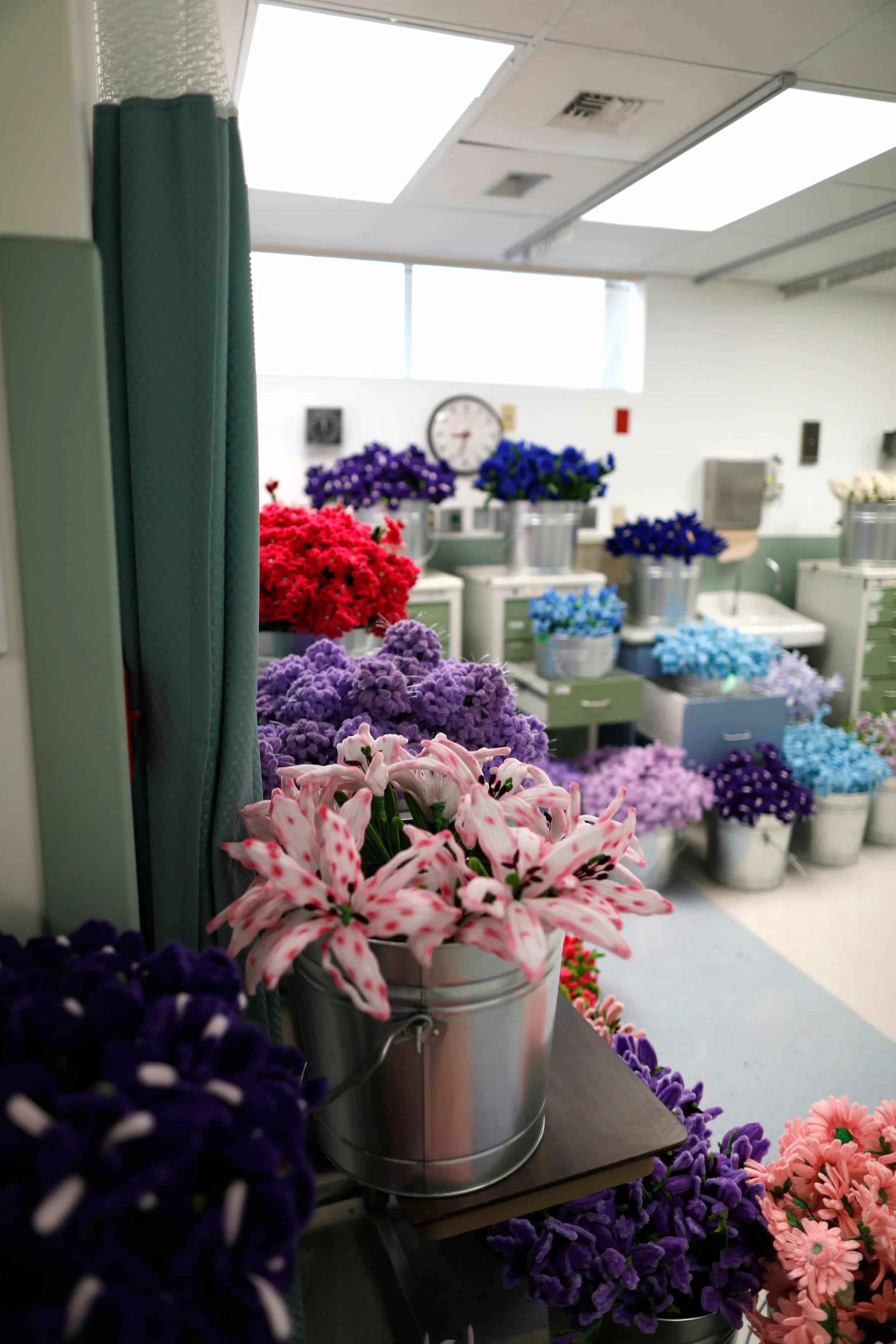
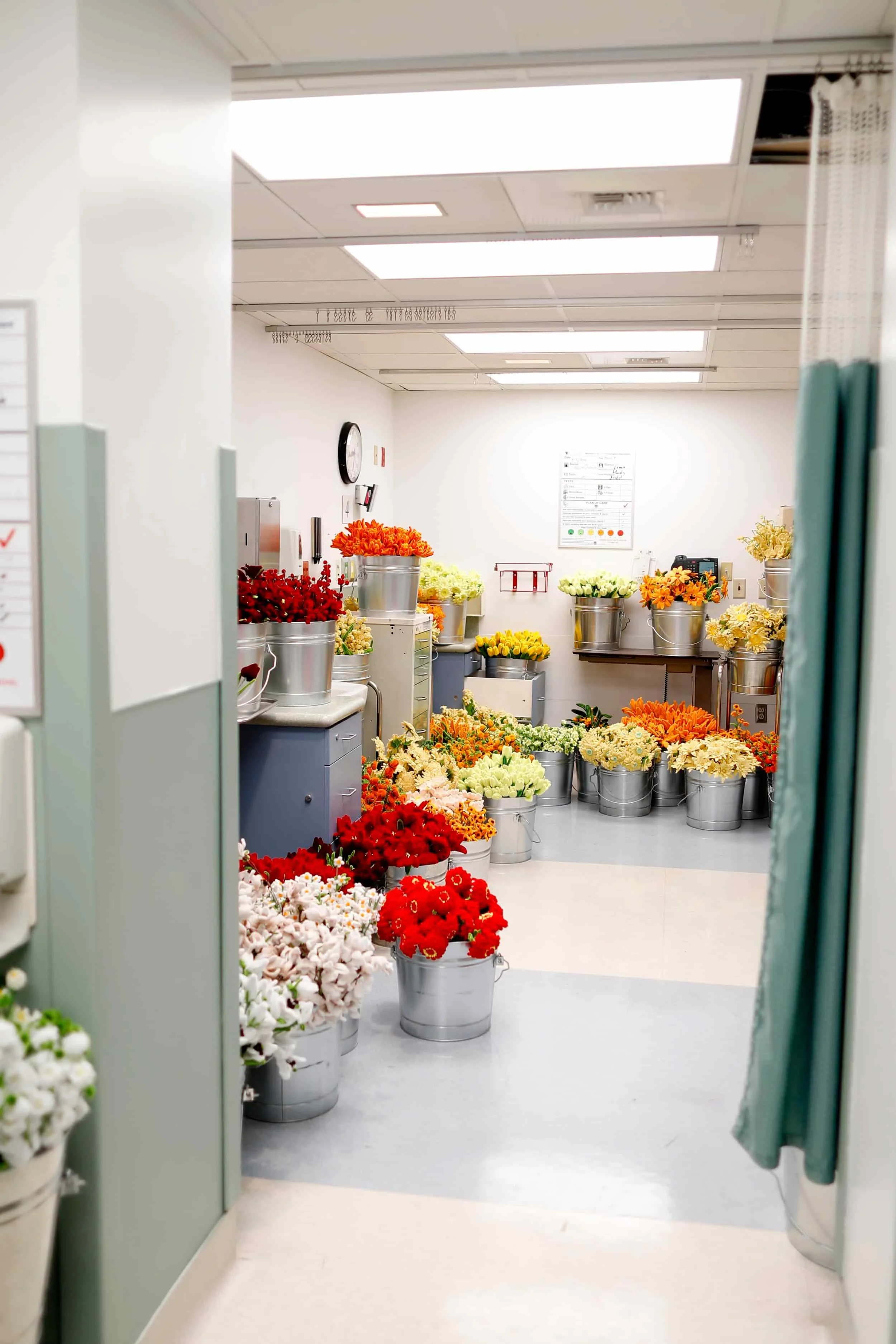
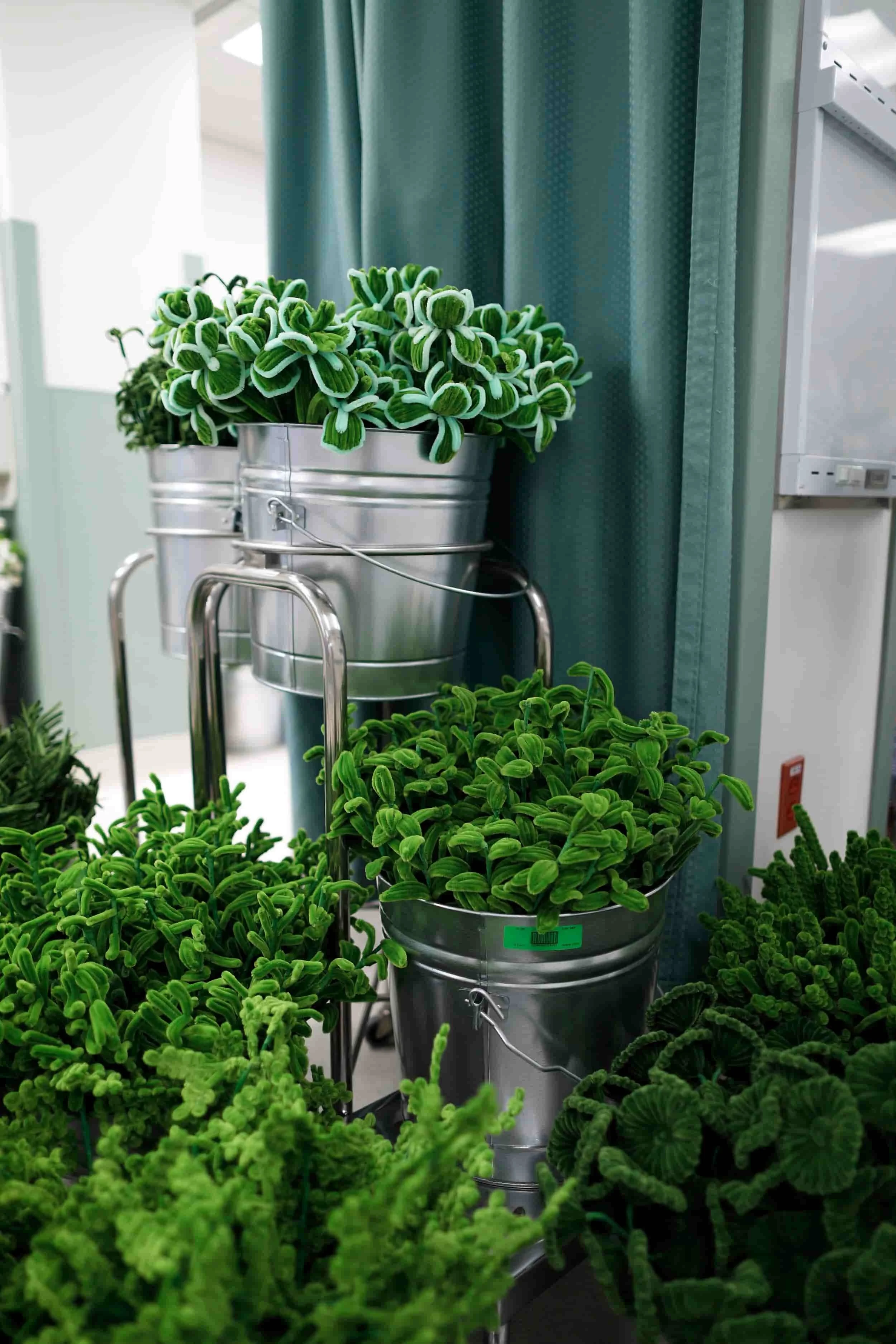
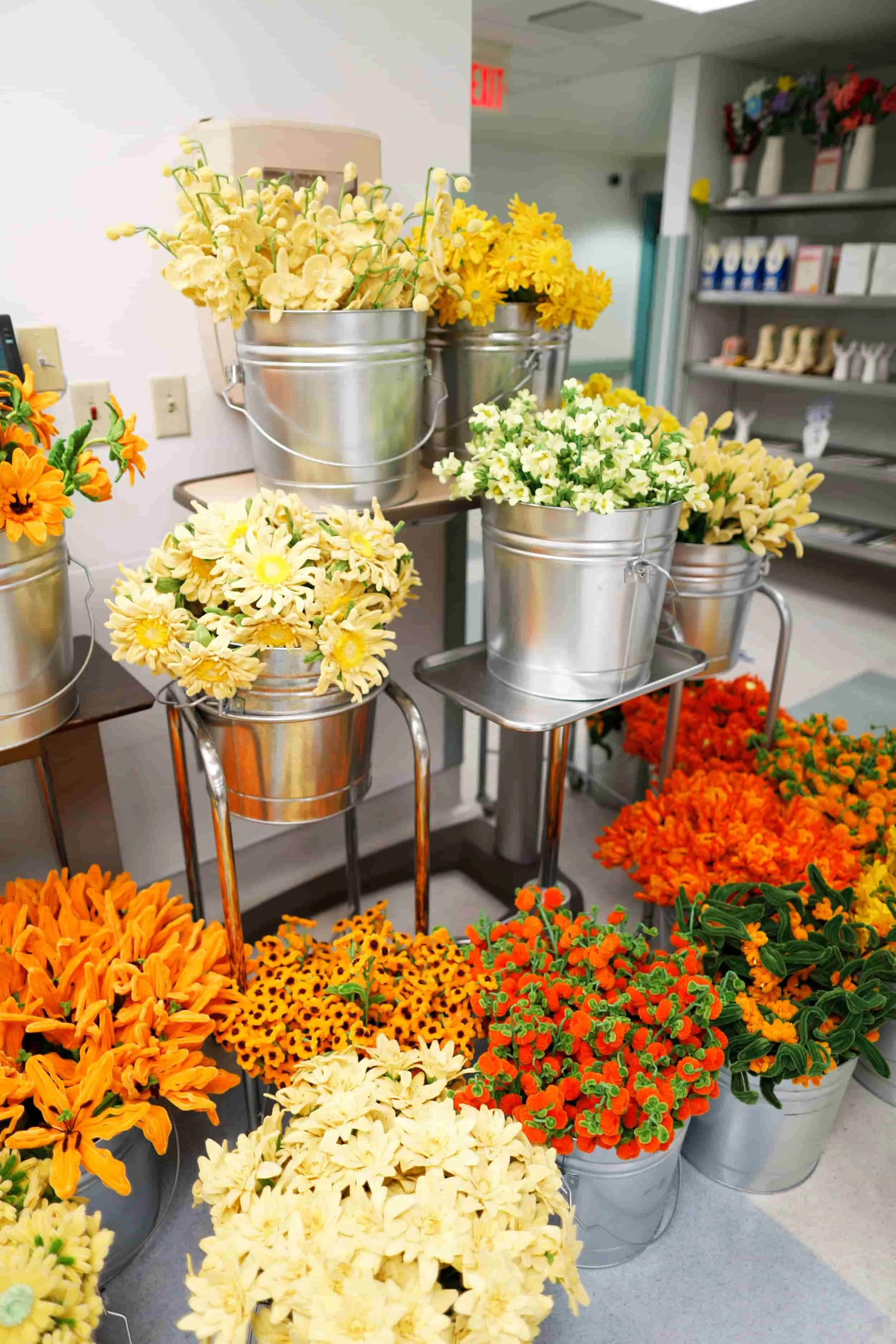
Some stand tall and proud, others lean together as if sharing comfort; all of them carry the gentle message that tenderness can be created from the simplest materials and that joy, like art, is often stitched from small, persistent gestures.
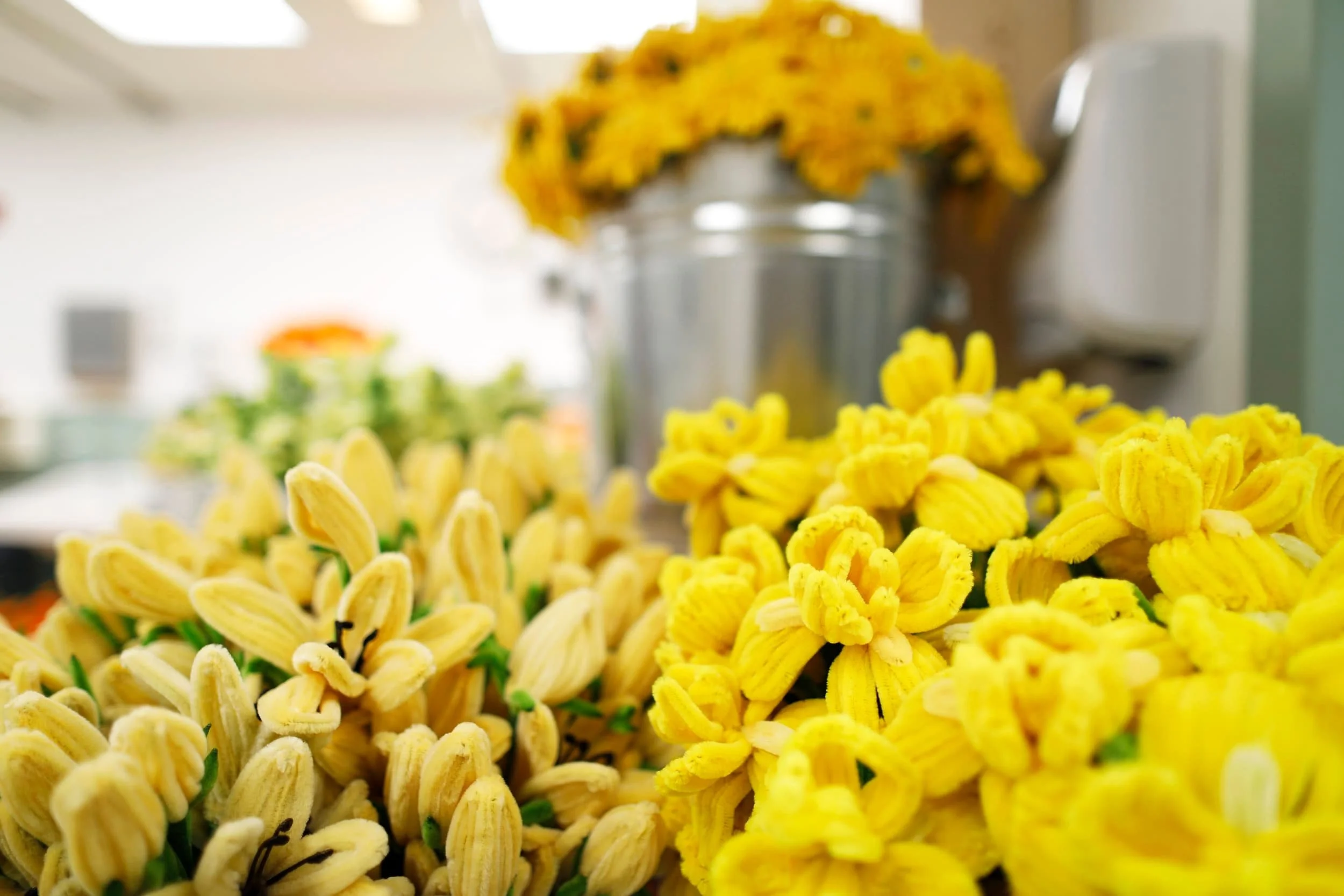
This popular part of the experience — the “Build Your Own Bouquet” flower shop — is filled with exquisitely crafted blooms that look astonishingly lifelike. Stepping into the room is a delight for the senses — an abundance of blossoms in every hue and shape, each one waiting to be plucked and woven into a playful bouquet. Stems are priced at $10 USD each — buying a flower feels like trading a few dollars for a burst of handmade joy, each twist and color a small promise that even here, beauty can be simple and kind.
My Bibimbap Moment
I spend a lot of my life thinking about how spaces make people feel. As an interior designer — and especially one who has spent years designing healthcare and education spaces — I'm used to thinking about hospitals through a very particular lens: function, material, circulation, comfort, safety. Hospital of Emotions turned all of that sideways.
Inside a former Los Angeles hospital, patient rooms, corridors, nurses' stations and clinical spaces have been transformed into immersive installations exploring different emotions. You move through departments dedicated to Joy, Fear, Hope, Sadness, Gratitude, Resilience and more, never quite knowing what’s waiting in the next room.
Some rooms were beautiful. Some were strange. Some were playful, uncomfortable or unexpectedly moving. And some somehow managed to make me feel exactly what was written on the department sign outside.
That was the part I found fascinating. The building wasn't simply holding the art. The architecture, its history and everything I already associate with a hospital became part of how I experienced it.
Today’s Bibimbap Recipe
🥢 Flavor: Immersive
🌿 Ingredient: Feeling
❤️ Best Memory: The surprise and range of feelings, even the negative ones that surfaced
🎒 Take With You: Sometimes a space doesn't need to tell us how to feel. It just needs to create enough room for us to feel something.
What made the experience work so well for me was that the thoughtfulness didn't stop with the installations. The entire visit had been designed as an experience, right down to the smaller details.
I carried a Patient Emotional Chart from department to department, collecting a stamp as I finished each one — a tiny interaction that made wandering four floors of hospital rooms feel strangely satisfying. Even the water bottles for sale carried little inspirational messages. At the end, handmade flowers and a sweet, thoughtfully curated gift shop softened the landing after spending so much time moving through very different emotional worlds. The patient-style check-in and “discharge” framing made the concept feel complete rather than gimmicky.
I left thinking about how much our surroundings are capable of doing to us. A room can make us curious or uneasy. Color can make something clinical suddenly playful. Something beautiful can exist inside a space associated with fear or vulnerability.
Hospital of Emotions didn't make me leave with one particular emotion. It made me notice just how many I had felt along the way — and how much of that feeling had been shaped by the spaces around me.
The Essentials
Knowing a few essential tips before visiting the Hospital of Emotions makes the experience smoother and more meaningful — this immersive art exhibit in LA is housed in a repurposed downtown medical center. Expect a meditative but unsettling mix of large-scale installations, interactive rooms and dimly lit corridors that ask for comfortable shoes, patience for timed entry and possible lines and raw emotions.
So, plan to soak in the sensory storytelling, check the website for timed-ticket reservations and accessibility notes and arrive with an open heart and a charged camera for uniquely interesting shots.
📸 Photo Tip | Keep in mind that many rooms lean dim, so getting bright, well-lit photos can be a bit of a challenge — especially with a DSLR.
When to Go & Schedule
The Hospital of Emotions in LA holds a schedule best visited at golden hour — wander through its art exhibits in LA on weekends from 11 AM to 7 PM and be sure to catch their special evening sessions every first Friday.
Standard Hours: The exhibit is open daily from 10:00 AM to 8:10 PM.
October "After Dark" Hours: If visiting in October, they host a special Halloween theme called Hospital of Emotions: After Dark. These evening blocks feature lower lighting, roaming interactive characters and an optional guided descent into the spooky hospital basement. After Dark hours extend late — until 11:00 PM on weekdays and 12:00 AM on weekends.
Best Time to Visit: Mid-week mornings or early afternoons are best if you want to avoid the crowds, read the artist placards in peace and take photos without waiting.
Where is It & How to Get There
In Los Angeles, getting to an event can feel like an adventure — whether you’re cruising down palm-lined boulevards, darting through a scenic Metro ride or catching a sunset-lit rideshare, the city turns every commute into part of the story.
Address: The exhibit is housed inside the former St. Vincent Medical Center at 2131 W 3rd St, Los Angeles, CA 90057 (located in the Westlake district, just outside of Downtown LA).
Driving: It is a quick 10-minute drive from Downtown LA. On-site parking is available in a dedicated lot but costs $20 USD.
🅿️ Parking Tip: Many visitors recommend skipping the expensive lot and opting for metered street parking or searching for free street parking in the surrounding residential neighborhood.
Public Transit: Multiple metro bus lines run directly past the building on 3rd Street, dropping you off right near the entrance.
Tickets & Logistical Details
Tickets for the Hospital of Emotions — timed-entry for weekends, discounted weekday slots and clearly marked accessibility entrances — make planning one of the easiest pleasures among art exhibits in LA, leaving more time to wander, feel and linger.
Booking: You must purchase timed-entry tickets in advance online via the Official Hospital of Emotions Ticket Portal. General admission is $58–$59 for adults, with discounts available for students, seniors and veterans. Children under 4 are free.
Arrival: Plan to arrive about 10 minutes before your scheduled slot with your entire party.
Time Commitment: Expect to spend 2 to 2.5 hours walking through the rooms to fully absorb the audio, visual and tactile details.
Inside the Experience Tips
For a full embrace of the Hospital of Emotions — where the theme explores the healing and haunting textures of human feeling — wear comfortable, supportive footwear for wandering installations and take advantage of step-free routes, audio descriptions and quiet rooms to make the visit both moving and accessible.
The Theme: They lean heavily into the medical premise. At check-in, you receive a patient wristband, the staff are dressed in scrubs or lab coats and you get a "health passport" to stamp as you navigate departments like Joy, Fear, Sadness and Resilience.
Footwear: Dress comfortably. You will be walking and standing across four expansive floors of a concrete medical center.
Accessibility: The historic building is fully wheelchair accessible and features functioning elevators to get between the floors.
Floor by Floor Maps of Hospital of Emotions
Scan the QR code on your Patient Emotional Chart when you arrive to unlock a detailed, floor-by-floor map — complete with department layouts, room numbers and the artists behind each piece. Begin your journey on Level Six and descend through the building, floor by floor, until you arrive at the main floor.
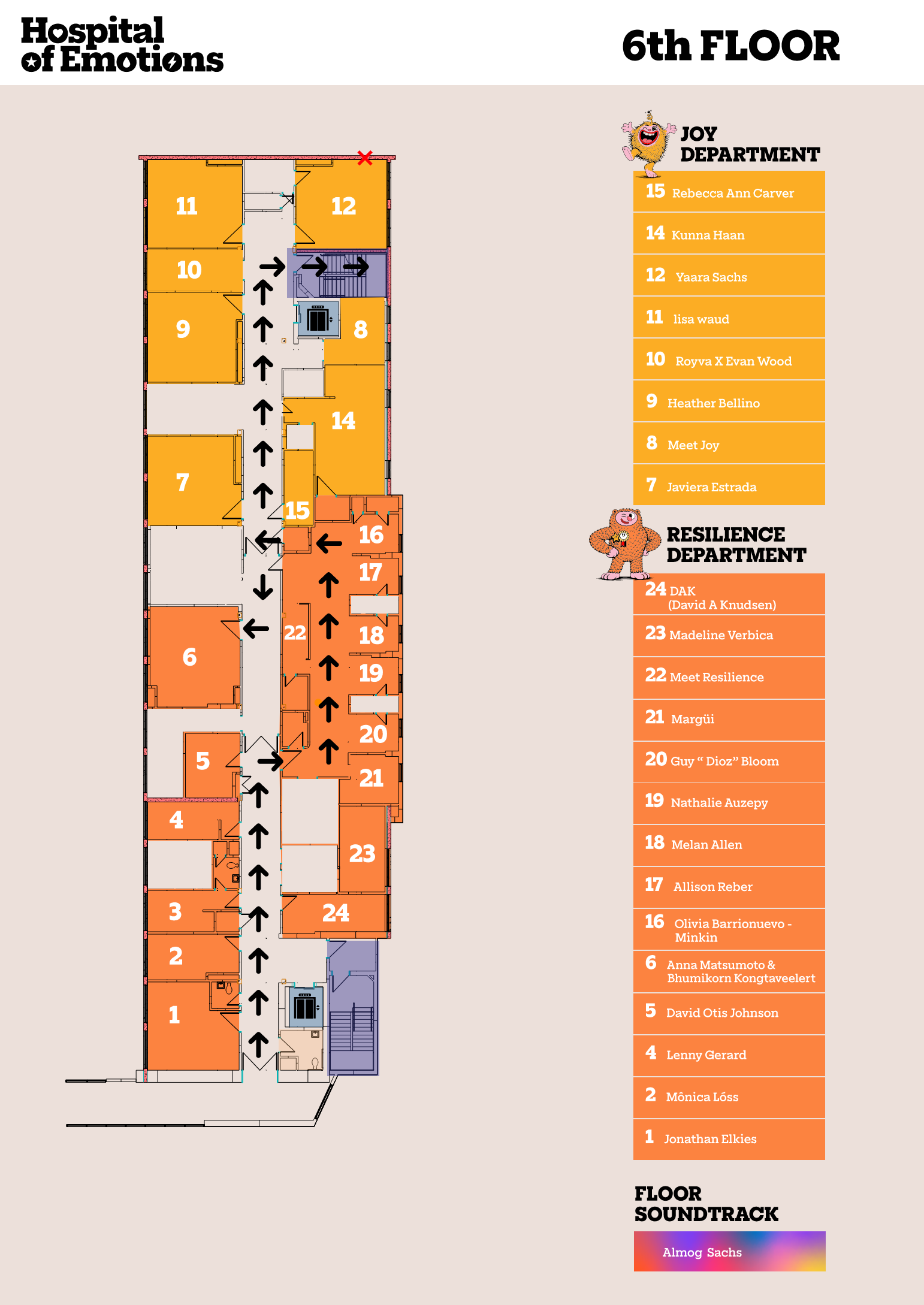
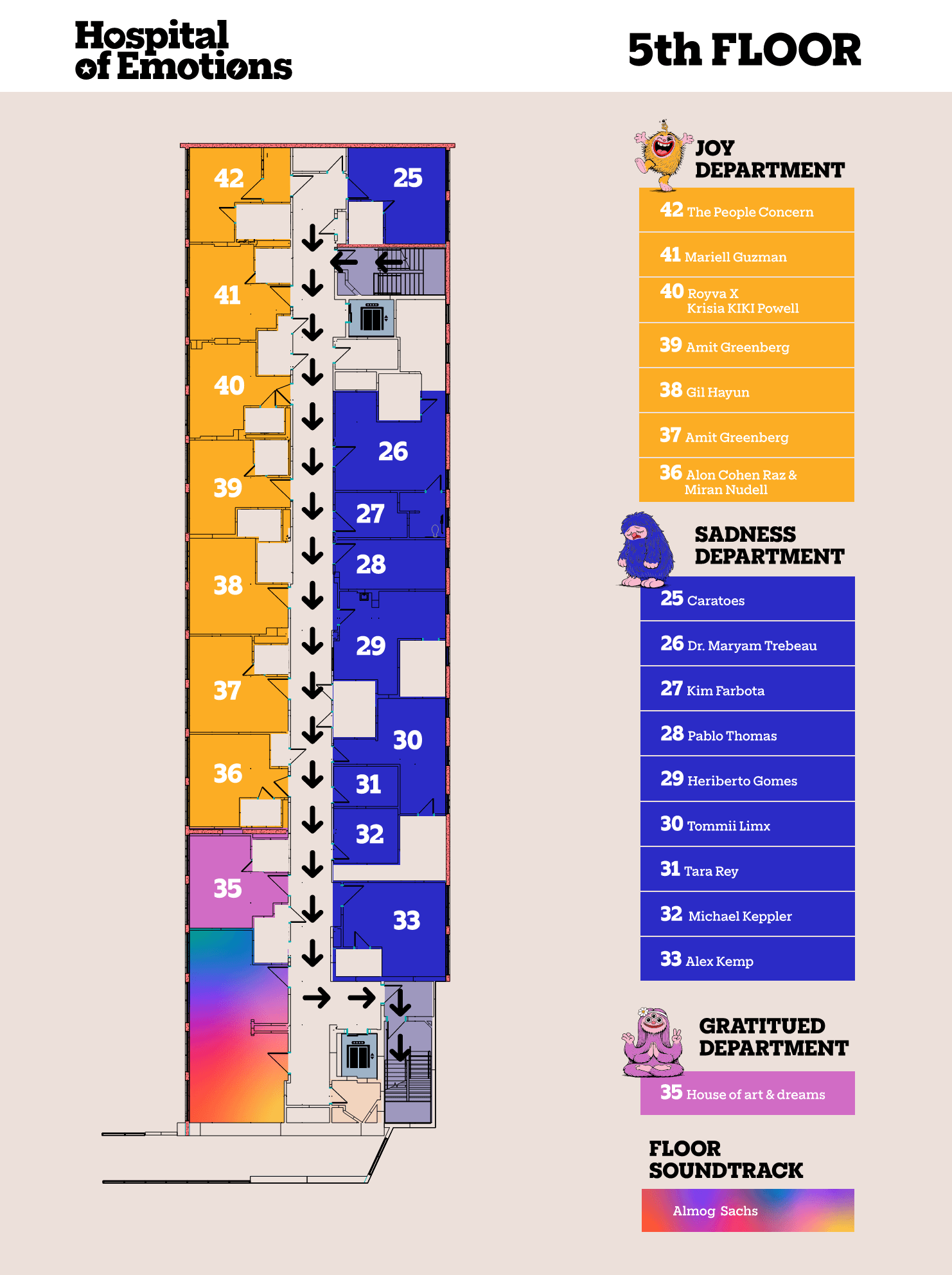
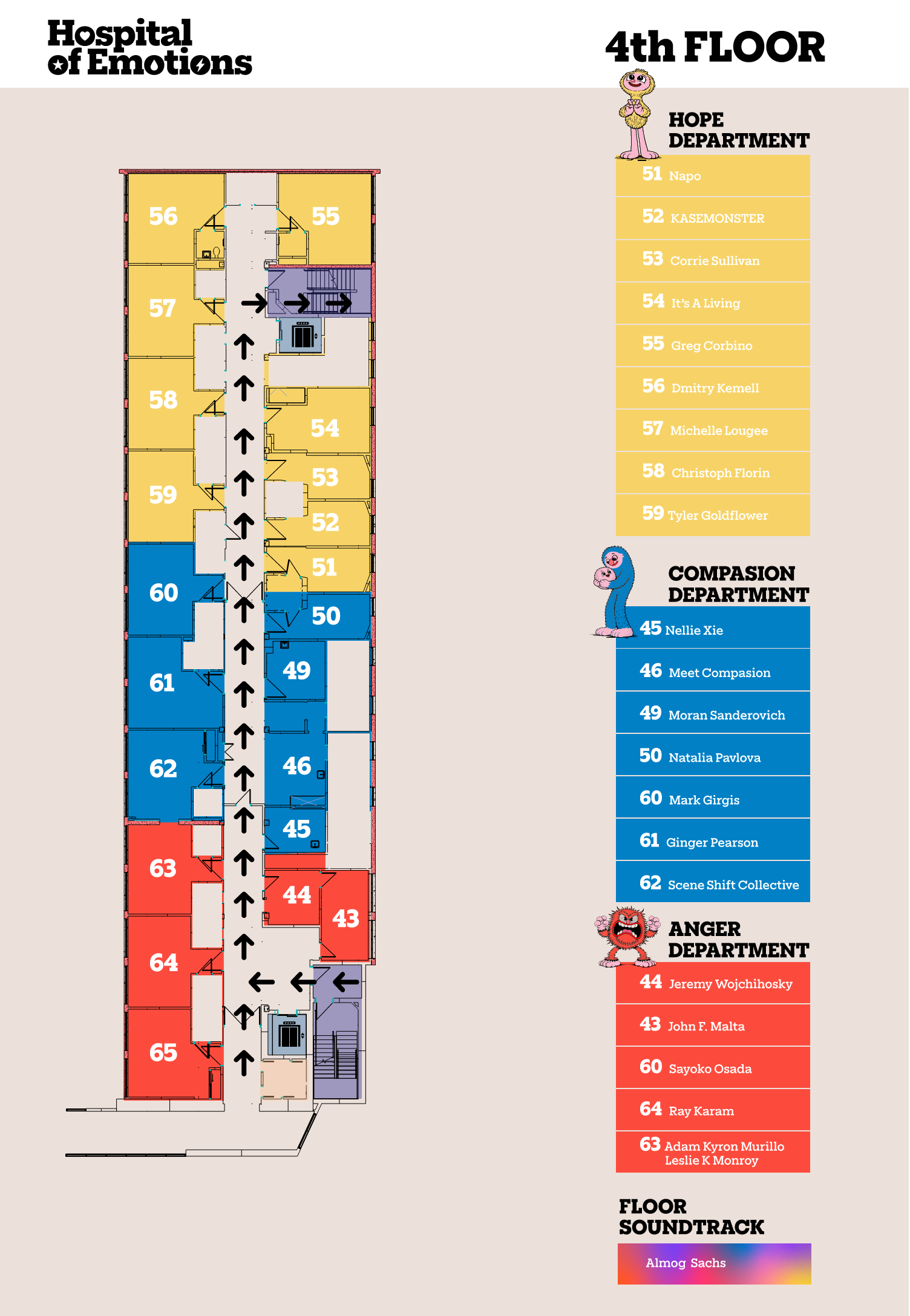
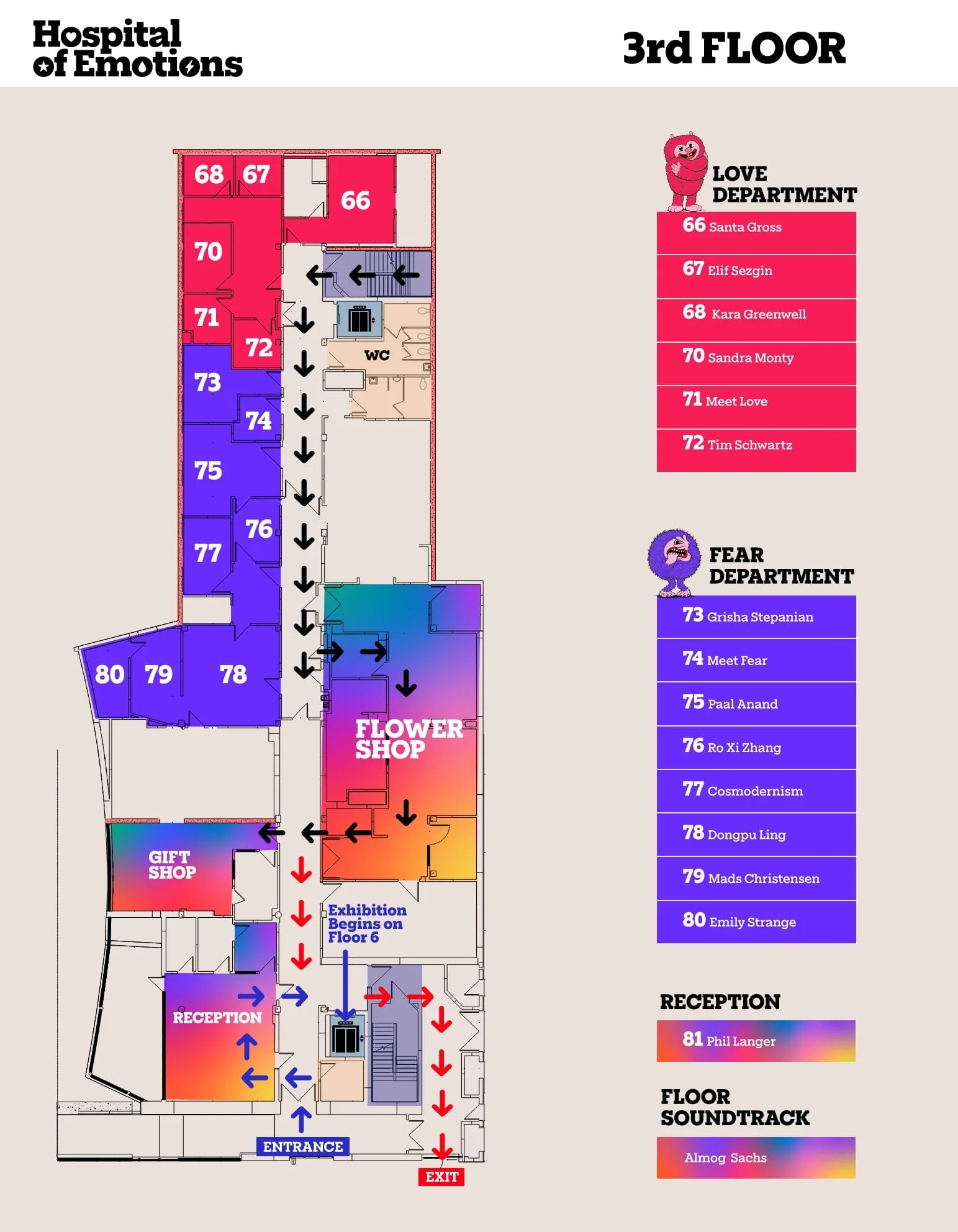

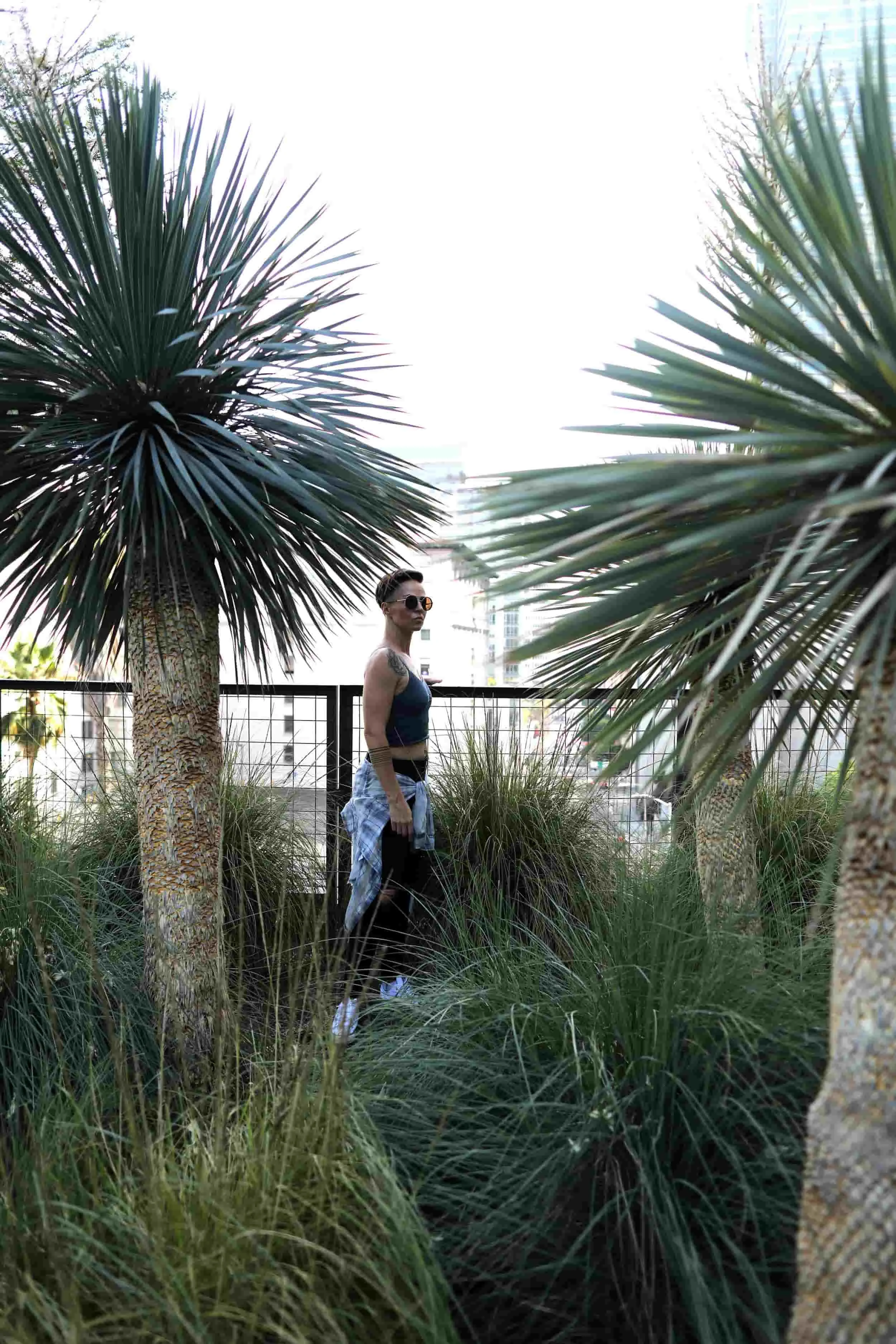





Step into one of the most unique art exbibits in LA — Hospital of Emotions — a healing, playful pop-up where immersive installations prescribe wonder, nostalgia and wholehearted connection for the soul.