The Ultimate London Guide: Best Food Markets & Shopping Gems
Unearth London’s culinary soul & hidden market gems with this travel guide — must-eat delights & the best spots to shop.
Updated | October 2026
Why London Is Made for Eating & Exploring
London was the first stop on my two-week European trip and one of the things that surprised me most was just how much of the city can be experienced through what you eat and where you shop.
Forget the old stereotype of heavy pub food and predictable roast dinners. London is one of those cities where you can move between cultures in the space of a few blocks — past South Asian restaurants and Turkish bakeries, through neighborhood food markets and into tiny cafés or restaurants doing something entirely their own.
That diversity is part of what makes London so interesting. Centuries of migration, trade and reinvention have shaped a city where food tells multiple stories at once. British traditions haven't disappeared; they sit alongside dishes and ingredients brought from around the world, often changing and evolving in the process. You can eat incredibly well here without the experience needing to be expensive, formal or particularly planned.
And then there’s the shopping.
London rewards the same kind of wandering. Vintage clothing, antiques, independent shops, flower stalls, books, records and neighborhood markets offer a much more interesting way to explore the city than moving from one major shopping street to another. For me, these were also some of the places where London's personality came through most clearly — the objects, displays, old storefronts and wonderfully mismatched collections were often as interesting as whatever I was actually shopping for.
That combination is what this guide is really about: experiencing London through the things people make, cook, collect and sell. Come hungry, leave some room in your suitcase and don't be afraid to wander a few streets beyond wherever you thought you were going.
At a Glance
📍 Destination: London, England
🕒 Time Needed: 3 days
💰 Budget: €150-€250/day ($190-$320 USD)
👟 Walking Level: Mild
🌤️ Best Season: Shoulder seasons (April-May and September-October)
☕️ Don’t Miss: Old Spitalfields Market
🖤 Perfect For: Foodies and design and style lovers
My Bibimbap Moment
This trip added: Abundance.
London added the ingredient of abundance to my Bibimbap Life. I loved the feeling that there was always something else to discover — another market buzzing with conversation, another stall serving something delicious, another vintage shop filled with pieces carrying stories of their own. The diversity of the city wasn't something I simply noticed; it was woven into the everyday experience of eating, wandering, shopping and watching people move through their neighborhoods. London reminded me how much joy there can be in a place that offers more than you could ever possibly take in.
My Two-Week England, Wales, Jersey, France & Monaco Itinerary
This two-week trip covered a lot of ground, beginning in England — London, where I spent my first few days exploring the city through food, markets and neighborhoods. London is enormous, so rather than trying to see everything, I mixed the bigger sights with the things I naturally gravitate toward when I travel: good food, vintage shops, markets and plenty of wandering.
From London, I took the train to Cardiff in Wales, followed the Welsh coast to Tenby, then returned to London before flying to Jersey. From there, the trip crossed the English Channel by ferry for an unexpected overnight in Saint-Malo before continuing to France — Nantes — a city that ended up being one of the surprises of the trip.
The final stretch took me south to Nice, where the pace slowed considerably after so much moving around. I used Nice as my base on the French Riviera, including a day trip across the border to Monaco before wrapping up the trip.
It was an ambitious route for two weeks but it gave me a little of everything: major cities, smaller coastal towns, an island, an unexpected ferry stop and, particularly in London, a lot of very good things to eat along the way.
My route: London → Cardiff → Tenby → Jersey → Saint-Malo → Nantes → Nice → Monaco
Explore
Here’s where the journey will take us.
Central London
Borough Market
Victorian Leadenhall Market
Mama’s Café
National Portrait Gallery
Toasted Nuts Along River Thames
North London
Iberia
East London
Old Spitalfields Market
Brick Lane
South London
Terry’s Café
Sentosa
West End
Leicester Square
Seven Dials Market & Apple Market
26 Grains in Neal’s Yard
Parsons
What I’d Explore Next in London
More London Markets I’d Explore
The Flower Markets I Wish I Hadn't Missed
More Neighborhoods I’d Eat Through
And If My Shopping Budget Were Bigger...
London, Still Unfinished
Travel More | England Travel Guides
A London Guide for Food & Shopping: Hidden Gems & Best Bites
London is a city made for eating and browsing your way through it. Historic markets sit alongside independent cafés, bakeries and food stalls, while the city's many cultures make it possible to encounter completely different flavors from one neighborhood to the next.
The same is true of its shopping. Beyond the major retail streets, vintage shops, antiques, secondhand finds and neighborhood markets offer plenty of reasons to wander without a strict plan. This guide brings together some of my favorite places to eat and shop in London — the stops worth seeking out, along with a few I simply stumbled across along the way.
Planning Your London Food & Shopping Days
London is huge, so don't try to work through this guide from top to bottom. Group stops by neighborhood instead. Borough Market and the Thames work naturally together; Old Spitalfields and Brick Lane make another easy pairing; and Leicester Square, Seven Dials, Neal's Yard and Covent Garden can become one West End wander. The Tube makes it easy to move between areas but some of my favorite discoveries happened once I stopped riding and started walking.
Central London Bites — Markets, Food Stalls & Hidden Shops
Central London is where historic markets, cafés, cultural landmarks and everyday street food overlap. You can browse a centuries-old market in the morning, stop for something small while walking along the Thames and find yourself surrounded by some of the city's most recognizable architecture along the way.
Markets are a big part of the experience here but they aren't all alike. Borough Market is built around food, while the Victorian beauty of Leadenhall Market is as much about the setting and architecture as what's inside. Elsewhere, smaller cafés, shops and food stalls make it easy to build a day around wandering rather than a strict restaurant itinerary.
That's what I liked most about exploring Central London: food didn't have to be the destination every time. Sometimes it was a market I'd deliberately sought out; other times it was simply something good I found between museums, streets and sights I was already exploring.
Borough Market: One of London’s Best Food Markets
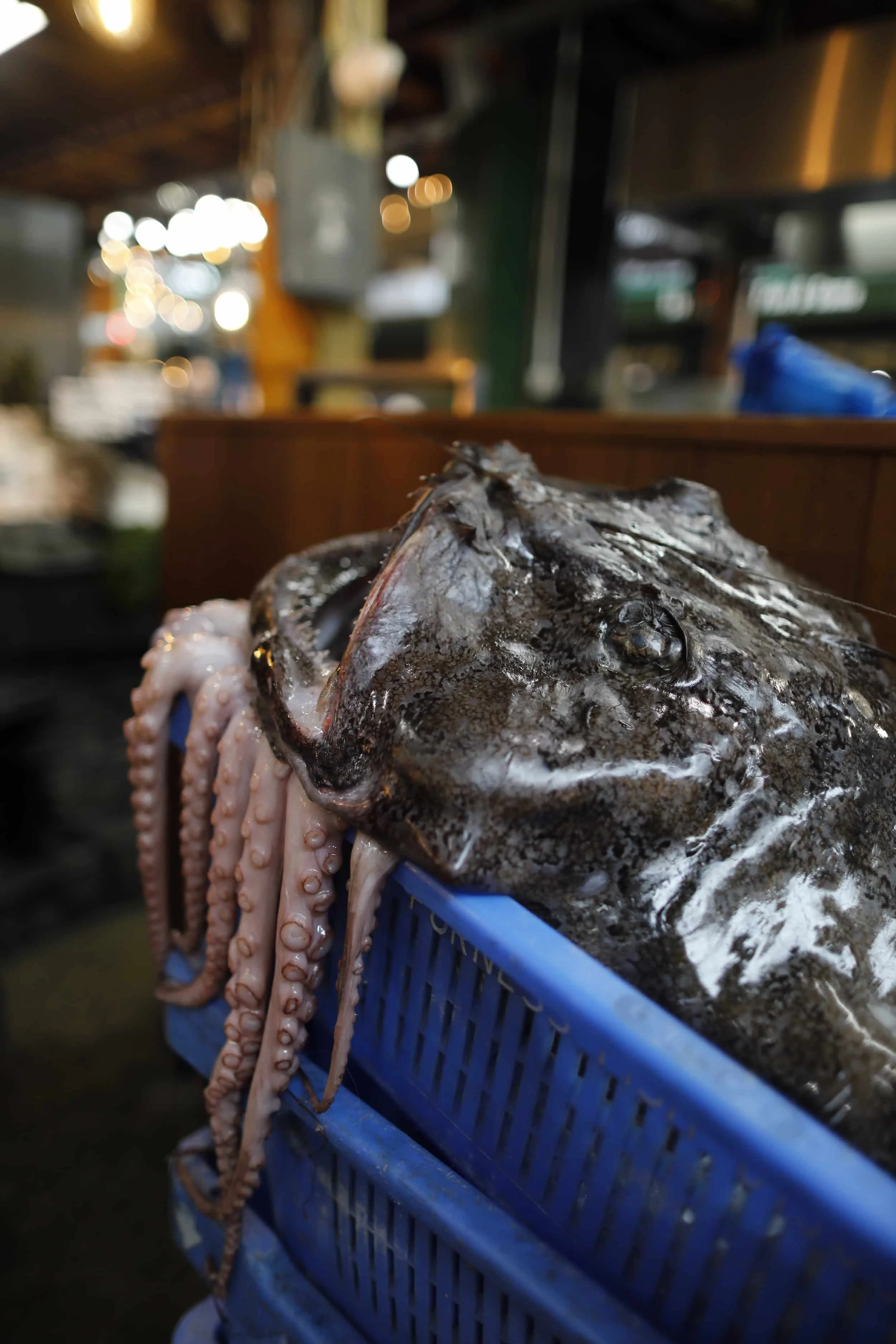
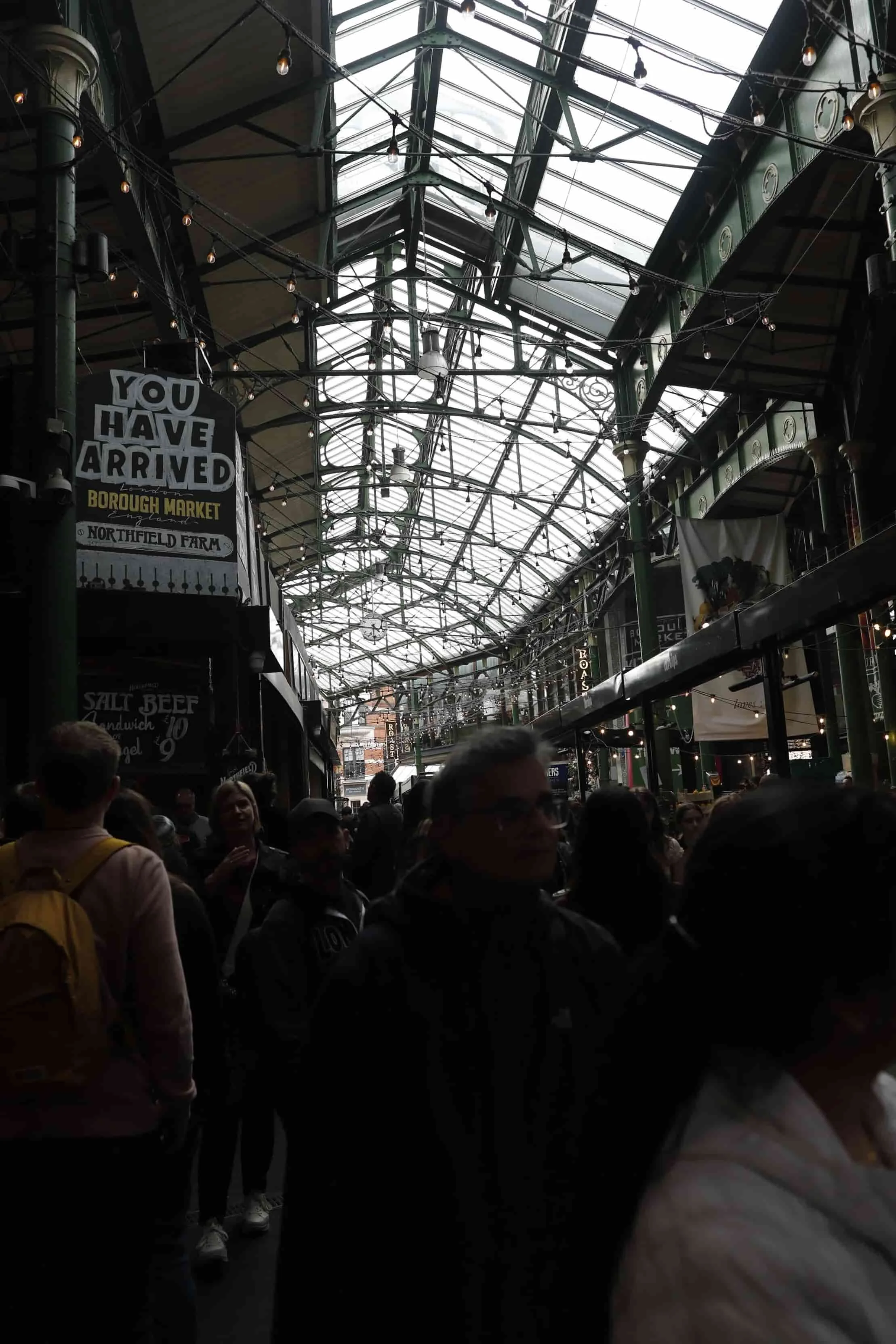
Borough Market is one of the oldest and best-known food markets in London, tucked beneath and around the railway arches near London Bridge. It’s also one of the liveliest stops in this London food guide — busy, colorful and slightly overwhelming in the best possible way.
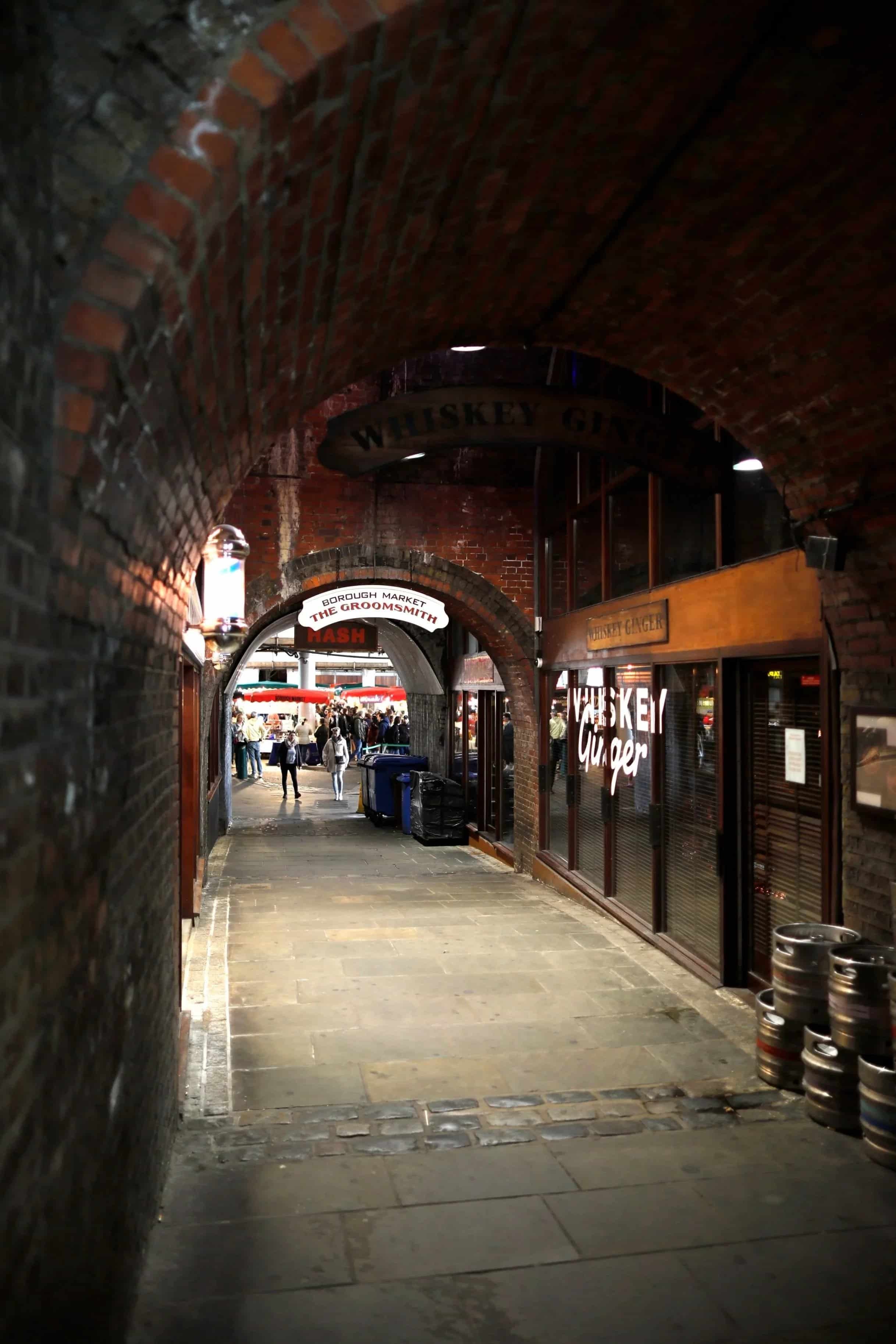
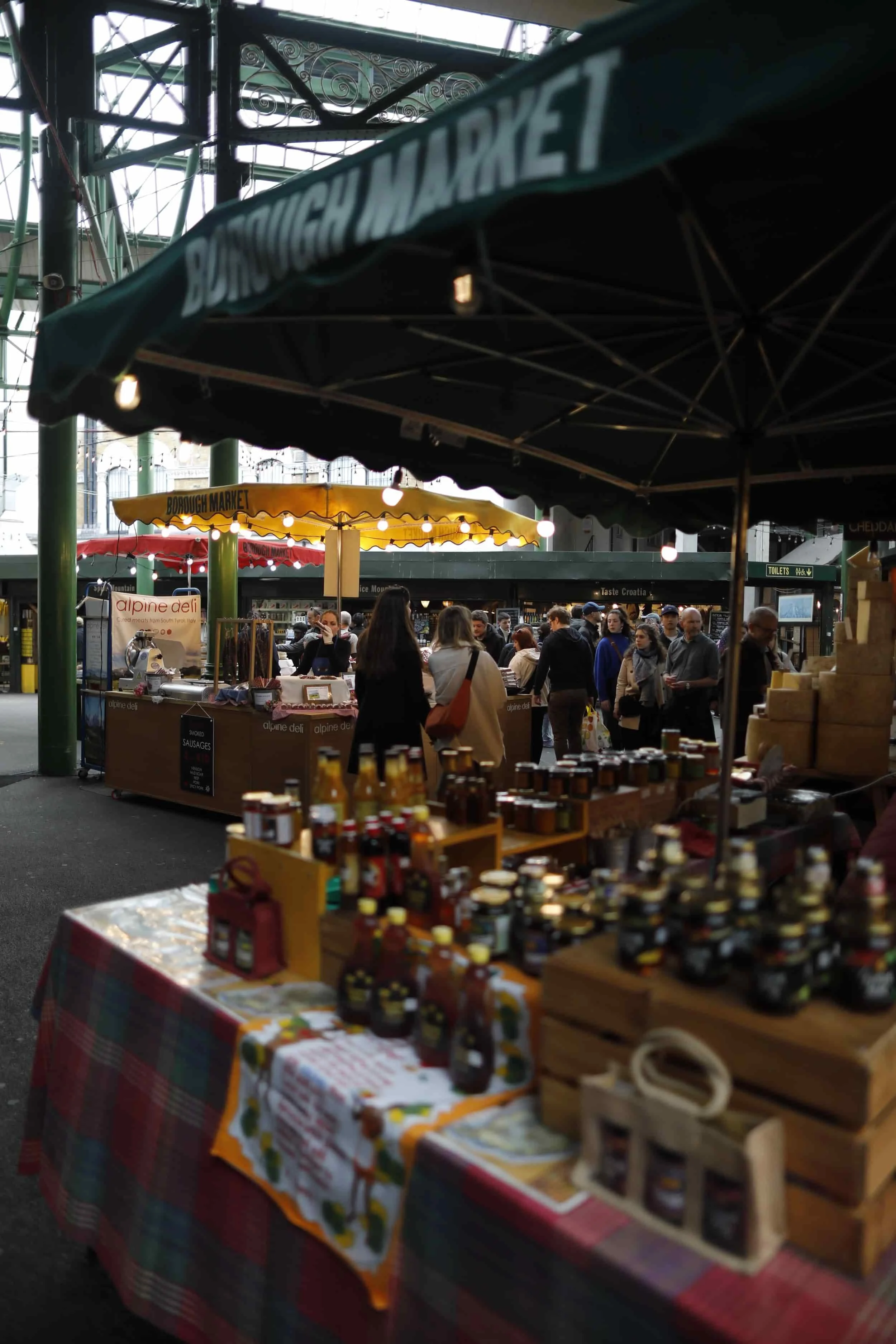
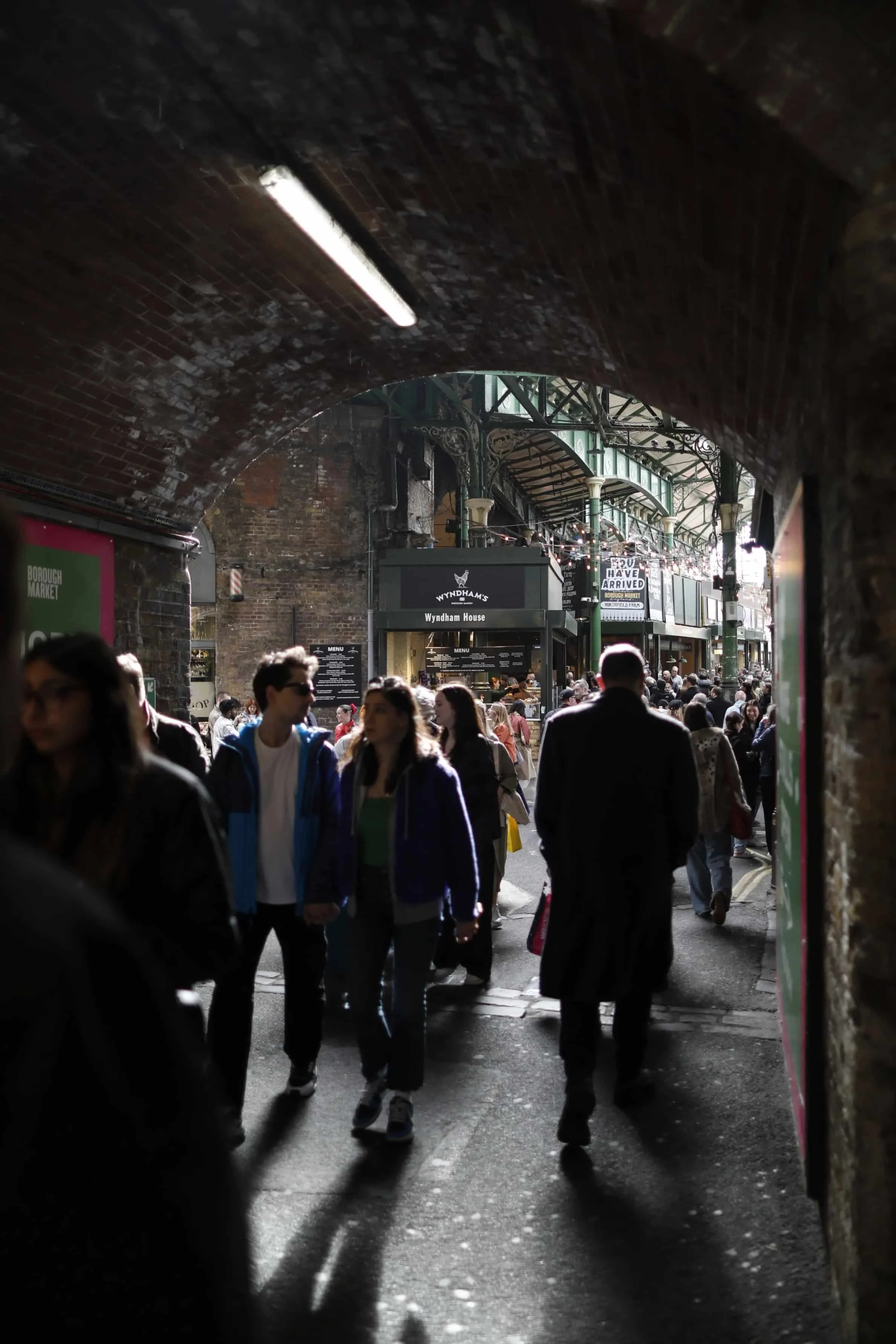
The setting is part of what makes it memorable. Stalls spill beneath a mix of ironwork, glass and railway infrastructure, with trains passing overhead while crowds move between produce stands, bakeries and counters serving food from around the world. It feels historic without feeling preserved in time; this is still very much a working food market.
What You’ll Find at Borough Market
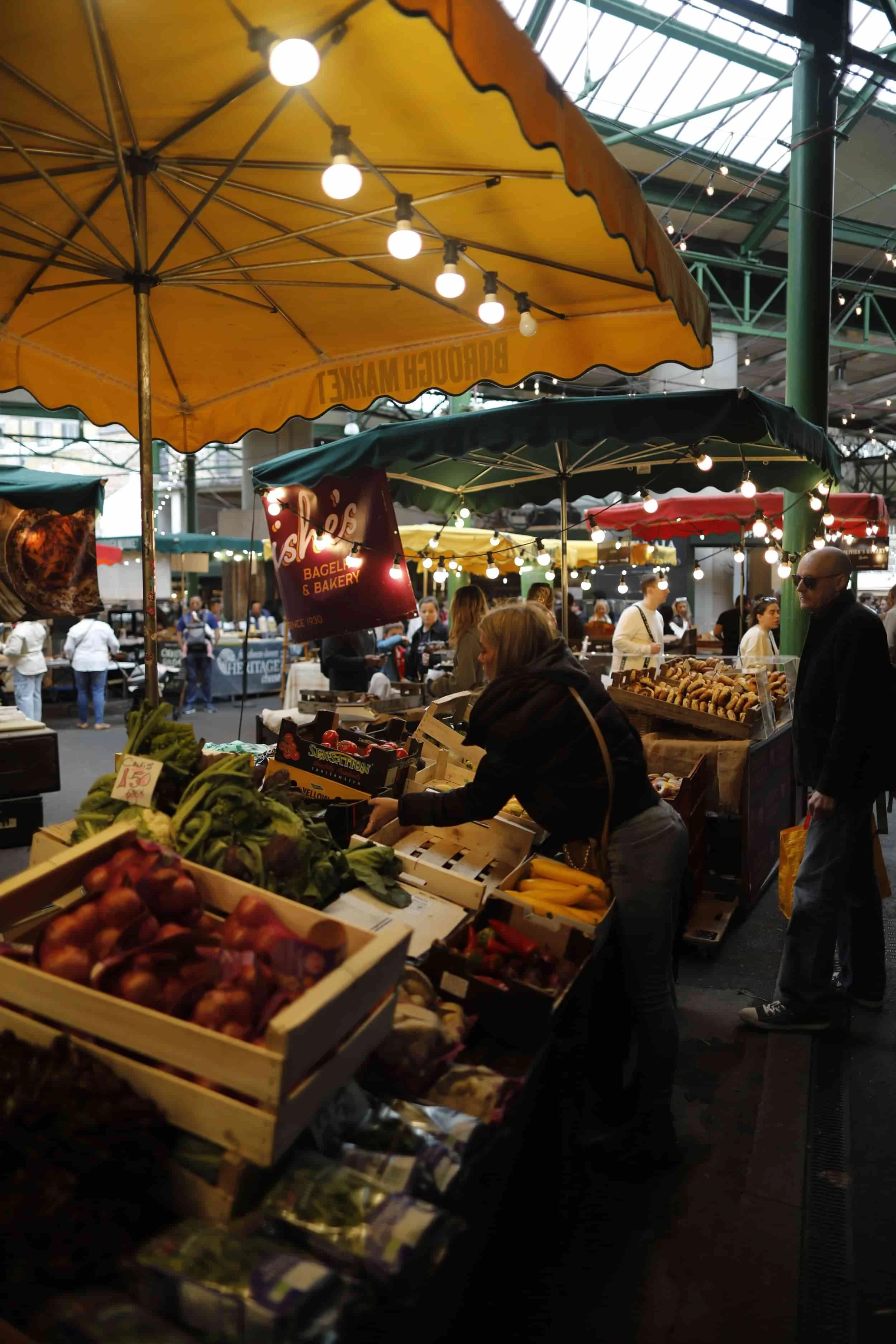
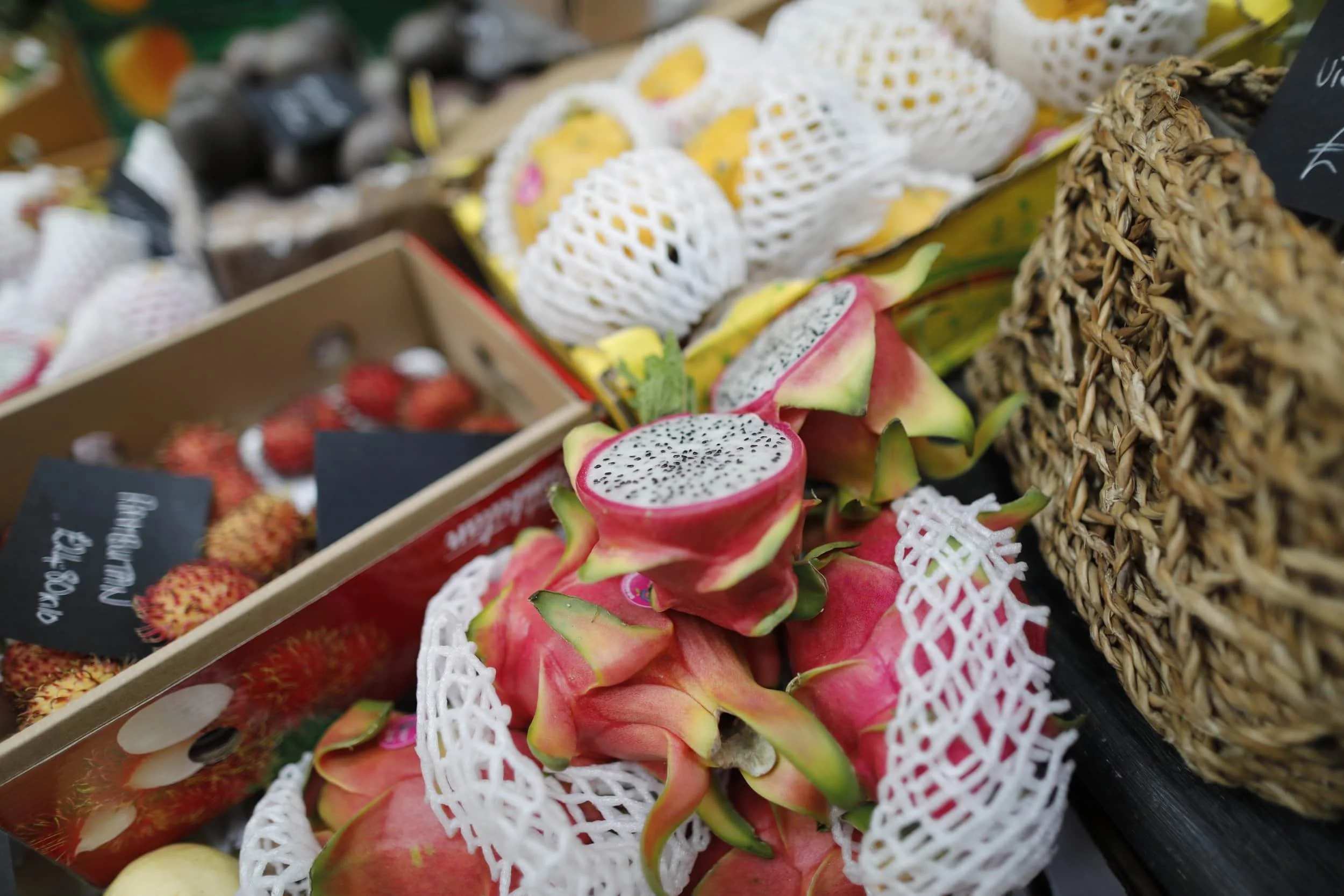
Come hungry. Borough Market brings together fresh produce, seafood, meat, cheese, breads and pastries, specialty ingredients and prepared food, so you can shop for something to take home or simply eat your way through the market.
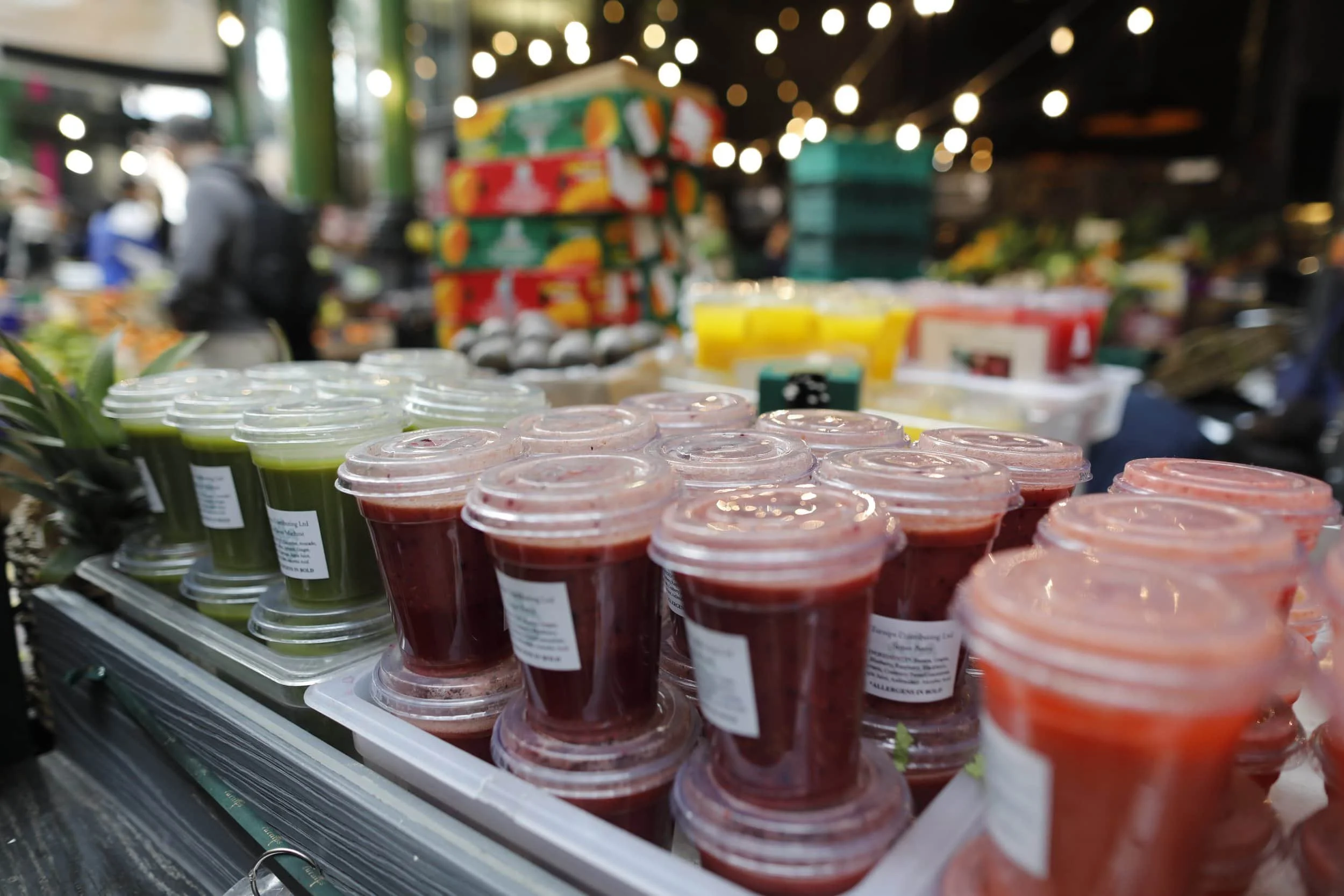
The variety was what struck me most. One aisle might be lined with beautiful produce and juices, while the next leads to artisan cheeses, baked goods or something hot coming straight off a grill. There are British staples alongside international food stalls, making it easy to sample several completely different things without leaving the market.
And then there are the sweets. Pastries, doughnuts, breads and oversized pretzels fill the displays, while juice stands offer an easy break from all the richer food. I grabbed a fresh fruit juice while wandering through but looking back at my photos now, there are so many things I wish I'd stopped to try.
A Market With History
Borough Market's roots stretch back centuries and food trading has long been part of this area around London Bridge. The market you experience today combines that history with a much more contemporary food culture, bringing established traders together with newer producers and prepared-food vendors.
That combination is what keeps it from feeling like a historic attraction masquerading as a market. People still come here to buy ingredients, meet producers and eat, even as Borough Market has become one of London's major visitor destinations.
I especially liked seeing how the old market structure accommodates everything happening inside it. Historic architecture, railway arches, food counters and crowds all layer together rather than feeling neatly separated — the physical space is almost as interesting to explore as the food.
Expect a Crowd
Borough Market gets busy. Narrow passages, popular stalls and long queues can make navigating it a little chaotic, particularly around lunch. But some of that energy is part of the experience.
If you want more time to actually look at the stalls, go earlier. If you're coming primarily to eat, give yourself enough time to wander before deciding what you want rather than buying the first good thing you see.
That was my mistake.
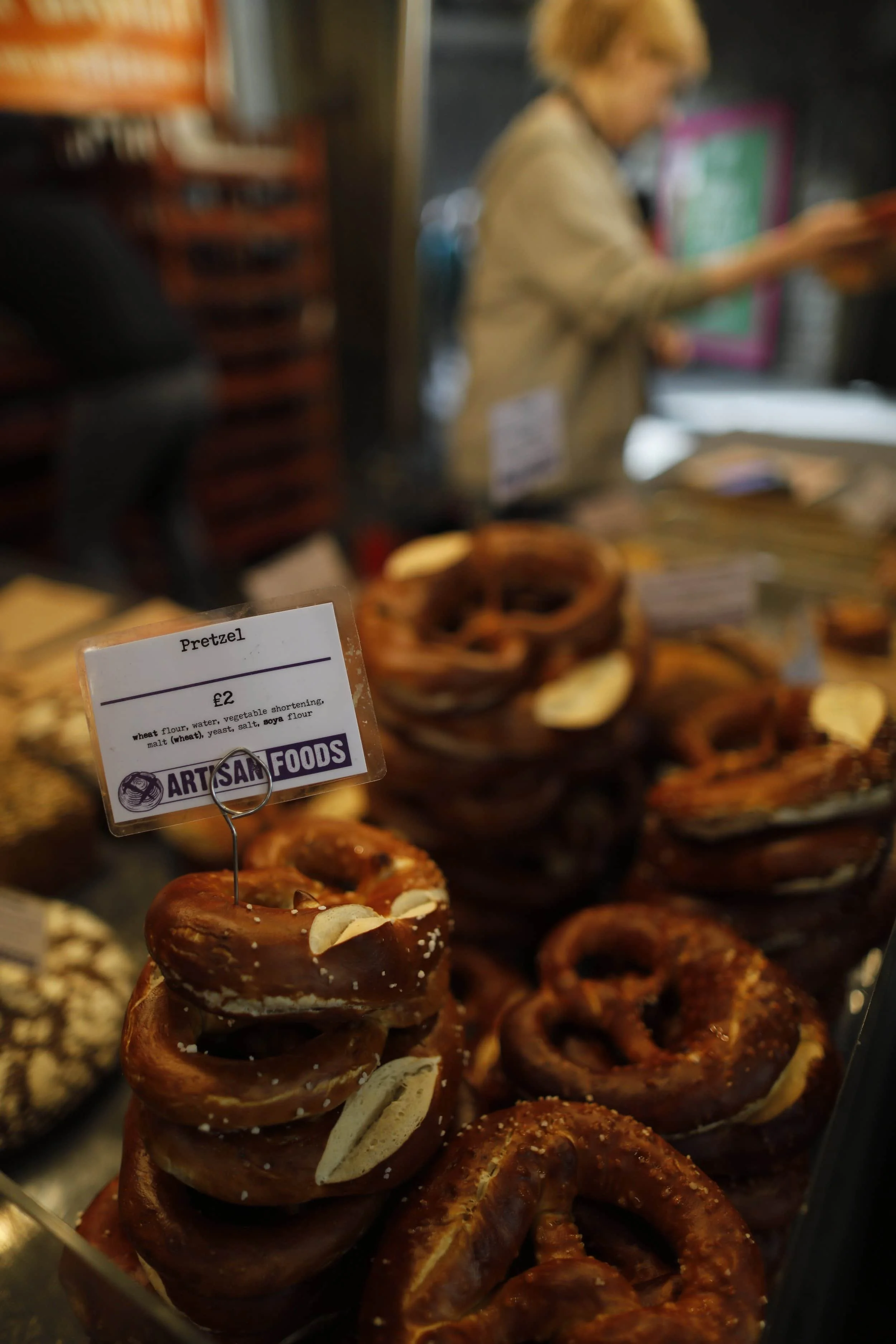
💡 My Tip | Come hungry and don't commit too quickly. I kept thinking I'd find something else around the next corner — and then realized I'd made it through Borough Market having tried far less than I wanted. If I went back, I'd plan to share a few things and sample as I wandered.
Borough Market also fits easily into a day exploring this part of Central London, with Southwark Cathedral, the Thames and Tate Modern nearby. But if food is one of your priorities in London, I'd give the market enough time to be a destination of its own rather than simply rushing through on the way somewhere else.
Admire the Architecture of Leadenhall Market
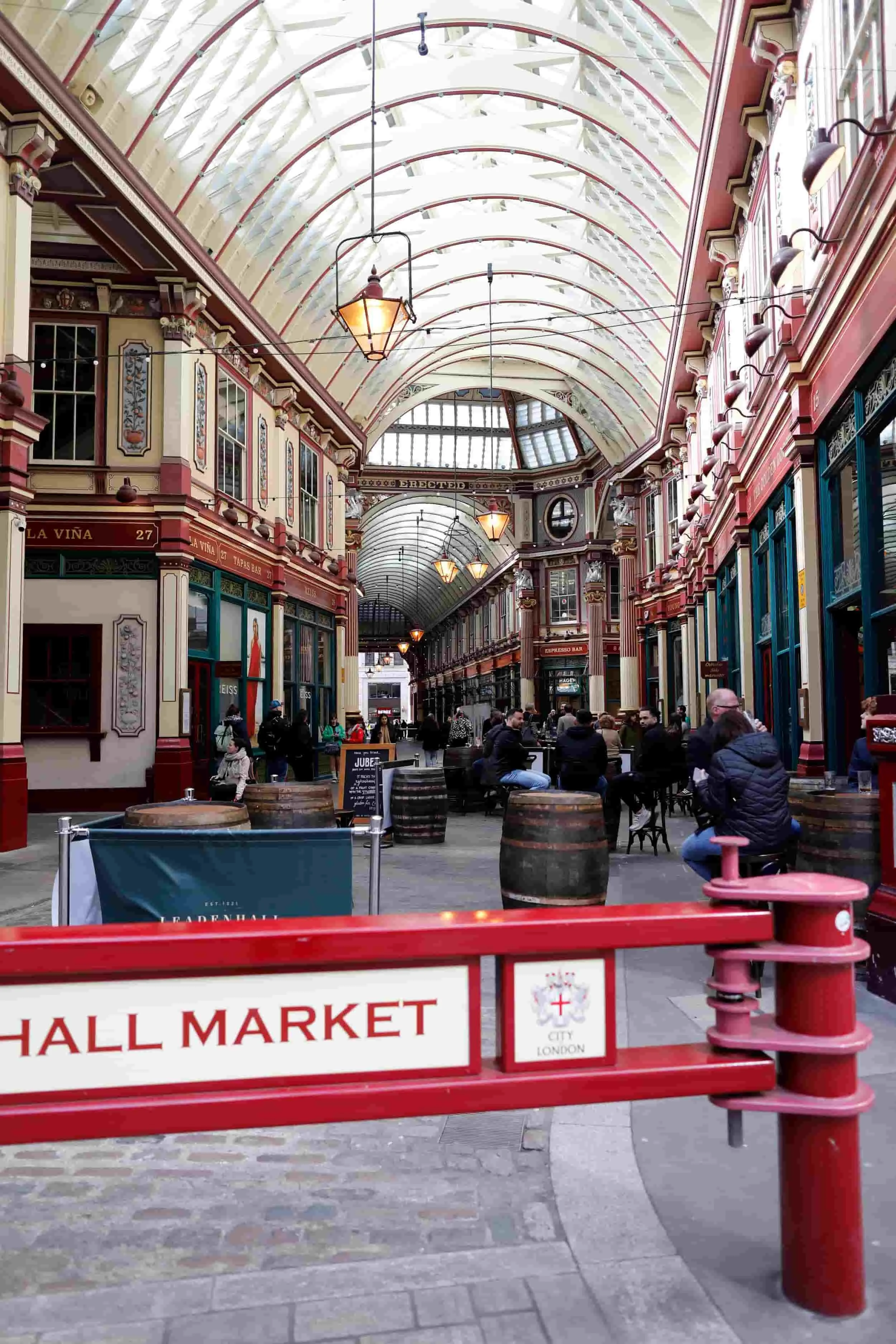
If Borough Market was about what I wanted to eat, Leadenhall Market was about where I wanted to look. This was easily one of the most beautiful markets I visited in London.
Set beneath an ornate Victorian roof, the covered passages are lined with painted ironwork, decorative shopfronts and richly detailed architectural elements. There’s a wonderful repetition to the structure overhead, while the storefronts, signage and small details at eye level give you plenty of reasons to slow down.
Several of the shops were closed when I visited, so this wasn't much of a shopping stop for me. There were still tables outside filled with people having drinks and catching up but inside the market was considerably quieter. I ended up spending most of my time simply wandering through and photographing the space — which, considering how beautiful it is, wasn't exactly a disappointment.
Centuries of London History
Leadenhall's history stretches much farther back than its Victorian appearance suggests. A market has existed here since the Middle Ages, while the site sits within an area that was once at the heart of Roman Londinium.
Much of the architecture you see today dates to the late 19th century, when architect Sir Horace Jones redesigned the market. The result is an elaborate network of covered passages that still functions as a place to eat, drink and shop in the middle of the City of London.
That layering is one of the things I find so interesting about London: Roman city, medieval marketplace, Victorian architecture and contemporary life all occupying essentially the same piece of ground.
Look Up
Even if you don't come to Leadenhall specifically to shop or eat, it's worth walking through for the architecture alone. Look beyond the storefronts to the roof, iron structure and decorative details overhead — the physical market was what stayed with me most.
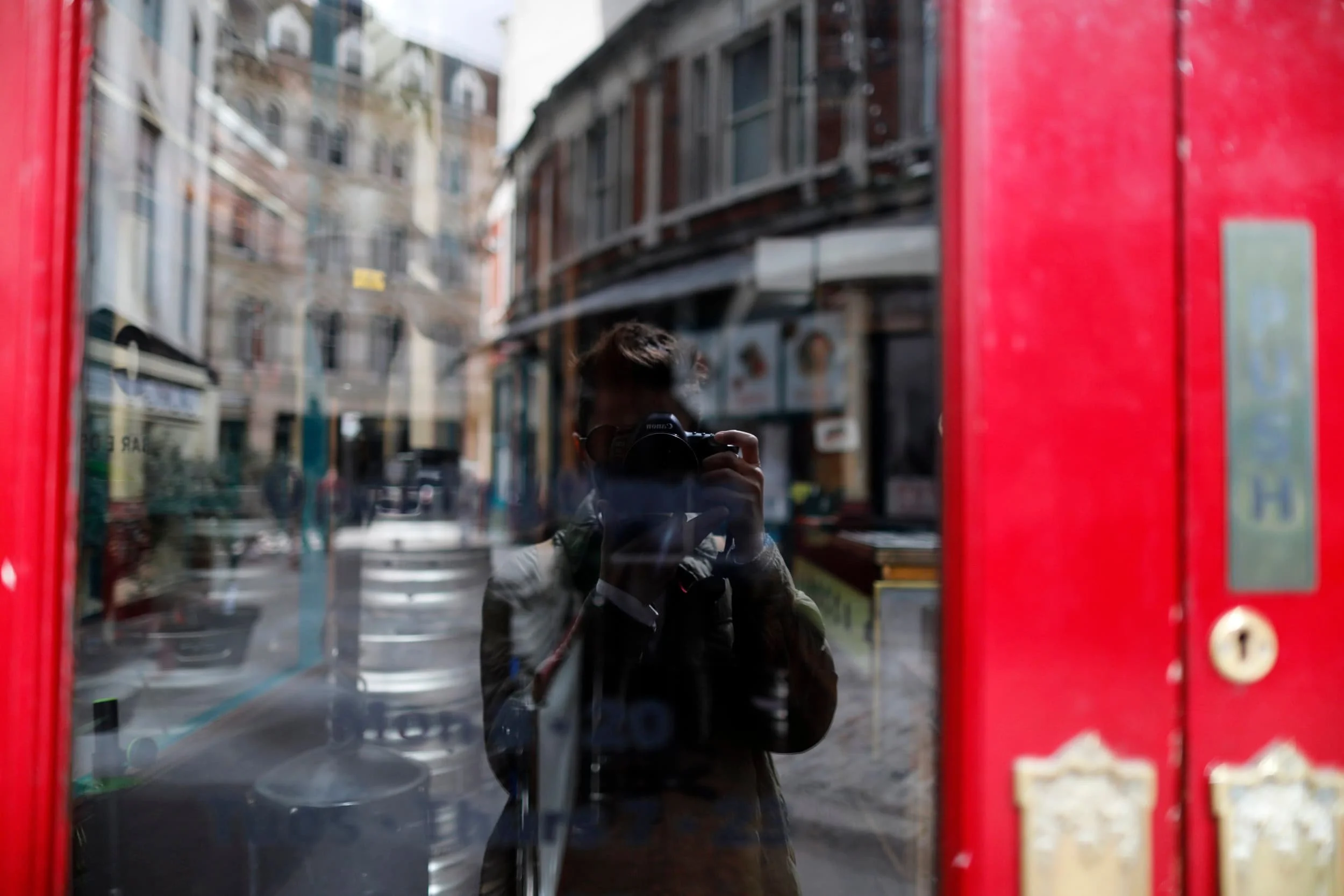
I even caught myself reflected in some of the shop windows while photographing the interior, which feels like a pretty accurate record of my visit: camera up, staring at the building instead of whatever was for sale.
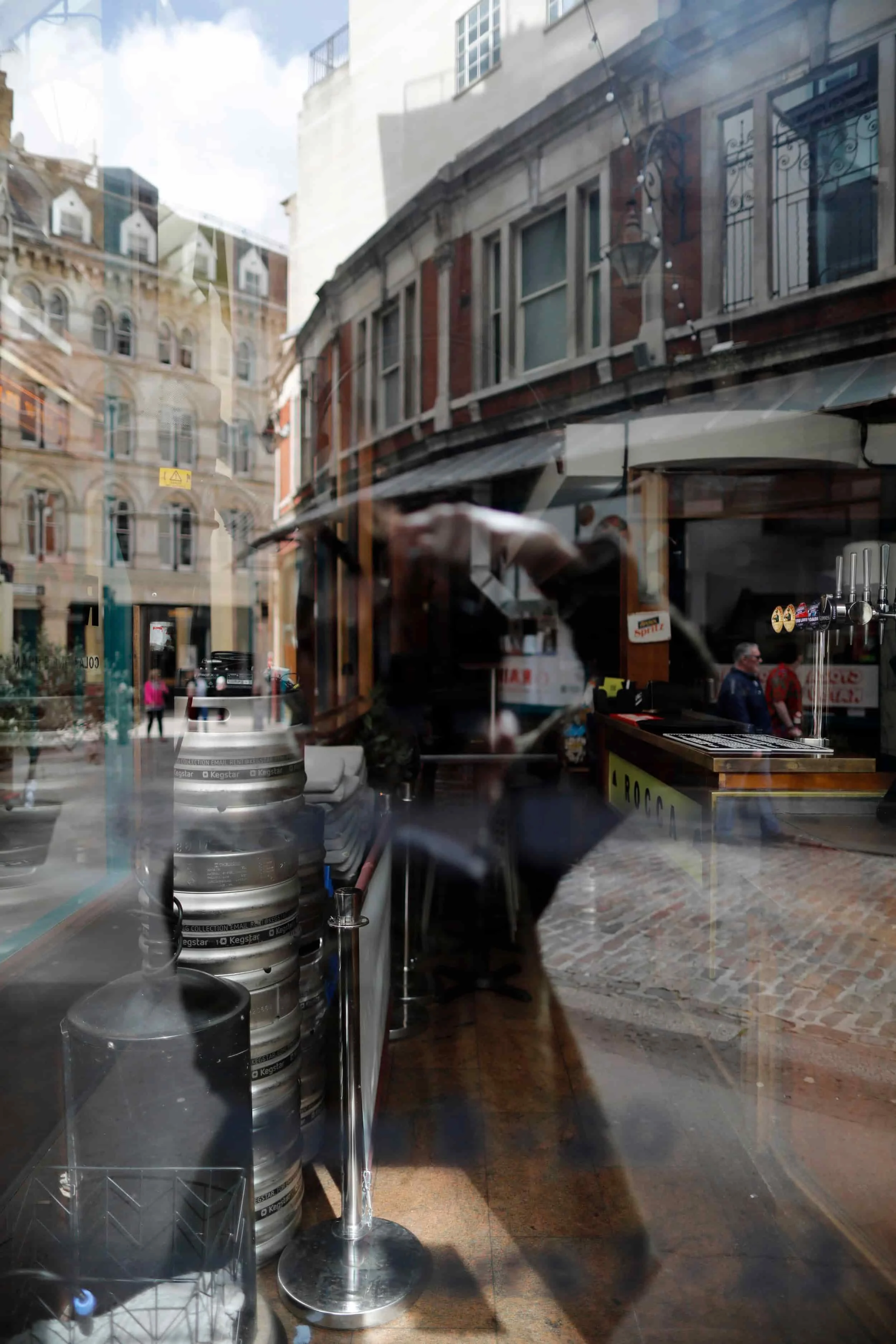
For anyone interested in architecture, historic markets or simply finding something different among the things to do in Central London, Leadenhall is an easy stop to work into a day exploring this part of the city.
💡 My Tip | Don't rush through Leadenhall just because it's relatively compact. Take a lap through the passages and look up — some of the most interesting details are above the storefronts.
Breakfast at Mama’s Café
If you're looking for a simple, unfussy breakfast in Central London, Mama’s Café is an easy place to stop before heading out for the day. When I visited, it was relatively quiet, with just a few other people inside — a welcome contrast to some of the busier markets and streets nearby.
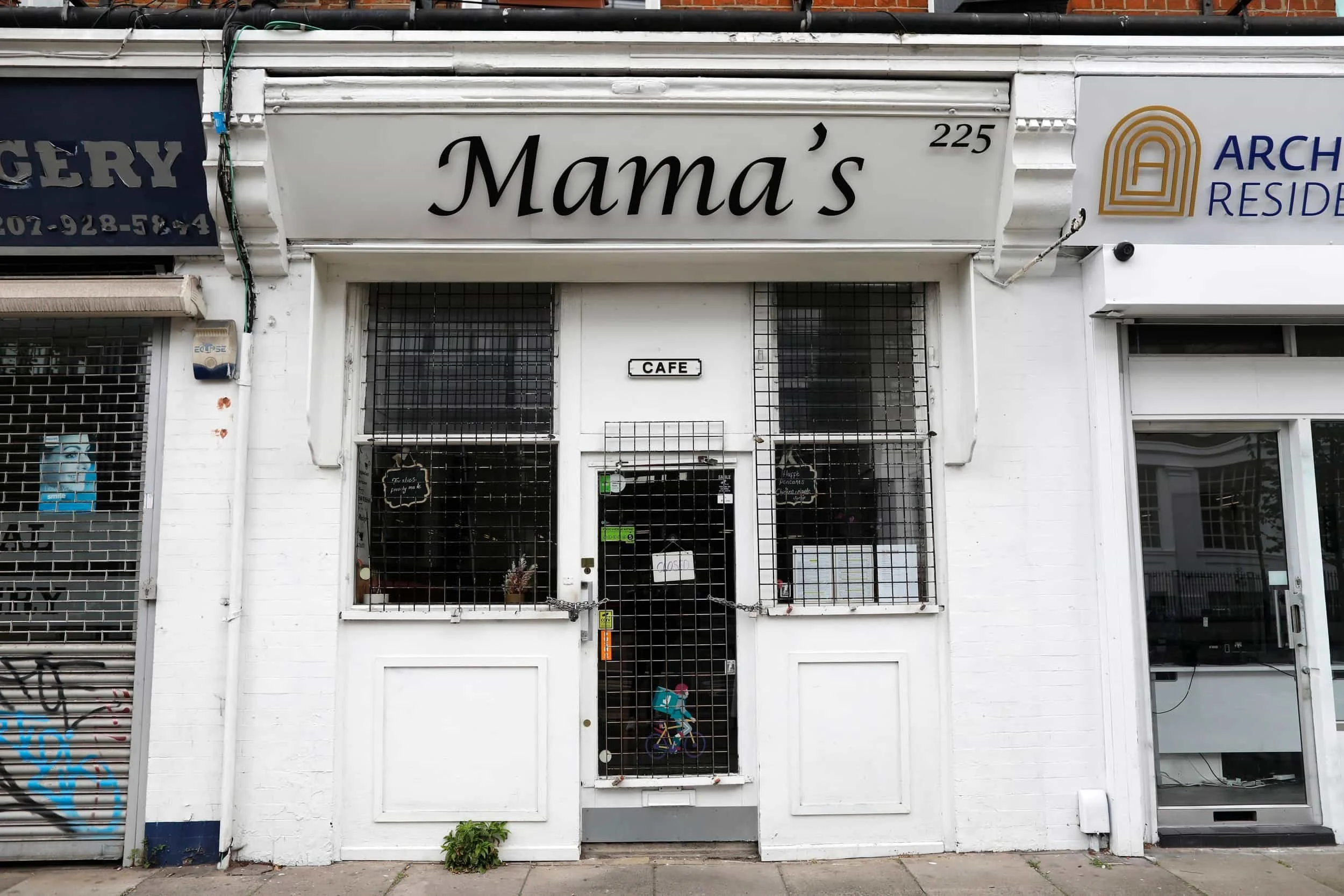
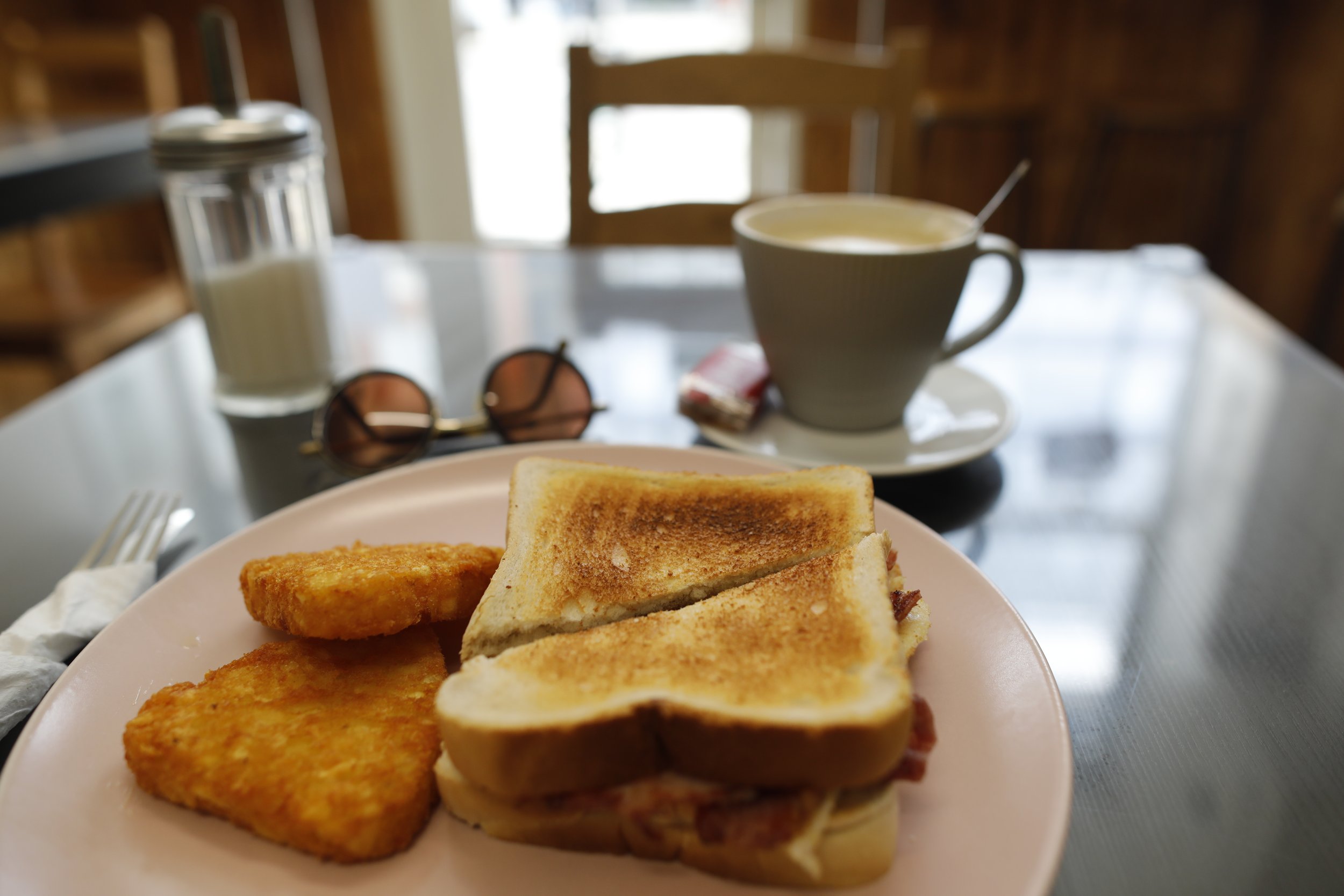
The menu leans toward classic breakfast fare, with straightforward options like egg and bacon sandwiches, hash browns and coffee. If you're visiting from the U.S., the bacon may look more like ham than the crispy strips you're expecting — British back bacon is meatier and cut differently from American-style bacon.
I had gone in hoping for pancakes, which weren't on the menu that morning but a latte, breakfast sandwich and crispy hash browns turned out to be a perfectly good substitute.
Mama's isn't the kind of place you need to build your morning around. It's more useful than that: a casual spot to grab something warm and filling before continuing your day in London.
Pair the National Portrait Gallery With a Matcha
If you're already exploring around Trafalgar Square, the National Portrait Gallery makes an easy cultural stop to pair with something considerably smaller: a matcha and pastry at the Portrait Pavilion Café just behind the gallery.
The National Portrait Gallery is dedicated to portraits of people who have shaped British history and culture, with works ranging from paintings and drawings to photography and sculpture. You could easily spend hours here but it also works well as part of a day exploring Central London — which is exactly how a friend recommended I experience it.
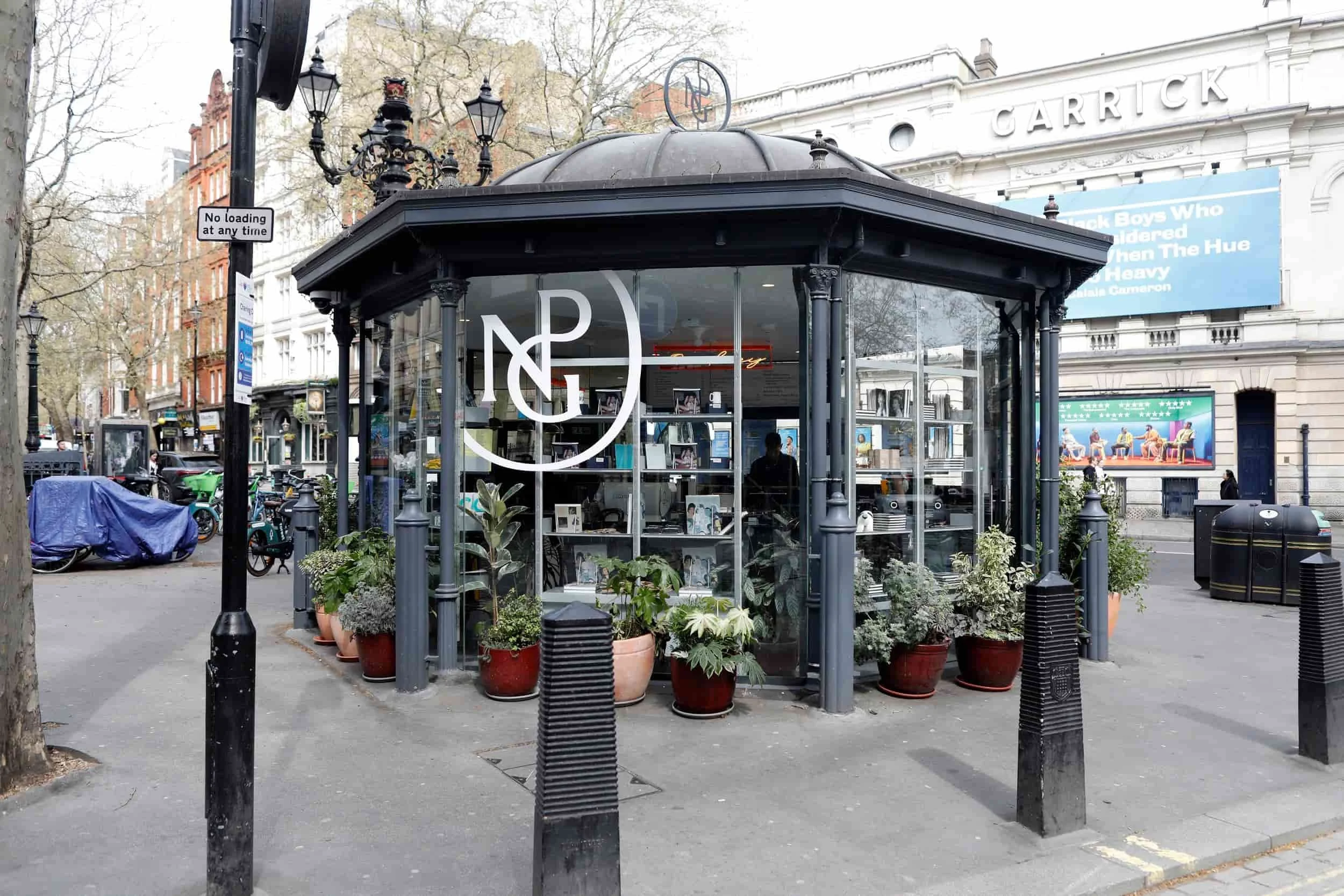
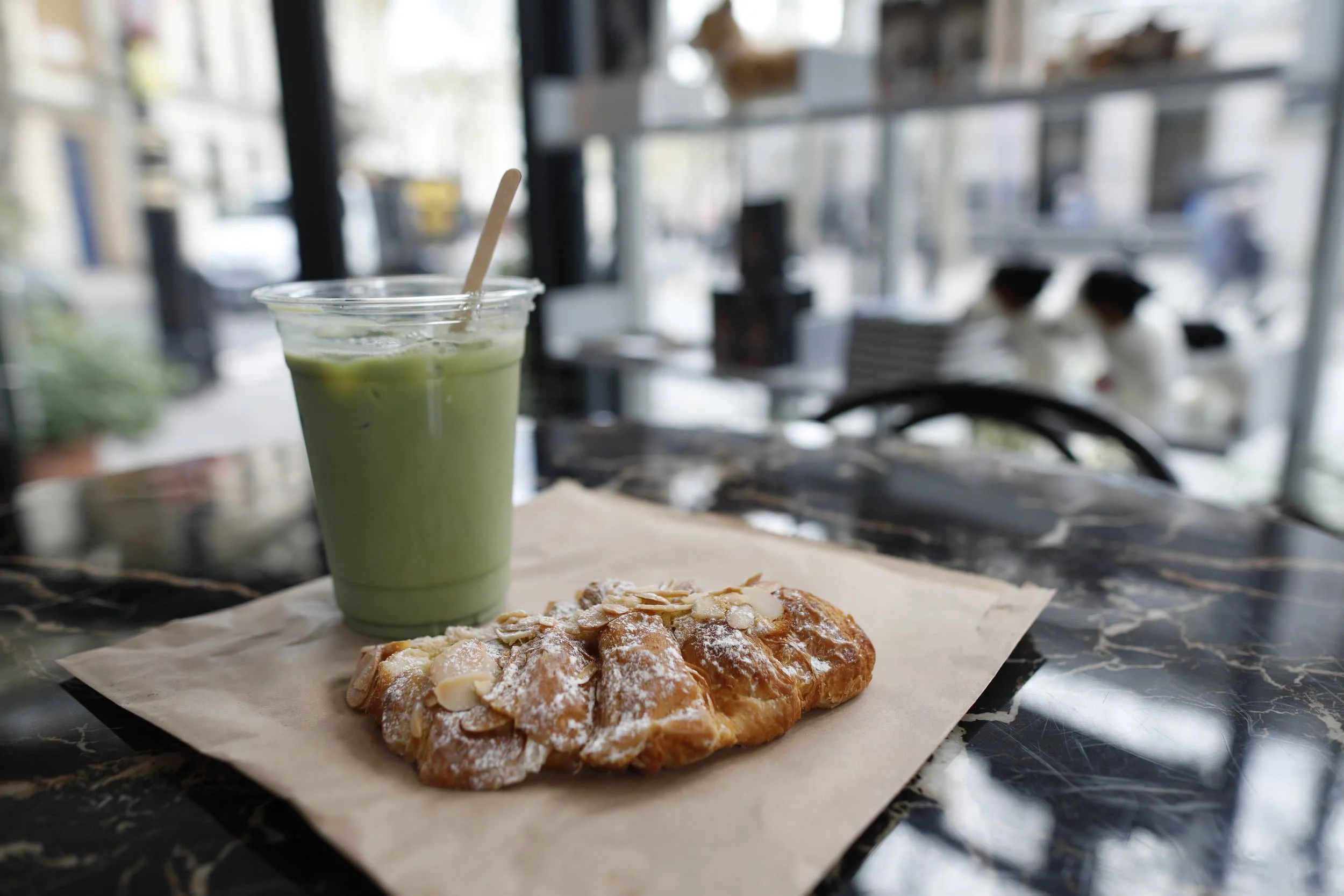
After the gallery, look for the tiny café tucked behind it. The space itself was what caught my attention: almost like a miniature glass greenhouse, with black iron framing wrapping around the transparent structure. It's compact and a little unexpected against the much grander architecture surrounding Trafalgar Square.
Inside, you'll find coffee, matcha and pastries with just enough seating for a quick break. A matcha latte and almond croissant make an easy pairing before continuing on through Central London.
This was one of those recommendations that worked because the two stops felt so different: art and British cultural history inside the gallery, followed by something small, contemporary and beautifully designed just outside.
💡 My Tip | Treat the gallery and café as a pair. Even if you're not planning a museum-heavy day, together they make an easy break between some of Central London's busier streets and markets.
Snack on Toasted Nuts Along the Thames
Not every food stop in London needs to be a destination. Sometimes it's simply something that smells too good to walk past.
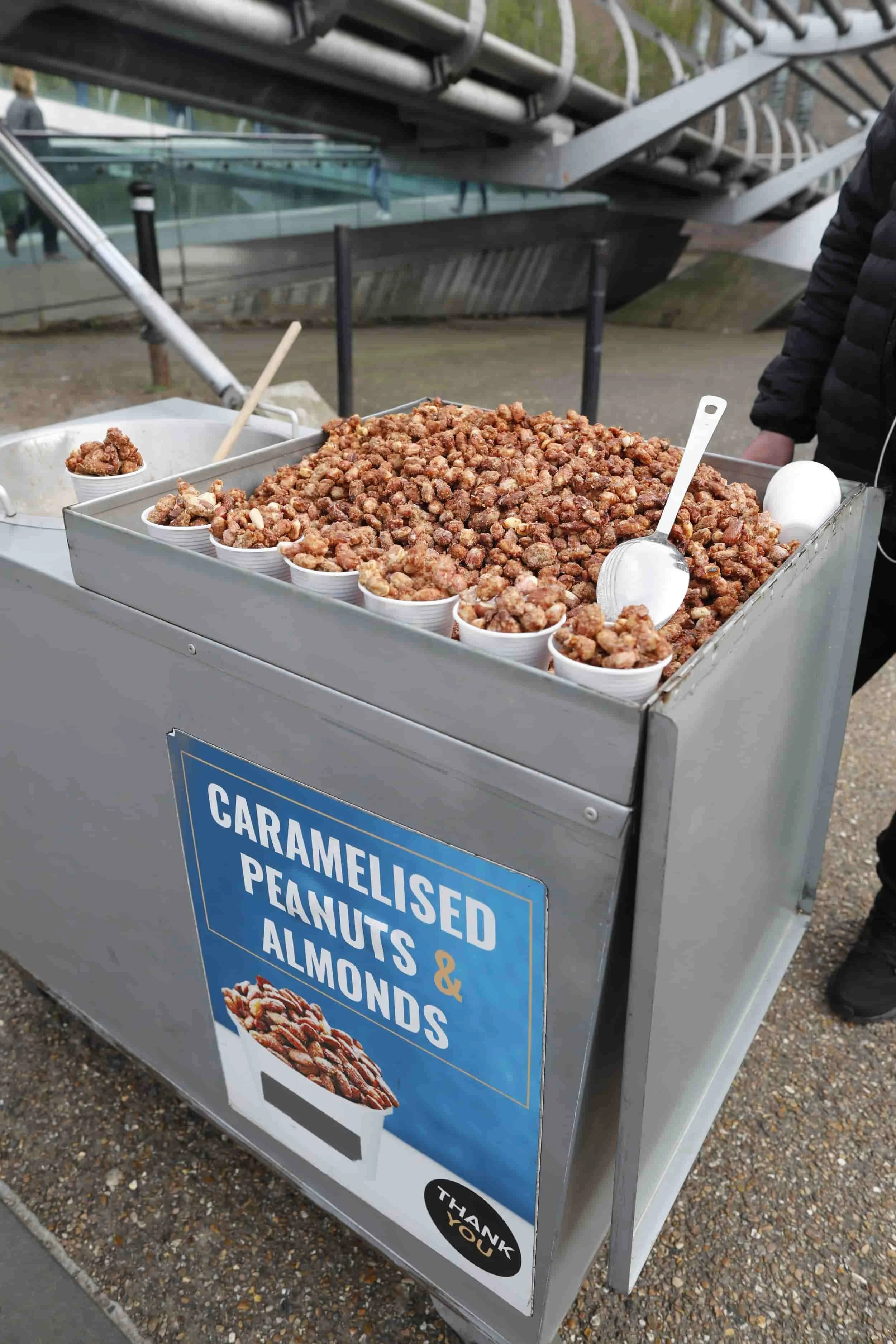
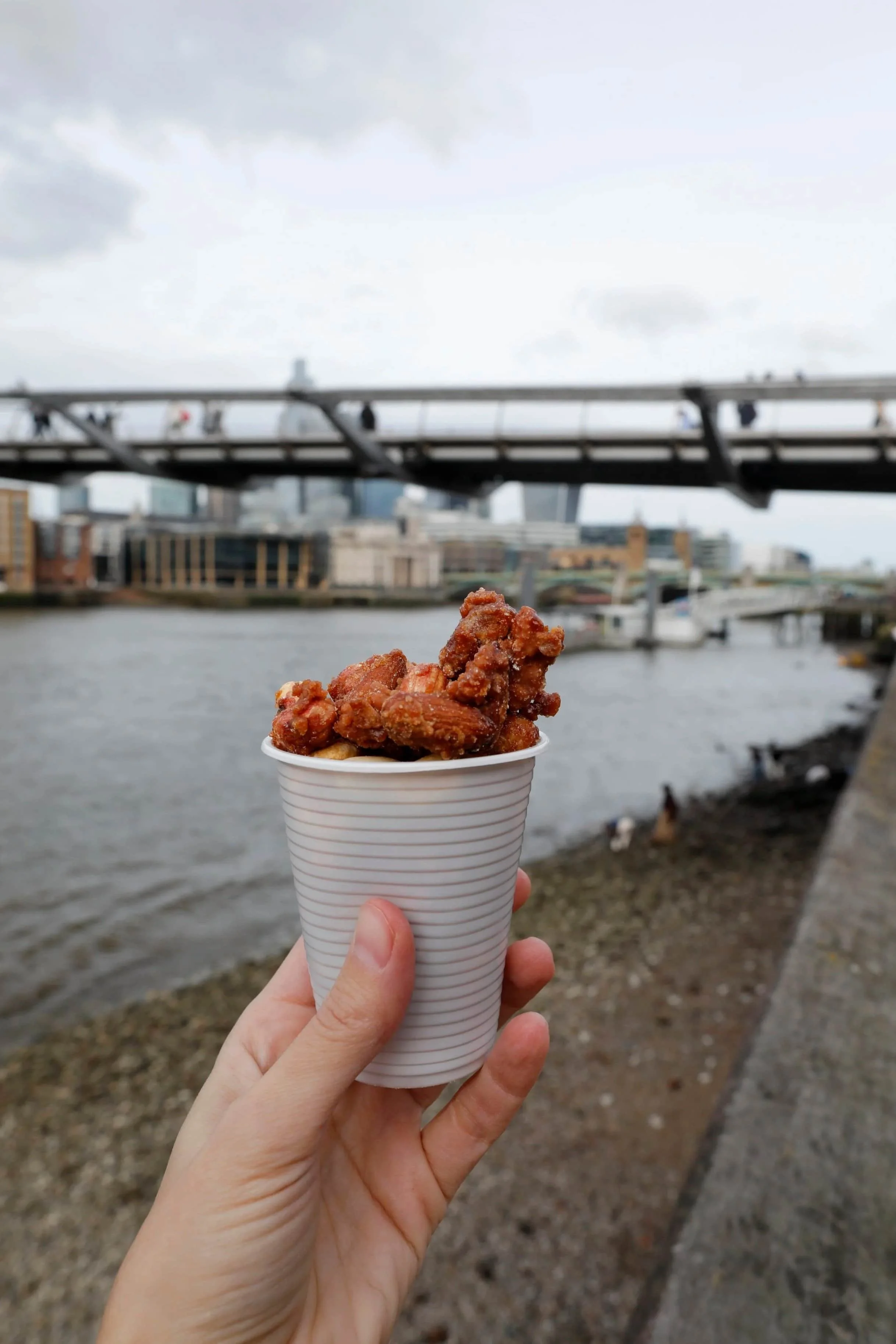
Along the River Thames, street carts and vendors make it easy to pick up a snack while you're exploring. I stopped for a cup of warm toasted peanuts and almonds, coated in a sweet, crunchy glaze — the kind of thing that's especially good eaten straight from the cup while walking along the river.
The Thames is one of the best places to build a little spontaneity into a day in Central London. Between Westminster and the South Bank, you're already passing some of the city's most recognizable landmarks, bridges and cultural institutions, so there's no real need to plan every food stop in advance. Grab something that looks good and keep walking.
More London Street Food to Look For
Street food is also an easy way to experience the range of cultures that shape London's food scene. Depending on where you're exploring, you might come across sausage rolls, Scotch eggs, fish and chips, falafel and kebabs, bao, crêpes, doughnuts, pastries or other small bites alongside dishes that are much harder to neatly categorize as traditionally “British.”
For the biggest concentration of options, Borough Market, Camden Market and Brick Lane are good places to browse, while the South Bank regularly has food stalls and seasonal vendors. Markets and food halls throughout the city make it particularly easy to try a few things rather than committing to another sit-down meal.
If you're gluten-free, as I am, street food can require a little more checking — especially anything battered, breaded or pastry-based — but you'll still find plenty of options if you're willing to ask about ingredients.
💡 My Tip | Leave some room in your London itinerary for the things you didn't research. The toasted nuts weren't something I planned to eat but a warm cup by the Thames ended up being one of those small food memories I still associate with London.
North London Bites
North London wasn't originally part of my food plans. When I passed back through London later in the trip, I stayed in this part of the city — and that's how I ended up finding one of the more unexpected meals of my visit.
This guide only makes one stop here, so consider it less a tour of North London's food scene and more a reminder to look around wherever you happen to be staying. London is far too big to plan every good meal in advance.
That accidental find was Iberia, a Georgian restaurant serving a cuisine I knew very little about before walking through the door.
Try Georgian Cuisine at Iberia
Sometimes the restaurants you don't plan are the ones you remember most. Iberia, a Georgian restaurant I found simply because I was staying nearby, may have been my favorite meal in London.
The restaurant itself is small and cozy, with a handful of tables and a street-facing window that makes a particularly nice spot to settle in. I arrived early enough to get a table without a reservation but as dinner picked up, I watched several people come in only to be turned away.
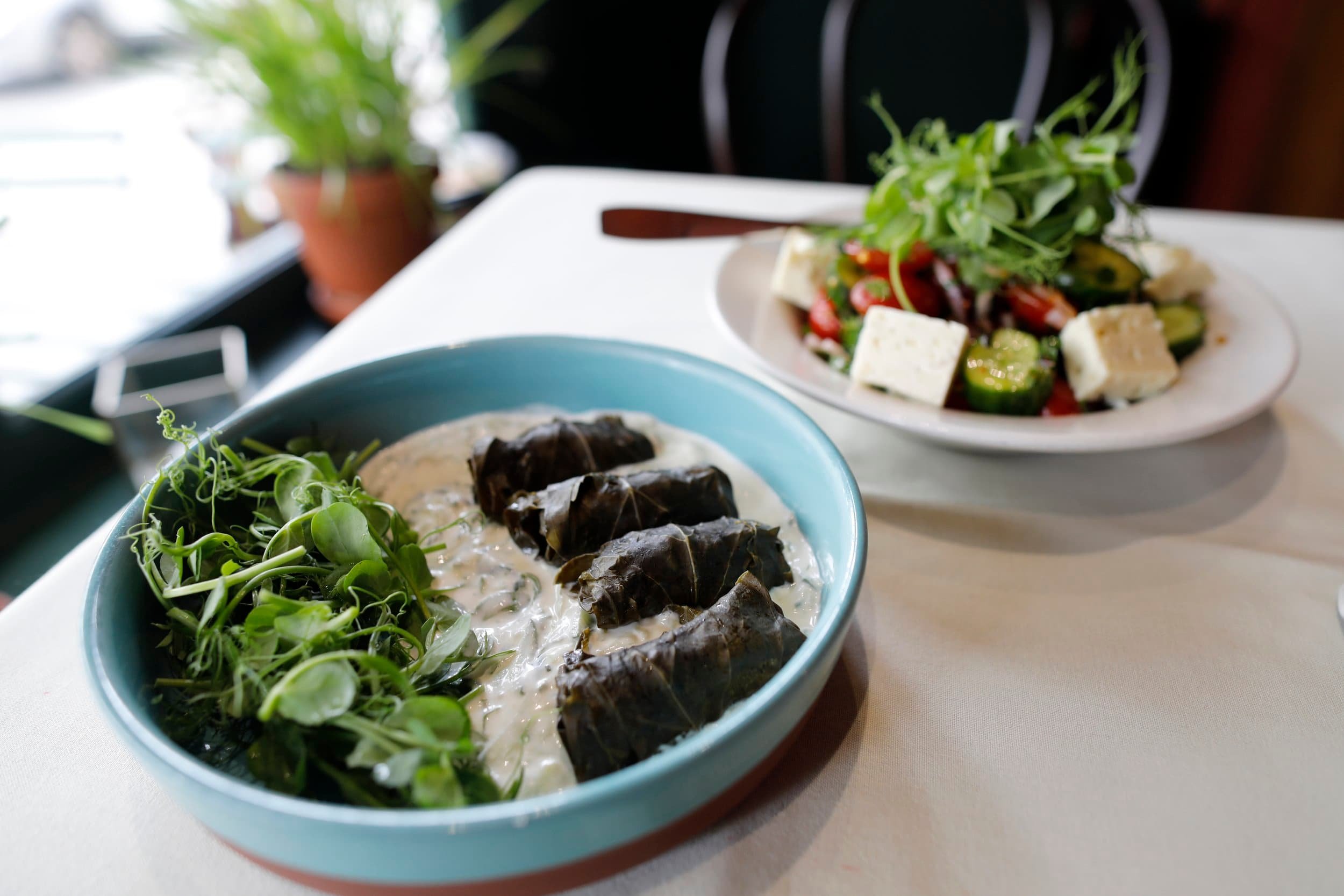
If Georgian food is new to you, Iberia is a great place to start. The menu is built around rich, comforting dishes meant for sharing, from stuffed vine leaves and fresh salads to the dumplings that seemed to be appearing on nearly every table.
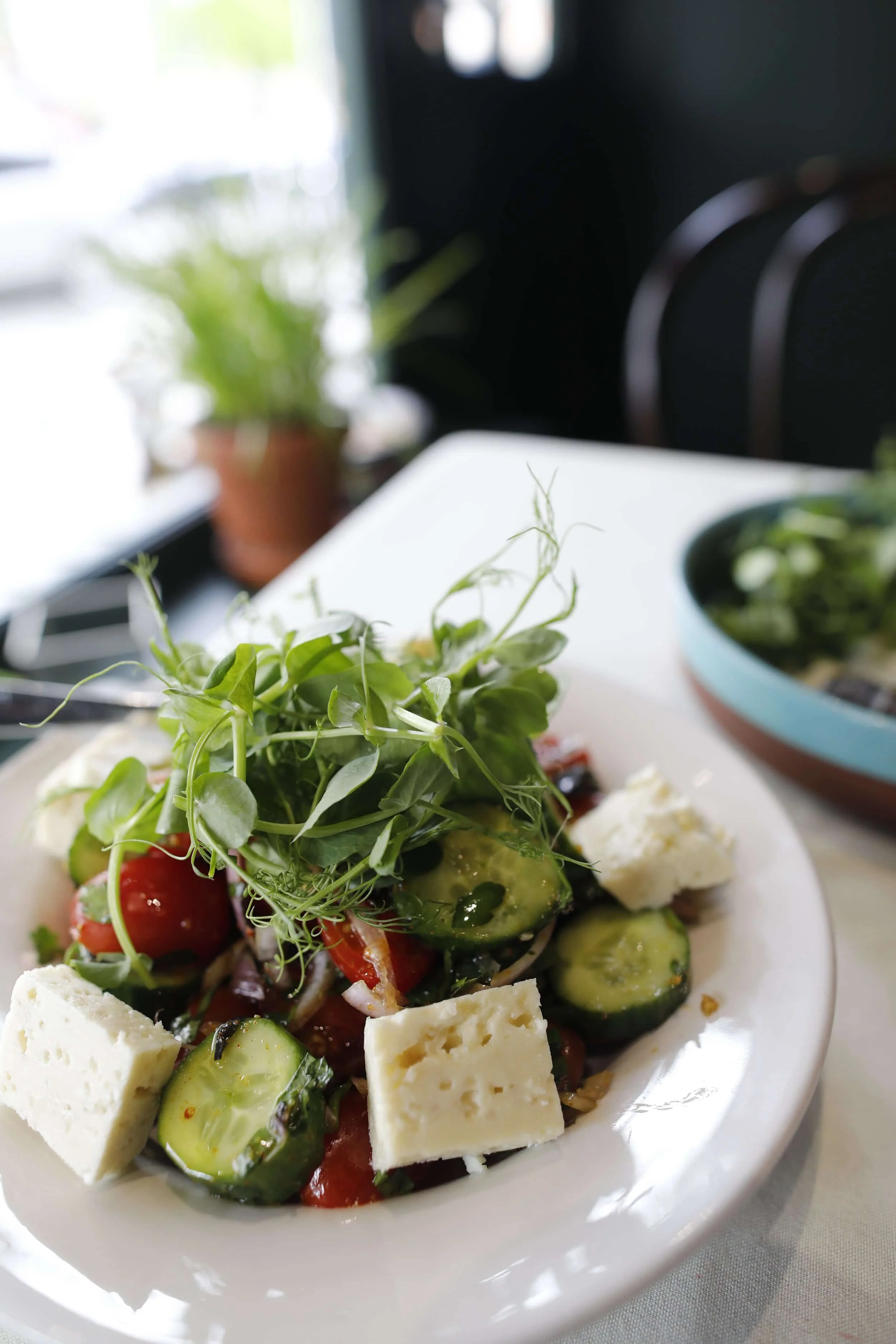
What to Order at Iberia
Start with the tolma, vine leaves wrapped around a filling of minced beef and rice and served with a creamy herb sauce. Rich and savory, they're a good introduction before moving on to some of the heavier dishes.
For something fresh in between, try the tomato and cucumber salad with sheep's cheese. It's simple, bright and a welcome contrast to everything that follows.
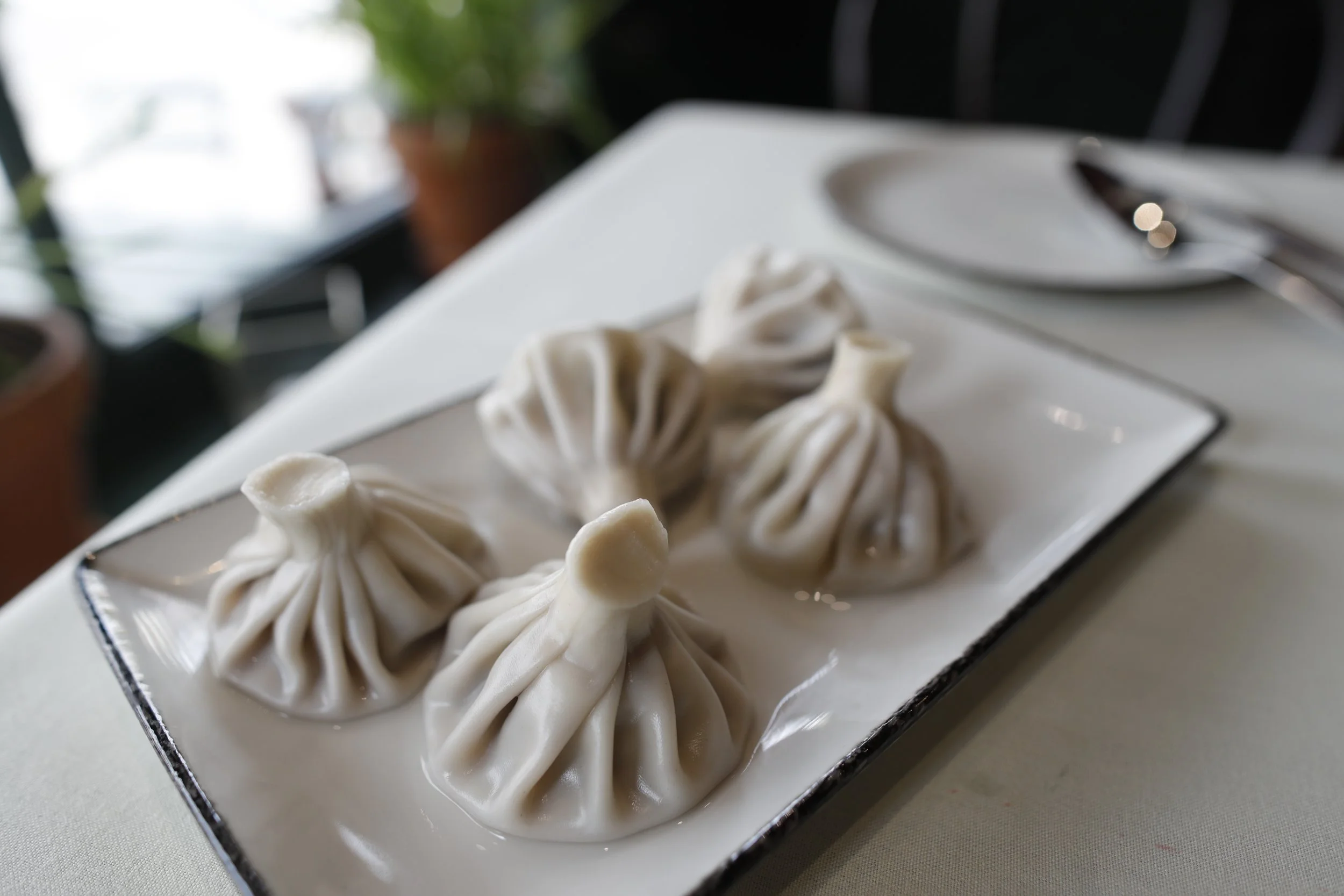
And then there are the khinkali. These traditional Georgian dumplings arrive filled with beef and pork — and there's a bit of technique involved in eating them. Hold the dumpling by its twisted top, take a small bite and sip the broth inside before eating the rest. They're messy if you don't know what's coming but easily one of the most memorable things on the table.
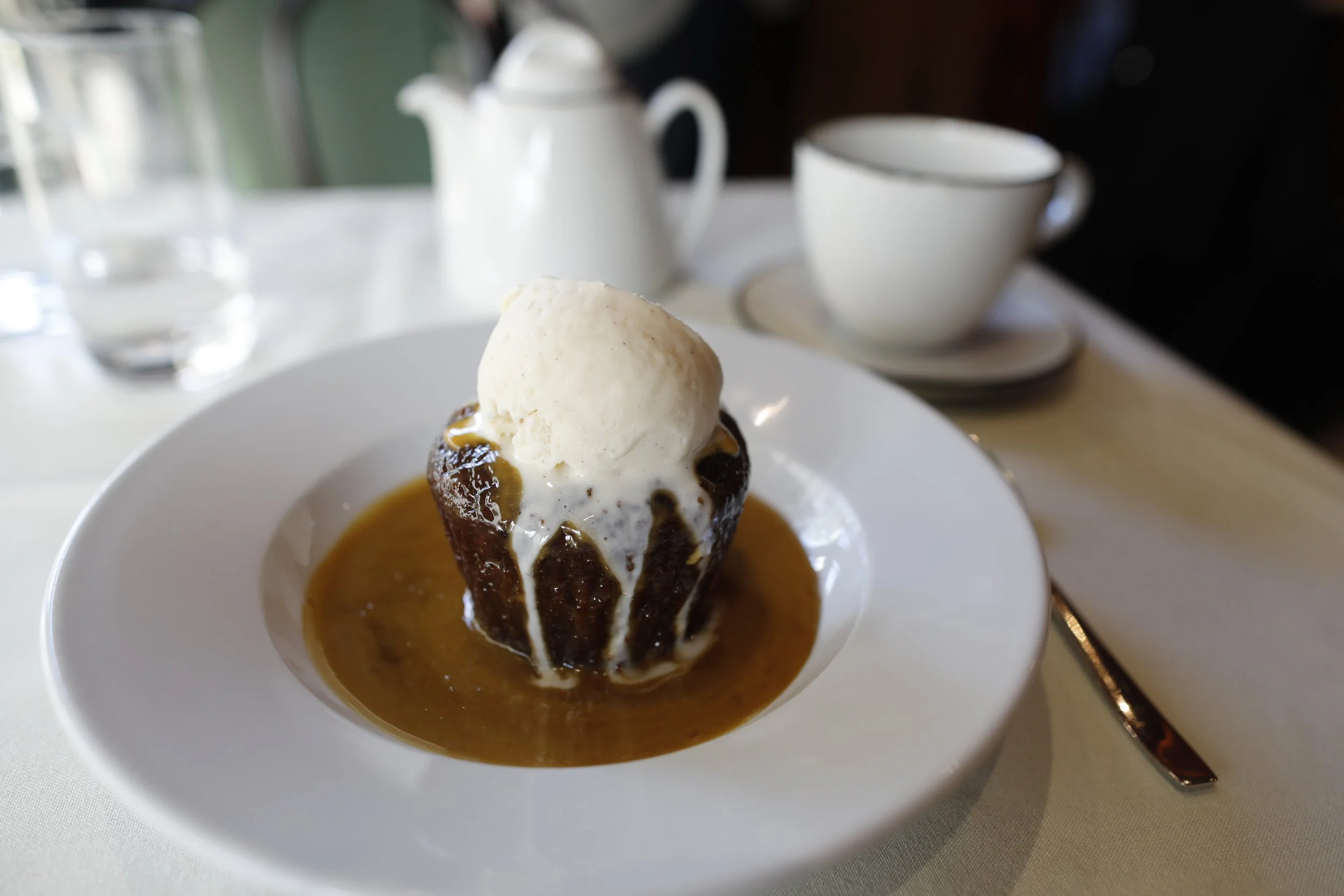
Save room for dessert if you can. The caramel cake with ice cream and hot mint tea was completely unnecessary after everything else—and I ordered it anyway. No regrets, gluten included
💡 My Tip | Go early or make a reservation. I was lucky enough to get one of the last available tables before the dinner rush, and I watched several people get turned away while I was eating. If Iberia is high on your London food list, I wouldn't leave this one to chance.
East London Eats — Markets, Street Food & Independent Shops
East London is where this guide returns to markets, street food and the pleasure of wandering without knowing exactly what you'll find. Around Spitalfields and Brick Lane, food, vintage clothing, independent shops and market stalls all compete for your attention — sometimes on the same block.
It's also one of the best parts of London for seeing the city's many cultures overlap through food. Brick Lane is especially known for its South Asian influence but the broader area offers everything from bakeries and cafés to international street food and quick snacks you can eat while exploring.
For this part of London, I'd leave some room in the schedule. Old Spitalfields Market and Brick Lane are close enough to explore together and half the fun is what you find between them.
Shop & Eat at Old Spitalfields Market
Of all the markets in this London guide, Old Spitalfields Market was my favorite. It has the energy and variety I want from a market — food, independent shops, vintage finds and plenty to browse — but the space itself is part of the appeal.
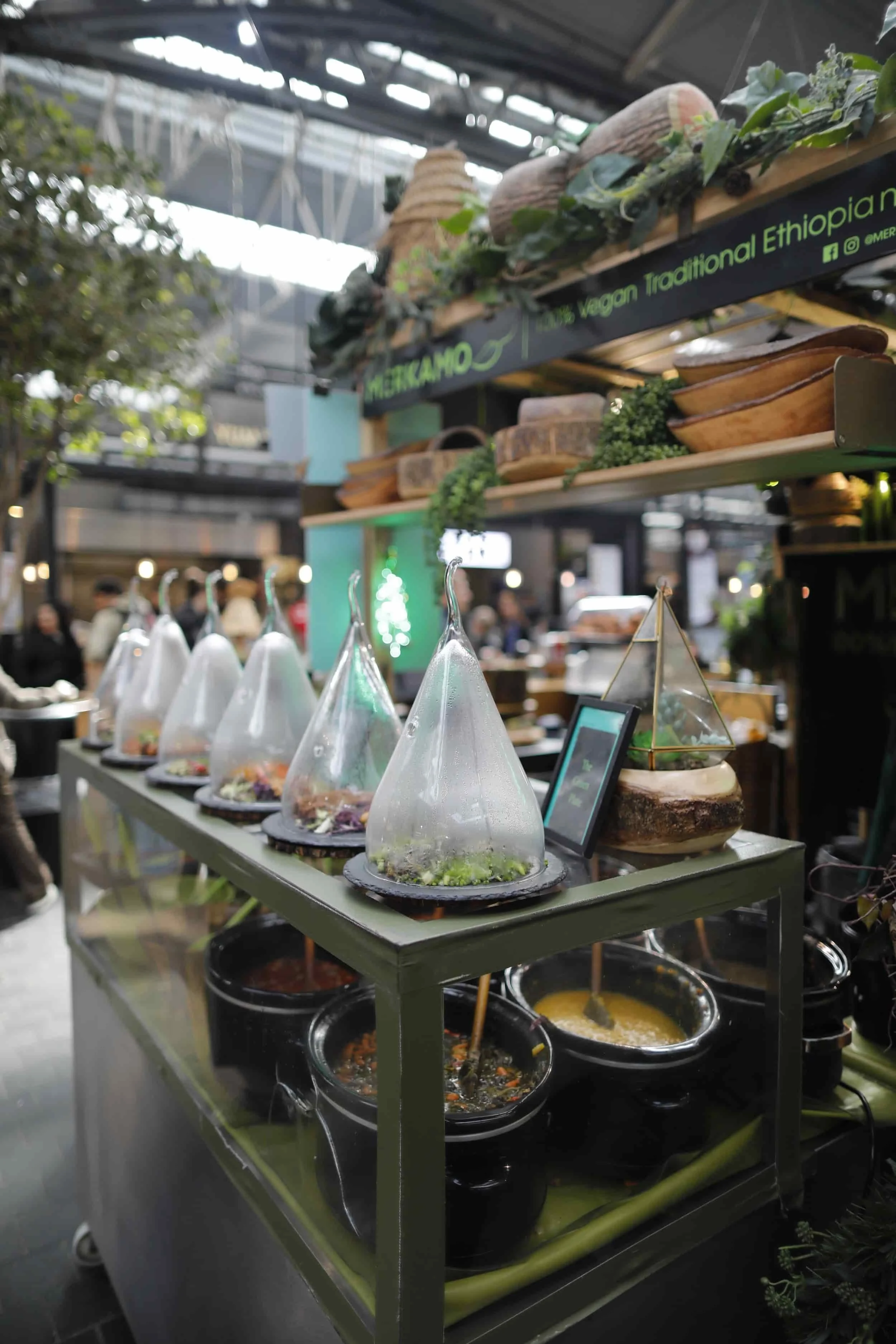
Under the market's large covered roof, historic structure and contemporary stalls sit side by side. Clothing, jewelry, art, homewares and vintage pieces mix with coffee stands, bakeries and street-food vendors, making this somewhere you can easily spend more time than intended. I particularly liked the visual combination of it all: polished permanent shops around the edges, temporary stalls filling the center and colorful little food stands tucked between them.
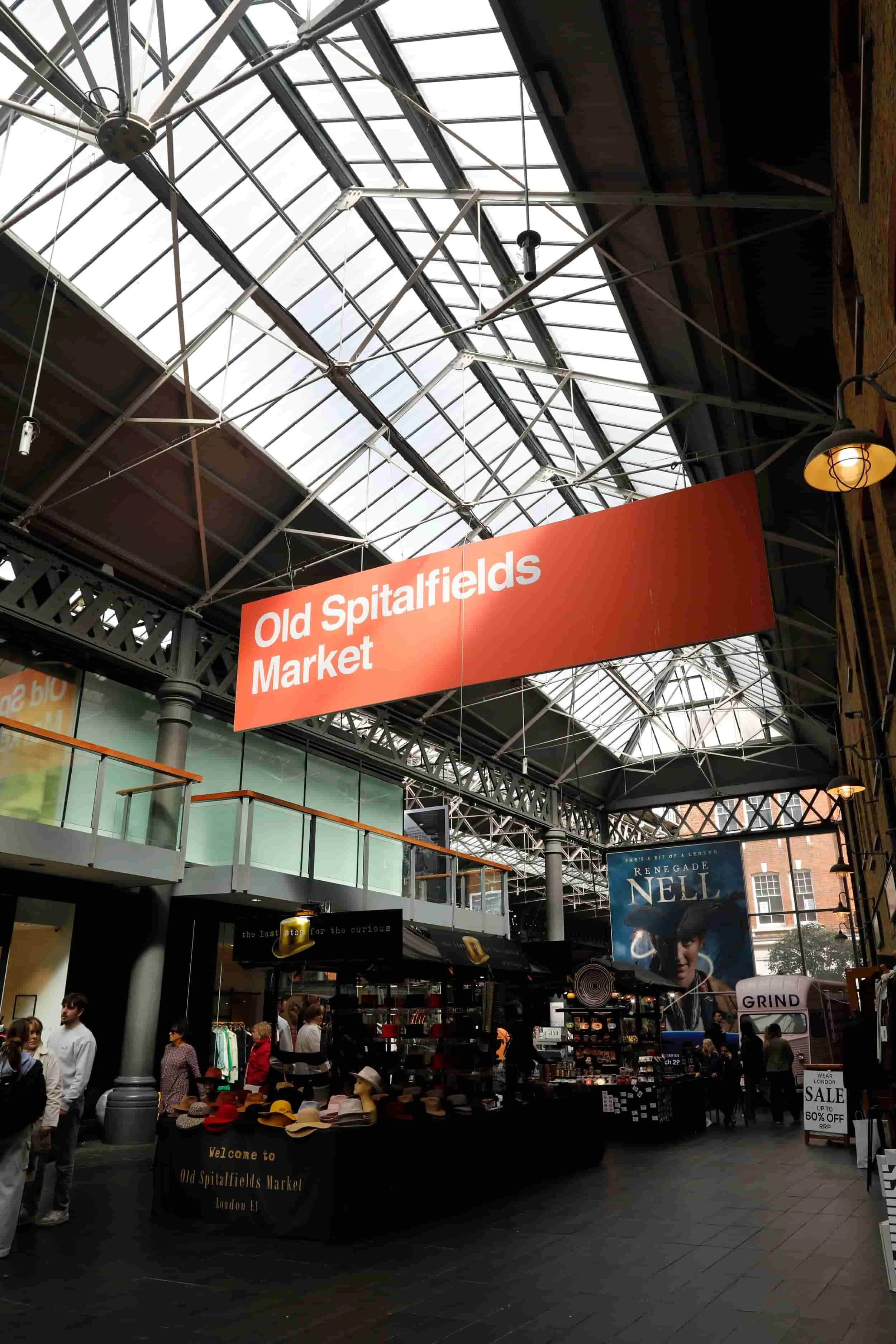
A Market Shaped by East London
Markets have been part of Spitalfields for centuries, with a formal market established here in the 17th century. The surrounding neighborhood was subsequently shaped by generations of newcomers to London, including Huguenot, Irish, Jewish and later Bangladeshi communities, each leaving an imprint on this part of East London.
The market itself has changed considerably over time. What was once associated primarily with produce and wholesale trade is now a mix of independent retail, food, art and events, housed within a historic market setting.
That history makes Spitalfields more interesting than a conventional shopping center. The building carries one part of the story, while the food, shops and surrounding streets show how continually this part of London has changed.
Come Hungry
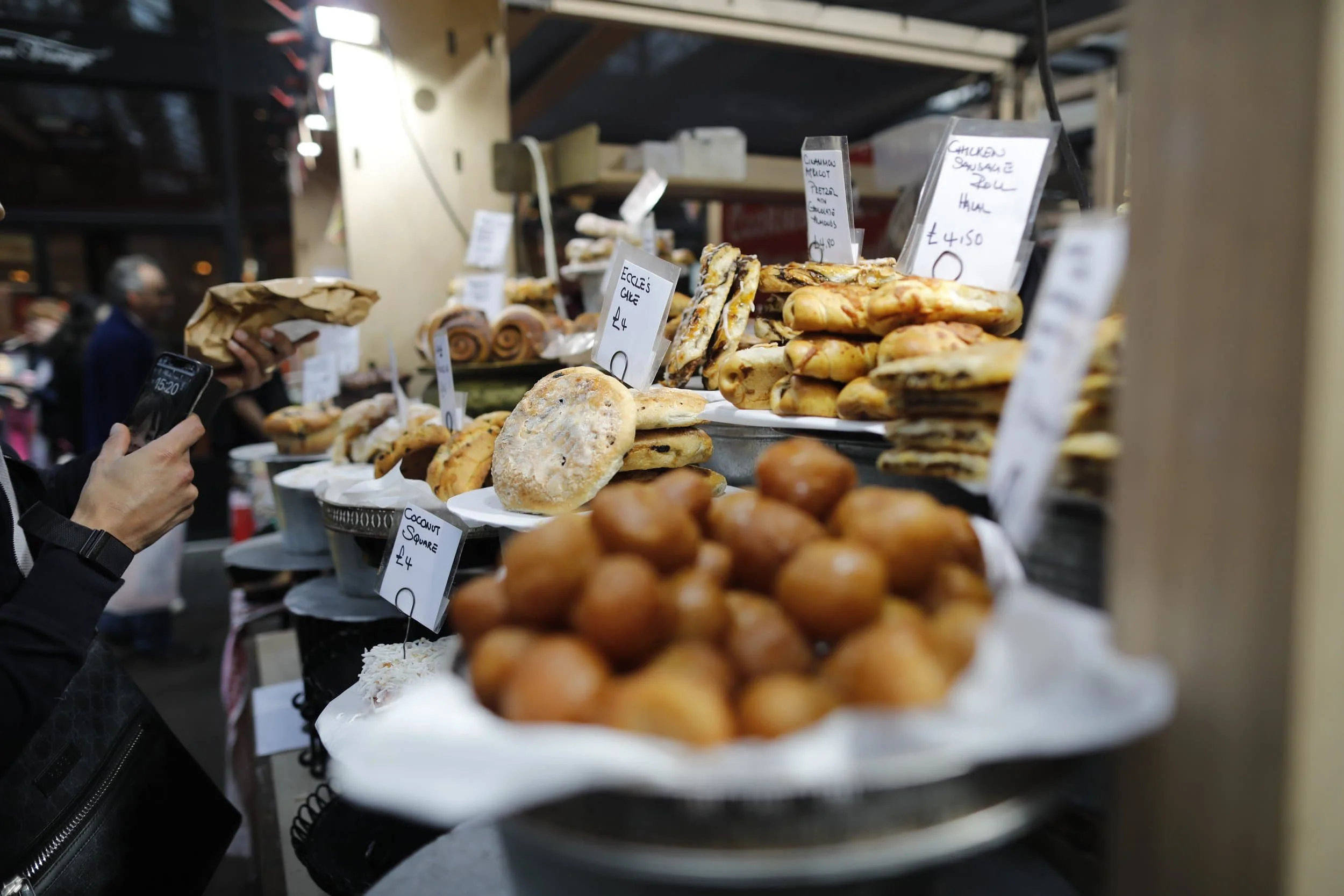
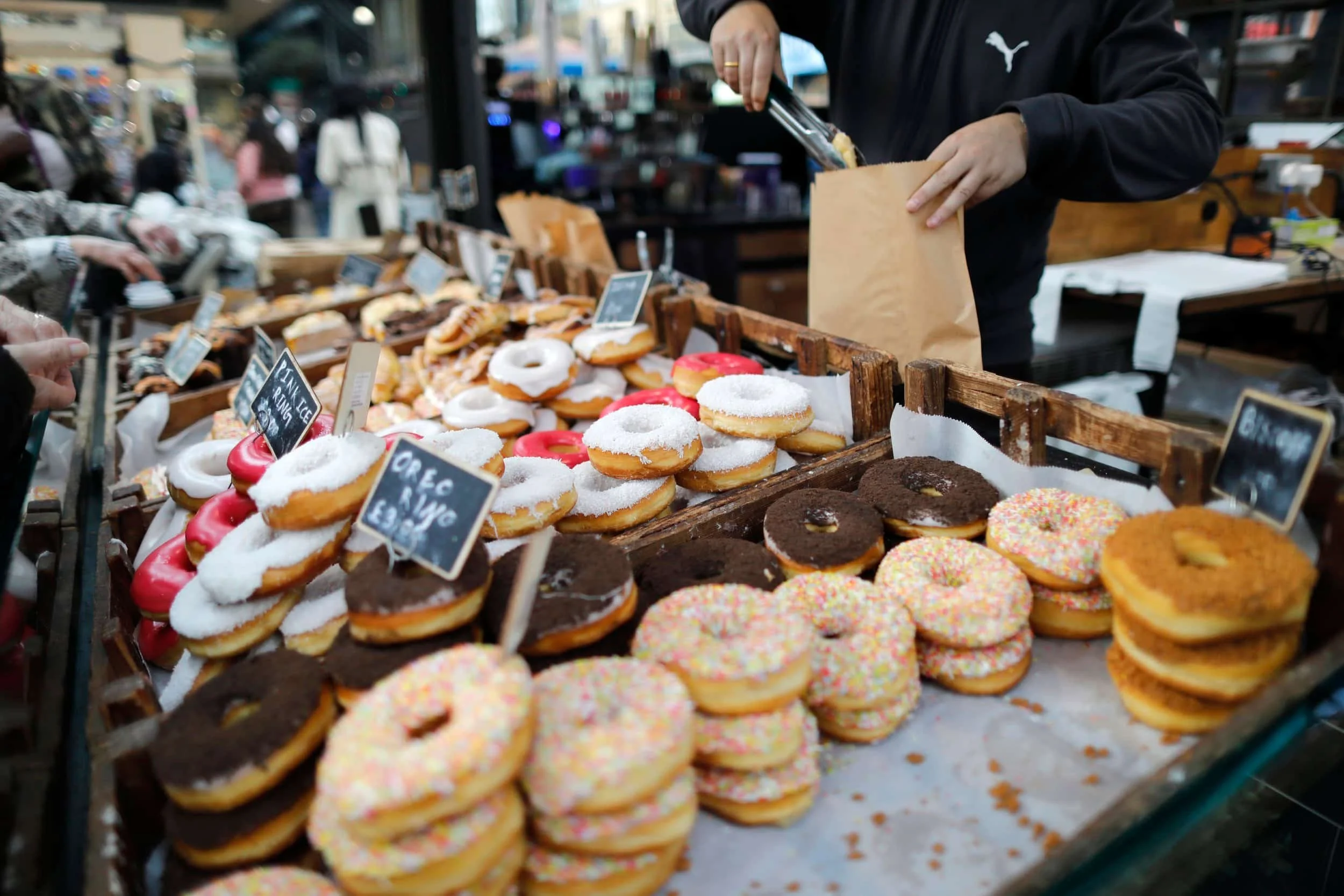
Food is a major reason to visit. Stalls and counters offer a broad mix of international street food, baked goods, sweets, coffee and quick snacks, so this is another market where I'd recommend taking a lap before deciding what to eat.
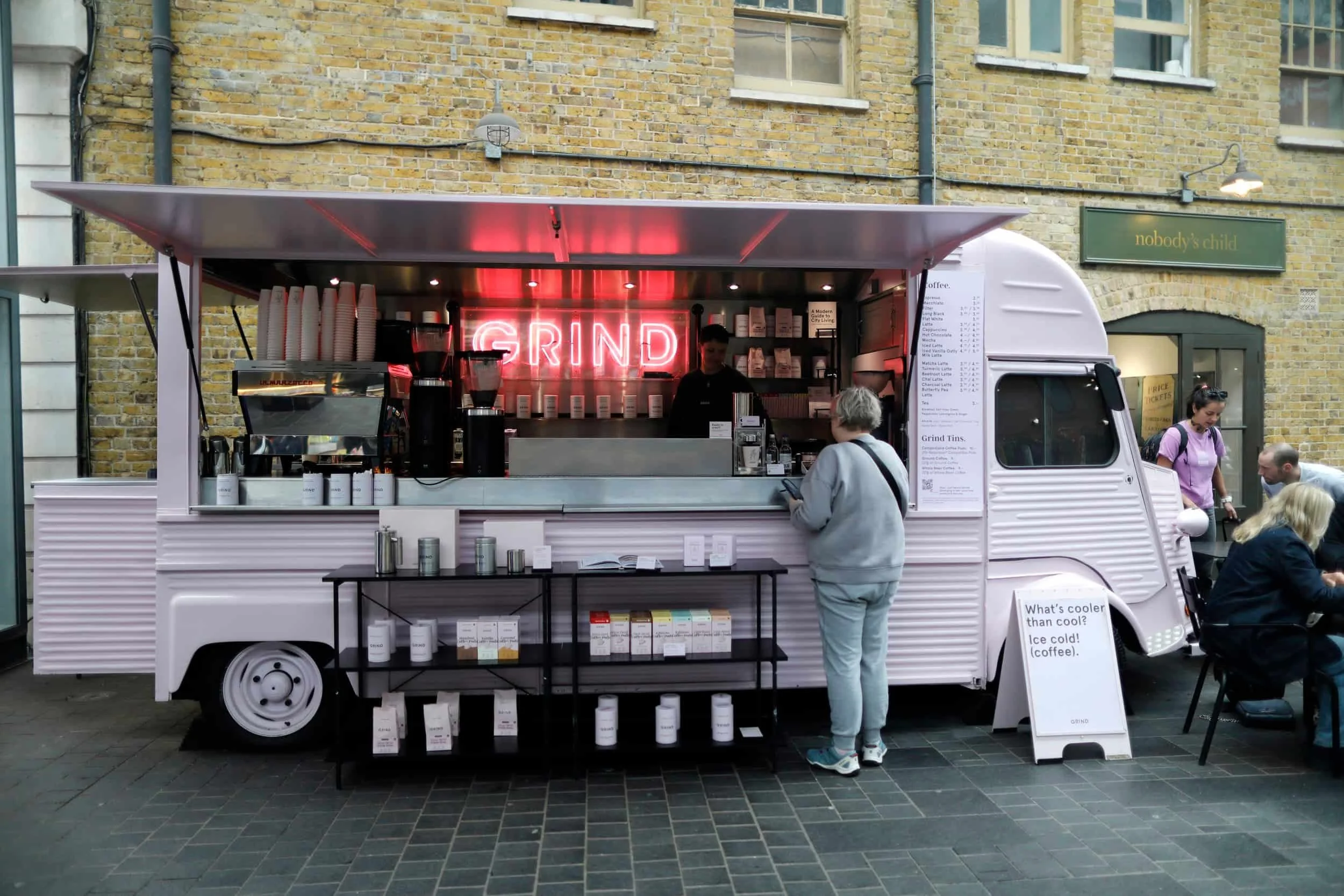
There was a lot competing for my attention — colorful food counters, trays of pastries and doughnuts and a particularly photogenic pink coffee truck called Grind among them. Even if you aren't planning a full meal here, it's an easy place to pick up something small while you browse.
Unlike Borough Market, though, I wouldn't come to Spitalfields only for the food. The combination of eating, shopping, architecture and people-watching is what made this one work so well for me.
Step Outside for the Elephants
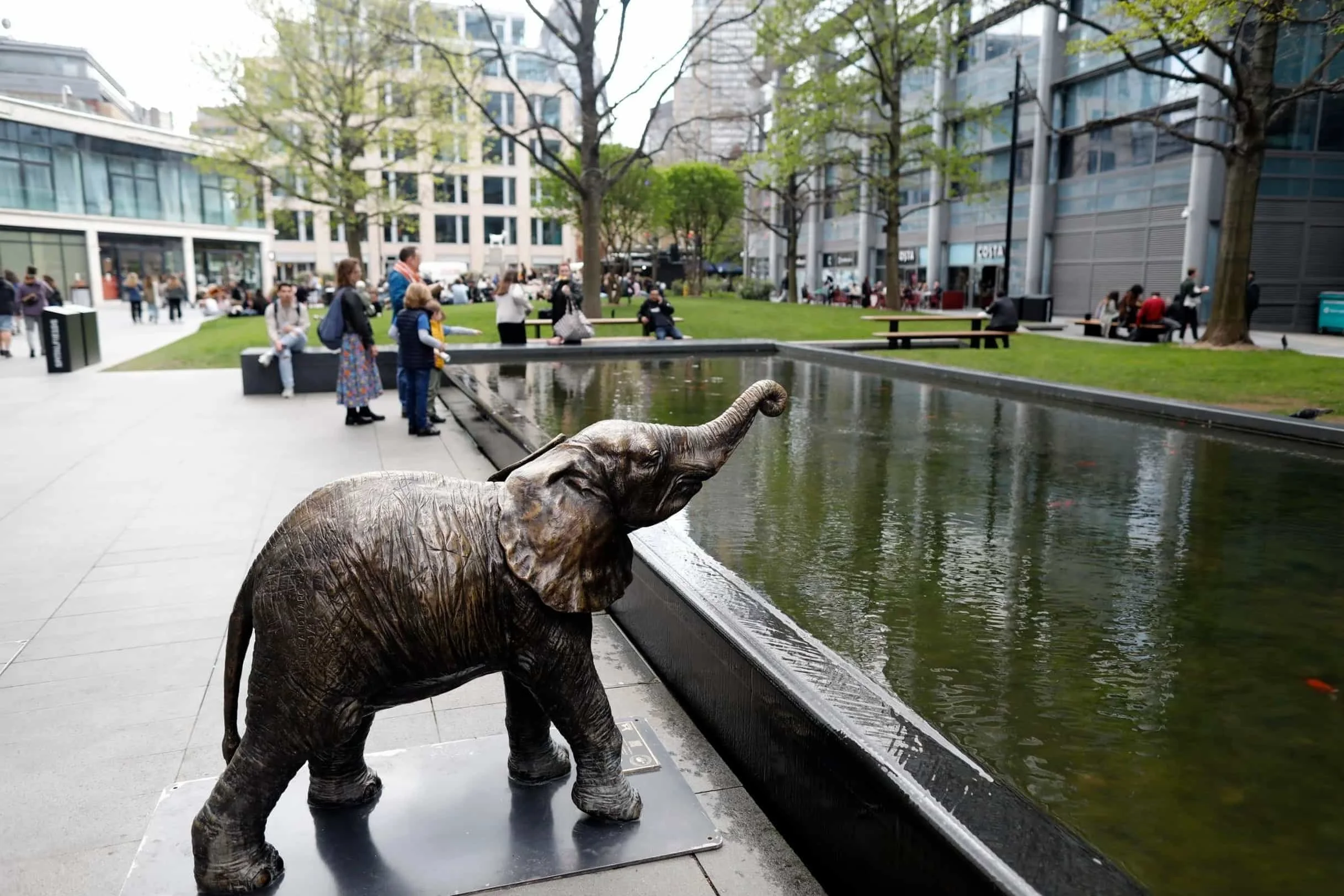
Just outside the market, you'll find Herd of Hope, a group of bronze elephants by artists Gillie and Marc. The installation creates an unexpected contrast with the surrounding architecture and gives the exterior of the market another layer beyond shopping and food.
I wouldn't overthink this stop — walk among them, take a closer look and enjoy finding a herd of elephants in the middle of East London.
Save Room for Rudy’s Pizza
If the market stalls leave you wanting something more substantial, Rudy’s Pizza sits just outside Spitalfields and offers an easy change of pace from eating on the go.
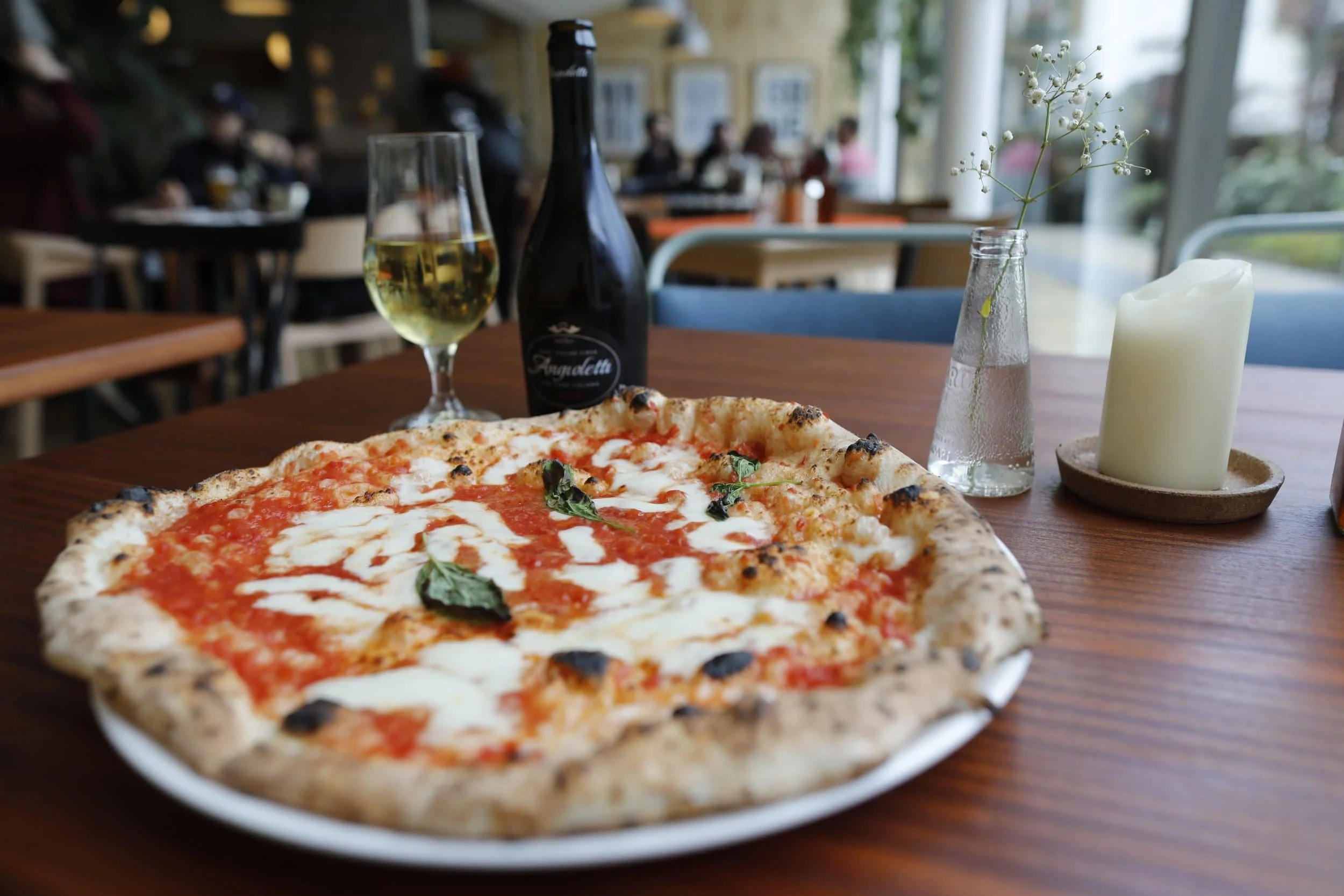
The pizzas are Neapolitan-style, with thin, soft crusts blistered from the heat of the oven. A classic margherita keeps things simple with tomato, mozzarella and basil, and I paired mine with an Italian cider. After wandering through a busy market, sitting down with pizza and a drink was exactly the kind of break I wanted.
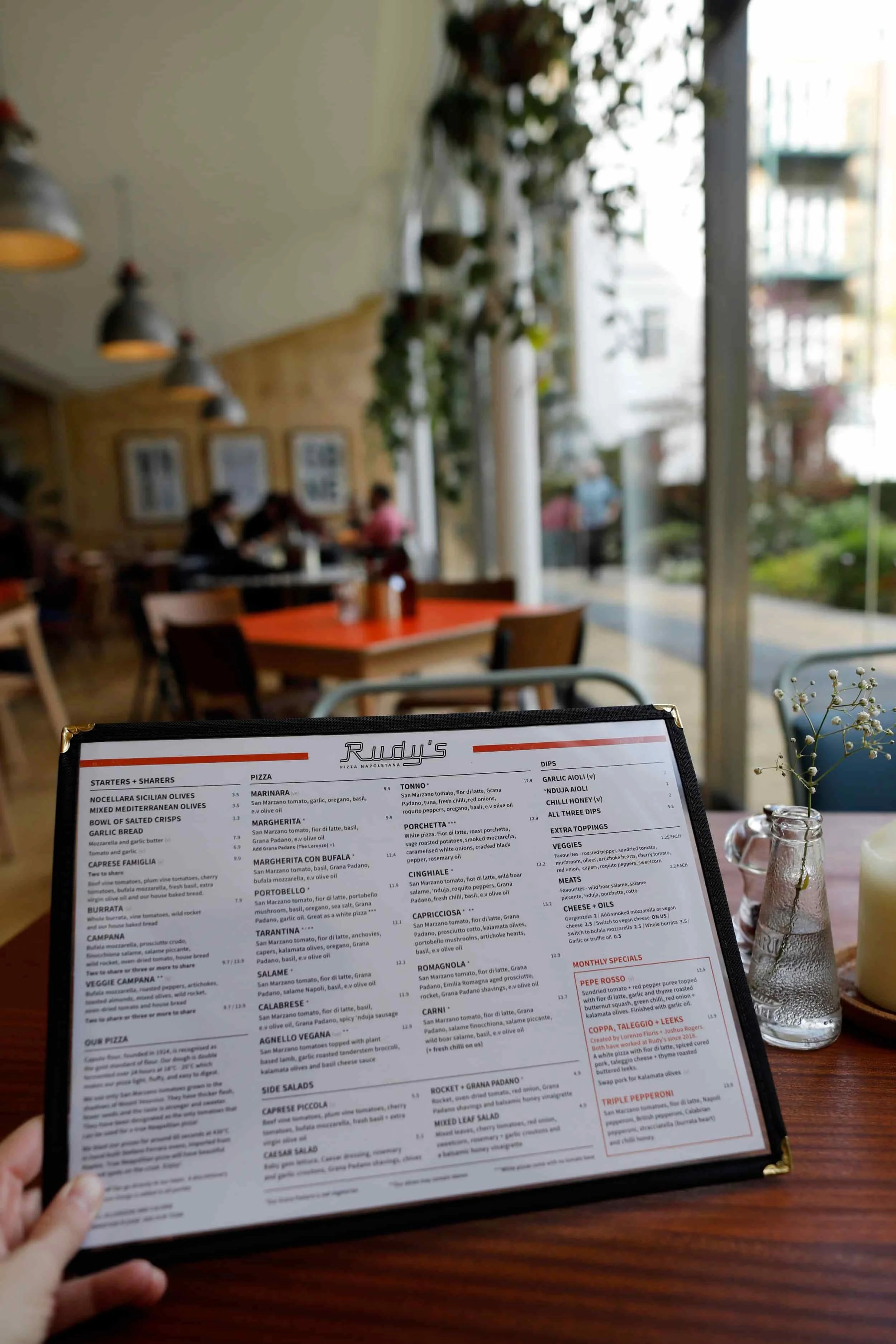

It also makes Rudy's a good option if you're exploring Spitalfields with someone who isn't interested in piecing together lunch from different market stalls — or if you've spent so long looking at everything that you've somehow forgotten to actually eat.
💡 My Tip | Give Old Spitalfields more time than a quick walk-through. Browse first, eat second. There are enough stalls, shops and food options that it's worth seeing what's here before deciding where to spend your appetite — or your money.
Get a Little Lost on Brick Lane
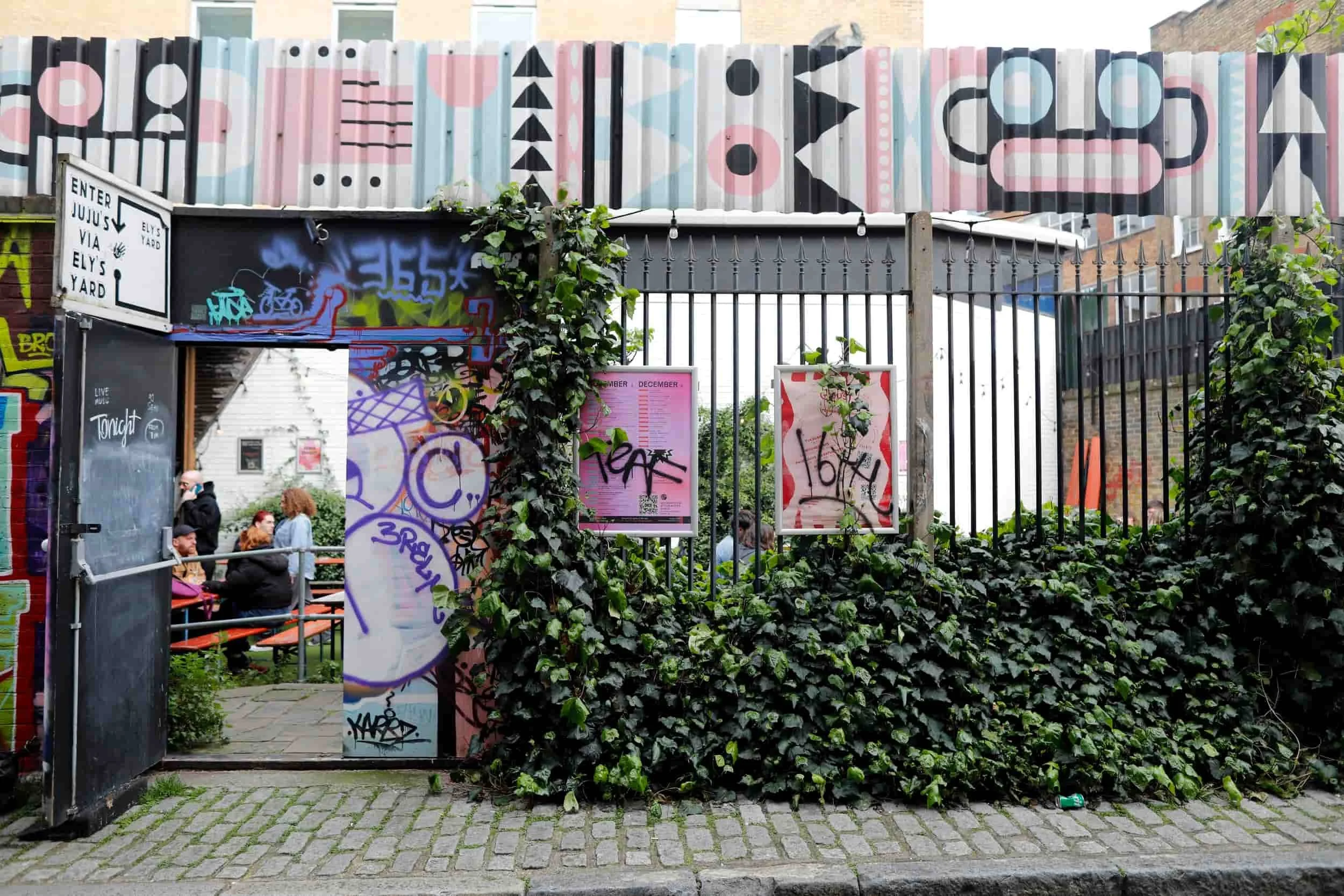
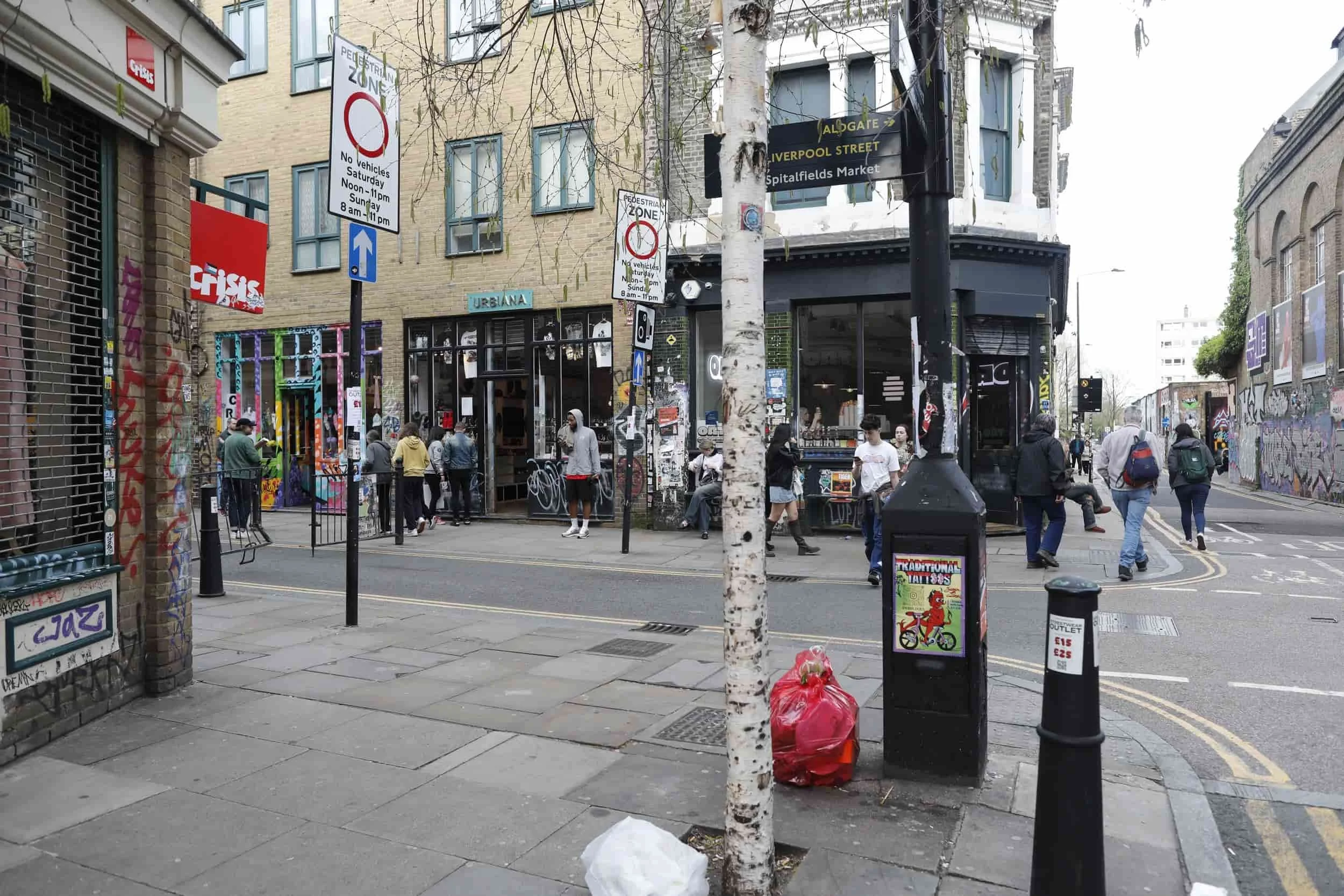
From Old Spitalfields Market, keep walking toward Brick Lane, where the polished market gives way to something looser and more unpredictable. Street art covers brick walls and shutters, vintage shops disappear below street level and food stalls, bakeries and independent shops give you plenty of reasons to keep wandering.
This was easily one of the coolest areas I explored in London. Not because of one particular attraction but because there was always something else catching my attention — a mural down a side street, racks of vintage clothing, an interesting storefront or another staircase leading underground.
A Neighborhood Shaped by Immigration
Brick Lane's character has been shaped by generations of people who have made London's East End home. Huguenot, Irish, Jewish and Bangladeshi communities have all left their mark on the neighborhood, influencing its businesses, food, architecture and cultural identity.
Today, Brick Lane is particularly associated with London's Bangladeshi community and its curry restaurants, while traces of the area's earlier history remain alongside newer cafés, shops and creative spaces. It's one of those parts of London where different eras aren't neatly separated — they're layered together on the same streets.
Street Art Around Every Corner
You don't need to visit a gallery to find art around Brick Lane. Murals, graffiti, stickers and smaller pieces cover walls, doors and shutters, changing the experience from block to block.
Some works are enormous and impossible to miss; others are tucked into alleys or layered over older pieces. That constant change is part of what makes walking here interesting. Rather than searching for one particular mural, I'd simply pay attention to the walls as you explore.
With so much art against old brickwork, shop signs and patched-together storefronts, this was also one of my favorite parts of London to photograph.
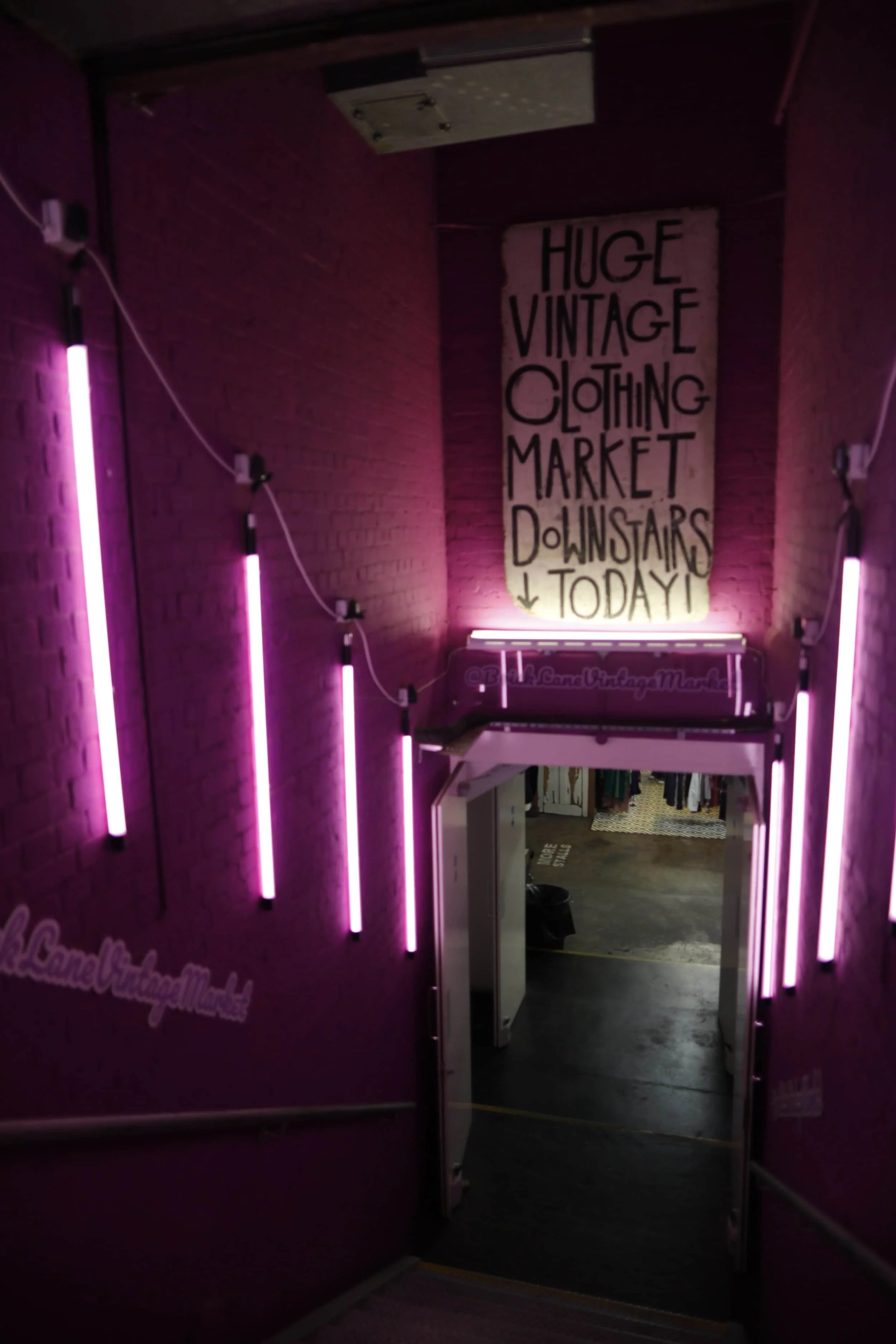
Go Underground for Vintage
Brick Lane is also a great stop if vintage and secondhand shopping are on your London list. Shops and markets range from small storefronts to much larger spaces hidden below street level, with racks of clothing spanning different decades and styles.
The underground vintage area was especially fun to explore. You can disappear down a staircase and suddenly find yourself surrounded by rows of jackets, denim, graphic tees, accessories and pieces you probably weren't looking for until you saw them.
This isn't somewhere I'd shop with a strict checklist. Give yourself time to dig.
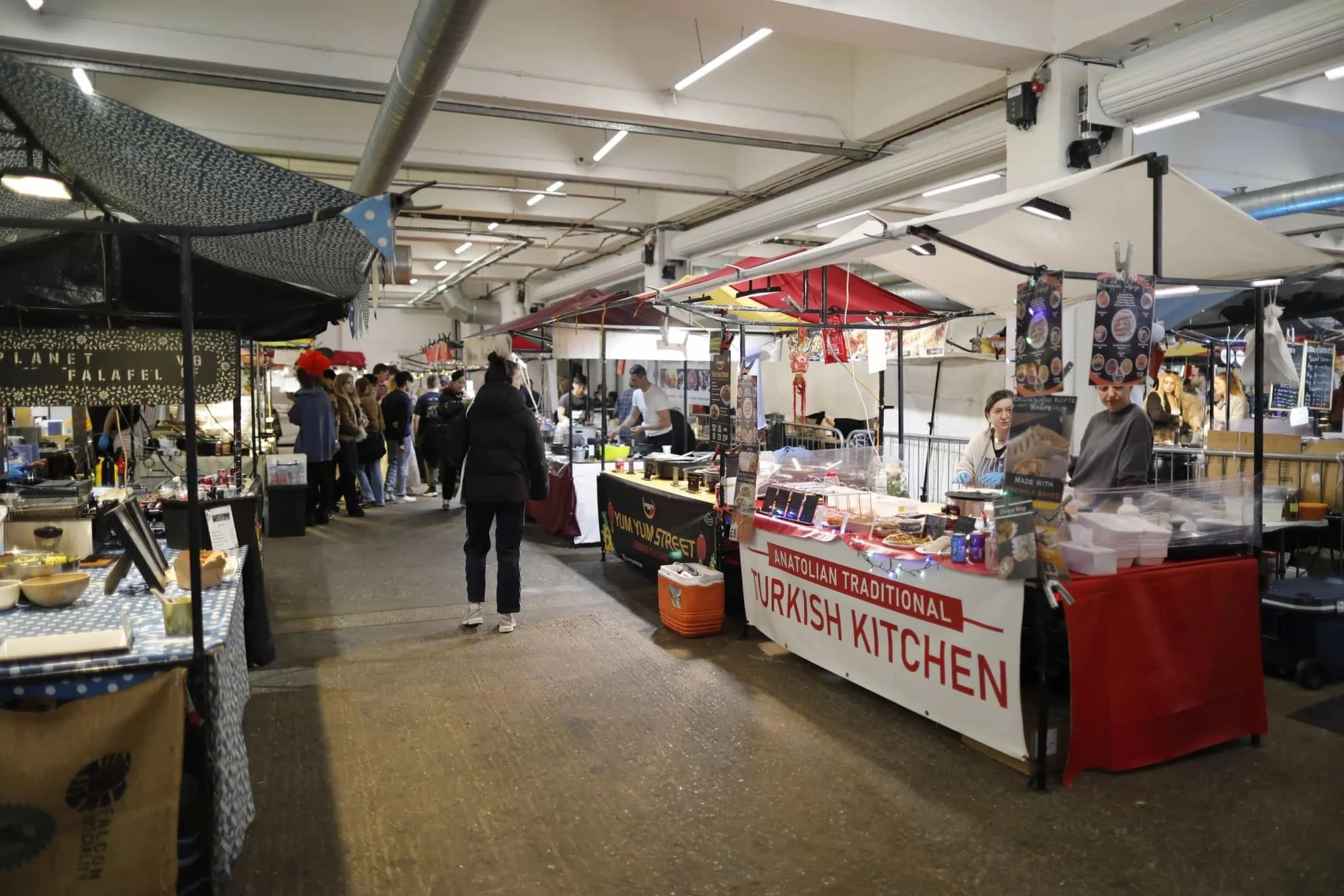
Come for the Food, Too
Food is woven into Brick Lane just as much as art and vintage shopping. The neighborhood is known for its Bangladeshi restaurants and curry houses but you'll also find bakeries, cafés and international street-food vendors as you move through the surrounding markets and side streets.
If you're visiting on a market day, it's easy to make food part of the wandering rather than choosing a restaurant in advance. Grab something that looks good, keep exploring and see what turns up next.
💡 My Tip | Pair Old Spitalfields Market and Brick Lane in the same outing but don't rush from one to the other. They're close together, and some of my favorite parts were the shops, street art and little discoveries in between. Brick Lane is better when you give yourself permission to wander.
South London Eats
South London gets only a couple of stops in this guide but they show two very different sides of eating in London. One leans into the kind of traditional British breakfast you might hope to find in an old-school neighborhood café; the other takes things in a completely different direction with Southeast Asian flavors.
That's one of the things I enjoyed most about eating around London: you don't have to choose between “British food” and the cuisines brought here by communities from around the world. Both are part of the city's food culture.
For this part of the guide, that means starting with a proper breakfast at Terry’s Café, then heading somewhere completely different at Sentosa.
Savor a Full English at Terry’s Café
If a traditional English breakfast is on your London food list, Terry’s Café is worth the wait. This old-school South London café serves the kind of generous, no-frills breakfast that requires both an appetite and a little time.
And there may be a wait. Terry’s was packed when I visited around 11 a.m. on a Sunday, with a steady stream of people arriving while I waited outside for a table. Add your name to the list, settle in and don't be too quick to give up — the breakfast on the other side was one of the most quintessentially British meals I had in London.
The café itself has plenty of personality, too. Its traditional storefront and outdoor seating give it the feel of a neighborhood institution, and when I visited, a pink cherry blossom tree framing the façade made the whole scene particularly photogenic.
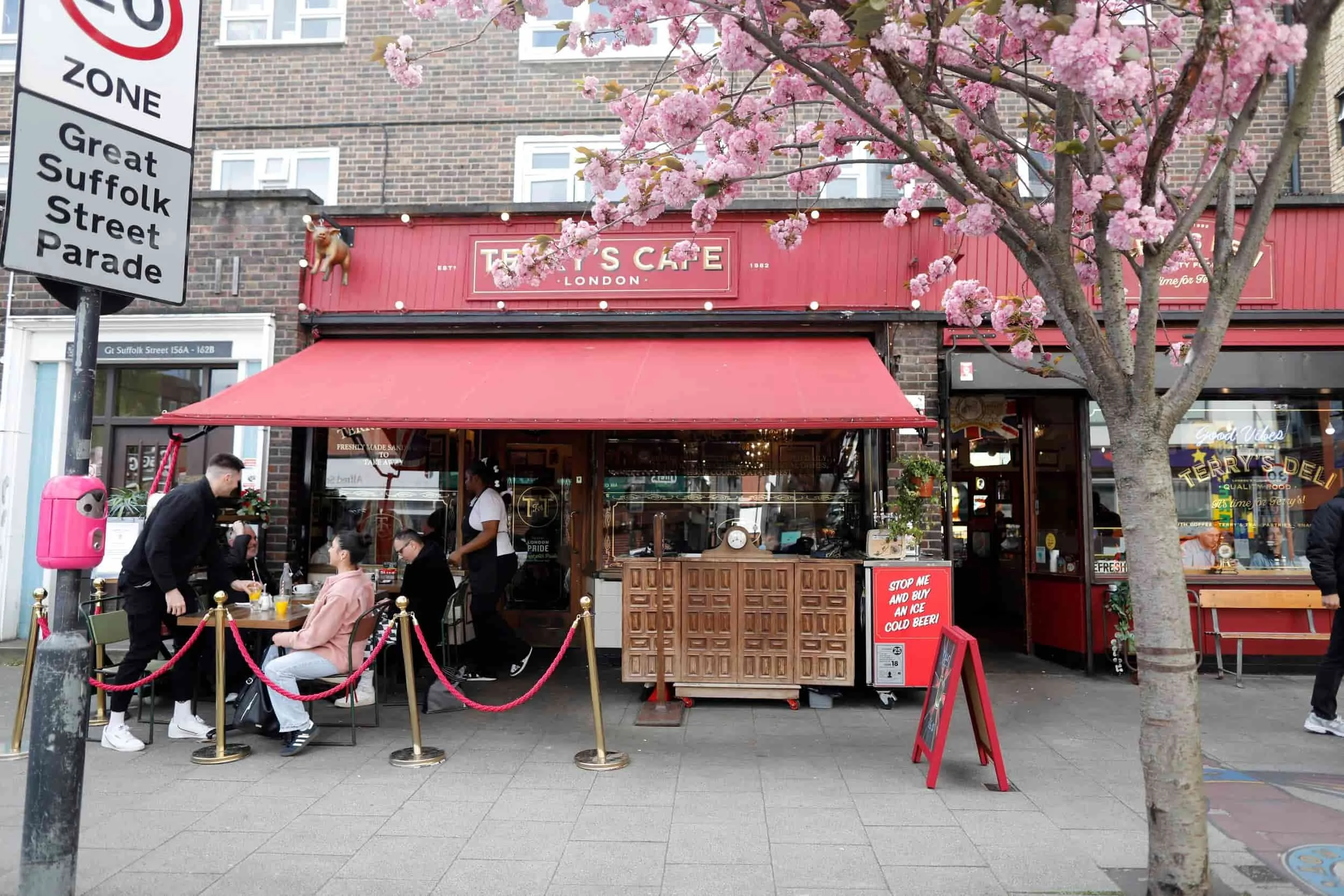
What to Order at Terry’s Café
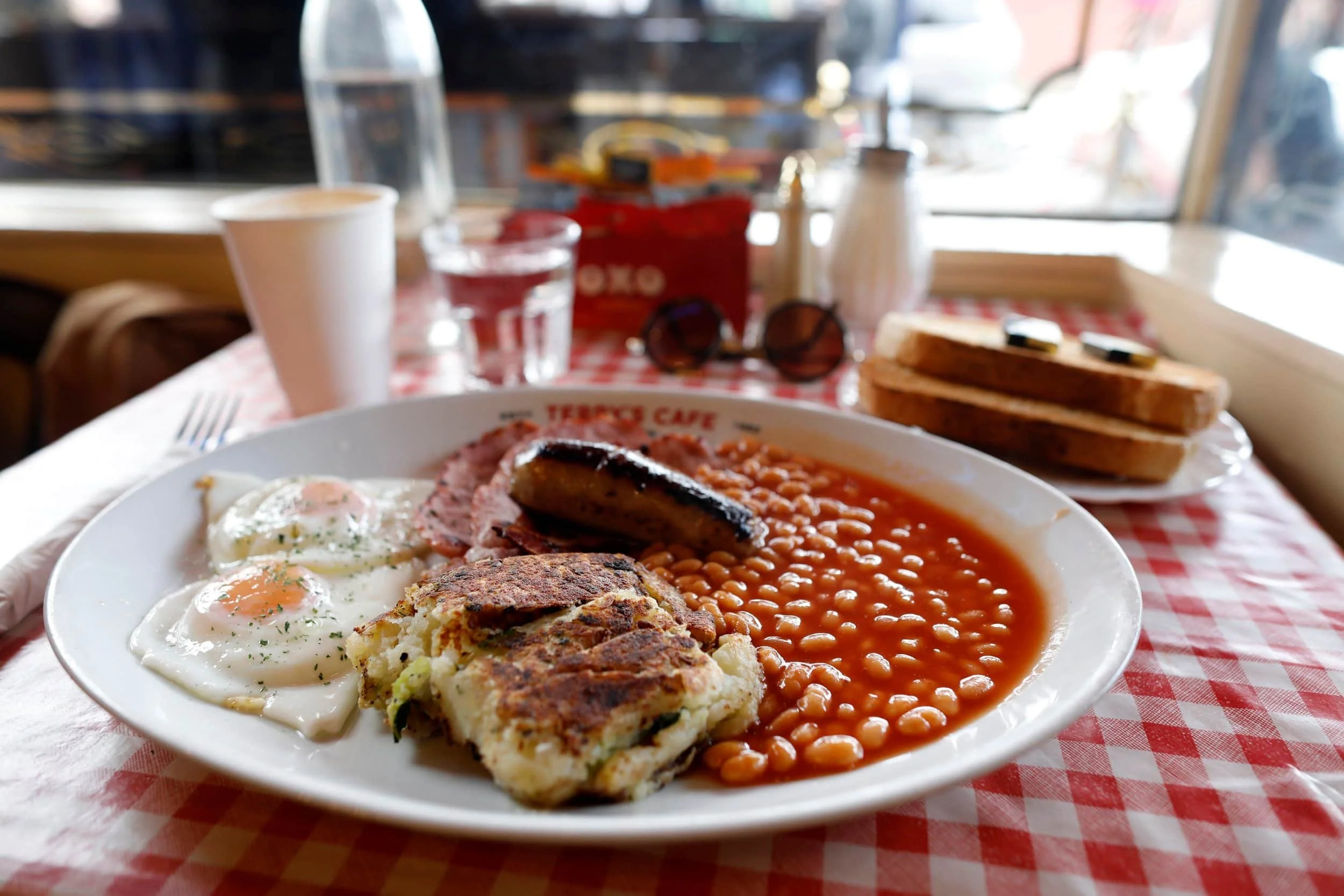
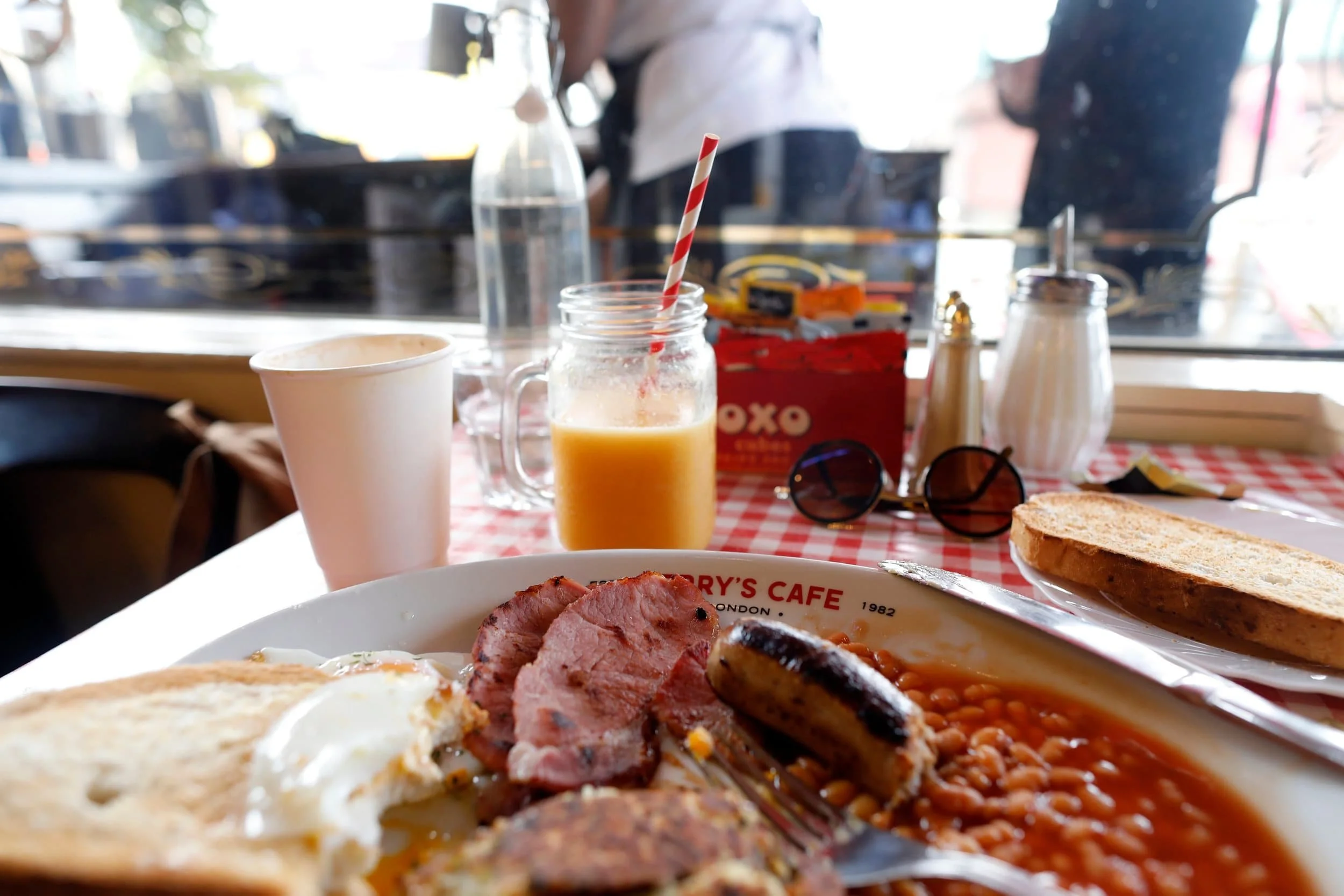
For the full experience, go hungry. The Blowout brings together many of the components you'd expect from a proper English breakfast: eggs, bacon, sausage, baked beans, toast and bubble and squeak.
If you're unfamiliar with bubble and squeak, it's a traditional British dish made by frying leftover potatoes with vegetables — historically a practical way to use what was left from a previous meal. It's exactly the kind of simple, comforting food that belongs alongside eggs and sausage.
My breakfast came with fried eggs, bacon, sausage, beans, toast and bubble and squeak, plus a pineapple smoothie. It was substantial, unapologetically hearty and absolutely worth waiting for.
A Full English can vary from café to café but you may also encounter grilled tomatoes, mushrooms and black pudding, usually accompanied by tea or coffee. You don't necessarily need every component for the experience — the appeal is really in the big, savory combination arriving together on one plate.
Even the Wait Had Its Perks
Terry’s was busy enough that I waited roughly 30–45 minutes for a table. Thankfully, I was able to get a dirty chai latte while I waited, which made standing around considerably easier.
More importantly, I could see people continuing to arrive throughout breakfast. This wasn't somewhere that looked busy from the outside and emptied five minutes later. Terry's stayed busy.
💡 My Tip | Go early and be prepared to wait, especially on a weekend. I waited around 30–45 minutes and I'd still go back. Put your name down, grab a coffee and don't arrive already starving.
Feast on Singaporean Food at Sentosa
If you're looking for dinner in South London, Bermondsey Street is worth exploring before you even decide where to eat. Just south of London Bridge, the street is lined with restaurants, cafés, bars and small shops, making it an especially nice area to wander in the evening.
This is where you'll find Sentosa, a small Singaporean restaurant with a cute, casual interior and a menu made for ordering a few things to share. It was busy when I visited, with tables filling quickly, but the lively atmosphere suited the neighborhood.
What to Order at Sentosa
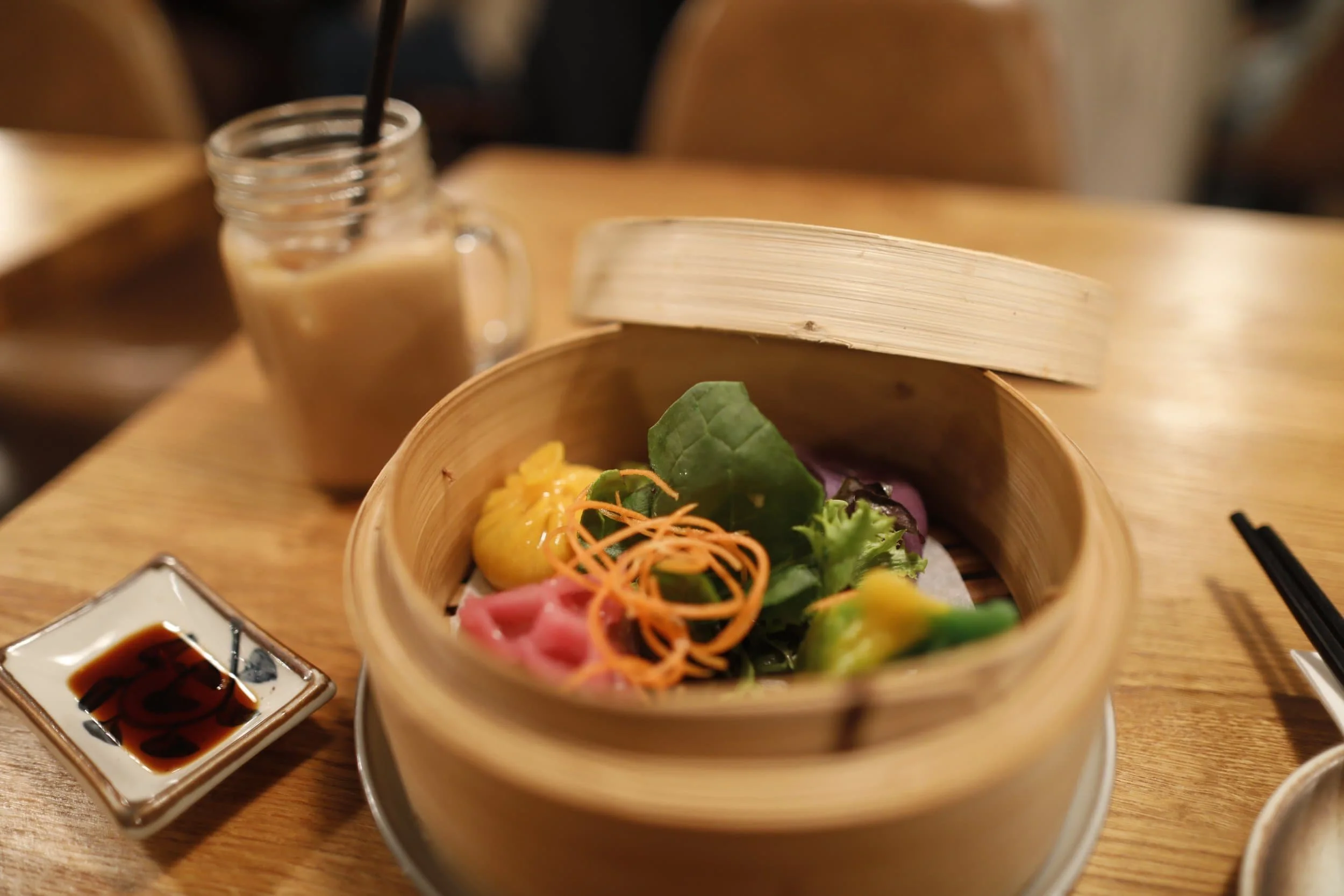
Start with the steamed dim sum platter with lotus, mushroom, corn and kimchi, an assortment that gives you several different flavors and textures in one order. It's an easy first dish to put in the middle of the table while deciding what comes next — and a good option if, like me, you'd rather try a little of several things.
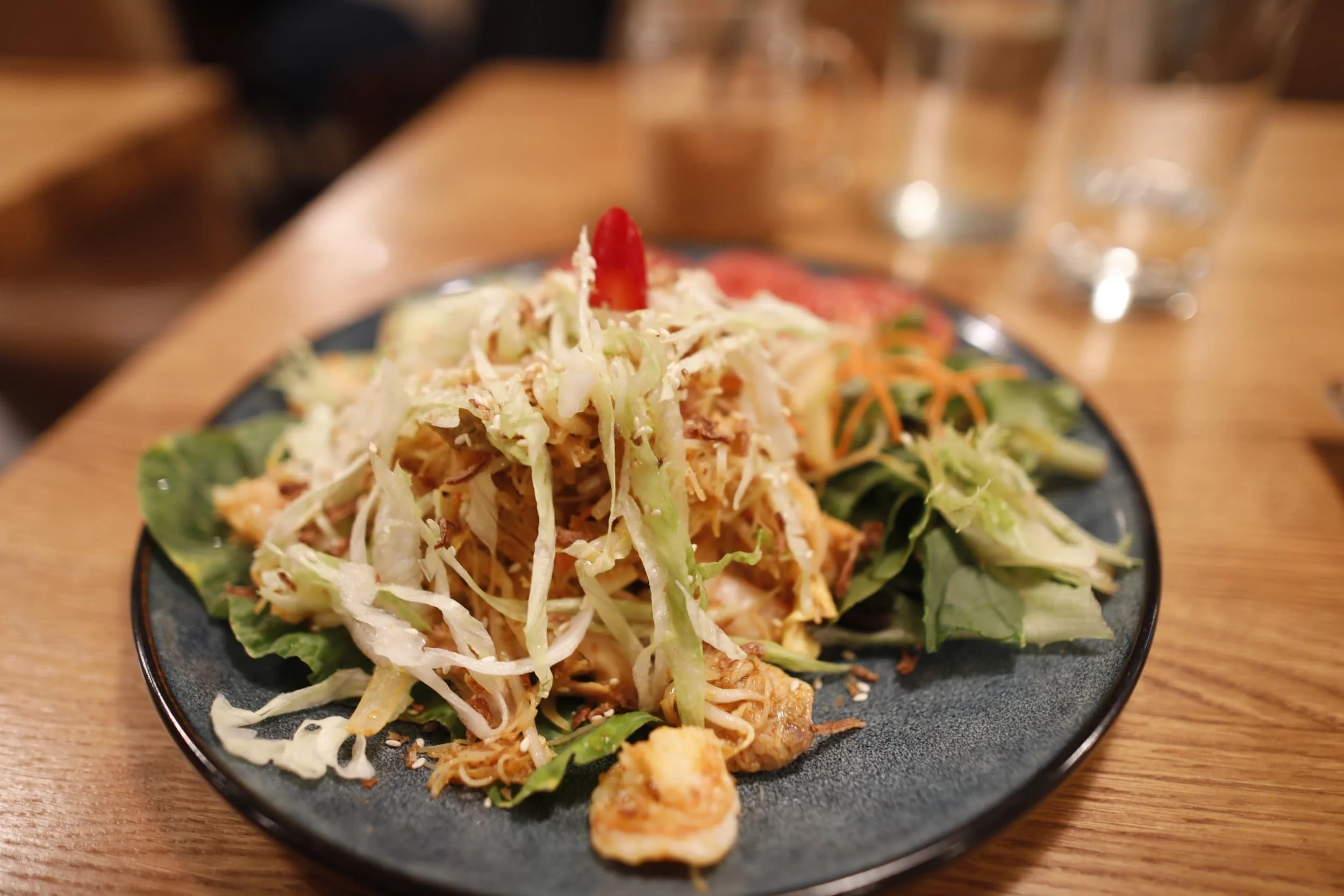
For something more substantial, Singapore-style rice vermicelli with prawns, chicken and egg brings everything together. Add an iced milk tea and you have a meal that feels completely different from the traditional English breakfast at Terry's earlier in this section — which is exactly what makes eating around London so interesting.
Sentosa is a good reminder that some of the best food experiences in London aren't necessarily about seeking out British food. The communities that have made the city home are part of London's food culture, too, and a single day can take you from a Full English to Singaporean dishes without it feeling unusual at all.
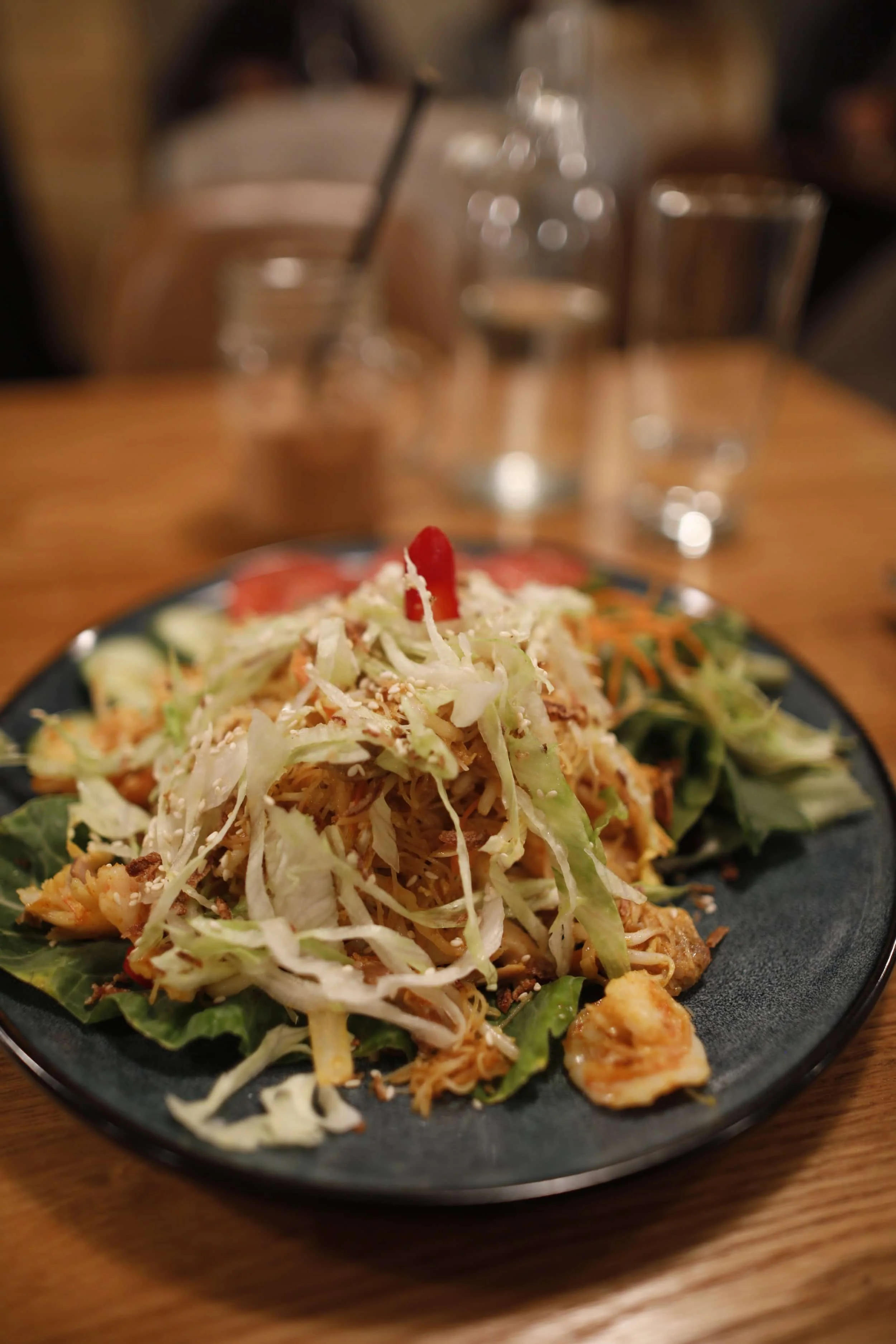
Make Time for Bermondsey Street
Don't make Sentosa your only reason to come to this part of South London. Bermondsey Street itself was one of the pleasant surprises. Restaurants and bars spill along the street alongside cafés and independent shops, giving it the kind of neighborhood energy that makes you want to keep walking after dinner rather than immediately heading somewhere else.
💡 My Tip | Give yourself a little time to wander Bermondsey Street before or after dinner and consider booking Sentosa ahead if it's somewhere you particularly want to eat. It was busy during my visit, so I wouldn't necessarily count on walking straight into a table.
The West End — Food, Markets & Hidden Corners
The West End brings this guide back to busy streets, markets and places you find by wandering. Around Covent Garden, Leicester Square and Seven Dials, restaurants and cafés sit alongside historic market buildings, small shops, theaters and some of London's busiest pedestrian streets.
But some of the best stops are slightly removed from all that activity. Seven Dials and Neal's Yard reward you for ducking down smaller streets, while the markets around Covent Garden give you plenty to browse between meals. It's an area where you can move easily from something quick and casual to a proper sit-down dinner without traveling very far.
For this part of London, I'd worry less about following a precise route. Start around Leicester Square or Covent Garden, wander through the markets and side streets, stop when something catches your eye — and save enough appetite for what's coming next.
Wander Leicester Square, Seven Dials & Apple Market
This part of the West End is best explored without much of an agenda. Leicester Square, Seven Dials and Covent Garden are close enough that you can wander from one to the next, dipping into markets, shops and side streets whenever something catches your attention.
Leicester Square is lively, central and unmistakably touristy. The small green space, theaters, street performers and constant flow of people make it a good place to pause and take in the energy of the West End — but for me, it was more of a stop along the way than somewhere I needed to linger.
From there, the streets around Seven Dials become more interesting to explore. Seven streets radiate from the central junction, with shops, cafés and restaurants scattered around the surrounding blocks. Nearby, Seven Dials Market brings many food vendors together under one roof.
The food-hall setup wasn't necessarily my favorite way to experience London but there's certainly plenty to choose from if you're with a group or everyone wants something different. I was happier continuing to wander the surrounding streets and seeing what I found along the way.
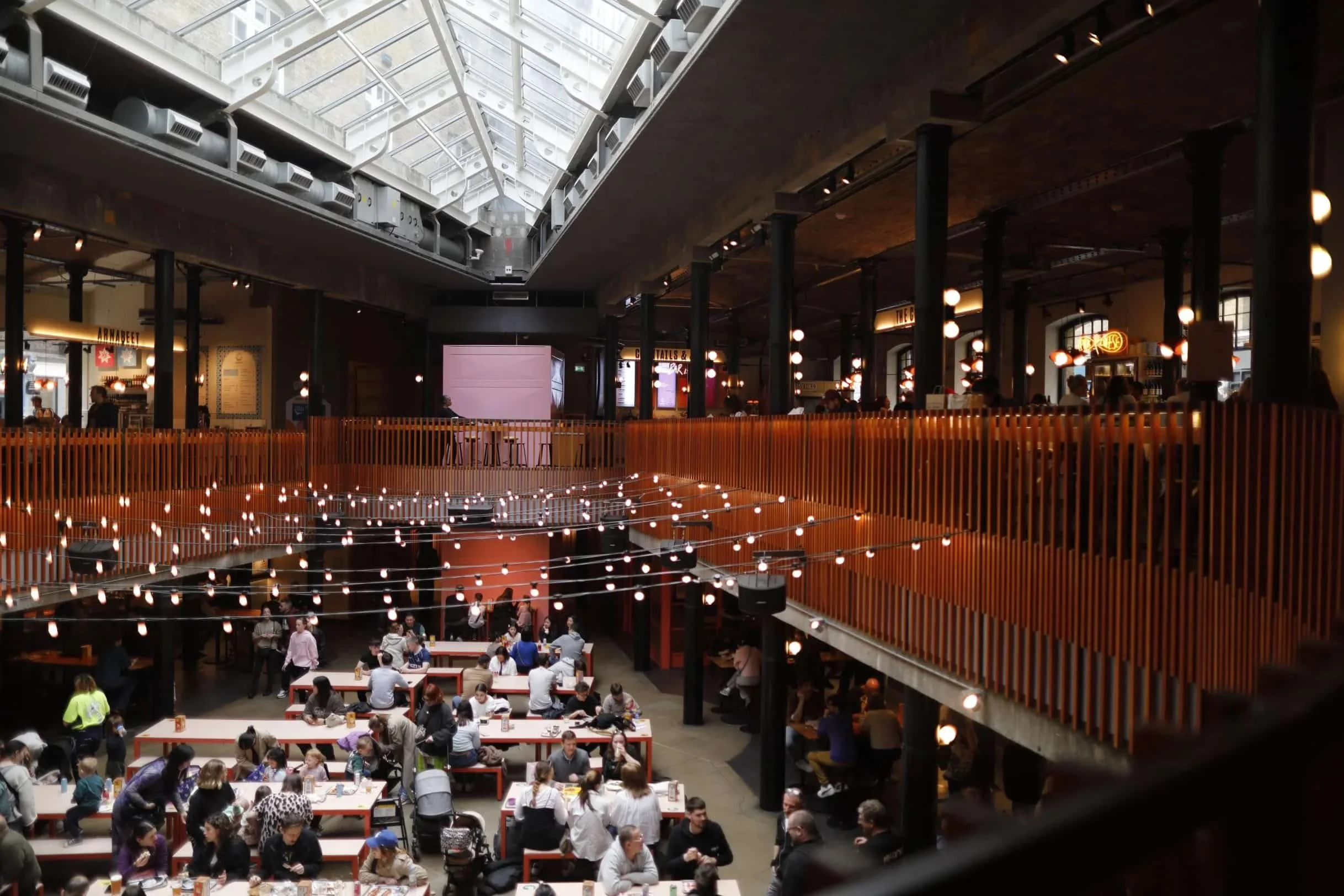
Browse Apple Market at Covent Garden
Eventually, that wandering can lead you toward Covent Garden and Apple Market, where the setting was as interesting to me as anything being sold.
Set beneath a beautiful historic market structure, stalls fill the covered space with art, crafts, accessories and other small finds, surrounded by the shops and restaurants of Covent Garden. It's polished and undeniably popular with visitors but the architecture gives the market a sense of place that a conventional shopping center simply doesn't have.
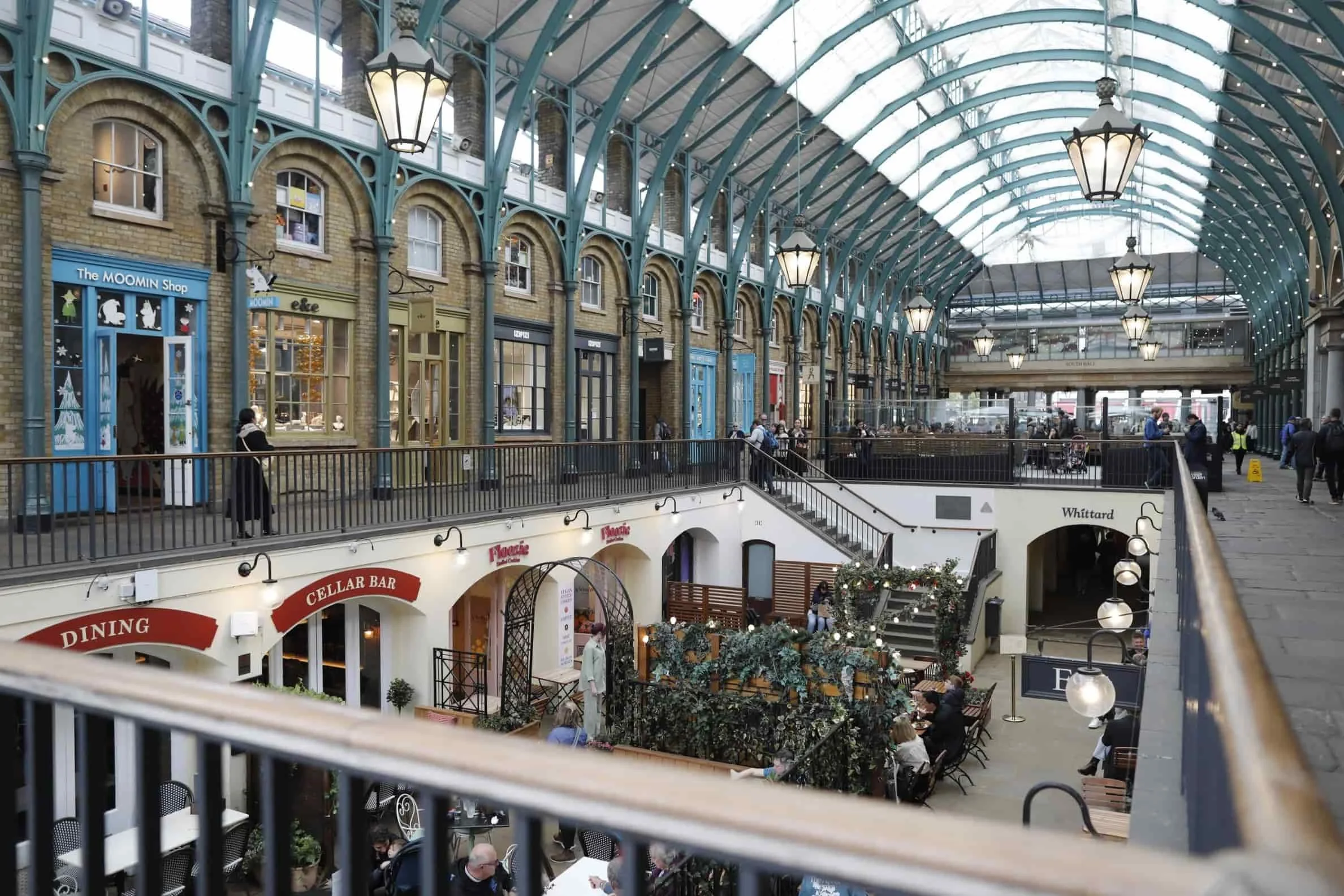
This was another London market where I found myself looking up as much as looking at the stalls. The covered structure, repetition of the arches and open central space were what I remember most.
You don't necessarily need a shopping list — or even a plan for what to eat here. The pleasure is in moving between the different spaces, seeing what catches your attention and letting one street lead to another.
💡 My Tip | Don't schedule Leicester Square, Seven Dials and Covent Garden as three separate attractions. Treat this whole area as one extended wander through the West End, with plenty of time to duck into markets, shops and side streets along the way.
Find Neal’s Yard & Stop for Coffee at 26 Grains
You could easily walk right past Neal’s Yard without realizing what's tucked behind the narrow entrance. Step through, though, and the surrounding West End suddenly gives way to a tiny courtyard filled with brightly painted buildings, plants, cafés and independent shops.
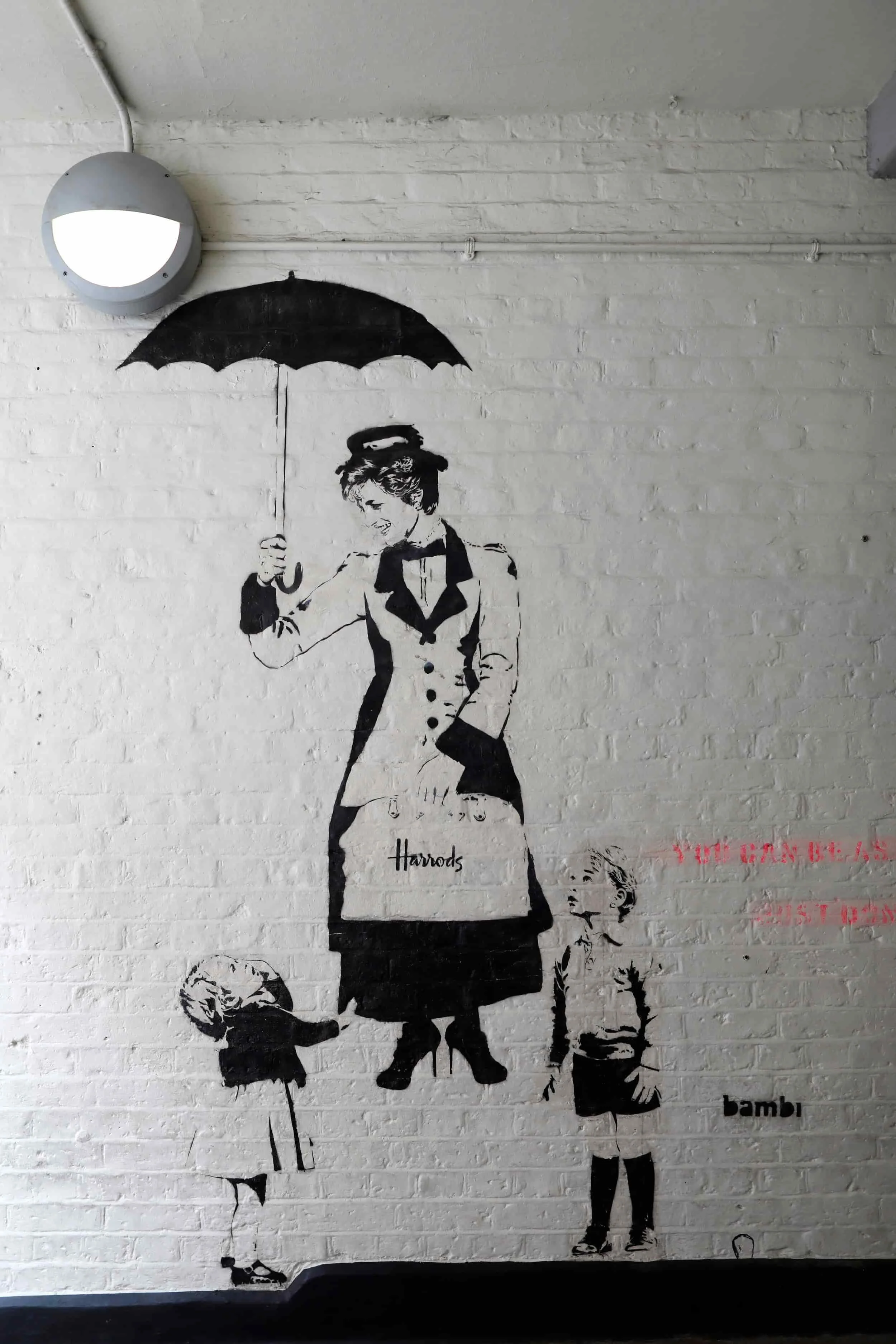
It's small — much smaller than photos might make it seem — but that's part of its charm. After the busy streets around Covent Garden and Seven Dials, Neal's Yard feels like a colorful little pocket hidden within the surrounding blocks. Look around before immediately reaching for your camera; there are painted details and bits of wall art tucked among the storefronts, including a portrait of Princess Diana when I visited.
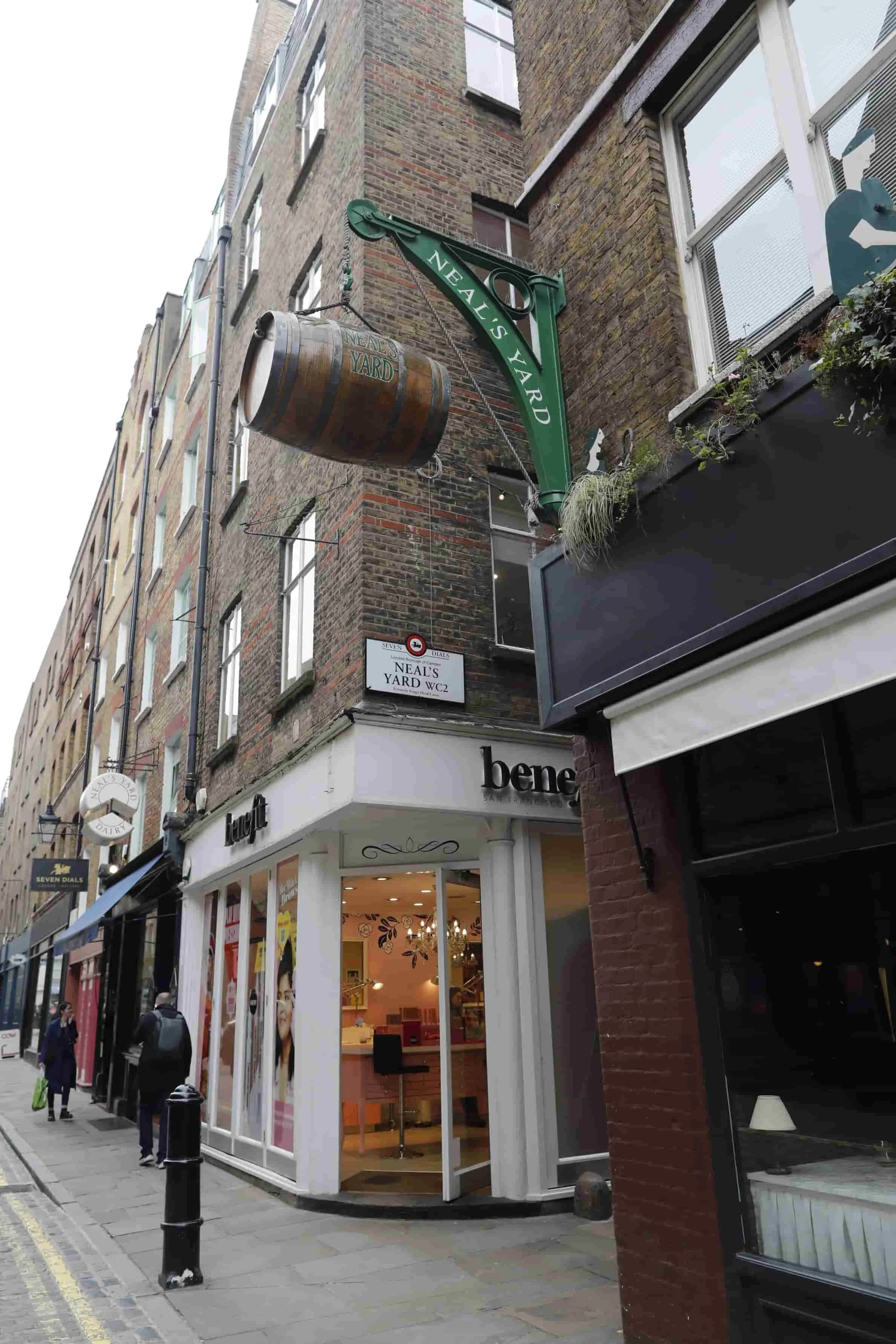
How Neal’s Yard Became So Colorful
The courtyard wasn't always the cheerful space you see today. Neal's Yard takes its name from Thomas Neale, a 17th-century developer associated with this part of Covent Garden but much of the character visitors recognize today emerged centuries later.
By the 20th century, the yard had become a fairly neglected service area. That began to change in the 1970s, when entrepreneur Nicholas Saunders opened the Neal's Yard Wholefood Warehouse here and helped establish a community of small businesses centered around natural food, health and alternative lifestyles.
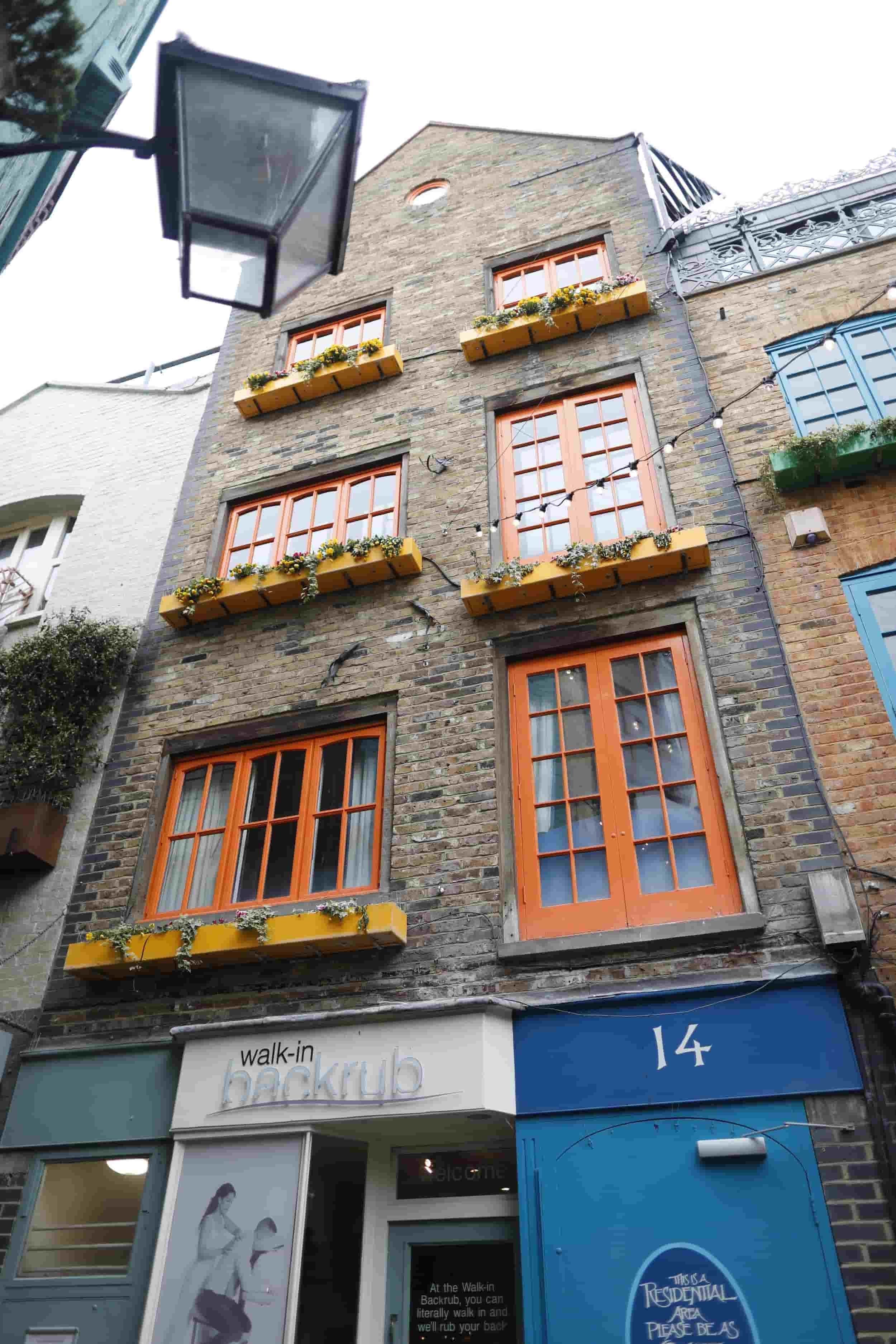
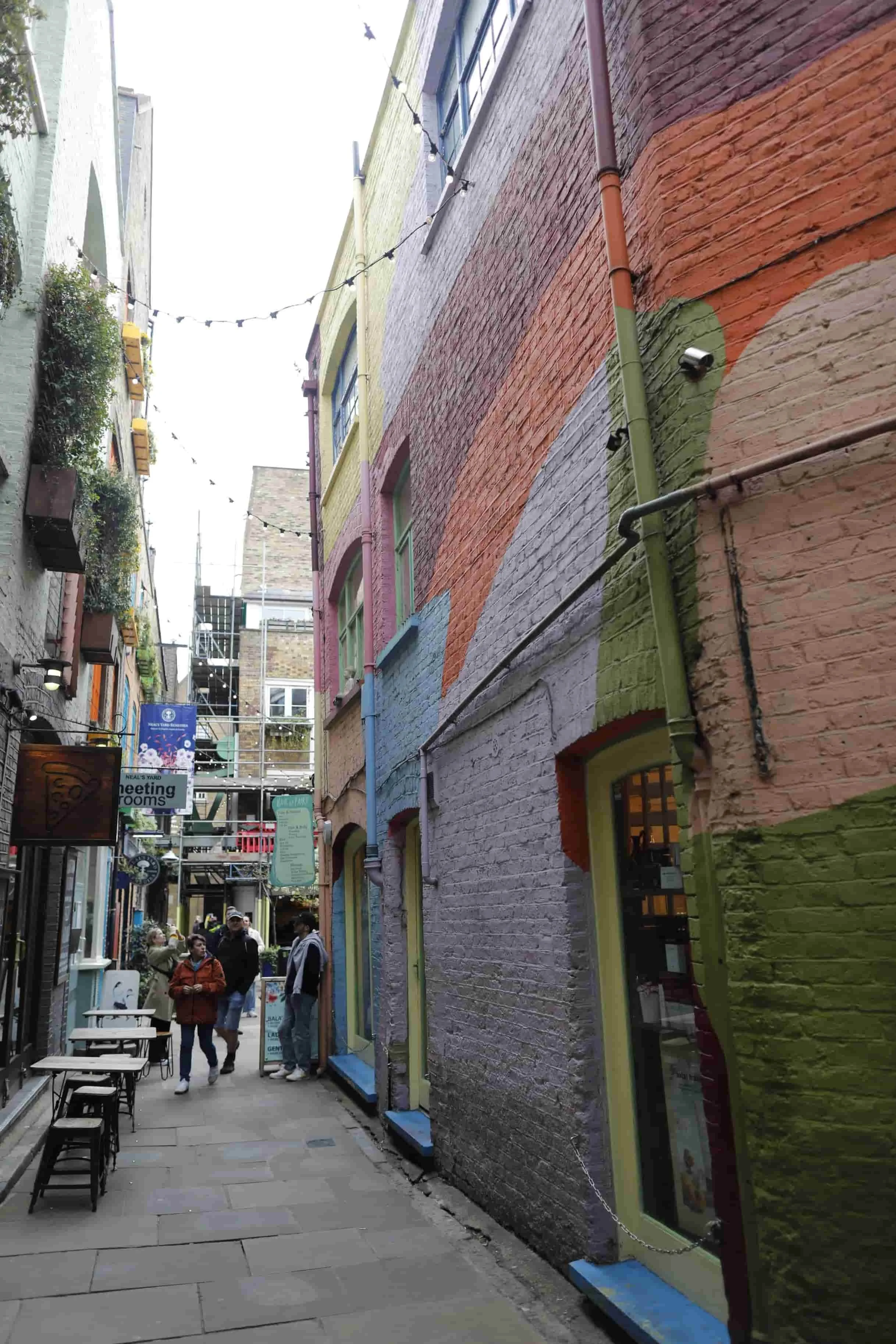
Over time, colorful façades, planting and independent businesses transformed the utilitarian courtyard into something much more inviting. You can still read the older London structure underneath it all: a small working yard tucked behind the main streets, adapted into something entirely different rather than erased.
That's what I found most interesting about Neal's Yard. The bright paint is what catches your attention but the scale and enclosure of the courtyard are what make it feel special.
Stop at 26 Grains
Once you've found your way inside, 26 Grains makes an easy place to stop for coffee before continuing through Covent Garden. The café sits right within Neal's Yard, so you can grab a drink and spend a little time enjoying the courtyard rather than simply walking in for a photo and walking straight back out.
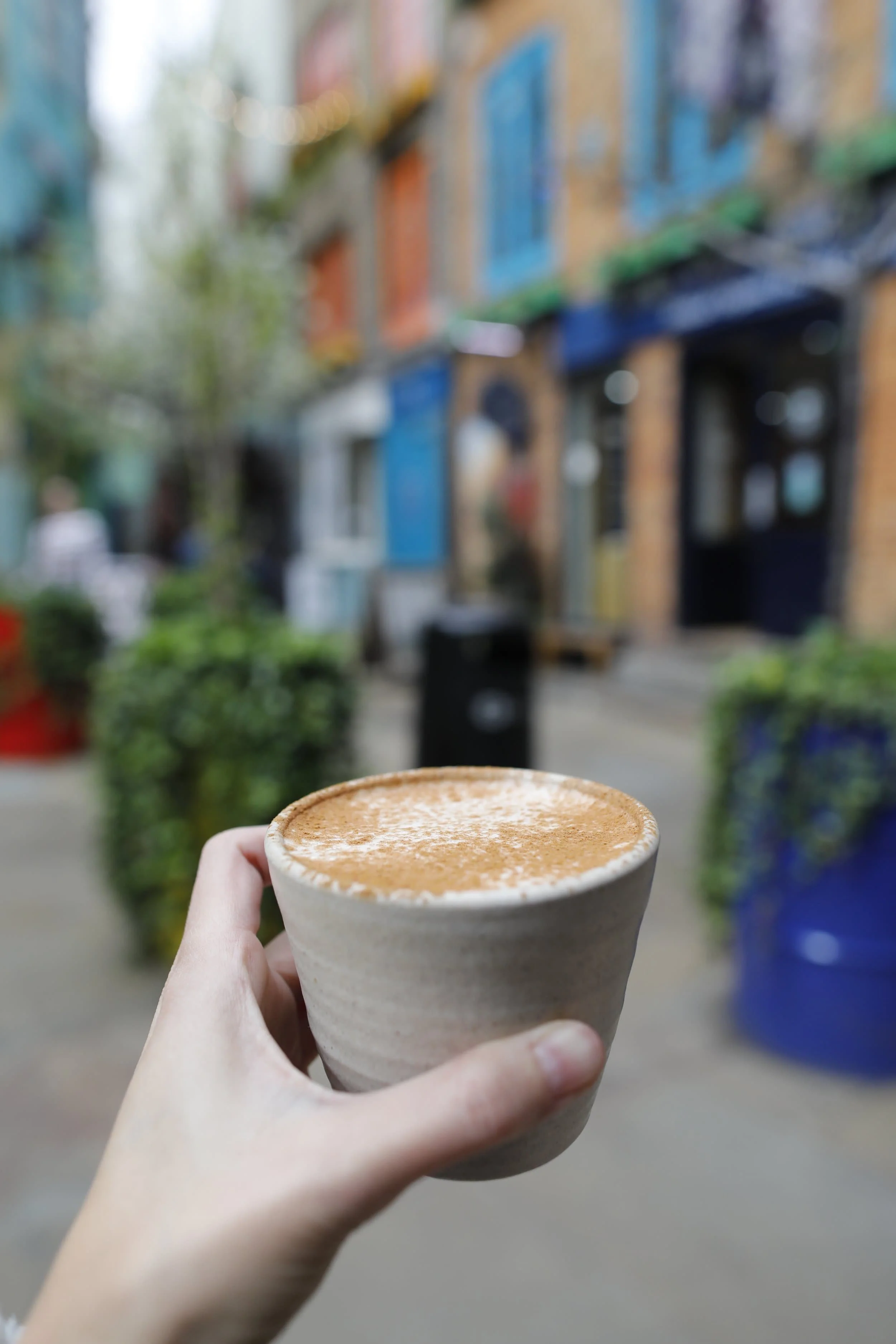
I stopped at 26 Grains for a cinnamon dusted chai latte and did exactly that. Nothing elaborate — just a warm drink in hand, colorful buildings around me and a few minutes without anywhere else I needed to be.
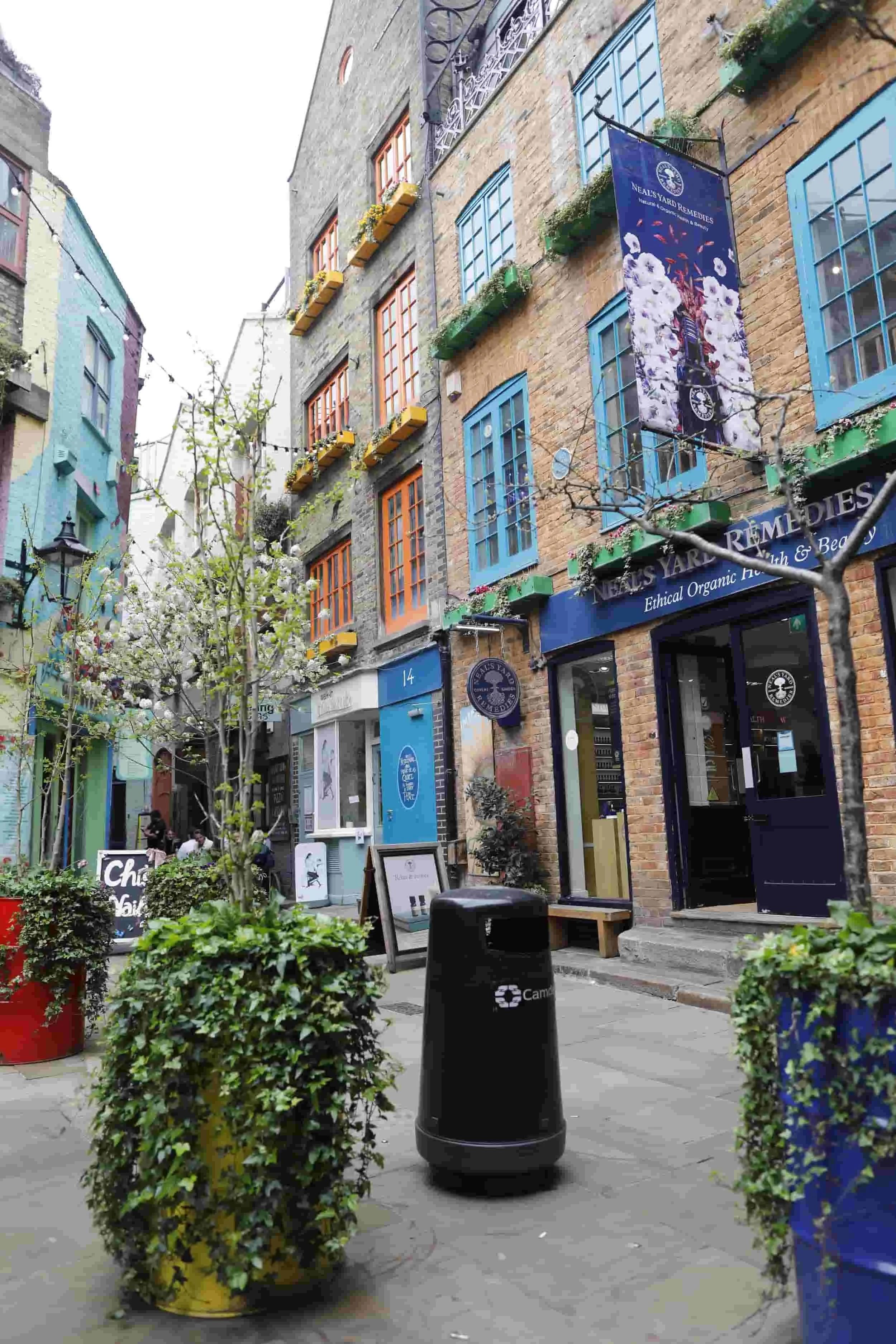
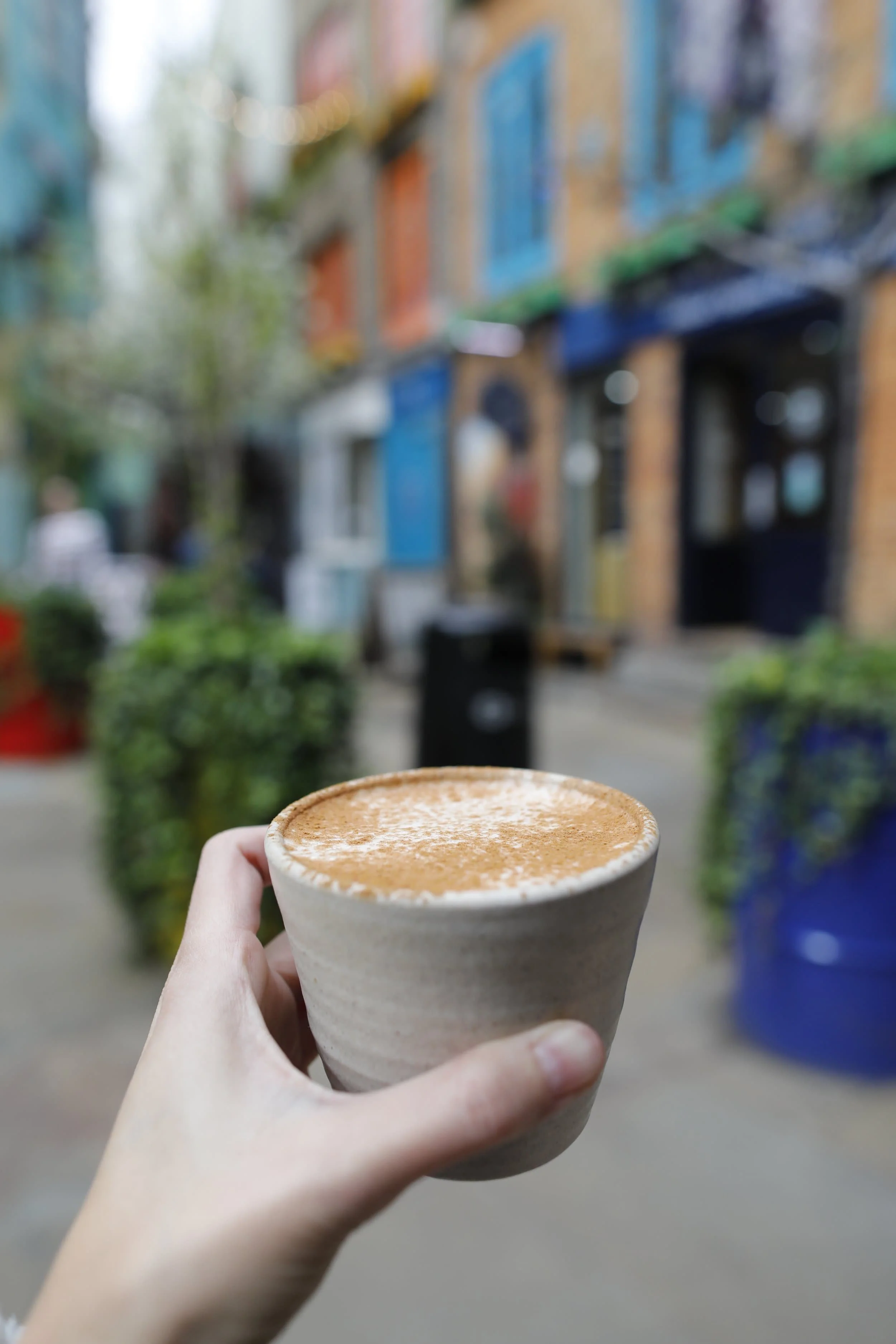
Neal's Yard doesn't require a huge chunk of your London itinerary. Pair it with Seven Dials and Covent Garden and let it be what it is: a small, slightly hidden detour that rewards you for taking the side street.
💡 My Tip | Keep an eye out for the entrance because Neal's Yard is surprisingly easy to pass. Once you're inside, slow down for a few minutes — the courtyard is compact and rushing through it for a photo misses much of its charm.
Eat Fresh Seafood at Parsons
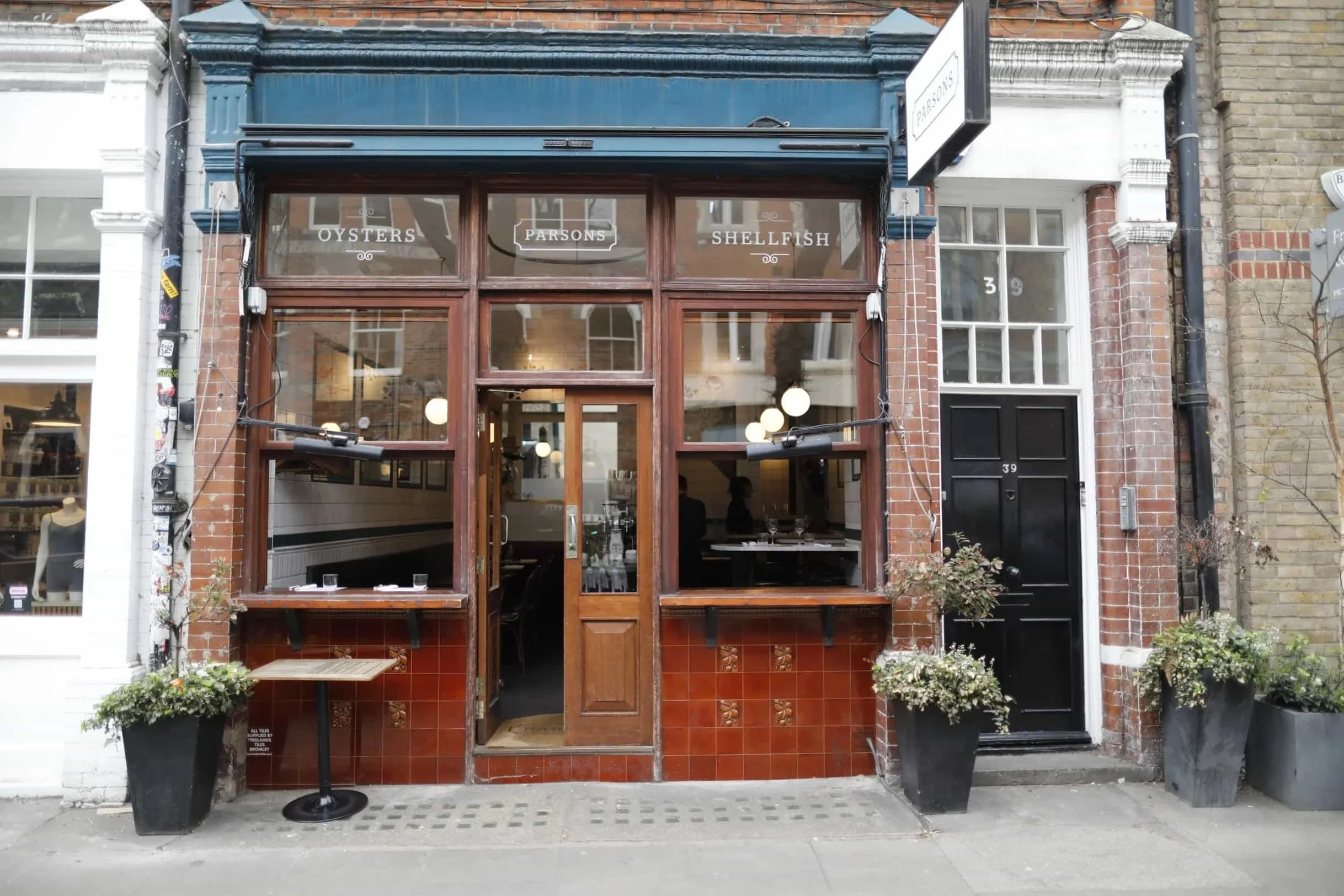
After wandering around Covent Garden, Parsons was an excellent place to stop for something fresh and simple. The little seafood restaurant has an old-fashioned storefront and a particularly good spot to sit: a front window that opens directly onto the street.
That's where I ended up, perched at the window with the West End passing just outside. It's a small detail but it made the restaurant especially charming — part dining room, part people-watching perch.
What to Order at Parsons
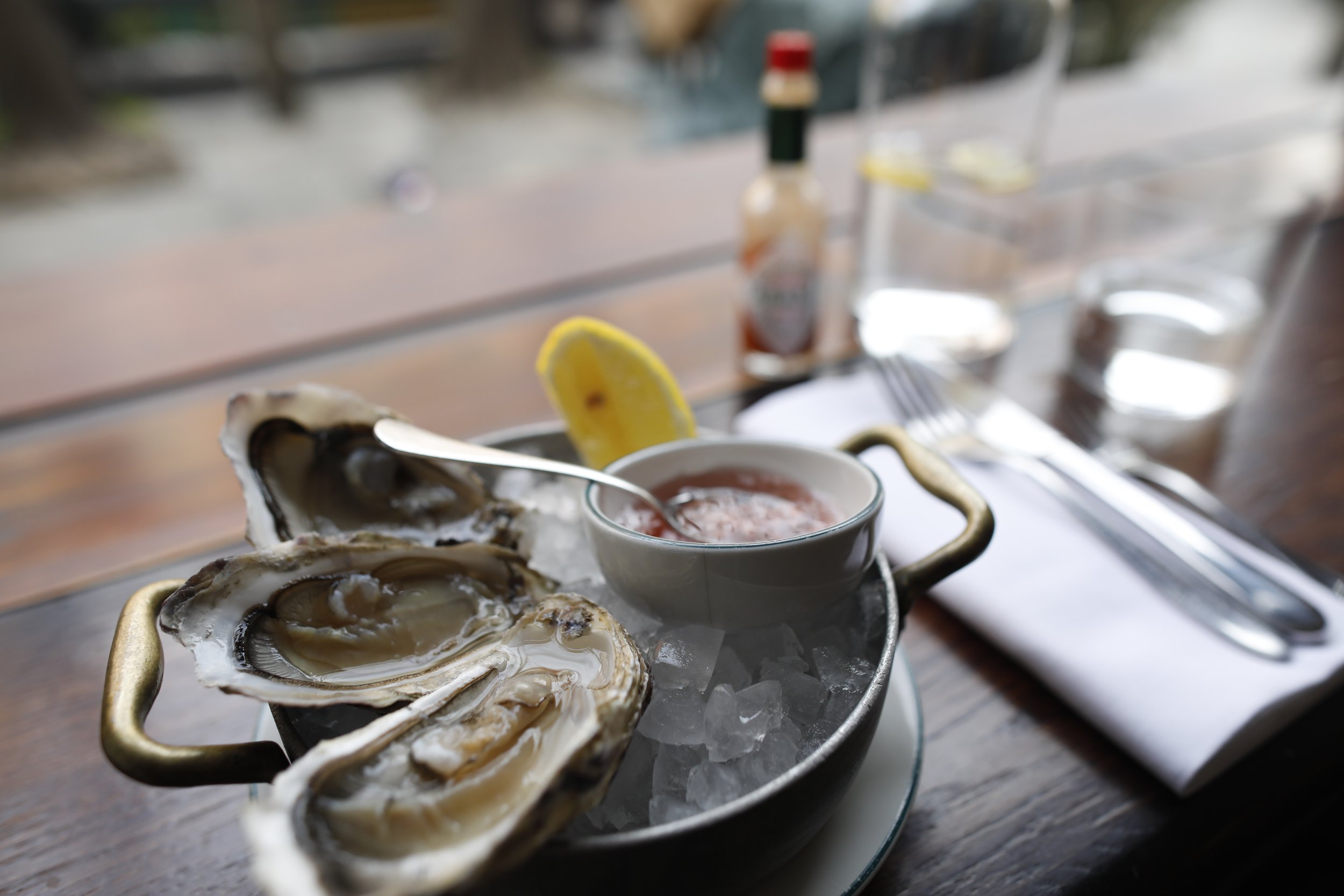
I started with three Jersey rock oysters, served simply over crushed ice. Cold, briny and incredibly fresh, they were easily the highlight of the meal.
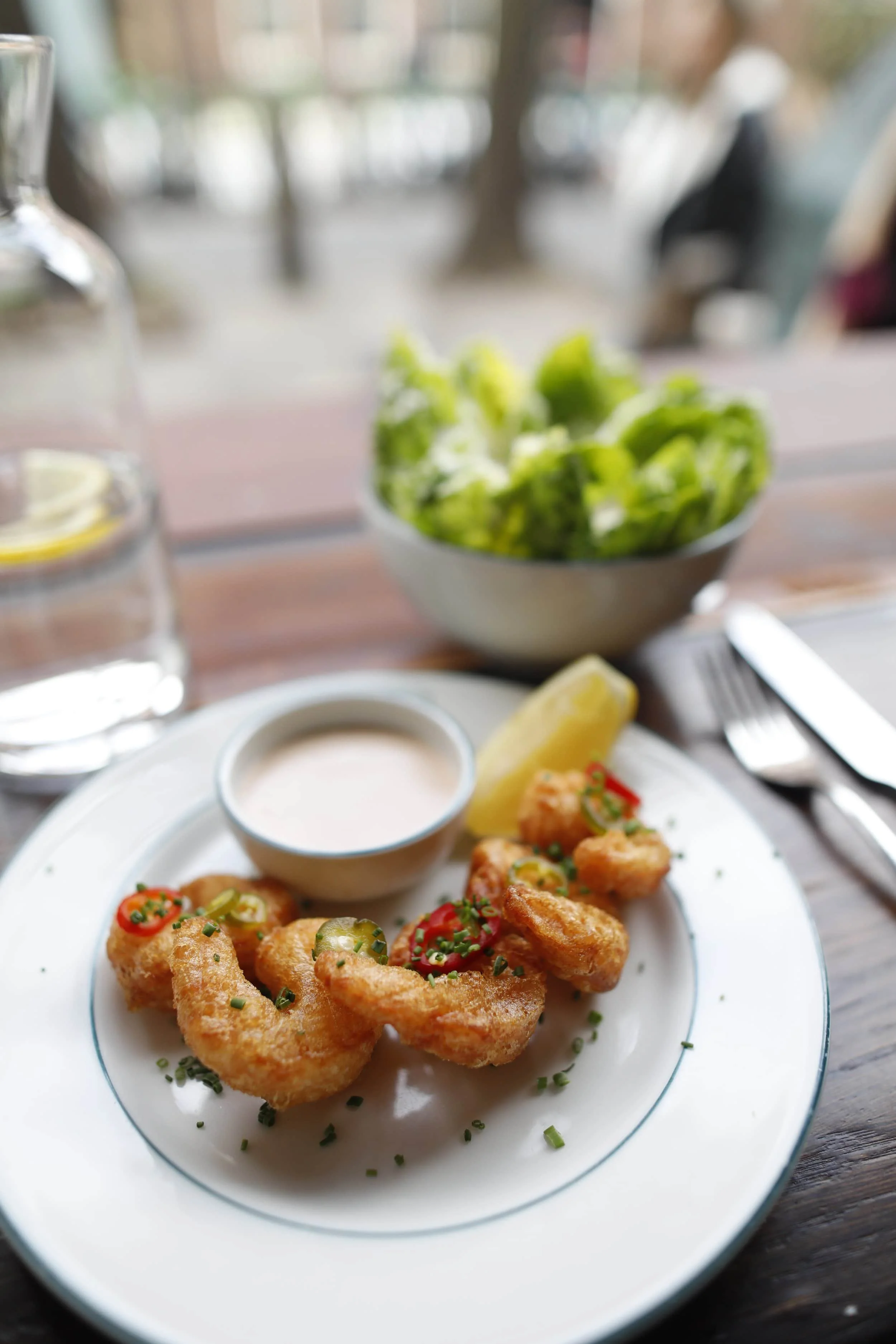
Next came the king prawn fritters, crisp on the outside with tender prawns inside, along with a baby gem salad with honey-mustard vinaigrette and Parmesan. Everything felt fresh and unfussy, which is exactly what I wanted after spending the day grazing and wandering around London.
The oysters still won.
💡 My Tip | If the front window is open, grab one of the seats there. It's a great little spot for people-watching while you eat — and part of what made Parsons so memorable for me.
What I’d Explore Next in London
London is one of those cities where leaving with a longer list than you arrived with feels almost inevitable. I covered a lot in a few days — markets, cafés, restaurants, vintage shops and plenty of wandering — but I didn't come remotely close to seeing everything.
And that's okay. Part of traveling is realizing what you missed.
There are entire neighborhoods I'd spend more time eating through, markets I never reached and shopping streets where my budget probably benefited from me staying away. I'm particularly bummed I missed London's flower markets. Between the stalls, color and sheer visual overload, they seem like exactly the kind of place I would have happily disappeared into with my camera for a morning.
So rather than pretending this is a definitive guide to eating and shopping in London, consider these the places still on my list for next time — and a few more to add to yours if you have longer than I did.
More London Markets I’d Explore
I've already made it to Borough Market, Old Spitalfields, Seven Dials and Apple Market but London has plenty more.
Camden Market would be high on my list for its mix of food, vintage clothing, independent shops and slightly more alternative personality. Portobello Road Market is another obvious one, particularly for antiques and vintage finds against the colorful streets of Notting Hill.
I'd also look at Greenwich Market for independent makers, art and food, and Maltby Street Market for a smaller food-focused alternative to some of London's larger markets.
I wouldn't try to cram all of these into one trip. I'd choose one or two based on the neighborhood I was already exploring and give myself time to wander.
The Flower Markets I Wish I Hadn't Missed
This is probably my biggest omission.
Columbia Road Flower Market is the one I'd make a point of seeing next time. The Sunday market fills the street with flowers and plants, and between the market itself and the independent shops lining Columbia Road, it sounds like exactly my kind of morning.
I'd also be curious to see New Covent Garden Flower Market, which is much more connected to London's professional flower trade than a leisurely neighborhood market. It's a very different experience — and one I'd research more carefully before visiting because access and hours aren't as straightforward as a typical street market.
For me, though, Columbia Road would come first. I'm genuinely a little annoyed with myself for missing it.
More Neighborhoods I’d Eat Through
There is no realistic way to cover London's food scene in a handful of days.
Soho and Chinatown would be easy places to spend more time eating without much of a plan, while Brixton would take me into a completely different part of London's food culture. I'd also happily return to East London and keep exploring around Shoreditch and Brick Lane, rather than treating them as places I've somehow “done” because I've visited once.
That's probably the biggest takeaway from eating in London: you don't need one definitive list of the city's best restaurants. Pick a neighborhood, see what it's known for, leave room for something you didn't research — and eat from there.
And If My Shopping Budget Were Bigger...
London could become dangerous very quickly.
I spent much more time browsing markets, vintage shops and smaller independent stores, which suits both my taste and my budget. But with a little more money to play with, I'd absolutely want to explore London's more polished design and fashion side too.
Mayfair and Bond Street would be less about needing to buy something and more about seeing the flagship stores, displays and interiors. Liberty London would be particularly high on my list for its combination of fashion, textiles, homewares and that unmistakable Tudor Revival building.
I'd also make time for Notting Hill and Marylebone, where the appeal is less one particular store and more wandering among independent boutiques, specialty shops, cafés and beautiful streets.
Realistically, I'd probably still come home with some strange little thing I found at a market.
London, Still Unfinished
That's probably where I want to leave London: unfinished.
This guide isn't everything you can eat, shop or see here. It's what caught my attention during a few days in an enormous city — along with everything I discovered afterward that made me wish I'd had more time.
If I return, I'd spend less time trying to cover ground and more time choosing a neighborhood for the day: a market in the morning, somewhere good for lunch, a few shops, a dirty chai somewhere along the way and plenty of time to see what I find.
That sounds like a pretty good reason to come back.
My Bibimbap Moment
Every destination adds another ingredient to our life's recipe, and sometimes it's the sheer abundance of a place that stays with us. London felt endlessly alive — markets overflowing with people and food, vintage treasures tucked into neighborhood shops and an incredible mix of cultures and flavors around every corner. Here's the ingredient London added to my Bibimbap Life.
Today’s Bibimbap Recipe
🥢 Flavor: Vibrant
🌿 Ingredient: Abundance
❤️ Best Memory: Biting into those steamy, juice-filled Georgian dumplings — my first time trying Georgian food
🎒 Take With You: Come hungry, leave room in your suitcase and don't be surprised if one afternoon turns into an entirely different adventure.
When I think about London, I remember the energy first — the crowds spilling through markets, the smell of food drifting between stalls, the thrill of finding something unexpected tucked inside a vintage shop. Every neighborhood seemed to have its own rhythm, its own collection of people and flavors and little discoveries. I loved how effortlessly different worlds seemed to exist alongside one another. London didn't ask me to choose what kind of experience I wanted; it seemed to offer all of them at once, and I was more than happy to keep wandering.
Discover the flavors of UK’s capital with this London guide — from must-eat classics and hidden foodie finds to the best neighborhoods to shop, sip and wander.