Villages of Antigua, Guatemala: Everyday Life & Warm Rhythms
Explore the villages surrounding Antigua Guatemala, where colorful markets, traditional crafts and local encounters reveal the rhythms of everyday life.
Updated | October 2026

Why Visit the Villages Around Antigua, Guatemala?
Beyond the cobblestone streets, colorful facades and historic churches of Antigua, Guatemala, a different side of the region awaits. Surrounded by volcanic landscapes and small villages, the area offers a closer look at everyday Guatemalan life, where traditional crafts, local markets and generations of knowledge remain woven into the community.
Guatemala's rich Maya heritage and Spanish colonial history have shaped a fascinating cultural landscape. Known as the Land of Eternal Spring, the country is celebrated for its highland scenery, coffee and cacao traditions and vibrant markets. But it's the people, their stories and the skills passed down through generations that make exploring beyond Antigua so rewarding.
Visiting the surrounding villages is one of the most meaningful things to do in Antigua, Guatemala, whether you're learning about traditional weaving, discovering a family-run macadamia farm or wandering a market filled with fresh produce and handmade goods. It's a chance to look beyond the postcard-perfect city and experience the culture, creativity and everyday rhythms that give this region its character.
At a Glance
📍 Destination: Villages around Antigua, Guatemala
🕒 Time Needed: Half to full day
💰 Budget: 190–Q575 GTQ/person ($25–$75 USD/person)
👟 Walking Level: Mild to moderate
🌤️ Best Season: Dry season (November–April)
🌰 Don’t Miss: Traditional weaving, village markets and Valhalla Macadamia Farm
🖤 Perfect For: Culture lovers, curious travelers and craft enthusiasts
My Bibimbap Moment
This trip added: Connection.
The villages surrounding Antigua, Guatemala added the ingredient of connection to My Bibimbap Life. What made this day so special wasn't just the colorful markets, traditional crafts or delicious local food. It was getting to experience them through the eyes of my guide, Delia, who shared her favorite places and introduced me to the people behind them. The whole day felt easy, playful and wonderfully personal, like being shown around by a friend rather than following a tour itinerary. It reminded me that some of the richest travel experiences come from the people who invite us into their everyday world.
My One-Week Guatemala Itinerary
My Guatemala adventure got off to a slightly chaotic start with a missed flight and a frantic dash through LAX. Thankfully, arriving in Antigua, Guatemala, with its colorful colonial buildings, cobblestone streets and volcanoes looming in the distance, made the airport drama feel like a distant memory.
I spent several days exploring Antigua, including a guided visit to the surrounding villages, where I met local artisans, discovered traditional weaving, sampled Guatemalan food and learned about macadamia farming. It was one of my favorite experiences of the trip and an easy addition to any Antigua, Guatemala itinerary.
From Antigua, I took a day trip to Lake Atitlán, visiting Maya villages tucked between the lake and its towering volcanoes. The final leg took me north to Tikal National Park, where ancient Maya temples rise above the rainforest canopy. I based myself in the colorful island town of Flores, a charming little place to unwind after exploring one of Guatemala's most extraordinary archaeological sites.
One week offered a wonderful introduction to Guatemala's landscapes, history and living traditions, although I'd happily return with more time to explore.
My route: Antigua → Lake Atitlán → Flores → Tikal
Explore
Here’s where the journey will take us.
01 | Antigua Villages Private Tour
02 | When to Go
03 | How to Get There
04 | Where to Stay
05 | How to Get Around
06 | How Long to Stay
07 | Tours & Day Trips
08 | Good to Know
Explore More | Candy Colored Colonial City of Antigua
Travel More | Guatemala Travel Guides
Hidden Antigua Guatemala: Villages Worth Exploring
Beyond the colorful colonial streets of Antigua Guatemala, a collection of small villages offers a closer look at the traditions, craftsmanship and everyday life of the surrounding highlands. From family-run farms and weaving cooperatives to lively produce markets, exploring these communities is one of the most rewarding things to do in Antigua, Guatemala, especially with a local guide who knows everyone and has a few favorite stops to share.
The day begins at a macadamia farm near San Miguel Dueñas, where fresh nuts and a little agricultural know-how are on the menu. In San Antonio Aguas Calientes, meet local weavers keeping generations of Maya textile traditions alive, then continue through San Pedro Las Huertas for a glimpse of village life. At the busy market in Santa María de Jesús, beneath the imposing Volcán de Agua, stalls overflow with produce, color and conversation. Back in Antigua, there's still time to explore the Central Market and enjoy a comforting plate of pepián, Guatemala's richly spiced traditional stew.
It's an easygoing, wonderfully personal way to discover a side of Antigua that goes well beyond its beautiful architecture.
If you're inspired to explore these villages yourself, you'll find everything you need to plan your visit in the Travel Essentials at the end of this guide.
Devour Macadamia Pancakes at Valhalla Macadamia Farm
Just outside Antigua, Guatemala, near San Miguel Dueñas, Valhalla Macadamia Farm & Restaurant offers a delicious introduction to sustainable agriculture in Guatemala. Think leafy gardens, fresh macadamias, homemade pancakes and a surprisingly fascinating story about what one little nut can do for the environment.
It's an easy addition to a village tour and a lovely place to slow down over breakfast before exploring the surrounding communities.
My guide, Delia, picked me up from Good Hotel Antigua at 8:30 a.m. for a private tour of her favorite local spots. Valhalla was our first stop, and between the peaceful setting and the promise of pancakes, we were off to a pretty excellent start.
💡 My Tip | Delia is a wonderful local guide who brings warmth, humor and genuine connections to the experience. You can reach her on WhatsApp at +502 5697 5197.
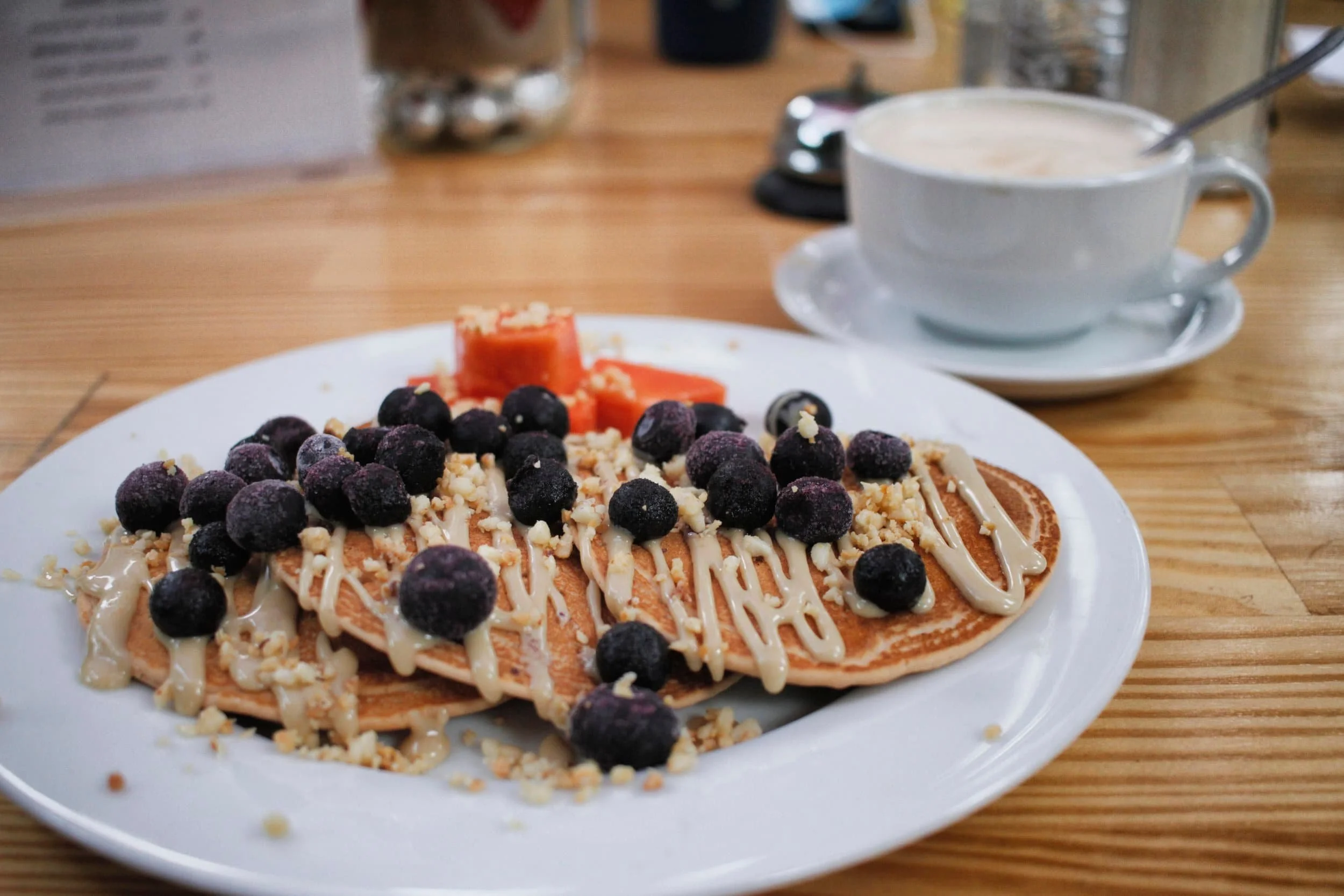
The restaurant is known for its gluten-free macadamia pancakes, and they're absolutely worth ordering. Rich, nutty and satisfyingly dense, they're especially good with blueberries, fresh fruit and a proper cup of coffee.
Breakfast here feels refreshingly unhurried, with tropical greenery all around and none of the activity of central Antigua. It's also a wonderful opportunity to chat with a local guide. Delia had plenty of stories to share about the villages, people and traditions we'd be discovering throughout the day.
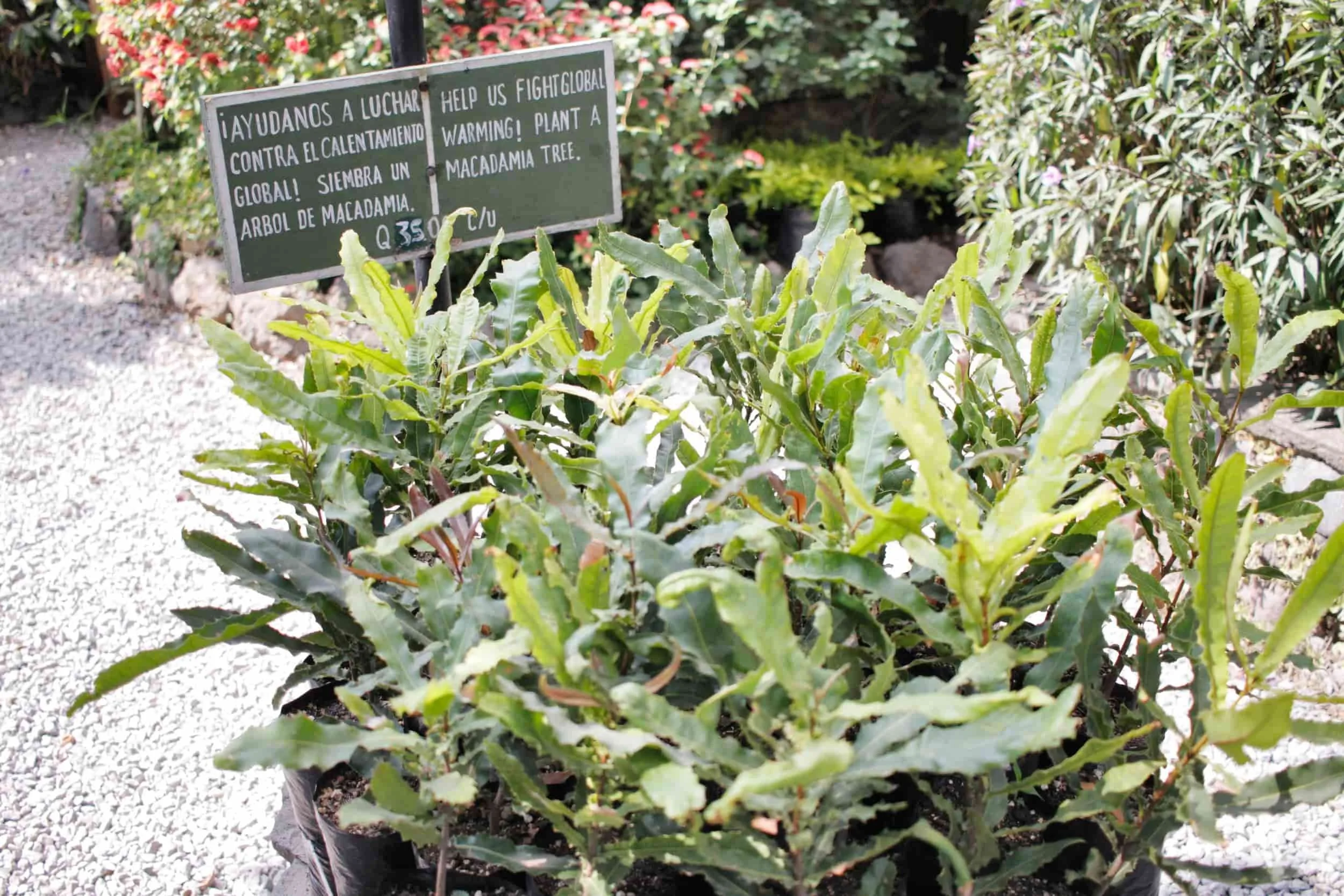
Beyond the restaurant, Valhalla is a working macadamia farm with a much bigger purpose than producing delicious nuts. Guided visits introduce the trees, harvesting techniques and processing equipment, offering a behind-the-scenes look at an agricultural project rooted in environmental restoration.
The grounds are lush and peaceful, with trees at different stages of growth and plenty of opportunities to see how the farm operates. It's informative without feeling overly so, which is always a bonus.
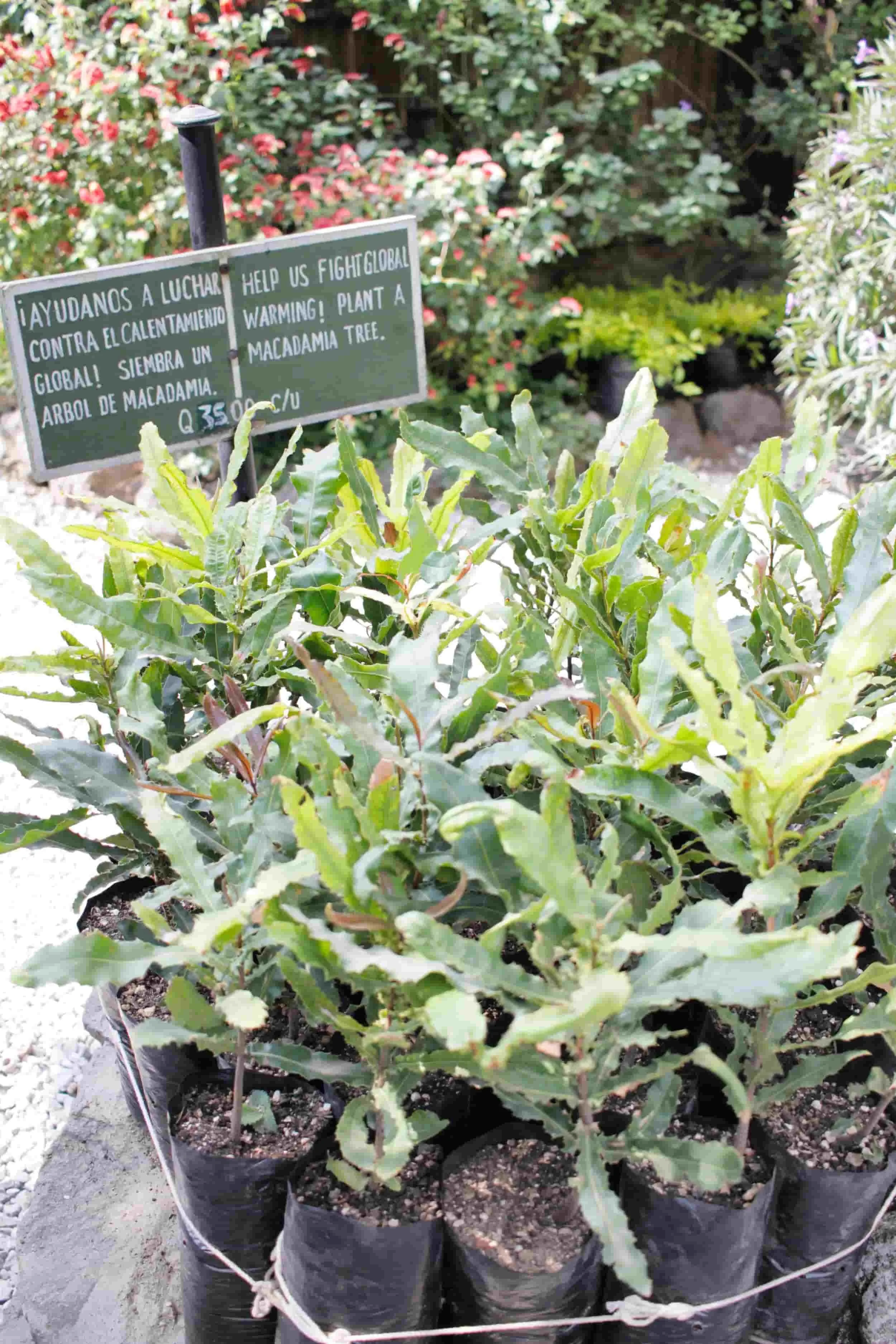
Macadamia trees are valued for more than their buttery nuts. As long-lived trees, they can help stabilize soil through their root systems, provide shade and store carbon as they grow.
Their nuts also offer a potential source of income for farming families once the trees become productive. This combination of environmental and economic benefits is central to Valhalla's approach to sustainable agriculture.
At the heart of Valhalla's mission is the idea that caring for the environment should also benefit the people who depend on it. The farm promotes macadamia cultivation as a way to support rural livelihoods while encouraging healthier, more productive landscapes.
Its work with Indigenous and rural communities reflects a practical approach to sustainability: sharing agricultural knowledge and helping families establish trees that may provide long-term value.
Valhalla's story begins with Lawrence Gottschamer, a former California firefighter who became interested in sustainable agriculture during the 1970s. After studying macadamia cultivation in Costa Rica, he traveled to Guatemala and met Emilia Aguirre.
Together, they developed a project built around an ambitious question: could macadamia trees help restore the land while creating opportunities for local farming communities?
That idea became the foundation of Valhalla.
In 1984, Lawrence and Emilia brought macadamia seedlings to Guatemala from the California Macadamia Society. By 1985, they had established Experimental Station Valhalla, where they began cultivating and studying trees suited to the region's growing conditions.
The project focused on developing productive varieties and exploring how macadamias could become a sustainable crop for Guatemalan farmers. What began as an experiment eventually grew into a farm with a broader environmental and community mission.
One of Valhalla's most meaningful initiatives involves sharing macadamia seedlings and agricultural knowledge with rural farming families.
Because macadamia trees can remain productive for decades, they're a potential long-term investment rather than a quick seasonal crop. Establishing them takes patience but the goal is to create lasting opportunities while helping protect the land.
It's a thoughtful approach to agriculture, where the benefits are measured in years rather than harvest seasons.
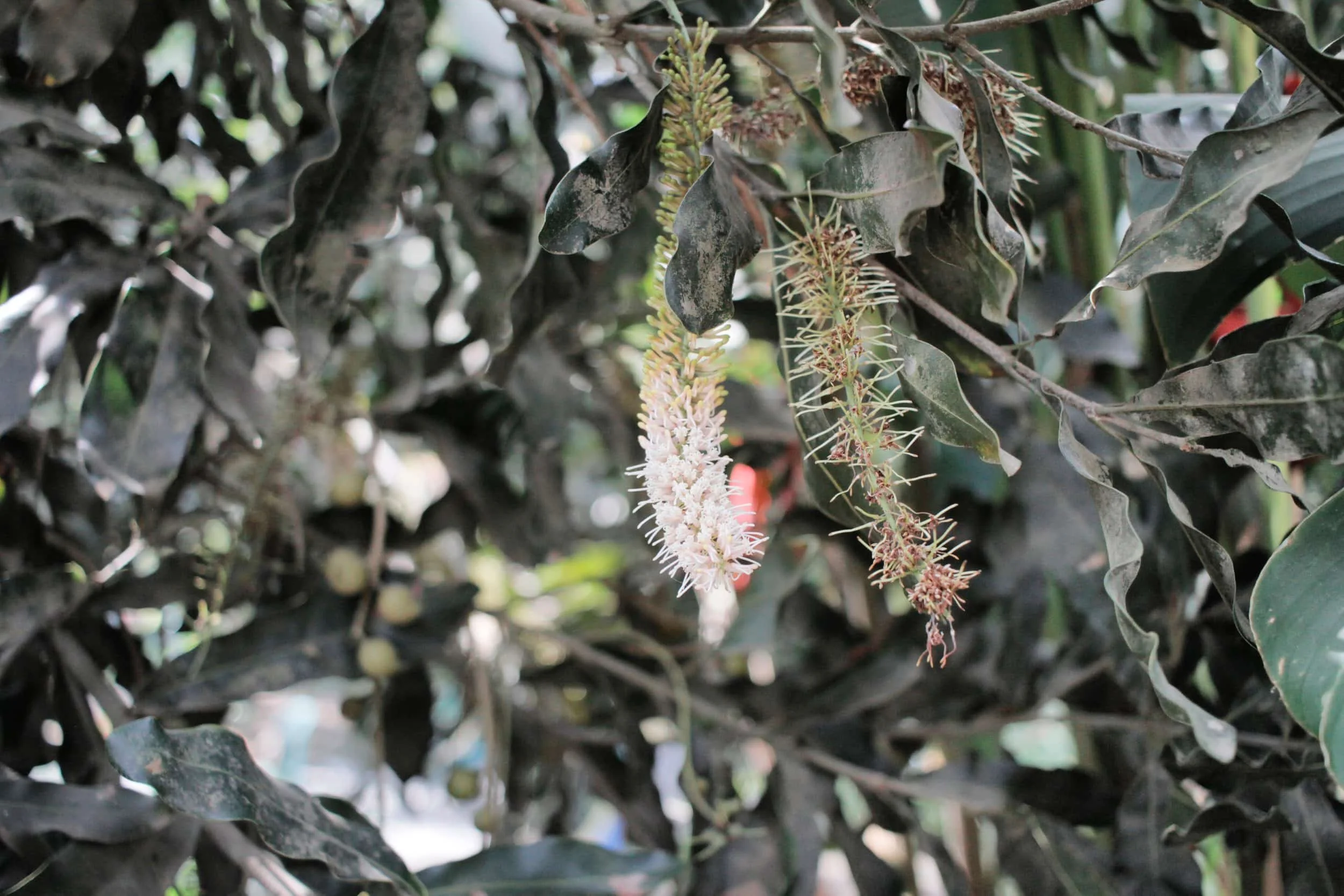
Growing macadamias is an exercise in patience. Trees may take around six years to begin producing nuts, with more substantial harvests arriving as they mature.
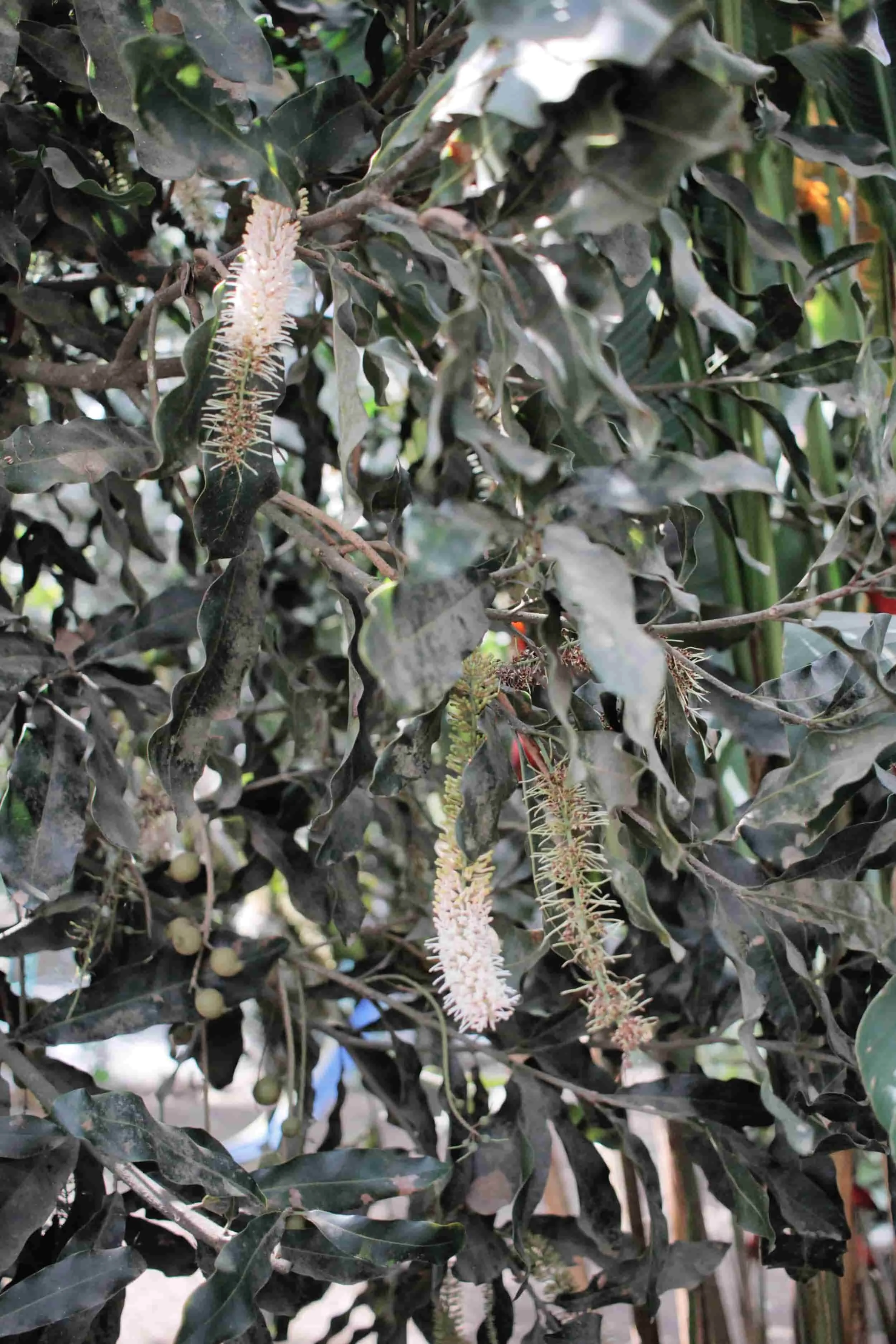
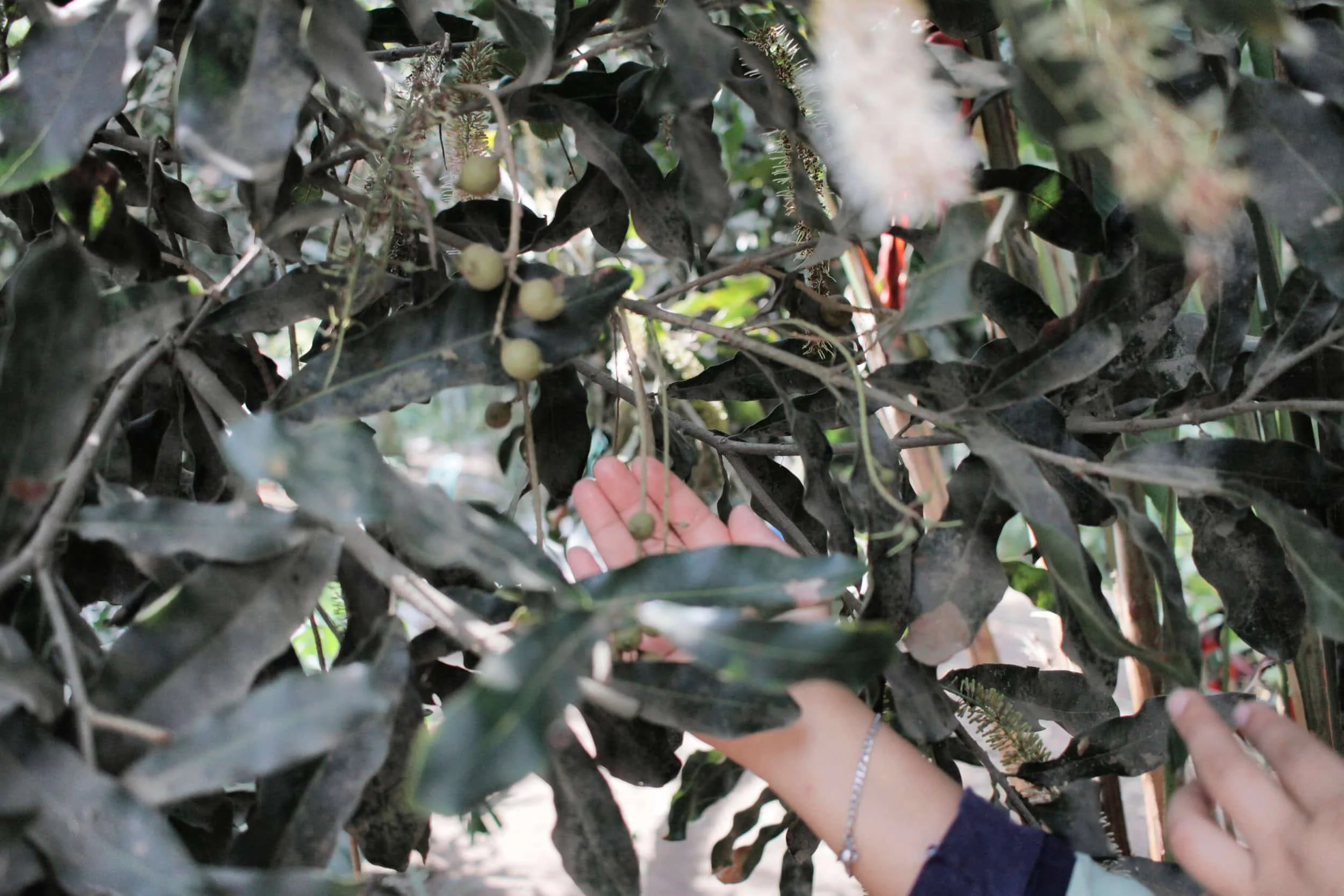
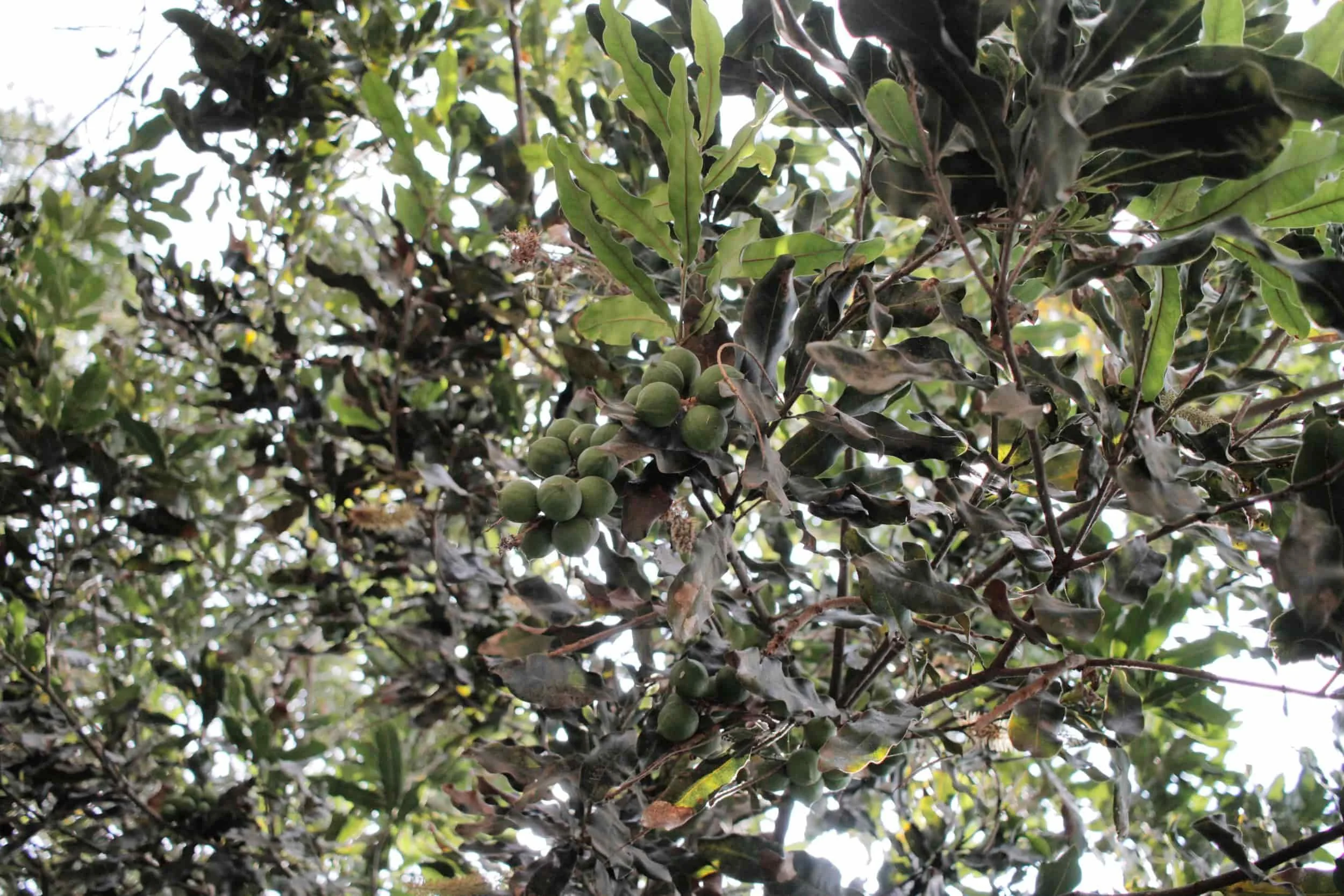
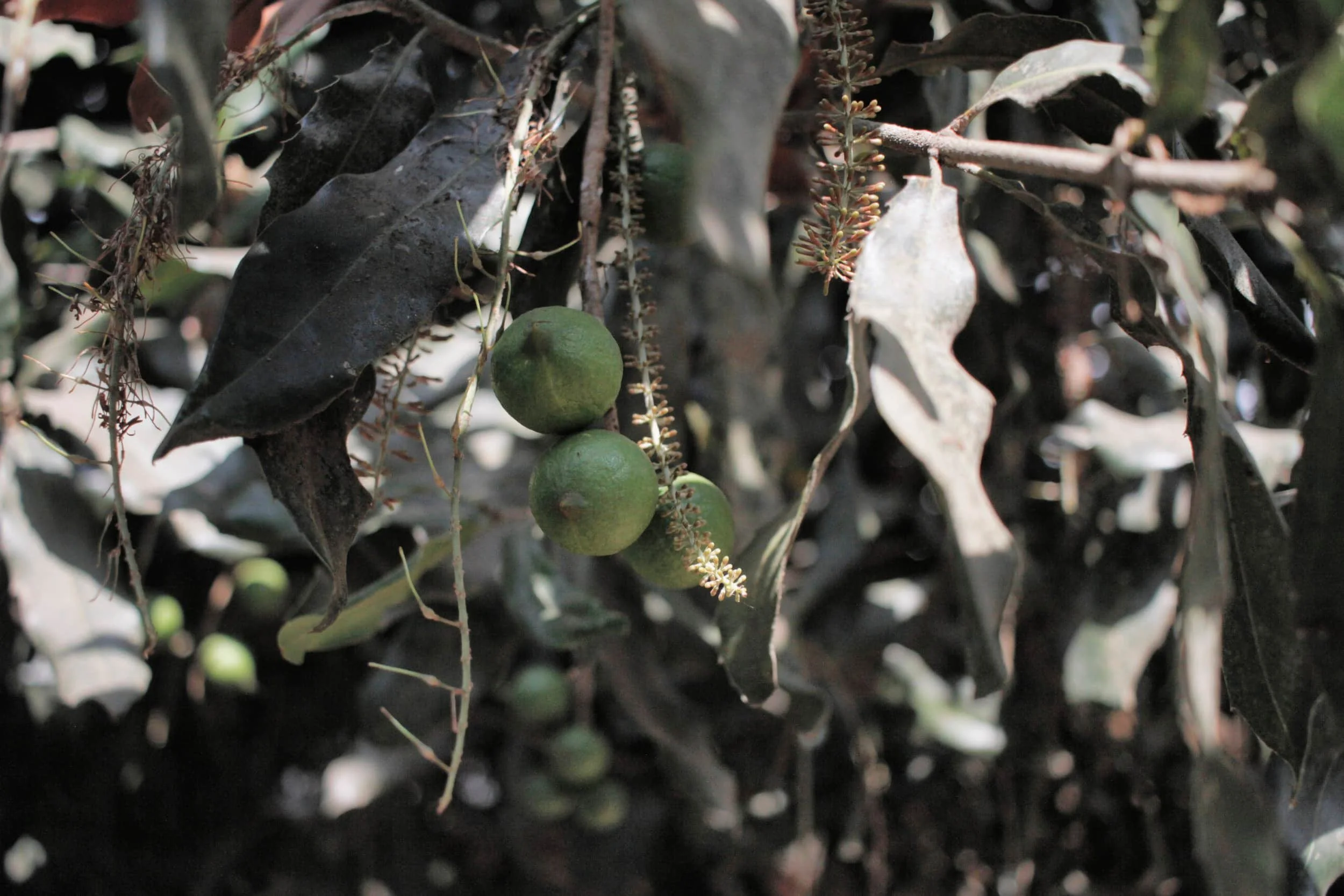
Delicate flowers eventually develop into green-husked nuts, which fall naturally to the ground when ripe. They're collected throughout the harvest period rather than picked all at once.
It's a slower process than you might expect, and an interesting reminder of how much time and care goes into the simplest ingredients.
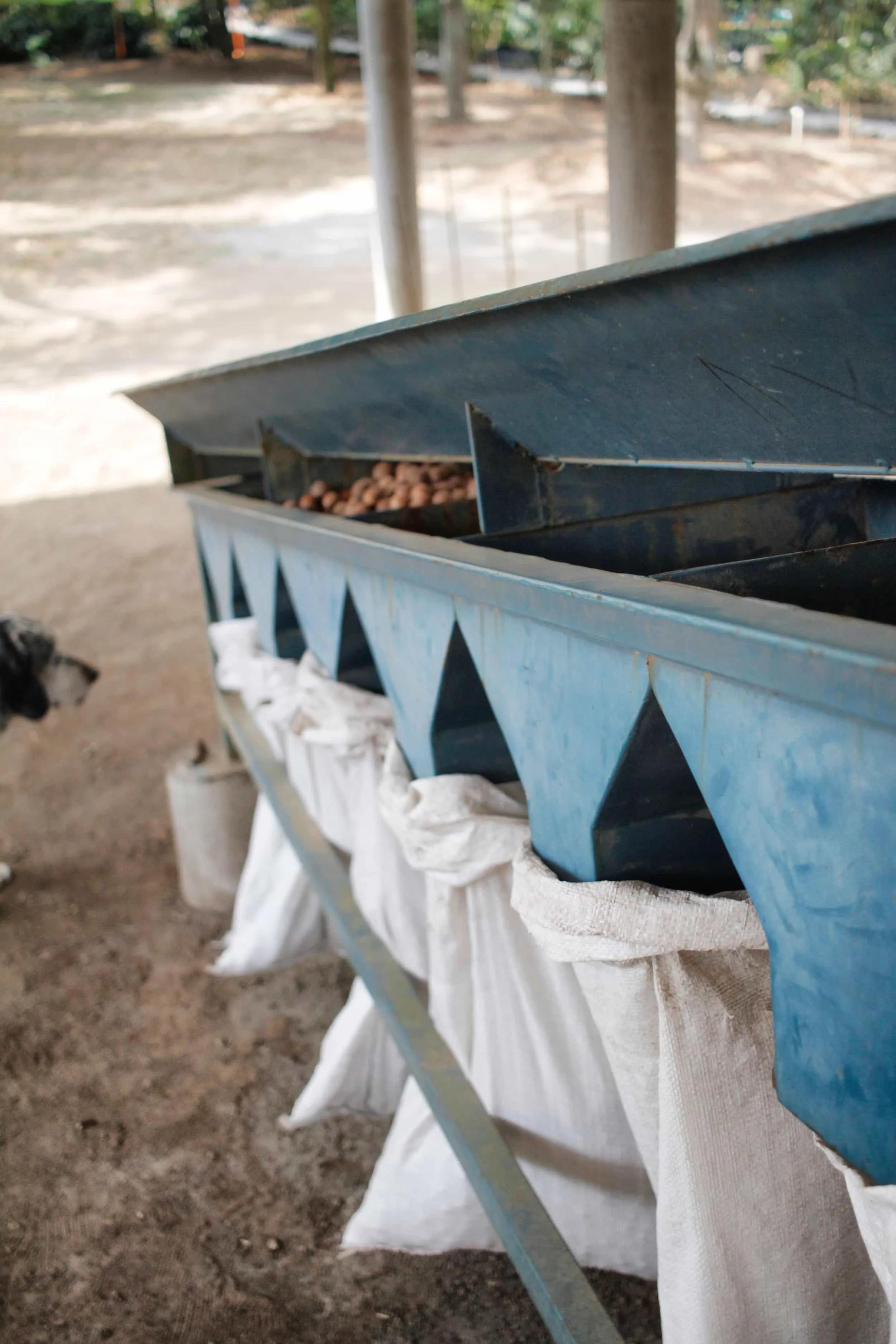
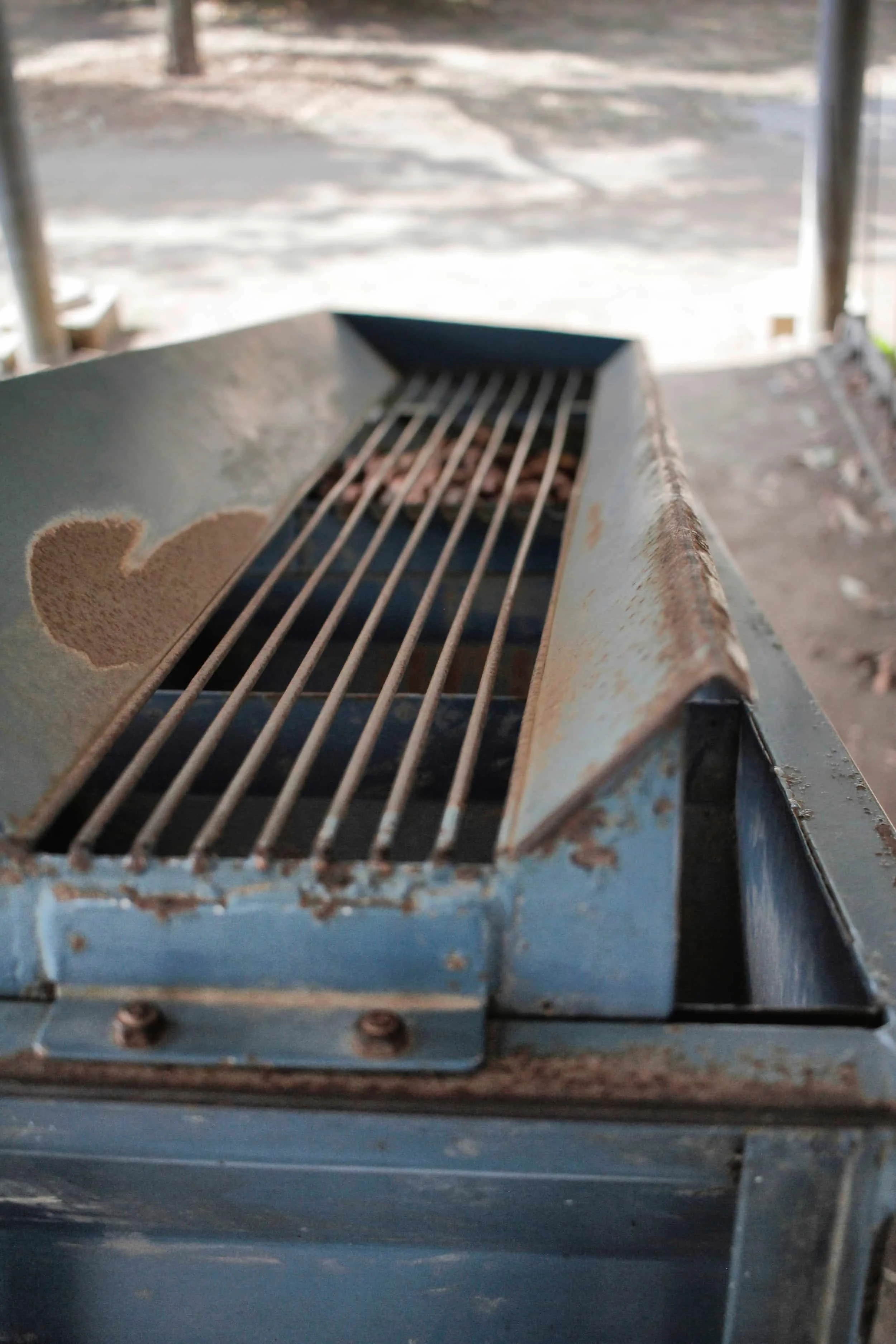
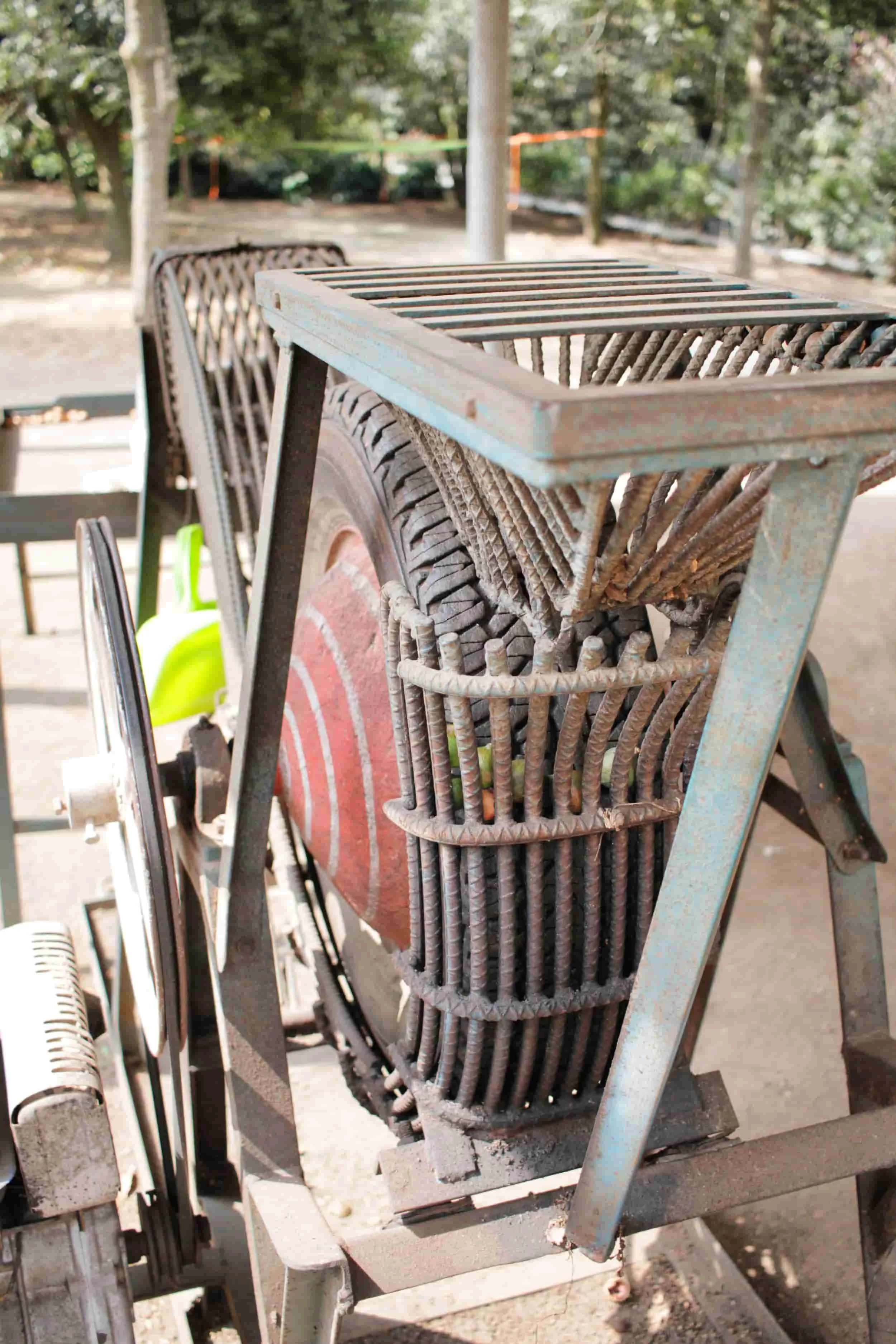
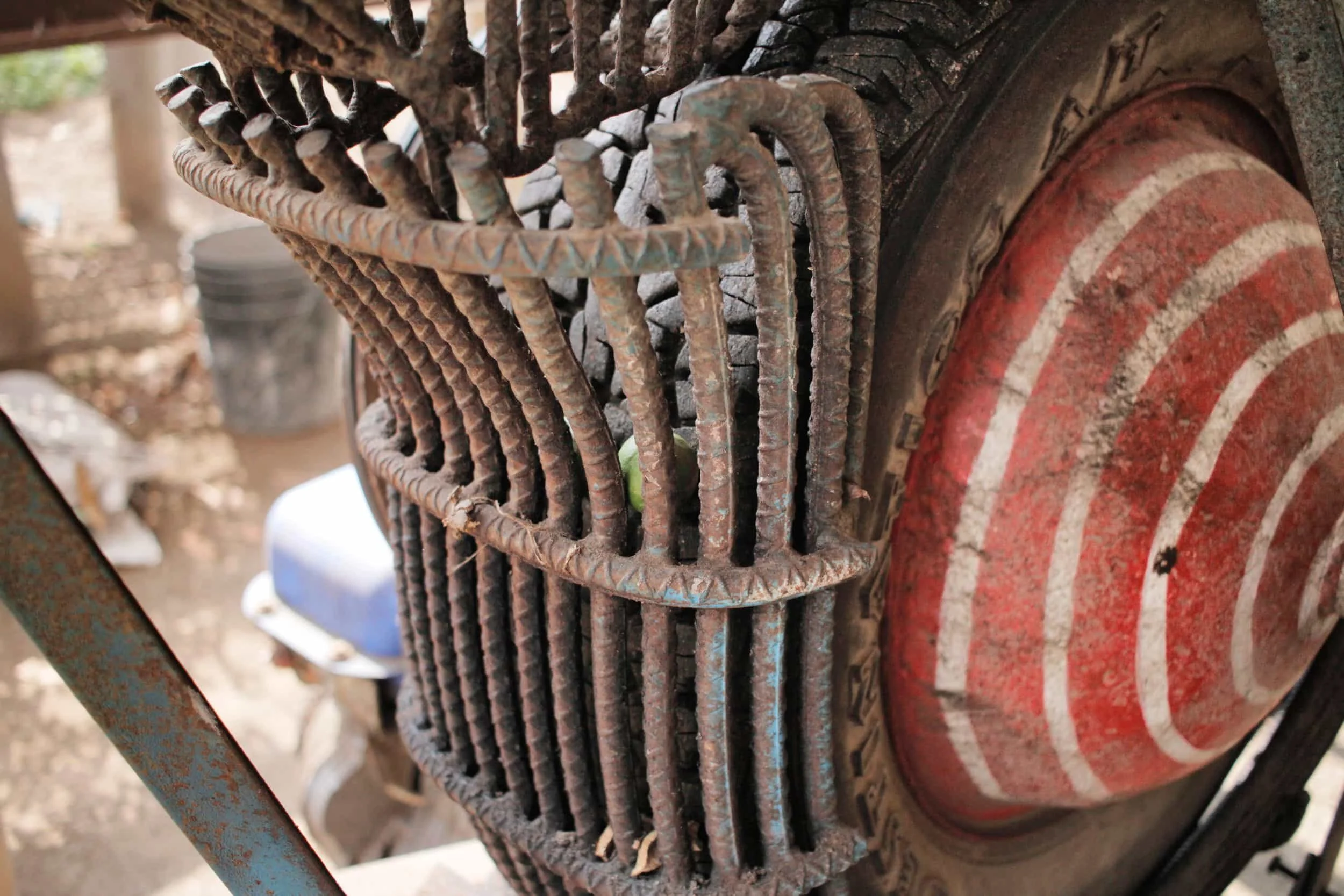
Freshly harvested macadamias look nothing like the creamy nuts sold in shops. Each one is wrapped in a thick green husk surrounding an incredibly hard brown shell.
At Valhalla, visitors can see the machinery used to remove those outer husks before the nuts are dried and prepared for cracking. The equipment is wonderfully practical, turning a labor-intensive process into a surprisingly entertaining demonstration.
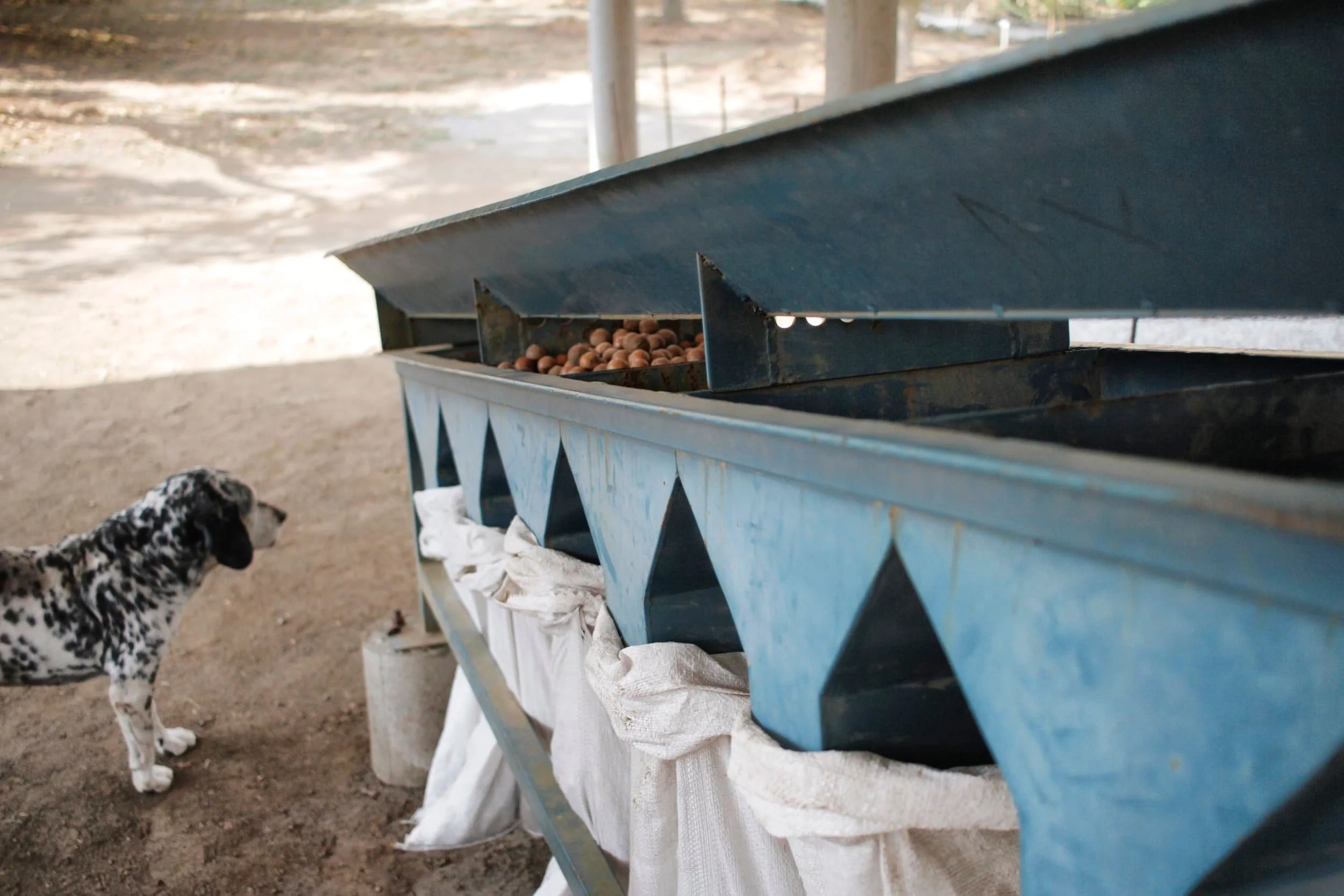
Once the shells are cracked, the creamy kernels are sorted and prepared for roasting, packaging or further processing.
Macadamias are remarkably versatile. Beyond snacks and baked goods, their naturally rich oils are used in cooking and skincare products. The farm's selection of finished goods gives visitors a chance to see how the harvest becomes everything from something delicious to something you might put on your face.
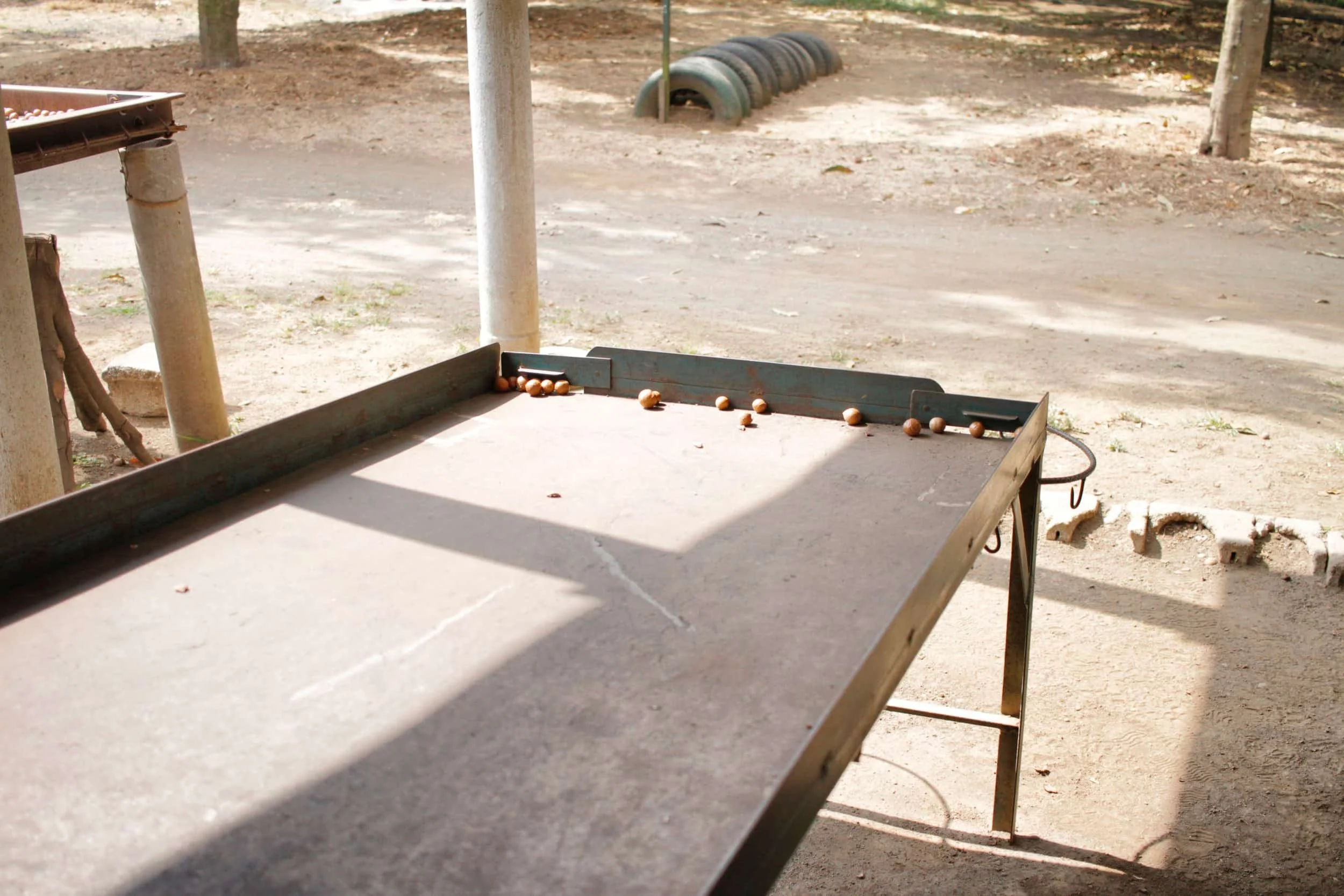
One of the most entertaining parts of visiting Valhalla is seeing the processing equipment in action. The machines crack, separate and sort the nuts, including a clever contraption that sends macadamias rolling along slatted tracks into compartments according to size.
Visitors may even get a chance to try some of the equipment. I did, and it was surprisingly satisfying. There's something oddly delightful about watching a machine sort nuts with such precision and it's a fun, hands-on way to appreciate the work behind the finished product.
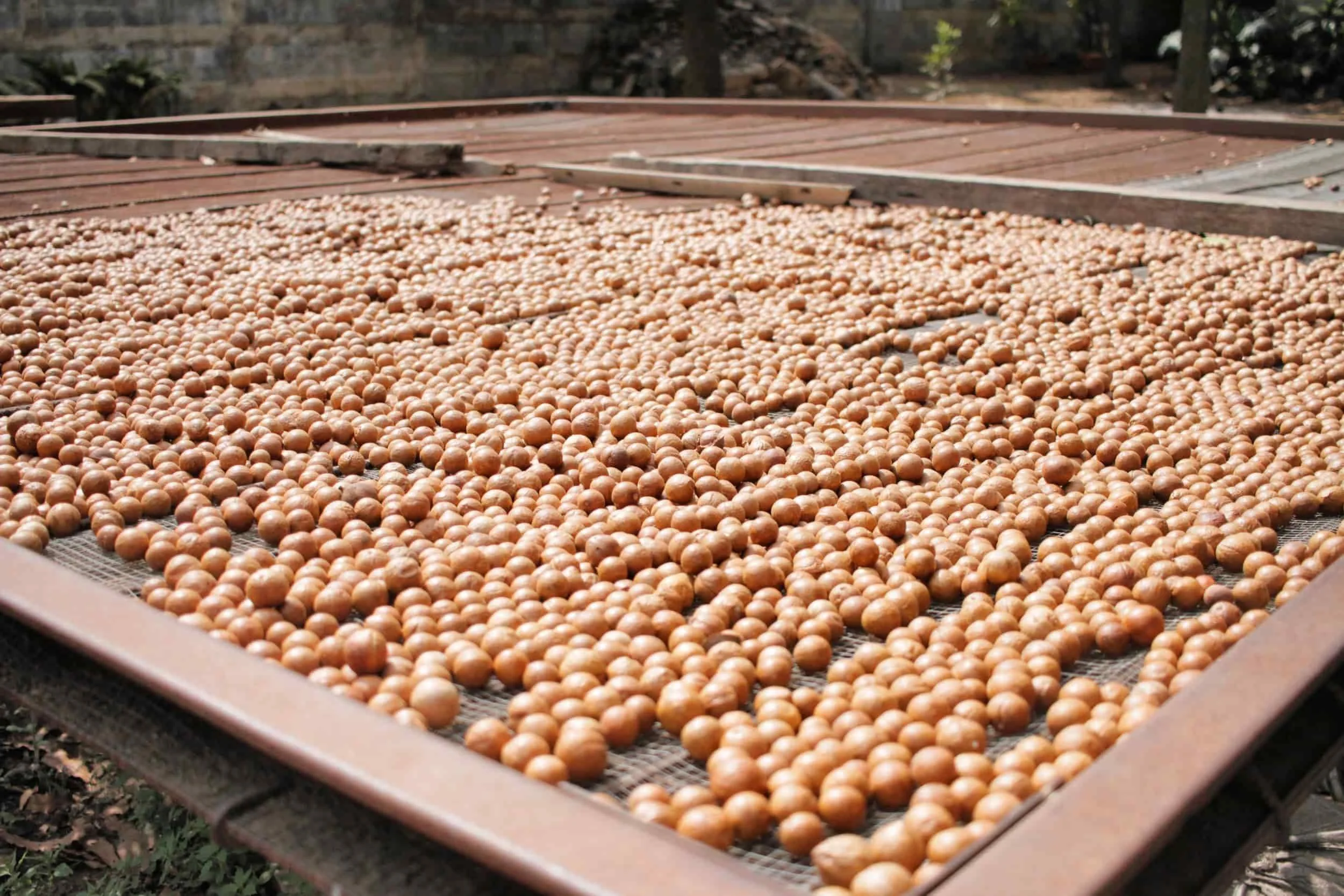
Although macadamias are now grown in Guatemala and other warm climates, the trees are native to Australia. Their rich flavor and high oil content make them popular in everything from desserts to savory dishes.
They're also a source of monounsaturated fats and minerals, including manganese. At Valhalla, the tour touches on different tree varieties, pollination and the role of bees in producing a healthy harvest.
It's a fascinating little intersection of food, farming and ecology.


No visit to a macadamia farm would be complete without tasting the nuts, and Valhalla doesn't disappoint. Fresh macadamias are creamy, subtly sweet and wonderfully buttery, especially after seeing how much work goes into preparing them.
The small shop offers nuts and macadamia-based products to take home. I couldn't resist picking up a few packets and some macadamia oil for my skincare routine.
Even the outdoor bathroom deserves a mention: a charming bamboo structure tucked among tropical plants. Proof that good design can turn the most ordinary stop into something memorable.
From Valhalla, San Antonio Aguas Calientes is about 20 minutes away, making it a natural next stop for discovering the region's traditional Maya weaving and textile craftsmanship.
Discover Traditional Maya Weaving in San Antonio Aguas Calientes
Just outside Antigua, Guatemala, the village of San Antonio Aguas Calientes is known for its remarkable Maya weaving traditions. At the San Antonio Aguas Calientes Weaving Cooperative, local women showcase and sell handwoven textiles, helping preserve generations of craftsmanship while supporting their livelihoods.
The artisan center is filled with small stalls displaying richly patterned blankets, clothing and accessories. Color is everywhere but look closer and the real beauty emerges in the intricate patterns, textures and techniques.
Traditional Maya clothing, known as traje, remains an important expression of cultural identity in many Guatemalan communities. Garments such as the huipil (blouse) and corte (wrap skirt) often feature designs associated with particular regions, communities and weaving traditions. They're not simply decorative pieces but textiles carrying generations of knowledge and meaning.
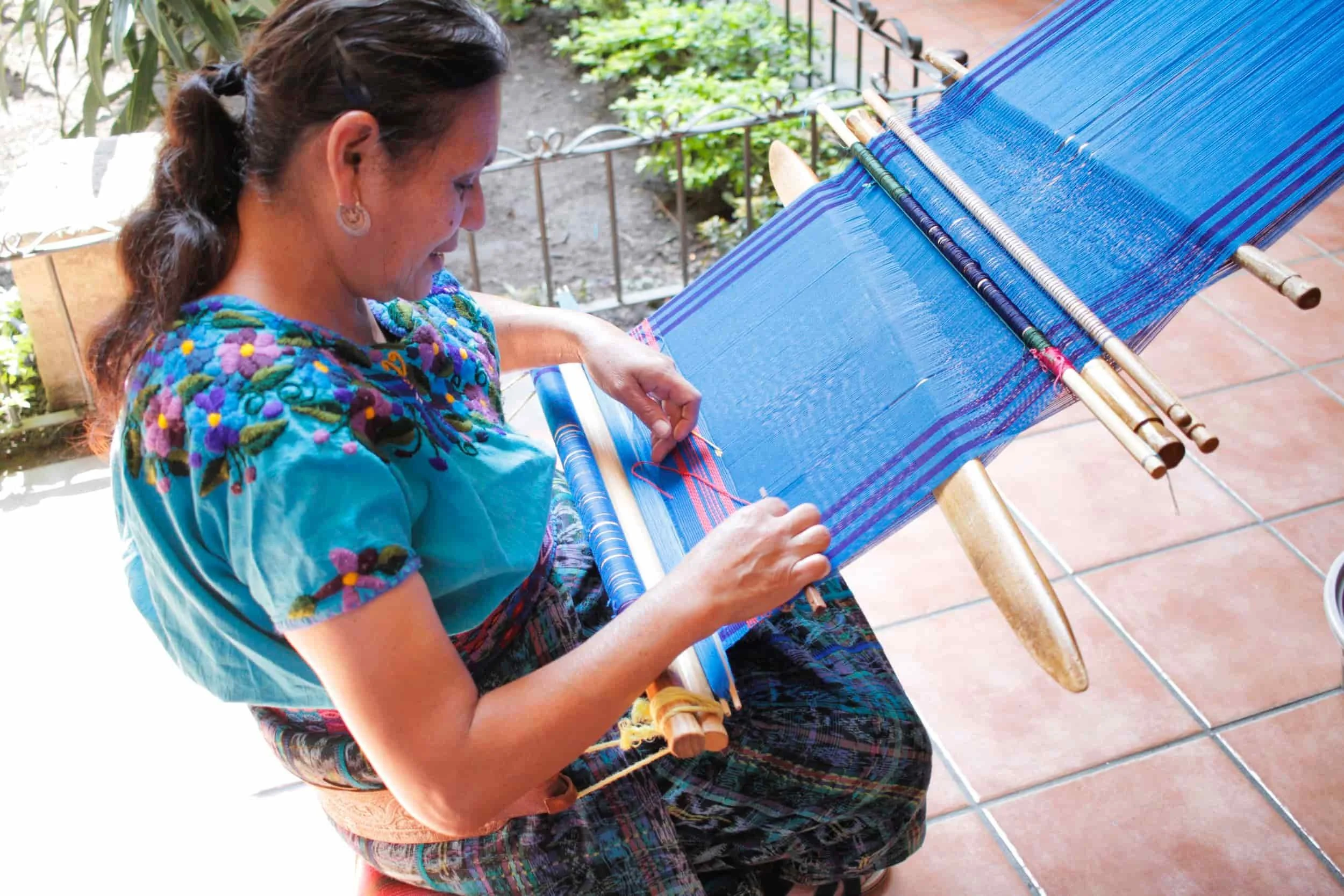
One of the most fascinating techniques you'll encounter is backstrap weaving, a traditional method used by Maya artisans for centuries. Known in Spanish as telar de cintura, the loom is remarkably simple: wooden rods, threads and a strap secured around the weaver's waist.
One end is anchored to a fixed support, while the other is held in tension by the weaver's body. Leaning forward or backward adjusts the tension, allowing the artisan to control the fabric as it takes shape.
The equipment is compact and portable, yet capable of producing extraordinarily complex designs. From a design perspective, it's a beautiful example of how sophisticated craftsmanship doesn't necessarily require sophisticated machinery.
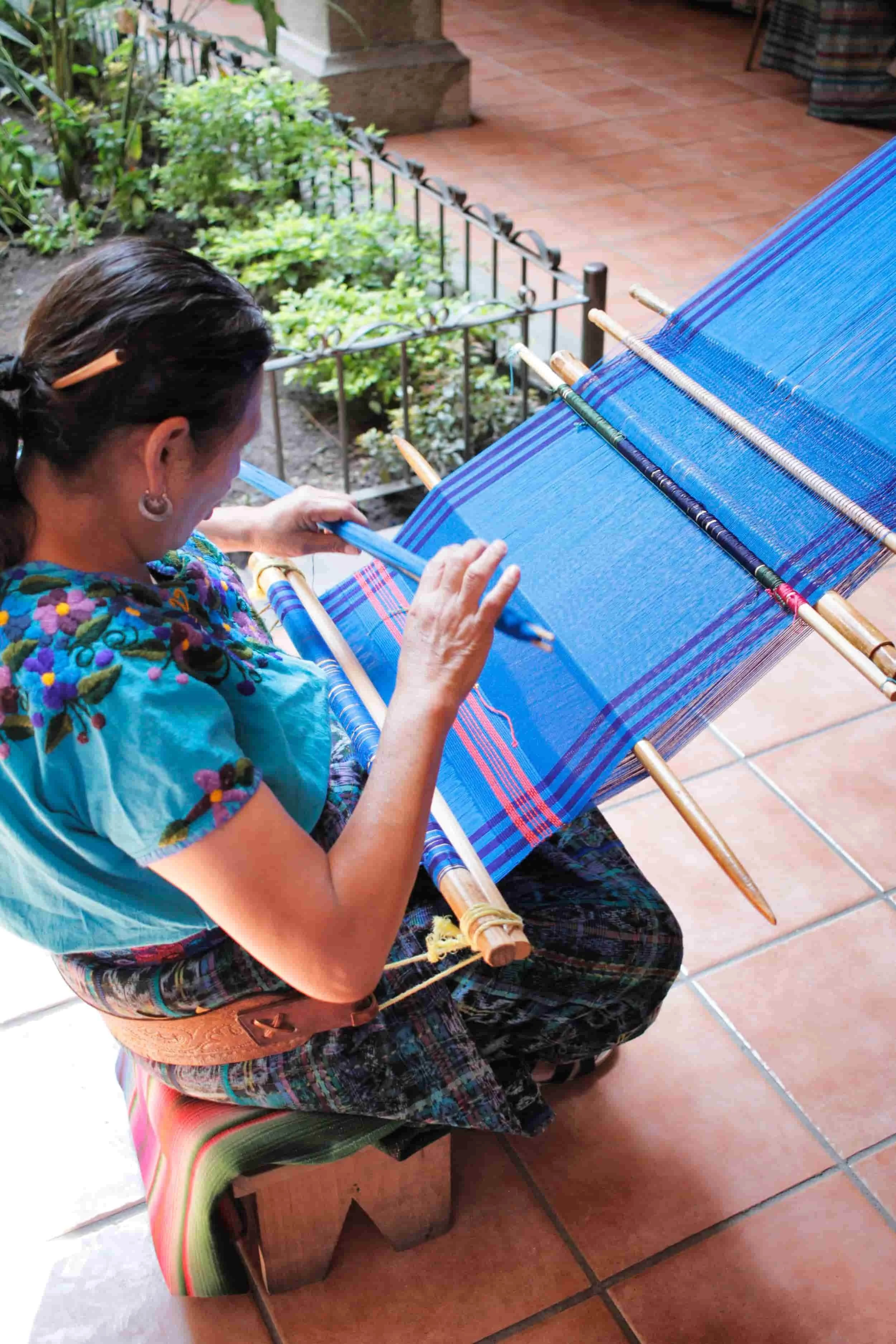
The foundation of weaving is the relationship between warp and weft. Warp threads run lengthwise along the loom, held under tension, while weft threads pass across them to build the fabric.
Preparing the warp requires careful measuring and arranging before the threads are transferred to the loom. Wooden heddle sticks help separate alternating threads, creating space for the weft to pass through.
As the weaver shifts her body to adjust the tension, the fabric gradually takes shape. It's a precise, physical process requiring coordination, patience and an extraordinary understanding of the material. Even a relatively small textile can represent days or weeks of work.
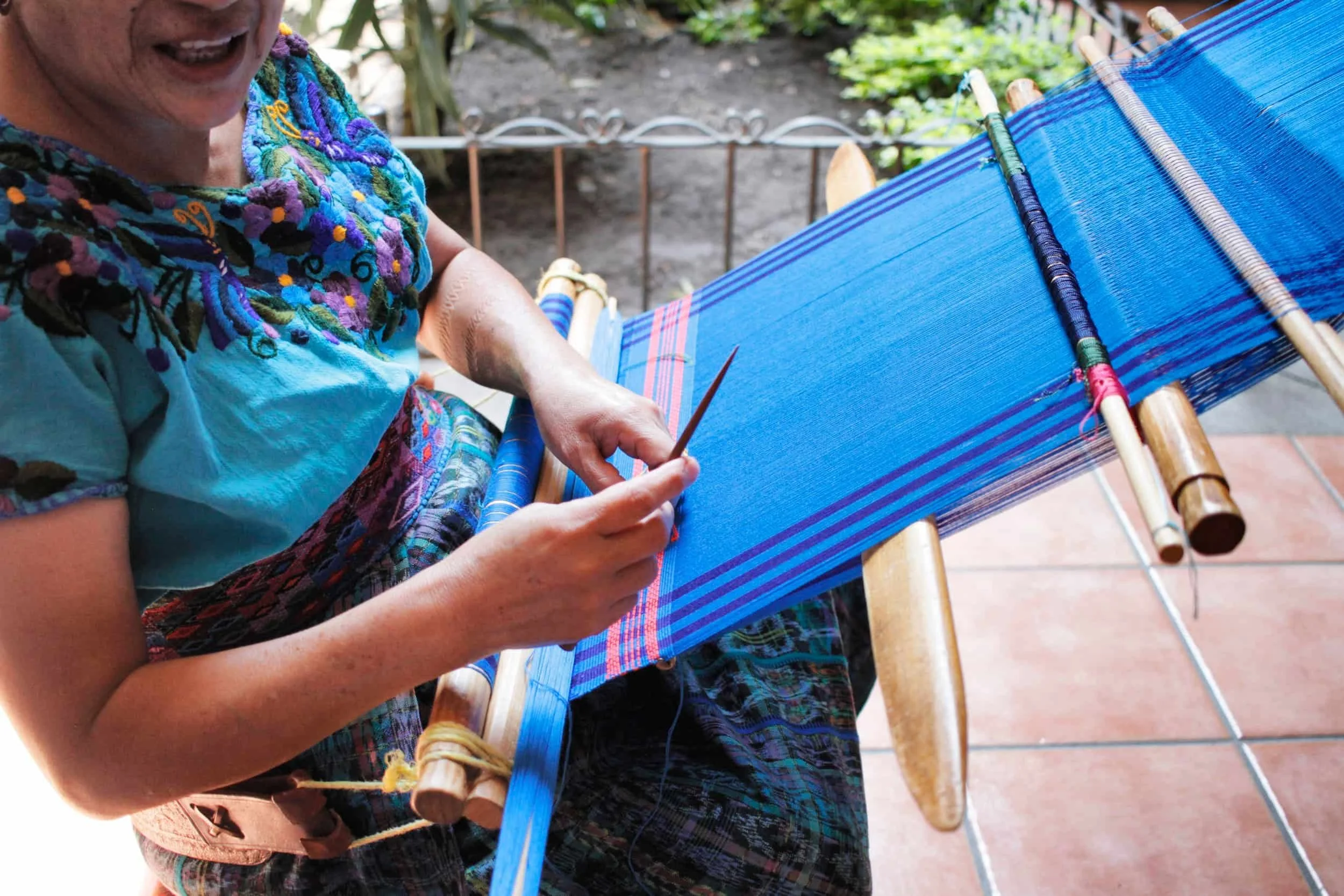
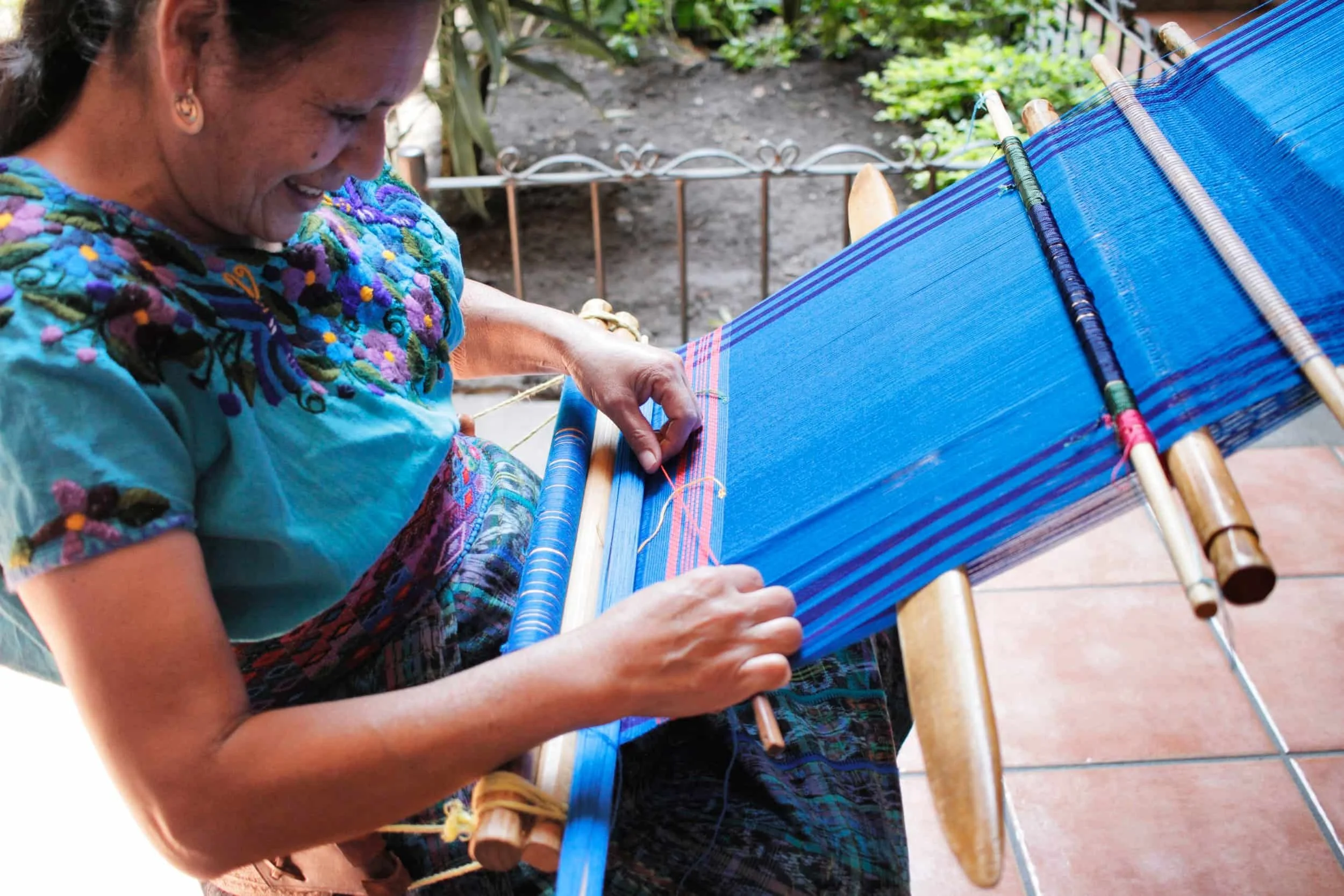
The complexity becomes even more apparent in the decorative techniques. Supplementary weft weaving introduces additional colored threads to create patterns within the fabric, from geometric arrangements to intricate representations of animals and plants.
Some textiles feature picbil, a fine, openwork technique that produces delicate, lace-like patterns. Others incorporate dense brocade designs that appear almost embroidered, although the motifs are created as the cloth is woven.
The result is an extraordinary variety of textures, colors and patterns, each shaped by the artisan's skill and the traditions of her community. Understanding even a little of the process changes how you look at the finished textiles.
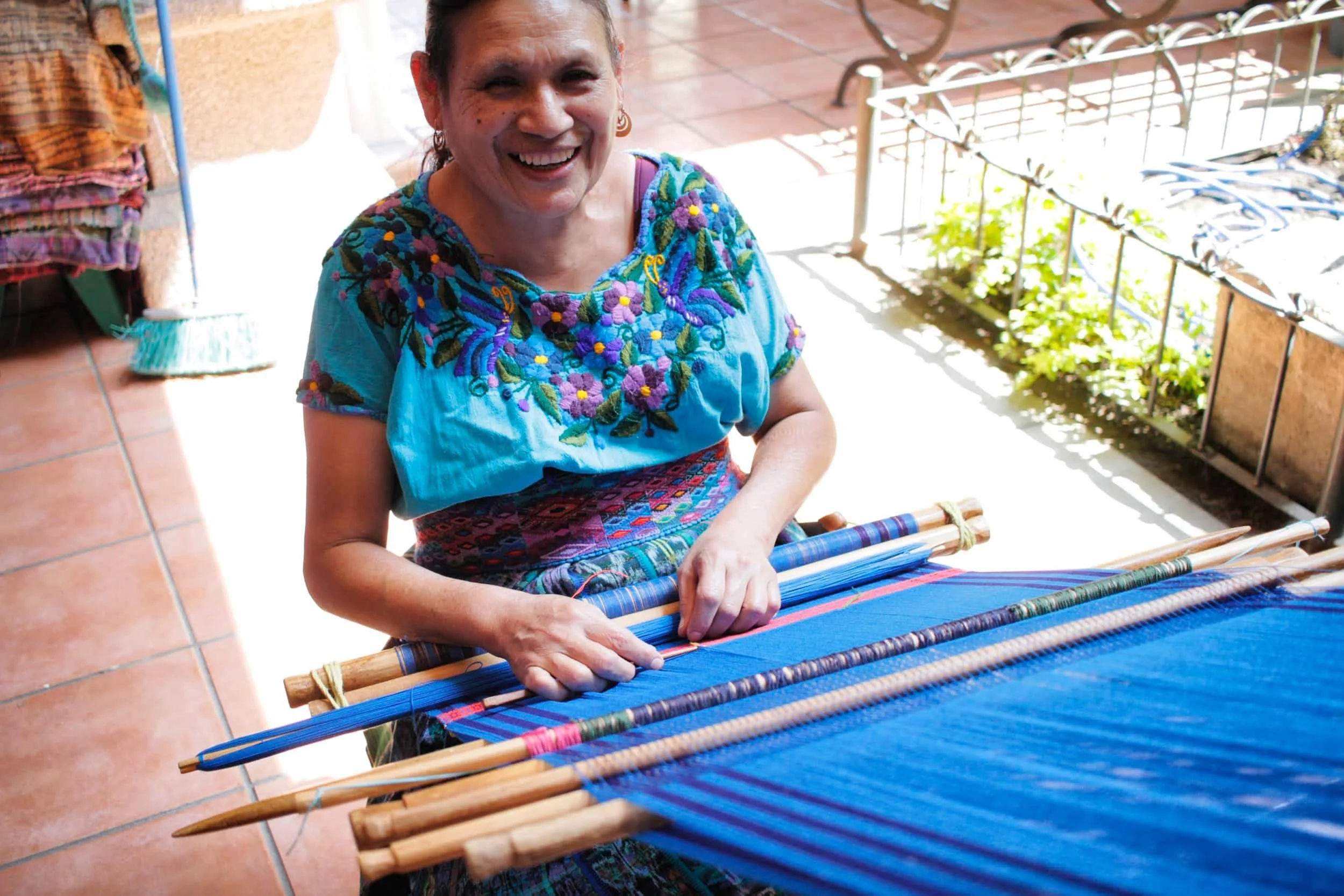
Meeting the women behind the textiles is what makes visiting the cooperative particularly memorable. Delia introduced me to Sonya, a local weaver who generously explained the techniques, patterns and time involved in creating her work.
Some pieces take weeks or even months to complete, depending on their complexity. Once you understand the process, the prices make considerably more sense. Every intricate detail represents hours of skilled labor, often using techniques passed down through generations.
Sonya also invited me to try on a complete traditional Maya outfit, including a huipil, corte, belt and headdress. We had a good laugh as she carefully dressed me, and it was a lovely opportunity to learn how the different garments are worn together.
What could have been a quick stop to admire beautiful textiles became one of the most personal encounters of the day.
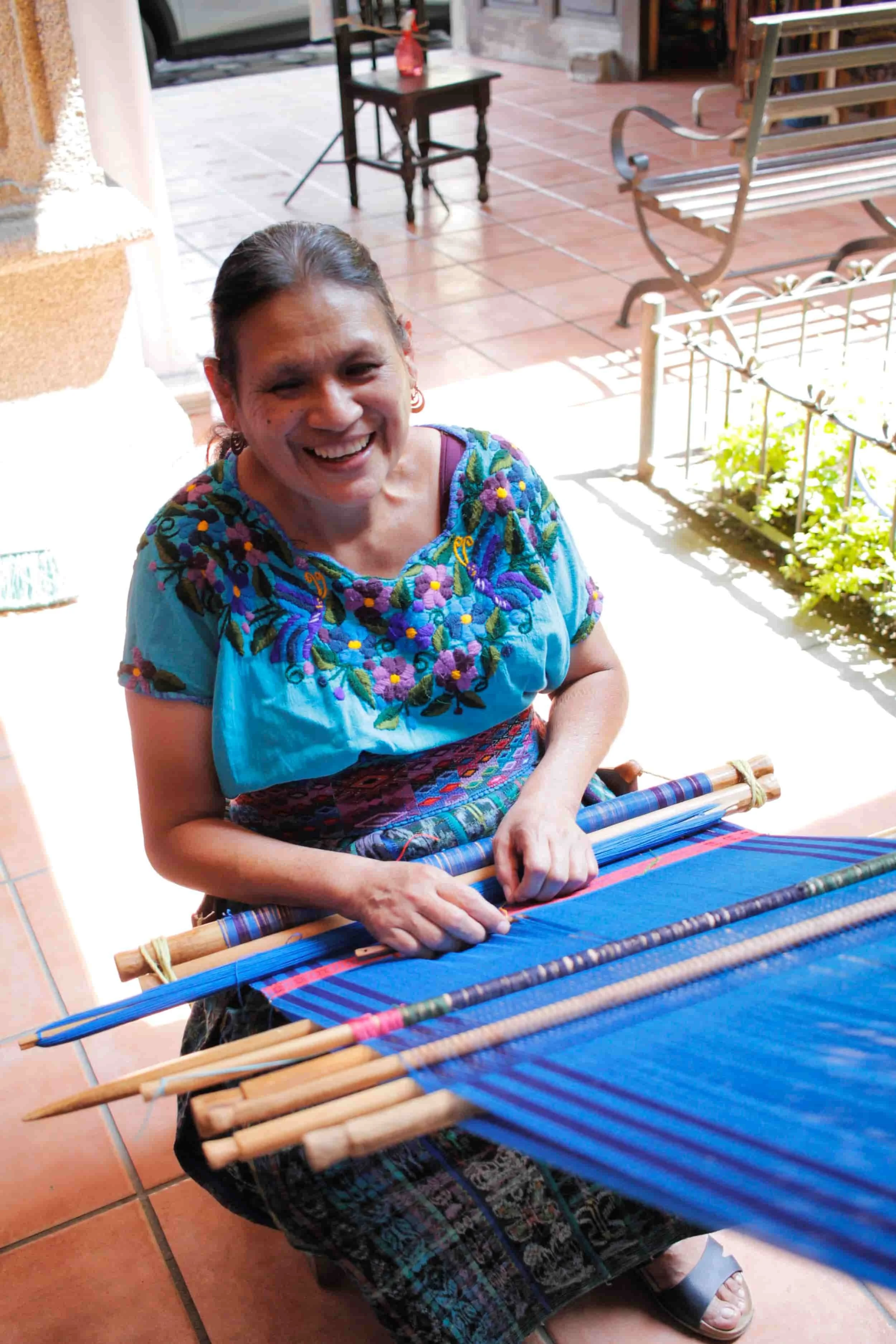
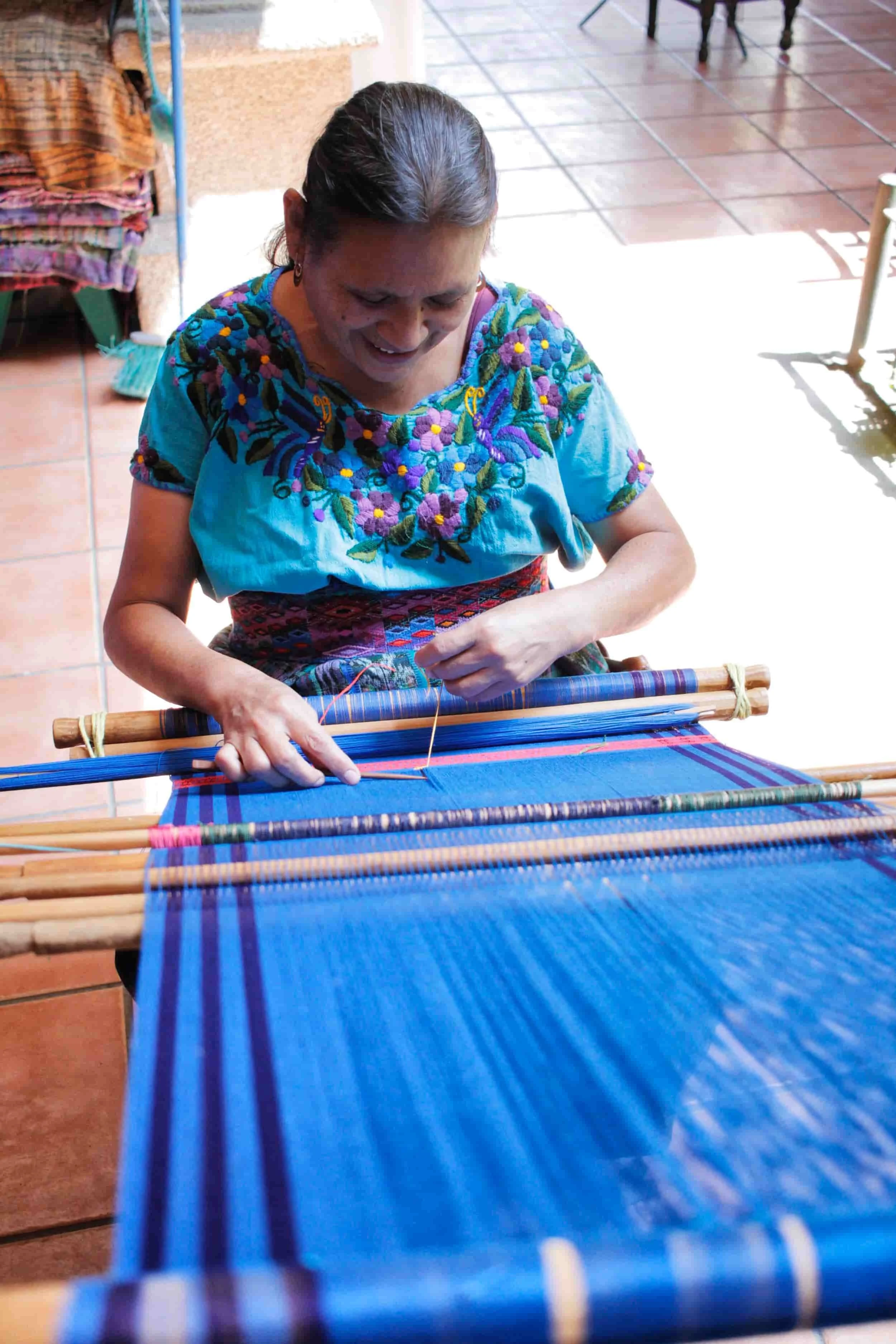
Traditional Maya clothing is more than a beautiful expression of craftsmanship. For many women, it's part of everyday life, connecting personal identity with family and community traditions.
Curious about the care involved, I asked Sonya how she maintained her clothing. She explained that she owned only a few traditional outfits, carefully washing and rotating them between wears. Considering how much time goes into producing a single garment, it offered a different perspective on the relationship between clothing, value and consumption.
I left with a rich turquoise blanket, embroidered with gold, wine and emerald details. It's a beautiful piece but what makes it special is remembering Sonya, her generosity and the skill behind her work.
💡 My Tip | If you're shopping for textiles around Antigua, Guatemala, buying directly from artisans is a meaningful way to support their work. Ask about the techniques and time involved, and don't assume handmade textiles should be inexpensive simply because you're buying them at a market.
Discover Local Life in San Pedro Las Huertas
A short distance from Antigua, Guatemala, San Pedro Las Huertas offers a glimpse of everyday life beyond the city's carefully preserved colonial center. Its plaza, neighborhood food stalls and historic church make it an interesting stop, but what made this visit especially memorable was exploring Delia's hometown.
She was genuinely excited to share the places she grew up around, particularly a favorite street-food cart in the town center. Beneath a brightly colored umbrella, a vendor served steaming cups of atol blanco and freshly prepared tostadas for just a few quetzales.
It's the kind of place you might walk straight past without a local introduction. With Delia, it felt like being invited into a familiar neighborhood ritual.

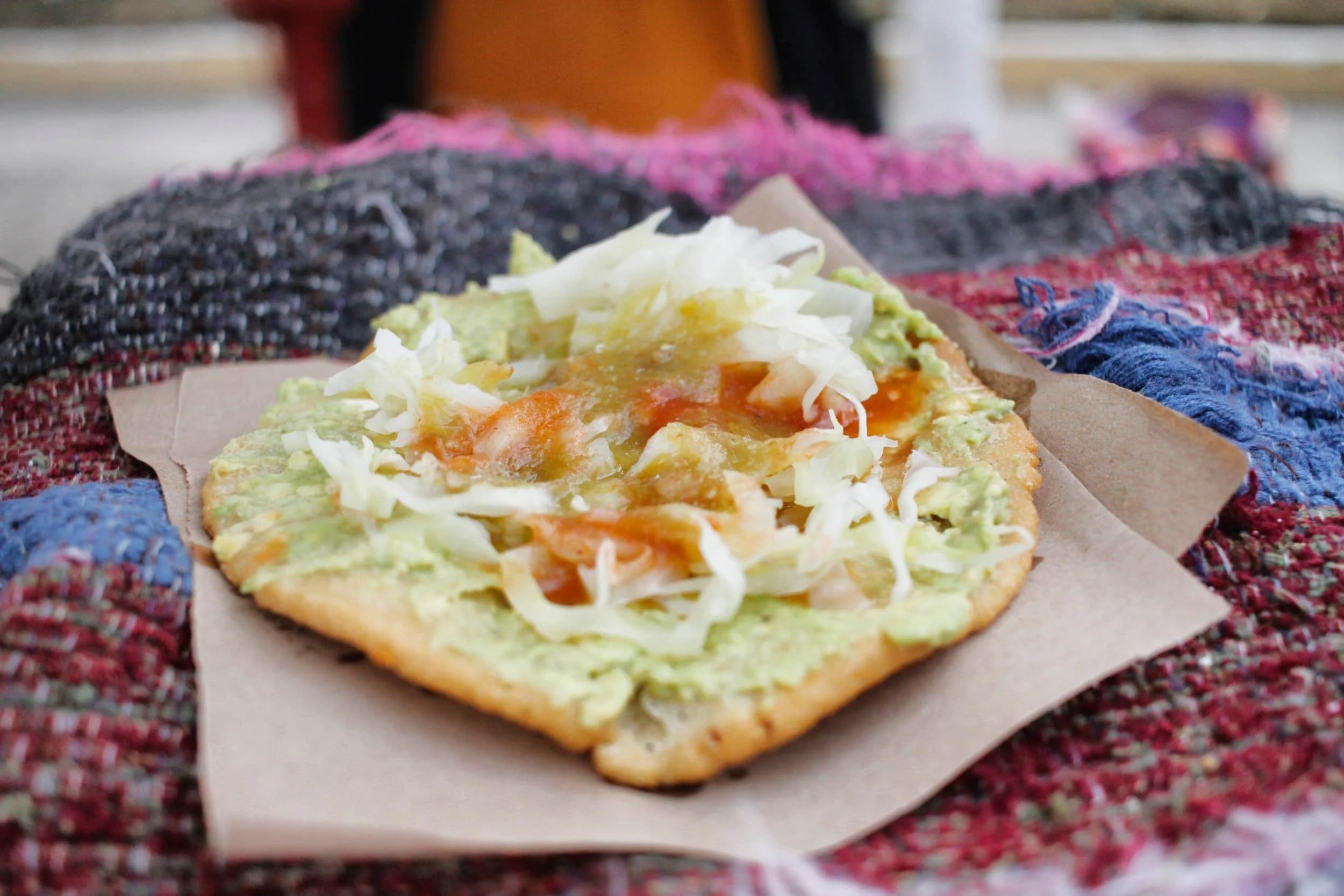
Atol is a traditional corn-based drink with deep roots in Maya food culture. Served warm, it's especially popular in Guatemala's cooler highland communities, where street vendors prepare different varieties throughout the day.
Made with ground corn and water or milk, its consistency ranges from drinkable to almost porridge-like. Depending on the recipe, it may be flavored with cinnamon, chocolate or other ingredients.
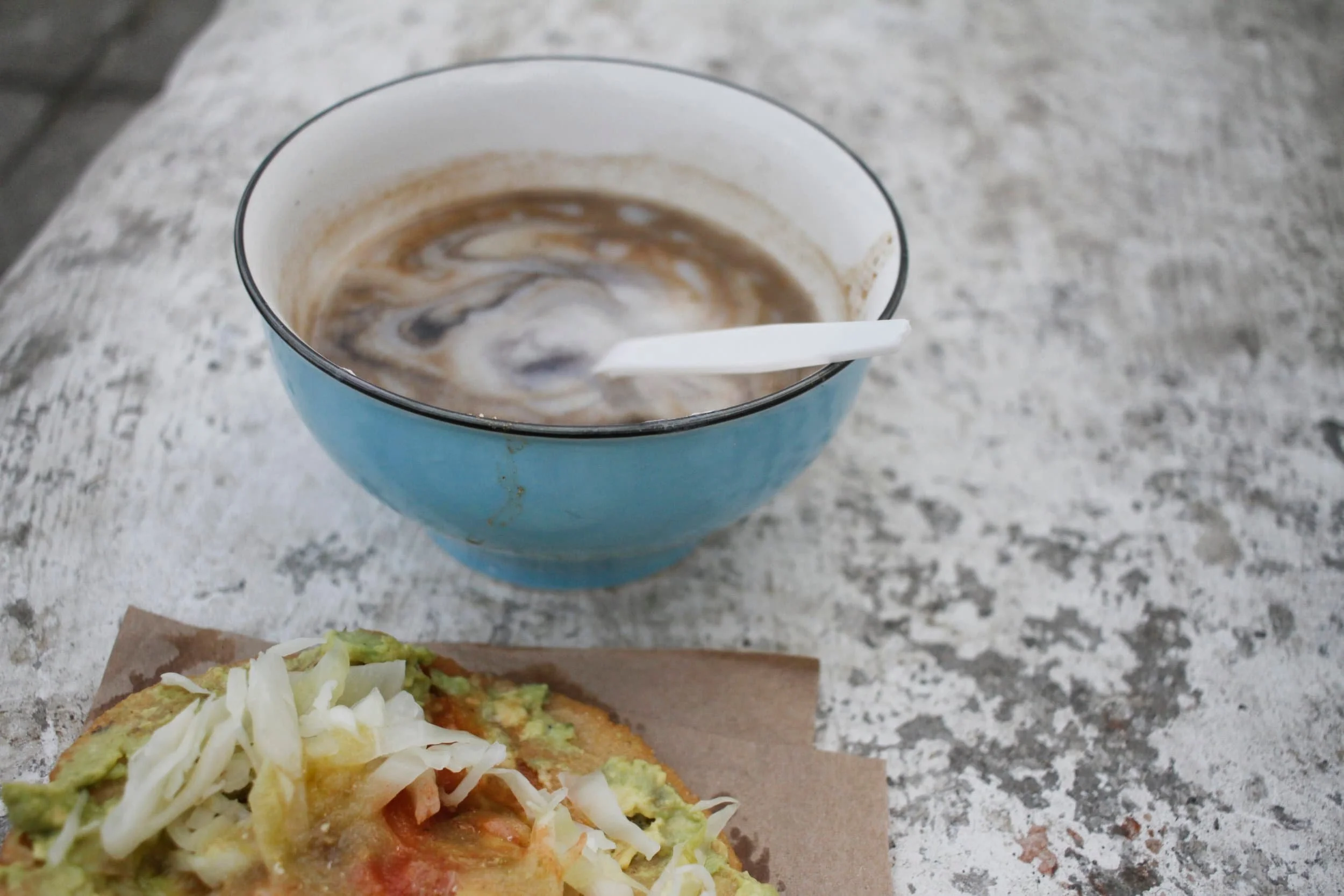
The version Delia introduced me to was atol blanco, a more savory preparation served with black beans. Its mild corn flavor and thick texture make it surprisingly substantial, especially alongside something crisp and salty.
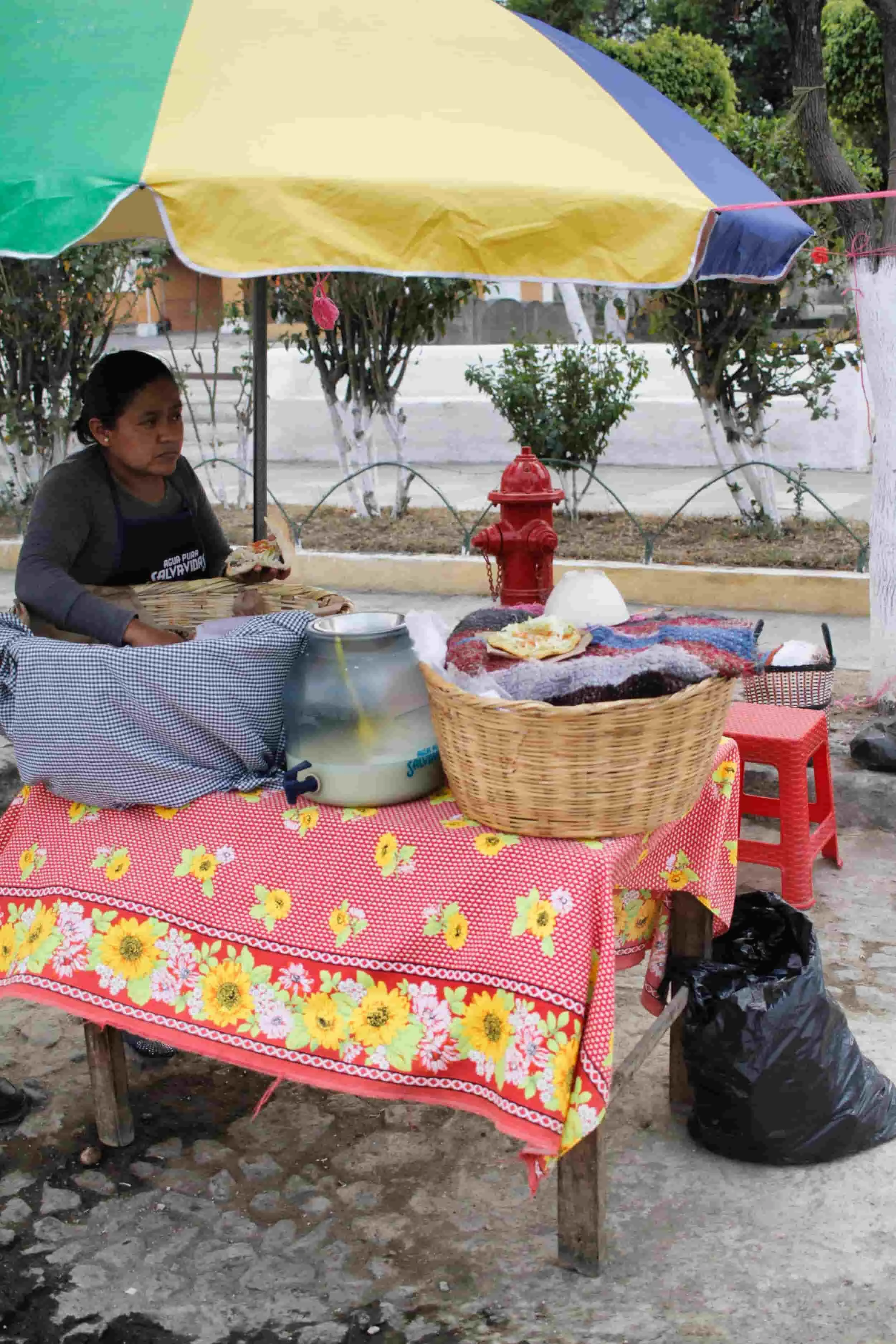
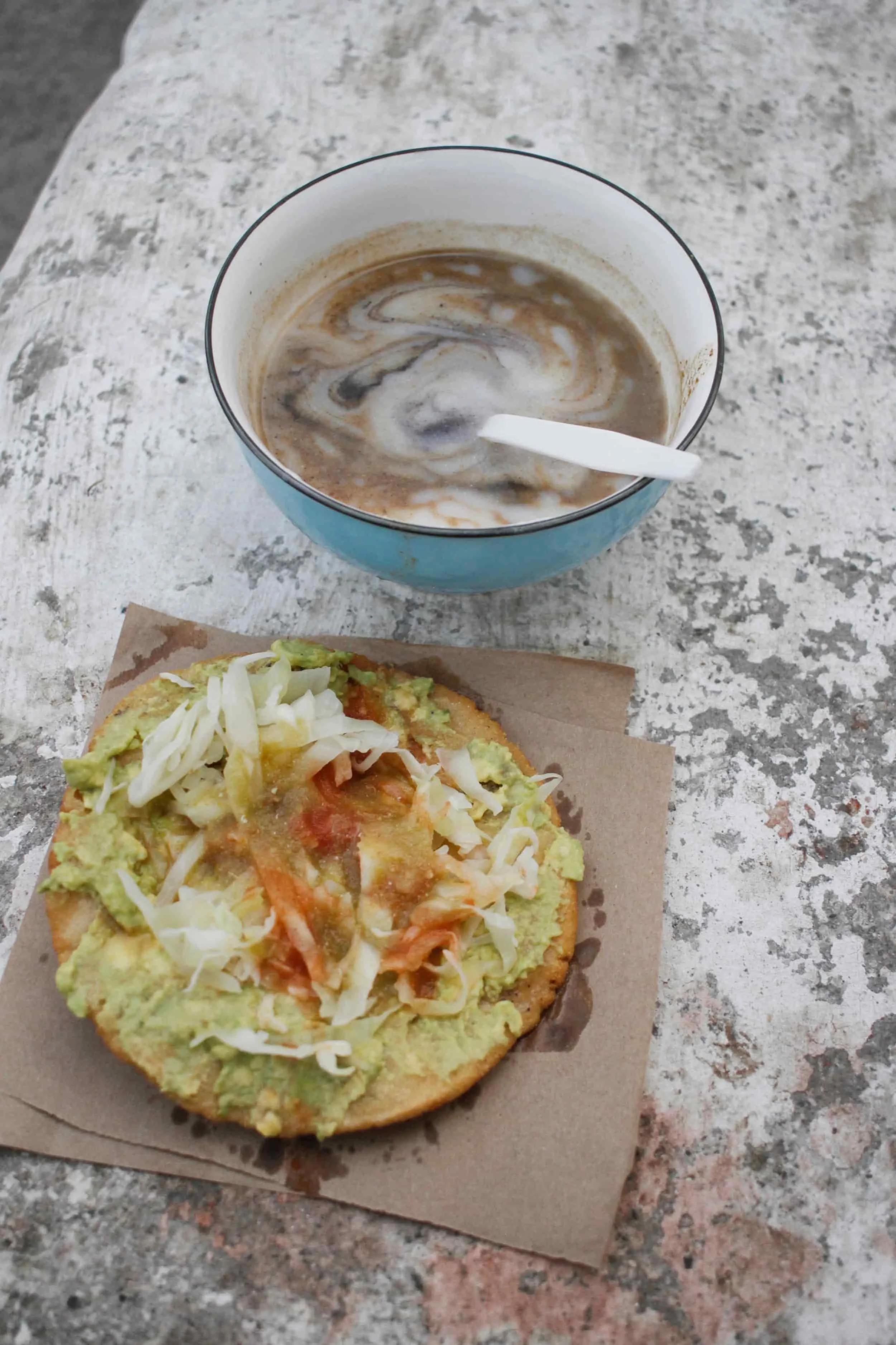
Guatemalan tostadas are simple street food at its best: crisp corn tortillas layered with ingredients such as avocado, beans, vegetables and salsa.
Ours came with creamy avocado, shredded lettuce and a generous drizzle of hot sauce. Paired with the warm atol and its savory black beans, it made a satisfying little meal.
Delia knew exactly what to order, and watching her enthusiasm for a place she'd visited countless times was half the pleasure. There was nothing elaborate about the food or the setting. It was simply good, familiar food, served in the middle of her hometown.
The central plaza offers another look at the town's daily rhythms. Its traditional public washhouse, with a large communal basin and individual washing areas, remains a practical part of neighborhood life. During my visit, several women were washing clothes, a reminder that spaces like these continue to serve their original purpose.
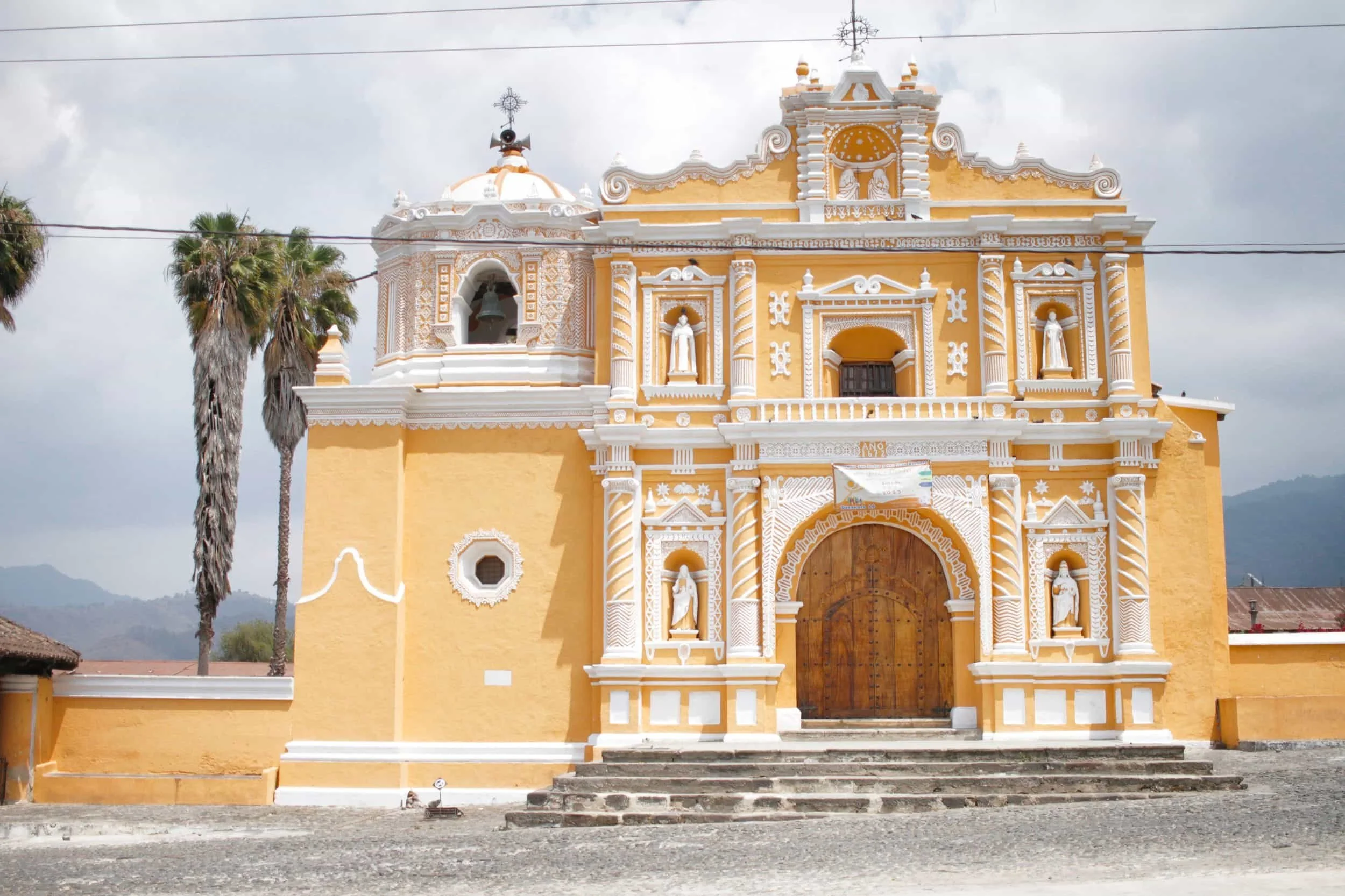
Nearby stands the Parish of Saint Peter and Saint John the Baptist, its pale yellow facade and white architectural details overlooking the square. Construction began in the 16th century, with later additions contributing to its mix of architectural influences.
Inside, gilded ornamentation, religious paintings and devotional spaces reveal a much richer interior than the restrained exterior suggests. It's worth stepping inside if the church is open, particularly for anyone interested in historic architecture.
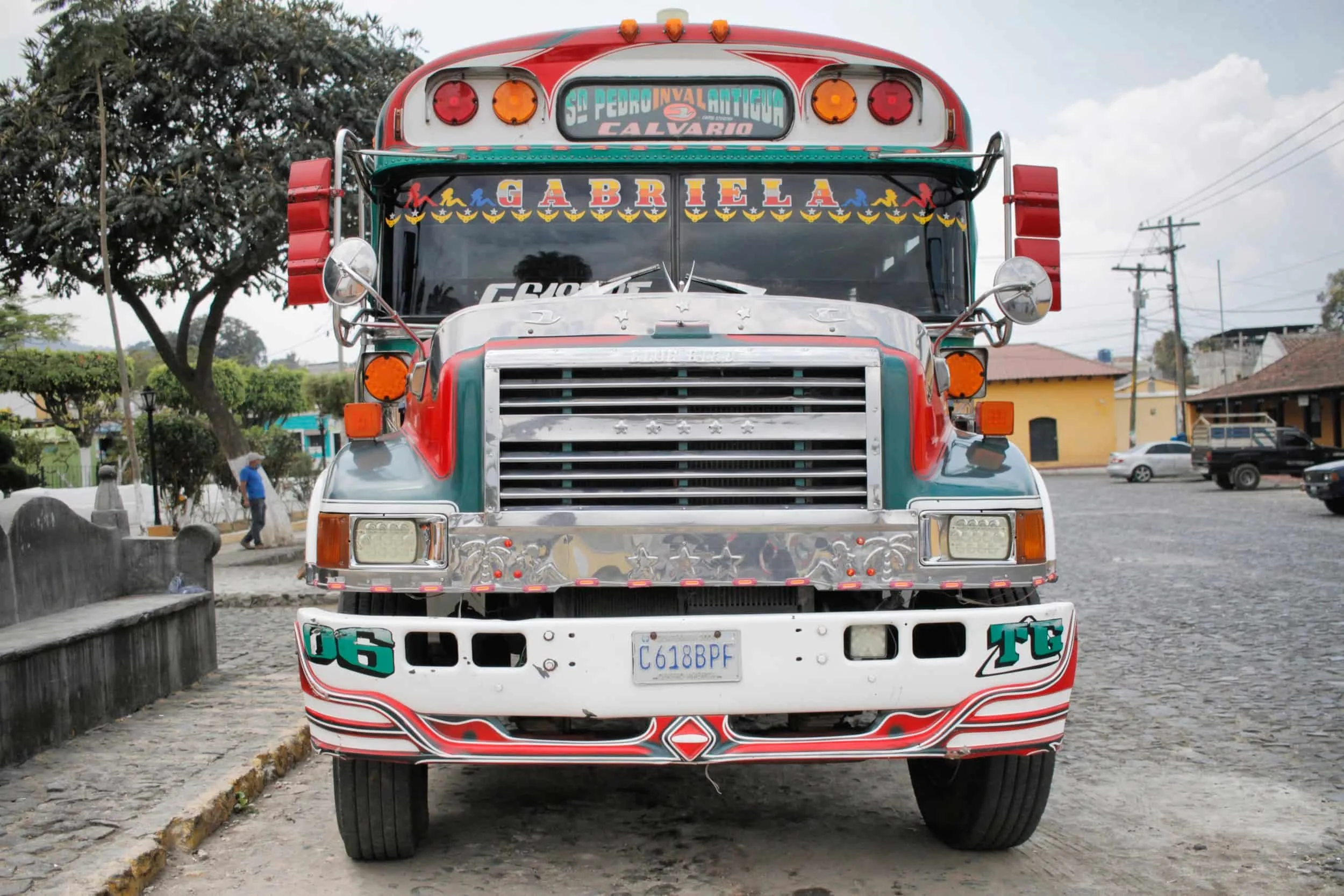
Few sights are as recognizable on Guatemala's roads as the chicken bus. These brightly painted former school buses are an essential part of local public transportation, connecting towns, villages and markets across the country.
They're also impossible to ignore. Elaborate paintwork, chrome details, religious imagery and bold lettering transform otherwise ordinary buses into moving displays of personal expression.
Seeing them up close in San Pedro Las Huertas was particularly fun. Their appearance may be extravagant but their purpose is entirely practical: getting people and their belongings where they need to go.
💡 My Tip | Riding a chicken bus can be an inexpensive way to travel locally but routes, fares and stops aren't always obvious to visitors. Ask a trusted local which bus to take, carry small quetzal notes and keep your belongings close.
The nickname “chicken bus” is commonly associated with the wide variety of things passengers carry aboard, including the occasional live animal.
These buses transport far more than commuters. Bags of produce, market purchases, textiles and other goods travel alongside passengers, making them an important link between rural communities and commercial centers.
Space can be limited, particularly on busy routes. The buses are designed to move as many people and belongings as possible, not to provide a spacious sightseeing experience.
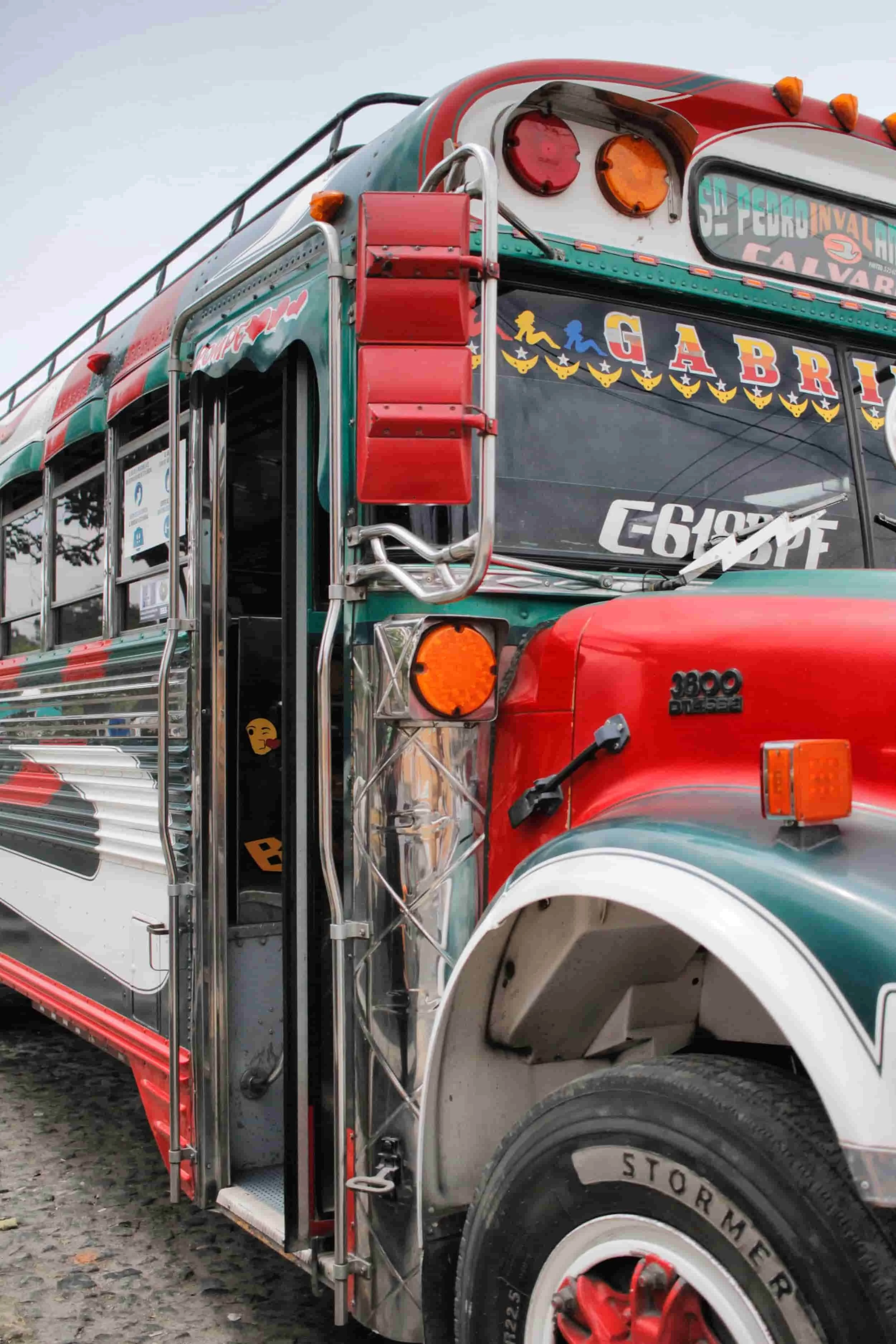
Along the streets of San Pedro Las Huertas, the buses are as much a part of the visual landscape as the low buildings and surrounding volcanoes.
Their saturated colors and decorative details stand out against the quieter architecture of the town. Some feature elaborate lettering across the windshield, while others are covered in painted patterns, polished metal and carefully chosen symbols.
For anyone drawn to design, they're fascinating examples of everyday objects transformed through local creativity. No two seem to have quite the same personality.
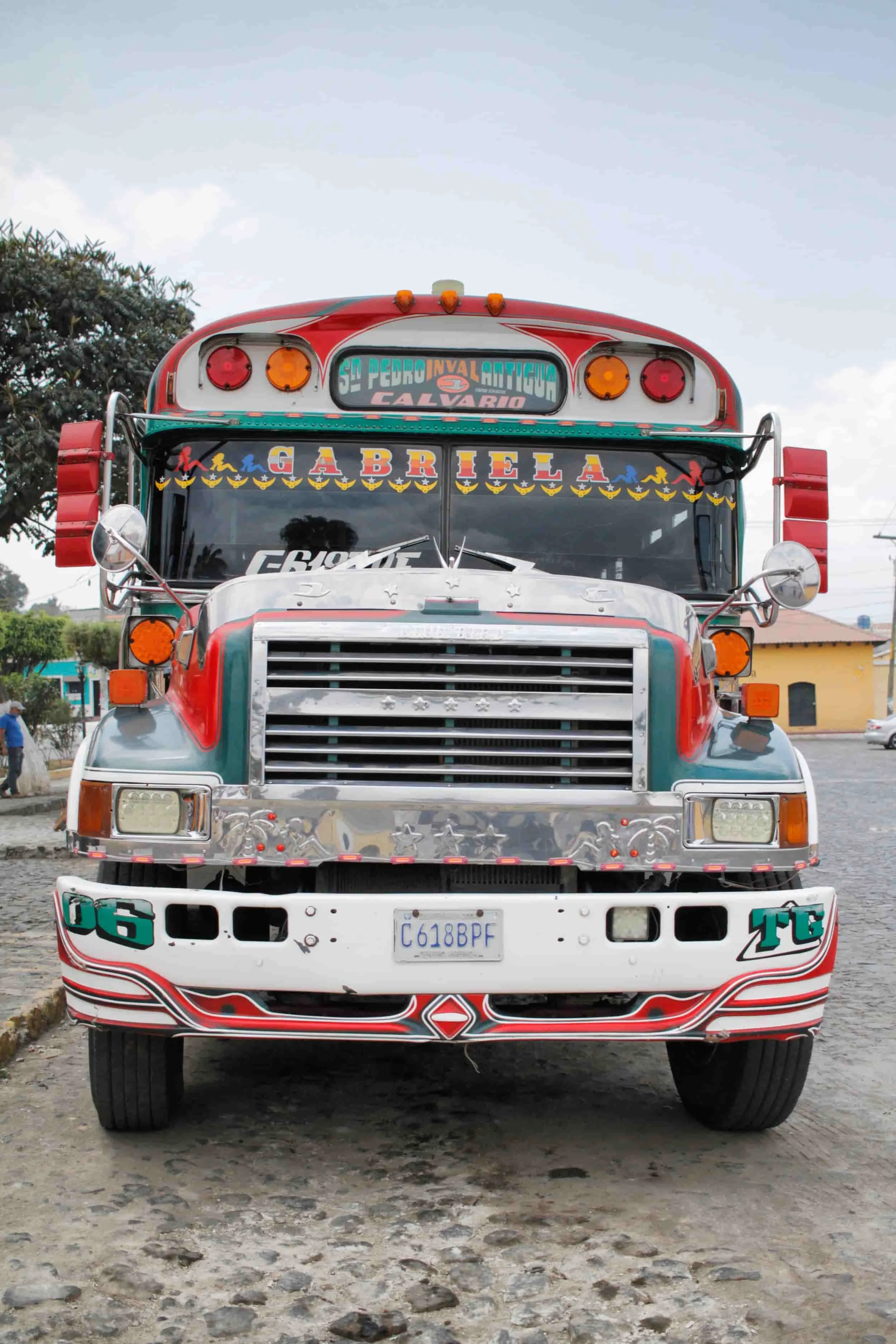
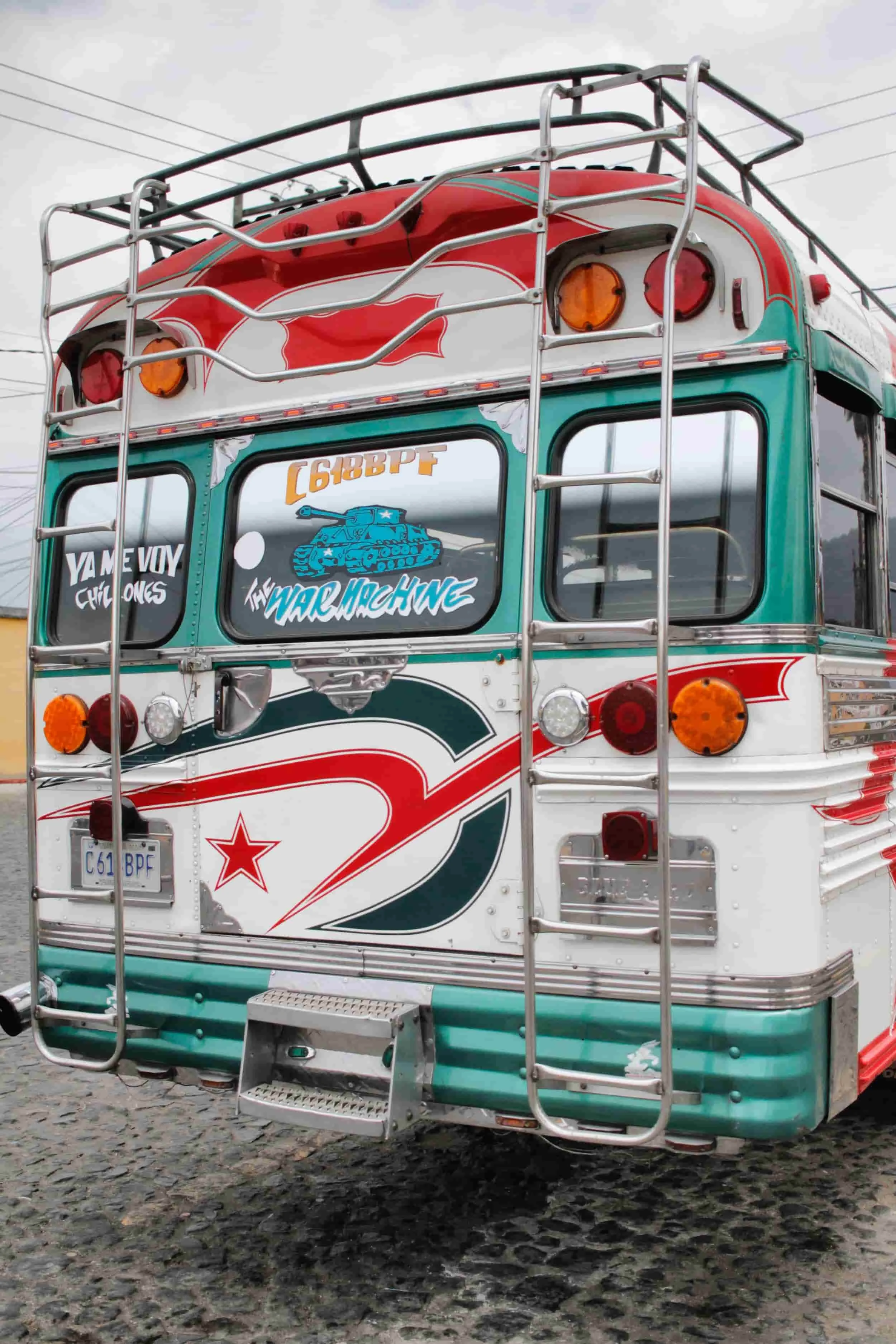
Operating a chicken bus usually involves a driver, known as the chofer, and an assistant, often called the brocha.
While the driver navigates Guatemala's busy roads, the assistant collects fares, calls out destinations and helps passengers with their belongings. On some routes, that includes securing large bundles of goods on the roof.
The system can look chaotic from the outside but there's a practiced coordination behind it. These buses operate within a network that local passengers depend on for work, shopping and everyday travel.
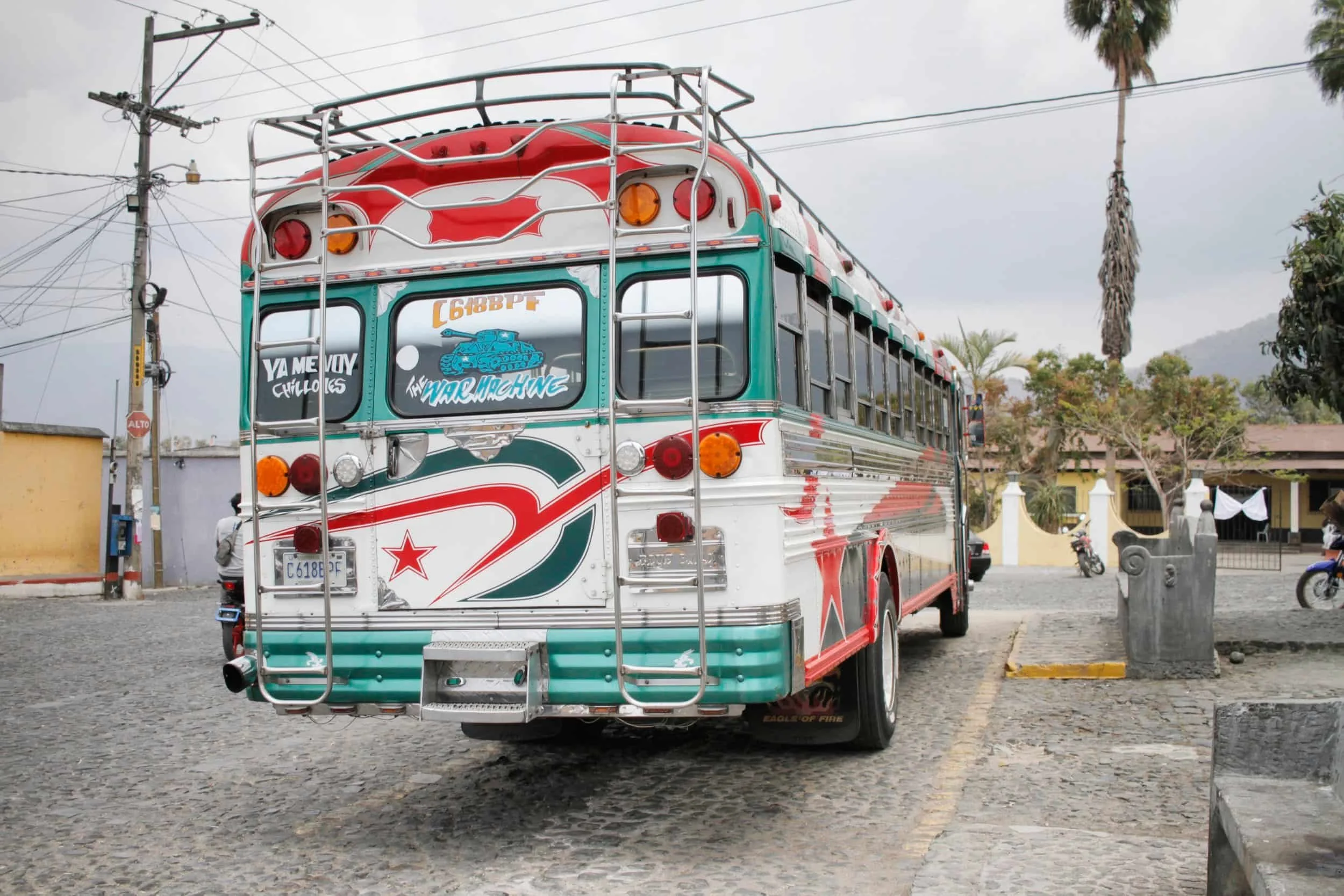
Many Guatemalan chicken buses begin their lives as yellow school buses in the United States. After being retired from American school service, they're purchased and transported south, where they're adapted for a very different working life.
The transformation can be extensive. Owners commission custom paintwork, install decorative lighting, add chrome accessories and personalize the interiors. Religious symbols and names often feature prominently, reflecting the identity and preferences of the people operating them.
It's an interesting form of reuse, both functional and highly expressive. What was once a standardized school bus becomes something unmistakably individual.
For me, San Pedro Las Huertas was less about a particular attraction than the pleasure of seeing a familiar place through Delia's eyes. Her enthusiasm for the food, streets and everyday details gave this stop a warmth that no conventional sightseeing itinerary could have reproduced.
Explore Santa María de Jesús Market Beneath Volcán de Agua
Perched on the slopes of Volcán de Agua, Santa María de Jesús is a predominantly Kaqchikel Maya town just outside Antigua, Guatemala. Its busy outdoor market, traditional clothing and spectacular volcanic setting offer a different perspective on life in the Guatemalan highlands.
Rising approximately 12,336 feet (3,760 m) above sea level, Volcán de Agua dominates the landscape. Although it has no recorded eruptions, the volcano is associated with a devastating 1541 flood and mudflow that destroyed much of the nearby colonial capital, prompting the Spanish to relocate to present-day Antigua.
Today, the town serves as a starting point for some volcano hikes but its market is reason enough to visit. This is a working community rather than a tourist attraction, and the everyday activity is what makes it so interesting.
The Santa María de Jesús market is filled with local vendors selling fresh produce, household essentials and handmade goods. It's a wonderful place to observe the rhythms of daily life, particularly with a local guide who can introduce you to the people behind the stalls.
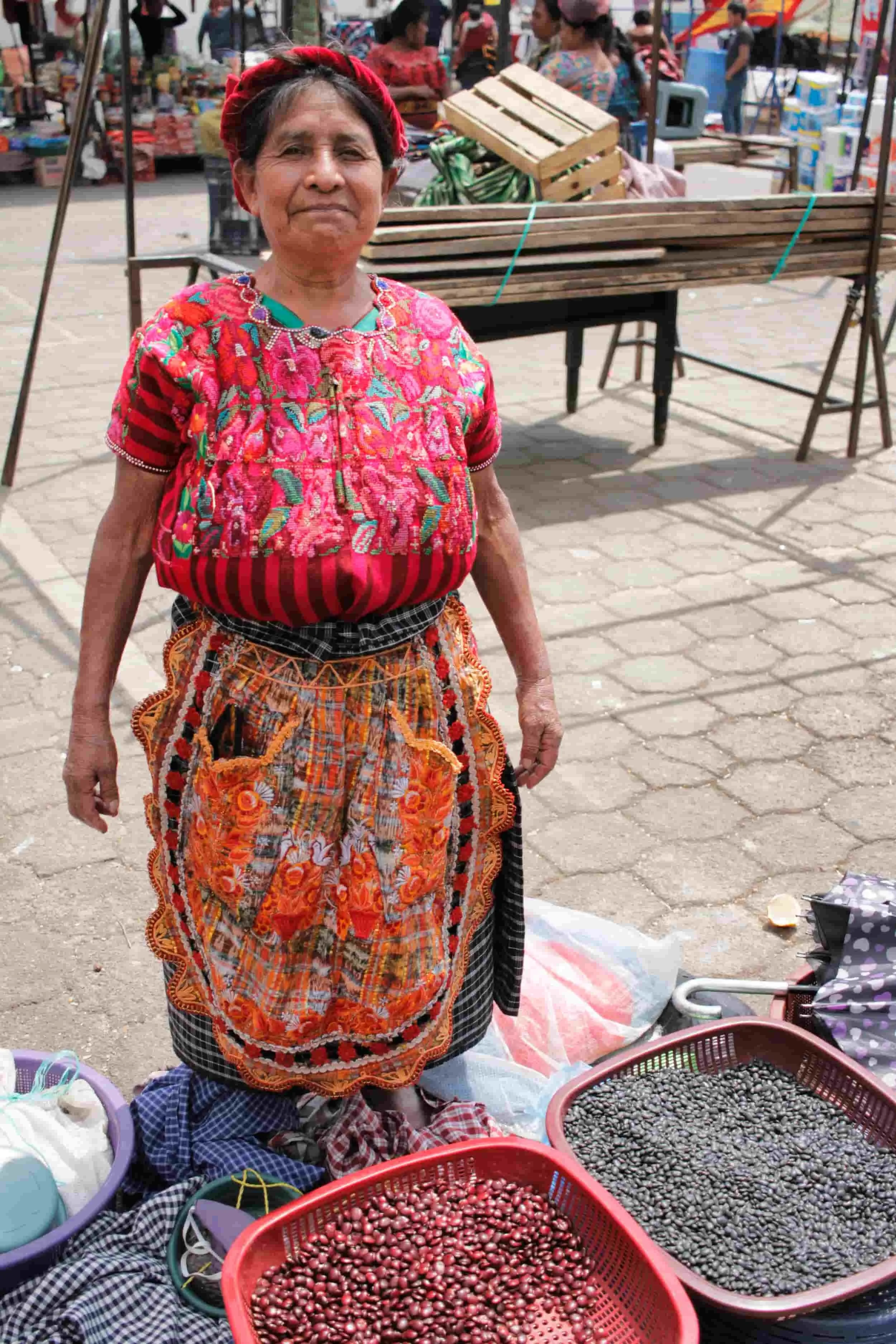
Delia stopped to chat with several familiar faces, including Viviana, a 73-year-old woman selling beans. A mother of 14 who had lost seven of her children, Viviana shared pieces of a life marked by considerable hardship. She had attended school only through first grade and preferred selling produce to the weaving traditionally practiced by many women in the community.
Viviana was incredibly sweet, and when I asked to take her photograph, she seemed genuinely happy. She hesitated to give me a big smile, though, explaining with a little self-consciousness that she'd lost too many teeth. It was such a tender, human moment, and one I remember more vividly than almost anything else in the market. Behind the colorful stalls and beautiful textiles are people with their own stories, vulnerabilities and quiet generosity. Viviana's warmth stayed with me long after we said goodbye.
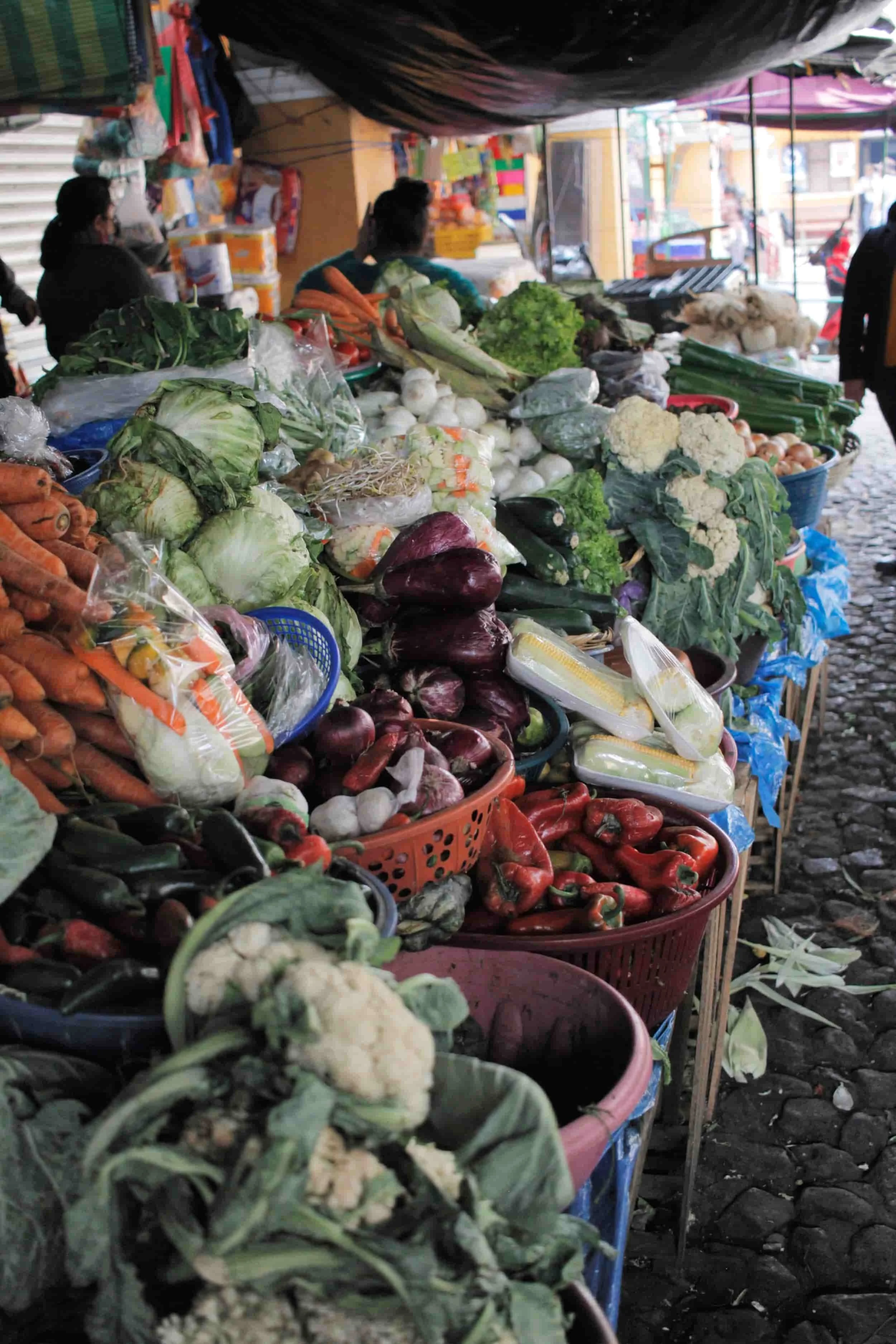
The market is a feast of color, texture and local ingredients. Piles of red chiles, tomatoes, purple onions and radishes sit alongside avocados, plantains, pineapples and bundles of fresh herbs. Farmers sell different varieties of corn and beans, while other stalls offer tortillas, honey, pickled vegetables and woven baskets.
Much of the produce comes from the surrounding agricultural communities, making the market an important part of the local food economy.
For visitors interested in Guatemalan cuisine, it's a fascinating opportunity to see the ingredients behind traditional dishes. Delia even picked up a few things for her own dinner, a small reminder that this wasn't a carefully staged cultural experience. It was simply her afternoon shopping.
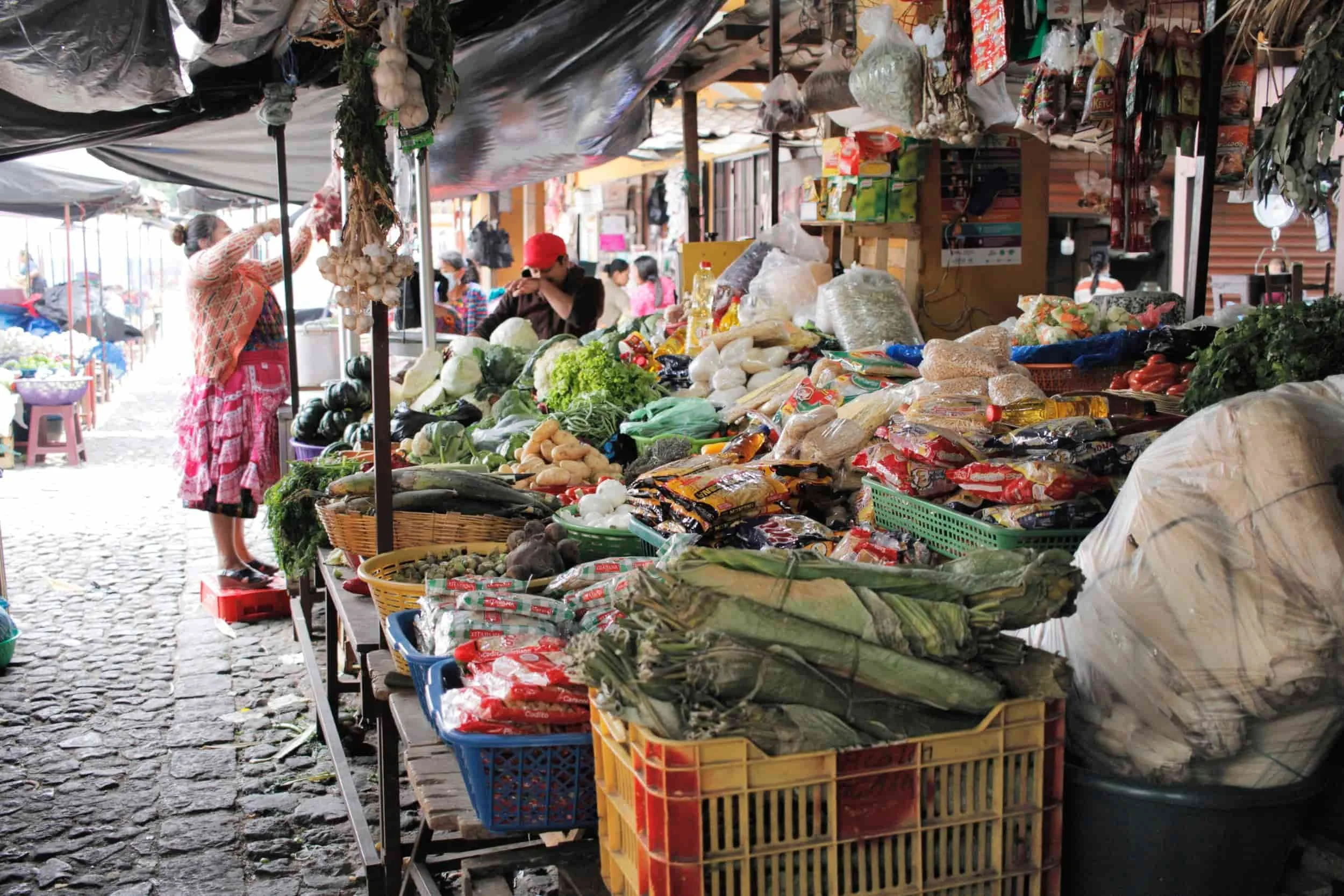
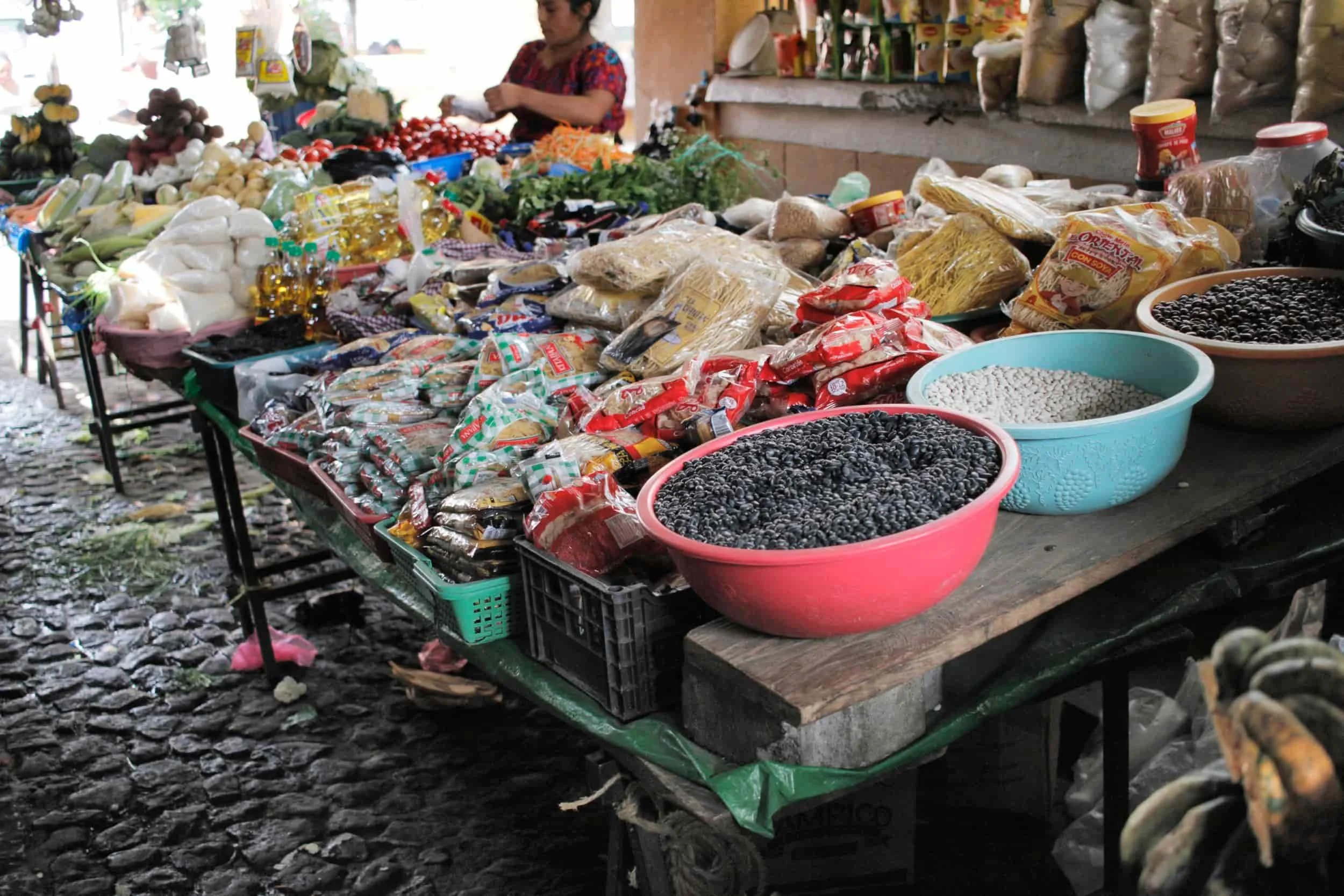
Markets around Antigua are wonderful places to experience local culture but they're also working spaces. A friendly greeting, a little Spanish and genuine interest in what's being sold go a long way.
Always ask permission before photographing people, particularly children. If someone agrees to a portrait, buying something from their stall or offering a small tip can be a thoughtful gesture. Bargaining may be appropriate for some handmade goods but everyday food prices are generally best respected.
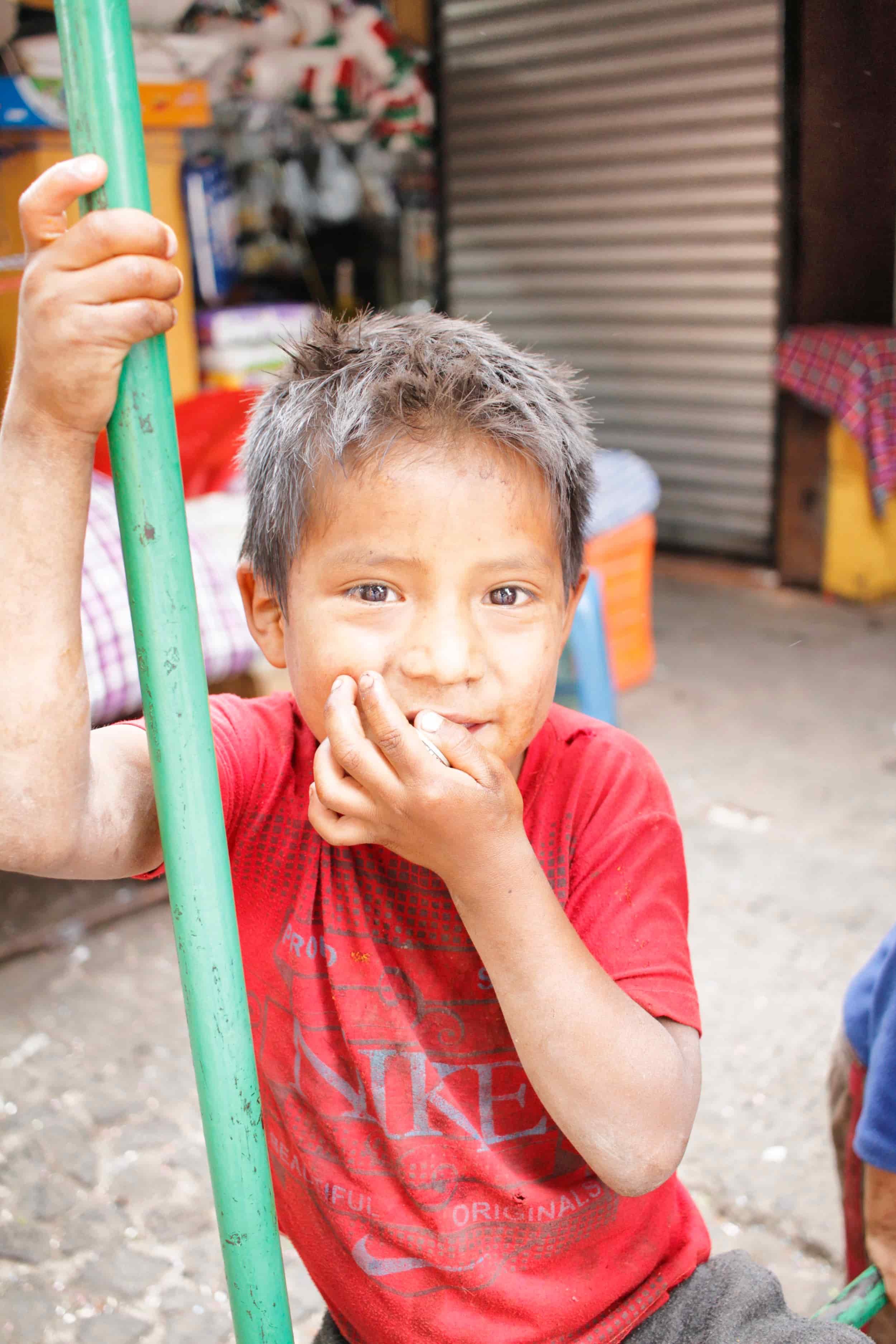
Among the market stalls, I discovered two little boys, Pedrito and Brian, who were playing nearby. They were curious, shy and clearly amused by our attempts to get them talking. Delia asked a few questions but they weren't giving much away. Their expressions said considerably more.
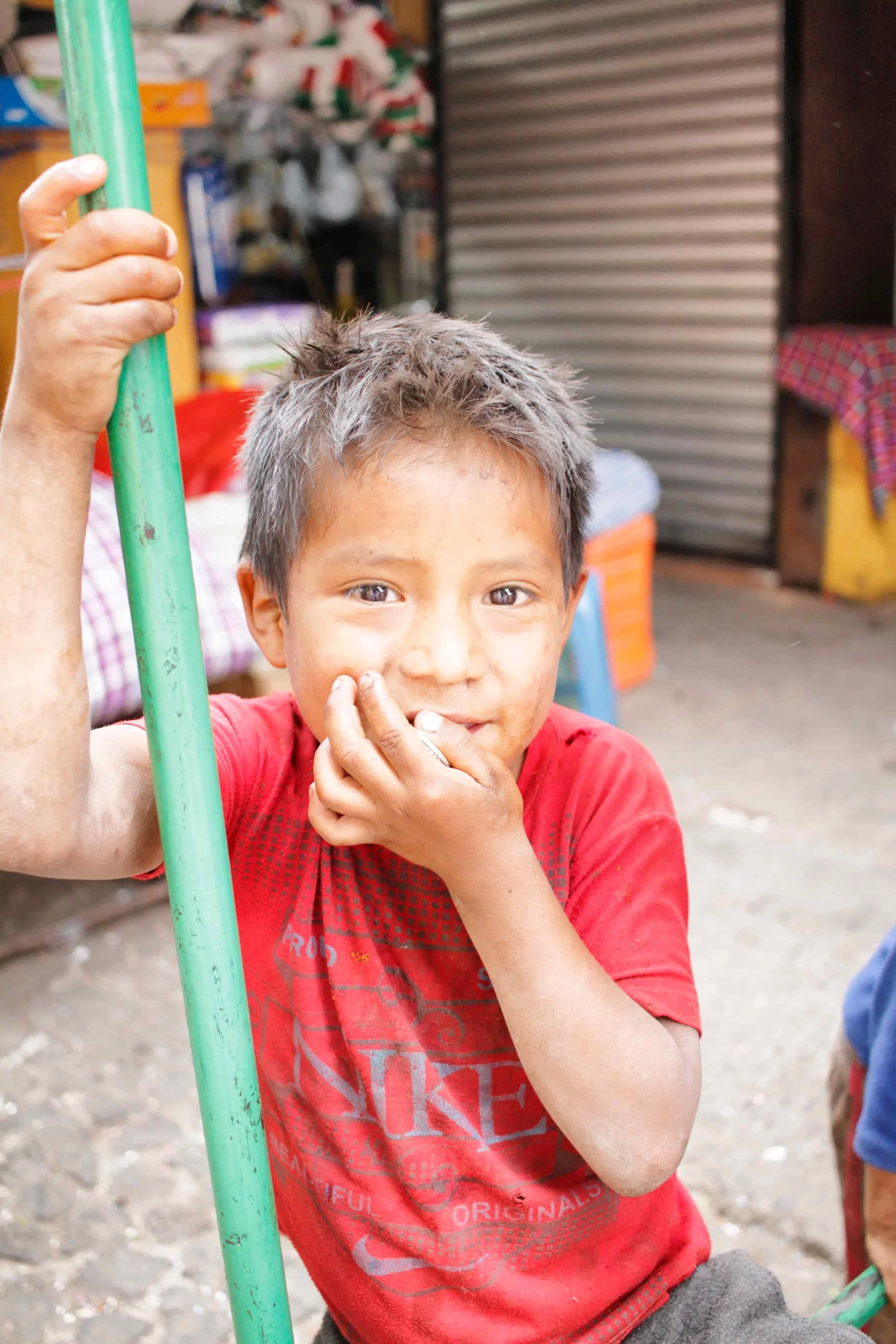
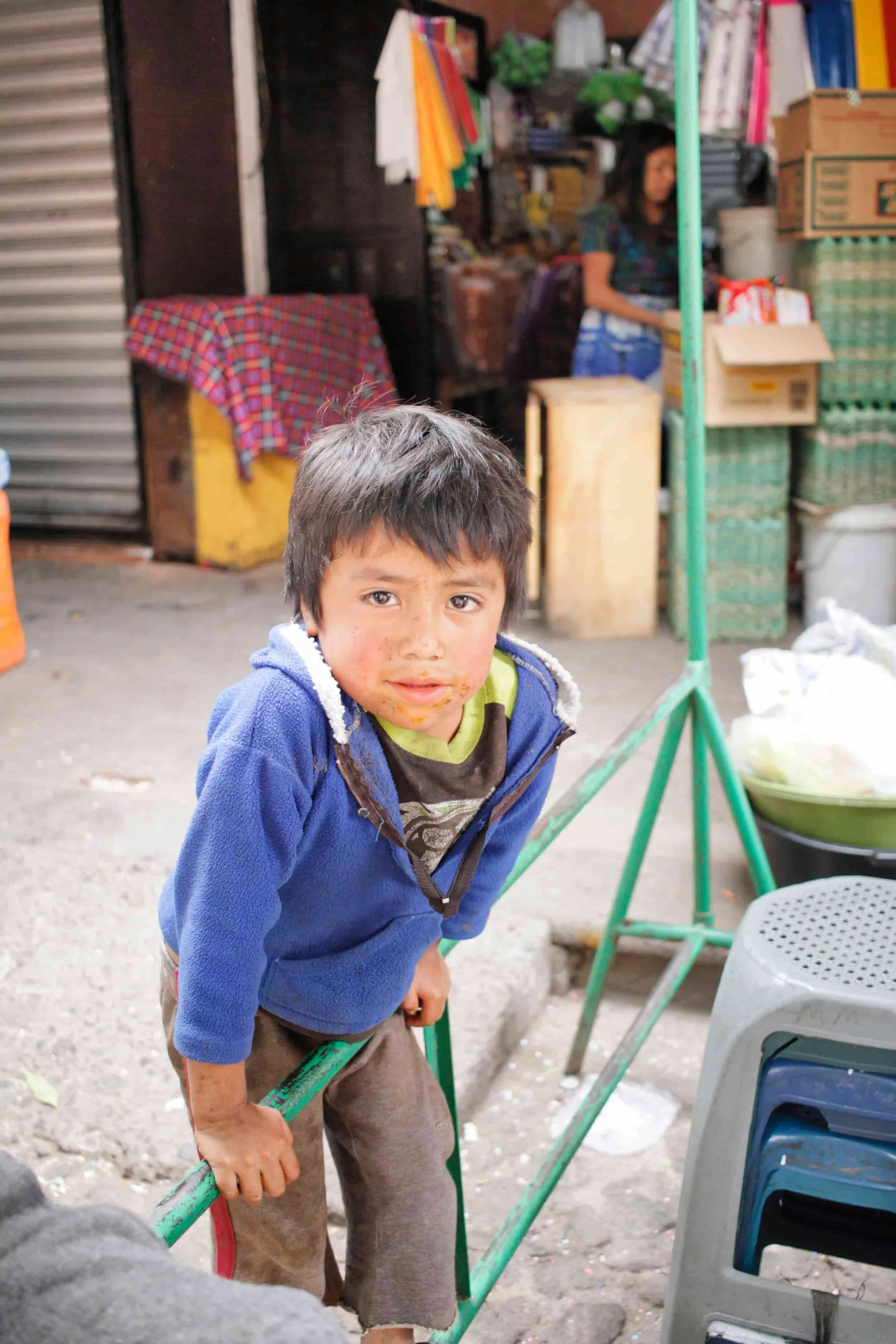
Pedrito and Brian were easily among the most memorable people I met during my visit. Once the camera appeared, their shyness gave way to mischievous smiles, and they happily posed for a few photographs.
There was something wonderfully genuine about the encounter. No elaborate conversation or planned activity, just two curious little boys enjoying a little attention in the middle of a busy market.
I wished my Spanish had been better. Having spent years teaching children, I would have loved to sit with them a little longer, hear their stories and find out what they were so determined not to tell us.
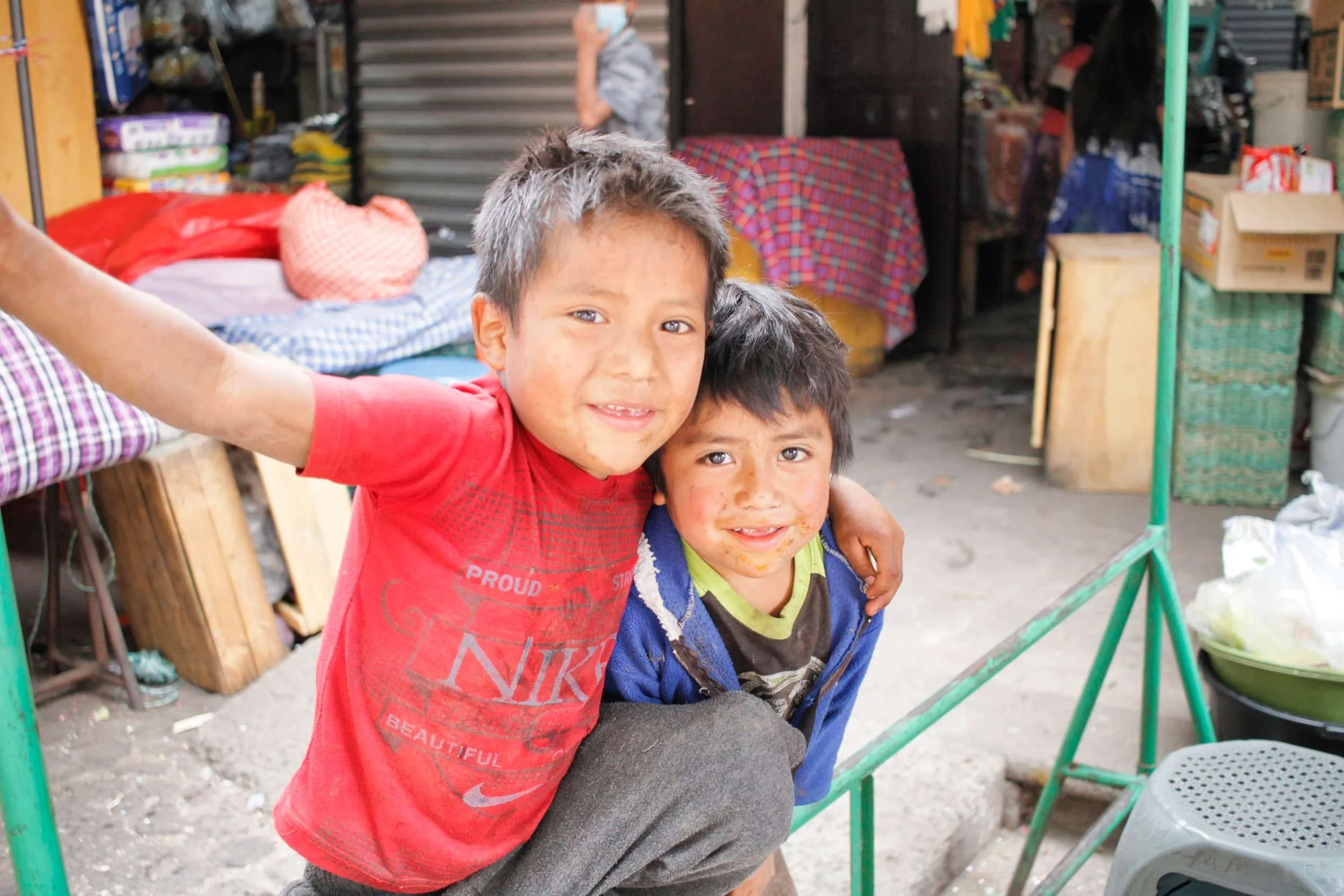
Before leaving, I showed Pedrito and Brian the photographs I'd taken. Their shy smiles were worth the entire stop, and saying goodbye was harder than I expected.
Meeting children while traveling always brings out the former teacher in me. There's an openness and curiosity in those brief encounters that can stay with you long after the details of a place begin to fade.
The market itself is well worth exploring but it was the people who made Santa María de Jesús such a special part of my day. From Viviana's stories to those two little faces, the experience offered something no sightseeing checklist could capture.
Back in Antigua, the final stop was the city's Central Market, with one more opportunity to explore local food and everyday life.
Explore Antigua's Central Market & Taste Traditional Pepián
Away from Antigua's polished colonial streets, the Central Market (Mercado Central) offers a wonderfully unfiltered look at everyday life. Narrow aisles wind between stalls piled with produce, textiles, household goods and freshly prepared food. It's busy, colorful and occasionally chaotic, with much of the city's daily shopping happening under one roof.
The market is also one of the best places to explore traditional Guatemalan cuisine, particularly at the small family-run eateries known as fondas. Delia had a favorite in mind: her mother's food stall, where she serves homemade chicken pepián, one of Guatemala's most celebrated traditional dishes.
With roots in Maya culinary traditions and influences from the colonial period, pepián is a rich, deeply flavored stew made with roasted tomatoes, chiles, seeds and spices. The sauce is thickened with toasted ingredients, giving it a distinctive earthy flavor. It's considered one of Guatemala's national dishes, and a good version is worth seeking out.
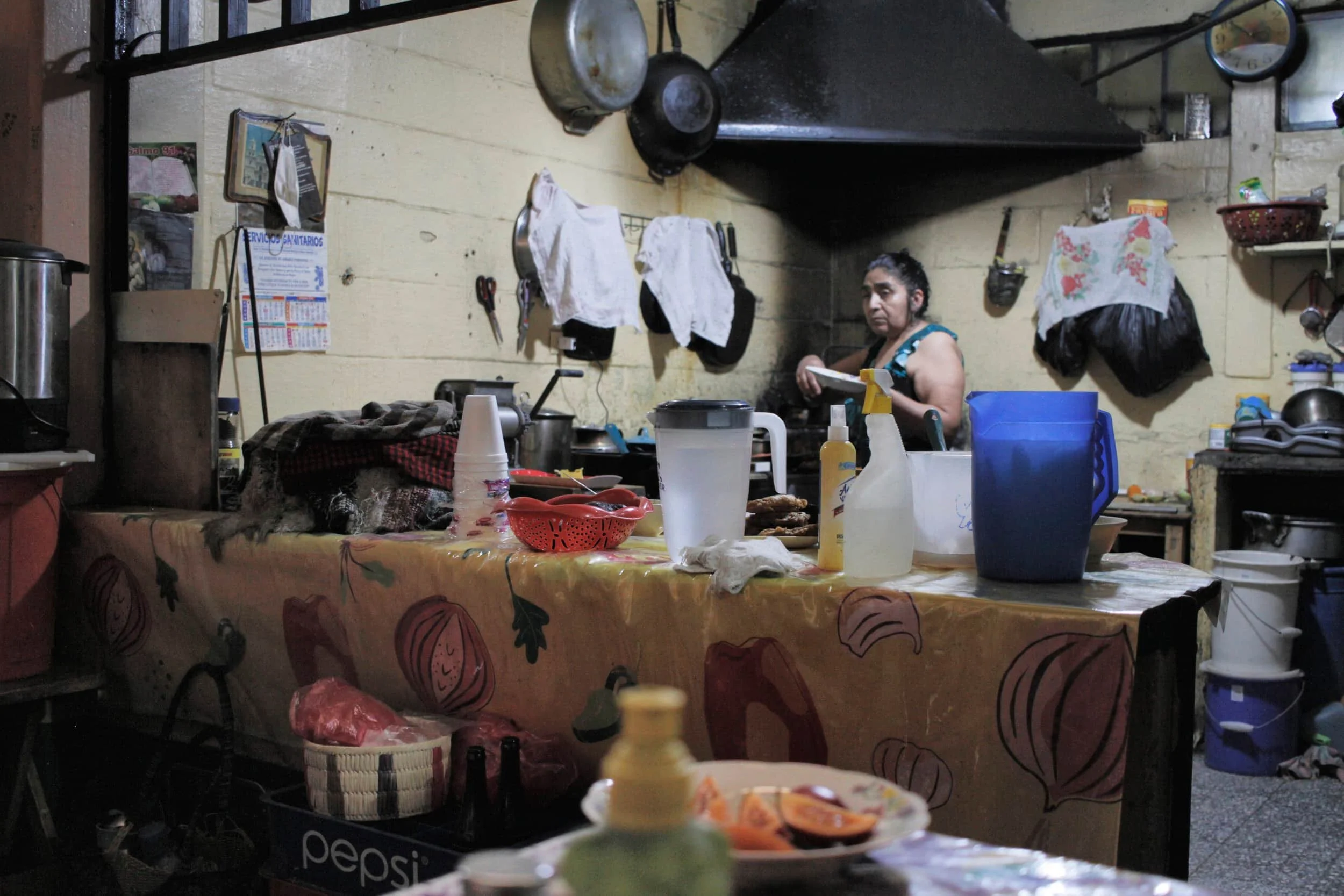
Tucked among the market's crowded aisles, Delia's mother's fonda is a modest little space with wooden tables and shared benches. Nothing elaborate, just a working kitchen serving the kind of food people return for.
Meeting Delia's mom was an unexpected highlight. After spending the day exploring her favorite places and meeting people she knew, being introduced to her mother felt especially personal.
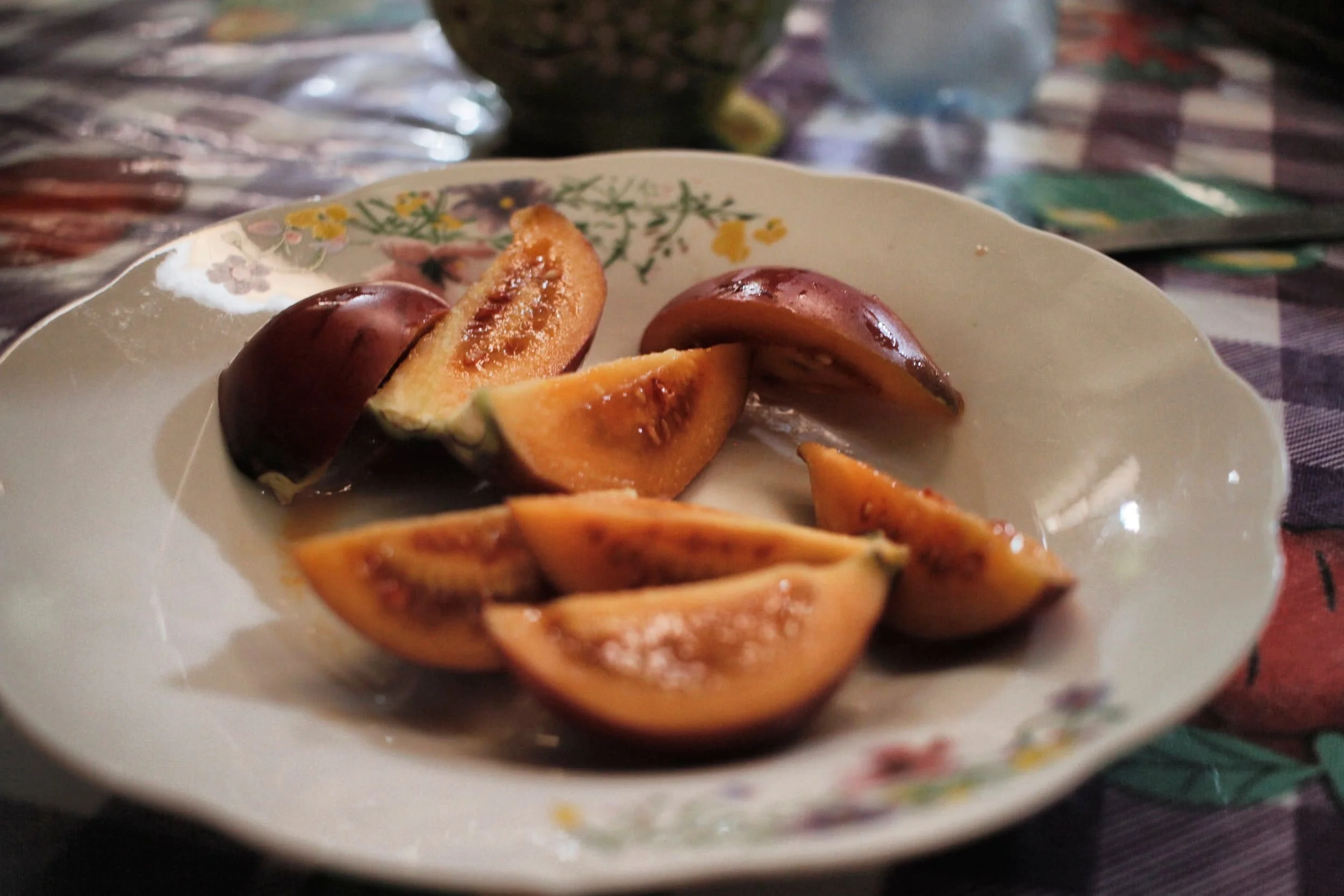
She welcomed us with a plate of fresh persimmon slices, beautifully sweet and offered with such warmth. It was a small gesture but one of those moments that makes a meal feel like more than simply stopping somewhere to eat.
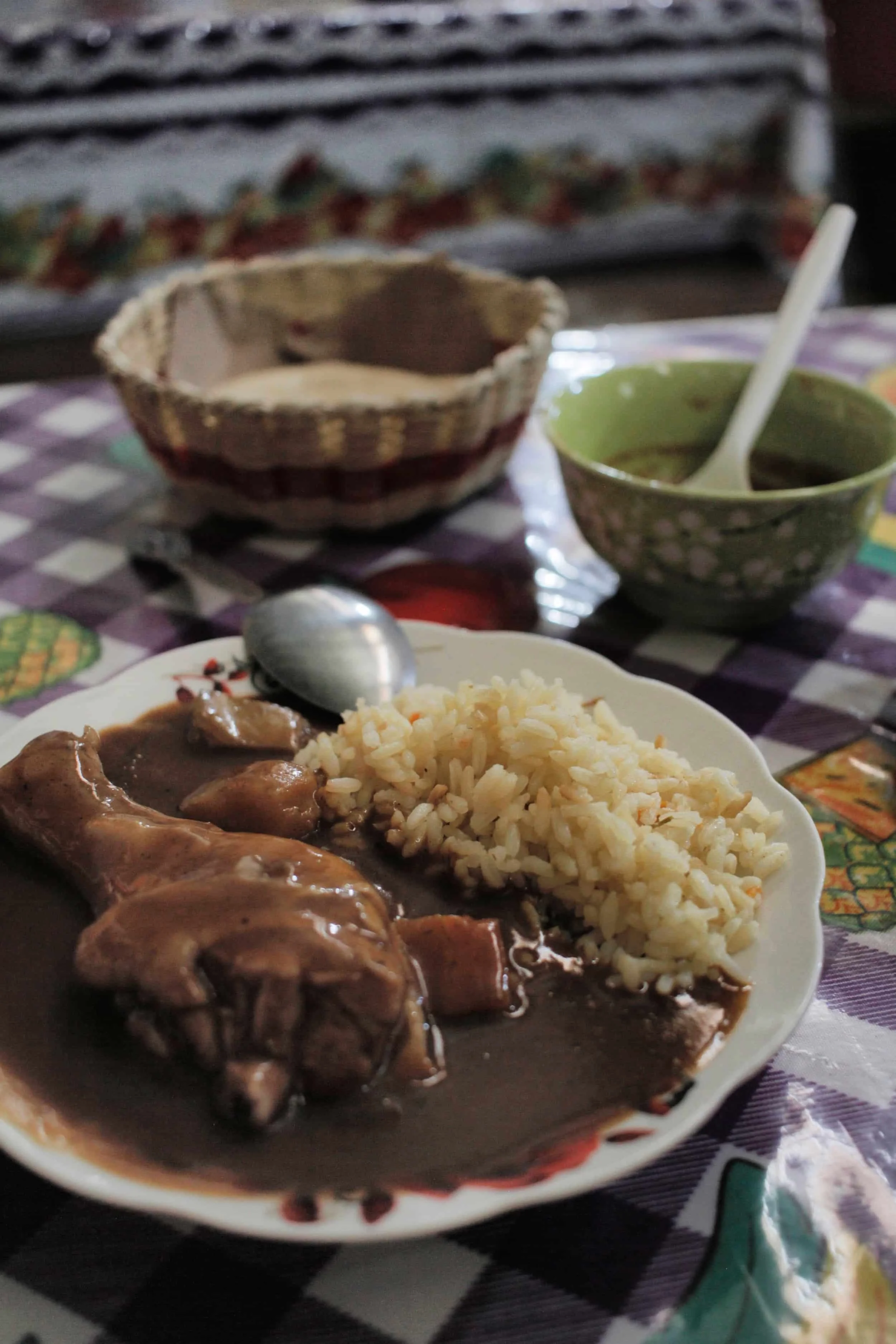
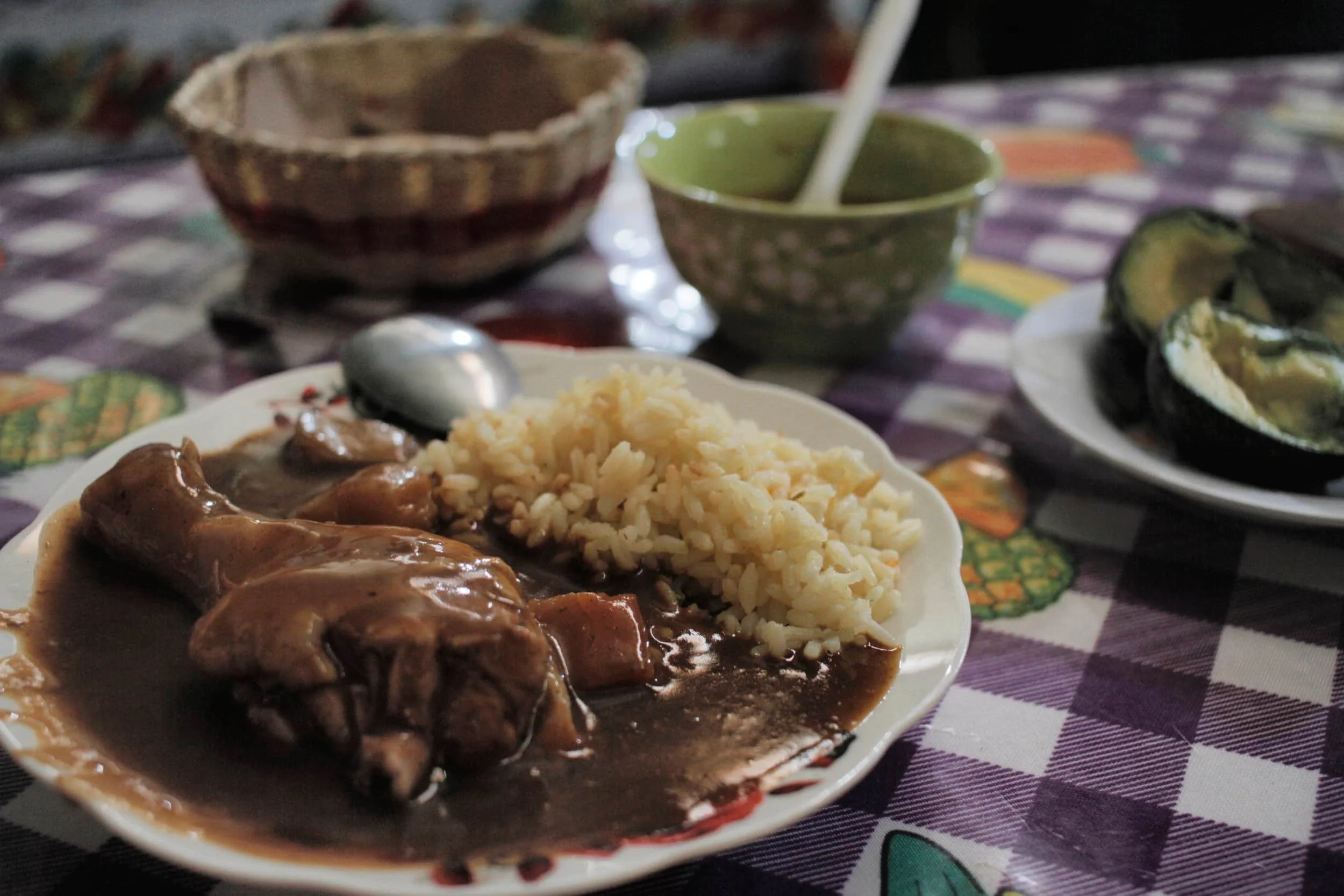
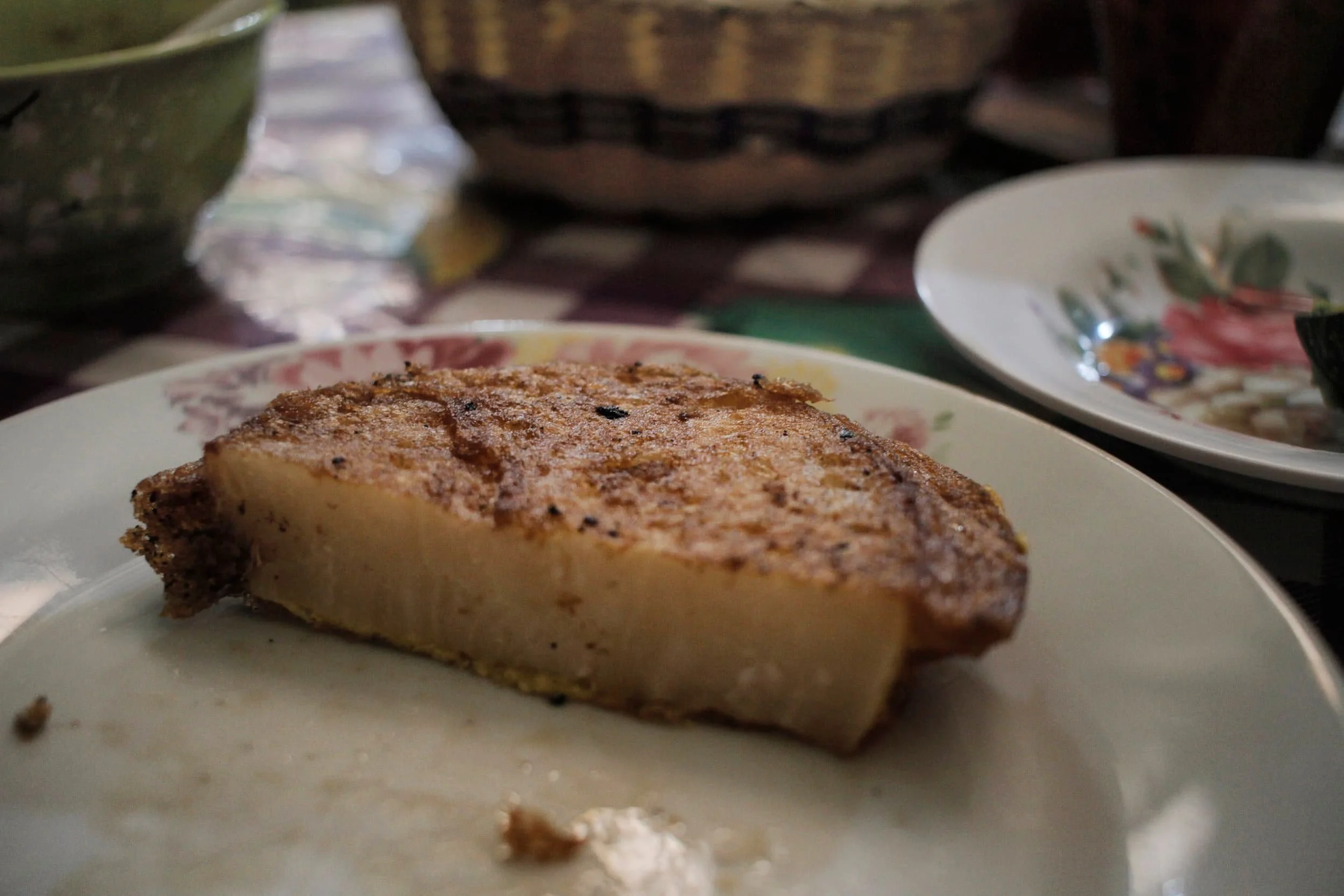
The chicken pepián arrived in a generous pool of dark, glossy sauce, with a tender chicken drumstick, rice, taro and creamy avocado. Warm tortillas and small dishes of salsa completed the meal.
The sauce was rich, savory and deeply aromatic, with layers of roasted chiles, tomatoes and toasted seeds. It's the kind of comforting, slow-cooked food that doesn't need much presentation. The flavors do the work.
For anyone curious about Guatemalan food, pepián is an essential dish to try. And eating it in a local market, prepared by Delia's mother, made the experience even more memorable.
Delia also shared something fascinating about her mother's business. Rather than renting her stall, she'd spent years saving to purchase it, eventually paying around $25,000 USD. Delia estimated that the same space was now worth nearly $45,000 USD.
It's a considerable investment, and a reminder that these modest-looking market stalls can represent decades of work, sacrifice and financial independence for the families who operate them.
Beyond the food stalls, Antigua's Central Market is worth exploring for its fresh produce, flowers, textiles and everyday household goods. The aisles become particularly lively as vendors prepare for closing, with shoppers collecting their final purchases and stalls gradually winding down.
Meeting Delia's mother was a fitting end to a day spent discovering the communities surrounding Antigua. From family businesses and traditional crafts to conversations over food, Delia shared a side of Guatemala I wouldn't have experienced on my own.
The following morning, my journey continued north to Flores and Tikal but this day stayed with me for entirely different reasons. Thank you, Delia, for sharing so much of your world.
My Bibimbap Moment
Exploring the villages surrounding Antigua was one of those unexpectedly special experiences that felt less like a tour and more like spending the day with a friend. From learning about traditional Maya weaving and tasting freshly harvested macadamias to wandering lively markets and sharing stories over homemade Guatemalan food, every stop offered something new. But what made the day so memorable was Delia, whose warmth, humor and genuine love for her community brought everything to life.
Meeting the people she knew, visiting her hometown and even being welcomed by her mother made the experience feel wonderfully personal. There was something so easy and natural about the entire day, with little moments of kindness, laughter and curiosity that stayed with me long after we said goodbye.
Today's Bibimbap Recipe
🥢 Flavor: Heartwarming
🌿 Ingredient: Connection
❤️ Best Memory: Spending the day with Delia, meeting local people and exploring her favorite spots around Antigua
🎒 Take With You: Sometimes the best way to discover a place is to let someone who calls it home show you what they love about it.
What stays with me most about the villages around Antigua is how much I enjoyed the people I met along the way. From Sonya sharing her weaving traditions and Viviana's sweet, slightly shy smile to the mischievous little faces of Pedrito and Brian, each encounter made the experience feel more meaningful. Delia's enthusiasm for sharing her favorite places turned a simple village tour into a day full of genuine human connection.
Connection was the ingredient this experience added to My Bibimbap Life. It reminded me that some of the most memorable moments in travel come from being welcomed into someone else's world, even briefly, and discovering how much we can share despite the differences in our everyday lives.
Villages of Antigua Travel Essentials
Exploring the villages surrounding Antigua, Guatemala offers a fascinating look at the region's Maya traditions, local craftsmanship and everyday life beyond the historic city center. Most villages are within a short drive, making it easy to visit several in a single day, especially with a local guide who can provide cultural context and introduce you to the communities. From navigating local transportation and choosing the best time to visit to finding somewhere comfortable to stay, these practical tips will help you plan a rewarding experience while making the most of your time in Antigua.
When to Go
The dry season, from November through April, is generally the best time to explore the villages surrounding Antigua. Expect sunnier days, comfortable mornings and clearer views of the surrounding volcanoes. Temperatures are pleasant throughout much of the year, although mornings and evenings can be cool, particularly in higher-elevation villages like Santa María de Jesús.
The rainy season, from May through October, brings greener landscapes, fewer visitors and frequent afternoon showers. Village markets, weaving cooperatives and local food stalls continue operating year-round, so there's plenty to experience regardless of the season. An early start is ideal for visiting markets while they're most active and avoiding the heavier afternoon rain.
How to Get There
Antigua is the best base for exploring the surrounding villages, most of which are within a 15–40 minute drive of the historic center. From Guatemala City's La Aurora International Airport (GUA), Antigua is approximately 25 miles (40 km) away, with the journey typically taking 1–2 hours depending on traffic. Shared shuttles, private transfers and taxis are common options.
Once in Antigua, villages such as San Antonio Aguas Calientes, San Pedro Las Huertas and Santa María de Jesús can be reached by local chicken buses, taxis or private transportation. Some routes require transfers, making independent travel a little more time-consuming.
For visiting several villages in one day, a private local guide is particularly worthwhile. I explored the area with Delia, whose personal connections and knowledge of the communities transformed the experience. Having someone familiar with the villages also made it easier to visit smaller workshops, navigate the markets and discover places I might otherwise have missed.
Where to Stay
Antigua makes an excellent base for exploring the surrounding villages, with its walkable historic center, beautiful colonial architecture and wide range of accommodations. Staying in or near the center gives you easy access to restaurants, markets and tour pickups, while quieter properties tucked behind courtyard walls offer a welcome retreat after a day of exploring.
Where I Stayed
For Thoughtful Design & a Cause — Good Hotel Antigua
I stayed at Good Hotel Antigua, a beautifully understated boutique hotel that combines contemporary design with traditional Guatemalan craftsmanship. Its natural materials, peaceful courtyard and thoughtful social mission make it an especially appealing choice for travelers who appreciate design with a purpose.
Where I'd Stay
For Colonial Elegance — San Rafael Hotel
Set inside a beautifully restored colonial residence, San Rafael Hotel is an intimate retreat filled with architectural character. Think timber-beamed ceilings, antique furnishings, original tile roofs and lush courtyards with fountains. With just seven individually designed rooms and a location steps from the Santa Catalina Arch, it's a lovely choice for travelers who appreciate historic architecture and quiet luxury.
For Intimate Garden Charm — Cacao Boutique Hotel
Cacao Boutique Hotel offers a more relaxed, residential atmosphere, with inviting garden spaces and a rooftop terrace for enjoying the surrounding scenery. Its warm interiors, intimate scale and breakfast featuring locally sourced ingredients make it an appealing alternative to larger hotels, particularly for travelers who prefer somewhere personal and quietly charming.
For Contemporary Simplicity — Bärehuus Boutique Hotel
A refreshing contrast to Antigua's traditional colonial hotels, Bärehuus Boutique Hotel occupies a modern residence with a personal collection of furnishings and decorative pieces. The intimate courtyard and rooftop terrace, with views toward Volcán de Agua, offer peaceful places to unwind. Just a few blocks from the central plaza, it combines a convenient location with the quieter atmosphere of a residential street.
For Refined Luxury — Villa Las Mil Flores
For a more indulgent stay, Villa Las Mil Flores combines elegant interiors with lush gardens, a beautiful courtyard swimming pool and a sophisticated, intimate atmosphere. Spacious rooms, a restaurant and inviting outdoor spaces make it particularly appealing for travelers looking to slow down between excursions. Its central location also keeps Antigua's historic streets and architectural landmarks within easy reach.
Additional Options
For More Space & Independence — Vacation Rentals
If you prefer a private apartment, traditional courtyard home or somewhere with a kitchen, Antigua also has plenty of vacation rentals worth exploring. Look for properties with leafy interior courtyards, rooftop terraces overlooking the volcanoes or beautifully preserved colonial details. Staying within walking distance of the historic center offers the best balance of convenience and atmosphere, while quieter residential streets can provide a more local experience and a little extra breathing room.
How to Get Around
Antigua's historic center is best explored on foot, with its cobblestone streets, colorful colonial buildings and compact layout making walking part of the experience. Most restaurants, markets and major landmarks are within easy reach, although the uneven pavement calls for comfortable shoes.
For exploring the surrounding villages, transportation requires a little more planning. Local chicken buses are an inexpensive and colorful way to travel between communities, although routes can be confusing and transfers may be necessary. Tuk-tuks are useful for shorter journeys, while taxis and private drivers offer greater flexibility for visiting multiple destinations.
A guided village tour is my recommendation if you want to experience several communities in one day. I explored with Delia, whose local connections made it possible to visit weaving workshops, meet market vendors and discover places I would never have found independently. Beyond the convenience of having transportation arranged, the cultural insight and personal introductions were what made the experience so memorable.
💡 My Tip | Arrange your village tour for an early start, particularly if you want to visit local markets while they're lively. Bring small bills in Guatemalan quetzales for snacks, handmade goods and local transportation.
How Long to Stay
Allow a full day to explore the villages surrounding Antigua, especially if you want to visit several communities without rushing. My private tour with Delia included Valhalla Macadamia Farm, the weaving cooperative in San Antonio Aguas Calientes, San Pedro Las Huertas, Santa María de Jesús and Antigua's Central Market. Between the workshops, markets, food stops and conversations along the way, the day was wonderfully full.
For Antigua itself, three to four days is a comfortable starting point. This gives you time to explore the historic center, enjoy its restaurants and cafés, visit local landmarks and dedicate a day to the surrounding villages. Add another day or two if you're interested in hiking a volcano, taking a cooking class or visiting nearby coffee farms.
If Antigua is part of a longer Guatemala itinerary, it's also a convenient base for a day trip to Lake Atitlán, although staying overnight at the lake allows for a more relaxed experience. I spent several days based in Antigua before continuing north to Flores and Tikal, and found it an excellent introduction to the country's architecture, culture and everyday life.
Tours & Day Trips
Antigua is an excellent starting point for exploring the surrounding highlands, with everything from traditional weaving workshops and village markets to coffee farms, volcano hikes and cultural experiences within reach. Guided tours are especially worthwhile for visiting smaller communities, where local knowledge and personal connections can offer a more meaningful experience than simply passing through.
Explore the Villages Around Antigua
Village tours vary considerably in their routes and focus. Some visit nearby communities such as San Antonio Aguas Calientes, San Pedro Las Huertas and Santa María de Jesús, while others venture farther toward Lake Atitlán or concentrate on traditional food, markets and artisan workshops. If you're hoping to experience the villages featured in this guide, check the exact stops before booking rather than relying on the tour title alone. Look for experiences led by local guides that allow time for genuine interaction with the communities.
Explore village & cultural tours →
Discover More Tours & Day Trips from Antigua
Beyond the villages, Antigua offers plenty of opportunities to explore the region. Hike Pacaya Volcano, visit coffee plantations, take a Guatemalan cooking class or venture into the spectacular landscapes surrounding Lake Atitlán. Whether you're interested in adventure, architecture, food or local culture, there's no shortage of experiences to build into your itinerary.
Good to Know
A little preparation goes a long way when exploring the villages around Antigua. Bring small bills in Guatemalan quetzales for market snacks, handmade textiles and other local purchases, as many smaller vendors don't accept cards. Comfortable shoes are useful for uneven streets and market pathways, and a light layer comes in handy during cooler mornings in the highlands.
If you're visiting markets or weaving workshops, ask before photographing people and take your time browsing. A few words of Spanish are always appreciated, and having a local guide can make conversations and cultural exchanges feel more natural. Village life moves at its own pace, so leave a little room in your plans for unexpected discoveries.
🌍 One Last Thing | The villages surrounding Antigua each have their own character, traditions and everyday rhythms. They're places where centuries-old Maya craftsmanship exists alongside modern life, and where a simple conversation can be just as memorable as anything on your itinerary. Come curious, take your time and enjoy the little moments along the way.
Step into the ancient Maya world of Tikal Guatemala, where towering temples rise above the rainforest and centuries of history unfold along jungle trails.